




- Leukemia Survival Rate at a Glance
- What Does a Five-Year Leukemia Survival Rate Mean?
- Why There Is No Single Leukemia Prognosis
- Leukemia Survival Rate by Type
- How Age Changes the Leukemia Survival Rate and Life Expectancy
- What Shapes an Individual Leukemia Survival Rate and Prognosis?
- Leukemia Survival Rate Versus Your Individual Outlook
- How Long Can You Live With Leukemia?
- Does Remission Mean Cure?
- Why a Published Leukemia Survival Rate May Lag Behind Current Treatment
- Why the Leukemia Survival Rate Differs Between Countries
- How to Evaluate Claims of Better Survival With Another Treatment
- Leukemia Survival Rate and Ayurveda
- Questions to Ask
- FAQs
- References
Leukemia Survival Rate at a Glance
The leukemia survival rate varies substantially according to leukemia type, age, disease biology and treatment response. In the United States SEER 21 registry, excluding Illinois, the five-year relative survival rate for all leukemias combined was 68.6% among people diagnosed during 2016–2022.[8] This combined estimate includes several biologically distinct diseases and does not represent the outlook of every person diagnosed with leukemia.
What the Five-Year Survival Rate Means
Five-year relative survival compares the proportion of people with leukemia who are alive five years after diagnosis with the expected survival of people of similar age and demographic background in the general population.[8] It does not mean that a person is expected to live for only five years, and it is not an estimate of remaining lifespan.
A patient who remains alive beyond five years is still included in the survival calculation at that time point. Many people live considerably longer, particularly when leukemia enters sustained remission or remains controlled with long-term treatment. In contrast, some aggressive leukemias may progress earlier, especially when the disease does not respond adequately or returns after treatment.
The diagnosis period is essential when interpreting any survival percentage. Five-year statistics require several years of observation before publication, so recently reported figures may include patients treated before newer targeted therapies, immunotherapies, molecular monitoring methods or supportive-care strategies became widely available.
Leukemia Survival Rate by Type and Age
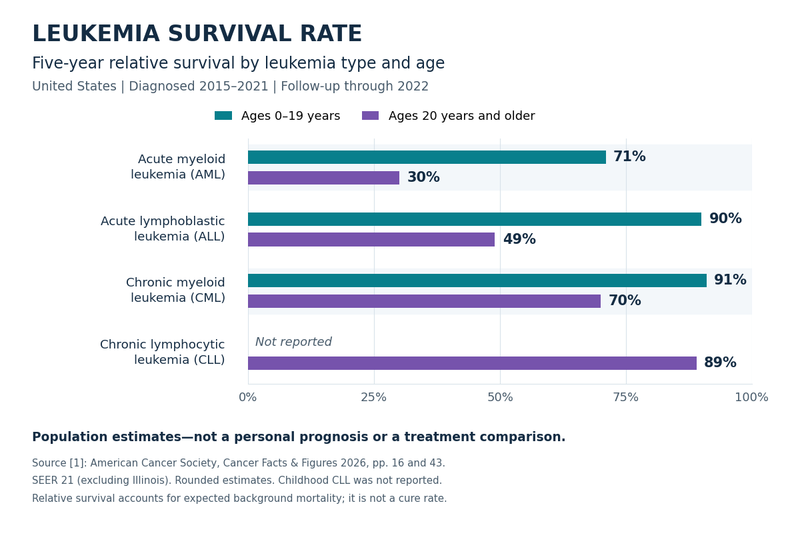
Among patients aged 0–19 years in the United States who were diagnosed during 2015–2021 and followed through 2022, five-year relative survival was 71% for acute myeloid leukemia, 90% for acute lymphoblastic leukemia and 91% for chronic myeloid leukemia.[1]
Among patients aged 20 years and older during the same diagnosis period, five-year relative survival was 30% for acute myeloid leukemia, 49% for acute lymphoblastic leukemia, 70% for chronic myeloid leukemia and 89% for chronic lymphocytic leukemia.[1]
These differences reflect more than chronological age. Childhood and adult leukemias often have different molecular characteristics, treatment sensitivity and distributions of favourable or higher-risk disease. Older adults are also more likely to have frailty, reduced organ reserve or other medical conditions that may influence treatment intensity, treatment tolerance and the risk of complications.
The figures for acute myeloid leukemia, acute lymphoblastic leukemia, chronic myeloid leukemia and chronic lymphocytic leukemia describe separate diseases. A survival percentage from one leukemia type cannot be applied to another, even when both conditions occur in patients of a similar age.
Population Outcomes and Individual Leukemia Prognosis
An individual leukemia prognosis depends on the exact subtype, cytogenetic findings, molecular abnormalities, disease phase, age, general health and previous treatment. Prognosis also differs between newly diagnosed, relapsed and refractory leukemia because these groups have different treatment options and expected response patterns.[3,5,6,9]
In acute myeloid leukemia, genetic risk classification, remission status and measurable residual disease can significantly refine the outlook after treatment begins.[3] In acute lymphoblastic leukemia, lineage, molecular subtype, early response and measurable residual disease are central prognostic factors.[5]
In chronic lymphocytic leukemia, clinical stage, TP53 abnormalities, IGHV mutation status, age and comorbidities help define the expected disease course and treatment strategy.[6] In chronic myeloid leukemia, disease phase and the depth and timing of the BCR::ABL1 molecular response provide more clinically relevant information than an all-leukemia survival average.[9]
Bone-marrow findings, blood-count recovery, measurable residual disease and molecular monitoring can alter the prognosis after the initial diagnosis. A patient who achieves a complete remission with no detectable residual disease may have a different outlook from another patient with the same leukemia subtype whose disease remains measurable after treatment.
Leukemia Life Expectancy and Long-Term Outlook
Leukemia life expectancy cannot be calculated accurately from a single national survival percentage. The most relevant estimate comes from a population that closely matches the patient’s leukemia subtype, age, disease status, molecular risk and treatment setting.
Relative survival, overall survival, event-free survival, progression-free survival and relapse-free survival describe different outcomes. Relative survival compares survival with the general population, while overall survival records death from any cause. Event-free and relapse-free survival focus on disease-related events and may produce different percentages within the same study population.
For some acute leukemias, treatment can result in long-term remission and cure. Many chronic leukemias can be controlled for prolonged periods, although the need for treatment and the pattern of disease progression vary between patients. The answer to how long a person can live with leukemia therefore changes with the exact diagnosis, treatment response and follow-up findings.
Population survival statistics provide a broad estimate of outcomes among defined groups. An individual outlook becomes more precise when those statistics are interpreted together with current diagnostic, molecular and treatment-response information.
United States five-year relative survival: diagnosed 2015–2021, followed through 2022.
| Leukemia type | Ages 0–19 years | Ages 20 years and older |
|---|---|---|
| Acute myeloid leukemia — AML | 71% | 30% |
| Acute lymphoblastic leukemia — ALL | 90% | 49% |
| Chronic myeloid leukemia — CML | 91% | 70% |
| Chronic lymphocytic leukemia — CLL | Not reported | 89% |
What Does a Five-Year Leukemia Survival Rate Mean?

A five-year leukemia survival rate describes the proportion of people in a defined patient population who remain alive five years after diagnosis or another specified starting point. Its meaning depends on the statistical method used, the leukemia subtype studied, the age and risk profile of the patients, the diagnosis period and whether the outcome includes death from every cause or attempts to isolate deaths associated with leukemia.
The five-year point is a standardized research milestone that allows outcomes to be compared across populations and time periods. It does not indicate when an individual patient is expected to die, and it does not show whether the person remained in remission, experienced relapse, continued treatment or lived with persistent but controlled disease throughout those five years.
Relative Survival
Relative survival compares the observed survival of people with leukemia with the expected survival of people from the general population who have similar demographic characteristics, usually including age, sex and calendar period. A five-year relative survival of 70% means that people in the leukemia population were approximately 70% as likely to be alive five years after diagnosis as comparable people without that cancer diagnosis.[8]
This measure is commonly used in population cancer registries because the exact cause of death may be incomplete or inconsistently recorded. By comparing observed survival with expected background survival, relative survival estimates the additional mortality associated with the cancer without requiring every death certificate to identify leukemia as the primary cause.
Relative survival should not be interpreted as the percentage of patients who are cured. A person may be alive at five years while receiving ongoing treatment, living with measurable disease or remaining under close monitoring after remission. The measure records survival status rather than the depth, duration or quality of disease control.
Age strongly influences the interpretation of relative survival. Older adults have a higher expected risk of death from other illnesses than younger people, and the comparison with a matched general population attempts to account for this background risk. However, it cannot fully account for individual differences in frailty, organ function, access to specialist care or treatment eligibility.
Net Survival
Net survival estimates the probability of surviving leukemia in a theoretical setting where leukemia is treated as the only possible cause of death. It is frequently used by national cancer registries, including registries that report outcomes for populations in the United Kingdom and other countries.
This calculation uses statistical methods to separate cancer-associated mortality from the mortality expected in the general population. It is useful for comparing cancer control between populations, but it does not describe the real-world probability that a specific patient will be alive after a given period because real patients may also die from infections, cardiovascular disease, treatment complications or unrelated conditions.
Net survival and relative survival often address similar population-level questions, but the calculation methods are not identical. A five-year net-survival estimate from one country should therefore not be placed beside a five-year relative-survival estimate from another country and treated as a direct comparison of treatment quality. Differences may arise from statistical methodology as well as patient age, leukemia type, diagnosis period and access to care.[2]
Overall Survival
Overall survival measures the time from a defined starting point until death from any cause. The starting point may be diagnosis, trial enrolment, treatment initiation, transplantation or relapse, depending on the study.
Because every death is counted, overall survival reflects the combined effects of leukemia, treatment toxicity, infections, other illnesses and unrelated causes of death. It is one of the clearest outcomes in clinical trials because survival status is usually easier to establish than the precise biological cause of death.
Overall survival cannot be interpreted correctly without knowing where the clock started. Five-year overall survival from initial diagnosis is different from five-year overall survival measured from relapse, stem-cell transplantation or the beginning of second-line treatment. Studies using different starting points may report markedly different results even when they include patients with the same leukemia subtype.
The patient population is equally important. Overall survival from a clinical trial may be more favourable than survival in routine practice if the trial excluded patients with severe comorbidities, poor organ function, advanced age or previous treatment complications. Conversely, a study limited to relapsed or refractory leukemia may report lower survival than a registry of all newly diagnosed patients.
Median Survival
Median survival is the time at which half of the studied patients have died and half remain alive. If a study reports a median overall survival of 24 months, it does not mean that every patient will live for two years. Some patients may die much earlier, while others may remain alive for many years.
Median survival is especially useful when enough deaths have occurred for the midpoint to be calculated. In populations with favourable long-term outcomes, the median may not yet be reached because more than half of the patients remain alive at the time of analysis.
A median survival estimate must be interpreted with its confidence interval and follow-up period. A study with short follow-up may produce an immature estimate that changes as more outcome data become available. Small studies may also have wide confidence intervals, indicating considerable uncertainty around the reported median.
Median survival should not be confused with average survival. A few patients who live for a very long time can increase the average, whereas the median is determined by the point at which the survival curve crosses 50%. Neither measure can identify how long a particular patient will live.
Why Five Years Is Not a Life Expectancy Limit
The five-year point is a conventional reporting interval rather than a biological deadline. A patient who reaches five years after diagnosis does not suddenly move from one prognosis category to another, and a person with a five-year survival estimate of 60% is not being told that life expectancy is five years.
Some acute leukemias can enter durable remission, and the probability of relapse may decrease after a sustained period without detectable disease. Chronic leukemias may remain controlled for many years with continuous or intermittent treatment. In both situations, long-term outlook depends on disease-specific response rather than the five-year time point alone.
A patient who has already survived several years may have a different future outlook from the prognosis estimated at diagnosis. This is known as conditional survival. For example, someone who remains in remission for three years after treatment has already passed through a period during which some early relapses would have occurred. The original diagnosis-based survival estimate may therefore become less relevant than the patient’s current remission status, measurable residual disease results and follow-up findings.
Life expectancy also changes when treatment response becomes known. A person with a deep molecular response in chronic myeloid leukemia, measurable residual disease negativity after treatment for acute leukemia or sustained disease control in chronic lymphocytic leukemia may have a more favourable outlook than could be estimated from baseline information alone.[3,5,6,9]
Five-year survival remains useful for understanding population outcomes, monitoring progress over time and discussing broad prognosis. For an individual patient, however, it must be interpreted alongside the exact leukemia subtype, molecular risk, age, treatment history, response depth, relapse status and current health.
Why There Is No Single Leukemia Prognosis

A leukemia prognosis cannot be reduced to one survival percentage because leukemia includes several biologically distinct diseases. The expected course of illness depends on whether the leukemia is acute or chronic, whether it arises from myeloid or lymphoid cells, which molecular abnormalities are present, how advanced the disease is at diagnosis and how it responds to treatment.
Acute and Chronic Leukemias Behave Differently
Acute leukemias usually develop rapidly because immature blood-forming cells accumulate in the bone marrow and interfere with normal blood-cell production. Acute myeloid leukemia and acute lymphoblastic leukemia therefore often require prompt treatment, but their response patterns, genetic risk groups and long-term outcomes differ substantially.[3,5]
Chronic leukemias generally progress more slowly, although the pace can vary widely between patients. Chronic lymphocytic leukemia may remain stable for years without immediate treatment in some patients, while chronic myeloid leukemia requires ongoing molecular assessment because progression risk is closely linked to disease phase and treatment response.[6,9]
The distinction between acute and chronic disease also changes how survival statistics are interpreted. A five-year survival estimate in an acute leukemia often reflects the combined effects of remission, relapse and treatment-related mortality, whereas survival in a chronic leukemia may include years of disease control with continuing therapy.
Myeloid and Lymphoid Leukemias Are Separate Disease Groups
Myeloid leukemias arise from blood-forming cells that develop toward granulocytes, monocytes, red blood cells or platelets. Lymphoid leukemias arise from cells committed to B-cell or T-cell development. This biological difference affects the mutations that drive the disease, the medicines used to treat it and the tests used to monitor response.
Acute myeloid leukemia is classified increasingly by its defining genetic abnormalities rather than by microscopic appearance alone. Molecular findings, cytogenetics and measurable residual disease contribute directly to current risk assessment and treatment planning.[3]
Acute lymphoblastic leukemia also includes multiple molecularly defined subgroups. Prognosis is influenced by lineage, age, genetic alterations, early treatment response and measurable residual disease, making a general ALL survival percentage less informative than a subtype-specific estimate.[5]
Chronic lymphocytic leukemia and chronic myeloid leukemia differ even more clearly in biology. CLL is a mature B-cell malignancy in most patients, whereas CML is driven in the great majority of cases by the BCR::ABL1 fusion and is monitored through molecular measurement of that transcript.[6,9]
Most Leukemias Do Not Use the Usual Stage 1 to Stage 4 System
The stage 1 to stage 4 system commonly used for solid tumors does not apply to most leukemias. Because leukemia primarily affects blood and bone marrow rather than forming a single localized mass, prognosis is assessed through disease-specific systems.
In chronic lymphocytic leukemia, the Rai and Binet systems use findings such as lymphocytosis, enlarged lymph nodes, organ enlargement, anemia and thrombocytopenia to describe disease extent. These clinical stages remain useful, but modern prognosis also incorporates molecular markers such as TP53 abnormalities and IGHV mutation status.[6]
In chronic myeloid leukemia, disease phase is more important than a conventional stage number. Chronic phase, accelerated disease and blast phase are associated with different risks and treatment expectations, although modern classification increasingly emphasizes molecular response and resistance patterns in addition to historical phase definitions.[9]
Acute leukemias are classified according to disease biology and treatment response rather than numbered stages. In both AML and ALL, the presence of specific genetic abnormalities and the depth of remission after therapy may provide more prognostic information than the amount of leukemia detectable at the initial diagnosis alone.[3,5]
Genetics Can Change Prognosis Within the Same Leukemia Type
Two patients with the same broad leukemia diagnosis may have markedly different outlooks because the malignant cells carry different genetic alterations. In AML, abnormalities involving genes and chromosomes can place patients into different risk categories and can influence whether consolidation chemotherapy, targeted therapy or stem-cell transplantation is considered.[3]
In ALL, genetic subtype has become increasingly important for risk stratification. BCR::ABL1-positive disease, KMT2A-rearranged leukemia and several other molecular subgroups have distinct biological behaviour and treatment considerations. The prognostic impact of these abnormalities also changes as newer targeted agents and immunotherapies become available.[5]
In CLL, disruption of TP53 through mutation or deletion 17p is associated with resistance to certain treatment approaches and remains a major determinant of therapeutic strategy. IGHV mutation status also provides important information about expected disease behaviour and treatment selection.[6]
In CML, molecular assessment of BCR::ABL1 is central not only to diagnosis but also to prognosis after therapy begins. Failure to reach expected molecular milestones or the development of resistance-associated mutations may indicate the need to modify treatment.[9]
Newly Diagnosed, Relapsed and Refractory Leukemia Have Different Outlooks
A survival estimate from newly diagnosed patients should not be applied directly to someone whose leukemia has returned after remission or failed to respond adequately to treatment. Relapsed disease has already demonstrated the ability to survive previous therapy, while refractory disease has shown insufficient sensitivity to the treatment given.
The prognosis after relapse depends on the leukemia type, duration of the first remission, molecular features, previous medicines, response to salvage treatment and whether transplantation or other cellular therapy is feasible. A relapse occurring after a long remission may carry a different outlook from disease that returns within months of initial therapy.
The same principle applies when comparing published studies. A trial involving newly diagnosed fit adults with AML cannot provide a valid survival estimate for an older patient with multiply relapsed AML. Similarly, results from chronic-phase CML should not be applied to blast-phase disease.
Treatment Response Can Change Prognosis Over Time
Prognosis is not fixed permanently on the day leukemia is diagnosed. In acute leukemias, achievement of complete remission and the amount of residual leukemia detectable by sensitive testing can substantially alter the expected risk of relapse.[3,5]
Measurable residual disease is particularly important because a patient may appear to be in complete remission by conventional blood and bone-marrow criteria while a smaller population of leukemia cells remains detectable by flow cytometry or molecular testing. Persistent measurable disease after treatment is associated with a higher relapse risk in several acute leukemia settings.[3,5]
In CML, serial BCR::ABL1 measurements show whether treatment is producing the expected molecular response. Patients who reach recommended response milestones generally have a more favourable outlook than those with persistent high transcript levels, treatment resistance or progression.[9]
In CLL, the need for treatment, the depth and duration of response and the development of resistant disease all influence the outlook over time. Prognosis therefore evolves with the patient’s clinical course rather than remaining identical to the estimate given at diagnosis.[6]
A clinically meaningful leukemia prognosis is therefore based on the exact disease subtype, molecular profile, disease status, treatment history and current response. The more closely an estimate reflects these factors, the more useful it becomes for discussing an individual patient’s likely course.
Leukemia Survival Rate by Type

The leukemia survival rate differs substantially between acute myeloid leukemia, acute lymphoblastic leukemia, chronic lymphocytic leukemia and chronic myeloid leukemia because each disease has a distinct biological course, molecular profile and treatment strategy. Prognosis becomes more clinically meaningful when the leukemia type is considered together with age, genetic risk, disease status and response to treatment.
Acute Myeloid Leukemia Survival Rate
Acute myeloid leukemia is a genetically diverse disease, and survival can vary considerably even among patients of the same age. Current risk assessment incorporates chromosomal abnormalities and mutations that influence treatment response and relapse risk. The 2022 European LeukemiaNet classification groups adult AML into favourable, intermediate and adverse genetic-risk categories using defined molecular and cytogenetic features.[3]
Age remains important, but chronological age alone does not determine prognosis. Functional status, frailty, kidney and liver function, cardiovascular health, previous blood disorders and the ability to tolerate intensive treatment can all influence treatment selection and outcome.
Certain AML subtypes have disease-specific treatment implications. Mutations involving FLT3, IDH1 or IDH2 may create opportunities for targeted therapy, while other molecular abnormalities influence risk classification and decisions about consolidation treatment or allogeneic stem-cell transplantation.[3]
Treatment response provides additional prognostic information after therapy begins. Achievement of complete remission is important, but remission assessed only by blood counts and bone-marrow morphology may not reveal small numbers of persistent leukemia cells. Measurable residual disease testing can identify deeper levels of residual leukemia and is increasingly used to refine relapse risk and treatment planning.[3]
Newly diagnosed AML also has a different outlook from relapsed or refractory AML. The duration of the first remission, molecular evolution of the leukemia, previous therapies and response to salvage treatment all affect subsequent prognosis. Survival figures from newly diagnosed populations therefore cannot be applied directly to patients whose AML has already relapsed.
Acute Lymphoblastic Leukemia Survival Rate
Acute lymphoblastic leukemia includes biologically distinct B-cell and T-cell leukemias, with substantial variation in prognosis between children, adolescents, young adults and older adults. Modern risk assessment combines age, initial disease characteristics, immunophenotype, molecular subtype and response to therapy.[5]
Genetic classification has become increasingly important in ALL. BCR::ABL1-positive ALL, KMT2A-rearranged disease and other molecularly defined subtypes can differ in treatment approach and expected risk. The prognostic importance of some abnormalities has also changed as targeted medicines and immunotherapies have become incorporated into treatment.[5]
Measurable residual disease is one of the strongest response-based prognostic factors in ALL. A patient may meet conventional criteria for complete remission while highly sensitive testing still detects residual leukemia. Persistent or reappearing measurable residual disease can indicate a higher risk of relapse and may influence decisions involving additional systemic therapy, immunotherapy or transplantation.[5]
Disease outside the bone marrow can also influence management. Central nervous system involvement and other extramedullary sites require specific assessment because control of leukemia in these locations is an important component of treatment.
Relapsed or refractory ALL has a different prognosis from newly diagnosed disease. Outcome depends on factors including the duration of first remission, site of relapse, molecular subtype, previous treatment, response to subsequent therapy and eligibility for cellular or transplant-based approaches.[5]
Chronic Lymphocytic Leukemia Life Expectancy
Chronic lymphocytic leukemia often follows a different course from acute leukemia. Some patients have slowly progressing disease that does not initially require treatment, while others develop progressive lymph-node enlargement, worsening blood counts, constitutional symptoms or other indications for therapy.[6]
The Rai and Binet staging systems remain useful for describing clinical disease burden, but prognosis is also influenced by molecular characteristics. TP53 mutation or deletion 17p is particularly important because it identifies disease with distinct treatment considerations. IGHV mutation status provides additional information about disease biology and expected behaviour.[6]
Serum beta-2 microglobulin, age and clinical stage can be combined with molecular information in validated prognostic systems such as the CLL International Prognostic Index. These models estimate risk at a population level but do not replace assessment of the individual patient’s disease trajectory.
A diagnosis of CLL does not automatically mean that treatment should begin immediately. Patients without established indications for therapy may be monitored until progression or symptoms justify treatment. The duration of this observation period varies widely, and some patients remain treatment-free for years.[6]
Once treatment becomes necessary, prognosis is influenced by the chosen therapy, molecular risk profile, depth and duration of response and development of resistance. Survival estimates derived largely from earlier chemoimmunotherapy eras may not fully represent outcomes achievable with modern targeted agents.
Transformation of CLL into an aggressive lymphoma represents a major change in disease behaviour and prognosis. Patients who develop rapidly enlarging lymph nodes, unexplained fever, substantial weight loss or other features suggesting transformation require prompt reassessment rather than interpretation through standard CLL survival statistics.
Chronic Myeloid Leukemia Survival Rate
Chronic myeloid leukemia is driven by the BCR::ABL1 fusion, and its prognosis has changed substantially with tyrosine kinase inhibitor therapy. Modern assessment focuses not only on survival but also on whether treatment achieves appropriate molecular responses at defined time points.[9]
Most patients are diagnosed in chronic phase, when long-term disease control is considerably more achievable than in advanced disease. The 2025 European LeukemiaNet recommendations recognize CML as predominantly a chronic-phase and blast-phase disease while emphasizing individualized assessment of progression risk and response.[9]
Baseline risk can be assessed using systems such as the EUTOS Long-Term Survival score. After treatment begins, serial measurement of BCR::ABL1 transcripts provides substantially more individualized information. The depth and timing of molecular response help determine whether therapy is controlling the leukemia adequately.[9]
Failure to achieve expected molecular milestones does not have exactly the same implication for every patient. Adherence, drug interactions, treatment interruptions, intolerance, mutation status and individual therapeutic goals need to be considered before changing treatment.[9]
Some patients who achieve a sustained deep molecular response may eventually be considered for carefully supervised treatment discontinuation. Treatment-free remission is not equivalent to cure, because molecular recurrence can occur and requires continued monitoring.[9]
Patients with blast-phase CML have a substantially different outlook from those with well-controlled chronic-phase disease. Survival figures generated from chronic-phase populations should therefore not be used to estimate prognosis after transformation to advanced disease.
Acute Promyelocytic Leukemia and Other Rare Leukemias
Acute promyelocytic leukemia is a genetically defined form of AML characterized by PML::RARA and requires immediate recognition because of the risk of severe bleeding and coagulation abnormalities. Its treatment and prognosis differ markedly from most other AML subtypes, particularly with treatment strategies based on all-trans retinoic acid and arsenic trioxide.[3]
The early period after diagnosis is especially important because life-threatening bleeding can occur before definitive disease control is established. Once appropriate treatment is started promptly, many patients can achieve durable remission, making pooled AML survival statistics particularly unsuitable for estimating an individual APL prognosis.[3]
Rare leukemias such as hairy-cell leukemia, T-cell prolymphocytic leukemia and mixed-phenotype acute leukemia have their own biological behaviour, treatment pathways and expected outcomes. Their prognosis should be interpreted from disease-specific evidence rather than from survival statistics for AML, ALL, CLL or CML simply because they share the broader diagnosis of leukemia.
How Age Changes the Leukemia Survival Rate and Life Expectancy

The leukemia survival rate often changes with age, but age is not an independent prediction of how long one person will live. Differences between younger and older patients reflect a combination of leukemia biology, molecular risk, treatment tolerance, organ function, other medical conditions and the likelihood of receiving disease-directed therapy at an effective dose.[1–3,5]
Age-Specific Survival in Acute Myeloid Leukemia
Age-related differences are particularly visible in acute myeloid leukemia. Data from the Haematological Malignancy Research Network followed people diagnosed with AML in one area of England between 2010 and 2019. Five-year net survival was approximately 55% among patients younger than 40, almost 50% among those aged 40–49, around 25% among those aged 50–59 and around 15% among those aged 60–69.[2]
Five-year net survival in the same population was approximately 5% among patients aged 70–79 and 1% among those aged 80 or older.[2] These figures describe outcomes in a defined regional population and use net survival, which estimates survival from leukemia after accounting statistically for expected mortality from other causes.
The decline across age groups does not mean that every older adult with AML has the same prognosis. AML becomes increasingly biologically diverse with age, and older patients are more likely to have adverse cytogenetic or molecular findings, antecedent myelodysplastic or myeloproliferative disease, or therapy-related AML after previous chemotherapy or radiotherapy.[3]
Older adults are also more likely to have reduced kidney, liver, heart or lung reserve. These factors can limit the intensity of treatment, increase the risk of infection or bleeding and slow recovery of normal blood-cell production. Frailty, nutritional status, mobility and cognitive function may provide more clinically useful information than chronological age alone when treatment is selected.
A fit 70-year-old with favourable-risk AML and a deep response may have a more favourable outlook than a younger patient with adverse-risk, refractory disease. Age modifies prognosis, but it does not override the importance of leukemia genetics, treatment response and measurable residual disease.[3]
Why Childhood and Adult ALL Outcomes Differ
Age is also strongly associated with outcome in acute lymphoblastic leukemia. United States data for patients diagnosed during 2015–2021 reported five-year relative survival of approximately 90% among those aged 0–19 years and 49% among adults aged 20 years or older.[1]
This difference does not arise only because children tolerate treatment better. Childhood and adult ALL have different distributions of molecular subtypes. Some genetic forms associated with greater treatment sensitivity are more common in children, whereas several higher-risk abnormalities become more frequent with increasing age.[5]
Children and younger adults may also tolerate prolonged multi-agent treatment more successfully. Older adults are more vulnerable to infections, blood clots, neuropathy, liver toxicity, metabolic complications and prolonged suppression of bone-marrow function. These risks can require dose modification, interruption or selection of a different treatment strategy.
Adolescents and young adults occupy an important clinical group between childhood and later adulthood. Their outcomes may be influenced by the biological features of their leukemia, whether they receive a pediatric-inspired or adult treatment programme, treatment adherence and access to specialists experienced in this age range.[5]
Measurable residual disease remains one of the most important response-based indicators across age groups. An older patient who becomes MRD-negative may have a different outlook from another patient of the same age whose leukemia remains detectable after treatment. Age-based statistics therefore become more informative when combined with molecular subtype and early response.[5]
How Age Affects Chronic Leukemia Outlook
Age influences chronic lymphocytic leukemia differently because many patients live with the condition for years and may not require treatment immediately. CLL occurs predominantly in older adults, so other illnesses, functional status and competing causes of mortality have a substantial effect on overall life expectancy.
An older patient with stable, asymptomatic CLL may remain under active monitoring without immediate therapy. Another patient of the same age may require treatment because of worsening anemia, thrombocytopenia, progressive lymph-node enlargement, constitutional symptoms or rapidly increasing disease burden.[6]
Within CLL, TP53 disruption, deletion 17p, IGHV mutation status, clinical stage and treatment response may be more informative than age alone. Age and comorbidities still influence treatment selection because they affect the safety of particular medicines, the likelihood of drug interactions and tolerance of prolonged therapy.[6]
Chronic myeloid leukemia also occurs across a wide age range. With effective tyrosine kinase inhibitor treatment, molecular response often provides more individualized prognostic information than age. Patients who reach appropriate BCR::ABL1 milestones generally have a favourable outlook regardless of whether they were diagnosed in middle or later adulthood.[9]
Older patients with CML may nevertheless face additional challenges from cardiovascular disease, kidney impairment, diabetes, interactions with other medicines or treatment-related adverse effects. These factors can influence the choice and dose of tyrosine kinase inhibitor, adherence and the ability to continue therapy without interruption.[9]
Chronological Age and Physiological Fitness
Chronological age records the number of years a person has lived. Physiological fitness describes how well the body is functioning and how much reserve is available to tolerate leukemia and its treatment. Two patients of the same age can differ markedly in mobility, cognition, nutrition, organ function, independence and burden of other illnesses.
A comprehensive assessment may include daily functioning, falls, weight loss, medication burden, social support and the ability to attend frequent appointments. These factors affect whether intensive treatment, lower-intensity treatment, transplantation or another approach is likely to provide a reasonable balance between disease control and treatment risk.
Frailty is not identical to old age. Some older adults remain physically independent with well-preserved organ function, while some younger patients have substantial medical or functional limitations. Treatment decisions based only on the birth date can therefore underestimate the capacity of a fit older patient or overestimate the tolerance of a medically vulnerable younger patient.
Age can also influence access to stem-cell transplantation, but it is not the sole eligibility criterion. Disease risk, remission status, donor availability, organ function, comorbidities, performance status and expected transplant-related mortality all contribute to the decision. Reduced-intensity conditioning has extended transplantation to selected older adults, although it does not remove the risks of infection, graft-versus-host disease, relapse or treatment-related death.[3,5]
Why Age-Specific Statistics Still Cannot Predict One Patient’s Course
Age-specific survival figures are more informative than an all-age leukemia average, but they still combine patients with different molecular subtypes, treatment histories and responses. A percentage for adults older than 65 may include fit individuals receiving active treatment, frail patients receiving modified therapy and patients whose treatment options were limited by severe illness.
The meaning of age also differs across leukemia types. In AML and ALL, increasing age is often associated with both less favourable disease biology and greater treatment toxicity. In CLL, the disease may remain indolent for a prolonged period despite advanced age. In chronic-phase CML, a sustained molecular response can support long-term disease control even in an older patient.[3,5,6,9]
A patient’s outlook becomes clearer after the initial treatment response is known. Complete remission, measurable residual disease, molecular response, treatment tolerance and recovery of normal blood-cell production can all change the prognosis estimated at diagnosis.
Age therefore provides one layer of a leukemia life-expectancy assessment. The most individualized estimate combines age with the exact leukemia subtype, genetic risk, physiological fitness, disease status, treatment received and current response findings.
What Shapes an Individual Leukemia Survival Rate and Prognosis?

An individual leukemia survival rate cannot be estimated accurately from age and leukemia type alone. The most useful prognosis combines the exact diagnosis, molecular and cytogenetic findings, disease status, physiological fitness, treatment history and response measured during follow-up. Each new result can make the outlook more specific than the population estimate available at diagnosis.
Table. Which Results Make Your Prognosis More Personal?
| Leukemia type | Important findings to discuss | Question for your hematologist |
|---|---|---|
| AML | Chromosome and molecular risk; marrow response; MRD | What is my risk category, and how has my response changed it? |
| ALL | B-cell or T-cell subtype; genetic findings; MRD | How deep is my response, and what does the latest MRD result mean? |
| CLL | Clinical stage; TP53/deletion 17p; IGHV status; symptoms and blood-count trends | Is monitoring appropriate, or have I developed an indication for treatment? |
| CML | Disease phase; serial BCR::ABL1 molecular results; treatment tolerance | Am I meeting the response milestones expected with my treatment? |
Exact Leukemia Diagnosis and Classification
The prognosis begins with confirming the precise leukemia subtype. Broad labels such as acute leukemia or chronic leukemia are insufficient because diseases within those categories can differ markedly in treatment sensitivity, relapse risk and long-term outcome.
Diagnostic classification may require blood examination, bone-marrow aspiration or biopsy, flow cytometry, chromosome analysis and molecular testing. These investigations determine whether the leukemia is myeloid or lymphoid, acute or chronic, and whether it belongs to a genetically defined subgroup.
In acute myeloid leukemia, several molecular abnormalities now define distinct disease categories and influence risk assessment. In acute lymphoblastic leukemia, B-cell or T-cell lineage, molecular subtype and the presence of abnormalities such as BCR::ABL1 affect treatment planning and prognosis.[3,5]
For chronic lymphocytic leukemia, diagnosis is followed by assessment of clinical stage and molecular features that may influence disease behaviour. In chronic myeloid leukemia, confirmation of BCR::ABL1 and identification of the disease phase establish the basis for treatment and molecular monitoring.[6,9]
An incorrect or incomplete classification can lead to the use of a survival statistic from an unrelated patient population. Prognosis is most meaningful when the published evidence matches the patient’s precise diagnosis rather than the general term leukemia.
Cytogenetic and Molecular Risk
Cytogenetic testing examines changes in chromosome number or structure, while molecular testing identifies mutations, rearrangements and fusion genes within leukemia cells. These findings can influence how rapidly the disease progresses, which treatments are likely to work and how closely the patient should be monitored.
In AML, genetic findings contribute directly to favourable, intermediate or adverse risk classification. The meaning of a mutation cannot be interpreted in isolation because its effect may depend on accompanying abnormalities, the treatment received and whether measurable residual disease remains after therapy.[3]
In ALL, molecular subtype can influence both treatment selection and relapse risk. Some abnormalities identify patients who may benefit from targeted therapy, while others indicate a need for closer response assessment or consideration of more intensive post-remission treatment.[5]
In CLL, TP53 mutation or deletion 17p is associated with resistance to certain treatment approaches and strongly influences treatment selection. IGHV mutation status also provides information about disease biology and the likely duration of response to particular therapies.[6]
In CML, the BCR::ABL1 fusion drives the disease and provides a measurable molecular marker. Additional chromosome changes or resistance-associated kinase-domain mutations may become clinically important when response is inadequate or the disease progresses.[9]
Molecular risk is not permanently fixed in every patient. Leukemia cells can acquire new abnormalities under treatment pressure, particularly after relapse. Repeat testing may therefore be required when the disease returns, stops responding or changes its clinical behaviour.
Physiological Fitness and Organ Function
Chronological age provides only a partial estimate of treatment tolerance. Physiological fitness includes mobility, independence, cognition, nutrition, organ reserve and the burden of other illnesses. These factors influence whether a patient can safely receive intensive chemotherapy, prolonged targeted treatment, immunotherapy or stem-cell transplantation.
Kidney and liver function affect how medicines are metabolized and eliminated. Cardiac disease may limit the use of treatments associated with cardiovascular toxicity, while lung disease can increase the risk of complications during intensive treatment or transplantation.
Frailty can increase vulnerability to infection, falls, delirium, prolonged hospitalization and loss of independence. At the same time, older age alone should not exclude a patient from active treatment when functional status and organ reserve remain adequate.
Medication history also matters. Anticoagulants, heart medicines, seizure treatments, acid-suppressing drugs and herbal or nutritional products may interact with leukemia therapies. A complete medication review can reduce avoidable toxicity and help preserve treatment continuity.
Nutritional status may affect healing, muscle strength and resilience during prolonged treatment. Significant weight loss, poor intake or difficulty swallowing can require early nutritional support, particularly when treatment causes nausea, mucositis, altered taste or gastrointestinal symptoms.
Newly Diagnosed, Relapsed and Refractory Disease
Newly diagnosed leukemia, relapsed leukemia and refractory leukemia represent different clinical situations. Survival evidence from one group cannot be applied directly to another because previous treatment exposure and treatment sensitivity differ.
Newly diagnosed disease has not yet been tested against systemic therapy. Prognosis at this stage is based on age, molecular risk, disease burden, general health and the expected response to the planned treatment.
Relapsed leukemia has returned after a period of remission. The outlook depends partly on how long the remission lasted, where the disease returned, which treatments were previously used and whether the leukemia has acquired new molecular abnormalities.
Refractory leukemia has not achieved an adequate response to treatment. This may indicate treatment resistance and can narrow the range of effective options. Prognosis then depends on whether another therapy can produce remission and whether transplantation or cellular therapy is feasible.
A long first remission may be associated with a different outlook from relapse occurring shortly after treatment. Similarly, an isolated molecular recurrence may be detected earlier than a full clinical relapse and may create a different opportunity for intervention.
Repeat bone-marrow and molecular testing after relapse can reveal changes that were absent at the original diagnosis. These findings may identify a new treatment target or explain why the previous therapy is no longer effective.
Treatment Response and Measurable Residual Disease
Treatment response is one of the strongest factors shaping an individual leukemia prognosis. Baseline risk estimates describe the disease before therapy, but response testing shows how the leukemia behaves when exposed to treatment.
Complete remission generally requires recovery of blood-cell production and a marked reduction in detectable leukemia by standard criteria. However, conventional microscopy may not detect small numbers of remaining leukemia cells.
Measurable residual disease testing uses flow cytometry, polymerase chain reaction or other sensitive molecular methods to detect leukemia below the level visible by routine examination. Persistent measurable residual disease after treatment is associated with a higher relapse risk in several forms of AML and ALL.[3,5]
MRD negativity usually indicates a deeper response, but it does not guarantee permanent cure. The sensitivity of the test, timing of assessment, sample quality and leukemia-specific marker all influence interpretation.
In CML, serial BCR::ABL1 testing measures the depth and speed of molecular response. Reaching expected milestones supports continued treatment, while persistently high transcript levels may indicate poor adherence, drug interaction, inadequate treatment exposure or biological resistance.[9]
In CLL, response may be assessed through symptoms, lymph-node size, spleen size, blood counts, bone-marrow findings and, in selected settings, measurable residual disease. The clinical importance of MRD depends on the treatment strategy and whether therapy is given for a fixed duration or continued until progression.[6]
Treatment response can therefore improve or worsen the outlook initially estimated at diagnosis. Prognosis becomes more individualized after remission status, MRD, molecular response and treatment tolerance are known.
Stem-Cell Transplantation
Allogeneic stem-cell transplantation can provide long-term disease control or cure for selected patients with high-risk, relapsed or refractory leukemia. Its potential benefit must be balanced against transplant-related mortality, graft-versus-host disease, severe infection, organ toxicity and relapse.
Transplant eligibility depends on more than age. Disease status, donor availability, molecular risk, prior treatment, organ function, performance status and comorbidities all contribute to the decision.
Patients who enter transplantation in remission generally have a different outlook from those with active, treatment-resistant disease. The depth of response before transplantation, including measurable residual disease status, may influence relapse risk after the procedure.[3,5]
Transplant outcomes should not be compared directly with outcomes among patients who did not undergo transplantation without accounting for selection differences. Transplant recipients may have higher-risk disease but may also be fitter, younger or more likely to have achieved remission.
Conditioning intensity is individualized according to disease risk and patient fitness. Reduced-intensity conditioning can make transplantation possible for some older or medically vulnerable patients, although it does not eliminate the risks of graft-versus-host disease, infection or relapse.
After transplantation, prognosis continues to evolve according to donor-cell engraftment, MRD results, immune recovery, graft-versus-host disease and evidence of relapse. Long-term follow-up remains necessary even when remission is sustained.
Supportive Care and Treatment Continuity
Supportive care does not replace disease-directed leukemia treatment, but it can reduce preventable complications and help patients remain well enough to continue therapy. Its importance is greatest when treatment suppresses normal blood-cell production or immune function.
Red blood-cell and platelet transfusions may be required for symptomatic anemia, severe thrombocytopenia or bleeding risk. Antimicrobial prevention and prompt treatment of infection are essential when neutrophil counts are low or immune function is impaired.
Nausea control, oral care, pain management and nutritional support can reduce treatment interruption. Monitoring kidney, liver and cardiac function allows toxicity to be detected before it becomes severe enough to limit treatment.
Medication adherence is especially important in CML and other leukemias treated with continuous oral therapy. Missed doses, uncontrolled adverse effects and drug interactions can reduce treatment exposure and contribute to an inadequate molecular response.[9]
Vaccination, infection precautions and screening for treatment-related complications should be individualized according to the leukemia type, treatment and immune status. Live vaccines may be unsuitable during significant immunosuppression, while other vaccines may produce a weaker response and require specialist timing.
Ayurvedic or other integrative care should be coordinated with the hematology team because herbs, mineral preparations and nutritional products can interact with anticoagulants, targeted medicines, chemotherapy or medicines used after transplantation. Symptom relief, improved appetite or better energy may be clinically valuable, but these outcomes are distinct from remission, measurable residual disease clearance and improved survival.
The most individualized leukemia prognosis emerges from repeated assessment rather than a single statistic. Diagnostic precision, molecular risk, physiological fitness, treatment response, MRD, transplantation status and supportive care together determine how the outlook changes throughout the course of the disease.
Leukemia Survival Rate Versus Your Individual Outlook

A leukemia survival rate describes outcomes among a defined group of patients, while an individual outlook reflects the clinical details of one person. Population statistics can provide useful context, but they cannot account fully for a patient’s exact leukemia subtype, molecular findings, treatment response, physical fitness, access to care or changes that occur during follow-up.[8]
Understanding the leukemia survival rate is a starting point, not the end of your treatment discussion. Your next step is to understand which findings matter in your case, how treatment response will be assessed and what support could help you manage daily life. A meaningful consultation connects the statistics with your diagnosis, current health and personal priorities.[11]
Explore Ayurvedic Care With a Clear Purpose
For patients considering Ayurvedic treatment for leukemia, Panaceayur’s detailed guide brings together diagnosis, treatment monitoring, dietary considerations, safety and published case reports. It provides a foundation for discussing Ayurvedic care in the context of your actual blood, bone-marrow and molecular findings rather than choosing a preparation solely because it is advertised for “blood cancer.” Panaceayur
A useful Ayurvedic consultation should begin with your confirmed leukemia subtype, previous treatments, current medicines and the problems affecting you most. Bring specific concerns such as difficulty eating, disturbed sleep, persistent fatigue or uncertainty about supplements. Ask which concerns require further medical investigation, which supportive approaches may be appropriate and how any proposed intervention will be reviewed alongside your hematology care.
Agree on Measurable Goals
Before starting additional care, agree on what progress should mean. Symptom goals might include eating more comfortably, maintaining weight or improving daily functioning. Leukemia response requires separate assessment through the tests appropriate to your diagnosis. Feeling better is valuable, but it does not replace marrow assessment, measurable residual disease testing or molecular monitoring when these are indicated.[3,5,9]
What Population Survival Statistics Can Show
Population survival estimates reveal how groups of patients have fared over a specified period. They can show differences between leukemia types, age groups, countries and diagnosis eras, and they can help researchers measure whether outcomes are improving over time.[1,8]
These statistics are usually calculated from cancer registries or clinical studies. Registry estimates may include a broad range of patients treated in routine practice, whereas clinical trials often include people who meet specific eligibility criteria. Trial participants may be younger, fitter or less medically complex than the wider population, so their results may not apply equally to every patient.
The diagnosis period is as important as the percentage itself. A five-year estimate requires years of follow-up, meaning that the patients may have received treatments that are no longer standard. New targeted agents, immunotherapies, transplantation strategies and molecular-monitoring methods may improve outcomes before those improvements become fully visible in national survival data.
Population statistics are most useful when the reported group closely resembles the patient being counselled. A rate for newly diagnosed adults with chronic-phase CML is more relevant to a similar patient than an all-leukemia estimate or a study involving blast-phase disease. The same principle applies to childhood ALL, older-adult AML and treatment-naive CLL.
What a Population Estimate Cannot Predict
A national or international survival percentage cannot determine exactly how long one person will live. It does not know whether the patient has favourable or adverse molecular features, whether the leukemia will respond deeply, whether treatment complications will occur or whether the disease will relapse.
A population estimate also cannot show the full range of outcomes within the group. Two patients may be included in the same five-year statistic even though one remains in complete remission without ongoing treatment and the other is alive with persistent disease requiring continuous therapy.
Survival rates usually summarize one endpoint at one time point. They do not necessarily describe quality of life, treatment burden, hospital admissions, organ toxicity, functional independence or the duration of remission. A treatment may improve disease control while also producing complications that are not visible in a simple survival percentage.
The estimate may also conceal important differences in healthcare access. Timely diagnosis, specialist hematology care, molecular testing, availability of targeted treatment, transplantation access and management of infection can influence outcomes but are not always represented clearly in the published percentage.
Why an Individual Outlook Changes Over Time
An individual leukemia prognosis is dynamic. The estimate given at diagnosis is based on baseline factors, but later results may provide more precise information about how the disease is behaving.
In acute myeloid leukemia, cytogenetic and molecular risk influence the initial prognosis, but remission status and measurable residual disease can substantially alter the expected risk of relapse after treatment.[3] A patient who becomes MRD-negative may have a different outlook from someone with the same baseline risk whose leukemia remains detectable.
In acute lymphoblastic leukemia, early response and measurable residual disease are central to ongoing risk assessment. The prognosis may improve when a deep response is achieved or become less favourable when residual disease persists or reappears.[5]
In chronic lymphocytic leukemia, the outlook may change when previously stable disease begins to cause anemia, thrombocytopenia, progressive lymph-node enlargement or constitutional symptoms. Molecular risk, treatment selection and the duration of response then become more relevant than the original diagnosis-only estimate.[6]
In chronic myeloid leukemia, serial BCR::ABL1 measurements provide a continuing assessment of treatment effectiveness. Reaching molecular milestones supports a more favourable outlook, while persistent elevation, loss of response or resistance-associated mutations may require treatment reassessment.[9]
Relapse, treatment intolerance, transplantation, new molecular findings and the development of other illnesses can all change prognosis. An estimate that was reasonable at diagnosis may therefore become outdated after several months or years of follow-up.
Conditional Survival and the Prognosis After Remission
Conditional survival describes the future outlook of a patient who has already remained alive or in remission for a specified period. It differs from the original survival estimate calculated at diagnosis because the patient has already passed through part of the risk period.
For some acute leukemias, relapse is more likely during the earlier years after treatment. A patient who remains in sustained remission may have a more favourable future outlook than the percentage quoted before treatment began. The degree of improvement depends on leukemia subtype, molecular risk, MRD status and the duration of remission.
Conditional survival does not mean that relapse becomes impossible. Late relapse can occur, and some treatment-related complications may emerge years after therapy. Continued monitoring remains important even when the prognosis becomes more favourable.
In chronic leukemias, conditional outlook may be shaped more by the duration and depth of disease control than by a fixed remission period. A patient with sustained molecular response in CML or durable control of CLL may have a different expected course from someone whose disease progresses early despite treatment.[6,9]
How Clinicians Personalize a Survival Estimate
A personalized estimate begins with the exact leukemia classification and the disease setting. Newly diagnosed, relapsed and refractory disease require separate interpretation because their treatment options and expected responses differ.
The clinician then considers age, physiological fitness, organ function and coexisting illnesses. These factors influence treatment tolerance, the risk of complications and whether intensive therapy, transplantation or long-term targeted treatment is feasible.
Cytogenetic and molecular findings refine the estimate further. Their meaning depends on the leukemia type and should be interpreted within the relevant disease-specific risk system rather than as isolated favourable or unfavourable markers.[3,5,6,9]
Treatment response adds another layer. Complete remission, MRD status, molecular response, blood-count recovery and treatment tolerance can make the prognosis more individualized than it was at diagnosis.
The resulting estimate remains a probability rather than a certainty. Even carefully matched patients can experience different outcomes because leukemia biology, treatment sensitivity and complications cannot be predicted perfectly.
Understanding Uncertainty in Leukemia Prognosis
Every survival estimate has uncertainty. Small studies may produce unstable percentages, while larger registries may be more reliable but less specific to the individual patient.
Confidence intervals show the range within which the true population estimate is likely to lie. A wide confidence interval indicates greater uncertainty, often because the study included few patients or few outcome events.
Loss to follow-up can also affect reliability. When a substantial number of patients are no longer observed, the final survival estimate may become less certain, particularly if those patients differed from the people who remained in the study.
Changes in treatment over time create another source of uncertainty. A patient receiving a newly approved targeted therapy may not be represented adequately in registry data based on older treatment eras.
An individualized prognosis is therefore most useful when it is expressed as a range of possible outcomes rather than a single precise number. The estimate becomes more clinically meaningful when the patient understands which factors support a more favourable outlook, which factors increase risk and which future results may change the assessment.
How Long Can You Live With Leukemia?

People can live for many years after a leukemia diagnosis, and some achieve lasting remission or cure. The leukemia survival rate cannot specify how many years an individual will live. Long-term survival may follow a completed course of treatment or depend on continuing therapy that keeps the disease controlled.[3,5,6,9]
Can Leukemia Life Expectancy Approach a Normal Lifespan?
For many people with chronic-phase CML who receive effective targeted treatment, life expectancy can approach that of the general population. This outlook depends on maintaining disease control, taking treatment as prescribed and attending molecular monitoring. It does not apply equally to blast-phase CML or disease that remains resistant despite treatment.[9]
Long-term survival is also possible after treatment for AML and ALL, including situations in which treatment achieves cure. However, the probability varies substantially between disease subgroups. For someone who has completed treatment, the duration of remission and subsequent disease assessments become more relevant than whether the original diagnosis was described simply as “acute leukemia.”[3,5]
How Long Can You Live Without Starting Treatment?
Some people with asymptomatic CLL remain well for years before treatment becomes necessary. During this period, active monitoring involves scheduled blood tests, examination and assessment of symptoms. Treatment is introduced when established indications develop, rather than solely because leukemia cells remain detectable.[6]
Being monitored without medication does not mean that a patient has been denied a potentially life-prolonging treatment. In early-stage CLL without treatment indications, observation is an established management approach. Progressive marrow failure, troublesome enlargement of lymph nodes or the spleen, and significant disease-related symptoms can change that decision.[6]
This approach cannot be transferred to AML or ALL, which generally require prompt specialist assessment and disease-directed treatment. A person with suspected acute leukemia should not postpone evaluation because someone with CLL has remained untreated for years. The urgency depends on the diagnosis, blood counts, symptoms and immediate complications, not on the word “leukemia” alone.[3,5]
Does Needing Treatment for Years Mean Life Expectancy Is Short?
Long-term treatment does not necessarily indicate that leukemia is worsening. In CML, continuing a tyrosine kinase inhibitor can maintain an effective response over many years. Remaining on medication may represent successful disease control rather than treatment failure.[9]
A sustained deep molecular response may allow selected patients with CML to attempt treatment-free remission under specialist supervision. Eligibility requires an appropriate treatment and response history, reliable access to sensitive molecular testing and agreement to close follow-up. Stopping medication independently can allow the disease to return, even when the patient feels well.[9]
In CLL, the duration of treatment depends on the regimen. Some approaches continue while they remain effective and tolerable; others are delivered for a defined period. The number of months or years spent taking medication does not, by itself, reveal how much time a person has remaining.[6]
Does Relapse Mean That Long-Term Survival Is No Longer Possible?
Relapse changes the outlook, but it does not establish a fixed remaining lifespan. In AML and ALL, further treatment may produce another remission, and selected patients may still receive treatment with curative intent. The available options depend on the leukemia subtype, previous treatment, duration of the first remission, current molecular findings and suitability for transplantation or other disease-specific therapies.[3,5]
The immediate question after relapse is whether the next treatment can achieve meaningful disease control and what may follow if it succeeds. A prognosis given before the response to that treatment is known may change afterward. Conversely, persistent disease despite successive treatments may require a discussion about achievable disease control, treatment burden and symptom relief.[3,5]
A prognosis discussion can distinguish the best plausible outcome, the most likely course and the possibility that treatment does not work. These are estimates rather than deadlines. The hematology team can explain which forthcoming results, such as the next marrow assessment or molecular response, will make the outlook more specific.[3,5,9]
Does Remission Mean Cure?

A leukemia survival rate is not a cure rate, and achieving remission does not automatically establish that leukemia has been permanently eliminated. Remission describes the response documented through clinical assessment and testing. Cure concerns whether the disease returns over the long term—a question that requires continued follow-up rather than one reassuring result.[11]
Complete Remission and Blood-Count Recovery
Complete remission is assessed using criteria specific to the leukemia. In AML, these include fewer than 5% blasts in the bone marrow, no circulating blasts or disease outside the marrow, and recovery of neutrophils and platelets to specified thresholds. A normal white-cell count alone does not establish complete remission.[3]
Some patients achieve marrow remission before their blood counts fully recover. Their reports may describe remission with incomplete blood-count recovery. This is different from persistent leukemia, although both require careful assessment. The marrow findings and response category help distinguish the two.[3]
MRD-Negative Remission and Test Sensitivity
An MRD-negative result means that the test did not detect residual leukemia at its stated sensitivity in the sample examined. It is a deeper response assessment than routine microscopy, but it does not demonstrate that every leukemia cell has disappeared from the body. The test method, sample quality and timing all affect interpretation.[3,5]
For example, a negative result from a test capable of detecting approximately one leukemia cell among 10,000 cells provides different information from a negative result obtained with a less sensitive method. The laboratory report should identify the detection limit and whether the specimen was adequate. A result described as “negative” without sufficient sensitivity may be less reassuring than it first appears.[5]
MRD positivity also requires disease-specific interpretation. In certain AML subtypes, stable, very low molecular levels do not have the same significance as a clearly rising result. Detectable MRD does not mean that relapse is inevitable.[3]
Molecular Response and Treatment-Free Remission
In CML, molecular response describes the reduction in BCR::ABL1 measured using a standardized laboratory scale. A major molecular response corresponds to a BCR::ABL1 result of 0.1% or less on the International Scale; MR4 corresponds to 0.01% or less. These are response measurements, not percentages expressing a patient’s chance of cure.[9]
Treatment-free remission means that an eligible patient maintains disease control after a supervised attempt to stop a tyrosine kinase inhibitor. It does not prove that every leukemia-producing cell has been eradicated. Molecular testing continues because response can be lost, including after a prolonged period without medication. Loss of major molecular response generally triggers restarting treatment under the specialist’s direction.[9]
Relapse-Free Survival and Lasting Remission
Relapse-free survival measures how long patients who achieved remission remain alive without relapse. Under standard AML definitions, the measurement begins when remission is achieved and ends at relapse or death from any cause. It therefore answers a different question from survival measured from diagnosis.[3]
A high initial remission rate does not necessarily mean that those remissions will last. The proportion entering remission, the depth of response and the duration without recurrence are separate outcomes. Follow-up beyond the first response assessment is needed to understand whether treatment has produced sustained disease control.[5]
When Can Leukemia Be Considered Cured?
Cure is a realistic outcome for some leukemias, but no single normal blood test, marrow result or MRD-negative assessment can guarantee it. Confidence in lasting recovery depends on the disease, treatment received and continued remission over time. There is no universal anniversary at which every leukemia can be declared permanently cured.[11]
Additional treatment after remission can be part of achieving that lasting outcome. In AML, post-remission treatment is selected according to relapse risk, response and fitness; it may include consolidation chemotherapy or transplantation. Its recommendation does not mean that the initial remission was unsuccessful.[3]
Continued follow-up also addresses more than recurrence. Patients may need assessment for delayed treatment effects and recovery of organ function, alongside disease-specific monitoring. Remaining under specialist care after a sustained remission supports long-term health; it does not, by itself, indicate that leukemia is still present.[11]
Why a Published Leukemia Survival Rate May Lag Behind Current Treatment

A published leukemia survival rate may not fully reflect the treatment available to someone diagnosed today. Improvements in disease control can become apparent in clinical studies before their long-term effects appear in national statistics. This delay matters when a patient’s treatment differs substantially from the approaches used in the population behind the quoted estimate.[8,11]
Publication Dates and Treatment Periods Are Different
A report published recently may describe people diagnosed and treated several years earlier. Collecting outcomes, confirming survival status and analysing the results all take time. The publication date therefore does not establish that the statistic represents patients starting the same treatment currently being offered to you.[8,11]
This does not make older evidence worthless. Longer follow-up provides information about sustained disease control, late relapse and delayed complications that a recently introduced treatment may not yet have. For a treatment decision, an established regimen with mature survival data and a newer regimen with encouraging early results provide different kinds of evidence.[7,11]
Molecularly Matched Treatment Can Change the Relevance of Older Estimates
In AML, advances in genetic testing have identified disease subgroups that may benefit from treatments directed at particular abnormalities, including FLT3, IDH1 and IDH2 mutations. An older estimate that combines patients with different genetic findings and treatment exposures may be less relevant to someone receiving a treatment matched to their leukemia’s biology.[3]
The same issue affects risk classification. A patient assigned to a broad diagnostic group years ago might now receive a more specific molecular diagnosis. Changes in classification can alter which published population best matches the patient, even before differences in treatment are considered. A revised risk label does not mean that the disease itself has suddenly changed.[3,5]
The benefit of a targeted treatment also depends on the clinical setting. Evidence from newly diagnosed patients receiving a particular combination cannot automatically establish the same benefit when that medicine is used alone or after several previous treatments.[3]
CML Shows Why the Treatment Era Matters
CML illustrates how substantially treatment can change long-term outlook. Population studies discussed in the 2025 recommendations found that life expectancy after a new CML diagnosis approached that of the general population, although more recent analyses still identified some remaining loss of life expectancy. These findings reflect care in the targeted-treatment era, not the natural course of untreated CML.[9]
However, a newer medicine is not automatically associated with longer overall survival than an established effective medicine. In first-line CML studies, some newer tyrosine kinase inhibitors have produced faster or deeper molecular responses without demonstrating an overall-survival advantage over imatinib. Treatment selection therefore also considers adverse effects, other illnesses and the possibility of eventually attempting treatment-free remission.[9]
Early Responses and Long-Term Survival Answer Different Questions
A study can report encouraging remission or molecular-response results before enough time has passed to assess long-term survival. Early disease clearance is clinically important, but it does not establish how many patients will remain alive or relapse-free several years later. Later follow-up may reveal sustained benefit, additional relapses or treatment-related complications.[3,5]
An early trial report and a later update may consequently give different estimates without either being incorrect. More patients have been observed for longer, and more outcomes have become known. Recruitment dates, the follow-up cut-off and the number of patients still being followed help establish how mature the results are.[7]
Monitoring and Supportive Care Are Part of the Treatment Context
Treatment outcomes reflect more than the principal leukemia medicine. Infection prevention, management of bleeding and metabolic complications, dose adjustments and access to transplantation are also part of care. A historical comparison cannot reliably attribute every improvement to one newly introduced treatment when these other aspects of management have changed.[3,9]
For your own treatment plan, practical questions include whether the required molecular tests are available, how adverse effects will be managed and whether treatment can continue safely. The relevance of a published outcome depends partly on receiving the monitoring and complication management that accompanied the treatment, not simply taking the same medicine.[3,9]
Why the Leukemia Survival Rate Differs Between Countries

A leukemia survival rate reported in another country may differ from the figure your hematologist quotes because the underlying populations, diagnosis periods and statistical methods are different. Genuine differences in access to diagnosis and treatment can also influence outcomes. A higher national percentage, however, does not establish that moving to that country or choosing a particular clinic would improve your individual prognosis.[12]
Different Patient Populations Change the Overall Figure
Countries do not necessarily have the same proportions of children, younger adults and older adults within their leukemia populations. Because survival varies with age, an overall percentage can differ even when patients within comparable age groups have similar outcomes. Age-standardized estimates reduce this influence by applying a common age distribution to the populations being compared.[12,13]
The mixture of leukemia subtypes matters separately. An all-leukemia figure combines diseases with substantially different outcomes, so differences in the proportions of AML, ALL, CLL and CML can change the combined result. The disease categories included also depend on the classification system used; changes in blood-cancer classification can affect which patients appear within a particular statistical group.[14]
Age adjustment alone does not make two populations clinically identical. Patients may still differ in molecular risk, disease phase, previous treatment and fitness. A country-level average therefore remains less specific than evidence concerning patients with your diagnosis and treatment circumstances.[3,5,12]
Survival Measures and Reporting Periods May Differ
A relative-survival estimate and an overall-survival estimate answer different questions, even when both are described as “five-year survival.” Relative and net survival account statistically for expected mortality from other causes; overall survival includes every death. Differences between these measures can be particularly important when comparing populations containing many older adults.[12,13]
The dates accompanying a statistic can also describe different aspects of follow-up. Some analyses follow patients diagnosed during a defined interval. Others use a period approach, combining survival experience observed during a recent calendar window among patients diagnosed at different times. Consequently, matching the years printed beside two percentages does not necessarily mean that the underlying patients or calculations match.[13]
Regional Results Are Not Always National Results
A survival figure published by an organization based in one country may describe only a particular region. For example, the age-specific AML estimates discussed earlier came from patients diagnosed in one area of England during 2010–2019. They describe that population rather than every patient treated throughout the United Kingdom.[2]
International registry studies also vary in geographic coverage. Some participating registries cover an entire country, while others cover selected regions. Regional results can provide valuable evidence, but they cannot establish that every hospital or community within that country achieves the same outcomes.[12]
Complete Diagnosis and Follow-Up Records Matter
Reliable survival estimates depend on identifying eligible diagnoses and establishing what subsequently happened to those patients. Missing patients can affect the result, particularly when the omitted patients have a different prognosis from those included. For example, missing some patients who die shortly after diagnosis could make survival appear more favourable.[15]
A simulation study examining international cancer-registry comparisons found that the effect of incomplete registration depended on which patients were missed and how cases identified through death records were handled. However, registration differences did not necessarily explain the larger survival gaps between high-income countries. Data quality matters, but it is not a reason to dismiss every international difference as a statistical artefact.[15]
Access to Care Matters More Than a Country’s Ranking
Meaningful differences in cancer outcomes can remain after comparable methods are applied. International survival studies help identify inequalities in access to effective diagnosis and treatment, but they do not isolate the contribution of one medicine, hospital or treatment system.[12]
For someone considering treatment elsewhere, the clinically relevant question is what additional care would become available. Molecular testing, an appropriate targeted treatment, specialist transplantation assessment and reliable management of complications may change the options for an individual patient. Whether those services are indicated and accessible is more useful for the treatment decision than the destination country’s overall leukemia percentage.[3,9]
How to Evaluate Claims of Better Survival With Another Treatment

A higher reported leukemia survival rate does not necessarily mean that one treatment works better than another. The difference may reflect who received treatment, which patients were included in the analysis, how survival was measured and how long follow-up continued. These questions matter whether you are considering conventional treatment, Ayurveda or a combined approach.[7,10]
Are the Patients Comparable to You?
A meaningful comparison involves patients with similar leukemia subtypes, age ranges, molecular risk, disease status and previous treatment. Outcomes among younger patients already in remission cannot establish a treatment advantage over a population containing older adults with newly diagnosed or resistant disease. Differences in treatment era and access to supportive care also require consideration.[10,16]
A well-designed randomized trial generally provides stronger evidence of a treatment effect because allocation reduces systematic differences between groups. When randomization is unavailable, carefully selected comparison groups and statistical adjustment can strengthen observational evidence. However, adjustment cannot reliably eliminate differences that were unmeasured or inadequately recorded.[7,16]
Does the Result Include Everyone Who Started Treatment?
The number of patients behind a percentage matters as much as the percentage itself. Ask whether the result includes everyone meeting the stated eligibility criteria or only patients who completed treatment, responded favourably or remained available for follow-up. Excluding unsuccessful outcomes can make a treatment appear more effective than it was.[10]
A transparent account identifies the original patient group, treatment discontinuations, deaths and losses to follow-up. Someone who stops attending appointments cannot simply be counted as a long-term survivor. Equally, a patient who dies after discontinuing treatment cannot be removed from an overall-survival analysis merely because treatment had stopped.[7,10]
Did Survival Measurement Begin at an Equivalent Point?
Survival measured from diagnosis is not directly comparable with survival measured from remission, transplantation or entry into another clinic. Patients entering a programme months after diagnosis have already survived those months. Attributing that earlier survival to a treatment they had not yet received can create an apparent advantage unrelated to treatment effectiveness.[17]
A similar problem occurs when an analysis includes only patients who completed several months of treatment. They had to remain alive long enough to qualify for that group. Researchers can address these timing problems through appropriate study design and analysis, but a comparison of percentages alone cannot resolve them.[17]
Is the Follow-Up Sufficient for the Claimed Benefit?
A long-term survival claim is more informative when accompanied by the follow-up cut-off date, median follow-up, number of deaths and number of patients still contributing information at the stated time point. The longest-followed survivor does not establish the follow-up duration of the entire group.[10,16]
Ask for the confidence interval around the estimate and an explanation of missing outcomes. A result based on a small number of patients followed for several years may be much less precise than the headline percentage suggests. Patients lost to follow-up introduce additional uncertainty, especially when their health differs from that of patients who remain under observation.[16]
Was Longer Survival Actually Measured?
“Improvement,” “response” and “success” can describe different outcomes. A study reporting better symptoms or more remissions has not necessarily demonstrated that patients lived longer. The outcome, its assessment method and the time point need to match the survival claim being made.[7]
For an additional treatment given alongside oncology care, the comparison also needs to distinguish the contribution of that addition. When chemotherapy, targeted therapy or transplantation forms part of the treatment history, the subsequent outcome cannot automatically be attributed entirely to a newly introduced intervention. The full timeline and concurrent care are essential to interpreting the result.[4,7]
Evaluating Panaceayur and Ayurvedic Treatment Outcomes
When considering Panaceayur, ask for outcomes among patients with your confirmed leukemia subtype and a comparable clinical situation. Relevant information includes how patients were selected, their previous and concurrent treatments, the investigations used to confirm response, and the date each patient’s survival status was last verified. These details help establish how closely the reported experience relates to your own circumstances.[4,10]
Selected favourable Panaceayur cases cannot be compared with an unrelated national leukemia average to establish treatment superiority. A national registry includes a different mixture of patients and is not automatically a suitable control group. A credible comparison requires an appropriate patient population, consistent outcome definitions and transparent follow-up.[10,16]
An individual case report can document a meaningful clinical course, including objectively assessed response, treatment tolerability and duration of follow-up. It can also identify an observation worth investigating further. However, even a carefully documented remission during Ayurvedic care does not, by itself, establish how much the intervention contributed or whether it improves survival compared with another treatment.[4]
Are Treatment Burden and Adverse Effects Included?
A treatment decision also depends on the harms accompanying any potential benefit. Ask about serious adverse events, hospital admissions, treatment discontinuations and the effect on daily functioning—not only the most favourable response. Information about how complications were sought and recorded helps distinguish active safety monitoring from an absence of reported problems.[7]
Access to the study protocol, predefined outcomes, funding information and declared conflicts of interest makes the evidence easier to assess. These details allow you and your hematologist to examine whether the claimed benefit answers the treatment question you actually face.[7]
Leukemia Survival Rate and Ayurveda

The leukemia survival rate and day-to-day wellbeing describe different outcomes. For patients considering Ayurvedic care, an individualized plan can address questions about fatigue, appetite, sleep and daily functioning while maintaining disease-directed treatment. Evidence that a particular approach relieves symptoms does not establish that an Ayurvedic preparation prolongs survival or eliminates leukemia.[18]
Support for Fatigue and Daily Function
A 2024 guideline review evaluated 113 randomized trials involving adults with cancer. Exercise, cognitive behavioural therapy and mindfulness-based programmes improved cancer-related fatigue during and after treatment. Yoga received a conditional recommendation after treatment completion. These findings concern specific supportive interventions across cancer populations, rather than evidence that Ayurveda improves leukemia survival.[19]
The appropriate activity depends on your current condition. A programme suitable after recovery may need modification during intensive treatment, significant weakness or other complications. Discuss physical practices with the treating team before beginning them, particularly when low blood counts, balance difficulties or treatment-related pain affect what you can do safely.[18,19]
Nutrition During Treatment
Maintaining adequate energy and protein intake is important when treatment affects appetite, taste, swallowing or digestion. Unintentional weight loss and loss of muscle can occur even in someone whose body weight remains within a normal or higher range. Early assessment by an oncology dietitian can identify nutritional problems before eating becomes substantially more difficult.[20]
Ayurvedic dietary preferences can be discussed within that nutritional plan without automatically excluding foods needed to meet your requirements. Smaller, more frequent meals, changes in food texture and prescribed nutritional supplements may help when nausea or mouth soreness limits intake. The appropriate approach depends on the symptom, treatment and any kidney, liver or metabolic problems.[20]
Food safety deserves particular attention during immunosuppression. Follow your hematology team’s instructions on food handling, storage and higher-risk foods, including unpasteurized products. Additional dietary restrictions should have a clear clinical purpose rather than making an already limited diet harder to maintain.[20]
Reviewing Herbal and Mineral Preparations
Before starting an Ayurvedic preparation, share its complete ingredient list, quantities, intended dose and manufacturer with your hematologist or oncology pharmacist. Include powders, concentrated extracts, herbal teas and nutritional supplements—not only products described as medicines. Ingredients can affect how an anticancer drug is absorbed, metabolized or removed from the body.[21]
These interactions are not merely theoretical. Human studies have shown that St John’s wort reduces exposure to imatinib, a medicine used for CML and some other cancers. The effect of another herbal product cannot be assumed from this example; each proposed combination requires its own assessment. Taking products at different times of day does not necessarily prevent an interaction involving drug-metabolizing enzymes.[21]
Mineral-containing preparations require additional scrutiny. Some Ayurvedic products contain lead, mercury or arsenic at potentially toxic levels. Ask for a complete composition and independently verified quality information rather than relying on terms such as “natural,” “purified” or “traditional” as evidence of safety. Product testing also does not establish effectiveness against leukemia.[22]
Coordinating Care and Follow-Up
Your hematologist, Ayurvedic physician and pharmacist should work from the same medication list and know when any product is started, changed or stopped. Agree on the symptom being treated, how improvement will be assessed and which adverse effects would require review. This makes it easier to evaluate benefit without overlooking interactions or treatment complications.[18,21]
Keep scheduled leukemia assessments even when appetite, energy or sleep improves. Bone-marrow evaluation, measurable residual disease testing and disease-specific molecular monitoring answer questions that symptoms alone cannot resolve. Decisions about continuing, changing or stopping leukemia treatment should remain tied to the appropriate clinical and laboratory findings.[3,5,9]
Questions to Ask

When discussing a leukemia survival rate, ask your hematologist to explain how the estimate relates to your treatment choices, rather than stopping at a percentage. The discussion should connect your diagnostic findings with the expected benefit, possible complications and results that could change the plan.[3,5,9]
What Is My Exact Diagnosis and Risk Group?
Ask for the full name of your leukemia subtype and the findings that determine your risk category. Request an explanation of which chromosome or molecular results affect treatment selection and whether any important tests are still pending. Clarify whether the assessment describes your disease before treatment or incorporates the response you have already achieved.[3,5]
Which Patients Does This Survival Estimate Describe?
Ask whether the evidence concerns people of a similar age with your leukemia subtype, disease status and treatment. Confirm the country, diagnosis years and length of follow-up. Your clinician should also explain whether the percentage describes overall survival, relative survival or remaining free from relapse, and when the measurement began. These details determine how closely the estimate matches your circumstances.[3,8]
What Is the Goal of My Treatment?
Ask whether the proposed treatment aims for cure, sustained disease control or relief of symptoms, and what would count as success in your case. Discuss what treatment may follow an initial response rather than assuming that remission completes the plan. When monitoring without immediate treatment is appropriate, as in some CLL cases, ask which findings would trigger treatment.[3,6]
How Will My Response Change the Prognosis?
Ask when the next response assessment will occur and what result would support continuing or changing treatment. For acute leukemia, this may involve marrow findings and MRD; for CML, it usually includes serial BCR::ABL1 measurements. Request an explanation of the trend across results, not only whether the latest report is labelled positive or negative.[3,5,9]
Ask whether a concerning result requires confirmation or additional investigation before a decision is made. In CML, for example, an unexpected molecular result may need interpretation alongside treatment interruptions, adherence, interactions and previous measurements.[9]
How Do My Health and Priorities Affect Treatment?
Ask which aspects of your health influence the recommended treatment intensity or medicine: organ function, frailty, other illnesses and existing medications may all matter. Discuss practical priorities such as maintaining independence, working, caring for family or avoiding prolonged hospitalization. These considerations can help distinguish between clinically reasonable options without assuming that the most intensive approach is automatically best for you.[3,9]
Should I Consider Transplantation or a Clinical Trial?
Ask whether transplantation is relevant to your subtype, risk and current response, and whether an assessment should begin now. Request a discussion of the expected benefit alongside transplant-related mortality, graft-versus-host disease and effects on daily life. The comparison should concern your available treatment pathways, not transplant outcomes from an unrelated patient group.[3]
For a clinical trial, ask what remains uncertain, which established treatment would otherwise be offered and whether participation could affect subsequent options. Clarify the additional appointments, investigations and practical commitments before deciding.[3]
How Certain Is the Estimate?
Ask your hematologist which parts of the prognosis are well supported and which remain uncertain. Where useful, request a range of plausible outcomes rather than a single number, together with the assumptions behind it. Also ask when the estimate should be revisited—for example, after a marrow assessment, molecular milestone or change in treatment. Even a carefully individualized estimate remains a probability, not a deadline.[3,5,8,9]
What Should I Do Between Appointments?
Ask for a written monitoring schedule, instructions for missed doses and a clear plan for reporting symptoms or adverse effects. Confirm which signs require an immediate call and whom to contact outside normal clinic hours. Discuss infection precautions, transfusion needs and medication interactions according to your treatment, rather than relying on general advice intended for all leukemia patients.[3,6,9]
FAQs
What Is the Survival Rate for Leukemia?
The five-year relative leukemia survival rate was 68.6% among people diagnosed during 2016–2022 in United States SEER 21 registries, excluding Illinois. This figure combines all leukemia types and ages. It describes population outcomes rather than an individual patient’s probability of cure or remaining lifespan.
Which Type of Leukemia Has the Highest Survival Rate?
Among the four main leukemia types in United States adults aged 20 or older diagnosed during 2015–2021, CLL had the highest five-year relative survival, at 89%, with follow-up through 2022. This does not establish the best outlook for every age or molecular subgroup, and it is not a comparison of treatment effectiveness.
How Long Can You Live With Leukemia?
People can live for many years or decades after a leukemia diagnosis. Some acute leukemias can be cured, while chronic leukemias may remain controlled with treatment. In effectively treated chronic-phase CML, life expectancy can approach that of the general population. The individual outlook depends on disease biology, treatment response and overall health.
Does Five-Year Survival Mean Only Five Years to Live?
No. Five years is a reporting milestone, not a life expectancy limit. Relative survival compares survival after leukemia diagnosis with expected survival in a similar general population. It does not identify how long an individual will live or establish whether someone alive at five years is cured.
Can Leukemia Be Completely Cured?
Yes, some leukemias can be cured with appropriate disease-specific treatment. The likelihood depends on the exact subtype, genetic risk, treatment response and sustained remission. Other leukemias are generally managed through long-term disease control. A normal blood count or a single negative marrow assessment cannot, by itself, establish that leukemia has been permanently eliminated.
Does Remission Mean Leukemia Is Cured?
Not necessarily. Remission means that leukemia has responded according to defined clinical and laboratory criteria, but residual cells may remain below detection limits. Additional treatment may be recommended to reduce relapse risk. Whether remission becomes lasting recovery depends on the leukemia subtype, depth of response and continued follow-up—not one reassuring result.
How Does Age Affect Leukemia Survival?
Older age can be associated with different leukemia genetics, more coexisting illnesses and reduced tolerance of some treatments. However, age alone does not determine outcome. Physical fitness, organ function, molecular risk and response can substantially change prognosis within the same age group. Childhood survival figures should not be used to estimate an adult’s outlook.
Does Leukemia Have Stages 1, 2, 3 and 4?
Most leukemias do not use the stage 1–4 system applied to many solid tumors. CLL has its own systems: Rai stages 0–IV and Binet stages A–C. AML and ALL are assessed through classification, genetic risk and response; CML uses disease phase and molecular response. “Stage 4 leukemia” is therefore not a universal diagnosis.
Why Do Different Websites Report Different Survival Rates?
Figures may describe different countries, age groups, leukemia subtypes, diagnosis periods or outcomes. A recently updated page can still report patients diagnosed years earlier. Check the population, dates and whether the measure is relative, net or overall survival before interpreting two percentages as contradictory.
Can Survival Statistics Predict My Personal Outcome?
No percentage can determine exactly what will happen to one person. Your hematologist can interpret the evidence using your diagnosis, molecular findings, fitness and treatment response. The estimate may change after remission assessment, MRD testing or molecular monitoring, but it remains a probability rather than a deadline.
What Does MRD-Negative Mean for Leukemia Prognosis?
MRD-negative means that a sensitive test did not detect residual leukemia above its detection limit in the sample examined. In many AML and ALL settings, this is associated with a lower relapse risk than persistent MRD. It does not guarantee cure; interpretation depends on the testing method, sample quality, timing and leukemia subtype.
Can Ayurveda or Integrative Care Improve Leukemia Survival?
A survival benefit from Ayurvedic treatment for leukemia has not been established by reliable comparative clinical evidence. Selected integrative approaches may help symptoms or wellbeing, but these improvements do not demonstrate longer survival. Discuss every proposed preparation with your hematology team because interactions are possible, and supportive care should not delay or replace effective leukemia treatment.
References
[1] American Cancer Society. (2026). Cancer facts & figures 2026. American Cancer Society. https://www.cancer.org/content/dam/cancer-org/research/cancer-facts-and-statistics/annual-cancer-facts-and-figures/2026/2026-cancer-facts-and-figures.pdf
Brief: Provides United States five-year relative survival estimates for AML, ALL, CML and CLL across different age groups. Supports leukemia survival statistics and age-related comparisons.
[2] Cancer Research UK. (n.d.). Survival for acute myeloid leukaemia (AML). https://www.cancerresearchuk.org/about-cancer/acute-myeloid-leukaemia-aml/survival
Brief: Presents age-specific AML survival estimates from a regional English population, demonstrating how survival declines with increasing age. Supports discussions of age and AML prognosis.
[3] Döhner, H., Wei, A. H., Appelbaum, F. R., Craddock, C., DiNardo, C. D., Dombret, H., Ebert, B. L., Fenaux, P., Godley, L. A., Hasserjian, R. P., Larson, R. A., Levine, R. L., Miyazaki, Y., Niederwieser, D., Ossenkoppele, G., Röllig, C., Sierra, J., Stein, E. M., Tallman, M. S., . . . Löwenberg, B. (2022). Diagnosis and management of AML in adults: 2022 recommendations from an international expert panel on behalf of the ELN. Blood, 140(12), 1345–1377. https://pubmed.ncbi.nlm.nih.gov/35797463/
Brief: Establishes modern AML classification, genetic-risk categories, treatment strategies, remission criteria and measurable residual disease assessment. Supports individualized AML prognosis and relapse-risk interpretation.
[4] Gagnier, J. J., Kienle, G., Altman, D. G., Moher, D., Sox, H., & Riley, D. (2013). The CARE guidelines: Consensus-based clinical case reporting guideline development. Journal of Medical Case Reports, 7, Article 223. https://pubmed.ncbi.nlm.nih.gov/24228906/
Brief: Establishes standardized reporting of individual clinical cases, including patient history, interventions, outcomes and follow-up. Supports transparent presentation of Ayurvedic and integrative oncology case reports.
[5] Gökbuget, N., Boissel, N., Chiaretti, S., Dombret, H., Doubek, M., Fielding, A., Foà, R., Giebel, S., Hoelzer, D., Hunault, M., Marks, D. I., Martinelli, G., Ottmann, O., Rijneveld, A., Rousselot, P., Ribera, J., & Bassan, R. (2024). Diagnosis, prognostic factors, and assessment of ALL in adults: 2024 ELN recommendations from a European expert panel. Blood, 143(19), 1891–1902. https://pubmed.ncbi.nlm.nih.gov/38295337/
Brief: Explains adult ALL diagnosis, molecular subtypes, prognostic factors and measurable residual disease. Supports interpretation of adult ALL survival, remission assessment and relapse risk.
[6] Hallek, M., Cheson, B. D., Catovsky, D., Caligaris-Cappio, F., Dighiero, G., Döhner, H., Hillmen, P., Keating, M., Montserrat, E., Chiorazzi, N., Stilgenbauer, S., Rai, K. R., Byrd, J. C., Eichhorst, B., O’Brien, S., Robak, T., Seymour, J. F., & Kipps, T. J. (2018). iwCLL guidelines for diagnosis, indications for treatment, response assessment, and supportive management of CLL. Blood, 131(25), 2745–2760. https://pubmed.ncbi.nlm.nih.gov/29540348/
Brief: Defines CLL diagnosis, staging, indications for treatment and response criteria. Supports discussions of observation without immediate treatment, molecular risk and long-term disease management.
[7] Hopewell, S., Chan, A.-W., Collins, G. S., Hróbjartsson, A., Moher, D., Schulz, K. F., & Tunn, R. (2025). CONSORT 2025 statement: Updated guideline for reporting randomised trials. BMJ, 389, e081123. https://pubmed.ncbi.nlm.nih.gov/40228833/
Brief: Provides standards for transparent randomized clinical-trial reporting, including patient selection, interventions, outcomes and adverse events. Supports critical evaluation of treatment-survival claims.
[8] National Cancer Institute. (n.d.). Leukemia—Cancer stat facts. Surveillance, Epidemiology, and End Results Program. https://seer.cancer.gov/statfacts/html/leuks.html
Brief: Provides population-based United States leukemia incidence, mortality and five-year relative survival statistics. Supports the overall leukemia survival rate and explains population-level prognosis.
[9] Apperley, J. F., Milojkovic, D., Cross, N. C. P., Hjorth-Hansen, H., Hochhaus, A., Kantarjian, H., Lipton, J. H., Malhotra, H., Niederwieser, D., Radich, J., Rousselot, P., Saussele, S., Schiffer, C. A., Silver, R., Soverini, S., Stenke, L., Turkina, A., Casado, L. F., Castagnetti, F., . . . Hehlmann, R. (2025). 2025 European LeukemiaNet recommendations for the management of chronic myeloid leukemia. Leukemia, 39(8), 1797–1813. https://pubmed.ncbi.nlm.nih.gov/40646132/
Brief: Updates CML treatment recommendations, BCR::ABL1 molecular milestones, resistance assessment and treatment-free remission criteria. Supports modern CML life-expectancy and prognosis discussions.
[10] von Elm, E., Altman, D. G., Egger, M., Pocock, S. J., Gøtzsche, P. C., & Vandenbroucke, J. P. (2007). The Strengthening the Reporting of Observational Studies in Epidemiology (STROBE) statement: Guidelines for reporting observational studies. Annals of Internal Medicine, 147(8), 573–577. https://pubmed.ncbi.nlm.nih.gov/17938396/
Brief: Establishes reporting standards for observational studies, including cohort selection, statistical methods, potential bias and follow-up. Supports responsible comparison of leukemia treatment outcomes.
[11] National Cancer Institute. (n.d.). Understanding cancer prognosis. https://www.cancer.gov/about-cancer/diagnosis-staging/prognosis
Brief: Explains cancer prognosis, remission, survival statistics and the limitations of population estimates. Supports distinguishing five-year survival from individual life expectancy and cure.
[12] Allemani, C., Matsuda, T., Di Carlo, V., Harewood, R., Matz, M., Nikšić, M., Bonaventure, A., Valkov, M., Johnson, C. J., Estève, J., Ogunbiyi, O. J., Azevedo e Silva, G., Chen, W.-Q., Eser, S., Engholm, G., Stiller, C. A., Monnereau, A., Woods, R. R., Visser, O., . . . Coleman, M. P. (2018). Global surveillance of trends in cancer survival 2000–14 (CONCORD-3): Analysis of individual records for 37,513,025 patients diagnosed with one of 18 cancers from 322 population-based registries in 71 countries. The Lancet, 391(10125), 1023–1075. https://pubmed.ncbi.nlm.nih.gov/29395269/
Brief: Analyses international cancer survival across 71 countries using population-based registries. Supports discussions of geographical survival differences, healthcare inequalities and internationally comparable statistics.
[13] Pohar Perme, M., Stare, J., & Estève, J. (2012). On estimation in relative survival. Biometrics, 68(1), 113–120. https://pubmed.ncbi.nlm.nih.gov/21689081/
Brief: Examines statistical estimation of relative and net survival in population studies. Supports explanations of different survival measures and their interpretation.
[14] Khoury, J. D., Solary, E., Abla, O., Akkari, Y., Alaggio, R., Apperley, J. F., Bejar, R., Berti, E., Busque, L., Chan, J. K. C., Chen, W., Chen, X., Chng, W.-J., Choi, J. K., Colmenero, I., Coupland, S. E., Cross, N. C. P., de Jong, D., Elghetany, M. T., . . . Hochhaus, A. (2022). The 5th edition of the World Health Organization Classification of Haematolymphoid Tumours: Myeloid and histiocytic/dendritic neoplasms. Leukemia, 36(7), 1703–1719. https://pubmed.ncbi.nlm.nih.gov/35732831/
Brief: Describes updated WHO classification using morphology, immunophenotype and genetics. Supports accurate differentiation of leukemia subtypes and molecularly defined diseases.
[15] Andersson, T. M.-L., Rutherford, M. J., Myklebust, T. Å., Møller, B., Soerjomataram, I., Arnold, M., Bray, F., Parkin, D. M., Sasieni, P., Bucher, O., De, P., Engholm, G., Gavin, A., Little, A., Porter, G., Ramanakumar, A. V., Saint-Jacques, N., Walsh, P. M., Woods, R. R., & Lambert, P. C. (2021). Exploring the impact of cancer registry completeness on international cancer survival differences: A simulation study. British Journal of Cancer, 124(5), 1026–1032. https://pubmed.ncbi.nlm.nih.gov/33293692/
Brief: Uses simulation methods to examine how incomplete cancer registration can bias survival estimates. Supports cautious interpretation of differences between countries and registries.
[16] Hernán, M. A., & Robins, J. M. (2016). Using big data to emulate a target trial when a randomized trial is not available. American Journal of Epidemiology, 183(8), 758–764. https://pubmed.ncbi.nlm.nih.gov/26994063/
Brief: Introduces a framework for designing observational treatment comparisons that approximate randomized trials. Supports fair evaluation of survival outcomes when randomized evidence is unavailable.
[17] Suissa, S. (2008). Immortal time bias in pharmaco-epidemiology. American Journal of Epidemiology, 167(4), 492–499. https://pubmed.ncbi.nlm.nih.gov/18056625/
Brief: Explains how incorrect treatment-group classification and survival starting points can falsely suggest treatment benefits. Supports evaluating survival comparisons involving delayed treatment initiation.
[18] National Center for Complementary and Integrative Health. (n.d.). Cancer and complementary health approaches: What you need to know. National Institutes of Health. https://www.nccih.nih.gov/health/cancer-and-complementary-health-approaches-what-you-need-to-know
Brief: Reviews evidence and safety considerations for complementary approaches in cancer care. Distinguishes supportive symptom management from unproven claims of cancer remission or survival improvement.
[19] Bower, J. E., Lacchetti, C., Alici, Y., Barton, D. L., Bruner, D., Canin, B. E., Escalante, C. P., Ganz, P. A., Garland, S. N., Gupta, S., Jim, H., Ligibel, J. A., Loh, K. P., Peppone, L., Tripathy, D., Yennu, S., Zick, S., & Mustian, K. (2024). Management of fatigue in adult survivors of cancer: ASCO–Society for Integrative Oncology guideline update. Journal of Clinical Oncology, 42(20), 2456–2487. https://pubmed.ncbi.nlm.nih.gov/38754041/
Brief: Reviews randomized evidence for exercise, cognitive behavioural therapy, mindfulness and other interventions addressing cancer-related fatigue. Supports evidence-based integrative symptom management.
[20] Muscaritoli, M., Arends, J., Bachmann, P., Baracos, V., Barthelemy, N., Bertz, H., Bozzetti, F., Hütterer, E., Isenring, E., Kaasa, S., Krznaric, Z., Laird, B., Larsson, M., Laviano, A., Mühlebach, S., Oldervoll, L., Ravasco, P., Solheim, T. S., Strasser, F., . . . Bischoff, S. C. (2021). ESPEN practical guideline: Clinical nutrition in cancer. Clinical Nutrition, 40(5), 2898–2913. https://pubmed.ncbi.nlm.nih.gov/33946039/
Brief: Provides evidence-based recommendations for nutritional assessment, malnutrition prevention and nutritional support in cancer patients. Supports nutrition discussions during leukemia treatment.
[21] Frye, R. F., Fitzgerald, S. M., Lagattuta, T. F., Hruska, M. W., & Egorin, M. J. (2004). Effect of St John’s wort on imatinib mesylate pharmacokinetics. Clinical Pharmacology & Therapeutics, 76(4), 323–329. https://pubmed.ncbi.nlm.nih.gov/15470331/
Brief: Demonstrates that St John’s wort can reduce systemic exposure to imatinib, a targeted medicine used in CML. Supports warnings about clinically important herb–drug interactions.
[22] Saper, R. B., Phillips, R. S., Sehgal, A., Khouri, N., Davis, R. B., Paquin, J., Thuppil, V., & Kales, S. N. (2008). Lead, mercury, and arsenic in US- and Indian-manufactured Ayurvedic medicines sold via the Internet. JAMA, 300(8), 915–923. https://pubmed.ncbi.nlm.nih.gov/18728265/
Brief: Investigates heavy-metal contamination in Ayurvedic medicines sold online and identifies potentially toxic concentrations of lead, mercury and arsenic in some products. Supports product-quality verification and patient-safety considerations.