




- Is Leukemia Genetic or Hereditary?
- Is Leukemia Genetic When It Runs in a Family?
- When Does “Is Leukemia Genetic?” Require Germline Testing?
- Which Tests Are Needed to Determine Whether Leukemia Is Genetic?
- If Leukemia Is Genetic, Which Relatives Should Be Tested?
- Is Leukemia Genetic in Every Leukemia Type?
- How Knowing Whether Leukemia Is Genetic Can Change Care
- Is Leukemia Genetic Enough to Require Screening of Healthy Relatives?
- Is Leukemia Genetic? Questions to Ask Before Testing
- How “Is Leukemia Genetic?” Fits Into Complete Leukemia Care
- Frequently Asked Questions
Is Leukemia Genetic or Hereditary?
Is leukemia genetic? Yes. Leukemia develops when genetic changes disrupt the normal production, maturation and survival of blood-forming cells. However, genetic does not automatically mean hereditary. In most patients, the DNA changes responsible for leukemia arise during life inside a developing blood cell and are not present in the egg or sperm cells that transmit genetic information to children.[1,2]
This distinction matters because families often interpret a molecular report showing mutations, chromosome abnormalities or gene rearrangements as evidence that the condition can be passed to relatives. Most abnormalities identified in leukemia cells are somatic changes, meaning that they are confined to the abnormal blood-cell population. Somatic changes can help establish the leukemia subtype, guide treatment and estimate prognosis, but they are not ordinarily inherited by children.[1–3]
A smaller proportion of patients has a germline predisposition, meaning that a disease-associated genetic variant was present from conception and may be detectable in tissues outside the leukemia cells. A germline variant does not mean that a person was born with leukemia. It means that the person was born with an increased susceptibility to developing leukemia, myelodysplastic syndrome, bone-marrow failure or another related blood disorder after additional biological changes occur.[1,5,9]
Inherited predisposition is clinically important but remains the exception rather than the rule. Reviews of hereditary hematologic malignancies suggest that germline susceptibility may contribute to approximately 10%–20% of blood cancers in selected populations, although the proportion varies according to age, leukemia subtype, family history, testing criteria and the genes included in the analysis.[1,9] This estimate should not be interpreted as meaning that 10%–20% of children of patients with leukemia will develop the disease.
What “Genetic” Means in Leukemia
Every leukemia is genetic in the broad biological sense because the leukemia cells contain abnormal DNA. These abnormalities may include single-gene mutations, missing or duplicated chromosome material, gene fusions or rearrangements that alter how blood cells grow and mature.[2,3]
For example, chronic myeloid leukemia is usually characterised by the acquired BCR::ABL1 gene fusion. This abnormality develops within a blood-forming cell and is generally not present in the patient’s reproductive cells. A parent with chronic myeloid leukemia therefore does not ordinarily pass the BCR::ABL1 rearrangement to a child.[2]
Similarly, many mutations identified in acute myeloid leukemia are acquired only within the leukemia cells. They may be crucial for selecting treatment or determining risk, yet they do not necessarily indicate that siblings, children or parents carry the same change.[2,3]
The situation becomes more complex when testing identifies a variant in a gene that can be altered either somatically or in the germline. Genes such as DDX41, RUNX1, CEBPA, GATA2, ETV6 and TP53 can be involved in inherited predisposition, but a finding in blood or bone marrow does not by itself prove that the variant is hereditary.[1,2,9] Confirmation generally requires specialist assessment and testing of an appropriate non-leukemic tissue.
What “Hereditary” Means for Children and Siblings
Hereditary leukemia predisposition refers to the possibility of inheriting a genetic variant that raises the likelihood of developing leukemia or a related blood disorder. What may be passed through a family is the predisposition—not the leukemia itself.
Several recognised predisposition syndromes follow an autosomal dominant inheritance pattern. When a pathogenic germline variant has been confirmed in such a gene, each biological child may have a 50% chance of inheriting that variant. This is a 50% chance of inheriting the genetic change, not a 50% certainty of developing leukemia.[1,9,10]
The actual disease risk depends on penetrance, which describes how often people carrying a particular variant develop the associated condition. Some variants have relatively high penetrance, while others produce disease in only a proportion of carriers. Age of onset can also vary considerably, even among members of the same family.[1,9]
A person may carry an inherited variant and never develop leukemia. Another relative with the same variant may develop persistent low blood counts, myelodysplastic syndrome or leukemia at a different age. This variability explains why hereditary predisposition can appear to skip generations and why the absence of an obvious family history does not completely exclude it.[1,9,10]
The reverse is also important: having one parent, sibling or child with leukemia does not automatically mean that a hereditary syndrome is present. A single leukemia diagnosis, particularly when it occurs later in life without other suspicious family features, is more often sporadic than inherited.[1,7]
For families, the most useful question is therefore not simply whether leukemia is genetic. The clinically relevant question is whether the patient’s genetic findings, age at diagnosis, blood-count history and family pattern suggest a germline predisposition that could affect biological relatives, future children or the selection of a related stem-cell donor.
Is Leukemia Genetic When It Runs in a Family?

The question “is leukemia genetic?” becomes more important when leukemia, myelodysplastic syndrome or persistent blood abnormalities occur in more than one biological relative. Family clustering can indicate inherited susceptibility, but it does not prove that every affected family carries a single hereditary mutation. Shared low-risk genetic variants, incomplete family records, chance and other biological influences may also contribute.[1,7]
A family history is more clinically meaningful when the diagnoses form a recognisable pattern. Hematologists are particularly interested in first-degree relatives, meaning parents, siblings and children, because they share more genetic information with the patient than more distant relatives. Diagnoses in grandparents, aunts, uncles, nieces, nephews and half-siblings may still be relevant, especially when several affected relatives are found on the same side of the family.
The exact diagnosis matters more than the general statement that a relative had “blood cancer.” Acute myeloid leukemia, acute lymphoblastic leukemia, chronic lymphocytic leukemia, myelodysplastic syndrome, aplastic anaemia, unexplained bone-marrow failure and certain lymphoid malignancies do not carry identical hereditary implications. Whenever possible, families should record the confirmed diagnosis, age at diagnosis, treatment received and whether the relative had abnormal blood counts before cancer developed.[1,7]
Family Patterns That Warrant Closer Assessment
Genetic evaluation becomes more appropriate when two or more close relatives have leukemia, myelodysplastic syndrome, persistent unexplained cytopenias or bone-marrow failure. Cytopenia means that one or more blood-cell types remain below the expected range, such as low platelets, low white blood cells or anaemia.
A pattern involving different but biologically related disorders can be significant. One relative may have acute myeloid leukemia, while another has myelodysplastic syndrome or lifelong thrombocytopenia. Such a family may still have one underlying predisposition even though the diagnoses are not identical.[1,9]
Leukemia diagnosed at an unusually young age can increase suspicion, particularly when another relative had leukemia, a childhood cancer or an early-onset solid tumour. However, age should not be used as an absolute screening rule. Some hereditary syndromes appear predominantly in childhood, whereas others may not become evident until middle or later adulthood.[1,9]
A family history of lifelong easy bruising, frequent nosebleeds, excessive bleeding after dental work or persistently low platelets may be relevant to inherited conditions involving genes such as RUNX1, ETV6 or ANKRD26. These relatives may have been told that their platelet count was “naturally low” years before leukemia or myelodysplastic syndrome appeared.[1]
Recurrent severe infections, persistent viral warts, unusual bacterial or fungal infections and unexplained immune-cell deficiencies may point towards syndromes that affect both immunity and blood formation. GATA2-associated predisposition is one example in which infections or immune abnormalities may precede a myeloid malignancy.[1]
Families should also report unexplained anaemia, enlarged red blood cells, low white-cell counts, aplastic anaemia, repeated bone-marrow examinations or relatives who required a stem-cell transplant without a clearly documented cause. These details can reveal a pattern that might otherwise be missed when the family history records only confirmed cancers.
Multiple cancers in one person or across close relatives may also change the assessment. Leukemia occurring with early breast cancer, sarcoma, brain tumours, adrenal tumours or several cancers at young ages may suggest a broader hereditary cancer syndrome rather than a leukemia-specific condition.[1]
Why One Relative With Leukemia Usually Does Not Prove Hereditary Risk
Most families with one affected relative will not be found to have a highly penetrant hereditary leukemia syndrome. Leukemia is a collection of different diseases, many of which become more common with age. A single diagnosis in an older relative, without earlier blood abnormalities or other affected family members, is more likely to represent sporadic disease.
Family size also influences what appears hereditary. A small family may carry a pathogenic variant but have too few relatives for a clear pattern to emerge. In a large family, two unrelated sporadic blood cancers may occur by chance. Genetic counsellors therefore assess the number of affected and unaffected relatives, their ages and whether the diagnoses occur within the same branch of the family.
Incomplete information can also distort the apparent pattern. Older relatives may have been described as having anaemia, leukaemia, lymphoma or “bone-marrow disease” without modern diagnostic testing. Medical records, pathology reports and death certificates can sometimes clarify whether those diagnoses are genuinely related.
Familial Chronic Lymphocytic Leukemia Risk
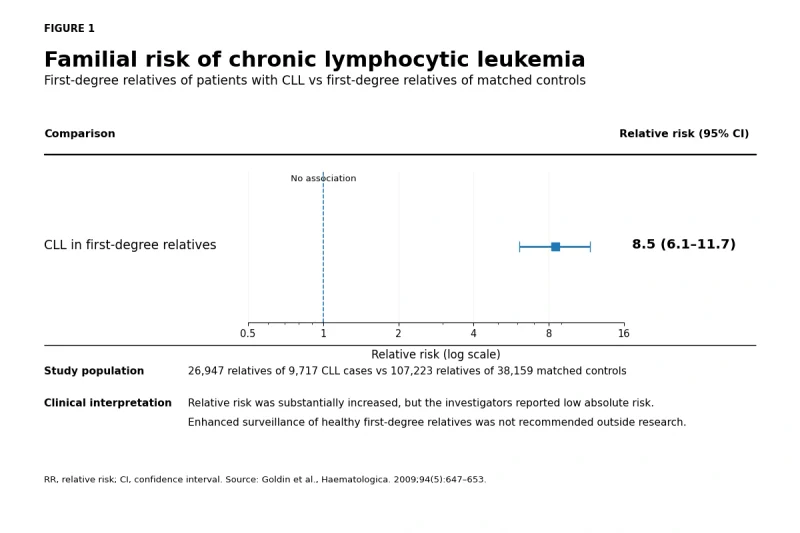
Chronic lymphocytic leukemia shows one of the clearest patterns of familial clustering among common adult leukemias. A registry analysis involving 9,717 patients with chronic lymphocytic leukemia found that their first-degree relatives had an approximately 8.5-fold higher relative risk of developing chronic lymphocytic leukemia than relatives of matched individuals without the disease.[8]
This result can sound alarming unless relative and absolute risk are distinguished. An 8.5-fold relative increase does not mean that most children or siblings will develop chronic lymphocytic leukemia. Because the disease remains uncommon across the general population, the absolute risk for any one healthy relative is still low.[8]
For this reason, routine leukemia screening, repeated bone-marrow testing or broad genetic panels are not generally recommended for every healthy relative of a person with chronic lymphocytic leukemia. The family history should be documented, but further assessment is usually guided by multiple affected relatives, unusually early diagnoses, abnormal blood counts or additional clinical features.[7,8]
A Negative Family History Does Not Completely Exclude Inherited Susceptibility
Some patients with a confirmed germline predisposition have no known relatives with leukemia. The variant may have arisen for the first time in that patient, a carrier parent may have remained unaffected, relatives may have died before reaching the age of greatest risk, or the family may be too small to reveal a recognisable pattern.[1,9]
Reduced penetrance can also conceal hereditary risk. A parent may carry the same variant as an affected child but never develop leukemia. Another relative may show only low platelets, mild anaemia or an immune abnormality rather than a malignancy. The absence of leukemia in previous generations therefore cannot be used as the only reason to reject germline evaluation.[1,9]
DDX41-associated predisposition is particularly important because myelodysplastic syndrome or acute myeloid leukemia often develops in later adulthood. A patient may initially appear to have an age-related, sporadic disease even though a germline DDX41 variant is present. Older age at diagnosis should therefore not automatically prevent evaluation when leukemia sequencing, blood-count history or transplant planning raises concern.[1,10]
Information Families Should Collect Before the Appointment
Patients can improve the accuracy of risk assessment by asking relatives about confirmed leukemia or lymphoma subtypes, myelodysplastic syndrome, aplastic anaemia, chronically low blood counts, bleeding disorders, recurrent serious infections and stem-cell transplantation. The age at which each problem began is often as important as the diagnosis itself.
The history should cover both sides of the biological family and include healthy relatives as well as affected relatives. Knowing that several older relatives remained free of blood disease can help a genetic counsellor interpret the likelihood and possible penetrance of an inherited condition.
Where available, laboratory reports, pathology results, molecular reports and transplant records are more reliable than family recollection alone. A carefully documented family history can help determine whether the patient requires germline testing, whether an affected relative should be tested first and whether any potential related stem-cell donor needs targeted assessment.[1,4,5]
When Does “Is Leukemia Genetic?” Require Germline Testing?

The question “is leukemia genetic?” should lead to germline testing only when the patient’s personal history, family pattern, leukemia-cell results or transplant plans suggest an inherited predisposition. Routine molecular testing performed on blood or bone marrow examines the leukemia itself; germline testing asks a different question—whether a clinically significant variant is present in the patient’s constitutional DNA and could therefore affect biological relatives.[1,2]
Not every person with leukemia requires the same hereditary evaluation. Testing is most informative when it is selected by a hematologist, clinical geneticist or genetic counsellor who understands hereditary blood disorders. The specialist must consider the leukemia subtype, age at diagnosis, previous blood-count abnormalities, physical or immune features, other cancers, family history and any variants already reported by the leukemia laboratory.[1,4,5]
Clinical Findings That May Justify Testing
Germline evaluation may be appropriate when leukemia develops alongside lifelong thrombocytopenia, unexplained anaemia, persistently enlarged red blood cells, low white-cell counts, recurrent infections or a previous diagnosis of bone-marrow failure. These findings may have been present years before leukemia appeared and may also occur in relatives who have never developed cancer.[1]
Testing may also be considered when leukemia occurs with congenital abnormalities, abnormal growth, characteristic skin or nail changes, lung or liver disease, immune deficiency, excessive treatment toxicity or more than one primary cancer. These features do not diagnose a hereditary syndrome on their own, but they can indicate that the blood malignancy is part of a wider constitutional disorder.[1,5]
An unusually young age at diagnosis can strengthen the case for assessment, particularly when the family contains childhood cancers, early-onset solid tumours or related blood disorders. Older patients should not be excluded automatically, because some inherited predispositions, including those associated with DDX41, commonly present during later adulthood.[1,9,10]
A patient may still qualify for germline testing without any known leukemia family history. The variant may have arisen for the first time in that person, relatives may not have inherited it, carriers may remain unaffected, or the disease may not appear until late in life. Small families, adoption, limited access to family medical records and premature deaths can also conceal an inherited pattern.[1,9]
When Leukemia Sequencing Raises Suspicion
Genetic sequencing of leukemia cells can reveal variants that help classify the disease, estimate risk or identify treatment options. Most findings on these panels are somatic and confined to the malignant blood cells. However, some variants occur in genes that are also associated with hereditary predisposition, including DDX41, RUNX1, CEBPA, GATA2, ETV6 and TP53.[1,2]
A variant in one of these genes should not be labelled hereditary solely because it appears on a leukemia report. The laboratory may describe the finding as potentially germline, recommend confirmation or note an allele frequency that raises suspicion. Allele frequency estimates the proportion of DNA sequences containing the variant, but it can be affected by the number of leukemia cells in the sample, chromosome gains or losses and other tumour-related changes.[1,4]
A variant detected at an allele frequency near the range expected for a germline change may justify further investigation, but it does not provide definitive confirmation. Conversely, an allele frequency outside that range does not always exclude germline origin because leukemia cells can lose, duplicate or replace genetic material. Interpretation therefore requires the complete molecular report rather than the gene name or percentage alone.[1,4,9]
DDX41 findings deserve particular attention in myelodysplastic syndrome and acute myeloid leukemia. Certain patterns of DDX41 variants found during tumour sequencing have a substantial likelihood of representing germline predisposition, especially when one suspected germline variant appears with a second acquired DDX41 change. Confirmation is important even when the patient is older and reports no affected relatives.[1,10]
Why Blood or Saliva May Give the Wrong Answer
The tissue used for germline testing is especially important in leukemia. Blood and bone marrow contain the malignant or clonally altered cells being investigated, so they may reproduce the same somatic variant and falsely suggest that it is constitutional. A blood sample taken during remission can also remain unreliable because clonal blood cells may persist after treatment.[1,5]
Saliva and cheek-swab specimens are not automatically free from this problem. Both can contain substantial numbers of white blood cells, allowing acquired blood-cell variants to contaminate the sample. A commercial saliva test may therefore be inadequate for confirming or excluding hereditary leukemia predisposition.[1,6]
Cultured skin fibroblasts obtained from a small skin biopsy are commonly used because they provide DNA from non-blood-forming tissue. The cells are grown in a laboratory before analysis, reducing the risk that circulating blood cells will distort the result. The process can take longer than an ordinary blood test, so referral should occur early when the result may influence treatment or transplantation.[1,5]
Other non-blood tissues may be considered by specialist laboratories, but their suitability depends on the testing method and the patient’s circumstances. The genetics team should choose the specimen and confirm that the laboratory can distinguish germline findings from somatic changes. Patients should not independently repeat a tumour-panel result using blood or saliva and assume that matching results prove inheritance.[1,6]
Testing becomes more complicated after an allogeneic stem-cell transplant. The patient’s circulating blood cells originate from the donor, and blood-based genetic testing may therefore report the donor’s DNA rather than the patient’s original germline DNA. Buccal samples can also contain donor-derived blood cells. A carefully selected non-haematopoietic tissue sample may be required to establish the patient’s true constitutional result.[1,5]
Why Testing May Be Needed Before a Related-Donor Transplant
When a sibling, child or parent is being considered as a stem-cell donor, unresolved hereditary risk should be assessed before donor selection whenever clinically possible. A healthy relative can carry the same pathogenic variant without having abnormal blood counts or symptoms at the time of evaluation.[1,5]
Using a related donor who carries the familial predisposition may expose the recipient to graft problems, future donor-derived malignancy or recurrence of the same biological vulnerability within the transplanted blood-forming system. The precise risk depends on the gene and clinical circumstances, but recognised familial variants should not be ignored during donor assessment.[1,5,10]
If a pathogenic germline variant is confirmed in the patient, potential related donors can undergo targeted testing for that specific familial variant. A relative who tests negative may remain eligible if the rest of the transplant evaluation is satisfactory. A relative who carries the variant generally requires specialist review and may be unsuitable as the donor, even when the blood count is currently normal.[1,5]
What the Possible Results Mean for the Family
A pathogenic or likely pathogenic germline result confirms an inherited predisposition that may affect the patient’s surveillance, treatment planning, transplant strategy and biological relatives. It does not establish that every carrier will develop leukemia, and it does not predict the exact age or subtype that may occur.[1,5,9]
A negative result means that the laboratory did not identify a recognised disease-causing variant with the test performed. It does not eliminate every hereditary possibility. Some disease-associated genes remain undiscovered, some variant types are difficult to detect, and the family pattern may reflect several lower-risk genetic factors rather than one identifiable mutation.[1,6]
A variant of uncertain significance is a genetic change for which available evidence is insufficient to classify it as harmful or harmless. It should not be treated as a confirmed explanation for the leukemia, and healthy relatives should not ordinarily undergo predictive testing or major clinical interventions based only on that result.[6]
The interpretation can change as additional families are studied and laboratory evidence develops. Patients with an uncertain or initially negative result may therefore benefit from periodic review when the clinical suspicion remains strong, particularly if another relative develops leukemia, myelodysplastic syndrome, persistent cytopenia or bone-marrow failure.[1,5,6]
Which Tests Are Needed to Determine Whether Leukemia Is Genetic?

To answer “is leukemia genetic?”, clinicians must separate two different testing pathways. The first identifies and classifies the patient’s leukemia. The second investigates whether a disease-associated variant is present in the patient’s constitutional DNA and could therefore affect children, siblings or related stem-cell donors. No single blood test can answer both questions.[1–5]
Tests Needed to Characterize the Leukemia
A complete blood count with differential measures red blood cells, white blood cells, platelets and the proportions of different white-cell types. A peripheral blood smear allows the laboratory to examine cell appearance and identify blasts or other abnormal populations. These tests may raise suspicion of leukemia, but they cannot determine whether the condition is hereditary.[2,3]
A bone-marrow aspirate and biopsy may be required to confirm the diagnosis, determine the proportion and appearance of abnormal cells and assess whether normal blood production has been displaced. The procedure is performed only when clinically indicated and should not be used as a routine screening test for healthy relatives.[2,3]
Flow cytometry identifies abnormal cell-surface and intracellular markers. It helps distinguish myeloid from lymphoid leukemia and separates specific subtypes that may require different treatment approaches. Flow cytometry characterizes the malignant cells; it does not establish whether a mutation was inherited.[2,3]
Chromosome analysis, fluorescence in situ hybridization and molecular testing may identify rearrangements, copy-number abnormalities, gene fusions and mutations that refine diagnosis, prognosis and treatment selection. Findings such as BCR::ABL1 generally describe an acquired leukemia-cell change, whereas variants involving genes such as DDX41, RUNX1, CEBPA, GATA2, ETV6 or TP53 may sometimes justify further germline assessment.[1–4,9,10]
A suspicious gene result should not be interpreted from the gene name alone. The hematologist must review the exact variant, variant allele frequency, leukemia subtype, chromosome findings, family history and whether the laboratory has recommended germline confirmation. Tumour or leukemia-cell sequencing can raise suspicion, but it cannot independently prove that the finding is hereditary.[1,4,9]
Tests Needed to Confirm a Germline Predisposition
The hereditary evaluation usually begins with genetic counselling and a structured family history covering leukemia, myelodysplastic syndrome, bone-marrow failure, persistent cytopenias, inherited bleeding problems, recurrent infections and early-onset cancers. The age at diagnosis and exact condition in each relative help determine which genes or syndromes require investigation.[1,5,6]
Germline testing may involve a targeted test for one suspected variant or a multigene hereditary hematologic malignancy panel. The choice depends on the leukemia subtype, molecular report, lifelong blood-count history, physical findings and family pattern. Testing every available gene without a clinically defined question can increase the likelihood of uncertain results without providing a clear answer for the family.[1,4–6]
The specimen is critical. Blood and bone marrow may contain malignant or clonally altered cells and can therefore reproduce a somatic mutation that is not present throughout the body. Saliva and cheek-swab samples may also contain enough white blood cells to create uncertainty. Cultured skin fibroblasts obtained from a small skin biopsy are commonly preferred for definitive germline confirmation because they provide non-haematopoietic DNA.[1,5]
Patients who have undergone an allogeneic stem-cell transplant require particular caution because circulating blood cells may contain the donor’s DNA. Blood-based testing after transplantation may therefore describe the donor rather than the patient. The genetics laboratory should select a validated non-blood tissue source before testing proceeds.[1,5]
Some patients require syndrome-specific investigations in addition to DNA sequencing. These may include chromosome-breakage studies when a DNA-repair disorder is suspected, telomere-length assessment when a telomere biology disorder is considered, or immune-cell studies when recurrent infections and immune deficiency accompany the blood disorder. These tests are selected according to the clinical pattern and are not required for every person with leukemia.[1,5,9]
A pathogenic or likely pathogenic result can confirm inherited susceptibility. A negative result does not exclude every hereditary cause because current panels cannot detect all genes or variant types. A variant of uncertain significance should not be treated as proof of inherited leukemia risk and should not ordinarily direct predictive testing of healthy relatives or major treatment decisions.[1,5,6]
Tests Needed for Children, Siblings and Related Donors
Healthy relatives should usually undergo genetic testing only after a pathogenic or likely pathogenic germline variant has been confirmed in the affected patient. The relative can then receive targeted testing for that specific familial variant rather than an unfocused broad panel.[5,6]
A normal complete blood count does not prove that a relative is not a carrier. Some carriers maintain normal counts for years, and others never develop leukemia. Genetic testing determines whether the familial variant is present, while clinical review and blood counts assess whether any current blood abnormality requires investigation.[1,5,9]
Potential related stem-cell donors should be assessed before final donor selection when hereditary predisposition is suspected or confirmed. A sibling, parent or adult child can carry the familial variant despite feeling well and having a normal blood count. Targeted donor testing may prevent transplantation from a relative whose stem cells share the same inherited predisposition.[1,5,10]
Testing children is generally considered when the result could change care during childhood, such as initiating surveillance, evaluating immune dysfunction or managing an inherited bone-marrow-failure condition. For predominantly adult-onset syndromes without a recommended childhood intervention, testing may be deferred until the individual can participate in the decision.[6,10]
How Genetic Testing Supports Complete Leukemia Care
Hereditary testing answers whether biological relatives may share a predisposition; it does not replace the investigations required to diagnose, classify and monitor the patient’s active leukemia. Complete care still depends on the leukemia subtype, blood and bone-marrow findings, flow cytometry, chromosome changes, molecular markers, treatment response and measurable residual disease assessment.[2,3]
For a broader explanation of diagnosis, treatment decisions, remission monitoring, supportive Ayurveda and coordinated hematology care, read the main guide on Ayurvedic treatment for leukemia. Genetic evaluation should function as one component of comprehensive leukemia care and should never delay urgent treatment, specialist follow-up or disease-specific monitoring.
If Leukemia Is Genetic, Which Relatives Should Be Tested?

When a hereditary predisposition is confirmed, the practical question behind “is leukemia genetic?” becomes which children, siblings or other biological relatives should be offered testing. Testing should proceed in a planned sequence because a result from the wrong person, an unsuitable tissue sample or an unnecessarily broad panel can create uncertainty without clarifying the family’s actual risk.[1,5,6]
Test an Affected Family Member First
Whenever possible, germline testing should begin with the person who has leukemia, myelodysplastic syndrome, bone-marrow failure or the most informative related blood disorder. An affected person is more likely than a healthy relative to carry the genetic explanation for the family’s pattern.[1,5]
The leukemia patient’s suspected germline variant should first be confirmed using an appropriate non-blood tissue source. Once the laboratory classifies the result as pathogenic or likely pathogenic, relatives can be tested specifically for that familial variant rather than undergoing an unfocused search across numerous genes.[1,5,6]
When several relatives are affected, the most informative person may be the relative diagnosed at the youngest age, the person with lifelong blood-count abnormalities, or the individual whose condition most closely matches a recognised hereditary syndrome. A clinical geneticist or genetic counsellor can determine which relative is most likely to provide a conclusive result.
If the affected relative has died or cannot be tested, another living relative with leukemia, myelodysplastic syndrome or a related blood abnormality is usually the next most informative person. Stored non-leukemic tissue may occasionally be available, but its suitability depends on the specimen, its age and the testing laboratory.
Testing an unaffected relative before identifying the familial variant may still be considered when no affected relative is available, but interpretation becomes more difficult. A negative broad panel in a healthy sibling or child cannot prove that the family lacks an inherited predisposition because the responsible gene may not have been included, the variant may not be detectable by that method, or the family’s genetic cause may not yet be known.[1,6]
How Targeted Testing of Relatives Works
After a pathogenic or likely pathogenic germline variant is confirmed, biological relatives can be offered targeted testing for the same variant. This process is known as cascade testing. It usually begins with first-degree relatives, including biological parents, siblings and children, before extending to more distant relatives through the side of the family in which the variant is found.[5,6]
The pattern of testing depends on how the condition is inherited. For an autosomal dominant predisposition, each biological child and full sibling may have up to a 50% chance of carrying the familial variant, although a sibling’s actual probability also depends on whether either parent carries it. Autosomal recessive and X-linked conditions require different calculations and may involve carrier testing as well as disease-risk testing.[1,5]
A relative who carries the familial variant has inherited the predisposition, not an inevitable leukemia diagnosis. The probability of developing disease, the expected age of onset and the types of blood abnormalities differ substantially among genes and sometimes among relatives carrying the same variant.[1,9]
A relative who tests negative for a clearly established familial variant is usually not considered to have that specific inherited syndrome. Syndrome-specific blood surveillance may therefore be unnecessary, although the person retains the background risk of sporadic leukemia that applies to the wider population.
A negative result is less reassuring when the affected family member never received conclusive germline testing. In that situation, the result is considered uninformative rather than a true negative because the laboratory did not know which familial variant it was attempting to exclude.[6]
A variant of uncertain significance should not be used as the basis for predictive testing in healthy relatives. Testing relatives solely to determine whether an uncertain variant is present can incorrectly label healthy people as being at risk and should be undertaken only when a specialist laboratory requests family studies to help classify the variant.[6]
Should Healthy Children Be Tested?
Testing a child is most appropriate when the result could change medical care during childhood. This may include starting blood-count surveillance, assessing immune function, investigating congenital or developmental features, avoiding an unsuitable related stem-cell donor, or recognising a syndrome associated with childhood bone-marrow failure or leukemia.[1,5]
Some inherited conditions involving GATA2, SAMD9, SAMD9L or genes associated with Fanconi anaemia, telomere disorders and other bone-marrow-failure syndromes can produce clinically important findings during childhood or adolescence. Early confirmation may allow a specialist team to recognise falling blood counts, recurrent infections, organ complications or marrow changes before an acute clinical deterioration occurs.[1]
Predictive testing may be postponed when the familial condition is predominantly associated with adult-onset disease and no childhood surveillance or intervention has established benefit. For example, DDX41-associated myeloid malignancy usually develops later in adulthood, and testing minors is generally not recommended unless the family shows unusually early disease or the result is required for an immediate clinical decision.[10]
The decision should consider the child’s age, the gene involved, the earliest diagnosis in the family and whether a positive result would lead to a defined medical plan. Parents should receive counselling about the limitations of prediction, and children who are mature enough should be involved in the discussion in a manner appropriate to their understanding.[6,10]
A child should not undergo a broad commercial genetic test simply because a parent has leukemia. Testing becomes clinically meaningful when a confirmed familial variant or a strongly suspected childhood-onset predisposition provides a specific question that the result can answer.
What Happens When a Healthy Relative Tests Positive?
A healthy carrier should be referred to a hematologist or hereditary blood-disorder service familiar with the specific gene. The initial assessment may include a personal history, examination, review of previous blood results and a complete blood count with differential. Additional investigations depend on the gene, symptoms and whether any abnormalities are detected.[1,5]
Surveillance must be individualised because hereditary leukemia syndromes do not share one standard monitoring schedule. Some carriers require periodic complete blood counts and clinical review, while others need assessment of immune function, bleeding tendency, organ complications or the risks of other cancers associated with the syndrome.[1,5,9]
A bone-marrow biopsy is not automatically required for every healthy carrier. It may be considered when blood counts become abnormal, cell size changes persist, immature cells appear in the blood, symptoms raise concern or the gene-specific protocol recommends a baseline examination. Repeated invasive testing without a defined clinical reason can create unnecessary burden without established benefit.[1,5]
Carriers should know which symptoms justify earlier review rather than waiting for a scheduled appointment. Persistent unexplained fatigue, unusual bruising, recurrent infections, prolonged fever, abnormal bleeding or a newly abnormal blood count should prompt assessment, although these symptoms are not specific to leukemia.
The result should also be recorded before any future stem-cell donation. A relative carrying the familial pathogenic variant may be medically well but may not be an appropriate donor for an affected family member. Donor eligibility requires review by the transplant and genetics teams rather than reliance on a normal blood count alone.[1,5,10]
What a Positive Result Means for Siblings
A sibling who carries the familial variant may need surveillance even when older relatives with the same variant remained healthy. Variable penetrance means that one carrier’s outcome cannot reliably predict another’s. Differences in age, additional acquired mutations and other modifying factors may influence whether and when disease develops.[1,9]
A sibling who tests negative for the confirmed familial variant will generally not require surveillance directed at that syndrome and would not be expected to pass that variant to biological children. However, separate personal medical findings or a second unexplained pattern of cancer in the family may still warrant independent assessment.
Half-siblings share only one biological parent, so their need for testing depends on which parent carries the variant. Step-siblings and adopted relatives do not share inherited risk unless there is a biological relationship, although their medical histories may still be important for their own healthcare.
What the Result Means for Future Children
Adults carrying a confirmed germline variant can discuss reproductive implications before pregnancy or when planning a family. The probability of transmission depends on whether the syndrome is autosomal dominant, autosomal recessive or X-linked, and should be calculated from the confirmed gene result rather than from the leukemia diagnosis alone.[1,6]
Available reproductive choices may include natural conception without testing, testing during pregnancy, or in vitro fertilisation with preimplantation genetic testing for the familial variant. These are personal decisions involving medical, ethical, emotional and financial considerations. Genetic counselling should provide accurate options without directing the individual towards a particular choice.[6]
A prenatal or embryo result can determine whether the familial variant was inherited, but it may not predict whether leukemia will develop, at what age it might occur or how severe the condition may be. Families should understand this uncertainty before making reproductive decisions, particularly for genes with reduced or variable penetrance.[6,9]
Is Leukemia Genetic in Every Leukemia Type?

When families ask, “is leukemia genetic?”, the answer depends partly on the leukemia subtype. Every subtype contains acquired genetic abnormalities within the malignant cells, but the likelihood of an inherited predisposition, the genes involved and the implications for children or siblings differ considerably. A molecular finding that is highly relevant in acute myeloid leukemia may have little bearing on hereditary risk in chronic myeloid leukemia or chronic lymphocytic leukemia.[1,2]
The subtype therefore matters when deciding whether family history alone is sufficient, whether formal germline testing is appropriate and whether biological relatives need targeted assessment. Patients should ask their hematologist for the exact leukemia diagnosis rather than relying only on the general term “blood cancer.”
Acute Myeloid Leukemia and Related Myelodysplastic Syndromes
Inherited susceptibility is particularly well characterised in acute myeloid leukemia and myelodysplastic syndromes. Current classifications recognise myeloid malignancies arising from germline variants involving genes such as DDX41, RUNX1, CEBPA, GATA2, ETV6 and ANKRD26, as well as inherited bone-marrow-failure and telomere disorders.[1–3,9]
These conditions do not all present in the same way. Some patients have abnormal blood counts, bleeding or recurrent infections for years before leukemia develops. Others have no obvious warning signs and are diagnosed only after leukemia-cell sequencing raises suspicion of a germline variant.
Germline RUNX1 variants can cause familial platelet disorder with persistent thrombocytopenia, impaired platelet function and increased susceptibility to myeloid malignancy. A family may therefore contain relatives with easy bruising or low platelet counts who never developed leukemia, alongside another relative who later developed acute myeloid leukemia or myelodysplastic syndrome.[1,2]
Pathogenic germline variants involving ETV6 or ANKRD26 can also produce inherited thrombocytopenia. Patients may have been monitored for low platelets since childhood or may have experienced excessive bleeding after surgery, childbirth or dental procedures. These longstanding findings are more suggestive of constitutional predisposition than a platelet count that became abnormal only after leukemia developed.[1]
Germline GATA2 variants can affect blood formation and immune function. Relevant clues may include low monocytes, natural killer cells or B cells; recurrent viral, bacterial or mycobacterial infections; persistent warts; lymphatic abnormalities; or myelodysplastic syndrome arising at a relatively young age. The clinical presentation varies, so the absence of one characteristic feature does not exclude the condition.[1,9]
Familial acute myeloid leukemia associated with CEBPA may occur without the congenital abnormalities seen in some other syndromes. More than one biological relative may develop acute myeloid leukemia, sometimes at different ages. Confirming germline origin is important because CEBPA can also acquire somatic mutations within leukemia cells.[1–3]
DDX41 differs from many inherited cancer-predisposition genes because associated myelodysplastic syndrome and acute myeloid leukemia frequently appear in later adulthood. The patient may therefore be diagnosed at an age that initially suggests sporadic leukemia. A negative family history is also common because carriers may never develop disease, may develop it late or may have died from unrelated causes before the predisposition became apparent.[1,9,10]
When a myeloid leukemia panel reports a suspicious DDX41 variant, germline confirmation can affect related-donor selection and family counselling. A healthy sibling or adult child should not be assumed to be a safe stem-cell donor until the possibility of carrying the familial variant has been addressed.[1,5,10]
Inherited bone-marrow-failure syndromes can also present for the first time in adulthood. Telomere biology disorders, Fanconi anaemia and other constitutional conditions may be overlooked when physical features are subtle. Unexplained macrocytosis, previous aplastic anaemia, pulmonary fibrosis, liver disease, premature greying, characteristic skin or nail changes, treatment intolerance or a family history of marrow failure can provide important clues.[1]
The presence of one of these features does not prove that acute myeloid leukemia is hereditary. It indicates that the patient may benefit from a structured germline assessment rather than relying only on the somatic mutation panel used to classify the leukemia.
Acute Lymphoblastic Leukemia
Most acute lymphoblastic leukemia is not directly inherited. The leukemia cells usually acquire multiple genetic abnormalities during the development of the disease, and those abnormalities are generally not present in the patient’s reproductive cells.[1,2]
A minority of patients nevertheless has an inherited susceptibility. Germline variants involving genes such as ETV6, PAX5, IKZF1 and TP53 have been associated with an increased risk of acute lymphoblastic leukemia in selected families. Some inherited bone-marrow-failure, immune-deficiency and cancer-predisposition syndromes can also increase the likelihood of lymphoid leukemia.[1]
Genetic evaluation becomes more relevant when acute lymphoblastic leukemia occurs in more than one close relative, develops at an unusually young age, accompanies persistent thrombocytopenia or immune abnormalities, or occurs within a family containing several early-onset cancers. A personal history of multiple cancers or an unusually strong treatment reaction may also prompt broader assessment.
A child’s leukemia diagnosis does not automatically mean that siblings require testing. Testing siblings is most informative when the affected child has a confirmed pathogenic germline variant or when the family’s clinical pattern strongly suggests a recognised hereditary syndrome. Without an identified familial variant, broad predictive testing of healthy children may produce uncertain findings that do not clarify their actual risk.[1,6]
When a germline variant is confirmed, the risk to siblings depends on the inheritance pattern and whether one or both parents carry the variant. In some families, the variant is inherited from a clinically unaffected parent because penetrance is incomplete. In others, it arises for the first time in the affected child.
A confirmed childhood-onset predisposition may influence surveillance for siblings who carry the variant. However, surveillance should follow a gene-specific plan because the appropriate investigations differ between platelet disorders, immune-deficiency syndromes, DNA-repair disorders and broader cancer-predisposition conditions.[1,6]
Chronic Lymphocytic Leukemia
Chronic lymphocytic leukemia has a recognised tendency to cluster in families. A person with a first-degree relative affected by chronic lymphocytic leukemia has a higher relative risk than someone without that family history, but most children and siblings of affected patients will never develop the disease.[7,8]
Unlike several familial acute myeloid leukemia syndromes, familial chronic lymphocytic leukemia is often not explained by one highly penetrant pathogenic variant. Susceptibility may involve numerous inherited genetic differences, each contributing a relatively small amount of risk. Family members may also develop related B-cell conditions rather than exactly the same diagnosis.[7,8]
This complex inheritance means that there is no single germline test that can accurately predict chronic lymphocytic leukemia for every family. Broad genetic testing of healthy relatives is generally not useful when one person has chronic lymphocytic leukemia and there are no additional features suggesting a defined hereditary syndrome.
Routine complete blood counts, flow cytometry or bone-marrow biopsies are also not recommended solely because a parent or sibling has chronic lymphocytic leukemia. A healthy relative should receive an appropriate clinical assessment when symptoms develop or when an ordinary blood test shows persistent lymphocytosis, cytopenia or another unexplained abnormality.
A stronger family pattern may justify specialist review. Examples include several first-degree relatives with chronic lymphocytic leukemia, multiple related lymphoid malignancies, unusually early diagnoses or a family history that also includes myelodysplastic syndrome, marrow failure or solid tumours suggestive of a broader inherited syndrome.[7]
Patients should distinguish familial clustering from deterministic inheritance. A family history raises susceptibility but does not establish that chronic lymphocytic leukemia will be transmitted from parent to child or that healthy relatives require cancer treatment or invasive testing.
Chronic Myeloid Leukemia
Chronic myeloid leukemia is driven by the BCR::ABL1 fusion, usually created by an acquired rearrangement between chromosomes 9 and 22 within a blood-forming cell. This rearrangement is commonly called the Philadelphia chromosome.[2]
The BCR::ABL1 change is generally confined to the abnormal blood-cell clone. It is not ordinarily present in the patient’s egg or sperm cells and is not usually passed to biological children. A parent with chronic myeloid leukemia therefore does not normally transmit the Philadelphia chromosome to a child.
Healthy children and siblings do not require BCR::ABL1 testing merely because a relative has chronic myeloid leukemia. The test is used to diagnose or monitor disease in the patient; it is not a routine predictive screening test for relatives.
A family genetics referral may still be appropriate when chronic myeloid leukemia occurs within a wider pattern of multiple blood cancers, persistent inherited cytopenias, bone-marrow failure or several early-onset cancers. In that situation, the assessment is directed at the broader family pattern rather than at inheritance of BCR::ABL1 itself.[1,2]
Patients should also distinguish chronic myeloid leukemia from inherited disorders that can cause persistently high white-cell counts. Similar-looking blood results do not mean that relatives share the same leukemia, and an exact diagnosis is necessary before family risk can be interpreted.
Rare Childhood and Familial Leukemias
Certain uncommon leukemias have stronger associations with constitutional genetic conditions. Juvenile myelomonocytic leukemia, for example, can occur in children with germline abnormalities affecting RAS-pathway regulation. The clinical genetics assessment may therefore consider developmental history, skin findings, congenital features and other manifestations in addition to the leukemia itself.[1,2]
Inherited bone-marrow-failure syndromes can predispose to myelodysplastic syndrome or acute myeloid leukemia during childhood, adolescence or adulthood. These conditions may also affect growth, immunity, fertility, lungs, liver, skin or other organs. Recognising the syndrome can influence chemotherapy dosing, radiation exposure, transplant conditioning and donor selection.[1,5]
A rare leukemia subtype does not automatically indicate heredity. The probability becomes more meaningful when the diagnosis is combined with congenital abnormalities, lifelong blood-count changes, immune dysfunction, excessive treatment toxicity or a compatible family history.
For parents, the most useful next step is to ask whether the treating team has identified any clinical or molecular reason to suspect a germline predisposition. The exact leukemia subtype, rather than the word “leukemia” alone, determines whether testing the patient or relatives is likely to provide clinically useful information.
How Knowing Whether Leukemia Is Genetic Can Change Care

Determining whether leukemia is genetic in the hereditary sense can influence more than family counselling. A confirmed germline predisposition may affect treatment planning, stem-cell donor selection, long-term surveillance and the assessment of biological relatives. The result must therefore be interpreted alongside the leukemia subtype, current disease status, previous treatment and the specific gene involved rather than treated as an isolated laboratory finding.[1,5,9]
A hereditary result does not automatically require a different leukemia treatment. Many patients still receive therapy according to the biological features and clinical risk of their leukemia. However, certain inherited syndromes can alter how the body responds to chemotherapy, radiation or transplant conditioning, while others create risks involving additional organs, immune function or future cancers that require coordinated care.[1,3,5]
Treatment and Transplant Decisions
Some germline conditions affect DNA repair, chromosome stability or telomere maintenance. Patients with these disorders may experience greater toxicity from particular chemotherapy agents, radiation exposure or intensive transplant-conditioning regimens. Recognising the underlying syndrome before treatment allows the hematology and transplant teams to consider whether drug doses, radiation use or conditioning intensity require modification.[1,5]
This does not mean that treatment should be reduced solely because a hereditary variant has been reported. The clinical significance of the variant, the strength of the evidence and the urgency of controlling the leukemia must all be considered. A pathogenic variant associated with a recognised syndrome has different implications from a variant of uncertain significance, which should not ordinarily be used to alter potentially curative therapy.[5,6]
A germline result may also clarify why a patient developed persistent blood abnormalities before the leukemia diagnosis. For example, inherited thrombocytopenia, immune deficiency or bone-marrow failure may have been present for years. Recognising that background can help clinicians distinguish manifestations of the hereditary disorder from treatment toxicity, leukemia progression or relapse.[1]
Stem-cell transplantation requires particular attention because a biological relative may carry the same pathogenic variant while appearing healthy. A normal blood count does not always exclude carrier status, especially in disorders with variable penetrance or later adult onset. When a familial variant has been identified, related donors should undergo targeted testing before they are accepted as the stem-cell source.[1,5,10]
A relative who does not carry the familial variant may remain suitable if the remainder of the donor evaluation is satisfactory. A relative who carries the variant may be excluded or require specialist assessment because the donated stem cells could share the same biological vulnerability. Donor-derived myeloid malignancies have been described in association with inherited predisposition, including some families with DDX41 variants.[5,10]
The genetic evaluation should therefore begin early when transplantation is being considered. Waiting until a donor has already completed mobilisation or a transplant date has been fixed can create avoidable delays and emotional distress if the relative is later found to be unsuitable.
Surveillance After a Positive Germline Result
A positive result does not mean that leukemia will recur or that a healthy carrier will inevitably develop disease. Surveillance is designed to recognise clinically meaningful changes early while avoiding unnecessary invasive procedures. The appropriate schedule depends on the gene, the patient’s age, previous leukemia treatment, transplant history and any associated immune, bleeding or organ complications.[1,5,9]
For a person who has already been treated for leukemia, follow-up continues to include the disease-specific monitoring recommended by the hematology team. Germline status may add further assessment for persistent cytopenias, clonal changes, secondary malignancies or non-haematological complications associated with the syndrome. It does not replace bone-marrow examinations, molecular monitoring or other tests required for the original leukemia.[1,3,5]
Healthy carriers may be advised to have periodic clinical review and a complete blood count with differential. Changes such as progressively falling platelets, persistent anaemia, increasing red-cell size, low neutrophils, unexplained monocytopenia or circulating immature cells may prompt earlier specialist assessment. The frequency of monitoring should be determined by a clinician familiar with the particular predisposition because evidence-based schedules are not identical across all genes.[1,5,9]
Routine repeated bone-marrow biopsies are not necessary for every symptom-free carrier. A marrow examination may be considered when blood counts become persistently abnormal, new symptoms arise, the peripheral blood shows concerning changes or a gene-specific surveillance protocol supports baseline or interval testing.[1,5]
Some hereditary conditions require monitoring outside the blood and bone marrow. Depending on the syndrome, care may involve assessment of immune function, recurrent infections, bleeding tendency, lung disease, liver disease, skin findings or the risk of additional cancers. These evaluations should be based on the confirmed syndrome rather than applied uniformly to everyone with hereditary leukemia susceptibility.[1,5]
Ayurvedic or other integrative care may be used to support nutrition, sleep, digestive tolerance, fatigue management and quality of life when coordinated with the treating team. It cannot determine whether a variant is germline, replace surveillance blood tests or substitute for treatment of active leukemia. Herbs, mineral preparations and concentrated formulations should be reviewed for interactions and organ toxicity, particularly during chemotherapy, targeted therapy or transplantation.
Implications for Children, Siblings and Future Pregnancies
Once a pathogenic germline variant is confirmed, the result can provide a clear testing pathway for biological relatives. Parents, adult siblings and children may be offered targeted testing rather than broad panels. More distant relatives can then be approached through the branch of the family in which the variant is present.[5,6]
A relative who tests positive should receive counselling about the level of risk associated with the particular gene, the uncertainty of predicting disease onset and the surveillance that may be available. The result should not be communicated as a diagnosis of leukemia. Many carriers remain well for years, and some never develop a malignant blood disorder.[1,6,9]
A relative who tests negative for the established familial variant is generally not considered to have that specific inherited predisposition and would not be expected to pass it to biological children. This is different from a negative test performed when no familial variant has first been identified. In the latter situation, the result may be uninformative rather than reassuring.[6]
Adults who carry a confirmed variant may discuss reproductive options with a genetics professional. Depending on the inheritance pattern, options can include natural conception, prenatal diagnosis or in vitro fertilisation with preimplantation genetic testing for the known familial variant. These procedures can determine whether the variant was inherited, but they cannot always predict whether leukemia will develop, the age at which it may appear or how severe the associated condition will be.[6,9]
Testing children requires additional consideration. It is generally most appropriate when the result could change medical care during childhood, such as initiating blood-count surveillance, assessing immune function or managing a childhood-onset bone-marrow-failure syndrome. Testing may be deferred for predominantly adult-onset conditions when no childhood intervention is recommended, allowing the individual to participate in the decision when older.[6,10]
Questions to Discuss Before Genetic Testing
Before testing, the patient should ask whether the suspected variant was found through leukemia-cell sequencing or whether it has already been confirmed in non-blood tissue. The distinction determines whether the current result describes the leukemia or provides evidence of an inherited condition.
The hematologist or genetic counsellor should explain why testing is being recommended, which genes or syndromes are being considered and which specimen will be used. Patients with active leukemia or a previous allogeneic stem-cell transplant should specifically ask whether blood, saliva or cheek cells could produce a misleading result and whether cultured skin fibroblasts are more appropriate.[1,5]
Patients should also ask how a pathogenic result could affect current treatment, transplant conditioning and the selection of a related donor. When transplantation is being planned, the team should clarify whether testing can be completed before a sibling, child or parent is confirmed as the donor.[1,5]
The discussion should cover what a negative result would and would not exclude. A negative panel cannot eliminate every hereditary possibility because some relevant genes may remain unknown, some variants are not detected by standard methods and some families have complex susceptibility rather than one identifiable high-risk mutation.[1,6]
The patient should ask how the laboratory manages a variant of uncertain significance and whether relatives would be tested for it. Major treatment decisions, predictive testing of healthy relatives and reproductive decisions should not ordinarily be based on an uncertain variant unless additional evidence leads to reclassification.[6]
Finally, the family should understand who will receive the result, how it will be documented, whether reanalysis may be available in the future and which relatives should be contacted if a pathogenic variant is confirmed. Genetic counselling is most useful when it converts a laboratory result into a specific plan for the patient, potential stem-cell donors and relatives who may benefit from targeted testing or surveillance.[5,6]
Is Leukemia Genetic Enough to Require Screening of Healthy Relatives?

The question “is leukemia genetic?” often leads parents, siblings and adult children to request regular blood tests or cancer screening. In most families, however, one leukemia diagnosis does not justify intensive surveillance of every healthy relative. Screening becomes clinically useful when a pathogenic germline variant has been confirmed, several biologically related family members are affected, or a relative has persistent blood-count abnormalities or symptoms that require investigation.[1,5,7]
For families without a confirmed hereditary syndrome, routine primary care remains appropriate. Healthy relatives should ensure that their clinician knows which family member had leukemia, the exact subtype if available and the age at diagnosis. This information can be reconsidered if another relative later develops leukemia, myelodysplastic syndrome, bone-marrow failure or unexplained cytopenia.
When a Complete Blood Count Is Reasonable
A complete blood count can be appropriate when a relative develops persistent fatigue, recurrent infections, unexplained bruising, abnormal bleeding, prolonged fever, night sweats, unintentional weight loss or enlarged lymph nodes. These symptoms are common and usually have causes other than leukemia, but they justify ordinary clinical assessment rather than assumption based on family history.
Testing is also reasonable when a previous blood count has shown persistent anaemia, thrombocytopenia, neutropenia, lymphocytosis, monocytopenia or unusually large red blood cells. A single mildly abnormal result does not diagnose leukemia and may reflect infection, medication, nutritional deficiency, inflammation or laboratory variation. Persistent or progressive abnormalities require interpretation by a clinician.
A baseline complete blood count may be included when a hematologist or genetic counsellor evaluates a family with multiple affected relatives. The result helps identify previously unrecognised cytopenias or other patterns that could support further assessment. It should not be presented as a test capable of predicting whether leukemia will eventually develop.
For carriers of a confirmed pathogenic germline variant, periodic complete blood counts may form part of a gene-specific surveillance plan. The interval depends on the condition, the carrier’s age, previous results and the earliest disease onset within the family. There is no single annual-testing rule that applies to every hereditary leukemia syndrome.[1,5,9]
Why Healthy Relatives Usually Do Not Need Bone-Marrow Testing
A bone-marrow biopsy is not a routine screening procedure for relatives of a patient with leukemia. It is invasive and is generally reserved for people with persistent blood-count abnormalities, concerning peripheral-blood findings, symptoms suggesting marrow disease or a confirmed syndrome for which specialist guidance supports marrow evaluation.[1,5]
A normal marrow examination cannot guarantee that leukemia will never develop. Repeating biopsies in an asymptomatic relative without a defined indication may cause pain, anxiety and unnecessary follow-up without providing a proven preventive benefit.
Flow cytometry is also not an appropriate general screening test for most healthy relatives. It is used to characterise abnormal blood-cell populations when the blood count, examination or clinical history provides a reason to suspect a lymphoid or myeloid disorder.
Similarly, chromosome analysis and leukemia mutation panels should not be ordered as broad predictive tests in healthy family members. These tests are designed primarily to investigate an existing blood abnormality or confirmed malignancy. Age-related clonal changes may sometimes be detected in apparently healthy adults, but their presence does not establish leukemia and can create complex findings that require specialist interpretation.[1,2]
Screening Relatives of a Patient With Chronic Lymphocytic Leukemia
First-degree relatives of a person with chronic lymphocytic leukemia have a higher relative risk of chronic lymphocytic leukemia and certain related lymphoid disorders. Nevertheless, the absolute probability for any one child or sibling remains low, and routine screening of asymptomatic relatives has not been shown to improve outcomes.[7,8]
Healthy relatives do not ordinarily require regular flow cytometry, bone-marrow biopsy or molecular testing solely because a parent or sibling has chronic lymphocytic leukemia. A complete blood count obtained during routine healthcare may occasionally identify persistent lymphocytosis, but additional testing should be guided by the result and clinical assessment rather than performed automatically.
Monoclonal B-cell lymphocytosis, a small clonal B-cell population that can precede chronic lymphocytic leukemia, becomes more common with age and occurs more frequently in some affected families. Detecting it does not mean that treatment is required or that progression will occur. For this reason, deliberate screening for monoclonal B-cell lymphocytosis in healthy relatives is generally not recommended outside specialist or research settings.[7,8]
Screening Children of a Parent With Leukemia
A child does not need leukemia testing simply because a parent has an acquired leukemia mutation. Somatic abnormalities such as BCR::ABL1 in chronic myeloid leukemia are confined to the affected blood-cell population and are not ordinarily transmitted to children.[2]
Paediatric testing becomes relevant when the parent has a confirmed pathogenic germline variant associated with disease during childhood, adolescence or early adulthood. The genetics team must determine whether testing the child would lead to meaningful surveillance, immune assessment, donor guidance or another intervention during childhood.[1,6]
For predominantly adult-onset predispositions, testing may be postponed until the child is mature enough to participate in the decision. This avoids disclosing predictive information during childhood when no immediate medical benefit is expected. The timing should be based on the specific syndrome rather than the parent’s leukemia diagnosis alone.[6,10]
Parents should seek earlier paediatric assessment when a child has persistent pallor, unusual bruising, frequent infections, prolonged fever, enlarged lymph nodes, abnormal bleeding or an unexplained blood-count change. These findings require clinical evaluation regardless of whether hereditary risk has been established.
What Relatives Should Do When No Familial Variant Is Found
When germline testing in the affected patient is negative, healthy relatives should not assume that hereditary risk has been completely excluded. Current panels cannot detect every possible cause, and some familial patterns may reflect genes or variant types that are not yet recognised.[1,6]
At the same time, an inconclusive family investigation does not justify indefinite intensive screening of every relative. Follow-up should be proportionate to the strength of the family pattern. One late-onset leukemia diagnosis usually requires less surveillance than several close relatives with leukemia, myelodysplastic syndrome, bone-marrow failure or lifelong cytopenias.
Families should preserve copies of pathology reports, genetic results and relevant blood-count records. Reassessment may become useful if another relative develops a related condition, the original laboratory reclassifies a variant, or improved genetic testing becomes available.
A variant of uncertain significance should not be used to label relatives as carriers or to establish a surveillance programme. Until sufficient evidence shows that the variant is disease-causing, clinical decisions should continue to rely on the person’s own blood results, symptoms, family history and specialist assessment.[6]
When a Healthy Relative Should Be Referred
A healthy sibling, child or parent should be referred for specialist assessment when several close relatives have related blood disorders, a pathogenic familial variant has been confirmed, or the relative has persistent unexplained abnormalities in the complete blood count.
Referral is also appropriate when the relative is being considered as a stem-cell donor for the affected patient. Potential related donors may require targeted testing even when they feel well and have normal blood counts because some hereditary predispositions remain clinically silent for many years.[1,5,10]
The purpose of referral is not to predict leukemia with certainty. It is to determine whether the relative’s family history and clinical findings justify targeted genetic testing, structured surveillance or exclusion from related stem-cell donation.
Is Leukemia Genetic? Questions to Ask Before Testing

When families ask “is leukemia genetic?”, the most useful consultation should clarify whether the concern comes from the patient’s family history, the leukemia subtype or a mutation reported during blood or bone-marrow testing. A hematologist or genetic counsellor can then determine whether germline testing is likely to answer a meaningful clinical question for the patient, children, siblings or potential stem-cell donors.[1,5,6]
Was the Mutation Found Only in the Leukemia Cells?
Patients should ask whether the reported genetic change came from a diagnostic blood or bone-marrow sample and whether it has been confirmed in non-blood tissue. A mutation detected only in leukemia cells is generally considered somatic until further evidence suggests germline origin.[1,2]
The report should be reviewed for the exact gene, variant classification and any laboratory comment recommending germline confirmation. The presence of a recognised predisposition gene does not by itself establish heredity because several genes can acquire mutations only within the leukemia cells.[1,4]
Patients should also ask whether the result could have been influenced by active leukemia, persistent clonal blood cells, a previous transfusion or an allogeneic stem-cell transplant. These factors may affect which tissue is appropriate for confirming a constitutional variant.[1,5]
Does My Personal History Suggest an Inherited Predisposition?
The consultation should examine blood-count abnormalities that predated leukemia. Lifelong low platelets, unexplained anaemia, enlarged red blood cells, low white-cell counts, recurrent infections or previous bone-marrow failure may provide evidence that the leukemia developed within a broader inherited disorder.[1,5]
Patients should report unusual bleeding, repeated serious infections, persistent viral warts, pulmonary fibrosis, unexplained liver disease, premature greying, congenital abnormalities and excessive toxicity from previous cancer treatment. These features are not specific enough to diagnose a hereditary syndrome, but they may influence the genes tested and the treatment implications of a positive result.[1,5,9]
The age at leukemia diagnosis should be considered without using it as the only criterion. Early-onset disease can increase suspicion, but later-onset leukemia can also be hereditary, particularly in conditions associated with DDX41.[1,9,10]
Which Family Diagnoses Are Relevant?
Families should ask which relatives need to be included and how far back the history should extend. The assessment generally includes biological parents, siblings, children, grandparents, aunts, uncles, nieces, nephews and half-siblings.
The exact diagnosis and age at onset are more informative than the general phrase “cancer in the family.” Leukemia, myelodysplastic syndrome, aplastic anaemia, chronic low blood counts, inherited bleeding disorders, immune deficiency and unexplained stem-cell transplantation may form part of the same hereditary pattern.[1,7]
Solid tumours can also matter when several cancers occurred at young ages or one person developed multiple primary cancers. Patients should ask whether the combination suggests a broader cancer-predisposition syndrome rather than a condition limited to leukemia.[1]
A family history should include apparently healthy relatives and their current ages. Older unaffected relatives can provide useful information about penetrance, although their health does not exclude the possibility that another relative carries a pathogenic variant.[6,9]
What Sample Will Be Used for Germline Testing?
The clinician should explain why a particular tissue source has been selected. Blood and bone marrow are often unsuitable for confirming hereditary leukemia predisposition because they contain the malignant or clonally altered cells under investigation.[1,5]
Saliva and cheek-swab samples can also contain white blood cells and may not reliably separate a germline variant from an acquired blood-cell mutation. Patients should ask whether cultured skin fibroblasts or another validated non-haematopoietic tissue source is required.[1,5]
Those who previously received an allogeneic stem-cell transplant should tell the genetics team before any sample is collected. Their circulating blood cells may contain donor DNA, making ordinary blood-based testing unsuitable for determining the patient’s original germline result.[1,5]
Patients should also ask how long specimen preparation and analysis may take, particularly when the result could affect an urgent transplant decision. Germline testing should be initiated early enough to avoid selecting a related donor before familial risk has been resolved.
How Could the Result Change My Treatment?
A positive germline result does not automatically change the leukemia therapy. Patients should ask whether the specific syndrome affects chemotherapy tolerance, radiation sensitivity, transplant-conditioning intensity, infection risk, bleeding risk or surveillance for additional cancers.[1,3,5]
The team should distinguish clinically actionable pathogenic variants from uncertain findings. A variant of uncertain significance should not normally be used as the sole reason to reduce treatment intensity, exclude relatives from donation or initiate predictive testing in healthy family members.[6]
Patients should ask whether the genetic result will be reviewed by a multidisciplinary team involving hematology, transplantation, clinical genetics and other specialists relevant to the syndrome. Coordinated interpretation is particularly important when the result may affect potentially curative treatment.
Could the Result Affect a Related Stem-Cell Donor?
Anyone considering a sibling, parent or child as a stem-cell donor should ask whether hereditary predisposition needs to be excluded before donor approval. A related donor can carry the same pathogenic variant despite having no symptoms and a normal blood count.[1,5,10]
When a familial variant is confirmed, potential related donors should usually receive targeted testing for that variant. The transplant team should explain whether a carrier is unsuitable, whether an unrelated donor should be prioritised and whether additional evaluation is required for relatives who test negative.[1,5]
Patients should not assume that a perfect tissue match makes a relative medically appropriate. Tissue compatibility and hereditary leukemia risk answer different questions and both require assessment before transplantation.
What Would a Positive, Negative or Uncertain Result Mean?
A pathogenic or likely pathogenic result may confirm inherited susceptibility and allow targeted testing of biological relatives. Patients should ask about the estimated penetrance, likely age range of disease, associated blood abnormalities and recommended surveillance for the specific gene.[1,5,9]
A negative result may be reassuring only when the patient was tested appropriately and the family’s known pathogenic variant was specifically excluded. A negative broad panel without an identified familial variant does not eliminate all hereditary risk because current testing cannot detect every possible genetic cause.[1,6]
A variant of uncertain significance means that available evidence cannot determine whether the change contributes to disease. Patients should ask how the laboratory will communicate future reclassification and whether the genetics service will periodically review the result.[6]
Which Relatives Should Be Contacted?
After a pathogenic germline result, the genetics team should identify which relatives are most likely to benefit from targeted testing. First-degree relatives are often approached first, but testing may extend through the affected side of the family according to the inheritance pattern.[5,6]
Patients should ask whether the clinic provides a family letter explaining the result in clear language. Such a document can help relatives understand why testing is being offered without implying that they already have leukemia.
The timing of testing children should be discussed separately. Testing is generally more appropriate when the result can alter medical care during childhood. For predominantly adult-onset conditions, testing may be deferred until the individual can participate meaningfully in the decision.[6,10]
What Surveillance Would Be Recommended?
A positive result should lead to a defined monitoring plan rather than vague advice to “watch for leukemia.” Patients should ask how often clinical review and complete blood counts are recommended, which changes require earlier assessment and whether surveillance should begin immediately or at a particular age.[1,5,9]
The clinician should explain whether bone-marrow examination is required at baseline or only when blood results become abnormal. Healthy carriers should not assume that repeated marrow biopsies are necessary unless the syndrome-specific protocol or clinical findings support them.[1,5]
Some germline conditions require monitoring beyond the blood count. Depending on the syndrome, surveillance may include immune, pulmonary, hepatic, dermatological, bleeding or additional cancer assessment. The plan should reflect the confirmed gene rather than a generic hereditary leukemia schedule.[1,5]
How Will the Result Affect Future Children?
Adults with a confirmed germline variant should ask about its inheritance pattern and the probability that a biological child could inherit it. For some autosomal dominant conditions, each pregnancy may carry a 50% chance of transmitting the variant, but the child’s likelihood of developing leukemia may be substantially lower because penetrance is incomplete.[1,6,9]
The counsellor should explain reproductive options, including natural conception, prenatal testing and preimplantation genetic testing for a known familial variant. These options determine whether the variant was inherited; they may not predict whether leukemia will occur, when it could develop or how severe the condition might be.[6,9]
Families should receive non-directive counselling that recognises medical uncertainty, personal values and the emotional consequences of predictive information. The purpose of testing is to support informed decisions, not to treat a genetic predisposition as an inevitable future diagnosis.[6]
How “Is Leukemia Genetic?” Fits Into Complete Leukemia Care

Answering “is leukemia genetic?” is important for family counselling, but it should not delay the investigations needed to classify and treat the patient’s current leukemia. The immediate priorities remain identifying the exact leukemia subtype, assessing disease burden, detecting treatment-relevant abnormalities and determining whether urgent therapy is required.[2,3]
Genetic Testing and Leukemia Testing Answer Different Questions
A complete blood count, peripheral smear, bone-marrow examination, flow cytometry, chromosome analysis and leukemia-focused molecular testing help determine what disease the patient has and how it may respond to treatment. These investigations examine the behaviour and biology of the abnormal blood cells rather than directly measuring the hereditary risk to children or siblings.[2,3]
Germline testing addresses whether a pathogenic variant is present in the patient’s constitutional DNA and could therefore have implications for biological relatives. A patient may require both forms of testing, but the samples, laboratories and interpretation can differ substantially.[1,5]
Families should not postpone necessary leukemia treatment while waiting for hereditary testing when the disease requires urgent control. In appropriate cases, the hematology and genetics teams can arrange germline sampling while diagnostic evaluation or treatment proceeds. Earlier referral is particularly helpful when transplantation is being considered because the result may influence the choice of a related donor.[1,5]
The timing of testing may also depend on the tissue required. Cultured skin fibroblast testing can take longer than ordinary blood-based analysis, but using a reliable non-blood source may prevent a somatic leukemia mutation from being misclassified as hereditary.[1,5]
A Hereditary Result Does Not Replace Disease Monitoring
Even when a germline predisposition is confirmed, treatment decisions continue to depend on the patient’s leukemia subtype, chromosome findings, molecular risk, age, overall health, response to therapy and transplant eligibility. The inherited variant provides additional context; it does not independently determine the complete treatment plan.[1,3,5]
The patient must still undergo the blood, marrow and molecular monitoring required for the specific leukemia. A germline result cannot show whether remission has been achieved, whether measurable residual disease remains or whether treatment is controlling the malignant cell population.[2,3]
Similarly, testing a healthy relative for a familial variant is not the same as screening that person for active leukemia. A positive result establishes susceptibility, while blood counts and clinical evaluation determine whether any current abnormality requires investigation. A carrier can remain healthy, and a relative who does not carry the familial variant can still develop an unrelated sporadic illness later in life.[1,6,9]
Family Communication Should Be Specific and Reassuring
Patients should avoid telling relatives only that “our leukemia is genetic,” because this can imply that the disease itself will inevitably pass through the family. A more accurate explanation is that testing has either identified or is investigating an inherited predisposition that may increase risk in some biological relatives.
The information shared with relatives should identify the confirmed gene and variant, explain whether the result is pathogenic or still uncertain, and state which relatives are eligible for targeted testing. A written family letter from the genetics service can reduce misunderstanding and help relatives present accurate information to their own clinicians.[6]
Relatives should not be pressured to undergo predictive testing without counselling. A positive result may affect surveillance, stem-cell donation, reproductive decisions and emotional wellbeing. A negative result may be reassuring when the known familial variant has been excluded, but it can be misleading when no definite familial cause has first been identified.[6]
Families may also require support when one sibling tests positive and another tests negative. Feelings of guilt, fear or responsibility can occur even though no family member caused the variant or controlled who inherited it. Genetic counselling provides a structured setting in which these concerns can be addressed alongside the medical implications.[6]
The Role of Supportive and Ayurvedic Care
Ayurvedic care can remain relevant as part of an individually coordinated supportive plan for appetite, digestion, sleep, strength and quality of life. It cannot determine whether leukemia is hereditary, confirm a germline variant or replace blood, bone-marrow and molecular investigations.
Any Ayurvedic formulation should be reviewed alongside the patient’s chemotherapy, targeted therapy, immunotherapy or transplant plan. Supportive treatment must not delay urgent hematology care, and changes in blood counts should not be attributed to an herbal intervention without appropriate clinical assessment.
Families seeking a broader explanation of diagnosis, treatment decisions, remission monitoring, supportive care and responsible integration of Ayurveda can continue to the main guide on Ayurvedic treatment for leukemia. The hereditary assessment should remain one coordinated component of the patient’s complete leukemia care rather than becoming a substitute for disease-specific management.
Frequently Asked Questions
When families ask “is leukemia genetic?”, they are usually trying to understand whether children, siblings or future generations face a meaningful risk. The answer depends on whether the patient has acquired mutations confined to leukemia cells or a confirmed germline variant that can be inherited.
Is Leukemia Inherited From the Mother or Father?
Most leukemia is not inherited from either parent. When a pathogenic germline variant is identified, it may have been inherited from the mother or father, depending on the gene and inheritance pattern. Some variants arise for the first time in the patient and are therefore absent from both parents.
What Is the Chance That My Child Will Develop Leukemia?
There is no single percentage applicable to every patient. Most children of people with leukemia do not develop the disease. In some autosomal dominant syndromes, each child may have a 50% chance of inheriting the variant, but the chance of developing leukemia can be considerably lower because penetrance is often incomplete.
Can Hereditary Leukemia Skip a Generation?
It can appear to skip a generation when someone inherits a pathogenic variant but never develops leukemia, develops it late in life or has only mild blood abnormalities. The variant may still be transmitted to children. Reduced penetrance and variable age of onset commonly explain this pattern.
Can Two Siblings Develop Leukemia Without a Hereditary Syndrome?
Yes. Two siblings can develop unrelated sporadic leukemias, although this is uncommon. The possibility of hereditary susceptibility becomes more important when both developed leukemia young, had related subtypes, experienced longstanding blood abnormalities or belong to a family containing additional cases of myelodysplastic syndrome or bone-marrow failure.
Does a Negative Family History Rule Out Hereditary Leukemia?
No. A patient may have no known family history because the variant arose newly, relatives did not inherit it, carriers remained unaffected or disease developed only at older ages. Small families, adoption, incomplete medical records and early deaths can also conceal an inherited pattern.
Does a Normal Blood Count Exclude an Inherited Predisposition?
A normal complete blood count does not exclude carrier status. Some people with germline predisposition maintain normal blood counts for many years before abnormalities develop, while others never develop leukemia. Targeted genetic testing, not one normal blood result, determines whether a relative carries a confirmed familial variant.
Should My Children Be Tested Because I Have Leukemia?
Children should not automatically receive genetic testing because a parent has leukemia. Testing is most useful after a pathogenic germline variant has been confirmed in the affected parent. Testing minors is generally considered when the result could change childhood surveillance, treatment, immune assessment or stem-cell donor decisions.
Can a Sibling With Normal Blood Counts Be a Stem-Cell Donor?
A normal blood count alone may not be sufficient when hereditary predisposition is suspected. A sibling can carry the same familial variant without symptoms. When a pathogenic variant has been confirmed, potential related donors should receive targeted testing before final donor selection.
Is Chronic Lymphocytic Leukemia More Likely to Run in Families?
Chronic lymphocytic leukemia shows substantial familial clustering, and first-degree relatives have a higher relative risk than the general population. Nevertheless, the absolute risk remains low, and most relatives never develop the disease. Routine genetic panels or invasive screening are not recommended solely because one relative has chronic lymphocytic leukemia.
Can Anything Prevent an Inherited Variant From Causing Leukemia?
No intervention has been proven to prevent leukemia in every carrier. The practical approach is gene-specific surveillance, prompt evaluation of persistent blood-count changes, careful selection of related stem-cell donors and management of associated immune, bleeding or organ complications. A positive result indicates susceptibility rather than an inevitable outcome.