



- What It Is and Who May Need It
- Nirogacestat Benefits
- Nirogacestat Response Assessment
- Nirogacestat Dosage
- Nirogacestat Side Effects
- Ovarian Function and Fertility
- Nirogacestat Monitoring
- Nirogacestat Interactions
- Nirogacestat and Pregnancy
- Nirogacestat Cost and Access
- Nirogacestat in Desmoid Care
- Nirogacestat FAQs
- References
What It Is and Who May Need It
Nirogacestat is an oral targeted medicine used for adults with progressing desmoid tumors when systemic treatment is required. Marketed under the brand name Ogsiveo, it is a gamma-secretase inhibitor rather than conventional cytotoxic chemotherapy. Its treatment goals may include delaying further progression, reducing tumor size, relieving pain and preserving physical function. Because nirogacestat side effects can affect the gastrointestinal tract, liver, electrolytes, skin and reproductive function, treatment should begin only after the expected benefits and individual risks have been carefully compared.[1–3]
Systemic treatment means that the medicine circulates throughout the body rather than treating only one anatomical site. This can be useful when surgery would cause substantial disability, when a tumor cannot be safely removed, or when progressive disease is producing symptoms that cannot be adequately managed through observation or local treatment alone.[1,6]
Nirogacestat inhibits gamma secretase, an enzyme complex involved in the activation of Notch receptors and other signalling proteins. Notch-related signalling is implicated in pathways that support desmoid tumor growth. By interfering with this process, nirogacestat can limit tumor activity and produce measurable shrinkage in some patients. The medicine does not physically remove the tumor, and treatment response may develop gradually over several months.[1,3]
Desmoid tumors do not usually spread to distant organs, but they can infiltrate nearby muscles, nerves, blood vessels, bowel and other important structures. Their behaviour is unpredictable. Some tumors continue enlarging, while others remain stable or regress without systemic treatment. A confirmed desmoid tumor diagnosis therefore does not automatically mean that nirogacestat should be started.[6,9]
Who Is Nirogacestat Intended For?
The approved United States indication is for adults with progressing desmoid tumors who require systemic treatment. The pivotal DeFi trial included 142 adults whose tumors had progressed within the preceding 12 months and were not considered suitable for surgery. Participants included patients who had received previous treatment as well as patients who had not previously received systemic therapy.[1–3]
This means nirogacestat is not restricted only to patients who have failed several other medicines. It may be considered as an earlier systemic option when documented progression, symptoms, anatomical risk and the anticipated consequences of surgery make active drug treatment more appropriate than continued observation.[1,6]
The central question is not simply whether a patient is eligible to take nirogacestat, but whether the tumor currently requires systemic control. Evidence supporting treatment may include consistent growth on serial MRI or CT examinations, worsening pain, increasing analgesic use, restricted movement, nerve compression, impaired work or daily activities, bowel or urinary symptoms, or an increasing threat to a nearby organ.[6,9]
Tumor size alone should not determine the decision. A relatively small desmoid tumor next to a major nerve, blood vessel or abdominal organ may create greater clinical risk than a larger tumor that has remained stable and is not affecting function. The rate of growth, anatomical location, symptom burden and likely consequences of further progression are often more important than a single diameter measurement.[6]
Patients with newly diagnosed, stable or minimally symptomatic disease may initially be managed through active surveillance. This is a planned medical strategy involving repeat imaging, symptom assessment and functional review. It allows patients to avoid the adverse effects of systemic therapy when the tumor may remain stable or regress without treatment.[6,9]
Nirogacestat may become appropriate when surveillance demonstrates meaningful progression or when the consequences of waiting are likely to outweigh the risks of treatment. The decision should ideally be made through a multidisciplinary team experienced in desmoid tumors, with input from medical oncology, radiology, surgery and other specialists relevant to the tumor’s location.[6,9]
When Nirogacestat May Not Be the First Choice
Nirogacestat is not an emergency treatment. In the DeFi trial, the median time to an objective tumor response was 5.6 months, although pain or functional improvement may occur before a formal radiographic response is recorded.[3] A patient with suspected bowel obstruction, rapidly worsening neurological weakness, major vascular compression, uncontrolled pain or another urgent complication requires immediate specialist assessment rather than waiting for an oral medicine to shrink the tumor.
Continued surveillance may remain preferable when the tumor is stable, symptoms are mild and there is no immediate threat to function or an organ. Other patients may be better suited to cryoablation, another image-guided procedure, radiotherapy, a different systemic medicine or carefully selected surgery. The most appropriate option depends on tumor location, previous treatment, local expertise, expected morbidity and the patient’s priorities.[6,9]
Reproductive plans may materially influence treatment selection. Ovarian toxicity was frequently reported among females of reproductive potential in the DeFi trial, and the long-term effect on fertility has not been fully established. Menstrual or hormonal recovery after treatment does not necessarily confirm preserved egg quantity, egg quality or future ability to conceive.[1,5]
Patients who may wish to have biological children should discuss fertility preservation before taking the first dose. Depending on individual circumstances, this may include consultation about egg, embryo or sperm cryopreservation. Beginning this discussion after menstrual changes or other reproductive effects appear may reduce the available options.[1,5]
Nirogacestat can also cause fetal harm. Pregnancy status, contraception and future pregnancy plans must therefore be reviewed before treatment. Hormonal contraception may be less reliable during nirogacestat therapy, so patients should follow the additional contraceptive recommendations provided by their prescribing team.[1]
What Should Be Assessed Before Treatment?
Before nirogacestat is prescribed, the diagnosis and recent imaging should be reviewed by a clinician experienced in desmoid tumor management. Baseline MRI or CT should document the tumor’s location, measurements and relationship to nearby structures. Earlier scans should be compared whenever available to confirm whether genuine progression has occurred.[1,6]
Symptoms and function should also be documented before treatment. This includes pain severity, analgesic use, mobility, range of motion, sleep, ability to work, neurological symptoms and any bowel or urinary disturbance. Recording these findings creates a meaningful baseline against which later improvement or deterioration can be judged.
Laboratory assessment should include liver function, phosphate and potassium because nirogacestat can cause liver-enzyme elevations and clinically important electrolyte abnormalities. Baseline skin assessment is also important because inflammatory skin reactions and new non-melanoma skin cancers have been reported during treatment.[1]
Every prescription medicine, over-the-counter product, acid-reducing medicine, vitamin, herbal extract, Ayurvedic formulation and mineral-containing preparation should be disclosed before treatment begins. Nirogacestat has clinically important drug-interaction potential, particularly through CYP3A-related pathways, and some concurrent products may also worsen diarrhea, liver abnormalities or electrolyte loss.[1]
For females of reproductive potential, the baseline review should document menstrual pattern, menopausal symptoms, previous fertility treatment and future pregnancy priorities. Hormonal assessment or referral to a reproductive endocrinologist may be appropriate when future fertility is important, although no single hormone test can guarantee the ability to conceive.[1,5]
These baseline findings allow the treatment team to determine whether nirogacestat is being used for the right clinical reason, identify adverse effects early and judge whether continued treatment is providing enough benefit to justify its risks.
Nirogacestat Benefits
Nirogacestat benefits patients primarily by delaying desmoid tumor progression, increasing the likelihood of measurable tumor shrinkage and improving tumor-related symptoms and daily function. These outcomes are clinically different. A patient may benefit even when the tumor does not disappear, particularly when previously documented growth stops and pain, mobility or pressure on nearby structures improves.[3,4]
How Effective Is Nirogacestat?
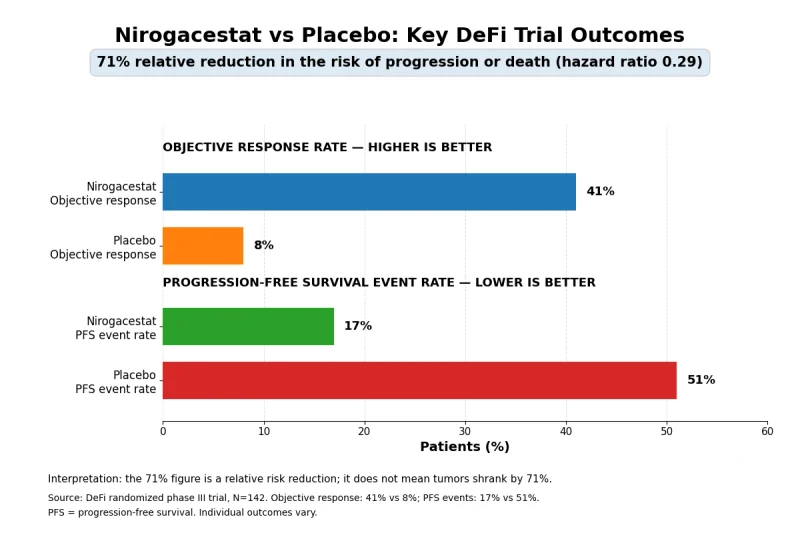
In the randomized DeFi trial, nirogacestat reduced the relative risk of disease progression or death by 71% compared with placebo. The hazard ratio was 0.29, indicating substantially better progression-free survival among patients receiving active treatment. At two years, an estimated 76% of patients taking nirogacestat remained free from progression, compared with 44% of those receiving placebo.[3]
A 71% reduction in risk does not mean that every tumor became 71% smaller. It describes the difference in the rate of progression or death between the treatment groups over time. This distinction is important because patients may otherwise overestimate the likelihood or extent of visible tumor shrinkage.
Progression-free survival is particularly relevant in desmoid-type fibromatosis because continued local growth can damage muscles, nerves, blood vessels or abdominal organs even though the tumor does not ordinarily metastasize. Preventing further enlargement may therefore preserve movement, reduce the risk of future complications and postpone or avoid treatments that could cause greater functional loss.[3,6]
Table: Nirogacestat vs Placebo in the DeFi Trial
| Treatment outcome | Nirogacestat | Placebo | What it means |
|---|---|---|---|
| Patients with a PFS event | 17% | 51% | Fewer patients experienced progression, clinical worsening or death |
| Median progression-free survival | Not reached | 15.1 months | Median disease control lasted longer with nirogacestat |
| Objective response rate | 41% | 8% | More patients achieved qualifying tumor shrinkage |
| Complete response | 7% | 0% | A small proportion had disappearance of measurable target lesions |
| Partial response | 34% | 8% | Approximately one-third achieved significant but incomplete shrinkage |
| Relative risk reduction | 71% | Reference group | Hazard ratio 0.29 for progression or death |
Does Nirogacestat Shrink Desmoid Tumors?
The objective response rate in the primary DeFi analysis was 41% with nirogacestat, compared with 8% with placebo. This means that approximately four in ten treated patients achieved sufficient tumor shrinkage to meet formal radiological response criteria. Complete radiographic responses occurred in 7% of patients receiving nirogacestat and were not observed in the placebo group during the primary analysis.[3]
An objective response is a strict imaging outcome rather than a general impression that the tumor looks slightly smaller. A partial response ordinarily requires at least a 30% reduction in the combined diameters of measured target lesions under RECIST 1.1 criteria. Patients with less shrinkage may still derive meaningful benefit when the tumor stabilizes after previously documented progression.[3,8]
Longer follow-up showed that tumor responses could deepen during continued treatment. The objective response rate increased to 45.7%, and additional partial and complete responses appeared after the original analysis. Median progression-free survival had still not been reached after extended observation, suggesting sustained disease control among many continuing participants.[4]
These long-term findings indicate that the greatest reduction in tumor size may not occur during the first few months. However, they do not prove that every patient will eventually respond or that indefinite treatment is appropriate for everyone. Continued therapy must remain tolerable and should provide sufficient clinical benefit to justify ongoing exposure to adverse effects.[1,4]
A complete radiographic response also requires careful interpretation. It means that measurable target lesions are no longer visible according to the imaging method and response criteria used. It does not establish that every microscopic tumor cell has been eliminated or guarantee that the desmoid tumor can never return.
How Long Does Nirogacestat Take to Work?
The median time to an objective response in the DeFi trial was 5.6 months. Half of the responding patients reached a confirmed imaging response before this point and half reached it later. Consequently, the absence of major shrinkage on an early scan does not automatically establish treatment failure, particularly when the tumor has stopped growing and symptoms are improving.[3]
Response timing differs among patients because desmoid tumors vary in location, growth rate, tissue composition and previous treatment exposure. Imaging technique can also affect apparent measurements. Follow-up scans should therefore be compared with the pretreatment study and, whenever possible, performed using the same imaging modality and a comparable protocol.
Clinical improvement may not follow the same timeline as radiographic shrinkage. Pain can lessen before a tumor meets formal response criteria, while another patient may have measurable shrinkage without an equivalent improvement in movement or nerve symptoms. Tumor measurements, pain severity, analgesic use, physical function and treatment tolerance should therefore be assessed together.[3,6]
Pain and Quality-of-Life Benefits
Patients receiving nirogacestat reported greater improvements in pain, desmoid tumor symptoms, physical functioning, role functioning and overall health-related quality of life than patients receiving placebo. These findings are important because conventional imaging alone may not capture the full effect of a desmoid tumor on sleep, work, mobility, exercise and family responsibilities.[3]
Pain relief should be assessed against a documented baseline rather than relying on a general recollection of feeling better or worse. Changes in pain intensity, frequency, breakthrough episodes and analgesic requirements can help determine whether treatment is producing a clinically meaningful benefit. Improved range of motion, longer walking distance or the ability to resume daily activities may also demonstrate benefit even when imaging shows only stable disease.
Not every symptom will necessarily improve. Long-standing nerve injury, scar tissue, joint restriction or muscle weakness may persist after tumor growth is controlled. Rehabilitation, pain management and treatment of structural complications may therefore remain necessary alongside systemic therapy.
The possibility of improved quality of life must also be balanced against nirogacestat side effects. Diarrhea, rash, nausea, fatigue, mouth inflammation, electrolyte abnormalities and reproductive toxicity can themselves interfere with daily life.[1,3] A favourable response means more than tumor shrinkage; the overall improvement in symptoms and function should remain greater than the burden created by treatment.
Nirogacestat should not be described as a guaranteed cure. The evidence supports durable disease control, clinically meaningful tumor responses and improved patient-reported outcomes in appropriately selected adults with progressing desmoid tumors. The expected benefit for an individual patient depends on tumor behaviour, anatomical location, baseline symptoms, treatment tolerance and the length of follow-up.[3,4]
Nirogacestat Response Assessment

Nirogacestat response should be assessed through serial imaging, symptom changes, physical function and treatment tolerability rather than tumor size alone. A patient may be benefiting when a previously enlarging desmoid tumor becomes stable, pain decreases or daily function improves, even if the first follow-up scan does not yet meet the formal criteria for tumor shrinkage.[3,6]
MRI and CT Monitoring
MRI or CT provides the principal objective method for assessing whether a desmoid tumor is shrinking, remaining stable or continuing to grow. The most appropriate modality depends on the tumor’s location, the surrounding structures that must be evaluated and the type of imaging used before treatment. Follow-up examinations should generally use the same modality and a comparable scanning protocol so that apparent changes are less likely to result from technical differences.
In the DeFi trial, imaging was performed every three months. This schedule provided regular comparisons while allowing enough time for a treatment effect to develop.[1,3] In clinical practice, the treating specialist may adjust the interval according to tumor location, previous growth rate, symptoms, treatment duration and the risk that further progression would damage a nearby structure.
Earlier reassessment may be required when pain rapidly worsens, a new neurological deficit develops, bowel or urinary symptoms appear, or function declines despite treatment. These changes should not be ignored while waiting for the next routine scan because progression near a nerve, blood vessel or organ can become clinically important before a large change in diameter is recorded.
RECIST Response Categories
The DeFi trial used RECIST 1.1, a standardized system for measuring solid tumors on serial imaging. A partial response generally requires at least a 30% reduction in the combined diameters of selected target lesions. Progressive disease generally requires at least a 20% increase from the smallest previously recorded measurement, together with a minimum absolute increase of 5 mm, or the appearance of a new lesion.[3,8]
Stable disease describes a result that meets neither the threshold for partial response nor the threshold for progression. For a desmoid tumor that was clearly enlarging before nirogacestat began, stable disease can represent meaningful tumor control. It may reduce the likelihood of further nerve compression, loss of mobility or organ-related complications even when the tumor remains visible.
A complete radiographic response means that measurable target lesions are no longer visible according to the imaging criteria used. It should not be interpreted as proof that microscopic disease has been permanently eliminated or that recurrence is impossible.
Small measurement differences between scans do not always indicate genuine biological change. Patient position, slice selection, tumor shape and the interpreting radiologist can influence measurements. A borderline increase or decrease should therefore be reviewed in the context of earlier scans, symptoms and the overall pattern of change rather than being treated as definitive progression or response after a single comparison.
Symptoms and Physical Function
Imaging findings should be interpreted alongside the patient’s experience. Pain intensity, frequency of breakthrough pain, use of analgesics, range of motion, walking ability, sleep, work capacity and performance of daily activities can all reveal whether nirogacestat is providing practical benefit.[3]
Tumor location determines which symptoms are most useful to follow. An abdominal desmoid tumor may be monitored for pressure, altered bowel function, early satiety or urinary symptoms. A tumor involving an arm, leg, shoulder or chest wall may be assessed through movement, strength, swelling, nerve symptoms and the ability to perform routine tasks.
Symptom improvement may occur before the tumor reaches the formal imaging threshold for partial response. Conversely, tumor shrinkage may not immediately reverse long-standing nerve injury, scar tissue, joint stiffness or muscle weakness. Rehabilitation, pain management and supportive treatment may still be required even when nirogacestat is controlling the tumor.
New or worsening symptoms should not automatically be attributed to tumor progression. Diarrhea, fatigue, abdominal discomfort, mouth inflammation, rash and electrolyte abnormalities can result from nirogacestat itself.[1,3] Clinical review and appropriate laboratory testing help distinguish treatment toxicity from worsening desmoid disease.
When the First Scan Shows Little Change
The median time to an objective response in DeFi was 5.6 months, meaning that many patients required more than one early assessment before formal shrinkage was documented.[3] A nearly unchanged tumor on the first follow-up scan may therefore still be compatible with benefit when the disease had been progressing before treatment and is now stable.
Continued treatment may be reasonable when imaging shows stability, symptoms are improving or unchanged, laboratory abnormalities remain manageable and the patient can tolerate therapy. The decision should account for the tumor’s pretreatment growth pattern because stopping growth can itself be a clinically valuable outcome.
A lack of early shrinkage should not be used to promise that a later response will occur. Some tumors remain stable without becoming smaller, while others continue progressing despite treatment. Each subsequent assessment should determine whether the overall balance of disease control, symptom benefit and treatment burden remains favourable.
When Treatment Should Be Reconsidered
Nirogacestat may need to be reconsidered when serial imaging confirms continued progression, pain or function consistently worsens, an urgent anatomical complication develops, or adverse effects remain unacceptable despite supportive care and dose modification.[1,6]
Before declaring treatment failure, the multidisciplinary team should confirm that the same lesion and comparable imaging studies are being assessed, review medication adherence and interactions, and determine whether symptoms arise from tumor growth or treatment toxicity. A single mildly increased measurement without corresponding clinical deterioration may warrant radiological review or repeat assessment rather than an immediate treatment change.
When progression is confirmed, the next decision may involve another systemic treatment, a local image-guided procedure, radiotherapy or carefully selected surgery. The choice should be based on tumor location, urgency, previous treatments, reproductive priorities and the likely functional consequences of each option.[6,9]
Nirogacestat Dosage

The recommended nirogacestat dosage for adults with progressing desmoid tumors is 150 mg by mouth twice daily. This is the dose used in the DeFi trial and included in the current prescribing information for Ogsiveo. Treatment is continued until the tumor progresses or adverse effects become unacceptable; it is not prescribed as a fixed three-month, six-month or one-year course.[1,3]
Patients should follow the instructions issued by their own specialist because approved tablet strengths, prescribing information and access arrangements may differ between countries. The dose used in clinical trials provides the evidence base, but it does not replace locally authorised prescribing guidance in the United States, United Kingdom, Canada, Australia or Singapore.
How to Take Nirogacestat
Nirogacestat may be taken with or without food. The tablets should be swallowed whole and must not be broken, crushed or chewed. A patient who has difficulty swallowing the tablets should contact the oncology team or pharmacist rather than altering the tablet at home.[1]
The two daily doses should be taken at consistent times, usually as a morning and evening dose according to the schedule provided by the prescriber. Maintaining a regular routine helps prevent missed doses and makes it easier to recognize whether symptoms such as diarrhea, nausea or fatigue follow a particular dosing pattern.
Taking nirogacestat with food is not required for absorption, but some patients may find that a consistent meal routine makes nausea easier to manage. A major change in appetite, persistent vomiting or inability to eat and drink should be reported because dehydration and electrolyte abnormalities can increase the clinical impact of treatment-related diarrhea or nausea.[1]
Patients should not substitute a different tablet strength, combine tablets to create a new dose or change from twice-daily to once-daily administration unless the prescribing team has issued specific instructions. The safety and effectiveness of a self-designed schedule have not been established.
Missed Doses and Vomiting
When a nirogacestat dose is missed, the patient should take the next dose at the regularly scheduled time. An additional dose should not be taken to compensate for the missed tablet.[1]
The same instruction applies when vomiting occurs after a dose. The patient should not immediately take another tablet because it may be impossible to determine how much medicine was absorbed before vomiting. The next dose should be taken at its usual scheduled time unless the treating clinician gives different instructions.[1]
Repeated missed doses should be discussed with the treatment team because inconsistent exposure may make response assessment more difficult. A clinician should also review persistent vomiting, severe nausea or swallowing problems rather than allowing the patient to repeatedly miss treatment without medical assessment.
Dose Interruptions and Reductions
Nirogacestat treatment may be temporarily interrupted when an adverse effect becomes severe, persists despite appropriate management or prevents normal daily activities. Once the reaction has improved to an acceptable level or returned to the patient’s baseline, treatment may be restarted at a reduced dose of 100 mg twice daily when the prescribing clinician considers the likely benefit greater than the risk of recurrence.[1]
A dose interruption may be required for severe diarrhea that continues for at least three days despite appropriate treatment. Persistent severe reductions in phosphate or potassium may also require treatment to be withheld until laboratory values and symptoms have improved. These abnormalities should be corrected under medical supervision rather than managed through unsupervised supplements.[1]
Liver-enzyme elevations require particular caution. Moderate increases in alanine aminotransferase or aspartate aminotransferase may lead to temporary interruption followed by a reduced dose after recovery. More severe elevations may require permanent discontinuation rather than restarting treatment.[1]
Severe hypersensitivity, including anaphylaxis, requires permanent discontinuation under the current prescribing guidance. Facial or throat swelling, difficulty breathing, widespread hives, faintness or a rapidly developing severe reaction should be treated as an urgent medical problem rather than managed by simply skipping one or two doses.[1]
Dose modification is common and does not automatically mean that nirogacestat has failed. In the DeFi safety population, 51% of treated patients required at least one dose interruption and 42% required a dose reduction because of an adverse reaction. Permanent discontinuation because of toxicity occurred in 20%.[1]
These figures show why patients should be prepared for the possibility of treatment adjustment before starting therapy. The objective is to maintain meaningful tumor control without exposing the patient to an unacceptable level of toxicity. A lower prescribed dose is a structured safety measure, whereas repeatedly skipping tablets or changing the schedule without medical guidance can produce unpredictable exposure.
How Long Is Nirogacestat Taken?
There is no universally established treatment duration for nirogacestat. The approved approach is to continue treatment until confirmed disease progression or unacceptable toxicity. Decisions about duration should consider imaging findings, pain, physical function, treatment burden, reproductive priorities and the patient’s preference.[1]
The median time to an objective tumor response in the DeFi trial was 5.6 months. Some patients therefore required several months before their tumor met formal imaging criteria for shrinkage. Stopping treatment solely because the first scan shows little size reduction may be premature when the tumor has stopped growing and symptoms are stable or improving.[3]
Long-term DeFi follow-up found that some responses continued to deepen during several years of treatment. Additional partial and complete radiographic responses appeared after the primary analysis, demonstrating that maximal tumor reduction may occur later in selected patients.[4]
This does not mean that every patient should remain on nirogacestat indefinitely. Continued treatment is reasonable only while the overall clinical benefit remains greater than the cumulative burden of diarrhea, skin reactions, laboratory abnormalities, reproductive toxicity or other adverse effects.
There is also no universal rule for stopping treatment after a partial or complete radiographic response. The multidisciplinary team should consider how long the response has been maintained, whether symptoms have resolved, the original consequences of tumor progression, ongoing toxicity and the uncertainty surrounding tumor behaviour after discontinuation.
When imaging confirms progression despite appropriate treatment exposure, or when toxicity remains unacceptable after interruption and dose reduction, the treatment plan should be reassessed rather than continued automatically. Further management may involve another systemic medicine, a local procedure, radiotherapy, carefully selected surgery or renewed observation, depending on the tumor’s location and clinical behaviour.[1,6]
Nirogacestat Side Effects

Nirogacestat side effects most often affect the bowel, skin, mouth, energy levels, liver, electrolytes and reproductive function. Many reactions are mild or moderate and can be managed with early supportive care, but some require laboratory testing, temporary treatment interruption, dose reduction or permanent discontinuation. Patients should report new symptoms promptly rather than waiting for the next scheduled scan or oncology appointment.[1,3]
Table: Common Nirogacestat Side Effects and When to Contact the Treatment Team
| Side effect | All grades | Grade 3 | Patient action |
|---|---|---|---|
| Diarrhea | 84% | 16% | Start the prescribed management plan early and report dehydration or persistent symptoms |
| Rash | 68% | 6% | Report spreading, painful, blistering or facially associated rash promptly |
| Nausea | 54% | 1.4% | Seek advice if vomiting, weight loss or poor fluid intake develops |
| Fatigue | 54% | 2.9% | Ask for assessment of hydration, nutrition, electrolytes and other causes |
| Mouth inflammation | 39% | 4% | Report ulcers that interfere with eating, drinking or swallowing |
| Headache | 30% | 0% | Seek urgent care for sudden severe headache or neurological symptoms |
| Abdominal pain | 22% | 1.4% | Urgent review is needed with vomiting, swelling or inability to pass stool or gas |
| Hair thinning | 19% | 0% | Discuss gradual hair changes and possible contributing nutritional factors |
In the DeFi trial, treatment interruption was required in 51% of patients receiving nirogacestat, while 42% needed a dose reduction because of an adverse reaction. Approximately 20% permanently stopped treatment because of toxicity.[1] These figures do not mean that most patients cannot tolerate the medicine. They show that active side-effect monitoring and timely dose adjustment are normal parts of nirogacestat treatment.
Common Side Effects
The most frequently reported adverse effect was diarrhea, which occurred in 84% of patients. Rash was reported in 68%, nausea in 54%, fatigue-related symptoms in 54%, mouth inflammation in 39%, headache in 30%, abdominal pain in 22% and hair thinning in 19%.[1]
The percentage of patients affected does not predict how severe a symptom will be for an individual. Most reactions in DeFi were grade 1 or grade 2, meaning mild or moderate, but clinically significant diarrhea, liver-enzyme elevations, electrolyte abnormalities and reproductive effects also occurred.[1,3]
Several symptoms may develop together. Diarrhea, nausea and mouth soreness can reduce food and fluid intake, while fatigue may worsen because of dehydration, poor nutrition or low potassium or phosphate. A patient who develops multiple symptoms should be assessed as a whole rather than treating each complaint separately.
Diarrhea
Diarrhea is the most common nirogacestat side effect and may begin early. The median time to the first episode in DeFi was nine days, and grade 3 diarrhea occurred in 16% of treated patients.[1] Patients should therefore receive a clear management plan before taking the first dose.
Early treatment may include clinician-approved antidiarrheal medicine, increased fluid intake and temporary dietary adjustment. Patients should not rely on unverified herbal remedies or concentrated supplements because these may worsen gastrointestinal irritation, affect liver function or interact with nirogacestat.
Frequent loose stools can lead to dehydration and loss of potassium and phosphate. Warning signs include dizziness, marked weakness, dry mouth, reduced urination, muscle cramps, palpitations or difficulty retaining fluids. Persistent diarrhea may require blood tests, intravenous fluids and temporary interruption of nirogacestat.[1]
The oncology team should be contacted when diarrhea continues despite recommended treatment, repeatedly disturbs sleep, contains blood, occurs with fever or severe abdominal pain, or causes a clear reduction in urine output. Severe diarrhea lasting three days or longer despite appropriate management may require treatment to be withheld and later restarted at a lower dose.[1]
Not every new bowel symptom is caused by the medicine. Patients with an intra-abdominal desmoid tumor may also develop symptoms from tumor pressure or bowel involvement. Increasing abdominal distension, persistent vomiting, inability to pass stool or gas, or rapidly worsening localized pain requires urgent medical assessment.
Nausea, Abdominal Pain and Mouth Inflammation
Nausea affected more than half of patients receiving nirogacestat, while abdominal pain occurred in approximately one fifth.[1] Mild nausea may improve with smaller meals, regular hydration and prescribed anti-nausea medication, but repeated vomiting or inability to eat should not be managed at home for several days without clinical review.
Persistent gastrointestinal symptoms can cause unintended weight loss, nutritional deficiency and worsening fatigue. Monitoring body weight and appetite can help identify a gradual decline that may otherwise be overlooked between oncology visits.
Mouth inflammation, also called stomatitis, occurred in 39% of treated patients.[1] Symptoms may include redness, burning, ulcers, tenderness or pain when eating and swallowing. Gentle oral hygiene, a soft toothbrush and avoidance of alcohol-containing mouthwashes may reduce irritation, but medicated rinses or other treatments should be selected by the clinical team.
Mouth ulcers that prevent eating or drinking, persist despite treatment, appear infected or occur with fever need prompt assessment. Untreated oral inflammation can contribute to dehydration, weight loss and treatment interruption.
Liver Changes
Nirogacestat can raise alanine aminotransferase and aspartate aminotransferase, commonly reported as ALT and AST. Increased AST occurred in 33% of treated patients and increased ALT in 30%. Grade 3 elevations occurred in 2.9% and 6%, respectively.[1]
Liver-enzyme changes may develop without noticeable symptoms. Regular blood testing is therefore necessary even when the patient feels well. The frequency of monitoring should be individualized according to baseline liver function, previous abnormal results, concurrent medicines, alcohol intake and other medical conditions.
Yellowing of the skin or eyes, dark urine, pale stools, persistent vomiting, marked loss of appetite, generalized itching or pain beneath the right rib cage should be reported promptly. These symptoms do not prove that nirogacestat has caused liver injury, but they require medical review and liver-function testing.
Patients should disclose all prescription medicines, over-the-counter pain relievers, vitamins, herbal extracts, Ayurvedic formulations and mineral preparations. A product described as natural may still affect liver enzymes, alter nirogacestat metabolism or make it harder to determine which treatment is responsible for an abnormal result.
Significant liver-enzyme elevations may require temporary interruption, dose reduction or permanent discontinuation. Patients should not restart nirogacestat after a liver-related interruption unless the prescribing specialist has reviewed the laboratory results and provided clear instructions.[1]
Low Phosphate and Potassium
Decreased phosphate was reported in 65% of patients treated with nirogacestat, and phosphate levels below 2 mg/dL occurred in 20%. Decreased potassium occurred in 22%, with grade 3 reduction reported in 1.4%.[1]
Electrolyte abnormalities may initially cause no symptoms, which is why scheduled blood testing remains important. When symptoms do occur, low phosphate may contribute to weakness, fatigue, muscle discomfort, confusion or impaired physical performance. Low potassium may cause cramps, constipation, muscle weakness, palpitations or abnormal heart rhythm.
Diarrhea and vomiting can make these abnormalities more severe by increasing mineral losses. A patient with severe weakness, fainting, confusion, marked shortness of breath or an irregular heartbeat requires urgent assessment rather than attempting self-treatment with supplements or sports drinks.
Phosphate and potassium replacement should be guided by laboratory results. Excessive supplementation can also be harmful, particularly in patients with kidney disease, heart disease or medicines that already affect electrolyte balance.
Skin, Hair and Nail Changes
Rash occurred in 68% of patients receiving nirogacestat.[1] Reported reactions included acne-like eruptions, folliculitis and other inflammatory skin changes. A new rash should be reported early because management depends on its appearance, extent, associated symptoms and effect on daily life.
Patients should avoid applying several new cosmetic products, essential oils or herbal preparations once a rash begins. These products may worsen irritation, cause contact dermatitis or make it more difficult to identify whether the eruption is related to nirogacestat.
A mild localized rash may respond to prescribed topical treatment, while widespread redness, blistering, painful skin, facial swelling, fever or involvement of the eyes, mouth or genitals requires urgent medical review. Severe reactions may require treatment interruption.
Hair thinning occurred in 19% of patients, although severe hair loss was not commonly reported in the pivotal trial.[1] Patients may notice gradual reduction in hair density rather than complete loss. Hair changes should still be discussed because other causes, including nutritional deficiency, thyroid disease, stress and concurrent medicines, may contribute.
New non-melanoma skin cancers were also observed during the DeFi trial. Cutaneous squamous cell carcinoma occurred in 2.9% of nirogacestat-treated patients and basal cell carcinoma in 1.4%.[1] A dermatological examination is recommended before treatment and routinely during therapy.
A persistent scaly patch, non-healing sore, bleeding lesion, rapidly enlarging bump or changing skin growth should be examined rather than treated repeatedly with home remedies. Sun protection may reduce ultraviolet exposure but does not replace regular skin assessment.
Fatigue and Headache
Fatigue was reported in 54% of patients receiving nirogacestat.[1] It may result directly from treatment, but it can also reflect dehydration, inadequate food intake, poor sleep, pain, anemia, infection or electrolyte disturbance.
Persistent fatigue should therefore be assessed rather than accepted as unavoidable. The treatment team may need to review blood tests, fluid intake, nutrition, sleep, pain medication and activity level. Gradual, individualized movement may help reduce deconditioning when clinically safe, while forcing strenuous exercise during dehydration or severe weakness may worsen symptoms.
Headache occurred in 30% of treated patients.[1] Mild headache may be associated with dehydration, sleep disruption or treatment-related fatigue. Recurrent or worsening headache should be reviewed for electrolyte abnormalities, medication interactions, blood pressure changes or another medical cause.
A sudden severe headache, fainting, confusion, visual disturbance, speech difficulty, new weakness or repeated vomiting requires urgent medical evaluation and should not be assumed to be a routine treatment effect.
Ovarian Toxicity
Ovarian toxicity is one of the most clinically important nirogacestat side effects for females of reproductive potential. In DeFi, it was identified in 27 of 36 patients in this subgroup who received nirogacestat, compared with none receiving placebo.[1,5]
Reported changes included irregular periods, absence of menstruation, hot flashes, night sweats, vaginal dryness and abnormal reproductive hormone levels. The median time to the first ovarian-toxicity event was approximately 8.9 weeks, indicating that reproductive effects can begin within the first few treatment cycles.[5]
Menstrual changes should be reported even when pregnancy is not currently planned. The absence of periods may reflect reduced ovarian activity, but menstruation alone cannot reliably measure ovarian reserve or future fertility.
Updated DeFi findings showed that ovarian toxicity resolved in many affected patients, including some who continued treatment and others who discontinued it.[5] However, return of menstruation or normalization of selected hormone levels does not prove that egg quantity, egg quality, ovulation and future ability to conceive have completely recovered.
Patients who may want biological children should discuss fertility preservation before the first dose. Waiting until menstrual changes occur may reduce the time and options available for egg, embryo or ovarian-tissue preservation.
Serious Allergic Reactions
Hypersensitivity reactions, including severe reactions, have been reported with nirogacestat.[1] Symptoms may include widespread hives, facial or throat swelling, wheezing, difficulty breathing, dizziness or fainting.
These symptoms require immediate medical attention. A suspected severe allergic reaction should not be managed by delaying the next dose or taking an over-the-counter antihistamine without urgent advice. Depending on the severity, nirogacestat may need to be permanently discontinued.[1]
Dose Changes for Side Effects
Dose interruption or reduction is not evidence that treatment has failed. These adjustments are used to control toxicity while preserving as much antitumor benefit as possible. Nirogacestat may be withheld until an adverse effect improves and then restarted at a reduced prescribed dose when clinically appropriate.[1]
Treatment may need to be reconsidered when severe diarrhea continues despite management, liver abnormalities recur, electrolyte disturbances remain difficult to correct, skin reactions become serious or overall quality of life deteriorates despite dose adjustment.
The decision to continue treatment should consider both sides of the clinical balance: whether nirogacestat is controlling the desmoid tumor and whether the patient can tolerate the medicine without unacceptable harm. Regular review of symptoms, laboratory results, reproductive health, skin findings and daily function is therefore as important as reviewing tumor measurements on MRI or CT.
Ovarian Function and Fertility

Nirogacestat can affect ovarian function and may impair fertility in females of reproductive potential. This risk should be discussed before treatment begins because menstrual changes and hormone abnormalities can develop within the first few months. Patients who may want biological children in the future should not wait for periods to stop before asking about fertility preservation.[1,5,7]
Table: What the DeFi Trial Found About Ovarian Toxicity
| Fertility question | DeFi finding | What patients should understand |
|---|---|---|
| How common was ovarian toxicity? | 27 of 36 patients, or 75% | The percentage applies to females of reproductive potential in the trial |
| How common was it with placebo? | 0 of 37 | The difference identified ovarian toxicity as an important treatment-related risk |
| How often was resolution reported? | 21 of 27, or 78% | Most reported events resolved during the available follow-up |
| What happened after treatment stopped? | 11 of 11 had reported resolution | Recovery was reported in all affected patients who discontinued treatment |
| Did menstruation return? | 9 of 9 with available information | Return of periods was reported after discontinuation in those with data |
| Does menstrual recovery prove fertility? | No | Menstruation does not confirm ovarian reserve, egg quality, conception or live-birth potential |
| Is long-term fertility fully established? | No | Fertility counselling should occur before treatment whenever future parenthood may matter |
What Ovarian Toxicity Means
Ovarian toxicity refers to reduced or disrupted ovarian activity during treatment. It may present as irregular periods, missed periods, complete absence of menstruation, hot flashes, night sweats, vaginal dryness or other symptoms associated with reduced estrogen activity.[1,5]
Laboratory changes may include increased follicle-stimulating hormone and luteinizing hormone together with reduced estradiol, progesterone and anti-Müllerian hormone. These results can suggest impaired ovarian function, but no single blood test can determine whether a patient will be able to conceive naturally in the future.[1,5]
Ovarian toxicity is not identical to permanent infertility. A patient may experience temporary menstrual and hormonal changes while still retaining reproductive potential. Conversely, the return of regular periods does not prove that egg quantity, egg quality or future fertility has completely recovered.
How Common Is Ovarian Toxicity?
In the DeFi trial, ovarian toxicity was identified in 27 of 36 females of reproductive potential who received nirogacestat, representing 75% of that subgroup. No ovarian-toxicity events were identified among the 37 comparable patients who received placebo.[1,5]
The 75% figure applies only to the relatively small reproductive-potential subgroup studied in DeFi. It should not be interpreted as meaning that 75% of every female patient taking nirogacestat will experience the same degree of ovarian impairment.
The median time to the first ovarian-toxicity event was approximately 8.9 weeks. This means menstrual changes or menopause-like symptoms may begin within the first two or three treatment cycles rather than only after prolonged exposure.[5]
Patients should report changes in menstrual frequency, flow or duration, as well as new hot flashes, night sweats, vaginal dryness, sleep disturbance or discomfort during sexual activity. These symptoms may reflect altered ovarian function, but pregnancy, stress, weight change, thyroid disease, other medicines and natural perimenopause may also produce similar changes.
Is Ovarian Toxicity Reversible?
Updated DeFi findings showed that ovarian toxicity resolved in 21 of the 27 affected patients, or 78%, during the available follow-up period. Resolution was reported in all 11 affected patients who stopped nirogacestat and in 10 of 14 affected patients who continued treatment.[5]
Among patients with available menstrual information after discontinuation, menstruation returned in all nine. Follicle-stimulating hormone also returned to the study-defined normal range in most patients for whom follow-up results were available.[5]
These findings suggest that ovarian effects may improve after treatment is stopped and, in some patients, even while treatment continues. However, the number of patients studied was small, follow-up was limited and the trial was not designed to measure pregnancy or live-birth outcomes.
Recovery of menstruation should therefore not be described as proof that fertility has been fully restored. A patient can have regular periods while ovarian reserve remains reduced, and hormone levels can fluctuate without accurately predicting egg quality or the ability to achieve a future pregnancy.
The possibility of recovery also does not guarantee that ovarian toxicity will be temporary for every patient. Age, pretreatment ovarian reserve, previous chemotherapy or radiotherapy, duration of nirogacestat exposure and individual susceptibility may influence the likelihood and completeness of recovery.[1,5]
Fertility Assessment Before Treatment
Patients who may want biological children should be offered a fertility discussion before the first dose. This includes patients who are uncertain about future parenthood, because treatment may begin before they have made a final reproductive decision.[7]
A baseline assessment may include menstrual history, previous pregnancies, fertility treatment, pelvic surgery, chemotherapy or radiotherapy exposure, menopausal symptoms and family history of early menopause. Age is also important because ovarian reserve naturally declines over time, independently of nirogacestat.
A reproductive endocrinologist may recommend anti-Müllerian hormone testing, follicle-stimulating hormone, estradiol and antral follicle count by ultrasound. These assessments can help estimate ovarian reserve and guide fertility-preservation planning, but they cannot guarantee natural conception or predict a future live birth with certainty.
Anti-Müllerian hormone is often used as an ovarian-reserve marker because it reflects the remaining pool of developing follicles. A low result may indicate reduced reserve, but it does not mean pregnancy is impossible. A normal result does not protect a patient from treatment-related ovarian toxicity.
Follicle-stimulating hormone and estradiol are affected by menstrual timing and hormonal medicines. They should therefore be interpreted by a clinician familiar with reproductive endocrinology rather than compared with a general laboratory reference range in isolation.
Fertility Preservation Options
Embryo cryopreservation and oocyte cryopreservation are established fertility-preservation options for many post-pubertal patients. Both usually require ovarian stimulation and egg collection, which may take approximately two weeks depending on the clinical situation and reproductive programme.[7]
Embryo cryopreservation involves fertilising collected eggs before freezing, while oocyte cryopreservation stores unfertilised eggs. The most suitable option depends on age, ovarian reserve, relationship status, access to sperm, legal considerations and personal preference.
Ovarian tissue cryopreservation may be considered in selected circumstances, particularly when conventional ovarian stimulation is not suitable or treatment must begin quickly. Its appropriateness depends on local expertise, patient age and individual clinical factors.[7]
Fertility preservation should be coordinated with the desmoid tumor team so that reproductive procedures do not create an unsafe delay. Although desmoid tumors do not ordinarily metastasize, some progressive tumors threaten important structures and cannot be left untreated for an extended period.
The patient should also understand that fertility procedures do not guarantee a future pregnancy. Their purpose is to preserve reproductive options before exposure to a treatment that may affect ovarian function.
Monitoring Ovarian Function
There is no single mandatory hormone-monitoring schedule that applies to every patient taking nirogacestat. Monitoring should be individualized according to age, baseline menstrual status, fertility goals, symptoms and the recommendations of the oncology and reproductive teams.[1]
Menstrual patterns and symptoms should be reviewed regularly. When periods become irregular or stop, evaluation may include pregnancy testing, reproductive hormone measurements and assessment for other medical causes.
Repeat anti-Müllerian hormone or ultrasound testing may be helpful in selected patients, but changes in these measurements should not be interpreted without specialist input. Hormonal contraception can also alter bleeding patterns and hormone results, making ovarian function more difficult to assess.
Persistent estrogen deficiency may affect more than fertility. It can contribute to vaginal dryness, discomfort during sexual activity, sleep disturbance, mood changes and, when prolonged, reduced bone health. These symptoms should be discussed openly because supportive treatment may improve quality of life even when nirogacestat continues.
Fertility After Stopping Nirogacestat
Patients planning pregnancy after nirogacestat should first consult both the oncology team and a reproductive specialist. Menstrual recovery may occur before ovarian reserve and ovulation have been adequately assessed, and tumor behaviour after treatment discontinuation must also be considered.
The timing of pregnancy attempts should be based on current prescribing guidance, contraception recommendations, recovery of ovarian function and the clinical status of the desmoid tumor. Patients should not stop nirogacestat independently in order to attempt conception because an unplanned interruption may compromise tumor control.
When ovarian function does not recover as expected, referral to reproductive endocrinology can clarify whether assisted reproduction, previously stored eggs or embryos, donor eggs or other family-building options should be considered.
Male Fertility
Nirogacestat may also affect male fertility. Animal studies found reduced sperm concentration, impaired sperm motility and changes in sperm production, although the extent and reversibility of this risk in humans have not been established.[1]
Men who may want biological children should discuss sperm cryopreservation before treatment begins. Semen analysis may also be considered when future fertility is a priority, but a normal pretreatment result does not eliminate the possibility of treatment-related change.
Male fertility counselling should not be omitted simply because ovarian toxicity was the more prominent reproductive finding in DeFi. The absence of extensive human sperm data means that uncertainty should be explained clearly rather than interpreted as evidence of no risk.[1]
Nirogacestat Monitoring

Nirogacestat monitoring should combine laboratory tests, skin examinations, reproductive review, imaging and assessment of symptoms and physical function. Blood tests alone cannot show whether treatment is succeeding, while tumor measurements alone cannot identify liver injury, electrolyte loss or reproductive toxicity. A structured monitoring plan helps detect adverse effects early and determines whether the clinical benefit remains greater than the treatment burden.[1,3]
The prescribing information requires regular monitoring of liver function, phosphate and potassium, together with dermatological assessment before treatment and routinely thereafter. Menstrual changes and symptoms of estrogen deficiency should also be reviewed in females of reproductive potential. The exact timetable is not identical for every patient and may differ according to baseline results, other medical conditions, concurrent medicines, symptoms and local oncology protocols.[1]
Before the First Dose
Pretreatment assessment should confirm that the desmoid tumor is progressing and that systemic treatment is appropriate. Recent MRI or CT should be compared with earlier imaging whenever possible, with documentation of tumor dimensions, anatomical relationships and the consequences that further growth could have on nearby nerves, blood vessels, muscles or organs.[1,6]
The clinical baseline should record pain intensity, analgesic requirements, mobility, range of motion, sleep disturbance, ability to work and any neurological, bowel or urinary symptoms. These findings provide a practical comparison for later visits because a patient may benefit through reduced pain or improved function before substantial tumor shrinkage becomes visible.[3,6]
Baseline blood testing should include liver function tests, phosphate and potassium. Additional testing may be selected according to age, medical history, nutritional status, kidney function, previous treatment and medicines that could worsen electrolyte abnormalities or liver injury. An abnormal baseline result does not always prevent treatment, but it may require correction, investigation or more frequent follow-up.[1]
A dermatological examination should be performed before nirogacestat begins. Existing moles, scaly lesions, non-healing sores or previously treated skin cancers should be documented so that new changes can be distinguished from longstanding findings. Patients with substantial sun damage or a history of non-melanoma skin cancer may require closer dermatology follow-up.[1]
For patients who can become pregnant, pregnancy status should be confirmed before treatment. Menstrual pattern, menopausal symptoms, fertility history and future parenthood goals should also be recorded. When biological parenthood may be desired, fertility counselling and preservation should be considered before the first dose rather than postponed until ovarian symptoms develop.[1,5,7]
Every prescription medicine, over-the-counter product, antacid, acid-reducing medicine, vitamin, botanical extract, Ayurvedic formulation and mineral preparation should be reviewed. This initial reconciliation creates a reliable reference if liver tests, gastrointestinal symptoms or other adverse effects later change.
Blood Test Monitoring
Liver function tests should be checked regularly because nirogacestat can increase ALT and AST. These abnormalities may occur without pain, jaundice or other early symptoms, making laboratory surveillance necessary even when treatment appears well tolerated.[1]
The prescribing information does not establish one fixed testing interval for every patient. The oncology team should determine the schedule according to baseline liver function, previous abnormalities, alcohol intake, concurrent medicines and the presence of symptoms. Testing may be brought forward after a dose change, a new medicine, persistent nausea, reduced appetite or another possible sign of liver dysfunction.
A rising liver enzyme result should be interpreted in context. Viral illness, alcohol, fatty liver disease, pain medicines, antibiotics, supplements and herbal products can also affect liver tests. Patients should not independently stop several treatments at once because this can make the cause harder to identify and may interrupt necessary therapy.
Moderate liver-enzyme elevation may require nirogacestat to be withheld until results improve, followed by restarting at a reduced dose. More severe ALT or AST elevation can require permanent discontinuation under the prescribing guidance.[1] The decision should be based on the degree of abnormality, associated symptoms, bilirubin results where measured and the likelihood that nirogacestat is responsible.
Phosphate and potassium should also be measured regularly. These values can fall during treatment and may decline further when diarrhea or vomiting causes additional fluid and electrolyte loss.[1]
Low phosphate may contribute to fatigue, muscle weakness, bone discomfort or impaired physical performance. Low potassium may cause muscle cramps, constipation, weakness, palpitations or abnormal heart rhythm. However, patients may have clinically important abnormalities without obvious symptoms, so laboratory testing should not be replaced by symptom monitoring alone.
Electrolyte replacement should be prescribed according to the measured deficiency and the patient’s kidney function, heart health and concurrent medicines. Self-treatment with large quantities of mineral supplements or electrolyte products can produce excessive levels or introduce additional ingredients that interact with treatment.
Persistent severe hypophosphatemia or hypokalemia despite appropriate replacement may require nirogacestat to be withheld. Treatment may be restarted at a reduced dose after recovery when the expected benefit remains greater than the likelihood of recurrent toxicity.[1]
Diarrhea and Hydration Review
Diarrhea monitoring should begin from the first week because the median time to the initial episode in DeFi was nine days.[1] Patients may find it useful to record the number of bowel movements, whether stools are formed or watery, antidiarrheal medicine use and any associated dizziness, weakness or reduced urination.
This record allows the treatment team to distinguish a brief mild episode from a pattern that is becoming clinically significant. It also helps determine whether symptoms improve after supportive treatment or repeatedly return after each dose.
Monitoring should include hydration status and the patient’s ability to maintain food and fluid intake. Weight loss, dry mouth, postural dizziness, reduced urine output or increasing fatigue may indicate that apparently moderate diarrhea is causing greater physiological stress than stool frequency alone suggests.
Diarrhea that persists despite recommended treatment, repeatedly interrupts sleep, prevents normal activity or occurs with fever, blood, severe pain or marked abdominal swelling requires prompt clinical review. For an intra-abdominal desmoid tumor, worsening bowel symptoms may also indicate tumor-related compression rather than drug toxicity, so the cause should not be assumed without assessment.
Skin Monitoring
Routine dermatological evaluation is required because inflammatory skin reactions are common and new non-melanoma skin cancers occurred during the DeFi trial.[1] The monitoring interval should reflect the patient’s baseline skin findings, previous skin cancer history, ultraviolet exposure and any new symptoms.
Patients should examine visible skin between appointments and report a non-healing sore, persistent scaly area, bleeding lesion, enlarging bump or changing growth. Photographing a new lesion with the date may help document change, but a photograph cannot replace clinical or dermoscopic examination.
A rash should be assessed for distribution, severity, blistering, pain, mucosal involvement and associated fever or facial swelling. This helps distinguish a manageable acne-like eruption from a potentially serious drug reaction or hypersensitivity event.
Widespread hives, swelling of the lips or throat, wheezing, difficulty breathing, severe dizziness or fainting requires urgent medical care. Severe hypersensitivity may require permanent discontinuation rather than routine dose adjustment.[1]
Reproductive Monitoring
Females of reproductive potential should be asked regularly about menstrual timing, missed periods, altered bleeding, hot flashes, night sweats and vaginal dryness. These symptoms may indicate reduced ovarian activity, although pregnancy, thyroid disease, weight change, stress and natural perimenopause should also be considered.[1,5]
The prescribing information requires routine clinical monitoring but does not mandate the same reproductive hormone panel for every patient. Anti-Müllerian hormone, follicle-stimulating hormone, luteinizing hormone, estradiol or ultrasound assessment may be appropriate when future fertility is important or when menstrual changes develop. Interpretation should involve a reproductive specialist because individual results cannot independently predict conception or live birth.[1,5]
Pregnancy testing should be repeated whenever pregnancy is suspected or clinically indicated. Absence of menstruation during nirogacestat treatment must not be assumed to provide contraception because ovarian activity may fluctuate and ovulation can occur before a menstrual period returns.
Male patients should also be asked about future biological parenthood. Human data on sperm effects remain limited, but nonclinical findings support discussing sperm preservation before treatment when fertility is a priority.[1]
Imaging and Symptom Review
MRI or CT should be repeated at an interval selected by the desmoid tumor team. Imaging was performed every three months in the DeFi trial, but clinical schedules may be shortened or extended according to tumor location, previous growth rate, symptoms and treatment duration.[1,3]
Follow-up imaging should use the same modality and a comparable protocol whenever possible. Desmoid tumors can have irregular shapes, and differences in positioning, slice thickness or measurement technique may create an apparent change that does not reflect true progression or response.
Each imaging review should be paired with an assessment of pain, analgesic use, movement, strength, sleep and daily function. A tumor may remain visible yet become clinically less troublesome, while another may show modest shrinkage without relieving nerve compression or longstanding joint restriction.
Stable disease can represent a meaningful response when the tumor was enlarging before treatment. Conversely, a stable measurement does not automatically justify continued therapy when symptoms are worsening or toxicity has become unacceptable. Treatment decisions should integrate radiological, functional and safety findings rather than prioritising a single result.[3,6]
How Often Is Monitoring Needed?
The frequency of nirogacestat monitoring should be individualized rather than based on an unsupported universal timetable. Patients with normal baseline results and few symptoms may require a different schedule from those with pre-existing liver disease, recurrent diarrhea, previous electrolyte abnormalities, fertility concerns or a high-risk tumor location.[1]
Appointments may need to occur more frequently during the early treatment period, after a dose interruption or reduction, when a new medicine is introduced, or after an abnormal test. Once treatment and laboratory findings are stable, the specialist may adjust the interval while maintaining regular surveillance.
Patients should leave the treatment centre with a written schedule showing the dates of blood tests, imaging, oncology review and dermatology follow-up. They should also know whom to contact between appointments because significant toxicity can develop before the next planned visit.
Rapidly worsening pain, new weakness or numbness, loss of limb function, persistent vomiting, abdominal distension, inability to pass stool or gas, severe diarrhea, jaundice, palpitations, fainting, breathing difficulty or a suspected pregnancy should trigger earlier assessment rather than waiting for routine monitoring.
Monitoring results may lead to supportive treatment, electrolyte replacement, closer follow-up, temporary interruption, dose reduction or permanent discontinuation. The purpose is not merely to detect abnormalities, but to preserve tumor control while preventing manageable adverse effects from becoming medically serious.[1]
Nirogacestat Interactions

Nirogacestat interactions can increase treatment toxicity or reduce the amount of medicine available to control a desmoid tumor. Before the first dose, patients should review every prescription medicine, over-the-counter product, acid-reducing treatment, vitamin, herbal supplement and Ayurvedic formulation with the oncology pharmacist or prescribing specialist. The review should be repeated whenever a medicine is started, stopped or changed.[1] Access Data
CYP3A Inhibitors
Nirogacestat is metabolised through the CYP3A enzyme pathway. Strong or moderate CYP3A inhibitors can slow its breakdown and substantially increase nirogacestat exposure. This may increase the likelihood or severity of diarrhea, liver abnormalities, electrolyte disturbances, rash and other adverse effects.[1]
Some anti-infective and other prescription medicines can inhibit CYP3A. The exact interaction depends on the individual medicine, dose and treatment duration, so patients should not attempt to classify medicines themselves. Even a short course prescribed for an infection may require review before it is taken with nirogacestat.
Separating an interacting CYP3A inhibitor from nirogacestat by a few hours does not reliably prevent the interaction. Enzyme inhibition can continue after the other medicine has been absorbed. The prescribing information therefore recommends avoiding strong or moderate CYP3A inhibitors rather than simply adjusting the time of administration.[1]
When an interacting medicine is considered necessary, the prescriber may select a non-interacting alternative or develop an individualized management plan. Patients should not reduce the nirogacestat dose, skip tablets or stop an essential anti-infective medicine without direct clinical instructions.
CYP3A Inducers
Strong or moderate CYP3A inducers have the opposite effect. They can increase the breakdown of nirogacestat, lower its concentration and potentially reduce treatment effectiveness.[1]
This interaction may not cause immediate symptoms. A patient can feel well while receiving less nirogacestat exposure than intended, which makes the interaction easy to overlook. Reduced exposure could complicate interpretation if subsequent imaging shows continued tumor growth or an inadequate response.
Taking the medicines at different times does not solve a CYP3A-induction interaction because the enzyme effect persists beyond the dosing interval. Strong or moderate inducers should therefore be avoided unless the desmoid tumor team has reviewed the combination and determined an appropriate alternative strategy.[1]
Any clinician treating an infection, seizure disorder, psychiatric condition or another unrelated illness should be told that the patient is taking nirogacestat. This includes emergency departments, urgent-care centres, dentists and doctors outside the oncology team, because a newly prescribed short-term medicine may still alter nirogacestat exposure.
Acid-Reducing Medicines
Nirogacestat has reduced solubility when stomach pH rises. Medicines that strongly suppress stomach acid may therefore reduce absorption and lower the amount of nirogacestat reaching the bloodstream.[1]
Proton pump inhibitors and H2-receptor blockers should generally be avoided during nirogacestat treatment. Patients taking a long-term acid-reducing medicine for reflux, ulcer disease or another gastrointestinal condition should discuss alternatives before starting nirogacestat rather than stopping the medicine abruptly.
Simple antacids are managed differently. When an antacid is required, the prescribing information advises taking nirogacestat at least two hours before or two hours after the antacid.[1] This spacing instruction applies to antacids and should not be assumed to make proton pump inhibitors or H2-receptor blockers safe to combine.
Patients should check combination indigestion products carefully because a single brand may contain an antacid together with another acid-reducing ingredient. The packaging may also differ between the United States, United Kingdom, Canada, Australia and Singapore, even when the brand name appears similar.
Persistent heartburn, abdominal pain, difficulty swallowing, vomiting or black stools should be medically assessed rather than repeatedly treated with over-the-counter acid suppression. These symptoms may require investigation, and the chosen treatment must remain compatible with nirogacestat.
Foods to Avoid
Patients taking nirogacestat should avoid grapefruit products, Seville oranges and starfruit, including juices made from these fruits. These foods can inhibit CYP3A and increase nirogacestat exposure, potentially increasing adverse effects.[1]
Seville oranges may be present in marmalade, preserves, sauces and mixed citrus products. Grapefruit may also appear in blended juices, flavoured drinks or nutritional products without being prominent on the front label. Patients should check ingredient lists rather than relying only on the product name.
The interaction is not reliably prevented by consuming the fruit at a different time from the medicine. The effect on intestinal enzymes may continue after the food has been eaten, so the specified fruits and their juices should be avoided throughout treatment.[1]
Patients do not need to remove unrelated foods from their diet without evidence. Unnecessary dietary restriction can worsen nutrition, particularly when diarrhea, nausea or mouth soreness has already reduced food intake. Questions about a specific citrus fruit, juice blend or nutritional drink should be directed to the oncology pharmacist.
Effects on Other Medicines
Drug interactions can also occur because nirogacestat changes the exposure of other medicines. It can increase concentrations of certain CYP3A substrates, which may increase their adverse effects. It can also reduce concentrations of certain CYP2C19 substrates, potentially making those medicines less effective.[1]
This becomes particularly important when a second medicine has a narrow therapeutic range, meaning that a relatively small concentration change could lead to toxicity or loss of clinical effect. The oncology pharmacist may recommend an alternative medicine, closer monitoring or another risk-management strategy.
A medicine that was stable and well tolerated before nirogacestat may not remain equivalent after nirogacestat is introduced. The interaction review should therefore include long-term treatments as well as newly prescribed medicines.
Patients should not assume that a low dose, occasional dose or topical product is automatically free from interaction. The route of administration, active ingredient and amount absorbed all matter. A pharmacist should assess the exact preparation rather than making decisions from the product category alone.
After a hospital admission or emergency visit, the discharge medication list should be compared with the oncology record. Medication changes made during acute illness are a common point at which interactions can be introduced unintentionally.
Supplements and Ayurvedic Formulations
Most herbal supplements and multi-ingredient Ayurvedic formulations have not been systematically tested with nirogacestat. An absence of published interaction data does not confirm that a combination is safe.
Botanical extracts may influence drug-metabolising enzymes, while mineral-containing or multi-herb preparations may affect the liver, bowel or electrolyte balance. These effects can overlap with known nirogacestat toxicities and make it harder to identify the cause of diarrhea, liver-enzyme elevation, low potassium or other abnormalities.
Patients should provide the complete ingredient list, manufacturer, dose and frequency of every formulation. A general description such as “herbal medicine,” “detox product” or “immune supplement” is not sufficient for a meaningful interaction assessment.
Products that cause loose stools, stimulate bowel movements or contain strong laxative ingredients may worsen nirogacestat-related diarrhea and dehydration. Concentrated extracts or formulations with uncertain composition should not be introduced while treatment tolerance is still being established.
Supportive Ayurvedic care, when used, should remain coordinated with the oncology team and should not replace scheduled blood tests, dermatological review, imaging or fertility counselling. The formulation should be reviewed before use, particularly when it contains multiple herbs, metals, minerals or ingredients with uncertain CYP3A activity.
Starting a New Medicine
Before taking any new prescription or over-the-counter product, the patient should tell the prescriber and pharmacist that nirogacestat is being used for a desmoid tumor. The medicine name, dose and intended duration should be checked against the current nirogacestat interaction guidance.[1]
Patients who discover that they have already taken a potentially interacting medicine should contact the treatment team promptly. They should not take extra nirogacestat to compensate, omit several doses without instructions or stop the other medicine abruptly.
An updated medication list should be carried to oncology appointments and made available during emergency care. It should include medicines taken only occasionally, acid-reducing products, vitamins, nutritional powders, herbal products and Ayurvedic formulations. Regular medication reconciliation is one of the most effective ways to prevent avoidable nirogacestat interactions while preserving treatment effectiveness.
Nirogacestat and Pregnancy

Nirogacestat can cause fetal harm and should not be used during pregnancy unless a specialist determines that an exceptional clinical circumstance justifies the risk. Pregnancy status should be verified before treatment begins, and effective contraception is required during treatment and for a defined period after the final dose. These precautions apply even when periods become irregular or stop because ovarian activity and ovulation may still occur unpredictably.[1]
Pregnancy Risk
There are insufficient human pregnancy data to determine the precise likelihood of miscarriage, congenital abnormalities or other pregnancy complications after nirogacestat exposure. The warning is based on the medicine’s mechanism of action and animal studies in which exposure during pregnancy caused embryo-fetal toxicity, pregnancy loss and impaired fetal development.[1]
The absence of extensive human reports should not be interpreted as evidence that nirogacestat is safe during pregnancy. Gamma-secretase inhibition can interfere with developmental signalling pathways that are important during embryonic and fetal development. Pregnancy should therefore be avoided throughout treatment.
A desmoid tumor does not ordinarily metastasize, but this does not remove the pregnancy risk created by the medicine. The decision to use systemic treatment is based on tumor progression, symptoms and anatomical risk, while contraception is necessary because of the potential effect of nirogacestat on a developing fetus.
Patients who are already pregnant, think they may be pregnant or plan to become pregnant should inform the treating specialist before taking nirogacestat. The oncology team may need to reassess the urgency of systemic treatment and discuss alternative management with obstetric and maternal-fetal medicine specialists.
Pregnancy Testing
Patients who can become pregnant should have pregnancy testing before the first dose of nirogacestat.[1] Testing is particularly important when menstrual cycles are irregular because the date of ovulation and the expected timing of the next period may be difficult to predict.
Repeat testing may be appropriate when a period is missed, contraception fails, pregnancy symptoms develop or there has been unprotected sexual intercourse. A missed period should not automatically be attributed to nirogacestat-related ovarian toxicity until pregnancy has been excluded.
Amenorrhea, meaning absence of menstruation, does not provide reliable contraception. Ovarian function may fluctuate during treatment, and ovulation can occur before a menstrual period returns. Patients should continue the recommended contraceptive method even when they have not menstruated for several months.
Home pregnancy tests may provide an initial result, but a positive, unclear or unexpectedly negative test should be discussed with the clinical team. Further urine or blood testing may be needed according to timing and clinical circumstances.
Contraception for Females
The current United States prescribing information advises females of reproductive potential to use effective contraception throughout nirogacestat treatment and for one week after the final dose.[1] Patients in the United Kingdom, Canada, Australia, Singapore and other countries should follow the locally authorised product information and instructions from their prescribing specialist if these differ.
Nirogacestat may affect ovarian function and follicle development and may reduce the reliability of hormonal contraceptives. Patients using oral contraceptive pills, hormonal injections, implants, vaginal rings or transdermal patches should discuss their method with the oncology team rather than assuming that it provides sufficient protection.[1]
The current prescribing information recommends adding a barrier method when hormonal contraception is used. A barrier method may include a condom or diaphragm, selected with advice from the clinician responsible for contraceptive care.[1]
Patients should not independently stop hormonal contraception because abrupt discontinuation may create an immediate pregnancy risk and alter menstrual bleeding. The safest approach is to review the existing method before nirogacestat begins and establish a combined plan that remains practical throughout treatment.
Contraceptive counselling should also consider medicines used for other conditions. Some treatments can reduce hormonal contraceptive effectiveness, while others may interact with nirogacestat. An oncology pharmacist and contraception specialist can help select a method that accounts for both risks.
Contraception for Males
Males with female partners who can become pregnant should use effective contraception during nirogacestat treatment and for one week after the final dose under the current United States prescribing information.[1]
This recommendation remains important even when the male patient has not noticed any change in sexual or reproductive function. Animal studies suggest that nirogacestat can impair sperm production, but reduced fertility does not mean that conception is impossible.[1]
Male fertility risk and pregnancy prevention are separate issues. Sperm cryopreservation may preserve future reproductive options, while contraception is used to prevent fetal exposure during and immediately after treatment. One measure does not replace the other.
The patient and partner should agree on a reliable contraceptive plan before treatment starts. When a partner uses hormonal contraception, the oncology team should clarify whether an additional barrier method is appropriate for their specific situation.
If Pregnancy Occurs
Current United States patient information instructs a patient who becomes pregnant during nirogacestat treatment to stop taking the medicine and inform the healthcare provider immediately.[1] The oncology team should be contacted promptly rather than waiting for the next scheduled appointment.
Clinical assessment should document when the last menstrual period occurred, when nirogacestat was taken, the estimated duration of exposure, other medicines used and the current status of the desmoid tumor. An obstetric or maternal-fetal medicine specialist may then discuss appropriate evaluation and the limitations of the available human evidence.
A pregnancy after nirogacestat exposure does not allow an immediate prediction of outcome. Patients should receive individualized counselling rather than being given reassurance that no harm has occurred or being told that a specific complication is inevitable.
Stopping treatment also requires a plan for the desmoid tumor. The team should consider the tumor’s location, previous rate of growth, symptoms and the consequences of leaving it untreated. Depending on these factors, management may involve close surveillance, symptom control, a local procedure or another approach considered more appropriate during pregnancy.[6]
Breastfeeding
It is not known whether nirogacestat or its metabolites pass into human breast milk, affect a breastfed infant or alter milk production. Because serious adverse effects in a nursing infant are possible, breastfeeding is not recommended during treatment or for one week after the final dose under the current United States prescribing information.[1]
A patient who wishes to maintain milk production should discuss safe options with the oncology team and a lactation specialist before treatment starts. Breast milk expressed during a period in which breastfeeding is contraindicated should not be given to the infant unless the treating clinicians specifically confirm that it is safe.
The one-week interval reflects drug-exposure precautions and does not address every factor involved in restarting breastfeeding. Maternal health, concurrent medicines, infant age and local prescribing guidance should also be reviewed.
Planning Pregnancy After Treatment
The recommended contraception period after the final dose is not the same as confirmation that ovarian function and fertility have fully recovered. Menstruation may return before ovarian reserve, ovulation or reproductive potential has been adequately assessed.[1,5]
Patients considering pregnancy after nirogacestat should review menstrual recovery, reproductive hormone findings where appropriate, tumor status and the risk of progression after treatment discontinuation. A reproductive endocrinologist can assess fertility, while the desmoid tumor team can determine whether the disease is sufficiently controlled for treatment to remain interrupted.
The one-week post-treatment contraception period in the current United States label represents the minimum medicine-related precaution. It does not mean that every patient should begin trying to conceive immediately after that interval. Pregnancy timing should be individualized according to ovarian recovery, other medicines, general health and the clinical behaviour of the desmoid tumor.[1,5,7]
Nirogacestat Cost and Access

Nirogacestat cost varies substantially according to the country, insurance or public-funding decision, treatment centre and individual patient eligibility. The published or manufacturer list price is not the same as the amount every patient pays. Some patients may receive full or partial coverage, while others may face deductibles, co-payments, private-treatment charges or separate costs for monitoring and fertility preservation.
The total financial burden extends beyond the Ogsiveo price. Patients may also require specialist consultations, MRI or CT examinations, liver and electrolyte blood tests, dermatology reviews, medicines for adverse effects and reproductive assessment. Travel to a specialist sarcoma centre and time away from work may create additional indirect costs.
Treatment interruptions or dose reductions do not necessarily reduce the cost in a predictable way because dispensing arrangements, pack sizes and reimbursement rules differ. Patients should obtain a written estimate covering the medicine, clinical monitoring and likely supportive care rather than considering the tablet price alone.
United States Access
Nirogacestat was approved in the United States on November 27, 2023, under the brand name Ogsiveo for adults with progressing desmoid tumors who require systemic treatment.[2] U.S. Food and Drug Administration
A prescription generally needs to come from an oncology or sarcoma specialist. The insurer may request pathology confirmation, recent imaging demonstrating progression, clinical reasons that systemic treatment is required and information about previous management. These requirements do not change the approved indication, but they can affect how quickly treatment is authorised.
When coverage is denied, the treating centre may be able to submit additional clinical documentation or an appeal explaining the tumor’s growth, symptoms, anatomical risk and why nirogacestat is medically appropriate. Patients should not assume that an initial insurance rejection is necessarily the final decision.
Manufacturer support or co-payment programmes may reduce eligible patients’ expenses, but eligibility can depend on insurance type, income, residence and current programme rules. Such assistance should be confirmed directly at the time of prescribing because terms may change.
Patients should ask whether the quoted Ogsiveo cost reflects the full list price, the insurer-negotiated amount or their expected personal payment. They should also clarify whether laboratory monitoring, imaging and specialist visits are billed separately.
United Kingdom Access
Nirogacestat hydrobromide was authorised in the United Kingdom on January 7, 2026, for adults with progressing desmoid tumours. The UK authorisation also uses the brand name Ogsiveo.[10] GOV.UK
A marketing authorisation confirms that the medicine can be prescribed within its approved indication, but it does not by itself guarantee routine funding for every eligible patient. NHS access may also depend on national or regional commissioning decisions, specialist-centre pathways and the funding arrangements in place when treatment is requested.
Patients should ask their sarcoma team whether nirogacestat is routinely available through the relevant NHS pathway, whether an individual funding application is required or whether private treatment is being considered. The answer may differ between health systems within the United Kingdom and may change as reimbursement assessments develop.
A private prescription should include more than the monthly medicine charge. The patient should request an estimate for specialist review, blood testing, imaging, dermatology monitoring and management of treatment-related complications. Fertility consultation and preservation may involve separate services and should be discussed before treatment starts.
Canada, Australia and Singapore
Nirogacestat availability should be verified locally rather than inferred from approval in the United States or United Kingdom. Regulatory authorisation, commercial supply and public reimbursement are separate processes, and completion of one does not guarantee the others.
In Australia, the Therapeutic Goods Administration listed an application for Ogsiveo as accepted for evaluation in July 2026 for adults with progressing desmoid tumours who require systemic treatment. An application under evaluation is not the same as completed registration, and registration would not automatically establish Pharmaceutical Benefits Scheme funding.[11] Therapeutic Goods Administration (TGA)
Australian patients should therefore ask a specialist sarcoma centre to confirm the current regulatory outcome, commercial availability and any lawful access pathway. These details should be rechecked at the time treatment is being considered because the status may change after regulatory review.
Patients in Canada should confirm current Health Canada authorisation, provincial or territorial reimbursement and hospital access with their treating oncology centre. A medicine may be authorised nationally yet still have different funding criteria across provinces, private insurers or institutional programmes.
In Singapore, patients should confirm current authorisation, hospital formulary access and insurance or subsidy arrangements through a specialist oncology centre. Availability at one private institution does not necessarily mean that the medicine is routinely stocked or funded throughout the country.
Participation in a clinical trial, compassionate-use arrangement or special-access pathway should not be confused with general market availability. These routes have separate eligibility, consent, safety-reporting and supply requirements and must be coordinated by an authorised medical team.
Paying Privately or Importing Treatment
Patients considering private treatment should obtain a written plan stating the prescribed dose, expected dispensing interval, estimated medicine cost, monitoring schedule and arrangements for managing severe side effects. The plan should also explain what happens financially if treatment is interrupted, reduced or discontinued shortly after a new supply has been dispensed.
Nirogacestat should not be purchased through an unverified online supplier or imported without the involvement of the prescribing oncologist and a licensed pharmacy. Unauthorised supply creates risks involving counterfeit tablets, incorrect storage, interrupted availability and absence of coordinated toxicity monitoring.
Continuity of supply matters because nirogacestat is normally taken twice daily until progression or unacceptable toxicity.[1] Patients travelling between countries should confirm whether they can legally carry the required quantity, whether their prescription will be recognised and how laboratory monitoring will continue while they are away.
The lowest advertised nirogacestat price may not represent the safest or least expensive overall treatment route. A reliable programme should include authentic medicine, uninterrupted specialist oversight, prompt access to laboratory testing and a clear pathway for diarrhea, liver abnormalities, electrolyte disturbances, skin reactions and reproductive toxicity.
Before committing to treatment, patients should understand their expected personal payment, the duration for which financial support is confirmed and whether coverage must be renewed. Financial uncertainty should be addressed early because an unplanned interruption caused by loss of coverage can complicate both tumor control and response assessment.
Nirogacestat in Desmoid Care

Nirogacestat has an important role in desmoid tumor care, but it is not the correct first step for every patient. Its approved use is for adults with progressing desmoid tumors who require systemic treatment. The decision to begin therapy should therefore be based on documented progression, symptoms, anatomical risk and the likely consequences of continued growth rather than on diagnosis or tumor size alone.[1,6]
Desmoid tumors are locally aggressive but do not ordinarily metastasize. Their behaviour can range from spontaneous regression to persistent growth that damages muscles, nerves, blood vessels or internal organs. Because this natural history is unpredictable, modern management aims to match treatment intensity to the threat created by the individual tumor.[6,9]
Active Surveillance Before Systemic Treatment
Active surveillance is often appropriate for a newly diagnosed tumor that is not causing severe symptoms or threatening an important structure. This approach involves planned MRI or CT examinations, symptom review and assessment of physical function rather than simply waiting without medical supervision.[6,9]
Observation may prevent unnecessary exposure to diarrhea, liver abnormalities, electrolyte disturbances, skin reactions and reproductive toxicity when a tumor is likely to remain stable or regress. Patients should nevertheless understand what would trigger reconsideration of treatment, such as consistent growth across serial scans, worsening pain, increasing analgesic use, new neurological symptoms or declining mobility.
A small increase on one scan does not always require immediate nirogacestat treatment. Measurement variability, imaging technique and the tumor’s irregular shape can influence apparent size. The multidisciplinary team should examine the overall growth pattern and determine whether further progression is likely to create clinically important harm.
Surveillance becomes less suitable when symptoms are worsening, the tumor is approaching a nerve or organ, or previous imaging shows a persistent pattern of enlargement. In this situation, systemic treatment may offer greater benefit than continued observation, even when the tumor has not yet caused irreversible damage.
Nirogacestat and Other Systemic Treatments
Nirogacestat is one of several systemic approaches that may be considered for progressive desmoid-type fibromatosis. Other options can include tyrosine kinase inhibitors, selected chemotherapy regimens and other medicines used according to tumor behaviour, prior treatment, local availability and patient-specific risk.[6,9]
The choice should not be based only on which medicine produces the highest published response rate. Treatment speed, adverse-effect profile, reproductive risk, monitoring requirements, previous medical conditions and the patient’s priorities are also important.
A patient with rapidly worsening symptoms may require an option expected to produce earlier disease control, while another patient may place greater importance on avoiding particular long-term toxicities. Fertility concerns can materially influence the decision because ovarian toxicity is common with nirogacestat among females of reproductive potential.[1,5]
Previous treatment does not automatically determine the next medicine. A patient who did not respond adequately to one systemic therapy may still respond to another because the medicines act through different biological pathways. Conversely, a patient whose tumor is stable and whose symptoms are manageable may not benefit from changing treatment solely to pursue additional radiographic shrinkage.
Nirogacestat offers the advantage of being an oral targeted treatment supported by randomized trial evidence showing improved progression-free survival, tumor response, pain and physical function.[3] Its disadvantages include frequent gastrointestinal toxicity, laboratory abnormalities, skin monitoring requirements, drug interactions and unresolved questions about long-term fertility.
Treatment selection should therefore involve a balanced discussion of what the patient hopes to achieve. The goal may be to stop progression, reduce pain, preserve movement, avoid mutilating surgery, protect an organ or obtain measurable tumor shrinkage. These goals are related but not identical, and the preferred treatment may differ according to which outcome is most urgent.
Surgery and Local Treatment
Surgery is no longer automatically recommended for every operable desmoid tumor. Removing a tumor may cause substantial functional or cosmetic harm, and local recurrence can occur even after apparently complete resection. Surgery may nevertheless remain appropriate in carefully selected situations when complete removal is feasible with acceptable morbidity.[6,9]
The value of surgery depends heavily on location. A superficial tumor that can be removed without sacrificing major nerves or muscles presents a different decision from an infiltrative tumor involving the mesentery, shoulder girdle or another anatomically complex area.
Local treatments such as cryoablation or other image-guided procedures may be considered for selected tumors, particularly when symptoms arise from a limited and accessible lesion. These procedures can provide local control without exposing the entire body to continuous systemic treatment, but suitability depends on tumor size, location and proximity to vulnerable structures.[6]
Radiotherapy may also be considered in selected circumstances, particularly when surgery is unsuitable and durable local control is required. Potential late effects must be weighed carefully, especially in younger patients and when the tumor lies near radiosensitive organs.
Nirogacestat may be preferred when disease is not well suited to a local procedure, when surgery would create unacceptable disability or when systemic control is needed. It should not be regarded as automatically superior to every local treatment; the most appropriate option depends on the clinical problem that needs to be solved.
Nirogacestat Is Not a GIST Treatment
Desmoid tumors and gastrointestinal stromal tumors can both arise within or near the abdomen, but they are biologically different diseases. Nirogacestat is approved for progressing desmoid tumors requiring systemic treatment and should not be assumed to treat gastrointestinal stromal tumor, commonly abbreviated as GIST.[1]
GIST treatment is guided by factors such as tumor location, stage and molecular alterations affecting genes including KIT, PDGFRA and others. Tyrosine kinase inhibitors commonly used for GIST should not be considered interchangeable with nirogacestat simply because some systemic medicines may be discussed in relation to both tumor categories.
Accurate pathology is therefore essential before treatment begins. When the diagnosis is uncertain, specialist pathology review and appropriate molecular testing may be needed. Starting a desmoid-specific medicine without confirming the diagnosis could delay the treatment required for another type of tumor.
Patients seeking information about both conditions should use a complete guide to desmoid tumor and GIST treatment to understand how diagnosis, biological behaviour, monitoring and treatment pathways differ. The nirogacestat evidence and fertility considerations discussed here apply specifically to desmoid tumors.
Supportive and Integrative Care
Supportive care can improve a patient’s ability to remain active and tolerate treatment. Depending on tumor location and symptoms, this may include pain management, physiotherapy, occupational therapy, nutritional support, psychological care and reproductive counselling.
Physiotherapy should be individualized because aggressive stretching or strengthening may worsen pain when a tumor involves a muscle, joint or nerve. A rehabilitation clinician familiar with the tumor’s anatomical location can help preserve movement without applying inappropriate mechanical stress.
Nutritional support may be particularly valuable when diarrhea, nausea or mouth soreness reduces food intake. The objective is to maintain hydration, body weight and adequate protein and micronutrient intake without imposing unnecessary restrictive diets.
Ayurvedic care may be considered as supportive treatment when it is coordinated with the oncology team. It should not be used as a substitute for imaging, laboratory monitoring or management of progressive disease. Every herb, extract, mineral preparation and compound formulation must be disclosed because nirogacestat has important metabolic, liver, gastrointestinal and electrolyte considerations.[1]
An Ayurvedic formulation that causes loose stools or contains strong digestive stimulants may worsen treatment-related diarrhea. Products with uncertain composition or possible liver toxicity can also make it difficult to identify the cause of abnormal liver tests. Supportive treatment should therefore be individualized, quality-controlled and reviewed before it is combined with nirogacestat.
The multidisciplinary plan should be reassessed whenever the balance changes. Continued nirogacestat may be reasonable when the tumor is controlled, symptoms are improving and adverse effects remain manageable. A different approach may be needed when progression continues, function deteriorates or toxicity becomes greater than the benefit being achieved.[1,6]
Nirogacestat FAQs
Is nirogacestat chemotherapy?
Nirogacestat is not conventional cytotoxic chemotherapy. It is an oral targeted medicine called a gamma-secretase inhibitor. It interferes with signalling pathways involved in desmoid tumor growth. Although it is not chemotherapy, it can still cause important side effects and requires regular blood tests, imaging, skin examinations and reproductive monitoring.
Can nirogacestat cure a desmoid tumor?
Nirogacestat can slow progression, shrink some desmoid tumors and occasionally produce a complete radiographic response. However, disappearance on MRI or CT does not prove that every microscopic tumor cell has been eliminated or that recurrence is impossible. It should be considered an effective disease-control treatment rather than a guaranteed permanent cure.
How quickly does nirogacestat work?
Tumor response usually develops gradually. In the DeFi trial, the median time to a confirmed radiographic response was approximately five to six months. Some patients may notice pain or functional improvement earlier, while others require several follow-up scans before meaningful shrinkage becomes visible.
What happens if the tumor remains the same size?
Stable disease can represent a successful result when the desmoid tumor was clearly growing before treatment. Preventing further enlargement may protect nearby nerves, muscles, blood vessels or organs. Doctors should also consider pain, mobility, medication requirements and daily function before deciding whether nirogacestat is providing meaningful benefit.
Can a desmoid tumor grow during nirogacestat treatment?
Yes. Some desmoid tumors may continue progressing despite treatment. A small change on one scan may reflect measurement variation, but consistent enlargement, worsening pain or declining function requires specialist review. The team may check treatment adherence, drug interactions and whether another systemic or local treatment is needed.
How long is nirogacestat treatment continued?
There is no fixed treatment duration for every patient. Nirogacestat is generally continued while it controls the tumor and its side effects remain acceptable. Treatment duration should be reviewed using imaging, symptoms, physical function, laboratory results, reproductive priorities and the patient’s preferences.
Does reducing the dose make nirogacestat ineffective?
A prescribed dose reduction does not automatically mean that treatment will stop working. Dose adjustments are commonly used to control side effects while maintaining therapy. Effectiveness should be assessed through subsequent imaging, symptom changes and physical function rather than assumed solely from the reduced dose.
Is ovarian toxicity from nirogacestat permanent?
Ovarian toxicity is not always permanent. Menstrual and hormonal recovery occurred in many affected participants in the DeFi trial. However, returning periods do not prove that ovarian reserve, egg quality or future fertility has fully recovered. Fertility counselling should therefore occur before treatment begins.
Can nirogacestat affect male fertility?
Nirogacestat may affect male fertility. Animal studies identified changes in sperm production, concentration and movement, although the extent and reversibility of this effect in humans remain uncertain. Men who may want biological children should discuss sperm preservation before taking the first dose.
Can pregnancy occur when periods have stopped?
Yes. Missed periods do not guarantee that ovulation has completely stopped. Ovarian activity may fluctuate, and ovulation can occur before menstruation returns. Patients who can become pregnant must continue effective contraception throughout treatment and for the period advised after the final dose.
Can nirogacestat be combined with Ayurvedic medicines?
Any Ayurvedic formulation should be reviewed ingredient by ingredient by the oncology team or pharmacist. Certain herbs, extracts or mineral preparations may influence drug metabolism, worsen diarrhea, affect liver function or alter electrolyte levels. Supportive Ayurvedic care should not replace nirogacestat monitoring or prescribed desmoid tumor treatment.
Which symptoms need urgent medical attention?
Urgent assessment is needed for breathing difficulty, facial or throat swelling, fainting, severe persistent diarrhea, inability to retain fluids, jaundice, palpitations, marked weakness, persistent vomiting, abdominal swelling, inability to pass stool or gas, rapidly worsening pain, new neurological loss or suspected pregnancy.
References
- U.S. Food and Drug Administration. (2026, August). Ogsiveo (nirogacestat) tablets, for oral use: Full prescribing information.
Used for: Approved indication, dosage, dose modification, adverse effects, laboratory monitoring, skin surveillance, hypersensitivity, drug interactions, pregnancy, contraception, breastfeeding and reproductive toxicity. Access Data - U.S. Food and Drug Administration. (2023, November 27). FDA approves nirogacestat for desmoid tumors.
Used for: FDA approval date, adult treatment indication and regulatory summary of the pivotal DeFi trial. U.S. Food and Drug Administration - Gounder, M., Ratan, R., Alcindor, T., Schöffski, P., van der Graaf, W. T., Wilky, B. A., Riedel, R. F., Lim, A., Smith, L. M., Moody, S., Attia, S., Chawla, S., D’Amato, G., Federman, N., Merriam, P., Van Tine, B. A., Vincenzi, B., Benson, C., Bui, N. Q., … Kasper, B. (2023). Nirogacestat, a γ-secretase inhibitor for desmoid tumors. The New England Journal of Medicine, 388(10), 898–912.
Used for: DeFi trial design, 142-patient population, progression-free survival, objective response rate, complete response, time to response, patient-reported outcomes and primary safety results. PubMed - Ratan, R., Kasper, B., Alcindor, T., Schöffski, P., van der Graaf, W. T. A., Federman, N., Bui, N. Q., D’Amato, G., Riedel, R. F., Attia, S., Chawla, S., Lim, A., Tumminello, B., Oton, A. B., Chu, Y., Zhou, S., & Gounder, M. (2025). Efficacy and safety of long-term continuous nirogacestat treatment in adults with desmoid tumors: Results from the DeFi trial. Journal of Clinical Oncology, 43(34), 3646–3651.
Used for: Long-term tumor shrinkage, durable response, four-year objective response rate, sustained symptom improvement and extended safety findings. PubMed - Loggers, E. T., Chugh, R., Federman, N., Hartner, L., et al. (2024). Onset and resolution of ovarian toxicity with nirogacestat treatment in females with desmoid tumors: Updated safety analyses from the DeFi phase 3 study. Cancer, 130(16), 2812–2821.
Used for: Incidence, timing, symptoms, reproductive hormone changes and reported resolution of nirogacestat-associated ovarian toxicity. American Cancer Society Journals - Kasper, B., Baldini, E. H., Bonvalot, S., et al., & Desmoid Tumor Working Group. (2024). Current management of desmoid tumors: A review. JAMA Oncology, 10(8), 1121–1128.
Used for: Multidisciplinary care, active surveillance, treatment selection, local procedures, surgery and the position of gamma-secretase inhibitors within modern desmoid tumor management. PubMed - Su, H. I., Lacchetti, C., Letourneau, J., Partridge, A. H., Qamar, R., Quinn, G. P., Reinecke, J., Smith, J. F., Jr., Tesch, M., Wallace, W. H., Wang, E. T., & Loren, A. W. (2025). Fertility preservation in people with cancer: ASCO guideline update. Journal of Clinical Oncology, 43(12), 1488–1515.
Used for: Pretreatment fertility counselling, reproductive-specialist referral, embryo and oocyte cryopreservation, ovarian-tissue preservation and sperm cryopreservation. PubMed - Eisenhauer, E. A., Therasse, P., Bogaerts, J., Schwartz, L. H., Sargent, D., Ford, R., Dancey, J., Arbuck, S., Gwyther, S., Mooney, M., Rubinstein, L., Shankar, L., Dodd, L., Kaplan, R., Lacombe, D., & Verweij, J. (2009). New response evaluation criteria in solid tumours: Revised RECIST guideline, version 1.1. European Journal of Cancer, 45(2), 228–247.
Used for: Definitions of complete response, partial response, stable disease and progressive disease on serial imaging. PubMed - Desmoid Tumor Working Group. (2020). The management of desmoid tumours: A joint global consensus-based guideline approach for adult and paediatric patients. European Journal of Cancer, 127, 96–107.
Used for: Active surveillance, individualized treatment decisions, multidisciplinary review and the changing role of surgery in desmoid tumor care. PubMed - Medicines and Healthcare products Regulatory Agency. (2026, January 7). Nirogacestat hydrobromide approved to treat desmoid tumours.
Used for: United Kingdom authorisation, approved adult indication, pregnancy precautions and UK-recognised adverse effects. GOV.UK - Therapeutic Goods Administration. (2026, July). Ogsiveo: Merck Healthcare Pty Ltd.
Used for: Australian regulatory evaluation status and the proposed indication for adults with progressing desmoid tumours requiring systemic treatment. Therapeutic Goods Administration