


- Can Prostate Cancer Be Treated Without Surgery?
- Who Can Have Prostate Cancer Treated Without Surgery?
- Tests That Show Whether Prostate Cancer Can Be Treated Without Surgery
- Prostate Cancer Treatment Without Surgery
- Can Prostate Cancer Be Treated Without Surgery at Each Stage?
- Can Prostate Cancer Be Treated Without Surgery Using Radiation?
- Can Prostate Cancer Be Treated Without Surgery or Is Surgery Better?
- Can Prostate Cancer Be Treated Without Surgery in Every Case?
- Can Prostate Cancer Be Treated Without Surgery by Country?
- Can Prostate Cancer Be Treated Without Surgery With Ayurveda?
- Complete Ayurvedic Prostate Cancer Treatment Guide
- Can Prostate Cancer Be Treated Without Surgery With Avaleha?
- Can Prostate Cancer Be Treated Without Surgery? A Case Study
- Can Prostate Cancer Be Treated Without Surgery Safely?
- Can Prostate Cancer Be Treated Without Surgery? Questions to Ask
- FAQs
- Reference
Can Prostate Cancer Be Treated Without Surgery?
Yes, prostate cancer can be treated without surgery in many patients, but the safest approach depends on whether the cancer is low risk, localized, locally advanced, recurrent or metastatic. Carefully selected men with low-risk disease may avoid immediate treatment through active surveillance. Men who require definitive treatment may receive external-beam radiation therapy, stereotactic body radiation therapy or brachytherapy, sometimes combined with androgen-deprivation therapy. When prostate cancer has spread to lymph nodes, bones or other organs, systemic treatment usually becomes more important than removing the prostate gland.[1,2] American Urological Association
Avoiding surgery does not mean leaving prostate cancer untreated or relying only on symptom relief. A non-surgical plan may involve structured monitoring, curative-intent radiotherapy, medical hormone treatment, systemic anticancer therapy or a carefully selected combination of these approaches. The decision should be based on the biological behaviour and extent of the cancer rather than fear of surgery alone.
What Treatment Without Surgery Actually Means
For very-low-risk and low-risk prostate cancer, active surveillance may allow a patient to postpone or completely avoid surgery and radiation. This approach normally includes scheduled PSA testing, clinical review, multiparametric MRI and repeat biopsy when indicated. Treatment is recommended if the Grade Group increases, tumour volume expands, imaging shows progression or other findings suggest that continued surveillance is no longer safe.[1,2]
Active surveillance is different from watchful waiting. Active surveillance is generally intended for men whose cancer could still be treated with curative intent if progression occurs. Watchful waiting is less intensive and is more commonly considered when age, frailty, serious medical conditions or limited life expectancy make the possible harms of radical treatment greater than its expected benefit. Its purpose is usually to preserve quality of life and manage symptoms if they develop.[2]
For localized prostate cancer that requires active treatment, radiotherapy can be used with curative intent without removing the prostate. External-beam radiation therapy directs radiation from outside the body, while brachytherapy places a radioactive source within or close to the prostate. Stereotactic body radiation therapy delivers highly focused treatment over fewer sessions in selected patients. Hormone therapy may be added for intermediate-risk, high-risk or locally advanced disease to improve disease control, although the required duration varies according to the patient’s risk category.[1,2]
Medical hormone therapy alone may control prostate cancer for a prolonged period, but it is not generally regarded as a curative treatment for localized disease. It is more often combined with radiotherapy in higher-risk non-metastatic cancer or used with other systemic treatments when the disease is recurrent or metastatic.[2,3]
Focal treatments such as high-intensity focused ultrasound, cryotherapy and irreversible electroporation may be available at selected centres. These treatments aim to destroy the known cancerous area while preserving more of the surrounding prostate. However, prostate cancer is frequently multifocal, and long-term comparative evidence for focal therapy is less mature than the evidence supporting established whole-gland radiotherapy or surgery. Patients considering focal treatment should expect continued PSA monitoring, repeat imaging and, in many cases, follow-up biopsy.[2]
How Doctors Decide Whether Surgery Can Be Avoided
A PSA result alone cannot determine whether surgery is necessary. Treatment selection requires assessment of the biopsy Gleason score and ISUP Grade Group, the number and length of positive biopsy cores, the proportion of higher-grade cancer, PSA density, multiparametric MRI findings and the clinical TNM stage. Evidence of extracapsular extension, seminal-vesicle involvement, lymph-node disease or distant metastases can substantially change the treatment strategy.[1,2]
Men with a small volume of Grade Group 1 cancer, a reassuring MRI, low PSA density and no evidence of spread are more likely to be considered for active surveillance. Selected patients with favourable intermediate-risk disease may also be considered, although monitoring usually needs to be more cautious. Patients with unfavourable intermediate-risk, high-risk or locally advanced cancer generally require definitive treatment rather than surveillance, but radiotherapy combined with appropriate hormone treatment may provide a curative-intent alternative to prostatectomy.[1,2]
Age should not be used as the sole deciding factor. A healthy older man with a long life expectancy may benefit from definitive cancer treatment, while a younger patient with serious cardiovascular, neurological or other medical conditions may require a modified approach. Baseline urinary function, prostate size, bowel disease, erectile function, previous pelvic surgery or radiation, diabetes, cardiovascular risk and current medications must also be considered before choosing treatment.
The patient’s priorities are equally important. Surgery, radiotherapy, hormone treatment and surveillance produce different patterns of urinary, sexual, bowel and metabolic effects. Avoiding surgery may reduce the immediate risk of surgical bleeding, anaesthesia-related complications and postoperative incontinence, but radiotherapy can cause urinary irritation, bowel symptoms and delayed sexual dysfunction. Hormone treatment can affect energy, muscle mass, bone density, body composition, sexual function and metabolic health. A non-surgical treatment should therefore be chosen because it provides an appropriate oncological balance, not because it is assumed to be free from adverse effects.
What Long-Term Evidence Shows
The fifteen-year ProtecT trial compared active monitoring, radical prostatectomy and radiotherapy in men with PSA-detected localized prostate cancer. Prostate-cancer-specific mortality remained low and did not differ significantly among the three groups. However, metastases developed more often in the active-monitoring group than in the surgery or radiotherapy groups, showing that delayed treatment is not risk-free.[8]
These findings support careful shared decision-making for appropriately selected localized cancers, but they should not be interpreted as evidence that all prostate cancers can be safely observed. The monitoring methods used in that trial also predated some elements of contemporary MRI-guided active surveillance. Men with high-grade, high-volume or clearly progressive disease require a different discussion from men with a small, low-grade tumour.
The central question is therefore not simply whether prostate cancer can be treated without surgery. The clinically useful question is whether a particular patient can avoid surgery without unacceptably increasing the risk of progression, metastasis or loss of a future curative opportunity.
Treatment Planning Across Different Countries
The main treatment principles are broadly consistent across the USA, UK, Canada, Singapore and Australia. Active surveillance is commonly considered for appropriately selected lower-risk disease, while radiotherapy, brachytherapy and combinations of radiation with hormone treatment are established non-surgical options for many localized and locally advanced cancers.[1–3,5–7]
Access can differ considerably between countries and regions. Stereotactic radiation, brachytherapy, proton therapy, PSMA PET imaging and focal treatments may be readily available at some specialist centres but limited at others. Public funding, private insurance authorization, referral pathways and waiting times may also influence where and when treatment is delivered. These access differences should not replace risk-based clinical decision-making, but they may justify obtaining a second opinion from a high-volume prostate cancer centre.
Patients considering prostatectomy should ideally have the opportunity to speak with both a urologist and a radiation oncologist. A urologist can explain surgical removal and surveillance, while a radiation oncologist can assess whether external-beam radiation, stereotactic treatment or brachytherapy could provide comparable curative intent for that individual risk group. For complex, recurrent or metastatic disease, medical oncology and nuclear-medicine specialists may also be required.
Ayurveda Within a Non-Surgical Treatment Plan
Ayurvedic care may be incorporated as a supervised supportive component for selected patients undergoing active surveillance, radiotherapy, hormone treatment or systemic therapy. Appropriate goals may include supporting appetite, digestion, bowel regularity, sleep, emotional wellbeing, urinary comfort, physical strength and recovery from treatment-related fatigue. These supportive outcomes can be clinically valuable, but they should not be interpreted as proof that the cancer itself has regressed.
Ayurvedic treatment must be individualized according to the patient’s symptoms, digestive tolerance, constitution, comorbidities, liver and kidney function, conventional medicines and current oncology treatment. Herbal products and herbo-mineral preparations should not be purchased and combined independently because product identity, processing standards, contamination risk, dose and herb–drug interactions can vary substantially.
Cancer control must continue to be assessed through objective oncology measures, including serial PSA, testosterone when hormone therapy is used, multiparametric MRI, PSMA PET when indicated, biopsy during active surveillance and appropriate blood-safety monitoring. A falling PSA may be encouraging, but its interpretation depends on whether the patient has received radiation, hormone treatment, prostate surgery or another intervention.
The broader Ayurvedic Treatment for Prostate Cancer guide examines the classical framework, personalized formulation principles, Avaleha-based care, safety precautions, published clinical observations and objective monitoring used within an integrative oncology pathway. This additional framework is intended to complement specialist prostate cancer assessment rather than replace biopsy, staging, radiotherapy, systemic treatment or multidisciplinary review.
The safest non-surgical plan is one that matches the cancer’s stage and biological risk while protecting the patient’s urinary, sexual, bowel, cardiovascular, metabolic and overall quality of life. No treatment should be delayed solely to avoid surgery until the patient understands whether surveillance, radiation or systemic therapy can provide an appropriate level of cancer control.
Who Can Have Prostate Cancer Treated Without Surgery?

Whether prostate cancer can be treated without surgery depends on the tumour’s Grade Group, stage, PSA pattern, MRI findings, biopsy volume, evidence of spread, expected life span and the patient’s treatment priorities. The decision is not based on age or PSA alone. A man with a small, low-grade tumour may be able to remain on active surveillance, while another man with higher-risk disease may avoid prostatectomy but still require curative-intent radiotherapy combined with hormone treatment.[1,2]
Very-Low-Risk and Low-Risk Disease
Men with Grade Group 1 prostate cancer confined to the prostate are the most likely candidates for active surveillance. Suitability is strengthened when PSA is below the level expected for the prostate size, PSA density is low, only a limited amount of cancer is found in biopsy samples, multiparametric MRI does not show extensive disease and there are no adverse pathological features suggesting more aggressive behaviour.[1,2]
The biopsy report should be reviewed in detail rather than reduced to a single Gleason score. The number of positive cores, percentage of each core involved, tumour length, location of the cancer and any evidence of cribriform or intraductal growth can materially change the safety of surveillance. A specialist genitourinary pathologist may be asked to review the biopsy when the findings are borderline, unusual or inconsistent with the PSA or MRI.
A reassuring MRI can improve confidence in surveillance, but MRI does not replace biopsy in every patient. Small or biologically significant tumours may not always be visible, and MRI interpretation varies with equipment quality and radiologist experience. Confirmatory testing is therefore commonly used to verify that a seemingly low-risk cancer has not been undergraded or undersampled.[1,4]
Active surveillance is most appropriate when the patient accepts regular follow-up and understands that treatment may become necessary later. A man who is unlikely to attend PSA tests, MRI examinations or repeat biopsies may face greater risk from delayed recognition of progression. The safety of avoiding immediate surgery therefore depends not only on tumour biology but also on reliable monitoring.
Favourable Intermediate-Risk Disease
Selected men with favourable intermediate-risk prostate cancer may also be considered for active surveillance or non-surgical definitive treatment. This group often includes patients with limited Grade Group 2 disease, a small proportion of Gleason pattern 4, relatively low tumour volume and no concerning MRI evidence of extension beyond the prostate.[1,5]
The amount and architecture of pattern 4 disease are important. A small focus of pattern 4 may carry a different risk from extensive pattern 4, cribriform growth or intraductal carcinoma. Patients with adverse histological features are generally less suitable for surveillance because the probability of progression, metastatic spread or missed higher-grade disease may be greater.
Genomic classifiers may provide additional prognostic information in selected cases, particularly when the decision between surveillance and active treatment remains uncertain after standard clinical assessment. These tests do not replace biopsy, MRI or staging, and their usefulness depends on whether the result is likely to change management.
Men with favourable intermediate-risk disease who prefer active treatment may be offered external-beam radiotherapy, stereotactic body radiation therapy or brachytherapy, depending on prostate size, urinary function, anatomy, treatment-centre expertise and individual risk characteristics. Some may not require hormone treatment, while others may be advised to receive a limited course based on their complete risk profile.[1,2]
Unfavourable Intermediate-Risk and High-Risk Disease
Patients with unfavourable intermediate-risk or high-risk prostate cancer generally require definitive treatment rather than surveillance. Surgery is not the only curative-intent option. Modern external-beam radiotherapy, sometimes combined with a brachytherapy boost, may be used with androgen-deprivation therapy to treat disease confined to the prostate or extending into nearby tissues.[1,2]
The recommended duration of hormone treatment depends on the risk category, radiation plan, comorbidities and estimated benefit. Hormone therapy can improve disease control in appropriately selected higher-risk patients, but it may also affect bone density, muscle mass, weight, glucose regulation, cardiovascular risk, mood, energy and sexual function. Baseline assessment and ongoing monitoring are therefore important when a non-surgical pathway includes prolonged androgen suppression.
High-risk disease requires accurate staging before prostatectomy is rejected or radiotherapy is selected. Multiparametric MRI helps evaluate local extension, while PSMA PET/CT or other staging investigations may be recommended when the probability of lymph-node or distant spread is clinically significant. The discovery of metastatic disease can shift the main treatment from local therapy alone to a combined systemic strategy.[1,2]
Patients with locally advanced disease may still receive treatment with curative intent when the cancer has extended outside the prostate but has not spread widely. Radiotherapy may target the prostate, seminal vesicles and, when indicated, pelvic lymph nodes. Hormone treatment and additional systemic therapy may be added according to the extent of disease, pathological risk and current specialist guidance.[2]
Metastatic and Recurrent Disease
When prostate cancer has spread to distant lymph nodes, bones or other organs, removing the prostate is usually not the central treatment. The treatment backbone is commonly medical androgen-deprivation therapy combined with another systemic agent, such as an androgen-receptor pathway inhibitor or chemotherapy in suitable patients. The goal is to suppress cancer activity throughout the body rather than treat only the original prostate tumour.[2]
Radiotherapy to the prostate may still be considered for selected men with newly diagnosed low-volume metastatic disease, while focused radiation can sometimes be used to control painful bone lesions, reduce the risk of local complications or treat a limited number of metastatic sites. These decisions require specialist assessment because the value of local treatment depends on disease burden, symptoms, response to systemic therapy and overall health.
Recurrent disease after previous treatment also does not automatically require surgery. A rising PSA after radiotherapy, surgery or focal treatment must first be interpreted according to the original therapy. Imaging, PSA doubling time, testosterone level, pathology and the location of recurrence help determine whether salvage radiation, systemic treatment, focal salvage therapy or close monitoring is appropriate.
Older or Medically Frail Patients
Older age alone should not exclude a patient from definitive treatment, and younger age alone should not make surgery mandatory. A healthy man in his seventies may have sufficient life expectancy to benefit from curative treatment, while a younger man with severe cardiovascular, respiratory, neurological or metabolic disease may face greater harm from an operation or prolonged hormone therapy.
Frailty assessment can be more informative than chronological age. Mobility, cognition, nutritional status, independence, falls, medication burden and the stability of existing illnesses should be considered alongside cancer risk. When competing health conditions are likely to determine life expectancy more than the prostate cancer, watchful waiting or symptom-directed treatment may provide a better balance than radical therapy.[2,4]
Baseline urinary function also influences treatment selection. Severe obstruction, recurrent retention, a very large prostate, previous transurethral procedures or significant bladder dysfunction may make certain radiation or brachytherapy approaches more difficult. Conversely, previous pelvic radiation, inflammatory bowel disease or anatomical factors may alter the suitability of radiotherapy. These issues do not always rule out treatment, but they require individualized planning.
A patient may be able to avoid surgery safely when the cancer is suitable for surveillance, when radiotherapy offers an appropriate curative-intent alternative or when systemic treatment is more relevant than local removal of the prostate. The final recommendation should follow multidisciplinary review of the biopsy, imaging, PSA history, general health and the patient’s preferences regarding urinary, sexual, bowel and hormonal effects.[1,2,8]
Tests That Show Whether Prostate Cancer Can Be Treated Without Surgery
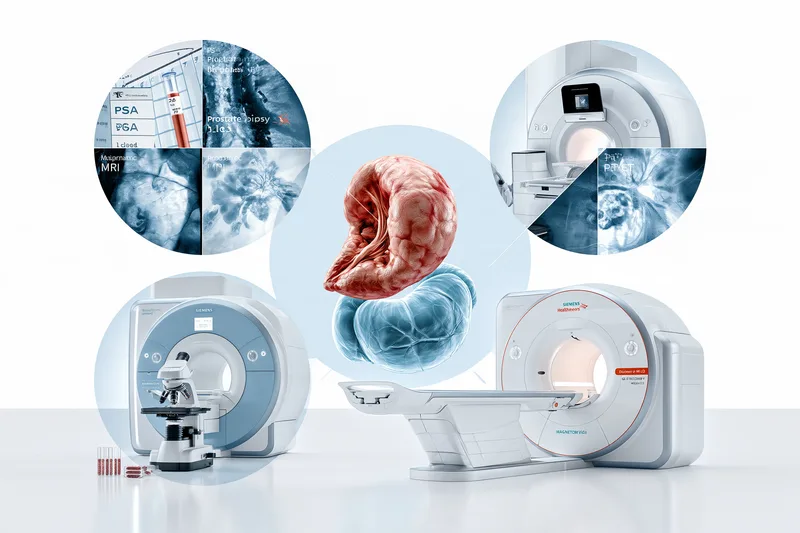
Whether prostate cancer can be treated without surgery cannot be decided from a PSA result alone. A safe recommendation requires the PSA history, biopsy findings, Grade Group, multiparametric MRI, clinical stage, appropriate staging scans, general health and expected treatment tolerance to be assessed together. These results determine whether active surveillance is reasonable, radiotherapy can be offered with curative intent, focal therapy may be considered or systemic treatment is required.[1,2]
PSA and PSA Density
PSA is produced by both normal and cancerous prostate tissue. An elevated result can occur with prostate cancer, benign prostate enlargement, prostatitis, urinary retention, recent urinary instrumentation and other prostate-related conditions. One abnormal value should therefore be interpreted alongside previous results, prostate size, symptoms, examination findings and imaging rather than being treated as proof that the cancer has progressed.[1,4]
The PSA trend may provide more information than a single measurement. A persistently rising PSA can increase concern, but temporary fluctuations are common. During active surveillance, an unexpected increase is often confirmed with a repeat test before a major treatment decision is made. A rising PSA may prompt reassessment with MRI or biopsy, but it should not automatically lead to surgery without confirming whether the cancer itself has become more aggressive.[1,4]
PSA density is calculated by dividing the PSA level by the prostate volume measured on imaging. This helps distinguish a PSA elevation caused mainly by a large benign prostate from one that may be disproportionate to prostate size. A higher PSA density can increase concern for clinically significant disease and may make surveillance less suitable, particularly when it is accompanied by suspicious MRI or biopsy findings.[1]
Medicines such as finasteride and dutasteride can lower PSA substantially. The treating clinician must know whether these medicines are being used, how long they have been taken and whether the PSA began rising while treatment continued. Testosterone therapy, recent prostate procedures and treatment for urinary infection should also be documented so that PSA is interpreted in the correct clinical context.
Biopsy and Grade Group
The prostate biopsy provides the most important direct evidence of tumour aggressiveness. The pathologist examines the architecture of the cancer and assigns a Gleason score and an ISUP Grade Group. Grade Group 1 generally represents lower-grade disease, while Grade Groups 4 and 5 indicate more aggressive cancer with a greater likelihood of progression and spread.[1,2]
The order of the Gleason patterns matters. Gleason 3+4 and Gleason 4+3 both total 7, but Gleason 4+3 contains more higher-grade pattern 4 disease and usually carries a less favourable prognosis. The percentage of pattern 4, the number of positive cores, the length of cancer within each core and the proportion of each sample involved help determine whether surveillance remains reasonable or definitive treatment is needed.
Cribriform growth and intraductal carcinoma are adverse pathological features that may indicate more aggressive biological behaviour. Their presence can make active surveillance less appropriate even when the overall Gleason score appears relatively favourable. Perineural invasion, tumour location and evidence of extension beyond the sampled prostate tissue may also influence treatment planning, although no single microscopic feature should be interpreted in isolation.
A biopsy samples only selected areas of the prostate and can occasionally miss a larger or higher-grade tumour. When the biopsy result does not match the PSA level, MRI appearance or clinical examination, the pathology may need specialist review or the prostate may require additional targeted and systematic sampling. This is particularly important before committing a patient to long-term surveillance or a focal treatment that addresses only one part of the gland.[1,4]
Multiparametric MRI
Multiparametric MRI shows the location, size and imaging characteristics of suspicious lesions within the prostate. It can help identify areas requiring targeted biopsy, estimate tumour volume and assess whether the cancer appears confined to the gland. It also provides information about possible extension through the prostate capsule, seminal-vesicle involvement and proximity to structures that may affect radiation or focal-treatment planning.[1,4]
MRI findings are commonly reported using the Prostate Imaging Reporting and Data System. A higher PI-RADS category indicates a greater probability of clinically significant cancer, but it does not establish the diagnosis by itself. A highly suspicious lesion requires correlation with biopsy, while a low-suspicion or negative MRI cannot guarantee that important cancer is absent.
For patients considering active surveillance, MRI can provide a baseline against which later scans are compared. An increase in lesion size, a change in imaging characteristics or new evidence of extension may lead to repeat biopsy and reconsideration of treatment. Stable imaging is reassuring but does not always eliminate the need for confirmatory or periodic biopsy, particularly when PSA density or previous pathology remains concerning.[1,4]
MRI quality and interpretation depend on the scanner, imaging protocol and radiologist’s prostate expertise. When major treatment decisions depend on a borderline scan, review by an experienced genitourinary radiologist may reduce the risk of understaging or overestimating the disease.
PSMA PET and Staging Scans
Staging determines whether the cancer is limited to the prostate, involves regional lymph nodes or has spread to bones or other organs. This distinction can completely change the treatment goal. Cancer confined to the prostate may be suitable for surveillance or curative local treatment, whereas metastatic disease usually requires systemic therapy even when the prostate itself causes few symptoms.[2]
PSMA PET/CT uses a radiotracer that binds to prostate-specific membrane antigen expressed by many prostate cancer cells. It can detect lymph-node, bone and soft-tissue disease that may not be visible on conventional imaging. It is most useful when the risk of spread is clinically meaningful, such as in unfavourable intermediate-risk, high-risk, recurrent or metastatic prostate cancer. It is not routinely required for every patient with low-risk localized disease.[1,2]
A negative PSMA PET/CT does not exclude microscopic spread. Small deposits may remain below the resolution of imaging, and some prostate cancers show lower PSMA expression. The scan must therefore be interpreted alongside Grade Group, PSA, MRI, biopsy volume and clinical stage rather than being used as a stand-alone guarantee that the disease is confined to the prostate.
CT, bone scan or whole-body MRI may still be used when PSMA PET is unavailable, unsuitable or not required under the local treatment pathway. New persistent bone pain, neurological symptoms, unexplained weight loss or markedly elevated alkaline phosphatase may increase the need for metastatic evaluation even when earlier imaging was reassuring.[2]
Clinical Stage and Risk Classification
Clinical stage describes the known anatomical extent of the cancer before definitive treatment. The TNM system records the local tumour category, regional lymph-node involvement and distant metastases. Risk classification then combines stage with PSA and Grade Group to estimate the likelihood of recurrence, progression and spread.[1,2]
A patient should know whether the disease is classified as very low risk, low risk, favourable intermediate risk, unfavourable intermediate risk, high risk, very high risk, regionally advanced or metastatic. The label “early prostate cancer” is too broad to guide a safe decision because it can include tumours with substantially different biological behaviour.
Risk classification helps determine whether the appropriate non-surgical pathway is active surveillance, radiotherapy alone, radiotherapy combined with androgen-deprivation therapy or systemic treatment with selected local therapy. It also influences whether pelvic lymph nodes should be evaluated or treated and how closely the patient should be monitored after therapy.[1,2]
Genetic and Molecular Assessment
Genetic counselling and testing may be appropriate when prostate cancer occurs at a young age, is high grade, has spread beyond the prostate or is associated with a strong family history of prostate, breast, ovarian, pancreatic or related cancers. Identifying an inherited pathogenic variant can influence treatment, screening recommendations and risk assessment for close relatives.[1,2]
Tumour-based molecular testing may identify DNA-repair abnormalities or other alterations that become clinically relevant in advanced or recurrent disease. These results can help determine eligibility for selected targeted treatments or clinical trials, but molecular testing does not replace conventional staging, pathology or imaging.
Tissue-based genomic classifiers may be considered when the result is likely to change a difficult decision between surveillance and active treatment. They should not be used routinely to override clear clinical findings. A favourable genomic result cannot make a high-grade or visibly extensive tumour safe to observe, while an unfavourable result must still be interpreted within the full clinical context.[1]
General Health and Treatment Fitness
Choosing treatment without surgery requires more than evaluating the cancer. Baseline urinary symptoms, urine flow, residual urine, prostate size, previous urinary procedures and episodes of retention can influence the suitability of brachytherapy, external radiation or focal treatment. Severe obstruction may need to be addressed before treatment begins.
Bowel health is particularly relevant before pelvic radiotherapy. A history of inflammatory bowel disease, major rectal surgery, persistent bleeding or severe bowel dysfunction may require additional assessment and treatment modification. Previous pelvic radiation can also affect whether further radiotherapy can be delivered safely.
Cardiovascular disease, diabetes, obesity, osteoporosis and frailty are important when androgen-deprivation therapy is being considered. Baseline blood pressure, glucose or HbA1c, lipid profile, weight, bone health and cardiovascular risk help identify problems that could worsen during hormone treatment. Testosterone may also be measured before and during therapy when suppression and recovery need to be assessed.
Kidney function, liver function, complete blood count and current medications should be reviewed before systemic treatment and before introducing Ayurvedic medicines or other supplements. Anticoagulants, antiplatelet medicines, diabetes treatments, antihypertensive drugs and anticancer agents may interact with herbal or herbo-mineral products. Objective laboratory monitoring is therefore necessary even when the integrative treatment is intended mainly to support appetite, digestion, urinary comfort, strength or treatment tolerance.
The decision to avoid surgery becomes clinically reliable only after the pathology, PSA behaviour, imaging stage, general health and treatment goals are aligned. Missing or outdated investigations can lead to undertreatment of aggressive disease or unnecessary treatment of a tumour that could have been monitored safely.[1,2,4]
Prostate Cancer Treatment Without Surgery

Can prostate cancer be treated without surgery? In many cases, yes. The main non-surgical pathways include active surveillance, watchful waiting, external-beam radiotherapy, stereotactic body radiotherapy, brachytherapy, medical hormone treatment, systemic anticancer therapy and selected focal procedures. The appropriate option depends on whether the aim is to monitor indolent disease, eradicate localized cancer, reduce recurrence risk, control metastatic disease or relieve symptoms.[1,2]
Table: Prostate Cancer Treatment Without Surgery by Risk Group
| Prostate cancer category | Can surgery often be avoided? | Main non-surgical options | Typical treatment goal |
|---|---|---|---|
| Very-low-risk / low-risk | Yes | Active surveillance, radiotherapy if treatment becomes necessary | Avoid overtreatment while preserving curative options |
| Favourable intermediate-risk | Often | Selected active surveillance, SBRT, EBRT, brachytherapy | Curative intent |
| Unfavourable intermediate-risk | Often | EBRT/SBRT with appropriately selected ADT, brachytherapy-based approaches | Curative intent |
| High-risk localized | Often | Definitive radiotherapy plus ADT; treatment intensification in selected patients | Curative intent |
| Locally advanced | Often | Radiotherapy plus hormone/systemic treatment | Long-term disease control or cure in selected patients |
| Regional lymph-node disease | Often | Pelvic radiotherapy plus systemic treatment | Durable disease control; curative intent in selected cases |
| Metastatic hormone-sensitive | Prostatectomy usually not central | ADT plus systemic intensification; prostate radiotherapy in selected patients | Prolong survival and control disease |
| Castration-resistant metastatic | Surgery generally not central | Sequential systemic, targeted, radioligand or radiopharmaceutical treatment | Disease control and survival prolongation |
Active Surveillance
Active surveillance is usually considered for very-low-risk and low-risk prostate cancer and may also be appropriate for carefully selected men with favourable intermediate-risk disease. Its purpose is to delay or avoid treatment-related urinary, sexual and bowel effects while preserving the opportunity for curative treatment if the cancer shows clinically meaningful progression.[1,4]
A surveillance plan commonly includes scheduled PSA testing, clinical review, multiparametric MRI and repeat biopsy at intervals determined by the patient’s risk profile. PSA changes are interpreted alongside PSA density, MRI findings and biopsy results because a temporary rise does not necessarily represent cancer progression. Treatment is generally reconsidered when the Grade Group increases, the amount of cancer expands, adverse pathological features appear or imaging suggests that the tumour is becoming more extensive.[1,4]
Surveillance is safest when the original diagnosis has been adequately sampled and the patient can attend follow-up reliably. A confirmatory MRI or biopsy may be recommended when the initial tissue sample was limited, the PSA density is concerning or the imaging and pathology do not agree. Delayed recognition of higher-grade disease is a greater concern when monitoring is irregular.
Long-term evidence shows that prostate-cancer-specific mortality can remain low among appropriately selected men managed initially with monitoring, surgery or radiotherapy. However, progression and metastases occurred more frequently with monitoring than with immediate radical treatment in the ProtecT trial, demonstrating why surveillance must remain structured and risk based.[8]
Watchful Waiting
Watchful waiting is generally used when the patient’s age, frailty, serious comorbidities or limited life expectancy make the potential harms of curative treatment greater than the expected benefit. Follow-up is less intensive than active surveillance, and repeat biopsy or MRI may not be routinely required.
The focus is on maintaining comfort and treating symptoms if they develop. Hormone therapy, radiation or other palliative measures may be introduced if the cancer causes urinary obstruction, bone pain or other complications. Watchful waiting is therefore a symptom-directed strategy rather than a delayed curative programme.[2,4]
External-Beam Radiotherapy
External-beam radiotherapy can treat localized and locally advanced prostate cancer without removing the prostate. Modern planning techniques shape the radiation dose around the prostate and other treatment targets while reducing unnecessary exposure to the bladder, rectum and surrounding tissues.[1,2]
Treatment may be delivered using conventional fractionation, moderate hypofractionation or an individualized schedule based on the cancer risk, prostate anatomy, urinary function and treatment-centre protocol. The radiation field may include the prostate alone, the prostate and seminal vesicles or selected pelvic lymph nodes when the estimated risk of nodal disease is sufficiently high.
Radiotherapy may be used alone for selected lower-risk cancers. For unfavourable intermediate-risk, high-risk and locally advanced disease, medical androgen-deprivation therapy is frequently added because the combination can improve disease control in appropriately selected patients.[1,2]
Common early effects include urinary frequency, urgency, weaker flow, fatigue and bowel irritation. These symptoms often improve after treatment, although some patients develop persistent urinary, bowel or sexual effects. Previous pelvic radiation, significant inflammatory bowel disease, severe urinary obstruction and certain anatomical factors may require modified planning or consideration of another treatment.
Stereotactic Body Radiotherapy
Stereotactic body radiotherapy delivers a highly focused radiation dose over a small number of sessions. It is commonly considered for selected men with localized prostate cancer and requires precise treatment planning, daily image guidance and careful management of prostate movement.
Fiducial markers, real-time tracking or advanced imaging may be used to confirm prostate position during each treatment. A rectal spacer may be considered in selected patients to increase the distance between the prostate and rectum, although suitability depends on tumour location, anatomy, previous procedures and local practice.
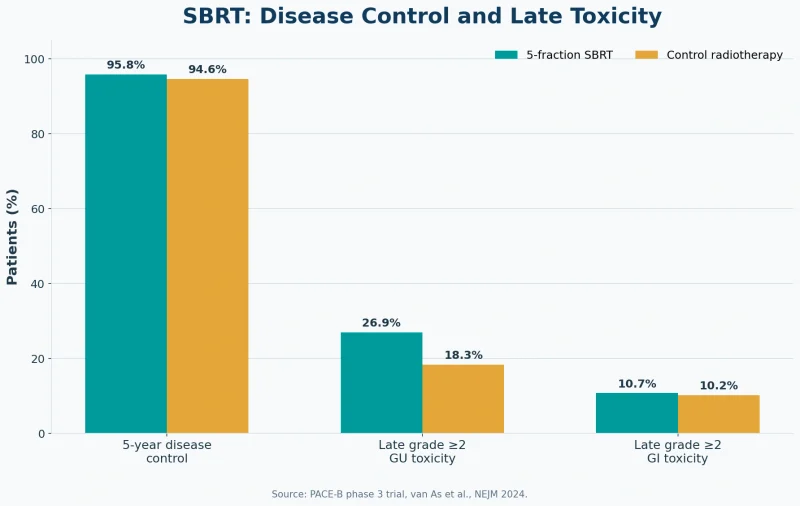
The phase 3 PACE-B trial showed that five-fraction stereotactic radiotherapy was noninferior to conventional or moderately hypofractionated radiotherapy for biochemical or clinical failure in appropriately selected localized prostate cancer.[9] This supports stereotactic treatment as an established option for suitable patients, but shorter treatment does not mean that planning, expertise or follow-up can be reduced.
Patients with marked urinary obstruction, extensive locally advanced disease or certain anatomical limitations may not be ideal candidates. The treating radiation oncologist must determine whether the convenience of a shorter schedule is compatible with safe dose delivery and adequate coverage of the disease.
Brachytherapy
Brachytherapy treats prostate cancer by positioning radioactive material within or very close to the prostate. This allows a concentrated radiation dose to be delivered to the gland while limiting exposure to more distant tissues.[1,2]
Low-dose-rate brachytherapy uses permanently implanted radioactive seeds that release radiation gradually. It may be considered for selected patients with localized disease, favourable urinary function and an appropriate prostate size. High-dose-rate brachytherapy uses temporary applicators to deliver radiation over one or more planned treatments and may be used alone or as a boost with external-beam radiotherapy.
Pre-existing urinary obstruction, a very large prostate, prior transurethral prostate surgery or difficulty undergoing anaesthesia can affect suitability. Urinary frequency, urgency, discomfort and temporary retention may occur after treatment. Careful assessment of baseline urinary function is therefore essential before recommending implantation.
Brachytherapy may provide curative-intent treatment without removing the prostate, but it still requires long-term PSA monitoring. Because normal prostate tissue remains, PSA usually falls gradually rather than becoming immediately undetectable.
Proton Therapy
Proton therapy is a form of external-beam radiation that deposits much of its energy at a defined depth. This physical property can reduce radiation exposure to some surrounding tissues in selected treatment plans.[2,6]
Potential dosimetric advantages do not automatically translate into better survival, cancer control or quality of life for every patient. Modern photon techniques already provide highly conformal treatment, and the relative benefit of proton therapy depends on the individual anatomy, target volume, treatment plan and available expertise.
Availability and cost vary considerably across the USA, UK, Canada, Singapore and Australia. Patients considering proton therapy should compare expected cancer control, urinary and bowel risks, travel requirements, insurance coverage and the experience of the treatment centre rather than assuming that the newest or most expensive technology is necessarily superior.
Medical Hormone Therapy
Androgen-deprivation therapy reduces testosterone production or blocks androgen signalling that supports prostate cancer growth. It may be given by injection, implant or oral medication and is different from surgical removal of the testes.
Hormone therapy is commonly combined with radiotherapy for higher-risk localized or locally advanced prostate cancer. In metastatic disease, it forms the treatment backbone and is usually intensified with another systemic agent when the patient is medically suitable.[1,2]
Hormone treatment alone is generally not considered curative for localized prostate cancer. It may shrink or suppress the disease for a prolonged period, but cancer cells can eventually adapt and progress despite low testosterone. The purpose, duration and expected benefit should therefore be clearly explained before treatment begins.[2,3]
Adverse effects can include hot flushes, loss of libido, erectile dysfunction, fatigue, reduced muscle mass, increased body fat, insulin resistance, altered lipids, bone loss and cardiovascular risk. Baseline blood pressure, glucose, lipid profile, weight, bone health and cardiovascular status should be reviewed, with exercise, nutrition and preventive care incorporated into the treatment plan.
Systemic Anticancer Therapy
When prostate cancer has spread beyond the prostate, treatment must address disease throughout the body. Androgen-receptor pathway inhibitors, chemotherapy, targeted treatment, radiopharmaceuticals, radioligand therapy and immunotherapy may be used according to the cancer’s hormonal status, previous treatments, symptoms, molecular findings and distribution of metastases.[2]
Androgen-receptor pathway inhibitors can deepen hormone suppression and delay progression in selected hormone-sensitive or castration-resistant disease. Chemotherapy may be recommended for men with high-volume metastatic cancer, rapidly progressive disease, significant symptoms or later-stage hormone-resistant disease.
Molecular testing can identify selected DNA-repair abnormalities that may make a patient eligible for targeted therapy. Immunotherapy is relevant only in specific molecular or clinical circumstances and should not be presented as a universal option for prostate cancer.
Radiopharmaceutical and radioligand treatments deliver therapeutic radiation to cancer sites using a targeted carrier or bone-seeking compound. Eligibility depends on previous therapy, imaging findings, bone-marrow reserve, kidney function and the biological characteristics of the disease.
Focal Therapy
Focal therapy attempts to destroy the dominant cancerous area while preserving untreated parts of the prostate. High-intensity focused ultrasound uses concentrated sound energy to heat tissue, cryotherapy freezes the target area and irreversible electroporation uses electrical pulses to disrupt cancer-cell membranes.[2]
These procedures may appeal to patients hoping to reduce urinary or sexual side effects, but suitability requires accurate tumour localization with high-quality MRI, targeted biopsy and systematic sampling. Prostate cancer is often multifocal, so treating only the visible lesion can leave clinically important disease elsewhere in the gland.
Long-term comparative evidence for focal therapy is less mature than the evidence for surgery or radiotherapy. Patients should understand the likelihood of repeat treatment, the need for continued PSA testing, MRI and biopsy, and the possibility that definitive whole-gland treatment may still be required later.
Focal therapy should not be chosen solely because it is described as minimally invasive. The decision should account for Grade Group, lesion size, location, multifocality, proximity to the urethra or neurovascular structures and the centre’s experience with both treatment and post-treatment surveillance.[1,2]
The safest non-surgical pathway is the one that matches the cancer’s biological risk and treatment goal. Active surveillance can reduce overtreatment in low-risk disease, radiotherapy can provide curative-intent treatment for many localized and locally advanced cancers, and systemic therapy is central when disease has spread. Each option requires objective follow-up because avoiding prostatectomy does not eliminate the need for long-term cancer monitoring.[1,2,8–10]
Can Prostate Cancer Be Treated Without Surgery at Each Stage?
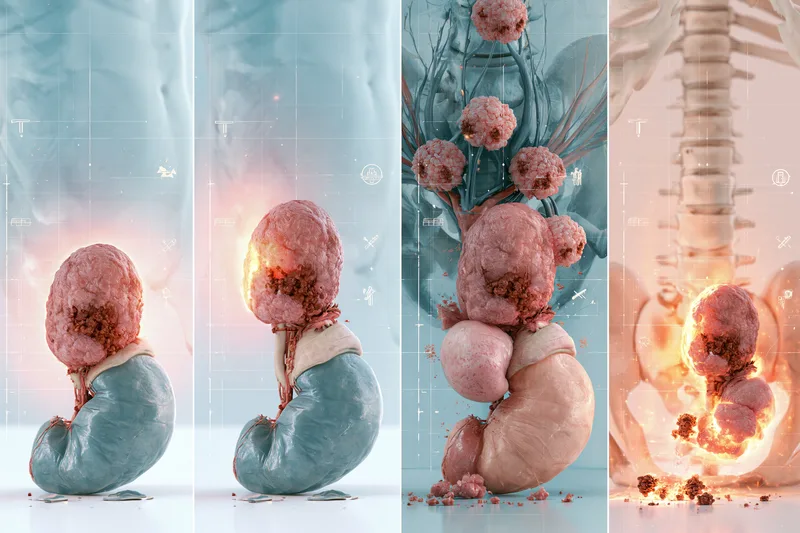
Can prostate cancer be treated without surgery at every stage? A non-surgical pathway is possible across the prostate cancer spectrum, but its purpose changes with disease extent. Low-risk cancer may be monitored without immediate treatment, localized intermediate- or high-risk cancer may receive curative-intent radiotherapy, and metastatic cancer is usually treated primarily with hormone-based and systemic therapies rather than removal of the prostate.[1,2]
Clinical stage describes how far the cancer has spread, while the risk group estimates how aggressively a localized tumour is likely to behave. Two men with cancer confined to the prostate may therefore need very different care because their PSA levels, Grade Groups, biopsy volumes and MRI findings differ. Treatment should not be chosen from the stage number alone.[1,2]
Very-Low-Risk and Low-Risk Cancer
Very-low-risk and low-risk cancers are generally confined to the prostate and have favourable PSA, Grade Group and biopsy features. For many men in this category, active surveillance is the preferred way to avoid immediate surgery, radiotherapy and their potential urinary, sexual and bowel effects.[1,4]
Active surveillance does not attempt to destroy the cancer at diagnosis. Its purpose is to identify tumours that are unlikely to cause harm while retaining the opportunity for curative treatment if the disease is reclassified. Follow-up commonly includes serial PSA testing, repeat clinical assessment, multiparametric MRI and further biopsy according to the patient’s risk and previous findings.[1,4]
The safest candidates usually have Grade Group 1 disease, limited cancer within the biopsy cores, low PSA density, no adverse pathological pattern and no MRI evidence of extension beyond the prostate. A confirmatory biopsy or targeted sampling may be required when the initial biopsy was limited or when the MRI and pathology findings do not agree.
A rising PSA during surveillance does not automatically mean that surgery is required. The result may be repeated, and PSA density, prostate enlargement, infection, MRI changes and biopsy findings should be reassessed. Treatment is more commonly triggered by Grade Group progression, increasing pattern 4 disease, greater tumour volume or convincing radiological progression than by one isolated PSA increase.[1,4]
Men who prefer definitive treatment may still avoid surgery through external-beam radiotherapy, stereotactic body radiotherapy or brachytherapy. These treatments may be delivered with curative intent, and androgen-deprivation therapy is not routinely required for most low-risk cancers receiving radiation.[1,2]
Long-term evidence indicates that prostate-cancer-specific mortality remains low for many screen-detected localized cancers treated with monitoring, surgery or radiotherapy. However, monitoring carries a greater risk of disease progression and metastasis than immediate radical treatment, making accurate selection and consistent follow-up essential.[8]
Favourable Intermediate-Risk Cancer
Favourable intermediate-risk disease is usually confined to the prostate but contains one or more features associated with greater biological risk than low-risk cancer. This may include limited Grade Group 2 disease, a moderately elevated PSA or a higher clinical tumour category without multiple adverse factors.[1]
Selected patients may remain eligible for active surveillance when the amount of Gleason pattern 4 is small, tumour volume is low, PSA density is reassuring and MRI does not show extensive or extracapsular disease. Surveillance in this group requires greater caution because intermediate-risk cancer is more likely to progress than Grade Group 1 disease.
The biopsy should establish not only the Grade Group but also the percentage and architecture of pattern 4. Extensive pattern 4, cribriform growth or intraductal carcinoma can make surveillance unsuitable even when the cancer is technically categorized as favourable intermediate risk.
For patients seeking active treatment without surgery, external-beam radiotherapy, stereotactic body radiotherapy and brachytherapy may provide curative-intent options. Radiation can often be delivered without hormone therapy in carefully selected favourable intermediate-risk cases, although the final decision depends on tumour volume, imaging, PSA, pathological features and the radiation plan.[1,2]
The choice between surveillance and treatment should consider more than cancer control. A patient with significant anxiety, unreliable access to follow-up or a strong preference for definitive treatment may reasonably choose radiotherapy, while another patient may prioritize delaying urinary, sexual and bowel effects through structured surveillance.
Unfavourable Intermediate-Risk Cancer
Unfavourable intermediate-risk cancer carries a higher probability of recurrence and progression than favourable intermediate-risk disease. Features may include Grade Group 3 cancer, more than one intermediate-risk factor or a larger burden of Grade Group 2 disease.[1]
Active surveillance is generally not appropriate because the risk of missing a curative window is higher. Surgery is not mandatory, however. External-beam radiotherapy combined with a short course of androgen-deprivation therapy is an established curative-intent alternative for medically suitable patients.[1,2]
Radiotherapy may treat the prostate and seminal-vesicle region, with the treatment volume determined by MRI findings and the estimated risk of microscopic extension. Brachytherapy may be used alone in selected circumstances or as a boost with external-beam radiation when greater dose intensification is appropriate.
Short-term hormone treatment can improve disease control for appropriately selected patients, but it introduces additional effects such as hot flushes, loss of sexual function, fatigue, changes in body composition and temporary metabolic disturbance. Cardiovascular health, diabetes risk, bone health and baseline testosterone should be considered before treatment begins.
A man who cannot safely receive hormone therapy because of severe comorbidity may still be assessed for an individualized radiation approach. The balance between cancer-control benefit and treatment risk should be reviewed by a radiation oncologist rather than assuming that inability to tolerate hormone therapy automatically makes surgery necessary.
High-Risk Localized Cancer
High-risk localized prostate cancer may still be confined to the prostate on imaging but has features associated with a substantial risk of microscopic spread or recurrence. These features can include Grade Group 4 or 5 disease, a markedly elevated PSA or clinical evidence of a more extensive primary tumour.[1,2]
Active surveillance is not appropriate for a medically fit patient with high-risk disease. A non-surgical curative-intent pathway commonly includes external-beam radiotherapy combined with longer-duration androgen-deprivation therapy. Treatment may also include a brachytherapy boost or irradiation of pelvic lymph nodes when the estimated risk of nodal involvement is sufficiently high.[1,2]
Accurate staging is especially important because conventional scans may miss small lymph-node or bone metastases. PSMA PET/CT, MRI and other appropriate investigations can determine whether treatment should remain directed at localized disease or expand to include regional or systemic therapy.
Longer androgen suppression can improve cancer control in selected high-risk patients but may also worsen bone loss, muscle reduction, weight gain, insulin resistance, lipid abnormalities and cardiovascular risk. Baseline bone density, metabolic assessment, cardiovascular evaluation, resistance exercise and nutritional support should be incorporated into care rather than introduced only after complications develop.
Patients should understand that radiotherapy is not merely a less intensive substitute for surgery. High-risk radiation treatment is a planned multimodal strategy requiring precise target definition, hormone management and prolonged follow-up. Its curative potential depends on completing the recommended components rather than receiving radiation alone when combined treatment is indicated.
Locally Advanced Cancer
Locally advanced prostate cancer has extended beyond the prostate capsule, involved the seminal vesicles or reached nearby structures but may not yet have spread to distant organs. Prostate removal can be difficult or may need additional postoperative treatment, making definitive radiotherapy an important non-surgical option.[2]
Treatment commonly combines external-beam radiotherapy with prolonged androgen-deprivation therapy. Radiation may include the prostate, seminal vesicles and selected pelvic lymph nodes. Additional systemic intensification may be considered for patients with very high-risk features, nodal involvement or a substantial risk of distant relapse.
Locally advanced disease can still be treated with curative intent in selected patients. The presence of extracapsular extension or seminal-vesicle involvement does not automatically mean that treatment is only palliative. The distinction depends on lymph-node status, distant staging, tumour burden, general health and the feasibility of combined therapy.[1,2]
Urinary obstruction should be assessed before radiation begins. Some patients require management of retention, infection, bladder dysfunction or severe flow limitation so that treatment can be delivered safely. Procedures performed to improve urinary drainage are not equivalent to radical prostatectomy and do not by themselves treat the entire cancer.
Regional Lymph-Node Disease
Cancer involving pelvic lymph nodes without distant metastases is classified differently from cancer that has spread to bones or organs. It usually requires treatment of both the visible regional disease and the possibility of microscopic cancer elsewhere in the body.
A non-surgical plan may combine radiotherapy to the prostate and pelvic lymph-node regions with long-term androgen-deprivation therapy. Selected patients may also receive intensified systemic treatment according to disease volume, fitness, cardiovascular risk and current specialist recommendations.[1,2]
Lymph-node involvement does not necessarily eliminate the possibility of durable control. Outcomes depend on the number, size and location of involved nodes, PSA, Grade Group, response to hormone treatment and whether distant disease is detected. Repeated imaging may be needed when results are equivocal or when the treatment plan would change substantially.
Metastatic Hormone-Sensitive Cancer
When prostate cancer has spread to distant lymph nodes, bones or organs, surgery to remove the prostate cannot treat all cancer sites. Systemic treatment therefore becomes the principal strategy, even when the prostate itself remains in place.[2]
Androgen-deprivation therapy is the treatment foundation but is generally combined with another effective agent in medically suitable patients. Options may include an androgen-receptor pathway inhibitor, chemotherapy or a combination approach selected according to metastatic volume, symptoms, age, fitness and comorbidities.
Radiotherapy to the prostate may be considered for selected patients with newly diagnosed low-volume metastatic disease. The purpose is to improve disease control in a carefully defined group, not to replace systemic therapy. Patients with extensive metastatic burden are more likely to receive prostate radiation for local symptom control than as the primary means of treating the cancer.
Bone-directed assessment is important when metastases involve the skeleton. Persistent pain, fracture risk, spinal involvement, calcium disturbance and bone loss from hormone therapy require separate evaluation. Focused radiotherapy can relieve painful lesions, while bone-protective treatment may be indicated according to the disease setting and fracture risk.
A rapid fall in PSA after systemic treatment is encouraging but does not prove that metastatic cancer has been eradicated. Response assessment may include PSA, testosterone, symptoms, blood counts, liver and kidney function, alkaline phosphatase and repeat imaging when clinically indicated.
Metastatic Castration-Resistant Cancer
Castration-resistant prostate cancer is diagnosed when the disease progresses despite testosterone being maintained at a castrate level. Progression may appear as a rising PSA, new lesions on imaging, enlargement of known disease or worsening cancer-related symptoms.[2]
Treatment without surgery may include androgen-receptor pathway therapy, chemotherapy, targeted treatment for eligible molecular alterations, radiopharmaceutical therapy, radioligand treatment or selected immunotherapy. The sequence depends on previous treatments, tumour genetics, PSMA expression, metastatic distribution, bone-marrow reserve, organ function and the patient’s priorities.
Hormone suppression is usually continued even after the disease becomes castration resistant because androgen signalling may still contribute to tumour growth. New therapy is added rather than assuming that androgen deprivation has no further role.
Molecular testing becomes increasingly important in advanced disease. Germline and tumour testing may identify DNA-repair alterations that influence targeted-treatment eligibility and may have implications for biological relatives. Testing should be paired with appropriate counselling because hereditary findings can affect family cancer-risk assessment.
Recurrent Prostate Cancer
Recurrence after previous treatment is defined differently according to the original therapy. After radiotherapy, PSA does not normally become immediately undetectable because benign prostate tissue remains. A temporary PSA bounce may occur and should be distinguished from a sustained biochemical recurrence.
When PSA rises, the first step is to establish whether recurrence is confined to the prostate, located in pelvic lymph nodes or present at distant sites. PSA doubling time, original Grade Group, time since treatment, testosterone level, MRI and PSMA PET/CT can help determine whether salvage local treatment or systemic therapy is more appropriate.
Local recurrence after radiotherapy does not always require salvage prostatectomy. Carefully selected patients may be assessed for salvage brachytherapy, stereotactic reirradiation, cryotherapy or high-intensity focused ultrasound. These treatments require biopsy confirmation and specialist expertise because urinary and rectal complication risks may be greater after previous radiation.
Patients with nodal or distant recurrence may receive hormone-based treatment, metastasis-directed radiation or broader systemic therapy. A slowly rising PSA without visible disease may sometimes be monitored, particularly when the PSA doubling time is long and the risks of immediate treatment outweigh the likely benefit.[1,2]
Ayurvedic supportive care may be adapted to the patient’s stage, treatment burden, digestive tolerance and comorbidities, but it should not replace surveillance, curative-intent radiotherapy or systemic treatment. Changes in urinary symptoms, appetite, energy or sleep may improve quality of life, whereas cancer response must be determined through PSA, testosterone, imaging, pathology and clinically appropriate follow-up.[1,2]
Can Prostate Cancer Be Treated Without Surgery Using Radiation?
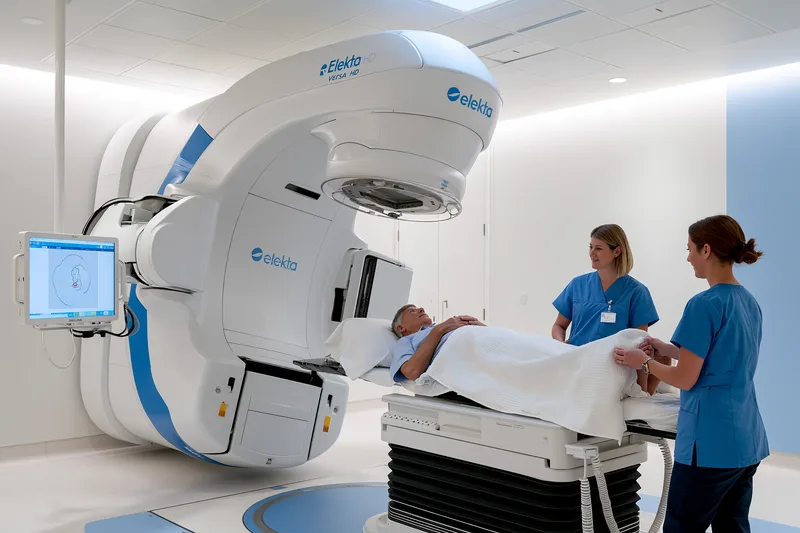
Can prostate cancer be treated without surgery using radiation? Yes. Radiation therapy can be delivered with curative intent for many localized and locally advanced prostate cancers, including cancers that would otherwise be considered for radical prostatectomy. The likelihood of long-term control depends on the tumour’s Grade Group, PSA level, clinical stage, lymph-node status, treatment dose, use of hormone therapy when indicated and completion of appropriate follow-up.[1,2]
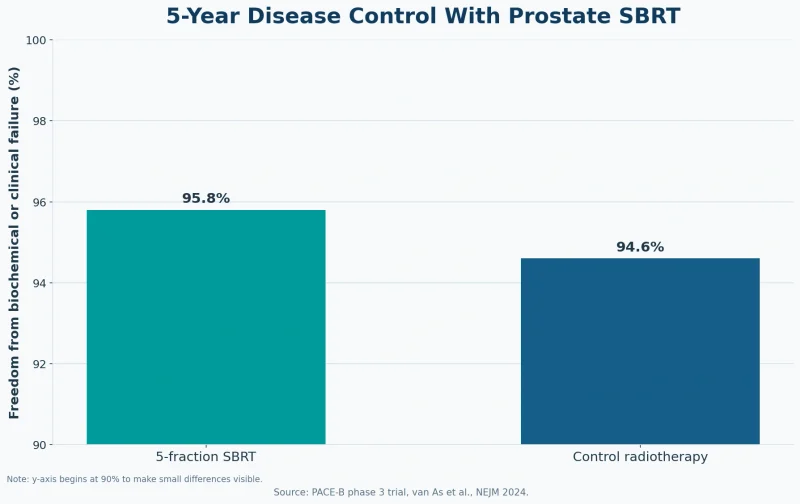
Curative-intent radiation aims to destroy cancer cells within the prostate and any surrounding areas at risk of microscopic disease. Unlike surgery, it does not remove the prostate. This means that normal prostate tissue remains in the body and may continue producing a small amount of PSA after treatment. Success is therefore assessed through the depth and durability of PSA decline, imaging when indicated and the absence of clinical progression rather than expecting PSA to become immediately undetectable.[1,2]
When Radiation Can Be Curative
Radiation may be used as definitive treatment for low-risk, intermediate-risk and high-risk localized prostate cancer. It can also be used for selected locally advanced cancers that have extended through the prostate capsule, involved the seminal vesicles or reached regional pelvic lymph nodes without widespread distant metastases.[1,2]
For low-risk disease, radiation may be offered when the patient prefers active treatment rather than active surveillance, cannot undergo reliable surveillance or has clinical features that make observation less suitable. External-beam radiation, stereotactic body radiation therapy and brachytherapy can all be considered according to prostate size, urinary function, tumour location and local expertise.
For intermediate-risk disease, radiation remains a curative-intent option, but treatment intensity depends on whether the cancer is classified as favourable or unfavourable intermediate risk. Selected favourable intermediate-risk cancers may be treated with radiation alone, while unfavourable intermediate-risk disease commonly requires a limited course of androgen-deprivation therapy in addition to radiation.[1,2]
High-risk and locally advanced cancers generally require a combined approach. External-beam radiation is commonly paired with longer-duration androgen-deprivation therapy because hormone suppression can reduce cancer-cell stimulation, improve the effectiveness of radiation and lower the risk of recurrence in appropriately selected patients. Pelvic lymph nodes may also be included when the estimated probability of microscopic nodal disease is sufficiently high.[1,2]
Radiation to the prostate may be considered for selected men with newly diagnosed low-volume metastatic disease, but this should not be confused with treating widespread cancer through radiation alone. When prostate cancer has spread to bones, distant lymph nodes or organs, systemic hormone-based treatment remains essential. Prostate-directed radiation may improve outcomes in a defined subgroup, whereas radiation to metastatic sites may be used to relieve pain, prevent complications or control a limited number of lesions.[2]
How Radiation Is Delivered
External-beam radiation is produced by a treatment machine and directed at the prostate from outside the body. Contemporary techniques use detailed imaging, computer-based planning and multiple beam angles to shape the dose around the prostate while limiting exposure to the rectum, bladder, bowel and other nearby tissues.[1,2]
Moderately hypofractionated radiation delivers a slightly larger dose during each session, allowing treatment to be completed over fewer weeks than older conventional schedules. Stereotactic body radiation therapy delivers a higher dose per session over a much shorter course, commonly five treatments in appropriately selected patients. The PACE-B trial demonstrated that five-fraction stereotactic treatment was noninferior to conventional or moderately hypofractionated radiation for biochemical or clinical failure in selected localized prostate cancer.[9]
Shorter treatment does not mean that the cancer is receiving less therapy. The dose per session, total biological effect and precision requirements differ. Stereotactic treatment requires accurate prostate localization, careful management of organ movement and strict dose limits for the bladder, urethra and rectum.
Brachytherapy delivers radiation from within the prostate. Low-dose-rate brachytherapy uses permanently implanted radioactive seeds, while high-dose-rate brachytherapy uses temporary applicators that are removed after treatment. Brachytherapy may be used alone for selected localized cancers or combined with external-beam radiation to intensify treatment for higher-risk disease.[1,2]
A patient’s urinary function is particularly important when brachytherapy is being considered. Severe frequency, weak flow, incomplete bladder emptying, recurrent retention, a very large prostate or previous transurethral surgery may increase the risk of urinary complications. Prostate volume, anatomy and anaesthetic fitness should therefore be evaluated before implantation.
Radiation and Hormone Therapy
Hormone therapy is not automatically required for every patient receiving radiation. Many low-risk cancers and selected favourable intermediate-risk cancers can be treated without androgen deprivation. In these patients, adding hormone treatment may expose the patient to adverse effects without providing sufficient additional benefit.[1,2]
For unfavourable intermediate-risk, high-risk and locally advanced disease, hormone therapy may materially improve cancer control when combined with radiation. The duration may range from several months to a longer course depending on the risk category, lymph-node involvement, treatment field and patient’s ability to tolerate androgen suppression.[1,2]
Hormone therapy can produce a rapid PSA decline, but this decline partly reflects testosterone suppression. PSA results obtained during androgen deprivation must therefore be interpreted together with the testosterone level and the timing of treatment. A low PSA while testosterone remains suppressed does not by itself establish that the cancer has been permanently eradicated.
Before prolonged hormone treatment, patients should be assessed for cardiovascular disease, diabetes, obesity, osteoporosis, frailty and previous fractures. Monitoring may include blood pressure, glucose or HbA1c, lipid profile, weight, waist circumference, bone density and vitamin D when clinically indicated. Resistance exercise, aerobic activity, adequate protein intake and bone-health measures can help reduce muscle loss, metabolic deterioration and fracture risk.
PSA After Radiation
PSA usually falls gradually after radiation because the prostate remains in place. The lowest value reached is called the PSA nadir. Reaching the nadir may take many months, and the expected pattern differs according to whether hormone therapy was also used.[1,2]
A temporary PSA rise can occur after radiation, particularly after brachytherapy or stereotactic treatment. This phenomenon is known as a PSA bounce. It may occur months or years after treatment and can later resolve without additional cancer therapy. A single increase should therefore be confirmed and interpreted alongside the overall trend, treatment history, testosterone level and clinical findings.
Biochemical recurrence after definitive radiation is commonly defined as a PSA increase of 2 ng/mL or more above the post-treatment nadir. This definition reduces the risk of incorrectly labelling a temporary fluctuation as treatment failure. However, clinicians may investigate earlier when the PSA is rising rapidly, the original cancer was high risk or symptoms suggest recurrent disease.[2]
PSA doubling time is clinically important after radiation. A slowly rising PSA over several years may indicate different disease behaviour from a rapid increase over a few months. The original Grade Group, time from treatment to PSA rise, testosterone level and imaging findings help estimate whether recurrence is likely to remain local or represent disease elsewhere in the body.
Patients should continue PSA follow-up even after several reassuring years. Durable control substantially increases confidence that treatment has succeeded, but the term “cure” is best supported by long-term absence of biochemical, radiological and clinical recurrence rather than one low PSA result.
Cancer Control Compared With Surgery
Long-term randomized evidence shows that both radiotherapy and radical prostatectomy can achieve very low prostate-cancer-specific mortality in appropriately selected men with localized disease. In the fifteen-year ProtecT trial, prostate-cancer-specific mortality remained low and did not differ significantly among patients assigned to monitoring, surgery or radiotherapy, although active monitoring was associated with more progression and metastatic disease than radical treatment.[8]
These findings do not mean that radiation and surgery are identical. They may offer similar curative intent for selected patients while producing different patterns of adverse effects. Surgery has a greater immediate effect on urinary continence and erectile function, whereas radiation is more likely to produce temporary urinary irritation and bowel symptoms. Sexual function may decline gradually after either treatment, and hormone therapy can add substantial sexual and systemic effects.[10]
The most appropriate treatment cannot be chosen solely from survival statistics. A patient with severe baseline urinary obstruction, inflammatory bowel disease, previous pelvic radiation or anatomy that prevents safe dose delivery may be less suitable for radiation. A patient with significant surgical risk, a strong preference to avoid prostate removal or disease extending beyond the gland may find definitive radiation more appropriate.
Consultation with both a urologist and a radiation oncologist allows the patient to compare expected cancer control, urinary outcomes, sexual effects, bowel risks, treatment duration and available salvage options. A recommendation made only within one specialty may not fully reflect all reasonable alternatives.
Side Effects and Recovery
Radiation does not require removal of the prostate or a surgical incision, but it is not free from side effects. During treatment or shortly afterward, patients may experience increased urinary frequency, urgency, weaker flow, nighttime urination, mild burning, fatigue, loose stools, rectal urgency or bowel discomfort. These effects often improve during the weeks or months after treatment.
Late urinary effects may include persistent frequency, bleeding, urethral narrowing or, less commonly, retention. Late bowel effects may include intermittent rectal bleeding, urgency or altered bowel habit. Modern image guidance and dose planning have reduced unnecessary exposure, but the risk cannot be eliminated completely.[1,2]
Erectile function may decline gradually after radiation because the nerves, blood vessels and penile tissues involved in erection can be affected over time. Age, diabetes, smoking, cardiovascular disease, baseline erectile function and concurrent hormone therapy strongly influence the degree of change.
Urinary incontinence requiring pads is generally less common immediately after radiation than after radical prostatectomy, although patients with previous prostate procedures or severe urinary dysfunction may have a different risk. Patient-reported outcomes demonstrate that surgery and radiation affect quality of life in distinct ways, making baseline function and personal priorities central to treatment selection.[10]
If Cancer Returns After Radiation
A rising PSA after radiation does not automatically mean that the cancer has returned within the prostate. Recurrence may be confined to the gland, involve pelvic lymph nodes or occur at distant sites. Multiparametric MRI, PSMA PET/CT, biopsy and PSA kinetics may be used to locate the disease before further treatment is selected.[1,2]
When recurrence is confirmed only within the prostate, selected patients may be considered for salvage prostatectomy, salvage brachytherapy, cryotherapy, high-intensity focused ultrasound or stereotactic reirradiation. These treatments are more complex after previous radiation and may carry higher risks of urinary, rectal or sexual complications. They should be performed only after careful staging and assessment at an experienced centre.
If recurrence is found in lymph nodes or distant organs, hormone-based treatment, metastasis-directed radiation or broader systemic therapy may be more appropriate. A slowly rising PSA without visible disease may sometimes be monitored, particularly when the doubling time is long and immediate treatment is unlikely to improve quality or length of life.
Ayurveda During Radiation
Ayurvedic supportive care may be used during radiation when it is coordinated with the oncology team and adapted to the patient’s digestive function, bowel pattern, urinary symptoms, energy level, comorbidities and prescribed medicines. Appropriate supportive goals may include maintaining appetite, bowel regularity, sleep, strength and emotional stability without interfering with cancer-directed treatment.
Herbal, mineral and nutritional products should be reviewed before radiation begins. Some preparations can affect bleeding, blood pressure, glucose, liver function, kidney function or the metabolism of conventional medicines. Products with uncertain composition, unverified metal content or high doses of multiple antioxidants should not be added without clinical review.
Symptomatic improvement during integrative care does not establish that radiation has cured the cancer. Treatment response must continue to be assessed through serial PSA, testosterone where relevant, imaging, pathology and long-term clinical follow-up. Radiation can provide curative treatment without surgery for many patients, but its success depends on accurate staging, appropriate dose delivery, correct use of hormone therapy and sustained objective monitoring.[1,2,8–10]
Can Prostate Cancer Be Treated Without Surgery or Is Surgery Better?

Can prostate cancer be treated without surgery as effectively as with prostate removal? For many men with localized disease, both radical prostatectomy and definitive radiotherapy can be used with curative intent. Men with low-risk cancer may avoid either treatment through active surveillance, while patients with metastatic disease usually require systemic therapy rather than prostate removal. The better option depends on cancer risk, life expectancy, urinary and sexual function, other medical conditions and the patient’s priorities.[1,2]
Surgery and non-surgical treatment should not be viewed as stronger and weaker versions of the same therapy. Radical prostatectomy removes the prostate and nearby seminal vesicles, whereas radiation destroys cancer cells while leaving the gland in place. Active surveillance monitors carefully selected cancers without immediate treatment, and hormone-based or systemic therapy treats disease that may already exist beyond the prostate. Each pathway has a different purpose, pattern of side effects and method of follow-up.[1,2]
Cancer Control
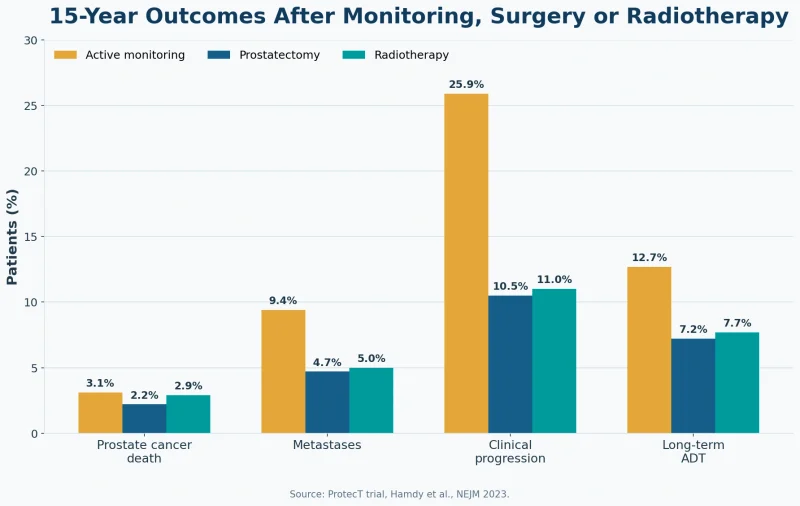
For appropriately selected localized prostate cancer, radical prostatectomy and radiotherapy can both provide long-term disease control. The fifteen-year ProtecT trial found very low prostate-cancer-specific mortality among men assigned to surgery, radiotherapy or active monitoring, with no significant mortality difference among the groups. Active monitoring was associated with more progression and metastatic disease than immediate radical treatment, showing that surveillance must be reserved for suitable patients and supported by structured reassessment.[8]
These findings do not establish that every patient will have the same outcome with surgery and radiation. The trial population included predominantly PSA-detected localized disease, and treatment choice still depends on Grade Group, PSA, clinical stage, tumour volume and imaging. A man with high-risk or locally advanced cancer may require radiotherapy combined with androgen-deprivation therapy, whereas another patient may undergo surgery with the understanding that postoperative radiation or hormone treatment could still be required.[1,2]
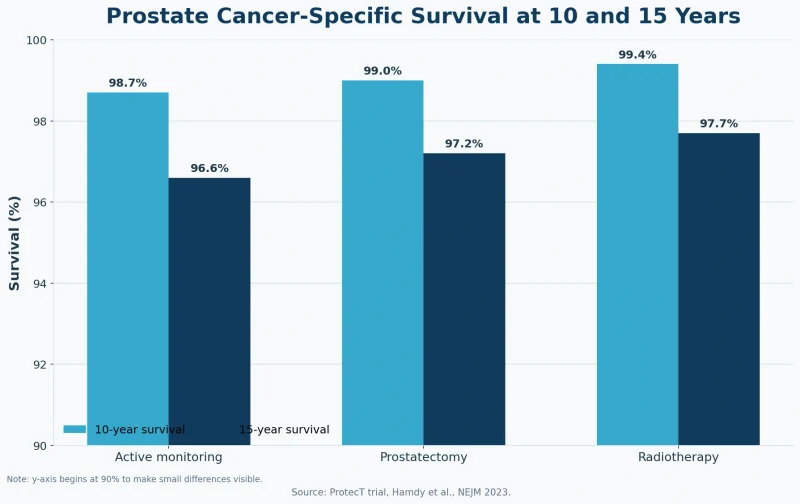
Surgery may provide complete pathological information because the removed prostate and sampled lymph nodes can be examined directly. This can reveal the true tumour extent, surgical-margin status, extracapsular extension, seminal-vesicle involvement and lymph-node disease. Radiation planning relies on biopsy, MRI, clinical staging and appropriate scans rather than whole-gland pathological examination.
Radiation can treat the prostate together with surrounding tissues that may contain microscopic disease. This may be particularly valuable when MRI or other findings suggest extension beyond the prostate or involvement of the seminal-vesicle region. For higher-risk disease, hormone therapy may be added because local radiation alone may not adequately address the risk of microscopic spread.[1,2]
The possibility that additional treatment will be needed should be discussed before either option is chosen. Some patients require radiation after surgery because of adverse pathology or a subsequent PSA rise. Some patients treated initially with radiation later require systemic therapy or specialist salvage treatment because of local or distant recurrence. The need for further therapy does not necessarily mean that the original treatment was inappropriate, but it should form part of the initial decision.
Procedure and Recovery
Radical prostatectomy is performed under anaesthesia using robotic-assisted, laparoscopic or open surgery. It generally requires a hospital stay or monitored short-stay pathway, temporary urinary catheterization and a period of restricted physical activity. Recovery varies with surgical approach, age, fitness and complications, but continence and sexual recovery may continue for many months.
Possible surgical complications include bleeding, infection, blood clots, anaesthetic complications, urinary leakage, bladder-neck narrowing and lymphatic fluid collections when lymph nodes are removed. Serious complications are uncommon in experienced centres, but the risks increase with frailty, obesity, cardiovascular disease, respiratory illness, anticoagulant use and previous pelvic procedures.[1,2]
External-beam radiotherapy does not require removal of the prostate or a major incision. Most patients attend as outpatients and can continue many routine activities during treatment. Conventional or moderately hypofractionated schedules require repeated visits over several weeks, while stereotactic treatment may be completed in approximately five sessions for suitable localized disease.[1,2,9]
Radiation planning may involve CT simulation, MRI fusion, bladder and bowel preparation, fiducial markers or a rectal spacer in selected patients. Although no surgical wound is created, treatment effects can accumulate during the course and persist for several weeks afterward. Fatigue, urinary irritation and bowel changes may temporarily interfere with work, travel and daily routines.
Brachytherapy requires the placement of radioactive sources within the prostate. Depending on the technique, it may involve anaesthesia, temporary catheters and a short recovery period. Urinary symptoms can intensify after implantation, particularly in men who already have weak flow, incomplete bladder emptying or a large prostate.
Active surveillance usually causes the least immediate physical disruption, but it requires repeated PSA testing, imaging, clinical review and periodic biopsy. Some patients experience significant anxiety while living with an untreated cancer diagnosis. Others value the opportunity to preserve their current urinary, sexual and bowel function for as long as the disease remains suitable for monitoring.
Urinary Function
Urinary incontinence is one of the most important considerations after radical prostatectomy. Many men require pads during early recovery, and continence often improves over time. A proportion continue to experience stress leakage during coughing, lifting or physical activity, while a smaller group develop persistent incontinence requiring pelvic-floor therapy, medication or corrective procedures.[10]
The likelihood of continence recovery depends on baseline urinary function, age, body weight, surgical technique, urethral length, prostate size and the experience of the surgical team. Patients should ask how continence is defined when a centre reports its results, because complete pad-free control and the use of one security pad are not equivalent outcomes.
Radiotherapy is less likely to cause immediate stress incontinence in a patient who has not undergone previous prostate surgery. It more commonly causes frequency, urgency, nighttime urination, burning or a temporarily weaker stream. These symptoms may become more noticeable during treatment and generally improve afterward, although persistent urinary irritation or urethral narrowing can occur.[1,2,10]
Men with severe obstruction, recurrent urinary retention or substantial residual urine may not be ideal candidates for some radiation or brachytherapy approaches until the urinary problem has been assessed. A procedure to improve urine flow may be required before radiation, but its timing must be planned carefully because previous transurethral surgery can affect later urinary toxicity.
Removing the prostate can relieve obstruction caused by the gland, but surgery does not guarantee normal bladder function. A bladder that has been obstructed for years may remain overactive or weak after the prostate is removed. Urodynamic testing or specialist bladder assessment may be appropriate when symptoms appear disproportionate to the prostate findings.
Sexual Function
Erectile dysfunction can occur after both surgery and radiotherapy. After prostatectomy, the change is often immediate because the nerves and blood vessels involved in erection lie close to the prostate. Nerve-sparing surgery may preserve erectile potential when the cancer location allows it, but nerve preservation cannot be guaranteed when tumour control requires wider removal.[10]
Recovery after nerve-sparing surgery may take months or longer. Age, baseline erectile quality, diabetes, cardiovascular health, smoking, obesity and whether one or both nerve bundles are preserved strongly influence the outcome. Tablets, vacuum devices, injections, counselling and penile rehabilitation may be offered, but they do not ensure complete recovery.
Erectile function after radiation may decline more gradually. Radiation can affect penile blood vessels, nerves and surrounding tissues, while age-related vascular changes continue independently. The addition of hormone therapy can cause loss of libido and erectile function during treatment, and recovery may be incomplete after prolonged androgen suppression.[2,10]
Radical prostatectomy results in permanent loss of ejaculation because the prostate and seminal vesicles are removed and the reproductive tract is divided. Orgasm may still be possible, but it is dry, and its intensity may change. Urine leakage during sexual activity and penile shortening can occur in some patients.
Radiotherapy also usually reduces semen production and can impair fertility. Patients who may wish to have biological children should discuss sperm banking before surgery, radiation or hormone treatment begins. Fertility preservation is most useful when arranged before treatment rather than after reproductive structures have been affected.
Bowel and Hormonal Effects
Bowel effects are more closely associated with radiotherapy than with prostatectomy because the rectum lies immediately behind the prostate. During or shortly after treatment, some patients experience looser stools, bowel urgency, increased frequency, mucus or rectal discomfort. Modern image guidance and treatment planning reduce exposure, but they cannot completely eliminate the possibility of bowel toxicity.[1,2,10]
Late effects can include intermittent rectal bleeding, persistent urgency or altered bowel habits. The risk may be greater in patients with inflammatory bowel disease, previous pelvic radiation, anticoagulant use or pre-existing rectal problems. These conditions require individual assessment rather than automatic exclusion from radiation.
Surgery does not usually cause chronic radiation-type bowel symptoms, but temporary constipation, abdominal discomfort or bowel slowing can follow anaesthesia, pain medication and reduced activity. Rarely, the rectum can be injured during prostate removal, particularly when previous surgery, radiation or severe inflammation has altered the tissue planes.
Hormonal effects become central when radiation is combined with androgen-deprivation therapy. Hot flushes, fatigue, reduced libido, erectile dysfunction, loss of muscle, increased body fat, insulin resistance, lipid changes, bone loss and mood disturbance may occur. These effects are caused primarily by hormone treatment rather than radiation itself.[1,2]
A patient comparing surgery with radiation should therefore ask whether hormone therapy will be recommended and for how long. Radiation without androgen deprivation may have a very different quality-of-life profile from high-risk radiation combined with prolonged hormone suppression.
PSA Monitoring
After complete prostate removal, PSA is expected to fall to a very low or undetectable level because most PSA-producing tissue has been removed. A detectable or subsequently rising PSA can indicate persistent or recurrent cancer, although the timing and level required for further treatment depend on the clinical context.[1,2]
PSA interpretation is different after radiation because benign prostate cells remain. The value usually falls gradually and may take many months to reach its lowest point. A temporary PSA bounce can occur without representing recurrence, particularly after brachytherapy or stereotactic treatment.
This difference can influence patient expectations. Some men prefer the clearer post-surgical concept of an undetectable PSA, while others are comfortable with gradual PSA decline after radiation. Neither pattern alone determines which treatment is more effective; each must be interpreted according to the treatment received.
After surgery, an early PSA rise may be treated with salvage radiotherapy to the prostate bed, sometimes with hormone therapy. The probability of control is generally better when recurrence is detected and treated before the PSA becomes substantially elevated, although the complete pathology, PSA kinetics and imaging findings also matter.[1,2]
After radiation, a rising PSA may represent recurrence within the prostate, pelvic lymph nodes or distant sites. MRI, PSMA PET/CT and biopsy may be required before salvage treatment is considered. Local salvage options can include prostatectomy, brachytherapy, cryotherapy, high-intensity focused ultrasound or stereotactic reirradiation, but complication risks may be higher because the tissues have already received radiation.
Choosing Between the Options
A man with low-risk prostate cancer may not need to choose between surgery and radiation immediately because active surveillance may provide the best balance of safety and quality of life. A man with intermediate-risk disease may reasonably choose either surgery or definitive radiation when both are oncologically appropriate. A patient with high-risk or locally advanced disease should compare multimodal surgical and radiation pathways rather than assuming that either option will be a single treatment.[1,2]
Baseline urinary symptoms can shift the balance. Severe obstruction may make certain radiation techniques less suitable, while concern about persistent stress incontinence may make surgery less attractive. Significant inflammatory bowel disease may complicate pelvic radiation, whereas serious anaesthetic or cardiovascular risk may weigh against prostatectomy.
Age should inform but not dictate the choice. A healthy older patient may benefit from definitive treatment, while a younger patient with major comorbidities may be better served by surveillance or a non-surgical approach. Life expectancy, frailty and competing causes of illness should be considered alongside tumour risk.
The treating centre’s experience matters. Surgical outcomes are influenced by surgeon volume and technique, while radiation outcomes depend on accurate planning, image guidance, dose delivery and management of urinary and bowel risk. Published institutional results should be interpreted cautiously unless they describe patients with similar risk, age and baseline function.
A multidisciplinary opinion reduces the risk of choosing treatment from a single-specialty perspective. The urologist should explain surgery and surveillance, the radiation oncologist should assess external-beam radiation and brachytherapy, and the medical oncologist should be involved when systemic treatment may be required. Pathology and imaging review can resolve inconsistencies that would otherwise lead to an inappropriate recommendation.
Ayurvedic supportive care may be incorporated after the cancer-directed plan is established, particularly for appetite, digestion, sleep, bowel regularity, urinary comfort, emotional wellbeing and treatment-related fatigue. Herbal or herbo-mineral preparations should be reviewed for interactions with anticoagulants, diabetes medicines, cardiovascular drugs, hormone treatment and other anticancer therapies. Improvements in strength or symptoms do not replace PSA, imaging or biopsy evidence when judging cancer control.
The most suitable treatment is the one that offers an appropriate probability of controlling the cancer while respecting the patient’s priorities regarding continence, sexual function, bowel health, hormonal effects, recovery and long-term monitoring. Avoiding surgery is medically reasonable when surveillance, radiation or systemic therapy matches the disease, but avoiding an indicated treatment because of fear or incomplete information can allow a curable cancer to progress.[1,2,8,10]
Can Prostate Cancer Be Treated Without Surgery in Every Case?
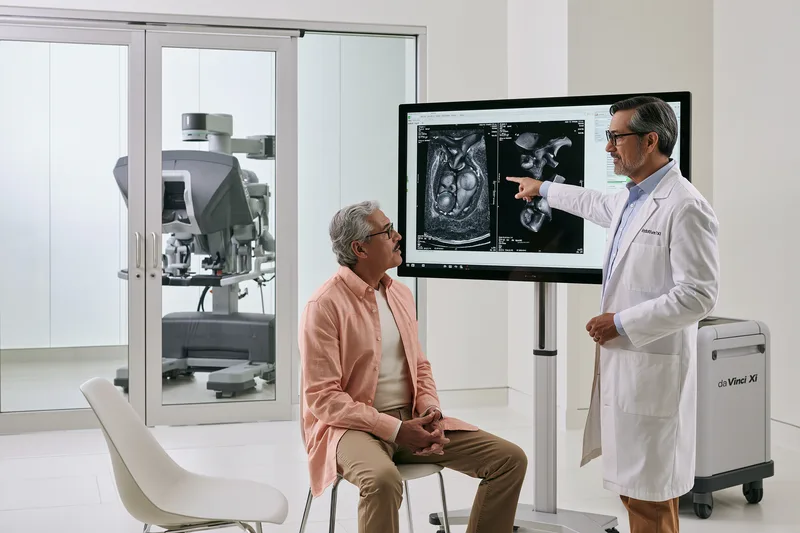
Can prostate cancer be treated without surgery in every case? No. Active surveillance, radiotherapy and systemic treatments allow many patients to avoid prostate removal, but radical prostatectomy may remain an appropriate curative-intent option for medically fit men with localized or selected locally advanced disease. Surgery is most relevant when the cancer can be removed completely, the patient has sufficient life expectancy to benefit and the anticipated cancer-control advantage justifies the urinary, sexual and surgical risks.[1,2,4]
A recommendation for surgery does not mean that radiotherapy is ineffective, and choosing radiotherapy does not mean that the cancer is being treated less aggressively. For several localized risk groups, both radical prostatectomy and radical radiotherapy are established options. The decision should reflect tumour biology, anatomy, previous treatments, general health and personal priorities rather than an assumption that one treatment is universally superior.[1,4,8]
Localized Cancer in a Fit Patient
Radical prostatectomy is principally considered when prostate cancer appears confined to the prostate or has only limited extension into nearby tissues. The operation removes the prostate and seminal vesicles, and pelvic lymph nodes may also be removed when the probability of nodal involvement is clinically meaningful.[1,2]
A younger or otherwise healthy patient with intermediate-risk or high-risk localized cancer may consider surgery because he has a long period during which untreated progression or recurrence could affect survival. The expected benefit depends on Grade Group, PSA, MRI findings, clinical stage, tumour volume and the absence of distant metastases. Age alone should not determine eligibility; functional status, cardiovascular health, respiratory fitness, frailty and competing illnesses are more informative.
Selected men with locally advanced disease may also undergo surgery as part of a multimodal plan. These patients should understand that prostate removal may not be the only treatment required. Adverse pathological findings or a postoperative PSA rise can lead to additional radiotherapy, hormone treatment or both.[1,2]
Men with very-low-risk or low-risk cancer should not assume that immediate surgery provides a meaningful advantage over active surveillance. When the probability of progression is low, the urinary and sexual consequences of treatment may outweigh the short-term oncological benefit. Surveillance remains appropriate only when the diagnosis has been adequately assessed and the patient can attend structured follow-up.[1,4,8]
Complete Pathological Assessment
Surgery provides the entire prostate for microscopic examination. The final pathology can show the true Grade Group, tumour volume, involvement of both sides of the gland, extracapsular extension, seminal-vesicle invasion, surgical-margin status and lymph-node involvement when nodes have been sampled.
This information can be valuable when the biopsy, PSA and imaging provide conflicting estimates of risk. A biopsy samples only part of the prostate and may occasionally underestimate the amount or grade of cancer. Examination of the removed gland can therefore reveal more extensive disease than was apparent before surgery.
A positive surgical margin means that cancer cells are present at the inked edge of the removed specimen. It increases the risk of biochemical recurrence but does not prove that clinically significant cancer remains in every patient. Postoperative PSA, pathological stage, Grade Group, margin location and other adverse features are considered together before recommending additional treatment.[1,2]
Complete pathological staging is an advantage of surgery, but it should not be treated as a reason to operate when surveillance or radiation is otherwise more suitable. High-quality MRI, targeted biopsy, systematic biopsy and appropriate molecular or staging investigations can often provide sufficient information for a non-surgical treatment decision.
When Radiation Is Less Suitable
Previous pelvic radiotherapy may limit the amount of additional radiation that the bladder, rectum, bowel and surrounding tissues can safely receive. Reirradiation may still be possible in specialist centres, but radical prostatectomy can become an important option when the cancer is removable and further radiation would carry excessive risk.
Severe or active inflammatory bowel disease may complicate pelvic radiotherapy because the rectum and bowel can be more vulnerable to radiation injury. Modern planning techniques may permit treatment in selected patients, but disease activity, previous bowel surgery, current medication and the distance between the prostate and rectum require careful assessment. Surgery may be favoured when safe radiation dose limits cannot be achieved.
Significant baseline urinary obstruction can also influence treatment choice. Radiation may temporarily worsen frequency, urgency, weak flow or retention, while brachytherapy can be unsuitable when urinary symptoms are severe, residual urine is high or the prostate is very large. Some patients can undergo treatment to improve urine flow before radiation, whereas others may obtain both cancer treatment and relief of gland-related obstruction through prostate removal.
Anatomical factors may occasionally prevent adequate radiation targeting or protection of neighbouring organs. These circumstances are uncommon with contemporary planning but should be evaluated using simulation imaging rather than assumed from symptoms alone. A radiation oncologist should review apparent contraindications before radiotherapy is rejected.
Urinary Obstruction and Local Complications
A prostate enlarged by cancer, benign tissue or both can compress the urethra and interfere with bladder emptying. Symptoms may include a weak stream, straining, incomplete emptying, frequent urination, recurrent infection, retention or kidney impairment caused by back pressure from the bladder.
Radical prostatectomy may remove the source of obstruction while treating localized cancer, but it is not automatically the best solution for every obstructed patient. Bladder muscle damage can persist after the blockage is removed, particularly when obstruction has been longstanding. Urine-flow testing, residual-volume measurement, kidney assessment and occasionally urodynamic evaluation can clarify whether symptoms arise from the prostate, bladder or both.
A transurethral procedure performed to restore urine flow is not equivalent to radical prostatectomy. It removes tissue around the urinary channel but does not reliably eliminate cancer elsewhere in the prostate. Patients who undergo such a procedure still require a separate cancer-management plan based on stage and risk.
Acute inability to urinate, fever with urinary symptoms, worsening kidney function or visible blood clots requires prompt medical assessment. Temporary catheterization, infection treatment or another urinary procedure may be needed before the definitive cancer treatment is selected.
Patient Preference and Treatment Priorities
Some patients prefer surgery because they want the prostate removed and value the clearer interpretation of postoperative PSA. After complete prostate removal, PSA is expected to fall to a very low or undetectable level. A persistently detectable or later-rising PSA can indicate residual or recurrent disease and may prompt consideration of salvage radiotherapy.[1,2]
Removal of the prostate does not guarantee that no additional cancer treatment will be needed. Cancer may already exist microscopically beyond the surgical field, and adverse pathology may indicate an increased recurrence risk. Patients considering surgery should ask about the probability of requiring postoperative radiation or hormone therapy based on their current risk features.
Urinary continence is a major consideration. Leakage is common during early recovery, and improvement can continue for many months. Some men retain stress incontinence during coughing, lifting or exercise, while a smaller proportion require procedures for persistent leakage. Baseline bladder function, age, body weight, urethral anatomy, surgical technique and surgeon experience affect recovery.[10]
Erectile dysfunction may occur immediately after surgery because the neurovascular bundles responsible for erections run close to the prostate. Nerve-sparing surgery may be possible when the cancer’s location and extent allow it, but preservation of cancer control takes priority when tumour involvement is suspected near a nerve bundle. Even after technically successful nerve-sparing surgery, recovery can be incomplete and may require medication, vacuum therapy, injections or other rehabilitation.[10]
Radical prostatectomy causes permanent loss of ejaculation and natural fertility because the prostate and seminal vesicles are removed. Orgasm may remain possible but becomes dry, and sensation may change. Sperm banking should be discussed before treatment when future biological parenthood remains important.
Surgery After Radiation or Focal Therapy
Salvage radical prostatectomy may be considered when prostate cancer returns within the prostate after radiotherapy or focal treatment. It is generally restricted to carefully selected patients with biopsy-confirmed local recurrence, no evidence of distant metastases, sufficient life expectancy and disease that remains technically removable.[1,2]
A rising PSA alone is not enough to proceed directly to salvage surgery. Multiparametric MRI, PSMA PET imaging, biopsy, PSA kinetics and the original treatment history help determine whether the recurrence is genuinely confined to the prostate. Surgery is unlikely to control disease that has already spread beyond the pelvis.
Salvage prostatectomy is more complex than surgery performed before radiation because treated tissues may be scarred, less elastic and more difficult to separate. Risks of incontinence, urethral narrowing, rectal injury, erectile dysfunction and urinary fistula are higher than after primary prostatectomy. The procedure should therefore be performed at a centre with specific salvage-surgery experience.
Other salvage options may include brachytherapy, stereotactic reirradiation, cryotherapy or high-intensity focused ultrasound. The preferred approach depends on the location and extent of recurrence, previous radiation dose, baseline urinary function, rectal health and the patient’s tolerance for potential complications.
When Surgery Is Usually Avoided
Radical prostatectomy is generally not the central treatment for widespread metastatic prostate cancer because removing the gland cannot eliminate cancer already present in distant lymph nodes, bones or organs. Hormone-based treatment and other systemic therapies are used to address disease throughout the body. Radiation may be added for selected low-volume metastatic disease, painful lesions or local complications.[2]
Surgery may also provide little benefit when severe frailty, advanced heart or lung disease, major cognitive impairment or limited life expectancy makes postoperative harm more likely than a meaningful cancer-control advantage. Active surveillance, watchful waiting, radiation or symptom-directed treatment may provide a safer balance according to the tumour’s risk.
Very-low-risk and low-risk cancers suitable for active surveillance usually do not require immediate prostate removal. Surgery can still be chosen after informed discussion, but the patient should understand the possibility of treating a cancer that might never have caused symptoms or shortened life.[1,4,8]
Locally extensive disease that involves structures making complete removal unlikely may be better treated with radiotherapy and systemic therapy. Conversely, selected locally advanced cancers may still be managed surgically within an experienced multidisciplinary programme. The term “locally advanced” therefore does not automatically include or exclude surgery.
Before choosing prostatectomy, the patient should receive an individualized estimate of cancer control, continence recovery, erectile-function preservation, surgical complications and the likelihood of requiring further treatment. Review by both a urologist and a radiation oncologist helps establish whether surgery offers a genuine advantage or whether prostate cancer can be treated without surgery with comparable curative intent.[1,2,4,8,10]
Can Prostate Cancer Be Treated Without Surgery by Country?

Can prostate cancer be treated without surgery in the USA, UK, Canada, Singapore and Australia? Yes. Each country recognizes non-surgical pathways such as active surveillance, external-beam radiotherapy, stereotactic radiotherapy, brachytherapy, medical hormone treatment and systemic therapy. The underlying clinical principles are similar, but referral systems, treatment availability, insurance requirements, public funding and access to specialist technology can differ.[1–7]
A treatment offered in one country should not automatically be assumed to be medically superior to an option available elsewhere. The most important considerations are accurate staging, specialist experience, treatment quality, safe follow-up and whether the proposed approach matches the patient’s Grade Group, PSA, imaging findings, general health and personal priorities.
United States
In the United States, men with localized prostate cancer are commonly evaluated by a urologist, radiation oncologist or multidisciplinary prostate cancer team. Active surveillance is an established approach for suitable low-risk disease, while surgery, external-beam radiation, stereotactic body radiation therapy and brachytherapy may be offered when definitive treatment is appropriate.[1,2]
A patient should not decide on prostate removal before understanding whether surveillance or radiation can provide an appropriate alternative. Urologists perform surgery and frequently lead the initial diagnostic pathway, whereas radiation oncologists assess external-beam radiation, stereotactic treatment and brachytherapy. Receiving opinions from both specialties can reduce the risk of choosing treatment before all reasonable options have been explained.
Insurance coverage can influence where imaging, genomic testing, proton therapy, focal treatment or specialist second opinions are obtained. Prior authorization may be required for advanced imaging, selected radiation techniques or newer systemic treatments. Patients should ask whether the proposed hospital, radiation centre, laboratory and imaging facility are within their insurance network and whether approval is required before treatment begins.
The availability of a technology does not prove that it is necessary. Proton therapy, robotic surgery, focal ablation and highly abbreviated radiation schedules may be promoted by individual centres, but their value depends on the patient’s disease and anatomy. A patient should ask whether the recommended technology improves an outcome that matters to him, such as cancer control, urinary function, bowel safety or treatment convenience.
For men considering active surveillance, the follow-up plan should be defined before observation begins. PSA intervals, MRI timing, confirmatory biopsy, indications for repeat biopsy and criteria for moving to treatment should be documented. A surveillance programme that relies only on occasional PSA testing does not provide the same level of protection as structured reassessment.[1]
Men with high-risk, locally advanced or metastatic disease may require coordinated care among radiation oncology, medical oncology, urology, radiology, pathology and nuclear medicine. Treatment may involve radiotherapy with androgen-deprivation therapy, systemic intensification or targeted treatment based on molecular findings rather than prostate removal alone.[1,2]
United Kingdom
In the United Kingdom, prostate cancer treatment is commonly planned through a multidisciplinary team within the National Health Service. The team may include a urologist, clinical oncologist, radiologist, pathologist, specialist nurse and other professionals depending on disease stage and treatment needs.[3,4]
The term “radiotherapy” is used more commonly than “radiation therapy,” but both refer to the same general treatment category. Active surveillance may be recommended for suitable localized disease, while radical radiotherapy, brachytherapy, surgery and combinations of radiotherapy with hormone treatment may be considered according to risk and stage.[3,4]
Patients should ask whether their cancer has been classified as low risk, intermediate risk, high risk, locally advanced or metastatic and which findings produced that classification. The treatment discussion should include the Grade Group, PSA, MRI, biopsy volume and any evidence of lymph-node or distant spread rather than relying only on the statement that the cancer is “early.”
Access to stereotactic radiotherapy, brachytherapy, proton therapy and focal treatments may differ among NHS centres. A patient may be referred to another specialist centre when the required expertise or equipment is not available locally. Private treatment can offer alternative scheduling or centre choice, but it should not be assumed to provide better cancer control solely because it is privately funded.
High-intensity focused ultrasound may be available for selected patients, particularly through specialist services. Patients considering focal treatment should ask whether the recommendation is part of routine care, a registry or a clinical study; whether all suspicious areas have been biopsied; and what repeat MRI and biopsy schedule will be required after treatment.
Hormone therapy may be combined with radiotherapy for intermediate-risk, high-risk or locally advanced cancer. The patient should understand the planned duration, expected cancer-control benefit and management of bone, metabolic, cardiovascular and sexual effects. Hormone treatment alone can suppress prostate cancer but is not generally used as curative treatment for localized disease.[3,4]
A patient who is uncertain about a recommendation can request further discussion with the clinical oncologist or seek a second opinion. This is especially valuable when choosing between prostatectomy and radiotherapy, when focal treatment is proposed or when significant comorbidities make the standard pathway difficult.
Canada
In Canada, prostate cancer care is generally coordinated through provincial and territorial healthcare systems. Referral pathways, waiting times and access to specialized imaging or treatment can vary by province, but active surveillance, external-beam radiation, brachytherapy, surgery and hormone-based treatment are established components of care.[5]
Men with lower-risk localized cancer may be offered active surveillance to avoid or delay treatment-related effects. The surveillance schedule should specify PSA testing, clinical review, MRI and repeat biopsy according to individual risk. Patients moving between provinces or changing cancer centres should ensure that the complete surveillance record is transferred so that PSA trends and earlier imaging are not interpreted without context.
External-beam radiation and brachytherapy can provide curative-intent treatment for selected localized cancers. The availability of stereotactic radiotherapy, high-dose-rate brachytherapy, low-dose-rate seed implantation, focal treatment and PSMA PET imaging may differ among regional cancer programmes.
A referral to another province or a large academic centre may occasionally be considered when a specialized service is not available locally. Before travelling, patients should clarify whether the consultation, treatment, imaging, accommodation and follow-up are publicly funded, privately payable or subject to prior approval.
For higher-risk or locally advanced disease, radiotherapy may be combined with androgen-deprivation therapy. Patients should ask who will monitor the metabolic, cardiovascular and bone effects of treatment, particularly when care is divided between a cancer centre and a family physician.
Medical oncology becomes increasingly important when prostate cancer is recurrent or metastatic. Systemic treatment selection may depend on previous therapy, metastatic burden, symptoms, molecular findings, kidney and liver function and access through provincial drug programmes. Removing the prostate is usually not the principal treatment when disease is already widespread.[2,5]
Patients receiving Ayurvedic medicines, supplements or non-prescription products should disclose them to the cancer centre and family physician. Product composition and interaction risks should be reviewed before radiotherapy, hormone treatment, chemotherapy or targeted treatment begins.
Singapore
Singapore provides prostate cancer care through public healthcare institutions and private hospitals. Treatment selection is based on stage, cancer aggressiveness, age, general health, expected side effects and patient preference. Active surveillance, surgery, conventional radiotherapy, stereotactic radiotherapy, brachytherapy, proton therapy, hormone treatment and systemic therapy may be available depending on clinical suitability and the treating centre.[6]
Patients should distinguish between a technology being available and being necessary. Proton therapy may reduce radiation exposure to selected surrounding tissues in some treatment plans, but it is not automatically superior to modern photon radiotherapy for every prostate cancer. A comparative treatment plan should consider tumour coverage, bladder and rectal doses, expected cancer control, treatment duration and cost.
The public and private systems may differ in appointment timing, physician choice, room category, insurance processing and out-of-pocket expense. Patients should confirm whether preauthorization is required, which components are covered and whether follow-up imaging or medicines will create additional costs.
International patients receiving treatment in Singapore should establish how PSA monitoring, hormone injections, toxicity assessment and management of complications will continue after returning home. A technically successful treatment can be undermined by fragmented follow-up if no local specialist accepts responsibility for ongoing care.
Men considering focal therapy should ask whether the cancer is unifocal or multifocal, whether targeted and systematic biopsies have been performed and whether the untreated parts of the prostate will continue to be monitored. Focal treatment does not remove the need for long-term PSA testing, MRI and possible repeat biopsy.
For advanced disease, care may involve medical oncology, radiation oncology, nuclear medicine and molecular testing. Treatment decisions should be based on the full disease burden and previous therapy rather than on the PSA level alone.[2,6]
Australia
In Australia, men with prostate cancer may receive care through public hospitals, private specialists or a combination of both. Active surveillance, watchful waiting, surgery, external-beam radiation, brachytherapy, hormone treatment and systemic therapies are used according to disease risk, life expectancy, symptoms and patient preference.[7]
Patients with low-risk disease should be offered a clear discussion of active surveillance before undergoing radical treatment. The follow-up plan should include more than PSA alone and may involve MRI, clinical reassessment and repeat biopsy. Men living in rural or remote areas should confirm whether surveillance investigations can be completed locally or will require travel to a metropolitan centre.
Radiotherapy may be delivered through public or private cancer centres. Access to stereotactic radiotherapy, brachytherapy, PSMA PET imaging, radioligand treatment and specialist salvage procedures can vary by region. Travel distance, accommodation, treatment frequency and the availability of local follow-up may influence the practical choice between otherwise reasonable treatments.
A shorter radiation schedule can reduce travel burden, but eligibility depends on the cancer risk, prostate anatomy, urinary function and treatment-centre experience. Convenience should not replace safe treatment planning or appropriate hormone therapy when combined treatment is indicated.
Men with high-risk or locally advanced disease should expect discussion of radiotherapy with androgen-deprivation therapy, surgery as part of a possible multimodal pathway or systemic treatment when spread is present. A patient considering surgery should also have an opportunity to discuss definitive radiotherapy so that treatment is not selected solely because the first consultation occurred with a surgeon.
Australian patients using complementary or Ayurvedic medicines should inform their general practitioner, pharmacist and cancer specialists. This is particularly important when using anticoagulants, diabetes medicines, cardiovascular drugs, hormone treatment, chemotherapy or medicines affected by liver metabolism.
International Treatment Planning
Patients travelling between countries should obtain a complete medical record before seeking a second opinion. Essential documents include the PSA history with dates, biopsy report, Grade Group, pathology slides or tissue-block availability, MRI report and images, PSMA PET or other staging scans, treatment history, current medicines, previous radiation details and recent blood results.
Imaging reports alone may not be sufficient. Specialist centres may need the original digital images so that a radiologist can review tumour location, extracapsular extension, seminal-vesicle involvement, lymph nodes and bone findings. Pathology review may also be requested when the Grade Group will determine whether surveillance or radical treatment is recommended.
A treatment plan should specify who will manage complications after the patient returns home. Urinary retention, infection, rectal bleeding, hormone-treatment effects, rising PSA or new bone pain may require prompt local assessment. The overseas treatment centre and local physician should agree on the follow-up schedule, laboratory tests, imaging triggers and communication pathway.
Ayurvedic treatment provided across national borders should be coordinated with local oncology care. Patients should carry a complete ingredient list, doses, manufacturing details and laboratory safety information for every product. Products that cannot be identified accurately should not be continued during radiotherapy or systemic treatment without review.
The country in which treatment is delivered is less important than whether the patient receives accurate staging, an appropriate multidisciplinary recommendation, technically sound treatment and reliable long-term monitoring. Non-surgical care can be effective across all five countries when the selected pathway matches the cancer’s biological risk and the patient remains connected to specialist follow-up.[1–7]
Can Prostate Cancer Be Treated Without Surgery With Ayurveda?

Can prostate cancer be treated without surgery with Ayurveda? Ayurvedic care may be integrated into a non-surgical treatment pathway, but the cancer-directed strategy must still be selected according to the biopsy Grade Group, PSA pattern, imaging stage and evidence of spread. Depending on these findings, the principal treatment may be active surveillance, curative-intent radiotherapy, hormone treatment or systemic anticancer therapy, with Ayurveda used to support strength, digestion, sleep, urinary comfort, treatment tolerance and quality of life.[1,2]
Ayurveda should not be used to convert a high-risk cancer into an observation-only case or to delay radiotherapy when definitive treatment is indicated. Its safest role is within a coordinated plan in which the urologist, radiation oncologist or medical oncologist continues to assess cancer control through PSA, testosterone, imaging, biopsy and other relevant investigations.
Ayurvedic Assessment
Classical Ayurvedic assessment considers Prakriti, the patient’s baseline constitutional pattern; Vikriti, the current pattern of disturbance; Agni, digestive and metabolic capacity; and Bala, functional strength and resilience. These factors can help determine whether a patient is likely to tolerate a particular diet, dosage form or supportive medicine, but they do not replace modern histopathology or oncological staging.
Modern biopsy-confirmed prostate adenocarcinoma should not be presented as exactly equivalent to a single classical Ayurvedic disease. Urinary hesitancy, frequency, incomplete emptying, pain, fatigue, weight loss and digestive disturbance may be interpreted through Ayurvedic principles, but the cancer diagnosis itself remains defined by pathology, imaging and clinical staging.
Rasayana is a classical restorative approach described in Charaka Samhita, Chikitsa Sthana, Chapter 1. Its traditional purpose is to support tissue nourishment, functional capacity and healthy ageing rather than to serve as a modern synonym for cancer eradication.[14] In prostate cancer care, Rasayana-oriented measures may be considered only after assessing appetite, bowel function, liver and kidney status, current medicines, disease burden and the oncology treatment being received.
A patient with stable low-risk disease on active surveillance requires a different Ayurvedic plan from a patient receiving pelvic radiotherapy, prolonged androgen deprivation or chemotherapy. Using the same formulation for every patient can overlook major differences in urinary obstruction, bowel sensitivity, metabolic health, bone risk, liver function and potential drug interactions.
Support During Active Surveillance
For a man on active surveillance, Ayurvedic care can focus on maintaining regular digestion, healthy sleep, physical activity, emotional stability and manageable urinary symptoms while the cancer remains under structured observation. These goals may improve day-to-day wellbeing, but improvement in urine flow, energy or appetite does not demonstrate that the tumour has disappeared.
PSA testing, repeat MRI and follow-up biopsy must continue at the intervals recommended by the treating team. A patient should not postpone a scheduled biopsy because he feels well, because prostate cancer can progress without producing new symptoms. Similarly, a stable urinary pattern cannot confirm that the Grade Group has remained unchanged.[1,2]
Every herbal medicine, supplement and dietary concentrate should be recorded with its starting date and dose. This allows the treating clinicians to interpret changes in PSA, liver enzymes, kidney function, blood pressure and glucose in the correct context. Products should not be started immediately before a scheduled investigation when an adverse reaction or laboratory change could complicate interpretation.
Active surveillance also provides an opportunity to address cardiovascular and metabolic health. Regular aerobic and resistance exercise is recommended during cancer care because it can help preserve strength, physical function and cardiorespiratory fitness.[11] Weight management, smoking cessation, blood-pressure control and diabetes management are important because many men with prostate cancer are more likely to experience illness from cardiovascular or metabolic disease than from a carefully selected low-risk tumour.
An Ayurvedic dietary plan should remain nutritionally adequate rather than becoming an extreme elimination diet. Unnecessary fasting, severe carbohydrate restriction, excessive juice consumption or prolonged use of only liquid foods can contribute to muscle loss and weakness without proving an anticancer benefit. Dietary changes should be adjusted to the patient’s weight, appetite, glucose control, bowel function and level of physical activity.
Anxiety during surveillance can be substantial even when the cancer remains clinically stable. A regular daily routine, breathing practices, appropriate yoga, counselling and sleep support may help the patient remain engaged with surveillance rather than choosing unnecessary radical treatment solely because of fear. Persistent anxiety that affects sleep, relationships or decision-making requires direct psychological support rather than repeated changes in herbal medication.
Support During Radiotherapy
Before radiotherapy begins, the Ayurvedic physician should review the planned treatment field, urinary symptoms, bowel pattern, prostate size, previous pelvic procedures, current medicines and baseline laboratory results. A patient receiving prostate-only stereotactic radiotherapy may have different supportive needs from a patient receiving pelvic-node radiation combined with long-term hormone therapy.
Consistency of bladder filling and bowel preparation can be important for accurate radiation delivery. Any herb, laxative, fibre product or digestive medicine that causes sudden diarrhoea, constipation, excessive gas or unpredictable bowel movements can interfere with treatment preparation and increase discomfort. Supportive treatment should therefore stabilize bowel function rather than repeatedly stimulate purgation.
Hydration should be individualized according to urinary frequency, kidney function, heart health and the radiation team’s bladder-filling instructions. Excessive fluid intake can worsen urgency and nighttime urination, while inadequate intake may aggravate dehydration, concentrated urine and urinary burning. Patients with heart or kidney disease should not substantially increase fluids without medical advice.
Temporary urinary frequency, urgency, weaker flow or burning may develop during pelvic radiation. Mild symptoms can often be managed through coordinated dietary, medical and supportive care, but inability to urinate, fever, blood clots, severe pelvic pain or rapidly worsening symptoms require immediate conventional assessment. Such symptoms should not be treated only by increasing the dose of an Ayurvedic medicine.
Bowel urgency, loose stools or rectal irritation may also occur. During this period, a patient may tolerate simple, freshly prepared foods better than heavily spiced, high-fat or unusually high-fibre meals. The diet should be changed according to actual symptoms rather than applying the same restrictive plan to every patient.
High-dose antioxidant supplements should not be introduced during radiotherapy or chemotherapy without oncology review. Evidence is insufficient for many antioxidant products, and some supplements may alter the pharmacological or biological effects of cancer treatment.[12] Normal dietary amounts of fruits and vegetables are different from concentrated extracts containing many times the quantity ordinarily consumed in food.
Ayurvedic medicines containing multiple herbs should be reviewed for effects on bleeding, blood pressure, glucose, bowel motility, liver enzymes and kidney function. This is particularly important when the patient also takes anticoagulants, antiplatelet medicines, diabetes treatment, corticosteroids or drugs prescribed to manage radiation-related symptoms.
Treatment-related fatigue should not automatically be attributed to weakness requiring increasingly heavy restorative medicines. Anaemia, infection, dehydration, sleep disturbance, depression, hormone therapy and inadequate food intake may all contribute. Identifying the cause prevents a potentially serious problem from being concealed by temporary symptomatic relief.
Support During Hormone Therapy
Androgen-deprivation therapy can reduce libido, erectile function, muscle mass and bone density while increasing fatigue, body fat, insulin resistance and cardiovascular risk. Ayurvedic care should therefore be planned around preservation of physical function and metabolic health rather than attempting to reverse the intended testosterone suppression.[1,2]
Products marketed as testosterone boosters, sexual enhancers or anabolic herbal combinations may conflict with the purpose of androgen deprivation. A patient should not take such products without explicit approval from the oncology team, even when they are described as natural or traditionally restorative.
Regular resistance and aerobic exercise are among the most evidence-supported supportive interventions for men receiving androgen deprivation. Clinical reviews and randomized trials indicate that supervised exercise can improve physical function and disease-specific quality of life and can reduce some treatment-related deterioration in strength and body composition.[11,13] Yoga and gentle activity may be useful for flexibility, balance and stress reduction, but they should not completely replace progressive resistance exercise when the patient is medically able to perform it.
Dietary planning should provide adequate protein and energy to preserve lean body mass while avoiding excessive refined sugar, alcohol and calorie intake that can worsen weight gain and glucose control. The appropriate diet depends on kidney function, diabetes status, cardiovascular health, activity level and whether the patient is losing or gaining weight.
Bone health requires objective assessment. Depending on treatment duration and individual risk, the care plan may include bone-density testing, calcium and vitamin D assessment, weight-bearing exercise and prescribed bone-protective medication. Ayurvedic medicines should not be presented as substitutes for indicated osteoporosis prevention or treatment.
Hot flushes, sleep disruption, low mood and cognitive complaints should be documented rather than accepted as unavoidable. Supportive Ayurvedic measures may be considered after reviewing interactions and contraindications, while persistent depression, severe fatigue, falls, memory deterioration or loss of independence requires broader medical assessment.
PSA during androgen deprivation should be interpreted together with testosterone. A low PSA while testosterone remains suppressed shows treatment response but does not by itself prove permanent eradication of the cancer. Continued follow-up is necessary because disease can eventually progress despite castrate testosterone levels.[1,2]
Support During Systemic Treatment
Patients receiving androgen-receptor pathway inhibitors, chemotherapy, targeted therapy, radiopharmaceuticals or radioligand treatment require particularly careful review of Ayurvedic medicines. Many anticancer drugs are metabolized through hepatic enzymes or transported through pathways that can be influenced by herbs, foods and supplements.[12]
An interaction can increase drug exposure and toxicity or reduce exposure and make treatment less effective. Potential consequences include liver injury, bleeding, altered blood pressure, abnormal potassium levels, severe diarrhoea, sedation or reduced anticancer activity. The absence of an immediate symptom does not prove that a combination is safe.
Before systemic treatment begins, the patient should provide the oncology pharmacist or physician with the exact ingredient list, manufacturer, batch details, daily dose and timing of every Ayurvedic product. Descriptions such as “immune tonic,” “prostate powder” or “detox medicine” are insufficient because they do not identify the substances that may interact with treatment.
Chemotherapy-related nausea, appetite loss, constipation, diarrhoea, neuropathy and fatigue may be addressed through supportive care, but new symptoms must first be assessed for treatment toxicity, infection, electrolyte disturbance or disease progression. Fever, uncontrolled vomiting, reduced urine output, unusual bleeding, confusion or marked weakness requires urgent medical review.
Patients with bone metastases need additional caution with forceful massage, manipulation and unsupervised yoga positions because weakened vertebrae or long bones may fracture. Movement should be adapted to the location of metastases, pain pattern and imaging findings, ideally with input from oncology rehabilitation or physiotherapy.
Safe Personalized Care
A safe integrative plan begins with complete medication reconciliation. Prescription drugs, injections, over-the-counter medicines, vitamins, protein powders, herbal teas, concentrated extracts and Ayurvedic formulations should all be included. Interaction assessment is especially important for anticoagulants, antiplatelet agents, diabetes medicines, antihypertensives, corticosteroids and oral anticancer drugs.[12]
Herbo-mineral preparations require additional scrutiny. They should be prescribed only after assessing the clinical indication, manufacturing method, dose, expected duration and patient-specific risk. Products without verifiable identity, batch testing and quality documentation should not be used in a patient receiving cancer treatment.
Quality assessment should include confirmation of botanical identity and evaluation for microbial contamination, pesticides, aflatoxins and unintended toxic elements. When a formulation intentionally contains a processed mineral or metal, the exact ingredient, classical processing method, finished-product specification and laboratory testing should be available. The word “Bhasma” alone does not establish purity, safety or suitability.
Baseline and follow-up testing may include complete blood count, liver enzymes, bilirubin, kidney function, electrolytes, glucose and other investigations determined by the oncology treatment. Testing should be performed earlier if the patient develops jaundice, dark urine, severe itching, persistent vomiting, reduced urine output, swelling, unexplained bruising or marked fatigue.
Dosage should be adjusted to age, body weight, digestive tolerance, bowel pattern, liver and kidney function, treatment phase and concurrent medicines. A dose tolerated during active surveillance may become inappropriate during radiotherapy, chemotherapy, acute infection or dehydration.
The treatment record should identify the purpose of each intervention. A medicine intended for constipation should be judged by bowel response and safety, while a restorative programme should be assessed through weight, strength, appetite and functional status. Cancer response must be evaluated separately through PSA kinetics, testosterone, pathology and imaging.
Ayurvedic care is most clinically valuable when it helps the patient complete an appropriate non-surgical cancer pathway, maintain function and manage symptoms without obscuring progression or increasing treatment toxicity. Changes to radiotherapy, hormone treatment or systemic therapy should be based on objective oncological findings and multidisciplinary review rather than symptom improvement alone.[1,2,11–14]
Complete Ayurvedic Prostate Cancer Treatment Guide

For patients exploring whether prostate cancer can be treated without surgery, the next step is understanding how an individualized Ayurvedic cancer-treatment plan is designed around the biopsy Grade Group, PSA pattern, MRI or PSMA PET findings, disease stage, urinary function, overall health, and previous treatment history.
The complete Ayurvedic treatment for prostate cancer guide explains the broader disease-directed approach in detail, including personalized herbal treatment, highly refined herbo-mineral medicines, Rasayana principles, prostate-focused Avaleha formulations, classical Ayurvedic references, and modern clinical monitoring.
The guide also examines a published prostate cancer case in which exclusive Ayurvedic treatment was followed by a substantial PSA reduction, no cancer detected on repeat biopsy, and prolonged follow-up without recorded relapse. Such outcomes must be interpreted according to the individual patient’s original cancer risk and confirmed through objective investigations rather than symptoms alone.
Patients considering a curative-intent Ayurvedic pathway can also learn how treatment is modified according to localized, locally advanced, recurrent, or metastatic disease; how herbs and refined mineral medicines are selected and processed; and why laboratory quality control, liver and kidney monitoring, and herb–drug interaction assessment are essential.
The pillar guide explains how treatment response is documented through serial PSA, testosterone when relevant, multiparametric MRI, PSMA PET/CT, repeat biopsy, and long-term follow-up. These measurements help distinguish temporary biochemical improvement from partial response, complete response, no evidence of disease, and a durable curative outcome.
Patients from the USA, UK, Canada, Singapore, Australia, and other countries can use the guide to understand which medical reports are needed for individualized assessment, how Ayurvedic treatment can be coordinated with existing oncology care when required, and how a non-surgical treatment plan can be monitored without losing an important opportunity for disease control or cure.
Can Prostate Cancer Be Treated Without Surgery With Avaleha?

Can prostate cancer be treated without surgery using a personalized Ayurvedic Avaleha? In selected patients, our Ayurvedic oncology approach is used with curative intent rather than being limited to symptom support. The treatment combines authenticated medicinal herbs, highly refined herbo-mineral preparations, individualized diet and structured monitoring to pursue measurable tumour regression, sustained PSA control and durable freedom from detectable disease.
The intended outcome is determined before treatment begins. For a patient with localized prostate cancer, the objective may be complete response without prostate removal. For locally advanced or metastatic disease, the immediate objectives may include reducing measurable disease, suppressing progression, preventing complications and moving the patient toward durable remission. No responsible physician can promise the same outcome for every stage or biological subtype, and the word “cure” should be used only when it is supported by pathology, imaging, PSA behaviour and adequate long-term follow-up.[1,2]
Disease-Directed Ayurvedic Treatment
This protocol is not designed merely to improve appetite, energy or urinary symptoms. Those improvements are clinically important, but they remain secondary to the principal objective of controlling or eliminating the malignancy. The disease-directed plan is based on the biopsy Grade Group, PSA history, PSA density, multiparametric MRI, PSMA PET/CT when indicated, lymph-node and bone status, previous treatment and the patient’s general health.
Modern prostate adenocarcinoma is not mechanically equated with one classical Ayurvedic diagnosis. Therapeutic reasoning may draw from Granthi and Arbuda descriptions in Sushruta Samhita, Nidana Sthana, Chapter 11, together with Mutraghata and Mutravaha Srotas principles relevant to urinary obstruction and altered urinary function.[19] These classical concepts guide the selection of medicines only after the modern diagnosis has been established through histopathology and staging.
Rasayana principles described in Charaka Samhita, Chikitsa Sthana, Chapter 1, are applied to restore Bala, tissue resilience and functional stability during prolonged treatment.[14] Rasayana in this context is not simply a general tonic. It is selected according to disease burden, digestive capacity, tissue depletion, treatment tolerance and the need for long-term recovery.
The pharmaceutical basis of the Avaleha dosage form is derived from Sharangadhara Samhita, Madhyama Khanda, Chapter 8, Avaleha Kalpana.[15] Avaleha permits a carefully processed combination of decoctions, standardized herbal concentrates, fine powders, lipid media and physician-selected mineral preparations. Its semisolid form also allows the formula to be modified when the patient’s bowel pattern, glucose control, liver function, kidney function or oncology treatment changes.
A peer-reviewed 2026 case report documented complete tumour regression in a man with T1, Gleason 3+3 prostate adenocarcinoma treated with exclusive oral Ayurvedic medicines. His PSA reportedly decreased from 11.2 ng/mL to 3.9 ng/mL, no cancer was detected on repeat biopsy after nine months and no recorded relapse was reported during 12 years of follow-up.[18] This case demonstrates that objectively documented regression with Ayurvedic treatment is clinically possible, although a single case cannot predict the outcome of every patient and did not evaluate the personalized Avaleha described here.
Personalized Prostate Rasayana Avaleha
The Personalized Prostate Rasayana Avaleha is a physician-developed formulation rather than a single classical medicine copied unchanged for every patient. Its composition is adjusted according to cancer stage, Grade Group, PSA kinetics, urinary obstruction, bowel function, Agni or digestive capacity, body weight, metabolic health and concurrent medicines.
The prostate and urinary component may include Varuna, identified as Crataeva nurvala; Gokshura, Tribulus terrestris; Kanchanara, Bauhinia variegata; Punarnava, Boerhavia diffusa; Pashanabheda, Bergenia ligulata; and Kulattha, Macrotyloma uniflorum. These medicines are selected according to urinary flow, frequency, incomplete emptying, tissue enlargement, oedema and Mutravaha Srotas involvement. They are not used as substitutes for urgent catheterization or urological intervention when the patient has acute urinary retention or obstructive kidney injury.
The Rasayana component may include Guduchi, Tinospora cordifolia; Amalaki, Phyllanthus emblica; Haritaki, Terminalia chebula; Bibhitaki, Terminalia bellirica; Ashwagandha, Withania somnifera; Shatavari, Asparagus racemosus; and Yashtimadhu, Glycyrrhiza glabra. Their proportions are modified according to strength, weight, appetite, bowel function, blood pressure, glucose control and the medicines already being taken.
The hepatic and metabolic component may contain Bhumyamalaki, prepared from an authenticated Phyllanthus species; Kutki, Picrorhiza kurroa; Kalmegha, Andrographis paniculata; Bhringaraja, Eclipta prostrata; Daruharidra, Berberis aristata; Kasni, Cichorium intybus; and Rohitaka, Tecomella undulata. This component is included because liver function, digestion and drug metabolism influence treatment tolerance, particularly in patients receiving hormone therapy or oral anticancer medicines. It does not remove the need to investigate rising bilirubin or liver enzymes.
Digestive and formulation-supporting medicines may include Shuddha Guggulu, Pippali, Trikatu, Musta and carefully restricted Chitraka. These ingredients are not added indiscriminately. Heating and penetrating medicines may require reduction or removal in patients with gastritis, mouth ulcers, diarrhoea, rectal irritation, active bleeding or treatment-related bowel sensitivity.
The final formula is therefore not defined merely by a long ingredient list. The identity of every herb, the plant part used, extract concentration, processing method, dose and compatibility with the remaining formulation determine its clinical character. Substituting a powder for a standardized extract or using an incorrectly identified species can produce a medicine that differs substantially from the physician’s prescription.
Highly Refined Mineral Medicines
The curative-intent protocol may incorporate highly refined mineral preparations when they are clinically indicated. These may include Swarna Bhasma, Heeraka Bhasma, Sahasraputi Abhraka Bhasma, Rajata Bhasma, Yashada Bhasma, Vanga Bhasma, Swarna Makshika Bhasma, Praval Pishti, Moti Pishti and Shuddha Shilajit. The selection and dose are individualized; every patient does not receive every mineral.
These medicines are not equivalent to consuming raw gold, diamond, mica, silver, zinc, tin, copper or iron. Bhasma preparation involves prescribed Shodhana, or preparatory purification, followed by Marana, a controlled processing and incineration sequence. Some preparations require repeated processing cycles intended to alter the material’s physicochemical characteristics. Pishti preparations undergo controlled trituration and processing rather than ordinary pulverization.
Traditional processing alone is not sufficient for a clinical-grade cancer formulation. The source material, manufacturing record and finished batch should undergo identity and quality assessment. Appropriate testing may include elemental profiling, particle characterization where relevant, microbial testing, pesticide-residue analysis, aflatoxin testing, moisture assessment and evaluation of batch uniformity. Modern analytical testing does not establish anticancer efficacy by itself, but it is essential for confirming identity, consistency and the absence of unintended contamination.[16,17]
Swarna Bhasma and Heeraka Bhasma are not included merely because they are costly or described as premium Rasayana medicines. Their use must be justified by the patient’s disease state, strength, digestive tolerance, liver and kidney function and the broader formulation. Increasing the amount does not automatically make the treatment more effective and may increase exposure without improving the therapeutic result.
Yashada and Vanga preparations may be considered within a prostate-directed herbo-mineral strategy, but they should not be treated as ordinary zinc or tin supplements. Abhraka and Swarna Makshika preparations may be selected within a broader Rasayana and metabolic framework, while Praval and Moti preparations may be used when their cooling and Pitta-regulating characteristics are clinically relevant. Each component must remain subordinate to the patient-specific prescription.
Preparations containing mineral substances should never be assembled by purchasing separate products from different manufacturers. Combining multiple Bhasmas without calculating the cumulative daily exposure can produce unpredictable dosing. The absence of an immediate symptom does not prove that an unsuitable or poorly manufactured product is safe.
Selecting Patients for Curative Intent
The possibility of treating prostate cancer without surgery depends strongly on disease biology. A man with localized, low-volume and lower-grade cancer has a different probability of achieving durable control than a man with Grade Group 5 disease, pelvic lymph-node involvement or extensive bone metastases.
Patients with localized disease who wish to avoid surgery may be considered for an Ayurvedic curative-intent pathway only after the biopsy and imaging have been reviewed and established treatment options have been explained. The plan must include predefined monitoring and clear criteria for changing treatment if the cancer progresses.
Patients with favourable intermediate-risk disease require more cautious selection because small differences in the percentage of Gleason pattern 4, tumour volume, cribriform architecture or MRI findings can substantially change the risk. A formula should not be expected to compensate for inadequate biopsy sampling or incomplete staging.
High-risk and locally advanced disease require closer surveillance and earlier reassessment. When radiotherapy, androgen-deprivation therapy or another established treatment is likely to protect a curative opportunity, the Ayurvedic plan should not be used to conceal or ignore that information. Ayurveda may remain disease directed within an integrated pathway, but the contribution of every concurrent treatment must be recorded honestly.
Metastatic prostate cancer requires assessment of the entire disease burden rather than focusing only on the prostate or PSA. Bone pain, lymph-node enlargement, marrow involvement, liver lesions, neurological symptoms and the rate of progression influence whether systemic conventional treatment, radiotherapy or urgent supportive intervention is required alongside Ayurvedic treatment.[1,2]
A patient who declines surgery, radiation or hormone therapy retains the right to make that decision after informed counselling. The medical record should document the available alternatives, the risks of delay, the planned Ayurvedic protocol and the objective thresholds that would trigger reconsideration. Curative intent must be accompanied by clinical accountability rather than an open-ended promise.
Defining Cure After Ayurvedic Treatment
A reduction in urinary frequency, improvement in urine flow or restoration of appetite does not prove that prostate cancer has been cured. These symptoms may improve even while malignant cells remain present. Cure must be judged through converging objective evidence.
PSA should be recorded before treatment and followed as a trend rather than interpreted from one isolated result. PSA density, prostate volume, infection, recent instrumentation and medicines that lower PSA must be considered. When androgen-deprivation therapy has been used, the testosterone level is essential because a low PSA during testosterone suppression cannot establish that Ayurveda alone eliminated the disease.[1,2]
Multiparametric MRI can assess changes in the dominant prostate lesion, extracapsular extension and seminal-vesicle involvement. PSMA PET/CT may be required when the initial risk is higher, PSA rises unexpectedly or lymph-node and distant disease must be reassessed. Disappearance of a lesion on imaging is encouraging but should be interpreted with the original pathology and PSA behaviour.
For a patient whose prostate remains in place, repeat targeted and systematic biopsy provides important evidence when complete local regression is being claimed. A report stating that no cancer was detected is stronger than symptom improvement or PSA reduction alone, although biopsy sampling limitations must still be acknowledged.
A complete response may be documented when previously measurable disease is no longer detectable using the appropriate investigations. No evidence of disease means that current clinical, biochemical, pathological and radiological assessment has not identified active cancer. Cure is a stronger long-term conclusion that requires durable freedom from recurrence over an appropriate follow-up period.
When a patient receives radiation, hormone treatment or another anticancer therapy concurrently, the final outcome should be described as the result of the complete treatment pathway. An exclusive Ayurvedic response can be claimed only when the records confirm that no concurrent cancer-directed treatment contributed during the relevant period.
Documented cure should therefore include the original biopsy, baseline PSA, staging scans, complete treatment dates, formulation records, serial PSA results, follow-up imaging, repeat pathology when appropriate and prolonged clinical follow-up. This standard protects patients and distinguishes verifiable outcomes from claims based only on personal testimony.
Dose and Clinical Monitoring
A 600 g individualized Avaleha may be prepared for a 30-day treatment cycle. In some adults, the physician-directed schedule may be 10 g twice daily after meals, but this is not a universal public dose. The quantity may be reduced or divided differently according to age, body weight, Agni, bowel tolerance, glucose control, kidney function, liver function and the concentration of the incorporated mineral preparations.
Anupana, the accompanying vehicle, may be lukewarm water or another physician-selected medium. Milk should not be prescribed automatically because it may be unsuitable for patients with lactose intolerance, metabolic concerns, excessive mucus, poor digestion or specific dietary restrictions. The sweetening and lipid base of the Avaleha must also be considered in diabetes, obesity, hypertriglyceridaemia and androgen-deprivation-related metabolic dysfunction.
Baseline monitoring may include complete blood count, liver and kidney function, bilirubin, electrolytes, glucose or HbA1c, urine analysis, PSA, testosterone where relevant and the imaging required for the cancer stage. The testing schedule is intensified when the patient receives mineral preparations, oral anticancer medicines, anticoagulants, diabetes treatment or drugs with clinically important hepatic metabolism.
The formulation is reassessed according to both tumour response and tolerability. A falling PSA with stable imaging may support continuation, while a rapidly rising PSA, Grade Group progression, new PSMA-positive lesions or worsening obstruction requires immediate re-evaluation. The dose should not simply be increased in response to progression without restaging the disease.
Jaundice, dark urine, persistent vomiting, severe diarrhoea, reduced urine output, swelling, unusual bruising, confusion or rapidly worsening weakness requires prompt clinical assessment. Inability to pass urine, fever with urinary symptoms, new leg weakness, saddle numbness or loss of bladder or bowel control requires urgent conventional care and should never be managed only by changing the Avaleha.
The Personalized Prostate Rasayana Avaleha is therefore used as a disease-directed, curative-intent Ayurvedic medicine in appropriately selected patients, with supportive improvements treated as additional benefits rather than the principal endpoint. Cure is established only when the patient’s PSA, pathology, imaging and long-term follow-up demonstrate a durable objective outcome.[1,2,14–19]
Can Prostate Cancer Be Treated Without Surgery? A Case Study

Can prostate cancer be treated without surgery using Ayurveda? A peer-reviewed 2026 case report documented a man with biopsy-confirmed prostate adenocarcinoma who received exclusive oral Ayurvedic treatment and subsequently showed a substantial PSA reduction, no detectable cancer on repeat biopsy and 12 years of follow-up without recorded relapse.[18] The case provides objective clinical evidence that a carefully selected patient can achieve a durable disease-free outcome without prostatectomy, radiotherapy, hormone therapy or chemotherapy.
The reported outcome was not based only on relief of urinary symptoms or a patient testimonial. The original diagnosis was established through histopathology, the PSA response was serially documented, repeat tissue sampling was performed and long-term follow-up was reported. These features make the case clinically more meaningful than an account based solely on improved urine flow, appetite or general wellbeing.[18]
Diagnosis and Initial Risk
The patient was a 45-year-old Indian man residing in the United States. He was diagnosed with clinical stage T1 prostate adenocarcinoma after evaluation of an elevated PSA. The initial PSA was 11.2 ng/mL, and biopsy showed Gleason 3+3=6 cancer, corresponding to Grade Group 1 disease.[18]
Stage T1 disease is not usually palpable or visibly extensive on routine clinical examination. Gleason 3+3 disease represents the lowest conventional Grade Group, but it remains histologically confirmed malignancy and requires an informed decision between active surveillance and definitive treatment.
The relatively young age of the patient was clinically important. A 45-year-old man may live for several decades after diagnosis, giving even initially indolent cancer sufficient time to progress. Long-term disease control therefore carried greater significance than short-term PSA stabilization alone.
The reported tumour occupied only a small area of the biopsy specimen. This lower-volume, lower-grade presentation created a more favourable biological setting than high-grade, locally advanced or metastatic prostate cancer. It also meant that repeat biopsy and prolonged follow-up were essential before a disease-free outcome could be considered credible.
Ayurvedic Treatment
The patient elected an exclusive Ayurvedic treatment pathway rather than undergoing immediate surgery, radiotherapy, hormone therapy or chemotherapy. The published regimen consisted of multiple oral Ayurvedic formulations selected and adjusted according to the patient’s clinical condition.[18]
The reported medicines included Chirivilwadi Kashayam, Laghu Lokeswara Rasa, Vasthyamayanthaka preparations, Karpoora Silajithu Bhasma and Chandraprabha Gutika.[18] These formulations were not presented as a universal prescription for all prostate cancers. Their selection formed part of an individualized protocol rather than an over-the-counter combination that patients could reproduce safely without medical supervision.
Kashayam is a concentrated herbal decoction used to deliver water-soluble constituents from selected medicinal plants. Gutika is a measured tablet or pill dosage form. Bhasma denotes a mineral preparation produced through prescribed purification and controlled processing. These dosage forms differ substantially in composition, preparation, strength and clinical purpose.
The case did not evaluate a Personalized Prostate Rasayana Avaleha. The medicines used in the published report must therefore be distinguished from the Avaleha-based protocol described elsewhere in this treatment framework. It would be inaccurate to attribute the reported outcome to an Avaleha or to any single herb or mineral when the patient received a multi-formulation regimen.
The treatment was disease directed rather than limited to symptomatic support. The principal clinical objective was control and regression of the malignancy, while urinary function, digestion, strength and overall health were monitored as accompanying patient outcomes. This distinction is important because improved symptoms alone would not have established that the cancer had regressed.
PSA Response
The patient’s PSA decreased from 11.2 ng/mL at diagnosis to 3.9 ng/mL during follow-up.[18] This represented a substantial biochemical improvement and brought the value closer to the range often considered less concerning for a man without substantial prostate enlargement, although PSA interpretation always depends on age, prostate volume, infection, recent procedures and medication use.
A reduction in PSA is clinically meaningful when it is sustained and accompanied by concordant pathological or imaging evidence. PSA can fall because of reduced inflammation, altered prostate activity or treatment effects even when residual cancer remains. For this reason, the reported decline was not considered sufficient by itself to establish complete tumour regression.
The patient was not reported to have received androgen-deprivation therapy, which can lower PSA by suppressing testosterone. This makes the PSA reduction more directly relevant to the Ayurvedic treatment period than it would have been if hormone therapy had been given concurrently.
Serial PSA values are more informative than one isolated result. A stable or progressively falling pattern over time provides stronger evidence of disease control than a single transient decline. Conversely, a subsequent rise would require reassessment through repeat testing, imaging and biopsy rather than automatic escalation of the Ayurvedic dose.
Repeat Biopsy
A repeat prostate biopsy performed after approximately nine months reportedly found no evidence of cancer.[18] The absence of detectable malignancy on follow-up histopathology was the strongest objective evidence supporting the authors’ conclusion of complete tumour regression.
A negative biopsy after an initially positive biopsy indicates that no cancer was identified in the tissue cores sampled during the follow-up procedure. When accompanied by a substantial PSA decline and continued long-term stability, this finding supports a complete clinical response.
Prostate biopsy samples only selected areas of the gland, so a negative result cannot prove with absolute certainty that every malignant cell has disappeared. Sampling limitations are particularly relevant when the original tumour occupied a small area. The strength of the case therefore comes from the combination of negative repeat pathology, biochemical improvement and prolonged follow-up rather than from the repeat biopsy alone.
In contemporary practice, multiparametric MRI and targeted biopsy could further strengthen assessment of a similar patient. MRI can identify persistent or newly suspicious lesions, while targeted sampling can examine the exact area associated with the original cancer. PSMA PET/CT may also be considered when the risk profile or PSA behaviour raises concern for disease beyond the prostate.
Twelve-Year Outcome
The patient was reported to remain without recorded relapse during 12 years of follow-up.[18] This prolonged interval is clinically important because many temporary PSA responses do not translate into durable disease control.
Long-term follow-up reduces the possibility that the negative biopsy represented only a short period of undetected or temporarily suppressed disease. A man with residual clinically significant cancer would ordinarily be expected to show some combination of PSA progression, pathological recurrence, imaging progression, urinary deterioration or metastatic symptoms over such an extended period.
The reported outcome may therefore be described as a durable disease-free clinical course following exclusive Ayurvedic treatment. The authors characterized the result as complete tumour regression, supported by the repeat biopsy and the absence of recorded relapse over 12 years.[18]
The term cure is most defensible when complete response is followed by prolonged freedom from biochemical, pathological, radiological and clinical recurrence. In this case, the negative biopsy, sustained PSA improvement and long relapse-free period collectively provide a reasonable basis for discussing a documented curative outcome in that individual patient.
Clinical Interpretation
This case demonstrates that objective prostate cancer regression during exclusive Ayurvedic treatment is clinically possible. It moves the discussion beyond theoretical laboratory mechanisms by providing a biopsy-confirmed diagnosis, a measurable PSA response, follow-up histopathology and prolonged clinical observation.[18]
The outcome cannot be explained by concurrent surgery, radiation, hormone treatment or chemotherapy because the patient was reported to have received exclusive Ayurvedic management during the relevant treatment period. This distinguishes the case from integrated-care reports in which the contribution of Ayurveda cannot be separated from conventional cancer therapy.
The favourable initial biology must still be considered. The cancer was T1, Gleason 3+3 and low volume. Some cancers in this category remain stable for many years under active surveillance, and occasional repeat biopsies may fail to detect a small tumour that remains present elsewhere in the gland. These factors do not invalidate the outcome, but they explain why the case cannot predict the result for a patient with Grade Group 4 or 5 disease, extracapsular extension, lymph-node involvement or bone metastases.
The case also does not establish that the same combination of medicines will cure every patient with apparently similar disease. Prostate cancer behaviour varies according to tumour volume, PSA density, genomic characteristics, cribriform or intraductal features, family history, general health and the accuracy of initial staging.
A single case report provides observational evidence rather than the comparative evidence produced by a randomized trial. It can establish that a documented outcome occurred in one patient, but it cannot determine the probability of the same outcome across a broader population. Larger prospective studies with standardized staging, treatment protocols, repeat imaging, pathology review and long-term follow-up are required to quantify response and cure rates.
Applying the Evidence Safely
A patient considering a similar non-surgical Ayurvedic pathway should first have the original biopsy reviewed, the Grade Group confirmed and the disease staged adequately. PSA density, multiparametric MRI, tumour volume and adverse pathological features should be assessed before deciding whether the disease is sufficiently favourable for closely monitored treatment without immediate surgery or radiotherapy.
The treatment objective should be defined at baseline. Curative intent requires a plan to demonstrate complete response rather than relying on symptomatic improvement. The patient and physician should agree in advance on the PSA testing schedule, timing of repeat imaging, indications for repeat biopsy and the findings that would require treatment modification.
A declining PSA can support continuation when the patient remains clinically stable, but it should not postpone repeat pathology indefinitely. For a prostate that remains in place, histological reassessment is particularly valuable when complete tumour regression or cure is being claimed.
Progression criteria should include Grade Group upgrading, increasing tumour volume, new MRI evidence of extracapsular extension, a persistently accelerating PSA, newly detected nodal or distant disease or development of cancer-related symptoms. The presence of one of these findings should trigger full reassessment rather than automatic continuation of an unchanged formulation.
The original medicines from the case report should not be copied without considering the patient’s age, Agni, bowel pattern, urinary function, liver and kidney status, cardiovascular health and current medications. Rasa medicines and Bhasma-containing formulations require authenticated manufacturing, calculated dosing and laboratory monitoring.
The published case provides an important proof of clinical possibility: exclusive Ayurvedic treatment was followed by no cancer detected on repeat biopsy, a PSA reduction from 11.2 to 3.9 ng/mL and 12 years without recorded relapse in a man with localized Gleason 3+3 prostate adenocarcinoma.[18] The appropriate next step is not to generalize the same promise to every patient, but to reproduce the same standard of diagnostic confirmation, individualized treatment, objective reassessment and long-term documentation.
Can Prostate Cancer Be Treated Without Surgery Safely?

Can prostate cancer be treated without surgery safely? Yes, but safety depends on structured monitoring that can detect response, persistence or progression before symptoms become severe. Active surveillance, definitive radiotherapy, hormone-based treatment, systemic therapy and disease-directed Ayurvedic treatment require different follow-up plans. No non-surgical pathway should rely only on urinary improvement, general wellbeing or an occasional PSA test.[1,2]
The monitoring plan should be established before treatment begins. Baseline PSA, biopsy Grade Group, tumour volume, multiparametric MRI, clinical stage, lymph-node and bone status, current medicines and relevant blood tests provide the reference against which all later results are interpreted. Without this baseline, a change may appear favourable or concerning without showing whether the cancer itself has altered.
PSA and PSA Kinetics
PSA is the most frequently repeated blood marker during non-surgical prostate cancer care, but it should never be interpreted in isolation. Benign prostate enlargement, infection, urinary retention, recent catheterization, biopsy, ejaculation and some medicines can change the result without representing cancer progression.[1,2]
Whenever possible, serial PSA tests should be performed under similar conditions and through the same laboratory. An unexpected increase may be repeated after temporary causes have been considered. Treatment should not be changed solely because of one abnormal value unless the clinical situation requires urgent action.
PSA kinetics describe how the value changes over time. PSA velocity reflects the rate of increase, while PSA doubling time estimates how rapidly the level is rising. A sustained rapid increase is more concerning than a small fluctuation over several years, but the trend must still be interpreted with the Grade Group, prostate size, MRI and treatment history.
During active surveillance, PSA can indicate when additional assessment is needed, but biopsy upgrading or convincing MRI progression usually provides stronger evidence that the disease has become more aggressive. A rising PSA should prompt review rather than automatic surgery, radiotherapy or dose escalation of an Ayurvedic formulation.[1,4]
After radiotherapy, PSA usually falls gradually because benign prostate tissue remains. It may take many months to reach its lowest level, known as the nadir. A temporary PSA bounce can occur without treatment failure, particularly after brachytherapy or stereotactic radiation. Biochemical recurrence after definitive radiation is commonly defined as a rise of 2 ng/mL or more above the nadir, although earlier investigation may be appropriate in a high-risk patient or when the rise is rapid.[1,2]
During androgen-deprivation therapy, PSA must be interpreted with testosterone. A low PSA while testosterone remains suppressed indicates treatment response, but it does not prove that all cancer cells have been eradicated. Rising PSA despite castrate testosterone may indicate castration-resistant disease and requires reassessment rather than continuation of the same regimen without review.[2]
When Ayurveda is used as the principal disease-directed treatment, a sustained PSA reduction can provide important evidence of response. It should be recorded with dates, laboratory values, concurrent medicines and any conventional treatment received. PSA reduction alone does not establish complete tumour regression, because residual cancer may remain within the prostate even when the marker improves.
A rising PSA during Ayurvedic treatment should not be managed automatically by increasing the quantity of herbs or refined mineral medicines. The patient may require repeat testing, urine examination, multiparametric MRI, biopsy or metastatic imaging. Preserving the opportunity for cure depends on identifying progression promptly rather than continuing an unchanged protocol because symptoms remain controlled.
Multiparametric MRI
Multiparametric MRI is central to the monitoring of many patients whose prostate remains in place. It can assess the size and appearance of a known lesion, identify new suspicious areas and evaluate possible extension beyond the prostate capsule or into the seminal vesicles.[1,4]
MRI findings should be compared with the baseline scan whenever possible. A report that simply describes a lesion as “present” or “absent” may not provide enough information. Changes in lesion dimensions, diffusion restriction, contrast behaviour and the relationship to the capsule can help determine whether the disease appears stable, responsive or progressive.
A reassuring MRI does not guarantee that no cancer remains. Small tumours and some biologically important lesions may be difficult to visualize. MRI should therefore be interpreted with the biopsy, PSA density and PSA kinetics rather than being used as the sole proof of cure.
When treatment is intended to produce tumour regression, reduction or disappearance of an MRI-visible lesion is encouraging. A complete local response is more convincing when the imaging improvement is accompanied by sustained PSA control and appropriate repeat pathology.
MRI quality varies according to the scanner, imaging protocol and radiologist’s experience. When a major treatment decision depends on a subtle change, comparison by a radiologist experienced in prostate imaging may reduce the risk of overcalling harmless variation or overlooking progression.
PSMA PET and Metastatic Assessment
PSMA PET/CT can help detect prostate cancer in lymph nodes, bones and other tissues, particularly in higher-risk, recurrent or metastatic disease. It is not required for every man with stable low-risk cancer, but it becomes more relevant when PSA rises unexpectedly, MRI suggests extension or previous treatment has failed.[1,2]
A negative PSMA PET/CT cannot exclude microscopic disease. Very small deposits may remain below the resolution of imaging, and not every prostate cancer expresses PSMA strongly. The result should therefore be interpreted alongside PSA, Grade Group, pathology and previous scans.
For a patient with known metastatic disease, repeat imaging is not always performed at every PSA test. The timing depends on symptoms, treatment type, PSA behaviour, alkaline phosphatase, blood counts and whether the result would change management. New bone pain, weight loss, neurological symptoms or rapid biochemical progression may justify earlier reassessment.
When an Ayurvedic curative-intent protocol is used for higher-risk or previously metastatic disease, imaging must document the status of every known disease site. Improvement in the prostate alone cannot establish complete response if lymph-node or bone lesions remain active.
If PSMA-positive lesions disappear after treatment, the finding supports a radiological response. Durable complete response requires continued observation because microscopic disease can persist despite an initially negative scan.
Repeat Biopsy
Repeat biopsy remains one of the most direct methods of determining whether cancer is still present within a prostate that has not been removed. It is particularly important during active surveillance and when complete local tumour regression is being claimed after a disease-directed Ayurvedic treatment.[1,4,18]
A follow-up biopsy may combine targeted sampling of MRI-visible areas with systematic sampling from other parts of the gland. This is important because prostate cancer can be multifocal, and treating or sampling only the dominant lesion may miss clinically significant disease elsewhere.
The follow-up pathology should report whether cancer is detected, the Grade Group, the amount of cancer within each positive core and any adverse features such as cribriform or intraductal architecture. A decrease in tumour volume without complete disappearance may still represent a response, but it should not be described as a complete pathological remission.
A negative repeat biopsy is stronger evidence than symptom improvement or PSA decline alone, but it is not infallible. Biopsy samples only part of the prostate, and a small residual tumour may be missed. Confidence increases when a negative biopsy is accompanied by sustained PSA control, reassuring MRI findings and prolonged follow-up.
When the original cancer was identified in a specific MRI lesion, repeat targeted sampling of that region can strengthen the assessment. Independent pathology review may be valuable when the original and follow-up reports differ substantially or when a curative outcome is being formally documented.
In the published Ayurvedic prostate cancer case, no cancer was detected on repeat biopsy after treatment, and the patient remained without recorded relapse during prolonged follow-up.[18] The evidentiary strength came from the combination of pathology, PSA improvement and long-term observation rather than from any single result.
Blood and Organ-Safety Monitoring
Non-surgical treatment can affect liver function, kidney function, blood counts, glucose metabolism, cardiovascular health and bone health. The required tests depend on the therapy being used and the patient’s existing medical conditions.
Men receiving androgen-deprivation therapy may require monitoring of testosterone, glucose or HbA1c, lipid profile, blood pressure, weight, waist circumference and bone density. Loss of muscle, increasing body fat and declining physical function may begin before the patient recognizes a major change. Early assessment allows exercise, nutrition and medical risk-reduction measures to be introduced promptly.[1,2]
Patients receiving chemotherapy, androgen-receptor pathway inhibitors, targeted therapy, radiopharmaceuticals or radioligand treatment may require complete blood counts, liver and kidney tests, electrolytes and treatment-specific monitoring. Abnormalities should be interpreted in relation to the anticancer drug, metastatic burden, hydration, infection and all other medicines.
When personalized herbal and highly refined mineral medicines are used, baseline and follow-up testing should reflect the actual formulation. Complete blood count, liver function, bilirubin, kidney function, urine analysis and metabolic parameters may be monitored according to the ingredients, doses, duration and concurrent treatment.[16,17]
The exact Ayurvedic batch should be traceable. Botanical identity, plant parts, extract concentration, mineral preparation, cumulative daily exposure and quality-control documentation should be recorded. If several formulations contain the same Bhasma or Pishti, their combined exposure must be calculated rather than assessed separately.
A new rise in liver enzymes, bilirubin or creatinine should not be assumed to represent a temporary cleansing reaction. It may reflect medicine toxicity, dehydration, infection, obstruction, cancer progression or an interaction with conventional treatment. The suspected cause should be investigated before the formulation is continued or intensified.
Urinary, Bowel and Sexual Function
Objective cancer monitoring should be accompanied by systematic assessment of urinary, bowel and sexual health. These outcomes influence quality of life and can reveal treatment complications that PSA does not detect.[10]
Urinary assessment should document frequency, urgency, nighttime urination, stream strength, incomplete emptying, leakage, pain and episodes of retention. Flow testing, post-void residual measurement or kidney imaging may be required when symptoms worsen.
Improved urine flow during treatment is valuable but does not prove tumour regression. Benign prostate tissue, inflammation, bladder muscle function and changes in fluid intake can alter urinary symptoms independently of the cancer.
After radiotherapy, bowel frequency, urgency, rectal bleeding, mucus and pain should be reviewed. Persistent rectal bleeding requires medical assessment rather than being attributed automatically to diet, haemorrhoids or Pitta aggravation.
Sexual monitoring should include libido, erectile function, ejaculation, orgasm and the effect of hormone treatment. These issues are often underreported unless the clinician asks directly. Early management may include medication review, sexual rehabilitation, counselling or referral to an appropriate specialist.
Patient-reported outcomes can help compare function over time, but they do not replace tumour assessment. A patient can feel physically well while the cancer progresses, or experience treatment-related symptoms while the cancer remains fully controlled.
Defining Response and Remission
A biochemical response means that a biomarker such as PSA has improved. It does not necessarily prove that the tumour has disappeared. The depth, speed and durability of the PSA change must be interpreted according to the treatment received.
A radiological response means that measurable disease has reduced or disappeared on imaging. Partial response indicates reduction without complete disappearance. Complete radiological response means that previously detectable lesions are no longer visible using the chosen imaging method.
A pathological response is determined through tissue examination. When repeat biopsy finds less cancer, the finding may represent partial pathological response. When no cancer is detected in appropriately sampled tissue, the finding may support complete pathological response, although sampling limitations remain relevant.
No evidence of disease means that the available biochemical, pathological, radiological and clinical evaluations do not currently identify active cancer. This is a strong and useful outcome, but continued follow-up remains necessary.
Cure is a longer-term conclusion. It requires a durable absence of biochemical, pathological, radiological and clinical recurrence over a period appropriate to the cancer’s original risk. A short-term PSA decline, negative scan or improvement in urinary symptoms should not be presented as cure without adequate follow-up.
When Ayurveda is the sole disease-directed treatment, an exclusive Ayurvedic complete response can be documented only when the records confirm that surgery, radiotherapy, hormone therapy and other anticancer treatments did not contribute during the relevant period. When conventional and Ayurvedic treatments are combined, the outcome should be attributed to the complete integrated pathway rather than to one component alone.
When Treatment Must Change
Non-surgical treatment should be reconsidered when the Grade Group increases, tumour volume expands, MRI shows extracapsular extension, PSA begins rising rapidly, new lymph-node or bone lesions appear or cancer-related symptoms develop.[1,2]
During active surveillance, these findings may indicate that the cancer has moved beyond the range in which continued observation is safe. The next step may involve radiotherapy, surgery or another definitive treatment according to the updated risk.
During radiotherapy follow-up, a rising PSA should be interpreted against the nadir, testosterone level, timing and possibility of a benign bounce. Confirmed recurrence may require MRI, PSMA PET/CT, biopsy and assessment for salvage local or systemic treatment.
During Ayurvedic treatment, progression should trigger full reassessment rather than automatic continuation of the same Avaleha or addition of more mineral medicines. The formulation may require modification, but restaging must determine whether radiotherapy, hormone treatment, systemic treatment or another intervention is needed to preserve life and function.
New inability to pass urine, fever with urinary symptoms, visible blood clots, severe bone pain, leg weakness, saddle numbness or loss of bladder or bowel control requires urgent conventional assessment. These findings may indicate obstruction, infection, fracture or spinal-cord compression and should never wait for the next routine follow-up.
Safe treatment without surgery depends on disciplined evidence collection. PSA, testosterone, imaging, pathology, organ-safety tests and functional outcomes must be interpreted together so that genuine regression is recognized, cure is documented responsibly and progression is treated before a preventable complication occurs.[1,2,8,10,16–18]
Can Prostate Cancer Be Treated Without Surgery? Questions to Ask

Can prostate cancer be treated without surgery in a particular patient? The answer depends on the exact cancer risk, treatment objective, expected side effects, availability of reliable monitoring and the consequences of delaying another therapy. Before choosing active surveillance, radiotherapy, systemic treatment or a disease-directed Ayurvedic pathway, the patient should understand what success will mean, how it will be measured and what findings would require the plan to change.[1,2]
A treatment decision should not be based only on fear of surgery, one PSA result or a desire to avoid conventional care. It should compare every reasonable pathway according to the probability of cancer control, effects on urinary and sexual function, treatment burden, general health and the patient’s personal priorities.
What Is My Exact Cancer Risk?
The first question is whether the cancer has been fully classified. The patient should know the biopsy Grade Group, Gleason pattern, percentage of pattern 4 disease, number and length of positive cores, PSA density, multiparametric MRI findings and clinical TNM stage. Statements such as “early cancer” or “contained in the prostate” are not precise enough to determine whether observation or treatment is safest.[1,2]
A patient should ask whether the pathology contains cribriform growth, intraductal carcinoma or another adverse feature. These findings can make surveillance less appropriate even when the overall Grade Group appears relatively favourable. When the biopsy findings conflict with PSA or MRI, review by an experienced genitourinary pathologist may change the recommendation.
The extent of staging should also be discussed. A man with low-volume Grade Group 1 disease may not need the same imaging as a man with high-risk cancer or a rapidly rising PSA. When the probability of lymph-node or bone spread is clinically meaningful, PSMA PET/CT or another appropriate staging investigation may be required before the cancer is described as localized.[1,2]
The patient should ask whether any important information is still missing. An initial biopsy that sampled only a limited area, an outdated MRI or a pathology report without sufficient detail can create false confidence in a non-surgical plan.
Is Active Surveillance Appropriate?
A man considering active surveillance should ask why his cancer is considered unlikely to cause harm in the near term. The explanation should refer to Grade Group, tumour volume, PSA density, MRI findings, age, life expectancy and absence of adverse pathological features rather than only stating that the PSA is not very high.[1,4]
The follow-up schedule should be clear before surveillance begins. The patient should know how often PSA will be tested, when MRI will be repeated, whether a confirmatory biopsy is required and what changes would trigger definitive treatment. A plan based only on occasional PSA testing is not equivalent to structured active surveillance.
The patient should also ask whether his cancer could have been undergraded. Biopsy samples only selected areas of the prostate, and small amounts of higher-grade cancer may be missed. MRI-targeted and systematic biopsy may improve confidence when the initial diagnosis is uncertain.
Surveillance should be reconsidered if the Grade Group increases, the amount of pattern 4 expands, tumour volume rises, MRI shows progression or the PSA pattern becomes increasingly concerning. The decision to start treatment should be based on the complete pattern rather than anxiety or one isolated laboratory value.
Long-term evidence shows that appropriately selected localized prostate cancers can have low disease-specific mortality with monitoring, surgery or radiotherapy, but monitoring carries a greater risk of progression and metastatic disease than immediate radical treatment.[8] The patient should therefore understand both the possibility of avoiding unnecessary treatment and the risk of delayed recognition of biologically important disease.
Can Radiotherapy Offer Curative Intent?
A patient considering surgery should ask whether external-beam radiotherapy, stereotactic body radiotherapy or brachytherapy could offer an appropriate curative-intent alternative. The answer depends on risk group, prostate size, urinary function, anatomy, previous pelvic treatment and the experience of the radiation centre.[1,2]
The patient should ask which radiation technique is recommended and why. A shorter schedule may reduce travel, but convenience alone does not determine suitability. The treatment plan must provide adequate tumour coverage while protecting the bladder, rectum, bowel, urethra and surrounding tissues.
For intermediate-risk, high-risk or locally advanced disease, the patient should ask whether androgen-deprivation therapy will be combined with radiation. The proposed duration, expected cancer-control benefit and potential effects on sexual function, muscle mass, bone density, weight, glucose, lipids and cardiovascular health should be explained before treatment starts.[1,2]
Men with severe urinary obstruction should ask whether radiation or brachytherapy could worsen retention and whether urine-flow treatment is needed first. Patients with inflammatory bowel disease, previous pelvic radiation or major rectal surgery should ask whether these conditions alter the radiation risk.
The patient should also ask how PSA will be interpreted after treatment. Because the prostate remains in place, PSA normally falls gradually and may not become undetectable. Understanding the expected nadir, the possibility of a benign PSA bounce and the definition of biochemical recurrence can prevent unnecessary alarm after treatment.
Do I Need Hormone or Systemic Treatment?
A man with higher-risk localized, locally advanced, recurrent or metastatic disease should ask whether local treatment alone can address the full cancer burden. If cancer may exist beyond the prostate, radiation or prostate removal may need to be combined with hormone-based or systemic treatment.[1,2]
The patient should ask whether hormone therapy is intended to improve the curative effect of radiotherapy, control metastatic disease, reduce symptoms or delay progression. These purposes are not interchangeable, and the expected duration differs according to the clinical setting.
When androgen-deprivation therapy is recommended, baseline cardiovascular, metabolic and bone risks should be reviewed. Blood pressure, glucose or HbA1c, lipid profile, body weight, bone density and physical function may require monitoring. A patient with diabetes, previous fracture, severe cardiovascular disease or frailty may need additional preventive care.
Patients with metastatic disease should ask whether treatment intensification is appropriate. The plan may include an androgen-receptor pathway inhibitor, chemotherapy, targeted therapy, radiopharmaceutical treatment, radioligand therapy or another systemic option according to disease burden, previous treatment, molecular findings and general health.[2]
The patient should also ask whether germline or tumour testing is indicated. Identification of a relevant molecular alteration can influence treatment options and may have implications for close relatives.
What Side Effects Matter Most to Me?
Treatment choice should reflect the patient’s baseline function and personal priorities. A man already experiencing weak urine flow, erectile dysfunction, bowel disease or severe cardiovascular risk may weigh treatment options differently from a patient without these problems.
Before surgery, the patient should ask about the likelihood of pad-free continence, persistent stress leakage, erectile-function recovery, loss of ejaculation and the probability that postoperative radiation or hormone therapy will still be needed.[10]
Before radiotherapy, he should ask about urinary irritation, bowel urgency, rectal bleeding, erectile decline and whether hormone therapy will add fatigue, hot flushes, loss of libido, muscle reduction and metabolic effects.[10]
Before entering active surveillance, the patient should consider the psychological effect of living with untreated cancer and the burden of repeat tests and biopsies. Anxiety that prevents adherence to surveillance can make an otherwise reasonable plan unsafe.
The most appropriate treatment is not always the one with the fewest possible side effects. It is the option that provides an acceptable balance between cancer control and preservation of the functions that matter most to the patient.
What Happens if the First Treatment Fails?
Every treatment discussion should include the available salvage pathway. A patient choosing surgery should understand when postoperative radiotherapy may be recommended and how a rising PSA will be investigated.
A patient choosing radiotherapy should ask what can be done if recurrence later appears within the prostate. Depending on the location and extent of disease, salvage options may include prostatectomy, brachytherapy, cryotherapy, high-intensity focused ultrasound or stereotactic reirradiation. These treatments are more complex after prior radiation and may carry higher urinary and rectal risks.[1,2]
A patient on active surveillance should ask whether delayed surgery or radiotherapy remains feasible if the cancer is upgraded. The purpose of surveillance is to preserve this opportunity, not to observe indefinitely after clinically significant progression has been demonstrated.
A patient receiving systemic treatment should ask how progression will be defined and what treatment sequence will follow. PSA, imaging, symptoms, testosterone, blood counts and organ function may all influence the next decision.
When a disease-directed Ayurvedic plan is being used, the patient should ask what findings would lead to reformulation, integration of radiotherapy or systemic treatment, or complete change of strategy. Curative intent requires a predetermined response to progression rather than continued use of the same medicine regardless of evidence.
How Will Treatment Success Be Proven?
The patient should ask for a precise definition of success. Relief of urinary symptoms, improved appetite or increased energy can be important, but these outcomes do not by themselves demonstrate that prostate cancer has regressed.
A biochemical response is shown by an appropriate improvement in PSA. A radiological response requires reduction or disappearance of measurable disease on MRI, PSMA PET/CT or another suitable scan. A pathological response requires tissue examination, usually through repeat biopsy when the prostate remains in place.
Complete response means that previously detectable disease can no longer be identified by the appropriate investigations. No evidence of disease means that current biochemical, pathological, radiological and clinical assessment has not found active cancer. Cure requires a durable absence of recurrence over an adequate period, not one favourable PSA test or scan.
The patient should ask when repeat imaging or biopsy will be performed and whether the same diagnostic standard used at baseline will be used to assess response. A strong claim requires strong documentation.
When multiple therapies are used, the patient should ask how the final outcome will be described. If radiotherapy, hormone treatment and Ayurveda are given together, the result should be attributed to the integrated pathway. An exclusive Ayurvedic response can be established only when the records confirm that no other cancer-directed treatment contributed during the relevant period.
What Should I Ask About Ayurvedic Treatment?
A patient considering disease-directed Ayurvedic treatment should ask whether the physician has reviewed the pathology slides or report, complete PSA history, MRI, metastatic imaging and current medicines. Treatment should not begin from symptoms alone or from a brief description that the patient has prostate cancer.
The patient should ask whether the treatment is intended for disease control, regression, complete response or long-term remission and how that objective will be measured. A curative-intent Ayurvedic plan should specify PSA intervals, imaging timing, indications for repeat biopsy and clear criteria for changing treatment.
The complete formulation should be disclosed. The patient should know the botanical identity, plant parts, extract forms, highly refined mineral preparations, daily exposure, dose, Anupana and expected duration. A proprietary name without a transparent clinical prescription is insufficient for evaluating safety.
When Bhasma, Pishti or Shuddha Shilajit is prescribed, the patient should ask about Shodhana and Marana documentation, manufacturing traceability, batch-specific testing, elemental composition, microbial safety, pesticide residues, aflatoxins and homogeneity.[16,17]
The patient should ask whether the formulation is being customized for liver function, kidney function, bowel pattern, glucose control, anticoagulant use and concurrent oncology treatment. A fixed product supplied identically to every patient is not equivalent to personalized Ayurvedic oncology.
The published 2026 Ayurvedic prostate cancer case documented PSA reduction, no cancer detected on repeat biopsy and prolonged follow-up without recorded relapse in one carefully documented patient.[18] A patient should ask whether the proposed plan will apply the same standard of objective documentation rather than relying only on symptom reports or testimonials.
When Should the Plan Change?
The patient and treating physicians should agree on the findings that make continued non-surgical treatment unsafe. These may include pathological upgrading, increasing tumour volume, new cribriform or intraductal disease, MRI progression, extracapsular extension, rapid PSA acceleration, new lymph-node or bone lesions or development of cancer-related symptoms.[1,2]
A plan should also change when treatment toxicity becomes unacceptable. Significant liver or kidney abnormalities, uncontrolled metabolic effects, severe urinary obstruction, persistent rectal bleeding, recurrent infection or major decline in physical function may require modification or discontinuation of the current therapy.
A worsening result should trigger restaging rather than automatic dose escalation. Adding more herbs, minerals, hormone treatment or radiation without determining the cause of progression can expose the patient to greater risk without addressing the disease correctly.
Inability to pass urine, fever with urinary symptoms, visible blood clots, new severe bone pain, leg weakness, saddle numbness or loss of bladder or bowel control requires urgent medical assessment. These symptoms may indicate obstruction, infection, fracture or spinal-cord compression and should not wait for a routine appointment.
Should I Obtain a Second Opinion?
A second opinion is particularly valuable when the biopsy and MRI do not agree, when surgery is recommended without a radiation-oncology consultation, when focal treatment is proposed, when the patient has high-risk disease or when treatment would require extensive travel or expense.
A urologist can explain surgery, surveillance and urinary considerations. A radiation oncologist can assess external-beam radiation, stereotactic treatment and brachytherapy. A medical oncologist is important when systemic therapy may be required. Pathology and radiology review can resolve uncertainties that materially alter the treatment plan.
Patients in the USA, UK, Canada, Singapore and Australia may encounter different referral systems, funding arrangements and technology availability, but the essential questions remain the same. The chosen centre should be able to explain why the proposed treatment fits the patient’s disease, how outcomes are monitored and what happens if the cancer does not respond.
A non-surgical decision is strongest when it is made after all reasonable options have been compared rather than because one option was never discussed. Prostate cancer can often be treated without surgery, but the safest choice requires a clearly defined treatment objective, objective monitoring, a credible salvage plan and agreement about when the strategy must change.[1,2,8,10,16–18]
FAQs
Can prostate cancer be treated without surgery? Yes. Depending on the cancer’s Grade Group, stage, PSA pattern, imaging findings and overall health, treatment may include active surveillance, radiotherapy, hormone-based treatment, systemic therapy or a closely monitored Ayurvedic curative-intent protocol.
Can Early Prostate Cancer Be Treated Without Surgery?
Many early prostate cancers can be managed without prostate removal. Low-risk disease may be monitored through active surveillance, while radiotherapy or brachytherapy can provide curative-intent treatment when active treatment is preferred or clinically indicated.
Can Localized Prostate Cancer Be Cured Without Surgery?
Localized prostate cancer may be cured without surgery using external-beam radiotherapy, stereotactic radiotherapy or brachytherapy. Selected patients may also pursue individualized Ayurvedic treatment with curative intent, provided response is documented through PSA, imaging, repeat pathology and long-term follow-up.
Can Locally Advanced Prostate Cancer Be Treated Without Surgery?
Locally advanced prostate cancer can often be treated without prostate removal. Radiotherapy may be combined with hormone treatment and, in selected patients, additional systemic therapy to treat cancer within the prostate, surrounding tissues and regional lymph nodes.
Is Surgery Necessary for Metastatic Prostate Cancer?
Surgery is usually not the main treatment when prostate cancer has spread to bones, distant lymph nodes or organs. Systemic hormone-based treatment, chemotherapy, targeted treatment, radioligand therapy and selected radiotherapy are generally more relevant because they address disease throughout the body.
Is Active Surveillance the Same as No Treatment?
No. Active surveillance is a structured clinical programme involving repeated PSA tests, multiparametric MRI, clinical review and follow-up biopsy. Its purpose is to avoid unnecessary treatment while identifying progression early enough for curative therapy.
Can Radiation Replace Prostate Surgery?
Radiation can replace surgery for many localized and locally advanced prostate cancers. The most appropriate technique depends on cancer risk, prostate size, urinary function, bowel health, anatomy and whether hormone treatment should be added.
Is Radiation as Effective as Surgery?
For appropriately selected localized prostate cancer, surgery and radiotherapy can both offer curative intent. They have different patterns of urinary, sexual, bowel and hormonal effects, so the decision should consider both cancer control and the patient’s quality-of-life priorities.
Does Hormone Therapy Cure Prostate Cancer?
Hormone therapy alone usually controls rather than cures localized prostate cancer. When combined with radiotherapy for higher-risk disease, it can form part of a curative-intent treatment plan. In metastatic disease, it is used to suppress cancer throughout the body.
Can HIFU Treat Prostate Cancer Without Surgery?
High-intensity focused ultrasound may treat selected localized prostate cancers by destroying a defined area of prostate tissue. Careful MRI and biopsy mapping are essential because prostate cancer may occur in several areas, and continued PSA, imaging and biopsy monitoring remain necessary.
Can Prostate Cancer Disappear Without Prostate Removal?
Complete tumour regression is possible without removing the prostate, but it must be demonstrated objectively. A falling PSA alone is insufficient. Stronger evidence includes disappearance of measurable lesions, no cancer detected on appropriately performed repeat biopsy and durable freedom from recurrence.
Can Ayurveda Cure Prostate Cancer Without Surgery?
Ayurvedic treatment may be used with curative intent in carefully selected patients through individualized herbs, highly refined mineral medicines, diet and structured follow-up. Cure should be claimed only when pathology, imaging, PSA behaviour and adequate long-term monitoring confirm a durable objective outcome.
Can Ayurvedic Treatment Be Used With Radiation?
Ayurvedic treatment may be integrated with radiation when the formulation is reviewed for interactions, bowel tolerance, urinary effects and organ safety. When both treatments are used, the clinical outcome should be attributed to the complete integrated pathway rather than to either component alone.
Can Ayurvedic Treatment Be Used With Hormone Therapy?
Ayurvedic treatment may be combined with hormone therapy after reviewing liver function, kidney function, glucose control, cardiovascular risk and possible medicine interactions. Unsupervised testosterone-promoting or sexual-enhancement products should be avoided because they may conflict with androgen suppression.
Can PSA Become Normal While Cancer Is Still Present?
Yes. PSA may fall even when residual cancer remains. Hormone therapy, medicines used for prostate enlargement, reduced inflammation and low PSA-producing tumours can all affect the result. PSA should be interpreted with imaging, pathology, testosterone and the treatment history.
Does PSA Become Zero After Radiation?
PSA usually does not become immediately undetectable after radiation because the prostate remains in place. It generally falls gradually toward a nadir, and a temporary PSA bounce may occur without indicating treatment failure.
Is a Negative Prostate Biopsy Proof of Cure?
A negative repeat biopsy provides important evidence that no cancer was detected in the sampled tissue, but it does not guarantee that every cancer cell has disappeared. Confidence increases when the result is supported by sustained PSA control, reassuring imaging and prolonged follow-up.
Can Prostate Cancer Return After Non-Surgical Treatment?
Prostate cancer can return after radiation, focal treatment, hormone therapy or an apparently successful Ayurvedic treatment. Continued PSA monitoring, imaging and repeat pathology when indicated are necessary to identify recurrence before symptoms or complications develop.
What Tests Are Needed Before Avoiding Surgery?
Essential investigations may include the complete PSA history, prostate biopsy, Gleason score, Grade Group, multiparametric MRI and appropriate metastatic staging. Liver function, kidney function, blood counts, glucose status, testosterone and urine testing may also be required according to the planned treatment.
When Is Surgery Still Recommended?
Surgery may remain appropriate for medically fit patients with removable localized cancer, significant obstruction, contraindications to radiotherapy or a preference for prostate removal after understanding the alternatives. Some patients may still require radiation or hormone treatment after surgery.
When Should Non-Surgical Treatment Be Changed?
Treatment should be reassessed if the Grade Group increases, tumour volume expands, PSA rises rapidly, MRI shows extension beyond the prostate or new lymph-node, bone or organ lesions appear. Progression should trigger restaging rather than automatic continuation or dose escalation.
Which Symptoms Require Urgent Medical Care?
Immediate assessment is required for inability to pass urine, fever with urinary symptoms, visible blood clots, severe new bone pain, leg weakness, saddle numbness or loss of bladder or bowel control. These symptoms may indicate obstruction, infection, fracture or spinal-cord compression.
Reference
- Eastham, J. A., Barocas, D. A., Chu, C. E., Morgans, A. K., Rodrigues, G., Kirkby, E., Pak, L. J., & Patel, S. (2026). Clinically localized prostate cancer: AUA/ASTRO guideline amendment (2026). The Journal of Urology, 216(1), 2–11.
Brief: Updated recommendations for localized prostate cancer, including risk stratification, active surveillance, surgery, radiation therapy, and individualized clinical decision-making.Source - PDQ Adult Treatment Editorial Board. (2025, May 14). Prostate cancer treatment (PDQ®)—Health professional version. National Cancer Institute.
Brief: Evidence-based guidance covering prostate cancer staging, active surveillance, radiation therapy, hormonal treatment, surgery, and advanced disease management.Source - National Health Service. (2025, July 31). Treatment for prostate cancer. NHS.
Brief: Patient-oriented information explaining prostate cancer treatments, potential complications, and considerations when choosing nonsurgical alternatives.Source - National Institute for Health and Care Excellence. (2021, December 15). Prostate cancer: Diagnosis and management (NICE Guideline NG131). NICE.
Brief: Clinical recommendations covering prostate cancer diagnosis, risk classification, active surveillance, radical treatment, and long-term monitoring.Source - Canadian Cancer Society. (2021, February). Treatments for localized prostate cancer. Canadian Cancer Society.
Brief: Reviews management options for localized prostate cancer, including surveillance, surgery, radiation therapy, and patient-specific treatment selection.Source - National Cancer Centre Singapore. (n.d.). Understanding prostate cancer. National Cancer Centre Singapore.Brief: Singapore-based clinical information addressing prostate cancer detection, staging, treatment selection, surveillance, and multidisciplinary cancer management.Source
- Cancer Council. (n.d.). Management and treatment of prostate cancer. Cancer Connect.
Brief: Australian guidance explaining prostate cancer treatment pathways, potential adverse effects, patient preferences, and quality-of-life considerations.Source - Hamdy, F. C., Donovan, J. L., Lane, J. A., et al. (2023). Fifteen-year outcomes after monitoring, surgery, or radiotherapy for prostate cancer. The New England Journal of Medicine, 388(17), 1547–1558.
Brief: The ProtecT randomized trial reported low prostate cancer mortality across treatment groups over 15 years. Metastasis and disease progression were more frequent with active monitoring than with surgery or radiotherapy.Source - van As, N., Griffin, C., Tree, A., et al. (2024). Phase 3 trial of stereotactic body radiotherapy in localized prostate cancer. The New England Journal of Medicine, 391(15), 1413–1425.
Brief: The PACE-B trial evaluated five-session stereotactic body radiotherapy against conventional radiotherapy for disease control in selected patients with localized prostate cancer.Source - Donovan, J. L., Hamdy, F. C., Lane, J. A., et al. (2016). Patient-reported outcomes after monitoring, surgery, or radiotherapy for prostate cancer. The New England Journal of Medicine, 375(15), 1425–1437.
Brief: This randomized study examined urinary continence, sexual function, bowel symptoms, and quality of life following different prostate cancer management strategies. A correction to bowel-outcome data was published in 2023.Source | Correction - Campbell, K. L., Winters-Stone, K. M., Wiskemann, J., May, A. M., Schwartz, A. L., Courneya, K. S., Zucker, D. S., Matthews, C. E., Ligibel, J. A., Gerber, L. H., Morris, G. S., Patel, A. V., Hue, T. F., Perna, F. M., & Schmitz, K. H. (2019). Exercise guidelines for cancer survivors: Consensus statement from international multidisciplinary roundtable. Medicine & Science in Sports & Exercise, 51(11), 2375–2390.
Brief: International consensus recommendations on structured aerobic and resistance exercise for cancer-related fatigue, physical functioning, psychological well-being, and quality of life.Source - PDQ Integrative, Alternative, and Complementary Therapies Editorial Board. (2024, April 5). Cancer therapy interactions with foods and dietary supplements (PDQ®): Health professional version. National Cancer Institute.
Brief: Reviews interactions involving cancer medications, herbal products, dietary supplements, and foods, emphasizing monitoring and medication safety.Source - Galvão, D. A., Taaffe, D. R., Spry, N., Joseph, D., & Newton, R. U. (2010). Combined resistance and aerobic exercise program reverses muscle loss in men undergoing androgen suppression therapy for prostate cancer without bone metastases: A randomized controlled trial. Journal of Clinical Oncology, 28(2), 340–347.
Brief: A randomized trial examining combined resistance and aerobic exercise for muscle loss, strength, and physical performance in men receiving androgen deprivation therapy.Source - Singh, R. H., Sodhi, J. S., & Dixit, U. (2020). Rasayana Adhyaya. In U. Dixit, Y. S. Deole, & G. Basisht (Eds.), Charak Samhita New Edition, Chikitsa Sthana, Chapter 1. Charak Samhita Research, Training and Skill Development Centre.
Brief: Classical Ayurvedic source describing Rasayana therapy, traditional rejuvenative formulations, nourishment of body tissues, maintenance of strength, and longevity.Source - Śārṅgadhara. (2012). Śārṅgadhara Saṃhitā (P. Paraśurāma Śāstrī, Ed.; with Āḍhamalla’s Dīpikā and Kāśīrāma’s Gūḍhārtha Dīpikā commentaries). Chaukhambha Orientalia. Madhyama Khanda, Chapter 8, Avaleha Adhyaya/Kalpana; verse 3, p. 207; verses 10–21, pp. 208–209.
Brief: Classical Ayurvedic pharmaceutical text describing Avaleha preparation methods, ingredient processing, desired consistency, pharmaceutical characteristics, and traditional administration principles.Source - Pharmacopoeia Commission for Indian Medicine & Homoeopathy. (n.d.). Ayurvedic Pharmacopoeia of India: Official pharmacopoeial monographs and standards. Ministry of Ayush, Government of India. Retrieved October 23, 2026.
Brief: Official pharmacopoeial standards for identification, purity assessment, quality control, and standardization of Ayurvedic medicinal ingredients and preparations.Source - World Health Organization. (2011). Quality control methods for herbal materials. World Health Organization.
Brief: International guidance on herbal raw-material authentication, chemical analysis, quality assessment, and testing for heavy metals, pesticides, and microbial impurities.Source - Anand, S., Anjana, C. S., Mythri, H. S., & Galib, R. (2026). Complete tumor regression with exclusive Ayurvedic treatment in adenocarcinoma of prostate: A case report. Journal of Medical Case Reports, 20, Article 207.
Brief: The supplied reference describes a patient with localized prostate adenocarcinoma treated with Ayurveda, with subsequent negative repeat biopsies and approximately 12 years without reported recurrence. A single case cannot establish general treatment effectiveness.Source - Suśruta. (1911). An English translation of the Sushruta Samhita (K. K. L. Bhishagratna, Trans.; Vol. 2). Calcutta. Nidāna Sthāna, Chapter 11: Granthi, Apachi, Arbuda and Galaganda Nidāna.
Brief: Classical descriptions of Granthi and Arbuda, including their characteristics and traditional pathological interpretations. These provide historical context for tumor-like conditions rather than equivalence with modern prostate cancer classifications.Source