



- Why esophageal cancer dysphagia causes difficulty swallowing
- Esophageal cancer dysphagia grades and warning signs
- Esophageal cancer dysphagia and esophageal stents
- Esophageal cancer dysphagia and radiation for swallowing relief
- Soft puréed and liquid food options for esophageal cancer dysphagia
- Protein and calorie requirements in esophageal cancer dysphagia
- Feeding tubes and intravenous nutrition in esophageal cancer dysphagia
- Cancer cachexia and muscle loss in esophageal cancer dysphagia
- Preventing aspiration and dehydration in esophageal cancer dysphagia
- When an avaleha is safe or unsafe in esophageal cancer dysphagia
- How the Ayurveda Curative Model protects nutrition and Bala in esophageal cancer dysphagia
- FAQs
- References
Why esophageal cancer dysphagia causes difficulty swallowing
Table 1: Esophageal Cancer Dysphagia Grade and Immediate Action
| Swallowing stage | What the patient can swallow | Main risk | Best next step |
|---|---|---|---|
| Mild | Normal food with slow swallowing | Early weight loss | Shift to soft moist meals and track weight |
| Moderate | Soft food only | Protein and calorie deficit | Start high protein soft diet and nutrition review |
| Significant | Puréed food only | Muscle loss and dehydration | Add oral nutrition supplements and urgent assessment |
| Severe | Liquids only | Aspiration and severe malnutrition | Discuss stent radiation or feeding tube support |
| Emergency | Cannot swallow liquids or saliva | Obstruction dehydration aspiration | Same day medical care |
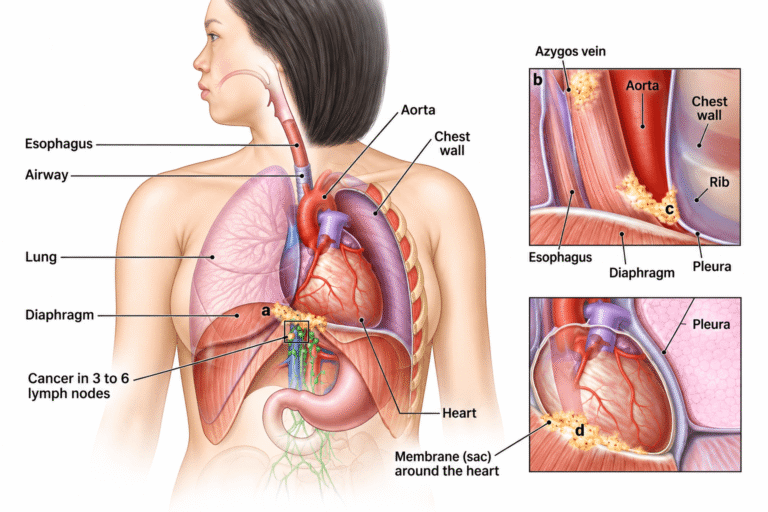
Esophageal cancer dysphagia happens when the food pipe becomes too narrow, painful, weak or inflamed to move food comfortably from the mouth to the stomach. Many patients first notice that bread, rice, meat, tablets or dry foods feel stuck. Later, the same problem may appear with soft food, puréed meals, liquids or even saliva. This change should always be taken seriously because swallowing difficulty can quickly affect nutrition, hydration, body weight, muscle strength and treatment tolerance. [1, 2, 3, 4]
How esophageal cancer dysphagia narrows the food pipe
The esophagus is a muscular tube with limited space inside. When a cancer grows into this passage, the inner channel becomes smaller. Food then needs more pressure to pass through. At first, the patient may drink water after every bite to push food down. As the tumor increases or inflammation worsens, even small meals can become slow, painful or frightening.
In advanced esophageal cancer, dysphagia may not come from the tumor alone. Swelling around the tumor, ulcers, reflux, infection, previous radiation, chemotherapy related soreness and scar like narrowing can all make swallowing worse. Some patients also develop poor esophageal movement, so food does not move forward smoothly even when the passage is partly open. This is why swallowing symptoms should be assessed by the oncology team instead of being treated as simple acidity or throat irritation. [1, 2, 3, 4]
Why difficulty swallowing leads to weight loss
When swallowing becomes difficult, patients naturally avoid harder foods. Unfortunately, the first foods removed from the diet are often the most nourishing foods, such as meat, eggs, paneer, beans, nuts, grains and fibrous vegetables. The patient may survive on tea, soup, juice, thin porridge or small bites, but this is usually not enough to protect protein, calories or muscle.
This is the point where esophageal cancer dysphagia becomes a full nutrition problem. Less food intake reduces Rasa Dhatu nourishment. Poor protein intake weakens Mamsa Dhatu. Long gaps between meals disturb Agni. Repeated choking, fear of eating and low hydration reduce Bala. In modern terms, the same process appears as weight loss, dehydration, fatigue, poor wound healing, low treatment tolerance and increased risk of cancer cachexia. [1, 15, 19, 25]
Ayurveda view of Anna Vaha Srotas and Agni
In Ayurveda, this condition can be understood mainly through disturbance of Anna Vaha Srotas, the channels responsible for receiving and carrying food. When the passage is obstructed, inflamed or weak, nutrition cannot be protected only by increasing medicine. The first duty is to make food safe, suitable, digestible and matched to the patient’s swallowing capacity.
Charaka explains that food quantity must depend on the strength of digestive fire. This principle becomes very important in advanced esophageal cancer because a weak patient cannot be supported by heavy, dry, coarse or sticky food, even when the food is otherwise nutritious.
Sanskrit:
मात्राशी स्यात्। आहारमात्रा पुनरग्निबलापेक्षिणी॥
Transliteration:
Mātrāśī syāt. Āhāramātrā punaragnibalāpekṣiṇī.
Simple English meaning:
A person should eat in proper quantity, and the right quantity of food depends on the strength of Agni, or digestive power.
Book, chapter and verse:
Charaka Samhita, Sutra Sthana, Chapter 5, Matrashiteeya Adhyaya, Verse 3. [21]
This verse supports a practical rule for esophageal cancer care. The patient should not be forced to eat large meals or thick preparations when swallowing is unsafe. Food should be given in a form the patient can swallow, digest and absorb. Small, warm, moist, smooth and calorie dense meals are often more useful than large plates of normal food.
Why food consistency matters before medicine
In Ayurveda centred care, the form of food and medicine is as important as the ingredient itself. A patient who can swallow soft foods may tolerate smooth semisolid support. A patient who can take only liquids needs liquid nutrition and urgent clinical assessment. A patient who coughs while swallowing or cannot swallow saliva should not be given avaleha, powders, tablets or thick decoctions by mouth until safety is confirmed.
This approach protects trust. Ayurveda should strengthen Agni, Bala, Ojas and tissue nourishment, but it should not ignore mechanical obstruction. If the esophagus is severely narrowed, modern interventions such as stenting, radiation, dilation, feeding tube support or intravenous nutrition may be needed to protect life and nutrition. Ayurvedic care works best when it is integrated with these decisions instead of delaying them. [2, 3, 19, 23]
The clinical priority in this section
The main priority in esophageal cancer dysphagia is to prevent a swallowing problem from becoming a nutrition crisis. The patient should track swallowing ability, daily food intake, body weight, urine output, choking episodes and strength. If solids become difficult, the diet should shift early to soft and moist food. If puréed food becomes difficult, oncology and nutrition review should happen quickly. If liquids or saliva become difficult, it becomes urgent.
From the Ayurveda Curative Model perspective, protecting nutrition is not a small supportive step. It is central to preserving Bala, maintaining Mamsa Dhatu, supporting treatment tolerance and keeping the patient strong enough to continue the larger cancer care plan.
Esophageal cancer dysphagia grades and warning signs
Esophageal cancer dysphagia should be graded early because swallowing difficulty often worsens step by step. A patient may begin with mild trouble swallowing solid food, then slowly move toward soft food difficulty, liquid difficulty and, in severe cases, inability to swallow saliva. This grading helps the family understand when diet changes are enough and when urgent medical review is needed. [2, 5, 6, 7, 8]
Table 2: Warning Signs That Need Urgent Review
| Warning sign | Possible concern | What to do |
|---|---|---|
| Food repeatedly gets stuck | Narrowing or obstruction | Contact oncology team |
| Coughing during meals | Aspiration risk | Stop feeding and seek swallow review |
| Wet voice after swallowing | Unsafe swallowing | Avoid thick oral medicines until assessed |
| Liquids do not pass | Severe dysphagia | Urgent medical review |
| Cannot swallow saliva | Possible complete obstruction | Emergency care |
| Very low urine or dizziness | Dehydration | Same day assessment |
| Fever after choking | Aspiration infection | Urgent care |
| Vomiting blood or black stools | Bleeding risk | Emergency care |
How esophageal cancer dysphagia is graded
Dysphagia grading is a simple way to measure what the patient can swallow safely. In the early stage, the patient may eat normal food but needs more water, more time or smaller bites. In the next stage, solid food becomes difficult, so the patient shifts to soft and moist meals. When the problem progresses, only puréed or liquid food may pass. The most serious stage is when even liquids or saliva do not go down properly.
This matters because every grade changes the nutrition plan. A patient who can eat soft food may still maintain calories with careful meal planning. A patient who can take only liquids is already at high risk of dehydration and muscle loss. A patient who cannot swallow saliva needs immediate medical attention because the risk of obstruction, aspiration and severe dehydration is high. [5, 6, 8]
Early warning signs patients should not ignore
The first warning sign is usually a feeling that food is sticking behind the chest or lower throat. Many patients describe this as pressure, blockage or heaviness after swallowing. Some patients need to drink water after every bite. Others avoid bread, rice, chapati, meat, tablets or raw vegetables because these foods no longer pass comfortably.
Weight loss is another important warning sign. In esophageal cancer dysphagia, weight loss may happen silently because the patient keeps reducing food quantity without noticing the nutritional loss. If the patient is eating less than usual for more than a few days, losing weight, feeling weaker or avoiding protein foods, the swallowing problem has already started affecting Bala and Mamsa Dhatu. [6, 7, 25]
Serious warning signs needing urgent care
Urgent care is needed when the patient coughs or chokes during meals, develops a wet voice after swallowing, has repeated vomiting after food or feels that liquids are also getting stuck. Fever after choking, breathlessness, chest infection symptoms, very low urine, dizziness, confusion, black stools, vomiting blood or inability to swallow saliva should not be managed at home.
These signs may suggest severe narrowing, aspiration, bleeding, dehydration or infection. In such situations, oral medicines, avaleha, powders or thick food should not be forced. The patient may need oncology review, endoscopy, stent assessment, radiation planning, swallow evaluation, intravenous fluids or feeding support. [2, 6, 7, 8]
Ayurveda view of swallowing grade and Bala
In Ayurveda centred care, dysphagia grade helps decide the safe form of food and medicine. When swallowing is mildly affected, the aim is to protect Agni with warm, moist, soft and digestible meals. When swallowing becomes moderate, the focus shifts to smooth puréed nutrition, hydration and prevention of further Bala Kshaya. When swallowing becomes severe, the priority is safety because oral intake may no longer protect the patient.
Avaleha can be useful only when the patient can swallow semisolid food safely. If the patient coughs, chokes, has a wet voice or can take only liquids, thick preparations may increase risk. At that stage, Ayurveda support should be modified rather than stopped blindly. The physician may choose lighter, smoother or medically compatible options while the oncology team addresses the obstruction. [6, 8, 21, 23, 30]
Nutrition risk at each dysphagia grade
A patient with mild esophageal cancer dysphagia may still eat enough if food is made soft, moist and protein rich. A patient with moderate dysphagia often needs puréed meals, oral nutrition supplements and close weight monitoring. A patient with severe dysphagia may not meet daily calorie and protein needs by mouth, even with family support.
This is why dysphagia should be recorded in a practical way: what the patient can swallow, how much food is eaten, whether coughing occurs, how much urine is passed, how weight is changing and whether strength is improving or declining. These observations show whether Agni, Rasa Dhatu, Mamsa Dhatu and Bala are being protected or lost. [5, 6, 8, 19]
When swallowing difficulty becomes a nutrition emergency
Swallowing difficulty becomes a nutrition emergency when the patient cannot maintain fluid, protein or calorie intake. A patient who takes only a few sips, passes very little urine, cannot complete meals, feels dizzy on standing or loses weight rapidly needs urgent assessment. Waiting for appetite to return is unsafe when the food pipe itself is blocked.
The Ayurveda Curative Model should treat this stage with seriousness. Protecting nutrition is not only supportive care. It is part of protecting life strength, treatment tolerance and recovery potential. The safest approach is to grade swallowing early, act before dehydration develops and match every food, medicine and rasayana to the patient’s actual swallowing capacity. [2, 6, 8, 19, 25]
Esophageal cancer dysphagia and esophageal stents

Esophageal cancer dysphagia may become severe when the tumor narrows the food pipe so much that soft food, liquids or saliva cannot pass safely. In this situation, an esophageal stent may be considered to keep the narrowed passage open and allow the patient to swallow better. A stent does not cure the cancer, but it can protect nutrition, hydration, comfort and Bala when swallowing has become unsafe or insufficient. [2, 3, 9, 10]
Table 3 : Stent Radiation Feeding Tube and Ayurveda Role
| Support option | When it helps | Main benefit | Ayurveda role |
|---|---|---|---|
| Esophageal stent | Tight narrowing blocks food | Faster swallowing relief | Protect soft diet Agni and Bala |
| Radiation | Tumor pressure causes blockage | Tumor directed swallowing relief | Support digestion during soreness and fatigue |
| Feeding tube | Oral intake is unsafe or too low | Measured nutrition delivery | Adapt medicines to safe route |
| IV fluids or nutrition | Gut route is not enough or unsafe | Hydration and nutrient rescue | Support strength after stabilization |
| Avaleha | Semisolid swallowing is safe | Rasayana and Bala support | Use only with safe swallowing and physician guidance |
How esophageal stents help esophageal cancer dysphagia
An esophageal stent is a small expandable tube placed inside the blocked part of the esophagus through an endoscopic procedure. Once opened, it supports the inner passage and helps food move toward the stomach more easily. For many patients with advanced disease, this can reduce the fear of eating and make soft meals or liquids easier to take. [2, 3, 9]
Stents are usually considered when dysphagia is caused by a mechanical narrowing. They may be especially useful when quick relief is needed, when the patient is losing weight rapidly, or when oral intake is too low to maintain strength. In metastatic esophageal cancer, the goal is often palliation, which means improving swallowing, nutrition and daily comfort while the broader cancer plan continues. [2, 10, 11]
When a stent may be recommended
A stent may be discussed when the patient cannot maintain enough food or fluids by mouth, when the tumor has created a tight narrowing, or when repeated food blockage is happening despite soft diet changes. It may also be used in selected cases where there is a fistula between the esophagus and airway, because the stent may help seal the abnormal passage and reduce aspiration risk. [9, 10]
The decision should be individualized. Tumor location, degree of narrowing, bleeding risk, airway involvement, previous radiation, planned cancer treatment and general strength all matter. A patient who is very weak may need careful risk assessment before the procedure. A patient who may still receive definitive chemoradiation or surgery may need a different plan, because stents can create complications in some treatment pathways. [10, 11]
Benefits patients may notice after stenting
The main benefit is easier swallowing. Some patients can move from liquids back to soft food or from very limited intake to more regular meals. This can reduce anxiety around eating and help the family prepare nourishing food with more confidence. Better swallowing may also reduce dehydration risk and help the patient take calories and protein more consistently. [9, 11]
From an Ayurveda view, this matters because Bala cannot be protected if food cannot enter and nourish the body. Stenting may support the physical pathway of Anna Vaha Srotas, while Ayurvedic care supports Agni, Rasa Dhatu, Mamsa Dhatu and Ojas. The two approaches can work together when the patient is assessed properly and oral intake is matched to swallowing safety. [21, 22, 23]
Risks and precautions after stent placement
A stent can improve swallowing, but it is not risk free. Possible problems include chest discomfort, reflux, food blockage, stent movement, bleeding, perforation, aspiration and fistula related complications. Some patients may need repeat procedures if the stent shifts or the tumor grows through or around it. [9, 10, 11]
After stent placement, the patient should not return immediately to dry or hard food. Food usually needs to be soft, moist and well chewed. Large pieces of meat, dry bread, nuts, raw vegetables, sticky rice, coarse grains and fibrous foods can block the stent. Fluids may be advised with meals, but swallowing safety should still be watched carefully if coughing or choking occurs. [9]
Ayurveda care after an esophageal stent
After a stent, Ayurveda support should be adjusted to the new swallowing condition. The patient may feel better, but the esophagus still needs protection. Heavy, sticky, grainy or thick preparations should not be started without confirming that they pass comfortably. Avaleha may be considered only when the patient can swallow semisolid food safely and there is no choking, wet voice, vomiting or aspiration concern. [6, 8, 9, 30]
The safest Ayurveda plan begins with smooth, warm, moist and digestible nutrition. Small meals can be enriched with protein and calories without increasing volume too much. Medicines should be given in a form that does not irritate the esophagus or block the stent. The aim is to protect Agni while rebuilding Bala slowly and safely.
When urgent review is needed after stenting
Urgent review is needed if swallowing suddenly worsens again, food repeatedly gets stuck, liquids cannot pass, vomiting continues, chest pain becomes severe, fever appears, breathing becomes difficult or there is coughing during meals. Blood vomiting, black stools, severe weakness, very low urine or confusion should also be treated as serious warning signs. [6, 7, 9]
The Ayurveda Curative Model should never ignore these signs. When obstruction or aspiration risk is active, forcing oral food or medicine can harm the patient. The correct approach is to restore safe swallowing first, then rebuild nutrition, strength and rasayana support according to the patient’s actual capacity.
Esophageal cancer dysphagia and radiation for swallowing relief
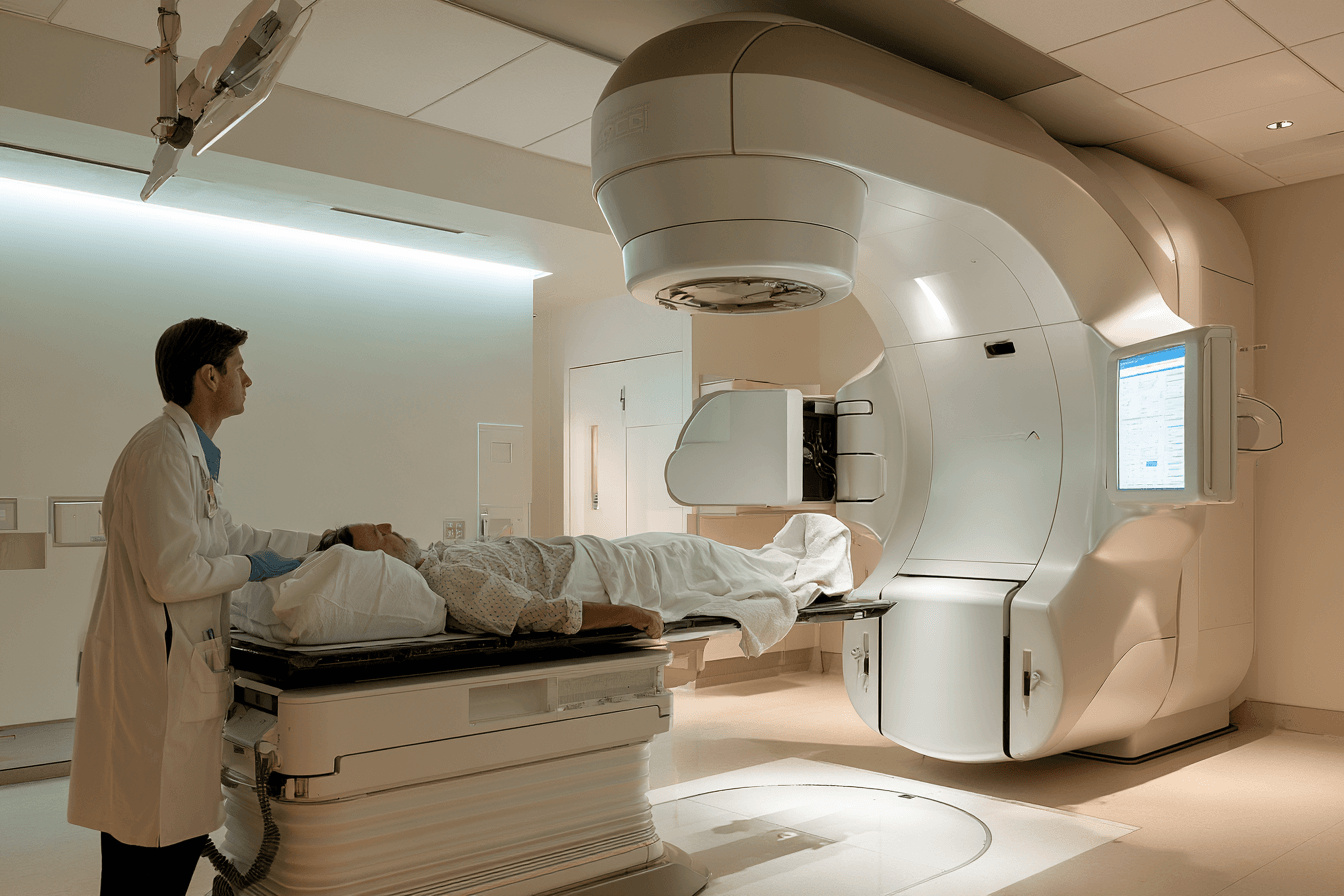
Esophageal cancer dysphagia may improve when radiation reduces tumor pressure inside the food pipe. In advanced esophageal cancer, radiation is often used to relieve swallowing difficulty, reduce local tumor burden and help the patient take food and fluids more comfortably. The goal is not only symptom relief. The deeper goal is to protect nutrition, hydration, Bala, muscle strength and the patient’s ability to continue the wider cancer care plan. [2, 3, 12, 13, 14]
How radiation may ease esophageal cancer dysphagia
Radiation works by damaging cancer cells in the treated area. When the tumor shrinks or becomes less bulky, the narrowed esophageal passage may open enough for food to move more easily. This can help patients who feel that food is sticking behind the chest, who need water after every bite, or who have moved from solid meals to only soft or liquid foods. [3, 12, 13]
Unlike a stent, radiation does not usually give instant mechanical relief. Swallowing improvement may take time because the tumor has to respond gradually. Some patients may notice better swallowing after treatment begins, while others need nutrition support during the waiting period. This is why the patient’s food intake, weight, hydration and choking risk must be monitored closely during radiation planning. [13, 14, 19]
When radiation is preferred for swallowing relief
Radiation may be considered when dysphagia is caused mainly by local tumor growth and the oncology team expects that shrinking the tumor can improve food passage. It may be used alone, with chemotherapy, after a stent in selected cases, or as part of palliative care in advanced disease. The choice depends on tumor site, stage, previous treatment, performance status, metastatic spread, expected benefit and the urgency of swallowing relief. [2, 12, 14]
A stent may be chosen when very fast opening is needed. Radiation may be preferred when the team wants a tumor directed approach that may give more sustained relief in selected patients. In many cases, the right decision is not one or the other. The plan may involve oncology, gastroenterology, nutrition care and Ayurveda support working together around the patient’s actual swallowing grade. [10, 13, 14]
Why swallowing may worsen during radiation
Radiation can help swallowing, but it can also temporarily irritate the esophagus. Some patients develop soreness, burning, pain while swallowing, reflux, nausea or reduced appetite during treatment. This condition is often called radiation esophagitis in clinical care. When it happens, the patient may eat less even though the treatment is intended to improve swallowing. [3, 15, 16]
This temporary phase must be managed carefully. A patient may need softer food, smoother purées, high calorie liquids, oral nutrition supplements, pain control, reflux management or feeding support. The family should not assume that reduced eating during radiation means the treatment has failed. It may mean the esophagus is inflamed and needs a safer nutrition plan until healing improves. [15, 16, 19]
Ayurveda view of radiation and Agni protection
From an Ayurveda centred perspective, radiation for esophageal cancer dysphagia can be understood as a necessary local intervention when Anna Vaha Srotas is obstructed by tumor pressure. Ayurveda care should not oppose this when swallowing and nutrition are at risk. Instead, the Ayurveda Curative Model should protect Agni, Rasa Dhatu, Mamsa Dhatu, Bala and Ojas during the treatment period.
When radiation irritates the esophagus, the patient may develop low appetite, burning, dryness, fatigue and difficulty tolerating food. In such a state, strong medicines or heavy preparations should not be forced. The better approach is to use warm, smooth, moist, digestible and calorie dense nutrition that does not scratch or burden the food pipe. This follows the Ayurvedic principle that nourishment must match digestive strength and disease condition. [21, 22, 23]
Nutrition during radiation for esophageal cancer dysphagia
Nutrition during radiation should be planned before the patient becomes weak. The patient may need smaller meals, softer consistency and higher nutrition in each spoon. Smooth dal, blended khichdi, mashed vegetables with ghee, curd, thick soups, milk based shakes, prescribed supplements and protein enriched purées may be used when suitable. The exact plan must change according to diabetes, kidney disease, reflux, mucositis, lactose intolerance and aspiration risk. [15, 16, 19]
Protein and calories are especially important because radiation can increase fatigue while dysphagia reduces intake. If the patient is losing weight, passing less urine, eating only a few spoons, or avoiding most protein foods, the nutrition plan is not strong enough. At that stage, oral supplements, feeding tube support or intravenous nutrition may be needed under medical supervision. [1, 15, 19]
Avaleha safety during radiation
Avaleha may be useful in Ayurveda cancer support only when the patient can swallow semisolid food safely. During radiation, this decision must be made carefully because the esophagus may become sore, narrowed or sensitive. A thick, sticky or grainy avaleha can be difficult to swallow when the patient has pain, choking, wet voice, vomiting or liquids only swallowing. [6, 8, 28, 30]
If the patient can swallow soft food comfortably, a smooth physician supervised avaleha may be considered in small measured quantity. If the patient has severe dysphagia, active choking, aspiration risk, inability to swallow liquids, or a recent stent without clearance, avaleha should be paused or modified. The complete formulation belongs on the main pillar article, while this section should focus on safety, timing and suitability.
When urgent review is needed during radiation
Urgent medical review is needed if the patient cannot swallow liquids, cannot swallow saliva, coughs during meals, develops fever after choking, has severe chest pain, vomits repeatedly, passes very little urine, becomes confused, vomits blood or develops black stools. These signs may indicate severe obstruction, dehydration, aspiration, bleeding or treatment related complications. [6, 7, 8]
The Ayurveda Curative Model protects patient trust by recognizing these danger signs early. Radiation may help relieve esophageal cancer dysphagia, but nutrition protection must continue every day. When swallowing is safe, Ayurveda can support Agni and Bala. When swallowing is unsafe, the first treatment is to restore a safe route for nourishment.
Soft puréed and liquid food options for esophageal cancer dysphagia

Esophageal cancer dysphagia often forces patients to change from normal meals to soft, puréed or liquid foods. This change should not be seen as weakness. It is a clinical nutrition strategy to keep food moving safely, reduce choking fear, protect hydration and preserve Bala while the oncology and Ayurveda care plan continues. [6, 15, 16, 17]
Soft foods for esophageal cancer dysphagia
Soft foods are useful when solid food is difficult but the patient can still swallow moist meals safely. The best soft foods are smooth, tender and easy to chew. They should not scratch the food pipe or remain stuck behind the chest.
Patients may tolerate oatmeal, soft rice, well cooked pasta, mashed potatoes, scrambled eggs, soft fish, cottage cheese, Greek yogurt, custard, soft cooked vegetables, thick soups, moist porridge and well cooked lentils. For Indian meals, soft khichdi, curd rice, smooth dal rice, mashed sweet potato and soft paneer can work well when they are moist and not spicy.
Dry bread, toast, crackers, raw salad, nuts, popcorn, dry meat, hard fruits, coarse grains and sticky food can worsen blockage. The patient should not judge food only by taste. The real test is whether it passes smoothly without coughing, pain, pressure or repeated water swallowing. [6, 15, 17, 18]
Puréed foods when swallowing becomes harder
Puréed food is needed when chewing and swallowing soft solids becomes tiring or unsafe. A good purée should be smooth, moist and uniform. It should not contain lumps, seeds, skin, hard pieces or fibrous strands. Even small coarse particles can irritate the esophagus or trigger coughing in a weak patient.
Blended vegetable soups, smooth dal, puréed khichdi, mashed avocado, thick yogurt, smooth hummus, puréed chicken, puréed fish, blended tofu, soft custard and smooth porridge can be used according to tolerance. The meal should be enriched with calories and protein because puréed food can become too watery if it is only diluted.
From an Ayurveda view, puréed food can protect Agni better than heavy normal meals when swallowing is reduced. Warm, freshly prepared, moist and easy to digest food is usually better tolerated than cold, dry, stale or very spicy food. The aim is to nourish Rasa Dhatu and Mamsa Dhatu without increasing obstruction, reflux or discomfort. [15, 16, 17, 21, 22]
Liquid nutrition when only fluids are possible
Liquid nutrition becomes important when the patient cannot swallow soft or puréed foods safely. At this stage, plain tea, coffee, fruit juice or watery soup is not enough. These fluids may give some comfort, but they usually do not provide enough calories, protein or minerals to protect strength.
Useful liquid options may include high calorie smoothies, milk based shakes, lactose free shakes, prescribed oral nutrition supplements, protein enriched soups, strained lentil soup, thick yogurt drinks and nutrition formulas recommended by the oncology nutrition team. The consistency must match swallowing safety. If thin liquids cause coughing, the patient may need thicker liquids or swallow therapy guidance. [6, 15, 16]
The family should watch whether the patient is actually receiving enough nutrition. A person may appear to be drinking many times a day but still receive very little protein. This is one reason advanced esophageal cancer dysphagia can quickly lead to muscle loss, fatigue and poor treatment tolerance. [19, 25]
How to make each spoon more nourishing
When swallowing is limited, the patient cannot depend on large meals. Each spoon should carry more nutrition. Soft foods and purées can be enriched with ghee, butter, olive oil, cream, coconut milk, milk powder, protein powder, smooth nut paste, egg, fish, tofu, paneer, Greek yogurt or prescribed supplements when medically suitable.
This must be individualized. A patient with diabetes may need careful sugar control. A patient with kidney disease may need protein adjustment. A patient with reflux may not tolerate very fatty meals. A patient with mucositis may need bland, smooth and non acidic food. A patient at aspiration risk may need a speech and swallow assessment before increasing liquids. [6, 15, 16, 19]
Ayurveda supports this individualized approach through Agni Bala assessment. Food should be nourishing, but it should also be digestible. If the patient feels heaviness, nausea, burning, regurgitation or more blockage after eating, the food form, quantity and timing need correction.
Ayurveda food principles for safe swallowing
Ayurveda places strong value on food that is suitable to the patient’s digestive strength, disease stage and body strength. In esophageal cancer dysphagia, this means the patient should receive food that is soft enough to pass, warm enough to support digestion, moist enough to reduce friction and concentrated enough to protect nutrition.
The aim is not to force a standard cancer diet. The aim is to preserve Agni, maintain Bala, nourish Rasa Dhatu, prevent Mamsa Dhatu Kshaya and reduce the burden on Anna Vaha Srotas. Small frequent meals are usually more practical than large plates. The patient should eat slowly, sit upright and stop if coughing, choking or chest pressure appears. [6, 8, 21, 22]
When food texture is no longer enough
Soft, puréed and liquid foods are helpful only when the patient can swallow them safely and take enough quantity. If intake remains poor, weight keeps falling, urine becomes low, liquids are difficult, or coughing occurs during meals, food modification alone is not enough.
At that point, the patient may need urgent oncology review, stent assessment, radiation planning, feeding tube support or intravenous nutrition. Ayurveda care should continue in a safer form, but oral medicines, avaleha or thick preparations should not be forced through an unsafe swallowing pathway. Protecting nutrition first is the foundation for protecting Bala in advanced esophageal cancer. [1, 3, 6, 19]
Protein and calorie requirements in esophageal cancer dysphagia

Esophageal cancer dysphagia can reduce food intake exactly when the body needs more strength to face cancer, treatment, inflammation and recovery demands. When swallowing becomes difficult, the patient may eat smaller meals, avoid protein foods and depend on thin liquids that give comfort but not enough nourishment. This is why nutrition should be measured by calories, protein, weight, strength and swallowing safety, not only by appetite. [15, 19, 20]
Why esophageal cancer dysphagia increases nutrition risk
In advanced esophageal cancer, the patient may feel hungry but still be unable to eat enough. Solids may stick, soft food may take too long, and liquids may cause coughing or reflux. Over time, this can reduce daily calorie intake and weaken Rasa Dhatu, which is the first level of nourishment after digestion.
Protein loss is especially serious. When the patient does not receive enough protein, the body may break down muscle for energy. In Ayurveda, this appears as Mamsa Dhatu Kshaya and Bala Kshaya. In modern cancer nutrition, the same problem is seen as loss of lean body mass, fatigue, poor wound healing, low immunity, reduced treatment tolerance and higher risk of cachexia. [19, 25]
Daily calorie needs in esophageal cancer dysphagia
Many cancer nutrition guidelines use an estimated energy target of about 25 to 30 kcal per kg body weight per day, adjusted according to the patient’s condition. A 50 kg patient may need roughly 1250 to 1500 kcal per day. A 60 kg patient may need roughly 1500 to 1800 kcal per day. A 70 kg patient may need roughly 1750 to 2100 kcal per day. These are practical starting points, not fixed rules. [19, 20]
The final target depends on weight loss, fever, inflammation, activity level, treatment plan, diabetes, kidney disease, liver disease, digestion and tolerance. A patient who is rapidly losing weight may need more active nutrition support. A patient with poor digestion, nausea or reflux may need smaller and more frequent meals instead of larger portions.
From an Ayurveda perspective, calories should not be increased by force. The food must be digestible, warm, moist, smooth and suitable to Agni. Heavy food that worsens nausea, burning, regurgitation or chest pressure will not rebuild strength even if it is high in calories. [21, 22]
Daily protein needs in esophageal cancer dysphagia
Cancer nutrition guidance often recommends protein intake around 1.0 to 1.5 g per kg body weight per day, depending on clinical status. A 50 kg patient may need about 50 to 75 g protein daily. A 60 kg patient may need about 60 to 90 g daily. A 70 kg patient may need about 70 to 105 g daily. These targets should be adjusted by the treating team, especially if the patient has kidney disease or other major metabolic problems. [19, 20]
Protein can come from foods that match the patient’s swallowing grade. Soft eggs, fish, tofu, paneer, Greek yogurt, smooth dal, lentil purée, protein enriched soups, milk based shakes and prescribed oral nutrition supplements may be useful when tolerated. If the patient cannot swallow enough by mouth, feeding tube support may be safer than allowing ongoing muscle loss. [15, 19]
Ayurveda does not separate strength from nourishment. Bala depends on proper digestion, tissue formation and stable energy. For this reason, a protein plan should also protect Agni. The patient should not be given dry, coarse or difficult to swallow protein foods just because they are nutritionally rich. The correct food is the one that is both nourishing and safe to swallow.
How to increase calories without increasing meal volume
Many patients with esophageal cancer dysphagia cannot manage large bowls or full plates. In such cases, each spoon should be made more nourishing. Smooth purées can be enriched with ghee, butter, cream, olive oil, coconut milk, milk powder, smooth nut paste or prescribed nutrition powders when medically suitable. Small additions can increase calories without forcing the patient to eat a large quantity. [15, 16, 19]
This approach is very close to the Ayurvedic idea of giving nourishment according to Matra, or proper quantity. A small amount of well tolerated, energy dense food may protect strength better than a large meal that causes heaviness, pain or vomiting. The patient should eat slowly, remain upright and stop when swallowing becomes uncomfortable or unsafe. [21, 22]
How to protect muscle and Bala
Muscle protection requires more than calories. The patient needs enough protein, safe swallowing, stable hydration, symptom control and regular monitoring. Weight should be checked at least weekly. Food intake should be observed honestly. If the patient is eating less than half of usual intake, avoiding most protein foods or losing weight despite family support, the plan needs medical correction. [19, 25]
In Ayurveda terms, the aim is to prevent Mamsa Dhatu Kshaya before it becomes severe. Rasayana support may help only when the patient can digest and absorb it safely. If swallowing is unsafe, oral rasayana should be modified, paused or given in a safer form under physician supervision. Preserving Bala means choosing the right route of nourishment, not simply increasing oral medicines. [23]
When nutrition targets cannot be met by mouth
If the patient cannot meet calorie and protein needs because of severe esophageal cancer dysphagia, the care team may consider oral nutrition supplements, feeding tube support or intravenous nutrition. This is especially important when liquids are difficult, weight is falling quickly, urine output is low, weakness is increasing or treatment cannot continue because the patient is nutritionally depleted. [1, 3, 19]
The Ayurveda Curative Model should support this decision when needed. Feeding support can protect the route of nourishment while Ayurveda focuses on Agni, Bala, Ojas, symptom comfort and recovery capacity. The safest plan is one where modern nutrition support and Ayurveda work together to prevent dehydration, muscle loss and avoidable weakness.
Feeding tubes and intravenous nutrition in esophageal cancer dysphagia
Esophageal cancer dysphagia sometimes becomes so severe that oral food, liquid supplements and soft meals cannot protect nutrition safely. When the patient cannot swallow enough calories, protein or fluids, feeding tubes or intravenous nutrition may be needed to prevent dehydration, severe weight loss, treatment interruption and loss of Bala. These methods should not be seen as defeat. They are clinical tools used to keep the body nourished when the food pipe cannot do its normal work. [1, 3, 6, 19, 24]
When esophageal cancer dysphagia needs feeding support
Feeding support may be needed when the patient eats less than the body requires for several days, loses weight quickly, cannot swallow liquids, coughs during meals, vomits after eating or becomes too weak to complete meals. It may also be needed during radiation, chemotherapy, stent planning or after procedures if swallowing is temporarily unsafe.
A feeding tube can give nutrition directly into the stomach or small intestine when the gut can still digest and absorb food. This helps protect strength while the oncology team treats obstruction, inflammation or tumor burden. In Ayurveda terms, it protects the pathway of nourishment when Anna Vaha Srotas is obstructed at the esophageal level. The aim is still the same: preserve Agni, nourish Rasa Dhatu, prevent Mamsa Dhatu Kshaya and protect Bala. [3, 19, 24]
Types of feeding tubes used in advanced esophageal cancer
A nasogastric tube may be used for short term feeding when nutrition is needed quickly. It passes through the nose into the stomach. A nasojejunal tube passes through the nose into the small intestine and may be considered when stomach feeding is not suitable. For longer support, doctors may consider a gastrostomy, jejunostomy or other feeding access depending on the tumor site, treatment plan and surgical possibility. [1, 3, 19, 24]
The route is selected by the medical team after looking at swallowing safety, obstruction level, aspiration risk, expected treatment duration and overall condition. Patients and families often fear feeding tubes, but in advanced esophageal cancer they can be protective. A patient who cannot swallow enough may become weaker every week. Tube feeding can give measured calories, protein, fluids and medicines in a safer way when oral feeding is failing.
When intravenous nutrition may be needed
Intravenous nutrition, also called parenteral nutrition, may be considered when the digestive tract cannot be used safely or adequately. This is different from tube feeding. Tube feeding uses the gut. Intravenous nutrition delivers nutrients through a vein under close medical supervision.
This option may be needed when severe obstruction, repeated aspiration, bowel problems, uncontrolled vomiting, severe intolerance or other complications prevent safe enteral feeding. It requires careful monitoring because infection, blood sugar changes, liver strain, fluid imbalance and electrolyte problems can occur. For this reason, intravenous nutrition should be used only when the treating team believes the benefit is greater than the risk. [1, 19]
Ayurveda view of feeding tubes and Bala protection
Ayurveda places great importance on the route, form, quantity and digestibility of nourishment. When the mouth and esophagus cannot safely carry food, the patient still needs nutrition. Feeding support can be understood as a practical way to preserve Bala while the obstructed pathway is being managed.
This does not reduce the value of Ayurveda. It makes Ayurveda safer. The physician can focus on digestion, symptom comfort, sleep, bowel movement, inflammation balance, strength and recovery capacity without forcing unsafe oral intake. The deeper principle is that medicine should match the patient’s present capacity. When swallowing is unsafe, the route of nourishment must change before strength can return. [21, 22, 23]
Avaleha and medicines with feeding tubes
Avaleha, thick herbal pastes, coarse powders, crushed tablets and oily preparations should not be pushed through feeding tubes without medical and pharmaceutical approval. They may block the tube, interact with feeds, alter absorption or create safety problems. Even when a medicine is natural, its physical form matters.
If the patient is dependent on tube feeding, Ayurveda medicines should be selected in a tube compatible form only after the doctor reviews the tube type, feed schedule, digestion, bowel pattern, aspiration risk and current oncology medicines. When swallowing improves and the patient is cleared for oral intake, smooth and carefully measured preparations may be reintroduced according to dysphagia grade. [6, 19, 30]
How progress can be measured after feeding support
Progress should be measured in practical terms. The patient should pass urine more regularly, feel less dizzy, tolerate feeds better, maintain or slowly regain weight, show better alertness, sleep more comfortably and have improved ability to sit, stand or walk. Protein and calorie intake should become more consistent. If swallowing is still limited, the feeding route may continue while oral trials are done carefully.
From the Ayurveda Curative Model, improvement in Bala is seen through better energy, clearer voice, improved appetite signals, stable bowel movement, better sleep, reduced exhaustion after small activity and improved tolerance to treatment. These changes may be gradual, but they are clinically meaningful when advanced esophageal cancer dysphagia has already caused weight loss and weakness. [19, 23, 25]
When urgent medical review is needed
Urgent medical review is needed if the patient cannot tolerate tube feeds, has repeated vomiting, abdominal swelling, severe diarrhea, fever, breathlessness, tube blockage, tube displacement, bleeding, confusion, very low urine or sudden worsening of weakness. If the patient coughs during oral trials, develops a wet voice or has fever after swallowing, aspiration must be considered.
The safest approach is to protect nutrition before the body becomes severely depleted. Feeding tubes and intravenous nutrition are not opposite to Ayurveda care. When used correctly, they protect the foundation on which Agni, Bala, Mamsa Dhatu and Ojas can be rebuilt.
Cancer cachexia and muscle loss in esophageal cancer dysphagia

Esophageal cancer dysphagia can lead to cancer cachexia when swallowing difficulty, low intake, tumor inflammation and reduced activity begin to break down muscle. This is more serious than ordinary weight loss. A patient may look thinner, feel weaker, lose appetite, walk less, tolerate treatment poorly and still not regain strength even after eating slightly more. Cachexia needs early attention because it affects Bala, Mamsa Dhatu, treatment tolerance and quality of life. [19, 25, 26]
Why muscle loss happens in esophageal cancer dysphagia
When swallowing becomes difficult, patients often reduce the quantity and quality of food. Protein rich foods are usually avoided first because meat, eggs, beans, nuts, paneer, tofu and grains may feel dry, heavy or hard to swallow. The diet may shift toward tea, juice, thin soups or small portions of soft food, which may not provide enough protein or calories.
At the same time, advanced cancer can create inflammation and metabolic stress. This means the body may continue losing muscle even when the patient is trying to eat. The international cancer cachexia definition describes it as ongoing skeletal muscle loss, with or without fat loss, that is not fully reversed by ordinary nutrition and leads to functional decline. [25]
How cachexia weakens Bala and Mamsa Dhatu
In Ayurveda, this pattern closely reflects Mamsa Dhatu Kshaya and Bala Kshaya. Mamsa Dhatu represents the strength and stability of muscle tissue. Bala represents functional strength, immunity, stamina and the ability to withstand disease and treatment. When swallowing remains poor, Rasa Dhatu nourishment declines first, then deeper tissues gradually lose support.
This is why Ayurveda care in advanced esophageal cancer should not focus only on tumor control or strong medicines. The patient’s daily nourishment must be protected. If food is not entering safely, digesting properly or converting into tissue strength, the body cannot maintain Ojas. Rasayana support becomes meaningful only when the patient can receive, digest and absorb nutrition according to current swallowing capacity. [21, 22, 23]
Signs that weight loss is becoming cachexia
Cachexia may be suspected when weight keeps falling despite family efforts, appetite remains low, food intake drops below usual levels, clothes become loose, thighs and arms become thinner, walking distance reduces, the patient struggles to rise from a chair or fatigue increases after small activity. In clinical research, cachexia is commonly linked with weight loss greater than 5 percent, or weight loss greater than 2 percent in patients who are already undernourished or have low muscle mass. [25]
In esophageal cancer dysphagia, these signs can appear quickly because the food pipe itself becomes a barrier to nourishment. A patient may not complain much, but the body shows the decline through weakness, low urine, dizziness, poor sleep, poor wound healing, low treatment tolerance and repeated infection risk.
Nutrition goals for protecting muscle
Muscle protection needs measured nutrition. Cancer nutrition guidelines commonly support energy intake around 25 to 30 kcal per kg body weight per day and protein intake around 1.0 to 1.5 g per kg body weight per day, adjusted to the patient’s kidney function, liver status, diabetes, treatment plan and tolerance. [19, 20]
For a patient with esophageal cancer dysphagia, these targets must be achieved through safe consistency. Soft eggs, smooth dal, Greek yogurt, tofu, soft fish, paneer, protein enriched soups, milk based shakes, prescribed oral supplements and puréed meals may help when swallowing is safe. If the patient cannot meet these needs by mouth, feeding tube support should be considered before severe muscle loss develops. [15, 19]
Ayurveda Curative Model for cachexia protection
The Ayurveda Curative Model protects nutrition by treating Agni, Bala, Rasa Dhatu, Mamsa Dhatu and Ojas as central treatment markers. The goal is not to force heavy food or thick avaleha into a narrowed esophagus. The goal is to choose the right form, dose, timing and route of nourishment.
When Agni is weak, food should be warm, smooth, moist, easy to digest and given in small quantities. When Bala is low, meals should be more frequent and more nutrient dense. When Mamsa Dhatu is declining, protein must be protected in a swallow safe form. When Ojas is depleted, sleep, hydration, bowel movement, pain control, emotional stability and rasayana timing become important parts of care. [21, 22, 23, 26]
Why avaleha needs careful timing in cachexia
Avaleha may support strength in selected patients, but cachexia does not automatically mean that a thick preparation is safe. If the patient can swallow semisolid food comfortably, a smooth physician supervised avaleha may fit into the nutrition plan. If the patient has liquids only swallowing, choking, wet voice, repeated vomiting, aspiration pneumonia, severe obstruction or a recent stent without clearance, avaleha may be unsafe by mouth.
In this situation, Ayurveda care should be modified rather than abandoned. The physician may use a safer consistency, smaller dose, different route or supportive measures until swallowing improves. This protects patient trust because the treatment respects both classical Ayurveda principles and modern swallowing safety. [6, 8, 28, 30]
Measuring progress in the first month
Progress should be measured with practical markers. The patient should track body weight, food intake, protein intake, urine output, swallowing grade, choking episodes, walking ability, sleep, bowel movement and daily energy. A useful early goal is not dramatic weight gain. A safer first goal is to stop rapid weight loss, improve hydration, increase protein intake, reduce meal fear and preserve daily function.
From an Ayurveda perspective, improvement in Bala may appear as better alertness, steadier appetite, less exhaustion after eating, improved sleep, smoother bowel movement, better tolerance to treatment and more confidence with safe meals. These changes show that nourishment is beginning to support the body again, even when the cancer remains advanced. [19, 23, 25, 26]
Preventing aspiration and dehydration in esophageal cancer dysphagia

Esophageal cancer dysphagia can become dangerous when food, liquid, saliva or reflux enters the airway instead of moving safely into the stomach. This is called aspiration. It can cause coughing, choking, chest infection, aspiration pneumonia, dehydration and sudden weakness. In Ayurveda centred care, preventing aspiration and dehydration is essential for protecting Prana, Agni, Rasa Dhatu, Bala and Ojas. [6, 8, 16, 27]
Why esophageal cancer dysphagia increases aspiration risk
Aspiration risk increases when the esophageal passage is narrowed, painful or inflamed. Food may remain stuck behind the chest and come back upward. Liquids may move too quickly and enter the airway if swallowing coordination is weak. Reflux can also bring stomach contents upward, especially when the patient lies down soon after eating.
Some patients do not realize that aspiration is happening. They may only notice a wet voice after swallowing, repeated throat clearing, coughing at night, fever after meals or frequent chest infections. These signs should be taken seriously because aspiration can reduce oxygen levels, worsen fatigue and make nutrition even harder to maintain. [6, 8]
Safe eating posture and meal rhythm
The patient should sit fully upright during meals and remain upright after eating. Food should be taken slowly in small spoonfuls. The patient should not talk while swallowing, rush meals or eat when very sleepy. If coughing, choking, breathlessness or a wet voice appears, feeding should stop and swallowing safety should be reviewed.
From an Ayurveda view, this protects Prana Vata and Anna Vaha Srotas. Food should move downward in a calm and coordinated way. When eating becomes rushed, dry, heavy or poorly matched to swallowing capacity, the risk of obstruction and aspiration increases. Warm, moist and smooth food is usually safer than dry, coarse or sticky food in advanced dysphagia. [6, 16, 21, 22]
Choosing the right fluid consistency
Dehydration is common in esophageal cancer dysphagia because patients often reduce fluid intake to avoid choking. Thin water may be difficult for some patients because it moves quickly through the throat. If thin liquids trigger coughing, the patient may need thickened fluids, supervised swallowing assessment or a safer nutrition route.
Families sometimes keep giving more water because they are worried about dehydration. This can be risky if the patient coughs with each sip. The safer approach is to match fluid consistency to swallowing ability and seek medical guidance early. Hydration should be judged by urine output, urine color, mouth dryness, dizziness, alertness, constipation and overall weakness, not only by how many cups the patient tries to drink. [6, 8, 27]
Dehydration signs that need attention
Dehydration may develop quietly when swallowing is difficult. Warning signs include very low urine, dark urine, dry tongue, cracked lips, dizziness on standing, confusion, constipation, fast heartbeat, severe fatigue and inability to complete small meals. In advanced cancer, dehydration can quickly worsen weakness, kidney strain, delirium and treatment intolerance. [16, 27]
Ayurveda understands this decline through poor Rasa Dhatu nourishment and falling Bala. When fluid intake is unsafe or inadequate, the answer is not simply to force more oral liquids. The patient may need oral rehydration in a safe consistency, intravenous fluids, tube feeding or urgent oncology review depending on the severity.
Oral hygiene and aspiration pneumonia prevention
Good mouth care is important when aspiration risk is present. Bacteria in the mouth can enter the lungs if saliva or food is aspirated. Gentle brushing, mouth rinsing as advised, tongue cleaning, denture care and regular oral inspection can reduce avoidable infection risk. This is especially important when the patient is weak, dehydrated, receiving cancer treatment or eating very little. [8]
In Ayurveda, mouth cleanliness also supports taste, appetite and digestion. When the mouth is dry, coated, painful or infected, the patient may eat less and Agni may decline further. Simple daily oral care can therefore support both swallowing safety and nutrition confidence.
Ayurveda care when aspiration risk is present
When aspiration risk is active, Ayurveda medicines must be chosen with caution. Thick avaleha, coarse powders, large tablets, oily preparations or grainy mixtures may be unsafe if the patient coughs during swallowing or can take only liquids. The physician should first understand the swallowing grade, current diet consistency, stent status, reflux symptoms, hydration and chest infection history.
Ayurveda support can still continue, but the form must match safety. The goal is to protect Agni without blocking the passage, protect Rasa Dhatu without causing choking, and preserve Bala without forcing unsuitable oral intake. If swallowing is unsafe, modern feeding support may become necessary while Ayurveda care is adapted to the patient’s route of nourishment. [6, 8, 19, 23, 30]
When aspiration and dehydration become urgent
Urgent medical review is needed if the patient cannot swallow liquids, cannot swallow saliva, coughs with most meals, develops fever after choking, becomes breathless, passes very little urine, becomes confused, vomits repeatedly or shows sudden severe weakness. Blood vomiting, black stools and severe chest pain also need immediate assessment. [6, 7, 8]
The Ayurveda Curative Model protects patient trust by treating these signs as serious. Safe swallowing and hydration are not secondary issues. They are the foundation for Agni, Bala, Mamsa Dhatu preservation and treatment tolerance in advanced esophageal cancer.
When an avaleha is safe or unsafe in esophageal cancer dysphagia

Esophageal cancer dysphagia changes how safely a patient can swallow food and medicine. Avaleha is a classical semisolid Ayurvedic preparation, but in advanced esophageal cancer it should never be used only because it is nourishing or herbal. Its safety depends on the patient’s swallowing grade, food consistency, choking risk, stent status, digestion, diabetes control and overall Bala. [6, 8, 28, 29, 30]
How avaleha may support esophageal cancer dysphagia care
Avaleha is traditionally prepared as a smooth semisolid formulation that may combine herbal decoctions, herbal powders, ghee, honey, jaggery or sugar base according to classical method. In Ayurveda, this form is valued because it can carry herbs in a palatable and nourishing way. For selected patients, it may support Agni, Rasa Dhatu, Mamsa Dhatu, Bala and Ojas when digestion and swallowing are stable. [28, 29, 30]
In esophageal cancer dysphagia, this benefit is possible only when the patient can swallow semisolid food without coughing, choking, wet voice, chest pressure or regurgitation. A smooth avaleha may be easier than tablets for some patients, but it can be unsafe for others if the esophagus is severely narrowed or inflamed. The form of the medicine must match the current swallowing capacity.
When avaleha may be safe
Avaleha may be considered when the patient can comfortably swallow soft or semisolid food. The patient should be able to take small spoonfuls without coughing, breathlessness, food sticking, repeated vomiting or a wet voice after swallowing. It is safer when the preparation is smooth, non grainy, not excessively sticky and given in a measured quantity under physician supervision. [6, 8, 30]
The best time to consider avaleha is when Agni is stable. The patient should not feel heaviness, nausea, burning, reflux or bloating after small meals. Bowel movement, hydration and appetite should also be assessed. If the patient has very low intake, severe weakness or ongoing weight loss, avaleha should be part of a broader nutrition plan rather than the only support.
When avaleha may be unsafe
Avaleha may be unsafe when the patient can take only liquids, cannot swallow saliva, coughs during meals, has a wet voice after swallowing, has repeated choking, develops aspiration pneumonia or feels that even soft food gets stuck. In these conditions, a thick semisolid preparation can increase the risk of blockage, aspiration or distress. [6, 8]
It should also be avoided or paused during severe vomiting, severe mucositis, active bleeding, severe chest pain, uncontrolled reflux, suspected fistula or sudden worsening of dysphagia. If the patient recently received an esophageal stent, avaleha should be restarted only after the treating team confirms that the passage is safe and that the consistency will not block the stent. Post stent eating precautions are important because dry, sticky or poorly chewed material can obstruct the stent. [9]
Avaleha after stent radiation or feeding support
After stenting, radiation or feeding tube placement, the patient’s swallowing status can change quickly. Radiation may temporarily inflame the esophagus, making swallowing painful even when the tumor is responding. A stent may improve passage but still require soft, moist and careful food choices. Feeding tubes may bypass the swallowing route completely when oral intake is unsafe.
In these situations, avaleha should not be forced. Thick herbal pastes, coarse powders and oily mixtures should not be pushed through feeding tubes unless the medical team approves the form and route. If swallowing improves later, avaleha can be reconsidered in a smooth and measured form according to dysphagia grade, digestion and tolerance. [6, 8, 9, 19, 30]
Ayurveda assessment before giving avaleha
Ayurveda assessment should begin with Agni, Bala, Ama, Rasa Dhatu, Mamsa Dhatu and Anna Vaha Srotas. If the patient has appetite, clear belching, stable bowel movement, no major heaviness and safe swallowing, rasayana support may be more meaningful. If the patient has nausea, coating of tongue, reflux, heaviness, abdominal discomfort or low appetite, the preparation may need adjustment before it can nourish properly. [21, 22, 23]
The physician should also review modern safety factors. These include diabetes, kidney disease, liver function, anticoagulant use, chemotherapy medicines, immunotherapy, infection risk, mucositis and aspiration history. Many avaleha preparations contain sweet bases, so patients with diabetes or high blood sugar need special caution.
How avaleha should be taken when suitable
When avaleha is suitable, it should be taken slowly in a small measured dose. The patient should sit upright, avoid rushing and observe whether swallowing remains comfortable. It should not be taken when lying down or when the patient is sleepy, breathless or actively coughing. Warm water may be advised by the physician if it helps the preparation pass smoothly, but this must depend on the patient’s swallowing safety.
The patient should stop and seek review if avaleha causes coughing, choking, chest pressure, regurgitation, burning, vomiting or a feeling of blockage. These symptoms mean the form, dose or timing may not be suitable. In advanced esophageal cancer, protecting the swallowing pathway is more important than continuing any oral preparation at all costs.
The role of avaleha in protecting Bala
Avaleha can have a valuable role in Ayurveda care when it is used at the right time and in the right patient. It may help deliver rasayana support, improve palatability, support nourishment and strengthen the patient’s confidence when swallowing is safe. However, Bala is not protected by medicine alone. It is protected by safe swallowing, adequate calories, protein, hydration, digestion, rest and timely oncology care. [19, 23, 25]
The safest Ayurveda Curative Model treats avaleha as one part of a complete supportive plan. When the patient can swallow safely, it may support Agni, Ojas and tissue nourishment. When swallowing is unsafe, the priority is to secure a safe route for nutrition first. This balanced approach keeps Ayurveda at the centre while protecting the patient from avoidable risk.
How the Ayurveda Curative Model protects nutrition and Bala in esophageal cancer dysphagia

Esophageal cancer dysphagia weakens the patient not only by blocking food, but by slowly reducing calories, protein, hydration, confidence and treatment tolerance. The Ayurveda Curative Model places nutrition at the centre because Bala cannot be preserved when food is unsafe, poorly digested or insufficient. In advanced esophageal cancer, the first aim is to keep nourishment moving through the safest possible route while supporting Agni, Rasa Dhatu, Mamsa Dhatu and Ojas. [19, 21, 22, 23]
Ayurveda Curative Model for esophageal cancer dysphagia and Agni
In Ayurveda, Agni is the foundation of nourishment. A patient may receive high calorie food, supplements or medicines, but if digestion is weak, the body may still feel heavy, nauseated, bloated or exhausted after eating. In esophageal cancer dysphagia, Agni protection begins before the food reaches the stomach. The meal must first be safe to swallow.
This is why the Ayurveda Curative Model does not force heavy food, large meals or thick preparations in a patient who is choking or struggling with liquids. Food should be warm, moist, smooth, small in quantity and rich in nutrition. This follows the classical Ayurvedic principle that food quantity and form must match digestive strength, disease condition and patient capacity. [21, 22, 31]
Protecting Bala through safe swallowing
Bala means more than physical energy. It includes strength, stamina, immunity, recovery ability and tolerance to treatment. In advanced esophageal cancer, Bala declines when the patient eats less, loses muscle, becomes dehydrated, sleeps poorly and fears swallowing.
The first step in protecting Bala is grading swallowing honestly. If the patient can swallow soft food, nutrition can be strengthened through soft high protein meals. If puréed food is needed, every spoon should be made smooth and calorie dense. If only liquids are possible, oral nutrition supplements or medically planned liquid nutrition may be needed. If liquids or saliva are unsafe, feeding tube support, intravenous fluids or urgent oncology care may be required. [6, 8, 19]
Rasa Dhatu and Mamsa Dhatu preservation
In Ayurveda, Rasa Dhatu is the first nourished tissue after digestion. When food intake falls, Rasa Dhatu becomes weak, and the patient may feel dryness, fatigue, low appetite, dizziness and poor resilience. If this continues, Mamsa Dhatu may decline, which appears as muscle loss, thin limbs, reduced walking ability and difficulty rising from a chair.
Modern cancer nutrition describes this pattern as malnutrition and cachexia. Cachexia involves ongoing skeletal muscle loss with or without fat loss, and it may not fully reverse with ordinary eating once it becomes advanced. This is why early nutrition protection is essential. The Ayurveda Curative Model aims to prevent Mamsa Dhatu Kshaya before the patient becomes too weak to tolerate treatment or recovery efforts. [19, 25, 26]
Ojas protection in advanced esophageal cancer care
Ojas represents deep vitality, stability and resilience. In advanced cancer, Ojas is affected by poor intake, pain, fear, insomnia, inflammation, repeated procedures, dehydration and muscle loss. Ayurveda support should therefore include food, sleep, bowel regulation, symptom comfort, emotional steadiness and careful rasayana timing.
Rasayana is most useful when the patient can digest and absorb it safely. If the esophagus is severely narrowed, rasayana should not be forced in thick or sticky form. The patient may first need stenting, radiation, feeding support or fluid correction. Once swallowing and digestion are safer, physician supervised rasayana or avaleha can be considered according to food consistency and Agni. [23, 30]
How Ayurveda works with stents radiation and feeding support
The Ayurveda Curative Model should not delay medical procedures that protect swallowing and nutrition. A stent may open a narrowed passage quickly. Radiation may reduce tumor pressure over time. Feeding tubes may protect nutrition when oral intake is unsafe. Intravenous nutrition or fluids may be needed when the gut or swallowing route cannot meet basic needs. [2, 3, 10, 19]
Ayurveda adds value by supporting the patient around these interventions. After a stent, food still needs to be soft and non blocking. During radiation, the esophagus may become sore, so meals may need to become smoother and smaller. During tube feeding, Ayurveda medicines must be chosen carefully so they do not block the tube or interfere with feeding schedules. This integrated approach protects both medical safety and Ayurvedic treatment logic.
Practical markers of Bala improvement
Bala should be measured in visible, patient centred ways. The patient should track body weight, food intake, protein intake, urine output, swallowing grade, coughing during meals, walking capacity, sleep, bowel movement and daily energy. Improvement may first appear as stable weight, better hydration, less dizziness, improved alertness, more comfortable meals and reduced exhaustion after eating.
In the first month, the realistic goal may not be dramatic weight gain. A meaningful goal is to stop rapid weight loss, improve safe intake, reduce dehydration, preserve muscle and help the patient tolerate ongoing cancer treatment. These outcomes reflect both modern nutrition goals and Ayurvedic Bala protection. [19, 25, 26]
Why nutrition is central to the Ayurveda Curative Model
In advanced esophageal cancer, nutrition is not a side topic. It is part of the treatment foundation. If swallowing fails, the patient loses food, water, protein, strength, confidence and treatment capacity. If nutrition is protected early, the patient has a stronger base for oncology treatment, rasayana support, recovery effort and quality of life.
The Ayurveda Curative Model keeps this sequence clear. First, protect the passage of nourishment. Second, support Agni. Third, preserve Rasa Dhatu and Mamsa Dhatu. Fourth, rebuild Bala gradually. Fifth, use rasayana only when the patient can receive it safely. This is the safest and most trustworthy way to keep Ayurveda at the centre of care for esophageal cancer dysphagia. [21, 22, 23, 32]
Table 4 : First Month Progress Tracking
| What to track | Desired direction in 30 days |
|---|---|
| Swallowing grade | Stable or improved |
| Daily food intake | More consistent and safer |
| Protein intake | Closer to planned target |
| Body weight | Rapid loss slows or stops |
| Urine output | Better hydration |
| Choking episodes | Reduced or absent |
| Walking ability | Stable or improved |
| Sleep and fatigue | Better daily tolerance |
| Bowel movement | More regular |
| Bala | Better alertness strength and treatment tolerance |
FAQs
Esophageal cancer dysphagia often creates fear because swallowing, weight, hydration and strength are affected together. These short answers help patients and families understand when diet changes may help, when Ayurveda support is suitable and when urgent medical care is needed
Is esophageal cancer dysphagia always advanced disease
Esophageal cancer dysphagia can appear when the tumor starts narrowing the food pipe, but it becomes more concerning when swallowing difficulty moves from solid food to soft food, liquids or saliva. Any worsening swallowing symptom should be reviewed because nutrition and hydration can decline quickly.
Can Ayurveda help esophageal cancer dysphagia
Ayurveda can support esophageal cancer dysphagia by protecting Agni, Bala, Rasa Dhatu, Mamsa Dhatu and Ojas. The care should focus on safe food texture, digestible nourishment, hydration, bowel comfort, sleep, strength and properly timed rasayana support.
When should food change from solid to soft or puréed
Food should become softer when solids start sticking, meals take longer, water is needed after every bite or the patient avoids protein rich foods. If soft food also becomes difficult, smooth puréed meals or liquid nutrition may be needed.
How much protein is needed in esophageal cancer dysphagia
Protein needs should be planned by the oncology nutrition team based on body weight, kidney function, liver status, diabetes, treatment plan and swallowing safety. Soft eggs, smooth dal, yogurt, tofu, paneer, fish, protein enriched soups and prescribed nutrition supplements may help when tolerated.
When is an esophageal stent needed
An esophageal stent may be considered when tumor narrowing prevents enough food or fluid from passing through the esophagus. It may help swallowing quickly in selected patients, especially when severe dysphagia is causing weight loss, dehydration or inability to eat.
Can radiation improve esophageal cancer dysphagia
Radiation may improve swallowing when dysphagia is caused by local tumor pressure. It can shrink the tumor gradually, but some patients may feel temporary burning or pain while swallowing during treatment.
When is avaleha safe in esophageal cancer dysphagia
Avaleha may be considered only when the patient can swallow semisolid food comfortably without coughing, choking, wet voice, chest pressure or regurgitation. It should be smooth, measured and supervised by an Ayurveda physician.
Can avaleha replace stents or feeding tubes
Avaleha should not replace stents, feeding tubes, intravenous fluids or urgent oncology care when swallowing is unsafe. If the food pipe is blocked, the first priority is to restore a safe route for nourishment.
What are danger signs in esophageal cancer dysphagia
Danger signs include inability to swallow liquids, inability to swallow saliva, coughing during meals, wet voice after swallowing, fever after choking, repeated vomiting, severe chest pain, very low urine, confusion, vomiting blood or black stools.
What progress can patients expect early
Early progress may include safer swallowing, better hydration, improved food intake, better protein tolerance, stable weight, less dizziness, reduced meal fear, better sleep and preserved walking strength. Results vary, but stopping rapid decline is often an important sign that Bala is being protected.
References
- National Cancer Institute. (n.d.). Esophageal cancer treatment: Patient version. U.S. Department of Health and Human Services, National Institutes of Health. Retrieved September 13, 2026, from https://www.cancer.gov/types/esophageal/treatment
Used for: Explaining swallowing difficulty, nutritional challenges, feeding-tube support and treatment options in esophageal cancer. - National Cancer Institute. (n.d.). Esophageal cancer treatment (PDQ®): Health professional version. U.S. Department of Health and Human Services, National Institutes of Health. Retrieved September 13, 2026, from https://www.cancer.gov/types/esophageal/hp/esophageal-treatment-pdq
Used for: Supporting the medical explanation of dysphagia palliation, stents, radiation and advanced esophageal cancer treatment planning. - Mayo Clinic Staff. (2026, September 1). Esophageal cancer: Diagnosis and treatment. Mayo Clinic. https://www.mayoclinic.org/diseases-conditions/esophageal-cancer/diagnosis-treatment/drc-20356090
Used for: Explaining stents, radiation for blocked food passage and feeding-tube support when swallowing becomes difficult. - Cancer Research UK. (n.d.). Difficulty swallowing. Retrieved September 13, 2026, from https://www.cancerresearchuk.org/about-cancer/coping/physically/diet-problems/types/difficulty-swallowing
Used for: Explaining symptoms such as food sticking, coughing, choking and swallowing-related distress. - Ripley, R. T., Sarkaria, I. S., Grosser, R., Sima, C. S., Bains, M. S., Jones, D. R., Adusumilli, P. S., Huang, J., Finley, D. J., Rusch, V. W., & Rizk, N. P. (2016). Pretreatment dysphagia in esophageal cancer patients may eliminate the need for staging by endoscopic ultrasonography. The Annals of Thoracic Surgery, 101(1), 226–230. https://pmc.ncbi.nlm.nih.gov/articles/PMC4765728/
Used for: Supporting dysphagia grading and the clinical importance of dysphagia severity in esophageal cancer. - American Cancer Society. (2024, June 26). Swallowing problems. https://www.cancer.org/cancer/side-effects/eating-problems/swallowing-problems.html
Used for: Explaining swallowing symptoms, aspiration risk, food-texture changes, thickened liquids, feeding tubes and when to contact the care team. - American Cancer Society. (2025, August 14). Signs and symptoms of esophageal cancer. https://www.cancer.org/cancer/types/esophagus-cancer/detection-diagnosis-staging/signs-and-symptoms.html
Used for: Warning signs such as trouble swallowing, food sticking, weight loss, cough, blood vomiting and black stools. - American Speech-Language-Hearing Association. (n.d.). Adult dysphagia. Retrieved September 13, 2026, from https://www.asha.org/practice-portal/clinical-topics/adult-dysphagia/
Used for: Explaining dysphagia complications including aspiration pneumonia, choking, dehydration, malnutrition and need for alternative nutrition. - Cancer Research UK. (n.d.). Oesophageal stent. Retrieved September 13, 2026, from https://www.cancerresearchuk.org/about-cancer/oesophageal-cancer/treatment/making-swallowing-easier/oesophageal-stent
Used for: Explaining stent placement, how stents keep the esophagus open and eating precautions after stent placement. - Russo, S., Bazarbashi, S., Hallemeier, C. L., Moravek, C., Anker, C. J., Abood, G. J., Akselrod, D., Berlin, J., Kim, E., Kennedy, T. J., Lee, P., Sharma, N., Small, W., Jr., Tchelebi, L., & Williams, V. M. (2025). Executive summary of the American Radium Society appropriate use criteria for the use of esophageal stents in patients with esophageal cancer: Systematic review and guidelines. American Journal of Clinical Oncology, 48(12), 579–599. https://pubmed.ncbi.nlm.nih.gov/40557604/
Used for: Supporting appropriate stent selection, metastatic disease indications and cautions around stent-related complications. - Furuta, M., Hayashi, K., Watanabe, M., Hama, T., Onishi, M., Furusawa, K., Inokuchi, Y., Notsu, A., Machida, N., Furuse, J., & Maeda, S. (2024). Palliative use of self-expanding metal stents in initially anticancer treatment-intolerant patients with esophageal cancer. BMC Gastroenterology, 24, 264. https://pmc.ncbi.nlm.nih.gov/articles/PMC11323342/
Used for: Supporting dysphagia improvement after self-expanding metal stents and highlighting frailty, poor nutrition and adverse-event concerns. - Cancer Research UK. (2023, September 25). Making swallowing easier. https://www.cancerresearchuk.org/about-cancer/oesophageal-cancer/treatment/making-swallowing-easier
Used for: Explaining clinical options used to improve swallowing in oesophageal cancer, including stents and tumor-directed methods. - Koggel, L. M., Lantinga, M. A., & Siersema, P. D. (2021). Palliation of malignant dysphagia: Stent or radiotherapy? Annals of Esophagus, 4, 41. https://aoe.amegroups.org/article/view/5899/html
Used for: Comparing stent-based palliation and radiotherapy for malignant dysphagia, including speed and durability of relief. - Xu, Z., Luo, J., Li, B., Liu, H., Zhang, X., & Li, L. (2022). Palliative radiotherapy combined with stent insertion to relieve dysphagia in advanced esophageal carcinoma patients: A systematic review and meta-analysis. Frontiers in Oncology, 12, 986828. https://www.frontiersin.org/journals/oncology/articles/10.3389/fonc.2022.986828/full
Used for: Supporting discussion of combined stent and radiotherapy strategies for dysphagia relief in advanced esophageal carcinoma. - Memorial Sloan Kettering Cancer Center. (2023, July 16). Diet and nutrition during treatment for esophageal cancer. https://www.mskcc.org/cancer-care/patient-education/nutrition-during-treatment-esophageal-cancer
Used for: Supporting high-calorie, high-protein nutrition, soft diet, liquid diet, nutritional supplements and practical eating advice. - National Cancer Institute. (2024, October 15). Nutrition during cancer treatment. U.S. Department of Health and Human Services, National Institutes of Health. https://www.cancer.gov/about-cancer/treatment/side-effects/nutrition
Used for: Supporting practical advice on soft foods, blended foods, small meals, upright posture and nutrition support during cancer treatment. - Cancer Research UK. (n.d.). Eating with oesophageal cancer. Retrieved September 13, 2026, from https://www.cancerresearchuk.org/about-cancer/oesophageal-cancer/living-with/eating
Used for: Supporting food-texture advice, soft foods, avoiding dry foods and adding calories and protein for oesophageal cancer patients. - Misher, C. (2025, March 14). Soft diet. OncoLink. https://www.oncolink.org/support/nutrition-and-cancer/during-and-after-treatment/soft-diet
Used for: Examples of soft foods and practical protein-rich, calorie-rich options during cancer treatment. - Muscaritoli, M., Arends, J., Bachmann, P., Baracos, V., Barthelemy, N., Bertz, H., Bozzetti, F., Hütterer, E., Isenring, E., Kaasa, S., Krznarić, Ž., Laird, B., Larsson, M., Laviano, A., Mühlebach, S., Oldervoll, L., Ravasco, P., Solheim, T. S., Strasser, F., de van der Schueren, M. A. E., & Bischoff, S. C. (2021). ESPEN practical guideline: Clinical nutrition in cancer. Clinical Nutrition, 40(5), 2898–2913. https://pubmed.ncbi.nlm.nih.gov/33946039/
Used for: Supporting calorie and protein targets, nutritional counseling, oral supplements, enteral nutrition and parenteral nutrition in cancer. - de Las Peñas, R., Majem, M., Perez-Altozano, J., Virizuela, J. A., Cancer, E., Diz, P., Donnay, O., Hurtado, A., Jimenez-Fonseca, P., Ocon, M. J., & Sastre, J. (2019). SEOM clinical guidelines on nutrition in cancer patients. Clinical and Translational Oncology, 21(1), 87–93. https://pmc.ncbi.nlm.nih.gov/articles/PMC6339658/
Used for: Supporting energy and protein requirement estimates, nutrition screening and artificial nutrition decisions in cancer patients. - Agniveśa. (2020). Charaka Samhita: Sutra Sthana, Chapter 5, Matrashiteeya Adhyaya. Charak Samhita Research, Training and Skill Development Centre. https://www.carakasamhitaonline.com/index.php/Matrashiteeya_Adhyaya
Used for: Classical basis for Matra, suitable food quantity, digestive capacity and individualized dietary planning. - Agniveśa. (2020). Charaka Samhita: Sutra Sthana, Chapter 27, Annapanavidhi Adhyaya. Charak Samhita Research, Training and Skill Development Centre. https://www.carakasamhitaonline.com/index.php/Annapanavidhi_Adhyaya
Used for: Classical basis for food, drinks, nourishment, digestive fire and diet selection according to suitability. - Agniveśa. (2020). Charaka Samhita: Chikitsa Sthana, Chapter 1, Rasayana Adhyaya. Charak Samhita Research, Training and Skill Development Centre. https://www.carakasamhitaonline.com/index.php/Rasayana_Adhyaya
Used for: Classical basis for rasayana, Bala, Ojas, tissue nourishment and strength preservation. - Reim, D., & Friess, H. (2016). Feeding challenges in patients with esophageal and gastroesophageal cancers. Gastrointestinal Tumors, 2(4), 166–177. https://pubmed.ncbi.nlm.nih.gov/27403411/
Used for: Supporting feeding difficulty, nutritional compromise and enteral feeding challenges in esophageal and gastroesophageal cancers. - Fearon, K., Strasser, F., Anker, S. D., Bosaeus, I., Bruera, E., Fainsinger, R. L., Jatoi, A., Loprinzi, C., MacDonald, N., Mantovani, G., Davis, M., Muscaritoli, M., Ottery, F., Radbruch, L., Ravasco, P., Walsh, D., Wilcock, A., Kaasa, S., & Baracos, V. E. (2011). Definition and classification of cancer cachexia: An international consensus. The Lancet Oncology, 12(5), 489–495. https://pubmed.ncbi.nlm.nih.gov/21296615/
Used for: Defining cancer cachexia, skeletal muscle loss, weight-loss criteria and functional decline. - Arends, J., Strasser, F., Gonella, S., Solheim, T. S., Madeddu, C., Ravasco, P., Buonaccorso, L., de van der Schueren, M. A. E., Baldwin, C., Chasen, M., Ripamonti, C. I., & ESMO Guidelines Committee. (2021). Cancer cachexia in adult patients: ESMO Clinical Practice Guidelines. ESMO Open, 6(3), 100092. https://pubmed.ncbi.nlm.nih.gov/34144781/
Used for: Supporting multimodal cancer cachexia management, nutrition intervention, symptom control and strength preservation. - Reber, E., Gomes, F., Vasiloglou, M. F., Schuetz, P., & Stanga, Z. (2019). Management of dehydration in patients suffering swallowing difficulties. Journal of Clinical Medicine, 8(11), 1923. https://pmc.ncbi.nlm.nih.gov/articles/PMC6912295/
Used for: Supporting dehydration risk, dysphagia-related reduced fluid intake and need for coordinated nutrition and hydration planning. - Phunde, R. D., Chikurte, S. N., Patil, P. A., & Chokhar, S. (2019). Avaleha Kalpana: A review. Journal of Ayurveda and Integrated Medical Sciences, 4(3), 89–91. https://jaims.in/jaims/article/view/627
Used for: Defining Avaleha as a semisolid Ayurvedic preparation and supporting its pharmaceutical form. - Khedekar, S. S., & Mahajan, N. R. (2021). Neutraceuticals in Ayurveda with special reference to Avaleha Kalpana. Ayu, 33(2), 203–207. https://pmc.ncbi.nlm.nih.gov/articles/PMC3336349/
Used for: Supporting avaleha as a nutraceutical-style semisolid Ayurveda dosage form with relevance to nourishment and palatability. - Sharangadhara. (2017). Sharangadhara Samhita: Madhyama Khanda, Chapter 8, Avaleha Kalpana (B. Tripathi, Commentator). Chaukhambha Surbharati Prakashan.
Used for: Classical reference for Avaleha Kalpana preparation principles, consistency, dose and pharmaceutical logic. - Vagbhata. (2017). Ashtanga Hridaya: Sutra Sthana, Chapter 8, Matrashiteeya Adhyaya (B. Tripathi, Commentator). Chaukhambha Sanskrit Pratishthan.
Used for: Classical basis for food quantity, digestive capacity and strength-based diet planning. - Agniveśa. (2020). Charaka Samhita: Sutra Sthana, Chapter 28, Vividhashitapitiya Adhyaya. Charak Samhita Research, Training and Skill Development Centre. https://www.carakasamhitaonline.com/index.php/Vividhashitapitiya_Adhyaya
Used for: Supporting the Ayurvedic connection between food, digestion, dhatu nourishment, srotas and disease progression.