



- Chronic Pancreatitis Treatment
- Chronic Pancreatitis Treatment Begins With Understanding the Pancreas
- Chronic Pancreatitis Treatment Evidence
- Can Chronic Pancreatitis Be Cured?
- Chronic Pancreatitis Treatment and Causes
- Types and Stages of Chronic Pancreatitis
- Chronic Pancreatitis Treatment and Progression
- Diagnosing Chronic Pancreatitis
- Chronic Pancreatitis Treatment and Similar Disorders
- Chronic Pancreatitis Treatment and Associated Disorders
- Complications of Chronic Pancreatitis
- Modern Treatment for Chronic Pancreatitis
- Ayurvedic Treatment for Chronic Pancreatitis
- Poorna Chandrodaya Ras Avaleha(Main Medicine)
- Frequently Asked Questions (FAQs)
- References
Chronic Pancreatitis Treatment
Chronic pancreatitis treatment should begin with a careful assessment of the patient, not with a fixed medicine name. In clinical practice, I first look at how often the patient is getting pancreatic attacks, how much digestion has weakened, whether weight loss or malnutrition has started, whether blood sugar is becoming unstable, and whether there are warning signs such as jaundice, pseudocyst, severe vomiting, fever, rapid weight loss, or suspected obstruction. Chronic pancreatitis affects more than the pancreas. It can disturb pain control, food digestion, nutrition, sleep, energy, blood sugar, emotional health, and long term quality of life [4].
Why Accurate Diagnosis Comes First
A patient may come with upper abdominal pain, bloating, nausea, oily stools, weight loss, or pain spreading to the back. These symptoms can occur in chronic pancreatitis, but they are not enough to confirm the diagnosis. Gallbladder disease, peptic ulcer disease, acid reflux, celiac disease, irritable bowel syndrome, bile duct disease, and pancreatic cancer can also produce similar symptoms. This is why I prefer to review the patient’s history, previous hospital records, serum amylase and lipase, liver function tests, blood glucose, HbA1c, fecal elastase, CT, MRI, MRCP, or endoscopic ultrasound when these tests are available or clinically required [4].
The purpose of diagnosis is not only to give a disease label. The purpose is to understand the stage and type of pancreatic damage. Some patients have early duct changes with recurrent pain. Some already have pancreatic calcification, stones, duct narrowing, pseudocysts, or exocrine pancreatic insufficiency. Some have diabetes because the insulin producing cells are damaged. Some may need urgent gastroenterology care before any long term treatment is planned [4].
What Modern Treatment Can Do
Modern treatment has an important role in chronic pancreatitis care. Pancreatic enzyme replacement may help patients digest fat and protein when the pancreas is no longer producing enough enzymes. Nutritional treatment helps prevent weight loss, vitamin deficiency, muscle loss, and weakness. Diabetes treatment becomes necessary when insulin production declines. Endoscopic or surgical treatment may be required when there are stones, duct strictures, pseudocysts, bile duct obstruction, or severe persistent pain [4].
I do not advise patients to stop pancreatic enzymes, insulin, pain medicines, or gastroenterology follow up without medical review. These treatments may be necessary for safety. Ayurveda should not be used to delay emergency care, avoid imaging, ignore jaundice, or refuse a procedure when obstruction, infection, bleeding, or cancer suspicion is present.
Why Many Patients Need a Broader Treatment Plan
Many patients continue to suffer even after standard care. They may still have repeated pain, poor appetite, bloating, oily stools, weakness, weight loss, fatigue, anxiety, and fear of future attacks. Some feel dependent on enzyme capsules and pain medicines. Some are told that pancreatic scarring cannot be reversed and that they must manage symptoms for life. This is where a broader and more structured plan becomes important.
The missing part is often not another generic medicine. The missing part is a patient specific recovery pathway. A good plan should measure pancreatitis attack frequency, pain days, emergency visits, stool quality, appetite, body weight, muscle strength, fecal elastase, HbA1c, vitamin status, liver function, kidney function, and imaging changes when needed. Without these markers, it is difficult to know whether treatment is truly helping or only giving temporary relief.
Published Human Studies on Ayurvedic Care
Patients with chronic pancreatitis often look for treatment options after years of abdominal pain, poor digestion, weight loss, repeated hospital visits, enzyme dependency, and fear of disease progression. Published human studies are important because they show what has been observed in documented patients, which outcomes were measured, and how treatment response was followed over time.
A 2024 observational study evaluated an Ayurvedic treatment protocol in patients with hereditary pancreatitis. The study enrolled 151 patients aged 3 to 62 years. Before treatment, these patients had a history of repeated pancreatitis attacks and emergency hospitalizations. Eighty eight patients completed one year of treatment. Among those who completed the protocol, the study reported a 92.8 percent reduction in pancreatitis attack frequency and a 98.7 percent reduction in emergency hospitalizations. The authors also described radiological stabilization and reported no adverse effects during the study period [1].
These findings are clinically meaningful because patients with hereditary pancreatitis often suffer from repeated attacks from childhood or young adulthood. Recurrent attacks can damage digestion, nutrition, schooling, work life, emotional health, and family stability. A reduction in attacks and emergency admissions directly affects daily living, medical expenses, fear of hospitalization, and long term quality of life.
The same study must be understood with care. It was an observational study, not a randomized controlled trial. Only 88 of 151 enrolled patients completed the full one year protocol. The treatment included a complete Ayurvedic protocol, diet, rest, and clinical monitoring, so the results should not be attributed to one single herb or one market product. The study focused on hereditary pancreatitis, so the same results cannot be automatically applied to alcohol related, obstructive, autoimmune, tropical, or idiopathic chronic pancreatitis [1].
A separate published case report described a 14 year old boy with genetically confirmed hereditary chronic pancreatitis. Before Ayurvedic treatment, he had repeated attacks and hospital admissions over several years. His pancreatic function was severely affected, with fecal elastase reported below 15 micrograms per gram, indicating marked exocrine pancreatic insufficiency. Imaging also showed a dilated main pancreatic duct measuring 8 mm [2].
After individualized Ayurvedic treatment, the report described early symptom improvement. Pain reportedly improved within the first few days, appetite and nausea improved soon after, and no further pancreatitis hospitalization was reported during the treatment period. Follow up imaging showed reduction of the main pancreatic duct diameter from 8 mm to 2.8 mm. The report also noted that distal pancreatic atrophy remained stable rather than reversing completely [2].
This case is useful because it documents both symptom changes and objective follow up findings. In chronic pancreatitis, improvement should not be judged only by how the patient feels for a few days. Treatment response should also be measured through attack frequency, hospitalization history, stool quality, appetite, weight, nutritional status, pancreatic function, blood sugar control, and imaging when clinically required.
Where Ayurveda Fits Responsibly
Ayurveda should be used with clinical discipline. It is not a casual home remedy, and it is not the same for every patient. In Ayurveda, Agni means digestive and metabolic fire. When Agni is weak, food is not processed properly, strength declines, and the body may move toward deeper tissue depletion. This concept is useful in chronic pancreatitis because many patients show poor digestion, malabsorption, fatigue, reduced appetite, and loss of strength.
Chronic pancreatitis is a modern biomedical diagnosis. It should not be claimed as an exact one to one equivalent of a single classical Ayurvedic disease. A safer and more accurate approach is to assess the patient through both systems. Modern medicine defines pancreatic structure, enzyme function, diabetes risk, and complications. Ayurveda assesses digestion, food tolerance, bowel pattern, strength, sleep, stress, tissue depletion, and resilience.
How I Explain Cure to Patients
When patients ask whether chronic pancreatitis can be cured, the answer must be careful. Established pancreatic scarring, calcification, and tissue loss are generally difficult to reverse. However, many meaningful outcomes may still improve. These include fewer attacks, fewer emergency admissions, reduced pain frequency, better stool quality, improved appetite, weight stabilization, better blood sugar control, correction of deficiencies, and improved daily functioning [4].
For this reason, I separate cure, disease stabilization, and functional recovery. Cure should not be promised casually. Disease stabilization means the condition stops worsening clinically. Functional recovery means the patient digests better, gains strength, has fewer attacks, and lives with less fear. These outcomes matter deeply to patients and should be measured honestly.
Why Treatment Must Be Personalized
A patient with hereditary pancreatitis is different from a patient with alcohol related pancreatitis. A patient with autoimmune pancreatitis is different from a patient with pancreatic duct obstruction. A thin, malnourished patient is different from an overweight patient with diabetes and fatty liver. A patient with severe pain and pseudocyst is different from a stable patient who mainly has bloating and oily stools.
This is why I do not support one fixed medicine for all patients. The formulation, dose, Anupana, diet, monitoring plan, and treatment duration must change according to age, strength, Agni, bowel pattern, diabetes status, liver and kidney function, nutritional condition, imaging findings, previous procedures, current medicines, alcohol history, smoking history, and disease stage.
A Safer Path for Patients
A responsible chronic pancreatitis treatment plan should begin with diagnosis, staging, complication review, and safety assessment. Necessary gastroenterology care, pancreatic enzymes, insulin, endoscopy, or surgery should continue when medically indicated. Ayurvedic treatment should be added only under qualified supervision, with clear monitoring and realistic outcome goals.
The patient should know what is damaged, what can still improve, which symptoms require urgent care, which reports must be reviewed, and how progress will be measured. This gives the patient a practical treatment journey instead of confusion, fear, or unsupported claims. A safe plan should protect life first, preserve pancreatic function where possible, improve digestion and nutrition, reduce attack frequency, and rebuild confidence through measurable clinical progress.
Chronic Pancreatitis Treatment Begins With Understanding the Pancreas

Chronic pancreatitis treatment becomes clearer when the patient understands what the pancreas normally does and what is lost as the disease progresses. The pancreas is not only a digestive organ. It is also a hormone producing gland that helps control blood sugar. When chronic inflammation damages both functions, the patient may develop pain, oily stools, weight loss, vitamin deficiency, muscle loss, diabetes, and repeated hospital admissions [4].
What the Pancreas Does
The pancreas has two major functions. The first is the exocrine function, which means it produces digestive enzymes that enter the small intestine and help break down food. Lipase helps digest fats, amylase helps digest carbohydrates, and proteases help digest proteins. When this function becomes weak, food is not properly digested, especially fat. This is why patients may notice greasy stools, foul smelling stools, bloating, abdominal heaviness, and gradual weight loss despite eating [4].
The second is the endocrine function, which means the pancreas produces hormones such as insulin and glucagon. These hormones help control blood sugar. When chronic inflammation damages the insulin producing cells, blood sugar may become unstable. This form of diabetes is different from ordinary type 2 diabetes because it occurs after pancreatic tissue damage and may be associated with poor digestion, nutritional deficiency, and a higher risk of low blood sugar if treatment is not carefully monitored [7].
What Chronic Inflammation Does to the Pancreas
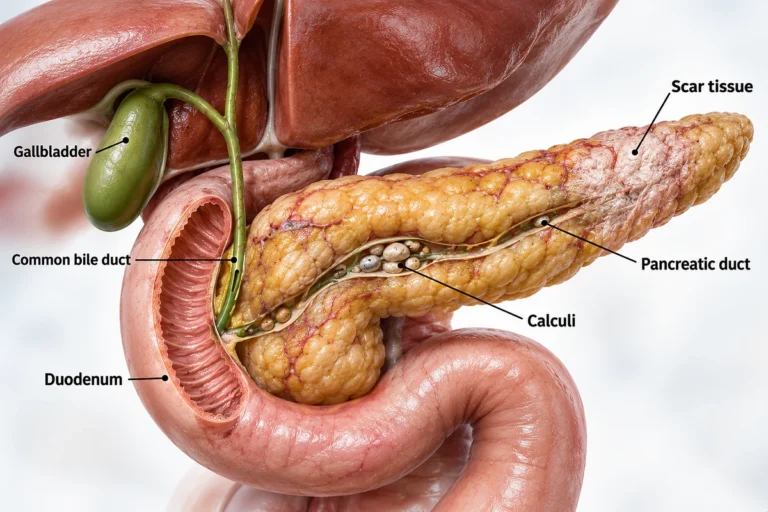
In chronic pancreatitis, inflammation does not settle completely. Repeated injury gradually changes the structure of the gland. Healthy pancreatic tissue may be replaced by fibrosis, which means scarring. The ducts that carry pancreatic juice may become narrowed or irregular. Protein plugs, stones, and calcification may develop inside the ducts. Over time, the pancreas may become smaller, harder, and less able to produce enzymes and hormones [4].
This process explains why some patients feel worse over several years. In the beginning, pain may be the main symptom. Later, the patient may develop poor digestion, malabsorption, weight loss, vitamin deficiency, diabetes, pseudocysts, or bile duct obstruction. The disease may look silent for a period, but pancreatic function can continue to decline if the cause is not identified and controlled.
Acute Pancreatitis vs Chronic Pancreatitis
Acute pancreatitis is a sudden inflammation of the pancreas. It may happen due to gallstones, alcohol, high triglycerides, certain medicines, trauma, or other causes. Many patients recover completely after one acute attack if the cause is treated early and the pancreas is not repeatedly injured.
Chronic pancreatitis is different. It represents long term pancreatic injury with structural change. The problem is not only swelling or temporary inflammation. The gland may develop scarring, calcification, duct changes, and permanent loss of function. This is why chronic pancreatitis requires long term care rather than only short term pain control [4].
Recurrent Acute Pancreatitis and Long Term Damage
Some patients do not move directly from health to chronic pancreatitis. They first experience repeated acute attacks. Each attack may leave behind some degree of damage. If attacks continue, the pancreas may gradually lose its ability to heal fully. This repeated injury pattern can eventually lead to chronic pancreatitis, especially when alcohol, smoking, genetic risk, duct obstruction, or metabolic triggers remain active [4].
This is why preventing future attacks is a central part of treatment. Stopping alcohol, stopping smoking, treating gallstones or duct obstruction, controlling triglycerides, identifying genetic or autoimmune causes, and correcting nutrition are not minor lifestyle suggestions. They are disease modifying steps that may protect the remaining pancreatic tissue.
Why Some Patients Have Pain Even When Tests Look Mild
Pain in chronic pancreatitis does not always match the scan report. Some patients with severe pain may show limited structural changes, while others with advanced calcification may report less pain. This happens because chronic pancreatitis pain can involve duct pressure, inflammation, nerve irritation, altered pain signaling, and central sensitization. Once the nerves become sensitized, pain may continue even when active inflammation is not obvious [4].
For this reason, treatment should not depend only on one test result. The patient’s pain pattern, digestion, stool quality, weight, blood sugar, nutritional markers, imaging, and daily function must be assessed together. A scan can show structure, but the patient’s full clinical picture shows how the disease is affecting life.
Why Understanding the Pancreas Changes the Treatment Plan
A patient who mainly has pain needs a different plan from a patient who has severe enzyme deficiency. A patient with diabetes needs different monitoring from a patient with normal blood sugar. A patient with duct stones or pseudocyst may need endoscopic or surgical evaluation before long term restorative care. A patient with malnutrition may need nutritional rebuilding before strong detoxification or intensive therapy is considered.
This is also why Ayurvedic treatment must be individualized. If the patient’s digestion is weak, nourishment is poor, and weight is falling, the treatment cannot focus only on cleansing. If the patient has heat, acidity, loose stools, and inflammation, the approach must be different from a patient with dryness, constipation, depletion, and severe weight loss. The pancreas may be one organ, but the patient’s presentation is never identical.
Chronic Pancreatitis Treatment Evidence

Chronic pancreatitis treatment should be assessed through measurable outcomes such as attack frequency, emergency hospitalization, pain severity, digestive function, nutritional status, pancreatic enzyme function, blood sugar control, laboratory values, imaging findings, treatment tolerance, and quality of life. Published Ayurvedic evidence currently includes observational studies and individual case reports. These publications provide useful clinical data, but they do not have the same evidentiary strength as randomized controlled trials.
Observational Data From Recurrent and Chronic Pancreatitis
A 2024 nonrandomized observational study reviewed 1,750 patients with recurrent acute or chronic pancreatitis who entered an Ayurvedic treatment programme between 1997 and 2023. The treatment combined a herbo mineral formulation, supportive medicines, a regulated diet, a structured daily routine, and follow up. Of the enrolled patients, 916 completed one year of treatment [39].
The published report recorded 2,781 pancreatitis attacks before treatment and 189 attacks after treatment, representing a 93.2 percent reduction. Emergency hospitalizations fell from 1,530 before treatment to 36 after treatment, representing a 97.6 percent reduction. The authors reported that 67 percent of enrolled patients did not consume alcohol, 81 percent did not use tobacco, and 93 percent had no known family history of pancreatitis. The longest reported remission exceeded 26 years [39].
| Study measure | Published data |
|---|---|
| Patients enrolled | 1,750 |
| Patients completing one year | 916 |
| Completion proportion | 52.3 percent |
| Attacks before treatment | 2,781 |
| Attacks after treatment | 189 |
| Reduction in attack frequency | 93.2 percent |
| Emergency hospitalizations before treatment | 1,530 |
| Emergency hospitalizations after treatment | 36 |
| Reduction in emergency hospitalizations | 97.6 percent |
| Patients without alcohol use | 67 percent |
| Patients without tobacco use | 81 percent |
| Patients without known family history | 93 percent |
| Reported mortality during treatment or follow up | Approximately 1.7 percent from various causes |
| Longest reported remission | More than 26 years |
| Study design | Retrospective, nonrandomized observational study |
| Main limitation | No untreated or standard care control group |
A separate 2024 observational study examined 151 patients with hereditary pancreatitis between 3 and 62 years of age. Diagnosis was based on genetic testing in 50 patients and family history in 101 patients. Their medical histories included 1,351 pancreatitis attacks and 873 emergency hospitalizations before Ayurvedic treatment [1].
Eighty eight patients completed the one year protocol, giving a completion proportion of approximately 58.3 percent. Forty one patients discontinued treatment, six enrolled but did not begin, one died from dengue during the treatment period, and fifteen were still receiving treatment when the study was reported. Among the 88 patients who completed treatment, attack frequency reportedly fell by 92.8 percent and emergency hospitalization fell by 98.7 percent. The reported statistical significance was below 0.0001 [1].
The authors also reported no radiological evidence of disease progression among the patients who completed the protocol and no treatment related adverse effects. The intervention included an initial three week residential phase, a year long medicine schedule, supportive formulations, a prescribed diet, adequate sleep, restricted exertion, and clinical monitoring. These results therefore belong to the complete protocol and cannot be attributed to one medicine alone [1].
| Study measure | Published data |
|---|---|
| Patients enrolled | 151 |
| Age range | 3 to 62 years |
| Diagnosis through genetic testing | 50 patients |
| Diagnosis through family history | 101 patients |
| Recorded attacks before treatment | 1,351 |
| Recorded emergency hospitalizations before treatment | 873 |
| Patients completing one year | 88 |
| Completion proportion | Approximately 58.3 percent |
| Mean age of patients completing treatment | 23.11 plus or minus 11.63 years |
| Reduction in attack frequency | 92.8 percent |
| Reduction in emergency hospitalizations | 98.7 percent |
| Statistical significance | Below 0.0001 |
| Radiological outcome | No reported disease progression among completers |
| Reported adverse effects | None documented by the authors |
| Main limitations | Observational design, no control group, substantial noncompletion, hereditary pancreatitis population only |
These two observational studies reported large reductions in attacks and emergency admissions. However, both were nonrandomized, involved several simultaneous interventions, and were conducted within specialised treatment settings. They do not prove that the same results will occur in every patient or in every type of chronic pancreatitis.
Published Pediatric Case Data
A 2023 case report described a 14 year old boy with genetically confirmed hereditary pancreatitis. His genetic report identified changes involving PRSS1, SPINK1, chymotrypsin C, and cathepsin B. The published chronology described 15 pancreatitis episodes from December 2018 to February 2022, including nine emergency hospitalizations [2].
At the beginning of Ayurvedic treatment, the patient had moderate upper abdominal pain, poor appetite, nausea, vomiting, a body mass index of 26, vitamin D of 32.7 nmol/L, and fecal elastase below 15 micrograms per gram of stool. This fecal elastase result indicated severe exocrine pancreatic insufficiency. The treatment included a three week residential phase, a personalized diet, several Ayurvedic formulations, vitamin D supplementation, rest, and continued follow up [2].
Pain was reported to have disappeared after three days. Appetite and nausea improved from the sixth day, and the patient reported no symptoms or discomfort after six days. During the subsequent treatment period, no further episode of pancreatitis or hospitalization was reported. After approximately one year, the main pancreatic duct measurement decreased from 8 mm to 2.8 mm. Distal pancreatic atrophy remained stable rather than reversing. Body mass index decreased from 26 to 23.1, laboratory investigations were reported as normal, and no adverse effects were documented [2].
| Clinical measure | Before treatment | Published outcome |
|---|---|---|
| Pancreatitis history | 15 recorded episodes | No further reported attack during treatment |
| Emergency hospitalizations | Nine | No further reported hospitalization |
| Upper abdominal pain | Moderate | Reported absent after three days |
| Poor appetite | Present | Improved from the sixth day |
| Nausea | Present | Improved from the sixth day |
| Vomiting | Present | No discomfort reported after six days |
| Fecal elastase | Below 15 micrograms per gram | Severe deficiency documented at baseline |
| Vitamin D | 32.7 nmol/L | Vitamin D supplementation prescribed |
| Main pancreatic duct | 8 mm | 2.8 mm after approximately one year |
| Distal pancreatic atrophy | Present | Remained stable |
| Body mass index | 26 | 23.1 at follow up |
| Safety | Normal baseline liver and kidney tests | No adverse effects reported |
The publication also disclosed that a patent application had been filed for the principal herbo mineral formulation used in the protocol. This information is relevant when evaluating the report. The result remains evidence from one patient and cannot predict the outcome of another child or adult with chronic pancreatitis [2].
A 2021 case report described a 12 year old girl with chronic pancreatitis associated with malnutrition. Her symptoms included recurrent epigastric pain, tenderness, reduced appetite, intermittent fever, malaise, weight loss, constipation, anxiety, and irritability. The treatment combined Shodhana, which refers to supervised purification procedures, Shamana medicines, which are symptom balancing medicines, nourishing therapy, Rasayana therapy, and dietary management. After 16 months, the authors reported that the patient was symptom free, had not required further hospitalization, and had no further interruption to her education [3]. J Pharm Res Int
This was also a single case report. It cannot establish how much improvement came from each medicine, procedure, dietary change, nutritional support, or the natural course of the disease.
Reported Benefits Within 30 Days
The large observational studies did not publish a separate 30 day cohort analysis. Early 30 day data are available from a different 2024 case report involving a 40 year old man with acute on chronic pancreatitis. He had experienced severe epigastric and left upper abdominal pain, poor appetite, indigestion, nausea, and constipation for approximately five years. He had received conservative treatment for three years and had been advised to undergo ERCP before seeking Ayurvedic care [38].
At baseline, abdominal pain was rated 9 on a visual analogue scale, tenderness was grade 4, serum lipase was 381 U/L, and serum amylase was 100 U/L. Imaging showed an atrophic pancreas and ductal abnormalities. The treatment was not a single medicine. It included supervised Snehan, Swedana, Basti procedures, oral Ayurvedic medicines, dietary progression, and follow up [38].
| Outcome | Before treatment | Day 8 | Day 30 | Day 120 |
|---|---|---|---|---|
| Abdominal pain score | 9, severe | 2 | 0 | 0 |
| Abdominal tenderness | Grade 4 | Grade 2 | 0 | 0 |
| Constipation | Present | Absent | Absent | Absent |
| Loss of appetite | Grade 3 | Grade 3 | 0 | 0 |
| Nausea | Present | Absent | Absent | Absent |
| Serum lipase | 381 U/L | 111 U/L | 75.33 U/L | 34.01 U/L |
| Serum amylase | 100 U/L | 80 U/L | 30.78 U/L | 38.83 U/L |
By day 30, the published report recorded complete relief from abdominal pain, tenderness, constipation, loss of appetite, and nausea. Serum lipase had fallen from 381 U/L to 75.33 U/L, which is an approximately 80.2 percent reduction calculated from the reported values. Serum amylase had fallen from 100 U/L to 30.78 U/L, which is an approximately 69.2 percent reduction. At day 120, lipase was 34.01 U/L and amylase was 38.83 U/L. No adverse effects from the prescribed treatment were reported [38]. JCDR
| Thirty day benefit | Reported change |
|---|---|
| Pain | Reduced from 9 to 0 |
| Tenderness | Reduced from grade 4 to 0 |
| Constipation | Present at baseline and absent by day 30 |
| Appetite | Grade 3 loss at baseline and no reported anorexia by day 30 |
| Nausea | Present at baseline and absent by day 30 |
| Serum lipase | Approximately 80.2 percent lower than baseline |
| Serum amylase | Approximately 69.2 percent lower than baseline |
| Nature of evidence | One patient with acute on chronic pancreatitis |
| Treatment type | Multi component supervised Ayurvedic protocol |
| Limitation | Cannot predict a standard 30 day response for other patients |
The 30 day results should not be presented as a guaranteed timeline. They came from one patient, and the treatment included several procedures, medicines, dietary changes, and follow up. A patient with hereditary pancreatitis, severe calcification, duct obstruction, diabetes, pseudocyst, autoimmune disease, malnutrition, or alcohol related pancreatitis may respond differently.
The published studies also reported stopping pancreatic enzymes within their own supervised protocols. This should not be interpreted as general advice. A patient with exocrine pancreatic insufficiency must not stop pancreatic enzyme replacement without review by the treating gastroenterologist and the physician supervising the integrative treatment. The same precaution applies to insulin, pain medicines, anticoagulants, antihypertensive medicines, and planned endoscopic or surgical treatment.
These data support objective monitoring rather than relying only on statements such as feeling better. For each patient, progress should be evaluated through pain frequency, attacks, hospitalizations, stool quality, appetite, body weight, muscle strength, fecal elastase, glucose, HbA1c, nutritional markers, liver and kidney function, and imaging when clinically required.
Can Chronic Pancreatitis Be Cured?

Chronic pancreatitis treatment can reduce attacks, improve digestion, correct nutritional deficiencies, control pain, and protect the remaining pancreatic function. However, a responsible answer to the cure question depends on the amount of fibrosis, calcification, duct damage, pancreatic atrophy, enzyme deficiency, and diabetes already present when treatment begins.
What Permanent Pancreatic Damage Means
Chronic pancreatitis causes progressive structural changes within the pancreas. Healthy tissue may be replaced by fibrosis, pancreatic ducts may become narrowed or irregular, and stones or calcium deposits may form. Once a substantial amount of functioning pancreatic tissue has been lost, the gland may no longer produce enough digestive enzymes or insulin [4].
Modern guidelines therefore describe chronic pancreatitis as an irreversible structural disease. This does not mean that every symptom will continue to worsen or that treatment has no value. It means that existing scar tissue cannot be assumed to disappear simply because pain improves.
A patient may experience fewer attacks and better digestion while still having visible calcification or atrophy on imaging. In the same way, pain relief does not automatically prove that pancreatic enzyme production has returned to normal. Symptoms, laboratory findings, pancreatic function, and imaging must be assessed separately.
What Can Improve With Treatment
Many clinically important outcomes can improve even when established fibrosis remains present. These include the frequency of pancreatitis attacks, emergency hospital admissions, abdominal pain, nausea, appetite, stool quality, nutritional absorption, body weight, vitamin status, blood sugar control, sleep, and ability to perform normal daily activities.
A patient who previously required repeated hospitalization may enter a stable phase without another attack for a prolonged period. A patient with oily stools may improve after appropriate pancreatic enzyme replacement and nutritional correction. Another patient may regain appetite and strength even though pancreatic calcification remains visible on CT or MRI.
These changes represent meaningful recovery because they reduce suffering, protect nutrition, and improve quality of life. They should not be dismissed simply because the pancreas has not returned to its original appearance.
Cure, Remission and Disease Stabilization
I explain these terms separately because patients are often given conflicting information.
Cure means that the disease has resolved and no longer requires treatment or monitoring. This is difficult to establish in chronic pancreatitis because the condition may remain structurally present even after symptoms improve.
Remission means that the patient remains free from attacks or major symptoms for a sustained period. Remission may last for months or years, but continued monitoring is still required.
Disease stabilization means that the pancreas shows no clear clinical or radiological progression. The patient may still require enzymes, dietary support, diabetes care, or other treatment.
Functional recovery means that digestion, appetite, nutrition, energy, pain, and daily activity improve. Functional recovery may occur even when some structural damage remains.
For many patients, a realistic treatment goal is a combination of prolonged remission, disease stabilization, and functional recovery.
Can Pancreatic Function Return?
The answer depends on how much functioning tissue remains. In early disease, reducing inflammation and preventing further attacks may preserve pancreatic function. When exocrine pancreatic insufficiency is already severe, the patient may continue to need pancreatic enzyme replacement. When insulin producing cells have been extensively damaged, diabetes may remain even if abdominal symptoms improve [4].
Fecal elastase, stool quality, weight, vitamin levels, glucose readings, and HbA1c provide more useful information about function than pain relief alone. A patient should not stop enzyme capsules or insulin simply because symptoms have improved. Any reduction must be based on objective reassessment and coordinated medical supervision.
What Ayurvedic Studies Have Reported
Published Ayurvedic studies in hereditary pancreatitis have reported reductions in attacks and emergency hospitalizations, along with disease stabilization in selected patients receiving supervised, multi component treatment protocols [1].
A published hereditary pancreatitis case also described symptom improvement and a reduction in main pancreatic duct diameter during follow up, while pancreatic atrophy remained stable rather than reversing completely [2]. This distinction is important. The patient improved clinically and showed a favourable duct measurement, but the report did not demonstrate complete restoration of all damaged pancreatic tissue.
These findings suggest that selected patients may achieve meaningful clinical improvement under structured Ayurvedic care. They do not prove that every form of chronic pancreatitis can be cured or that one medicine can regenerate the pancreas in all patients.
Why Outcomes Differ Between Patients
Treatment response varies according to the cause and stage of the disease. A young patient with hereditary pancreatitis and preserved pancreatic tissue may respond differently from an older patient with advanced calcification, diabetes, malnutrition, continued smoking, or long term alcohol exposure.
Other factors that influence recovery include pancreatic duct obstruction, pseudocysts, autoimmune disease, high triglycerides, liver disease, kidney function, nutritional status, current medicines, previous procedures, stress, sleep, and adherence to treatment.
This is why one fixed recovery timeline cannot be given to every patient. Early symptom relief may occur within weeks, while nutritional rebuilding, attack prevention, glucose stabilization, and long term disease monitoring may require many months.
How I Assess Whether a Patient Is Recovering
I do not judge recovery only by the absence of pain. I look for fewer attacks, fewer emergency visits, improved appetite, better stool consistency, weight stabilization, stronger energy, improved nutritional markers, safer glucose control, and reduced dependence on rescue medication.
Fecal elastase may be repeated when pancreatic exocrine function needs reassessment. HbA1c and glucose records help evaluate endocrine function. Liver and kidney tests are important for treatment safety. Imaging is repeated only when clinically indicated, particularly when there is changing pain, jaundice, suspected obstruction, pseudocyst, rapid weight loss, or concern about disease progression.
Chronic Pancreatitis Treatment and Causes

Chronic pancreatitis treatment begins with identifying why the pancreas has been repeatedly injured. The same treatment plan cannot be used for every patient because alcohol exposure, smoking, genetic changes, autoimmune disease, metabolic disorders, pancreatic duct obstruction, and recurrent acute pancreatitis affect the gland in different ways. Finding the cause helps determine whether the patient needs lifestyle correction, genetic counselling, immune treatment, triglyceride control, endoscopic intervention, surgery, nutritional rehabilitation, or supervised Ayurvedic support [4].
Alcohol Exposure
Long term heavy alcohol consumption is an important cause of chronic pancreatitis, particularly when exposure continues for several years. Alcohol can alter pancreatic secretions, increase protein deposits within the ducts, promote oxidative stress, and make the pancreas more vulnerable to repeated inflammation and fibrosis [4].
Not every person who consumes alcohol develops chronic pancreatitis. Individual susceptibility is influenced by smoking, nutrition, genetics, drinking pattern, previous attacks, and other pancreatic risk factors. A patient should therefore not assume that alcohol is the cause only because it appears in the medical history. The complete clinical pattern must be assessed.
Once chronic pancreatitis is diagnosed, complete alcohol avoidance is usually advised even when alcohol was not the original cause. Continuing alcohol exposure may increase pain, accelerate functional loss, and raise the risk of further attacks and complications [4].
Smoking
Smoking is an independent risk factor for chronic pancreatitis. It can increase oxidative stress, promote pancreatic fibrosis, and accelerate loss of pancreatic function. The risk becomes greater when smoking and alcohol exposure occur together [4].
Stopping smoking is therefore part of treatment rather than a general lifestyle suggestion. Patients who continue smoking may have more rapid disease progression, poorer pain control, and a higher risk of pancreatic cancer. Nicotine cessation support should be considered when stopping without assistance is difficult.
Recurrent Acute Pancreatitis
Some patients develop chronic pancreatitis after repeated episodes of acute pancreatitis. Each attack may leave behind inflammation, duct injury, or scar tissue. When the pancreas is injured repeatedly, its ability to return to its previous structure and function gradually declines [6].
The cause of every acute attack should be investigated. Repeated attacks may occur because of alcohol, gallstones, high triglycerides, genetic susceptibility, medicines, anatomical abnormalities, or pancreatic duct obstruction. Preventing another attack is one of the most important ways to protect the remaining pancreatic tissue.
Gallstones are a common cause of acute pancreatitis, but they are not usually described as a direct leading cause of established chronic pancreatitis. Their importance lies in the possibility of repeated acute injury when the biliary cause is not corrected.
Genetic and Hereditary Causes
Chronic pancreatitis may develop because of inherited or acquired changes in genes involved in pancreatic enzyme activation, enzyme control, or duct function. Important genes include PRSS1, SPINK1, CFTR, and CTRC [5].
PRSS1 related hereditary pancreatitis may cause recurrent attacks from childhood or adolescence. SPINK1 and CTRC changes may reduce the pancreas’s ability to control prematurely activated digestive enzymes. CFTR changes may affect pancreatic duct secretions and increase the risk of recurrent inflammation.
Genetic testing may be considered when pancreatitis begins at a young age, several family members are affected, no clear cause is found, or attacks continue despite correction of common risk factors. A genetic result does not always predict how severe the disease will become, but it can help guide counselling, family assessment, follow up, and cancer risk discussions.
Autoimmune Pancreatitis
Autoimmune pancreatitis develops when the immune system mistakenly attacks pancreatic tissue. It can cause pancreatic enlargement, duct narrowing, jaundice, weight loss, abdominal discomfort, and changes that may resemble pancreatic cancer.
Some patients have raised serum IgG4 and involvement of other organs, including the bile ducts, salivary glands, kidneys, or lymph nodes. Autoimmune pancreatitis requires specialist diagnosis because it may respond to corticosteroid or other immune directed treatment. It should not be treated as ordinary chronic pancreatitis without confirming the subtype [4].
High Triglycerides and Calcium Disorders
Very high triglyceride levels can cause repeated acute pancreatitis and may eventually contribute to chronic pancreatic damage. Patients with recurrent attacks should have fasting triglycerides checked, especially when diabetes, obesity, alcohol use, pregnancy, or a family lipid disorder is present.
High blood calcium, sometimes caused by overactive parathyroid glands, can also increase pancreatitis risk. Calcium and parathyroid assessment may be required when the cause remains unclear or when the patient has kidney stones, bone symptoms, or repeatedly raised calcium levels [5].
Treating the metabolic trigger is essential. Pancreatic medicines alone cannot prevent further injury if triglycerides or calcium remain uncontrolled.
Pancreatic Duct Obstruction
The pancreatic duct carries digestive secretions from the pancreas into the small intestine. A stricture, stone, tumour, scar, or anatomical abnormality may obstruct this flow. Persistent obstruction can increase duct pressure, cause pain, and contribute to inflammation and fibrosis [4].
Pancreas divisum is an anatomical variation in which parts of the pancreatic duct system do not join in the usual way. Most people with this variation never develop pancreatitis. In selected patients, however, pancreas divisum combined with another risk factor may contribute to recurrent attacks.
Obstructive disease may require MRCP, endoscopic ultrasound, ERCP, stone removal, stenting, or surgery. Herbal treatment cannot mechanically remove a significant duct stone, relieve a severe stricture, or exclude a tumour.
Tropical Calcific Pancreatitis
Tropical calcific pancreatitis has historically been reported more often in tropical regions, including South Asia. It may affect younger patients and can be associated with marked pancreatic calcification, abdominal pain, malnutrition, and diabetes.
Its causes are not fully explained by one dietary factor. Genetic susceptibility, environmental influences, nutrition, and metabolic factors may contribute. Because patients may develop diabetes at a relatively young age, both digestive and endocrine pancreatic functions must be assessed.
Medicine Related and Toxic Causes
Certain medicines have been associated with pancreatitis, but medicine related chronic pancreatitis is uncommon. A suspected medicine should not be stopped without review because the association may be uncertain and the medicine may be treating another serious condition.
The physician should examine when the medicine was started, whether symptoms appeared after exposure, whether other causes are present, and whether the pancreatitis returned after re exposure. Occupational chemicals and toxic exposures should also be considered when the history suggests a possible connection.
Idiopathic Chronic Pancreatitis
In some patients, no definite cause is identified even after detailed investigation. This is called idiopathic chronic pancreatitis. The term does not mean that the symptoms are psychological or that no treatment is possible. It means that currently available testing has not identified a clear cause.
Further assessment may include genetic testing, endoscopic ultrasound, MRCP, autoimmune markers, metabolic tests, family history, and review of previous acute attacks. The diagnosis may become clearer as additional clinical information appears over time.
Diet, Stress and Common Misunderstandings
A high fat meal may worsen pain, nausea, bloating, or oily stools in a patient whose pancreas is already damaged. However, ordinary dietary fat or junk food alone should not be presented as a proven direct cause of chronic pancreatitis. Severe restriction can also worsen calorie deficiency and weight loss.
Emotional stress may increase pain perception, disturb sleep, alter eating habits, and make digestive symptoms more difficult to manage. Stress is clinically important, but it should not be described as a direct proven cause of pancreatic fibrosis.
Ayurveda evaluates causative patterns such as irregular eating, excessive alcohol, unsuitable food combinations, impaired Agni, and behaviours that disturb digestion and tissue nourishment. Agni means digestive and metabolic capacity. These concepts may help guide an individualized diet and lifestyle plan, but they should not replace investigation for genetic, autoimmune, metabolic, obstructive, or malignant causes [9].
Identifying the correct cause prevents patients from receiving a generic treatment that does not address the source of continuing injury. It also helps determine which parts of care can be managed through diet, medicines, and supervised Ayurveda, and which conditions require urgent gastroenterology, endoscopic, surgical, genetic, or immune based treatment.
Types and Stages of Chronic Pancreatitis

Chronic pancreatitis treatment must be adapted to the cause, stage, remaining pancreatic function, and complications present in each patient. Two people may have the same diagnosis but require very different care. One patient may have hereditary disease beginning in childhood, while another may develop pancreatic damage after years of alcohol exposure, recurrent attacks, autoimmune inflammation, or blockage of the pancreatic duct. Identifying the type of chronic pancreatitis helps determine which investigations, medicines, procedures, nutritional measures, and follow up plans are appropriate [4].
Hereditary Chronic Pancreatitis
Hereditary chronic pancreatitis occurs when an inherited genetic change increases the risk of repeated pancreatic inflammation. Symptoms may begin during childhood, adolescence, or early adulthood. Several members of the same family may have recurrent pancreatitis, although the severity can vary greatly between relatives.
Changes involving genes such as PRSS1, SPINK1, CFTR, and CTRC may affect the activation, control, or movement of pancreatic digestive enzymes. Some genetic changes directly cause hereditary pancreatitis, while others increase susceptibility when combined with smoking, alcohol exposure, anatomical abnormalities, or other risk factors [4].
Genetic counselling may be helpful when pancreatitis begins at a young age, several close relatives are affected, or repeated attacks occur without a clear cause. A positive genetic result can guide family assessment and long term monitoring, but it does not predict the exact number of attacks or the rate of disease progression in every patient.
Alcohol Related Chronic Pancreatitis
Alcohol related chronic pancreatitis usually develops after prolonged heavy exposure, although only a proportion of people who drink heavily develop pancreatic disease. Genetics, smoking, nutrition, drinking pattern, and previous pancreatic attacks may influence individual susceptibility.
Complete alcohol avoidance is necessary after diagnosis. Continuing alcohol exposure can increase the risk of further attacks, pain, malnutrition, progression of fibrosis, and complications. Patients who find it difficult to stop should receive structured medical and psychological support rather than being blamed for the disease.
Smoking frequently accompanies alcohol related disease and independently accelerates pancreatic damage. Both exposures should be addressed together because stopping only one may leave an important source of continuing injury untreated [4].
Autoimmune Pancreatitis
Autoimmune pancreatitis occurs when the immune system attacks pancreatic tissue. It may cause pancreatic enlargement, duct narrowing, abdominal discomfort, jaundice, weight loss, or abnormal liver tests. Its appearance can resemble pancreatic cancer, making accurate diagnosis essential.
Some patients have raised IgG4 levels and inflammation affecting other organs, including the bile ducts, kidneys, salivary glands, or lymph nodes. Others may have an autoimmune form associated with inflammatory bowel disease.
Autoimmune pancreatitis may respond to corticosteroid or other immune directed treatment. Ayurvedic medicines should not replace the investigations required to distinguish autoimmune disease from pancreatic cancer, bile duct obstruction, or another pancreatic mass [4].
Obstructive Chronic Pancreatitis
Obstructive chronic pancreatitis develops when the normal flow of pancreatic juice is repeatedly blocked. Causes may include a duct stricture, stone, scar, tumour, trauma, or anatomical variation.
When pancreatic juice cannot drain properly, pressure rises inside the ducts. This may contribute to pain, inflammation, duct dilation, and progressive fibrosis. MRCP, endoscopic ultrasound, or ERCP may be required to identify the location and severity of obstruction.
Significant stones or strictures may require endoscopic removal, stenting, lithotripsy, drainage, or surgery. Medicines and diet may support digestion and nutrition, but they cannot physically remove a large duct stone or exclude an obstructing tumour.
Tropical Calcific Pancreatitis
Tropical calcific pancreatitis has historically been reported in tropical regions, including India and other parts of South Asia. It may begin at a younger age and can be associated with large pancreatic calcifications, recurrent abdominal pain, malnutrition, and early diabetes.
The condition was previously linked mainly with dietary and nutritional factors, but current understanding suggests a more complex interaction involving genetic susceptibility, environment, metabolism, nutrition, and other influences. Patients require assessment of both digestive enzyme production and blood sugar control because exocrine and endocrine pancreatic failure may develop together [4].
Idiopathic Chronic Pancreatitis
Idiopathic chronic pancreatitis means that no definite cause has been identified after appropriate investigation. It does not mean that the disease is imaginary or that treatment cannot be planned.
Some patients may have an unrecognized genetic predisposition, subtle autoimmune disease, small duct abnormalities, previous recurrent acute pancreatitis, or an anatomical variation that is difficult to detect. Further evaluation may include genetic testing, IgG4, MRCP, endoscopic ultrasound, metabolic tests, and review of family history.
The cause may remain unknown even after detailed testing. In that situation, treatment focuses on preventing further injury, controlling pain, supporting digestion and nutrition, monitoring glucose, and identifying complications early.
Early Chronic Pancreatitis
In early chronic pancreatitis, the patient may have repeated abdominal pain or recurrent acute attacks without obvious calcification or advanced structural damage. CT or MRI may appear normal or show only subtle changes. Endoscopic ultrasound or pancreatic function testing may sometimes identify abnormalities that are not visible on routine imaging.
Diagnosis can be difficult at this stage because symptoms overlap with several digestive conditions. The physician must avoid both missing genuine pancreatic disease and labelling nonspecific abdominal pain as chronic pancreatitis without sufficient evidence.
Early identification provides the best opportunity to control risk factors, stop smoking and alcohol, correct metabolic causes, improve nutrition, and prevent repeated injury to the remaining pancreatic tissue [4].
Established Chronic Pancreatitis
Established disease is usually supported by clearer structural or functional evidence. Imaging may show duct irregularity, pancreatic stones, calcification, atrophy, fibrosis, or pseudocysts. The patient may have recurrent pain, oily stools, weight loss, vitamin deficiency, or reduced fecal elastase.
Treatment at this stage commonly includes pancreatic enzyme replacement, nutritional support, pain management, and monitoring for diabetes. Endoscopic or surgical evaluation may be required when stones, strictures, obstruction, or persistent severe pain are present.
Ayurvedic care at this stage should be individualized according to digestive capacity, nutrition, bowel pattern, strength, associated disease, and current medical treatment. Strong cleansing procedures may be unsuitable for a patient who is underweight, dehydrated, or nutritionally depleted.
Advanced Chronic Pancreatitis
Advanced chronic pancreatitis may involve extensive calcification, marked atrophy, severe exocrine pancreatic insufficiency, diabetes, malnutrition, chronic pain, bile duct obstruction, vascular complications, or recurrent pseudocysts.
Some patients have less pain in advanced disease because much of the functioning pancreatic tissue has already been lost. Reduced pain should not be mistaken for recovery when oily stools, weight loss, muscle depletion, diabetes, or vitamin deficiency are worsening.
The treatment priority is to prevent further attacks, maintain nutrition, replace missing enzymes, control blood sugar safely, manage complications, and preserve quality of life. Selected patients may require endoscopic treatment, drainage procedures, pancreatic surgery, or total pancreatectomy with islet autotransplantation [4].
Are There Four Stages of Chronic Pancreatitis?
Patients often search for four stages of chronic pancreatitis, but there is no single universal four stage system used for every patient. Different clinical and imaging classifications evaluate pancreatic structure, duct changes, symptoms, function, and complications in different ways.
For practical patient care, I assess whether the disease is early, established, or advanced and then document the specific problems present. These may include recurrent attacks, chronic pain, duct obstruction, pancreatic stones, exocrine insufficiency, diabetes, malnutrition, pseudocyst, or jaundice.
This approach is more useful than assigning a stage number alone. Two patients placed in the same broad stage may have very different risks and treatment needs. The treatment plan must therefore be based on the complete clinical picture rather than on one label or scan finding.
Chronic Pancreatitis Treatment and Progression

Chronic pancreatitis treatment becomes more effective when the stage of disease progression is understood clearly. The pancreas does not usually lose all its function at once. Damage develops through repeated cycles of injury, inflammation, attempted repair, and scar formation. The speed of progression varies according to the cause, smoking, alcohol exposure, genetic susceptibility, duct obstruction, nutrition, diabetes, and the number of previous attacks [4].
Repeated Injury and Abnormal Healing
After a pancreatic injury, the body begins a repair process. In a healthy recovery, inflammation settles and the tissue returns as closely as possible to its previous condition. In chronic pancreatitis, the damaging stimulus may continue or repeated attacks may occur before healing is complete.
This creates an abnormal repair response. Cells involved in tissue repair remain active and continue producing collagen and other structural material. Over time, this material accumulates as fibrosis. Fibrosis gradually replaces healthy pancreatic tissue and reduces the space available for cells that produce digestive enzymes and hormones [4].
The patient may not feel every stage of this process. Structural damage can continue during periods when pain is mild or absent. This is why the absence of severe pain should not be considered proof that the disease has stopped progressing.
Fibrosis and Loss of Working Pancreatic Tissue
Fibrosis makes the pancreas firmer and less flexible. As scar tissue expands, functioning pancreatic cells may become compressed, damaged, or lost. The gland may initially appear enlarged because of inflammation, but it may later become smaller and atrophic as healthy tissue declines.
This structural change affects both major pancreatic functions. Loss of acinar cells reduces the production of digestive enzymes. Loss of islet cells affects the hormones responsible for glucose regulation. The rate at which these functions decline differs between patients, so severe pain, enzyme deficiency, and diabetes do not always develop at the same time [4].
A patient may therefore have extensive calcification with relatively little pain, while another patient may have severe pain before advanced structural changes become visible. Treatment decisions should not be based on one symptom or one scan alone.
Pancreatic Duct Narrowing and Stone Formation
Digestive enzymes normally pass through the pancreatic ducts before entering the small intestine. Chronic inflammation can make these ducts irregular, narrowed, or blocked. Thickened secretions and protein deposits may contribute to the formation of pancreatic stones.
When a stone or stricture obstructs the main pancreatic duct, pressure may increase behind the blockage. This can contribute to pain and repeated inflammation. The duct may become dilated in one area and narrowed in another. Smaller side branches may also become distorted.
Significant duct obstruction may not improve through medicines alone. Endoscopic treatment, stone removal, stenting, lithotripsy, drainage, or surgery may be necessary when obstruction is contributing to severe pain, recurrent attacks, pseudocyst formation, or loss of pancreatic function [4].
A patient receiving Ayurvedic care should still undergo appropriate evaluation when imaging shows duct dilation, stones, strictures, or an unexplained mass. Delaying mechanical treatment for a significant obstruction may allow further pancreatic damage.
Development of Exocrine Pancreatic Insufficiency
The exocrine pancreas produces the enzymes and bicarbonate needed to digest food. In the early stages of chronic pancreatitis, the remaining tissue may compensate for some of the damage. Clear digestive symptoms may not appear until a substantial amount of enzyme producing capacity has been lost.
As exocrine function declines, fat digestion is usually affected most noticeably. The patient may develop oily stool, foul smelling stool, diarrhea, bloating, excessive gas, and weight loss. Protein and carbohydrate digestion may also become less efficient as the disease advances.
Malabsorption can lead to deficiencies of vitamins A, D, E, and K, along with calcium, magnesium, iron, vitamin B12, folate, and other nutrients. Muscle loss may occur even when the patient’s body weight appears normal. Some patients become weak, develop bone pain, or experience repeated infections before the degree of malnutrition is fully recognized [4].
Pancreatic enzyme replacement should be taken with meals and snacks when prescribed. Its purpose is not only to reduce oily stool. Correct enzyme treatment helps protect weight, muscle, vitamin levels, bone health, and overall nutritional status.
Improvement in pain does not automatically mean that enzyme production has recovered. Stool quality, weight, fecal elastase, nutritional markers, and response to enzyme therapy should be considered separately.
Development of Pancreatogenic Diabetes
The endocrine pancreas contains cells that produce insulin and other hormones involved in blood sugar regulation. As chronic pancreatitis damages these cells, glucose tolerance may worsen and pancreatogenic diabetes may develop.
This condition is also called type 3c diabetes. It differs from common type 2 diabetes because the patient may have pancreatic enzyme deficiency, malnutrition, unstable food absorption, and reduced production of hormones that normally protect against low blood sugar [7].
Some patients first show mildly raised fasting glucose or HbA1c. Others develop thirst, frequent urination, fatigue, blurred vision, recurrent infections, or unexplained weight loss. Blood sugar may become unstable when meals are missed, digestion is unpredictable, or insulin doses are not matched correctly to food intake.
Diabetes caused by chronic pancreatitis requires coordinated care. Nutrition, pancreatic enzyme use, meal timing, glucose monitoring, and diabetes medicines must be planned together. Insulin should not be stopped or reduced only because appetite, pain, or energy has improved.
Why Pain Can Become Chronic
Pain in chronic pancreatitis may begin because of active inflammation, swelling, duct pressure, stones, or irritation of nearby tissues. With repeated attacks, pancreatic and surrounding nerves may also become damaged or unusually sensitive.
The nervous system may gradually begin responding strongly to signals that would not previously have caused severe pain. Pain may then continue even when inflammation is less active or when imaging does not show a major new change. This is one reason why the level of pain does not always match the amount of visible pancreatic damage [4].
Patients with this pattern may describe burning, shooting, deep, constant, or spreading pain. Ordinary pain medicines may become less effective. Treatment may need to address neuropathic pain, sleep disturbance, anxiety, fear of eating, muscle tension, and central pain sensitization in addition to pancreatic inflammation.
Endoscopic or surgical treatment is most likely to help when a clear structural cause, such as duct obstruction or stones, is contributing to pain. Procedures may be less effective when pain is mainly maintained by nerve sensitization. Careful assessment is therefore necessary before an invasive procedure is selected.
Why Progression Differs Between Patients
Chronic pancreatitis does not progress at the same rate in every patient. Continued smoking and alcohol exposure can accelerate damage. Recurrent acute attacks, untreated obstruction, severe triglyceride elevation, genetic susceptibility, autoimmune inflammation, and poor nutrition may also influence progression.
A patient who stops smoking and alcohol, treats the underlying cause, takes pancreatic enzymes correctly, maintains nutrition, and attends regular follow up may have a different outcome from a patient who continues to experience repeated uncontrolled injury.
The Ayurvedic plan must also change as the disease progresses. A patient with mild digestive weakness and preserved nutrition may tolerate a different approach from someone with severe malabsorption, dehydration, diabetes, muscle loss, or duct obstruction. Strong cleansing procedures should not be used routinely in a depleted or medically unstable patient.
Progress should be assessed through attack frequency, hospital admissions, pain pattern, stool quality, body weight, muscle strength, fecal elastase, glucose, HbA1c, nutritional markers, and imaging when clinically required. This allows treatment to respond to the actual disease process rather than relying only on temporary changes in symptoms.
Diagnosing Chronic Pancreatitis

Chronic pancreatitis can be difficult to diagnose, especially during its early stages. A patient may have repeated upper abdominal pain, nausea, bloating, unexplained weight loss, or intolerance to meals while routine blood tests and basic imaging remain normal. Diagnosis therefore requires the medical history, symptoms, pancreatic function, imaging findings, and possible causes to be assessed together rather than relying on a single test [4].
Medical History and Clinical Assessment
I begin by reviewing the pattern and duration of pain, previous episodes of acute pancreatitis, hospital admissions, weight changes, stool appearance, appetite, alcohol exposure, smoking, current medicines, and family history of pancreatic disease.
Pain that begins in the upper abdomen and spreads toward the back may suggest pancreatic disease, but it is not specific. Gallbladder disease, peptic ulcer disease, acid reflux, celiac disease, bile duct obstruction, pancreatic cancer, and other abdominal disorders may produce similar symptoms.
Previous discharge summaries and imaging reports are particularly valuable. A patient may not remember the exact diagnosis from an emergency admission, but the records may document pancreatic swelling, duct changes, necrosis, gallstones, pseudocysts, or raised pancreatic enzymes.
A physical examination may identify upper abdominal tenderness, jaundice, dehydration, weight loss, reduced muscle mass, abdominal swelling, or signs of nutritional deficiency. However, many patients with chronic pancreatitis have no specific physical finding between attacks. A normal examination does not exclude the disease [4].
Serum Amylase and Lipase
Serum amylase and lipase are commonly checked when pancreatitis is suspected. These enzymes may rise during an acute pancreatic attack, but they are less reliable for diagnosing established chronic pancreatitis.
In advanced disease, the pancreas may no longer produce enough enzymes to create a marked rise in the blood. Amylase and lipase may therefore be normal or only slightly elevated even when significant pancreatic damage is present. Normal enzyme results should not be used alone to dismiss chronic pancreatitis when symptoms and imaging remain suspicious [4].
A sudden rise in these enzymes in a patient with established chronic pancreatitis may indicate an acute flare. The result must be interpreted alongside the severity of pain, vomiting, hydration, liver tests, and imaging findings.
Liver Function and Bile Duct Assessment
Liver function tests help identify obstruction or inflammation affecting the bile ducts. Raised bilirubin, alkaline phosphatase, or other liver markers may occur when fibrosis, a pseudocyst, inflammation, or a mass near the pancreatic head compresses the common bile duct.
Yellow eyes, dark urine, pale stools, itching, and abnormal liver tests require prompt investigation. These findings may result from chronic pancreatitis, but pancreatic cancer, gallstones, bile duct stones, and other hepatobiliary disorders must also be excluded [4].
Blood Glucose and HbA1c
Chronic pancreatitis may gradually damage the cells that produce insulin. Fasting glucose and HbA1c help identify impaired glucose control and pancreatogenic diabetes.
Blood sugar may remain normal during the early stages and increase only after substantial pancreatic damage has occurred. For this reason, glucose and HbA1c should be checked at diagnosis and monitored over time, especially when the patient develops thirst, frequent urination, fatigue, unexplained weight loss, recurrent infections, or worsening nutritional status [7].
Pancreatogenic diabetes may be unstable because the pancreas can lose several hormones involved in glucose regulation. Diagnosis should therefore lead to coordinated nutritional and diabetes care rather than treatment as ordinary type 2 diabetes alone.
Nutritional Blood Tests
Chronic pancreatitis may cause nutritional deficiency long before severe weight loss becomes obvious. I assess the patient’s weight trend, muscle strength, food intake, and laboratory markers rather than depending only on body mass index.
Useful investigations may include a complete blood count, albumin, iron studies, vitamin B12, folate, calcium, magnesium, vitamin D, and selected fat soluble vitamins. Additional tests are chosen according to stool changes, weight loss, bone symptoms, anemia, dietary intake, and disease severity [5].
A patient may have a normal or high body weight while still having low muscle mass, vitamin deficiency, and poor protein absorption. Nutritional assessment should therefore remain part of pancreatic evaluation even when the patient does not appear underweight.
Fecal Elastase
Fecal elastase is a stool test used to assess exocrine pancreatic function. It helps determine whether the pancreas is producing enough digestive enzymes.
A result below 100 micrograms per gram provides strong evidence of exocrine pancreatic insufficiency. Results between 100 and 200 micrograms per gram are less certain and must be interpreted with the clinical picture. The sample should be collected from a formed or semisolid stool because watery diarrhea can dilute the enzyme and create a falsely low result [6].
Fecal elastase can be measured while the patient is taking pancreatic enzyme replacement because the test measures human pancreatic elastase rather than the enzymes contained in standard capsules.
A low result supports pancreatic insufficiency, but it does not by itself identify the cause. Chronic pancreatitis, pancreatic surgery, cystic fibrosis, pancreatic cancer, and other conditions may reduce exocrine function. Imaging and clinical assessment are still required.
A normal fecal elastase result does not completely exclude early chronic pancreatitis because structural disease may be present before major enzyme failure develops.
Stool Fat and Other Function Tests
Stool fat testing may be used when severe fat malabsorption is suspected or when the diagnosis remains unclear. The test can identify excessive fat loss through stool, but collection may be inconvenient and results depend on the amount of fat consumed during the testing period.
Direct pancreatic function tests can assess bicarbonate or enzyme secretion after hormonal stimulation. These tests may detect early functional impairment, but they are available mainly in specialist centres and are not required for every patient.
The decision to perform additional function testing depends on symptoms, nutritional status, fecal elastase, imaging results, and whether the result will change treatment.
CT Scan
A pancreas protocol CT scan is commonly used to evaluate suspected or established chronic pancreatitis. It can show calcification, pancreatic stones, duct dilation, gland atrophy, pseudocysts, inflammation, fluid collections, vascular complications, and some pancreatic masses [4].
CT is particularly helpful in established disease because pancreatic calcification is clearly visible. It can also assess nearby organs and identify complications that may require urgent treatment.
A normal CT scan does not completely exclude early chronic pancreatitis. Subtle duct or tissue changes may not be visible until the disease becomes more established. Further evaluation with MRI, MRCP, or endoscopic ultrasound may be needed when clinical suspicion remains high.
MRI and MRCP
MRI provides detailed images of the pancreatic tissue and surrounding organs. MRCP is a specialised MRI technique that shows the pancreatic and bile ducts without inserting an instrument into them.
MRCP may reveal duct narrowing, irregular side branches, stones, obstruction, cysts, and communication between a pseudocyst and the pancreatic duct. It is particularly useful when the physician needs to understand duct anatomy or distinguish pancreatic disease from a bile duct problem [4].
Secretin enhanced MRCP may be used in selected specialist centres. Secretin temporarily stimulates pancreatic fluid secretion, which can make the ducts easier to see and provide indirect information about pancreatic function.
MRI and MRCP are useful when CT findings are unclear, radiation exposure is a concern, or more detailed duct assessment is required.
Endoscopic Ultrasound
Endoscopic ultrasound provides close images of the pancreas from inside the stomach and small intestine. A flexible endoscope with an ultrasound probe is passed through the mouth while the patient is sedated.
EUS may identify small stones, subtle fibrosis, duct changes, cysts, inflammatory masses, or early structural abnormalities that are not clearly visible on CT or MRI. It can be particularly helpful when symptoms strongly suggest pancreatic disease but other imaging remains inconclusive [4].
EUS findings must be interpreted by an experienced specialist because some changes may also occur with age, smoking, obesity, diabetes, or previous pancreatic inflammation. A few minor EUS abnormalities should not automatically be labelled as chronic pancreatitis.
EUS can also guide a needle biopsy when a pancreatic mass, autoimmune disease, or cancer needs further evaluation.
ERCP
ERCP combines endoscopy and X ray imaging of the pancreatic and bile ducts. It was previously used more often for diagnosis, but it carries risks, including acute pancreatitis, infection, bleeding, and perforation.
For most patients, ERCP is now reserved mainly for treatment. It may be used to remove stones, place a stent across a stricture, drain an obstruction, or manage selected duct complications [4].
A patient should not undergo ERCP simply because abdominal pain is present. The procedure should be recommended when there is a clear clinical reason and the expected benefit outweighs the risk.
IgG4 and Autoimmune Testing
Serum IgG4 may be checked when autoimmune pancreatitis is suspected. Features that raise concern include painless jaundice, diffuse pancreatic enlargement, bile duct narrowing, involvement of other organs, or imaging that resembles pancreatic cancer.
A raised IgG4 level supports the diagnosis in the appropriate clinical setting, but it is not diagnostic by itself. Some patients with autoimmune pancreatitis have normal IgG4, while elevated levels may occur in other inflammatory or malignant conditions.
Diagnosis may require a combination of blood tests, imaging, tissue sampling, involvement of other organs, and response to specialist directed treatment. Corticosteroids should not be started casually before pancreatic cancer has been adequately excluded.
Genetic Testing
Genetic testing may be considered when pancreatitis begins during childhood or early adulthood, when several family members are affected, when attacks recur without an identifiable cause, or when the clinical pattern suggests hereditary disease.
Testing may include genes such as PRSS1, SPINK1, CFTR, and CTRC. The meaning of a result can be complex. Some changes directly cause hereditary pancreatitis, while others only increase susceptibility.
Genetic counselling helps the patient understand what the result means for personal risk, family members, future children, and long term follow up. A genetic finding should not be interpreted without the clinical history and specialist guidance [4].
When a Biopsy Is Needed
A pancreatic biopsy is not required to diagnose every case of chronic pancreatitis. It may be considered when imaging shows a mass, unexplained duct obstruction, rapid progression, new jaundice, significant weight loss, or another feature that raises concern about pancreatic cancer.
Biopsy may also help distinguish autoimmune pancreatitis from malignancy in selected cases. Tissue is commonly obtained through endoscopic ultrasound guidance.
A negative biopsy does not always remove every concern if imaging and symptoms remain suspicious. Repeat imaging, additional sampling, or surgical consultation may still be required.
Reaching the Diagnosis
No single result should be interpreted in isolation. A reliable diagnosis is made by combining the clinical history, cause assessment, pancreatic structure, duct anatomy, exocrine function, endocrine function, nutritional status, and complications.
Before beginning long term Ayurvedic treatment, I require sufficient evidence that chronic pancreatitis has been correctly diagnosed and that urgent complications have been excluded. This prevents a patient with cancer, severe obstruction, infected pseudocyst, uncontrolled diabetes, or another abdominal disease from losing valuable time through treatment based only on symptoms.
Chronic Pancreatitis Treatment and Similar Disorders

Chronic pancreatitis treatment should begin only after confirming that the symptoms are truly arising from the pancreas. Upper abdominal pain, nausea, bloating, weight loss, poor appetite, and altered bowel movements occur in many digestive disorders. Starting long term treatment without excluding these conditions can delay the correct diagnosis, expose the patient to unnecessary medicines, and allow a serious disease to progress unnoticed [4].
Pancreatic Cancer
Pancreatic cancer and chronic pancreatitis can produce similar symptoms and imaging findings. Both may cause upper abdominal pain, back pain, reduced appetite, weight loss, jaundice, digestive difficulty, and worsening blood sugar control. Long standing pancreatic inflammation can also make it more difficult to distinguish an inflammatory mass from a tumour.
A change in the usual pain pattern requires reassessment. New jaundice, rapid weight loss, persistent vomiting, loss of appetite, newly developed diabetes, rapidly worsening diabetes, or a pancreatic mass should not automatically be attributed to chronic pancreatitis.
A pancreas protocol CT, MRI, MRCP, or endoscopic ultrasound may be required. Endoscopic ultrasound can also guide tissue sampling when imaging cannot clearly distinguish inflammation from cancer. A normal tumour marker does not completely exclude pancreatic cancer, and an elevated marker does not confirm it by itself. The complete clinical and imaging picture must be considered [4].
Ayurvedic treatment should not begin as the only treatment when pancreatic cancer remains a possibility. Diagnostic clarification and oncology or pancreatic specialist review must take priority.
Gallbladder and Bile Duct Disease
Gallstones, gallbladder inflammation, and stones within the common bile duct may produce upper abdominal pain, nausea, vomiting, fever, jaundice, and intolerance to meals. Pain is often felt in the right upper abdomen, but it may also be experienced in the centre and spread toward the back.
Gallstones can also trigger acute pancreatitis. This means gallbladder disease and pancreatitis may exist together rather than one simply imitating the other. Repeated biliary attacks require investigation because leaving the underlying gallstone problem untreated may expose the pancreas to further injury.
Liver function tests, abdominal ultrasound, MRCP, and endoscopic ultrasound may help identify gallstones or bile duct obstruction. Fever, jaundice, severe right upper abdominal pain, or confusion may indicate an infected and obstructed bile duct and requires urgent hospital treatment [4].
Peptic Ulcer Disease and Gastritis
A stomach or duodenal ulcer may cause burning or gnawing pain in the upper abdomen. The pain may change after eating, disturb sleep, or be accompanied by nausea, early fullness, belching, or vomiting. Gastritis can cause similar symptoms.
These conditions may be related to H pylori infection, anti inflammatory medicines, alcohol, smoking, or other factors. Upper gastrointestinal endoscopy and appropriate testing may be required when an ulcer is suspected.
Black stool, vomiting blood, dizziness, fainting, or sudden severe abdominal pain requires emergency assessment. These symptoms may indicate bleeding or perforation and should never be treated as ordinary indigestion.
Ulcer disease does not usually explain pancreatic calcification, duct changes, severe exocrine insufficiency, or persistently oily stools. However, a patient may have both ulcer disease and chronic pancreatitis, particularly when pain medicines have been used for a long period.
Acid Reflux and Functional Indigestion
Acid reflux may cause burning behind the chest, sour fluid in the mouth, throat irritation, belching, and discomfort after meals. Functional indigestion may cause early fullness, upper abdominal discomfort, nausea, and bloating even when endoscopy does not show a major structural disease.
These symptoms are commonly mistaken for pancreatic disease. They may also coexist with chronic pancreatitis and add to the patient’s discomfort.
Acid reducing medicines may improve reflux or ulcer related symptoms, but they will not correct pancreatic enzyme deficiency. Continued oily stools, unexplained weight loss, recurrent back pain, or abnormal pancreatic imaging requires a separate pancreatic assessment.
Celiac Disease and Intestinal Malabsorption
Celiac disease may cause chronic diarrhea, bloating, weight loss, iron deficiency, vitamin deficiency, low bone density, fatigue, and abdominal discomfort. These findings may resemble exocrine pancreatic insufficiency.
The distinction is important because celiac disease requires strict gluten exclusion, while pancreatic insufficiency may require pancreatic enzyme replacement. Some patients can have both conditions, and untreated intestinal disease may worsen nutritional recovery.
Blood tests and small intestinal evaluation may be required when celiac disease is suspected. A patient should not begin a gluten free diet before appropriate testing because removing gluten may make the investigation less reliable.
Other intestinal disorders can also cause malabsorption. Persistent diarrhea and weight loss should therefore not be attributed to the pancreas without evaluating the broader digestive system.
Irritable Bowel Syndrome
Irritable bowel syndrome commonly causes abdominal cramping, bloating, constipation, diarrhea, or alternating bowel habits. Symptoms may improve after passing stool and may worsen during stress or after certain foods.
Unlike advanced chronic pancreatitis, irritable bowel syndrome does not usually cause pancreatic calcification, pancreatic duct abnormalities, marked nutritional deficiency, jaundice, or severe exocrine pancreatic insufficiency. It should not cause progressive unexplained weight loss or gastrointestinal bleeding.
A patient may still have irritable bowel syndrome alongside chronic pancreatitis. In that situation, pancreatic treatment may improve oily stools while bloating, bowel sensitivity, or stress related symptoms continue. Both conditions must be recognised rather than repeatedly increasing pancreatic medicines for symptoms arising from the bowel.
Small Intestinal Bacterial Overgrowth
Small intestinal bacterial overgrowth may cause bloating, excessive gas, abdominal discomfort, diarrhea, weight loss, and vitamin deficiency. These symptoms can resemble pancreatic enzyme deficiency and may continue even after enzyme replacement has been started.
Altered intestinal movement, diabetes, previous abdominal surgery, and digestive disease can increase the likelihood of bacterial overgrowth. It may also occur alongside chronic pancreatitis.
Testing and treatment should be selected by the treating physician. Repeated antibiotic use without confirming the likely cause may temporarily change symptoms while disturbing the intestinal microbiome and delaying the correct diagnosis.
Gastroparesis
Gastroparesis occurs when the stomach empties more slowly than expected. Patients may experience early fullness, nausea, vomiting, upper abdominal discomfort, bloating, unstable food intake, and difficulty controlling blood sugar.
It is particularly important in patients with long standing diabetes. Some medicines, including opioid pain medicines, may also slow stomach emptying and worsen nausea or constipation.
A patient with chronic pancreatitis and gastroparesis may struggle to match pancreatic enzymes or insulin with meals because food moves unpredictably through the digestive system. Treating only the pancreas may therefore leave major symptoms unresolved.
Persistent vomiting requires assessment for dehydration, electrolyte disturbance, gastric outlet obstruction, duodenal compression, or a pancreatic pseudocyst before gastroparesis is assumed.
Mesenteric Ischemia
Mesenteric ischemia occurs when blood flow to the intestines becomes inadequate. Chronic mesenteric ischemia may cause severe pain after meals, fear of eating, and progressive weight loss. These symptoms can resemble chronic pancreatitis.
The condition is more likely in patients with smoking history, vascular disease, diabetes, high cholesterol, or advanced age. Sudden severe abdominal pain that appears greater than the findings on physical examination may indicate an acute interruption of intestinal blood flow.
Mesenteric ischemia can become life threatening and requires urgent vascular assessment. It should not be managed as digestive weakness or treated with diet changes alone.
Pancreatic Cancer, Chronic Pancreatitis, and Changing Symptoms
A previous diagnosis of chronic pancreatitis does not protect a patient from developing another pancreatic disorder. New symptoms should not always be explained by the old diagnosis.
I reassess the diagnosis when a previously stable patient develops new jaundice, rapidly worsening pain, unexplained fever, sudden loss of appetite, persistent vomiting, progressive weight loss, a new pancreatic mass, or unexpectedly worsening diabetes. Repeat imaging or tissue assessment may be necessary even when earlier investigations showed only chronic inflammation [4].
Functional Abdominal Pain and Nerve Sensitization
Some patients continue to experience severe pain even after obstruction, pseudocyst, active inflammation, and other structural causes have been treated. Repeated pancreatic attacks can sensitise the nerves that carry pain signals from the abdomen.
The pain remains real, but it may no longer reflect active pancreatic inflammation alone. Increasing pancreatic procedures or opioid doses without reassessing the pain mechanism may provide limited benefit and increase treatment complications.
Management may require a combination of pain medicine review, neuropathic pain treatment, sleep support, psychological care, physical rehabilitation, and reduction of fear associated with meals and movement. This does not mean that the symptoms are imagined. It means that chronic pain has become a separate clinical problem requiring its own treatment plan.
Ayurvedic Assessment After Serious Causes Are Excluded
Ayurvedic assessment can help evaluate appetite, food tolerance, bowel pattern, strength, sleep, stress, and Agni, which means digestive and metabolic capacity. These observations may guide diet, supportive herbs, nourishment, and Rasayana therapy.
They should not be used to replace CT, MRI, endoscopic ultrasound, biopsy, blood tests, or specialist assessment when cancer, obstruction, bleeding, infection, vascular disease, or severe malabsorption remains possible.
Before prescribing long term Ayurvedic treatment, I confirm that the pancreatic diagnosis is adequately supported and that the patient does not require urgent endoscopic, surgical, oncological, or hospital care. This protects the patient from receiving treatment for chronic pancreatitis when the actual cause of the symptoms is different.
Chronic Pancreatitis Treatment and Associated Disorders

Chronic pancreatitis treatment must address more than abdominal pain and pancreatic inflammation. As pancreatic function declines, patients may develop digestive enzyme deficiency, diabetes, malnutrition, vitamin deficiency, muscle loss, weak bones, anemia, persistent pain, and emotional distress. Some of these disorders are direct consequences of pancreatic damage, while others occur because of shared risk factors such as alcohol exposure, smoking, diabetes, poor nutrition, or autoimmune disease. Each condition must be identified separately because improving pain alone does not mean that digestion, nutrition, or blood sugar control has recovered [4].
Exocrine Pancreatic Insufficiency
Exocrine pancreatic insufficiency develops when the pancreas cannot release enough enzymes to digest food properly. Lipase deficiency affects fat digestion most noticeably, although protein and carbohydrate digestion may also become impaired as pancreatic damage progresses.
Patients may notice pale, oily, sticky, floating, or foul smelling stools. The stool may leave an oily film in the toilet or become difficult to flush. Bloating, excessive gas, diarrhea, abdominal heaviness, and unexplained weight loss may also occur.
Some patients reduce food intake because eating worsens pain or digestive discomfort. This creates a second source of nutritional loss in addition to malabsorption. A patient may therefore become weak even when the structural pancreatic disease appears clinically stable.
Fecal elastase is commonly used to assess exocrine pancreatic function. A result below 100 micrograms per gram strongly supports severe pancreatic enzyme insufficiency. The result must be interpreted carefully when the sample is watery because dilution can produce a falsely low value [6].
Pancreatic enzyme replacement is taken with meals and snacks when clinically indicated. Correct timing and dose are important because enzymes taken too early, too late, or in an inadequate amount may not mix properly with food. Persistent oily stools, continued weight loss, or ongoing nutritional deficiency may indicate that the dose, timing, acid suppression, diet, or diagnosis needs reassessment.
Exocrine insufficiency is not a minor digestive complaint. It is associated with malnutrition, reduced quality of life, and increased health risk when left untreated. Improvement should be assessed through stool quality, weight, strength, nutritional markers, and food tolerance rather than through abdominal pain alone [8].
Type 3c Pancreatogenic Diabetes
Chronic pancreatitis can damage the pancreatic cells that produce insulin and other hormones involved in blood sugar regulation. Diabetes caused by pancreatic disease is known as pancreatogenic diabetes or type 3c diabetes.
This form of diabetes is different from common type 2 diabetes. The patient may have poor insulin production, reduced glucagon response, unpredictable food absorption, pancreatic enzyme deficiency, and low body weight. These factors can make blood sugar unstable and increase the risk of both high and low glucose levels [7].
Symptoms may include excessive thirst, frequent urination, fatigue, blurred vision, recurrent infections, unexplained weight loss, and slow wound healing. Some patients have no obvious symptoms and are identified only through fasting glucose, post meal glucose, or HbA1c testing.
Blood sugar treatment must be coordinated with nutrition and pancreatic enzyme therapy. If food is not being absorbed consistently, the effect of diabetes medicine or insulin may also become unpredictable. Skipping meals because of pain can increase the risk of low blood sugar in a patient using insulin.
A patient should never stop insulin or reduce the dose only because abdominal symptoms improve. Changes should be based on glucose records, HbA1c, food intake, weight, and medical review.
Malnutrition and Muscle Loss
Malnutrition can develop through several pathways. The patient may absorb fewer nutrients because of enzyme deficiency, eat less because of pain or nausea, avoid fat excessively, or lose nutrients through frequent diarrhea. Repeated hospital admissions and chronic inflammation can further increase nutritional needs.
Body weight alone may not reveal the problem. Some patients maintain a normal or high body mass index while losing muscle from the arms, thighs, shoulders, and abdomen. This condition is called sarcopenia and may cause weakness, poor balance, reduced exercise capacity, slower recovery, and greater vulnerability during illness or surgery.
Nutritional assessment should include weight history, recent weight change, food intake, muscle strength, physical activity, stool pattern, and laboratory findings. Albumin alone cannot provide a complete picture because it may be influenced by inflammation, liver disease, hydration, and other factors.
Treatment may require pancreatic enzymes, adequate protein, sufficient calories, small frequent meals, correction of vitamin and mineral deficiencies, and support from a dietitian familiar with pancreatic disease. Severe fat restriction should not be imposed on every patient because it can reduce calorie intake and worsen weight loss [5].
Vitamin and Mineral Deficiencies
Poor fat digestion can reduce absorption of vitamins A, D, E, and K. These deficiencies may remain unnoticed until complications appear.
Vitamin A deficiency may contribute to night vision problems and reduced immune function. Vitamin D deficiency can cause muscle weakness, bone pain, and reduced bone density. Vitamin E deficiency may affect nerves and muscles in severe prolonged malabsorption. Vitamin K deficiency may increase bruising or bleeding tendency.
Patients may also develop deficiencies of calcium, magnesium, zinc, iron, folate, and vitamin B12. The pattern varies according to diet, diarrhea, alcohol history, pancreatic function, intestinal health, and previous surgery.
Testing should be individualized. A patient with bone pain, fractures, muscle weakness, anemia, numbness, mouth ulcers, bruising, or severe fatigue may require broader nutritional assessment rather than routine blood tests alone [5].
Correction of deficiency requires more than taking a general multivitamin. The underlying malabsorption must also be treated. Otherwise, oral supplements may not be absorbed adequately and the deficiency may return.
Osteopenia and Osteoporosis
Patients with chronic pancreatitis have an increased risk of reduced bone density. This may result from vitamin D and calcium deficiency, smoking, alcohol exposure, low body weight, chronic inflammation, reduced physical activity, and poor nutrition.
Osteopenia means that bone density is lower than expected but has not reached the level of osteoporosis. Osteoporosis causes greater bone weakness and increases the risk of fractures. The spine, hip, wrist, and ribs may be particularly vulnerable.
Bone loss may remain silent until a fracture occurs. Patients with long standing disease, low body weight, vitamin D deficiency, previous fractures, prolonged steroid exposure, or severe malabsorption may require bone density testing.
Management includes correction of vitamin D and calcium deficiency, adequate protein intake, smoking cessation, alcohol avoidance, suitable weight bearing activity, and specific osteoporosis treatment when required [4] [5].
Anemia and Persistent Fatigue
Fatigue in chronic pancreatitis should not automatically be blamed on pain or poor sleep. Anemia may develop because of iron deficiency, folate deficiency, vitamin B12 deficiency, chronic inflammation, gastrointestinal bleeding, alcohol related disease, or poor dietary intake.
Symptoms may include weakness, dizziness, breathlessness, palpitations, headache, reduced concentration, pale skin, and poor exercise tolerance. A complete blood count may identify anemia, but iron studies, ferritin, vitamin B12, folate, and additional investigations may be needed to determine the cause.
Black stool, vomiting blood, rapidly falling hemoglobin, or fainting requires urgent assessment. These symptoms may indicate gastrointestinal bleeding and should not be treated only with iron supplements.
Liver Disorders
Chronic pancreatitis does not automatically cause fatty liver, but the two conditions may occur together. Alcohol exposure, diabetes, obesity, high triglycerides, poor nutrition, and metabolic dysfunction can affect both the liver and pancreas.
Patients with long term alcohol exposure may have fatty liver, alcoholic hepatitis, fibrosis, or cirrhosis in addition to pancreatic disease. Others may develop metabolic fatty liver because of diabetes, insulin resistance, or abnormal blood lipids.
Liver function should be reviewed before prescribing a complex Ayurvedic formulation, especially when mineral preparations, multiple herbs, pain medicines, or other long term medicines are being considered. Abnormal liver tests may also indicate bile duct obstruction rather than primary liver disease.
Yellow eyes, dark urine, pale stools, itching, fever, or rapidly worsening liver tests require prompt evaluation of the pancreas, bile ducts, gallbladder, and liver [4].
Anxiety, Depression and Sleep Problems
Repeated pain, fear of eating, emergency hospital visits, weight loss, uncertain prognosis, and dependence on medicines can place a heavy emotional burden on patients. Anxiety may increase before meals or whenever abdominal discomfort begins because the patient fears another attack.
Depression may develop when pain limits work, travel, relationships, sleep, and normal activity. Poor sleep can increase pain sensitivity, fatigue, irritability, and difficulty following diet or treatment.
These symptoms should not be dismissed as a lack of willpower. They require direct assessment and appropriate support. Pain management, sleep treatment, counselling, behavioural therapy, social support, and carefully selected medicines may all contribute to recovery.
Mental health care does not imply that pancreatic symptoms are imaginary. It addresses the psychological and neurological effects of living with a painful chronic disease [4].
Autoimmune Associated Disorders
Autoimmune pancreatitis may occur as part of a broader immune mediated condition. Some patients have IgG4 related disease involving the bile ducts, salivary glands, kidneys, lymph nodes, lungs, or other tissues.
Another form of autoimmune pancreatitis may be associated with inflammatory bowel disease, particularly ulcerative colitis. Symptoms such as persistent diarrhea, blood in stool, jaundice, salivary gland swelling, unexplained kidney abnormalities, or inflammation in several organs may require additional autoimmune assessment.
These patients may need corticosteroids, immune modifying treatment, or specialist follow up. Ayurvedic treatment should not replace necessary immune therapy or delay investigation of a pancreatic mass that could represent cancer.
Pancreatic Neuropathy and Persistent Pain
Repeated inflammation can alter the pancreatic nerves and the way pain signals are processed. Pain may become burning, shooting, constant, or disproportionate to visible changes on imaging.
This does not mean that the pain is unreal. It means that nerve sensitization has become part of the disease. Increasing opioid doses or repeating procedures may provide limited benefit when pain is no longer caused mainly by duct pressure or active inflammation.
Treatment may require neuropathic pain medicines, sleep correction, physical rehabilitation, psychological support, reduction of opioid related problems, and specialist pain management. Structural causes such as stones, strictures, pseudocysts, or cancer must still be excluded before pain is classified as mainly neuropathic [4].
Coordinated Monitoring
Associated disorders should be reviewed throughout treatment because they may progress even when abdominal pain improves. Follow up may include stool assessment, body weight, muscle strength, fecal elastase, glucose records, HbA1c, complete blood count, iron studies, vitamin levels, calcium, magnesium, liver function, kidney function, and bone density when indicated.
Ayurvedic care should be adjusted according to these findings. A depleted patient with muscle loss, anemia, vitamin deficiency, and unstable diabetes may need nourishment and medical stabilization rather than strong cleansing. A patient with liver dysfunction or kidney impairment may require major changes in formulation and dose.
Treating these disorders together helps protect the patient from a common problem in chronic pancreatitis care: improvement in one symptom while malnutrition, diabetes, bone loss, or another hidden complication continues to progress.
Complications of Chronic Pancreatitis

Complications of chronic pancreatitis may develop even when the patient’s usual pain appears stable. In clinical practice, I watch carefully for a change in pain pattern, jaundice, repeated vomiting, fever, abdominal swelling, gastrointestinal bleeding, rapid weight loss, or unstable blood glucose. These changes may indicate obstruction, infection, internal bleeding, fluid leakage, vascular injury, or another problem that cannot be managed through routine medicines alone [4].
Pancreatic Calcification and Duct Stones
Repeated inflammation can cause calcium deposits to form within the pancreas. These deposits may remain scattered through the pancreatic tissue or develop into stones inside the pancreatic ducts.
Small calcifications may be discovered during a CT scan before they cause a clear new symptom. Larger stones can block the flow of pancreatic juice, increase pressure within the duct, and contribute to persistent pain or repeated pancreatitis attacks.
Pancreatic stones do not usually dissolve through oral medicines. When they are causing significant obstruction, the patient may require endoscopic stone extraction, duct stenting, extracorporeal shock wave lithotripsy, or surgery. The appropriate procedure depends on the size and location of the stone, the diameter of the main pancreatic duct, the severity of pain, and the amount of pancreatic tissue still functioning [4].
A patient should not delay specialist review when imaging shows a dilated pancreatic duct, multiple stones, or a dominant stricture. Continued obstruction may contribute to further tissue damage even when pain temporarily improves.
Pancreatic Pseudocysts
A pancreatic pseudocyst is a collection of pancreatic fluid surrounded by inflammatory or fibrous tissue. It is called a pseudocyst because it does not have the same internal lining as a true cyst.
Some pseudocysts remain small and do not cause symptoms. They may be monitored through imaging without immediate intervention. Others may enlarge and press against the stomach, duodenum, bile duct, or nearby blood vessels.
A patient with a growing pseudocyst may experience persistent upper abdominal pain, abdominal fullness, early satiety, nausea, vomiting, or difficulty eating. If the pseudocyst compresses the bile duct, jaundice may develop. If it presses on the stomach or duodenum, food may not pass normally.
A pseudocyst can become infected. Increasing pain, fever, chills, weakness, or a sudden decline in the patient’s condition requires urgent assessment. An infected collection may need antibiotics and endoscopic, radiological, or surgical drainage.
A pseudocyst may also rupture or bleed. Sudden severe pain, dizziness, fainting, black stool, vomiting blood, or falling blood pressure may indicate a medical emergency. These symptoms should never be managed at home or attributed only to a routine pancreatitis flare [4] [5].
Bile Duct Obstruction and Jaundice
The common bile duct passes close to the head of the pancreas. Fibrosis, inflammation, a pancreatic mass, or a pseudocyst can compress the duct and prevent bile from flowing normally into the intestine.
The patient may develop yellow eyes, yellow skin, dark urine, pale stool, itching, reduced appetite, and worsening intolerance to fatty food. Blood tests may show raised bilirubin and alkaline phosphatase.
Bile duct obstruction requires prompt investigation because chronic pancreatitis is not the only possible cause. Gallstones, bile duct stones, strictures, and pancreatic or bile duct cancer must also be excluded.
Persistent obstruction may lead to bile duct infection, progressive liver injury, or worsening nutritional problems. Endoscopic stenting, drainage, or surgery may be required depending on the cause and severity of the blockage [4].
Fever, jaundice, abdominal pain, confusion, or low blood pressure may indicate an infected obstructed bile duct. This requires emergency hospital treatment.
Duodenal and Gastric Outlet Obstruction
Inflammation, fibrosis, or a large pseudocyst may compress the duodenum, which is the first part of the small intestine. In some cases, the stomach cannot empty normally because food is unable to pass through the narrowed area.
The patient may experience early fullness, repeated vomiting, visible abdominal distension, dehydration, and rapid weight loss. Vomiting may occur several hours after eating and may contain partially digested food.
These symptoms should not be assumed to result from simple indigestion or weak digestion. Persistent vomiting can lead to serious dehydration, electrolyte imbalance, kidney stress, and worsening malnutrition.
Imaging and endoscopic assessment may be required to identify the location of obstruction. Nutritional support, endoscopic treatment, drainage of a compressing pseudocyst, or surgery may be necessary [4].
Pancreatic Ascites
Pancreatic ascites develops when pancreatic fluid leaks into the abdominal cavity. This may occur after disruption of the pancreatic duct or rupture of a pseudocyst.
The abdomen may gradually enlarge even while the patient is losing muscle and body weight. The patient may develop abdominal discomfort, reduced appetite, early fullness, weakness, and difficulty breathing.
Pancreatic ascites is different from ordinary water retention caused by liver, heart, or kidney disease. Testing of the abdominal fluid and detailed pancreatic imaging may be required to confirm the source.
Treatment may include temporary dietary modification, nutritional support, endoscopic pancreatic duct stenting, drainage, or surgery. The correct treatment depends on the site of leakage and the patient’s overall condition [4].
Pancreatic Fistula and Pleural Effusion
A pancreatic fistula is an abnormal connection through which pancreatic fluid escapes into another body space or onto the skin. Pancreatic fluid may track upward into the chest and produce a pleural effusion.
A patient with pancreatic pleural effusion may experience shortness of breath, chest heaviness, cough, reduced exercise tolerance, or recurrent fluid accumulation around the lung. The abdominal symptoms may be mild, making the pancreatic origin easy to miss.
Repeated drainage of chest fluid without identifying the pancreatic leak may provide only temporary relief. Pancreatic duct imaging is often needed to locate the disruption. Endoscopic stenting or surgery may be required when the leak does not close with conservative treatment [4].
Splenic Vein Thrombosis and Gastric Varices
The splenic vein passes close to the pancreas. Chronic inflammation, a pseudocyst, or pancreatic fibrosis can compress or injure this vein and cause a blood clot.
Some patients with splenic vein thrombosis have no symptoms. Others develop increased pressure in veins around the stomach, producing enlarged veins known as gastric varices.
Gastric varices can bleed suddenly. Vomiting blood, passing black stool, dizziness, weakness, or fainting requires emergency hospital care.
The treatment depends on whether bleeding is present, whether other veins are affected, and whether the patient has a pseudocyst, portal hypertension, or another vascular problem. Specialist gastroenterology, radiology, or surgical care may be required [4] [5].
Pseudoaneurysm and Internal Bleeding
Digestive enzymes and chronic inflammation can weaken the wall of an artery near the pancreas. This may create a pseudoaneurysm, which is a fragile blood filled swelling connected to the artery.
A pseudoaneurysm may remain silent until it leaks or ruptures. Bleeding may occur into a pseudocyst, the stomach, intestine, abdominal cavity, or pancreatic duct.
Warning signs include sudden severe abdominal pain, a rapid fall in hemoglobin, vomiting blood, black stool, fainting, rapid heartbeat, and low blood pressure. Internal bleeding from a pseudoaneurysm can become life threatening.
Urgent angiography and radiological embolisation are often required to stop the bleeding. Surgery may be necessary when radiological treatment is unsuccessful or another pancreatic complication requires an operation [4].
Diabetes and Severe Glucose Instability
Pancreatogenic diabetes can become a serious complication when both insulin production and the hormonal protection against low blood sugar are impaired.
Patients may develop high blood sugar, dehydration, weight loss, recurrent infection, and slow wound healing. At the same time, insulin treatment, poor appetite, vomiting, irregular food absorption, or missed meals may lead to dangerously low glucose levels [7].
Sweating, shaking, confusion, unusual behaviour, blurred vision, weakness, seizures, or loss of consciousness may indicate severe hypoglycemia. Immediate treatment and medical review are required.
Glucose management must be coordinated with pancreatic enzymes, meal timing, nutritional intake, and changes in body weight. A patient should not alter insulin independently because appetite or pain has improved.
Pancreatic Cancer Risk
Chronic pancreatitis is associated with an increased risk of pancreatic cancer, although most patients with chronic pancreatitis do not develop cancer. The level of risk varies according to disease duration, hereditary factors, smoking, age, and other clinical characteristics [4] [5].
The challenge is that pancreatic cancer and chronic pancreatitis can cause similar symptoms. Both may produce abdominal pain, back pain, weight loss, jaundice, poor appetite, and worsening diabetes.
A previously stable patient requires reassessment when pain changes suddenly, weight falls rapidly, appetite disappears, jaundice develops, vomiting persists, diabetes worsens unexpectedly, or imaging reveals a new mass or duct obstruction.
CT, MRI, endoscopic ultrasound, tissue sampling, or repeated evaluation may be required. A normal earlier scan does not exclude a new problem that develops later.
When Complications Need Immediate Care
A patient with chronic pancreatitis should seek urgent medical attention for sudden severe pain, pain that is different from the usual pattern, persistent vomiting, fever, chills, jaundice, abdominal swelling, breathing difficulty, vomiting blood, black stool, fainting, confusion, severe dehydration, or extremely high or low blood glucose.
These symptoms may indicate acute pancreatitis, infection, obstruction, pseudocyst rupture, internal bleeding, vascular injury, pancreatic fluid leakage, or another serious condition. Ayurvedic medicines, dietary changes, and routine outpatient follow up should not delay emergency assessment when any of these warning signs are present.
Modern Treatment for Chronic Pancreatitis

Modern chronic pancreatitis treatment is designed to reduce pain, improve digestion, correct malnutrition, manage diabetes, remove pancreatic duct obstruction, and prevent serious complications. Treatment must be individualized because a patient with enzyme deficiency requires different care from someone whose main problem is a pancreatic stone, pseudocyst, autoimmune inflammation, unstable diabetes, or severe neuropathic pain.
Treatment Goals
The first goal is to identify and control the cause of continuing pancreatic injury. The second is to replace functions that the damaged pancreas can no longer perform. The third is to detect complications before they become emergencies.
A complete treatment plan may involve a gastroenterologist, pancreatic surgeon, endoscopy specialist, pain physician, diabetes specialist, dietitian, and the patient’s primary doctor. Patients with complex disease often benefit from coordinated care rather than receiving separate and sometimes conflicting advice from different departments [4].
Treatment response should be measured through attack frequency, emergency admissions, pain days, stool quality, appetite, weight, muscle strength, vitamin status, glucose control, and ability to continue normal daily activities. A reduction in pain alone does not prove that pancreatic digestion or blood sugar control has recovered.
Removing Continuing Causes
Alcohol should be stopped completely after chronic pancreatitis is diagnosed. Continued exposure may worsen pain, increase the risk of recurrent attacks, accelerate functional loss, and reduce the benefit of other treatments.
Smoking should also be stopped because it independently promotes pancreatic fibrosis and disease progression. Patients who find it difficult to stop alcohol or tobacco should receive structured medical, psychological, and behavioural support rather than being advised to rely only on willpower.
Very high triglycerides, high calcium, gallstones, medicine related injury, autoimmune disease, and pancreatic duct obstruction require specific treatment. Repeated pain treatment will not prevent progression if the original source of pancreatic injury remains active [4].
Pancreatic Enzyme Replacement
Pancreatic enzyme replacement therapy is used when the pancreas cannot produce enough digestive enzymes. The capsules usually contain lipase, amylase, and protease, which help digest fat, carbohydrates, and protein.
The medicine should be taken with every meal and substantial snack. It is generally most effective when taken with the first bites of food and, when several capsules are prescribed, distributed across the meal so that the enzymes mix with the food.
The capsules should not be taken long before eating or after the meal has already been completed. Enteric coated capsules should usually be swallowed rather than crushed or chewed because the coating protects the enzymes from stomach acid.
The dose depends on the size and fat content of the meal, stool pattern, body weight, nutritional condition, and response to treatment. A fixed dose may work for breakfast but fail during a larger lunch or dinner. Persistent oily stools, bloating, diarrhea, or weight loss may indicate an inadequate dose, incorrect timing, poor adherence, excessive stomach acid, or another intestinal disorder [6].
The main purpose of pancreatic enzyme replacement is to improve digestion and prevent malnutrition. It should not be presented as a reliable treatment for pancreatic pain in every patient. Pain may improve when digestion becomes easier, but pancreatic enzymes are primarily prescribed for exocrine pancreatic insufficiency.
Patients should not stop pancreatic enzymes because their stool appears better for a few days. The need for continued treatment should be assessed through symptoms, weight, nutritional markers, and pancreatic function. Some patients require long term replacement because the damaged pancreas cannot produce enough enzymes naturally.
Nutrition and Vitamin Replacement
Nutritional treatment is a central part of chronic pancreatitis care. Patients often need adequate calories and protein rather than extreme food restriction. Small and frequent meals may be easier to tolerate, particularly when pain, nausea, or early fullness limits food intake.
Severe fat restriction should not be advised automatically. Restricting fat excessively can reduce calorie intake, worsen weight loss, and contribute to vitamin deficiency. When pancreatic enzyme replacement is properly adjusted, many patients can tolerate a balanced amount of dietary fat. Fat reduction may be considered when severe steatorrhea continues despite appropriate enzyme treatment [5].
Protein intake is important for preserving muscle mass, immune function, and recovery. Patients who are losing weight may need energy rich meals, oral nutritional supplements, or dietitian supervised meal planning. Medium chain triglycerides may be considered in selected patients, although they can cause digestive discomfort and are not necessary for everyone.
Vitamins A, D, E, and K should be assessed when malabsorption is established or suspected. Calcium, magnesium, iron, vitamin B12, folate, zinc, and other nutrients may also require testing. Replacement should be based on documented deficiency, clinical risk, and the patient’s ability to absorb the supplement.
Severely malnourished patients may require tube feeding. Feeding through the intestine is generally preferred when the digestive tract is functioning. Intravenous nutrition is reserved for selected situations in which adequate intestinal feeding is not possible [5].
Treatment of Pancreatogenic Diabetes
Diabetes caused by chronic pancreatitis is known as type 3c diabetes. It develops when pancreatic damage reduces the production of insulin and other hormones involved in glucose regulation.
Treatment may involve dietary planning, glucose monitoring, oral medicines in selected patients, or insulin. Insulin is often required when pancreatic insulin production becomes significantly reduced.
Blood sugar can be difficult to control because the patient may have poor appetite, unpredictable food absorption, vomiting, enzyme deficiency, or loss of the normal hormonal response that protects against low glucose. A patient may therefore experience both high blood sugar and dangerous hypoglycemia [7].
Meal timing, pancreatic enzyme treatment, glucose monitoring, and insulin dosing must be coordinated. Skipping a meal because of pain while taking the usual insulin dose may cause severe hypoglycemia. Insulin should never be reduced or stopped solely because abdominal pain or appetite has improved.
Pain Management
Pain treatment should begin by identifying whether the pain is caused by active inflammation, duct obstruction, pancreatic stones, pseudocyst, bile duct obstruction, ulcer disease, cancer, or nerve sensitization.
Mild analgesics may be sufficient for some patients. Anti inflammatory medicines may help selected patients but require caution when there is ulcer risk, kidney disease, liver disease, bleeding tendency, or long term use.
Medicines used for neuropathic pain may be considered when the pain is burning, shooting, constant, or poorly related to meals and imaging findings. These medicines target altered nerve signalling rather than pancreatic inflammation itself.
Opioid medicines may be required for severe pain, but prolonged use can cause constipation, nausea, drowsiness, hormonal effects, tolerance, dependence, and increased sensitivity to pain. They should be prescribed cautiously within a structured pain plan rather than repeatedly increased without reassessing the cause of pain [4].
Sleep disturbance, anxiety, fear of eating, depression, reduced movement, and loss of work can amplify chronic pain. Addressing these factors does not mean that the pancreatic pain is imaginary. It recognises that persistent pain affects both the pancreas and the nervous system.
Celiac Plexus Block
The celiac plexus is a group of nerves that carries pain signals from the pancreas and other upper abdominal organs. A celiac plexus block involves injecting medicine around these nerves to reduce pain transmission.
The procedure may help selected patients whose pain remains severe despite appropriate medicines. Relief may be temporary and the response varies. It does not treat pancreatic fibrosis, restore digestive enzyme production, or remove duct obstruction.
Before performing a nerve block, the doctor should confirm that treatable structural problems such as stones, strictures, pseudocysts, or cancer have been adequately evaluated [4].
Endoscopic Treatment
Endoscopic treatment is considered when pancreatic duct obstruction, stones, strictures, bile duct compression, or pseudocysts are contributing to symptoms.
ERCP may be used to remove pancreatic duct stones, widen a stricture, place a stent, or improve drainage. Because ERCP itself can cause acute pancreatitis, infection, bleeding, or perforation, it is mainly used when treatment is required rather than as a routine diagnostic test.
Large or impacted pancreatic stones may first be broken into smaller pieces through extracorporeal shock wave lithotripsy. The fragments can then pass naturally or be removed endoscopically.
Pseudocysts that are enlarging, painful, infected, bleeding, obstructing nearby organs, or causing persistent symptoms may require drainage. Endoscopic ultrasound guided drainage can create a controlled passage between the fluid collection and the stomach or intestine.
Endoscopic treatment can reduce pain and improve drainage in selected patients, but repeated procedures may be needed. Stents can become blocked, migrate, or require removal and replacement. The benefit depends on whether a clearly treatable structural problem is present [4].
Surgical Treatment
Surgery may be considered when pain remains disabling despite appropriate medical and endoscopic treatment, when obstruction cannot be managed adequately through endoscopy, or when complications require an operation.
The choice of surgery depends on the location of disease, duct size, presence of a pancreatic head mass, suspicion of cancer, and remaining pancreatic function.
The Puestow procedure drains a dilated main pancreatic duct into the small intestine. It may be considered when the duct is significantly enlarged and contains multiple stones or strictures.
The Frey procedure combines drainage of the pancreatic duct with removal of diseased tissue from the pancreatic head. It may be selected when disease is concentrated in the head and the main duct is dilated.
The Beger procedure removes diseased tissue from the pancreatic head while preserving the duodenum. It is performed in selected specialist centres.
The Whipple procedure removes the pancreatic head, duodenum, gallbladder, and part of the bile duct. It may be required when there is severe disease in the pancreatic head, duodenal or bile duct obstruction, or concern about malignancy.
A distal pancreatectomy removes the body or tail of the pancreas. It may be used for disease, cysts, injury, or complications limited to that region.
Surgery may provide more durable pain relief than repeated endoscopic procedures in selected patients with obstructive disease. However, it can also reduce pancreatic enzyme and insulin production. The benefits and risks must be discussed with an experienced pancreatic surgical team [4].
Total Pancreatectomy With Islet Autotransplantation
Total pancreatectomy removes the entire pancreas and may be considered for carefully selected patients with severe, disabling pain that has not responded to other treatment.
During islet autotransplantation, insulin producing cells are separated from the removed pancreas and infused into the liver. These cells may continue producing insulin and reduce the severity of diabetes after surgery.
The procedure does not guarantee freedom from insulin, and it permanently removes all natural pancreatic enzyme production. Patients require lifelong pancreatic enzyme replacement and specialised follow up.
This treatment is available only in selected centres and is generally considered after detailed multidisciplinary assessment. It is not suitable for every patient with chronic pancreatitis [4].
Limitations of Modern Treatment
Modern treatment can control pain, replace missing enzymes, improve nutrition, treat diabetes, remove obstruction, drain fluid collections, and manage life threatening complications. These benefits are essential and should not be undervalued.
Its main limitation is that established fibrosis, calcification, and lost pancreatic tissue are not routinely restored by medicines, endoscopy, or surgery. Some patients continue to experience pain, digestive weakness, nutritional problems, or emotional distress despite appropriate treatment.
This is where supervised integrative care may provide additional support. Ayurvedic treatment may be used to address appetite, food tolerance, bowel pattern, strength, sleep, stress, and nutritional recovery. It must remain coordinated with pancreatic enzymes, insulin, endoscopic care, and surgical advice when these are medically necessary.
A patient should never be asked to choose between emergency medical care and Ayurveda. The safer approach is to use each system for the problems it is best equipped to manage while monitoring progress through objective clinical findings.
Ayurvedic Treatment for Chronic Pancreatitis

Ayurvedic treatment for chronic pancreatitis begins with an assessment of the whole patient rather than the selection of one standard formulation. Chronic pancreatitis is a modern medical diagnosis and does not have an exact one to one disease equivalent in the classical Ayurvedic texts. Its Ayurvedic management is therefore planned according to the patient’s digestive capacity, pain pattern, bowel function, nutritional status, strength, Dosha involvement, diabetes status, imaging findings, associated disorders, and current medical treatment.
The first clinical decision is whether the patient is medically stable. Severe abdominal pain, repeated vomiting, fever, jaundice, gastrointestinal bleeding, infected pseudocyst, significant duct obstruction, severe dehydration, uncontrolled diabetes, or suspected pancreatic cancer requires modern medical assessment before long term Ayurvedic treatment is considered. Ayurveda should support appropriate gastroenterology care rather than delay an urgent investigation or procedure.
Individual Assessment Before Treatment
Ayurvedic treatment considers both Roga and Rogi. Roga means the disease and its stage. Rogi means the individual living with the disease. Two patients with the same CT or MRI diagnosis may have different appetite, stool pattern, weight, strength, sleep, stress, glucose control, and tolerance to medicine.
The physician assesses Prakriti, which means the patient’s baseline constitution, and Vikriti, which means the current pattern of imbalance. Agni refers to digestive and metabolic capacity. Bala means strength, including the patient’s physical capacity and ability to tolerate medicines or procedures. Kostha describes the nature of the digestive tract and bowel response. Satmya means foods and habits to which the patient is accustomed and which are generally well tolerated.
This assessment determines whether the immediate need is to improve digestion, control pain, reduce bowel disturbance, correct dehydration, rebuild nutrition, support sleep, or begin a later Rasayana phase. A depleted patient should not be treated in the same way as a well nourished patient with heaviness, poor appetite, and signs of incomplete digestion.
Agni as the First Therapeutic Priority
Charaka explains the importance of Agni in the chapter dealing with Grahani, the Ayurvedic concept related to the retention, digestion, and assimilation of food.
आयुर्वर्णो बलं स्वास्थ्यमुत्साहोपचयौ प्रभा।
ओजस्तेजोऽग्नयः प्राणाश्चोक्ता देहाग्निहेतुकाः॥३॥
शान्तेऽग्नौ म्रियते युक्ते चिरं जीवत्यनामयः।
रोगी स्याद्विकृते मूलमग्निस्तस्मान्निरुच्यते॥४॥
Āyurvarṇo balaṁ svāsthyam utsāhopacayau prabhā,
ojas tejo’gnayaḥ prāṇāś cokta dehāgnihetukāḥ.
Śānte’gnau mriyate, yukte ciraṁ jīvaty anāmayaḥ,
rogī syād vikṛte, mūlam agnis tasmān nirucyate.
Charaka Samhita, Chikitsa Sthana, Grahani Chikitsa, Chapter 15, Verses 3 and 4 [40].
The verse explains that Ayu, meaning longevity, Varna, meaning healthy complexion, Bala, meaning strength, Swasthya, meaning health, Utsaha, meaning enthusiasm, Upachaya, meaning proper nourishment and growth, Prabha, meaning natural radiance, and Ojas, meaning vitality and resilience, depend on Dehagni. Dehagni refers to the collective digestive and metabolic activity of the body. When Agni functions properly, health and nourishment are maintained. When it becomes disturbed, disease develops.
In chronic pancreatitis, this principle does not mean that Agni is identical to the pancreas or to pancreatic enzymes. It means that treatment must consider the patient’s total ability to digest, absorb, transform, and use nutrition. A patient may take nourishing food and supplements, but they will not achieve their purpose if pain, nausea, enzyme deficiency, diarrhea, or poor absorption prevents the body from using them.
Deepana and Pachana
Deepana means supporting appetite and digestive capacity. Pachana means helping the body process Ama. Ama is an Ayurvedic term for incompletely processed material associated with poor digestion and disturbed metabolism. It should not be described as a measurable modern toxin.
Deepana and Pachana are considered when the patient has poor appetite, heaviness after meals, nausea, coated tongue, bloating, sticky stool, or a sense that food remains undigested. The medicine and diet must be mild enough for the patient’s pancreatic condition. Strong pungent preparations may worsen burning pain, acidity, diarrhea, or Pitta dominant symptoms and are not suitable for every patient.
Pippali means long pepper, Shunthi means dry ginger, Musta means nut grass, and Guduchi means Tinospora cordifolia. These herbs are traditionally selected in different combinations for digestive support, but their use depends on the patient’s heat tolerance, bowel pattern, liver status, medicines, and disease stage. Listing a herb in a classical digestive category does not mean that it is automatically safe or effective for every person with pancreatitis.
Langhana means lightening therapy. In a stable patient with heaviness and clear signs of incomplete digestion, it may involve temporarily choosing lighter and easier to digest food. It does not mean prolonged starvation. Excessive fasting can worsen weakness, muscle loss, unstable blood sugar, and malnutrition. Charaka advises assessing Agni and the presence of Ama before treatment and using lightening measures only to the extent that they do not damage Bala, or strength [41].
A thin patient with severe weight loss, low albumin, muscle depletion, or unstable diabetes may require nourishment rather than Langhana. The treatment decision must be based on the current state of the patient, not on a general rule that every chronic disease requires fasting or detoxification.
Shamana Therapy
Shamana means treatment that pacifies the disturbed functional pattern without using strong elimination procedures. It may include individualized herbs, Ghrita, decoctions, powders, tablets, or Avaleha according to the patient’s condition.
In a Vata dominant presentation, the patient may have variable pain, dryness, constipation, disturbed sleep, anxiety, and progressive tissue depletion. Vata refers to the Ayurvedic principle governing movement, neurological activity, and variability. Treatment may require carefully selected unctuous and nourishing measures, provided that fat digestion and pancreatic enzyme support are adequate.
In a Pitta dominant presentation, burning pain, acidity, loose stool, heat intolerance, thirst, irritability, or inflammatory features may be more prominent. Pitta refers to the principle associated with heat, transformation, and metabolism. Treatment should avoid excessive pungency and may require cooling or Pitta pacifying medicines selected according to the patient’s digestion and liver function.
In a Kapha and Ama dominant presentation, heaviness, nausea, sluggish appetite, thick coating on the tongue, excessive mucus, and slow digestion may be more noticeable. Kapha refers to the principle associated with structure, stability, lubrication, and heaviness. Gentle Deepana and Pachana may be considered before heavier nourishment is introduced.
These Ayurvedic patterns are clinical interpretations. They are not substitutes for CT, MRCP, fecal elastase, glucose testing, or the medical classification of hereditary, autoimmune, obstructive, alcoholic, tropical, or idiopathic chronic pancreatitis.
Shodhana Is Not Suitable for Every Patient
Shodhana means a supervised therapeutic elimination procedure. It should not be translated simply as detoxification because the classical procedures have specific indications, preparation requirements, contraindications, and recovery regimens.
Virechana means medically supervised purgation. Basti means the administration of prescribed medicines through the rectal route and is used in selected Vata disorders. These procedures should not be prescribed routinely to every patient with chronic pancreatitis.
A patient with an acute flare, repeated vomiting, dehydration, severe weakness, low body weight, significant anemia, unstable diabetes, gastrointestinal bleeding, bile duct obstruction, infected pseudocyst, or suspected cancer is not an appropriate candidate for indiscriminate Shodhana. Charaka cautions against forcefully eliminating Doshas when they remain associated with Ama and are not ready for elimination because premature treatment can weaken the patient and disturb the tissues [43].
When Shodhana is considered, the physician must assess Bala, Agni, age, bowel response, hydration, nutritional status, and associated disease. Mild treatment may be selected for one patient, while another patient may require no elimination procedure at all.
Brimhana for Weight and Tissue Loss
Brimhana means nourishing and building therapy. It becomes important when the patient has weight loss, reduced muscle mass, fatigue, dry skin, weakness, poor recovery, or Dhatu Kshaya. Dhatu means the structural and functional tissues of the body. Kshaya means depletion.
Brimhana does not mean giving heavy food without considering digestion. Nourishment must be introduced in a form and quantity that the patient can digest and absorb. Small frequent meals, adequate protein, prescribed pancreatic enzymes, correction of vitamin deficiency, and carefully chosen Ayurvedic preparations may be required together.
Ghee may be used in some Ayurvedic formulations as Sneha, meaning an unctuous substance, but it is not suitable in the same quantity for every patient. A person with uncontrolled steatorrhea, severe nausea, or inadequate enzyme replacement may not tolerate a high fat preparation. The dose and vehicle must therefore be adjusted according to clinical response.
Bala is monitored through appetite, weight, muscle strength, ability to walk and work, sleep, recovery after exertion, and resistance to repeated illness. Improvement in Bala is more meaningful than simply increasing body weight with sugar or poorly tolerated fat.
Rasayana After Stabilization
Rasayana means a therapeutic approach intended to support tissue quality, strength, resilience, and healthy ageing. It is not synonymous with a single medicine, and it should not be used as a claim that established pancreatic fibrosis will certainly regenerate.
Charaka describes the broader purpose of Rasayana in the following verse:
दीर्घमायुः स्मृतिं मेधामारोग्यं तरुणं वयः।
प्रभावर्णस्वरौदार्यं देहेन्द्रियबलं परम्॥७॥
वाक्सिद्धिं प्रणतिं कान्तिं लभते ना रसायनात्।
लाभोपायो हि शस्तानां रसादीनां रसायनम्॥८॥
Dīrgham āyuḥ smṛtiṁ medhām ārogyaṁ taruṇaṁ vayaḥ,
prabhā varṇa svaraudāryaṁ dehendriya balaṁ param.
Vāksiddhiṁ praṇatiṁ kāntiṁ labhate nā rasāyanāt,
lābhopāyo hi śastānāṁ rasādīnāṁ rasāyanam.
Charaka Samhita, Chikitsa Sthana, Rasayana Adhyaya, Chapter 1, First Pada, Verses 7 and 8 [42].
Dīrgha Ayu means long life. Smriti means memory. Medha means understanding and intellectual capacity. Arogya means freedom from illness. Prabha means radiance. Varna means healthy complexion. Deha Bala means physical strength. Indriya Bala means strength and proper function of the sense organs. Rasa and the succeeding Dhatus refer to the body’s nourishing and structural tissues.
For a patient with chronic pancreatitis, Rasayana is considered after digestion is reasonably stable, acute complications are controlled, and the patient can tolerate nourishment. Its practical goals may include improving appetite, supporting nutritional recovery, rebuilding strength, improving sleep, reducing fatigue, and supporting resilience during long term care.
An Avaleha may be selected as a Rasayana dosage form in suitable patients. Avaleha means a semisolid herbal preparation. Its ingredients, sweet base, ghee content, mineral components, dose, and Anupana must be individualized. Anupana means the accompanying liquid or vehicle taken with medicine. Milk, warm water, or another vehicle cannot be recommended universally because tolerance, diabetes, digestion, and the formulation itself differ between patients.
Pathya and Daily Routine
Pathya means food and behaviour that support treatment and maintain normal movement through the body’s functional pathways. It is not a rigid universal diet.
Meals should generally be regular, freshly prepared, and divided into portions that the patient can tolerate. Long gaps, overeating, and eating before the previous meal has been digested may worsen pain and digestive discomfort. At the same time, excessive dietary restriction can cause calorie deficiency and muscle loss.
Food choices should be coordinated with pancreatic enzyme replacement and the patient’s nutritional needs. Alcohol and smoking should be stopped. The patient should avoid repeatedly testing tolerance with large fried meals, but should not remove all dietary fat without nutritional guidance.
Sleep is important because persistent sleep loss increases pain sensitivity, fatigue, emotional distress, and difficulty following treatment. Heavy exertion may need to be reduced during recovery, while appropriate gradual movement helps preserve muscle strength and metabolic health.
Integration With Ongoing Medical Care
Ayurvedic treatment should be integrated with objective monitoring. Pain frequency, pancreatitis attacks, hospital admissions, stool quality, appetite, weight, muscle strength, fecal elastase, glucose, HbA1c, liver function, kidney function, vitamin status, and imaging findings should be reviewed when clinically indicated.
Pancreatic enzyme replacement should continue when exocrine insufficiency is present. Insulin or other diabetes treatment should continue according to glucose monitoring. Endoscopic or surgical advice should not be rejected when stones, strictures, pseudocysts, obstruction, bleeding, or another mechanical complication requires intervention.
The Ayurvedic prescription should change when the patient’s condition changes. A formulation suitable during digestive weakness may no longer be appropriate after appetite improves. A nourishing Rasayana may need modification if blood sugar rises. Any medicine containing mineral preparations requires authenticated ingredients, precise dosing, appropriate processing, and monitoring by a qualified Ayurvedic physician.
The safest Ayurvedic treatment is therefore staged, individualized, and coordinated with modern pancreatic care. Its purpose is to improve digestion, nutrition, Bala, sleep, resilience, and quality of life while ensuring that serious pancreatic complications receive the medical treatment they require.
Poorna Chandrodaya Ras Avaleha(Main Medicine)

Poorna Chandrodaya Ras Avaleha is the principal physician prepared medicine used in this individualized chronic pancreatitis protocol. Avaleha means a semisolid oral medicine prepared from a herbal decoction, jaggery, fine herbal powders, ghee, honey, and selected mineral preparations.
The formulation described here is not a verbatim recipe from one classical book. It is a customized Rasayana Avaleha inspired by descriptions of Poorna Chandrodaya Rasa, Grahani Chikitsa, Mandagni management, Brimhana therapy, and Rasayana principles found in Basavarajeeyam, Rasendra Sara Sangraha, Bhaishajya Ratnavali, Rasendra Chintamani, and Rasa Tantra Sara Evam Siddha Prayoga Sangraha [44].
Classical Poorna Chandrodaya Rasa is described in more than one form. The ingredients, pharmaceutical process, clinical indications, and dose can differ between texts. Some versions are prepared through prolonged trituration, while others use the specialised Kupipakwa process under controlled heat. The selected Poorna Chandrodaya Rasa must therefore be identified by its exact classical source and obtained only as a licensed, completely prepared, analytically tested medicine.
The strongest clinically useful formulation is not the one containing the largest number of minerals. Potency depends on correct diagnosis, authentic ingredients, appropriate processing, precise dose, compatibility with the patient, and proper monitoring.
Thirty Day Treatment Quantity
The prescribed adult dose is 15 g twice daily after meals.
The patient receives 30 g daily.
For thirty days, the required finished quantity is 900 g.
This provides sixty accurately measured doses. The standard calculation applies only to a medically stable adult who can tolerate the ingredients and does not have uncontrolled diabetes, acute pancreatitis, severe liver injury, renal failure, gastrointestinal bleeding, infected pseudocyst, active obstruction, or suspected pancreatic cancer.
Herbal Composition
The decoction herbs are used for extraction and are filtered out after boiling. Their dry weight is not included as intact material in the final 900 g Avaleha. The fine powders remain within the finished medicine.
| Ingredient | Decoction quantity | Fine powder quantity | Purpose within the formulation |
|---|---|---|---|
| Guduchi stem | 40 g | Guduchi Satva 20 g | Rasayana support, inflammatory balance, and metabolic support |
| Amalaki fruit | 40 g | 40 g | Antioxidant support, Pitta balance, and nourishment |
| Yashtimadhu root | 20 g | 20 g | Mucosal support and digestive tolerance |
| Shatavari root | 30 g | 35 g | Brimhana, tissue nourishment, and support in depletion |
| Ashwagandha root | 30 g | 35 g | Bala, sleep, stress tolerance, and muscle recovery |
| Vidarikanda tuber | 20 g | 25 g | Nourishment and restorative support |
| Punarnava root | 25 g | 20 g | Metabolic, fluid balance, and associated liver support |
| Bhumyamalaki whole plant | 25 g | 20 g | Hepatic and metabolic support |
| Musta rhizome | 15 g | 15 g | Appetite, bowel regulation, and abdominal comfort |
| Unripe Bilva fruit | 15 g | 12 g | Grahi support and improved stool formation |
| Triphala | Not used in decoction | 30 g | Bowel regulation and metabolic support |
| Haridra | Not used in decoction | 15 g | Antioxidant and inflammatory support |
| Pippali | Not used in decoction | 3 g | Mild Deepana and absorption support |
| Shunthi | Not used in decoction | 5 g | Nausea control and digestive movement |
| Kutki | Not used in decoction | 5 g | Pitta and associated liver support |
| Total | 260 g | 300 g |
Brimhana means nourishing and rebuilding therapy. Bala means physical strength, functional capacity, and the ability to tolerate treatment. Grahi refers to medicines that help improve intestinal retention and stool formation when loose stool is associated with weak digestion. Deepana means supporting appetite and digestive capacity.
Pippali, Shunthi, and Kutki are deliberately kept in small quantities. Increasing them may worsen burning pain, acidity, loose stool, dehydration, or intolerance in a depleted patient.
The same plant may be used in the decoction and powder groups because the two forms serve different pharmaceutical purposes. The decoction extracts predominantly water soluble constituents, while the powder retains a broader portion of the original plant material.
Mineral and Rasayana Components
All mineral ingredients must be finished classical medicines obtained from a licensed manufacturer. Raw mercury, sulphur, gold, copper, mica, or other raw mineral materials must never be processed during routine Avaleha preparation.
| Mineral or Rasayana component | Quantity for 900 g | Approximate quantity in each 15 g dose |
|---|---|---|
| Authenticated Poorna Chandrodaya Rasa | 7.5 g | 125 mg |
| Sahasraputi Abhraka Bhasma | 3 g | 50 mg |
| Swarna Makshika Bhasma | 3 g | 50 mg |
| Mukta Shukti Bhasma | 6 g | 100 mg |
| Praval Pishti | 6 g | 100 mg |
| Shankha Bhasma | 6 g | 100 mg |
| Purified Shilajit | 6 g | 100 mg |
| Total | 37.5 g | 625 mg |
The Poorna Chandrodaya Rasa quantity provides approximately 125 mg in each 15 g dose. The suitability of this amount depends on the exact classical variant, its composition, the manufacturer’s instructions, and the patient’s clinical condition [44].
Sahasraputi Abhraka Bhasma means mica calx processed through a large number of controlled incineration cycles. Swarna Makshika Bhasma is a processed mineral preparation traditionally used in metabolic and Rasayana contexts. Mukta Shukti Bhasma, Praval Pishti, and Shankha Bhasma are included in limited quantities when acidity, burning, Pitta aggravation, or poor digestive tolerance is present. Shilajit is included only when kidney function, hydration, blood pressure, and overall metabolic status permit its use.
Additional Bhasmas are not added merely to make the formulation appear stronger. Swarna Bhasma should not be duplicated if the selected Poorna Chandrodaya Rasa already contains Suvarna. Ras Sindoor should not be added again when the selected classical variant already contains a mercurial component.
Tamra Bhasma, Trivanga Bhasma, Naga Bhasma, Malla Sindoor, Hartala preparations, Heeraka Bhasma, Loha Bhasma, Yashada Bhasma, and Godanti Bhasma require separate clinical indications. Their routine addition would increase complexity and potential risk without proving greater benefit in chronic pancreatitis.
Loha Bhasma should be considered only after confirming iron deficiency and evaluating the cause. Yashada Bhasma may be considered in selected metabolic conditions after kidney assessment. Tamra and Trivanga preparations require particularly careful pharmaceutical verification and should not be included as standard ingredients.
Avaleha Base
The base contains jaggery 300 g, cow ghee 80 g, and honey 100 g.
Jaggery provides the sweet base required for the Avaleha consistency. Cow ghee acts as Sneha, meaning an unctuous therapeutic medium. Honey is incorporated only after cooling and helps bind the final preparation.
This standard formula contains a substantial carbohydrate load and is not suitable for every patient with pancreatogenic diabetes. A patient with raised fasting glucose, unstable post meal glucose, or elevated HbA1c requires a separately designed lower sugar dosage form. The standard 15 g twice daily dose should not be transferred unchanged to a diabetic version.
The ghee quantity must also be reconsidered when the patient has severe steatorrhea, nausea after fatty food, uncontrolled diarrhea, or inadequate pancreatic enzyme replacement.
Preparation Method
The coarse decoction herbs, weighing 260 g in total, are cleaned and placed in a pharmaceutical grade stainless steel vessel. Clean water measuring 2.08 litres is added. This represents eight times the dry herb weight.
The herbs are allowed to soak adequately and are then simmered over gentle heat. The liquid is reduced to approximately 520 ml. Rapid boiling should be avoided because it may cause burning, uneven extraction, and excessive evaporation.
The decoction is filtered while warm. The plant residue is discarded, and only the clear filtered liquid is retained.
Jaggery weighing 300 g is added to the warm filtered decoction. The mixture is heated slowly and stirred until the jaggery dissolves completely. Any visible impurities are removed. Heating continues until the liquid begins to develop a smooth syrup consistency.
The fine herbal powders, weighing 300 g in total, are added gradually. They should not be poured into the vessel as one mass because this can create lumps and uneven distribution. Continuous stirring is required while each portion is incorporated.
Cow ghee weighing 80 g is added slowly after the powders are evenly dispersed. Gentle heating and continuous stirring continue until the mixture becomes smooth, cohesive, glossy, and semisolid.
The medicine should not be overcooked. Excessive heating can make the Avaleha hard, dry, burnt, difficult to measure, and difficult for a weak patient to digest.
The vessel is removed from heat and placed in a clean preparation area. The Avaleha is allowed to cool under controlled conditions.
Poorna Chandrodaya Rasa, Abhraka Bhasma, Swarna Makshika Bhasma, Mukta Shukti Bhasma, Praval Pishti, Shankha Bhasma, and purified Shilajit are added only after sufficient cooling.
Each mineral ingredient is first triturated with a small amount of the cooled Avaleha or honey. This creates a smooth premix and reduces the risk of uneven distribution within the full batch. The premixes are then incorporated gradually into the Avaleha.
Honey weighing 100 g is added only after the preparation has cooled below approximately body temperature. Honey must never be boiled or mixed into a hot Avaleha.
The medicine is mixed until the colour, texture, aroma, and distribution of ingredients are uniform. Controlled concentration is continued only as needed to achieve a final net quantity of 900 g. Raw water should never be added at the end merely to increase the batch weight because this can reduce stability and increase microbial contamination.
The finished Avaleha is packed into clean amber glass containers or accurately measured daily sachets. The manufacturing record should include all ingredient sources, batch numbers, quantities, preparation date, manufacturer details, and analytical certificates for the mineral medicines.
The formulation does not require intentional fermentation or an arbitrary thirty day maturation period. The thirty days refer to the treatment duration. The medicine may be dispensed after preparation, cooling, packaging, and completion of the required quality checks.
Dosage and Administration
The adult dose is 15 g after breakfast and 15 g after the evening meal for thirty days.
Each dose may be followed by 100 to 150 ml of warm water. Milk should be used only when the patient tolerates it, has no lactose intolerance, and does not develop increased bloating, diarrhea, or oily stool.
Pancreatic enzyme capsules should continue with meals when prescribed. Insulin and other diabetes medicines must not be stopped or reduced without glucose based medical review.
The first week should be used to assess appetite, abdominal pain, nausea, bloating, stool frequency, stool oiliness, blood glucose, blood pressure, and general tolerance. At thirty days, the formulation should be continued, changed, reduced, or stopped according to the patient’s response and safety investigations.
Research Supporting the Herbal Ingredients
| Ingredient | Published findings relevant to the formulation |
|---|---|
| Guduchi | Experimental studies reported pancreatic beta cell protection and improved glucose uptake. These studies did not evaluate human chronic pancreatitis [45]. |
| Amalaki | Experimental pancreatitis studies reported reductions in pancreatic injury, enzyme abnormalities, and inflammatory changes [47] [48]. |
| Yashtimadhu | Glycyrrhizin reduced pancreatic acinar cell injury and inflammatory signalling in experimental research [50]. |
| Shatavari | Experimental studies reported increased insulin secretion and improved glucose handling [51]. |
| Ashwagandha | Human trials in other populations reported benefits for stress, sleep, strength, and physical recovery, but not for chronic pancreatitis [54]. |
| Vidarikanda | Published reviews describe antioxidant, metabolic, and restorative activity, but direct chronic pancreatitis data are unavailable [55]. |
| Punarnava | Experimental research reported antioxidant effects in pancreatic tissue and changes in enzymes involved in glucose metabolism [52]. |
| Bhumyamalaki | Research mainly supports hepatic, antioxidant, and metabolic activity. Direct pancreatic outcome data are unavailable [59]. |
| Musta | Experimental studies reported gastrointestinal, antispasmodic, and bowel regulating actions [58]. |
| Bilva | Animal studies reported effects on glucose metabolism and pancreatic beta cell findings [57]. |
| Triphala | Animal research reported changes in glucose, lipids, body composition, and oxidative stress markers [56]. |
| Haridra | Curcumin reduced pancreatic inflammatory signalling and tissue injury in experimental pancreatitis [49]. |
| Pippali | Piperine has reported antioxidant and absorption modifying actions. It can also alter medicine metabolism and exposure [53]. |
| Shunthi | Ginger is traditionally used for nausea, appetite, and digestive movement. Direct human chronic pancreatitis research is not available. |
| Kutki | Research mainly concerns hepatic and inflammatory activity. Direct chronic pancreatitis evidence is not available [59]. |
These studies support possible biological actions of individual ingredients. They do not prove that any single herb reverses pancreatic fibrosis, removes calcification, opens an obstructed duct, or restores severe exocrine pancreatic insufficiency.
No published human trial has evaluated this exact 900 g formulation in chronic pancreatitis. The published Ayurvedic pancreatitis studies discussed earlier used different multi component treatment protocols. Their outcomes should not be transferred to this Avaleha as proof of cure.
Mineral Research and Quality Requirements
Experimental research on standardized Abhraka Bhasma has reported antioxidant and DNA repair related findings and did not identify genotoxicity at the doses studied in animals [60]. This does not prove safety or effectiveness in every human patient or in every commercial product.
The safety of a Bhasma depends on raw material identity, Shodhana, Marana, repeated processing, particle characteristics, contamination control, dose, and the patient’s liver and kidney function. Shodhana means the prescribed pharmaceutical purification process. Marana means controlled incineration used to transform the material into Bhasma.
Every herbo mineral component requires batch traceability, elemental analysis, microbial testing, and compliance with applicable pharmacopeial standards [61].
Shilajit varies considerably according to its geographical source and processing. The selected product must have a certificate confirming acceptable levels of lead, arsenic, mercury, cadmium, and microbial contamination [63].
Clinical Targets During the Thirty Day Course
The first thirty day course is intended to assess tolerance and early functional response. Appropriate targets include fewer pain days, improved appetite, reduced nausea, better meal tolerance, reduced bloating, improved stool consistency, reduced visible stool oil, stable or improving body weight, steadier glucose, and lower use of rescue pain medicine.
The thirty day course should not be expected to reverse pancreatic calcification, severe pancreatic atrophy, a large pancreatic stone, a dominant duct stricture, or established exocrine pancreatic insufficiency.
Imaging should not be repeated simply to produce an early success claim. CT, MRI, MRCP, or endoscopic ultrasound should be repeated only when clinically required.
Precautions and Personalization
This formulation should not be started during an acute pancreatitis attack, persistent vomiting, severe dehydration, fever, jaundice, gastrointestinal bleeding, infected pseudocyst, severe uncontrolled pain, suspected obstruction, or suspected pancreatic cancer.
Guduchi requires caution in patients with autoimmune disease, unexplained liver inflammation, or previous herb related liver injury. Published human reports have associated some Tinospora cordifolia products with idiosyncratic and autoimmune like liver injury [62].
Yashtimadhu may raise blood pressure, cause fluid retention, and reduce potassium. It should be reduced or omitted in uncontrolled hypertension, edema, heart failure, low potassium, or advanced kidney disease.
Punarnava may increase urine output and requires caution in dehydration, low blood pressure, kidney impairment, or patients using diuretics.
Ashwagandha requires review in hyperthyroidism, pregnancy, autoimmune disease, severe sedation, and patients taking thyroid or sedative medicines.
Pippali may alter the absorption or metabolism of anticoagulants, antiepileptic medicines, diabetes medicines, immunosuppressants, and medicines with a narrow therapeutic range.
Haridra requires caution with anticoagulant and antiplatelet medicines, active bleeding, and some gallbladder conditions.
Kutki, Triphala, Pippali, and Shunthi should be reduced when the patient develops loose stools, dehydration, burning pain, or worsening weight loss.
The standard formulation is not suitable during pregnancy or breastfeeding. Children require a separately calculated pediatric prescription. Elderly, underweight, medically fragile, diabetic, or highly sensitive patients may require a lower starting dose or a different dosage form.
Poorna Chandrodaya Ras Avaleha must not be purchased as a similar looking market product, copied from another patient, or prepared at home. Its composition must vary according to Prakriti, Vikriti, Agni, Bala, age, bowel pattern, nutritional status, diabetes, liver function, kidney function, imaging findings, current medicines, pancreatic enzyme requirement, and associated complications.
The medicine should be stopped and medically reviewed if the patient develops jaundice, dark urine, severe diarrhea, persistent vomiting, increasing abdominal pain, rash, breathing difficulty, marked swelling, confusion, reduced urine output, abnormal bleeding, or rapidly changing blood glucose.
Frequently Asked Questions (FAQs)
What is chronic pancreatitis?
Chronic pancreatitis is a long term inflammatory disease that gradually scars and damages the pancreas. As pancreatic function declines, patients may develop recurring abdominal pain, oily stools, poor digestion, weight loss, vitamin deficiencies, unstable blood sugar, and diabetes.
Can chronic pancreatitis be cured?
Established pancreatic scarring and calcification are difficult to reverse completely. However, treatment may reduce attacks, hospital admissions, pain, malabsorption, nutritional decline, and glucose instability. Some patients achieve prolonged remission, disease stability, and meaningful functional recovery with consistent multidisciplinary care.
Can chronic pancreatitis be reversed?
Early inflammation and certain functional problems may improve when the cause is controlled. Established fibrosis, pancreatic atrophy, calcification, and severe tissue loss are not considered reliably reversible. Treatment focuses on preserving remaining function, preventing further injury, improving digestion, and controlling complications.
Can the pancreas heal itself?
The pancreas may recover after a mild acute injury when the cause is removed quickly. In chronic pancreatitis, repeated inflammation causes scar formation and permanent structural changes. The remaining pancreatic tissue may still be protected and supported through early treatment, nutrition, enzyme replacement, and risk factor control.
What are the early symptoms of chronic pancreatitis?
Early symptoms may include repeated upper abdominal pain, pain spreading toward the back, nausea, reduced appetite, bloating, early fullness, and discomfort after meals. Symptoms may be mild or intermittent, so some patients are diagnosed only after weight loss, oily stools, diabetes, or abnormal imaging appears.
What does chronic pancreatitis pain feel like?
The pain may feel deep, burning, boring, squeezing, or constant. It is usually felt in the upper middle or left abdomen and may spread to the back. Meals can worsen it, although pain patterns vary widely between patients.
Can chronic pancreatitis occur without pain?
Yes. Some patients have little or no pain and first develop oily stools, unexplained weight loss, vitamin deficiency, muscle loss, diabetes, or abnormal pancreatic imaging. Reduced pain in advanced disease does not necessarily mean recovery because pancreatic function may continue to decline.
What are the stages of chronic pancreatitis?
There is no single universal four stage system for every patient. Clinically, the disease may be described as early, established, or advanced. Doctors also assess specific problems such as recurrent attacks, chronic pain, calcification, duct obstruction, enzyme insufficiency, diabetes, malnutrition, and pseudocysts.
What foods should be avoided with chronic pancreatitis?
Alcohol should be avoided completely. Large fried meals, heavily processed foods, and foods that repeatedly trigger pain, nausea, or diarrhea should be limited. Excessive restriction is also harmful because it can worsen calorie deficiency, muscle loss, and nutritional weakness.
Can a patient with chronic pancreatitis eat fat?
Many patients can tolerate moderate dietary fat when pancreatic enzyme replacement is correctly prescribed. Severe fat restriction is not necessary for everyone and may worsen weight loss. Fat intake should be adjusted according to stool oiliness, meal tolerance, nutritional status, and enzyme dose.
How can a patient gain weight safely?
Healthy weight gain requires adequate calories, protein, correctly timed pancreatic enzymes, and correction of vitamin and mineral deficiencies. Small frequent meals are often easier to tolerate. The goal is to restore muscle strength and nutrition rather than gaining weight mainly through sugar or poorly tolerated fat.
Can chronic pancreatitis cause diabetes?
Yes. Damage to insulin producing pancreatic cells can cause pancreatogenic diabetes, also called type 3c diabetes. Blood sugar may become unstable because digestion, insulin production, and the body’s protection against low glucose are all affected.
What is type 3c diabetes?
Type 3c diabetes develops because of pancreatic disease or pancreatic surgery. It differs from common type 2 diabetes because patients may also have digestive enzyme deficiency, malnutrition, low body weight, and a greater risk of hypoglycemia. Some patients require insulin and close glucose monitoring.
What is exocrine pancreatic insufficiency?
Exocrine pancreatic insufficiency means the pancreas cannot release enough digestive enzymes. Common signs include oily or floating stools, foul smell, bloating, diarrhea, weight loss, and vitamin deficiency. Pancreatic enzyme capsules are used to improve digestion and protect nutrition.
Does chronic pancreatitis increase pancreatic cancer risk?
Chronic pancreatitis is associated with an increased pancreatic cancer risk, although most patients do not develop cancer. New jaundice, rapidly worsening pain, unexplained weight loss, persistent vomiting, appetite loss, or worsening diabetes requires prompt medical reassessment.
How long can someone live with chronic pancreatitis?
Many patients live for decades after diagnosis. Prognosis depends on age, disease cause, smoking, alcohol exposure, nutrition, pancreatic enzyme insufficiency, diabetes, complications, and access to treatment. Population survival figures cannot predict one individual patient’s lifespan.
Can patients live a normal life with chronic pancreatitis?
Many patients return to work, travel, maintain relationships, and live independently after the disease becomes stable. Some continue pancreatic enzymes, insulin, vitamins, or pain treatment. A favourable outcome means fewer attacks, stable nutrition, controlled glucose, and manageable symptoms.
Is there published human evidence for Ayurvedic treatment?
Published Ayurvedic evidence includes observational studies and individual case reports involving hereditary and chronic pancreatitis. Reported outcomes include fewer attacks, fewer hospital admissions, symptom improvement, and radiological stability in selected patients. These studies are encouraging but do not guarantee the same outcome for everyone.
Can Ayurveda be used with pancreatic enzymes?
Yes. Pancreatic enzymes should continue when exocrine pancreatic insufficiency is present. Ayurvedic treatment may be coordinated with enzyme therapy while stool quality, weight, nutrition, and meal tolerance are monitored. Enzymes should not be stopped merely because symptoms improve temporarily.
Can Ayurveda be used with insulin?
Ayurvedic treatment may be used alongside insulin under medical supervision. Blood glucose must be monitored because appetite, digestion, weight, and food absorption may change during treatment. Insulin should never be reduced or stopped without reviewing glucose records and hypoglycemia risk.
Is Panchakarma suitable for every patient?
No. Panchakarma procedures are not appropriate during acute pain, vomiting, dehydration, severe malnutrition, unstable diabetes, bleeding, jaundice, infection, or obstruction. Eligibility depends on strength, digestion, hydration, nutrition, disease stability, and the presence of complications.
What is Poorna Chandrodaya Ras Avaleha?
Poorna Chandrodaya Ras Avaleha is presented in this treatment model as a physician prepared Rasayana Avaleha inspired by classical Chandrodaya Rasa, Grahani, Brimhana, and Rasayana principles. It is individualized and is not a universal classical formula for every chronic pancreatitis patient.
Why must the Avaleha be personalized?
The formulation must reflect the patient’s age, strength, digestion, bowel pattern, nutrition, glucose control, liver function, kidney function, imaging findings, current medicines, and pancreatic enzyme requirement. A formula suitable for one patient may be inappropriate or unsafe for another.
Can the medicine be purchased from the market?
A product with a similar name cannot be assumed to match the prescribed formulation. Classical variants may contain different ingredients and undergo different pharmaceutical processes. Commercial products may also have unsuitable sugar content, fixed doses, or inadequate quality documentation.
Can the Avaleha be prepared at home?
No. Preparation requires authenticated herbs, exact weights, controlled decoction reduction, correct syrup consistency, temperature control, uniform mixing, and verified mineral medicines. Raw metals or minerals must never be processed at home because incorrect preparation can be unsafe.
How long does Ayurvedic treatment take?
Treatment duration depends on the cause, disease stage, pancreatic function, nutritional status, diabetes, and complications. Appetite, nausea, stool quality, or pain may improve within weeks. Reducing attacks, rebuilding strength, correcting deficiencies, and achieving long term stability usually require several months.
What improvement may occur within 30 days?
A favourable early response may include fewer pain days, improved appetite, reduced nausea, better meal tolerance, less bloating, improved stool formation, stable weight, and safer glucose. Structural changes such as calcification, atrophy, stones, or severe fibrosis are not expected to resolve within thirty days.
How do doctors know whether treatment is working?
Progress is measured through pancreatitis attacks, hospital admissions, pain frequency, appetite, stool quality, body weight, muscle strength, fecal elastase, glucose, HbA1c, vitamin levels, liver function, kidney function, medicine use, and return to normal daily activities.
Which reports are required before starting treatment?
Useful reports include CT, MRI, MRCP, endoscopic ultrasound, hospital discharge summaries, pancreatic enzyme tests, fecal elastase, fasting glucose, HbA1c, liver and kidney tests, nutritional markers, genetic reports, previous ERCP or surgery records, and a complete medicine list.
Can international patients begin with an online consultation?
Stable patients with a confirmed diagnosis and complete reports may begin with an online assessment. Remote care is not suitable when there is jaundice, severe changing pain, persistent vomiting, fever, bleeding, suspected obstruction, infected pseudocyst, unstable glucose, or suspected pancreatic cancer.
References
[1] Prakash, V. B., Prakash, S., Negi, N., & Sati, S. T. (2024). Observational research on the effect of an Ayurvedic treatment protocol in patients of hereditary pancreatitis. Journal of Ayurveda and Integrative Medicine, 15(3), 100913.
Brief: This nonrandomized observational study enrolled 151 patients with hereditary pancreatitis. Among the 88 patients who completed one year of treatment, the authors reported a 92.8 percent reduction in attack frequency and a 98.7 percent reduction in emergency hospitalizations. The absence of a control group and the substantial noncompletion rate limit generalization. PubMed
[2] Prakash, V. B., Prakash, S., Negi, N., & Sati, S. T. (2023). Ayurvedic treatment protocol for hereditary pancreatitis: A case report demonstrating disease arrestation. Cureus, 15(8), e42876.
Brief: This case report followed a 14 year old boy with genetically confirmed hereditary pancreatitis. The authors reported early symptom improvement, no further pancreatitis hospitalization during treatment, and a reduction in main pancreatic duct diameter from 8 mm to 2.8 mm. Distal pancreatic atrophy remained stable. PubMed
[3] Sawarkar, G., & Sawarkar, P. (2021). Ayurvedic management of chronic pancreatitis in adolescent girl: A case report. Journal of Pharmaceutical Research International, 33(33B), 58–67.
Brief: This report described a 12 year old girl treated through individualized Shodhana, Shamana, Brimhana, Rasayana, and dietary measures. The authors reported symptom resolution and no further hospitalization over the reported 16 month follow up. It remains evidence from one patient. J Pharm Res Int
[4] Gardner, T. B., Adler, D. G., Forsmark, C. E., Sauer, B. G., Taylor, J. R., & Whitcomb, D. C. (2020). ACG clinical guideline: Chronic pancreatitis. The American Journal of Gastroenterology, 115(3), 322–339.
Brief: This American College of Gastroenterology guideline supports the sections on causes, diagnosis, imaging, pancreatic enzyme replacement, pain treatment, endoscopy, surgery, alcohol cessation, smoking cessation, and complication management. PubMed
[5] Arvanitakis, M., Ockenga, J., Bezmarevic, M., Gianotti, L., Krznarić, Ž., Lobo, D. N., Löser, C., Madl, C., Meier, R., Phillips, M., Rasmussen, H. H., Van Hooft, J. E., & Bischoff, S. C. (2020). ESPEN guideline on clinical nutrition in acute and chronic pancreatitis. Clinical Nutrition, 39(3), 612–631.
Brief: This guideline supports nutritional screening, adequate energy and protein intake, avoidance of unnecessary severe fat restriction, vitamin monitoring, oral nutritional supplementation, enteral nutrition, and bone health assessment in chronic pancreatitis. PubMed
[6] Whitcomb, D. C., Buchner, A. M., & Forsmark, C. E. (2023). AGA clinical practice update on the epidemiology, evaluation, and management of exocrine pancreatic insufficiency: Expert review. Gastroenterology, 165(5), 1292–1301.
Brief: This expert review supports recognition of steatorrhea and malnutrition, interpretation of fecal elastase, pancreatic enzyme replacement with meals and snacks, vitamin monitoring, and nutritional follow up. PubMed
[7] Ewald, N., & Hardt, P. D. (2013). Diagnosis and treatment of diabetes mellitus in chronic pancreatitis. World Journal of Gastroenterology, 19(42), 7276–7281.
Brief: This review explains pancreatogenic or type 3c diabetes, including impaired insulin and glucagon regulation, exocrine insufficiency, malnutrition, unstable glucose, and the increased risk of hypoglycemia. PubMed
[8] de la Iglesia García, D., Vallejo Senra, N., Iglesias García, J., López López, A., Nieto, L., & Domínguez Muñoz, J. E. (2018). Increased risk of mortality associated with pancreatic exocrine insufficiency in patients with chronic pancreatitis. Journal of Clinical Gastroenterology, 52(8), e63–e72.
Brief: This cohort study found that pancreatic exocrine insufficiency was associated with increased mortality in patients with chronic pancreatitis. It supports early identification and treatment of enzyme deficiency, malnutrition, and related nutritional complications. PubMed
[9] Lowenfels, A. B., Maisonneuve, P., Cavallini, G., Ammann, R. W., Lankisch, P. G., Andersen, J. R., DiMagno, E. P., Andrén Sandberg, Å., Domellöf, L., Di Francesco, V., Pederzoli, P., Lühr Happe, A., Krag, E., Boyle, P., Pitchumoni, C. S., Wynn, P. S., & Melton, L. J. (1994). Prognosis of chronic pancreatitis: An international multicenter study. The American Journal of Gastroenterology, 89(9), 1467–1471.
Brief: This international cohort reported approximately 70 percent survival at 10 years and 45 percent at 20 years. Older age, continued smoking, and continued alcohol exposure were associated with poorer outcomes. The study reflects an earlier treatment era. PubMed
[10] Shelton, C. A., Umapathy, C., Stello, K., Yadav, D., & Whitcomb, D. C. (2018). Hereditary pancreatitis in the United States: Survival and rates of pancreatic cancer. The American Journal of Gastroenterology, 113(9), 1376–1384.
Brief: This United States PRSS1 hereditary pancreatitis cohort reported a median survival of 79.3 years and a substantially increased pancreatic cancer risk. The cancer findings apply to the studied hereditary population and should not be generalized to all chronic pancreatitis patients. PubMed Central (PMC)
[38] Gamne, R., Misar Wajpeyi, S., Nara, V., & Mandal, S. (2024). Role of Madhutailik Basti and Shaman Chikitsa in the management of acute on chronic pancreatitis: A case report. Journal of Clinical and Diagnostic Research, 18(5), OD04–OD06.
Brief: This single patient report provided the day 8, day 30, and day 120 pain, tenderness, appetite, amylase, and lipase data used in the article. The reported 30 day improvement cannot be treated as a standard response for all patients. JCDR
[39] Prakash, B., Prakash, S., Sati, S. T., & Negi, N. (2024). Ayurvedic treatment protocol in the management of pancreatitis: A nonrandomized observational study. International Journal of Ayurveda Research, 5(3), 205–209.
Brief: This retrospective study enrolled 1,750 patients with recurrent acute or chronic pancreatitis, of whom 916 completed one year. The authors reported large reductions in attacks and emergency hospitalizations. Its retrospective design, lack of a control group, and substantial noncompletion limit causal conclusions. Ovid
[40] Agniveśa. (2015). Caraka Saṃhitā of Agniveśa, revised by Caraka and Dṛḍhabala, with the Āyurveda Dīpikā commentary of Cakrapāṇidatta (Y. T. Ācārya, Ed.). Chaukhambha Surbharati Prakashan. Chikitsa Sthana 1/1/7–8, 15/3–4, and Grahani Chikitsa, Chapter 15. Online text locations.
Brief: Chikitsa Sthana 15/3–4 describes the dependence of longevity, complexion, Bala, health, nourishment, Ojas, and vitality on Agni. Chikitsa Sthana 1/1/7–8 describes the broader aims of Rasayana. This source also supports the classical framework of Agni, Ama, Grahani, Deepana, Pachana, Brimhana, and Rasayana. Charak Samhita
[43] Vāgbhaṭa. (2016). Aṣṭāṅgahṛdaya, with the Sarvāṅgasundarā commentary of Aruṇadatta and the Āyurveda Rasāyana commentary of Hemādri (H. S. Paradakara, Ed.). Chaukhambha Surbharati Prakashan. Sūtra Sthāna 13/28–30. Chapter text.
Brief: This passage cautions against forceful elimination while Dosha remains associated with Ama and supports prior assessment of Agni, Bala, disease stage, and readiness before Shodhana. Easy Ayurveda Hospital
[44] Shayama, Puneeth Raj, R. M., Koul, S., Sakhitha, K. S., & Kumar, S. (2026). A critical review of Chandrodaya Rasa: Pharmaceutical variations and therapeutic perspectives. AYUSHDHARA, 13(4), 435–443.
Brief: This review identified multiple classical Chandrodaya Rasa formulations with important differences in ingredients, Bhavana substances, pharmaceutical methods, indications, doses, and Anupana. It supports the classical inspiration of the customized Avaleha but does not validate the exact 900 g formula, its ingredient weights, or its use as a proven chronic pancreatitis cure. Ayushdhara
[45] Sharma, B. R., Park, C. M., Kim, H. A., Kim, H. J., & Rhyu, D. Y. (2019). Tinospora cordifolia preserves pancreatic beta cells and enhances glucose uptake in adipocytes to regulate glucose metabolism in diabetic rats. Phytotherapy Research, 33(10), 2765–2774.
Brief: This experimental diabetic study reported pancreatic beta cell preservation and improved glucose uptake. It supports metabolic plausibility for Guduchi but does not establish benefit in human chronic pancreatitis or type 3c diabetes. PubMed
[47] Thorat, S. P., Rege, N. N., Naik, A. S., Thatte, U. M., Joshi, A., Panicker, K. N. S., Bapat, R. D., & Dahanukar, S. A. (1995). Emblica officinalis: A novel therapy for acute pancreatitis: An experimental study. HPB Surgery, 9(1), 25–30.
Brief: This experimental canine study reported potentially protective effects of Amalaki in induced acute pancreatitis. It does not establish effectiveness in human chronic pancreatitis. PubMed
[48] Sidhu, S., Pandhi, P., Malhotra, S., Vaiphei, K., & Khanduja, K. L. (2011). Beneficial effects of Emblica officinalis in L arginine induced acute pancreatitis in rats. Journal of Medicinal Food, 14(1–2), 147–155.
Brief: This animal study reported improvement in biochemical and pancreatic tissue injury markers after Amalaki treatment. It provides preclinical evidence only. PubMed
[49] Yu, W. G., Xu, G., Ren, G. J., Xu, X., Yuan, H. Q., Qi, X. L., & Tian, K. L. (2011). Preventive action of curcumin in experimental acute pancreatitis in mouse. Indian Journal of Medical Research, 134(5), 717–724.
Brief: Curcumin reduced selected inflammatory mediators, serum enzyme abnormalities, and pancreatic tissue injury in a mouse model. This supports biological plausibility for Haridra but not proven benefit in human chronic pancreatitis. PubMed
[50] Zhang, R., Asikaer, A., Chen, Q., Wang, F., Lan, J., Liu, Y., Hu, L., Zhao, H., & Duan, H. (2024). Network pharmacology and in vitro experimental verification unveil glycyrrhizin from Glycyrrhiza glabra alleviates acute pancreatitis via modulation of MAPK and STAT3 signaling pathways. BMC Complementary Medicine and Therapies, 24(1), 58.
Brief: Glycyrrhizin reduced pancreatic acinar cell injury and inflammatory signalling in laboratory experiments. It supports a possible mechanism for Yashtimadhu but is not a human treatment trial. PubMed
[51] Hannan, J. M. A., Ali, L., Khaleque, J., Akhter, M., Flatt, P. R., & Abdel Wahab, Y. H. A. (2012). Antihyperglycaemic activity of Asparagus racemosus roots is partly mediated by inhibition of carbohydrate digestion and absorption, and enhancement of cellular insulin action. British Journal of Nutrition, 107(9), 1316–1323.
Brief: This experimental study reported effects on carbohydrate absorption, insulin secretion, insulin action, and glucose control. It did not investigate human chronic pancreatitis or type 3c diabetes. PubMed
[52] Oyebode, O. A., Erukainure, O. L., Chukwuma, C. I., Ibeji, C. U., Koorbanally, N. A., & Islam, S. (2018). Boerhaavia diffusa inhibits key enzymes linked to type 2 diabetes in vitro and in silico and modulates abdominal glucose absorption and muscle glucose uptake ex vivo. Biomedicine & Pharmacotherapy, 106, 1116–1125.
Brief: This study reported effects on enzymes linked with carbohydrate metabolism, intestinal glucose absorption, and muscle glucose uptake. It does not establish pancreatic tissue repair or chronic pancreatitis treatment. PubMed
[53] Biswas, P., Ghorai, M., Mishra, T., Gopalakrishnan, A. V., Roy, D., Mane, A. B., Mundhra, A., Das, N., Mohture, V. M., Patil, M. T., Rahman, M. H., Jha, N. K., Batiha, G. E. S., Saha, S. C., Shekhawat, M. S., Radha, Kumar, M., Pandey, D. K., & Dey, A. (2022). Piper longum L.: A comprehensive review on traditional uses, phytochemistry, pharmacology, and health promoting activities. Phytotherapy Research, 36(12), 4425–4476.
Brief: This review describes antioxidant, anti inflammatory, metabolic, and bioavailability modifying properties of Pippali and piperine. It does not establish efficacy in chronic pancreatitis. PubMed
[54] Chandrasekhar, K., Kapoor, J., & Anishetty, S. (2012). A prospective, randomized double blind, placebo controlled study of safety and efficacy of a high concentration full spectrum extract of Ashwagandha root in reducing stress and anxiety in adults. Indian Journal of Psychological Medicine, 34(3), 255–262.
Brief: This randomized human study reported improvement in stress and anxiety measures. It did not evaluate chronic pancreatitis, pancreatic function, pancreatic regeneration, or digestive enzyme production. PubMed
[55] Maji, A. K., Pandit, S., Banerji, P., & Banerjee, D. (2014). Pueraria tuberosa: A review on its phytochemical and therapeutic potential. Natural Product Research, 28(23), 2111–2127.
Brief: This review describes the phytochemical, antioxidant, metabolic, and restorative potential of Vidarikanda. Direct human evidence in chronic pancreatitis is unavailable. PubMed
[56] Gurjar, S., Pal, A., & Kapur, S. (2012). Triphala and its constituents ameliorate visceral adiposity from a high fat diet in mice with diet induced obesity. Alternative Therapies in Health and Medicine, 18(6), 38–45.
Brief: This mouse study reported changes in body weight, visceral fat, glucose, lipids, and liver findings. It does not prove bowel regulation, pancreatic regeneration, or benefit in human chronic pancreatitis. PubMed
[57] Gandhi, G. R., Ignacimuthu, S., & Paulraj, M. G. (2012). Hypoglycemic and beta cell regenerative effects of Aegle marmelos bark extract in streptozotocin induced diabetic rats. Food and Chemical Toxicology, 50(5), 1667–1674.
Brief: This animal study used Bilva bark extract and reported glucose lowering and beta cell related findings. It should not be cited as direct evidence for the unripe Bilva fruit used in the Avaleha. PubMed
[58] Hussain, M., Waqas, H. M., Hussain, I., Majeed, A., Raza, S. M., & Janbaz, K. H. (2018). Pharmacological validation of the folkloric uses of Cyperus rotundus L. in different ailments: An in vivo and in vitro research. Pakistan Journal of Pharmaceutical Sciences, 31(1), 95–102.
Brief: This experimental study reported gastrointestinal and spasmolytic effects supporting the traditional use of Musta for selected bowel irregularity and abdominal discomfort. It did not study chronic pancreatitis patients. PubMed
[59] Lee, N. Y. S., Khoo, W. K. S., Adnan, M. A., Mahalingam, T. P., Fernandez, A. R., & Jeevaratnam, K. (2016). The pharmacological potential of Phyllanthus niruri. Journal of Pharmacy and Pharmacology, 68(8), 953–969.
Brief: This review describes hepatic, antioxidant, antiviral, anti inflammatory, and broader pharmacological activity of Bhumyamalaki. It does not provide direct clinical evidence for chronic pancreatitis. PubMed
[60] Kulala, D. S., Prasad, K., Reddy, P. S., Maruthiyodan, S., Joshi, M. B., Satyamoorthy, K., & Guruprasad, K. P. (2023). Understanding the effects of Abhraka Bhasma on genotoxicity and its DNA repair potential in mouse model. Journal of Ayurveda and Integrative Medicine, 14(2), 100598.
Brief: This mouse study reported no genotoxicity at the doses studied and described antioxidant and DNA repair related findings. It does not establish effectiveness or universal safety in human chronic pancreatitis. PubMed
[61] Srikanth, N., Singh, A., Ota, S., Sreedhar, B., Galib, & Dhiman, K. S. (2019). Chemical characterization of an Ayurvedic herbo mineral preparation: Mahalaxmivilas Rasa. Journal of Ayurveda and Integrative Medicine, 10(4), 262–268.
Brief: This analytical study demonstrates the importance of product specific chemical characterization, elemental analysis, particle assessment, and batch documentation for herbo mineral medicines. It does not establish the effectiveness of Poorna Chandrodaya Ras Avaleha. PubMed
[62] Nagral, A., Adhyaru, K., Rudra, O. S., Gharat, A., & Bhandare, S. (2021). Herbal immune booster induced liver injury in the COVID 19 pandemic: A case series. Journal of Clinical and Experimental Hepatology, 11(6), 732–738.
Brief: This six patient case series described acute hepatitis associated with products containing Tinospora cordifolia. It supports liver function monitoring and caution in patients with autoimmune disease, jaundice, or previous herb associated liver injury. PubMed
[63] Hussain, A., & Saeed, A. (2024). Hazardous or advantageous: Uncovering the roles of heavy metals and humic substances in Shilajit with emphasis on heavy metal toxicity and detoxification mechanisms. Biological Trace Element Research, 202(12), 5794–5814.
Brief: This review documents variation in the elemental composition of Shilajit and reports that some tested samples exceeded permissible limits. It supports source authentication, purification, and batch specific elemental testing. PubMed
[64] Raut, A., Dhami Shah, H., Phadke, A., Shindikar, A., Udipi, S., Joshi, J., Vaidya, R., & Vaidya, A. D. B. (2023). Picrorhiza kurroa Royle ex Benth: Traditional uses, phytopharmacology, and translational potential in therapy of fatty liver disease. Journal of Ayurveda and Integrative Medicine, 14(1), 100558.
Brief: This review discusses the traditional use, phytochemistry, safety considerations, and hepatoprotective potential of Kutki. It does not establish a direct therapeutic effect in chronic pancreatitis. PubMed
[65] Brijesh, S., Daswani, P., Tetali, P., Antia, N., & Birdi, T. (2009). Studies on the antidiarrhoeal activity of Aegle marmelos unripe fruit: Validating its traditional usage. BMC Complementary and Alternative Medicine, 9, 47.
Brief: This experimental study evaluated a decoction of dried unripe Bilva fruit pulp and reported effects relevant to infectious diarrhea mechanisms. It supports the traditional bowel related use of the unripe fruit but not treatment of chronic pancreatitis. PubMed
[66] Government of India, Ministry of Health and Family Welfare. (2016). The Drugs and Cosmetics Act, 1940 and the Drugs and Cosmetics Rules, 1945. Central Drugs Standard Control Organization. Rule 157 and Schedule T.
Brief: Schedule T establishes good manufacturing practice requirements for Ayurvedic, Siddha, and Unani medicines. It supports licensed manufacture, documented processes, quality control, sanitation, equipment standards, storage requirements, and batch traceability. CDSCO
[67] Whitcomb, D. C., & North American Pancreatitis Study Group. (2019). Pancreatitis: TIGAR O version 2 risk and etiology checklist with topic reviews, updates, and use primers. Clinical and Translational Gastroenterology, 10(6), e00027.
Brief: This modern etiological framework supports the classification of pancreatitis risk factors into toxic and metabolic, idiopathic, genetic, autoimmune, recurrent and severe acute pancreatitis, and obstructive categories. It is the appropriate source for PRSS1, SPINK1, CFTR, CTRC, metabolic, autoimmune, toxic, recurrent, and obstructive causes. PubMed
[68] Lee, S. H., Kim, H. Y., Back, S. Y., & Han, H. K. (2018). Piperine mediated drug interactions and formulation strategy for piperine: Recent advances and future perspectives. Expert Opinion on Drug Metabolism and Toxicology, 14(1), 43–57.
Brief: This review explains how piperine can affect drug metabolizing enzymes, transporters, and the pharmacokinetics of medicines taken at the same time. It supports interaction screening when Pippali is combined with anticoagulants, antiepileptic medicines, immunosuppressants, diabetes medicines, or narrow therapeutic index drugs. PubMed