


- What Is Vitiligo and Is It an Autoimmune Disease?
- Early Signs and Symptoms of Vitiligo
- Active Versus Stable Vitiligo
- Segmental and Nonsegmental Vitiligo
- Causes of Vitiligo: Genetics, Oxidative Stress and Autoimmune Mechanisms
- White Patches That Can Be Mistaken for Vitiligo
- Wood’s Lamp Examination and Diagnostic Tests for Vitiligo
- Thyroid, Diabetes, Anaemia and Other Autoimmune Conditions Associated with Vitiligo
- Current Dermatological Treatment for Vitiligo
- Ayurvedic Understanding of Shwitra
- Dosha, Dhatu, Agni, Ama and Srotas Assessment in Vitiligo
- Ayurvedic Treatment Principles for Vitiligo
- Shodhana, Shamana, Rasayana and External Applications in Vitiligo
- Classical Ayurvedic Herbs and Formulations Used for Shwitra
- Somaraji Khadiradi Shwitra Rasayana Avaleha for Vitiligo (Medicine)
- What Research Shows About Each Ingredient
- What Patients Should Realistically Expect
- Recurrence and Long Term Maintenance of Vitiligo
- Vitiligo Treatment Safety and Ayurvedic Medicine Quality
- Published Ayurvedic Case Study of Vitiligo with Documented Repigmentation
- Frequently Asked Questions
- References
What Is Vitiligo and Is It an Autoimmune Disease?
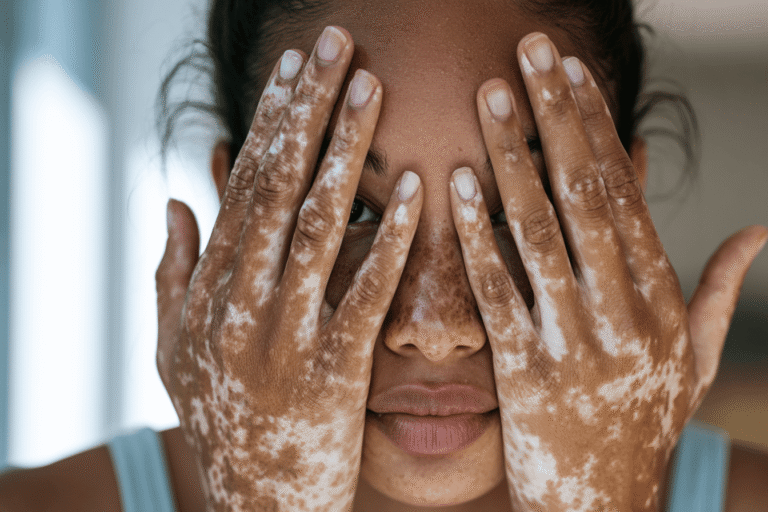
Vitiligo is a long term skin condition in which the cells that produce skin pigment become damaged or are lost. This causes clearly visible white or milky white patches on the skin. Vitiligo can affect any person, regardless of age, gender or natural skin colour, although the contrast is usually more noticeable in people with darker skin.[1–3]
Vitiligo is not an infection, and it cannot spread from one person to another through touch, food, clothing, sexual contact or shared personal items. It is also not caused by poor hygiene, and it is not a form of skin cancer. A person with vitiligo can live, work, marry and have children without transmitting the condition to other people.
Why Does the Skin Lose Its Natural Colour?
Normal skin contains specialised cells called melanocytes. These cells produce melanin, the natural pigment that gives colour to the skin, hair and parts of the eyes. When melanocytes stop functioning or are destroyed, the affected skin gradually loses its pigment and appears white.[1,2]
In many patients, especially those with nonsegmental vitiligo, the immune system mistakenly identifies melanocytes as harmful and attacks them. For this reason, nonsegmental vitiligo is primarily considered an autoimmune disease.[1,3,4] Autoimmune does not mean that your immunity is weak. It means that a part of the immune response has become misdirected against the body’s own pigment producing cells.
Vitiligo usually develops through more than one mechanism. Genetic susceptibility, oxidative stress inside melanocytes, abnormal immune signalling and environmental triggers may act together. Research has identified the involvement of immune pathways such as interferon gamma, CXCL10 and melanocyte specific T cells in the development and progression of vitiligo.[14–16]
Some immune cells may remain in previously affected skin even after repigmentation has occurred. These cells, known as tissue resident memory T cells, may contribute to recurrence in the same area after treatment is stopped.[17] This is one reason why long term maintenance may be required even when visible improvement has already occurred.
Is Every Type of Vitiligo Autoimmune?
Vitiligo is not a single uniform condition. Nonsegmental vitiligo, which commonly produces patches on both sides of the body, has the strongest recognised autoimmune association. Segmental vitiligo usually affects one side or a limited body region and often follows a different clinical pattern.[1–3]
The exact cause of segmental vitiligo is still not fully understood. Local immune changes, nerve related factors and differences within the affected skin may be involved. Therefore, a doctor should not assume that every patient has the same disease activity, cause or expected response to treatment.
Does Having Vitiligo Mean You Have Another Autoimmune Disease?
A person with vitiligo may have a higher likelihood of developing certain autoimmune conditions, particularly autoimmune thyroid disease. However, this does not mean that every patient with vitiligo will develop thyroid disease, diabetes, pernicious anaemia or another autoimmune disorder.[1,3,5]
When I assess a patient with vitiligo, I first review the pattern of the patches, the speed at which they are spreading, family history, thyroid related symptoms, general health and previous reports. Blood investigations are selected according to the patient’s symptoms, age, medical history and risk factors rather than ordering every autoimmune test for every person.
What Does an Autoimmune Diagnosis Mean for Treatment?
Understanding the autoimmune nature of vitiligo changes the treatment goal. Treatment is not limited to colouring the visible white patch. It may also need to control active immune damage, protect the remaining melanocytes, support gradual repigmentation and reduce the risk of recurrence.[1,3,4]
Dermatological treatment may include topical medicines, narrowband ultraviolet B phototherapy, targeted medicines and, in carefully selected stable cases, surgical procedures. Ayurvedic treatment for vitiligo should also begin only after confirming the diagnosis and determining whether the disease is active or stable.
From an Ayurvedic perspective, the patient is assessed individually according to the appearance and distribution of the patches, digestive strength, Dosha involvement, affected Dhatu, associated symptoms and overall health. This Ayurvedic assessment can guide personalised care, but it should not replace clinical examination, Wood’s lamp evaluation or necessary laboratory investigations.
What Should You Do After Noticing a White Patch?
If you notice a new white or pale patch, do not begin Bakuchi, strong herbal applications, steroid creams or ultraviolet exposure without confirming the diagnosis. Several conditions, including fungal infection, pityriasis alba, chemical leukoderma and post inflammatory colour loss, may resemble early vitiligo.
Early assessment is particularly important when new patches are appearing rapidly, existing patches are enlarging, small confetti like spots are developing or white areas are forming after scratching and friction. Identifying active vitiligo early may help the doctor choose treatment that controls further pigment loss before concentrating on repigmentation.[3,4]
Early Signs and Symptoms of Vitiligo
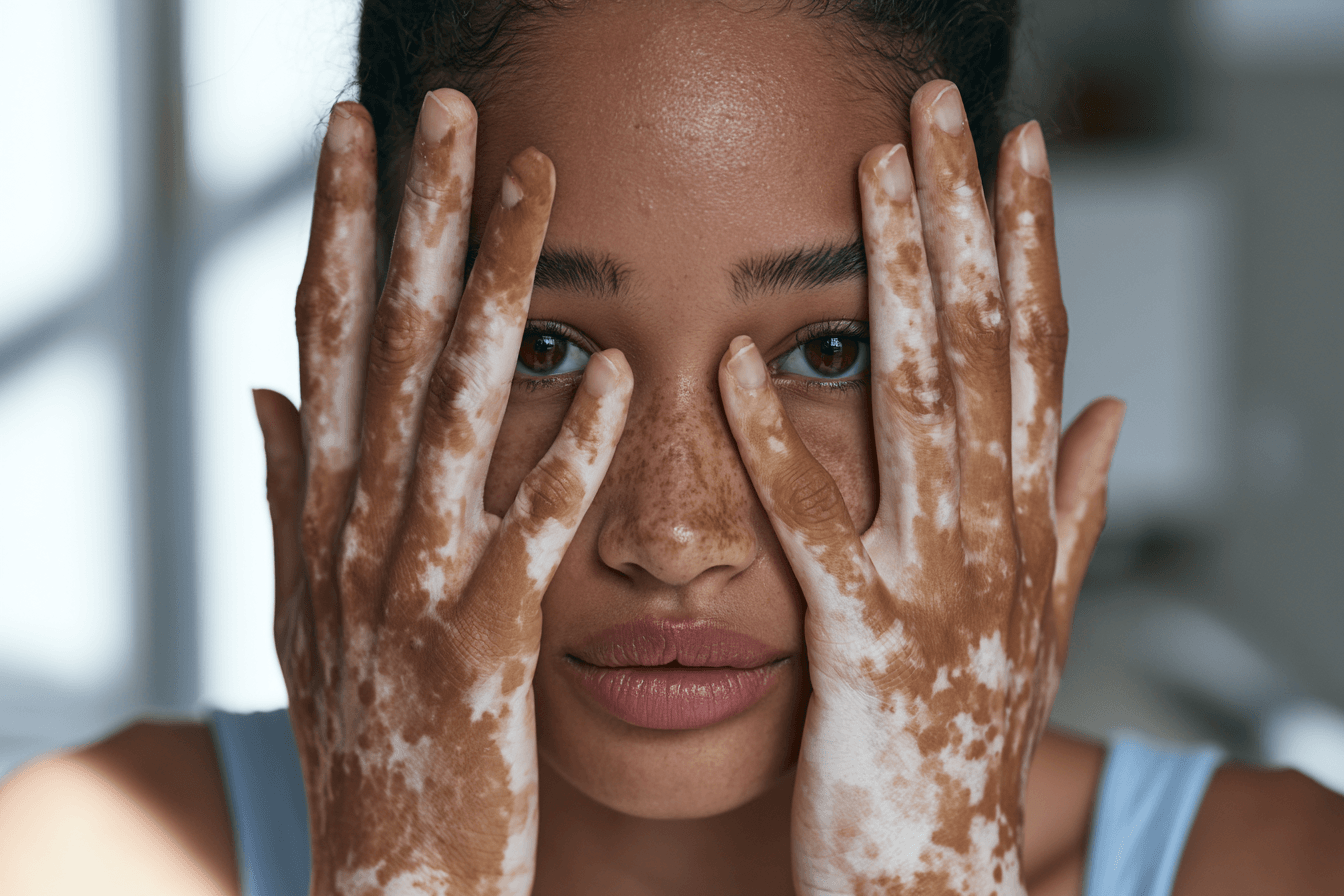
Vitiligo often begins with one or more pale or milky white patches that gradually become more clearly defined. The earliest change may be easy to miss, especially in people with lighter skin or when the patch develops on a covered body area. In darker skin, the contrast is usually more visible.
The patches are generally smooth and feel the same as the surrounding skin. They usually do not cause scaling, swelling or discharge. Most patients do not experience pain, although mild itching may occasionally occur before or during the appearance of a new patch.[1,3,7]
How Does Early Vitiligo Usually Look?
An early patch may first appear slightly lighter than the normal skin rather than completely white. Over time, it may become more distinct and lose most or all of its pigment. Some patches develop a clear border, while others have an uneven or blurred edge during the early stage.
Vitiligo may initially appear around the eyes, mouth, fingers, wrists, elbows, knees, feet, genital area or places exposed to repeated friction. It may also develop over an old injury, burn, scratch or surgical scar. This appearance of new vitiligo at sites of skin injury is known as the Koebner phenomenon and may suggest that the disease is active.[3,7,9]
Common Early Patterns
In nonsegmental vitiligo, white patches often appear on both sides of the body, although the earliest lesion may begin on only one side. For example, a person may first notice one patch on a hand and later develop a similar patch on the other hand.
Segmental vitiligo usually develops in a limited area on one side of the body. It may spread more quickly during the early months and then become stable. Because the treatment approach can differ, the pattern and distribution should be assessed carefully before beginning therapy.[1–3]
Signs That Vitiligo May Be Spreading
Rapidly appearing small white spots, sometimes described as confetti like depigmentation, can indicate active disease. A patch with three different shades of colour, called trichrome vitiligo, may also suggest ongoing pigment loss. New patches developing after scratching, tight clothing, repeated pressure or friction are additional signs of activity.[7,9]
When I examine a patient, I ask whether the number of patches has increased, whether existing patches have enlarged and whether new areas appeared after injury or rubbing. Photographs taken in the same lighting can help compare changes over time, but they should not replace clinical assessment.
Can Hair Also Lose Colour?
Hair growing from a vitiligo patch may remain dark during the early stage. In some patients, the hair later becomes grey or white. This is called leukotrichia.
White hair within a patch may indicate reduced pigment producing cells in the hair follicle. Such areas can be more difficult to repigment, although treatment response varies between patients. Eyebrows, eyelashes, beard hair and scalp hair may also be affected.
Does Vitiligo Cause Pain or Other Physical Symptoms?
Vitiligo itself usually does not cause physical weakness, fever, infection or damage to internal organs. The main visible symptom is loss of skin colour. However, the emotional effect can be significant, particularly when patches involve the face, hands or intimate areas.
Some people feel anxious when they notice a new patch because they fear that it will spread rapidly. Early medical evaluation can reduce uncertainty and help distinguish vitiligo from other causes of light coloured skin.
When Should You Seek an Early Evaluation?
You should arrange an examination when a white patch is enlarging, when several new patches appear within a short period or when the hair inside the patch becomes white. Assessment is also important when the patch develops around the eyes, lips, genital area, fingers or toes because these locations may require a more carefully planned treatment approach.
A new white patch does not always mean vitiligo. Fungal infection, pityriasis alba, post inflammatory hypopigmentation, chemical exposure and certain birthmarks may look similar. A dermatologist may use clinical examination and a Wood’s lamp to confirm whether the pigment is truly absent before treatment is started.[3,7,8]
Active Versus Stable Vitiligo

Knowing whether vitiligo is active or stable is one of the most important steps before treatment begins. Active vitiligo means that pigment loss is still continuing, while stable vitiligo means that the patches have not shown clear recent progression. This distinction affects the choice of medicines, phototherapy, external applications and surgical treatment.[2–4]
A patient may have only a few patches and still have active disease. Another person may have many old patches that have remained unchanged for years. Therefore, disease activity cannot be judged only by the total number or size of the white areas.
What Is Active Vitiligo?
Vitiligo is considered active when new patches are appearing or existing patches are becoming larger. The change may occur slowly over several months or rapidly within a few weeks.
Small confetti like white spots, an uneven hypopigmented border and patches with more than one shade of colour may indicate continuing pigment loss. New depigmentation developing after scratching, burns, pressure or repeated friction is known as the Koebner phenomenon and may also suggest active disease.[7,9]
Some patients notice that a patch is expanding only on one side. Others see several new areas appearing around the mouth, eyes, hands, feet or body folds. Comparing clear photographs taken in similar lighting can help identify these changes.
What Is Stable Vitiligo?
Stable vitiligo generally means that no new patches have appeared and that existing patches have not noticeably enlarged for a meaningful period. The borders usually remain unchanged, and there are no strong clinical signs of recent activity.
However, stability is not always permanent. Vitiligo may remain unchanged for months or years and later become active again. A stable appearance also does not guarantee that all immune activity inside the skin has completely stopped.[3,4]
There is no single duration that defines stability in every clinical situation. For routine medical treatment, the doctor reviews recent changes and activity signs. Before vitiligo surgery, a longer and more carefully documented period of stability is usually required because surgery performed during active disease may fail or be followed by new depigmentation.[3,4]
How Does a Doctor Assess Disease Activity?
When I assess activity, I ask when the most recent patch appeared, whether older patches have enlarged and whether pigment loss followed an injury or repeated friction. I also examine the borders of the lesions and look for confetti spots, trichrome areas and the Koebner phenomenon.
A structured method such as the Vitiligo Signs of Activity Score may be used to record visible signs associated with recent progression.[9] Wood’s lamp examination and standardized photographs can also help document changes that may not be obvious under normal room lighting.
A patient’s memory remains helpful, but it is not always sufficient. Slow enlargement may be missed when a patch is located on the back, scalp, genital region or another area that is difficult to observe. For this reason, repeated examination and photographic comparison may provide a more reliable assessment.
Why Does Activity Change the Treatment Plan?
The first goal in active vitiligo is usually to control further pigment loss. Dermatological treatment may include topical anti inflammatory medicines, narrowband ultraviolet B phototherapy and, in selected cases, systemic treatment. Repigmentation may begin during this phase, but preventing continued spread remains the immediate priority.[3,4]
Stable vitiligo allows greater attention to restoring pigment in persistent patches. Topical medicines and phototherapy may still be used, while surgical procedures can be considered for selected areas that have remained resistant to treatment.
When Ayurveda is included, the physician should also distinguish between an actively spreading condition and long standing stable depigmentation. Strong external applications or uncontrolled sunlight exposure should not be used merely because the patch appears old. The disease pattern, skin sensitivity, liver health and concurrent dermatological treatment must first be reviewed.
Can Active and Stable Patches Exist at the Same Time?
Yes. A patient may have old stable patches on the hands while new patches are appearing on the face or trunk. Vitiligo activity may therefore differ between body regions.
This mixed pattern is one reason why treatment should not be based on a single patch alone. The doctor must assess the complete skin surface and determine whether the disease is stable overall or only in selected areas.
Signs That Require Prompt Reassessment
You should seek an early review when several new white spots appear, an existing patch begins expanding or pigment is lost after minor injury. Rapid facial spread, involvement of the lips or fingertips and whitening of hair inside a patch also require careful assessment.
Treatment should not be stopped immediately after the first signs of repigmentation without medical advice. Even when colour has started returning, disease activity may persist, and maintenance treatment may be needed to reduce the risk of relapse.[3,4]
Segmental and Nonsegmental Vitiligo
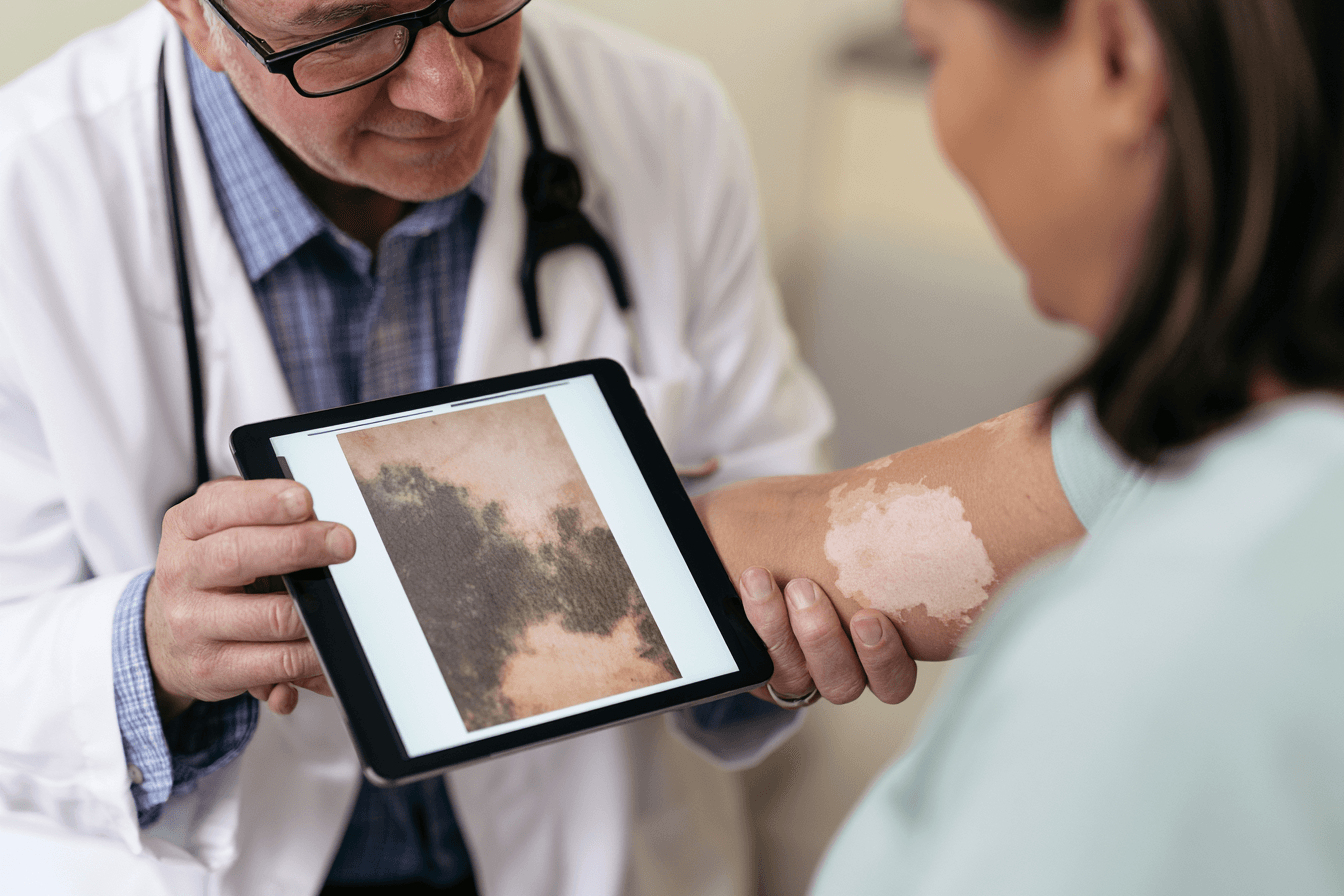
Vitiligo is mainly classified according to how the white patches are distributed and how the disease progresses. The two principal types are nonsegmental vitiligo and segmental vitiligo. Correct classification is important because the expected course, treatment plan and likelihood of recurrence may differ between them.[1–3]
What Is Nonsegmental Vitiligo?
Nonsegmental vitiligo is the most common form. The patches often appear on both sides of the body in a broadly symmetrical pattern. For example, a patient may develop white areas on both hands, around both eyes or on both knees.
The condition may begin with only one patch and become more symmetrical later. Commonly affected sites include the face, hands, fingers, wrists, elbows, knees, feet, body folds and areas around the mouth or genital region.[1–3]
Nonsegmental vitiligo often follows an unpredictable course. It may spread for a period, remain stable and then become active again. Some patients develop only a few localized patches, while others develop widespread pigment loss.
Because autoimmune mechanisms are strongly associated with nonsegmental vitiligo, the doctor may also ask about thyroid symptoms, family history and other autoimmune conditions. However, the presence of nonsegmental vitiligo does not mean that every patient has another autoimmune disease.
Common Patterns of Nonsegmental Vitiligo
Generalized vitiligo affects several body regions and often develops on both sides. Acrofacial vitiligo mainly involves the face, fingers, toes and areas around body openings. Mucosal vitiligo affects the lips, oral lining or genital mucosa, while universal vitiligo describes very extensive loss of skin pigment.[1,2]
These patterns may overlap. A patient who initially has acrofacial vitiligo may later develop patches on the trunk or limbs. For this reason, classification may be reviewed again during follow-up.
What Is Segmental Vitiligo?
Segmental vitiligo usually affects one side of the body or one limited skin region. The patches may follow a band-like or localized distribution and generally do not mirror the opposite side.[1–3]
This type often begins at a younger age. It may spread relatively quickly during the first months and then become stable. Hair within the affected area may turn white earlier than in nonsegmental vitiligo, particularly when the patch involves the scalp, eyebrow or eyelash region.
Segmental vitiligo is not simply an early stage of nonsegmental vitiligo. It has a different clinical pattern and may involve localized changes within the skin, nerves and immune response. Its exact mechanism has not been fully established.
How Does Segmental Vitiligo Differ from Nonsegmental Vitiligo?
The most visible difference is distribution. Nonsegmental vitiligo commonly becomes bilateral or symmetrical, whereas segmental vitiligo usually remains limited to one side or one defined region.
Nonsegmental vitiligo may remain active intermittently for many years. Segmental vitiligo often progresses during an earlier, shorter period and then stabilizes, although exceptions can occur.[1–3]
White hair within a patch is more frequently seen in segmental vitiligo. This can affect treatment response because repigmentation often begins from functioning melanocytes around the hair follicles. When those follicular pigment cells are also lost, the affected area may respond more slowly.
Can a Person Have Both Types?
A small number of patients may develop features of both segmental and nonsegmental vitiligo. This is called mixed vitiligo.[2]
For example, a person may first develop a one-sided segmental patch and later develop symmetrical patches on the hands or face. Such cases require careful examination because the disease activity and treatment response may not be the same in every affected area.
Why Correct Classification Matters for Treatment
When I assess a patient, I do not look only at the colour of the patch. I examine its distribution, borders, duration, progression, hair colour and whether similar lesions are present elsewhere on the body.
Active nonsegmental vitiligo may require treatment aimed at controlling immune activity and preventing new pigment loss. Topical medicines, narrowband ultraviolet B phototherapy and other medical options may be selected according to the extent and location of disease.[3,4]
Stable segmental vitiligo may respond to topical treatment or phototherapy, but longstanding patches with white hair can be resistant. In carefully selected stable cases, surgical repigmentation procedures may be considered after medical assessment.
Ayurvedic treatment should also be individualized according to the pattern and activity of the disease. A single medicine should not be prescribed in exactly the same way for localized stable segmental vitiligo and rapidly spreading nonsegmental vitiligo.
Can the Type Be Identified from a Photograph Alone?
A photograph may suggest the likely pattern, but it is not always enough for a final diagnosis. The doctor may need to examine the complete skin surface, compare both sides of the body and use a Wood’s lamp to identify less visible patches.
You should mention when the first patch appeared, how quickly it spread and whether hair within the area has turned white. These details help the physician distinguish the type of vitiligo and choose a more realistic treatment plan.[3,7]
Causes of Vitiligo: Genetics, Oxidative Stress and Autoimmune Mechanisms

Vitiligo does not usually develop because of one single cause. In most patients, genetic susceptibility, oxidative stress and an abnormal immune response interact over time. Environmental or physical triggers may then contribute to the first patch or cause an existing condition to become active.[1,14–17]
This means that vitiligo is not caused by poor hygiene, eating one particular food or touching another person who has white patches. It is also not the patient’s fault.
Is Vitiligo Genetic?
Vitiligo can occur more frequently in some families, but it is not inherited in a simple or predictable way. A person may carry several genes that increase susceptibility without ever developing the condition.[1,14]
Research has identified many genetic regions connected with immune regulation, inflammation and melanocyte function. These genes may make pigment-producing cells more vulnerable to stress or allow the immune system to react against them more easily.[14]
Having a parent or sibling with vitiligo increases the possibility of developing it, but it does not mean that every child will inherit the condition. Many patients have no known family history, while some people with a family history never develop white patches.
What Is Oxidative Stress in Vitiligo?
Melanocytes naturally produce pigment through a process that can also generate reactive molecules. Healthy cells normally neutralize these molecules with antioxidant systems. In vitiligo, this protective balance may become disturbed, allowing oxidative stress to build inside the melanocytes.[15]
Excessive oxidative stress can damage cell membranes, proteins, mitochondria and pigment-producing pathways. Injured melanocytes may become less able to produce melanin and more likely to release danger signals that attract immune activity.[1,15]
Oxidative stress does not mean that a patient simply needs antioxidant supplements. The process is complex, and current evidence does not show that vitamins or herbal antioxidants alone can reliably stop vitiligo or restore pigment in every patient.
How Does the Immune System Damage Melanocytes?
In nonsegmental vitiligo, specialised immune cells may mistakenly recognize melanocytes as targets. These cells release inflammatory signals and directly attack pigment-producing cells.[1,16]
The interferon gamma and CXCL10 pathway appears to play an important role in attracting melanocyte-targeting T cells into the skin. Research has also shown that some immune cells can remain within previously affected areas after visible repigmentation has occurred.[16,17]
These tissue-resident memory T cells may help explain why pigment can be lost again in the same location after treatment is reduced or stopped. For this reason, treatment may need to include both initial repigmentation and a carefully planned maintenance phase.[17]
What May Trigger Vitiligo in a Susceptible Person?
Some patients first notice vitiligo after repeated friction, scratching, burns, cuts or other skin injuries. This is known as the Koebner phenomenon and may indicate active disease.
Severe sunburn, exposure to certain industrial or household chemicals, repeated pressure and ongoing skin irritation may also contribute in susceptible people. Emotional stress is frequently reported before the onset or worsening of vitiligo, although it should not be described as the sole cause.
Hormonal changes, illness and other immune disturbances may sometimes occur around the same period, but an association does not prove that one event directly caused the disease.
Can Food Cause Vitiligo?
No single food has been proven to cause vitiligo. Traditional beliefs about eating milk with fish, sour foods or particular food combinations should not be presented as established medical causes without evidence.
When I assess a patient, I review diet because nutritional deficiency, digestive symptoms, diabetes, anaemia or other health problems may influence overall care. However, unnecessarily removing several food groups can lead to protein, vitamin or mineral deficiencies without stopping pigment loss.
Why Do Some Patients Develop Vitiligo While Others Do Not?
Two people may experience the same stress, injury or chemical exposure, but only one may develop vitiligo. The difference may depend on inherited susceptibility, melanocyte resilience, antioxidant defence, immune regulation and other individual factors.[1,14,15]
This is why treatment must be personalised. The physician should assess whether your vitiligo is active, which areas are affected, whether hair pigment is preserved, how long the patches have been present and whether thyroid or other autoimmune symptoms are present.
Understanding these mechanisms helps create realistic treatment goals. The aim is to control continuing melanocyte damage, encourage repigmentation where viable pigment cells remain and reduce the likelihood of recurrence.
White Patches That Can Be Mistaken for Vitiligo
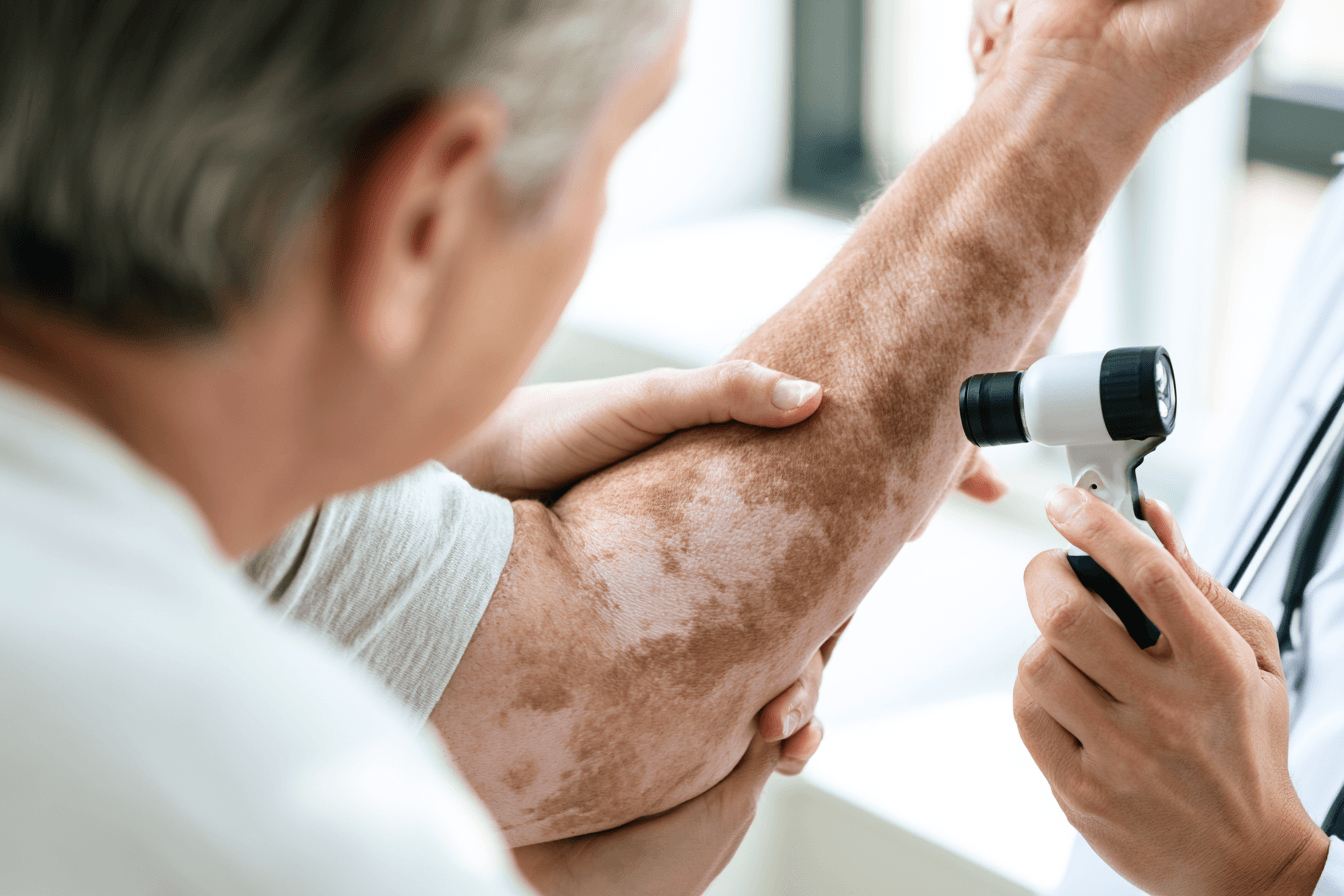
Not every white or pale patch is vitiligo. Several skin conditions can reduce skin colour temporarily or permanently, and some may look very similar during the early stage. Correct diagnosis is important because the treatment for a fungal infection, birthmark, inflammatory condition or chemical reaction is different from the treatment for vitiligo.[3,7,8]
Vitiligo patches are usually smooth, clearly lighter than the surrounding skin and free from scaling. However, appearance alone may not always confirm the diagnosis. The doctor may need to examine the patch under a Wood’s lamp and review its texture, borders, sensation, duration and pattern of spread.
Pityriasis Alba
Pityriasis alba commonly causes pale, slightly dry patches on the face, particularly in children and young adults. The patches are usually not completely white and may have fine scaling or indistinct borders.
They often become more noticeable after sun exposure because the surrounding skin becomes darker. Unlike vitiligo, pityriasis alba usually improves gradually with moisturising, sun protection and treatment of associated dry skin or eczema.
Tinea Versicolor
Tinea versicolor is a superficial fungal condition that can produce light, dark or pink patches, commonly on the chest, back, shoulders and neck. The patches may have fine powder like scaling and can sometimes cause mild itching.
A doctor may gently scrape the surface or perform a fungal test when the diagnosis is uncertain. Antifungal treatment may clear the infection, although normal skin colour can take several weeks or months to return.
Post Inflammatory Hypopigmentation
Skin may become lighter after eczema, psoriasis, burns, injury, infection or another inflammatory condition. This is called post inflammatory hypopigmentation.
The previous rash may already have healed by the time the patient notices the colour change. Pigment often returns gradually once the underlying inflammation is controlled, but recovery can take time.
Nevus Depigmentosus
Nevus depigmentosus is a pale birthmark that is usually present at birth or noticed during early childhood. It commonly remains limited to one area and grows in proportion with the child rather than spreading unpredictably.
The patch is generally lighter than normal skin but may not be completely depigmented. A history of long term stability helps distinguish it from progressive vitiligo.
Chemical Leukoderma
Repeated contact with certain chemicals may damage melanocytes and produce white patches. Possible sources include hair dyes, adhesives, rubber products, footwear, occupational chemicals and some cosmetic products.
The patches often begin at the site of repeated contact but may later appear in other areas. When I suspect chemical leukoderma, I ask about work exposure, cosmetics, hair colouring products, gloves, footwear and recently introduced skin products.
Stopping exposure may prevent further damage, although established patches may still require treatment. The patient should bring product names or photographs of ingredient labels during consultation whenever possible.
Idiopathic Guttate Hypomelanosis
Idiopathic guttate hypomelanosis causes multiple small, round white spots, usually on sun exposed areas such as the arms and legs. It is more common in middle aged and older adults.
The spots are generally small, stable and unrelated to autoimmune vitiligo. They do not usually join together into large patches, although they may become more numerous with age and sun exposure.
Lichen Sclerosus
Lichen sclerosus can produce pale or white skin, especially in the genital and anal areas. Unlike uncomplicated vitiligo, it may cause itching, burning, pain, skin thinning, tearing or discomfort during urination or sexual activity.
A genital white patch should not be assumed to be vitiligo from a photograph alone. Early medical examination is important because untreated lichen sclerosus may cause scarring and requires a different treatment plan.
Hypopigmented Patches with Reduced Sensation
A pale patch with numbness, reduced temperature sensation, weakness or thickened nearby nerves requires prompt clinical assessment. In countries where leprosy occurs, a hypopigmented patch with sensory loss must be carefully evaluated and should never be treated as ordinary vitiligo without examination.
Vitiligo generally does not cause loss of touch, pain or temperature sensation. Any sensory change is therefore an important diagnostic clue.
How Does a Doctor Confirm the Difference?
The physician examines whether the patch is completely white or only lighter than normal skin, whether scaling is present and whether the hair within it has changed colour. The distribution, speed of progression, previous inflammation, chemical exposure and skin sensation are also reviewed.[3,7]
A Wood’s lamp can make true depigmentation more clearly visible and may reveal additional vitiligo patches that are difficult to see in normal light. Dermoscopy, fungal examination or skin biopsy may be used in selected uncertain cases.[8]
You should avoid applying Bakuchi oil, strong herbal pastes, steroid creams or antifungal medicines before the diagnosis is confirmed. Incorrect treatment may irritate the skin, delay proper care or make the original appearance more difficult to assess.
Wood’s Lamp Examination and Diagnostic Tests for Vitiligo
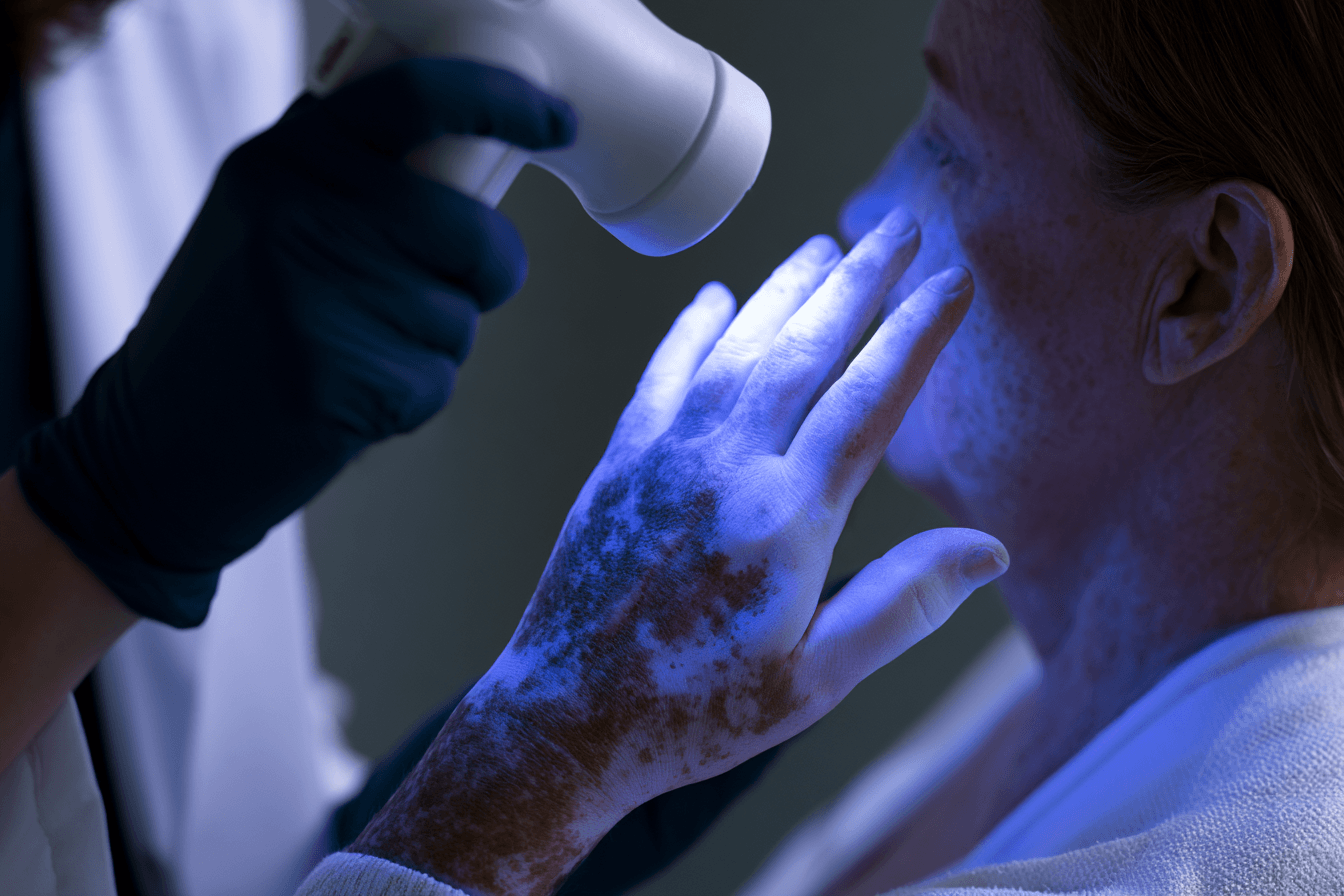
Vitiligo is usually diagnosed through a careful skin examination and the patient’s clinical history. In many cases, an experienced dermatologist can recognise the typical pattern without extensive testing. A Wood’s lamp examination is especially useful when the patches are faint, newly developing or difficult to see under normal room lighting.[3,5,8]
The purpose of testing is not only to confirm pigment loss. It also helps distinguish vitiligo from fungal infection, post inflammatory colour change, chemical leukoderma, pale birthmarks and other conditions that may look similar.
What Is a Wood’s Lamp Examination?
A Wood’s lamp is a handheld device that emits ultraviolet A light. The examination is usually performed in a dark room so that changes in skin colour can be seen more clearly.
True vitiligo patches generally become brighter and more sharply defined under the lamp because melanin is absent or markedly reduced. Very early patches that appear only slightly pale in daylight may become much easier to identify during this examination.[3,8]
The test is painless, noninvasive and usually takes only a few minutes. The lamp does not burn the skin and is not the same as ultraviolet phototherapy.
Why Is a Wood’s Lamp Useful?
Wood’s lamp examination can help confirm whether a patch is completely depigmented or only lighter than the surrounding skin. It may also reveal small or hidden patches that are not clearly visible in ordinary light, particularly in people with lighter skin.[3,8]
When I examine a patient, I may use the Wood’s lamp to check the face, hands, feet, trunk and other areas where subtle pigment loss may be present. This can help determine the true extent of disease and establish a more accurate baseline before treatment begins.
The lamp can also help document whether the borders of a patch are stable or gradually expanding. However, it should be interpreted together with the patient’s history and physical examination rather than being used as the only diagnostic test.
Can a Wood’s Lamp Confirm Every Case?
A Wood’s lamp is helpful, but it is not perfect. Some conditions may also appear lighter or show a characteristic colour under ultraviolet light. Skin products, lint, deodorants, creams and recent washing can sometimes affect the appearance.
The doctor therefore also checks the texture of the patch, the presence of scaling, hair colour, skin sensation and the pattern of distribution. A patch that is painful, scaly, inflamed or associated with reduced sensation may require a different investigation.
What Other Tests May Be Used?
Dermoscopy may be used to examine the borders of a vitiligo patch in greater detail. It can help identify residual pigment, perifollicular changes and features that suggest whether the disease is active or stable.[8]
Standardised clinical photographs are also valuable. Photographs should be taken from the same distance and under similar lighting so that changes in patch size and repigmentation can be compared during follow up.
A fungal scraping or potassium hydroxide examination may be performed when tinea versicolor is suspected. This is particularly relevant when the patch has fine scaling, mild itching or appears mainly on the chest, back or shoulders.
A skin biopsy is rarely needed in typical vitiligo. It may be considered when the diagnosis remains uncertain, when there is unusual inflammation or when another skin disease must be excluded.[3,5]
Are Blood Tests Required for Every Patient?
Blood tests do not directly confirm vitiligo because there is no single blood marker that proves whether a white patch is vitiligo. Laboratory investigations are mainly used to identify associated health conditions when the history, examination or family background suggests a higher risk.[3,5]
Thyroid function tests may be considered when the patient has symptoms such as unexplained weight change, fatigue, hair loss, constipation, palpitations, neck swelling or a family history of autoimmune thyroid disease. Additional tests may be selected when there are symptoms of diabetes, vitamin B12 deficiency, anaemia or another autoimmune condition.
I do not recommend ordering every autoimmune test for every patient without a clinical reason. Unnecessary testing can increase cost and may produce borderline results that cause anxiety without changing the treatment plan.
What Information Should You Share During the Examination?
You should tell the doctor when the first patch appeared, whether new patches are still developing and whether existing patches have enlarged. It is also important to mention skin injury, chemical exposure, hair dye use, repeated friction and any family history of vitiligo or autoimmune disease.
The doctor should know about previous steroid creams, herbal applications, Bakuchi preparations, phototherapy and supplements. Some products can temporarily change the appearance of the skin or cause irritation that makes diagnosis more difficult.
Why Accurate Baseline Documentation Matters
Clear baseline photographs and a record of affected areas make later treatment assessment more reliable. Without documentation, gradual spreading or early repigmentation may be difficult to judge accurately.
Repigmentation often begins as small brown dots around hair follicles or as pigment returning from the edges of a patch. Wood’s lamp examination and repeated photographs can help distinguish true pigment recovery from temporary redness, tanning or changes caused by lighting.[3,8]
A correct diagnosis should come before any strong external application, oral Bakuchi preparation or ultraviolet exposure. Once vitiligo is confirmed and its activity is assessed, the physician can plan treatment according to the type, location, duration and extent of the disease.
Thyroid, Diabetes, Anaemia and Other Autoimmune Conditions Associated with Vitiligo
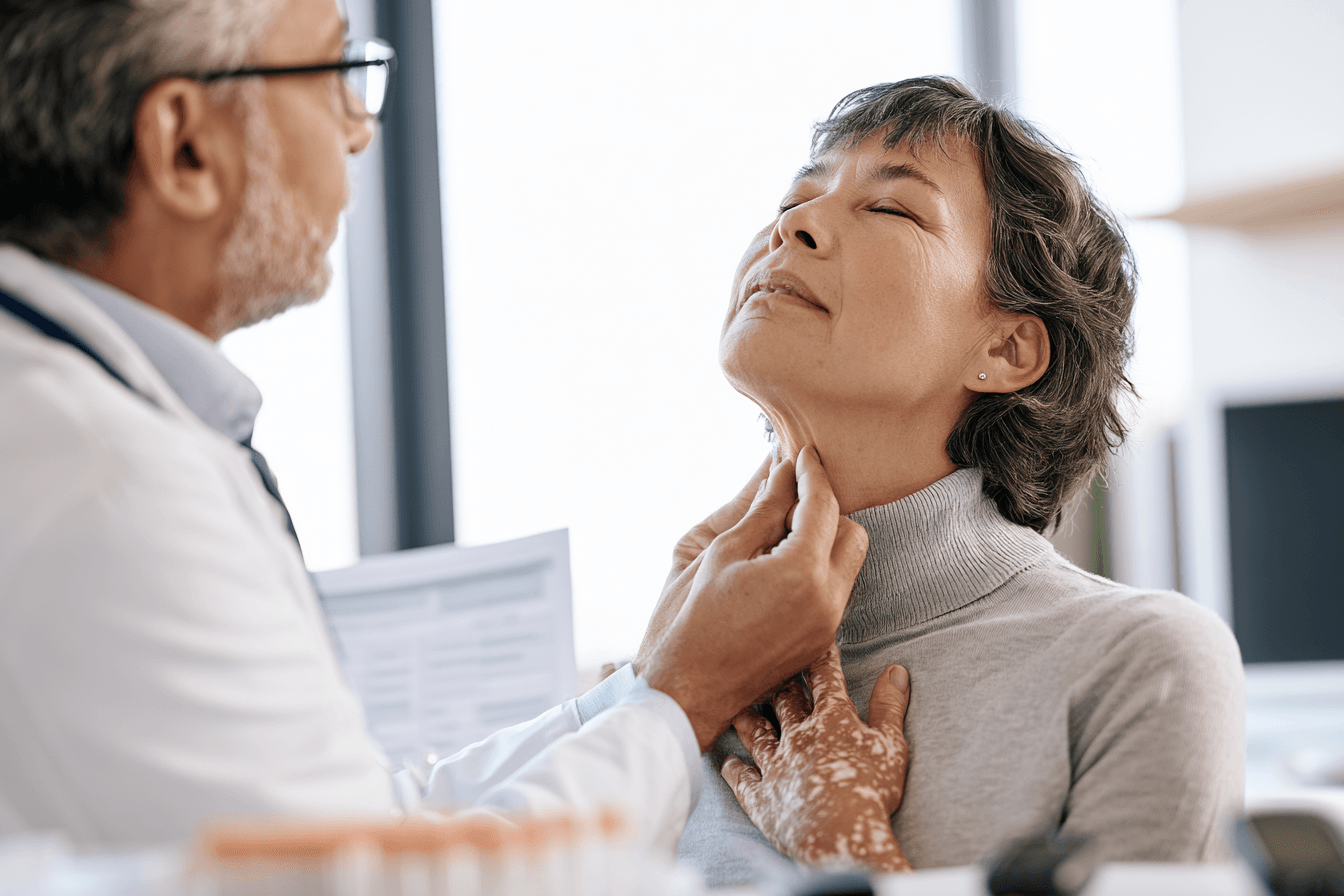
Vitiligo mainly affects skin pigmentation, but some patients also have another autoimmune condition. The association is strongest with autoimmune thyroid disease, although diabetes, pernicious anaemia, alopecia areata and a few other immune related disorders may also occur more often than in the general population.[5,10–13]
This does not mean that every person with vitiligo has an internal disease. Most patients should not become anxious simply because a white patch has been diagnosed. Testing should be selected according to symptoms, age, family history, examination findings and individual risk.
Why Is Thyroid Disease Commonly Checked in Vitiligo?
Autoimmune thyroid disease is the most frequently reported autoimmune association with vitiligo. The immune system may produce antibodies that affect the thyroid gland, leading to reduced or, less commonly, increased thyroid function.[10,11]
Possible symptoms of reduced thyroid function include tiredness, constipation, unexplained weight gain, dry skin, hair loss, feeling unusually cold and menstrual changes. Increased thyroid activity may cause weight loss, sweating, tremors, anxiety, palpitations and heat intolerance.
When I assess a patient with vitiligo, I ask about these symptoms and review any family history of thyroid disease. Thyroid stimulating hormone, commonly called TSH, is often the first blood test considered. Free T4 and thyroid antibodies such as anti thyroid peroxidase antibodies may be added when the history, examination or initial results make them relevant.[5,11]
A positive thyroid antibody result does not always mean that treatment is immediately required. Some people have antibodies while their thyroid hormone levels remain normal. Such patients may need periodic observation rather than unnecessary medicine.
Is Vitiligo Associated with Diabetes?
Research has reported an association between vitiligo and diabetes, particularly autoimmune type 1 diabetes.[10,12] Type 2 diabetes may also be present in some patients, but it is influenced by common factors such as age, body weight, diet, family history and physical activity.
Symptoms that may justify blood glucose testing include excessive thirst, frequent urination, unexplained weight loss, recurrent infections, slow wound healing and persistent fatigue. Fasting blood glucose or HbA1c may also be appropriate when the patient has obesity, a strong family history or other metabolic risk factors.
Vitiligo itself does not automatically cause diabetes. A patient should not be told that every white patch requires repeated glucose testing without considering the complete clinical picture.
What Is the Connection with Anaemia and Vitamin B12 Deficiency?
The term anaemia includes several different conditions. Vitiligo is particularly associated with pernicious anaemia, an autoimmune disorder in which the body cannot absorb vitamin B12 properly.[10,13]
Possible symptoms include unusual tiredness, shortness of breath, paleness, dizziness, tongue soreness, numbness, tingling, poor balance or memory difficulty. When these features are present, the doctor may consider a complete blood count, vitamin B12, folate and other tests.
Iron deficiency anaemia can also occur in a person with vitiligo, but it may result from inadequate diet, menstrual blood loss, digestive disease or another cause rather than from vitiligo itself. CBC, serum ferritin and iron studies should therefore be interpreted according to the patient’s symptoms and history.
This distinction is important before prescribing iron containing medicines or Loha based Ayurvedic preparations. Iron should not be given automatically merely because the patient has vitiligo.
What Other Autoimmune Conditions May Occur?
Some patients with vitiligo may also develop alopecia areata, in which round areas of hair loss appear on the scalp, beard or other body regions. Other reported associations include rheumatoid arthritis, psoriasis, Addison’s disease and certain connective tissue disorders.[10,13]
These conditions are much less common than thyroid disease. Broad autoimmune screening without symptoms is usually unnecessary and may produce confusing borderline results.
You should inform the physician if you have persistent joint swelling, unexplained muscle weakness, recurrent mouth ulcers, marked hair loss, long term digestive symptoms, unusual skin darkening, low blood pressure or another diagnosed autoimmune disease. The doctor can then decide whether a focused investigation or specialist referral is needed.
Should Every Patient Undergo a Large Blood Test Panel?
No. Blood tests do not measure the severity of vitiligo and cannot predict exactly how quickly a patch will repigment. Routine testing should be guided by clinical need rather than by ordering the same extensive panel for every patient.[3,5]
A young patient with a few stable patches, no symptoms and no family history may require fewer investigations. A patient with rapidly spreading nonsegmental vitiligo, fatigue, weight change, menstrual disturbance or a strong autoimmune family history may need a broader assessment.
When I plan treatment, I review existing reports before ordering new tests. This avoids unnecessary cost and helps ensure that each investigation has a clear purpose.
Why Associated Conditions Matter During Treatment
An untreated thyroid disorder, uncontrolled diabetes, vitamin deficiency or anaemia may affect energy, skin health and the patient’s ability to continue treatment consistently. Diabetes may also influence the selection of an avaleha because many traditional confections contain jaggery, sugar or honey.
Liver, kidney and metabolic health also become important when oral Bakuchi, mineral preparations or long term medicines are being considered. The treatment plan should therefore address the person’s overall health rather than concentrating only on the visible white patches.
Finding an associated condition does not mean that it directly caused every vitiligo patch. It means that both problems should be managed appropriately so that the patient receives safer and more complete care.
Current Dermatological Treatment for Vitiligo
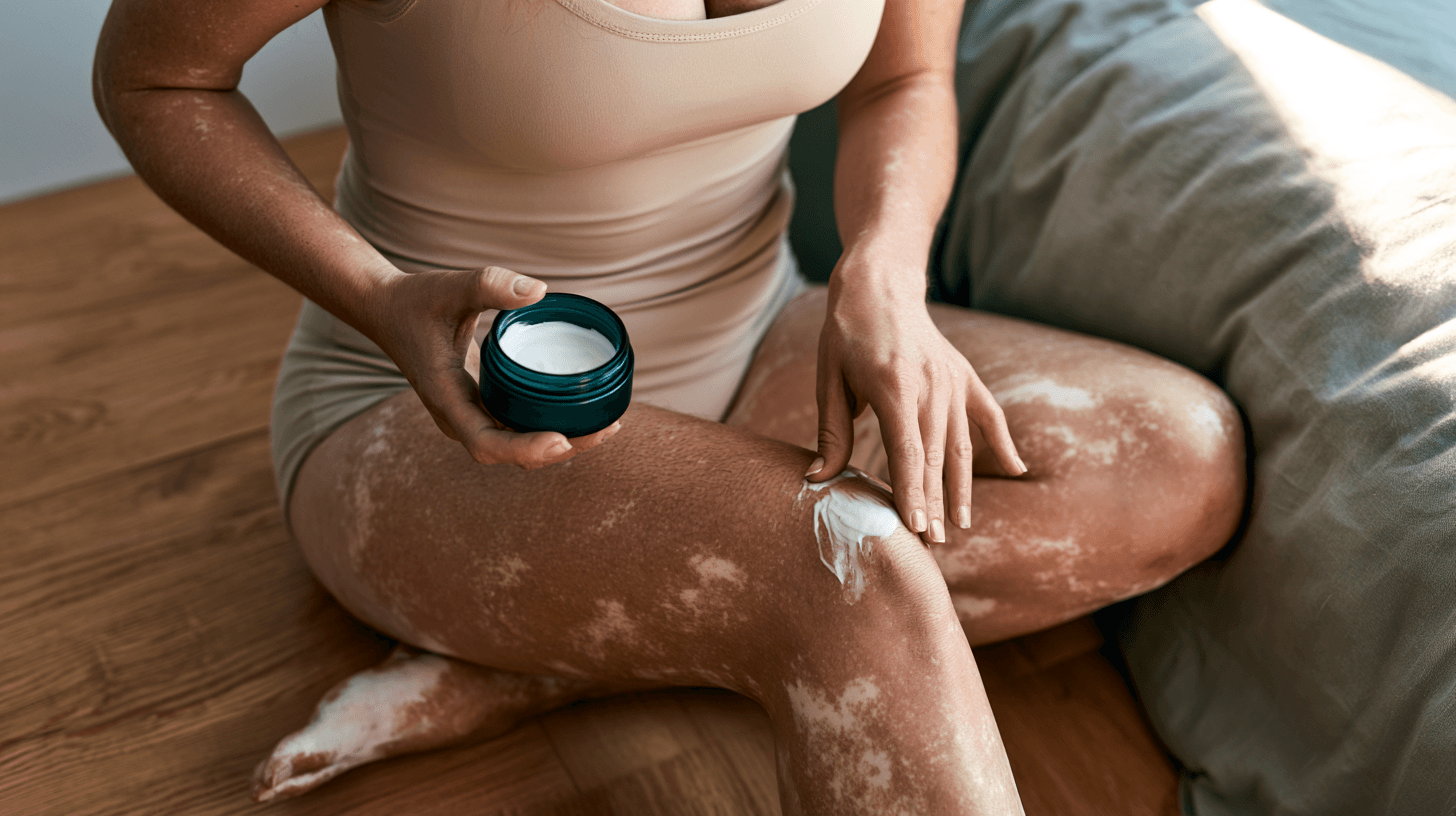
Modern vitiligo treatment has two main goals. The first is to slow or stop continuing pigment loss, especially when new patches are appearing. The second is to stimulate repigmentation in areas where functioning melanocytes remain.[4–6]
No single treatment is equally effective for every patient. The dermatologist considers the patient’s age, vitiligo type, disease activity, affected body surface, location of the patches, hair colour within the lesions, previous treatment and other health conditions before selecting therapy.
Topical Corticosteroids
Topical corticosteroids are commonly used for limited vitiligo, particularly when patches are active or have appeared recently. They reduce inflammation and may help protect the remaining melanocytes from further immune damage.[4–6]
The strength of the steroid depends on the body area and the patient’s age. A stronger preparation may be used for thicker skin on the trunk or limbs, while the face, eyelids, genital region and body folds require greater caution.
Topical steroids should not be applied continuously for an indefinite period. Excessive or incorrect use may cause skin thinning, stretch marks, visible blood vessels, acne like eruptions or changes in local skin colour. Treatment is therefore often given in limited courses or intermittent schedules with regular examination.
Tacrolimus and Pimecrolimus
Topical calcineurin inhibitors such as tacrolimus and pimecrolimus reduce local immune activity without causing the same degree of skin thinning associated with corticosteroids. They are particularly useful for the face, eyelids, neck and body folds.[4–6]
Mild burning, warmth or itching may occur during the first few days of application. These effects often become less noticeable as the skin adjusts.
Tacrolimus may be prescribed alone for small facial patches or combined with phototherapy when a stronger repigmentation response is required. After pigment has returned, intermittent maintenance application may sometimes be advised to reduce the likelihood of recurrence.
Ruxolitinib Cream for Nonsegmental Vitiligo
Ruxolitinib cream is a topical Janus kinase inhibitor that acts on immune signalling involved in melanocyte destruction. It is an approved treatment for nonsegmental vitiligo in patients aged 12 years and older in several countries, although the exact indication and availability differ by region.[19,20]
In two phase 3 trials involving 674 adults and adolescents, approximately 30 percent of patients using ruxolitinib cream achieved at least 75 percent improvement in facial vitiligo after 24 weeks. The corresponding response in the control groups was approximately 8 to 13 percent. Improvement continued in some patients with treatment extended to 52 weeks.[19]
Under the United States prescribing information, a thin layer is applied twice daily to nonsegmental vitiligo affecting up to 10 percent of the body surface. Meaningful repigmentation may require treatment for longer than 24 weeks, and the patient should be reassessed when the response remains unsatisfactory.[20]
Application site acne, itching and redness are among the more commonly reported adverse effects. Ruxolitinib also carries important JAK inhibitor safety warnings, so the doctor should review infection history, other immune suppressing treatment and individual risk factors before prescribing it. Its combined use with another JAK inhibitor, a therapeutic biologic or a potent immunosuppressant is generally not recommended under the product label.[20]
Ruxolitinib should not be described as a rapid or permanent cure. The face often responds better than the hands and feet, and continued treatment may be required before a visible difference becomes meaningful.
Narrowband UVB Phototherapy
Narrowband ultraviolet B phototherapy is one of the main treatments for widespread, active or treatment resistant vitiligo. The patient stands inside a medical light unit or receives treatment through a smaller device that delivers a controlled ultraviolet B dose.
Phototherapy is usually administered repeatedly over several months. The initial dose is selected according to skin type and previous response, and it is gradually adjusted to produce safe stimulation without causing a burn.[4–6,21,22]
A systematic review of 35 prospective studies involving 1,428 patients found that response generally increased with longer treatment. The face and neck showed the strongest average repigmentation, while the hands and feet responded less consistently.[22]
Narrowband UVB may be combined with topical corticosteroids, tacrolimus or another appropriate topical treatment. Combination therapy may be more useful than relying on light treatment alone in selected patients.
Temporary redness, dryness, itching or tanning of the surrounding skin may occur. Repeated treatment should be supervised so that the dose can be reduced when excessive redness, pain or blistering develops.
Targeted Phototherapy and Excimer Treatment
An excimer laser or excimer lamp delivers targeted ultraviolet B light to individual patches. It may be useful when vitiligo is limited and the doctor wants to avoid exposing unaffected skin.
Targeted treatment can be practical for facial, neck or localized body lesions but becomes less suitable when numerous or widespread patches are present. Several treatment sessions are generally required, and the response still depends on disease duration, body location and the presence of functioning hair follicles.[4–6]
PUVA combines a photosensitising substance called psoralen with ultraviolet A exposure. It is now used less frequently in many centres because narrowband UVB usually has a more convenient safety profile and does not require oral psoralen.
Oral Treatment for Rapidly Spreading Vitiligo
When vitiligo is spreading rapidly, a dermatologist may consider a short or intermittent course of an oral corticosteroid to reduce immune activity. The immediate aim is usually to stop new pigment loss rather than to repigment every existing patch.
Systemic corticosteroids are not suitable for unrestricted long term use. They can affect blood glucose, blood pressure, sleep, mood, bones, eyes and resistance to infection. The expected benefit must therefore be balanced against the patient’s individual risk.
Oral JAK inhibitors are also changing the treatment landscape. In 2026, oral upadacitinib received a European Union indication for nonsegmental vitiligo in adults and adolescents aged 12 years and older who are candidates for systemic therapy.[25,26] Its approval status, eligibility criteria and availability may be different in India, the United States, the United Kingdom, Canada, Australia and other countries.
Upadacitinib is not the same as topical ruxolitinib. It acts throughout the body and requires specialist screening for infections and other important risks, together with appropriate clinical and laboratory monitoring.
Surgery for Stable Vitiligo
Vitiligo surgery may be considered when a patch has remained stable but has not repigmented sufficiently with medicines or phototherapy. It is most often considered for localized stable segmental vitiligo and selected areas of stable nonsegmental vitiligo.[24]
Surgical techniques include small skin grafts, suction blister grafting and transplantation of epidermal cells or melanocyte and keratinocyte suspensions. These procedures transfer pigment producing cells from normally coloured skin to the depigmented area.
The disease must be carefully assessed for stability before surgery. A patient who is still developing new patches, enlarging old patches or showing a strong Koebner response is usually not an appropriate surgical candidate because the transplanted pigment may be lost or new white areas may develop.[24]
Surgery does not remove the underlying tendency to vitiligo. Results also vary according to the body area, technique, surgeon’s experience and postoperative treatment. Infection, scarring, uneven colour, cobblestone texture, donor site changes and failure of pigmentation are possible complications.
How Is the Right Treatment Selected?
When I plan treatment, I first determine whether the disease is active or stable. I then assess how much skin is involved, which areas are affected, whether hair inside the patches remains dark and whether the patient has previously responded to topical treatment or phototherapy.
A few recent facial patches may be managed differently from rapidly spreading generalized vitiligo. Longstanding patches on the fingers with white hair also require different expectations from early patches on the face or trunk.
Treatment frequently involves more than one method. A topical medicine may control local immune activity, phototherapy may stimulate melanocyte migration and maintenance treatment may help preserve the returned pigment. The plan should be reviewed through clinical examination and comparable photographs rather than continuing the same treatment without measuring progress.[4–6]
Can Dermatological and Ayurvedic Treatment Be Used Together?
Combined care may be considered, but every treating doctor should know all medicines and external products being used. This is especially important when an Ayurvedic plan contains Bakuchi or another photosensitising ingredient.
Bakuchi should not be combined casually with narrowband UVB, PUVA, an excimer device or uncontrolled sunlight exposure. The combined photosensitising effect may cause severe redness, burns or blistering if the timing and ultraviolet dose are not medically coordinated.
You should also avoid applying several steroid, herbal and cosmetic products to the same patch without supervision. When irritation develops, it may become difficult to identify which product caused the reaction.
A well planned treatment programme does not require rejecting one system of care. It requires an accurate diagnosis, control of active disease, safe coordination of medicines and realistic monitoring of repigmentation over time.
Ayurvedic Understanding of Shwitra

Ayurveda commonly discusses vitiligo under the terms Shwitra, Kilasa and Daruna. These descriptions refer to nonexudative changes in skin colour, but every pale or white patch mentioned in classical literature should not automatically be equated with modern vitiligo. The diagnosis must first be confirmed by examining the appearance, texture, sensation, distribution and activity of the patches.[31–33]
The classical approach does not view Shwitra as only a surface colour problem. It considers the patient’s Dosha pattern, affected Dhatu, digestive and metabolic state, disease duration, strength and associated symptoms before treatment is planned.
Classical Description of Shwitra
Sanskrit
कुष्ठैकसम्भवं श्वित्रं किलासं दारुणं च तत् ।
निर्दिष्टमपरिस्रावि त्रिधातूद्भवसंश्रयम् ॥३७॥
Transliteration
Kuṣṭhaika sambhavaṃ śvitraṃ kilāsaṃ dāruṇaṃ ca tat।
Nirdiṣṭam aparisrāvi tridhātūdbhava saṃśrayam॥37॥
Simple translation
Shwitra, also called Kilasa or Daruna, shares some causative and pathological features with Kushtha. It is described as a nonexudative condition involving the three Dhatus of Rakta, Mamsa and Medas.
Text reference: Ashtanga Hridaya, Nidana Sthana, Kushtha Shwitra Krimi Nidana Adhyaya, Chapter 14, Verse 37.[31]
The word aparisravi means that the lesion generally does not discharge fluid. This helps distinguish the classical description of Shwitra from wet, ulcerated or actively oozing skin diseases. A typical vitiligo patch is also smooth and nonexudative, although modern clinical confirmation remains essential.
How Ayurveda Views the Development of Shwitra
Ayurveda describes disease as developing when causative factors disturb the Doshas and affect vulnerable tissues. In Shwitra, the disturbance is understood to involve the skin and deeper tissue support related to Rakta, Mamsa and Medas.[31]
Rakta is considered important in maintaining the normal colour and nourishment of the skin. Mamsa provides structural support, while Medas contributes to lubrication, stability and tissue metabolism. The classical reference to these Dhatus does not mean that a blood test, muscle scan or cholesterol result directly diagnoses Shwitra. These are Ayurvedic functional concepts assessed through the complete clinical picture.
When I examine a patient, I do not identify the condition merely as a “skin Dosha.” I assess how the patches look, whether they are spreading, whether the hair inside them remains dark, how long they have been present and whether digestive, metabolic or immune related symptoms are also present.
Role of Vata, Pitta and Kapha
The appearance of a Shwitra patch may vary according to the relative involvement of Vata, Pitta and Kapha. This assessment is used to individualise treatment rather than to place every patient into one fixed category.
Vata predominance may be considered when the patches are dry, rough, irregular or rapidly changing. Pitta involvement may be suspected when the skin is sensitive, reddish at the margins, burning or easily irritated. Kapha predominance may be considered when the patches are thick appearing, clearly white, longstanding or slow to change.
Many patients show a mixed pattern. The Dosha assessment should therefore be based on the patches, digestion, bowel habits, appetite, sleep, skin sensitivity, constitution and overall health rather than on skin colour alone.
Is Shwitra the Same as Kushtha?
Classical texts discuss Shwitra near the broader subject of Kushtha because some causative factors, Dosha disturbances and treatment principles overlap. However, Shwitra is described separately and has its own characteristic absence of normal skin colour.[30–33]
The word Kushtha in Ayurvedic literature is a broad category covering several skin disorders. It should not always be translated as modern leprosy. Similarly, every Kushtha medicine should not automatically be prescribed for vitiligo.
A physician must first determine whether the patient has true vitiligo, a fungal condition, post inflammatory hypopigmentation, chemical leukoderma, lichen sclerosus or another disorder. Applying the wrong classical label may lead to inappropriate use of strong herbs, minerals or external preparations.
Importance of Varna and Skin Pigmentation
Ayurveda uses the term Varna for the normal appearance and complexion of the skin. Healthy Varna depends on proper tissue nourishment, balanced Doshas, suitable digestion and normal functioning of the skin.
In Shwitra, loss of normal Varna is the most visible sign, but treatment is not limited to covering the white area. The physician evaluates whether disease activity is continuing, whether the surrounding skin is inflamed and whether sufficient pigment producing capacity may remain within the patch.
Modern medicine explains the visible colour loss through damage or disappearance of melanocytes. Ayurveda explains the patient through a different clinical framework involving Dosha, Dhatu, Agni and Srotas. These systems may be used together, but their terms should not be presented as exact scientific equivalents.
Why Digestive and Metabolic Assessment Matters
Ayurvedic treatment commonly includes an assessment of Agni because digestion and tissue metabolism influence how food and medicines are processed. Poor appetite, heaviness after meals, bloating, irregular bowel movements or an unsuitable diet may change the treatment plan.
This does not mean that indigestion alone causes vitiligo. It means that a patient who cannot digest or tolerate a formulation may not benefit from it safely. Strong herbs such as Bakuchi and Chitraka require particular caution when the patient has gastritis, poor appetite, liver abnormalities or marked skin sensitivity.
Classical Causes Should Be Interpreted Carefully
Ayurvedic texts describe unsuitable diet, incompatible habits, repeated dietary errors and disturbances in personal conduct among the possible contributing factors to Kushtha and Shwitra. These descriptions form part of the classical understanding of disease.[32,33]
They should not be used to blame the patient or suggest that vitiligo developed because of a moral failing. Modern evidence shows that genetic susceptibility, oxidative stress and autoimmune activity are central to nonsegmental vitiligo.[1,14–17]
A responsible Ayurvedic explanation should therefore respect the classical framework while avoiding fear, guilt or unsupported claims about one particular food combination.
What Ayurvedic Assessment Means for the Patient
When you consult for Ayurvedic treatment for vitiligo, the physician should first confirm the diagnosis and determine whether the disease is active or stable. The assessment should include the type of vitiligo, affected body areas, duration, hair colour within the patches, digestive strength, existing illnesses and all current medicines.
Two patients with similar looking white patches may not receive the same treatment. A child with recent facial vitiligo, an adult with rapidly spreading nonsegmental disease and a person with longstanding stable patches on the fingers require different treatment priorities and expectations.
The Ayurvedic understanding of Shwitra therefore supports personalised treatment. It should work alongside accurate diagnosis, appropriate investigations, treatment safety and objective monitoring of changes rather than replacing them.
Dosha, Dhatu, Agni, Ama and Srotas Assessment in Vitiligo
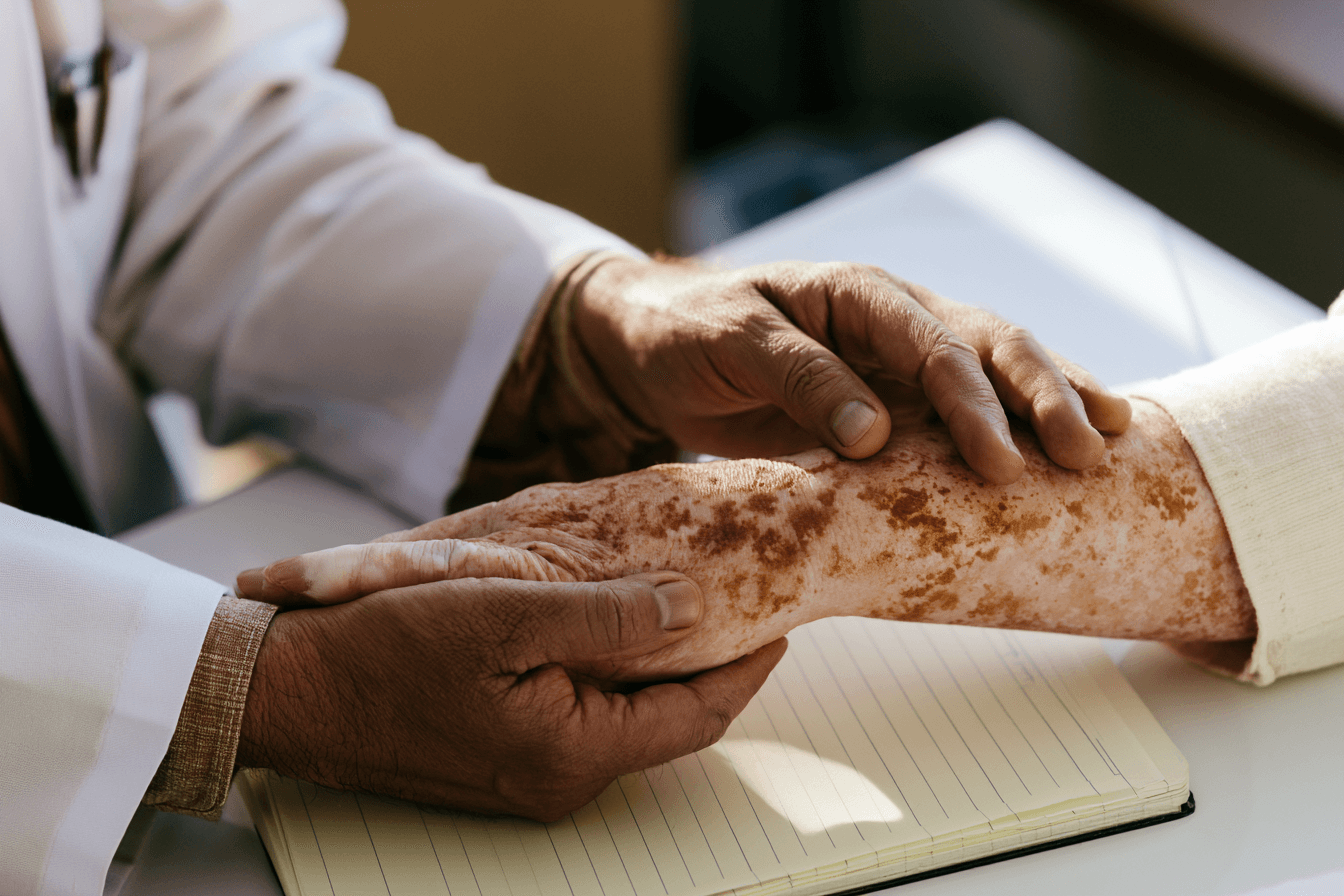
Ayurvedic treatment for vitiligo should not begin with the assumption that every white patch requires the same medicine. Two patients may have similar looking lesions but differ in disease activity, digestion, skin sensitivity, associated illnesses and tolerance to treatment. These differences are assessed through Dosha, Dhatu, Agni, Ama and Srotas before a personalised plan is prepared.[31,34,35]
These Ayurvedic concepts describe functional patterns within the body. They should not be presented as direct equivalents of antibodies, cytokines, thyroid hormones, oxidative stress markers or other modern laboratory findings.
How Dosha Involvement Is Assessed
Vata, Pitta and Kapha may contribute in different proportions. The physician evaluates the colour, texture, border, sensitivity, rate of spread and duration of the patches together with the patient’s overall constitution and symptoms.
Vata involvement may be suspected when the patches are dry, irregular, rapidly changing or associated with variable digestion and disturbed sleep. Pitta features may include redness around the lesion, burning, heat sensitivity, inflammation or intolerance to strong external applications. Kapha involvement may be considered when patches are longstanding, distinctly pale, slowly changing or associated with heaviness and sluggish digestion.
Most patients do not fit into only one Dosha category. When I assess a patient, I identify the dominant pattern while also considering whether a second Dosha is influencing disease activity or medicine tolerance.
Which Dhatus Are Considered in Shwitra?
Classical descriptions connect Shwitra with Rakta, Mamsa and Medas.[31] Rakta is considered in relation to skin colour, circulation and tissue nourishment. Mamsa provides structural support, while Medas contributes to lubrication, stability and deeper tissue metabolism.
This does not mean that abnormal blood, muscle or cholesterol reports confirm Shwitra. Dhatu assessment is made through Ayurvedic examination, while modern investigations are used separately to identify conditions such as anaemia, diabetes, thyroid disease or nutritional deficiency.
The depth and duration of involvement may influence prognosis. A recent patch with preserved dark hair may respond differently from an old patch in which the hair has also become white. Body location and remaining follicular pigment cells are equally important when estimating the possibility of repigmentation.
Why Agni Is Assessed Before Prescribing Medicine
Agni represents the body’s capacity to digest food, process medicines and support tissue metabolism. A patient with a stable appetite and regular bowel movements may tolerate treatment differently from someone with severe bloating, acidity, constipation, loose stools or poor appetite.[35]
Strong herbs should not be prescribed only because vitiligo is spreading. Bakuchi, Chitraka and concentrated herbal preparations may cause intolerance when digestive strength is poor or the dose is unsuitable.
When digestion is significantly disturbed, I may first simplify the diet, correct bowel irregularity and select gentler medicines. This does not mean that digestive treatment alone will cure vitiligo. It means that the patient must be able to absorb and tolerate the planned formulation safely.
What Does Ama Mean in This Assessment?
Ama is an Ayurvedic term used for incompletely processed material associated with disturbed digestion and metabolism. It may be suspected when the patient experiences a coated tongue, heaviness, poor appetite, sticky stools, bloating, lethargy or discomfort after meals.
Ama should not be described as a visible toxin circulating in the blood, and there is no single modern laboratory test that confirms it. It remains a traditional clinical concept used to decide whether heavy, nourishing or Rasayana medicines are appropriate at that stage.
When signs of Ama are prominent, immediately giving a rich avaleha containing ghee, honey and jaggery may worsen digestive symptoms. The physician may therefore correct digestion before starting or gradually increasing such a formulation.
What Is the Role of Srotas?
Srotas are the functional channels through which nutrients, waste products and tissue related processes are understood to move within the Ayurvedic system.[34] In Shwitra assessment, the physician considers whether the pathways supporting digestion, tissue nourishment, blood related functions and skin health appear disturbed.
Srotas assessment does not mean that a physical tube supplying skin pigment has become blocked. It is a broader Ayurvedic framework used to understand impaired nourishment, metabolic imbalance and the relationship between different symptoms.
For example, persistent constipation, poor appetite, metabolic disease and skin symptoms may require a different approach from vitiligo occurring in an otherwise healthy patient with normal digestion.
How Does This Assessment Change Treatment?
A patient with rapidly spreading, sensitive and inflamed patches may initially require a gentler approach than someone with longstanding stable lesions. A person with poor digestion may need Agni support before receiving an avaleha, while a patient with diabetes may require a sugar free dosage form instead of a preparation containing jaggery and honey.
Liver function, skin sensitivity and concurrent phototherapy must be reviewed before Bakuchi is prescribed. Anaemia or iron deficiency should be confirmed before considering an iron containing preparation. These modern safety checks remain necessary even when the treatment plan is based on Ayurvedic principles.
Why Personalised Assessment Is Important
The purpose of Dosha, Dhatu, Agni, Ama and Srotas assessment is not to make the diagnosis unnecessarily complicated. It helps the physician select a medicine that the patient can tolerate and use safely.
You should inform the doctor about digestion, bowel habits, appetite, sleep, skin sensitivity, existing illnesses and every medicine or supplement you are taking. Treatment can then be adjusted according to your disease activity, constitution, metabolic health and response during follow up.
A responsible Ayurvedic plan combines this traditional assessment with confirmed diagnosis, Wood’s lamp examination when required, appropriate blood tests and objective photographic monitoring.
Ayurvedic Treatment Principles for Vitiligo
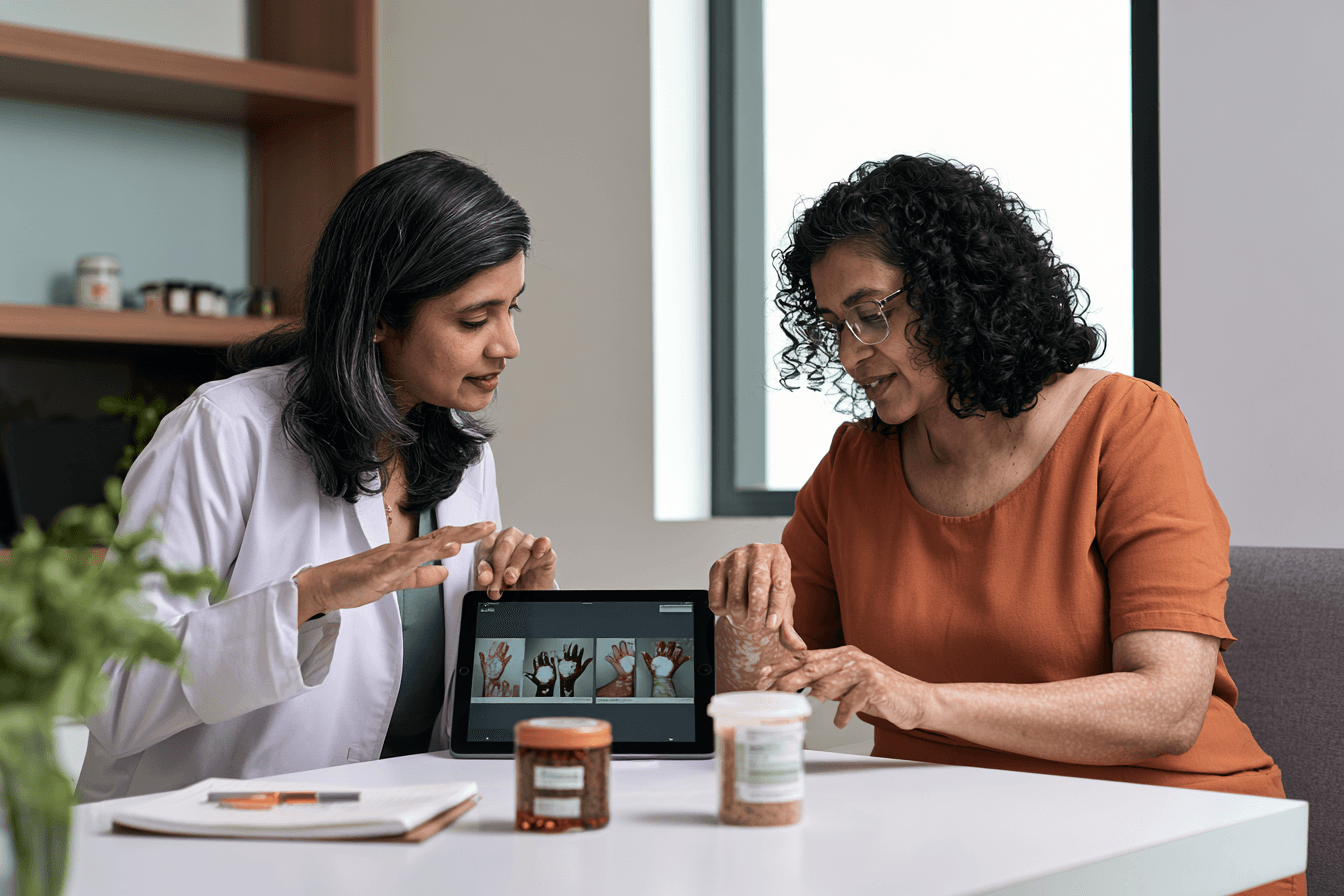
Ayurvedic treatment for vitiligo begins with a complete assessment rather than the immediate use of one herb or external oil. The physician first confirms that the white patches are vitiligo, determines whether the disease is active or stable and evaluates Dosha, Dhatu, Agni, Ama, skin sensitivity and associated health conditions.[30,33,38]
The treatment plan may then combine correction of contributing factors, internal medicines, carefully selected external applications, dietary guidance and long term maintenance. The exact approach should change according to the patient rather than remaining identical for every case.
Confirming the Diagnosis Before Treatment
A white patch should not be treated as Shwitra only because it has lost colour. Fungal infection, post inflammatory hypopigmentation, chemical leukoderma, lichen sclerosus and other conditions may resemble vitiligo.
When I evaluate a patient, I review the distribution, borders, duration, rate of spread and colour of the hair within the patch. A Wood’s lamp examination, photographs or additional investigations may be required before strong medicines such as Bakuchi are prescribed.
Correct diagnosis protects the patient from unnecessary photosensitivity, skin irritation and delayed treatment of another condition.
Controlling Active Disease Before Focusing on Repigmentation
When new patches are appearing or existing patches are increasing, the first priority is to control further progression. Attempting only to darken the visible patches without addressing active disease may produce an incomplete or short lived response.
Ayurvedic treatment during the active stage is selected according to the dominant Dosha, digestive strength, skin sensitivity and speed of progression. Strong heating medicines and aggressive external applications may not be appropriate when the skin is inflamed, sensitive or rapidly changing.
Once disease activity becomes better controlled, greater attention may be given to supporting gradual repigmentation.
Nidana Parivarjana and Avoidance of Aggravating Factors
Nidana Parivarjana means identifying and avoiding factors that may contribute to disease aggravation. In practical care, this includes reviewing repeated skin injury, friction, chemical exposure, uncontrolled sunburn, unsuitable cosmetic products, irregular meals and dietary habits that repeatedly worsen digestion or skin sensitivity.[30,33]
This principle should not be used to blame the patient. Vitiligo is not caused by one dietary mistake or personal behaviour. Modern evidence shows that autoimmune activity, genetic susceptibility and oxidative stress are important mechanisms.
Avoiding an aggravating factor may reduce additional stress on the skin, but it should remain part of a complete treatment plan rather than being presented as an independent cure.
Correcting Agni and Improving Medicine Tolerance
The physician assesses appetite, bowel movements, acidity, bloating and heaviness before prescribing concentrated formulations. If Agni is significantly disturbed, the patient may not tolerate a heavy avaleha containing jaggery, honey and ghee.
In such cases, I may first use a simpler approach to improve digestion and bowel regularity. The main vitiligo formulation can then be introduced gradually according to tolerance.
This does not mean that improving digestion alone will restore pigment. It prepares the patient to receive treatment more safely and consistently.
Individualising Internal Medicines
Internal medicines may be selected to support Dosha balance, Rakta and skin related functions, digestion, tissue nourishment and Rasayana care. Classical herbs such as Khadira, Bakuchi, Haritaki and other physician selected ingredients may be considered according to the patient’s condition.[30,33,38]
Bakuchi should not be prescribed automatically to every patient. Its dose and suitability depend on age, liver health, skin sensitivity, disease activity, exposure to ultraviolet light and concurrent treatment.
Children, pregnant women, patients with liver disease and people receiving phototherapy require a specially modified plan. A patient with diabetes may also need a dosage form that does not contain large quantities of jaggery or honey.
Using External Applications Carefully
External medicines may be used to stimulate local pigmentation or support the internal treatment plan. However, strong pastes and Bakuchi based oils can cause redness, burning, blistering or excessive photosensitivity when used incorrectly.
You should not increase the application time or sunlight exposure merely because the patch has not changed quickly. A strong reaction does not indicate that the medicine is working better.
External treatment should begin on a limited area when appropriate, and the skin response should be reviewed before wider application. When phototherapy is also being used, the timing must be coordinated with the dermatologist.
Supporting Repigmentation Gradually
Repigmentation generally develops slowly. It may begin as small brown dots around hair follicles or as pigment returning from the edge of the patch.
The face and neck often respond more easily than the fingers, toes, lips, palms and soles. Longstanding patches containing white hair may also respond more slowly because fewer functioning pigment cells may remain.
The physician should explain these differences before treatment begins. A realistic plan is more useful than promising complete repigmentation within a fixed number of weeks.
Combining Treatment with Pathya
Pathya refers to food and habits that are suitable for the patient and support treatment. The diet should remain nutritionally complete, easy to digest and appropriate for the person’s metabolic health.
Patients should not remove milk, grains, fruits, pulses or other major food groups without a clear reason. Severe dietary restriction can cause protein, iron, vitamin B12 or other nutritional deficiencies without controlling vitiligo.
Regular sleep, protection from skin injury, moderate physical activity and safe sun practices may also support overall treatment adherence.
Monitoring Response and Safety
Treatment should be reviewed through comparable photographs, disease activity, new patch formation, repigmentation and medicine tolerance. Liver function may require monitoring when oral Bakuchi is used, while blood glucose should be considered when a sugar rich avaleha is prescribed.
When I review a patient, I do not assess success only by asking whether the patch has disappeared. I also evaluate whether new patches have stopped appearing, whether old lesions have stabilised and whether the patient is tolerating the treatment safely.
Ayurvedic treatment principles therefore involve three connected goals: controlling progression, supporting gradual repigmentation and maintaining the achieved result. These goals require personalised prescribing, appropriate monitoring and sufficient treatment duration rather than reliance on one medicine alone.
Shodhana, Shamana, Rasayana and External Applications in Vitiligo
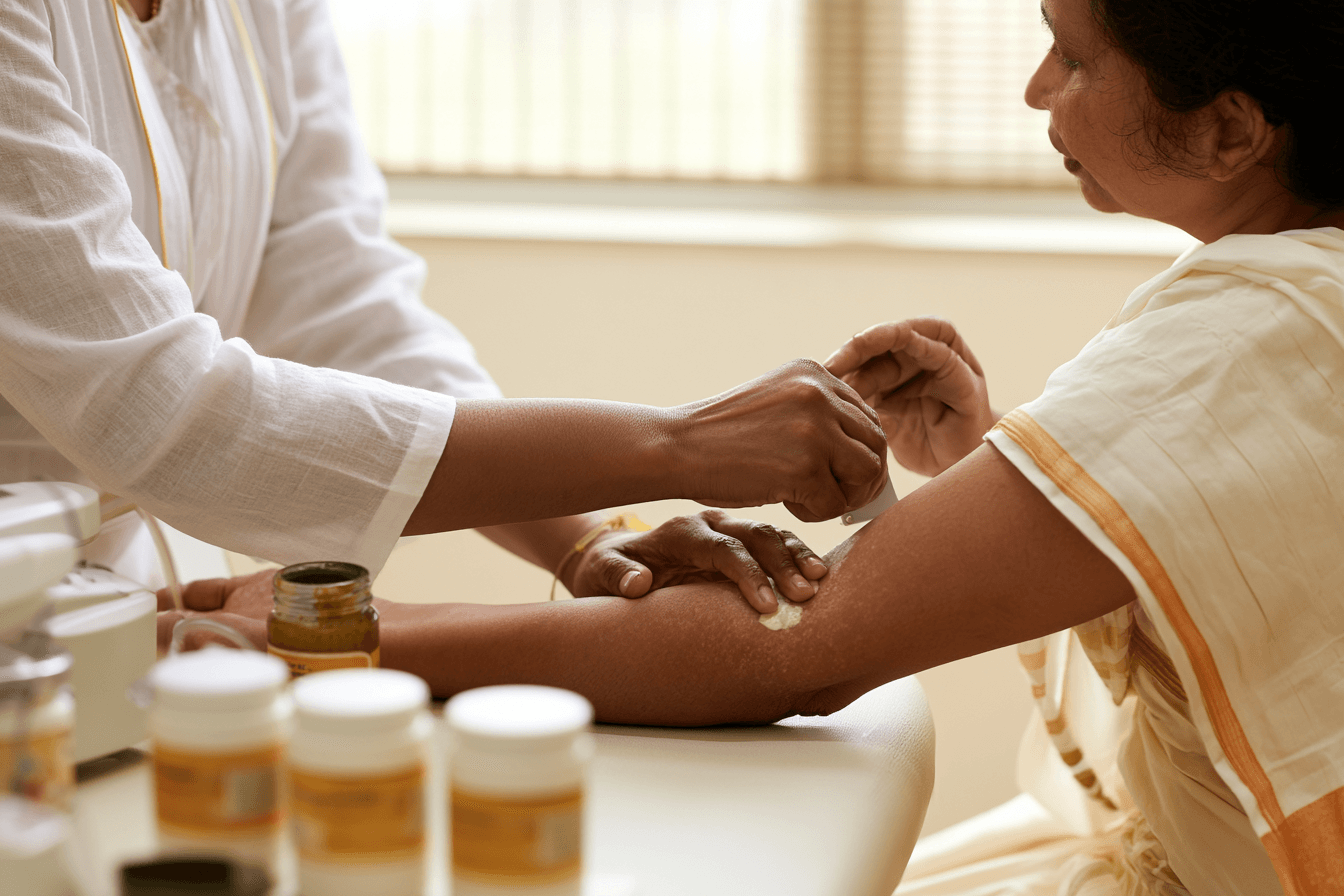
Ayurvedic treatment for vitiligo may include Shodhana, Shamana, Rasayana and carefully selected external applications. These approaches are not used together in the same way for every patient. The physician must first consider the activity of vitiligo, digestive strength, age, physical strength, skin sensitivity, liver health and existing medical treatment.[33,38]
The usual treatment sequence is also important. When digestion is poor or the disease is actively spreading, beginning immediately with a heavy Rasayana avaleha or a strong photosensitising application may not be appropriate. Treatment should progress according to the patient’s condition and tolerance.
What Is Shodhana Therapy?
Shodhana refers to physician supervised procedures intended to remove aggravated Doshas and prepare the body for further treatment. Classical Kushtha management includes selected purification approaches, such as therapeutic emesis, therapeutic purgation and blood related procedures, depending on the dominant Dosha and the patient’s strength.[33]
This does not mean that every person with vitiligo requires Panchakarma. A child with a few recent facial patches, a frail older patient and a healthy adult with widespread active disease cannot be treated through the same procedure.
When I consider Shodhana, I first assess appetite, bowel habits, blood pressure, hydration, body strength, anaemia, liver and kidney health and current medicines. The procedure is avoided or modified when the patient is weak, pregnant, severely anaemic, dehydrated or medically unstable.
Shodhana should be performed only in an appropriately equipped Ayurvedic clinical setting. Unsupervised vomiting, purgation, prolonged fasting or repeated enemas can cause dehydration, electrolyte disturbance, weakness and worsening of existing health problems.
When May Virechana Be Considered?
Virechana is a controlled therapeutic purgation procedure traditionally selected when Pitta and Rakta related features are prominent. It may be considered when the physician finds suitable digestive strength and adequate physical capacity.
The patient usually requires preparatory measures, dietary regulation, supervised administration and post procedure recovery. Virechana should not be reduced to taking a strong laxative at home.
Its use in vitiligo is based mainly on classical Ayurvedic principles. High quality clinical trials proving that Virechana alone stops autoimmune melanocyte loss or produces repigmentation are not currently available. It should therefore be presented as a traditional, individually selected procedure rather than a proven universal cure.
Is Vamana Required in Vitiligo?
Vamana is supervised therapeutic emesis and may be considered in selected Kapha dominant conditions within the classical Kushtha framework.[33] It is a demanding procedure and is not suitable for routine use in every patient with Shwitra.
A physician may avoid Vamana in children, older adults, patients with low strength, uncontrolled blood pressure, heart disease, active gastrointestinal disease or other significant medical risks. The decision should depend on a complete clinical assessment rather than the size or colour of the white patches alone.
What Is Shamana Treatment?
Shamana means calming or balancing the disturbed Doshas without using an intensive purification procedure. It commonly includes internal herbal medicines, suitable diet, correction of digestion and carefully planned external treatment.
For many patients, especially those who are not suitable for Shodhana, Shamana becomes the main Ayurvedic approach. Medicines may be selected to support Agni, Rakta related functions, skin health and gradual repigmentation.
Khadira, Bakuchi, Haritaki, Amalaki and other classical herbs may be considered according to the patient’s individual findings. The presence of a herb in a classical text does not mean that it must be included in every prescription or given at the highest possible dose.
When I select Shamana medicines, I also review diabetes, thyroid disease, anaemia, liver function, digestive tolerance and any dermatological medicines being used. The formulation may need to be changed when the patient is receiving phototherapy, systemic immunosuppressive treatment or another photosensitising medicine.
Role of Rasayana in Vitiligo
Rasayana treatment is intended to support tissue nourishment, resilience and long term maintenance. In vitiligo care, it may be considered after digestion is reasonably stable and the patient can tolerate nourishing formulations.
Bakuchi based Rasayana descriptions are found in classical Ayurvedic literature, including the Avalguja Rasayana tradition described in the Sushruta Samhita.[38] However, a classical Rasayana reference should not be interpreted as proof that every modern Bakuchi formulation is safe or effective at any dose.
Rasayana is not simply a tonic added at the beginning of treatment. A rich preparation containing ghee, honey or jaggery may worsen bloating, heaviness or poor appetite when Agni is weak. A patient with diabetes may require a different dosage form instead of a sugar rich avaleha.
Rasayana treatment also does not mean that repigmentation will occur within 30 days. A 30 day medicine supply should be treated as an initial monitored cycle in which disease activity, tolerance and early changes are assessed.
How Are External Applications Used?
External applications may include oils, pastes, creams or physician prepared formulations applied directly to selected vitiligo patches. Their purpose may be to support local stimulation and repigmentation while internal treatment addresses the patient’s broader condition.
The application should normally begin on a small test area when the formulation contains strong or photosensitising herbs. The skin must be observed for excessive redness, burning, itching, swelling or blistering before the medicine is used over larger areas.
A mild, medically expected response should not be confused with a severe chemical or phototoxic burn. Increasing the quantity, application duration or sunlight exposure does not necessarily improve repigmentation.
External Use of Bakuchi
Bakuchi is one of the best known classical herbs used in Shwitra, but it can increase sensitivity to ultraviolet light. Incorrect use may cause marked redness, pain, blistering, post inflammatory darkening or liver related concerns when oral preparations are also used.[42–44]
You should not apply Bakuchi oil and then expose the skin to strong sunlight without a medically planned protocol. Exposure time cannot be standardised for every patient because skin colour, body location, season, product concentration and individual sensitivity can change the reaction.
Bakuchi based external treatment also requires special caution on the eyelids, lips, genital region, thin skin and previously irritated areas. It should not be applied over open wounds, active dermatitis or infected skin.
Can External Ayurvedic Medicine Be Combined with Phototherapy?
External Ayurvedic medicine and narrowband ultraviolet B phototherapy may sometimes be used within a coordinated plan. However, the dermatologist must know when a photosensitising herbal product is being applied.
Bakuchi should not be combined casually with narrowband UVB, excimer treatment, PUVA or additional psoralen medicines. The ultraviolet dose may need modification to prevent excessive irritation or burns.
When a patient develops redness after combined treatment, both the herbal application and the light schedule must be reviewed. Continuing the same exposure despite pain or blistering can damage the skin and delay further treatment.
What Does Clinical Research Show?
A preliminary study involving 50 patients evaluated a different Ayurvedic protocol using Shvitrahara Kashaya and Shvitrahara Lepa for six months. The combined internal and external treatment group showed greater improvement than the external treatment group in that study.[40]
The study was small and did not use the proposed Somaraji Khadiradi Shwitra Rasayana Avaleha. It also does not prove the effectiveness of every Shodhana procedure, Bakuchi preparation or external application.
This research may be used to show that combined Ayurvedic protocols have been clinically explored. It should not be presented as conclusive evidence that the same outcome will occur with every formulation or patient.
How Is the Right Combination Selected?
A patient with actively spreading vitiligo may initially need treatment focused on controlling progression and protecting the skin from further injury. A person with stable patches and preserved dark hair may be considered for more targeted repigmentation treatment.
When I prepare an Ayurvedic plan, I decide whether the patient requires gentle Shamana care, a suitable Shodhana procedure, a later Rasayana phase or a carefully tested external application. Not every patient requires all four approaches.
The safest treatment is not the one containing the largest number of procedures or the strongest skin reaction. It is the plan that matches the patient’s disease activity, physical strength, digestive capacity and medical risks while allowing progress to be measured objectively.
Classical Ayurvedic Herbs and Formulations Used for Shwitra
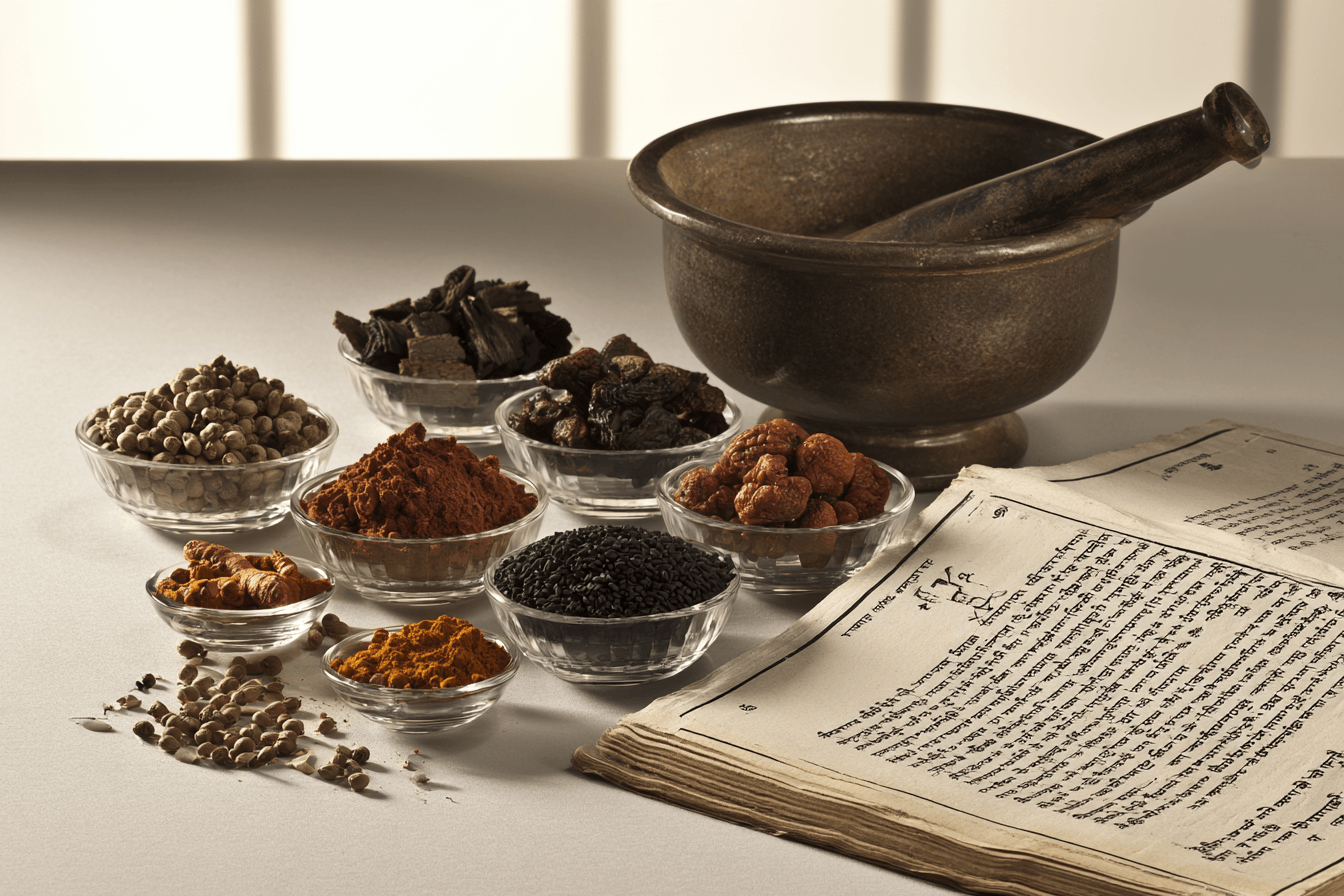
Ayurvedic texts describe several herbs and compound preparations for Shwitra and the wider group of Kushtha disorders. However, the presence of an ingredient in a classical text does not mean that it is suitable for every patient with vitiligo. The physician must consider disease activity, affected body area, digestive strength, liver health, age, skin sensitivity and concurrent treatment before selecting a formulation.[30,33,36–40]
Some herbs are used internally, while others are processed for external application. Their dosage, purification, pharmaceutical form and method of administration can substantially change both their effect and safety.
Somaraji or Bakuchi
Somaraji, commonly known as Bakuchi, is one of the most frequently cited Ayurvedic herbs for Shwitra. Its accepted botanical identity is Cullen corylifolium, also widely described by the synonym Psoralea corylifolia.
Bakuchi contains naturally occurring photosensitising compounds. These compounds can increase the skin’s response to ultraviolet light and may support pigmentation under carefully controlled conditions. The same property can also cause intense redness, burning and blistering when the dose, concentration or light exposure is excessive.[41–44]
A classical reference in Ashtanga Hridaya describes Somaraji processed with the decoctions of Asana and Khadira and combined with Śikhi, Pathya, Loha, ghee and honey.
Sanskrit
असनखदिरयूषैर्भावितां सोमराजीं मधुघृतशिखिपथ्यालोहचूर्णैरुपेताम् ।
शरदमवलिहानः पारिणामान् विकारांस्त्यजति मितहिताशी तद्वदाहारजातान् ॥१०७॥
Transliteration
Asana khadira yūṣair bhāvitāṃ somarājīṃ madhu ghṛta śikhi pathyā loha cūrṇair upetām।
Śaradam avalihānaḥ pāriṇāmān vikārāṃs tyajati mita hitāśī tad vad āhāra jātān॥107॥
Simple translation
Somaraji is processed with the decoctions of Asana and Khadira and combined with honey, ghee, Śikhi or Chitraka, Pathya or Haritaki and Loha. It is used under a disciplined diet and regulated regimen.
Text reference: Ashtanga Hridaya, Uttara Sthana, Rasayana Vidhi Adhyaya, Chapter 39, Verse 107.[36]
This verse provides a classical foundation for a Bakuchi based Rasayana approach. It does not provide modern metric quantities, a fixed 30 day dosage or evidence that the same composition is appropriate for every person with vitiligo.
Khadira
Khadira, identified as Senegalia catechu or Acacia catechu, is one of the most important classical herbs used within the Kushtha and Shwitra framework. The heartwood is commonly processed as a decoction and may also be used as the liquid medium for administering other medicines.
Charaka gives particular importance to Khadira in the management of Shwitra.
Sanskrit
यच्चान्यत् कुष्ठघ्नं श्वित्राणां सर्वमेव तच्छस्तम्।
खदिरोदकसंयुक्तं खदिरोदकपानग्र्यं वा ॥१६६॥
Transliteration
Yac cānyat kuṣṭhaghnaṃ śvitrāṇāṃ sarvam eva tac chastam।
Khadirodaka saṃyuktaṃ khadirodaka pānāgryaṃ vā॥166॥
Simple translation
Measures considered beneficial in Kushtha may also be used appropriately in Shwitra, especially when combined with Khadira water or when Khadira water is selected as the principal accompanying drink.
Text reference: Charaka Samhita, Chikitsa Sthana, Kushtha Chikitsa Adhyaya, Chapter 7, Verse 166.[30]
Modern experimental research suggests that Khadira extracts have antioxidant and immunomodulatory activity. These findings provide a possible biological rationale, but they do not prove that Khadira alone can repigment human vitiligo.[45]
Asana or Vijayasara
Asana, commonly identified as Pterocarpus marsupium, is included in the classical processing of Somaraji described in Ashtanga Hridaya.[36] The heartwood is generally used to prepare the decoction in which Bakuchi is processed.
Experimental studies have reported antioxidant and mitochondrial protective activity from Asana extracts.[46] This may be relevant because oxidative stress contributes to melanocyte damage in vitiligo. However, these studies were not clinical trials in patients with vitiligo.
When I include Asana in a formulation, I use it as part of the classical processing framework rather than claiming that it independently restores skin pigment.
Haritaki or Pathya
Haritaki, identified as Terminalia chebula, is referred to as Pathya in the Somaraji Yoga. It is traditionally used to support digestion, bowel regulation and the processing of other medicines.[36]
Laboratory research in reconstructed human skin has shown that a standardised Haritaki extract may influence pathways related to skin architecture, differentiation and barrier function.[49] This is supportive mechanistic evidence, not proof of vitiligo repigmentation.
Haritaki may not suit every patient in the same dose. A person with loose stools, marked weakness or a sensitive digestive system may require a lower quantity or a different supporting herb.
Chitraka or Shikhi
Śikhi in the cited classical verse is commonly interpreted as Chitraka, identified as Plumbago zeylanica.[36] Chitraka is a strong Deepana and Pachana herb traditionally used to support Agni and the digestion of heavier medicines.
Research on plumbagin, one of its recognised constituents, has demonstrated anti inflammatory effects in experimental immune models.[50] These findings do not establish that Chitraka directly treats vitiligo.
Chitraka can irritate the stomach and may produce burning when used inappropriately. It should therefore be included in a controlled quantity rather than added at a high dose to make a formulation appear stronger.
Krishna Tila or Black Sesame
The verse immediately following Somaraji Yoga describes the regulated use of Somaraji together with Krishna Tila or black sesame.
Sanskrit
तीव्रेण कुष्ठेन परीतमूर्तिर्यः सोमराजीं नियमेन खादेत् ।
संवत्सरं कृष्णतिलद्वितीयां स सोमराजीं वपुषाऽतिशेते ॥१०८॥
Transliteration
Tīvreṇa kuṣṭhena parīta mūrtir yaḥ somarājīṃ niyamena khādet।
Saṃvatsaraṃ kṛṣṇa tila dvitīyāṃ sa somarājīṃ vapuṣātiśete॥108॥
Simple translation
A person affected by severe Kushtha is advised to take Somaraji together with Krishna Tila under a regulated regimen. The verse describes prolonged use associated with improvement in complexion.
Text reference: Ashtanga Hridaya, Uttara Sthana, Rasayana Vidhi Adhyaya, Chapter 39, Verse 108.[37]
The classical duration mentioned in this verse is one year. Therefore, a 30 day medicine supply should be explained as an initial monitored treatment cycle rather than the complete classical duration.
Black sesame provides fats, protein and antioxidant compounds, but existing human research has mainly studied metabolic and oxidative outcomes rather than vitiligo.[52] It should not be promoted as an independently proven pigment restoring ingredient.
Amalaki, Haridra and Kutki
Amalaki, Haridra and Kutki are not all listed in the specific Somaraji Yoga of Ashtanga Hridaya 39/107. They may be included in a modified physician designed formulation when their properties suit the patient.
Amalaki, identified as Phyllanthus emblica, has antioxidant activity and has been studied as part of a combined oral supplement containing vitamin E and carotenoids in people with vitiligo. The combination produced encouraging results over six months, but the independent contribution of Amalaki could not be determined.[29]
Haridra, identified as Curcuma longa, may be selected for its antioxidant and anti inflammatory properties. A small study evaluated a topical curcuminoid preparation combined with targeted narrowband ultraviolet B. The combination showed a possible benefit, but the study was too small to establish a definite effect.[51]
Kutki, identified as Picrorhiza kurroa, has limited older clinical research in combination with photochemotherapy.[48] It should therefore be described as a physician selected addition with preliminary evidence rather than a proven vitiligo medicine.
Loha and Mineral Ingredients
The Somaraji Yoga verse mentions loha cūrṇa.[36] This classical term should not be silently rewritten as Loha Bhasma without explanation. Loha cūrṇa and Loha Bhasma are different pharmaceutical descriptions, and any modern adaptation must state clearly which material is being used.
Loha should not be added automatically to every vitiligo formulation. Before considering an iron containing preparation, I review the patient’s haemoglobin, ferritin, transferrin saturation and clinical signs of iron deficiency.
There is no reliable human evidence showing that Loha Bhasma independently repigments vitiligo. Animal safety research has also shown that higher exposure can produce biochemical and tissue changes.[53] Any mineral preparation must therefore be pharmacopoeial, appropriately prepared and independently tested.
Potentially toxic substances such as Haratala, Manashila, Rasamanikya, Tamra preparations and mercury containing combinations should not be included merely to make a formula sound more powerful. Their use requires a separate classical indication, validated manufacturing, dose justification, contaminant testing and close medical supervision.
Classical Formulations Are Not Interchangeable
Somaraji Yoga, Avalguja Rasayana, Shvitrahara Kashaya and different external Lepas are separate formulations with different ingredients and pharmaceutical methods.[36–40] Evidence or textual authority for one preparation should not be transferred automatically to another.
A preliminary study involving Shvitrahara Kashaya and Shvitrahara Lepa reported improvement in some patients over six months.[40] This study used a different internal and external protocol. It does not prove that every Bakuchi based avaleha will produce the same result.
Similarly, a physician may create a modified avaleha inspired by classical sources, but the website should identify it honestly as a classically inspired formulation. The exact metric weights and final dosage should not be described as if they appear unchanged in one ancient text.
How the Right Formulation Is Selected
When I select a classical or modified formulation, I consider whether vitiligo is active, stable, localised or widespread. I also review the location of the patches, hair colour within them, digestive tolerance, liver function, diabetes, anaemia and ongoing phototherapy.
A Bakuchi dominant preparation may not be suitable for a patient with abnormal liver function, severe photosensitivity or previous intolerance. A jaggery and honey based avaleha may be unsuitable for uncontrolled diabetes. A strong Chitraka containing formula may need modification in a patient with gastritis.
You should therefore not choose a vitiligo medicine only from its name or the number of herbs it contains. A well selected formulation uses fewer relevant ingredients in correct proportions, follows proper pharmaceutical processing and is monitored for both response and safety.
Somaraji Khadiradi Shwitra Rasayana Avaleha for Vitiligo (Medicine)
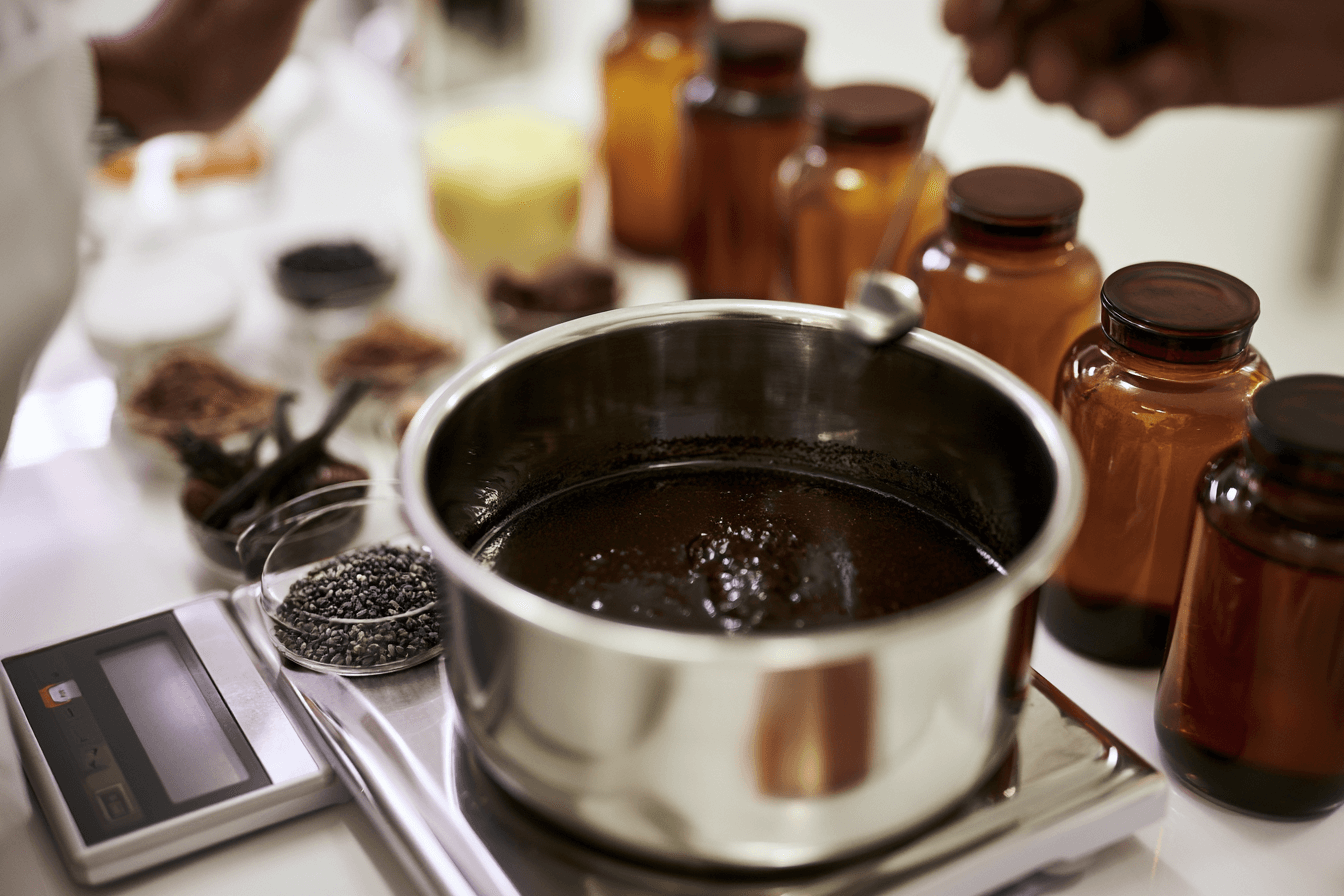
There is no single avaleha described in Ayurvedic literature as the universally best medicine for every patient with vitiligo. The formulation must change according to the type of vitiligo, disease activity, affected body areas, duration, digestive strength, liver health, age and associated medical conditions.
Somaraji Khadiradi Shwitra Rasayana Avaleha
The Sanskrit form of the name is Somarājī Khadirādi Śvitra Rasāyana Avaleha.
This is a physician designed formulation inspired by classical Ayurvedic references. The complete name, modern metric quantities and thirty day dosage schedule are not presented together in any single classical text. It is therefore be described as a classically inspired proprietary Ayurvedic formulation, not as an unchanged formula copied directly from one book.
The formulation is designed around Somaraji or Bakuchi, Khadira, Asana, Haritaki, Krishna Tila, Chitraka and Loha, which are mentioned in the classical references. Amalaki, Kutki and Haridra are included as carefully selected additions because of their antioxidant, skin protective and limited vitiligo related research.[29,36–53]
Classical Books That Inspired This Formulation
| Ayurvedic text | Chapter and verse | Contribution to this formulation |
| Ashtanga Hridaya | Uttara Sthana, Rasayana Vidhi Adhyaya, Chapter 39, Verse 107 | Describes Somaraji processed with Asana and Khadira and combined with Shikhi, Pathya, Loha, ghee and honey |
| Ashtanga Hridaya | Uttara Sthana, Chapter 39, Verse 108 | Describes the regulated use of Somaraji with Krishna Tila |
| Charaka Samhita | Chikitsa Sthana, Kushtha Chikitsa Adhyaya, Chapter 7, Verse 166 | Gives particular importance to Khadira water and Khadira based administration in Shwitra |
| Sushruta Samhita | Chikitsa Sthana, Medhayushkamiya Rasayana Adhyaya, Chapter 28 | Provides the classical Avalguja or Bakuchi Rasayana background |
| Sharangadhara Samhita | Madhyama Khanda, Kwatha Kalpana and Avaleha Kalpana | Provides the general pharmaceutical principles for preparing decoctions and avaleha |
The complete Sanskrit verses from Ashtanga Hridaya 39/107 and 39/108 have already been included in the preceding section on classical herbs and formulations. They should not be repeated here because repetition would unnecessarily lengthen the article.
Why This Formula Is Considered Potent
The strength of an Ayurvedic formulation does not depend on adding the largest possible number of herbs or minerals. A strong formulation should have a clear classical basis, appropriate processing, clinically rational quantities and reliable safety monitoring.
This avaleha retains the principal ingredients described in Somaraji Yoga and adds only selected herbs that have a reasonable modern research basis. It deliberately excludes unnecessary arsenic, mercury and copper based preparations because adding several potent minerals does not guarantee better repigmentation and can substantially increase safety concerns.
Ingredients Required for a Thirty Day Batch
The prescribed adult dose is 15 grams twice daily. The patient therefore receives 30 grams each day.
For thirty days, the required final finished quantity is:
30 grams daily × 30 days = 900 grams
The final medicine should be packed as three containers of 300 grams each. Each container provides approximately ten days of treatment.
Decoction Ingredients
These quantities represent the raw herbs used for preparing the decoction. The coarse herbal material is filtered and discarded after extraction.
| Ingredient | Botanical identity | Part used | Quantity |
| Khadira | Senegalia catechu, synonym Acacia catechu | Heartwood, coarse powder | 120 g |
| Asana or Vijayasara | Pterocarpus marsupium | Heartwood, coarse powder | 90 g |
| Amalaki | Phyllanthus emblica | Dried fruit, coarse powder | 60 g |
| Kutki | Picrorhiza kurroa | Rhizome, coarse powder | 15 g |
| Purified water | Pharmaceutical quality water | Extraction medium | 4,560 mL |
The combined coarse herbal material weighs 285 grams. It is boiled in sixteen parts of water and reduced to approximately one eighth of the initial liquid volume. This produces approximately 570 mL of filtered decoction.
Principal Powders and Rasayana Ingredients
| Ingredient | Botanical or pharmaceutical identity | Quantity for thirty days |
| Shodhita Bakuchi or Somaraji | Cullen corylifolium, synonym Psoralea corylifolia | 60 g |
| Haritaki or Pathya | Terminalia chebula | 30 g |
| Krishna Tila | Sesamum indicum, black sesame | 60 g |
| Chitraka or Shikhi | Plumbago zeylanica | 6 g |
| Haridra | Curcuma longa | 15 g |
| Loha Bhasma | Pharmacopoeial and independently tested | 3.75 g when clinically indicated |
| Guda | Purified jaggery | 450 g |
| Go Ghrita | Quality tested cow ghee | 60 g |
| Madhu | Quality tested natural honey | 90 g |
Approximate Quantity Received Each Day
At a dosage of 15 grams twice daily, the patient receives approximately 2 grams of processed Bakuchi, 1 gram of Haritaki, 2 grams of black sesame, 200 mg of Chitraka and 500 mg of Haridra daily.
When Loha Bhasma is clinically indicated, the daily quantity is approximately 125 mg. This is divided into two doses of approximately 62.5 mg each.
The daily medicine also represents the extract obtained from approximately 4 grams of Khadira, 3 grams of Asana, 2 grams of Amalaki and 500 mg of Kutki raw material. This is a raw herb equivalent. It does not mean that the complete raw herb remains physically present in the finished avaleha.
Important Qualification for Loha Bhasma
The original verse in Ashtanga Hridaya 39/107 mentions Loha Churna. Loha Churna and modern Loha Bhasma are not identical pharmaceutical substances. Using Loha Bhasma in this avaleha is therefore a physician directed modification rather than a direct reproduction of the classical verse.[36]
Loha Bhasma should not be added automatically to every patient’s medicine. Before prescribing it, I would review the complete blood count, serum ferritin, transferrin saturation and clinical evidence of iron deficiency.
When haemoglobin and iron stores are normal or elevated, Loha Bhasma should be omitted. The final batch should still be standardised to 900 grams by controlling the reduction of the decoction base. Additional jaggery should not be added merely to replace the omitted weight.
Patient Friendly Preparation Method
This preparation method is provided so that patients can understand how the formulation is manufactured. Because the medicine contains Bakuchi, Chitraka and an optional mineral ingredient, it should be prepared only in a licensed Ayurvedic pharmacy with appropriate quality control. It should not be prepared at home.
Step 1: Authenticate and Test the Ingredients
The pharmacy first confirms the identity of Khadira, Asana, Amalaki, Kutki, Bakuchi, Haritaki, Chitraka, Haridra and Krishna Tila.
The raw materials should be examined for foreign matter, mould, microbial contamination, aflatoxins, pesticide residues and toxic elements. Bakuchi should also have a suitable chromatographic fingerprint so that the identity and consistency of the seed can be verified.[54,55]
Step 2: Prepare the Herbal Decoction
Khadira, Asana, Amalaki and Kutki are placed in a stainless steel vessel. A total of 4,560 mL of purified water is added, and the herbs are allowed to soak for approximately six to eight hours.
The mixture is heated gently and maintained at a controlled simmer until approximately 570 mL remains. The decoction is then filtered while warm so that coarse herbal particles do not enter the final avaleha.
Step 3: Process the Bakuchi
Approximately 120 mL of the filtered decoction is reserved for processing the Bakuchi.
The 60 grams of authenticated and appropriately purified Bakuchi powder is moistened and triturated with this decoction. It is then dried at a controlled low temperature and ground again into a fine, uniform powder.
This step reflects the classical instruction that Somaraji should be processed with Asana and Khadira decoctions.[36] The classical verse does not prescribe an exact number of Bhavana cycles, so the manufacturer should not claim an arbitrary number without a documented pharmaceutical standard.
Step 4: Prepare the Avaleha Base
The remaining approximately 450 mL of filtered decoction is placed in a clean stainless steel vessel. A total of 450 grams of purified jaggery is added and dissolved under gentle heat.
The dissolved mixture is filtered again to remove any physical impurities that may have been present in the jaggery.
Step 5: Add Ghee and the Herbal Powders
The filtered jaggery and decoction mixture is returned to the vessel. The cow ghee is added gradually while the mixture is stirred continuously.
Processed Bakuchi, Haritaki, Krishna Tila, Chitraka and Haridra are then added slowly. Continuous mixing is important because it prevents clumping and helps distribute the potent ingredients uniformly throughout the batch.
Step 6: Add Loha Bhasma Only When Prescribed
When Loha Bhasma is clinically indicated, it should first be blended with a small quantity of the herbal powder through geometric dilution.
The pharmacy gradually mixes the diluted mineral powder into the larger batch. Adding a small mineral quantity directly into a large vessel can produce an uneven distribution, resulting in some doses containing more material than others.
Step 7: Standardise the Pre Honey Weight
The formulation is cooked under gentle heat until it develops a smooth, semisolid avaleha consistency.
The vessel is weighed after accounting for its empty weight. The medicine should be reduced until the pre honey formulation weighs exactly 810 grams.
Step 8: Add Honey After Cooling
The vessel is removed from heat and allowed to cool until the preparation is warm rather than hot. Honey should not be cooked directly over high heat.
A total of 90 grams of honey is mixed thoroughly into the cooled formulation. The final finished batch then weighs exactly 900 grams.
Step 9: Pack the Thirty Day Medicine
The finished avaleha is divided into three amber coloured containers of 300 grams each.
The containers should display the complete ingredient list, batch number, manufacturing date, expiry date, storage instructions, dosage and manufacturer details. The patient should always use a clean, dry and calibrated scoop.
Recommended Adult Dosage
The prescribed adult dosage is:
15 grams after breakfast and 15 grams after the evening meal for thirty days.
The medicine may be followed with approximately 100 to 150 mL of lukewarm water. A kitchen spoon should not be used because household spoons do not provide an accurate 15 gram dose.
Thirty days represents the first monitored dispensing cycle. It should not be described as the complete treatment duration or as a guaranteed period for repigmentation.
During this period, I assess whether new patches are still appearing, whether existing patches are spreading, whether early pigment dots are developing and whether the patient is tolerating the medicine safely.
What Research Shows About Each Ingredient
The complete Somaraji Khadiradi Shwitra Rasayana Avaleha has not been evaluated as one finished formulation in a randomised clinical trial. Research on its ingredients ranges from small human studies to laboratory and animal experiments.
The findings provide a possible rationale for the selected ingredients, but they do not prove that each herb will independently repigment vitiligo.
| Ingredient | Relevant modern research | What the evidence actually means |
| Bakuchi | A small study involving 20 adults evaluated a 10 percent topical Bakuchi seed ointment for twelve weeks. Treated lesions showed greater pigmentation than untreated control lesions.[41] | This provides preliminary support for topical Bakuchi. It does not prove the effectiveness or safety of oral Bakuchi in this avaleha. |
| Khadira | Experimental studies found immunomodulatory effects, including changes in inflammatory mediators and immune responses.[45] | The findings provide a possible immune related rationale, but human vitiligo repigmentation has not been established. |
| Asana | Laboratory research demonstrated antioxidant activity and protection against experimentally induced oxidative and mitochondrial damage.[46] | Oxidative stress is relevant to vitiligo, but the study was not conducted in patients with vitiligo. |
| Amalaki | A six month study involving 130 patients examined an oral combination containing Amalaki, vitamin E and carotenoids alongside conventional treatment. The combination group showed more favourable results.[29] | Amalaki was not studied alone, so its independent effect cannot be determined. |
| Kutki | An older human study suggested that Kutki might enhance the effect of photochemotherapy in vitiligo.[48] | The evidence is limited and does not establish Kutki as an independent vitiligo treatment. |
| Haritaki | Research using a reconstructed human skin model found effects on genes related to skin architecture, differentiation and barrier function.[49] | This is mechanistic skin research, not a clinical vitiligo trial. |
| Chitraka | Plumbagin, a constituent associated with Chitraka, demonstrated anti inflammatory activity in experimental lymphocyte research.[50] | The study does not prove repigmentation and does not justify using a high Chitraka dose. |
| Haridra | A small study involving ten patients compared targeted narrowband ultraviolet B alone with the same treatment plus topical tetrahydrocurcuminoid cream for twelve weeks.[51] | Both sides improved. The combination showed a possible advantage, but the difference was not strong enough to prove an independent curcuminoid effect. |
| Krishna Tila | Human research has reported effects of sesame intake on oxidative and metabolic markers.[52] | The study did not involve vitiligo and used a much higher food quantity than the amount in this avaleha. Its support is indirect. |
| Loha Bhasma | Animal toxicology research found relative safety at the therapeutic dose but biochemical and tissue abnormalities at higher exposure levels.[53] | There is no reliable human evidence that Loha Bhasma independently repigments vitiligo. It should be used only when clinically justified. |
| Ghee, honey and jaggery | These substances function mainly as classical pharmaceutical vehicles and help create the avaleha dosage form.[36,39] | They should not be described as independently proven treatments for vitiligo. |
Bakuchi Requires the Greatest Caution
Bakuchi is the principal pigment stimulating ingredient, but it is also the ingredient with the most important safety concerns. Its naturally occurring furanocoumarins can make the skin highly sensitive to ultraviolet light.
Incorrect use can cause painful redness, itching, burns or blistering. Published reports have also associated oral Bakuchi with uncommon but potentially serious liver injury.[42–44]
The patient should not combine this avaleha with Bakuchi oil, oral psoralen, PUVA, excimer treatment, narrowband ultraviolet B or prolonged sunlight exposure unless the timing has been coordinated by the treating physicians.
Why Additional Potent Minerals Are Not Included
Haratala, Manashila, Rasamanikya, Tamra Bhasma, Parada containing preparations and other strong herbo mineral combinations are deliberately excluded from the standard formula.
Their exclusion does not mean that an ingredient has been forgotten. There is no strong human evidence showing that stacking several mineral preparations produces better vitiligo repigmentation. Adding them would increase the need for toxic element testing, interaction assessment and close clinical monitoring.
The strongest clinically responsible formulation is not the one with the greatest number of metals. It is the one with a clear classical rationale, controlled dosage, consistent manufacturing and the lowest avoidable risk.
Mandatory Safety Assessment Before Prescribing
Oral Bakuchi should not be prescribed without reviewing liver health. Baseline bilirubin, AST, ALT, alkaline phosphatase and other relevant liver tests may be required, particularly when the patient has fatty liver, previous hepatitis, alcohol related risk or a history of abnormal liver reports.
Blood glucose and HbA1c should be reviewed when diabetes is present because this thirty day batch contains 450 grams of jaggery and 90 grams of honey. A patient with uncontrolled diabetes requires a separately designed sugar free dosage form rather than the standard avaleha.
CBC, serum ferritin and transferrin saturation should be reviewed before Loha Bhasma is included. The mineral should be omitted when there is no iron related clinical indication.
This standard adult formulation is not intended for pregnant or breastfeeding women, children, patients with active liver disease, people with a previous Bakuchi related reaction or those with uncontrolled diabetes. Such patients require a separately designed prescription.
When the Avaleha Must Be Stopped
You should stop the medicine and contact the treating physician if persistent nausea, repeated vomiting, marked loss of appetite, unusual weakness, dark urine, pale stools, widespread itching or yellowing of the eyes develops.
Any painful redness, burning, swelling or blistering after sunlight, phototherapy or a topical application also requires immediate review. A stronger skin reaction does not mean that pigmentation will develop more quickly.
Medicine Quality Requirements
Every batch should be tested for microbial contamination, aflatoxins, pesticide residues and toxic elements. Bakuchi identity and consistency should be confirmed through an appropriate chromatographic fingerprint.[54–56]
When Loha Bhasma is included, the material must meet recognised pharmacopoeial standards, and the finished avaleha should be tested rather than relying only on the supplier’s certificate.
The final formulation should have uniform texture and ingredient distribution. Each 15 gram dose must contain a consistent proportion of Bakuchi, Chitraka and any prescribed mineral ingredient.
What Patients Should Realistically Expect
This avaleha is designed to support a personalised Ayurvedic treatment programme for confirmed vitiligo. It should not be presented as a guaranteed cure or as a medicine that will repigment every patch within thirty days.
During the first month, the most meaningful changes may include improved treatment tolerance, reduction in new patch formation, stabilisation of existing borders or the appearance of early perifollicular pigment.
Facial and neck patches may respond more favourably than the fingers, toes, palms, soles and lips. Longstanding patches containing white hair may remain difficult to repigment despite correctly prepared and consistently used medicine.
The formulation should therefore be prescribed only after assessing disease activity, body location, duration, digestive strength, liver function, diabetes, anaemia and concurrent dermatological treatment. References [29,30,36–56] from the article’s final reference list should be used for this section.
Role and Safety of Bakuchi in Vitiligo Treatment
Bakuchi, also known as Somaraji or Avalguja, is one of the most frequently mentioned Ayurvedic herbs for Shwitra. Its accepted botanical name is Cullen corylifolium, while Psoralea corylifolia remains a commonly used scientific synonym.
Classical texts describe Bakuchi in internal Rasayana preparations and external applications. However, its traditional importance does not mean that every patient with vitiligo should receive Bakuchi in the same form or dose. It is a potent photosensitising herb and requires careful patient selection, controlled processing and medical supervision.[36–44]
How Bakuchi May Support Repigmentation
Bakuchi seeds contain naturally occurring compounds called furanocoumarins, including psoralen related substances. These compounds can increase the response of skin to ultraviolet light and may stimulate pigmentation when exposure is carefully controlled.
Modern photochemotherapy developed partly around this photosensitising principle. However, Bakuchi seed powder, Bakuchi oil, purified psoralen and medical PUVA treatment are not identical. Their concentrations, absorption, ultraviolet exposure and safety profiles can differ considerably.
A small clinical study involving 20 adults evaluated a topical ointment containing 10 percent Bakuchi seed powder for 12 weeks. Treated patches showed greater pigmentation than untreated control patches.[41] The study provides preliminary support for topical use, but its small size and short duration do not prove that oral Bakuchi or every commercial Bakuchi oil will produce the same result.
Internal and External Bakuchi Are Not the Same Treatment
Oral Bakuchi affects the whole body after absorption, while an external application acts mainly on the treated skin. The potential risks and monitoring requirements are therefore different.
Internal use may be considered as part of a physician designed formulation after reviewing liver health, digestion, skin sensitivity and concurrent medicines. External use may be selected for limited patches after assessing the body area and expected ultraviolet exposure.
Using oral Bakuchi, Bakuchi oil and phototherapy together does not necessarily make treatment stronger. The combined photosensitising effect may increase the risk of redness, burns and blistering.
Why Bakuchi Can Cause Skin Reactions
A carefully planned Bakuchi application may produce no visible irritation or only a mild response. Severe redness is not necessary for repigmentation and should never be treated as proof that the medicine is working.
Excessive concentration, prolonged application or uncontrolled sunlight exposure may cause burning, itching, swelling, painful redness and blisters.[42] Darkening around the patch may also occur after inflammation, making the colour difference appear temporarily more prominent.
The risk can vary according to skin tone, body location, season, ultraviolet intensity and formulation strength. A dose tolerated on thicker skin may be unsuitable for the eyelids, lips, genital area or body folds.
Safe Use of External Bakuchi
When external Bakuchi is considered, the physician may first advise application to a small test area. The skin response should be observed before the product is applied to several patches.
You should not leave the medicine on for longer than advised or expose the area to strong sunlight in an attempt to obtain faster pigmentation. Bakuchi should not be applied over open wounds, active eczema, infected skin or areas already irritated by another product.
Special care is required near the eyes, lips and genital skin. These areas are sensitive and should not be treated with a strong Bakuchi application without direct medical guidance.
Bakuchi and Phototherapy
Bakuchi must be coordinated carefully when narrowband ultraviolet B, excimer treatment, PUVA or another light based treatment is being used. The dermatologist should know about every internal and external photosensitising preparation.
The patient should not apply Bakuchi oil before a phototherapy session unless the treatment schedule has been specifically designed for that combination. An ultraviolet dose that was previously tolerated may become excessive after a photosensitising product is added.
When I treat a patient who is already receiving phototherapy, I review the type of ultraviolet treatment, treatment days, exposure dose and previous skin reactions before considering Bakuchi. This helps reduce the risk of accidental phototoxic injury.
Can Oral Bakuchi Affect the Liver?
Published case reports have associated oral Babchi or Bakuchi use with acute hepatitis and severe liver injury, including injury in a patient who already had chronic liver disease.[43,44] Such reactions appear uncommon, but they are clinically important because the early symptoms may resemble ordinary digestive discomfort.
A case report cannot determine how often liver injury occurs in all users. It does, however, show that oral Bakuchi should not be promoted as harmless merely because it is herbal.
Before prescribing an oral Bakuchi formulation, the physician should review any history of fatty liver, hepatitis, jaundice, alcohol related liver disease, abnormal liver tests or previous reaction to Bakuchi. Baseline liver function may be appropriate, particularly when treatment is expected to continue beyond a short monitored period.
Warning Signs That Require Immediate Review
The patient should stop the medicine and seek medical advice when marked nausea, repeated vomiting, severe tiredness, loss of appetite, dark urine, pale stools, widespread itching, yellowing of the eyes or right upper abdominal pain develops.
External treatment should be stopped when there is painful redness, persistent burning, swelling, blistering or an extensive rash. Continuing the same dose after these signs appear may deepen the skin injury rather than improve pigmentation.
Who Requires Special Caution
Oral Bakuchi should not be prescribed routinely during pregnancy or breastfeeding because adequate safety evidence is not available. Children require an age appropriate formulation and should not be given an adult dose.
Patients with active liver disease, unexplained abnormal liver tests, previous Bakuchi related liver injury or a severe photosensitivity disorder may not be suitable candidates. Greater caution is also required when the patient is taking medicines that can affect the liver or increase sensitivity to light.
A person receiving phototherapy, oral psoralen or several dermatological medicines should share the complete treatment list with both physicians. Treatment decisions cannot be made safely when each doctor is unaware of what the other has prescribed.
Why Product Quality Matters
The amount of photosensitising compounds in Bakuchi may vary according to the plant source, seed quality, storage, processing and extraction method. Two oils or powders carrying the same herb name may therefore produce different skin reactions.
Authentic botanical identification and pharmaceutical testing are necessary. The finished product should be assessed for microbial contamination, pesticide residues, aflatoxins and toxic elements. A standardised chemical fingerprint can also help confirm identity and improve batch consistency.[54,55]
Shodhana or classical processing should be documented rather than mentioned only as a marketing claim. Proper processing may improve pharmaceutical suitability, but it does not remove the need for dose control, liver assessment and ultraviolet precautions.
Is Bakuchi Necessary for Every Patient?
No. Bakuchi is an important classical option, but it is not compulsory in every vitiligo prescription. A patient with active inflammation, severe skin sensitivity, liver abnormalities or previous intolerance may require another approach.
The decision also depends on the location of the patches. A carefully supervised Bakuchi preparation may be considered for selected body areas, while the face, eyelids, lips or genital region may require gentler treatment.
When I prescribe Bakuchi, I consider it one part of a wider plan rather than a complete treatment by itself. Control of disease activity, protection of remaining melanocytes, appropriate dermatological care and long term maintenance may all remain necessary.
What Patients Should Realistically Expect
Bakuchi does not guarantee complete repigmentation. Response depends on disease activity, duration, body location, hair colour within the patch and the number of functioning melanocytes that remain.
Facial and neck patches generally have a better possibility of repigmentation than longstanding patches on the fingers, toes, palms, soles and lips. Areas containing white hair may respond poorly even when treatment is continued correctly.
The safest use of Bakuchi is based on correct diagnosis, suitable processing, controlled dosing and regular monitoring. Increasing the quantity or ultraviolet exposure without supervision may increase harm without improving the final result.[41–44]
Recurrence and Long Term Maintenance of Vitiligo
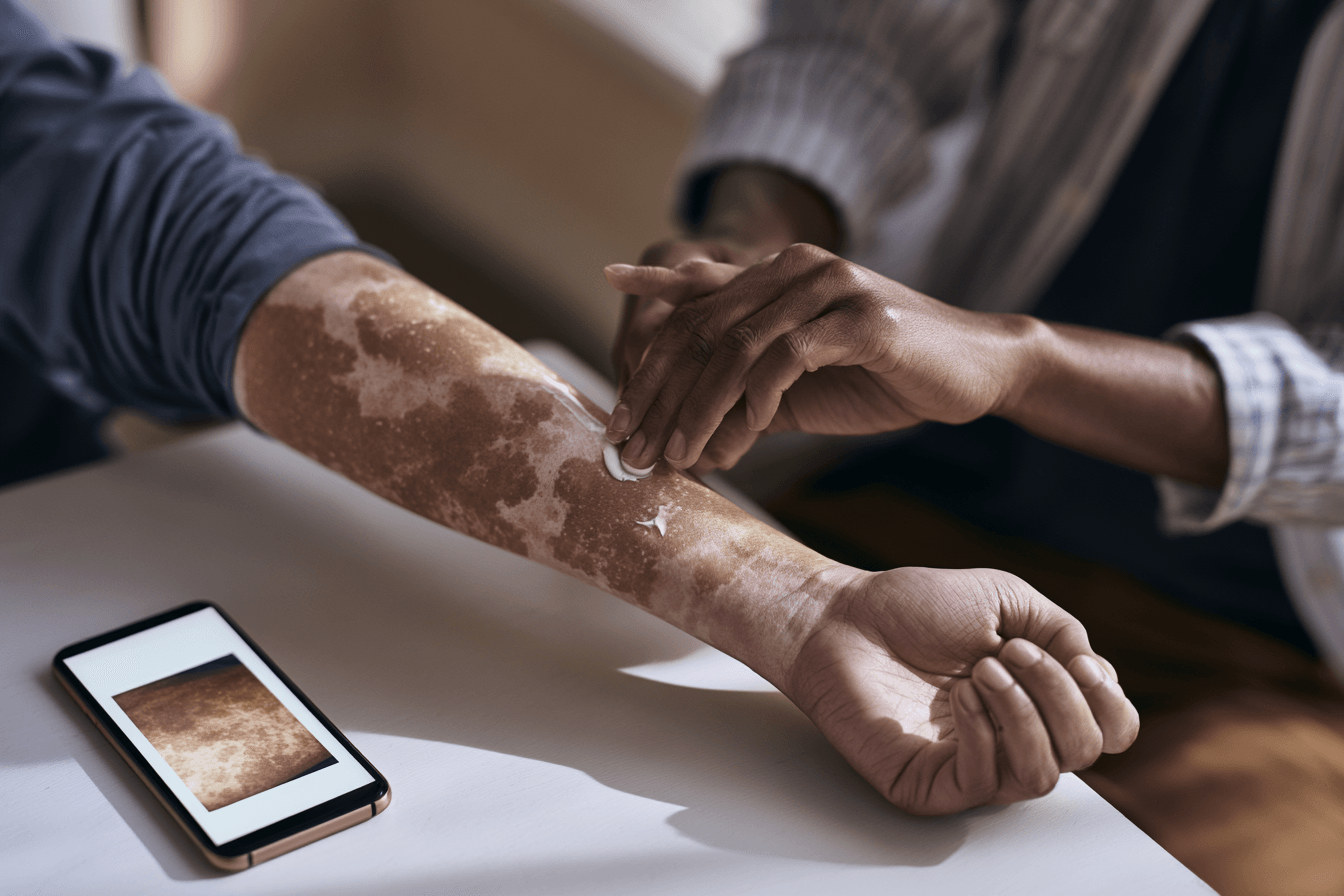
Vitiligo may become active again after a period of stability or after successful repigmentation. Returned colour does not always mean that the underlying disease tendency has completely disappeared. Some immune cells can remain within previously affected skin and may contribute to pigment loss returning in the same area.[1,17]
Recurrence is not proof that the earlier treatment was useless. Vitiligo is a chronic condition that may require monitoring and maintenance, particularly in patients with nonsegmental disease.
Why Can Vitiligo Return After Repigmentation?
During treatment, inflammation may reduce and melanocytes may begin producing pigment again. However, tissue resident memory T cells can remain in the skin even after the patch appears normal. These immune cells may become active again and target melanocytes, contributing to relapse.[17]
Vitiligo may also recur when treatment is stopped suddenly, the disease was not fully stable or the patient develops new patches after skin injury, friction or sunburn. In some cases, recurrence occurs without an identifiable trigger.
What Are the Early Signs of Recurrence?
The first sign may be a small pale area appearing inside a previously repigmented patch. Pigment can also begin fading around the edges, or new white dots may appear elsewhere on the body.
You should arrange an early review when a treated patch begins losing colour, new confetti like spots appear or pigment loss develops after scratching, injury or repeated pressure. Early intervention may be more effective than waiting until a large area has become completely white again.
Standardised photographs taken every four to eight weeks can help identify subtle changes. Daily checking is usually unnecessary and may increase anxiety without providing a reliable comparison.
Is Maintenance Treatment Necessary for Everyone?
Not every patient requires the same maintenance plan. A person with one stable segmental patch may need a different approach from someone with recurrent nonsegmental vitiligo affecting several body regions.
Intermittent topical treatment may be advised for areas that have repigmented but have a high risk of relapse. A randomized study found that twice weekly application of tacrolimus ointment reduced depigmentation recurrence in selected adults after successful repigmentation.[23]
Maintenance treatment should be prescribed according to the affected area, previous response and medicine safety. The patient should not continue potent topical corticosteroids indefinitely without review because prolonged use can thin the skin and cause other local adverse effects.
How Long Should Maintenance Continue?
There is no fixed maintenance duration for every patient. The doctor considers how long the disease has remained stable, whether previous relapses occurred, which areas were affected and whether signs of activity are still present.
Some patients may need intermittent topical treatment for several months. Others may require periodic phototherapy, regular clinical review or rapid treatment whenever a new patch appears.[1,6]
When I reduce treatment, I generally consider disease stability, quality of repigmentation and previous recurrence rather than stopping all medicines immediately after the first visible improvement.
Ayurvedic Maintenance After Repigmentation
Ayurvedic maintenance may include a simplified internal formulation, Rasayana support, suitable Pathya and continued attention to digestion and medicine tolerance. The maintenance plan should usually be lighter than the treatment used during active disease.
Bakuchi should not be continued indefinitely without reassessing liver health, skin sensitivity and ultraviolet exposure. Long term use does not automatically provide better protection from recurrence, and excessive exposure may increase the risk of phototoxicity or liver injury.
A patient who has completed a 30 day avaleha cycle should be reviewed before the formulation is repeated. I assess whether the disease has stabilised, whether pigment is returning and whether any digestive, skin or laboratory abnormality has developed.
Protecting Repigmented Skin
Newly repigmented skin may initially appear lighter or darker than the surrounding area. Colour can become more uniform over time, but the skin should be protected from severe sunburn and repeated injury.
Normal daily activities can continue, but prolonged intense sunlight requires sensible protection. When phototherapy or a photosensitising herb is being used, additional sunlight exposure should not be increased without medical advice.
Repeated friction from tight footwear, watch straps, waistbands or occupational equipment may trigger new patches in susceptible patients. Reducing unnecessary skin trauma may therefore support long term stability.
Do Diet and Stress Control Prevent Recurrence?
No diet has been proven to guarantee that vitiligo will not return. A balanced diet and correction of confirmed nutritional deficiencies support general health, but they do not replace maintenance treatment.
Emotional stress may accompany a relapse, but the patient should not be blamed for causing it. Good sleep, regular activity and psychological support can improve wellbeing and treatment consistency, particularly when visible patches affect confidence or social interaction.[18]
When Should the Treatment Plan Be Changed?
The plan should be reviewed when new patches appear despite maintenance, previously stable lesions begin enlarging or the patient develops adverse effects from treatment. The doctor may need to confirm whether the disease has become active again and decide whether topical treatment, phototherapy or another medical option should be restarted.
When I assess recurrence, I also check whether the patient stopped treatment suddenly, used a new cosmetic or chemical product, experienced repeated skin injury or changed another medicine. These details may help refine the next treatment plan, although a clear trigger is not always found.
Long term management of vitiligo is therefore not limited to achieving colour once. It involves maintaining disease stability, recognising recurrence early, protecting repigmented skin and adjusting treatment before widespread pigment loss develops.[1,6,17,23]
Vitiligo Treatment Safety and Ayurvedic Medicine Quality
Vitiligo treatment may continue for several months, so safety must be considered from the beginning rather than only after an adverse reaction appears. The physician should review the patient’s age, liver and kidney health, diabetes, pregnancy status, allergies, current medicines, phototherapy schedule and previous reactions before prescribing internal or external treatment.[5,20,42–44]
A medicine is not necessarily stronger because it contains more herbs, minerals or photosensitising ingredients. The safest formulation is one that uses authenticated ingredients in justified quantities, follows a documented preparation method and is monitored according to the patient’s response.
Why Medicine Quality Matters in Vitiligo
The quality of an Ayurvedic medicine begins with the correct botanical identity of each ingredient. Bakuchi, Khadira, Asana, Haritaki, Chitraka and other herbs should be obtained from verified sources and checked for substitution, adulteration and deterioration.
Two samples sold under the same herb name may differ in potency because of plant variety, growing conditions, harvesting time, storage and processing. This is especially important for Bakuchi because variations in photosensitising compounds may change both the treatment response and the risk of skin reactions.
Raw materials and finished formulations should be tested according to recognised pharmacopoeial and quality control standards. Appropriate testing may include botanical identification, moisture, microbial contamination, aflatoxins, pesticide residues and toxic elements.[54,55]
Bakuchi Requires Additional Quality Control
Bakuchi should not be included only on the basis of its traditional reputation. The pharmacy should confirm that the correct seed has been used and that it has not been mixed with damaged, mouldy or unidentified material.
Where facilities are available, chromatographic testing can help confirm the botanical fingerprint and assess batch consistency. This is particularly useful because naturally occurring psoralen related compounds influence photosensitivity.
Proper Shodhana or processing should be recorded in the manufacturing documents. Simply writing “purified Bakuchi” on the label is not enough when the source, method, batch and final quality have not been verified.
When I prescribe Bakuchi internally, I also consider liver health and concurrent medicines. When I prescribe it externally, I consider skin type, concentration, body area and planned exposure to sunlight or phototherapy.[42–44]
Herbal Does Not Automatically Mean Free from Side Effects
Ayurvedic medicines can produce adverse effects when an ingredient is unsuitable, the dose is excessive, the preparation is contaminated or the patient has an unrecognised health risk.
Bakuchi may cause painful photosensitivity, redness, burning or blistering. Oral use has also been associated with uncommon but potentially serious liver injury.[42–44] Chitraka may irritate the digestive tract when used inappropriately, particularly in patients with gastritis, acidity or poor tolerance.[50]
Honey, jaggery and ghee may improve the pharmaceutical form and palatability of an avaleha, but they also affect its suitability. A sugar rich preparation may not be appropriate for a patient with uncontrolled diabetes, while a heavy confection may worsen bloating or poor appetite.
You should inform the physician when nausea, abdominal discomfort, itching, rash, dark urine, jaundice, painful skin redness or blistering develops. Continuing the medicine despite a significant adverse reaction may increase harm.
Safety of Mineral and Herbo Mineral Medicines
Mineral ingredients should not be added to a vitiligo formulation merely to make it appear more powerful. Every mineral requires a clear classical rationale, an appropriate pharmaceutical process, a justified dose and reliable testing of the finished batch.
The mention of loha cūrṇa in a classical verse should not automatically be converted into routine use of Loha Bhasma for every patient. Iron containing medicines should be considered only after reviewing haemoglobin, ferritin, transferrin saturation and the patient’s clinical need.
There is no reliable human evidence showing that Loha Bhasma independently repigments vitiligo. Preclinical research also indicates that exposure at higher levels may produce biochemical and tissue abnormalities.[53]
Haratala, Manashila, Rasamanikya, Tamra and mercury containing formulations require particularly strict control. They should not be combined casually or included in a general website formula without explaining the indication, preparation, dose, contraindications and monitoring requirements.
Testing for Toxic Elements and Contamination
Poor quality raw materials may contain unwanted lead, arsenic, mercury, cadmium or other contaminants from soil, water, processing equipment or intentional adulteration. Historical testing of some Ayurvedic products sold online found potentially concerning levels of toxic elements, although those results should not be presented as representing every Ayurvedic medicine currently manufactured.[56]
A responsible pharmacy should test the finished batch rather than relying only on certificates supplied for individual raw ingredients. Batch testing is especially important when minerals are used or when medicines are being supplied for long term consumption.
The laboratory report should identify the batch number and testing method. A general report from another product or an older batch cannot confirm the quality of the medicine currently being dispensed.
Correct Dose and Batch Uniformity
The quantity of each ingredient must remain uniform throughout the avaleha. Small mineral quantities and potent herbs require careful geometric mixing so that one spoon does not contain substantially more active material than another.
The finished batch should be weighed and standardised before packing. The patient should receive a calibrated measuring scoop because household teaspoons and tablespoons vary in capacity.
If the prescribed dosage is 15 grams twice daily, the patient should measure 15 grams rather than estimate the quantity by sight. Increasing the dose without medical advice does not guarantee faster repigmentation and may increase digestive, liver or photosensitivity related risks.
Packaging, Labelling and Storage
Each container should display the formulation name, complete ingredient list, net weight, batch number, manufacturing date, expiry or best before date, dosage, storage instructions and manufacturer details.
The label should also state whether the medicine contains Bakuchi, honey, jaggery, sesame or any mineral ingredient. This information is important for patients with diabetes, allergies, liver disease or concurrent phototherapy.
Avaleha should be stored in a clean, dry place away from direct sunlight and excessive heat. The patient should use a clean, dry spoon and keep the container tightly closed. Moisture introduced through a wet spoon may encourage microbial growth and reduce product stability.
Any unexpected change in smell, taste, colour, texture or visible fungal growth should be reported. The medicine should not be consumed merely because the stated expiry date has not yet passed.
Interactions with Dermatological Treatment
The dermatologist and Ayurvedic physician should know the complete treatment plan. Topical corticosteroids, tacrolimus, ruxolitinib, phototherapy, oral steroids, JAK inhibitors and photosensitising Ayurvedic medicines may require coordinated timing and monitoring.[5,20]
Bakuchi should not be combined casually with PUVA, excimer therapy, narrowband ultraviolet B or prolonged sunlight exposure. A previously tolerated ultraviolet dose may produce excessive redness after a photosensitising preparation is introduced.
Patients using systemic immunomodulating medicines should not add multiple herbal or mineral products without review. The main concern is not that every combination is harmful, but that interactions, infection risk, liver effects and adverse reactions become more difficult to identify when several treatments are started together.
Baseline and Follow Up Monitoring
Testing should be selected according to the formulation and the patient’s health rather than ordering the same panel for everyone. Baseline liver function is particularly relevant when oral Bakuchi is planned. Blood glucose should be considered when the medicine contains significant jaggery or honey, while iron studies are relevant before an iron containing preparation is prescribed.
When I review a patient, I assess both efficacy and tolerance. I ask whether new patches have appeared, whether existing lesions are enlarging, whether repigmentation has begun and whether the patient has experienced digestive symptoms, skin irritation or signs of liver dysfunction.
Treatment should be modified when adverse effects occur, even when early pigment changes are visible. Repigmentation is not a sufficient reason to continue a medicine that is causing clinically significant harm.
How Patients Can Verify Medicine Quality
You should receive clear information about what the medicine contains, how much you need to take and which precautions apply. The treating clinic or pharmacy should be able to identify the manufacturer, batch and quality testing process.
Unlabelled powders, oils or mixtures obtained through informal online sellers should be avoided. A product should not be trusted solely because it is described as natural, classical, secret, handmade or guaranteed.
The patient should also avoid using medicines prescribed to another person. Even when two people have vitiligo, their disease activity, liver health, diabetes status, skin sensitivity and exposure to phototherapy may be different.
When Treatment Should Be Stopped and Reviewed
Internal medicine should be stopped and medically reviewed if the patient develops repeated vomiting, severe loss of appetite, dark urine, pale stools, widespread itching, yellowing of the eyes, marked weakness or persistent upper abdominal pain.
External treatment should be stopped when it causes painful redness, swelling, blistering, raw skin or a spreading rash. Mild warmth should also be reported when it repeatedly worsens after sunlight or phototherapy.
Vitiligo treatment should improve the patient’s condition without creating avoidable injury. Reliable medicine quality, correct dosing, transparent labelling and regular monitoring are therefore as important as the choice of herbs or formulation itself.[42–44,53–56]
Published Ayurvedic Case Study of Vitiligo with Documented Repigmentation
A published case report titled Ayurvedic Management of Shwitra Vitiligo: A Case Study described the treatment of a man with gradually spreading nonsegmental vitiligo. Sneha Patil and S. G. Ashwini published the report in the Journal of Ayurveda and Integrated Medical Sciences in 2022. The complete report appeared in volume 7, issue 5, on pages 139 to 145. (Jaims)
This case is useful because the authors documented the condition before treatment, recorded the treatment sequence over several visits, used a vitiligo severity score and included clinical photographs. However, it was a single-patient case report, so the result should be understood as an encouraging individual outcome rather than proof that the same protocol will produce identical repigmentation in every patient.
Patient’s Condition Before Ayurvedic Treatment
The patient was a 63-year-old man who had developed white patches over the front of both lower legs. The patches had been present for approximately one year and had spread more noticeably during the month before he sought Ayurvedic treatment.
The lesions were distributed symmetrically over both shins. The authors recorded approximately 20 patches on the left leg and 14 patches on the right leg. The left-sided lesions were reported to measure approximately 1 × 0.5 centimetres each, while the right-sided lesions were smaller, measuring approximately 0.25 × 0.25 centimetres each. (Jaims)
The patches were described as white epidermal macules with mild itching. There was no discharge, burning, pain, swelling or altered sensation. This absence of sensory loss was clinically relevant because a pale patch associated with numbness requires evaluation for conditions other than ordinary vitiligo.
The patient did not report a previous history of similar skin disease, trauma or a significant family history. The article also stated that he was not known to have diabetes, hypertension, thyroid disease or another systemic illness. However, the report does not clearly document whether laboratory screening or a Wood’s lamp examination was performed before treatment. (Jaims)
Diagnosis and Ayurvedic Assessment
The clinical presentation was classified as nonsegmental vitiligo because the white patches appeared symmetrically on both lower legs. The authors correlated the condition with Shwitra within the Ayurvedic framework.
The Ayurvedic assessment identified Tridosha involvement, with Rasa, Rakta, Mamsa and Meda considered the affected Dhatus. The report also recorded Jatharagni Mandya, Dhatvagni Mandya and Jatharagni Janya Ama.
Rasavaha, Raktavaha, Mamsavaha and Medovaha Srotas were considered involved, with Sanga described as the type of Srotodushti. The condition was placed in the Bahya Rogamarga, with Amashaya recorded as the Udbhava Sthana and Twacha as the Vyakta Sthana. The authors described the condition as Chirakari, meaning chronic, and Yapya in its prognosis. (Jaims)
These Ayurvedic findings represent a traditional clinical assessment. They should not be interpreted as direct equivalents of thyroid antibodies, inflammatory cytokines, blood abnormalities or oxidative-stress laboratory markers.
Initial Shamana Treatment
The treatment began in August 2021 with Shamana medicines and external applications. The first prescription included Arogyavardhini Vati, Aragwadhadi Kashaya, Bakuchi Taila and Bakuchi Churna for local use.
The aim during this stage was to support digestion and metabolism while beginning local treatment of the depigmented skin. According to the case report, the patches were still white at the beginning of treatment.
At the next review, approximately ten days later, the authors recorded that the previously white patches had developed a pinkish appearance. The treatment was then modified to include oral Bakuchi Churna with honey, Gandhaka Rasayana, Asanadi Ghana Plus and external Bakuchi Churna with Marichadi Taila. (Jaims)
A pink appearance alone should not automatically be described as complete repigmentation. The more meaningful findings appeared later, when darker pigment developed within the white areas and the recorded vitiligo severity score decreased.
Supervised Shodhana Phase
After the initial Shamana phase, the patient underwent a supervised Shodhana programme. This included internal oleation with Guggulutiktaka Ghrita in gradually increasing quantities, followed by Sarvanga Abhyanga, Nadi Swedana and Virechana.
The Virechana procedure was administered using a physician-selected combination that included Trivrit Lehya, Vacha Churna and Drakshadi Kashaya. The report recorded ten purgative evacuations during this treatment stage.
Jalaukavacharana was also included. This procedure uses medicinal leeches under controlled clinical conditions and formed part of the authors’ Rakta-related treatment strategy.
During this stage, Shamana medicines were continued and modified. The reported prescription included Khadiradi Vati, Gandhaka Rasayana, Khadirarishta and internal as well as external Bakuchi preparations. (Jaims)
These procedures and medicine quantities were selected for one patient after direct clinical assessment. Virechana, internal oleation, Jalaukavacharana and the combined internal and external use of Bakuchi should not be copied as a home-treatment protocol.
Further Treatment and Clinical Progress
At a later review in October 2021, the patient received another physician-supervised purgative procedure described as Sadhyo Virechana. The internal medicines at this stage included Arogyavardhini Vati, Khadirarishta, Raktamrita Kwatha and a reduced schedule of oral Bakuchi Churna.
External treatment continued with Bakuchi Churna and Marichadi Taila. At this visit, the authors observed darker pigmentation developing within previously depigmented areas on the left leg. The patches on the right leg were reported to be clearing, although occasional itching was still present.
During the following treatment stage in November 2021, Jalaukavacharana and Sadhyo Virechana were repeated. Kaishora Guggulu, Khadirarishta, oral Bakuchi Churna and selected external oils were used during the follow-up phase.
The treatment was therefore not one fixed prescription continued unchanged for three months. The physicians altered the medicines and procedures according to the observed response at each visit. (Jaims)
Reported Repigmentation Outcome
The authors used the Vitiligo Extent Tensity Index, commonly called the VETI score, to compare disease severity before and after treatment. This score considers the area involved and the intensity of pigment loss.
The recorded VETI score was 12 before treatment and 4 after treatment. This represents a reduction of approximately two-thirds in the recorded score.
The authors reported approximately 80% to 85% filling of the depigmented areas on the left lower leg and approximately 90% filling on the right lower leg. Dark pigmentation was visible within areas that had previously appeared white, and itching was recorded as absent at the final assessment. (Jaims)
The report included photographs taken before treatment and after successive Shodhana stages. According to the authors, visible filling of the depigmented areas increased after each treatment phase, with the greatest reported pigmentation documented after the third Shodhana stage.
The reported outcome developed between August and November 2021, covering approximately three months of supervised treatment. It was not the result of a single medicine taken for a few days.
What May Have Contributed to the Improvement
The clinical improvement cannot be attributed to one herb, formulation or procedure because the patient received several interventions. These included Arogyavardhini Vati, Aragwadhadi Kashaya, Gandhaka Rasayana, Asanadi Ghana Plus, Khadiradi Vati, Khadirarishta, Raktamrita Kwatha, Kaishora Guggulu, oral and external Bakuchi, medicated oils, Snehapana, Swedana, Virechana and Jalaukavacharana.
Bakuchi was one of the most consistently used ingredients. It was administered externally from the beginning and later introduced internally with honey. Khadira-based formulations were also used during several treatment stages.
The staged plan suggests that the physicians aimed first to address Ama and Agni, then introduce Shodhana and subsequently continue Shamana and local pigment-supporting treatment. The reported result therefore reflects a complete Ayurvedic management programme rather than the action of Bakuchi alone.
Strengths of the Published Case Report
A useful feature of this report is that the treatment was described across dated clinical visits rather than being presented only as a final success statement. The authors recorded the number, distribution and appearance of the lesions, documented the Ayurvedic assessment and used a defined scoring method to compare change.
The report also contained before-and-after photographs and stated that ethical approval had been obtained. The journal page reported no external funding and no declared conflict of interest. (Jaims)
These features make the case more informative than an undocumented testimonial. They allow readers and clinicians to examine the reported treatment sequence, outcome measurements and authors’ interpretation.
Important Limitations of This Case
This was a single case report without a control group, randomisation or blinded assessment. Natural fluctuation, spontaneous repigmentation, sunlight exposure and other unrecorded factors cannot be separated completely from the treatment effect.
Several medicines and procedures were used together, so the report cannot show whether Bakuchi, Virechana, Jalaukavacharana, Khadira preparations or another component contributed most to the result. It also cannot establish whether the same response would have occurred with a simpler protocol.
The report does not provide long-term follow-up showing whether the returned pigment remained stable after treatment was stopped. It therefore cannot establish permanent repigmentation or absence of recurrence.
The patient had vitiligo over the lower legs. His response cannot be applied automatically to patients with vitiligo on the fingertips, palms, soles, lips, genital mucosa or patches containing extensive white hair, because these areas commonly behave differently.
The published paper also does not evaluate Somaraji Khadiradi Shwitra Rasayana Avaleha. It should not be used as direct proof for the composition, dosage or effectiveness of that separate classically inspired formulation.
What This Case Means for Patients
This published case demonstrates that substantial repigmentation and a measurable reduction in the VETI score were reported in one patient who completed a carefully supervised Ayurvedic programme. The treatment was personalised, staged and modified according to the patient’s response.
The case also shows why Ayurvedic treatment for vitiligo should not be reduced to purchasing Bakuchi oil or one tablet online. The reported patient received repeated examinations, internal medicines, external applications, clinical procedures and follow-up assessments over several months.
A patient considering similar care should first have the diagnosis confirmed and the disease classified as active or stable. Liver health, digestive tolerance, diabetes, thyroid symptoms, skin sensitivity and concurrent phototherapy should also be reviewed before oral or external Bakuchi is prescribed.
The most responsible conclusion is that the reported outcome is clinically encouraging and supports further controlled research into structured Ayurvedic treatment for Shwitra. It does not guarantee that every patient will achieve the same degree or speed of repigmentation.
Readers can review the complete treatment schedule, clinical photographs and outcome measurements in the full published case report. (Jaims)
Frequently Asked Questions
What Is the Best Ayurvedic Treatment for Vitiligo?
The best Ayurvedic treatment for vitiligo is a personalised plan based on whether the disease is active or stable, the affected body areas, duration, digestive strength, liver health and associated conditions. Treatment may include Shamana medicines, selected Shodhana procedures, Rasayana, external applications, diet and coordinated dermatological care.
Can Ayurveda Cure Vitiligo Permanently?
Ayurvedic treatment may help control disease activity and support gradual repigmentation, but permanent cure cannot be guaranteed for every patient. Results depend on the type of vitiligo, body location, duration, remaining melanocytes, hair colour within the patches and whether the disease continues to spread.
What Is Shwitra Treatment in Ayurveda?
Shwitra treatment in Ayurveda is planned after assessing Dosha, Dhatu, Agni, Ama, Srotas, disease activity and the patient’s overall health. The treatment may combine internal herbal formulations, carefully selected external applications, Pathya, Rasayana and physician supervised Shodhana when clinically suitable.
Is Vitiligo an Autoimmune Disease?
Nonsegmental vitiligo is mainly considered an autoimmune disease. The immune system mistakenly targets melanocytes, which are the cells that produce skin pigment. Genetic susceptibility, oxidative stress and abnormal immune signalling may work together to cause pigment loss.
Is Vitiligo Contagious?
Vitiligo is not contagious. It cannot spread through touching, sharing food, clothing, towels, sexual contact or living with an affected person. Vitiligo develops because pigment producing cells become damaged or are lost, not because of an infection.
Can White Vitiligo Patches Become Normal Again?
Many vitiligo patches can regain partial or substantial colour when functioning melanocytes remain. Repigmentation commonly begins as small brown dots around hair follicles or gradually returns from the edges. Facial and neck patches usually respond better than fingers, toes, palms, soles and lips.
How Long Does Ayurvedic Treatment for Vitiligo Take?
Vitiligo treatment generally requires several months rather than a few days. The first treatment cycle is used to assess medicine tolerance, disease activity and early pigment changes. Longstanding patches, white hair within lesions and involvement of the hands or feet may require a longer treatment period.
Which Ayurvedic Medicine Is Commonly Used for Vitiligo?
Bakuchi, Khadira, Asana, Haritaki, Krishna Tila, Amalaki and other herbs may be selected in Ayurvedic treatment for vitiligo. No single herb is suitable for every patient. The medicine and dose must be chosen according to liver health, digestion, skin sensitivity, ultraviolet exposure and concurrent treatment.
What Is Somaraji Khadiradi Shwitra Rasayana Avaleha?
Somaraji Khadiradi Shwitra Rasayana Avaleha is a physician designed formulation inspired by classical references involving Somaraji, Khadira, Asana, Haritaki, Krishna Tila, Chitraka, ghee and honey. It is a classically inspired proprietary formulation and not an unchanged recipe taken from one Ayurvedic text.
What Is the Dosage of Vitiligo Avaleha?
The proposed adult dosage of Somaraji Khadiradi Shwitra Rasayana Avaleha is fifteen grams after breakfast and fifteen grams after the evening meal. The dosage must be prescribed after evaluating digestion, blood glucose, liver function, age, associated illnesses and other medicines.
Is Bakuchi Safe for Vitiligo Treatment?
Bakuchi can be useful in carefully selected patients, but it is a potent photosensitising herb. Incorrect use may cause redness, burning, painful blistering or excessive sensitivity to sunlight. Oral Bakuchi has also been associated with uncommon liver injury, so supervised dosing and safety monitoring are important.
Can Bakuchi Be Used with Sunlight or Phototherapy?
Bakuchi should not be combined casually with sunlight, narrowband ultraviolet B, excimer treatment or PUVA. Its photosensitising compounds can increase the skin’s response to ultraviolet light and may cause burns. Exposure timing and duration must be coordinated by the treating physician.
What Tests Are Needed Before Ayurvedic Vitiligo Treatment?
Testing depends on the patient’s symptoms and planned medicines. Liver function may be assessed before oral Bakuchi, blood glucose may be reviewed before prescribing a jaggery and honey based avaleha, and iron studies are required before considering an iron containing preparation. Thyroid testing may be advised when clinically relevant.
Can Diet Cure Vitiligo?
No particular diet has been proven to cure vitiligo. A balanced diet can support general health, correct nutritional deficiencies and improve medicine tolerance. Severe restrictions involving milk, fruits, grains, pulses or other major food groups may cause nutritional deficiencies without stopping pigment loss.
Should Citrus Fruits and Sour Foods Be Avoided in Vitiligo?
Citrus fruits and sour foods do not need to be avoided by every patient with vitiligo. A food may be restricted when it repeatedly causes allergy, acidity, diarrhoea or another identifiable problem. Dietary advice should be personalised rather than based on a universal prohibited food list.
Does Eating Fish with Milk Cause Vitiligo?
Modern clinical evidence has not established fish and milk consumed together as a direct cause of vitiligo. Vitiligo develops through genetic, oxidative and autoimmune mechanisms. Ayurvedic dietary compatibility may be considered individually, but patients should not be blamed for developing vitiligo after eating a particular food combination.
Which Areas of Vitiligo Respond Best to Treatment?
The face and neck usually respond more favourably because these areas contain many hair follicles that can supply melanocytes. The trunk and upper limbs may respond moderately well, while the fingers, toes, palms, soles, lips and areas containing white hair are generally more difficult to repigment
Can Vitiligo Treatment Work When Hair Inside the Patch Is White?
Treatment may still be attempted, but white hair within a vitiligo patch often indicates reduced follicular melanocytes. Such patches generally respond more slowly and may remain resistant to medicines or phototherapy. Stable areas with extensive white hair may require assessment for surgical repigmentation.
Can Ayurvedic and Dermatological Vitiligo Treatment Be Used Together?
Ayurvedic and dermatological treatment can be used together when both physicians know the complete treatment plan. Coordination is especially important when the patient uses Bakuchi, phototherapy, topical steroids, tacrolimus, ruxolitinib or systemic immune modifying medicines.
Can Vitiligo Return After Repigmentation?
Vitiligo can return after pigment has improved because immune activity may persist within previously affected skin. Some patients require maintenance treatment, skin protection and regular follow up. New white dots, enlargement of old patches or colour loss after injury should be reviewed early.
Is a Thirty Day Ayurvedic Course Enough for Vitiligo?
A thirty day course is usually the first monitored treatment cycle, not the complete treatment duration. During this period, the physician evaluates tolerance, new patch formation, disease stability and early perifollicular pigmentation. Meaningful repigmentation commonly requires continued treatment and monitoring over several months.
When Should Vitiligo Medicine Be Stopped Immediately?
Treatment should be stopped and medically reviewed if the patient develops severe skin redness, blistering, repeated vomiting, dark urine, widespread itching, yellowing of the eyes, facial swelling or breathing difficulty. These symptoms may indicate a significant skin reaction, allergy or liver related adverse effect.
When Should a Patient Consult a Vitiligo Specialist?
A specialist consultation is advisable when patches are spreading rapidly, affecting the face or sensitive areas, appearing after minor injuries or failing to improve with previous treatment. Early assessment is also important when the diagnosis is uncertain or the patient has thyroid disease, diabetes, liver abnormalities or another autoimmune condition.
References
Modern Vitiligo Diagnosis, Pathogenesis and Treatment References
[1] Seneschal, J., Bae, J. M., Ezzedine, K., Hamzavi, I., Harris, J. E., Bellei, B., Parsad, D., Passeron, T., van Geel, N., Boniface, K., & Picardo, M. (2025). Vitiligo. Nature Reviews Disease Primers, 11(1), Article 85.
https://pubmed.ncbi.nlm.nih.gov/41345471
Used for: The current overall definition of vitiligo, melanocyte loss, autoimmune pathogenesis, disease classification, genetic susceptibility, oxidative stress, quality-of-life effects, recurrence and modern management principles.
[2] Ezzedine, K., Lim, H. W., Suzuki, T., Katayama, I., Hamzavi, I., Lan, C. C. E., Goh, B. K., Anbar, T., Silva de Castro, C., Lee, A. Y., Parsad, D., van Geel, N., Le Poole, I. C., Oiso, N., Benzekri, L., Spritz, R., Gauthier, Y., Hann, S. K., Picardo, M., & Taïeb, A. (2012). Revised classification/nomenclature of vitiligo and related issues: The Vitiligo Global Issues Consensus Conference. Pigment Cell & Melanoma Research, 25(3), E1–E13.
https://pubmed.ncbi.nlm.nih.gov/22417114
Used for: International classification of nonsegmental, segmental, mixed and unclassified vitiligo and the correct terminology for describing different clinical patterns.
[3] van Geel, N., Speeckaert, R., Taïeb, A., Ezzedine, K., Lim, H. W., Pandya, A. G., Passeron, T., Wolkerstorfer, A., Abdallah, M., Alomar, A., Bae, J. M., Bekkenk, M., Benzekri, L., Böhm, M., Eleftheriadou, V., Esmat, S., Ghia, D., Goh, B. K., Grimes, P., … Seneschal, J. (2023). Worldwide expert recommendations for the diagnosis and management of vitiligo: Position statement from the International Vitiligo Task Force, Part 1: Towards a new management algorithm. Journal of the European Academy of Dermatology and Venereology, 37(11), 2173–2184.
https://pubmed.ncbi.nlm.nih.gov/37746876
Used for: Clinical diagnosis, disease classification, activity and stability assessment, Wood’s lamp use, baseline documentation, treatment planning and shared decision-making.
[4] Seneschal, J., Speeckaert, R., Taïeb, A., Wolkerstorfer, A., Passeron, T., Pandya, A. G., Lim, H. W., Ezzedine, K., Zhou, Y., Xiang, F., Thng, S., Tanemura, A., Suzuki, T., Rosmarin, D., Rodrigues, M., Raboobee, N., Pliszewski, G., Parsad, D., Oiso, N., … van Geel, N. (2023). Worldwide expert recommendations for the diagnosis and management of vitiligo: Position statement from the International Vitiligo Task Force, Part 2: Specific treatment recommendations. Journal of the European Academy of Dermatology and Venereology, 37(11), 2185–2195.
https://pubmed.ncbi.nlm.nih.gov/37715487
Used for: Expert recommendations on topical corticosteroids, calcineurin inhibitors, phototherapy, systemic treatment, maintenance treatment and surgical options.
[5] Eleftheriadou, V., Atkar, R., Batchelor, J., McDonald, B., Novakovic, L., Patel, J. V., Ravenscroft, J., Rush, E., Shah, D., Shah, R., Shaw, L., Thompson, A. R., Hashme, M., Exton, L. S., Mohd Mustapa, M. F., Manounah, L., & British Association of Dermatologists’ Clinical Standards Unit. (2022). British Association of Dermatologists guidelines for the management of people with vitiligo 2021. British Journal of Dermatology, 186(1), 18–29.
https://pubmed.ncbi.nlm.nih.gov/34160061
Used for: Diagnosis, appropriate investigations, topical treatment, phototherapy, monitoring, psychological support and evidence-based safety recommendations.
[6] Prajapati, V. H., Lui, H., Miller-Monthrope, Y., Ringuet, J., Turchin, I., Hong, H. C. H., Lynde, C., Papp, K. A., Yeung, J., & Gooderham, M. J. (2025). Canadian consensus guidelines for the management of vitiligo. Dermatology and Therapy, 15(6), 1351–1369.
https://pubmed.ncbi.nlm.nih.gov/40253664
Used for: Current treatment algorithms, realistic outcome counselling, personalised treatment selection, site-dependent response and long-term maintenance.
[7] Goh, B. K., & Pandya, A. G. (2017). Presentations, signs of activity, and differential diagnosis of vitiligo. Dermatologic Clinics, 35(2), 135–144.
https://pubmed.ncbi.nlm.nih.gov/28317523
Used for: Early presentation, confetti-like depigmentation, trichrome lesions, Koebner phenomenon, inflammatory borders and conditions that can resemble vitiligo.
[8] Abdi, P., Anthony, M. R., Farkouh, C., Chan, A. R., Kooner, A., Qureshi, S., & Maibach, H. (2023). Non-invasive skin measurement methods and diagnostics for vitiligo: A systematic review. Frontiers in Medicine, 10, Article 1200963.
https://pmc.ncbi.nlm.nih.gov/articles/PMC10416110
Used for: Wood’s lamp examination, dermoscopy, ultraviolet photography, objective imaging and non-invasive monitoring of pigment changes.
[9] van Geel, N., Passeron, T., Wolkerstorfer, A., Speeckaert, R., & Ezzedine, K. (2020). Reliability and validity of the Vitiligo Signs of Activity Score. British Journal of Dermatology, 183(5), 883–890.
https://pubmed.ncbi.nlm.nih.gov/32064583
Used for: Structured assessment of confetti-like lesions, Koebner phenomenon, hypochromic borders and other visible signs linked with active vitiligo.
[10] Gill, L., Zarbo, A., Isedeh, P., Jacobsen, G., Lim, H. W., & Hamzavi, I. H. (2016). Comorbid autoimmune diseases in patients with vitiligo: A cross-sectional study. Journal of the American Academy of Dermatology, 74(2), 295–302.
https://pubmed.ncbi.nlm.nih.gov/26518171
Used for: Associations between vitiligo and autoimmune thyroid disease, pernicious anaemia, alopecia areata and other autoimmune disorders.
[11] Fan, K. C., Yang, T. H., & Huang, Y. C. (2018). Vitiligo and thyroid disease: A systematic review and meta-analysis. European Journal of Dermatology, 28(6), 750–763.
https://pubmed.ncbi.nlm.nih.gov/30698146
Used for: Evidence supporting the association between vitiligo and autoimmune thyroid disease and the rationale for symptom- and risk-based thyroid evaluation.
[12] Chang, H. C., Lin, M. H., Huang, Y. C., & Hou, T. Y. (2019). The association between vitiligo and diabetes mellitus: A systematic review and meta-analysis. Journal of the American Academy of Dermatology, 81(6), 1442–1445.
https://pubmed.ncbi.nlm.nih.gov/31228523
Used for: Evidence concerning the association between vitiligo and diabetes while supporting selective metabolic assessment rather than universal testing.
[13] Sawicki, J., Siddha, S., & Rosen, C. (2012). Vitiligo and associated autoimmune disease: Retrospective review of 300 patients. Journal of Cutaneous Medicine and Surgery, 16(4), 261–266.
https://pubmed.ncbi.nlm.nih.gov/22784519
Used for: Clinical associations with hypothyroidism and pernicious anaemia and the role of focused thyroid, vitamin B12 and haematological assessment.
[14] Jin, Y., Andersen, G., Yorgov, D., Ferrara, T. M., Ben, S., Brownson, K. M., Holland, P. J., Birlea, S. A., Siebert, J., Hartmann, A., Lienert, A., van Geel, N., Lambert, J., Luiten, R. M., Wolkerstorfer, A., van der Veen, J. P. W., Bennett, D. C., Taïeb, A., Ezzedine, K., … Spritz, R. A. (2016). Genome-wide association studies of autoimmune vitiligo identify 23 new risk loci and highlight key pathways and regulatory variants. Nature Genetics, 48(11), 1418–1424.
https://pubmed.ncbi.nlm.nih.gov/27723757
Used for: Polygenic susceptibility and the interaction of immune-regulatory, melanocyte-related and pigmentation pathways in vitiligo.
[15] Xuan, Y., Yang, Y., Xiang, L., & Zhang, C. (2022). The role of oxidative stress in the pathogenesis of vitiligo: A culprit for melanocyte death. Oxidative Medicine and Cellular Longevity, 2022, Article 8498472.
https://pubmed.ncbi.nlm.nih.gov/35103096
Used for: Reactive oxygen species, impaired antioxidant defence, mitochondrial dysfunction and oxidative melanocyte injury.
[16] Rashighi, M., Agarwal, P., Richmond, J. M., Harris, T. H., Dresser, K., Su, M. W., Zhou, Y., Deng, A., Hunter, C. A., Luster, A. D., & Harris, J. E. (2014). CXCL10 is critical for the progression and maintenance of depigmentation in a mouse model of vitiligo. Science Translational Medicine, 6(223), Article 223ra23.
https://pubmed.ncbi.nlm.nih.gov/24523323
Used for: Preclinical evidence concerning interferon-gamma and CXCL10 signalling and recruitment of melanocyte-targeting immune cells.
[17] Richmond, J. M., Strassner, J. P., Zapata, L., Jr., Garg, M., Riding, R. L., Refat, M. A., Fan, X., Azzolino, V., Tovar-Garza, A., Tsurushita, N., Pandya, A. G., Tso, J. Y., & Harris, J. E. (2018). Antibody blockade of IL-15 signaling has the potential to durably reverse vitiligo. Science Translational Medicine, 10(450), Article eaam7710.
https://pubmed.ncbi.nlm.nih.gov/30021889
Used for: The role of tissue-resident memory T cells and IL-15 signalling in persistence and recurrence. The therapeutic findings are primarily based on mouse-model research.
[18] Ezzedine, K., Eleftheriadou, V., Jones, H., Bibeau, K., Kuo, F. I., Sturm, D., & Pandya, A. G. (2021). Psychosocial effects of vitiligo: A systematic literature review. American Journal of Clinical Dermatology, 22(6), 757–774.
https://pubmed.ncbi.nlm.nih.gov/34554406
Used for: Anxiety, depression, stigma, relationship difficulties, impaired self-confidence and reduced quality of life associated with vitiligo.
[19] Rosmarin, D., Passeron, T., Pandya, A. G., Grimes, P., Harris, J. E., Desai, S. R., Lebwohl, M., Ruer-Mulard, M., Seneschal, J., Wolkerstorfer, A., Kornacki, D., Sun, K., Butler, K., & Ezzedine, K. (2022). Two phase 3, randomized, controlled trials of ruxolitinib cream for vitiligo. New England Journal of Medicine, 387(16), 1445–1455.
https://pubmed.ncbi.nlm.nih.gov/36260792
Used for: Phase 3 evidence for ruxolitinib cream, facial repigmentation outcomes, treatment duration, response through 52 weeks and commonly reported adverse effects.
[20] U.S. National Library of Medicine. (2026, June 30). OPZELURA—Ruxolitinib cream [Drug label]. DailyMed. Retrieved August 30, 2026, from
https://dailymed.nlm.nih.gov/dailymed/drugInfo.cfm?setid=24da5509-6631-4795-9d42-273faecd08e7
Used for: Current United States prescribing information, approved age group, application limits, warnings, contraindication considerations and adverse reactions.
[21] Thomas, K. S., Batchelor, J. M., Akram, P., Chalmers, J. R., Haines, R. H., Meakin, G. D., Duley, L., Ravenscroft, J. C., Rogers, A., Sach, T. H., Santer, M., Tan, W., White, J., Whitton, M. E., Williams, H. C., Cheung, S. T., Hamad, H., Wright, A., Ingram, J. R., … Montgomery, A. A. (2021). Randomized controlled trial of topical corticosteroid and home-based narrowband ultraviolet B for active and limited vitiligo: Results of the HI-Light Vitiligo Trial. British Journal of Dermatology, 184(5), 828–839.
https://pubmed.ncbi.nlm.nih.gov/33006767
Used for: Evidence concerning topical corticosteroid therapy, home narrowband UVB and combined treatment for active, limited vitiligo.
[22] Bae, J. M., Jung, H. M., Hong, B. Y., Lee, J. H., Choi, W. J., Lee, J. H., & Kim, G. M. (2017). Phototherapy for vitiligo: A systematic review and meta-analysis. JAMA Dermatology, 153(7), 666–674.
https://pubmed.ncbi.nlm.nih.gov/28355423
Used for: Expected response according to phototherapy duration and body location, including better facial and neck response and poorer acral response.
[23] Cavalié, M., Ezzedine, K., Fontas, E., Montaudié, H., Castela, E., Bahadoran, P., Taïeb, A., Lacour, J. P., & Passeron, T. (2015). Maintenance therapy of adult vitiligo with 0.1% tacrolimus ointment: A randomized, double-blind, placebo-controlled study. Journal of Investigative Dermatology, 135(4), 970–974.
https://pubmed.ncbi.nlm.nih.gov/25521460
Used for: Evidence that intermittent topical tacrolimus may reduce recurrence after successful repigmentation in selected patients.
[24] Bhingradia, Y. M., Gupta, S., Ghia, D., Shah, S., Patel, N. K., Salim, T., Kumari, P., Vasudevan, B., Shah, S., Jain, N., Borkhatariya, P. B., Mitra, D., & Prasad, D. (2025). Consensus statement on the surgical management of vitiligo. Journal of Cutaneous and Aesthetic Surgery, 18(1), 27–33.
https://pubmed.ncbi.nlm.nih.gov/40027541
Used for: Disease-stability requirements, patient selection, grafting and cellular transplantation methods, postoperative care and surgical limitations.
[25] Passeron, T., Prajapati, V. H., Sivamani, R. K., Ezzedine, K., van Geel, N., Hamzavi, I., Pandya, A. G., Rosmarin, D., Xiang, L., Suzuki, T., Desai, S., Rashighi, M., Suravaram, S., Fish, I., Hu, X., Wu, X., Wang, M., Yu, Y., Soliman, A. M., … Seneschal, J. (2026). Efficacy and safety of upadacitinib in adults and adolescents for treatment of non-segmental vitiligo: Results of two phase 3 randomised controlled studies. The Lancet, 408(10555), 636–648.
https://pubmed.ncbi.nlm.nih.gov/42594914
Used for: Two global phase 3 trials of once-daily upadacitinib 15 mg in adults and adolescents with nonsegmental vitiligo, including facial and total-body repigmentation outcomes and safety findings.
[26] European Medicines Agency. (2026, August 17). Rinvoq: European public assessment report. Retrieved August 30, 2026, from
https://www.ema.europa.eu/en/medicines/human/EPAR/rinvoq
Used for: Current European regulatory indication and safety information for upadacitinib, including nonsegmental vitiligo in eligible adults and adolescents aged 12 years and older.
[27] Shakhbazova, A., Wu, H., Chambers, C. J., & Sivamani, R. K. (2021). A systematic review of nutrition, supplement, and herbal-based adjunctive therapies for vitiligo. Journal of Alternative and Complementary Medicine, 27(4), 294–311.
https://pubmed.ncbi.nlm.nih.gov/33337930
Used for: Evaluation of human evidence for nutritional supplements, antioxidants and herbal adjuncts and the limitations of the available research.
[28] Hadi, Z., Kaur, R., Parekh, Z., Khanna, S., Khalil, A. B. B., Abbasi, H. Q., Ashfaque, F., Shah, D., Patel, V. J., & Hasibuzzaman, M. A. (2024). Exploring the impact of diet and nutrition on vitiligo: A systematic review of dietary factors and nutritional interventions. Journal of Cosmetic Dermatology, 23(7), 2320–2327.
https://pubmed.ncbi.nlm.nih.gov/38465786
Used for: Current evidence on vitamins, minerals, antioxidants and dietary interventions, while clarifying that no restrictive diet has been established as a cure.
[29] Colucci, R., Dragoni, F., Conti, R., Pisaneschi, L., Lazzeri, L., & Moretti, S. (2015). Evaluation of an oral supplement containing Phyllanthus emblica fruit extracts, vitamin E, and carotenoids in vitiligo treatment. Dermatologic Therapy, 28(1), 17–21.
https://pubmed.ncbi.nlm.nih.gov/25285994
Used for: A six-month comparative study of an Amalaki-containing antioxidant combination. Amalaki was not studied alone, so its independent clinical effect cannot be established.
Classical Ayurvedic References
[30] Agniveśa. (n.d.). Caraka Saṃhitā: Cikitsā Sthāna, Kuṣṭha Cikitsā Adhyāya, Chapter 7, Verse 166 [Digital Sanskrit text]. Siva. Retrieved August 30, 2026, from
https://www.siva.sh/caraka-samhita/chikitsa-sthana/7/166
Used for: The classical importance of Khadira water and Khadira-associated administration in Shwitra management.
[31] Vāgbhaṭa. (n.d.). Aṣṭāṅga Hṛdaya: Nidāna Sthāna, Kuṣṭha Śvitra Kṛmi Nidāna Adhyāya, Chapter 14, Verse 37 [Digital Sanskrit text]. Siva. Retrieved August 30, 2026, from
https://www.siva.sh/astanga-hrudaya/nidana-sthana/14/37
Used for: The classical description of Shwitra, Kilasa and Daruna as generally nonexudative conditions involving Rakta, Mamsa and Medas.
[32] Suśruta. (1911/2018). Suśruta Saṃhitā: Nidāna Sthāna, Chapter 5, Diagnosis of leprosy and other skin diseases (K. L. Bhishagratna, Trans.). Wisdom Library.
https://www.wisdomlib.org/hinduism/book/sushruta-samhita-volume-2-nidanasthana/d/doc142863.html
Used for: Classical causative and diagnostic concepts within the broader Kushtha framework. The word “leprosy” reflects the historical English translation and should not be used as a universal modern translation of Kushtha.
[33] Suśruta. (1911/2018). Suśruta Saṃhitā: Cikitsā Sthāna, Chapter 9, The medical treatment of cutaneous affections (K. L. Bhishagratna, Trans.). Wisdom Library.
https://www.wisdomlib.org/hinduism/book/sushruta-samhita-volume-4-cikitsasthana/d/doc142909.html
Used for: Classical internal treatment, external applications, dietary conduct and individualised management within the Kushtha and Shwitra framework.
[34] Agniveśa. (n.d.). Caraka Saṃhitā: Vimāna Sthāna, Sroto Vimāna Adhyāya, Chapter 5, Verses 1–5 [Digital Sanskrit text]. Siva. Retrieved August 30, 2026, from
https://www.siva.sh/caraka-samhita/vimana-sthana/5/1-5
Used for: Classical definition of Srotas and their relationship with transport, nourishment, Dhatu function and disease development.
[35] Agniveśa. (n.d.). Caraka Saṃhitā: Cikitsā Sthāna, Grahaṇī Doṣa Cikitsā Adhyāya, Chapter 15, Verses 41–45 [Digital Sanskrit text]. Siva. Retrieved August 30, 2026, from
https://www.siva.sh/caraka-samhita/chikitsa-sthana/15/41-45
Used for: Classical concepts of impaired Agni and Ama formation. These remain Ayurvedic clinical constructs and should not be presented as direct equivalents of laboratory biomarkers.
[36] Vāgbhaṭa. (n.d.). Aṣṭāṅga Hṛdaya: Uttara Sthāna, Rasāyana Vidhi Adhyāya, Chapter 39, Verse 107 [Digital Sanskrit text]. Siva. Retrieved August 30, 2026, from
https://www.siva.sh/astanga-hrudaya/uttara-sthana/39/107
Used for: The principal classical foundation for Somaraji processed with Asana and Khadira and combined with Śikhi, Pathya, loha cūrṇa, ghee and honey.
[37] Vāgbhaṭa. (n.d.). Aṣṭāṅga Hṛdaya: Uttara Sthāna, Rasāyana Vidhi Adhyāya, Chapter 39, Verse 108 [Digital Sanskrit text]. Siva. Retrieved August 30, 2026, from
https://www.siva.sh/astanga-hrudaya/uttara-sthana/39/108
Used for: The classical regulated use of Somaraji with Krishna Tila. The verse describes prolonged use for one year, not a complete 30-day treatment course.
[38] Suśruta. (1911/2018). Suśruta Saṃhitā: Cikitsā Sthāna, Medhāyuṣkāmīya Rasāyana Adhyāya, Chapter 28 (K. L. Bhishagratna, Trans.). Wisdom Library.
https://www.wisdomlib.org/hinduism/book/sushruta-samhita-volume-4-cikitsasthana/d/doc142941.html
Used for: The classical Avalguja or Bakuchi Rasayana background. It describes a different therapeutic preparation and is not the exact source of the proposed proprietary avaleha.
[39] Śārṅgadhara. (n.d.). Śārṅgadhara Saṃhitā of Śārṅgadhara Ācārya: Madhyama Khaṇḍa, Avaleha Kalpanā, Chapter 8 (B. Tripathi, Hindi commentary). Chaukhamba Surbharati Prakashan. Internet Archive.
Used for: General Ayurvedic pharmaceutical principles of Kwatha and Avaleha preparation, cooking, addition of powders, use of pharmaceutical vehicles and assessment of final consistency.
Ayurvedic Clinical, Ingredient and Safety References
[40] Dhanik, A., Sujatha, N., & Rai, N. P. (2011). Clinical evaluation of the efficacy of Shvitrahara Kashaya and Lepa in vitiligo. AYU, 32(1), 66–69.
https://pubmed.ncbi.nlm.nih.gov/22131760
Used for: Preliminary clinical evidence from 50 patients treated with a different Ayurvedic internal and external protocol. It does not validate Somaraji Khadiradi Shwitra Rasayana Avaleha or its proposed dose.
[41] Hussain, I., Hussain, N., Manan, A., Rashid, A., Khan, B., & Bakhsh, S. (2016). Fabrication of anti-vitiligo ointment containing Psoralea corylifolia: In vitro and in vivo characterization. Drug Design, Development and Therapy, 10, 3805–3816.
https://pubmed.ncbi.nlm.nih.gov/27920496
Used for: A small 20-patient, 12-week study of a topical 10% Bakuchi seed ointment. It provides preliminary topical evidence but does not establish oral avaleha efficacy or long-term safety.
[42] Hussain, I. (2021). The safety of medicinal plants used in the treatment of vitiligo and hypermelanosis: A systematic review of use and reports of harm. Clinical, Cosmetic and Investigational Dermatology, 14, 261–284.
https://pubmed.ncbi.nlm.nih.gov/33790609
Used for: Reported adverse effects of pigment-modifying medicinal plants, including phototoxicity, burning, erythema, itching, blistering and liver-related concerns.
[43] Smith, D. A., & MacDonald, S. (2014). A rare case of acute hepatitis induced by use of Babchi seeds as an Ayurvedic remedy for vitiligo. BMJ Case Reports, 2014, Article bcr2013200958.
https://pubmed.ncbi.nlm.nih.gov/25103314
Used for: A documented case of acute hepatitis following Babchi seed use and the rationale for patient selection, liver assessment and adverse-symptom counselling.
[44] Gandhi, H. J., Chandnani, S., Jena, A., Jain, S., Malokar, R. N., Chudasama, J., Kamat, R., Philips, C. A., & Rathi, P. (2024). A rare cause of acute-on-chronic liver failure: Bakuchi-induced liver injury. Journal of Clinical and Experimental Hepatology, 14(1), Article 101267.
https://pubmed.ncbi.nlm.nih.gov/38076371
Used for: A serious liver-injury report involving Bakuchi in a patient with underlying liver disease and the need to avoid unsupervised prolonged oral use.
[45] Sunil, M. A., Sunitha, V. S., Radhakrishnan, E. K., & Jyothis, M. (2019). Immunomodulatory activities of Acacia catechu, a traditional thirst quencher of South India. Journal of Ayurveda and Integrative Medicine, 10(3), 185–191.
https://pubmed.ncbi.nlm.nih.gov/29502869
Used for: Experimental immunomodulatory findings involving Khadira extracts, including effects on inflammatory mediators and immune responses. It is not a human vitiligo trial.
[46] Mohammadi, M., Khole, S., Devasagayam, T. P. A., & Ghaskadbi, S. S. (2009). Pterocarpus marsupium extract reveals strong in vitro antioxidant activity. Drug Discoveries & Therapeutics, 3(4), 151–161.
https://pubmed.ncbi.nlm.nih.gov/22495601
Used for: Laboratory antioxidant and mitochondrial-protective findings involving Pterocarpus marsupium stem-bark extract. It provides indirect mechanistic support and is not evidence for human vitiligo repigmentation.
[47] Kunchana, K., Jarisarapurin, W., Chularojmontri, L., & Wattanapitayakul, S. K. (2021). Potential use of Amla (Phyllanthus emblica L.) fruit extract to protect skin keratinocytes from inflammation and apoptosis after UVB irradiation. Antioxidants, 10(5), Article 703.
https://pubmed.ncbi.nlm.nih.gov/33946757
Used for: Laboratory evidence that Amalaki extract may reduce UVB-associated oxidative stress, inflammation and apoptosis in keratinocytes. It does not establish melanocyte regeneration in patients.
[48] Bedi, K. L., Zutshi, U., Chopra, C. L., & Amla, V. (1989). Picrorhiza kurroa, an Ayurvedic herb, may potentiate photochemotherapy in vitiligo. Journal of Ethnopharmacology, 27(3), 347–352.
https://pubmed.ncbi.nlm.nih.gov/2615440
Used for: Older, limited human evidence concerning Kutki used with photochemotherapy. It does not establish Kutki as an independently effective vitiligo medicine.
[49] Swindell, W. R., Bojanowski, K., & Chaudhuri, R. K. (2020). A standardized Terminalia chebula fruit extract alters the expression of genes associated with skin architecture and barrier formation. European Journal of Dermatology, 30(5), 469–492.
https://pubmed.ncbi.nlm.nih.gov/33021480
Used for: Mechanistic research in a reconstructed human-skin model concerning Haritaki, epidermal differentiation and barrier-related pathways. It is not a clinical repigmentation study.
[50] Checker, R., Sharma, D., Sandur, S. K., Subrahmanyam, G., Krishnan, S., Poduval, T. B., & Sainis, K. B. (2009). Anti-inflammatory effects of plumbagin are mediated by inhibition of NF-kappa B activation in lymphocytes. International Immunopharmacology, 9(7–8), 949–958.
https://pubmed.ncbi.nlm.nih.gov/19374955
Used for: Experimental anti-inflammatory actions of plumbagin, a constituent associated with Chitraka. It does not prove vitiligo repigmentation or justify high oral doses.
[51] Asawanonda, P., & Klahan, S. O. (2010). Tetrahydrocurcuminoid cream plus targeted narrowband UVB phototherapy for vitiligo: A preliminary randomized controlled study. Photomedicine and Laser Surgery, 28(5), 679–684.
https://pubmed.ncbi.nlm.nih.gov/20961233
Used for: A preliminary ten-patient study of topical curcuminoids combined with targeted narrowband UVB. It does not prove that oral Haridra independently repigments vitiligo.
[52] Alipoor, B., Khadem Haghighian, M., Sadat, B. E., & Asghari, M. (2012). Effect of sesame seed on lipid profile and redox status in hyperlipidemic patients. International Journal of Food Sciences and Nutrition, 63(6), 674–678.
https://pubmed.ncbi.nlm.nih.gov/22263599
Used for: Indirect human evidence concerning sesame intake and oxidative status. The study did not include vitiligo and used a substantially larger sesame quantity than the proposed avaleha.
[53] Joshi, N., Dash, M. K., Dwivedi, L., & Khilnani, G. D. (2016). Toxicity study of Lauha Bhasma (calcined iron) in albino rats. Ancient Science of Life, 35(3), 159–166.
https://pubmed.ncbi.nlm.nih.gov/27143800
Used for: Preclinical safety evidence showing dose-related biochemical and histological abnormalities at higher exposures. It provides no human vitiligo efficacy evidence.
[54] World Health Organization. (2011). Quality control methods for herbal materials.
https://www.who.int/publications/i/item/9789241500739
Used for: Authentication, sampling, foreign-matter assessment, microbial testing, pesticide residues, mycotoxins, toxic elements and general quality control of herbal raw materials.
[55] Joshi, V. K., Joshi, A., & Dhiman, K. S. (2017). The Ayurvedic Pharmacopoeia of India, development and perspectives. Journal of Ethnopharmacology, 197, 32–38.
https://pubmed.ncbi.nlm.nih.gov/27404231
Used for: The role of the Ayurvedic Pharmacopoeia of India in establishing standards for botanical identity, quality, purity and strength of Ayurvedic ingredients and formulations.
[56] Saper, R. B., Phillips, R. S., Sehgal, A., Khouri, N., Davis, R. B., Paquin, J., Thuppil, V., & Kales, S. N. (2008). Lead, mercury, and arsenic in US- and Indian-manufactured Ayurvedic medicines sold via the Internet. JAMA, 300(8), 915–923.
https://pubmed.ncbi.nlm.nih.gov/18728265
Used for: Historical evidence of toxic-element contamination in a sample of internet-purchased Ayurvedic products. It supports independent batch testing but must not be misrepresented as the current contamination rate of all Ayurvedic medicines.