


- Early Symptoms of ALS and Motor Neuron Disease: What Patients Notice First
- Early Symptoms of ALS vs MND
- Early Symptoms of ALS Need a Care Plan
- Early Symptoms of ALS: Muscle Twitching
- Early Symptoms of ALS: Hand Weakness
- Early Symptoms of ALS: Foot Drop
- Early Symptoms of ALS: Speech Changes
- Early Symptoms of ALS: What Is Less Typical
- Conditions That Mimic Early Symptoms of ALS
- When to See a Doctor for Early Symptoms of ALS
- Diagnosing Early Symptoms of ALS
- Early ALS Symptoms and Ayurvedic Assessment
- Early Symptoms of ALS: Support Goals
- Early Symptoms of ALS: First 30 Days
- Tracking Early Symptoms of ALS
- Early Symptoms of ALS: Reports Needed
- Safe Care for Early Symptoms of ALS
- FAQs
- References
Early Symptoms of ALS and Motor Neuron Disease: What Patients Notice First
Early symptoms of ALS can begin quietly, often as small changes in strength, coordination, walking, speech or swallowing before the patient or family realizes that a neurological problem may be developing. One person may first notice twitching with weakness in a hand, another may begin tripping because of foot drop, while another may develop slurred speech, slower chewing or coughing while drinking water. ALS and motor neuron disease do not start in the same pattern for every patient, but progressive weakness remains the most important warning sign to observe carefully. [1,2]
Why Early Symptoms Are Often Missed
The first symptoms may look ordinary because many people initially blame tiredness, age, stress, spine problems, travel, exercise, vitamin deficiency or anxiety. A patient may continue normal work while slowly struggling with buttons, handwriting, stairs, grip strength or walking balance. This early stage is clinically important because the patient may still have useful strength in the hands, legs, speech, swallowing, breathing, appetite and sleep, which makes early assessment more valuable.
ALS usually affects the motor nerves that control voluntary muscles. These muscles help a person walk, grip, speak, chew, swallow, cough and breathe. When the nerve signal to a muscle weakens, the patient may notice weakness, stiffness, wasting, cramps, twitching or poor coordination. These changes should be taken seriously when they are progressive, even if they are mild in the beginning. [1,2]
Twitching Alone Does Not Confirm ALS
Muscle twitching is one of the most frightening symptoms for patients searching online, but twitching alone does not confirm ALS. Twitching may occur because of poor sleep, stress, caffeine, fatigue, electrolyte imbalance, viral illness, anxiety, medicines or benign fasciculation syndrome. It becomes more concerning when it is associated with progressive weakness, visible muscle wasting, cramps, stiffness, foot drop, reduced grip, slurred speech or swallowing difficulty. [1,3]
A patient should therefore observe the complete pattern rather than one symptom in isolation. Occasional twitching in a strong muscle is different from twitching in a limb that is becoming weaker, thinner or less useful in daily activity. The practical question is whether the body part is losing function over weeks or months.
Weakness Is More Important Than Pain
Early ALS symptoms are often described as painless progressive weakness rather than pain-dominant illness. A patient may feel that one hand is no longer reliable, one leg is slower, one foot is dragging, or normal tasks require more effort. Pain, numbness or tingling may occur in many other conditions, but they are not typical early features of classic ALS and should prompt evaluation for treatable causes such as neuropathy, cervical spine disease, lumbar nerve compression, vitamin B12 deficiency, thyroid disease, diabetes or inflammatory nerve disorders. [3,4]
This distinction helps reduce unnecessary fear while still encouraging proper medical review. A patient should not ignore weakness simply because there is no pain. Gradually worsening weakness, especially when it spreads or affects daily function, needs neurological assessment.
Hand Weakness and Loss of Grip
Some patients first notice ALS-related weakness in the hand or arm. Early changes may include dropping objects, difficulty holding a pen, reduced grip, trouble turning keys, slow typing, poor handwriting, difficulty opening bottles, buttoning clothes or lifting a cup. These symptoms may be subtle at first, but they become important when they progressively interfere with daily independence. [1,2]
Hand weakness can also be caused by carpal tunnel syndrome, cervical disc disease, ulnar nerve compression, neuropathy, diabetes, vitamin deficiency or muscle disease. This is why diagnosis should not be based on symptoms alone. A neurologist may advise clinical examination, reflex testing, EMG, nerve conduction study, MRI and blood tests to separate ALS from conditions that may look similar in the beginning. [4]
Foot Drop, Tripping and Leg Weakness
Foot drop may appear as dragging one foot, catching the toe while walking, frequent tripping, uneven shoe wear, difficulty climbing stairs or feeling that one leg is not responding normally. In ALS or motor neuron disease, this may reflect weakness in the muscles that lift the front of the foot. However, foot drop can also occur due to lumbar disc disease, peroneal nerve injury, neuropathy, diabetes, stroke, trauma or spinal cord disease. [3,4]
This is why foot drop should be assessed carefully instead of being assumed to be ALS. The more concerning pattern is worsening foot drop with progressive weakness, muscle wasting, cramps, stiffness, fasciculations or spread of symptoms to another region. Early evaluation can protect walking safety, reduce fall risk and guide the correct treatment direction.
Speech and Swallowing Changes
In some patients, early symptoms begin in the bulbar region, which involves the muscles used for speech, chewing, tongue movement and swallowing. The patient may notice slurred speech, slower speech, nasal voice, faint voice, tongue heaviness, difficulty pronouncing words clearly, slow chewing or changes in voice strength. These symptoms can be emotionally distressing because they affect communication and confidence. [2,3]
Swallowing symptoms need faster attention when the patient coughs while drinking water, feels food sticking in the throat, takes longer to finish meals, avoids certain foods, develops drooling, loses weight or has repeated choking. These signs may affect nutrition and increase aspiration risk, so neurological, swallowing and respiratory assessment should not be delayed. [2,3]
Ayurvedic Understanding of Early Functional Decline
From an Ayurvedic perspective, these early changes are studied through the wider clinical understanding of Vata, the principle responsible for movement, coordination and functional activity. When Vata becomes aggravated in a depleted body, the patient may show weakness, twitching, cramps, stiffness, dryness, constipation, poor sleep, wasting and loss of smooth movement. This does not mean Ayurveda equates ALS directly with one classical diagnosis, but ALS-like functional decline can be assessed through Vata Vyadhi principles with careful modern diagnosis.
The Ayurvedic physician should also assess Agni, Bala, Mamsa Dhatu and Majja Dhatu. Agni means digestive and metabolic strength, Bala means functional strength, Mamsa Dhatu refers to muscle tissue, and Majja Dhatu relates to deeper nervous and marrow tissue support. These concepts help the physician understand appetite, body weight, bowel movement, sleep, tissue depletion, muscle confidence, stamina and the patient’s remaining functional reserve.
The Safest Early Action
The safest early approach is neither panic nor delay. A patient should not assume ALS from twitching alone, but progressive weakness, worsening foot drop, repeated tripping, hand weakness, speech change, swallowing difficulty, visible wasting or breathing discomfort should be assessed without waiting. Early evaluation helps separate ALS from treatable mimics and gives the family a clearer opportunity to protect walking, hand use, speech, swallowing, breathing, nutrition, sleep and daily independence while functional strength is still present. [1,4]
Early Symptoms of ALS vs MND

Early symptoms of ALS and motor neuron disease are often discussed together because the terms are closely connected, but they are not always used in exactly the same way across countries. In many Western countries, ALS is the most recognized form of motor neuron disease, while the term MND may be used more broadly for related disorders that affect the motor nerves controlling voluntary muscles. [1,3]
Why the Terminology Confuses Patients
A patient may receive one report saying ALS, another saying motor neuron disease, and another mentioning amyotrophic lateral sclerosis. This can create anxiety because the family may think these are completely different diagnoses. In practical clinical care, the important question is not only the label, but which body functions are affected first, how quickly symptoms are progressing, and whether the pattern fits upper motor neuron signs, lower motor neuron signs, or both. [1,4]
ALS usually affects the nerve pathways that control movement, grip, walking, speech, swallowing and breathing. When these pathways weaken, the muscles may become weak, stiff, wasted or poorly coordinated. This is why early symptoms may appear as hand weakness, foot drop, twitching with weakness, slurred speech, swallowing difficulty or progressive loss of daily function. [1,2]
ALS Is a Clinical Pattern, Not One Symptom
ALS should not be suspected from one symptom alone. A patient with twitching but normal strength, normal daily function and no progression may have a different cause. A patient with numbness, tingling, burning, sharp pain or sensory loss may need evaluation for neuropathy, spine disease, diabetes, vitamin deficiency or another neurological condition. [3,4]
The concern becomes stronger when weakness is progressive, painless, spreading and associated with loss of function. For example, one hand may become weaker over weeks or months, one foot may begin dragging, speech may become gradually unclear, or swallowing may become less safe. This pattern needs a neurologist’s assessment because early ALS can resemble several treatable conditions. [1,4]
Why the Type of Onset Matters
The first affected region helps the doctor understand the urgency and care priorities. Limb-onset symptoms may begin with hand weakness, poor grip, foot drop, tripping, difficulty climbing stairs or loss of coordination. Bulbar-onset symptoms may begin with slurred speech, nasal voice, tongue weakness, slow chewing, coughing while drinking water or difficulty swallowing. Respiratory involvement may show as weak cough, breathlessness while lying down, disturbed sleep, morning headache or daytime sleepiness. [1,2]
This distinction matters because each pattern needs different monitoring. Limb-onset weakness needs walking safety, fall prevention, hand function review and strength tracking. Bulbar symptoms need swallowing assessment, nutrition planning, aspiration awareness and speech support. Respiratory symptoms need urgent medical review because breathing weakness can progress quietly.
Ayurvedic View of the Disease Pattern
In Ayurveda, the label alone is not enough to plan treatment. The physician studies whether the patient shows Vata aggravation through weakness, wasting, twitching, cramps, stiffness, dryness, constipation, disturbed sleep and loss of coordination. The assessment also looks at digestion, appetite, body weight, sleep, bowel movement, speech strength, swallowing safety and the patient’s remaining Bala, or functional strength.
This wider assessment is useful because two patients with the same ALS or MND diagnosis may have very different needs. One patient may still walk independently but have poor sleep and cramps. Another may have bulbar symptoms with choking and weight loss. A third may have foot drop with good appetite and stable breathing. The treatment direction should change according to the patient’s actual functional reserve, not only the diagnostic name.
Early Symptoms of ALS Need a Care Plan

Early symptoms of ALS should lead to a structured care plan, not only observation and fear. Twitching, weakness, foot drop, hand clumsiness, speech change or swallowing difficulty may be the first visible signs, but the real clinical question is how much strength, speech, swallowing, breathing, appetite, sleep and daily independence can still be protected. This is where a complete ALS motor neuron disease treatment approach becomes important. [1,4]
Why Early Action Matters
Early symptoms matter because ALS and motor neuron disease can affect function before the patient becomes severely disabled. A person may still be walking, speaking, eating and sleeping reasonably well, yet small losses may already be visible in grip, balance, voice clarity, chewing, swallowing or stamina. When these signs are assessed early, the doctor can understand the patient’s remaining functional reserve and plan care before major decline occurs.
Functional reserve means the usable strength still available in the body. In ALS care, this includes the ability to walk, hold objects, speak clearly, swallow safely, cough strongly, breathe comfortably, digest food, maintain weight, sleep well and participate in daily life. A treatment plan becomes more meaningful when it is built around protecting these functions instead of waiting for severe weakness. [2,4]
Why Diagnosis Must Come First
A complete ALS motor neuron disease treatment plan should begin with diagnosis review. Progressive weakness, twitching, cramps, stiffness, foot drop and speech changes can occur in ALS, but they can also occur in treatable neurological, metabolic, spine-related or immune-related conditions. This is why neurologist notes, EMG, nerve conduction study, MRI, blood tests, symptom timeline and family history should be reviewed before treatment decisions are made. [1,4]
This protects the patient from two common mistakes. The first mistake is panic after one symptom such as twitching. The second mistake is delay when weakness is clearly progressive. A careful diagnosis helps the family understand whether the condition is ALS, another motor neuron disease, a mimic, or a mixed condition that needs a different treatment direction.
How Early Symptoms Connect to Treatment
Early symptoms help decide what the care plan should focus on first. Hand weakness requires grip tracking, writing ability review and daily activity support. Foot drop requires walking safety, fall prevention and lower limb function monitoring. Speech change requires voice assessment and communication support. Swallowing difficulty requires food texture guidance, nutrition review and aspiration awareness. Breathing symptoms require urgent respiratory monitoring. [2,3]
This is why early symptom recognition should connect directly to a broader ALS motor neuron disease treatment pathway. The goal is not only to name the disease, but to identify which functions are still strong, which functions are weakening, and which functions need immediate protection.
Ayurvedic Support Should Be Report-Based
In Ayurveda, early ALS-like symptoms are assessed through Vata involvement, tissue depletion, weak Agni, reduced Bala, disturbed sleep, constipation, wasting, cramps, stiffness and loss of smooth movement. However, Ayurvedic care should not be planned only from the disease name. It should be built after reviewing the patient’s reports, current medicines, swallowing safety, breathing status, appetite, body weight and speed of decline.
A patient with mild foot drop and stable swallowing needs a different approach from a patient with slurred speech, choking, weight loss and weak cough. A patient with good appetite and preserved body weight may tolerate nourishment differently from a patient with poor digestion, constipation and rapid wasting. This individual assessment keeps the Ayurvedic plan safer, more practical and more relevant to the patient’s real condition.
Link With the Complete Treatment Guide
This early-symptom article helps patients recognize when ALS or motor neuron disease should be evaluated. The complete ALS motor neuron disease treatment guide should be used for the next step, where diagnosis review, modern neurological care, Ayurvedic understanding, Rasayana support, Vata pacification, functional tracking, swallowing safety and breathing monitoring are explained in detail.
The patient should move from symptom awareness to a documented treatment pathway as early as possible. When walking, hand use, speech, swallowing, breathing, appetite, sleep and body weight are still partly preserved, the treatment has more areas to support and monitor. This creates a more responsible, hopeful and measurable approach for families facing ALS or motor neuron disease.
Early Symptoms of ALS: Muscle Twitching

Early symptoms of ALS may include muscle twitching, but twitching alone is rarely enough to suggest motor neuron disease. Many patients become anxious when they notice small rippling movements under the skin, especially in the arms, legs, shoulders, eyelids or tongue. The clinical concern becomes stronger when twitching occurs together with progressive weakness, muscle wasting, cramps, stiffness, foot drop, hand weakness, speech change or swallowing difficulty. [1,3]
What ALS Twitching Feels Like
ALS-related twitching is usually described as small, involuntary muscle movements called fasciculations. They may look like brief flickers, jumping movements or ripples under the skin. Some patients notice them more at rest, at night or after using the affected muscle. Fasciculations can occur in ALS because irritated lower motor neurons send abnormal signals to muscle fibres, but the presence of twitching does not confirm ALS by itself. [1,4]
The more important question is whether the twitching muscle is also becoming weaker. For example, twitching in a hand that is losing grip strength, twitching in a leg with worsening foot drop, or tongue twitching with slurred speech and swallowing difficulty needs careful neurological assessment. Twitching in a strong muscle, without weakness or functional decline, is much less specific.
Why Twitching Alone Can Be Misleading
Muscle twitching can occur in many non-ALS situations. Poor sleep, stress, anxiety, caffeine, dehydration, electrolyte imbalance, strenuous exercise, viral illness, some medicines and benign fasciculation syndrome may all produce twitching. In these situations, the patient may feel worried, but strength, coordination and daily function often remain normal.
This distinction is important for Western patients because online searches often create immediate fear of ALS. A patient should not ignore symptoms, but one isolated symptom should not become a diagnosis. ALS is usually suspected from a progressive pattern of motor weakness, not from twitching alone. [1,3]
Twitching With Weakness Needs Testing
Twitching becomes more significant when it appears with clear functional loss. A patient may notice difficulty writing, opening jars, lifting a cup, climbing stairs, walking without tripping or speaking clearly. If these changes worsen over weeks or months, the neurologist may advise examination, EMG, nerve conduction study, MRI and blood tests to understand whether the pattern fits ALS, another motor neuron disease or a treatable mimic. [4]
EMG can help identify abnormal electrical activity in muscles and can support the diagnosis when the clinical pattern is consistent. Nerve conduction study helps separate ALS from neuropathy, multifocal motor neuropathy and other nerve conditions. MRI and blood tests are often used to rule out spine disease, structural problems, vitamin deficiency, thyroid disease, inflammation or metabolic causes. [4]
Ayurveda View of Twitching and Vata
In Ayurveda, twitching, cramps, stiffness, tremor-like movement, dryness, constipation, poor sleep and wasting are studied through Vata aggravation. Vata is responsible for movement, nerve signalling, coordination and functional activity. When Vata becomes disturbed in a depleted body, the patient may develop irregular movements, loss of smooth control, muscle tightness, fatigue and reduced strength.
Ayurvedic assessment should not treat twitching as a separate symptom only. The physician should study Agni, Bala, Mamsa Dhatu and Majja Dhatu along with the neurological reports. If digestion is weak, sleep is disturbed, appetite is poor, weight is falling or constipation is present, the body may not tolerate strong nourishment immediately. The treatment direction should first correct the foundation so that deeper Rasayana and Vata-pacifying support can be used more safely.
When Twitching Should Be Taken Seriously
Twitching should be medically assessed when it is persistent, spreading, associated with weakness, linked with visible muscle thinning, or accompanied by foot drop, hand clumsiness, slurred speech, swallowing difficulty, repeated choking or breathing discomfort. These signs do not prove ALS, but they justify timely neurological evaluation.
A practical patient approach is to observe function, not only sensation. The patient should ask whether grip is weaker, walking is less safe, speech is less clear, swallowing is slower, weight is falling, cramps are increasing or daily activities are becoming harder. When twitching is seen in this wider pattern, early diagnosis and a structured ALS motor neuron disease treatment plan become more important while functional strength is still present. [1,4]
Early Symptoms of ALS: Hand Weakness
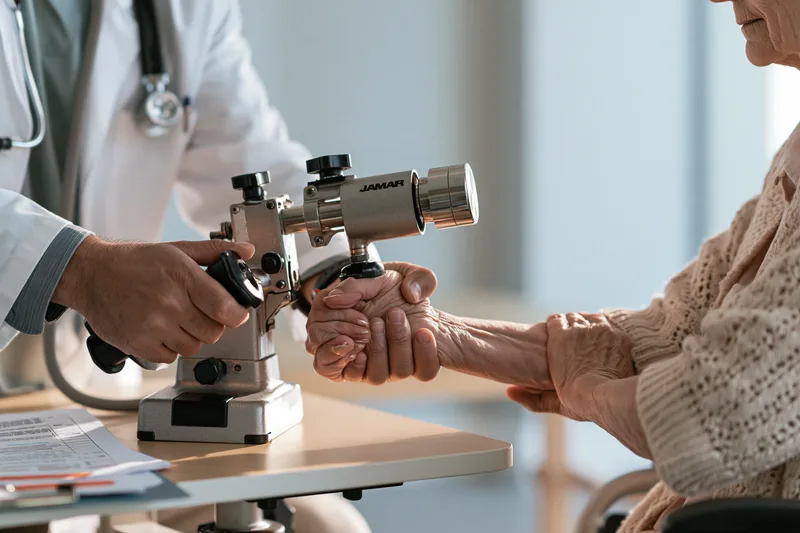
Early symptoms of ALS may first appear as hand weakness, especially when one hand slowly becomes less reliable during ordinary tasks. A patient may notice dropping objects, weaker grip, difficulty holding a pen, slower typing, poor handwriting, trouble buttoning clothes, difficulty turning keys or reduced control while lifting a cup. These changes are more concerning when they gradually worsen and begin affecting daily independence. [1,2]
How Hand Weakness Begins
Hand weakness in ALS may start subtly because the patient may still have normal sensation and no major pain. The person may feel that the fingers are clumsy, the thumb is weaker, the wrist feels less stable, or small tasks need more effort than before. Family members may notice that handwriting has become smaller, slower or less controlled, or that the patient avoids tasks that were previously easy.
The important clinical pattern is progressive motor loss. If weakness remains limited, improves with rest, or is mainly associated with pain, numbness or tingling, other causes may be more likely. If weakness spreads from the hand to the forearm, shoulder, opposite hand, leg, speech or swallowing, a neurologist should evaluate the patient without delay. [1,4]
Why One-Sided Weakness Matters
Early ALS often begins in one region before becoming more widespread. One hand may become weaker than the other, one arm may feel less coordinated, or one side may lose muscle bulk. This asymmetry can be frightening, but it still does not confirm ALS by itself because many other conditions can begin on one side.
Carpal tunnel syndrome, ulnar nerve compression, cervical disc disease, cervical myelopathy, peripheral neuropathy, diabetic neuropathy, vitamin B12 deficiency, thyroid disease, inflammatory nerve disease and muscle disorders can also cause hand weakness. Some of these conditions are treatable, which is why early testing is important before the family assumes motor neuron disease. [4]
Hand Weakness With Twitching or Wasting
Hand twitching becomes more important when the same hand is also losing strength, becoming thinner or failing during daily tasks. The patient may see small muscle movements between the thumb and index finger, notice flattening of the hand muscles, or feel that grip strength is declining. When twitching, wasting and weakness appear together, EMG and nerve conduction study become especially useful in the diagnostic process. [1,4]
The neurologist will look for upper motor neuron signs such as stiffness, tightness or brisk reflexes, and lower motor neuron signs such as wasting, weakness and fasciculations. This combined assessment helps distinguish ALS from localized nerve compression, spine disease or neuropathy. MRI and blood tests may also be needed when symptoms suggest a mimic.
Ayurvedic Assessment of Hand Weakness
In Ayurveda, hand weakness is not assessed only as a local muscle problem. The physician studies Vata aggravation, tissue depletion, appetite, digestion, bowel movement, sleep, cramps, stiffness, dryness, wasting, mental stress and remaining Bala. If the patient has poor appetite, constipation, disturbed sleep and weight loss along with weakness, the treatment direction must first support the body’s foundation before deeper nourishment is increased.
Mamsa Dhatu and Majja Dhatu assessment becomes important because hand weakness affects muscle confidence, nerve coordination and fine daily activities. A patient with early hand weakness but stable swallowing, good appetite and preserved breathing may have more functional reserve than a patient with hand weakness plus choking, weight loss and weak cough. This difference should guide the Ayurvedic treatment plan.
When Hand Weakness Needs Urgent Review
Hand weakness should be assessed promptly when it is progressive, painless, associated with muscle wasting, linked with twitching, spreading to other body regions, or affecting writing, buttons, utensils, phone use, work or self-care. Sudden weakness, facial drooping, severe neck pain, bladder symptoms, sensory loss or acute imbalance needs urgent medical evaluation because these patterns may suggest other serious neurological conditions.
For a patient with suspected ALS or motor neuron disease, the goal is to act while useful hand function remains. Early diagnosis, report review and a structured ALS motor neuron disease treatment plan can help the family track grip, handwriting, daily activity, cramps, stiffness, sleep, appetite, weight, speech, swallowing and breathing before more serious functional loss occurs. [1,4]
Early Symptoms of ALS: Foot Drop

Early symptoms of ALS may appear as foot drop when one foot starts dragging, the toe catches the ground, or the patient begins tripping more often while walking. Some patients first notice that climbing stairs becomes harder, one shoe wears out unevenly, or the leg feels less responsive during normal walking. Foot drop can occur in motor neuron disease, but it should always be assessed carefully because several other neurological and spine-related conditions can produce a similar pattern. [2,3]
How Foot Drop Feels in Daily Life
Foot drop usually affects walking confidence before it looks dramatic from outside. The patient may lift the knee higher to clear the foot, slap the foot on the floor, stumble on carpets, avoid uneven ground or feel unsafe while walking quickly. In the early stage, the problem may appear only when the patient is tired, walking long distances or climbing stairs.
The concern increases when foot drop is progressive, painless and associated with other motor changes. These may include calf weakness, thigh weakness, muscle twitching, cramps, stiffness, visible wasting or loss of balance. If the patient also develops hand weakness, slurred speech, swallowing difficulty or breathing discomfort, the symptom pattern needs faster neurological evaluation. [1,4]
Foot Drop Does Not Always Mean ALS
Foot drop should not be interpreted as ALS without proper testing. Lumbar disc disease, peroneal nerve injury, diabetic neuropathy, peripheral neuropathy, stroke, spinal cord compression, trauma and inflammatory nerve conditions can also cause difficulty lifting the front of the foot. Some of these conditions may be treatable, which makes early diagnosis important. [4]
A patient should be especially cautious if foot drop appears with numbness, tingling, burning pain, back pain, bladder symptoms or sensory loss. These symptoms are not typical of classic ALS and may point toward spine disease, neuropathy or another neurological disorder. The safest approach is to investigate the cause instead of assuming the diagnosis from walking difficulty alone.
When Foot Drop Suggests Motor Neuron Involvement
Foot drop becomes more concerning for ALS or motor neuron disease when it gradually worsens over weeks or months and is linked with progressive weakness rather than pain or sensory symptoms. The patient may first trip occasionally, then need to consciously lift the foot, then begin avoiding stairs, long walks or outdoor movement. This slow loss of motor control is clinically more important than a single fall or temporary leg fatigue. [1,2]
Neurological examination helps identify whether the weakness is limited to one nerve, related to the spine, or part of a wider motor neuron pattern. The doctor may check power, reflexes, muscle tone, wasting, fasciculations, coordination, gait and upper motor neuron signs. EMG, nerve conduction study, MRI spine and blood tests may be advised to separate ALS from mimics. [4]
Why Early Walking Safety Matters
Foot drop increases the risk of falls, fractures, fear of walking and loss of independence. Even when the diagnosis is still being clarified, the patient should not ignore safety. A physiotherapist or neurologist may advise gait assessment, ankle support, footwear changes, walking aids or fall-prevention measures depending on the patient’s strength and balance.
Walking safety also gives the family a practical way to monitor progression. The patient should observe whether tripping is increasing, stairs are becoming harder, the foot is dragging more often, walking distance is reducing, or support is now needed. These daily changes are often more meaningful than vague descriptions such as “leg weakness.”
Ayurvedic Assessment of Foot Drop
In Ayurveda, foot drop and walking difficulty are studied through Vata involvement in movement, coordination and neuromuscular control. When Vata is aggravated in a depleted body, the patient may develop weakness, stiffness, cramps, twitching, dryness, constipation, poor sleep and loss of smooth movement. The Ayurvedic physician should assess whether the leg weakness is occurring with tissue depletion, disturbed digestion, poor appetite, weight loss or reduced Bala.
The treatment direction should be based on the patient’s functional reserve. A patient with early foot drop, stable swallowing, good appetite and normal breathing needs a different plan from a patient with foot drop, weight loss, choking, weak cough or rapid decline. This is why a complete ALS Motor Neuron Disease Treatment approach should review walking, hand use, speech, swallowing, breathing, digestion, sleep and body weight together rather than treating foot drop as an isolated symptom.
When to Seek Review
A patient should seek medical review when foot drop is worsening, causing repeated tripping, affecting stairs, appearing with muscle wasting, or occurring with twitching, cramps, stiffness, hand weakness, speech change or swallowing difficulty. Sudden foot drop, severe back pain, sensory loss, bladder changes or acute imbalance needs urgent assessment because these may suggest a different neurological emergency.
Early review gives the patient a better chance to identify treatable causes, protect walking safety and begin a structured care plan before major functional loss occurs. In suspected ALS or motor neuron disease, the goal is to track walking support, fall risk, cramps, stiffness, sleep, appetite, weight, speech, swallowing and breathing while useful strength is still present. [1,4]
Early Symptoms of ALS: Speech Changes

Early symptoms of ALS may begin with speech changes when the muscles of the tongue, lips, throat or breathing support become weaker. A patient may first notice that speech sounds slurred, slower, softer, nasal, strained or less clear than before. Family members may hear that the voice has changed, words are harder to understand, or the patient becomes tired while speaking for longer periods. [1,2]
How Speech Changes Begin
ALS-related speech difficulty usually develops gradually. The patient may still speak normally in short conversations but struggle during longer discussions, phone calls, public speaking or evening conversations when fatigue is higher. Some words may become difficult to pronounce, the tongue may feel heavy, or speech may lose its usual sharpness.
This type of speech involvement is often described as bulbar involvement. The bulbar region controls important functions such as speech, chewing, swallowing, saliva handling and part of airway protection. When this area is affected, the patient may feel that communication is changing before major limb weakness is obvious. [2,3]
Slurred Speech With Tongue Weakness
Slurred speech becomes more concerning when it is progressive and linked with tongue weakness, tongue twitching, slow chewing, choking, drooling or food sticking in the throat. The patient may take longer to form words, repeat sentences more often, or avoid conversations because speech feels effortful. These changes can affect confidence, work, social life and emotional wellbeing.
Tongue fasciculations or wasting may be important clinical signs, but they should be interpreted by a neurologist rather than judged by the patient at home. Anxiety can make normal tongue movements appear frightening. The safer approach is to assess the complete pattern, especially whether speech clarity is worsening and whether swallowing safety is also changing. [1,4]
Speech Changes With Swallowing Difficulty
Speech symptoms need faster attention when they appear with swallowing difficulty. Warning signs include coughing while drinking water, choking during meals, food sticking in the throat, slow chewing, drooling, repeated throat clearing, wet voice after drinking, chest infections, fear of eating or unexplained weight loss. These symptoms matter because nutrition, hydration and aspiration risk may be affected. [2,3]
A patient with speech and swallowing symptoms should not wait for severe weakness before seeking review. Swallowing assessment, speech therapy, diet texture guidance, nutrition support and respiratory monitoring may become necessary. In ALS and motor neuron disease, protecting swallowing and cough strength is as important as tracking walking or hand function.
Other Causes Must Be Ruled Out
Speech change does not automatically mean ALS. Slurred speech can occur due to stroke, transient ischemic attack, myasthenia gravis, medication effects, thyroid disease, vitamin deficiency, structural throat problems, vocal cord disorders, Parkinsonian syndromes, multiple sclerosis, infections, brain lesions or anxiety-related voice changes. Sudden speech change, facial drooping, confusion, severe headache, imbalance or one-sided weakness needs urgent emergency assessment.
Gradual speech decline still needs proper neurological evaluation. The doctor may assess tongue movement, facial strength, palate movement, reflexes, voice quality, swallowing safety, limb strength, muscle tone, wasting and fasciculations. EMG, nerve conduction study, MRI, blood tests and specialist swallowing assessment may be advised depending on the clinical pattern. [4]
Ayurvedic Assessment of Bulbar Symptoms
In Ayurveda, speech change is not assessed only as a voice problem. The physician studies Vata aggravation, Bala, digestion, sleep, tissue depletion, dryness, anxiety, swallowing comfort, appetite, body weight and cough strength. When Vata is disturbed in a depleted body, movement and coordination may become irregular, which can affect speech clarity, tongue function, chewing and swallowing.
Bulbar symptoms need a gentler and safer Ayurvedic plan. If the patient has choking, weak cough, drooling, slow swallowing or weight loss, oral medicines must be planned carefully. Avaleha consistency, dose size, Anupana, meal timing and food texture should be adjusted according to swallowing safety. Heavy, sticky or difficult-to-swallow preparations may not suit every patient unless they are properly modified and supervised.
Why Speech Tracking Is Important
Speech tracking gives the family a practical way to notice change early. The patient should observe whether speech becomes unclear during the day, whether phone conversations are harder, whether words need repeating, whether chewing takes longer, whether choking is increasing, and whether weight is falling. These daily observations help the physician understand whether the condition is stable, slowly progressing or needing faster intervention.
In a structured ALS Motor Neuron Disease Treatment plan, speech should be reviewed together with swallowing, saliva, cough strength, breathing comfort, appetite, sleep, bowel movement, body weight, hand function and walking ability. This wider review is important because speech changes may be the first visible sign of a deeper functional decline.
When Speech Changes Need Review
A patient should seek medical review when speech change is progressive, speech becomes slurred or nasal, the voice becomes weak, words are harder to pronounce, tongue movement feels reduced, or speech symptoms appear with choking, swallowing difficulty, drooling, weight loss, weak cough or breathing discomfort. These symptoms do not prove ALS, but they deserve timely neurological and swallowing assessment. [1,4]
Early review helps protect communication, nutrition and confidence. When speech and swallowing are still partly preserved, treatment planning has more room to support daily function, reduce risk and monitor measurable change. In suspected ALS or motor neuron disease, this is the right time to connect symptom awareness with a complete care pathway rather than waiting for severe bulbar weakness.
Early Symptoms of ALS: What Is Less Typical

Early symptoms of ALS are usually dominated by progressive motor weakness, loss of function, muscle wasting, cramps, stiffness, twitching with weakness, foot drop, hand clumsiness, speech change or swallowing difficulty. Symptoms such as numbness, tingling, burning pain, sensory loss, bladder problems or pain alone are less typical of classic ALS and often point toward other conditions that need separate evaluation. [1,3]
Numbness and Tingling
Numbness, tingling, pins-and-needles, burning sensations or reduced skin feeling are not typical early ALS symptoms because ALS mainly affects motor neurons, not sensory nerves. When a patient has sensory symptoms, the doctor should consider other causes such as peripheral neuropathy, diabetic neuropathy, vitamin B12 deficiency, cervical spine disease, lumbar nerve compression, autoimmune neuropathy or medication-related nerve irritation. [3,4]
This distinction is important because many patients become frightened after combining twitching with tingling and assuming ALS. A patient with twitching and normal strength may have a very different condition from a patient with progressive weakness, wasting and loss of daily function. Sensory symptoms do not remove the need for medical review, but they often shift the investigation toward treatable causes.
Pain Alone Is Not the Usual First Pattern
Pain alone is not the usual first pattern of ALS. A patient with severe neck pain, back pain, shooting pain down the arm or leg, burning pain, joint pain or muscle tenderness may need assessment for spine disease, nerve compression, arthritis, inflammatory disease, injury, vitamin deficiency or metabolic causes. ALS can cause discomfort later due to stiffness, cramps, immobility or muscle strain, but early disease is more commonly recognized through progressive weakness rather than pain-dominant symptoms. [1,4]
A patient should not ignore weakness just because there is no pain. At the same time, a patient should not assume ALS when pain is the main complaint and strength is preserved. The pattern, progression and neurological examination matter more than one symptom.
Fatigue Without Weakness
Fatigue alone is also less specific. Poor sleep, stress, anemia, thyroid disease, diabetes, infection, depression, low vitamin D, low B12, medication effects, chronic inflammation and nutritional deficiency can all cause fatigue. In ALS, tiredness may become more meaningful when it occurs with clear motor decline, such as difficulty walking, reduced grip, speech fatigue, swallowing difficulty or weak cough. [3,4]
The practical question is whether the patient is only tired or whether a specific body function is failing. A person who feels exhausted but can still walk, grip, speak and swallow normally needs a different evaluation from a person whose hand, foot, speech or swallowing is progressively weakening.
Sudden Symptoms Need Different Urgency
ALS usually develops gradually rather than as a sudden neurological event. Sudden facial drooping, sudden arm or leg weakness, sudden speech loss, severe headache, confusion, severe imbalance, sudden vision change or sudden swallowing difficulty should be treated as a medical emergency because stroke or another acute neurological condition may be possible. [4]
This is especially important for families who are watching speech or walking changes. Gradual slurring over months and sudden slurring in one hour are very different clinical situations. Sudden neurological symptoms should not be managed as suspected ALS at home.
Ayurvedic Interpretation of Non-Typical Symptoms
In Ayurveda, numbness, tingling, pain, fatigue and weakness may all suggest Vata disturbance, but they do not all carry the same modern neurological meaning. Vata involvement can appear through altered sensation, pain, stiffness, dryness, constipation, poor sleep, weakness or loss of coordination. However, Ayurvedic assessment should not merge all Vata symptoms into one diagnosis without modern evaluation.
A patient with tingling and burning pain may need a different Ayurvedic and medical approach from a patient with progressive painless weakness and muscle wasting. The physician should study Agni, Bala, sleep, bowel movement, appetite, weight, sensory symptoms, motor weakness and diagnostic reports before selecting Rasayana, Brimhana or Vata-pacifying treatment.
When Reassurance Is Not Enough
Reassurance is useful only when the symptom pattern is clearly low risk and stable. A patient should still seek medical review if numbness, tingling, pain or fatigue is accompanied by progressive weakness, worsening foot drop, repeated falls, visible muscle wasting, slurred speech, swallowing difficulty, weak cough or breathing discomfort. These combinations need proper neurological assessment because mixed symptoms can occur in real clinical practice. [1,4]
The safest approach is to avoid both extremes. A patient should not panic from twitching, tingling or fatigue alone, but progressive loss of function should never be dismissed. Early evaluation helps identify treatable mimics, protects the patient from delay and supports a timely ALS Motor Neuron Disease Treatment pathway when the clinical pattern truly suggests motor neuron involvement.
Conditions That Mimic Early Symptoms of ALS
Early symptoms of ALS can resemble several neurological, spine-related, metabolic and immune-related conditions, which is why diagnosis should never be based on twitching, hand weakness, foot drop or speech change alone. Many patients first search online after noticing weakness or fasciculations, but a responsible diagnosis requires clinical examination, symptom progression, EMG, nerve conduction study, MRI and blood tests to rule out conditions that may look similar in the beginning. [1,4]
Cervical Spine Disease and Spinal Cord Compression
Cervical disc disease, cervical myelopathy and spinal cord compression can sometimes imitate motor neuron disease because they may cause hand weakness, stiffness, imbalance, brisk reflexes, walking difficulty or clumsiness. A patient may struggle with buttons, handwriting, grip strength or stairs, which can create fear of ALS. However, neck pain, numbness, tingling, bladder changes or sensory loss may suggest a spine-related problem rather than classic ALS.
MRI of the cervical spine becomes important when the patient has hand weakness with neck pain, sensory symptoms, imbalance or signs of spinal cord compression. If significant compression is present, the treatment direction may be completely different from ALS care. This is why suspected ALS should be evaluated carefully before the patient begins any long-term treatment plan.
Lumbar Disc Disease and Peroneal Nerve Injury
Foot drop is one of the symptoms that can create fear of ALS, but lumbar disc disease, lumbar nerve root compression and peroneal nerve injury are common alternative causes. A patient may drag one foot, trip frequently, feel weakness in the ankle or notice that the toe catches the ground while walking. These symptoms can occur in both ALS and non-ALS conditions.
The clinical details help separate the possibilities. Foot drop with back pain, leg pain, numbness, tingling or a history of pressure around the knee may point toward nerve compression or peroneal nerve involvement. Foot drop with progressive painless weakness, wasting, fasciculations or spread to other regions needs deeper neurological evaluation. [3,4]
Peripheral Neuropathy and Diabetic Neuropathy
Peripheral neuropathy can cause weakness, imbalance, burning pain, numbness, tingling and reduced sensation in the feet or hands. Diabetic neuropathy may create walking difficulty, foot weakness, sensory loss, cramps or instability. These symptoms may frighten the patient, but sensory symptoms are not typical early signs of classic ALS.
Blood sugar testing, HbA1c, vitamin B12, thyroid profile, nerve conduction study and neurological examination can help identify neuropathy. This distinction matters because neuropathy treatment may involve diabetes control, vitamin correction, inflammation management, medicine review, foot care and nerve support rather than an ALS-focused pathway.
Multifocal Motor Neuropathy
Multifocal motor neuropathy is an important ALS mimic because it can cause progressive weakness, often without major sensory symptoms. It may affect the hands, arms or legs and can sometimes be confused with motor neuron disease. Unlike ALS, multifocal motor neuropathy may have specific immune-based treatment options, so missing this diagnosis can delay appropriate care. [4]
Nerve conduction study is especially important when multifocal motor neuropathy is suspected. Certain conduction patterns can help the neurologist separate it from ALS. This is one reason why patients with progressive limb weakness should not depend only on symptom descriptions or online comparisons.
Myasthenia Gravis and Muscle Disorders
Myasthenia gravis can cause weakness affecting the eyelids, face, speech, chewing, swallowing, neck or limbs. The weakness often fluctuates and may worsen with repeated activity. A patient may have slurred speech, chewing fatigue or swallowing difficulty, which can create concern about bulbar ALS, but the pattern and testing may be different.
Muscle diseases can also cause weakness, difficulty climbing stairs, fatigue, trouble lifting arms, cramps or exercise intolerance. Blood tests, antibody testing, EMG patterns, neurological examination and specialist review help clarify whether the weakness is due to motor neuron disease, neuromuscular junction disease or primary muscle disease. [4]
Vitamin, Thyroid and Metabolic Causes
Vitamin B12 deficiency, vitamin D deficiency, thyroid disease, electrolyte imbalance, anemia, kidney disease, liver disease, chronic infection, inflammatory disease and poor protein nutrition can worsen weakness, cramps, fatigue, tingling, imbalance and poor recovery. These conditions may not always explain severe progressive motor weakness, but they can make the patient feel much worse and may coexist with neurological disease.
This is why blood tests are not useless in suspected ALS, even though blood tests do not diagnose ALS directly. They help rule out treatable contributors and identify issues that may reduce strength, appetite, sleep, nerve function and treatment tolerance. Correcting these problems can improve the patient’s general condition and make further care safer.
Stroke and Brain Disorders
Sudden speech change, sudden weakness, facial drooping, confusion, severe imbalance, sudden swallowing difficulty or severe headache should not be treated as suspected ALS at home. These symptoms may suggest stroke, transient ischemic attack, brain lesion, infection or another urgent neurological condition. ALS usually develops gradually, while sudden neurological symptoms need emergency evaluation. [4]
This difference is important for families observing speech or walking changes. Gradual slurring over months is different from sudden slurring within minutes or hours. When symptoms appear suddenly, urgent medical care is more important than waiting for routine neurological consultation.
Kennedy Disease and Genetic Conditions
Kennedy disease and some inherited neuromuscular conditions can resemble motor neuron disease. They may cause weakness, cramps, tremor, fasciculations, swallowing difficulty or a family history of similar symptoms. These conditions require specialist evaluation because the prognosis, inheritance pattern and care plan may differ from ALS.
Genetic testing may be advised when there is early onset disease, family history, unusual clinical pattern or suspicion of an inherited neuromuscular disorder. Genetic testing should be guided by a neurologist or neuromuscular specialist rather than ordered casually from fear.
Ayurvedic Assessment After Mimics Are Reviewed
Ayurvedic treatment should not begin from assumption when early ALS symptoms are still being investigated. The physician should first review the diagnosis, symptom timeline, neurologist notes, EMG, nerve conduction study, MRI, blood tests, current medicines, swallowing status, breathing comfort, sleep, appetite, bowel movement and body weight. This protects the patient from receiving a generic Vata treatment when the actual problem may be neuropathy, spine compression, metabolic weakness or another treatable condition.
Once the diagnosis is clearer, Ayurveda can be planned more responsibly. If the condition is a mimic, the treatment may focus on the actual cause while still addressing Vata, Agni, Bala, sleep and tissue nourishment. If the pattern truly suggests ALS or motor neuron disease, the care plan should connect with a structured ALS Motor Neuron Disease Treatment approach that tracks walking, hand use, speech, swallowing, breathing, weight, digestion and functional reserve. [1,4]
When to See a Doctor for Early Symptoms of ALS
Early symptoms of ALS should be reviewed by a doctor when weakness is progressive, function is declining, or symptoms are spreading from one body region to another. A single twitch, cramp or tired day should not create panic, but worsening hand weakness, foot drop, repeated tripping, slurred speech, swallowing difficulty, visible muscle wasting or breathing discomfort should not be ignored. Early review helps separate ALS from treatable mimics and gives the patient a safer path toward diagnosis and care. [1,3,4]
Progressive Weakness Should Not Be Delayed
Progressive weakness is more important than occasional discomfort. A patient should seek neurological evaluation if one hand is losing grip, writing is becoming difficult, one foot is dragging, stairs are becoming harder, or daily tasks are becoming less reliable over weeks or months. Weakness that gradually affects work, walking, self-care, communication or eating deserves proper assessment even when there is no pain.
This is especially important when weakness is painless and associated with twitching, cramps, stiffness or visible wasting. ALS is not confirmed by these symptoms alone, but this pattern needs careful examination because it may reflect motor pathway involvement. A neurologist can assess reflexes, tone, muscle bulk, fasciculations, coordination, gait, speech and swallowing before deciding which tests are needed. [1,4]
Twitching With Weakness Needs Review
Muscle twitching alone is common and may not be dangerous. However, twitching should be reviewed when the same muscle is becoming weaker, thinner, stiff or less useful in daily activity. A patient should not rely only on online comparisons of fasciculations because anxiety can make normal body sensations feel alarming.
The safer question is whether function is changing. Twitching in a strong calf after exercise is different from twitching in a leg that is developing foot drop. Twitching in the tongue is different when speech is also becoming unclear or swallowing is becoming unsafe. When twitching occurs with progressive functional loss, medical assessment becomes necessary. [1,3]
Speech and Swallowing Changes Need Faster Action
Speech and swallowing symptoms deserve quicker review because they affect communication, nutrition and airway safety. A patient should see a doctor if speech becomes slurred, nasal, weak, slow or difficult to understand. Review is also needed when chewing takes longer, water triggers coughing, food sticks in the throat, saliva becomes difficult to manage, meals become stressful or body weight begins to fall. [2,3]
These symptoms may suggest bulbar involvement, but other causes such as stroke, myasthenia gravis, medication effects, thyroid disease, vocal cord problems, structural throat disease and neurological mimics must also be considered. Sudden speech change, facial drooping, confusion, severe imbalance or sudden one-sided weakness should be treated as an emergency rather than a routine ALS evaluation. [4]
Breathing Symptoms Are Never Minor
Breathing symptoms should always be taken seriously in suspected ALS or motor neuron disease. Breathlessness while lying down, weak cough, morning headache, disturbed sleep, daytime sleepiness, repeated chest infections or speaking fatigue may suggest reduced respiratory reserve. These symptoms need medical review because breathing weakness can progress quietly and may not be obvious in the beginning.
A patient with breathing discomfort should not wait for severe disability before assessment. Respiratory evaluation, oxygen saturation monitoring, forced vital capacity testing, cough strength review and non-invasive ventilation advice may be needed depending on the clinical situation. Ayurvedic care can support strength, sleep, digestion and Vata balance, but respiratory safety must remain medically monitored. [2,4]
What to Share During Consultation
The patient should clearly explain when symptoms started, which body part was affected first, whether weakness is spreading, whether there is pain or numbness, whether twitching occurs with weakness, and whether speech, swallowing, weight, sleep or breathing have changed. The doctor should also know about family history, diabetes, thyroid disease, vitamin deficiency, spine problems, injuries, current medicines, supplements and previous neurological reports.
This information helps the physician understand whether the pattern looks like ALS, another motor neuron disease, a mimic or a reversible contributor. EMG, nerve conduction study, MRI, blood tests, swallowing assessment or respiratory testing may be advised based on the clinical picture. The goal is to reach a clear diagnosis without unnecessary fear and without losing valuable time. [4]
Ayurvedic Consultation Should Follow Report Review
Ayurvedic consultation is most useful when it is based on diagnosis, symptom timeline and reports rather than assumption. The physician should review neurologist notes, EMG, nerve conduction study, MRI, blood tests, current medicines, swallowing safety, breathing comfort, appetite, body weight, bowel movement, sleep and speed of decline before planning treatment.
From the Ayurvedic view, early warning signs are studied through Vata aggravation, Agni, Bala, tissue depletion and functional reserve. A patient with early hand weakness and stable swallowing needs a different plan from a patient with speech change, choking, weight loss and weak cough. This is why timely medical evaluation and a structured ALS Motor Neuron Disease Treatment approach should work together when the symptoms truly suggest motor neuron involvement.
Diagnosing Early Symptoms of ALS
Diagnosing early symptoms of ALS requires careful clinical assessment because no single symptom, blood test or scan can confirm the disease by itself. Twitching, hand weakness, foot drop, cramps, stiffness, slurred speech or swallowing difficulty may raise concern, but the diagnosis depends on the full pattern of progression, neurological examination and tests that help rule out other conditions that can mimic motor neuron disease. [1,4]
Neurological Examination
The first step is a detailed neurological examination. The doctor assesses muscle strength, tone, reflexes, coordination, walking pattern, muscle bulk, fasciculations, stiffness, speech clarity, tongue movement, swallowing risk and breathing comfort. This examination helps identify whether the weakness is affecting one nerve, one spinal region, one limb, the bulbar muscles or multiple body regions.
In suspected ALS, the neurologist looks for a combination of upper motor neuron and lower motor neuron signs. Upper motor neuron involvement may appear as stiffness, tightness, brisk reflexes, spasticity or slow movement. Lower motor neuron involvement may appear as weakness, wasting, fasciculations, reduced muscle bulk or loss of fine control. The pattern becomes more important when symptoms are progressive and spreading over time. [4]
EMG and Nerve Conduction Study
EMG and nerve conduction study are among the most important tests when early symptoms of ALS are suspected. EMG studies electrical activity inside selected muscles and may show signs of active or chronic denervation when motor nerve supply is affected. Nerve conduction study helps evaluate how nerves transmit signals and can help distinguish ALS from neuropathy, multifocal motor neuropathy, nerve compression and other peripheral nerve disorders. [4]
These tests do not replace the neurologist’s judgment. A patient may need repeat testing if symptoms are very early, the pattern is incomplete, or another diagnosis remains possible. EMG findings must be interpreted together with the physical examination, symptom timeline, MRI, blood tests and clinical progression.
MRI Brain and Spine
MRI is usually used to rule out other causes rather than to prove ALS directly. MRI brain and spine can help identify stroke, brain lesions, multiple sclerosis, cervical myelopathy, spinal cord compression, disc disease, tumors, inflammation or structural problems that may produce weakness, stiffness, imbalance, speech difficulty or walking changes. [4]
MRI is especially important when the patient has neck pain, back pain, numbness, tingling, bladder symptoms, sensory loss, sudden imbalance or symptoms suggesting spinal cord disease. If MRI shows a treatable structural cause, the treatment plan may be completely different from ALS care. This is why diagnosis should not be rushed only from twitching or weakness.
Blood Tests and Reversible Contributors
Blood tests do not diagnose ALS directly, but they help rule out treatable causes of weakness, fatigue, cramps, tingling and poor recovery. Common investigations may include complete blood count, thyroid profile, vitamin B12, vitamin D, electrolytes, liver function, kidney function, fasting sugar, HbA1c, inflammatory markers, muscle enzymes and infection-related tests when clinically needed.
These tests are important because deficiency, thyroid disease, diabetes, electrolyte imbalance, anemia, inflammation, poor nutrition or metabolic disturbance can worsen weakness and fatigue. In some patients, these problems may be the main cause. In others, they may coexist with neurological disease and reduce the patient’s strength, appetite, sleep and treatment tolerance. [4]
Swallowing and Breathing Assessment
If speech, swallowing or cough strength is affected, diagnosis should also include safety assessment. A patient who coughs while drinking water, takes longer to eat, feels food sticking in the throat, develops wet voice after meals, loses weight or has repeated choking may need swallowing evaluation. Speech and swallowing assessment can help reduce aspiration risk and guide food texture, meal timing and communication support. [2,3]
Breathing should be reviewed when the patient has breathlessness while lying down, weak cough, morning headache, disturbed sleep, daytime sleepiness, repeated chest infections or reduced speaking stamina. Respiratory testing may include forced vital capacity, cough strength assessment, oxygen monitoring and sleep-related breathing review. These findings influence treatment urgency and safety because respiratory involvement may develop quietly. [2,4]
Genetic Testing in Selected Patients
Genetic testing is not required for every patient with early weakness, but it may be advised when there is family history of ALS or motor neuron disease, early onset disease, unusual features, or suspicion of a gene-associated form. This is clinically important because some modern treatment discussions are now linked to specific genetic subtypes, and family counselling may also be needed in selected cases. [4]
Genetic testing should be guided by a neurologist or neuromuscular specialist. Testing without proper counselling can create unnecessary anxiety, especially when the patient has symptoms that may still be due to a mimic or reversible contributor.
Ayurvedic Assessment After Diagnosis Review
Ayurvedic assessment should begin after the modern diagnostic picture is reviewed. The physician should study the neurologist’s notes, EMG, nerve conduction study, MRI, blood tests, symptom timeline, current medicines, swallowing safety, breathing comfort, appetite, sleep, bowel movement, body weight and speed of progression before planning treatment.
From an Ayurvedic perspective, the same symptom label is not enough. A patient with early foot drop, stable swallowing and good appetite needs a different plan from a patient with slurred speech, choking, weight loss, poor sleep and weak cough. Vata aggravation, Agni, Bala, Mamsa Dhatu, Majja Dhatu, tissue depletion and functional reserve must be assessed together so that Rasayana, Brimhana, Vata-pacifying treatment, diet and Anupana are selected safely.
Why Diagnosis Protects the Patient
A clear diagnosis protects the patient from both fear and delay. It prevents panic when symptoms are due to treatable mimics, and it prevents passive waiting when progressive weakness truly suggests ALS or motor neuron disease. Once the diagnosis is reasonably established, the patient can move into a structured ALS Motor Neuron Disease Treatment plan focused on functional tracking, swallowing safety, breathing monitoring, nutrition, sleep, digestion, strength preservation and supervised Ayurvedic support. [1,4]
Early ALS Symptoms and Ayurvedic Assessment
Early symptoms of ALS should be assessed in Ayurveda only after the patient’s neurological diagnosis, symptom timeline and safety risks are understood. Twitching, hand weakness, foot drop, speech change, swallowing difficulty, cramps, stiffness and wasting may suggest a Vata-dominant pattern, but Ayurveda should not treat these signs as a substitute for neurologist-led diagnosis. The safer approach is to combine report review with a detailed Ayurvedic assessment of strength, digestion, sleep, bowel movement, body weight and functional reserve. [1,4]
Vata and Loss of Movement
In Ayurveda, Vata governs movement, coordination, nerve-like signalling, speech activity, breathing rhythm, bowel movement and the smooth control of body functions. When Vata becomes aggravated in a depleted body, the patient may develop weakness, stiffness, twitching, cramps, tremor-like movement, dryness, constipation, disturbed sleep and loss of coordinated action. These signs are clinically relevant in ALS-like presentations because the patient is losing control over voluntary movement.
This does not mean ALS is reduced to one classical Ayurvedic disease name. ALS is a modern neurological diagnosis, and Ayurveda should approach it through a functional lens. The physician studies how Vata is disturbing movement, how much tissue depletion is present, how well the patient is digesting food, and how much strength is still available for walking, speaking, swallowing, coughing and daily activity.
Agni, Bala and Tissue Depletion
Agni is the patient’s digestive and metabolic capacity. In suspected or diagnosed ALS, Agni assessment matters because poor appetite, bloating, constipation, low food tolerance or weight loss can make weakness worse. If the patient cannot digest nourishment properly, heavy Rasayana or Brimhana medicines may not be tolerated well in the beginning.
Bala means functional strength. It is assessed through walking ability, hand use, speech clarity, swallowing confidence, cough strength, sleep quality, appetite, body weight and stamina during daily activity. A patient with good Bala may tolerate a more nourishing plan, while a patient with rapid weight loss, choking, poor sleep or weak cough needs a gentler and more protective approach.
Mamsa Dhatu and Majja Dhatu
Mamsa Dhatu refers to muscle tissue and muscle support. In early ALS or motor neuron disease, Mamsa Dhatu assessment is important because the patient may lose grip strength, walking confidence, muscle bulk, posture and stamina. Visible wasting, reduced hand use, calf weakness, shoulder weakness or declining body weight suggest that muscle nourishment must be considered early.
Majja Dhatu relates to deeper nervous and marrow tissue support in Ayurvedic understanding. When coordination, speech, swallowing, gait, fine hand control and neuromuscular confidence decline, Majja Dhatu becomes clinically relevant in the treatment plan. The physician should assess Majja support together with Vata, Agni, Bala and Mamsa Dhatu rather than selecting a general medicine only for weakness.
Why Swallowing and Breathing Change the Plan
Ayurvedic assessment must become more cautious when speech, swallowing or breathing symptoms are present. A patient who coughs while drinking water, takes longer to eat, loses weight, has drooling, develops weak cough or feels breathless while lying down cannot be managed like a patient with only mild hand weakness. Oral medicines, Avaleha consistency, Anupana, food texture and dose timing must be adjusted according to swallowing safety. [2,3]
This is also where the complete ALS Motor Neuron Disease Treatment pathway becomes important. The Ayurvedic plan should not focus only on Vata pacification, but also on functional tracking, nutrition, respiratory safety, swallowing support and monthly review. If breathing, choking or weight loss worsens, the treatment plan must be reassessed quickly and medical monitoring should be strengthened. [2,4]
Personalised Ayurvedic Direction
The Ayurvedic direction should be personalised according to onset type, stage, progression speed, digestion, weight, sleep, bowel movement, swallowing safety, breathing reserve and current medicines. A patient with early foot drop and stable appetite may need a different plan from a patient with bulbar symptoms, choking, weight loss and disturbed sleep. This difference is central to safe care.
In a responsible early ALS care model, Ayurveda should aim to support Vata balance, digestion, sleep, bowel movement, tissue nourishment, strength preservation and daily function. The patient and family should track practical changes such as grip, walking support, cramps, stiffness, speech clarity, choking frequency, appetite, weight, sleep and breathing comfort so that treatment remains measurable rather than emotional. [1,4]
Early Symptoms of ALS: Support Goals
Early symptoms of ALS should be managed with clear support goals before major functional loss develops. The first aim is not to react only to twitching, hand weakness, foot drop or speech change, but to understand which functions are still preserved and which are beginning to decline. Walking, grip, speech, swallowing, breathing, sleep, appetite, bowel movement and body weight should be reviewed together because ALS and motor neuron disease affect daily life in a connected way. [1,4]
Stabilising Functional Reserve
Functional reserve means the usable strength still available to the patient. In early ALS or suspected motor neuron disease, this may include the ability to walk with confidence, hold objects, speak clearly, swallow safely, cough strongly, sleep well, digest food and maintain body weight. The earlier these functions are assessed, the better the care plan can be structured around preservation and measurable support.
This is also the point where families should avoid passive waiting. Even when the diagnosis is still being clarified, the patient can begin tracking practical changes such as grip strength, handwriting, walking distance, tripping frequency, speech clarity, choking episodes, sleep quality and weight. This gives the physician a clearer picture of whether the patient is stable, slowly declining, or needing faster intervention.
Protecting Swallowing and Nutrition
Swallowing and nutrition should be reviewed early, especially when speech change, slow chewing, coughing during meals, food sticking in the throat, drooling or weight loss is present. Poor nutrition can make weakness feel worse and may reduce the patient’s ability to tolerate treatment. If swallowing is unsafe, food texture, meal size, liquid consistency and medicine administration need careful adjustment. [2,3]
In Ayurveda, nourishment should not mean giving heavy medicines without checking digestive capacity. If Agni is weak, the patient may feel bloating, heaviness, low appetite, constipation or poor assimilation. In such cases, the treatment may first need to improve digestion, bowel movement and appetite before stronger Brimhana or Rasayana support is introduced. This staged approach is safer for patients who are already losing weight or struggling to eat.
Reducing Cramps, Stiffness and Fatigue
Cramps, stiffness and fatigue can reduce confidence even when weakness is still mild. A patient may avoid walking because of fear of tripping, avoid writing because the hand feels unreliable, or avoid conversations because speech feels tiring. These problems may look small, but they can quickly reduce independence and emotional stability.
Ayurvedic care studies these symptoms through Vata aggravation and tissue depletion. Warmth, oil-based support where suitable, bowel regulation, sleep correction, gentle movement, nourishing food and carefully selected medicines may be considered according to the patient’s strength, swallowing safety and medical reports. The plan should never force the patient beyond capacity, because overexertion may worsen fatigue and reduce confidence.
Supporting Sleep and Bowel Movement
Sleep and bowel movement are often underestimated in early ALS care. Poor sleep can worsen fatigue, anxiety, cramps, daytime weakness and emotional distress. Constipation can increase discomfort, appetite loss and Vata aggravation. A patient who sleeps poorly, passes stool irregularly and eats less may feel weaker even before major neurological decline becomes obvious.
For this reason, an early support plan should include sleep review, bowel assessment, appetite tracking and body weight monitoring. In Ayurveda, these areas are not secondary; they are part of the foundation that helps the patient tolerate deeper nourishment and long-term care. Better sleep, smoother bowel movement and improved appetite may be early signs that the body is becoming more stable.
Tracking Measurable Change
A responsible care plan should be measured through daily function rather than vague hope. The patient and family should observe whether hand use is stable, walking is safer, speech is clearer, swallowing is more comfortable, cramps are reduced, sleep is deeper, appetite is better, bowel movement is easier and weight is maintained. These changes may not mean the disease is cured, but they help show whether the body is responding in useful ways.
This is why the complete ALS Motor Neuron Disease Treatment pathway should include monthly functional review. Early symptoms must be connected with a structured treatment model that respects neurology, swallowing safety, breathing monitoring and Ayurvedic assessment. When care is report-based and measurable, the patient receives a more serious and practical plan instead of scattered symptom management. [1,4]
Keeping Goals Realistic
The support goals in early ALS should be hopeful but realistic. Some patients may experience better sleep, appetite, bowel movement, reduced cramps, improved comfort, weight stability or more confidence in daily activity. Others may continue to decline despite careful care, especially when bulbar symptoms, respiratory weakness, rapid progression or severe weight loss are present.
The safest message is that early action gives the patient more functions to protect. When walking, hand use, speech, swallowing, breathing, digestion and sleep are still partly preserved, the care plan has more room to support stability and quality of life. This does not replace diagnosis or modern neurological care, but it makes Ayurvedic treatment more disciplined, measurable and patient-centred.
Early Symptoms of ALS: First 30 Days
Early symptoms of ALS should be reviewed carefully during the first 30 days because small daily changes can show whether the patient is stable, worsening, or responding in selected functional areas. This period should not be used to promise reversal, but it can help the doctor and family understand sleep, appetite, bowel movement, cramps, stiffness, walking, hand use, speech, swallowing, body weight and breathing comfort in a structured way. [1,4]
What Can Improve First
In many patients, the earliest meaningful changes may be seen in comfort and daily tolerance rather than dramatic neurological recovery. The patient may sleep better, pass stool more comfortably, feel less bloated, tolerate food better, experience reduced cramps, feel calmer, or maintain body weight more steadily. These changes matter because ALS and motor neuron disease care depends not only on muscle strength, but also on nourishment, rest, digestion, respiratory safety and emotional stability.
From an Ayurvedic view, these early changes suggest that Vata aggravation, weak Agni and general depletion are being addressed in a more organised way. If appetite improves, bowel movement becomes smoother and sleep becomes deeper, the body may become more receptive to Rasayana, Brimhana and Vata-pacifying treatment. This does not mean the neurological disease has disappeared, but it may show that the patient’s internal foundation is becoming stronger.
What Should Be Tracked Weekly
The family should track practical function every week instead of relying only on feelings. Handwriting, grip, buttoning, spoon use, phone use, walking distance, tripping, stair climbing, speech clarity, choking, coughing during meals, saliva, cough strength, sleep, appetite, bowel movement and body weight should be observed consistently. These markers help the physician understand whether the patient is holding function, losing function or showing early supportive improvement. [1,4]
This is especially important when early symptoms are mild. A patient may feel generally better but still have worsening foot drop or swallowing difficulty. Another patient may have persistent weakness but improved sleep, appetite and bowel movement. Both patterns are clinically useful, but they require different treatment decisions.
When the Plan Needs Faster Adjustment
The first 30 days should also identify warning signs early. If speech becomes more unclear, choking increases, weight falls, walking becomes unsafe, cough becomes weak, breathlessness appears while lying down, morning headache develops, or daytime sleepiness increases, the treatment plan must be reviewed quickly. These symptoms may suggest bulbar or respiratory involvement and need medical monitoring along with Ayurvedic reassessment. [2,3,4]
Oral Ayurvedic medicines should be adjusted if swallowing becomes unsafe. Avaleha consistency, Anupana, dose size and timing must suit the patient’s swallowing ability. A patient who coughs with liquids, takes a long time to eat or loses weight should not be managed with the same oral plan as a patient who swallows safely and maintains appetite.
Why Response Varies
Response in early ALS or motor neuron disease varies from patient to patient. Stage of disease, speed of progression, age, body weight, bulbar involvement, respiratory reserve, digestion, sleep, current medicines, emotional stress and remaining functional strength all influence the first month. A patient with early limb symptoms and stable swallowing may respond differently from a patient with slurred speech, choking, rapid wasting and weak cough.
This is why the first month should be used as a measured clinical observation period. The physician should not judge success only by one symptom such as twitching. The better question is whether the patient’s overall functional reserve is being protected through better sleep, nutrition, bowel movement, reduced cramps, safer swallowing, stable weight and more confidence in daily activity.
Ayurvedic Care During the First Month
In Ayurveda, the first month often focuses on preparing the body for deeper support. If Agni is weak, digestion and bowel movement may need correction first. If Vata is high, sleep, dryness, cramps, stiffness, constipation and anxiety need attention. If tissue depletion is visible, nourishment should be introduced carefully according to swallowing safety and digestive capacity.
The treatment should remain personalised and report-based. A structured ALS Motor Neuron Disease Treatment plan should connect the first 30 days with diagnosis review, functional tracking, swallowing safety, breathing monitoring, nutrition, Vata pacification and Rasayana support. When the first month is documented properly, the doctor can decide whether to continue, strengthen, modify or make the plan more protective. [1,4]
A Realistic First-Month Goal
The realistic first-month goal is to create clarity, stability and measurable direction. Some patients may show better sleep, appetite, bowel movement, reduced cramps, improved comfort, stable weight or more confidence in walking and daily activity. Some may remain stable without major improvement, which may still be clinically meaningful in a progressive condition. Others may continue to worsen and need faster neurological, swallowing or respiratory support.
The family should not wait for severe decline before acting. Early symptoms give an opportunity to study the disease pattern while useful function remains. When care begins early, the patient has more areas to support, monitor and protect through a combined medical and Ayurvedic pathway.
Tracking Early Symptoms of ALS
Tracking early symptoms of ALS helps the patient, family and physician understand whether function is stable, slowly declining or changing quickly. The goal is not to create fear around every twitch or cramp, but to observe practical daily abilities such as walking, hand use, speech, swallowing, breathing comfort, sleep, appetite, bowel movement and body weight. These markers give a clearer picture than memory alone. [1,4]
Track Function, Not Only Symptoms
A patient may say that weakness feels worse, but functional tracking makes the change more objective. The family should observe whether handwriting is smaller, buttons take longer, stairs are harder, one foot drags more often, speech is less clear, meals take longer, choking has increased or walking support is now needed. These details help the doctor understand real-life progression.
This is important because ALS and motor neuron disease affect ability, not only sensation. Twitching, cramps or stiffness may be uncomfortable, but the more important question is whether the affected muscle is losing strength and daily usefulness. A leg that twitches but walks normally has a different meaning from a leg that twitches, weakens and develops foot drop.
Hand and Arm Tracking
Hand function should be reviewed through ordinary activities. The patient can observe writing, typing, buttoning clothes, holding a spoon, lifting a cup, opening bottles, using keys, holding a phone and managing personal care. If one hand becomes weaker, clumsier or visibly thinner, this should be documented and shared with the physician.
A practical review should also include whether weakness is spreading from the hand to the forearm, shoulder, opposite hand or another body region. Spreading weakness is more clinically important than a single isolated complaint. The patient should not repeatedly test the muscles out of anxiety, but normal daily function should be observed consistently.
Walking and Foot Drop Tracking
Walking should be tracked through safety and confidence. The patient should observe whether the toe catches the ground, one foot slaps the floor, stairs feel harder, walking distance is reducing, falls are increasing or support is needed. Foot drop should be taken seriously when it worsens over time, especially if it appears with cramps, stiffness, wasting or weakness in another region. [3,4]
Fall prevention should begin early. Even before diagnosis is fully confirmed, unsafe walking can lead to injury and loss of confidence. A neurologist or physiotherapist may advise footwear changes, gait support, ankle support or walking aids according to the patient’s strength and balance.
Speech and Swallowing Tracking
Speech should be tracked through clarity, voice strength and speaking stamina. The patient should observe whether words are becoming slurred, phone conversations are harder, speech becomes unclear in the evening, the voice sounds nasal or faint, or sentences need to be repeated. These changes should be documented because bulbar symptoms can affect communication and confidence. [2,3]
Swallowing tracking is equally important. The family should observe coughing while drinking water, choking during meals, food sticking in the throat, wet voice after eating, drooling, longer meal time, fear of eating and weight loss. If these signs increase, swallowing assessment and medical review should not be delayed because nutrition and aspiration risk may be affected. [2,3]
Breathing and Cough Tracking
Breathing symptoms may develop quietly, so they should be reviewed even when the patient mainly complains of weakness. The patient should report breathlessness while lying down, weak cough, morning headache, disturbed sleep, daytime sleepiness, speaking fatigue or repeated chest infections. These symptoms may suggest reduced respiratory reserve and need medical assessment. [2,4]
Ayurvedic care should not replace respiratory monitoring. If cough strength is weak or breathing comfort changes, the treatment plan must become more cautious. Oral medicines, diet texture, sleep position, exertion level and medical follow-up should all be reviewed according to the patient’s safety needs.
Appetite, Weight and Bowel Tracking
Body weight is a major practical marker in ALS and motor neuron disease care. Weight may fall because of poor appetite, slow chewing, swallowing fear, fatigue, constipation, anxiety, increased effort during movement or breathing difficulty. Even small weight loss can matter when muscle strength is already declining.
From an Ayurvedic view, appetite, bowel movement and digestion show the condition of Agni. If Agni is weak, the patient may not tolerate heavy nourishment well. Tracking appetite, bloating, stool pattern, constipation, food tolerance and body weight helps the physician decide whether the plan should begin with digestive correction, Vata pacification, gentle nourishment or stronger Rasayana support.
Monthly Review Gives Direction
Monthly review should connect symptoms with function. The physician should compare walking, hand use, speech, swallowing, breathing comfort, sleep, appetite, bowel movement, cramps, stiffness and body weight against the previous month. This helps identify whether the patient is stable, responding in selected areas, declining slowly or needing urgent treatment adjustment.
This tracking also supports a complete ALS Motor Neuron Disease Treatment pathway. A serious care plan should not depend only on hope or general statements. It should measure the patient’s remaining functional reserve and adjust treatment according to real changes in daily life. When early symptoms are documented properly, both modern care and Ayurvedic care become safer, clearer and more patient-centred. [1,4]
Early Symptoms of ALS: Reports Needed
Early symptoms of ALS should be reviewed with proper medical reports so the physician can understand whether the patient has ALS, another motor neuron disease, a treatable mimic, or a mixed neurological condition. Twitching, hand weakness, foot drop, speech change, swallowing difficulty and cramps can create fear, but reports help convert fear into a clearer clinical pathway. [1,4]
Neurologist Notes
The neurologist’s notes are important because they record the clinical examination, symptom history, reflexes, muscle strength, tone, wasting, fasciculations, gait, speech, swallowing concerns and diagnostic impression. These details show whether the doctor found signs of upper motor neuron involvement, lower motor neuron involvement, or another pattern that may not fit ALS.
The patient should share all previous neurology opinions, even if the reports are confusing or conflicting. In early disease, the diagnosis may take time because symptoms may not be fully developed. Reviewing earlier notes helps the physician understand how the symptoms started, whether they are progressing, and whether new functions have become affected since the first consultation.
EMG and Nerve Conduction Study
EMG and nerve conduction study reports are among the most important documents in suspected ALS or motor neuron disease. EMG helps identify abnormal electrical activity in muscles, while nerve conduction study helps separate motor neuron disease from neuropathy, nerve compression, multifocal motor neuropathy and other peripheral nerve disorders. [4]
The report should be reviewed carefully, not only for the final impression but also for the muscles tested and the regions involved. A limited test may not answer every question in an early case. If symptoms are changing or spreading, the neurologist may decide whether repeat testing is needed.
MRI Brain and Spine
MRI brain and spine reports are needed because several structural conditions can imitate early ALS symptoms. Cervical spinal cord compression, disc disease, brain lesions, stroke-related changes, inflammation, tumors or other neurological conditions may cause weakness, stiffness, imbalance, speech difficulty or walking problems. [4]
MRI becomes especially important when the patient has neck pain, back pain, numbness, tingling, bladder symptoms, sensory loss, sudden imbalance or symptoms that do not fit a typical motor neuron pattern. If a structural cause is found, treatment may need to focus on that cause rather than assuming ALS.
Blood Tests and Metabolic Reports
Blood tests help identify reversible or contributing factors that may worsen weakness, cramps, fatigue, tingling, poor appetite and low stamina. Useful reports may include complete blood count, thyroid profile, vitamin B12, vitamin D, electrolytes, liver function, kidney function, fasting sugar, HbA1c, inflammatory markers and muscle enzyme tests when clinically advised.
These reports do not diagnose ALS directly, but they protect the patient from missing treatable problems. A patient with low B12, thyroid imbalance, diabetes, anemia, inflammation or electrolyte disturbance may feel significantly weaker. Correcting these issues may improve general strength, appetite, sleep and treatment tolerance, even when a neurological disease is also present. [4]
Swallowing and Breathing Reports
Swallowing and breathing reports become essential when the patient has slurred speech, coughing while drinking water, food sticking in the throat, drooling, weak cough, repeated chest infections, breathlessness while lying down, morning headache or daytime sleepiness. These symptoms can affect safety and should not be treated as minor complaints. [2,3]
A swallowing assessment can guide food texture, liquid consistency, meal timing and safe medicine administration. Respiratory assessment can help understand cough strength, forced vital capacity, sleep breathing and the need for further respiratory support. These reports are especially important before planning oral Ayurvedic medicines in patients with bulbar symptoms.
Current Medicines and Supplements
The physician should know all current medicines, including riluzole, edaravone, tofersen where relevant, medicines for cramps, saliva, sleep, mood, pain, blood pressure, diabetes, thyroid disease, anticoagulants, steroids, supplements and herbal products. This helps reduce interaction risk and allows safer planning of Ayurvedic treatment.
A patient with swallowing difficulty, liver concerns, kidney disease, diabetes, respiratory weakness or multiple medicines should not receive a generic plan. Dose, Anupana, Avaleha consistency, meal timing and monitoring should be adjusted according to the patient’s reports and medical risks.
Ayurvedic Review of Reports
In Ayurveda, reports are used together with clinical assessment of Vata, Agni, Bala, Mamsa Dhatu, Majja Dhatu, sleep, bowel movement, appetite, body weight, cramps, stiffness, speech, swallowing and breathing comfort. The reports help confirm the modern diagnosis, while Ayurvedic assessment helps understand the patient’s remaining functional reserve and treatment tolerance.
This report-based approach is essential for a serious ALS Motor Neuron Disease Treatment plan. A patient with early limb weakness may need strength preservation and Vata pacification, while a patient with choking, weight loss and weak cough needs a more cautious plan with swallowing and respiratory safety at the centre. Treatment should begin only after the reports and the patient’s real functional condition are understood together. [1,4]
Safe Care for Early Symptoms of ALS
Early symptoms of ALS should be managed with safety at the centre, especially when the patient has weakness, foot drop, speech change, swallowing difficulty, weight loss or breathing discomfort. Ayurveda can support Vata balance, digestion, sleep, nourishment, bowel movement, cramps, stiffness and functional reserve, but it should not replace neurological diagnosis, respiratory monitoring, swallowing assessment or emergency medical care when warning signs are present. [1,4]
Do Not Stop Neurology Care
A patient with suspected or diagnosed ALS should continue follow-up with a neurologist or neuromuscular specialist. Modern evaluation helps confirm the diagnosis, rule out mimics, monitor progression, assess breathing, review swallowing safety and decide whether approved medicines or supportive therapies are appropriate. This protects the patient from delay, especially when weakness is spreading or bulbar symptoms are present. [4]
Ayurvedic treatment becomes safer when it is added after reviewing reports, current medicines, liver and kidney status, swallowing ability, breathing comfort and body weight. The treatment should not be based only on the disease name. A patient with mild limb weakness needs a different plan from a patient with choking, weak cough, rapid weight loss or respiratory symptoms.
Swallowing Safety Comes First
Swallowing safety is essential before giving oral Ayurvedic medicines. If the patient coughs while drinking water, takes a long time to eat, feels food sticking in the throat, has drooling, develops wet voice after meals or loses weight, the medicine form and consistency must be adjusted carefully. Avaleha may need dilution with a suitable Anupana, smaller doses, slower administration or a different plan depending on swallowing ability.
Ignoring swallowing risk can make treatment unsafe. A patient with repeated choking or weak cough may aspirate food, liquid or medicine into the airway. In such cases, medical swallowing assessment, food texture guidance and respiratory review should be involved before continuing strong oral medicines. [2,3]
Breathing Symptoms Need Medical Monitoring
Breathing changes should never be treated only as weakness or anxiety. Breathlessness while lying down, weak cough, morning headache, disturbed sleep, daytime sleepiness, speaking fatigue or repeated chest infections may suggest reduced respiratory reserve. These symptoms need medical assessment because respiratory decline can develop quietly in ALS and motor neuron disease. [2,4]
Ayurvedic care can support sleep, digestion, bowel movement, nourishment and Vata pacification, but respiratory monitoring must remain active. If breathing comfort worsens, the treatment plan should become more cautious, exertion should be reduced, and respiratory care should be strengthened immediately.
Medicine Interactions and Tolerance
Patients with ALS may already be taking medicines for disease progression, cramps, saliva, sleep, anxiety, pain, blood pressure, diabetes, thyroid disease or other conditions. They may also be using supplements or herbal products. The Ayurvedic physician should review everything before prescribing because interactions, liver stress, kidney stress, sedation, blood sugar changes or swallowing difficulty can affect safety.
Tolerance is as important as selection. A strong Rasayana or Brimhana plan may not suit a patient with poor appetite, constipation, bloating, nausea, choking or rapid weight loss in the beginning. The first step may need to focus on Agni, bowel movement, sleep and safer nourishment before increasing deeper restorative medicines.
External Therapies Need Careful Selection
Oil-based external therapies may be useful in selected Vata-dominant patients with stiffness, cramps, dryness, disturbed sleep and discomfort, but they should not be applied casually in every case. A patient with severe weakness, respiratory difficulty, exhaustion, unstable blood pressure, fever, infection, poor tolerance or advanced bulbar symptoms may need a gentler approach.
Therapies should match Bala, the patient’s functional strength. Overheating, excessive massage, long procedures or forced exercise may exhaust a weak patient. The aim is comfort, stability and support, not aggressive stimulation.
Safe Care Is Measurable Care
A safe plan should be reviewed through measurable daily changes. The physician should track walking, hand use, speech clarity, swallowing comfort, choking frequency, cough strength, breathing comfort, sleep, appetite, bowel movement, cramps, stiffness and body weight. If these markers improve or remain stable, the plan may be continued or adjusted carefully. If swallowing, breathing, weight or weakness worsens, the plan must be reviewed without delay. [1,4]
This safety-first approach strengthens the complete ALS Motor Neuron Disease Treatment pathway. It keeps Ayurveda central for Vata pacification, digestion, nourishment, sleep and functional support, while respecting the seriousness of diagnosis, respiratory protection, swallowing safety and modern medical supervision.
FAQs
Early symptoms of ALS often create fear because twitching, weakness, foot drop, hand clumsiness, speech changes and swallowing difficulty may begin subtly. These FAQs help patients understand which patterns need urgent medical review, which symptoms are less typical of ALS, and why early diagnosis should be connected with a complete ALS Motor Neuron Disease Treatment pathway.
What are the early symptoms of ALS?
Early symptoms of ALS may include progressive hand weakness, dropping objects, foot drop, tripping, muscle cramps, twitching with weakness, slurred speech, swallowing difficulty or visible muscle wasting. Symptoms vary between patients. Twitching alone does not confirm ALS, but progressive weakness with functional decline should be assessed by a neurologist.
Is muscle twitching always a sign of ALS?
Muscle twitching is not always a sign of ALS. Twitching can occur from stress, poor sleep, fatigue, caffeine, electrolyte imbalance, anxiety, exercise or benign fasciculation syndrome. It becomes more concerning when it occurs with progressive weakness, wasting, cramps, stiffness, foot drop, hand weakness, speech change or swallowing difficulty.
Does foot drop mean ALS?
Foot drop can occur in ALS or motor neuron disease, but it can also result from lumbar disc disease, peroneal nerve injury, neuropathy, diabetes, stroke, trauma or spinal cord disease. Worsening foot drop with painless progressive weakness, wasting, twitching or spread of symptoms needs neurological evaluation.
What speech changes happen in early ALS?
Early ALS speech changes may include slurred speech, slower speech, nasal voice, faint voice, tongue heaviness or difficulty pronouncing words clearly. Speech change becomes more urgent when it appears with choking, coughing while drinking water, food sticking in the throat, drooling, weak cough or weight loss.
Can early ALS symptoms come and go?
Early ALS symptoms may feel variable in the beginning, but the concerning pattern is gradual progression over weeks or months. Symptoms that completely improve may suggest another cause. Progressive weakness, spreading symptoms, worsening foot drop, hand clumsiness, speech change or swallowing difficulty should be evaluated even if symptoms fluctuate during the day.
What symptoms are less typical of ALS?
Numbness, tingling, burning pain, sensory loss, bladder symptoms, pain alone or fatigue alone are less typical of classic ALS. These symptoms may suggest neuropathy, spine disease, vitamin deficiency, diabetes, thyroid disease, autoimmune disease or another neurological condition. Medical evaluation helps separate ALS from treatable mimics.
How is early ALS diagnosed?
Early ALS is diagnosed through neurological examination, symptom progression, EMG, nerve conduction study, MRI and blood tests used to rule out mimics. There is no single blood test or scan that confirms ALS alone. The diagnosis depends on the clinical pattern and exclusion of other possible causes.
When should I see a doctor for possible ALS symptoms?
See a doctor if weakness is progressive, one hand is losing function, one foot is dragging, falls are increasing, speech is becoming slurred, swallowing feels unsafe, weight is falling, muscles are wasting or breathing feels weaker. Sudden speech loss, facial drooping or one-sided weakness needs emergency care.
Can Ayurveda help in early ALS or motor neuron disease?
Ayurveda may support selected patients through Vata pacification, Agni correction, Rasayana nourishment, sleep support, bowel regulation, strength preservation and functional tracking. It should be personalised, report-based and used alongside neurological diagnosis, swallowing safety, breathing monitoring and modern medical care. It should not replace urgent medical evaluation.
References
- ALS Association. (n.d.). ALS symptoms and diagnosis. ALS Association.
https://www.als.org/understanding-als/symptoms-diagnosis
Brief: Patient-facing source explaining varied ALS onset patterns, progressive muscle weakness, twitching, cramps, tripping, dropping objects, slurred speech, and diagnostic uncertainty. - Mayo Clinic. (2026). Amyotrophic lateral sclerosis: Symptoms and causes. Mayo Clinic.
https://www.mayoclinic.org/diseases-conditions/amyotrophic-lateral-sclerosis/symptoms-causes/syc-20354022
Brief: Clinical patient guide describing ALS symptoms, progression, limb weakness, speech problems, swallowing difficulty, breathing complications, and risk factors. - Motor Neurone Disease Association. (n.d.). Early signs of motor neurone disease. Motor Neurone Disease Association.
https://www.mndassociation.org/about-mnd/mnd-explained/early-signs-of-mnd
Brief: Practical resource explaining early MND signs, including foot drop, speech changes, swallowing symptoms, twitching, cramps, tiredness, numbness, and symptoms less typical of MND. - StatPearls Publishing. (2025). Amyotrophic lateral sclerosis. In StatPearls. National Library of Medicine.
https://www.ncbi.nlm.nih.gov/books/NBK556151/
Brief: Clinical review covering ALS presentation, upper and lower motor neuron signs, diagnostic workup, EMG, nerve conduction study, MRI, mimics, genetics, and multidisciplinary care. - National Institute of Neurological Disorders and Stroke. (n.d.). Amyotrophic lateral sclerosis. National Institutes of Health.
https://www.ninds.nih.gov/health-information/disorders/amyotrophic-lateral-sclerosis-als
Brief: Government medical resource explaining ALS symptoms, causes, diagnosis, progression, genetic factors, respiratory involvement, and supportive treatment. - National Institute for Health and Care Excellence. (2016, updated). Motor neurone disease: Assessment and management. NICE Guideline NG42.
https://www.nice.org.uk/guidance/ng42
Brief: Clinical guideline covering MND assessment, respiratory monitoring, nutrition, swallowing, communication, mobility, multidisciplinary care, and care planning. - Brooks, B. R., Miller, R. G., Swash, M., & Munsat, T. L. (2000). El Escorial revisited: Revised criteria for the diagnosis of amyotrophic lateral sclerosis. Amyotrophic Lateral Sclerosis and Other Motor Neuron Disorders, 1(5), 293–299.
https://pubmed.ncbi.nlm.nih.gov/11464847/
Brief: Diagnostic criteria paper supporting the importance of clinical pattern recognition, upper and lower motor neuron signs, and exclusion of ALS mimics. - Cedarbaum, J. M., Stambler, N., Malta, E., Fuller, C., Hilt, D., Thurmond, B., & Nakanishi, A. (1999). The ALSFRS-R: A revised ALS functional rating scale that incorporates assessments of respiratory function. Journal of the Neurological Sciences, 169(1–2), 13–21.
https://pubmed.ncbi.nlm.nih.gov/10540002/
Brief: Foundational paper supporting structured functional tracking of speech, swallowing, handwriting, walking, stairs, breathing, and daily activities in ALS. - Miller, R. G., Jackson, C. E., Kasarskis, E. J., England, J. D., Forshew, D., Johnston, W., Kalra, S., Katz, J. S., Mitsumoto, H., Rosenfeld, J., Shoesmith, C., Strong, M. J., & Woolley, S. C. (2009). Practice parameter update: The care of the patient with amyotrophic lateral sclerosis. Neurology, 73(15), 1218–1226.
https://pubmed.ncbi.nlm.nih.gov/19822872/
Brief: American Academy of Neurology practice guideline supporting riluzole use, nutrition planning, PEG timing, respiratory monitoring, and non-invasive ventilation in ALS. - Charaka. (2006). Charaka Samhita (P. V. Sharma, Trans.; Chikitsa Sthana, Chapter 28: Vatavyadhi Chikitsa). Chaukhambha Orientalia.
Brief: Classical Ayurvedic reference for Vata disorders, relevant to the Ayurvedic interpretation of weakness, wasting, stiffness, tremor-like movement, cramps, dryness, constipation, and functional decline when correlated cautiously with modern diagnosis.