

- Methodology: How the Ayurvedic Curative Model Is Planned Around the Patient
- Understanding Small Cell Lung Cancer and the Problems the Ayurvedic Curative Model Must Solve
- Contemporary Treatment Landscape and How the Ayurvedic Curative Model Solves the Remaining Problems
- The Remaining Problems in Small Cell Lung Cancer and How the Ayurvedic Curative Model Addresses Them
- Ayurvedic Interpretation of Small Cell Lung Cancer: Building the Curative Treatment Map
- Proposed Samprāpti of Small Cell Lung Cancer: How the Disease Develops and How the Ayurvedic Curative Model Breaks It
- Therapeutic Objectives of the Ayurvedic Curative Model for Small Cell Lung Cancer
- Ayurvedic Intervention Domains: What Each Part of the Curative Plan Is Designed to Do
- Translational Mechanisms: How the Ayurvedic Curative Model Is Designed to Act Against SCLC Biology
- Clinical Evidence Supporting the Ayurvedic Curative Model
- Frequently Asked Questions
- References
Ayurvedic treatment for small cell lung cancer follows a patient-centred, curative-intent model focused on reducing active tumour burden, addressing metastatic disease, restoring respiratory and organ function, rebuilding strength, and supporting durable remission through individualized medicines, medical-report review, objective imaging, and structured follow-up.
A diagnosis of small cell lung cancer can create intense fear because the disease often grows rapidly and may spread early. Patients and caregivers may feel that every treatment decision has to be made at once. Although this urgency is real, the rapid biological activity of SCLC also means that the tumour can sometimes respond substantially when a well-planned treatment is started promptly [1–4].
Small cell lung cancer is therefore not approached as a condition where only comfort can be offered. It is a biologically active disease in which major tumour reduction, complete radiological response and long periods without progression are possible. In the ADRIATIC trial involving limited-stage SCLC, patients who received durvalumab after chemoradiotherapy had a median overall survival of 55.9 months, compared with 33.4 months in the placebo group [12, 13]. This demonstrates that sustained survival is achievable when the disease is treated systematically.
The central challenge is that an initial response may be followed by recurrence. Some tumour cells respond rapidly, while other resistant cells may survive, adapt and later rebuild the disease. A curative model must therefore address both the visible tumour and the biological conditions that permit residual malignant activity, further spread and recurrence.
This is the point at which a comprehensive Ayurvedic treatment model becomes relevant. Ayurveda is presented here as a disease-directed system whose objective is to reduce active tumour burden, interrupt the underlying Samprāpti, restore healthy tissue regulation, protect vital organs and work toward a sustained no-progression state.
Ayurveda Does Not View SCLC as a Lung Mass Alone
From an Ayurvedic perspective, small cell lung cancer cannot be understood only as a growth inside the lung. The disease affects respiration, circulation, nutrition, metabolism, strength, immunity, sleep, mental stability and the function of distant organs.
The structural tumour process may be examined through the classical descriptions of Granthi and Arbuda found in Suśruta Saṃhitā, Nidāna Sthāna, Chapter 11. Therapeutic principles related to these abnormal tissue formations are described in Suśruta Saṃhitā, Chikitsā Sthāna, Chapter 18 [44, 45].
Respiratory manifestations such as cough and breathlessness are assessed through the principles of Kāsa and Śvāsa described in Charaka Saṃhitā, Chikitsā Sthāna, Chapters 17 and 18. Progressive weight loss, tissue depletion and loss of strength may also be examined through the broader principles discussed in Charaka Saṃhitā, Chikitsā Sthāna, Chapter 8, while Rasāyana and restoration of Bala are explained in Charaka Saṃhitā, Chikitsā Sthāna, Chapter 1 [40–43].
These classical foundations allow the Ayurvedic physician to examine the entire disease process. The primary tumour, lymph-node involvement, distant spread, respiratory obstruction, digestive impairment, tissue depletion and loss of Ojas are studied as connected parts of one developing Samprāpti.
When I evaluate an SCLC patient, I must therefore understand more than the tumour diameter. I need to know where the disease has spread, how quickly it is progressing, which organs are affected, whether the patient is losing weight, whether Agni is functioning, whether breathing is obstructed, whether blood formation is declining and how much Bala remains.
The Ayurvedic Curative Model Targets the Active Disease Process
The proposed Ayurvedic model is designed around several connected therapeutic objectives. The first objective is to weaken the active disease process responsible for tumour growth and spread. The second is to correct the internal environment that allows abnormal tissue to survive. The third is to restore the healthy function of affected Dhātus and Srotas. The fourth is to rebuild Bala and Ojas so that the patient can maintain recovery. The final objective is to prevent the same Samprāpti from re-establishing itself after a major response.
In many patients, Kapha contributes to abnormal tissue accumulation, heaviness, obstruction and the formation of a stable tumour mass. Vāta may contribute to rapid movement, dissemination, pain, dryness, breathlessness and progressive depletion. Pitta and Rakta involvement may be reflected through inflammation, tissue injury, bleeding, rapid metabolic activity and burning symptoms.
The treatment is therefore individualized according to the dominant pattern. One patient may require stronger attention to Kapha-associated obstruction and abnormal tissue accumulation. Another patient may show marked Vāta aggravation with rapid spread, severe weakness and respiratory instability. A third may show prominent Pitta–Rakta involvement with inflammation, bleeding or liver disturbance.
This individualized approach is particularly relevant because modern research has also shown that SCLC is not one uniform disease. Different molecular subtypes may have different transcriptional, neuroendocrine and immune characteristics [7–9]. Ayurveda reaches a similar clinical conclusion through a different system of assessment: patients with the same disease name may require different treatment strategies.
Tumour Reduction and Systemic Restoration Must Occur Together
A patient with SCLC may lose appetite, body weight, muscle strength and the ability to perform normal activities. These changes are not separate from the disease. They can reduce the patient’s capacity to maintain treatment, recover from tissue injury and resist further progression.
For this reason, the Ayurvedic curative model acts through two connected directions. One direction is tumour-oriented and aims to interrupt abnormal growth, invasion, angiogenesis, inflammatory signalling and disease progression. The second direction is host-oriented and aims to restore Agni, nutrition, healthy tissue formation, respiratory function, Bala and Ojas.
These two directions should not be separated. A treatment that focuses only on the tumour while the patient becomes progressively depleted may become difficult to sustain. A treatment that improves appetite and strength without influencing the disease process remains incomplete. The curative model therefore seeks measurable disease reduction together with measurable recovery of the patient.
An SCLC laboratory study found that curcumin influenced JAK–STAT3 signalling and inhibited tumour-cell proliferation, cell-cycle activity, migration, invasion and angiogenesis [31]. These findings are relevant because STAT3 is associated with malignant cell survival, inflammation, invasion and resistance.
Ayurvedic pharmacology is broader than the use of a single isolated compound. A properly designed formulation may contain medicines selected for complementary actions on the active tumour process, respiratory system, digestion, tissue metabolism, inflammation, organ protection and Rasāyana reconstruction. The combination must be selected according to the patient’s Samprāpti rather than offered as the same formula to every person.
Human cancer studies have also reported improvements in appetite, fatigue, constipation, performance status and quality of life when selected Ayurvedic treatments were integrated into cancer care [29, 30]. These changes are valuable within a curative model because restoration of function, nutrition and strength helps the patient move from active disease toward deeper and more sustainable recovery.
The Treatment Begins With Precise Disease Mapping
A convincing curative programme must begin with accurate information. The patient’s biopsy report, tumour location, lymph-node involvement, brain status, liver and bone findings, previous treatment, current medicines, blood counts, liver function, kidney function and performance status must be reviewed.
The Ayurvedic examination then identifies Prakṛti, Vikṛti, Doṣa, Dūṣya, Agni, Āma, Koṣṭha, Srotas, Bala, Ojas, appetite, bowel pattern, sleep, cough, breathlessness, pain and tissue depletion.
These two assessments are brought together to construct an individualized disease map. The modern investigations show where the tumour is and how it is behaving. The Ayurvedic assessment explains how the disease has affected the patient’s internal regulation, tissue function and capacity for recovery.
If you are the patient or caregiver, this means the treatment is not chosen only from the words “small cell lung cancer.” The plan is prepared from the complete pattern of disease. A patient with a localized thoracic tumour, good appetite and preserved strength requires a different treatment intensity from a patient with liver metastases, severe weight loss, low blood counts and breathlessness.
The Ayurvedic Curative Pathway
The treatment begins with correction of the conditions that interfere with the patient’s ability to respond. Agni is assessed because impaired digestion and metabolism can reduce the proper transformation of food and medicine. Āma and Srotorodha are addressed where the clinical pattern indicates impaired processing, stagnation and obstruction.
The active disease-reduction phase then focuses on the dominant Arbuda-related Samprāpti. Medicines are selected according to the tumour location, speed of progression, metastatic pattern, Doṣa–Dūṣya involvement, organ function and Bala.
As the disease burden begins to reduce, the treatment moves into a deeper restoration phase. Rasāyana is introduced according to the patient’s strength and residual disease pattern. Rasāyana is not used here as a general tonic. Its role is to restore healthy Dhātu formation, support Ojas, improve functional stability and reduce the possibility that the same pathological process will re-establish itself.
The recurrence-prevention phase continues after a major or complete response. During this period, the patient remains under imaging and laboratory surveillance while the Ayurvedic treatment is modified according to Agni, Bala, organ recovery and any remaining signs of Samprāpti.
What a Favourable Response Should Look Like
The success of this Ayurvedic curative model must be visible in both the tumour and the patient. The radiological objective is reduction in the size and number of measurable lesions, improvement in involved lymph nodes, absence of new metastatic lesions and movement toward complete radiological response.
The clinical objective includes easier breathing, reduced cough, improved oxygen stability, better appetite, recovery of weight and muscle strength, improved sleep, reduced pain and a higher performance status. Laboratory objectives include stable or improved blood counts, liver function, kidney function, electrolytes and nutritional markers.
A patient may feel better before a scan shows major tumour change, while another patient may show radiological response before strength fully returns. Both dimensions are therefore monitored separately.
Tumour response should be assessed through accepted radiological criteria such as RECIST 1.1 [46]. Complete response, partial response, stable disease and progression are documented clearly. The duration of that response is then followed through repeated imaging.
The most meaningful outcome is a sustained complete response in which measurable disease disappears, no new lesions emerge, organ function recovers and the patient remains clinically stable over continued follow-up. This is the pathway from active tumour reduction to durable remission and from durable remission toward long-term restoration of health.
Why This Model Is Different From General Herbal Care
This approach is different from taking turmeric, Ashwagandha, Guduchi or an immunity supplement without a complete medical assessment. It is also different from using the same lung-cancer formula for every patient.
The curative model is based on confirmed pathology, stage, metastatic sites, disease speed, treatment history, organ function, blood parameters, Prakṛti, Vikṛti, Agni, Bala and the complete Samprāpti. Every medicine is selected for a defined purpose within the treatment pathway.
The patient is not judged only by symptom improvement. Scans and laboratory reports are reviewed at planned intervals. If the tumour is reducing, the protocol is continued or refined according to the stage of response. If one part of the disease is stable while another area is progressing, the treatment strategy is reassessed.
This makes the Ayurvedic model clinically accountable. It is designed with a curative objective, but its progress is measured through objective medical data rather than through belief, temporary comfort or general impressions.
The Purpose of This Research Paper
This paper presents Ayurveda as a complete disease-directed model for SCLC. It examines how the active tumour process, possible microscopic spread, treatment resistance, tissue depletion, respiratory involvement and recurrence tendency can be addressed within one individualized therapeutic framework.
We will explain the modern biology of SCLC, its stages and patterns of spread, and then connect this information with the Ayurvedic understanding of Arbuda, Doṣa, Dūṣya, Agni, Āma, Srotorodha, Bala, Ojas and Rasāyana.
The aim is to develop a clear pathway from diagnosis to active disease reduction, from disease reduction to complete response, and from complete response to durable remission. Every stage of this pathway will be linked to measurable clinical, radiological and functional outcomes.
For the patient and caregiver, the message is direct. The Ayurvedic treatment objective is not confined to temporary relief. It is to work systematically against the active disease, restore the patient’s internal strength and tissue function, prevent further progression and pursue the deepest and most durable recovery that can be achieved.
Methodology: How the Ayurvedic Curative Model Is Planned Around the Patient
The Treatment Begins With the Patient’s Immediate Problem
A patient with small cell lung cancer rarely arrives with only one problem. The scan may show a lung tumour, but the person may also be struggling with breathlessness, persistent cough, rapid weight loss, weakness, poor appetite, disturbed sleep, low blood counts or metastasis to the brain, liver, bones or adrenal glands.
The first responsibility is to identify which problem requires immediate attention and which part of the disease process can be treated systematically. Severe breathlessness, coughing of blood, confusion, seizures, falling oxygen levels, facial swelling, persistent fever or sudden weakness may indicate an urgent complication. These symptoms are assessed first because a curative pathway can succeed only when immediate threats are recognized and managed without delay [1–4].
When I evaluate a patient, I begin by asking five practical questions. Where is the cancer present? How quickly is it progressing? Which organs and tissues are already affected? How much strength does the patient have? What measurable changes will show that the treatment is working?
These questions prevent the treatment from becoming a general herbal prescription. They turn the consultation into a disease-solving process based on the actual tumour burden, the patient’s present condition and the expected direction of recovery.
Every Case Begins With Complete Disease Mapping
The curative model starts with a detailed review of the biopsy report. The pathological diagnosis must clearly establish small cell lung cancer because its behaviour, treatment response and pattern of spread differ from other lung cancers [1, 4, 5].
The next step is to map the complete extent of disease. The physician reviews the CT scan, PET-CT where available, brain MRI, lymph-node involvement and evidence of spread to the liver, bones, adrenal glands or other organs. Blood counts, kidney function, liver function, electrolytes, oxygen status and performance status are also assessed.
If you are the caregiver, bringing the complete reports helps the physician avoid assumptions. The original biopsy, the latest scan, previous scans, treatment summaries and laboratory results allow us to understand whether the cancer is newly diagnosed, responding, stable, recurring or progressing.
A patient who has one thoracic lesion requires a different therapeutic strategy from someone with multiple liver and bone metastases. Similarly, a patient with good appetite, stable blood counts and preserved strength can receive a different treatment intensity from someone who is severely depleted.
The curative plan is therefore built from the complete disease map rather than from the diagnosis alone.
The Ayurvedic Disease Map Explains How the Cancer Is Affecting the Whole Person
Modern investigations show where the cancer is located. Ayurvedic assessment helps us understand how the disease is functioning within the individual patient.
The physician examines Prakṛti, present Doṣa disturbance, Agni, Āma, Koṣṭha, appetite, bowel pattern, sleep, body weight, pain, cough, breathlessness, mental state, tissue depletion, Bala and Ojas. The condition of Rasa, Rakta, Māṃsa and other affected Dhātus is assessed according to the symptoms, organ involvement and overall progression.
The complete Samprāpti is then mapped through Doṣa, Dūṣya, Agni, Āma, Srotas, Srotoduṣṭi, Rogamārga, Adhiṣṭhāna, Roga Bala and Rogi Bala. This tells the physician which part of the pathological process is dominant and where treatment should begin.
For example, one patient may show strong Kapha-associated obstruction, heaviness, mucus, reduced digestion and a large central tumour. Another patient may show dominant Vāta with rapid weight loss, pain, dry cough, breathlessness and widespread metastasis. A third may show marked Pitta–Rakta involvement with inflammation, burning, bleeding, liver disturbance or rapid tissue injury.
All three patients may have the same modern diagnosis, but the internal disease pattern is different. This is why one fixed Ayurvedic formula cannot solve every SCLC case.
The Treatment Plan Is Prepared Around the Main Cause of Progression
Once the disease map is complete, the physician identifies the strongest factors maintaining the cancer process. These may include severe Agnimāndya, persistent Āma, Kapha-related obstruction, Vāta-driven dissemination, Pitta–Rakta tissue injury, weakened Dhātu formation or progressive loss of Ojas.
The treatment is then designed to interrupt these factors in a planned sequence. The first priority may be to correct Agni so that food and medicines can be processed properly. In another patient, the immediate priority may be to address respiratory obstruction, liver involvement, bone pain or rapid tissue depletion.
The same medicine cannot be expected to perform every function. A complete curative model may therefore require several coordinated components, each selected for a particular problem within the Samprāpti.
One component may be chosen to act against the abnormal tissue process. Another may be selected for the affected respiratory channels. A third may address liver, bone, brain or lymphatic involvement. Additional medicines may be required to restore Agni, support healthy Dhātu formation and rebuild Bala during the response phase.
The treatment becomes more convincing when every medicine has a defined purpose. The patient and caregiver should understand why it is included, what change is expected and how that change will be measured.
The Active Disease-Reduction Phase
The first major phase of the curative pathway focuses on the active tumour process. The objective is to reduce the biological activity of the disease, prevent further expansion and work toward measurable reduction of the primary and metastatic lesions.
The medicines selected during this phase depend on the tumour location, stage, speed of growth, previous treatment response, organ function and dominant Samprāpti. A patient with extensive liver involvement may require a different combination from a patient whose main burden is in the lung and mediastinal lymph nodes.
During this phase, symptom improvement is observed but is not treated as the only result. Reduced cough, easier breathing, improved appetite and better sleep show that the patient is responding at a functional level. The scan shows whether the tumour burden is also changing.
If the tumour reduces but the patient continues to lose strength, the treatment remains incomplete. If strength improves while the tumour progresses, the disease-directed component requires reassessment. The curative model aims to improve both dimensions together.
The Organ-Specific Problem-Solving Phase
Small cell lung cancer may affect several organs, and each metastatic site creates a different clinical problem. The treatment strategy must respond to the organ involved rather than treating all metastases in the same way.
Brain involvement may produce headache, vomiting, confusion, seizures, weakness or behavioural changes. Liver involvement may cause poor appetite, abdominal discomfort, jaundice or altered liver function. Bone metastasis may produce persistent pain, reduced mobility or fracture risk. Adrenal involvement may remain silent or contribute to hormonal and metabolic disturbance.
The Ayurvedic physician must understand the modern clinical meaning of each symptom while also assessing the associated Doṣa, Dhātu and Srotas disturbance. This dual assessment prevents dangerous symptoms from being mistaken for ordinary weakness or Doṣa fluctuation.
When a new symptom appears, the first question is whether the disease has changed. Imaging and laboratory tests are used when required. The Ayurvedic prescription is then modified according to the confirmed problem.
This makes the treatment dynamic. It changes with the disease rather than remaining fixed for several months without reassessment.
The Restoration Phase Begins Alongside Disease Reduction
A patient cannot maintain a deep response if the body continues to lose weight, muscle, appetite, sleep and functional strength. Restoration therefore begins early, but it is adjusted carefully so that heavy nourishing treatment does not worsen obstruction or impaired digestion.
Agni is supported first because healthy tissue restoration depends on proper digestion and metabolism. As appetite, bowel function and strength improve, the physician can gradually introduce deeper Dhātu-supportive and Rasāyana treatment.
Rasāyana is used here as a planned component of the curative pathway. Its purpose is to improve the quality of tissue formation, rebuild Bala, support Ojas and stabilize the patient after the active disease burden begins to decline.
The exact timing matters. Giving strong nourishing medicines when Āma and Srotorodha remain dominant may increase heaviness and digestive difficulty. Using excessive reducing treatment in a severely depleted patient may further weaken the body. The physician must therefore balance disease reduction and tissue restoration according to the patient’s changing condition.
The Recurrence-Prevention Phase
Small cell lung cancer may reduce significantly and later return. The curative model therefore continues beyond the first favourable scan.
After a major or complete radiological response, the treatment focus gradually shifts toward residual Samprāpti, tissue repair, Bala, Ojas and prevention of renewed pathological accumulation. The physician continues to monitor appetite, weight, respiratory function, sleep, pain, laboratory values and any new symptoms.
If a patient feels well after tumour reduction, treatment should not become casual. This period requires disciplined follow-up because microscopic disease activity may develop before obvious symptoms appear.
The recurrence-prevention phase aims to maintain the corrected internal state, preserve healthy Dhātu formation and prevent the same Doṣa–Dūṣya disturbance from becoming active again. Imaging and clinical review remain part of this phase because durable remission must be demonstrated over time.
How We Decide Whether the Treatment Is Working
The patient and caregiver need clear milestones. The treatment should not continue for months without knowing whether the disease is changing.
The first level of assessment is clinical. We look for changes in cough, breathlessness, oxygen stability, chest discomfort, pain, appetite, sleep, weight, strength and daily activity.
The second level is laboratory-based. Blood counts, liver function, kidney function, electrolytes and other relevant tests show whether organ function and physiological reserve are improving or declining.
The third level is radiological. CT, PET-CT or MRI is compared with baseline imaging. Tumour dimensions, lymph nodes, metastatic lesions and the appearance of any new disease are assessed through accepted response criteria [46].
A complete response means that measurable disease is no longer visible according to the selected radiological criteria. A partial response means that the tumour burden has reduced significantly. Stable disease means that the disease has neither reduced enough to qualify as a response nor increased enough to be called progression.
These categories help the family understand the real direction of treatment. They also help the physician decide whether to continue, intensify or modify the Ayurvedic protocol.
What Happens When the Response Is Uneven
Cancer does not always respond uniformly. The lung lesion may reduce while a liver lesion remains unchanged. Some lymph nodes may improve while a new bone lesion appears. This is called a mixed response and requires careful reassessment.
In such a situation, the physician reviews the entire treatment timeline. We examine whether the resistant site has a different biological behaviour, whether drug absorption is adequate, whether Agni has declined, whether organ function has changed or whether a new part of the Samprāpti has become dominant.
The treatment is then adjusted according to the resistant disease pattern. The patient is not kept on the same formula merely because one symptom has improved.
This problem-solving approach is important because SCLC can change rapidly. The treatment must respond to the present state of the disease rather than to the condition recorded several months earlier.
Safety Is Part of the Curative Strategy
Safety monitoring does not weaken the curative model. It protects the patient’s capacity to continue treatment.
Every medicine must be selected according to kidney function, liver function, blood counts, blood pressure, electrolytes and current medications. When herbo-mineral medicines are used, their preparation, dose, manufacturing quality and monitoring requirements should be documented [35, 47, 55].
If liver enzymes rise, kidney function declines, bleeding develops or blood counts fall significantly, the treatment is reviewed immediately. The responsible medicine may be reduced, stopped or replaced while the cause is investigated.
A curative programme must preserve the organs required for recovery. It cannot pursue tumour reduction while ignoring injury to the liver, kidneys, bone marrow or nervous system.
The Caregiver Becomes Part of the Treatment Team
The caregiver often notices changes before the patient reports them. Reduced food intake, increased sleeping, confusion, altered breathing, new pain, difficulty walking or a change in behaviour may indicate that the disease or treatment plan needs reassessment.
If you are caring for an SCLC patient, your observations are clinically valuable. Recording appetite, weight, bowel movements, sleep, breathing, pain, activity and medicine adherence helps the physician understand the direction of recovery between consultations.
The caregiver should also maintain a clear file containing scans, blood reports, prescriptions and treatment dates. This prevents important information from being lost and allows each response to be linked accurately to the treatment period.
The Final Goal Is a Measurable and Durable Recovery
The purpose of this methodology is to make the Ayurvedic curative model precise, individualized and accountable. The treatment begins with full disease mapping, identifies the dominant pathological problems, acts against active disease, protects affected organs, restores healthy tissue function and continues through recurrence prevention.
For the patient, success should become visible as tumour reduction, absence of new lesions, recovery of breathing, appetite, weight and daily activity, stable organ function and continued freedom from progression.
For the physician, every favourable result must be supported by reports and followed over time. A temporary improvement is an important step, while durable remission is the deeper objective.
This is how Ayurveda moves from a general wellness approach to a structured curative pathway for small cell lung cancer: by solving the patient’s immediate problems, addressing the complete disease process and verifying every stage of recovery through measurable evidence.
Understanding Small Cell Lung Cancer and the Problems the Ayurvedic Curative Model Must Solve
Why Small Cell Lung Cancer Behaves Differently
Small cell lung cancer is different from many other lung cancers because its cells divide very rapidly. The tumour may increase in size over a short period and can enter the lymphatic system or bloodstream early in the course of the disease [1–5].
This rapid behaviour can be frightening for the patient and caregiver, but it also gives us an important clinical insight. Rapidly dividing cancer cells may respond strongly when an effective disease-directed treatment reaches them. The central difficulty is maintaining that response and preventing surviving cells from rebuilding the disease.
The Ayurvedic curative model must therefore do more than reduce cough or improve appetite. It must be designed around the active tumour, possible microscopic spread, resistance, organ involvement and the patient’s progressive loss of strength.
When I assess an SCLC patient, I do not look only at the lung mass. I examine the complete disease pattern because a tumour that begins in the lung may already be affecting lymph nodes, the brain, liver, bones, adrenal glands, blood chemistry and overall functional capacity.
The First Problem Is Early and Hidden Spread
Approximately two-thirds of patients are diagnosed after SCLC has already become extensive. Even when the main tumour is visible in one part of the chest, very small groups of malignant cells may have travelled beyond the area detected on routine imaging [1–4].
This means that treating only the visible lung lesion is not sufficient. A local improvement may occur while microscopic disease remains active elsewhere.
The Ayurvedic curative approach is therefore planned as a systemic treatment model. Its objective is to act on the primary tumour, lymphatic involvement, distant disease and the internal pathological process that supports further spread.
In Ayurvedic reasoning, rapid movement and dissemination may show a strong Vāta component, while obstruction, heaviness and abnormal tissue accumulation may reflect Kapha involvement. Pitta and Rakta may become important where there is inflammation, bleeding, tissue destruction or rapid metabolic activity.
The exact pattern is different in every patient. This is why a person with a large central tumour, heavy mucus and slow digestion may require a different treatment strategy from someone with rapid weight loss, dry cough, severe weakness and widespread metastasis.
The Second Problem Is Residual and Resistant Disease
SCLC may shrink considerably during the first treatment phase. A patient may feel encouraged when breathing improves, cough reduces and the scan shows a marked decrease in tumour size.
However, the visible response may not represent the behaviour of every malignant cell. Some cells are highly treatment-sensitive, while others may survive because they have different biological characteristics. These resistant populations can later multiply and cause recurrence [7–9].
This is one of the most important problems that the Ayurvedic curative model must address. The objective cannot end when the first scan improves. The treatment must continue through the period in which residual disease activity may still be present.
The active disease-reduction phase is therefore followed by a deeper correction and recurrence-prevention phase. During this period, the physician continues to address the remaining Samprāpti, restore healthy Dhātu formation, rebuild Bala and monitor for any early sign that the disease is becoming active again.
For you as a patient or caregiver, this means that a favourable scan is treated as an important milestone rather than the end of the treatment journey. Continued stability on later scans carries greater value than a single early response.
SCLC Contains Different Biological Patterns
Modern research has shown that small cell lung cancer is not identical in every patient. Different molecular patterns have been described according to factors such as ASCL1, NEUROD1, POU2F3 and immune-related activity [8, 9].
In simple terms, one patient’s tumour may depend more strongly on neuroendocrine signalling, while another tumour may show different metabolic, inflammatory or immune behaviour. These differences may influence the speed of progression, response to treatment and likelihood of resistance.
This modern finding supports the need for individualized treatment. Ayurveda also does not treat the disease name alone. The physician studies the patient’s Prakṛti, present Doṣa disturbance, affected Dhātus, Srotas, Agni, Bala, organ involvement and the speed of disease development.
The two systems use different methods, but both show why the same treatment cannot be expected to produce the same result in every person. A curative model must match the treatment to the biology of the disease and the condition of the patient.
The Primary Tumour Can Create Serious Local Problems
SCLC commonly begins near the central airways. As the tumour grows, it may narrow or obstruct a bronchus, reduce airflow and contribute to cough, wheezing, breathlessness or repeated chest infections.
Enlarged lymph nodes may press on nearby structures and cause hoarseness, difficulty swallowing or swelling of the face, neck and upper chest. Compression of the superior vena cava can reduce blood return from the upper body and requires urgent attention [1–4].
In the Ayurvedic curative model, respiratory symptoms are assessed through Prāṇavaha Srotas, Kāsa and Śvāsa, but the physical cause must also be identified. Breathlessness caused by airway obstruction requires a different strategy from breathlessness caused by infection, pleural fluid, anaemia or pulmonary embolism.
This problem-solving approach prevents the physician from giving the same respiratory medicine for every form of breathlessness. We first identify the cause, assess the severity and then design the Ayurvedic treatment around the confirmed problem.
Brain Metastasis Requires Early Recognition
The brain is an important site of SCLC spread. Brain involvement may cause headache, vomiting, confusion, memory change, imbalance, weakness, seizures or altered behaviour.
A caregiver may be the first person to notice that the patient is speaking differently, sleeping excessively, becoming confused or losing strength on one side of the body. These changes should be reported immediately.
Brain MRI is an important part of disease assessment because small lesions may be present before major neurological symptoms develop [1–4].
Within the Ayurvedic model, the treatment plan must consider the neurological symptoms, Vāta disturbance, mental status, sleep and functional capacity. However, the brain disease must remain visible in the treatment plan through imaging and neurological monitoring.
The aim is not only to reduce headache or improve sleep. The curative objective is control of the metastatic lesion, prevention of further neurological damage and restoration of stable function.
Liver Involvement Changes the Treatment Strategy
When SCLC spreads to the liver, the patient may experience reduced appetite, abdominal discomfort, nausea, weakness, jaundice or abnormal liver-function tests. In some patients, the liver may be involved even before obvious symptoms appear.
The liver plays a major role in metabolism and the processing of medicines. Therefore, the Ayurvedic prescription must be adjusted according to liver function.
A formulation that may be suitable for a patient with normal liver tests may not be appropriate for someone with significant hepatic involvement. The dose, ingredients and frequency must be selected carefully.
In Ayurvedic assessment, liver involvement may include Pitta, Rakta, Agni and Raktavaha Srotas disturbance. The treatment should aim to act against the metastatic process while preserving the liver’s remaining functional capacity.
If you are the caregiver, changes such as yellowing of the eyes, dark urine, increasing abdominal swelling, unusual sleepiness or rapidly worsening appetite should be reported without delay.
Bone Metastasis Is More Than a Pain Problem
Bone metastasis can cause persistent pain, reduced mobility, weakness and fracture risk. Involvement of the spine may also compress nerves or the spinal cord, leading to numbness, weakness, loss of bladder control or difficulty walking.
The treatment cannot be considered successful merely because pain has reduced. Pain relief is important, but the bone lesion must also be monitored through appropriate imaging.
The Ayurvedic plan may examine Asthi Dhātu, Majjā Dhātu, Vāta, pain, mobility and the patient’s overall Bala. The curative objective is to reduce disease activity at the affected site, protect mobility and prevent further structural damage.
Any sudden severe back pain, leg weakness or loss of bladder or bowel control requires immediate evaluation because delay may lead to permanent neurological damage.
Paraneoplastic Syndromes Can Affect the Whole Body
SCLC may produce hormone-like substances or trigger abnormal immune activity. These effects are called paraneoplastic syndromes and may occur even when the tumour itself is not extremely large.
One important complication is low blood sodium caused by inappropriate antidiuretic hormone activity. The patient may develop weakness, headache, confusion, vomiting or seizures.
Another complication may involve excessive hormone production that affects cortisol, blood pressure, blood glucose, muscles and potassium levels. Some patients may also develop neuromuscular weakness or neurological symptoms [1–4].
These problems show why blood tests and neurological assessment are essential. Weakness should not automatically be attributed to cancer fatigue, poor appetite or reduced Bala.
The Ayurvedic physician must solve the actual cause. If the weakness is related to low sodium, the treatment plan must address that urgent metabolic disturbance. If it is caused by muscle loss, anaemia, nerve involvement or disease progression, each problem requires a different response.
Loss of Weight and Strength Can Accelerate Decline
Many SCLC patients experience rapid loss of appetite, body weight and muscle mass. This reduces walking capacity, breathing efficiency, immunity, treatment tolerance and the ability to recover after illness.
In Ayurvedic terms, impaired Agni can disturb the proper transformation of food into healthy Dhātus. Persistent disease activity may progressively weaken Rasa, Rakta, Māṃsa and Ojas.
The curative model must therefore protect the patient while targeting the cancer. The physician aims to improve digestion, restore food intake, reduce pathological depletion and rebuild strength without increasing heaviness, obstruction or Āma.
The timing of nourishment is important. A severely weak patient requires restoration, but heavy Rasāyana or rich food may be difficult to process when Agni is very low. Treatment must proceed in stages so that the body can receive, transform and use nutrition effectively.
A favourable response should gradually become visible through improved appetite, stable weight, stronger movement, better sleep and increased ability to perform normal activities.
Diagnosis and Staging Guide Every Treatment Decision
A complete curative plan requires confirmed pathology and accurate staging. The physician should review the biopsy, CT or PET-CT findings, brain MRI, lymph-node involvement, metastatic sites and previous treatment response [1–6].
Blood counts, kidney function, liver function, sodium, potassium, calcium and performance status provide additional information about the patient’s present capacity.
If you are preparing for an Ayurvedic consultation, the most useful documents include the pathology report, latest scan, previous comparison scans, discharge summaries, current medicines and recent laboratory tests.
These records help us identify whether the main problem is active tumour growth, treatment resistance, organ involvement, infection, metabolic disturbance or progressive tissue depletion.
Without this complete information, the treatment may become symptom-based. With full disease mapping, the physician can build a curative strategy around the actual biological and clinical problems.
How the Ayurvedic Model Responds to the Complete Disease
The Ayurvedic curative model brings the tumour and the patient into one treatment plan. The visible tumour is addressed as part of an Arbuda-related process, while respiratory obstruction, tissue depletion, organ involvement, disturbed Agni, reduced Bala and loss of Ojas are treated as connected parts of the same disease.
The treatment is planned to perform several functions at the same time. It aims to interrupt tumour progression, reduce the conditions supporting dissemination, clear pathological obstruction, restore metabolic function, protect affected organs and rebuild healthy tissues.
This is not a standard herbal programme given equally to every patient. The treatment changes according to stage, tumour burden, metastatic site, previous response, organ function and the dominant Ayurvedic Samprāpti.
When the disease changes, the prescription also changes. When the tumour burden reduces, the treatment gradually moves toward deeper tissue restoration and recurrence prevention. When a resistant site remains active, the physician reassesses that part of the disease rather than continuing the same plan without modification.
What the Patient and Caregiver Should Expect to See
The direction of recovery should be understandable. The first changes may include better appetite, easier breathing, reduced cough, improved sleep, greater energy or reduced pain.
The next level of improvement may include stable body weight, stronger movement, better oxygen levels, improved blood counts and more stable liver and kidney function.
The tumour response is then assessed through repeat imaging. The expected radiological direction is reduction of the primary tumour, improvement in lymph nodes, decrease in metastatic lesions and absence of new disease.
The response should be classified through accepted criteria such as RECIST 1.1 [46]. This allows the physician and family to distinguish between partial response, stable disease, complete response and progression.
The final objective is a sustained complete response in which measurable disease is no longer visible, no new lesions develop, organ function improves and the patient remains clinically stable over continued follow-up.
This is the problem that the Ayurvedic curative model is designed to solve. It seeks to move the patient from active and rapidly spreading disease toward tumour reduction, from tumour reduction toward complete response, and from complete response toward durable remission and restored functional health.
Contemporary Treatment Landscape and How the Ayurvedic Curative Model Solves the Remaining Problems
The First Treatment Decision Should Address Both Speed and Depth
Small cell lung cancer often requires treatment to begin soon after pathology and staging are completed. The first few weeks are important because the tumour may grow rapidly, obstruct the airway or spread to distant organs. At the same time, the patient may already be losing appetite, weight, sleep and physical strength.
The immediate question is therefore not simply, “Which medicine should be started?” The more useful question is, “How can we reduce the active cancer while preserving enough strength to achieve a deep and lasting response?”
Modern treatment can reduce SCLC quickly because rapidly dividing cells are often sensitive to chemotherapy and radiation. Ayurveda approaches the same patient through a broader disease map. The primary tumour, possible microscopic spread, affected organs, Agni, Doṣa–Dūṣya disturbance, Srotorodha, tissue depletion, Bala and Ojas are brought into one curative plan.
When I prepare an Ayurvedic protocol, I first identify the stage of cancer and the main danger facing the patient. For one person, the immediate problem may be a large central tumour obstructing breathing. For another, it may be liver metastasis, brain involvement, severe weakness or rapid progression after chemotherapy.
The treatment is then designed around the most urgent problem while continuing to work on the complete Samprāpti. This prevents Ayurveda from becoming a general supplement programme disconnected from the actual behaviour of the cancer.
Limited-Stage SCLC Offers an Important Opportunity for Deep Remission
Limited-stage SCLC is generally confined to one side of the chest and nearby lymph nodes in an area that can be included within a tolerable radiation field. This stage provides an important opportunity to pursue complete response and long-term remission [1–4, 21].
The established modern approach usually combines platinum–etoposide chemotherapy with thoracic radiation. Historical combined-treatment results have shown median survival of approximately 18 to 24 months, with around 40% to 50% of selected patients alive at two years. Adding thoracic radiation to chemotherapy produced an absolute improvement of approximately 5% in three-year survival compared with chemotherapy alone [1, 21].
These figures show that the disease can be reduced deeply and that some patients can remain well for several years. They also show why the period after the first response deserves active treatment rather than passive observation.
For a patient with limited-stage SCLC, the Ayurvedic curative model has three connected goals. The first is to act against the active tumour and involved lymph nodes. The second is to address possible microscopic disease beyond what is visible on the scan. The third is to reduce the internal conditions associated with residual disease and recurrence.
If you have limited-stage SCLC, the Ayurvedic plan should therefore continue beyond the improvement of cough or the completion of chemoradiotherapy. The treatment pathway should move from active disease reduction to deeper Samprāpti correction, Rasāyana reconstruction and recurrence prevention.
Durvalumab Shows That the Post-Response Period Can Change Survival
The ADRIATIC phase 3 trial studied patients with limited-stage SCLC whose disease had not progressed after concurrent chemoradiotherapy. Median overall survival reached 55.9 months with durvalumab, compared with 33.4 months with placebo. Median progression-free survival was 16.6 months, compared with 9.2 months [12, 13].
This is strong evidence that treatment given after the initial tumour response can meaningfully influence the future course of SCLC. It also confirms that the post-treatment period remains biologically active.
The Ayurvedic curative model treats this stage as a residual-disease and recurrence-prevention phase. A favourable scan may show that the measurable tumour has disappeared, but the treatment objective remains the sustained correction of the disease process.
At this stage, Ayurveda should address remaining Doṣa–Dūṣya disturbance, impaired tissue regulation, Agni instability, reduced Bala and signs that the original Samprāpti may still be active. Rasāyana is introduced according to the patient’s condition to rebuild healthy Dhātus and stabilize Ojas while disease-directed medicines continue according to the remaining risk pattern.
The patient and caregiver should understand that complete radiological response is a major milestone. Continued freedom from progression on later scans is what converts that milestone into durable remission.
The Ayurvedic Plan During Limited-Stage Treatment
A patient receiving chemoradiotherapy may develop nausea, painful swallowing, reduced appetite, constipation, fatigue, cough, breathlessness or falling blood counts. These problems must be solved promptly because they can weaken the patient and disturb the planned treatment course.
In the Ayurvedic curative model, these concerns are treated as part of the complete disease strategy. Restoring appetite and maintaining strength are important because healthy tissue formation, drug metabolism, immune regulation and recovery depend on adequate Agni and Bala.
However, the Ayurvedic plan remains disease-directed. Medicines are selected according to the active tumour pattern, lymph-node involvement, respiratory obstruction, Pitta-related tissue injury, Vāta-related depletion and Kapha-related abnormal accumulation.
When swallowing becomes painful during thoracic radiation, the physician may need to adjust the texture of food, medicine form and timing. When blood counts decline, strong reducing treatment may need modification while marrow and Dhātu support are strengthened. When digestion becomes weak, the protocol may first restore Agni before heavier Rasāyana preparations are introduced.
This continuous adjustment allows the treatment to solve the patient’s immediate problem without losing sight of the deeper curative objective.
Extensive-Stage SCLC Requires a Whole-Body Treatment Strategy
Extensive-stage SCLC has spread beyond the area that can be treated within one radiation field or has reached distant organs. Approximately two-thirds of patients have extensive-stage disease when first diagnosed [1–4].
Historically, platinum–etoposide chemotherapy produced overall response rates of approximately 50% to 80% in extensive-stage SCLC. In some studies, complete responses were also recorded. The main difficulty was that the response frequently lasted for a limited period, with median survival commonly ranging from approximately 6 to 12 months in earlier treatment settings [1].
This pattern is important for the patient and caregiver to understand. SCLC can shrink even after it has spread, but the treatment must address more than the visible lesions. The resistant and disseminated part of the disease becomes the central problem.
For extensive-stage disease, the Ayurvedic curative model is planned as a systemic programme from the beginning. It focuses on the primary lung tumour, metastatic sites, lymphatic and blood-borne spread, organ-specific complications, abnormal tissue metabolism and the progressive loss of Bala.
A patient with liver and bone metastases cannot be treated in the same way as a patient with brain involvement and severe respiratory obstruction. Each metastatic site is included in the treatment map, while the underlying Samprāpti is addressed as one connected process.
What First-Line Chemoimmunotherapy Data Tell the Patient
The IMpower133 trial evaluated atezolizumab with carboplatin and etoposide in extensive-stage SCLC. Median overall survival was 12.3 months with the combined treatment, compared with 10.3 months with chemotherapy alone. Median progression-free survival was 5.2 months, compared with 4.3 months [10].
The CASPIAN trial studied durvalumab with platinum–etoposide. Median overall survival was approximately 12.9 months with durvalumab and chemotherapy, compared with approximately 10.5 months with chemotherapy alone [11].
These results show that immune-based treatment can slow progression and extend survival. They also highlight the need for a wider strategy directed toward resistant disease, residual tumour activity, organ protection and long-term stability.
Within the Ayurvedic curative model, immune regulation is considered alongside Agni, Dhātu function, inflammatory activity, Bala and Ojas. The objective is not simply to increase immune activity. The aim is to restore an appropriate and stable host response without creating additional disturbance.
When a patient is already receiving atezolizumab or durvalumab, every Ayurvedic medicine must be selected carefully. Diarrhoea, jaundice, a new rash, worsening breathlessness, severe fatigue, confusion or hormonal disturbance may reflect immune-related toxicity and must be investigated promptly [27, 28].
Solving these problems early protects the patient’s organs and allows the curative pathway to continue safely.
Liver Metastasis Requires Disease Control and Organ Preservation Together
Liver involvement is common in extensive-stage SCLC. The patient may develop poor appetite, nausea, abdominal heaviness, pain, jaundice, dark urine, increasing weakness or abnormal liver-function tests.
The liver also processes many medicines. Therefore, a formulation suitable for a patient with normal liver function may require modification when the liver is heavily involved.
In Ayurvedic assessment, liver metastasis may involve Pitta, Rakta, Agni and Raktavaha Srotas. The treatment must address the metastatic disease while preserving the organ’s remaining capacity.
When I evaluate such a patient, I review the size and number of liver lesions, bilirubin, liver enzymes, albumin, appetite, bowel function, weight and signs of fluid accumulation. The prescription is then selected according to both tumour burden and functional reserve.
A favourable direction would include reduction of liver lesions, stabilization or improvement of liver tests, better appetite, reduced abdominal discomfort and absence of new metastatic sites. These changes must be assessed together because improved appetite alone does not describe what is happening to the liver disease.
Brain Metastasis Requires Fast Recognition and Precise Monitoring
The brain is another common site of SCLC spread. Brain metastasis may cause headache, vomiting, imbalance, memory changes, confusion, seizures, weakness or altered behaviour.
Sometimes the caregiver notices the first sign. The patient may become unusually sleepy, forget familiar information, walk unsteadily or speak differently. These changes require immediate assessment.
The Ayurvedic curative plan includes the brain lesion within the complete disease pathway. The physician examines neurological function, Vāta disturbance, mental state, sleep, Bala and the effect of the disease on Majjā and related systems.
The objective is control of the metastatic process and restoration of stable neurological function. Reduced headache or improved sleep is valuable, but repeat brain imaging is required to determine the direction of the lesion.
If you are caring for a patient with brain involvement, record any change in speech, balance, vision, memory, limb strength or behaviour. Early recognition can prevent a serious complication from becoming irreversible.
Bone Metastasis Requires More Than Pain Relief
Bone metastasis may cause persistent pain, reduced mobility, weakness or fracture risk. When the spine is involved, the patient may develop numbness, leg weakness, difficulty walking or changes in bladder and bowel control.
The Ayurvedic curative model examines Asthi Dhātu, Majjā Dhātu, Vāta, pain, mobility and the patient’s total Bala. The treatment objective includes reduction of disease activity, preservation of structure and recovery of movement wherever possible.
Pain reduction is one part of the response. Imaging and functional assessment show whether the disease is becoming more stable.
A caregiver should report sudden severe back pain, new leg weakness, loss of sensation or bladder difficulty immediately. These symptoms may indicate spinal-cord compression and require urgent intervention.
The Maintenance Phase Targets Residual Disease
The period after initial chemotherapy is often called maintenance because treatment continues after the tumour has responded. The purpose is to control malignant cells that may remain active.
The IMforte phase 3 trial evaluated lurbinectedin plus atezolizumab as maintenance after atezolizumab, carboplatin and etoposide induction in extensive-stage SCLC. The combination reduced the hazard of progression or death by approximately 46% and reduced the hazard of death by approximately 27% compared with atezolizumab maintenance alone [14, 15].
Grade 3 or 4 adverse events occurred in approximately 38% of patients receiving the combination, compared with 22% receiving atezolizumab alone. Anaemia, neutropenia and thrombocytopenia were important concerns [14].
These data confirm that the period after tumour reduction is a decisive part of treatment. In the Ayurvedic curative model, this phase focuses directly on residual Samprāpti, resistant disease and recurrence risk.
Rasāyana is also developed during this stage, but according to the patient’s Agni and remaining disease burden. A heavily nourishing approach may be unsuitable while obstruction and Āma remain active. A continuously reducing approach may also be unsuitable when the patient has lost significant weight and blood-forming capacity.
The treatment must find the correct balance between continuing disease reduction and rebuilding healthy tissues.
Relapsed SCLC Requires a New Disease Map
When SCLC returns, the new disease may behave differently from the original tumour. The recurrence may appear in the same area, a distant organ or several sites at once.
The first step is to compare the new imaging with earlier scans. The physician needs to know how long the first response lasted, which treatments were used and whether progression occurred during treatment or after a treatment-free interval.
Lurbinectedin produced an overall response rate of approximately 35% in a phase 2 study of previously treated SCLC, with a median duration of response of approximately 5.3 months [16]. The response differed according to whether the recurrence remained treatment-sensitive or had become resistant.
For the Ayurvedic curative model, relapse means that the Samprāpti must be mapped again. The original prescription should not continue automatically.
The physician reviews the resistant sites, new symptoms, current Bala, liver and kidney function, Agni, blood counts and changes in Doṣa–Dūṣya involvement. The treatment is then redesigned around the present disease rather than the earlier diagnosis.
This problem-solving step is essential. A medicine that helped during the first response may require replacement, modification or a different supporting combination when the biological pattern changes.
Tarlatamab Demonstrates That Resistant SCLC Still Has Treatable Targets
Tarlatamab is directed against DLL3, a protein commonly found on SCLC cells. In the DeLLphi-304 phase 3 trial, median overall survival was 13.6 months with tarlatamab, compared with 8.3 months with physician-selected chemotherapy after progression during or after platinum treatment. The estimated risk of death was reduced by approximately 40% [18, 19].
This result shows that even previously treated SCLC may retain biological targets that can be acted upon. It reinforces the need to study SCLC as a disease with several pathways rather than as one unchangeable mass.
Ayurvedic formulations may contain multiple pharmacologically active components selected to address different parts of the disease process. An SCLC laboratory study involving curcumin found effects on JAK–STAT3 signalling, proliferation, migration, invasion, angiogenesis and cell-cycle activity [31].
These mechanisms support the development of a multi-target Ayurvedic research model. The patient’s treatment, however, should involve a complete individualized formulation rather than depending on dietary turmeric or a single over-the-counter supplement.
When tarlatamab is being used, fever, low blood pressure, hypoxia, confusion or neurological changes require urgent attention because they may reflect cytokine-release syndrome or neurological toxicity. The Ayurvedic plan must be adjusted around these risks to preserve the patient’s stability.
When the First Treatment Does Not Produce the Expected Response
Sometimes the first scan shows little change, mixed response or progression. This can be distressing for the patient and caregiver, but it also provides valuable information.
A mixed response means that some lesions have reduced while another site has remained active or increased. This may indicate different resistant cell populations or uneven disease behaviour.
The Ayurvedic physician should then review the exact timing of medicines, dose, digestion, absorption, adherence, organ function and the pattern of each resistant site. The treatment should be modified according to the new findings.
If one liver lesion enlarges while the lung mass reduces, the plan should focus more strongly on the resistant hepatic disease. If brain lesions appear while the chest remains stable, the neurological component becomes the immediate priority.
The same prescription should not continue unchanged simply because the patient feels stronger. A curative model responds to objective disease behaviour.
How the Patient and Caregiver Can Recognize Progress
A clear treatment plan gives the family measurable signs to follow. Clinical progress may begin with reduced cough, easier breathing, improved sleep, better appetite, less pain or increased walking capacity.
Functional progress may include stabilization of body weight, recovery of muscle strength, improved oxygen status and greater independence in daily activities.
Laboratory progress may include stable blood counts, improved liver or kidney function and correction of relevant electrolyte disturbances.
Radiological progress may include reduction of the primary lung tumour, improvement of lymph nodes, decrease in metastatic lesions and absence of new disease.
Each scan should be compared with the baseline and the immediately previous scan. Complete response, partial response, stable disease and progression should be recorded through accepted criteria such as RECIST 1.1 [46].
This gives the patient and caregiver a clear answer to the question, “Is the treatment working?” The answer comes from the combined direction of symptoms, function, laboratory values and imaging.
The Curative Objective Changes With the Stage but Remains Disease-Directed
For a patient with limited-stage SCLC, the objective is complete control of the thoracic disease, treatment of possible microscopic spread and long-term recurrence prevention.
For a patient with extensive-stage disease, the objective is systemic reduction of primary and metastatic tumour burden, prevention of new lesions, restoration of organ function and movement toward a sustained no-progression state.
For a patient with residual disease, the objective is to continue acting on the remaining malignant process while rebuilding Bala and healthy Dhātus.
For a patient with recurrence, the objective is to identify the new resistant pattern and redesign the treatment around the current disease map.
For a patient who has achieved complete radiological response, the objective is to preserve that response through Samprāpti correction, Rasāyana, surveillance and recurrence prevention.
The treatment details change, but Ayurveda remains directed toward the disease itself. Appetite, sleep, weight and strength are improved because they are essential parts of recovery, while tumour response remains the central measurable goal.
The Patient-Centred Meaning of the Ayurvedic Curative Model
The Ayurvedic curative model does not ask the patient to choose between treating the tumour and rebuilding the body. It brings both objectives into one coordinated pathway.
The visible cancer is addressed through disease-directed treatment. The internal environment is addressed through correction of Agni, Āma, Doṣa, Dūṣya and Srotas. The loss of strength is addressed through properly timed Dhātu support and Rasāyana. The risk of recurrence is addressed through continued treatment after the first response.
For you and your family, this means that every stage has a purpose. The first stage aims to stop active progression. The next stage aims to reduce measurable disease. The restoration stage aims to rebuild healthy function. The final stage aims to maintain remission and prevent the disease process from becoming active again.
The deepest objective is a sustained complete response in which measurable disease disappears, new lesions do not develop, organ function recovers and the patient returns to the strongest possible level of daily life.
This is how the Ayurvedic curative model responds to the main problem in SCLC. It pursues tumour reduction while addressing residual disease, resistance, systemic depletion and recurrence as parts of one complete treatment journey.
The Remaining Problems in Small Cell Lung Cancer and How the Ayurvedic Curative Model Addresses Them
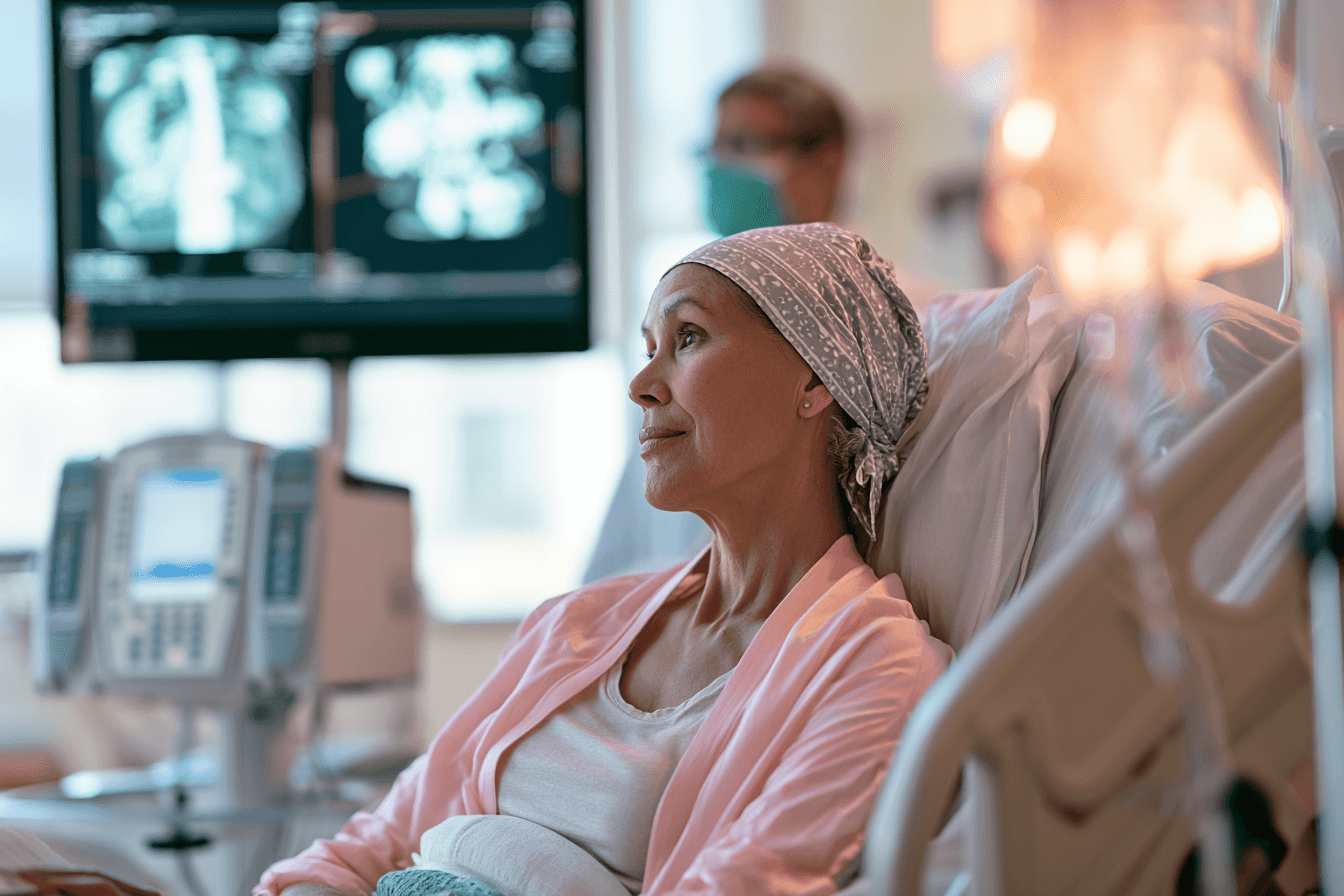
The Remaining Problems in Small Cell Lung Cancer
Why Tumour Shrinkage Alone Does Not Complete the Treatment
Small cell lung cancer presents a difficult paradox. The tumour can shrink rapidly after treatment, yet the disease may become active again because a smaller population of resistant cells remains within the body.
Table: Ayurvedic Treatment for Small Cell Lung Cancer by Stage
| SCLC stage or condition | What it means for the patient | Usual oncology pathway | Ayurvedic curative-intent objective | How progress is confirmed |
|---|---|---|---|---|
| Very early resectable SCLC | A small tumour is confined to the lung without confirmed lymph-node spread. | Surgery may be considered in carefully selected patients, generally followed by systemic chemotherapy. | Address possible microscopic disease, correct the remaining Arbuda-related Samprāpti, restore healthy tissue regulation and begin early recurrence prevention. | Surgical pathology, follow-up chest imaging, brain surveillance, laboratory results and continued absence of new disease. |
| Limited-stage SCLC | The cancer is mainly within one side of the chest and nearby lymph nodes in an area that can be treated with thoracic radiation. | Concurrent platinum–etoposide chemotherapy and thoracic radiation are commonly used. Eligible non-progressing patients may receive durvalumab afterward. | Work toward complete thoracic response, address possible microscopic spread, restore Prāṇavaha function and prepare the patient for durable remission. | CT or PET-CT response, lymph-node reduction, brain imaging, breathing capacity, performance status and progression-free follow-up. |
| Extensive-stage SCLC | The cancer has spread beyond one radiation field or reached organs such as the liver, brain, bones or adrenal glands. | Platinum–etoposide with atezolizumab or durvalumab is commonly used as first-line treatment. | Apply a whole-body treatment strategy directed toward the primary tumour, metastatic sites, Vāta-associated dissemination, organ dysfunction and Dhātu depletion. | Site-by-site imaging, absence of new metastases, organ-function tests, ECOG status and duration of tumour response. |
| Residual measurable disease | The main tumour has reduced, but one or more lesions remain visible. | Further systemic treatment, radiation or another disease-directed option may be selected according to the remaining disease. | Reassess the resistant lesion, modify the formulation and deepen the response toward disappearance of measurable disease. | RECIST measurements, PET activity where appropriate, organ-specific imaging and absence of new lesions. |
| Recurrent or treatment-resistant SCLC | The cancer has returned or progressed after an earlier response and may now behave differently. | Options may include platinum rechallenge in selected patients, lurbinectedin, tarlatamab, topotecan or another appropriate regimen. | Prepare a fresh Samprāpti map, address resistant tumour behaviour, treat new metastatic sites and rebuild enough Bala to maintain the new response. | Response of recurrent lesions, duration of response, prevention of additional spread, performance status and survival follow-up. |
| Complete radiological response | Measurable cancer is no longer visible on the relevant scans. | Surveillance and stage-appropriate maintenance or consolidation continue according to the patient’s treatment pathway. | Shift toward residual-Samprāpti correction, Rasāyana, healthy Dhātu reconstruction, Bala, Ojas and long-term recurrence prevention. | Repeated clear imaging, stable organ function, restored weight and strength, treatment-free interval and continued freedom from progression. |
In extensive-stage SCLC, platinum–etoposide treatment has historically produced overall response rates of approximately 50% to 80%. However, in the IMpower133 trial, median progression-free survival was 5.2 months even after atezolizumab was added to carboplatin and etoposide [1, 10].
In limited-stage disease, durvalumab after chemoradiotherapy improved median progression-free survival to 16.6 months, compared with 9.2 months with placebo. Median overall survival increased to 55.9 months, showing that long-term survival can improve when treatment continues after the first tumour response [12, 13].
These results reveal the main problem that the patient and caregiver must understand. SCLC can respond, but the response must be protected. A clear scan after the first treatment phase is valuable, yet the deeper objective is to prevent residual malignant activity from rebuilding the disease.
The Ayurvedic curative model is designed around this unresolved problem. It continues beyond the first clinical improvement and focuses on active disease reduction, residual Samprāpti, resistant disease patterns, tissue restoration and recurrence prevention.
The Problem of Microscopic Disease
A scan can detect visible tumours, enlarged lymph nodes and many metastatic lesions. It cannot always identify every small group of malignant cells circulating in the blood, lymphatic system or distant tissues.
This is especially important in SCLC because the disease may spread early. Even when the main tumour appears limited to the chest, microscopic malignant activity may exist beyond the visible lesion [1–4].
A treatment plan based only on the size of the lung mass may therefore remain incomplete. The Ayurvedic curative model is systemic from the beginning. It does not treat the primary tumour as an isolated problem.
The physician studies the primary site, lymphatic involvement, metastatic pattern, respiratory function, Agni, Doṣa–Dūṣya disturbance, Srotas involvement, Dhātu condition, Bala and Ojas. Treatment is then directed toward the visible disease and the wider internal process supporting its movement and survival.
For you as the patient or caregiver, this means that improvement in one lesion is not considered the final result. The complete disease map is reviewed repeatedly to confirm that other sites remain clear and that no new lesion has developed.
The Problem of Treatment-Resistant Cells
SCLC contains different cellular populations. Some cells may be highly sensitive to chemotherapy or radiation, while others may survive because they use different biological pathways.
Modern research has identified several SCLC molecular patterns involving ASCL1, NEUROD1, POU2F3 and immune-related activity. These patterns may differ in neuroendocrine behaviour, metabolism, immune signalling and treatment vulnerability [7–9].
When the sensitive cells are reduced, resistant cells may remain and later become the dominant population. This can explain why a tumour initially decreases and then returns with more difficult behaviour.
The Ayurvedic curative model addresses this problem through individualized and multi-target treatment. It does not depend on one general herb or one identical formula for every patient.
The physician selects medicines according to the active Samprāpti, tumour location, rate of progression, metastatic sites, organ function and the patient’s strength. A formulation may contain components selected for abnormal tissue activity, invasion, inflammatory signalling, angiogenesis, respiratory involvement, organ protection and Rasāyana reconstruction.
An experimental SCLC study found that curcumin influenced JAK–STAT3 signalling and inhibited cancer-cell proliferation, cell-cycle activity, migration, invasion and angiogenesis [31]. These mechanisms are relevant because a resistant cancer process is rarely controlled through one pathway alone.
The Ayurvedic strategy therefore uses a coordinated formulation rather than expecting a single compound to solve the entire disease.
The Problem of Rapid Physical Decline
Many patients with SCLC lose appetite, weight and muscle within a short period. They may become too weak to walk normally, climb stairs, perform daily activities or recover properly between treatment cycles.
Cancer-related cachexia is not simply a shortage of food. It involves changes in inflammation, metabolism, appetite and skeletal muscle that may continue even when the patient tries to eat more [22, 23].
This decline directly affects the curative pathway. A patient with severe muscle loss, poor intake and reduced performance status has less physiological reserve to withstand active disease, infections and intensive treatment.
Ayurveda addresses this problem through Agni, Dhātu formation, Bala and Ojas. However, nourishment is not given blindly. The physician first assesses whether the patient can digest and transform the food and medicine being prescribed.
When Agni is weak and Āma is prominent, heavy food and strong Rasāyana preparations may create additional discomfort, heaviness or obstruction. When the patient is severely depleted, excessive reducing treatment may worsen weakness.
The curative plan must therefore solve both problems at the same time. It must continue acting against the disease while gradually restoring the patient’s capacity to digest, absorb, rebuild and maintain healthy tissues.
A favourable response should become visible through improved appetite, stable weight, increased muscle strength, better sleep, improved movement and greater independence in daily life. These improvements are monitored alongside tumour response because the patient and the disease must recover together.
The Problem of Reduced Agni
A patient may receive nutritious food and carefully prepared medicines but still fail to gain strength when digestion and metabolism remain impaired.
In Ayurveda, Agni represents the body’s capacity to digest, transform and use food and medicine. When Agni becomes weak, the patient may experience poor appetite, bloating, nausea, irregular bowel movements, heaviness, coating of the tongue and progressive weakness.
The curative model treats Agni as a central part of the disease pathway. Medicines cannot perform their intended role efficiently when the patient is unable to digest or tolerate them.
When I see a patient with severe appetite loss, I do not immediately prescribe only heavy nourishing formulations. I first examine whether nausea, constipation, liver involvement, obstruction, infection, electrolyte disturbance or treatment toxicity is suppressing the appetite.
The immediate cause is then addressed, and Agni is supported in a manner appropriate to the patient’s strength. As digestion improves, the disease-directed and Rasāyana components can be increased gradually.
For the caregiver, improvement in Agni may appear as spontaneous hunger, reduced nausea, regular bowel movements, less abdominal heaviness and better tolerance of food and medicine.
The Problem of Respiratory Obstruction
Persistent cough and breathlessness are among the most distressing problems for an SCLC patient. These symptoms can interfere with sleep, eating, walking and communication.
The cause may be a tumour narrowing an airway, enlarged lymph nodes, pleural fluid, lung infection, anaemia, pulmonary embolism, radiation-related inflammation or disease progression. Each cause requires a different response.
The Ayurvedic curative model examines Prāṇavaha Srotas, Kāsa, Śvāsa, Kapha obstruction, Vāta movement, Bala and the physical cause identified through medical evaluation.
The objective is not simply to suppress coughing. Cough may be an important sign showing whether obstruction, irritation, mucus, infection or tumour activity is changing.
A favourable response may include reduced frequency and intensity of cough, easier breathing, improved oxygen stability, better sleep and increased walking capacity. At the same time, imaging should show whether the tumour or lymph-node pressure affecting the airway is decreasing.
If breathlessness suddenly worsens, oxygen levels fall or the patient begins coughing blood, the treatment plan must be reassessed immediately. These changes may indicate an urgent complication rather than a routine fluctuation in symptoms.
The Problem of Liver, Bone and Brain Metastasis
Each metastatic site creates a different danger and requires an organ-specific strategy.
Liver metastasis may disturb appetite, digestion, protein formation, medicine metabolism and overall energy. The treatment must address the metastatic disease while preserving the remaining liver function.
Bone metastasis may produce pain, fracture risk, reduced mobility and spinal-cord compression. Pain relief is important, but the deeper objective is to reduce disease activity and protect the structure and function of the affected bone.
Brain metastasis may cause headache, vomiting, seizures, confusion, imbalance, speech changes or weakness. A caregiver may notice these changes before the patient recognizes them.
The Ayurvedic curative model includes each involved organ within the complete Samprāpti. The medicines, dose and treatment intensity are modified according to the metastatic site, organ function and dominant Doṣa–Dhātu disturbance.
The physician also establishes measurable targets. Liver lesions are compared on imaging, liver tests are monitored, bone lesions are assessed with appropriate scans and brain disease is followed with MRI where required.
This problem-solving approach prevents the patient from receiving one unchanged formula regardless of where the disease is active.
The Problem of Bone-Marrow Depletion
SCLC and its treatment can affect the bone marrow. The patient may develop anaemia, neutropenia or thrombocytopenia, leading to weakness, infection risk, breathlessness or bleeding.
In the IMforte trial, grade 3 or 4 adverse events occurred in 38% of patients receiving lurbinectedin plus atezolizumab maintenance, compared with 22% receiving atezolizumab alone. Anaemia, neutropenia and thrombocytopenia were important severe adverse events [14, 15].
When blood counts decline, the patient may be unable to continue the intended treatment schedule. Therefore, preservation of marrow function becomes part of the curative objective.
Ayurvedic assessment considers Rakta, Majjā, Agni, tissue depletion and Bala. The prescription is adjusted according to haemoglobin, white-cell count, neutrophils, platelets, infection risk and active bleeding.
A patient with falling blood counts should not continue strong disease-reducing medicines without review. The treatment may need to shift temporarily toward marrow protection, Dhātu support and correction of the cause while maintaining control of the overall disease process.
The Problem of Organ Toxicity
The liver and kidneys are essential for processing medicines and maintaining internal stability. When these organs become impaired, both the cancer and its treatment become more difficult to manage.
A curative programme cannot focus on tumour reduction while allowing progressive injury to the liver, kidneys, bone marrow or nervous system.
The Ayurvedic prescription must therefore be reviewed whenever liver enzymes, bilirubin, creatinine, electrolytes or blood counts change. Every herb, mineral preparation, supplement and modern medicine should be considered within the complete treatment plan [35–39].
If you are the caregiver, report yellowing of the eyes, dark urine, reduced urine output, swelling, persistent vomiting, unusual sleepiness or sudden confusion. These changes may show that an organ requires immediate attention.
Preserving organ function is not separate from treating the cancer. It protects the patient’s ability to remain on the curative pathway.
The Problem of Immune Imbalance
Immunotherapy has shown that the immune system can influence the course of SCLC. Atezolizumab and durvalumab have improved survival when combined with chemotherapy in extensive-stage disease, while durvalumab has also extended survival after chemoradiotherapy in limited-stage disease [10–13].
However, immune treatment may also produce inflammation in healthy organs. The lungs, liver, bowel, skin, thyroid, adrenal glands, nervous system and other tissues may be affected [27, 28].
The Ayurvedic model does not use the simple idea of “boosting immunity.” The objective is balanced immune regulation, preservation of Ojas and correction of the internal disease process without creating additional inflammatory disturbance.
When a patient receiving immunotherapy develops diarrhoea, jaundice, a new rash, severe weakness, hormonal symptoms or worsening breathlessness, the cause must be identified promptly.
These symptoms should be reviewed in relation to the cancer, infection, immune-related toxicity, organ dysfunction and the Ayurvedic prescription. The treatment is then modified according to the confirmed problem.
The Problem of Fear and Loss of Control
A patient and caregiver may feel that every scan brings a new threat. They may not know whether a cough means ordinary irritation or progression, whether weakness comes from low blood counts or the cancer, or whether the treatment is producing meaningful change.
This uncertainty can create fear, sleeplessness and difficulty making decisions. A convincing curative model must therefore give the family a clear monitoring pathway.
The patient’s symptoms, weight, appetite, bowel pattern, breathing, sleep, pain and activity are recorded regularly. Blood tests and imaging are performed according to the disease stage and current treatment.
The family should know which changes are expected, which require treatment modification and which require urgent evaluation. This converts uncertainty into an organized clinical process.
When you know what is being measured and why, you become an active participant in the treatment rather than a passive observer waiting for the next scan.
The Problem of One Fixed Formula
Small cell lung cancer changes over time. A patient may move from newly diagnosed disease to partial response, residual disease, complete response, recurrence or a new metastatic pattern.
The same formulation should not continue unchanged throughout every stage.
During active progression, stronger disease-directed treatment may be required. After a major response, the emphasis may gradually shift toward residual disease, Rasāyana, Bala and recurrence prevention.
If liver function declines, medicines requiring greater hepatic processing may need modification. If the patient develops severe depletion, the reducing component may need adjustment while tissue restoration is strengthened.
Individualization does not mean changing medicines without structure. Each modification should have a clinical reason, a defined objective and a measurable outcome.
How the Ayurvedic Curative Model Brings the Solutions Together
The complete Ayurvedic curative model is designed to solve several connected problems at the same time.
It addresses the active tumour process through individualized Arbuda-related and Samprāpti-breaking treatment. It addresses microscopic and disseminated disease through a systemic rather than local strategy. It addresses resistance through multi-target formulations and repeated reassessment of changing disease patterns.
It addresses weight loss and weakness through correction of Agni, appropriate nutrition, Dhātu support and Rasāyana. It addresses respiratory symptoms through Prāṇavaha Srotas, Kāsa and Śvāsa management linked to the confirmed physical cause.
It addresses organ involvement through liver-, bone-, brain- and marrow-specific treatment planning. It addresses recurrence through continued treatment after tumour reduction rather than stopping at the first favourable scan.
This creates one connected pathway from active disease to tumour reduction, from tumour reduction to complete response and from complete response to durable remission.
What the Patient and Caregiver Should Expect From the Treatment Process
At the beginning, the physician should explain the complete disease map and the main problems that require treatment. The family should understand which lesions are being monitored, which organs require protection and what symptoms need urgent attention.
During treatment, the clinical direction is assessed through cough, breathing, appetite, weight, pain, sleep, mobility and daily activity. Laboratory tests show whether blood formation, liver function, kidney function and electrolyte balance are stable.
Imaging then shows whether the primary tumour, lymph nodes and metastatic lesions are reducing. The appearance of any new lesion is also recorded.
The treatment is continued when the disease and the patient are moving in the desired direction. It is modified when the response is mixed, an organ becomes stressed or the disease pattern changes.
This allows the patient and caregiver to receive a clear answer at every stage: what problem is being treated, what improvement is expected and how that improvement will be verified.
The Curative Objective
The purpose of the Ayurvedic curative model is to move beyond temporary relief. Its objective is to reduce active tumour burden, control metastatic disease, prevent further spread, restore healthy tissue function and maintain the deepest possible response.
Success should become visible as reduction or disappearance of measurable lesions, absence of new disease, recovery of breathing and appetite, stable organ function, improved strength and continued freedom from progression.
For the patient, this means returning toward the strongest possible level of health and daily function. For the caregiver, it means seeing a clear and measurable direction rather than relying only on hope.
For the physician, it means remaining accountable to scans, laboratory findings, functional recovery and long-term follow-up throughout the complete treatment journey.
Ayurvedic Interpretation of Small Cell Lung Cancer: Building the Curative Treatment Map
Ayurveda Begins With a Different Clinical Question
Modern diagnosis tells us that the patient has small cell lung cancer, where the primary tumour is located and whether it has spread. Ayurveda takes the investigation further by asking why the disease is progressing in this particular patient, which internal systems are maintaining it and what must be corrected to reverse its direction.
When I examine an SCLC patient, I do not select treatment only from the words “lung cancer.” I study the active tumour, lymph-node involvement, metastatic sites, respiratory obstruction, appetite, digestion, body weight, blood formation, organ function, sleep, pain, mental state and remaining physical strength.
The Ayurvedic assessment then identifies the dominant Doṣa, affected Dhātus, involved Srotas, condition of Agni, presence of Āma, level of Bala and stability of Ojas. These findings are brought together to form the patient’s Samprāpti, which is the complete pathway through which the disease has developed and continues to progress.
This gives the patient a problem-solving treatment map. Instead of receiving one general cancer formula, the person receives a treatment strategy designed around the specific forces driving tumour growth, spread, obstruction, tissue injury and recurrence.
The Classical Foundation of Arbuda
Suśruta describes abnormal tissue growth through the concept of Arbuda. The following verses provide an important classical foundation for understanding a deep and established tumour process.
Suśruta Saṃhitā, Nidāna Sthāna, Chapter 11, Granthi–Apacī–Arbuda–Galagaṇḍa Nidāna, verses 13–14:
गात्रप्रदेशे क्वचिदेव दोषाः सम्मूर्च्छिता मांसमभिप्रदूष्य ।
वृत्तं स्थिरं मन्दरुजं महान्तमनल्पमूलं चिरवृद्ध्यपाकम् ॥१३॥
कुर्वन्ति मांसोपचयं तु शोफं तमर्बुदं शास्त्रविदो वदन्ति ।
वातेन पित्तेन कफेन चापि रक्तेन मांसेन च मेदसा च ॥१४॥
Transliteration:
Gātrapradeśe kvacideva doṣāḥ sammūrcchitā māṃsam abhipradūṣya,
vṛttaṃ sthiraṃ mandarujam mahāntam analpamūlaṃ ciravṛddhyapākam.
Kurvanti māṃsopacayaṃ tu śophaṃ tam arbudaṃ śāstravido vadanti,
vātena pittena kaphena cāpi raktena māṃsena ca medasā ca.
Translation:
At a particular part of the body, aggravated Doṣas deeply affect the muscle tissue and produce a rounded, fixed, mildly painful, large and deep-rooted swelling that enlarges and does not undergo normal suppuration. Scholars describe this abnormal increase of tissue as Arbuda, which may be associated with Vāta, Pitta, Kapha, Rakta, Māṃsa or Meda [44].
The words “deep-rooted” are especially important for the Ayurvedic curative model. A tumour is not treated only as an external swelling that can be reduced temporarily. The treatment must reach the deeper Doṣa–Dūṣya relationship, affected Dhātus, involved Srotas and the systemic factors that allow abnormal tissue to survive.
Small cell lung cancer often grows more rapidly than the classical Arbuda pattern described in this verse. The physician therefore applies the Arbuda framework together with the strong Vāta component associated with rapid movement, systemic spread and tissue depletion.
Why SCLC Requires More Than an Arbuda-Only Approach
Small cell lung cancer is not only a mass inside the lung. It is a systemic disease process that may influence respiration, circulation, lymphatic movement, blood chemistry, nutrition, nervous-system function and distant organs.
The Arbuda framework helps us understand abnormal tissue formation, but the complete Ayurvedic model must also include Prāṇavaha Srotas, Kāsa, Śvāsa, Rasa, Rakta, Māṃsa, Meda, Asthi, Majjā, Agni, Bala and Ojas [40–45].
For example, a patient may have a relatively small lung tumour but severe low sodium, neurological symptoms or liver metastasis. Another patient may have a large central tumour with airway obstruction but no distant lesion. Both have SCLC, yet the disease is creating different immediate problems.
The curative plan must therefore include the primary tumour, the route of spread, the organs already affected and the patient’s ability to recover. Treating only the visible chest lesion would leave important parts of the Samprāpti unaddressed.
Prāṇavaha Srotas Is the First Functional Site
The lungs and respiratory functions are examined through Prāṇavaha Srotas. When a tumour narrows an airway, compresses nearby structures or disturbs normal lung function, the patient may develop persistent cough, wheezing, chest heaviness, reduced exercise capacity or breathlessness.
Charaka Saṃhitā, Chikitsā Sthāna, Chapter 17 provides the classical therapeutic framework for Śvāsa, while Chapter 18 addresses Kāsa [42, 43]. These chapters help the Ayurvedic physician understand the character of breathing difficulty and cough, but the actual physical cause remains part of the treatment decision.
A dry, exhausting cough with rapid weight loss may show a stronger Vāta pattern. A productive cough with heaviness, obstruction and abundant mucus may show greater Kapha involvement. Burning, blood-streaked sputum, inflammation or intense thirst may indicate Pitta–Rakta participation.
If you are the caregiver, these differences matter because “cough” is not a single problem. The physician must know whether it is dry or productive, whether blood is present, whether it disturbs sleep, whether oxygen falls and whether imaging shows airway obstruction, infection or tumour progression.
The curative objective is to reduce the disease causing respiratory disturbance while restoring stable Prāṇa movement. Temporary suppression of cough without improvement in the underlying obstruction would remain an incomplete response.
Kapha Creates the Ground for Abnormal Accumulation and Obstruction
Kapha provides structure, stability and nourishment in a healthy body. When it becomes pathological and combines with affected Māṃsa and Meda, it may contribute to heaviness, abnormal accumulation, mucus, obstruction and a fixed tissue mass.
A patient with a strong Kapha pattern may present with chest heaviness, thick sputum, poor appetite, slow digestion, lethargy, swelling and a bulky central lesion. In this situation, beginning immediately with heavy nourishing medicines may increase discomfort and further weaken Agni.
The physician may first need to reduce pathological accumulation, improve movement through the Srotas and restore digestive capacity. Tumour-directed treatment is then selected to act against the abnormal tissue process while preventing further Kapha-supported obstruction.
Kapha is not viewed only as mucus. It is also examined as part of the stability and tissue-building quality that has become redirected toward pathological growth. The curative strategy must shift this process away from abnormal tissue accumulation and back toward healthy Dhātu formation.
Vāta Drives Speed, Spread and Depletion
Vāta governs movement throughout the body. In SCLC, the Ayurvedic physician pays close attention to Vāta when the disease is spreading rapidly, producing severe breathlessness, pain, neurological symptoms, dryness, restlessness, insomnia or marked weight loss.
A strong Vāta component may help explain why the tumour process does not remain confined to its original site. The disease may move through lymphatic and blood pathways and become established in the brain, liver, bones or adrenal glands.
Vāta may also become increasingly aggravated as the patient loses food intake, sleep, muscle mass and physical strength. This creates a difficult cycle in which the disease increases Vāta and aggravated Vāta contributes to greater instability and depletion.
The solution is not simply to give heavy Vāta-pacifying nourishment. If active obstruction, Āma or Kapha remains strong, excessive nourishment may be poorly processed. The physician must first understand whether Vāta is obstructed, depleted or combined with another Doṣa.
For a patient with rapid metastatic progression, the curative plan must combine disease-directed treatment with carefully timed Vāta regulation, maintenance of nutrition and protection of the affected neurological, bone or respiratory systems.
Pitta and Rakta Reflect Heat, Inflammation and Tissue Injury
Pitta is involved in transformation, heat and metabolic activity. Rakta carries nourishment and vitality throughout the body. When Pitta and Rakta become disturbed, the patient may show burning, inflammation, bleeding, intense thirst, irritability, altered liver function or rapid tissue injury.
In SCLC, Pitta–Rakta involvement may become especially important when there is hemoptysis, inflammatory lung injury, liver metastasis, jaundice, fever or significant tissue breakdown.
The curative strategy must reduce destructive Pitta activity without suppressing healthy Agni. This requires precision because Agni must remain strong enough to digest food and medicines, while excessive pathological heat and Rakta disturbance must be controlled.
A patient with liver involvement and jaundice cannot receive the same treatment as someone with normal liver function. The physician must review bilirubin, liver enzymes, appetite, bowel pattern, urine colour and the extent of hepatic disease before choosing the formulation and dose.
The problem-solving objective is to act against the tumour while preserving the liver, blood and metabolic systems required for recovery.
The Dhātus Show How Deeply the Disease Has Entered
The tissue systems affected by SCLC change according to the stage and metastatic pattern. Rasa may become disturbed through poor nutrition, weakness and impaired circulation. Rakta may be involved through bleeding, inflammation, oxygen transport and liver dysfunction. Māṃsa is central to the abnormal tissue-growth process and to the patient’s loss of skeletal muscle.
Meda may participate in pathological accumulation and altered metabolism. Asthi and Majjā become important when the disease reaches bone, bone marrow, spine, brain or nervous-system structures. Ojas becomes progressively affected when the patient loses resilience, strength, sleep and the ability to maintain stable function.
The curative model does not treat these Dhātus as separate diseases. It follows the movement of the same Samprāpti through different tissues.
If the patient has bone metastasis, the treatment must include Asthi and Majjā while continuing to address the primary Arbuda process. If the liver is involved, Rakta and Pitta-related pathways require greater attention. If severe muscle loss is present, Māṃsa depletion must be corrected without strengthening the pathological tissue process.
This distinction is essential. Ayurveda aims to reduce abnormal Māṃsa growth while rebuilding healthy Māṃsa Dhātu. The formulation, timing and nutritional plan must help the body distinguish between the two directions.
Agni Determines Whether the Patient Can Use Food and Medicine
Agni is the body’s capacity to digest, transform and use food, medicine and metabolic material. In an SCLC patient, Agni may be weakened by the disease, liver involvement, medication, constipation, nausea, emotional stress or prolonged poor intake.
A patient may be given expensive medicines and nutritious food but remain weak if the digestive and metabolic system cannot process them. This is why the physician asks about hunger, taste, bloating, nausea, bowel movements, tongue coating and the feeling after eating.
If you notice that the patient feels full after a few bites, becomes nauseated by food smells or remains constipated for several days, these details must be reported. They help the physician identify what is blocking nutrition and medicine tolerance.
The curative plan often begins by making Agni more functional without creating excessive heat or irritation. Once the patient can process food and medicine more effectively, stronger disease-directed and Rasāyana components can be used more successfully.
Agni correction is therefore not a minor digestive treatment. It prepares the internal system to receive the full curative protocol.
Āma Represents Incomplete Processing and Pathological Burden
Āma is used in Ayurveda to describe material that has not been processed properly and interferes with normal physiological function. In a cancer patient, the physician looks for a clinical pattern of heaviness, poor appetite, coated tongue, disturbed bowel movements, lethargy, foul taste and reduced medicine tolerance.
The objective is not to label the entire tumour as Āma. The physician identifies whether impaired processing and obstruction are contributing to the patient’s present condition.
When Āma is strong, the treatment may need to improve digestion, elimination and Srotas function before intensive nourishment is introduced. When the patient is highly depleted and Āma is mild, the plan may move more quickly toward restoration.
This individualized decision prevents two common errors. The first is giving heavy Rasāyana treatment to a patient who cannot digest it. The second is continuing aggressive reducing treatment when the patient has already lost too much weight and strength.
Srotorodha Explains Why Normal Function Becomes Blocked
Srotas are the pathways through which nutrition, respiration, blood, metabolic products and physiological signals move. Srotorodha means that this normal movement has become obstructed or impaired.
In SCLC, obstruction may occur at several levels. The tumour may physically narrow an airway. Enlarged lymph nodes may compress blood vessels. Liver involvement may disturb metabolism, while bone-marrow involvement may interfere with normal blood-cell formation.
The Ayurvedic physician also looks for functional obstruction through Kapha, Āma, abnormal tissue accumulation and disturbed Vāta movement. The curative strategy aims to restore appropriate flow while reducing the disease creating the obstruction.
If the patient’s breathing improves because the airway lesion is reducing, this is a meaningful disease response. If breathing improves temporarily while the tumour continues to enlarge elsewhere, the complete Srotas problem has not yet been solved.
Bala Determines the Intensity of the Curative Treatment
Roga Bala means the strength of the disease, while Rogi Bala means the strength of the patient. A successful curative plan must compare both continuously.
A patient may have aggressive extensive-stage disease but retain good appetite, movement and organ function. Another person may have a smaller tumour burden but severe weakness, low blood counts and poor digestion.
The first patient may tolerate a stronger disease-reduction phase. The second may need a carefully balanced programme that first stabilizes Agni, blood formation and organ function while still acting against the tumour.
When I assess Bala, I look at more than whether the patient can walk into the clinic. I examine body weight, muscle strength, food intake, breathing, sleep, mental stability, blood counts, liver and kidney function and the ability to perform daily activities.
The treatment intensity is then adjusted so that the cancer is challenged without exhausting the patient’s remaining reserve.
Ojas Must Be Restored to Hold the Response
Ojas represents the integrated stability and vitality of the body. It is reflected through strength, clarity, stable function, resistance to illness, healthy sleep and the ability of tissues to remain coordinated.
In advanced SCLC, Ojas may decline as the patient loses weight, appetite, sleep, confidence and organ stability. A person may become physically and emotionally fragile even when one scan shows tumour reduction.
The curative model therefore gives special importance to rebuilding Ojas after the active disease burden begins to fall. This is where properly timed Rasāyana becomes essential [40].
Rasāyana is not used merely to make the patient feel energetic. It is chosen to restore healthy Dhātu formation, improve Bala, stabilize organ function and help the body maintain the corrected state.
The deeper objective is to make remission biologically and functionally sustainable. A patient should not only have a better scan; the person should also recover enough strength to hold that improvement over time.
Different Patients Require Different Curative Priorities
A patient with a large central tumour, thick mucus and severe chest heaviness may require early attention to Kapha, Srotorodha and Prāṇavaha Srotas. The disease-directed plan must reduce obstruction while preserving breathing and nutrition.
A patient with rapid weight loss, dry cough, bone pain and widespread metastasis may show stronger Vāta and Dhātu Kṣaya. The physician must continue acting against the cancer while preventing further loss of strength.
A patient with hemoptysis, burning, liver lesions and rising bilirubin may require greater Pitta–Rakta and hepatic attention. The medicines and dose must be selected according to both tumour burden and liver capacity.
A patient who has achieved a complete radiological response may require a different plan again. The treatment then focuses on residual Samprāpti, healthy Dhātu reconstruction, Ojas and recurrence prevention.
These examples explain why the Ayurvedic curative model remains individualized from diagnosis through remission. The treatment changes because the patient and the disease are changing.
Samprāpti-Bhaṅga Is the Central Curative Principle
Samprāpti-Bhaṅga means breaking the disease pathway. It is the central principle that connects every part of the Ayurvedic treatment.
For SCLC, this means reducing the forces driving abnormal tissue growth, correcting Doṣa–Dūṣya interaction, restoring Agni, reducing obstructive Āma where present, reopening affected Srotas, protecting involved organs, rebuilding healthy Dhātus and restoring Bala and Ojas.
The physician does not attempt all these steps in the same intensity on the first day. The sequence is decided by the patient’s immediate danger, disease stage, metastatic pattern and remaining strength.
If airway obstruction is the main threat, breathing and the thoracic disease become the first priorities. If liver failure is developing, hepatic preservation becomes urgent. If the tumour is reducing but the patient is severely depleted, Dhātu and Bala reconstruction require greater attention.
This makes Samprāpti-Bhaṅga a practical clinical process rather than an abstract theory. Every medicine and dietary decision should break a specific part of the disease pathway.
How the Patient and Caregiver Can Understand the Ayurvedic Plan
The patient and family should receive a clear explanation of the dominant disease pattern. They should know which Doṣas are active, which Dhātus and organs are affected, what the immediate treatment priority is and what changes will be monitored.
You should also understand why the prescription changes. A formulation may be modified because the tumour has reduced, a metastatic site remains resistant, Agni has improved, liver function has changed or the patient is ready for a deeper Rasāyana phase.
The physician should explain what improvement is expected in the next stage. This may include easier breathing, better appetite, weight stabilization, reduced pain, improved laboratory values or reduction of measurable lesions.
A clear explanation gives the caregiver an active role. Changes in food intake, cough, breathing, sleep, behaviour, pain and mobility can be recorded and communicated during follow-up.
The Curative Direction of the Ayurvedic Model
The Ayurvedic interpretation of SCLC creates a connected pathway from the tumour to the whole patient. Arbuda explains the deep abnormal tissue process. Doṣa and Dūṣya explain the individual pattern. Agni and Āma explain whether the body can process nutrition and medicine. Srotas explain obstruction and systemic movement. Bala and Ojas explain whether the patient can achieve and maintain recovery.
The treatment objective is to reverse these disturbances in the correct order. Active tumour burden is reduced, spread is controlled, affected organs are treated, healthy tissue formation is restored and the internal conditions associated with recurrence are progressively corrected.
For the patient, the expected direction is clear: the tumour should reduce, no new lesions should appear, breathing and organ function should improve, weight and strength should recover, and the response should remain stable on continued follow-up.
This is how Ayurveda builds a curative treatment map for small cell lung cancer. It does not treat only the lung mass or only the symptoms. It addresses the complete disease pathway and works toward measurable tumour clearance, durable remission and restoration of the patient’s functional health.
Proposed Samprāpti of Small Cell Lung Cancer: How the Disease Develops and How the Ayurvedic Curative Model Breaks It
Why the Complete Disease Pathway Must Be Understood
A patient may ask why the cancer developed, why it spread so rapidly and why it returned after an initially favourable response. Modern oncology explains these events through genetic changes, molecular subtypes, tumour-cell resistance, immune escape and metastatic spread [7–9]. Ayurveda studies the same clinical journey through Nidāna, Doṣa, Dūṣya, Agni, Āma, Srotas, tissue involvement, Bala and Ojas.
Samprāpti means the complete sequence through which a disease begins, becomes established, spreads, damages tissues and produces complications. Samprāpti-Bhaṅga means interrupting and reversing that sequence.
This is important because treating only the final tumour mass leaves the earlier parts of the disease pathway unaddressed. The Ayurvedic curative model therefore identifies every major link supporting the cancer and assigns a treatment objective to each one.
When I prepare the Samprāpti of an SCLC patient, I ask where the disease began, what is helping it grow, how it is moving through the body, which tissues are involved, why the patient is losing strength and what must be corrected to prevent the disease from becoming active again.
For you and your family, this creates a clear treatment direction. Every medicine, dietary instruction and monitoring decision should solve a specific part of the disease process rather than being given as a general cancer remedy.
Nidāna: The Factors That Create the Background for Disease
The first part of Samprāpti is Nidāna, which refers to the causes and contributing factors that disturb normal physiological balance.
Tobacco exposure is the strongest recognized risk factor for SCLC. Long-term exposure to inhaled chemicals, occupational toxins and polluted air may also contribute to repeated injury within the respiratory system [1–4]. Age, nutritional depletion, chronic respiratory irritation and individual susceptibility may influence how the body responds to these exposures.
Ayurveda also examines habits that repeatedly disturb Agni, Doṣas and Dhātus. Irregular meals, long-term intake of unsuitable food, poor sleep, chronic psychological stress, reduced physical activity and continued exposure to smoke may weaken the body’s ability to maintain normal tissue regulation.
The purpose of identifying Nidāna is practical. Treatment becomes less effective if the strongest disease-promoting factor continues. Smoking cessation, avoidance of secondary smoke, correction of nutritional deficiencies and improvement of sleep are therefore part of the curative strategy.
If the patient continues smoking after diagnosis, the respiratory tissues remain exposed to injury while the treatment is trying to restore them. Removing the cause is the first step in preventing the Samprāpti from receiving continuous support.
Agni Disturbance Weakens Normal Tissue Regulation
Agni is responsible for digestion, transformation and the proper use of food and medicine. It also represents the wider metabolic capacity through which the body produces healthy tissues and eliminates material that is no longer required.
In many SCLC patients, Agni becomes disturbed before or during the course of the disease. The patient may experience reduced hunger, early fullness, nausea, constipation, bloating, altered taste, heaviness or progressive loss of weight.
This creates two problems. The first is that food is not converted efficiently into healthy Rasa, Rakta, Māṃsa and other Dhātus. The second is that the patient may not tolerate the full treatment plan because medicines and nutrition become difficult to process.
Cancer-related weight and muscle loss can involve inflammation, altered metabolism and reduced intake rather than food deficiency alone [22, 23]. The Ayurvedic curative model approaches this through correction of Agni while also addressing the active disease responsible for the metabolic decline.
When appetite improves, the patient begins to tolerate food and medicines more consistently. Bowel function becomes more regular, nausea reduces and the body gains a better opportunity to rebuild healthy tissues.
Agni restoration is therefore not a minor supportive step. It creates the metabolic foundation required for disease-directed treatment, Dhātu reconstruction and long-term recovery.
Āma Adds to Pathological Burden and Obstruction
When digestion and transformation remain incomplete, Ayurveda describes the resulting pathological material and functional disturbance through the concept of Āma.
In an SCLC patient, an Āma-dominant pattern may be reflected through loss of appetite, heaviness, coated tongue, sluggish bowel function, nausea, lethargy and poor tolerance of medicines. Āma may combine with disturbed Doṣas and interfere with normal movement through the Srotas.
The tumour itself should not be described simply as Āma. The cancer is a complex abnormal tissue process. Āma is one part of the patient’s internal condition that may weaken metabolism, increase obstruction and make treatment more difficult.
If Āma is prominent, the physician first improves digestion, elimination and movement through the affected Srotas. Heavy nourishment is introduced only when the patient can process it properly.
If the patient is already severely depleted, Āma-reducing treatment must remain gentle and carefully balanced. The aim is to remove pathological burden without further reducing Bala.
This decision is individualized. One patient may require more correction of heaviness and obstruction, while another may require immediate protection from further tissue loss.
Kapha Contributes to Abnormal Accumulation
Kapha provides stability, lubrication, nourishment and tissue structure in a healthy body. When pathological Kapha combines with affected Māṃsa and Meda, it may contribute to heaviness, excessive mucus, obstruction and abnormal tissue accumulation.
A patient with a Kapha-dominant presentation may have a bulky central tumour, thick sputum, chest heaviness, slow digestion, lethargy and swelling. Enlarged lymph nodes may further obstruct breathing, swallowing or venous circulation.
In the proposed Samprāpti, pathological Kapha helps create the stable foundation upon which abnormal tissue growth becomes established. The treatment must therefore reduce this disease-supporting accumulation while preserving the healthy Kapha functions required for stability and tissue repair.
The curative strategy may include carefully selected Kapha-reducing, Srotas-clearing and Arbuda-directed principles. These are adjusted according to the patient’s strength because excessive reduction in a weak patient may increase Vāta and accelerate depletion.
The objective is not simply to dry mucus. It is to reduce pathological stability within the tumour process, improve movement through the respiratory pathways and redirect tissue formation toward healthy Dhātus.
Pitta and Rakta Support Rapid Activity and Tissue Damage
Pitta governs transformation, heat and metabolic activity, while Rakta carries nourishment and vitality throughout the body. Disturbance of Pitta and Rakta may become important when the disease shows inflammation, bleeding, burning, fever, rapid tissue destruction or liver involvement.
Small cell lung cancer has a high proliferative rate and may produce areas of tissue death within the tumour [5]. From an Ayurvedic perspective, a Pitta–Rakta pattern may be considered when rapid biological activity is accompanied by inflammation, hemoptysis, burning sensations, thirst or hepatic disturbance.
The treatment must reduce destructive Pitta–Rakta activity without weakening the healthy Agni required for digestion and medicine processing.
If a patient has liver metastasis, jaundice or rising liver enzymes, the curative plan is modified according to both the metastatic disease and the liver’s functional reserve. Medicines that create unnecessary heat or place additional burden on the liver are avoided or adjusted.
The desired response includes reduced inflammatory symptoms, control of bleeding, improvement in liver function where possible and radiological reduction of the involved lesions.
Vāta Drives Movement, Spread and Progressive Depletion
Vāta is the primary force of movement. It becomes especially important in SCLC because the disease frequently spreads early through lymphatic and blood pathways.
In the proposed Ayurvedic model, aggravated Vāta contributes to rapid movement of disturbed Doṣas and affected tissue elements from the original site toward distant organs. The brain, liver, bones, adrenal glands and distant lymph nodes may become new sites of disease expression.
Vāta also increases as the patient loses weight, sleep, hydration, muscle and strength. Pain, dry cough, restlessness, anxiety, constipation and neurological symptoms may become more pronounced.
This creates a cycle. The disease aggravates Vāta through tissue destruction and depletion, while disturbed Vāta increases instability, pain and systemic movement.
The curative strategy must regulate Vāta without strengthening Kapha-related obstruction or the abnormal tissue process. Nourishment is introduced according to Agni and the remaining disease burden.
For a patient with rapid metastasis and severe weight loss, the treatment must act firmly against disease progression while simultaneously protecting the patient from further Vāta-driven depletion.
Doṣa Interaction Makes SCLC a Complex Tridoṣic Disease
Although one Doṣa may be dominant at a particular stage, advanced SCLC commonly develops into a complex Tridoṣic pattern.
Kapha may provide the base for abnormal tissue accumulation and obstruction. Pitta may contribute to rapid metabolic activity, inflammation and tissue injury. Vāta may drive spread, pain, respiratory instability and depletion.
The dominance can also change during treatment. A Kapha-dominant patient may later develop severe Vāta after rapid weight loss. A patient with liver metastasis may develop greater Pitta–Rakta disturbance. A patient receiving intensive treatment may experience new Agni and Dhātu changes.
This is why the Ayurvedic prescription must be reviewed repeatedly. A formulation prepared for the original stage may not remain suitable after the tumour reduces, metastasis changes or Bala declines.
The patient’s treatment should move with the disease. Every modification should be connected to a clear clinical change and a measurable therapeutic objective.
Dūṣya: The Tissues That Become Involved
Dūṣya refers to the tissues and functional systems affected by the disturbed Doṣas.
Māṃsa is central because the tumour represents abnormal tissue formation, while the patient may simultaneously lose healthy skeletal muscle. The curative model must therefore reduce pathological Māṃsa growth while restoring healthy Māṃsa Dhātu.
Rasa becomes disturbed when appetite, circulation, hydration and nutrition decline. Rakta becomes important through oxygen transport, inflammation, bleeding, liver function and blood-cell abnormalities.
Meda may participate in altered metabolism and abnormal accumulation. Asthi and Majjā become important when the disease spreads to bones, bone marrow, spine, brain or neurological structures.
The affected Dhātus guide the treatment. A patient with bone metastasis requires Asthi–Majjā attention. A patient with liver involvement requires greater Rakta and Pitta assessment. A patient with severe muscle loss requires careful Māṃsa restoration without nourishing the active tumour process.
The treatment is successful only when abnormal tissue burden reduces and healthy tissue function improves together.
Prāṇavaha Srotas Becomes the Main Site of Disease Expression
The primary tumour usually develops within the respiratory system, making Prāṇavaha Srotas the principal functional site of disease expression.
The tumour may obstruct an airway, compress nearby structures, disturb ventilation or contribute to infection and fluid accumulation. The patient may develop cough, breathlessness, wheezing, chest pressure or falling oxygen levels [1–4].
The Ayurvedic physician studies whether the respiratory disturbance is dominated by Kapha obstruction, Vāta instability, Pitta-related inflammation or a combination of all three.
The treatment is then directed toward the confirmed cause. A mucus-dominant obstructive cough is approached differently from a dry exhausting cough, inflammatory cough or cough caused by progressive tumour pressure.
The curative objective is to reduce the disease creating the respiratory disturbance and restore stable movement through Prāṇavaha Srotas. Improvement should become visible through easier breathing, reduced cough, stable oxygen and radiological reduction of the thoracic disease.
Rasavaha and Raktavaha Srotas Support Systemic Spread
SCLC may enter lymphatic and blood pathways early. In the proposed Ayurvedic Samprāpti, this systemic movement can be examined through disturbance of Rasavaha and Raktavaha Srotas combined with aggravated Vāta.
Rasa carries nourishment and supports circulation through the body, while Rakta maintains tissue vitality and transport. When these pathways become involved in the disease process, abnormal cells and pathological influences may reach distant tissues.
Modern biology describes this through invasion, vascular entry, circulation, immune escape and colonization of distant organs [7–9]. Ayurveda describes the patient-level pattern through Doṣa movement, Srotas involvement and Sthāna Saṃśraya at vulnerable tissues.
This does not mean that both systems use identical explanations. They provide two different but clinically useful maps of the same patient.
The curative model therefore includes systemic treatment even when the visible tumour appears localized. The aim is to address both the primary disease and the pathways associated with further spread.
Sthāna Saṃśraya Determines Where Metastasis Becomes Established
Sthāna Saṃśraya means that disturbed Doṣas become established at a vulnerable tissue or organ.
In SCLC, metastatic disease commonly appears in the brain, liver, bones, adrenal glands and distant lymph nodes [1–4]. Each organ provides a different clinical environment and produces different symptoms.
The Ayurvedic physician examines why a particular site has become vulnerable. Tissue weakness, previous injury, reduced circulation, Doṣa affinity and organ-specific functional disturbance may be considered within the patient’s Samprāpti.
When the disease becomes established in the liver, the treatment must address hepatic Pitta–Rakta disturbance and preserve metabolism. When it reaches bone, Asthi and Majjā become central. When the brain is involved, Majjā, Vāta, neurological function and mental stability require urgent attention.
The prescription is therefore modified according to the actual metastatic site rather than applying one general approach to every form of spread.
Dhātu Kṣaya Reduces the Patient’s Ability to Hold Recovery
As the disease progresses, the patient may experience loss of Rasa, Rakta, Māṃsa and eventually broader Dhātu stability. Appetite declines, body weight falls, muscle strength reduces and ordinary activity becomes difficult.
This progressive depletion is called Dhātu Kṣaya. It is clinically visible through weakness, fatigue, dry skin, reduced movement, poor healing, disturbed sleep and declining performance status.
A curative programme cannot ignore Dhātu Kṣaya. Even when the tumour begins to reduce, the patient may remain too weak to maintain recovery.
The treatment therefore includes a carefully timed restoration phase. Agni is strengthened, food tolerance is improved and Rasāyana is introduced according to the remaining Samprāpti.
Restoration begins gradually because heavy nourishment given too early may worsen Āma or obstruction. The physician continuously balances the need to reduce active disease with the need to rebuild healthy tissues.
Ojas Kṣaya Makes the Disease More Difficult to Control
Ojas represents the integrated stability, vitality and resilience of the body. It helps maintain coordination between tissues, physiological functions and mental strength.
In advanced disease, Ojas may decline as the patient loses weight, sleep, confidence, appetite and organ stability. Frequent infection, extreme exhaustion, mental dullness and inability to recover may reflect a deeper loss of physiological reserve.
The curative model seeks to restore Ojas after the active disease process begins to come under control. Rasāyana, appropriate nutrition, sleep correction, stable digestion and recovery of healthy Dhātus all contribute to this phase [40].
For the patient, restoration of Ojas becomes visible through clearer thinking, stronger movement, improved sleep, better appetite, emotional stability and greater resistance to repeated decline.
The purpose is to help the body hold the response rather than allowing improvement to remain temporary.
How Recurrence Develops Within the Proposed Samprāpti
Recurrence can be understood as reactivation of the disease pathway after an initial reduction in visible tumour burden.
Modern research explains recurrence through resistant cell populations, molecular heterogeneity, tumour plasticity, immune escape and treatment-resistant pathways [7–9]. The Ayurvedic model examines whether residual Doṣa–Dūṣya disturbance, impaired Agni, unresolved Srotorodha, weak Dhātus and reduced Ojas continue after the first response.
If treatment stops immediately after symptoms improve, the deeper Samprāpti may remain active. The patient may feel better while the internal conditions associated with renewed disease continue.
The recurrence-prevention phase therefore continues after major radiological improvement. The physician monitors the patient’s Agni, Bala, weight, respiratory function, laboratory results and imaging while modifying the treatment according to the remaining risk pattern.
The objective is to prevent residual disease from regaining a stable foundation.
How Samprāpti-Bhaṅga Solves Each Part of the Disease
The first step is Nidāna Parivarjana, which removes continuing causes such as smoking, harmful inhaled exposure, unsuitable diet and repeated lifestyle disturbance.
The next step restores Agni and reduces clinically evident Āma so that the patient can tolerate and use food and medicine properly.
Kapha-related abnormal accumulation and obstruction are then addressed according to the patient’s strength. Pitta–Rakta disturbance is controlled where inflammation, bleeding or liver involvement is present. Vāta is regulated to reduce pain, instability, depletion and the forces associated with rapid systemic movement.
Arbuda-directed treatment focuses on the active abnormal tissue process. Organ-specific treatment is added for lung, lymph-node, liver, brain, bone, adrenal or marrow involvement.
As tumour burden decreases, Rasāyana and Dhātu reconstruction become more prominent. Bala and Ojas are rebuilt so that recovery becomes stable and the patient can maintain the corrected state.
The final stage continues to act on residual Samprāpti and recurrence risk. The treatment is modified according to follow-up imaging, organ function, appetite, weight, breathing and performance status.
How the Family Can See Whether Samprāpti Is Breaking
Samprāpti-Bhaṅga should produce changes that can be observed and measured.
Improved Agni may become visible through hunger, better food tolerance, reduced nausea and regular bowel movements. Reduction of Prāṇavaha obstruction may appear as easier breathing, less cough, improved oxygen stability and better sleep.
Recovery of Dhātus may be seen through stable weight, improved muscle strength, higher activity and better blood parameters. Restoration of Bala and Ojas may appear through clearer thinking, emotional stability, stronger movement and reduced frequency of sudden decline.
The disease-directed response is measured through imaging. The primary tumour, lymph nodes and metastatic lesions should reduce, while no new lesions should appear.
When these clinical, functional, laboratory and radiological changes move together, the family can see that the treatment is addressing both the cancer and the patient’s capacity for recovery.
The Complete Curative Direction
The proposed Samprāpti explains SCLC as a connected process beginning with causative exposure and susceptibility, followed by Agni disturbance, Doṣa–Dūṣya interaction, Srotas involvement, abnormal tissue growth, systemic spread, organ involvement, Dhātu Kṣaya and Ojas decline.
The Ayurvedic curative model reverses this pathway in a planned sequence. It removes continuing causes, restores Agni, reduces Āma, corrects Doṣas, clears pathological obstruction, addresses active tumour growth, treats metastatic sites, rebuilds healthy Dhātus and strengthens Ojas.
For the patient, the desired result is understandable. The tumour burden should reduce, further spread should stop, affected organs should recover, appetite and strength should return, and repeated follow-up should show continued freedom from progression.
This is the purpose of Samprāpti-Bhaṅga in small cell lung cancer. It converts the Ayurvedic disease model into a practical curative pathway in which every identified problem receives a specific treatment response and every stage of recovery is measured.
Therapeutic Objectives of the Ayurvedic Curative Model for Small Cell Lung Cancer
Therapeutic Objectives of the Ayurvedic Curative Model
The Treatment Must Solve the Patient’s Most Dangerous Problem First
Small cell lung cancer can create several problems at the same time. The patient may have a rapidly enlarging lung tumour, airway obstruction, lymph-node pressure, brain metastasis, liver involvement, bone pain, falling blood counts, severe weight loss or progressive weakness.
The first therapeutic objective is to identify which problem is creating the greatest immediate danger. Treatment is then organized so that the urgent problem is addressed without losing sight of the complete disease process.
For one patient, the immediate priority may be reducing obstruction around a major airway. For another, it may be controlling rapidly progressing liver disease. A third patient may require urgent attention to neurological symptoms caused by brain involvement.
When I design an Ayurvedic curative plan, I begin with the complete disease map and establish the order in which the problems must be solved. This prevents the patient from receiving a general cancer formulation that does not match the present stage, metastatic site or remaining Bala.
The treatment plan must answer three questions clearly. What is threatening the patient now? What is maintaining the cancer process? What must be corrected to achieve and hold a deep response?
The First Curative Objective Is to Stop Rapid Progression
SCLC may increase in size and spread over a relatively short period. The first major objective is therefore to change the direction of the disease from active progression toward stability and measurable regression [1–4].
The physician studies whether the tumour is growing locally, spreading through lymph nodes or appearing in distant organs. The speed of change is established by comparing current imaging with earlier scans.
In Ayurvedic assessment, rapid progression may involve aggravated Vāta carrying a deeply established Kapha–Māṃsa disease process through Rasavaha and Raktavaha pathways. Pitta and Rakta may become prominent when the disease shows inflammation, bleeding, tissue breakdown or liver involvement.
The initial medicines are selected to break the dominant part of this Samprāpti. The objective is to reduce the forces supporting abnormal tissue growth, limit further movement of the disease and protect organs that remain free from visible metastasis.
For the patient and caregiver, the first favourable sign is that the disease stops worsening. Symptoms may stabilize, no new complication may appear and the next investigation may show that the tumour has stopped increasing.
Disease stability is an important first step. The treatment then continues toward measurable tumour reduction.
The Second Objective Is to Reduce the Primary Tumour
The lung tumour remains a central part of the curative treatment plan because it may obstruct breathing, compress blood vessels, involve lymph nodes and continue releasing malignant cells into systemic pathways.
The Ayurvedic physician assesses the primary tumour through the Arbuda framework, the dominant Doṣas, affected Māṃsa Dhātu, Prāṇavaha Srotas involvement and the patient’s overall strength [40–45].
A Kapha-dominant tumour pattern may require greater attention to abnormal accumulation, heaviness and obstruction. A Pitta–Rakta-dominant pattern may require stronger control of inflammation, bleeding and tissue injury. A Vāta-dominant pattern may require simultaneous control of spread, pain, dryness and rapid depletion.
The objective is a measurable reduction in the primary lung lesion. This must be assessed by comparing tumour dimensions on follow-up CT, PET-CT or other appropriate imaging.
Clinical improvement should appear alongside the scan response. The patient may notice reduced cough, easier breathing, better sleep, less chest pressure and improved walking capacity. These changes show that the reduction in disease burden is beginning to restore function.
The Third Objective Is to Control Metastatic Disease Throughout the Body
SCLC commonly spreads to the brain, liver, bones, adrenal glands and distant lymph nodes. A curative model must therefore remain systemic even when one lesion is producing most of the symptoms [1–4].
The treatment strategy is adjusted according to each metastatic site. Brain involvement requires attention to neurological function, Vāta, Majjā and mental stability. Liver involvement requires careful management of Pitta, Rakta, Agni and medicine metabolism. Bone involvement requires Asthi–Majjā support together with control of the active metastatic process.
The Ayurvedic objective is to reduce existing metastatic lesions, prevent the formation of new lesions and preserve the function of every involved organ.
If you are caring for the patient, improvement in pain or appetite is encouraging, but follow-up imaging must also confirm the direction of metastatic disease. A liver lesion, brain lesion or bone lesion should be monitored independently because different sites may respond at different speeds.
When one site reduces and another remains active, the treatment is reassessed. The physician modifies the formulation according to the resistant organ, current laboratory values and changes in Samprāpti.
The Fourth Objective Is to Act Against Residual Disease
A favourable scan may show major tumour reduction or complete disappearance of measurable disease. This is a decisive stage, but the curative pathway continues because microscopic malignant activity may remain beyond the detection capacity of imaging.
Modern SCLC outcomes show that treatment given after an initial response can significantly influence the duration of remission and survival [12–15]. The Ayurvedic model therefore treats the post-response period as an active disease-clearance phase.
During this stage, the physician examines whether signs of the original Samprāpti remain. Agni may still be unstable, Kapha-related obstruction may remain, Vāta may continue to be aggravated by depletion and Ojas may not yet have recovered.
The medicines are modified so that disease-directed treatment continues while healthy tissue reconstruction becomes stronger. The objective is to prevent residual malignant activity from receiving the internal support required to become established again.
For the patient, this means that treatment does not stop merely because the cough has improved or the scan is clear. The plan moves into a deeper phase directed toward durable remission.
The Fifth Objective Is to Solve Respiratory Obstruction at Its Cause
Breathlessness and cough are among the most distressing symptoms of SCLC. They may be caused by tumour pressure, airway narrowing, lymph-node enlargement, infection, pleural fluid, anaemia, inflammation or disease progression.
The Ayurvedic treatment must be selected according to the cause rather than the symptom name alone. Kāsa and Śvāsa principles from Charaka Saṃhitā, Chikitsā Sthāna, Chapters 17 and 18 help guide the functional assessment of cough and breathing difficulty [42, 43].
A heavy productive cough with mucus may require a different approach from a dry exhausting cough with severe Vāta and tissue depletion. Burning, blood-streaked sputum or inflammatory symptoms may require greater Pitta–Rakta attention.
The curative objective is not simply to suppress cough. It is to reduce the disease or obstruction creating the cough while restoring stable movement through Prāṇavaha Srotas.
A favourable response should include easier breathing, reduced respiratory effort, improved oxygen stability, better sleep and radiological improvement in the thoracic tumour or involved lymph nodes.
The Sixth Objective Is to Restore Agni Without Strengthening the Disease
Many SCLC patients experience poor appetite, nausea, altered taste, early fullness, constipation and progressive weight loss. These problems reduce the patient’s ability to receive food, medicine and deeper Rasāyana treatment.
Agni is therefore corrected early in the curative pathway. The physician first identifies what is suppressing appetite. The cause may be liver involvement, constipation, medication, tumour pressure, infection, emotional distress or altered metabolism.
The treatment is selected according to the cause and the patient’s strength. The aim is to restore natural hunger, improve food tolerance, regulate bowel movements and allow medicines to be processed efficiently.
This stage requires balance. Excessively heavy nourishment may worsen Āma and obstruction when digestion remains weak. Excessive reduction may accelerate tissue depletion in a patient who is already underweight.
The physician therefore strengthens Agni while continuing to act against the tumour. As digestion improves, the patient becomes more capable of receiving the complete curative protocol.
The Seventh Objective Is to Stop Weight and Muscle Loss
Rapid loss of weight and muscle can reduce breathing efficiency, mobility, immunity and performance status. Cancer-associated cachexia is a complex process involving appetite, inflammation and altered metabolism rather than food intake alone [22, 23].
The Ayurvedic curative model treats tissue depletion as part of the disease process. The patient requires restoration of healthy Rasa, Rakta and Māṃsa without providing additional support to the abnormal tissue process.
This is achieved through properly timed nutrition, correction of Agni, treatment of constipation or nausea, control of active disease and gradual introduction of Dhātu-supportive Rasāyana.
A favourable response may become visible as stabilization of weight, improved muscle strength, increased walking capacity, better posture and greater independence in daily activities.
Human cancer studies involving Ayurvedic interventions have reported improvements in appetite, fatigue, performance status and quality of life [29, 30]. These outcomes are important within the curative pathway because a patient with stronger Bala is better positioned to sustain disease-directed treatment and long-term recovery.
The Eighth Objective Is to Protect the Liver, Kidneys and Bone Marrow
The liver, kidneys and bone marrow are essential for maintaining the curative pathway. The liver processes nutrients and medicines, the kidneys regulate fluid and electrolytes, and the bone marrow produces the blood cells required for oxygen transport, immunity and clotting.
SCLC, metastatic disease and intensive treatment may place pressure on these organs. The Ayurvedic prescription must therefore be adjusted according to liver tests, kidney function, haemoglobin, neutrophils, platelets and electrolytes.
If bilirubin rises, kidney function declines or blood counts fall significantly, the treatment is reassessed immediately. The medicine, dose, diet and treatment intensity may need modification.
Organ protection is not a separate supportive objective. It is part of the curative model because the patient requires functioning organs to receive medicines, rebuild tissues and maintain remission.
When organ function improves alongside tumour reduction, the patient gains a stronger foundation for continued recovery.
The Ninth Objective Is to Rebuild Bala
Bala represents the patient’s physical, functional and mental capacity to withstand the disease and continue the treatment journey.
A person may have a favourable scan but remain unable to walk, eat properly or sleep. Another patient may regain appetite and activity before the measurable tumour has reduced significantly.
The physician therefore evaluates Bala separately from tumour response. Weight, muscle strength, appetite, breathing, sleep, mental clarity, blood parameters and performance status are monitored over time [48–51].
The treatment is adjusted according to the relationship between Roga Bala and Rogi Bala. When the disease remains strong and the patient retains adequate strength, the disease-reduction phase may remain intensive. When the patient becomes depleted, the physician increases restoration without abandoning the tumour-directed objective.
The goal is to make the patient stronger while the disease becomes weaker.
The Tenth Objective Is to Restore Ojas and Hold the Response
Ojas represents integrated physiological stability, resilience and the ability of the body to maintain coordinated function. It becomes especially important after active tumour burden begins to reduce.
The patient may have completed an intensive treatment phase but continue to experience exhaustion, disturbed sleep, reduced confidence, recurrent infection or slow recovery. These signs indicate that the body has not yet achieved stable restoration.
Rasāyana is used in this stage according to Charaka Saṃhitā, Chikitsā Sthāna, Chapter 1 [40]. Its purpose within the curative model is to improve healthy Dhātu formation, rebuild Bala, support Ojas and stabilize the corrected internal state.
Rasāyana is selected according to the remaining Samprāpti. It is not given as the same general tonic to every patient. A person with residual Kapha obstruction requires a different restorative strategy from someone with Vāta-dominant depletion or Pitta–Rakta disturbance.
Restoration of Ojas should become visible through stronger movement, clearer thinking, better sleep, improved appetite, emotional stability and the ability to maintain health between follow-up assessments.
The Eleventh Objective Is to Prevent Recurrence
Recurrence is one of the greatest concerns for patients and caregivers because SCLC may return after an initially strong response.
The Ayurvedic recurrence-prevention phase begins before the first favourable scan is forgotten. The physician continues to monitor the remaining Doṣa–Dūṣya disturbance, Agni, Srotas, Dhātus, Bala and Ojas.
The treatment aims to prevent the same internal disease pathway from becoming established again. Continuing smoking, poor nutrition, severe constipation, disturbed sleep, uncontrolled inflammation and progressive depletion are addressed because they can weaken the patient’s recovery environment.
Follow-up imaging remains essential. A new cough, headache, bone pain, loss of appetite, confusion or unexplained weakness is assessed promptly rather than waiting for the next routine visit.
For the caregiver, this phase requires discipline. Medicines should be taken as directed, reports should be completed on time and new symptoms should be communicated early.
The objective is to move from a temporary response to a sustained state in which measurable disease remains absent and the patient continues to regain functional health.
The Twelfth Objective Is to Make Every Response Measurable
A convincing curative model must give the patient clear evidence of whether the treatment is moving in the desired direction.
Clinical changes include breathing, cough, pain, appetite, sleep, bowel function, weight and daily activity. Laboratory changes include blood counts, liver function, kidney function, electrolytes and nutritional indicators.
Radiological changes include reduction in the primary tumour, improvement in lymph nodes, reduction of metastatic lesions and absence of new disease. RECIST 1.1 provides a recognized method for classifying complete response, partial response, stable disease and progression [46].
Functional changes may be measured through ECOG performance status, quality-of-life tools and safe exercise-capacity assessments [48–51].
The patient and caregiver should receive a clear explanation after every major review. They should know which lesions have reduced, which remain active, whether organ function has improved and what the next phase of treatment is intended to achieve.
The Treatment Objectives Change as the Patient Improves
The Ayurvedic curative model is dynamic. It does not use one unchanged prescription from diagnosis to remission.
During rapid progression, the treatment focuses strongly on active tumour reduction and prevention of further spread. When the disease begins to stabilize, the protocol is refined according to the sites that remain active.
After significant tumour reduction, residual disease and restoration receive greater attention. After complete response, recurrence prevention, Rasāyana, Bala and Ojas become central.
If the disease returns, the complete map is prepared again. New metastatic sites, current organ function, treatment history, Agni and Bala are reviewed before the protocol is redesigned.
This changing strategy allows the treatment to remain connected to the patient’s present condition rather than the original diagnosis alone.
What Success Should Mean for the Patient and Family
For the patient, success should become visible as easier breathing, reduced pain, better appetite, recovery of weight, stronger movement, improved sleep and a return toward normal daily life.
For the caregiver, success should become visible as greater independence, clearer thinking, improved communication, stable food intake and fewer episodes of sudden decline.
For the physician, success must include measurable reduction or disappearance of tumour lesions, absence of new metastasis, preservation of organ function and continued freedom from progression.
The deepest objective is a sustained complete response in which measurable disease remains absent, healthy tissue function returns and the patient maintains the strongest possible level of physical and mental health.
This is the complete therapeutic direction of the Ayurvedic curative model. It solves the immediate danger, acts against active tumour burden, controls metastatic disease, corrects the underlying Samprāpti, rebuilds Bala and Ojas, and carries the patient from disease reduction toward durable remission.
Ayurvedic Intervention Domains: What Each Part of the Curative Plan Is Designed to Do
Why the Treatment Must Work on Several Problems at the Same Time
Small cell lung cancer does not create only one problem. The tumour may obstruct the airway, spread through lymphatic and blood pathways, affect the brain or liver, reduce appetite, weaken blood formation and cause rapid loss of muscle and functional strength.
For this reason, the Ayurvedic curative model cannot depend on one herb, one classical medicine or one general immunity product. It requires a coordinated treatment architecture in which each intervention has a defined role.
Table: Main Components of the Ayurvedic Curative-Intent Treatment Plan
| Ayurvedic treatment component | Main problem it is designed to solve | How it is individualized | Expected patient-centred result | Monitoring required |
|---|---|---|---|---|
| Central disease-directed formulation | Active tumour growth, abnormal tissue formation, systemic disease activity and remaining tumour burden. | Selected according to pathology, stage, tumour location, metastatic sites, Doṣa–Dūṣya pattern, Agni, organ function and Bala. | Reduction of the primary tumour, involved lymph nodes and metastatic lesions without progressive loss of strength. | CT, PET-CT or MRI, laboratory results, symptoms and performance status. |
| Agni-directed treatment | Poor appetite, nausea, early fullness, constipation and reduced tolerance of food or medicines. | Adjusted according to digestive pattern, liver involvement, bowel function, Pitta, Kapha, Āma and current treatment phase. | Return of natural hunger, better meal completion, regular bowel movements and improved medicine tolerance. | Food intake, body weight, nausea, bowel pattern, hydration and liver function where relevant. |
| Āma and Srotorodha management | Heaviness, coated tongue, thick mucus, impaired digestion and obstruction within affected physiological pathways. | The intensity depends on the balance between pathological burden and the patient’s remaining Bala. | Reduced heaviness and obstruction, improved digestion, easier breathing and greater readiness for deeper treatment. | Appetite, bowel function, respiratory symptoms, body weight and functional strength. |
| Prāṇavaha, Kāsa and Śvāsa treatment | Cough, breathlessness, mucus, airway irritation and respiratory obstruction. | Selected according to whether symptoms are dominated by Vāta, Kapha, Pitta–Rakta, tumour pressure, inflammation or depletion. | Easier breathing, reduced cough, improved sleep, stable oxygen and increased walking capacity. | Oxygen saturation, respiratory rate, symptom record and thoracic imaging. |
| Organ-specific treatment | Liver, brain, bone, marrow, adrenal or lymphatic involvement. | Prepared according to the affected organ, metastatic burden, Doṣa, Dhātu, Srotas and organ-function tests. | Reduction of the involved lesion together with preservation or recovery of organ function. | Organ-specific imaging, neurological examination, liver tests, blood counts and mobility assessment. |
| Rasāyana reconstruction | Dhātu depletion, low Bala, disturbed sleep, muscle loss and difficulty maintaining recovery after tumour reduction. | Introduced according to Agni, remaining disease burden, Prakṛti, Doṣa dominance and recurrence risk. | Healthy weight recovery, stronger movement, better sleep, clearer thinking and greater physiological stability. | Weight, muscle function, food intake, ECOG status, quality of life and follow-up scans. |
| Herbo-mineral medicines when indicated | Selected deep-seated Doṣa–Dhātu patterns requiring a precisely designed formulation. | Used only according to a defined classical indication, organ function, treatment phase and documented manufacturing quality. | A controlled disease-directed contribution without avoidable liver, kidney, marrow or neurological stress. | Batch documentation, elemental analysis where appropriate, CBC, liver function and kidney function. |
| Diet and functional rehabilitation | Weight loss, muscle depletion, poor treatment tolerance and reduced independence. | Matched to calorie and protein needs, Agni, swallowing ability, bowel function, respiratory capacity and activity level. | Stable or improving weight, stronger muscles, better mobility and improved ability to perform daily activities. | Dietary intake, weight trend, hand-grip or walking capacity and performance status. |
One part of the prescription is directed toward the active Arbuda-related process. Another part addresses the dominant Doṣa–Dūṣya disturbance. Additional components may be required for Prāṇavaha Srotas, liver involvement, bone disease, brain metastasis, declining blood counts, impaired Agni and progressive Dhātu Kṣaya.
The treatment is designed so that the tumour becomes weaker while the patient becomes stronger. If the cancer reduces but the patient continues to lose weight and organ function, the treatment remains incomplete. If the patient feels energetic while the tumour continues to progress, the disease-directed part of the programme requires modification.
Every intervention must therefore solve a specific problem, fit the current disease phase and produce a change that can be measured.
The Central Disease-Directed Ayurvedic Formulation
The main formulation is selected according to the patient’s pathology, stage, metastatic sites, previous treatment, Agni, Doṣa, affected Dhātus, organ function and Bala.
Its primary objective is to break the active Samprāpti. This means acting against abnormal tissue accumulation, reducing the factors supporting tumour growth, improving affected Srotas, controlling rapid dissemination and addressing the remaining disease after the first response.
A patient with a Kapha-dominant central tumour, thick sputum and major airway obstruction requires a different formulation architecture from someone with Vāta-dominant widespread metastasis, dry cough, bone pain and severe weight loss.
A patient with liver metastasis and rising bilirubin requires greater attention to Pitta, Rakta, Agni and hepatic medicine processing. A patient with brain involvement requires a plan that includes neurological function, Majjā, Vāta and mental stability.
The formulation may therefore contain a core disease-directed component and additional organ-specific components. The complete prescription is modified as the tumour burden changes.
This is different from purchasing turmeric, Ashwagandha, Guduchi or another isolated herb and expecting it to treat every level of SCLC. The curative model uses medicines in a planned combination, with each ingredient selected for a defined purpose within the patient’s complete disease map.
Why a Multi-Component Formulation Is Used
Small cell lung cancer is biologically complex. It involves abnormal cell proliferation, invasion, angiogenesis, inflammatory signalling, immune escape, metastatic movement and treatment resistance [7–9].
A single compound may influence one or more pathways, but the patient often has several active problems at the same time. Ayurveda traditionally uses combinations in which medicines perform complementary functions.
One medicine may be selected for the abnormal tissue process, another for Prāṇavaha Srotas, another for Agni and medicine absorption, another for liver or marrow protection, and another for Rasāyana reconstruction.
The purpose of combining medicines is not to increase the number of ingredients unnecessarily. The purpose is to create a coordinated pharmacological and Ayurvedic response that matches the complexity of the disease.
Every component should have a clear indication. If an ingredient no longer serves the current treatment phase, it should be reduced, replaced or removed.
The Role of an Individualized Avaleha
For selected patients, a customized Avaleha may serve as the central delivery form of the Ayurvedic curative programme. An Avaleha can combine multiple powdered medicines, concentrated herbal preparations and other carefully selected ingredients in one measured dose.
This form may be useful when the patient can swallow safely, digest the preparation and take it consistently. It also allows the physician to adjust the formulation according to the active tumour pattern, respiratory involvement, metastatic site and stage of recovery.
The Avaleha should not be considered a sweet nutritional tonic. Its ingredients and base must be designed according to Agni, blood glucose, liver function, bowel pattern and the degree of Kapha or Āma.
A patient with diabetes, severe nausea, impaired swallowing or marked Kapha-related heaviness may require a modified base or a different medicine form. A patient with painful swallowing may require a softer, smaller-volume or more easily tolerated preparation.
The formulation is therefore chosen for the patient rather than asking the patient to adapt to a fixed dosage form.
Agni-Directed Treatment Improves the Use of Food and Medicine
The complete curative protocol cannot function effectively when the patient is unable to digest food or tolerate medicines.
A patient may report that hunger has disappeared, food causes nausea, the stomach feels full after a few bites or bowel movements occur only after several days. These symptoms may be associated with constipation, liver involvement, medication effects, tumour pressure, emotional distress or altered metabolism.
The physician identifies the cause before selecting Agni-directed treatment. The objective is to restore natural hunger, improve gastric comfort, regulate the bowel and allow the patient to process the disease-directed medicines.
This does not require creating excessive heat. A patient with Pitta–Rakta disturbance, liver injury, mouth ulceration or radiation-related inflammation may need a gentle approach that supports Agni without increasing irritation.
For the caregiver, practical signs of improvement include the return of hunger, reduced nausea, better taste, regular bowel movements and increased ability to complete meals.
When Agni improves, the patient can receive the deeper tumour-directed and Rasāyana phases more consistently.
Āma and Srotorodha Must Be Addressed Before Heavy Reconstruction
Some patients present with poor appetite, coated tongue, heaviness, thick mucus, abdominal discomfort, constipation and reduced medicine tolerance. This pattern suggests that Āma and Srotorodha require attention.
In this situation, immediately giving heavy nourishing medicines may increase discomfort and further reduce Agni. The physician first improves digestion, movement and elimination while continuing disease-directed treatment at a level the patient can tolerate.
As heaviness, coating, nausea and constipation reduce, the patient becomes more prepared for Dhātu-supportive and Rasāyana medicines.
The approach is different in a severely depleted patient. Strong reducing treatment may worsen weakness when body weight, blood counts and Bala are already low. In such cases, Āma correction is gentle and combined with carefully digestible nourishment.
The decision depends on the balance between Roga Bala and Rogi Bala. The physician must reduce pathological burden without reducing the patient’s remaining capacity to recover.
Tumour-Directed Use of Haridrā and Curcumin Research
Haridrā has an important place in Ayurvedic pharmacology and is widely studied through its constituent curcumin. Its relevance to this curative model comes from its potential influence on several pathways connected with tumour behaviour.
In an SCLC experimental study, curcumin reduced cell proliferation, cell-cycle activity, migration, invasion and angiogenesis through effects involving the JAK–STAT3 signalling pathway [31].
STAT3 is clinically relevant because it participates in malignant cell survival, proliferation, inflammatory signalling, invasion and resistance. The study therefore provides a disease-specific biological direction for investigating Haridrā-derived interventions in SCLC.
The Ayurvedic treatment does not depend on ordinary dietary turmeric alone. The physician considers the form of Haridrā, combination, digestive tolerance, absorption, dose strategy and interaction with the rest of the formulation.
Haridrā may be included as one part of a broader multi-target protocol. Its role is strengthened when it is selected according to the patient’s Pitta, Kapha, Rakta, Agni and active disease pattern rather than being given routinely to every patient.
The response is measured through scans and the complete clinical picture. Laboratory-pathway data provide the biological rationale, while the patient’s imaging and follow-up show the actual direction of the disease.
Ashwagandha in Bala, Fatigue and Treatment Continuity
Ashwagandha may be considered when the patient shows significant weakness, sleep disturbance, loss of muscle strength, anxiety or Vāta-dominant depletion.
A clinical study involving 100 breast cancer patients reported lower chemotherapy-related fatigue and better quality-of-life measures in the group receiving Ashwagandha [30]. This provides a useful human basis for investigating its role in preserving Bala during intensive cancer treatment.
A small phase 1 study also examined a standardized Ashwagandha leaf extract in advanced non-small cell lung cancer. Nine patients entered the study and five completed the evaluable protocol. The study used PET-CT metabolic assessment and contributed a useful model for evaluating a standardized Ayurvedic-derived intervention in lung cancer research [32].
Within the SCLC curative model, Ashwagandha is selected according to the patient’s disease state rather than used as a routine immunity supplement. A patient with severe Kapha obstruction, marked Āma or difficulty digesting heavy formulations may require a different approach.
Liver function is also reviewed because case reports have linked some Ashwagandha-containing products with liver injury [36]. The treatment is therefore individualized, manufactured carefully and monitored through symptoms and laboratory tests.
When appropriately selected, the objective is to improve sleep, muscle strength, functional capacity and the patient’s ability to maintain the complete disease-directed programme.
Āmalakī and the Rasāyana Reconstruction Phase
Āmalakī is traditionally used within Rasāyana treatment and may be selected when the patient requires restoration of tissue quality, appetite, strength and long-term physiological stability.
Its role becomes especially important after the active tumour burden begins to reduce. At this stage, the patient may have a favourable scan but continue to experience weakness, reduced food intake, tissue depletion or poor recovery.
Āmalakī is not used simply because it is considered nutritious. The physician considers Agni, bowel function, Pitta, Kapha, blood glucose and the current disease phase before selecting the form and combination.
Within the curative model, its purpose is to support healthy Dhātu formation and help the patient maintain the corrected state. It may be incorporated into a broader Rasāyana phase rather than used alone.
The response should appear as improved food tolerance, stable weight, stronger movement, better sleep and greater functional independence, while continued imaging confirms that the disease remains controlled.
Guduchi Requires Careful Patient Selection
Guduchi is traditionally associated with Rasāyana, Agni regulation and restoration. It may appear attractive for a patient with cancer-related weakness or inflammatory disturbance.
Its use, however, must be matched carefully to the patient’s liver function, immune treatment and complete medicine list. A multicentre study reported liver-injury cases associated with products identified as Tinospora cordifolia during the COVID-19 period [37].
For this reason, Guduchi should not be added automatically to every SCLC prescription. The physician must confirm botanical identity, product quality, dose, indication and the condition of the liver.
When the patient is receiving immunotherapy, the aim is not indiscriminate immune stimulation. The treatment should support balanced regulation while avoiding unnecessary interference with immune-active cancer treatment.
A medicine can be valuable when used for the correct patient and harmful when selected without adequate assessment. Individualization is therefore part of the curative strength of Ayurveda.
Yaṣṭimadhu for Throat and Mucosal Problems
Yaṣṭimadhu may be considered when the patient has throat irritation, painful swallowing, dry cough or mucosal discomfort, especially during thoracic radiation or prolonged coughing.
Its purpose is to improve comfort, support food intake and help the patient continue the complete curative programme. A patient who cannot swallow food or medicine may rapidly lose Bala, hydration and weight.
Yaṣṭimadhu must be selected carefully in patients with hypertension, oedema, kidney dysfunction, heart disease or low potassium. A systematic review and meta-analysis associated consistent licorice intake with increased blood pressure and reduced potassium [38].
The medicine should therefore be used in a defined dose and duration, with attention to blood pressure, fluid retention and electrolytes.
The curative model does not separate mucosal care from tumour treatment. Solving swallowing and throat problems helps preserve nutrition and medicine adherence while the disease-directed component continues.
Respiratory Medicines Must Solve the Cause of Kāsa and Śvāsa
Cough and breathlessness may arise from tumour obstruction, lymph-node pressure, mucus, inflammation, infection, pleural fluid, anaemia or disease progression.
The Ayurvedic prescription is selected according to the confirmed cause and the Doṣa pattern. A thick, productive and obstructive cough requires a different strategy from a dry, exhausting Vāta-dominant cough.
Pitta–Rakta involvement becomes important when the sputum is blood-streaked, burning or associated with inflammatory symptoms. A patient with severe tissue depletion requires respiratory relief that does not further dry or weaken the body.
The classical framework comes from Charaka Saṃhitā, Chikitsā Sthāna, Chapter 17, Hikkā–Śvāsa Chikitsā, and Chapter 18, Kāsa Chikitsā [42, 43].
The curative objective is to reduce the disease creating the respiratory disturbance, restore stable movement through Prāṇavaha Srotas and preserve oxygenation and activity.
The response should become visible through reduced respiratory effort, better sleep, improved walking capacity, stable oxygen levels and reduction of the thoracic tumour or lymph-node pressure on follow-up imaging.
Liver-Specific Treatment Must Preserve Metabolism
When SCLC involves the liver, the treatment must address both metastatic disease and the liver’s remaining functional capacity.
The physician reviews the number and size of liver lesions, bilirubin, liver enzymes, albumin, appetite, abdominal symptoms and medicine tolerance.
The Ayurvedic plan considers Pitta, Rakta, Agni and Raktavaha Srotas. Medicines and doses are chosen to act against the metastatic pattern while avoiding unnecessary hepatic burden.
A patient with normal liver tests may tolerate a different formulation from someone with rising bilirubin or jaundice. The prescription should change as liver function changes.
The expected direction includes radiological reduction of liver lesions, improvement or stabilization of liver tests, better appetite and reduced abdominal discomfort.
The patient and caregiver should report jaundice, dark urine, increasing abdominal swelling, unusual sleepiness or sudden appetite decline because these signs may require immediate reassessment.
Bone and Marrow Treatment Must Address Disease and Structural Strength
Bone metastasis can cause pain, weakness, fracture risk and reduced mobility. Bone-marrow involvement or intensive treatment may also reduce haemoglobin, white cells and platelets.
The Ayurvedic plan examines Asthi, Majjā, Rakta, Vāta, pain, movement and Bala. The treatment objective is to reduce disease activity, protect structural integrity and support normal blood formation.
Pain reduction alone is not the complete outcome. Imaging should show the direction of the bone lesion, while blood counts show the state of the marrow.
When haemoglobin, neutrophils or platelets fall significantly, the disease-directed formulation is reassessed. The balance may temporarily move toward Majjā, Rakta and Dhātu restoration while the complete cancer strategy continues.
The desired result is reduced disease activity, improved mobility, stable bone structure and recovery of blood formation.
Brain and Neurological Involvement Requires a Focused Plan
Brain metastasis may produce headache, vomiting, confusion, memory change, seizure, imbalance or limb weakness. These symptoms can progress rapidly and require precise monitoring.
The Ayurvedic treatment examines Vāta, Majjā, mental clarity, sleep, movement and the neurological effects of the disease.
The curative objective is to control the metastatic process, protect neurological function and restore stable cognition and movement.
Reduced headache or improved sleep is encouraging, but brain imaging remains essential for assessing the lesion. The caregiver should record changes in speech, memory, balance, vision, behaviour and limb strength.
When a new neurological symptom appears, the disease map is reviewed immediately. The formulation is modified according to the brain findings, current organ function and patient’s Bala.
Rasāyana Is Used to Stabilize Deep Recovery
Rasāyana becomes increasingly important when the disease burden is reducing and the patient requires restoration of healthy tissues, strength and long-term stability.
Charaka Saṃhitā, Chikitsā Sthāna, Chapter 1, Rasāyana Adhyāya, Abhayāmalakīya Pāda, verses 7–8 states:
दीर्घमायुः स्मृतिं मेधामारोग्यं तरुणं वयः।
प्रभावर्णस्वरौदार्यं देहेन्द्रियबलं परम्॥
वाक्सिद्धिं प्रणतिं कान्तिं लभते ना रसायनात्।
लाभोपायो हि शस्तानां रसादीनां रसायनम्॥
Transliteration:
Dīrgham āyuḥ smṛtiṃ medhām ārogyaṃ taruṇaṃ vayaḥ,
prabhā-varṇa-svaraudāryaṃ dehendriya-balaṃ param.
Vāk-siddhiṃ praṇatiṃ kāntiṃ labhate nā rasāyanāt,
lābhopāyo hi śastānāṃ rasādīnāṃ rasāyanam.
Translation:
Through Rasāyana, a person gains longevity, memory, intellect, health, youthful function, radiance, healthy complexion, excellence of voice and optimal strength of the body and senses. Rasāyana is the means for obtaining excellence of Rasa and the succeeding Dhātus [40].
Within the SCLC curative model, Rasāyana is used to restore healthy tissue formation and help the body hold the response. It is selected according to the remaining Doṣa, Agni, Dhātu depletion and recurrence risk.
A patient with persistent Kapha and Āma requires a different Rasāyana strategy from someone with Vāta-dominant weakness and severe weight loss.
The expected result is not only increased energy. Rasāyana should support stable appetite, healthy tissue recovery, stronger movement, better sleep, clearer thinking and sustained freedom from progression.
The Role of Herbo-Mineral Medicines and Bhasma
Classical herbo-mineral medicines may be considered within an individualized curative protocol when there is a clear Ayurvedic indication, adequate organ function and reliable manufacturing quality.
These medicines should not be added merely to make the formulation appear stronger. Each Bhasma must have a defined purpose related to the patient’s Doṣa, Dhātu, organ involvement, Bala and treatment phase.
The physician should document the source, purification, preparation, batch number, dose and duration. Independent quality assessment is especially important because a study of Ayurvedic products sold online identified lead, mercury or arsenic in a proportion of sampled products [35].
This finding makes manufacturing quality and batch testing essential. It does not mean that all classical preparations are identical. It means the physician must know exactly what is being given and verify its quality.
Liver function, kidney function, blood counts and relevant clinical symptoms should be monitored during treatment. The dose is modified when the patient’s organ function or disease phase changes.
When used responsibly, herbo-mineral medicines form one carefully controlled part of the complete protocol rather than an undisclosed addition.
Food Is Part of the Curative Programme
Food is selected according to the patient’s nutritional requirement, Agni, swallowing ability, bowel pattern and current disease phase.
The patient requires enough energy and protein to preserve muscle, breathing capacity, immunity and daily function [22–24]. At the same time, food must remain digestible and acceptable.
A patient with nausea may tolerate small meals better than large portions. A patient with painful swallowing may require soft or liquid nutrition. A patient with severe constipation requires adequate fluid and bowel correction.
Prolonged fasting, extreme detoxification and highly restrictive cancer diets can accelerate weight and muscle loss. The curative plan aims to nourish healthy tissues without increasing Āma, heaviness or digestive distress.
The caregiver should record how much the patient actually eats rather than only what has been prepared. This helps the physician understand whether the nutritional plan is working.
Movement, Breathing and Mental Stability Support the Treatment
Gentle activity may help preserve muscle, circulation, sleep and independence when the patient is clinically stable [24, 25].
The activity plan is matched to breathing capacity, bone involvement, balance and performance status. A patient with spinal metastasis, severe hypoxia or fracture risk should not perform strenuous exercise.
Gentle breathing practices may help reduce anxiety and improve respiratory awareness, but forceful Prāṇāyāma, prolonged breath retention and exhausting exercises are avoided when the patient has severe breathlessness, hemoptysis or unstable disease.
Mental stability is also important. Fear, insomnia and constant uncertainty can reduce appetite, concentration and medicine adherence.
The patient should understand the treatment plan and the purpose of each phase. When you know what is being measured and what the next step will be, the treatment journey becomes more organized and manageable.
How the Caregiver Helps the Intervention Work
The caregiver often becomes the first person to notice whether a medicine is helping, causing difficulty or failing to solve the intended problem.
You can record appetite, medicine intake, bowel movements, sleep, cough, breathing, oxygen level, pain, weight, walking capacity and behavioural changes.
These observations should be connected to treatment dates. If a new symptom appears after a medicine change, the physician can assess the relationship more accurately.
The caregiver should also maintain the pathology report, scans, laboratory results, prescriptions and treatment timeline in chronological order.
This makes the treatment accountable. Every improvement or decline can be compared with the exact phase and formulation being used.
How We Know Whether Each Intervention Is Solving Its Problem
Agni-directed treatment should improve hunger, food tolerance, digestion and bowel function. Respiratory treatment should reduce cough and breathing effort while thoracic imaging moves in the desired direction.
Liver-specific treatment should be reflected through the symptoms, liver-function tests and liver imaging. Bone and marrow treatment should improve pain, mobility and blood parameters while imaging confirms stability or reduction of the lesions.
Rasāyana should improve weight, muscle strength, sleep, mental clarity, performance status and the patient’s ability to maintain recovery.
The central disease-directed formulation should produce measurable reduction of the primary tumour, involved lymph nodes and metastatic lesions, with no new disease appearing.
If an intervention does not solve the problem for which it was selected, it is reassessed. The medicine, dose, delivery form, interaction profile, digestion and current Samprāpti are reviewed.
The same treatment is not continued mechanically while the disease changes.
The Complete Curative Treatment Architecture
The Ayurvedic curative programme brings several intervention domains into one coordinated pathway.
The disease-directed formulation acts on the active Arbuda-related process. Agni-directed treatment improves the patient’s ability to receive food and medicine. Āma and Srotorodha management reduce pathological burden and improve physiological movement.
Organ-specific medicines address lung, liver, brain, bone, marrow and other involved sites. Rasāyana rebuilds healthy Dhātus, Bala and Ojas after the active disease burden begins to reduce.
Food, movement, sleep and caregiver monitoring protect the patient’s capacity to complete the entire treatment pathway.
The goal is not temporary comfort alone. The goal is measurable reduction of active tumour burden, control of metastatic disease, restoration of organ and tissue function, prevention of further spread and movement toward durable complete remission.
This is how the intervention domains work together. Each part solves a defined problem, every response is measured, and the treatment changes as the patient progresses from active disease toward restored functional health.
Translational Mechanisms: How the Ayurvedic Curative Model Is Designed to Act Against SCLC Biology
Why Biological Mechanisms Matter to the Patient
A patient or caregiver does not need complex molecular language to understand the central problem in small cell lung cancer. The cancer cells have lost important controls over growth, survival, movement and tissue invasion. They can multiply rapidly, spread early, adapt after treatment and use the surrounding tissues to support further progression.
A convincing Ayurvedic curative model must therefore explain how its interventions are intended to address these biological problems. It is not enough to say that a medicine balances Doṣas, removes Āma or improves immunity. The treatment must connect these Ayurvedic objectives with measurable changes in tumour growth, metastatic activity, organ function and duration of response.
When I select a formulation, I consider both maps. The Ayurvedic map shows the dominant Doṣa–Dūṣya disturbance, Agni, Srotas, Dhātu involvement, Bala and Ojas. The modern biological map shows cell-cycle loss, survival signalling, inflammation, angiogenesis, invasion, immune escape and treatment resistance.
The curative strategy brings these two maps into one treatment plan. The purpose is to weaken several parts of the cancer process together while restoring the patient’s capacity to maintain a deep response.
The First Biological Problem Is Loss of Normal Growth Control
Healthy cells contain internal systems that determine when a cell should divide, repair itself or stop growing. In SCLC, these controls are commonly disrupted.
A major genomic study examined 110 SCLC tumours. Nearly all showed loss of both copies of the tumour-suppressor genes TP53 and RB1. These genes normally help prevent damaged cells from multiplying without control. The same study found alterations in NOTCH-family genes in approximately 25% of the tumours [7].
For the patient, this explains why SCLC can increase rapidly. The malignant cells have lost two of the main biological brakes that normally restrict abnormal growth.
The Ayurvedic curative model addresses this uncontrolled direction through Arbuda-focused Samprāpti-Bhaṅga. The aim is to reduce the pathological forces supporting abnormal Māṃsa growth, restore orderly tissue transformation and prevent the diseased process from continuously producing new malignant tissue.
Ayurveda does not describe TP53 or RB1 by name. These are modern molecular findings. However, the clinical problem they create can be examined through disturbed Dhātvāgni, pathological Māṃsa formation, Doṣa–Dūṣya Sammūrcchanā and failure of normal tissue regulation.
The treatment objective is clear. Abnormal tumour tissue should reduce while healthy tissue formation becomes stronger.
The Second Problem Is Rapid Cell-Cycle Progression
The cell cycle is the sequence through which a cell prepares to divide and produce new cells. SCLC cells can move through this cycle rapidly, allowing the tumour burden to increase within a short period.
In an experimental study using NCI-H446 small cell lung cancer cells, curcumin reduced cell proliferation and produced arrest at the G2/M stage of the cell cycle. The study also recorded changes in Cyclin B1, a protein involved in progression through this phase [31].
This finding is important to the Ayurvedic curative model because Haridrā-derived compounds may influence the speed at which malignant cells continue dividing. The study also demonstrates why a botanical medicine should be examined through defined molecular targets rather than described only as a general anti-inflammatory herb.
Haridrā would not be expected to perform every curative function alone. Within an individualized formulation, it may be selected as one component directed toward abnormal proliferation, inflammatory signalling, invasion and angiogenesis.
The physician must also consider Agni, liver function, formulation design, absorption and the other medicines being used. The biological action of a compound depends on whether it reaches the required tissue in an appropriate form and concentration.
For the patient, the clinical question is whether this tumour-directed strategy produces a measurable reduction in the lesions seen on imaging. The laboratory mechanism helps us understand what may be occurring at the cellular level, while the scan shows whether the disease is moving toward regression.
The JAK–STAT3 Pathway Is an Important Disease-Survival Signal
Cancer cells communicate through signalling pathways. These pathways carry instructions that may encourage the cell to survive, divide, migrate or create new blood vessels.
The JAK–STAT3 pathway is one such route. It can be activated by inflammatory signals such as interleukin-6 and can support tumour-cell proliferation, survival, invasion and angiogenesis.
In the SCLC experimental study, curcumin suppressed phosphorylated STAT3 and affected JAK1, JAK2 and JAK3 signalling. It also reduced the proliferative effect associated with interleukin-6 stimulation [31].
This gives the Ayurvedic model a strong disease-specific mechanism to investigate. When Haridrā or a standardized curcumin-containing intervention is selected within the complete formulation, one objective may be to reduce excessive JAK–STAT3 activity and the malignant instructions carried through that pathway.
From an Ayurvedic perspective, this may correspond clinically with reducing Pitta–Rakta-driven inflammatory activity, pathological tissue transformation and the Doṣa–Dūṣya interaction supporting rapid growth.
The two systems describe the problem differently, but the desired result is the same. The malignant tissue should receive fewer survival and growth signals, while normal tissues regain a more stable pattern of function.
The Third Problem Is Cancer-Cell Migration
A tumour becomes more dangerous when malignant cells gain the ability to leave the original site and move through surrounding tissue, lymphatic pathways or blood vessels.
SCLC is known for early dissemination. The lung tumour may spread to mediastinal lymph nodes, liver, brain, bones, adrenal glands and other sites.
In the curcumin SCLC study, treatment reduced the migration of NCI-H446 cells in experimental models. It also countered migration promoted by interleukin-6 [31].
In Ayurvedic reasoning, rapid movement and dissemination are examined through aggravated Vāta moving through disturbed Rasavaha and Raktavaha Srotas. Kapha and affected Māṃsa may create the original tumour foundation, while Vāta carries the disease process beyond its initial site.
The curative formulation is therefore designed to perform two functions together. It must reduce the stability and activity of the primary tumour while also addressing the forces associated with movement and metastatic spread.
For the patient, successful control of migration should become visible as the absence of new metastatic lesions. A reducing lung tumour with a new liver, bone or brain lesion represents incomplete control of the systemic process.
The curative goal is whole-body disease control rather than improvement at only one site.
The Fourth Problem Is Tissue Invasion
Migration allows malignant cells to move, while invasion allows them to penetrate surrounding tissues and establish disease in new locations.
The SCLC curcumin study used an invasion model containing an extracellular matrix barrier. Curcumin reduced the number of malignant cells crossing that barrier [31].
This is relevant because an effective curative model must influence more than tumour size. It should also reduce the capacity of malignant cells to enter nearby structures, blood vessels and distant tissues.
In Ayurvedic assessment, invasion may be understood through the deep-rooted nature of the Arbuda process, disturbance of Māṃsa and Rakta, Srotoduṣṭi and Vāta-driven movement.
The intervention is therefore selected to break the connection between abnormal tissue formation, invasive behaviour and systemic spread.
For a patient with lymph-node enlargement, chest-wall involvement or liver metastasis, the treatment plan must include the invasive component of the disease. Relief of cough or pain remains valuable, but imaging must show whether the involved structures are also improving.
The Fifth Problem Is Angiogenesis
A growing tumour requires oxygen and nutrients. It may release signals that encourage the development of new blood vessels around the malignant tissue. This process is called angiogenesis.
The curcumin SCLC study reported reduced angiogenic activity after suppression of JAK–STAT3 signalling [31]. This matters because limiting the tumour’s blood-vessel support may make continued growth and spread more difficult.
Ayurveda examines circulation and tissue nourishment through Rasa, Rakta and their Srotas. In the curative model, the aim is not to reduce healthy blood flow to the patient. The aim is to correct the pathological vascular support serving the tumour while maintaining proper circulation and nourishment of normal tissues.
This distinction is important. The patient may already have anaemia, weakness or poor circulation and therefore requires healthy Rakta formation. At the same time, the abnormal tumour process should lose the vascular support that helps it expand.
The formulation must therefore weaken pathological nourishment of the tumour while preserving physiological nourishment of the patient.
A favourable response may include reduction in tumour metabolic activity, decrease in lesion size and absence of new vascular or metastatic progression on follow-up imaging.
The Sixth Problem Is Biological Heterogeneity
SCLC does not consist of one identical cell population. Different groups of malignant cells may use different transcription factors, metabolic programmes and survival pathways.
Research has described four major biological patterns called SCLC-A, SCLC-N, SCLC-P and SCLC-I. These are associated mainly with ASCL1, NEUROD1, POU2F3 or an inflamed gene-expression pattern [8, 9].
The 2021 Cancer Cell study applied these subtype signatures to tumour data from 276 patients in the IMpower133 trial. The inflamed SCLC-I group showed the greatest benefit from the addition of immunotherapy, while the other groups demonstrated different experimental vulnerabilities, including pathways related to PARP, Aurora kinases and BCL-2 [9].
This information supports one of the central principles of the Ayurvedic curative model: every SCLC patient should not receive the same formulation.
One patient may have a tumour dominated by strong neuroendocrine characteristics. Another may have a more inflamed pattern. A third may have several cellular populations within the same tumour.
Ayurveda individualizes treatment through Prakṛti, Vikṛti, Doṣa, Dūṣya, Agni, Srotas, metastatic pattern and Bala. Modern tumour subtyping individualizes treatment through molecular and immune characteristics.
When these assessments are combined, the curative programme can become more precise. The medicine selection, treatment intensity and monitoring strategy can be adjusted according to both the tumour’s behaviour and the patient’s complete condition.
The Seventh Problem Is Subtype Switching
SCLC cells can change their biological state during treatment. This ability is called cellular plasticity.
In experimental models, cisplatin exposure caused some SCLC-A tumours to shift toward an SCLC-I-like state. The researchers linked this change with acquired platinum resistance [9].
For the patient, this helps explain why a treatment that produced a strong first response may become less effective later. The surviving cancer cells may no longer behave exactly like the original tumour.
This is also why the Ayurvedic prescription must change after each major scan. The formulation used during newly diagnosed disease should not continue automatically when the tumour has become residual, resistant or recurrent.
When a response becomes mixed or progression appears, I reassess the new disease map. I review which lesions remain active, how quickly they are changing, which organs are affected and whether the dominant Ayurvedic pattern has shifted.
Kapha-related obstruction may have reduced, while Vāta, Pitta–Rakta activity or Dhātu depletion may now be more prominent. The formulation is then redesigned around the current disease rather than the earlier presentation.
The curative model stays dynamic because the cancer itself is dynamic.
The Eighth Problem Is Treatment Resistance
SCLC may initially respond strongly and later become resistant. Resistance can involve changes in DNA repair, cell-state identity, survival pathways, drug handling and the tumour microenvironment [7–9].
A multi-target Ayurvedic formulation is relevant to this problem because it can be designed to influence several connected mechanisms rather than depending on one molecular route.
One component may address proliferation, another inflammatory survival signalling, another invasion, another angiogenesis and another the patient’s metabolic and organ stability.
This does not mean that adding more ingredients automatically creates a stronger medicine. Every ingredient must serve a defined therapeutic purpose, be compatible with the others and match the patient’s current Samprāpti.
The formulation is reviewed when the response slows. Medicine timing, dose, absorption, Agni, liver function, kidney function and changes in tumour biology are considered.
For the patient and caregiver, this means that a resistant lesion is treated as a new problem requiring a new solution. The same prescription is not continued mechanically while the disease finds another route of progression.
The Ninth Problem Is Avoidance of Programmed Cell Death
Healthy cells with severe damage may undergo programmed cell death. Cancer cells can develop mechanisms that help them escape this process and continue surviving.
SCLC subtypes show different dependencies on cell-survival pathways. The molecular subtype study identified BCL-2-related vulnerability in selected SCLC groups, showing that survival mechanisms differ across tumours [9].
The Ayurvedic curative model seeks to reduce the survival advantage of malignant cells while protecting healthy tissues. This is one reason a multi-component formulation is preferred over an indiscriminate cytotoxic approach.
The treatment should create an internal direction in which abnormal tissue loses support while healthy Rasa, Rakta, Māṃsa and Ojas recover.
In modern translational research, this can be studied through markers of apoptosis, cell-cycle change and survival signalling. In clinical practice, the main outcome remains reduction or disappearance of measurable disease.
The Tenth Problem Is Immune Escape
The immune system can identify and remove abnormal cells, but SCLC may reduce immune recognition or create a tumour environment in which immune cells remain ineffective.
Some neuroendocrine SCLC patterns show relatively low immune activity, while the inflamed SCLC-I pattern shows greater immune involvement [9].
Ayurveda approaches the patient’s integrated resilience through Bala and Ojas. Ojas should not be reduced to a single immune marker. It includes the stability of tissues, strength, clarity, recovery capacity and coordinated physiological function.
The curative objective is balanced immune regulation. A treatment that indiscriminately stimulates immune activity may be unsuitable for a patient receiving immunotherapy or developing inflammatory organ toxicity.
The physician studies the tumour, inflammatory state, current immunotherapy, liver function, bowel pattern, respiratory symptoms and endocrine function before selecting immunologically active herbs.
For the patient, balanced immune regulation should support disease control without producing progressive injury to healthy organs.
The Eleventh Problem Is the Tumour Microenvironment
A tumour does not grow alone. It interacts with blood vessels, immune cells, inflammatory mediators, connective tissue and metabolic signals around it. This surrounding system is called the tumour microenvironment.
The microenvironment can support malignant-cell survival, help the tumour avoid immunity and create pathways for invasion and recurrence [8, 9].
Ayurveda also studies disease as an interaction between Doṣa, Dūṣya, Srotas, Agni and the condition of the entire patient. The tumour is not separated from the internal environment in which it developed.
The curative model therefore aims to change both the malignant tissue and the surrounding physiological conditions. It addresses pathological inflammation, impaired Agni, obstruction, tissue depletion, organ dysfunction and Ojas instability.
This creates a more complete objective than shrinking the tumour alone. The internal environment should become less supportive of malignant activity and more supportive of healthy tissue regulation.
For the patient, this should translate into tumour regression together with improved appetite, weight, organ function, breathing and functional strength.
The Twelfth Problem Is Inflammatory Signalling
Inflammatory signals may help cancer cells survive, invade and communicate with surrounding tissues. Interleukin-6 and STAT3 form one relevant pathway in SCLC experimental research [31].
The Ayurvedic physician may identify a Pitta–Rakta-dominant pattern when the patient has inflammation, burning, bleeding, fever, liver involvement or rapid tissue injury.
The treatment aims to reduce destructive inflammatory activity while preserving the Agni required for digestion, metabolism and medicine processing.
This requires careful balance. Excessively cooling or suppressive treatment may weaken appetite and tissue transformation. Excessive heating treatment may worsen inflammation, bleeding or liver stress.
The formulation is therefore adjusted according to symptoms, laboratory findings, liver function and the active tumour pattern.
A favourable response includes reduction of inflammatory symptoms, improved organ stability and measurable reduction in tumour burden.
The Thirteenth Problem Is Metabolic Depletion of the Patient
SCLC may use large amounts of energy while altering appetite, inflammation and tissue metabolism. The patient may lose muscle and body weight even when some food intake continues.
This weakens breathing, movement, immunity and treatment capacity. It also reduces the patient’s ability to maintain a tumour response.
The Ayurvedic curative model addresses this through Agni, Dhātvāgni, Rasa, Māṃsa, Bala and Ojas. The aim is to restore healthy metabolic direction without nourishing the abnormal tissue process.
The active disease-directed and tissue-restorative parts of the formulation must therefore work together. The tumour should lose biological support while normal tissues receive better nutrition and regulation.
When I assess progress, I examine both directions. Is the tumour reducing? Is the patient gaining appetite, muscle and functional strength?
A curative response becomes stronger when these two improvements occur together.
The Fourteenth Problem Is Oxidative Imbalance
Oxidative processes can damage healthy cells, but they can also participate in the destruction of malignant cells. For this reason, the Ayurvedic curative model does not assume that every antioxidant should be given in the highest possible dose.
The correct objective is biological regulation rather than indiscriminate antioxidant use. The timing, formulation and treatment phase matter.
A medicine suitable during post-treatment tissue restoration may require a different dose or combination during active chemotherapy or radiation. The physician considers the intended tumour-directed action, organ protection and possible interaction with current treatment.
For the patient, this means that over-the-counter antioxidant supplements should not be added randomly to a carefully designed protocol. Every product must serve a defined purpose within the curative pathway.
Why the Complete Formulation May Be Stronger Than One Isolated Herb
A single herb contains several naturally occurring compounds, while a classical or individualized formulation may combine several medicines with complementary actions.
Ayurvedic cancer research has proposed studying these formulations through systems biology, standardization, pharmacology and measurable clinical outcomes [33, 34].
Within the SCLC curative model, one component may influence proliferative signalling, another invasion and angiogenesis, another Agni and absorption, another organ protection and another Rasāyana reconstruction.
This creates the possibility of acting across several parts of the disease pathway at the same time.
However, the combination must remain rational. The ingredient identity, plant part, preparation, dose, manufacturing quality and purpose should be documented.
The strength of the treatment comes from coordinated action and individualization, not simply from a long ingredient list.
Formulation and Absorption Influence the Biological Result
A plant may contain a biologically active compound, but the clinical effect also depends on how the medicine is prepared, absorbed, metabolized and delivered to the relevant tissue.
This is why the Ayurvedic curative model pays close attention to Agni, Anupāna, dosage form, dose timing and the combination of ingredients.
A customized Avaleha, tablet, decoction or concentrated preparation may be selected according to swallowing ability, digestion, liver function, blood glucose and the required treatment intensity.
The physician should also consider whether another ingredient is being used to improve delivery, protect digestion or direct the formulation toward a particular organ or Srotas.
For the patient, consistent medicine intake and proper digestion are essential. A powerful formulation cannot perform its intended role when the patient repeatedly vomits it, cannot swallow it or takes it irregularly.
Organ-Specific Biology Must Guide the Prescription
The same malignant disease behaves differently after reaching different organs.
A liver metastasis grows within an organ responsible for metabolism and medicine processing. A brain lesion develops within a protected neurological environment. A bone lesion affects structure, marrow and movement.
The Ayurvedic curative plan therefore combines systemic disease treatment with organ-specific intervention.
Liver involvement requires attention to Pitta, Rakta, Agni and Raktavaha Srotas. Brain involvement requires attention to Vāta, Majjā and neurological stability. Bone disease requires attention to Asthi, Majjā, movement and structural strength.
The biological outcome is measured separately at every site. A reducing lung tumour does not remove the need to monitor a liver or brain lesion.
This site-specific assessment helps the physician identify resistance early and adjust the formulation before the disease gains further momentum.
How Translational Research Can Measure the Ayurvedic Effect
The Ayurvedic curative model should be studied through both clinical outcomes and biological markers.
The baseline tumour sample may provide information about neuroendocrine markers, proliferation and molecular subtype. Blood may be studied for inflammatory signals, circulating tumour material, metabolic changes and organ function.
Follow-up imaging shows whether the primary tumour and metastatic lesions are reducing. Repeated blood tests show whether the patient’s liver, kidneys, marrow and nutritional state remain stable.
Where research facilities are available, circulating tumour DNA or circulating tumour cells may help show whether microscopic disease activity is decreasing before the change becomes obvious on imaging.
The purpose of these measurements is to connect the Ayurvedic treatment with the biological behaviour of the disease. If a formulation is intended to influence STAT3, inflammation, angiogenesis or tumour-cell survival, the study should examine relevant markers together with objective tumour response [31–34].
What the Patient and Caregiver Should See
The molecular mechanisms may be complex, but the direction of recovery should be understandable.
Control of proliferation should appear as slowing and reduction of tumour growth. Control of migration and invasion should appear as absence of new metastatic lesions.
Reduction of respiratory obstruction should appear as easier breathing, reduced cough and improved oxygen stability. Better metabolic regulation should appear as restored appetite, stable weight and recovery of muscle strength.
Improved organ function should appear in laboratory results. A deeper disease response should appear through reduction or disappearance of measurable lesions.
The caregiver can help by recording symptoms, medicine intake, appetite, weight, pain, breathing, sleep and activity. These observations are compared with laboratory and imaging results.
When the clinical, functional and radiological directions improve together, the family can see that the treatment is acting on both the cancer and the patient.
How the Mechanism Guides Treatment Modification
Every follow-up assessment should answer whether the current formulation is solving the biological problem for which it was selected.
If the primary lesion reduces but a new metastatic site appears, migration and systemic control require greater attention. If several lesions reduce but one remains active, the resistant site is studied separately.
If tumour reduction occurs while the patient becomes severely depleted, the Agni, Dhātu and Rasāyana components require strengthening. If the patient becomes stronger while the tumour remains unchanged, the disease-directed formulation requires reassessment.
This approach prevents the treatment from becoming static. The prescription changes according to the real behaviour of the cancer and the patient’s capacity to recover.
The Complete Curative Mechanism
The Ayurvedic curative model is designed to act against several connected biological problems in SCLC. It aims to slow abnormal cell-cycle progression, reduce malignant survival signalling, limit migration and invasion, weaken angiogenic support, address inflammatory activity and respond to tumour heterogeneity and resistance.
At the same time, it restores Agni, healthy Dhātu formation, organ stability, Bala and Ojas so that the patient can achieve and maintain the response.
Haridrā and curcumin research provides SCLC-specific evidence involving JAK–STAT3, cell-cycle arrest, migration, invasion and angiogenesis [31]. Genomic and subtype research explains why SCLC requires individualized and changing treatment rather than one fixed formula [7–9].
The final objective is measurable. The primary tumour and metastatic lesions should reduce, new spread should stop, organ function should recover and the patient should move toward sustained complete response.
This is the translational foundation of the Ayurvedic curative model. It connects classical clinical reasoning with modern tumour biology and turns every biological problem into a defined treatment objective that can be followed through symptoms, laboratory findings, imaging and long-term remission.
Clinical Evidence Supporting the Ayurvedic Curative Model
What the Patient and Caregiver Need the Evidence to Answer
A patient with small cell lung cancer does not need a long list of laboratory terms without a practical meaning. You need to know whether an Ayurvedic treatment is designed to influence the cancer itself, whether it can help the body remain strong during treatment, how the response will be measured and whether improvement can be maintained.
The clinical evidence should therefore answer four connected questions. Can an Ayurvedic-derived medicine influence biological pathways used by SCLC? Can a carefully designed Ayurvedic formulation improve the patient’s ability to continue treatment and recover? Can tumour activity be measured objectively after an Ayurvedic-derived intervention? Can the complete model be studied through tumour response, duration of remission and survival?
The present evidence answers different parts of these questions. SCLC-specific laboratory research provides a tumour-directed mechanism. Human cancer studies provide data on fatigue, appetite, function and quality of life. A recent human lung-cancer study shows how a pharmaceutical-grade Ayurvedic-derived medicine can be evaluated through repeat PET-CT imaging.
These evidence layers form the foundation of the Ayurvedic curative model. The final judgment in an individual patient comes from pathology, serial imaging, laboratory results, functional recovery and continued freedom from progression.
SCLC-Specific Evidence for Haridrā-Derived Curcumin
One of the most directly relevant studies examined curcumin in small cell lung cancer cells. Researchers studied NCI-H446 and NCI-H1688 SCLC cells and focused on the JAK–STAT3 pathway, which helps malignant cells survive, multiply, invade surrounding tissues and form new blood vessels [31].
The study found that curcumin suppressed STAT3 phosphorylation. It also reduced several downstream proteins connected with cancer survival, growth and spread, including Survivin, Bcl-XL, Cyclin B1, VEGF, MMP-2, MMP-7 and ICAM-1 [31].
These proteins perform different functions within the cancer process. Survivin and Bcl-XL help malignant cells remain alive. Cyclin B1 supports continued cell division. VEGF helps the tumour develop blood-vessel support, while MMP-2, MMP-7 and ICAM-1 contribute to invasion and metastatic behaviour.
The researchers found that curcumin produced G2/M cell-cycle arrest in SCLC cells. In simple language, the malignant cells were prevented from moving normally through an important stage required for continued division. The study also demonstrated reduced colony formation and increased apoptotic cell death [31]. (PubMed Central (PMC))
Curcumin also reduced SCLC-cell migration and invasion. This is clinically important because the central danger in SCLC is not only growth of the primary lung tumour but also early movement to the brain, liver, bones, adrenal glands and distant lymph nodes.
The same study showed reduced angiogenic activity. Angiogenesis is the process through which the tumour encourages the development of new blood vessels to support its growth. By reducing VEGF and related signalling, curcumin affected another important part of the malignant process [31].
The researchers used a defined experimental curcumin concentration of 15 micromoles per litre. This detail matters because the result should guide the design of standardized Ayurvedic formulations and delivery systems rather than being interpreted as an instruction to depend on ordinary culinary turmeric.
For the patient, the importance of this study is straightforward. A substance derived from Haridrā influenced several SCLC-related problems at the same time: uncontrolled division, resistance to cell death, migration, invasion, blood-vessel formation and inflammatory survival signalling.
This multi-target action fits the Ayurvedic curative model because SCLC is not maintained by one isolated pathway. The complete treatment must weaken several parts of the tumour process while also restoring Agni, Dhātus, Bala and Ojas.
Why the JAK–STAT3 Finding Is Important for the Curative Strategy
Interleukin-6 can activate the JAK–STAT3 pathway and encourage malignant cells to multiply, survive, migrate and invade. In the SCLC study, interleukin-6 increased STAT3 activity and tumour-promoting behaviour, while curcumin acted in the opposite direction [31].
This creates a useful bridge between modern biology and the Ayurvedic interpretation of active Pitta–Rakta disturbance, pathological tissue transformation and Doṣa–Dūṣya Sammūrcchanā.
The curative formulation can therefore be designed to address inflammatory signalling together with abnormal Māṃsa growth, Vāta-driven spread, Kapha-associated accumulation and impaired Srotas.
The patient should not expect one ingredient to perform the entire treatment. Haridrā may form one tumour-directed part of a larger individualized formulation containing other medicines selected for respiration, metastatic sites, Agni, organ preservation, Dhātu restoration and recurrence prevention.
The scan remains the final clinical test. If the formulation is acting effectively against proliferation, invasion and metastatic activity, the expected direction is reduction of existing lesions and absence of new disease.
Human Evidence From a Controlled Ayurvedic Cancer Study
A controlled clinical study evaluated Ayurvedic medicines in 67 patients with different malignancies who were receiving or had completed chemotherapy. Fifteen patients formed the chemotherapy-only comparison group, while 52 patients received Ayurvedic treatment through three different treatment arms [29].
The Ayurvedic interventions included Mauktikyukta Kamdudha, Mauktikyukta Praval Panchamruta and, in one arm, a Suvarnabhasmadi formulation. Treatment was continued for 16 weeks, and the patients were observed for six months.
The study assessed nausea, appetite, constipation, fatigue, weight, haemogram, Karnofsky performance status, ECOG status and EORTC quality-of-life measures. This is important because it measured more than whether patients reported feeling generally better.
Patients in the Ayurvedic treatment arms showed statistically significant improvement in nausea, loss of appetite, constipation and fatigue compared with the control group. Karnofsky performance status and the global quality-of-life score also improved significantly [29].
Karnofsky performance status measures whether the patient can perform normal activities, care for themselves and remain physically independent. Improvement in this score means more than relief of one symptom. It shows movement toward stronger overall function.
For an SCLC patient, these outcomes are directly relevant to the curative pathway. Severe nausea, poor appetite, constipation and fatigue can reduce food intake, medicine adherence, muscle strength and the ability to complete the treatment plan.
When these problems are solved, the patient gains a stronger physiological foundation for tumour-directed treatment. This is the practical meaning of increasing Rogi Bala while reducing Roga Bala.
The haemogram did not differ significantly between the groups. This tells us that improvement in appetite, fatigue and function can occur even when blood-count recovery requires separate assessment and a more specifically directed Rakta–Majjā strategy.
The study also found favourable effects when Ayurvedic treatment was begun during chemotherapy and when it was introduced after chemotherapy. The authors considered starting Ayurveda alongside chemotherapy to be the preferred approach for controlling treatment-related symptoms [29].
Within the curative SCLC model, this supports early integration. Agni, bowel function, appetite, sleep, organ protection and Bala should not be allowed to deteriorate severely before Ayurveda is introduced.
Why Appetite and Function Are Part of Curative Treatment
Patients often hear appetite improvement described as only supportive care. In an aggressive cancer such as SCLC, appetite and function have a deeper clinical role.
A patient who cannot eat may lose muscle, breathing strength and mobility. Poor intake can increase dehydration, constipation, weakness and medicine intolerance. Reduced performance status may also limit the treatment options that the patient can carry.
The controlled Ayurvedic study showed that appetite, fatigue, constipation, general condition and functional capacity can improve together [29]. This supports a treatment model in which correction of Agni and Bala occurs alongside direct tumour-oriented treatment.
The purpose is not merely to make the patient comfortable while the disease continues. The purpose is to maintain the physical conditions required for deeper disease reduction, organ recovery and sustained remission.
If you begin eating better, walking more and sleeping more normally, these are valuable signs of recovery. The physician must then confirm whether the tumour and metastatic lesions are moving in the same favourable direction.
Ashwagandha and Chemotherapy-Related Fatigue
A prospective comparative study evaluated Ashwagandha in 100 patients with breast cancer receiving chemotherapy. The patients in the Ayurvedic treatment group received Ashwagandha root extract at a dose of 2 grams every eight hours throughout chemotherapy [30].
Fatigue was measured through the Piper Fatigue Scale and the Schwartz Cancer Fatigue Scale. Quality of life was assessed through the EORTC QLQ-C30.
The chemotherapy-only group experienced significantly greater fatigue. The difference reached P values below .001 on the Piper Fatigue Scale and below .003 on the Schwartz Cancer Fatigue Scale. Seven of the 18 assessed EORTC quality-of-life and symptom domains also showed significant differences favouring the Ashwagandha group [30].
These numbers indicate that Ashwagandha influenced more than a vague feeling of energy. Its effects were captured through established cancer-fatigue and quality-of-life instruments.
At 24 months, overall survival was 72% in the Ashwagandha group and 56% in the comparison group. The statistical analysis produced a P value of .176, so this numerical difference should be treated as a survival signal that deserves testing in a larger randomized study rather than as a fixed survival estimate [30].
For the SCLC curative model, the most immediate value lies in the improvement of fatigue, function and quality of life. A patient who retains greater Bala may remain more active, eat better, sleep more normally and carry the complete disease-directed programme more consistently.
Ashwagandha is therefore not added automatically to every prescription. Its use depends on Vāta, Kapha, Agni, liver function, degree of Āma, sleep, muscle depletion and the current disease phase.
A patient with severe Vāta-dominant weakness and poor sleep may benefit from a different Ashwagandha-containing strategy than a patient with marked Kapha obstruction, heaviness and weak digestion.
Human Lung-Cancer Evidence From a Standardized Ashwagandha-Derived Medicine
A 2026 phase 1 study tested RH324, a pharmaceutical-grade preparation derived from Ashwagandha leaf, in patients with advanced non-small cell lung cancer [32].
The study is important because the Ayurvedic-derived preparation was used as monotherapy for 28 days. Repeat FDG PET-CT imaging was performed before and after treatment to assess changes in tumour metabolism.
Nine patients entered the study, and five completed the full protocol with evaluable imaging. The study met its primary safety and tolerability endpoints. No new metastatic lesions were identified during the assessment period [32].
The researchers analysed 23 tumour targets across the evaluable patients. Among targets larger than 1.7 millilitres, 81.2% met the response threshold when assessed through mean standardized uptake value, or SUVmean [32].
This 81.2% figure represents a lesion-level metabolic response category rather than a patient-level complete response rate. Its importance lies in showing that changes in tumour metabolism can be detected after a short course of a standardized Ayurvedic-derived preparation.
PET-CT measures how actively a lesion is using glucose. A reduction in FDG uptake may indicate that tumour metabolism is becoming less active even before a large change in size becomes visible.
The study involved non-small cell lung cancer, while SCLC has different biology. Its major contribution to the Ayurvedic SCLC model is the research method. It demonstrates that a pharmaceutical-grade Ayurvedic-derived medicine can be administered in a controlled monotherapy period and evaluated through objective metabolic imaging.
For a future SCLC study, the same principle can be adapted carefully. The formulation should be standardized, baseline disease should be measurable, repeat imaging should follow a predefined schedule and metabolic changes should be connected with later CT or MRI response and duration of remission.
What the Lung-Cancer Trial Teaches About Formulation Quality
The RH324 study did not use an undefined Ashwagandha powder purchased from the general market. It used a pharmaceutical-grade preparation with a defined clinical-development pathway [32].
This distinction is important for the patient. Two products carrying the same plant name may differ in plant part, extraction, active constituents, dose, purity, absorption and biological activity.
A serious Ayurvedic curative programme must therefore document the botanical identity, plant part, preparation method, dose, batch quality and expected therapeutic role of every medicine.
The same principle applies to a customized Avaleha or herbo-mineral formulation. Individualization does not mean that the treatment can remain chemically or clinically undefined.
The formulation should be reproducible enough for the physician to understand what the patient is receiving and flexible enough to be adapted to the person’s Samprāpti, organ function and disease stage.
Why Tumour Metabolism and Tumour Size Should Both Be Measured
A CT scan mainly measures the dimensions of the tumour. A PET-CT also provides information about metabolic activity.
A lesion may become less metabolically active before it becomes much smaller. In another patient, a lesion may remain similar in size because of fibrosis or inactive tissue even when active tumour metabolism has fallen.
The 2026 RH324 study used short-term PET-CT change as an exploratory marker of antineoplastic activity [32]. This provides a useful model for monitoring an Ayurvedic curative treatment at more than one biological level.
For an SCLC patient, the ideal assessment may combine tumour dimensions, metabolic activity, brain imaging where required, laboratory findings and clinical recovery.
A response becomes more convincing when the tumour becomes smaller or less active, no new lesions appear, organ function remains stable and the patient’s breathing, appetite and physical capacity improve together.
What Each Study Contributes to the Curative Model
The SCLC curcumin study answers the tumour-biology question. It shows that an Ayurvedic-derived compound can influence STAT3, cell division, survival, migration, invasion and angiogenesis in SCLC experimental systems [31].
The 67-patient Ayurvedic cancer study answers the treatment-capacity question. It shows improvement in nausea, appetite, constipation, fatigue, Karnofsky performance and global quality of life during or after chemotherapy [29].
The 100-patient Ashwagandha study answers the Bala and fatigue question. It demonstrates measurable differences in chemotherapy-associated fatigue and several quality-of-life domains, with a numerical survival signal that can guide larger research [30].
The 2026 lung-cancer trial answers the objective-monitoring question. It shows that a pharmaceutical-grade Ayurvedic-derived monotherapy can be evaluated through repeat PET-CT, tumour-metabolism measurements and lesion-level response categories [32].
Together, these studies support a complete research direction. The Ayurvedic model should act on the tumour, protect the patient’s treatment capacity, restore function and measure biological response through scans rather than relying only on symptoms.
Why No Single Herb Represents the Complete Ayurvedic Model
Clinical research often studies one extract because this makes dose, safety and mechanism easier to measure. Real Ayurvedic clinical practice uses a broader individualized model.
SCLC can involve the primary lung tumour, lymph nodes, brain, liver, bone, marrow, respiratory function, digestion, metabolism and Ojas. One isolated extract may address only part of this pattern.
The complete Ayurvedic curative programme may therefore combine a central tumour-directed formulation with medicines for Agni, Prāṇavaha Srotas, liver, brain, bone, marrow, Bala and Rasāyana.
The evidence from individual compounds helps the physician understand specific biological actions. The complete formulation then brings several compatible actions together according to the patient’s Samprāpti.
This combined approach must remain transparent. Every ingredient should have a defined function, and every clinical claim should be connected to a measurable outcome.
How Evidence Should Guide an Individual Patient’s Treatment
Research provides the treatment direction, but the patient’s own reports provide the final clinical answer.
Before beginning, the physician records the size and location of the primary tumour, lymph nodes and metastatic lesions. Blood counts, liver function, kidney function, electrolytes, weight, appetite, oxygen level and performance status are also documented.
During treatment, clinical improvement may appear through reduced cough, easier breathing, improved appetite, better sleep, stable weight, reduced pain and increased activity.
Laboratory improvement may include stabilization of blood counts, liver function, kidney function and electrolytes. Imaging then shows whether the primary tumour and metastatic lesions are reducing and whether any new disease has appeared.
A patient may show a clinical response before a large radiological change is visible. Another patient may show tumour reduction while strength returns more slowly. Both patterns can occur, which is why every dimension is followed separately.
How the Evidence Supports a Curative Rather Than Symptom-Only Model
The SCLC-specific curcumin data are directed toward malignant proliferation, survival, migration, invasion and angiogenesis. These are tumour-level processes rather than symptom-only outcomes [31].
The human Ayurvedic studies show that the patient’s functional reserve can be preserved or restored during cancer treatment [29, 30]. This is important because a curative pathway requires both disease reduction and sufficient Rogi Bala to maintain that reduction.
The human lung-cancer study adds objective metabolic imaging to the evidence model [32]. It shows how an Ayurvedic-derived medicine can be assessed for changes within tumour lesions rather than judged only through general well-being.
The curative SCLC model brings these layers together. It aims to reduce active tumour burden, stop new spread, protect threatened organs, rebuild healthy Dhātus and maintain the response through Rasāyana and recurrence prevention.
The Next Clinical Evidence Step for SCLC
The next important research step is a prospective SCLC-specific study using a clearly defined Ayurvedic curative protocol.
Patients should be grouped according to limited-stage, extensive-stage, residual and relapsed disease. The exact Ayurvedic formulation, dose, preparation, treatment phase and modification rules should be documented.
Baseline and follow-up imaging should measure the primary tumour, lymph nodes and metastatic lesions. Complete response, partial response, stable disease and progression should be classified through RECIST 1.1 [46].
The study should also record duration of response, progression-free survival, overall survival, weight, performance status, fatigue, appetite, organ function and quality of life.
This design would answer the questions that matter most to the patient. How many patients achieve measurable tumour regression? How many reach complete response? How long does the response continue? Which Ayurvedic patterns respond most strongly? Which formulations are associated with the deepest and most durable recovery?
What a Convincing Response Should Look Like
A convincing response is not based on one improved symptom. It is built from several findings moving in the same direction.
The primary lung tumour should reduce or disappear. Involved lymph nodes and metastatic lesions should also reduce. No new lesions should appear.
The patient’s breathing, appetite, weight, sleep, pain and daily function should improve. Blood counts and organ function should remain stable or recover.
The response should then continue on repeated follow-up. A clear scan becomes more meaningful when it remains clear and the patient continues to regain strength.
For the caregiver, this provides a practical way to judge the treatment. You can see changes in food intake, movement, breathing, sleep and independence, while the scans and laboratory reports show what is happening inside the body.
The Clinical Meaning of the Present Evidence
The current evidence supports a serious disease-directed research pathway for Ayurveda in SCLC.
Haridrā-derived curcumin has demonstrated multi-target activity against SCLC-related proliferation, cell-cycle progression, survival signalling, migration, invasion and angiogenesis [31].
Ayurvedic formulations have produced measurable improvements in appetite, fatigue, constipation, performance status and global quality of life in cancer patients receiving chemotherapy [29].
Ashwagandha has shown clinically measured effects on fatigue and quality of life during chemotherapy, while a pharmaceutical-grade Ashwagandha-derived preparation has now been studied through short-term PET-CT tumour-metabolism assessment in advanced lung cancer [30, 32].
For the patient, these findings provide a clear treatment direction. Ayurveda can be designed to act on both the malignant disease and the patient’s capacity to recover.
For the physician, they create an obligation to standardize the formulation, document every treatment phase and measure the tumour response objectively.
The deepest goal remains complete and sustained recovery. The tumour burden should reduce, further spread should stop, involved organs should regain stability, healthy tissues should rebuild and the patient should move from active disease toward durable remission.
Frequently Asked Questions
What is Ayurvedic treatment for small cell lung cancer?
Ayurvedic treatment for small cell lung cancer is an individualized, disease-directed model that addresses the primary tumour, metastatic spread, respiratory obstruction, affected organs, impaired Agni, tissue depletion, Bala and Ojas. The treatment changes according to the patient’s stage, scan findings, organ function and response.
Can Ayurveda cure small cell lung cancer?
Ayurveda can be applied through a curative-intent model whose clinical goal is complete tumour response, prevention of further spread and durable remission. Whether this goal is reached is determined through pathology, repeated CT, PET-CT or MRI findings, organ recovery and continued absence of measurable disease.
How does Ayurveda target small cell lung cancer?
The Ayurvedic curative model works through Samprāpti-Bhaṅga, meaning interruption of the complete disease pathway. It addresses the Arbuda-related tissue process, Doṣa–Dūṣya disturbance, impaired Agni, Āma, Srotorodha, metastatic movement, affected Dhātus and loss of Bala and Ojas.
Why does small cell lung cancer require urgent treatment?
Small cell lung cancer can grow rapidly and spread early to the lymph nodes, brain, liver, bones, adrenal glands and other organs. Prompt pathology confirmation, complete staging and treatment planning help prevent avoidable progression and identify the most urgent problem affecting the patient.
How is limited-stage small cell lung cancer approached in Ayurveda?
In limited-stage disease, the Ayurvedic curative objective is complete control of the thoracic tumour and involved lymph nodes, treatment of possible microscopic spread and prevention of recurrence. Respiratory function, Agni, Bala and organ stability are protected while the tumour response is measured through follow-up imaging.
How is extensive-stage small cell lung cancer approached in Ayurveda?
Extensive-stage SCLC requires a systemic Ayurvedic strategy because the disease has moved beyond the original lung site. The primary tumour, lymph nodes and every metastatic organ are mapped separately, while the complete Samprāpti, rapid dissemination, tissue depletion and organ-specific problems are treated together.
Can Ayurvedic treatment be used with chemotherapy, radiation or immunotherapy?
Ayurvedic treatment can be coordinated with chemotherapy, thoracic radiation and immunotherapy after reviewing the complete treatment schedule, blood counts, liver function, kidney function and possible interactions. Modern SCLC care may include chemotherapy, radiation, immunotherapy and selected procedures according to the stage and clinical problem.
Should a patient stop chemotherapy or immunotherapy before starting Ayurveda?
A prescribed oncology treatment should not be stopped suddenly without discussion with the treating team. The Ayurvedic plan should be fitted around the patient’s current cancer treatment, organ function and treatment cycle so that both disease control and physiological recovery remain coordinated.
Can Ayurveda be used after small cell lung cancer returns?
Recurrent SCLC requires a new disease map because the returning cancer may have a different location, speed and resistance pattern. The earlier prescription is reassessed, and the Ayurvedic treatment is redesigned around the present lesions, affected organs, Agni, blood parameters and remaining Bala.
Can Ayurveda address brain, liver or bone metastases?
The Ayurvedic curative model includes every metastatic site within the systemic treatment plan. Brain involvement requires neurological and Majjā-focused assessment, liver involvement requires Pitta–Rakta and hepatic planning, while bone disease requires Asthi–Majjā, mobility and structural assessment alongside objective imaging.
How is Ayurvedic treatment personalized for an SCLC patient?
The physician reviews pathology, stage, tumour dimensions, metastatic sites, previous treatment, laboratory results, breathing, appetite, weight, sleep and functional strength. These findings are combined with Prakṛti, Vikṛti, Doṣa, Dūṣya, Agni, Srotas, Dhātu involvement, Bala and Ojas to prepare the treatment.
Which reports are required before starting Ayurvedic treatment?
The most useful records include the biopsy or pathology report, latest CT or PET-CT, brain MRI where indicated, previous comparison scans, treatment summaries, current prescription, complete blood count, liver function, kidney function, electrolytes and recent performance-status information.
How soon can the patient know whether the treatment is working?
Early clinical changes may include improved appetite, easier breathing, reduced cough, better sleep, stable weight and increased activity. Tumour response is assessed separately through scheduled imaging, and the timing depends on disease speed, current treatment, metastatic burden and the patient’s clinical condition.
How is tumour shrinkage measured during Ayurvedic treatment?
The primary lung tumour, involved lymph nodes and measurable metastatic lesions are compared with the baseline scan. The response is classified as complete response, partial response, stable disease or progression, while the appearance of any new lesion is recorded separately.
What does complete response mean in small cell lung cancer?
Complete response means that measurable tumour lesions have disappeared on appropriate imaging and no definite new lesion has developed. The result becomes stronger when subsequent scans remain clear, organ function recovers and the patient continues to regain breathing capacity, weight, strength and independence.
What happens after the tumour disappears on the scan?
The treatment moves into a recurrence-prevention and deep-restoration phase. Residual Samprāpti, Agni, healthy Dhātu formation, Bala and Ojas continue to receive attention while surveillance imaging confirms that the response remains stable over time.
What is the role of Rasāyana in small cell lung cancer treatment?
Rasāyana is used to restore healthy tissue formation, functional strength, mental stability and physiological resilience after the active tumour burden begins to reduce. It is selected according to the patient’s Agni, remaining disease pattern, organ function, Dhātu depletion and recurrence risk.
What diet should an SCLC patient follow during Ayurvedic treatment?
The diet should provide adequate energy, protein and fluids while remaining easy to digest and suitable for the patient’s swallowing ability, appetite and bowel pattern. Prolonged fasting and highly restrictive diets can accelerate weight and muscle loss, so nutrition must be individualized around Agni and clinical needs.
Can a very weak or underweight SCLC patient receive Ayurvedic treatment?
A depleted patient can receive an adjusted programme based on Rogi Bala. Treatment intensity is balanced so that active disease remains targeted while appetite, digestion, blood formation, hydration, healthy weight and functional strength are rebuilt progressively.
Are turmeric, Ashwagandha or immunity supplements enough for SCLC treatment?
An isolated herb or retail supplement is different from an individualized Ayurvedic curative protocol. The complete treatment may require tumour-directed, respiratory, organ-specific, Agni-supportive and Rasāyana components selected according to pathology, metastatic sites, organ function and the patient’s current Samprāpti.
Are Bhasma and herbo-mineral medicines used in the treatment?
A Bhasma or herbo-mineral preparation may be selected when it has a clear clinical indication and matches the patient’s Doṣa, Dhātu, organ function and treatment phase. Its source, preparation, batch quality, dose and safety monitoring should remain fully documented.
Which symptoms require immediate medical attention during treatment?
Falling oxygen, severe breathlessness, significant coughing of blood, fever with low blood counts, seizures, confusion, sudden limb weakness, jaundice, reduced urine, uncontrolled vomiting or loss of bladder control require prompt evaluation. These changes may signal disease progression, organ complications, infection or treatment toxicity.
Can tarlatamab be used for recurrent extensive-stage SCLC?
Tarlatamab is an approved treatment for adults with extensive-stage SCLC that has progressed during or after platinum-based chemotherapy. Ayurvedic treatment used during this period must be coordinated carefully because fever, low oxygen, low blood pressure or neurological changes require urgent assessment.
How can a caregiver support an SCLC patient during Ayurvedic treatment?
The caregiver can record appetite, weight, bowel movements, sleep, cough, breathing, oxygen level, pain, activity and medicine intake. Keeping pathology reports, scans, blood tests, treatment dates and prescriptions in chronological order helps the physician identify improvement, toxicity or a change in disease phase.
What should a patient expect during the first Ayurvedic consultation?
The physician should review the complete disease map, identify the most urgent problem and explain the objective of the first treatment phase. The patient should understand which lesions and organs are being treated, what improvement is expected and which investigation will guide the next decision.
How is this Ayurvedic curative model different from general supportive care?
General supportive care mainly addresses symptoms and treatment tolerance. The Ayurvedic curative model is designed to act on the active tumour process, systemic spread, resistant lesions, affected organs, residual disease and recurrence risk while rebuilding the patient’s Agni, Dhātus, Bala and Ojas.
What is the final goal of Ayurvedic treatment for small cell lung cancer?
The final goal is measurable reduction and disappearance of active tumour burden, control of metastatic disease, absence of new lesions, restoration of affected organs and sustained remission. The patient should also regain breathing capacity, appetite, healthy weight, strength, mental clarity and the highest possible level of daily independence.
References
Small Cell Lung Cancer Overview, Diagnosis, Staging and Biology
[1] PDQ Adult Treatment Editorial Board. (2025, May 14). Small cell lung cancer treatment (PDQ®)–Health professional version. National Cancer Institute.
Used for: SCLC symptoms, risk factors, pathology, diagnostic work-up, limited and extensive stages, prognosis, chemoradiotherapy, systemic treatment, recurrence, metastatic patterns and follow-up.
[2] Ganti, A. K. P., Loo, B. W., Jr., Badiyan, S., Bassetti, M., Bestvina, C., Chiang, A., et al. (2026). NCCN Guidelines® Insights: Small cell lung cancer, Version 2.2026: Featured updates to the NCCN Guidelines. Journal of the National Comprehensive Cancer Network, 24(1), e260002.
Used for: Current SCLC diagnostic, staging, first-line, maintenance and subsequent-treatment recommendations, including updates relevant to relapsed disease.
[3] Kalemkerian, G. P., Khurshid, H., Ismaila, N., et al. (2025). Systemic therapy for small cell lung cancer: ASCO guideline rapid recommendation update. Journal of Clinical Oncology, 43(1), 101–105.
Used for: Updated ASCO recommendations concerning systemic treatment of limited-stage, extensive-stage and previously treated SCLC.
[4] Dingemans, A.-M. C., Früh, M., Ardizzoni, A., et al. (2021). Small-cell lung cancer: ESMO Clinical Practice Guidelines for diagnosis, treatment and follow-up. Annals of Oncology, 32(7), 839–853.
Used for: International guidance on diagnosis, staging, treatment selection, relapsed disease, surveillance and supportive management.
[5] Nicholson, A. G., Tsao, M. S., Beasley, M. B., et al. (2022). The 2021 WHO classification of lung tumors: Impact of advances since 2015. Journal of Thoracic Oncology, 17(3), 362–387.
Used for: Histopathology, neuroendocrine differentiation, combined SCLC and differentiation of SCLC from other pulmonary neuroendocrine malignancies.
[6] Nicholson, A. G., Chansky, K., Crowley, J., et al. (2016). The International Association for the Study of Lung Cancer Lung Cancer Staging Project: Proposals for the revision of the clinical and pathologic staging of small cell lung cancer in the forthcoming eighth edition of the TNM classification for lung cancer. Journal of Thoracic Oncology, 11(3), 300–311.
Used for: TNM staging, prognostic grouping and the relationship between TNM staging and traditional limited-stage or extensive-stage classification.
[7] George, J., Lim, J. S., Jang, S. J., et al. (2015). Comprehensive genomic profiles of small cell lung cancer. Nature, 524(7563), 47–53.
Used for: TP53 and RB1 loss, genomic heterogeneity, NOTCH alterations and the biological basis of rapid SCLC growth and resistance.
[8] Rudin, C. M., Poirier, J. T., Byers, L. A., et al. (2019). Molecular subtypes of small cell lung cancer: A synthesis of human and mouse model data. Nature Reviews Cancer, 19(5), 289–297.
Used for: ASCL1, NEUROD1 and POU2F3-associated SCLC subtypes and the need for individualized, biology-aware treatment research.
[9] Gay, C. M., Stewart, C. A., Park, E. M., et al. (2021). Patterns of transcription factor programs and immune pathway activation define four major subtypes of SCLC with distinct therapeutic vulnerabilities. Cancer Cell, 39(3), 346–360.e7.
Used for: SCLC-A, SCLC-N, SCLC-P and SCLC-I subtypes, immune activation, cellular plasticity and subtype-associated treatment vulnerabilities.
Contemporary Small Cell Lung Cancer Treatment
[10] Horn, L., Mansfield, A. S., Szczęsna, A., et al. (2018). First-line atezolizumab plus chemotherapy in extensive-stage small-cell lung cancer. The New England Journal of Medicine, 379(23), 2220–2229.
Used for: IMpower133 survival and progression-free-survival data supporting atezolizumab with carboplatin and etoposide in extensive-stage SCLC.
[11] Paz-Ares, L., Dvorkin, M., Chen, Y., et al. (2019). Durvalumab plus platinum–etoposide versus platinum–etoposide in first-line treatment of extensive-stage small-cell lung cancer: A randomised, controlled, open-label, phase 3 trial. The Lancet, 394(10212), 1929–1939.
Used for: CASPIAN trial data supporting durvalumab with platinum–etoposide for first-line extensive-stage SCLC.
[12] Cheng, Y., Spigel, D. R., Cho, B. C., et al. (2024). Durvalumab after chemoradiotherapy in limited-stage small-cell lung cancer. The New England Journal of Medicine, 391(14), 1313–1327.
Used for: ADRIATIC trial findings on overall survival and progression-free survival after concurrent chemoradiotherapy in limited-stage SCLC.
[13] U.S. Food and Drug Administration. (2024, December 4). FDA approves durvalumab for limited-stage small cell lung cancer.
Used for: The exact approved indication for durvalumab following concurrent platinum-based chemoradiotherapy in eligible limited-stage SCLC patients.
[14] Paz-Ares, L., Borghaei, H., Liu, S. V., et al. (2025). Efficacy and safety of first-line maintenance therapy with lurbinectedin plus atezolizumab in extensive-stage small-cell lung cancer: A randomised, multicentre, open-label, phase 3 trial. The Lancet, 405(10495), 2129–2143.
Used for: IMforte maintenance efficacy, progression-free survival, overall survival and myelosuppressive adverse-event data.
[15] U.S. Food and Drug Administration. (2025, October 2). FDA approves lurbinectedin in combination with atezolizumab or atezolizumab and hyaluronidase-tqjs for extensive-stage small cell lung cancer.
Used for: The exact maintenance indication after non-progressing atezolizumab, carboplatin and etoposide induction and associated safety information.
[16] Trigo, J., Subbiah, V., Besse, B., et al. (2020). Lurbinectedin as second-line treatment for patients with small-cell lung cancer: A single-arm, open-label, phase 2 basket trial. The Lancet Oncology, 21(5), 645–654.
Used for: Response rate, duration of response and safety of lurbinectedin in previously treated SCLC.
[17] Ahn, M.-J., Cho, B. C., Felip, E., et al. (2023). Tarlatamab for patients with previously treated small-cell lung cancer. The New England Journal of Medicine, 389(22), 2063–2075.
Used for: Early clinical activity of the DLL3-directed bispecific T-cell engager and its cytokine-release and neurological safety considerations.
[18] Mountzios, G., Sun, L., Cho, B. C., et al. (2025). Tarlatamab in small-cell lung cancer after platinum-based chemotherapy. The New England Journal of Medicine, 393(4), 349–361.
Used for: Phase 3 overall-survival and safety comparisons between tarlatamab and physician-selected chemotherapy after platinum treatment.
[19] U.S. Food and Drug Administration. (2025, November 19). FDA grants traditional approval to tarlatamab-dlle for extensive-stage small cell lung cancer.
Used for: The approved post-platinum indication and warnings concerning cytokine-release syndrome and neurological toxicity.
[20] von Pawel, J., Schiller, J. H., Shepherd, F. A., et al. (1999). Topotecan versus cyclophosphamide, doxorubicin, and vincristine for the treatment of recurrent small-cell lung cancer. Journal of Clinical Oncology, 17(2), 658–667.
Used for: Comparative evidence supporting topotecan in recurrent SCLC and historical relapse-treatment outcomes.
[21] Simone, C. B., II, Bogart, J. A., Cabrera, A. R., et al. (2020). Radiation therapy for small cell lung cancer: An ASTRO clinical practice guideline. Practical Radiation Oncology, 10(3), 158–173.
Used for: Thoracic radiation timing, limited-stage chemoradiotherapy, selected extensive-stage thoracic radiation and cranial-radiation considerations.
Nutrition, Cachexia, Fatigue, Exercise and Palliative Care
[22] Muscaritoli, M., Arends, J., Bachmann, P., et al. (2021). ESPEN practical guideline: Clinical nutrition in cancer. Clinical Nutrition, 40(5), 2898–2913.
Used for: Nutritional screening, adequate energy and protein intake, management of poor intake and avoidance of nutritionally harmful restrictive diets.
[23] Roeland, E. J., Bohlke, K., Baracos, V. E., et al. (2020). Management of cancer cachexia: ASCO guideline. Journal of Clinical Oncology, 38(21), 2438–2453.
Used for: Assessment of weight loss, anorexia, muscle depletion and the complex metabolic nature of cancer cachexia.
[24] Ligibel, J. A., Bohlke, K., May, A. M., et al. (2022). Exercise, diet, and weight management during cancer treatment: ASCO guideline. Journal of Clinical Oncology, 40(22), 2491–2507.
Used for: Safe physical activity, dietary counselling, weight management and preservation of functional capacity during active cancer treatment.
[25] Bower, J. E., Lacchetti, C., Alici, Y., et al. (2024). Management of fatigue in adult survivors of cancer: ASCO–Society for Integrative Oncology guideline update. Journal of Clinical Oncology, 42(20), 2456–2487.
Used for: Assessment and evidence-based management of cancer-related fatigue and comparison with proposed Ayurvedic fatigue outcomes.
[26] Sanders, J. J., Temin, S., Ghoshal, A., et al. (2024). Palliative care for patients with cancer: ASCO guideline update. Journal of Clinical Oncology, 42(19), 2336–2357.
Used for: Early symptom-centred care, communication, caregiver support, breathlessness, pain and quality-of-life management alongside active treatment.
[27] Schneider, B. J., Naidoo, J., Santomasso, B. D., et al. (2021). Management of immune-related adverse events in patients treated with immune checkpoint inhibitor therapy: ASCO guideline update. Journal of Clinical Oncology, 39(36), 4073–4126.
Used for: Recognition and management of checkpoint-inhibitor pneumonitis, colitis, hepatitis, endocrine effects, skin reactions and neurological toxicity.
[28] Haanen, J., Obeid, M., Spain, L., et al. (2022). Management of toxicities from immunotherapy: ESMO Clinical Practice Guideline for diagnosis, treatment and follow-up. Annals of Oncology, 33(12), 1217–1238.
Used for: Grading, investigation, treatment interruption and specialist management of immune-related adverse events.
Human and Preclinical Ayurvedic or Integrative Evidence
[29] Deshmukh, V., Kulkarni, A., Bhargava, S., Patil, T., Ramdasi, V., Gangal, S., Godse, V., Datar, S., Gujar, S., & Sardeshmukh, S. (2014). Effectiveness of combinations of Ayurvedic drugs in alleviating drug toxicity and improving quality of life of cancer patients treated with chemotherapy. Supportive Care in Cancer, 22(11), 3007–3015.
Used for: Human data on nausea, appetite, constipation, fatigue, performance status and quality of life in a heterogeneous cancer population receiving chemotherapy.
[30] Biswal, B. M., Sulaiman, S. A., Ismail, H. C., Zakaria, H., & Musa, K. I. (2013). Effect of Withania somnifera on the development of chemotherapy-induced fatigue and quality of life in breast cancer patients. Integrative Cancer Therapies, 12(4), 312–322.
Used for: Human data concerning Ashwagandha, chemotherapy-associated fatigue, quality of life and functional strength during breast-cancer treatment.
[31] Yang, C.-L., Liu, Y.-Y., Ma, Y.-G., Xue, Y.-X., Liu, D.-G., Ren, Y., Liu, X.-B., Li, Y., & Li, Z. (2012). Curcumin blocks small cell lung cancer cells migration, invasion, angiogenesis, cell cycle and neoplasia through Janus kinase–STAT3 signalling pathway. PLOS ONE, 7(5), e37960.
Used for: SCLC-specific experimental findings involving JAK–STAT3, cell-cycle arrest, apoptosis, migration, invasion and angiogenesis.
[32] Heo, J. U., Rao, S., Newton, H. B., Dowlati, A., Muzic, R. F., Jr., & Kardan, A. (2026). Phase 1 trial of Withania somnifera leaf extract (RH324) in advanced non-small cell lung cancer including [18F]FDG PET/CT as a short-term metabolic biomarker to assess efficacy: A novel model for assessment of complimentary therapies in early phase human clinical trials. Integrative Cancer Therapies, 25, 15347354251410182.
Used for: Phase 1 safety, tolerability, standardized product development and short-term PET-CT metabolic-response methodology in advanced NSCLC.
[33] Arnold, J. T. (2023). Integrating Ayurvedic medicine into cancer research programs part 1: Ayurveda background and applications. Journal of Ayurveda and Integrative Medicine, 14(2), 100676.
Used for: Translating Prakṛti, Agni, Āma and individualized Ayurvedic assessment into a modern integrative cancer-research framework.
[34] Arnold, J. T. (2023). Integrating Ayurvedic medicine into cancer research programs part 2: Ayurvedic herbs and research opportunities. Journal of Ayurveda and Integrative Medicine, 14(2), 100677.
Used for: Botanical research, Rasāyana, formulation standardization, multi-target mechanisms and development of translational Ayurvedic oncology studies.
Product Quality, Toxicity and Herb–Drug Interactions
[35] Saper, R. B., Phillips, R. S., Sehgal, A., Khouri, N., Davis, R. B., Paquin, J., Thuppil, V., & Kales, S. N. (2008). Lead, mercury, and arsenic in US- and Indian-manufactured Ayurvedic medicines sold via the Internet. JAMA, 300(8), 915–923.
Used for: Batch-level identity, elemental analysis, manufacturing accountability and monitoring requirements for herbo-mineral preparations.
[36] Björnsson, H. K., Björnsson, E. S., Avula, B., Khan, I. A., Jonasson, J. G., Ghabril, M., Hayashi, P. H., & Navarro, V. (2020). Ashwagandha-induced liver injury: A case series from Iceland and the US Drug-Induced Liver Injury Network. Liver International, 40(4), 825–829.
Used for: Liver-aware patient selection, baseline liver testing and stopping rules when Ashwagandha-containing products are used.
[37] Kulkarni, A. V., Hanchanale, P., Prakash, V., et al. (2022). Tinospora cordifolia–induced liver injury during the COVID-19 pandemic—Multicenter nationwide study from India. Hepatology Communications, 6(6), 1289–1300.
Used for: Botanical identity, Guduchi product documentation, liver-function monitoring and careful selection in patients with hepatic disease.
[38] Penninkilampi, R., Eslick, E. M., & Eslick, G. D. (2017). The association between consistent licorice ingestion, hypertension and hypokalaemia: A systematic review and meta-analysis. Journal of Human Hypertension, 31(11), 699–707.
Used for: Blood-pressure, fluid-retention and potassium precautions when Yaṣṭimadhu or glycyrrhizin-containing preparations are considered.
[39] Yeung, K. S., Gubili, J., & Mao, J. J. (2018). Herb–drug interactions in cancer care. Oncology, 32(10), 516–520.
Used for: Pharmacokinetic and pharmacodynamic interaction principles and the need to document all herbs, supplements and anticancer medicines.
Primary Classical Ayurvedic Sources
[40] Agniveśa. (2020). Rasāyana Adhyāya: Charaka Saṃhitā, Chikitsā Sthāna, Chapter 1. Charak Samhita Research, Training and Skill Development Centre.
Used for: Rasāyana, excellence of Rasa and subsequent Dhātus, Bala, healthy ageing, restoration and the quoted Rasāyana verses.
[41] Agniveśa. (2020). Rājayakṣmā Chikitsā: Charaka Saṃhitā, Chikitsā Sthāna, Chapter 8. Charak Samhita Research, Training and Skill Development Centre.
Used for: Progressive tissue depletion, appetite loss, cough, weakness and broader Ayurvedic assessment of a wasting clinical pattern.
[42] Agniveśa. (2020). Hikkā–Śvāsa Chikitsā: Charaka Saṃhitā, Chikitsā Sthāna, Chapter 17. Charak Samhita Research, Training and Skill Development Centre.
Used for: Śvāsa, Prāṇavaha Srotas disturbance, Kapha-associated obstruction, abnormal Vāta movement and breathlessness-oriented clinical assessment.
[43] Agniveśa. (2020). Kāsa Chikitsā: Charaka Saṃhitā, Chikitsā Sthāna, Chapter 18. Charak Samhita Research, Training and Skill Development Centre.
Used for: Kāsa classification, cough characteristics, Doṣa assessment, depletion and symptom-directed respiratory planning.
[44] Suśruta. (n.d.). Granthi–Apacī–Arbuda–Galagaṇḍa Nidāna: Suśruta Saṃhitā, Nidāna Sthāna, Chapter 11.
Used for: The classical description of Granthi and Arbuda, including the framework of a large, fixed, deep-rooted abnormal tissue growth and the verses used in the article.
[45] Suśruta. (1911). The medical treatment of glandular swellings: Suśruta Saṃhitā, Chikitsā Sthāna, Chapter 18 (K. L. Bhishagratna, Trans.).
Used for: Classical treatment principles concerning Granthi, Apacī and Arbuda and the importance of considering Doṣa type, patient strength and the complete abnormal tissue process.
Clinical Response, Safety and Patient-Reported Outcome Measures
[46] Eisenhauer, E. A., Therasse, P., Bogaerts, J., et al. (2009). New response evaluation criteria in solid tumours: Revised RECIST guideline, version 1.1. European Journal of Cancer, 45(2), 228–247.
Used for: Target-lesion measurement and classification of complete response, partial response, stable disease, progressive disease and new lesions.
[47] National Cancer Institute. (2025). Common Terminology Criteria for Adverse Events, version 6.0. Cancer Therapy Evaluation Program.
Used for: Standardized grading and reporting of treatment-emergent adverse events, laboratory abnormalities and serious toxicities.
[48] Aaronson, N. K., Ahmedzai, S., Bergman, B., et al. (1993). The European Organization for Research and Treatment of Cancer QLQ-C30: A quality-of-life instrument for use in international clinical trials in oncology. Journal of the National Cancer Institute, 85(5), 365–376.
Used for: Global health, physical function, emotional function, appetite, fatigue, pain, sleep, nausea and other patient-reported outcomes.
[49] Koller, M., Shamieh, O., Hjermstad, M. J., et al. (2020). Psychometric properties of the updated EORTC module for assessing quality of life in patients with lung cancer: An international, observational field study. The Lancet Oncology, 21(5), 723–732.
Used for: Validation and use of the QLQ-LC29 lung-cancer-specific quality-of-life and symptom module.
[50] Oken, M. M., Creech, R. H., Tormey, D. C., et al. (1982). Toxicity and response criteria of the Eastern Cooperative Oncology Group. American Journal of Clinical Oncology, 5(6), 649–655.
Used for: ECOG performance-status grading, functional treatment capacity and monitoring improvement or deterioration in daily independence.
[51] ATS Committee on Proficiency Standards for Clinical Pulmonary Function Laboratories. (2002). ATS statement: Guidelines for the six-minute walk test. American Journal of Respiratory and Critical Care Medicine, 166(1), 111–117.
Used for: Standardized measurement of functional walking and respiratory capacity when the patient is clinically stable.
Review, Registry and Clinical-Trial Methodology
[52] Page, M. J., McKenzie, J. E., Bossuyt, P. M., et al. (2021). The PRISMA 2020 statement: An updated guideline for reporting systematic reviews. BMJ, 372, n71.
Used for: Search strategy, study screening, eligibility criteria, study-selection flow and transparent evidence synthesis.
[53] Baethge, C., Goldbeck-Wood, S., & Mertens, S. (2019). SANRA—A scale for the quality assessment of narrative review articles. Research Integrity and Peer Review, 4, 5.
Used for: Clear review objectives, transparent literature searching, scientific reasoning and balanced presentation of evidence.
[54] Balshem, H., Helfand, M., Schünemann, H. J., et al. (2011). GRADE guidelines: 3. Rating the quality of evidence. Journal of Clinical Epidemiology, 64(4), 401–406.
Used for: Separating and rating randomized human evidence, observational evidence, case reports, animal research, cellular research and classical rationale.
[55] Gagnier, J. J., Boon, H., Rochon, P., Moher, D., Barnes, J., & Bombardier, C. (2006). Recommendations for reporting randomized controlled trials of herbal interventions: Explanation and elaboration. Journal of Clinical Epidemiology, 59(11), 1134–1149.
Used for: Reporting botanical identity, plant part, extraction, formulation, standardization, dose, manufacturing, quality control and practitioner variables.
[56] von Elm, E., Altman, D. G., Egger, M., Pocock, S. J., Gøtzsche, P. C., & Vandenbroucke, J. P. (2007). The Strengthening the Reporting of Observational Studies in Epidemiology statement: Guidelines for reporting observational studies. Annals of Internal Medicine, 147(8), 573–577.
Used for: Design and reporting of the proposed prospective SCLC registry, participant selection, variables, bias, outcomes and missing data.
[57] Hopewell, S., Chan, A.-W., Collins, G. S., Hróbjartsson, A., Moher, D., Schulz, K. F., et al. (2025). CONSORT 2025 statement: Updated guideline for reporting randomized trials. Nature Medicine, 31(6), 1776–1783.
Used for: Participant flow, randomization, intervention reporting, outcome analysis, harms, transparency and publication of the proposed randomized trial.
[58] Chan, A.-W., Boutron, I., Hopewell, S., Moher, D., Schulz, K. F., Collins, G. S., et al. (2025). SPIRIT 2025 statement: Updated guideline for protocols of randomized trials. Nature Medicine, 31(6), 1784–1792.
Used for: Preparation of the prospective trial protocol, including eligibility, interventions, outcomes, safety monitoring, statistical analysis, data management and patient involvement.