




- Basic Pancreas Anatomy and Function
- Modern Definition of Pancreatitis
- Modern Definition of Pancreatic Cancer
- Shared Symptoms: Why Confusion Happens
- Symptoms More Suggestive of Pancreatitis
- Symptoms More Suggestive of Pancreatic Cancer
- How Pancreatitis Can Become Pancreatic Cancer
- Risk of Pancreatic Cancer After Pancreatitis
- Reverse Relationship: When Pancreatic Cancer Presents as Pancreatitis
- Modern Diagnosis of Pancreatitis
- Modern Diagnosis and Staging of Pancreatic Cancer
- Ayurvedic Understanding of Pancreatitis
- Ayurvedic Understanding of Pancreatic Cancer
- Ayurvedic Samprapti: Pancreatitis to Pancreatic Cancer
- Ayurvedic Chikitsa Siddhanta
- FAQs
When you are dealing with pancreatic symptoms, you must understand that pancreatic cancer and pancreatitis are not the same disease, even though they can appear similar in clinical practice. Pancreatic cancer is a malignant disease of the pancreas, often difficult to detect early because symptoms may remain silent or vague until the disease advances. Pancreatitis, on the other hand, is inflammation of the pancreas that may occur suddenly as acute pancreatitis or continue for a long time as chronic pancreatitis [1], [3], [4].
How Both Conditions Can Confuse You Clinically
You may see abdominal pain, back pain, nausea, vomiting, loss of appetite, digestive weakness, weight loss, stool changes, and blood sugar disturbance in both conditions. This overlap is one of the main reasons pancreatic cancer may sometimes be mistaken for pancreatitis, acidity, gallbladder disease, indigestion, or diabetes-related weakness. In pancreatitis, the dominant process is inflammation, pancreatic injury, and impaired digestive enzyme function, while in pancreatic cancer the dominant process is malignant growth, obstruction, tissue destruction, and progressive systemic weakness [1], [4], [7], [9].
Modern Medicine Perspective
From a modern medical perspective, pancreatitis may be acute, recurrent, or chronic. Chronic pancreatitis is especially important because repeated pancreatic inflammation can lead to scarring, fibrosis, exocrine insufficiency, endocrine dysfunction, malabsorption, diabetes, and increased pancreatic cancer risk over time [7], [9]. Pancreatic cancer requires a different level of urgency because it may present with jaundice, dark urine, pale stools, persistent abdominal or back pain, unexplained weight loss, appetite loss, fatigue, and worsening diabetes [1].
Ayurvedic Perspective
From an Ayurvedic perspective, you should not look only at the disease name. You must assess Agni, Ama, Dosha, Dhatu, Srotas, Bala, and Ojas. Pancreatitis may be understood as a condition dominated by Pitta-pradhana Shotha, Agnimandya, Ama, and Vata-induced Shoola. Pancreatic cancer requires deeper clinical understanding through Arbuda, Granthi, Gulma-like pathology, chronic Srotorodha, Dhatudushti, Kapha-Vata avarana, Agni collapse, and Ojas kshaya [18].
Why This Comparison Matters in Treatment
You need this comparison because the treatment direction changes completely according to the underlying pathology. In pancreatitis, the focus is to reduce inflammation, correct Agni, clear Ama, pacify Pitta and Vata, prevent recurrence, and protect pancreatic function. In pancreatic cancer, the approach must go deeper, with stage-wise Ayurvedic care directed toward Samprapti-vighatana, Arbuda-level pathology, Srotoshodhana, Agni restoration, Dhatu support, Bala protection, Ojas preservation, and careful modern monitoring [7], [9], [18].
Basic Pancreas Anatomy and Function
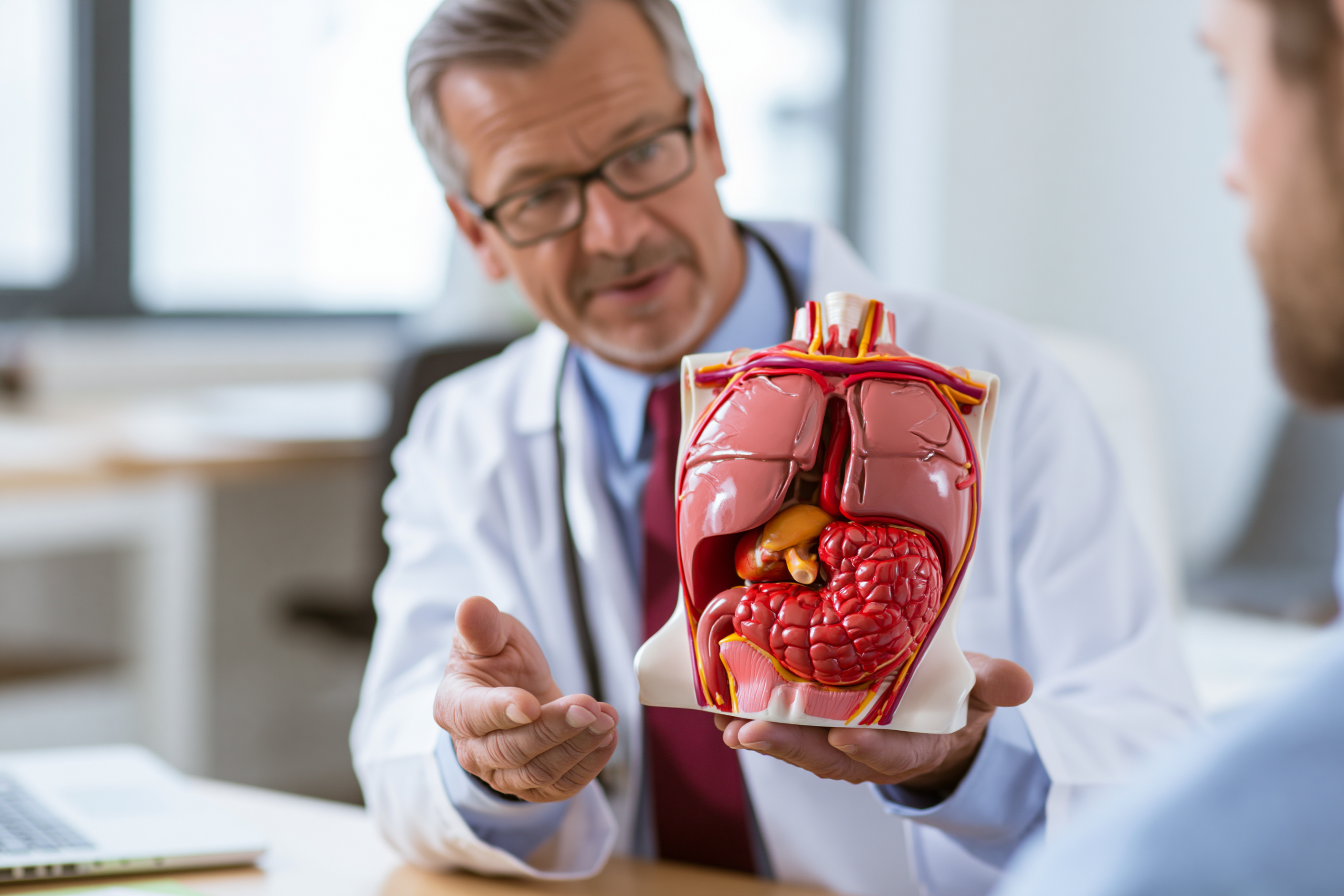
Where the Pancreas Is Located
You have a pancreas that lies deep inside the upper abdomen, behind the stomach and close to the duodenum, bile duct, gallbladder, spleen, and major blood vessels. Because of this deep location, pancreatic diseases may remain hidden in the early stage and may not produce obvious external signs until digestion, bile flow, blood sugar control, or surrounding structures become affected [1], [2].
Exocrine Function: Digestion and Enzyme Secretion
The pancreas works as a major digestive organ through its exocrine function. It produces digestive juices and enzymes that help you digest food, especially fats, proteins, and carbohydrates. These pancreatic secretions enter the small intestine through pancreatic ducts and support proper digestion and absorption. When this function becomes disturbed, you may experience indigestion, bloating, poor appetite, oily stools, malabsorption, weight loss, weakness, and nutritional deficiency [1], [2].
Endocrine Function: Blood Sugar Regulation
The pancreas also works as an endocrine gland by producing hormones such as insulin and glucagon. These hormones help regulate your blood sugar levels. When pancreatic tissue becomes inflamed, damaged, obstructed, or affected by cancer, your blood sugar control may become unstable. This is why new-onset diabetes, worsening diabetes, unexplained weakness, excessive thirst, weight loss, or sudden metabolic changes should not be ignored in pancreatic disorders [1], [2].
Ayurvedic Understanding of Pancreatic Function
From an Ayurvedic perspective, you should understand pancreatic function through Agni, Dhatu metabolism, and Srotas. The pancreas is closely connected with digestion, transformation, assimilation, and metabolic balance. When Agni is strong, food is digested properly, nutrients are transformed correctly, and Dhatus receive nourishment. When Agni becomes weak or disturbed, Ama forms, Srotas become obstructed, and deeper Dhatu dysfunction may begin [18].
Connection with Agni, Meda Dhatu, Rasa Dhatu, and Rakta Dhatu
You can clinically connect pancreatic digestion with Jatharagni and Dhatvagni because the pancreas supports the conversion of food into usable nutrition. Rasa Dhatu is affected when digestion and absorption become weak, leading to fatigue, poor nourishment, and weight loss. Rakta Dhatu may become involved when Pitta disturbance, inflammation, jaundice, or toxic metabolic changes appear. Meda Dhatu is especially important because pancreatic disorders commonly disturb fat digestion, metabolic balance, insulin function, obesity tendency, diabetes tendency, and lipid metabolism [18].
Srotas Connection in Pancreatic Disorders
You should also assess the Srotas because pancreatic diseases often involve obstruction, impaired flow, inflammation, stagnation, or tissue-level damage. In pancreatitis, Srotas may be affected by Pitta-pradhana Shotha, Ama, and Vata-induced pain. In pancreatic cancer, Srotorodha becomes deeper and may involve obstruction of the pancreatic duct, bile duct, digestive flow, nutrient circulation, and Dhatu nourishment. Therefore, understanding pancreatic anatomy and function is essential before comparing pancreatitis and pancreatic cancer through both modern medicine and Ayurveda [1], [2], [18].
Modern Definition of Pancreatitis
What Pancreatitis Means
When you have pancreatitis, your pancreas becomes inflamed and its normal digestive and metabolic functions are disturbed. This inflammation may appear suddenly as acute pancreatitis, may return repeatedly as recurrent pancreatitis, or may continue over a long period as chronic pancreatitis. In simple terms, pancreatitis is not only pain in the upper abdomen; it is a pancreatic injury process that can affect digestion, nutrition, stool quality, weight, blood sugar, and overall strength [3], [4], [7].
Acute Pancreatitis
Acute pancreatitis is a sudden inflammatory condition of the pancreas. You may experience severe upper abdominal pain that can spread to the back, nausea, vomiting, fever, rapid pulse, and abdominal tenderness. Modern diagnosis is usually supported by typical abdominal pain, raised pancreatic enzymes such as lipase or amylase, and imaging findings when required. In acute cases, the disease may range from mild inflammation to severe pancreatic injury with systemic complications, so you should not ignore intense abdominal-back pain with vomiting or fever [4], [8].
Recurrent Pancreatitis
Recurrent pancreatitis means you experience repeated attacks of acute pancreatic inflammation. Each attack may settle, but repeated injury can weaken pancreatic tissue over time. When the pancreas is repeatedly inflamed, the risk of scarring, ductal changes, impaired enzyme secretion, digestive weakness, and chronic pancreatic damage increases. This is why recurrent pancreatitis should not be treated as an isolated digestive complaint; you must investigate the cause, such as gallstones, alcohol, high triglycerides, high calcium, medications, genetic factors, duct obstruction, or other pancreatic pathology [4], [7], [8].
Chronic Pancreatitis
Chronic pancreatitis is a long-standing, progressive fibro-inflammatory disease of the pancreas. In this condition, repeated or persistent pancreatic injury leads to fibrosis, scarring, structural damage, and gradual loss of pancreatic function. Over time, the pancreas may lose its ability to produce enough digestive enzymes and hormones. This can result in chronic abdominal pain, poor digestion, oily or foul-smelling stools, malabsorption, weight loss, nutritional deficiency, and diabetes [7], [9].
Exocrine Insufficiency and Malabsorption
When pancreatitis damages the exocrine part of the pancreas, you may not produce enough digestive enzymes. As a result, food may not break down properly, especially fats. You may notice bloating, indigestion, loose stools, oily stools, foul-smelling stools, weight loss, fatigue, and deficiency of fat-soluble vitamins. In chronic pancreatitis, this exocrine insufficiency becomes one of the major reasons for malnutrition and progressive weakness [7], [9].
Endocrine Dysfunction and Diabetes
When pancreatic inflammation damages the endocrine part of the pancreas, your insulin and glucagon regulation may become disturbed. This can lead to new-onset diabetes or worsening of existing diabetes. In chronic pancreatitis, diabetes may develop because the insulin-producing tissue becomes damaged along with the digestive enzyme-producing tissue. Therefore, when you see pancreatic pain along with unexplained blood sugar changes, weight loss, thirst, weakness, or appetite disturbance, you should consider deeper pancreatic involvement [7], [9].
Clinical Meaning
From a modern perspective, pancreatitis is a disease spectrum. Acute pancreatitis reflects sudden inflammation, recurrent pancreatitis reflects repeated inflammatory attacks, and chronic pancreatitis reflects progressive fibro-inflammatory destruction of pancreatic tissue. You should understand this progression carefully because untreated or repeatedly triggered pancreatitis can lead to chronic pain, malabsorption, diabetes, nutritional decline, and increased long-term pancreatic risk [3], [7], [8], [9].
Table : Pancreatic Cancer vs Pancreatitis
| Parameter | Pancreatitis | Pancreatic Cancer |
|---|---|---|
| Basic nature | Inflammation of the pancreas | Malignant disease of pancreatic tissue |
| Main modern process | Acute or chronic pancreatic injury | Uncontrolled abnormal cell growth and invasion |
| Common onset | Sudden in acute pancreatitis; recurrent or progressive in chronic pancreatitis | Often silent early; progressive later |
| Pain pattern | Severe upper abdominal pain, often radiating to back | Persistent abdominal or back pain, may be dull, deep, or progressive |
| Vomiting | Common in acute attack | May occur with obstruction, appetite loss, or advanced disease |
| Fever | May occur in acute inflammation | Not a dominant early feature unless infection or complications occur |
| Jaundice | Possible with gallstone or biliary obstruction | Major warning sign, especially pancreatic head tumor |
| Stool changes | Oily, foul-smelling stools in chronic enzyme insufficiency | Pale stools with bile duct obstruction; greasy stools possible |
| Weight loss | Due to malabsorption, pain, food avoidance | Often progressive, unexplained, cancer-related |
| Diabetes | Can develop after chronic pancreatic damage | New or worsening diabetes can be a warning sign |
| Ayurvedic frame | Pitta-pradhana Shotha, Agnimandya, Ama, Vata Shoola | Arbuda/Granthi/Gulma-like pathology, Srotorodha, Dhatudushti, Ojas kshaya |
| Clinical danger | Severe acute attack, recurrence, chronic damage | Late detection, obstruction, metastasis, cachexia |
| Main investigation | Lipase/amylase, ultrasound, CT/MRI/MRCP/EUS | Pancreas-protocol CT, MRI/MRCP, EUS, biopsy, CA 19-9, staging |
Modern Definition of Pancreatic Cancer

What Pancreatic Cancer Means
When you are dealing with pancreatic cancer, you are dealing with a malignant disease that begins in the tissues of the pancreas. Most pancreatic cancers arise from the exocrine part of the pancreas, especially the ductal cells that are connected with pancreatic digestive secretions. Unlike pancreatitis, which is primarily an inflammatory condition, pancreatic cancer involves uncontrolled abnormal cell growth, tissue invasion, obstruction, and the potential to spread to nearby organs, lymph nodes, liver, peritoneum, lungs, or other distant sites [1], [2].
Why Pancreatic Cancer Is Often Detected Late
You must understand that pancreatic cancer is difficult to identify early because the pancreas lies deep inside the abdomen and early symptoms may be absent, mild, or mistaken for common digestive problems. By the time you notice persistent abdominal or back pain, unexplained weight loss, loss of appetite, fatigue, jaundice, dark urine, pale stools, itching, or worsening diabetes, the disease may already require urgent evaluation and staging [1], [2].
Common Symptoms You Should Not Ignore
When pancreatic cancer affects digestion, bile flow, nerve pathways, or metabolism, you may develop symptoms that resemble pancreatitis, acidity, gallbladder disease, diabetes, or chronic indigestion. You should take persistent upper abdominal pain, pain radiating to the back, unexplained weight loss, appetite loss, jaundice, dark urine, pale stools, greasy stools, fatigue, nausea, vomiting, and new or worsening diabetes seriously, especially when these symptoms are progressive or do not improve with routine digestive treatment [1], [2].
Diagnosis and Clinical Evaluation
Modern diagnosis of pancreatic cancer usually requires imaging and tissue-level confirmation when appropriate. You may need pancreas-protocol CT, MRI, MRCP, endoscopic ultrasound, biopsy or fine-needle aspiration, liver function tests, bilirubin assessment, and tumor marker evaluation such as CA 19-9. CA 19-9 can support monitoring and clinical suspicion, but it cannot independently confirm or exclude pancreatic cancer, so you should not depend on it alone [1], [2].
Staging and Prognosis
Once pancreatic cancer is suspected or confirmed, you must understand the stage of disease before deciding treatment direction. Modern staging evaluates tumor size, local invasion, lymph node involvement, blood vessel involvement, distant spread, and whether the disease is resectable, borderline resectable, locally advanced, metastatic, or recurrent. Prognosis depends strongly on stage, surgical possibility, general strength, nutritional status, liver involvement, treatment response, and whether complications such as jaundice, obstruction, weight loss, pain, or diabetes are controlled [1], [2].
Modern Treatment Approach
Modern treatment may include surgery, chemotherapy, radiation therapy, chemoradiation, targeted therapy, immunotherapy in selected molecular situations, biliary stenting, pain management, nutritional support, and palliative care. Surgery offers the main curative possibility when the cancer is localized and removable, while chemotherapy and radiation may be used before surgery, after surgery, or for locally advanced and metastatic disease. Palliative care is not only end-of-life care; it is also used to relieve pain, improve digestion, manage jaundice or obstruction, support nutrition, improve sleep, and preserve quality of life during treatment [1], [2].

Why Pancreatic Cancer and Pancreatitis Can Look Similar
When you evaluate pancreatic cancer and pancreatitis, you may see many of the same symptoms in both conditions. This overlap happens because both diseases affect the same organ, disturb digestive enzyme flow, influence bile and pancreatic ducts, irritate surrounding nerves, and weaken digestion, appetite, stool formation, nutrition, and blood sugar control. This is why a patient with pancreatic cancer may initially appear to have pancreatitis, acidity, gallbladder disease, indigestion, or uncontrolled diabetes, while a patient with pancreatitis may show symptoms that create fear of cancer [1], [2], [4], [5].
Table : Shared Symptoms and How to Interpret Them
| Shared Symptom | In Pancreatitis It May Suggest | In Pancreatic Cancer It May Suggest | When You Should Investigate Further |
|---|---|---|---|
| Upper abdominal pain | Acute inflammation, duct pressure, enzyme irritation | Tumor pressure, nerve involvement, duct obstruction | Persistent, severe, recurrent, or changing pain |
| Back pain | Deep pancreatic inflammation | Retroperitoneal or nerve involvement | Back pain with weight loss, jaundice, or diabetes change |
| Nausea/vomiting | Acute inflammatory attack | Obstruction, poor digestion, systemic illness | Repeated vomiting or inability to tolerate food |
| Loss of appetite | Acute inflammation or chronic digestive weakness | Progressive cancer-related anorexia | Appetite loss with weight loss or jaundice |
| Weight loss | Malabsorption, food fear, chronic enzyme deficiency | Cancer cachexia, metabolic burden, obstruction | Unexplained or rapid weight loss |
| Oily stools | Exocrine pancreatic insufficiency | Poor pancreatic/bile flow | Oily stools with weight loss or weakness |
| Pale stools | Biliary obstruction from gallstone pancreatitis | Bile duct obstruction from pancreatic head tumor | Pale stools with dark urine or jaundice |
| New diabetes | Chronic pancreatic endocrine damage | Cancer-associated metabolic disturbance | New diabetes with weight loss after middle age |
| Jaundice | Gallstone obstruction or biliary inflammation | Strong cancer warning sign | Any progressive or painless jaundice |
Abdominal Pain and Back Pain
You may notice upper abdominal pain in both pancreatic cancer and pancreatitis. In pancreatitis, the pain is often more sudden, intense, inflammatory, and may radiate to the back. In pancreatic cancer, the pain may be dull, persistent, progressive, or deep-seated, especially when the tumor affects surrounding tissues, ducts, or nerve pathways. Because both conditions can produce abdominal pain spreading to the back, you should not rely on pain location alone to make the diagnosis [1], [4], [13].
Nausea, Vomiting, and Appetite Loss
You may also see nausea, vomiting, poor appetite, heaviness after food, early fullness, and digestive discomfort in both conditions. In pancreatitis, these symptoms often appear with acute inflammation and enzyme-related digestive disturbance. In pancreatic cancer, they may develop due to obstruction, poor digestive flow, metabolic weakness, tumor burden, or systemic disease progression. Because these symptoms are common in many gastrointestinal disorders, they often delay suspicion of serious pancreatic disease [1], [2], [4].
Weight Loss and Nutritional Decline
You should take unexplained weight loss seriously in any pancreatic disorder. In chronic pancreatitis, weight loss may occur because the pancreas cannot produce enough digestive enzymes, leading to malabsorption, oily stools, poor nutrition, and reduced food intake due to pain. In pancreatic cancer, weight loss may be progressive and disproportionate, resulting from poor appetite, cancer-related metabolic changes, duct obstruction, malabsorption, and systemic weakness. When weight loss occurs with abdominal-back pain, appetite loss, stool changes, or diabetes, you should investigate deeper rather than treating it as simple indigestion [1], [2], [4], [5], [13].
Stool Changes and Digestive Failure
You may see stool changes in both conditions. Chronic pancreatitis can reduce pancreatic enzyme secretion and produce oily, bulky, foul-smelling stools due to poor fat digestion. Pancreatic cancer can also disturb stool color and consistency, especially when bile flow or pancreatic enzyme flow is obstructed. Pale stools, greasy stools, dark urine, itching, and jaundice should raise concern for bile duct obstruction, particularly in pancreatic head involvement [1], [2], [4], [5].
Diabetes and Blood Sugar Changes
You should not ignore new-onset diabetes or sudden worsening of previously controlled diabetes in a patient with pancreatic symptoms. Chronic pancreatitis can damage endocrine pancreatic tissue and reduce insulin regulation, leading to diabetes. Pancreatic cancer can also disturb glucose metabolism and may present with new or worsening diabetes, especially in older patients or when accompanied by weight loss, appetite loss, abdominal pain, or jaundice. Because diabetes is common in the general population, this warning sign is often missed unless you connect it with the full pancreatic symptom pattern [1], [2], [13].
Jaundice and Bile Flow Obstruction
Jaundice may appear in pancreatic cancer and in some pancreatitis-related biliary conditions. In pancreatitis, jaundice may occur when gallstones or inflammation obstruct bile flow. In pancreatic cancer, jaundice is especially important because a tumor in the head of the pancreas can block the bile duct, producing yellow eyes, yellow skin, dark urine, pale stools, itching, poor appetite, and progressive weakness. When jaundice appears with pancreatic symptoms, you should consider it a major red flag and investigate urgently [1], [2], [4], [5].
Why Delayed Diagnosis Happens
Delayed diagnosis happens because the early symptoms of pancreatic cancer and pancreatitis can resemble common digestive complaints. You may initially see pain, nausea, poor appetite, gas, acidity, stool changes, or blood sugar disturbance without a clearly visible pancreatic mass or advanced imaging finding. Pancreatic cancer may also be difficult to detect early because the pancreas is deep inside the abdomen and symptoms may remain vague until obstruction, weight loss, jaundice, or spread occurs. This is why persistent, recurrent, unexplained, or worsening symptoms should be evaluated with proper investigations instead of repeated symptomatic treatment alone [1], [2], [5], [13].
Clinical Meaning
You should understand symptom overlap as a diagnostic danger zone. Pancreatitis and pancreatic cancer may both disturb pain patterns, digestion, appetite, stool, weight, bile flow, and blood sugar, but their disease behavior is different. When symptoms are severe, recurrent, progressive, associated with jaundice, linked with unexplained weight loss, or accompanied by new diabetes, you should move beyond assumptions and assess the patient through modern investigations and deeper Ayurvedic Samprapti analysis [1], [2], [4], [5], [13].
Symptoms More Suggestive of Pancreatitis

Sudden Severe Upper Abdominal Pain
When you see sudden, intense upper abdominal pain, pancreatitis should come strongly into your differential diagnosis. The pain often begins in the epigastric region and may become severe enough to make the patient restless, unable to eat, or unable to sit comfortably. This pain is more suggestive of acute pancreatitis when it appears rapidly, increases in intensity, and is associated with nausea, vomiting, abdominal tenderness, or systemic inflammatory signs [4], [5], [8].
Table : Symptoms More Suggestive of Pancreatitis
| Symptom or Finding | Why It Suggests Pancreatitis | Likely Cause to Check | Modern Test or Action |
|---|---|---|---|
| Sudden severe epigastric pain | Typical acute inflammatory presentation | Gallstones, alcohol, triglycerides | Lipase/amylase, ultrasound, LFT |
| Pain radiating to back | Deep pancreatic inflammation | Acute pancreatitis, recurrent pancreatitis | Lipase, CT if unclear or severe |
| Repeated vomiting | Acute pancreatic irritation | Inflammation, ileus, dehydration | Electrolytes, hydration assessment |
| Fever and tenderness | Active inflammation or complication | Severe pancreatitis, infection, necrosis | CBC, CRP, CT if not improving |
| Elevated lipase | Pancreatic enzyme leakage/injury | Acute pancreatitis | Serum lipase preferred clinically |
| Raised liver enzymes | Biliary pancreatitis possibility | Gallstones, duct obstruction | Ultrasound, bilirubin, MRCP/EUS |
| High triglycerides | Metabolic pancreatitis trigger | Hypertriglyceridemia | Fasting lipid profile |
| Hypercalcemia | Metabolic trigger | Parathyroid or calcium disorder | Serum calcium |
| Recurrent attacks | Repeated pancreatic injury | Microlithiasis, alcohol, genetic, duct disease | MRCP/EUS, detailed workup |
| Chronic oily stools | Enzyme insufficiency | Chronic pancreatitis | Stool fat/elastase, nutrition review |
Pain Radiating to the Back
You should especially suspect pancreatitis when the upper abdominal pain radiates directly to the back. This back-radiating pain occurs because the pancreas lies deep in the abdomen, close to posterior structures and nerve pathways. Although pancreatic cancer can also cause back pain, pancreatitis pain is often sharper, more acute, and more inflammatory in presentation, especially during an active attack [4], [5], [8].
Vomiting, Nausea, and Food Intolerance
When abdominal pain is accompanied by repeated nausea, vomiting, heaviness after food, and inability to tolerate meals, pancreatitis becomes more likely. In acute pancreatitis, vomiting may occur early and may not fully relieve the pain. You should not treat this pattern as simple acidity or indigestion when the pain is severe, persistent, and radiating to the back [4], [6], [8].
Fever, Tenderness, and Inflammatory Signs
You may see fever, rapid pulse, abdominal tenderness, guarding, weakness, and dehydration in acute pancreatitis. These signs suggest that the pancreas is actively inflamed and that the patient may require urgent assessment. When fever and tenderness appear with severe upper abdominal pain and vomiting, you should think beyond routine digestive disturbance and evaluate for acute pancreatic inflammation, biliary obstruction, infection, or severe pancreatitis-related complications [4], [5], [8].
Elevated Lipase and Amylase
When pancreatic enzymes are elevated, especially serum lipase, the suspicion of acute pancreatitis becomes stronger. Modern diagnosis commonly depends on the combination of typical abdominal pain, elevated pancreatic enzymes such as lipase or amylase, and imaging when needed. Lipase is generally preferred clinically because it is more specific and remains elevated longer than amylase. Therefore, when you see severe epigastric pain radiating to the back with elevated lipase, acute pancreatitis should be considered seriously [5], [8].
Gallstone-Related Pancreatitis
You should look for gallstones when acute pancreatitis appears suddenly, especially if the patient has right upper abdominal discomfort, jaundice, abnormal liver function tests, or biliary symptoms. Gallstones can block the pancreatic-biliary outflow pathway and trigger pancreatic inflammation. This is why abdominal ultrasound, bilirubin, and liver function testing become important when biliary pancreatitis is suspected [4], [5], [6], [8].
Alcohol-Related Pancreatitis
When there is a history of heavy alcohol intake, recurrent digestive attacks, abdominal-back pain, vomiting, or chronic pancreatic symptoms, alcohol-related pancreatitis should be considered. Alcohol can repeatedly injure pancreatic tissue and may contribute to recurrent acute pancreatitis or chronic pancreatitis. In such patients, alcohol cessation is not optional; it becomes a central part of preventing further pancreatic damage [4], [6], [7], [8].
Hypertriglyceridemia-Related Pancreatitis
You should check triglyceride levels when the cause of pancreatitis is not clear, especially if there is no obvious gallstone disease or alcohol history. Very high triglycerides can trigger acute pancreatitis and may also worsen metabolic instability. In patients with obesity, diabetes, dyslipidemia, recurrent attacks, or unexplained pancreatitis, triglyceride evaluation becomes clinically important [5], [8].
Acute Management Clues
When the presentation suggests acute pancreatitis, you should focus on severity assessment, hydration, pain control, nutritional planning, and identification of the cause. Modern management may include IV fluids, analgesia, early oral feeding when tolerated in mild cases, low-fat diet during recovery, ERCP in selected cases of cholangitis or persistent biliary obstruction, and cholecystectomy when gallstones are responsible. You should avoid delaying emergency care when the patient has severe pain, persistent vomiting, fever, dehydration, jaundice, or signs of systemic illness [6], [8].
Clinical Meaning
You should suspect pancreatitis more strongly when the presentation is sudden, painful, inflammatory, enzyme-positive, and linked with gallstones, alcohol use, hypertriglyceridemia, or recurrent pancreatic attacks. This does not completely exclude pancreatic cancer, especially in unexplained or recurrent cases, but it helps you identify the immediate inflammatory pattern that requires prompt diagnosis, cause correction, and careful follow-up [4], [5], [6], [7], [8].
Symptoms More Suggestive of Pancreatic Cancer
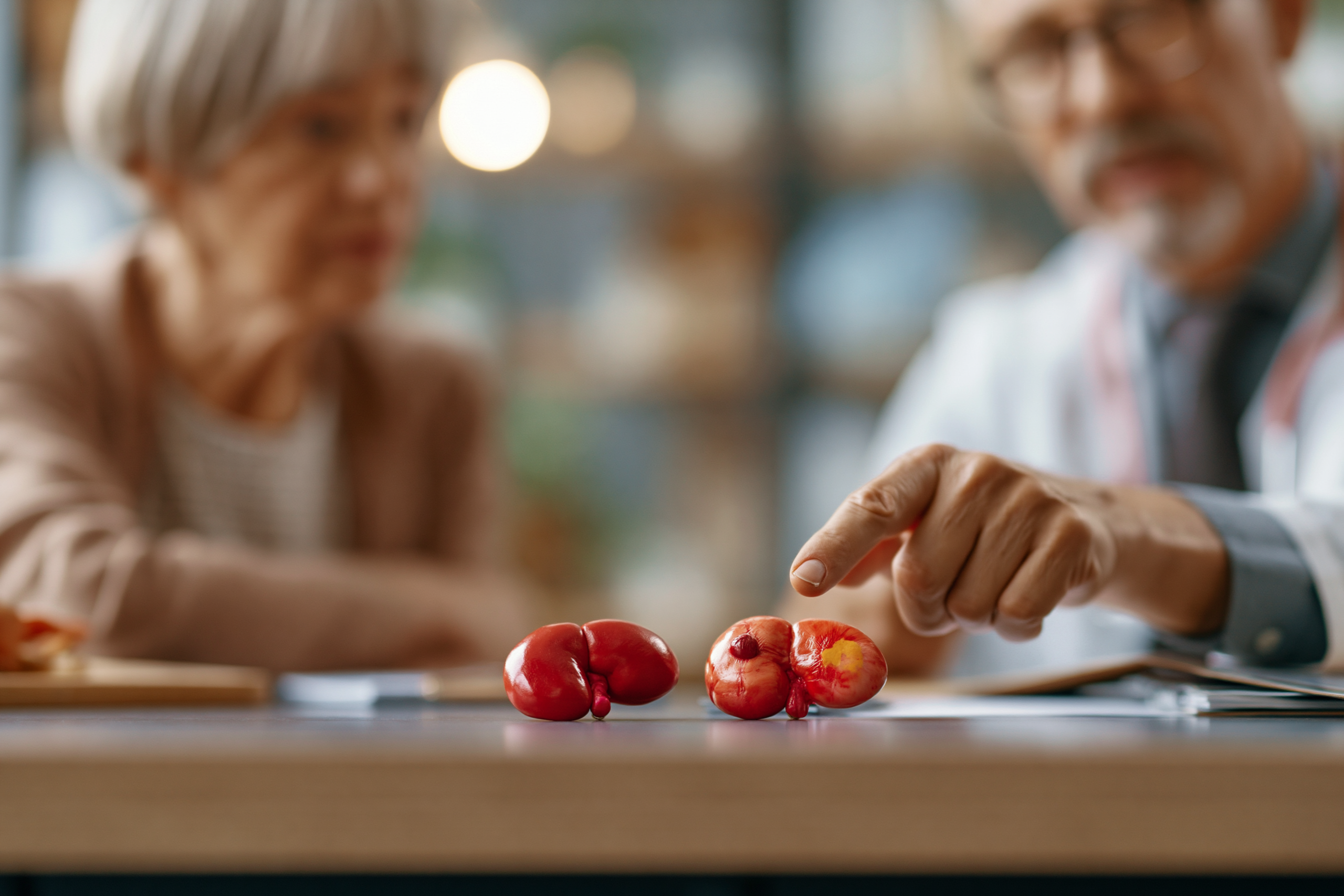
Jaundice as a Major Warning Sign
When you see yellowing of the eyes or skin in a patient with pancreatic symptoms, you should take pancreatic cancer seriously, especially when jaundice appears without severe fever or obvious gallstone colic. Pancreatic cancer in the head of the pancreas can obstruct the bile duct and disturb bile flow, leading to jaundice, itching, dark urine, pale stools, appetite loss, and progressive weakness. Although pancreatitis can also cause jaundice in biliary obstruction, painless or progressive jaundice should always raise suspicion of pancreatic malignancy until it is properly ruled out [1], [2].
Table : Symptoms More Suggestive of Pancreatic Cancer
| Warning Sign | Why It Raises Cancer Suspicion | Common Clinical Pattern | Recommended Direction |
|---|---|---|---|
| Jaundice | Possible bile duct obstruction | Yellow eyes, itching, dark urine | Bilirubin, LFT, CT/MRI/MRCP |
| Dark urine | Conjugated bilirubin in urine | Often with pale stools | Urgent obstruction evaluation |
| Pale stools | Reduced bile reaching intestine | Clay-colored stools | Check bile duct/pancreatic head |
| Progressive appetite loss | Cancer-related systemic effect | Early satiety, anorexia | Imaging and metabolic evaluation |
| Unexplained weight loss | Cancer cachexia or malabsorption | Weight loss despite eating | CT/MRI/EUS and labs |
| Persistent back pain | Nerve/retroperitoneal involvement | Dull, deep, progressive | Pancreas-protocol imaging |
| New diabetes after middle age | Possible pancreatic endocrine disruption | Diabetes with weight loss | Pancreatic evaluation |
| Worsening diabetes | Tumor or chronic pancreatic damage | Sugar instability | Review pancreas and medications |
| Chronic pancreatitis with changed pain | Possible malignant transformation | New pain behavior | EUS/CT/MRI follow-up |
| Duct dilation | Obstruction by tumor or stricture | Imaging finding | Specialist evaluation |
Dark Urine and Pale Stools
When bile flow is blocked, bilirubin may accumulate in the blood and pass into the urine, making the urine dark. At the same time, less bile reaches the intestine, causing pale, clay-colored, or light stools. This pattern is especially concerning when it appears with weight loss, appetite loss, abdominal discomfort, back pain, itching, or weakness. In pancreatic cancer, this often points toward obstruction near the bile duct or pancreatic head region, and you should not treat it as a simple digestive or liver complaint without imaging and proper evaluation [1], [2].
Unexplained Weight Loss
You should consider unexplained weight loss one of the most important warning signs of pancreatic cancer. In chronic pancreatitis, weight loss may occur because of pain, food avoidance, malabsorption, and pancreatic enzyme insufficiency. In pancreatic cancer, weight loss may be more progressive and disproportionate, caused by reduced appetite, poor digestion, cancer-related metabolic changes, duct obstruction, inflammation, and systemic weakness. When weight loss continues despite diet correction or symptomatic treatment, you should investigate for malignancy, especially if it occurs with jaundice, persistent back pain, diabetes changes, or chronic pancreatitis history [1], [2], [13].
Progressive Appetite Loss and Early Fullness
When appetite gradually declines and the patient feels full after small meals, pancreatic cancer should remain in your differential diagnosis. This is different from occasional indigestion because the pattern is progressive, persistent, and often associated with weight loss, fatigue, nausea, or abdominal-back discomfort. In pancreatic cancer, appetite loss may arise from tumor burden, impaired digestive flow, bile obstruction, systemic inflammation, and metabolic decline. You should not repeatedly treat progressive anorexia as simple Ajeerna, Amlapitta, or gastritis when other pancreatic warning signs are present [1], [2].
Persistent Back Pain
You should be cautious when back pain is persistent, deep-seated, progressive, and associated with abdominal symptoms. Pancreatitis can cause severe pain radiating to the back, especially during acute inflammation. However, pancreatic cancer may cause a dull, continuous, penetrating back pain due to involvement of surrounding tissues, ducts, nerves, or retroperitoneal structures. When back pain appears with unexplained weight loss, appetite loss, jaundice, diabetes disturbance, or chronic pancreatitis, you should investigate beyond musculoskeletal causes [1], [2], [13].
New or Worsening Diabetes
When a patient develops new-onset diabetes, sudden worsening of previously controlled diabetes, unexplained weight loss, or weakness along with digestive complaints, you should consider pancreatic cancer as a possible underlying cause. Chronic pancreatitis can damage endocrine pancreatic tissue and cause diabetes, but pancreatic cancer can also disturb glucose metabolism and may present through new or worsening diabetes. This warning sign becomes more important when blood sugar changes appear with appetite loss, abdominal-back pain, jaundice, pale stools, or rapid decline in strength [1], [2], [13].
Cancer Suspicion in Chronic Pancreatitis
When a patient already has chronic pancreatitis, you must remain alert for a change in disease behavior. A sudden change in pain pattern, progressive weight loss, new jaundice, worsening diabetes, appetite collapse, rising clinical weakness, or new ductal obstruction should raise suspicion of pancreatic cancer developing within chronic pancreatitis or being hidden behind chronic inflammatory changes. Chronic pancreatitis can make cancer harder to detect because fibrosis, calcification, pain, and digestive dysfunction may mask malignant transformation. Therefore, persistent or worsening symptoms in chronic pancreatitis require careful imaging, follow-up, and clinical judgment [13].
Clinical Meaning
You should suspect pancreatic cancer more strongly when the symptom pattern is progressive rather than episodic, obstructive rather than purely inflammatory, and associated with jaundice, dark urine, pale stools, unexplained weight loss, appetite loss, persistent back pain, or new/worsening diabetes. These symptoms do not prove pancreatic cancer by themselves, but they demand deeper evaluation because early pancreatic cancer can mimic pancreatitis and chronic digestive disease. In Ayurvedic practice, this is the point where you should move beyond superficial digestive treatment and assess the patient through both modern investigations and Arbuda/Granthi-level Samprapti understanding [1], [2], [13].
How Pancreatitis Can Become Pancreatic Cancer

You Must Understand That Pancreatitis Does Not Automatically Become Cancer
When you see pancreatitis, you should not assume that every patient will develop pancreatic cancer. A single mild attack of acute pancreatitis may recover completely if the cause is identified and corrected. The concern begins when pancreatic inflammation becomes recurrent, chronic, hereditary, obstructive, or associated with other risk factors such as smoking, alcohol-related injury, diabetes, obesity, ductal damage, or genetic susceptibility. In these settings, repeated pancreatic injury can create a biological environment that supports malignant transformation over time [10], [11], [12], [13], [14].
Chronic Inflammation Creates the Ground for Cancer
When your pancreas is repeatedly inflamed, the tissue does not simply return to normal after every attack. Recurrent injury causes cycles of inflammation, repair, cellular stress, ductal irritation, and tissue remodeling. Over time, this can produce fibrosis, scarring, pancreatic duct distortion, calcification, loss of normal glandular structure, and progressive dysfunction of exocrine and endocrine pancreatic tissue. This chronic inflammatory state is one of the major reasons chronic pancreatitis is considered a risk factor for pancreatic ductal adenocarcinoma [10], [11], [13].
Fibrosis and Srotorodha-Like Obstruction Change the Pancreatic Environment
When chronic pancreatitis progresses, fibrosis can replace healthy pancreatic tissue. This fibrosis may narrow or obstruct pancreatic ducts, disturb enzyme flow, increase intrapancreatic pressure, and create a persistent injury-repair cycle. In modern terms, this is fibro-inflammatory remodeling. In Ayurvedic understanding, you can correlate this with chronic Ama, Pitta-pradhana Shotha, Vata-Kapha Srotorodha, and progressive Dhatudushti. When Srotas remain obstructed and tissue metabolism remains disturbed, the disease terrain becomes deeper than simple inflammation [13].
Oxidative Stress Can Damage DNA and Cellular Structures
During repeated pancreatic inflammation, reactive oxygen species and reactive nitrogen species can damage cellular proteins, lipids, membranes, and DNA. This oxidative stress promotes acinar cell injury, necrosis, fibrosis, inflammatory signaling, and epithelial cell damage. When DNA injury accumulates and normal repair mechanisms fail, abnormal cells may survive and multiply. This is one of the important biological bridges between long-standing pancreatitis and pancreatic cancer [13].
Acinar-to-Ductal Metaplasia Can Begin the Precancerous Pathway
You should understand a key modern mechanism called acinar-to-ductal metaplasia. In pancreatic injury, acinar cells, which normally produce digestive enzymes, may change into duct-like cells as part of repair. This change may be reversible in a healthy repair environment. However, when inflammation persists and genetic mutations are present, this abnormal repair process can progress toward precancerous lesions. This is one reason chronic pancreatitis can create a pathway toward PanIN lesions and pancreatic ductal adenocarcinoma [13].
KRAS Mutation Acts as an Early Driver
In pancreatic carcinogenesis, KRAS mutation is one of the earliest and most important molecular events. When KRAS becomes activated, the affected cells may receive continuous signals for survival, proliferation, migration, transformation, and resistance to normal control mechanisms. Chronic inflammation makes this more dangerous because inflammatory mediators can support the survival and expansion of mutated cells. In this way, inflammation and oncogenic mutation work together rather than separately [13].
PanIN Lesions Can Progress Toward Invasive Cancer
When pancreatic duct-like cells acquire early mutations such as KRAS, they may form pancreatic intraepithelial neoplasia, known as PanIN. PanIN lesions are graded from PanIN-1 to PanIN-3 according to the degree of cellular abnormality, and PanIN-3 is considered the stage closest to invasive pancreatic ductal adenocarcinoma. As this process advances, additional tumor suppressor changes may appear, especially involving CDKN2A/P16, TP53, and SMAD4/DPC4. This stepwise change explains how long-standing pancreatic inflammation can move from tissue injury to precancerous change and finally to invasive cancer [13].
Recurrent Acute Pancreatitis Carries More Concern Than a Single Attack
When you see recurrent acute pancreatitis, the concern is greater than in a single isolated episode because repeated attacks mean repeated injury. A large Korean population-based cohort found that pancreatic cancer risk was higher and persisted longer in patients with recurrent acute pancreatitis and chronic pancreatitis with acute pancreatitis than in patients with a single acute attack or chronic pancreatitis without acute attacks. At 10 years, pancreatic cancer cumulative incidence was reported as 1.43% in recurrent acute pancreatitis and 1.37% in chronic pancreatitis with acute pancreatitis, compared with 0.29% in single acute pancreatitis and 0.26% in chronic pancreatitis without acute pancreatitis [11].
Risk Is Highest in the Early Years After Acute Pancreatitis, Especially When Attacks Recur
When acute pancreatitis is newly diagnosed, you must also remember that pancreatic cancer may sometimes be hidden behind the pancreatitis presentation. A 2024 Korean National Sample Cohort analysis found that pancreatic cancer risk was most elevated in the first few years after acute pancreatitis and increased sharply with recurrent episodes. In that study, compared with controls, the adjusted hazard ratio rose from 5.25 after one episode to 11.35 after two episodes and 24.58 after three or more recurrent acute pancreatitis episodes [12].
Chronic Pancreatitis Significantly Raises Long-Term Risk
When pancreatitis becomes chronic, your long-term concern should increase. A 2022 systematic review and meta-analysis found that chronic pancreatitis was associated with a markedly increased risk of pancreatic ductal adenocarcinoma, with a pooled standardized incidence ratio of 22.61. The risk remained elevated even when studies excluded pancreatic cancer diagnosed within two years of chronic pancreatitis diagnosis, which helps reduce the chance that the cancer was simply misdiagnosed as pancreatitis at the beginning [10].
Hereditary Pancreatitis Carries Special Risk
When pancreatitis begins early in life, runs in families, or is associated with PRSS1-related hereditary pancreatitis, you should think differently. Hereditary pancreatitis exposes the pancreas to inflammation for decades, often beginning in childhood or adolescence. GeneReviews reports that pancreatic cancer risk by age 70 has historically been estimated at 18.8% to 40%, while a more recent PRSS1-related estimate suggested 7.2% by age 70. This variation shows that exact risk differs by population and study design, but the clinical message remains clear: hereditary pancreatitis requires serious long-term monitoring [14].
Ayurvedic Interpretation of This Progression
From an Ayurvedic perspective, you can understand this progression as Nidana Sevana leading to Agnimandya and Ama formation. Ama and aggravated Pitta create Shotha in the pancreatic region, while repeated inflammation aggravates Vata and Kapha, producing Srotorodha, pain, fibrosis-like stagnation, and impaired Dhatu nourishment. When this process continues, Dhatudushti deepens, Agni declines, tissue repair becomes abnormal, and the pathology may shift toward Granthi or Arbuda-like behavior. In advanced stages, progressive weight loss, appetite collapse, weakness, metabolic instability, and cachexia reflect Bala kshaya and Ojas kshaya.
Risk of Pancreatic Cancer After Pancreatitis

You Should Read the Risk in Two Ways
When you explain pancreatic cancer risk after pancreatitis, you must separate relative risk from absolute risk. Relative risk can look very high because patients with pancreatitis have a higher cancer risk than people without pancreatitis. However, the absolute number of patients who finally develop pancreatic cancer is still smaller than the relative-risk figure may suggest. This is why you should not create unnecessary fear, but you should also never ignore recurrent, chronic, hereditary, unexplained, or obstructive pancreatitis [10], [11], [12], [13], [14].
Chronic Pancreatitis Carries a Strong Long-Term Risk Signal
A 2022 systematic review and meta-analysis found that chronic pancreatitis was associated with a markedly increased risk of pancreatic ductal adenocarcinoma, with a pooled standardized incidence ratio of 22.61. The association remained elevated even after excluding cancers diagnosed within two years of chronic pancreatitis diagnosis, with a standardized incidence ratio of 21.77, which is important because it reduces the possibility that an already existing pancreatic cancer was simply misdiagnosed as chronic pancreatitis at the beginning [10]. The same analysis reported higher risk in hereditary pancreatitis, with a standardized incidence ratio of 63.36 [10].
Population Cohort Data Shows Higher Risk in Recurrent and Chronic Patterns
A large Korean population-based cohort study compared patients with acute pancreatitis, chronic pancreatitis, and matched controls. At 10 years, pancreatic cancer cumulative incidence was 0.43% in patients with pancreatitis compared with 0.20% in controls. When you look deeper, the risk was not equal across all pancreatitis patterns. The 10-year cumulative incidence was 1.43% in recurrent acute pancreatitis and 1.37% in chronic pancreatitis with acute pancreatitis, compared with 0.29% in single-episode acute pancreatitis and 0.26% in chronic pancreatitis without acute pancreatitis [11].
Recurrent Acute Pancreatitis Is More Concerning Than a Single Attack
When you see repeated acute pancreatitis attacks, you should treat the case as higher risk than a single isolated episode. In the same cohort, after more than two years of follow-up, chronic pancreatitis with acute pancreatitis had an adjusted hazard ratio of 5.74, recurrent acute pancreatitis had an adjusted hazard ratio of 5.00, chronic pancreatitis without acute pancreatitis had an adjusted hazard ratio of 1.57, and single-episode acute pancreatitis had an adjusted hazard ratio of 1.32 [11]. After more than five years, increased risk persisted mainly in chronic pancreatitis with acute pancreatitis and recurrent acute pancreatitis, with adjusted hazard ratios of 4.05 and 3.29 respectively [11].
Acute Pancreatitis Risk Is Highest in the Early Years
A 2024 Korean National Sample Cohort analysis found that acute pancreatitis was associated with increased pancreatic cancer risk across the study period, but the risk was highest soon after diagnosis. The adjusted hazard ratio was 19.11 within the first two years, 3.46 between two and five years, and 2.73 after more than five years. After more than 10 years, the association was no longer statistically significant, with an adjusted hazard ratio of 1.24 [12]. This matters clinically because early pancreatic cancer can sometimes present as acute pancreatitis, so you must watch the first few years carefully, especially when the cause of pancreatitis is unclear [12].
Risk Rises Sharply With Recurrent Acute Pancreatitis Episodes
You should pay special attention when a patient is hospitalized repeatedly for acute pancreatitis. The 2024 cohort analysis showed that pancreatic cancer risk increased with the number of acute pancreatitis episodes. Compared with matched controls, one episode was associated with an adjusted hazard ratio of 5.25, two episodes with 11.35, and three or more episodes with 24.58 [12]. This supports the clinical idea that repeated pancreatic inflammation can create a stronger carcinogenic environment than one isolated attack [12].
Alcoholic Chronic Pancreatitis Has Measurable Long-Term Risk
When chronic pancreatitis is alcohol-related, you should consider both alcohol injury and smoking as long-term risk amplifiers. A 2023 review reported that alcoholic chronic pancreatitis carries an estimated cumulative pancreatic cancer risk of about 2% after five years and 4% after 15 to 20 years, while tobacco acts as an additional co-factor that aggravates pancreatic lesions and cancer risk [13]. This figure may look modest, but clinically it is important because alcoholic chronic pancreatitis often coexists with recurrent inflammation, ductal damage, fibrosis, malnutrition, diabetes, and delayed diagnosis [13].
Hereditary Pancreatitis Needs Separate Risk Thinking
When pancreatitis is hereditary, especially PRSS1-related, you should assess risk more aggressively because inflammation may begin early in life and continue for decades. GeneReviews reports that older studies estimated pancreatic cancer risk by age 70 years at 18.8% to 40%, while a more recent study suggested a cumulative risk of 7.2% by age 70 in individuals with PRSS1-related hereditary pancreatitis [14]. This variation shows that exact risk depends on population, gene variant, smoking exposure, duration of inflammation, and study design, but the clinical message remains clear: hereditary pancreatitis requires long-term surveillance thinking [14].
Reverse Relationship: When Pancreatic Cancer Presents as Pancreatitis

Why You Should Not Always Assume Pancreatitis Came First
You must understand that the relationship between pancreatitis and pancreatic cancer works in two directions. In some patients, long-standing or recurrent pancreatitis may increase future pancreatic cancer risk. However, in other patients, pancreatic cancer may already be present and may first appear clinically as acute pancreatitis. In this situation, pancreatitis is not the cause of cancer; rather, the tumor becomes the hidden cause of pancreatic inflammation [5], [8], [13].
How a Tumor Can Trigger Pancreatitis
When an early pancreatic tumor grows near the pancreatic duct, it can obstruct or narrow the ductal pathway. This blockage can prevent normal pancreatic juice from flowing freely into the intestine. As secretions accumulate behind the obstruction, pressure rises inside the ductal system, pancreatic enzymes become activated abnormally, and inflammation may develop. This can create an episode of acute pancreatitis even before the cancer produces obvious cancer-specific symptoms [8], [13].
Why Unexplained Pancreatitis After Age 40 Matters
When you see acute pancreatitis in a patient older than 40 years and you cannot identify a clear cause such as gallstones, alcohol, hypertriglyceridemia, hypercalcemia, medication reaction, trauma, or infection, you should consider pancreatic tumor as an important differential diagnosis. ACG guidance specifically highlights that pancreatic tumor should be considered in unexplained acute pancreatitis after age 40. This does not mean every such patient has cancer, but it does mean you should not close the case without deeper evaluation [8].
Why the First Attack Can Be Misleading
You may see a patient with severe abdominal pain, vomiting, elevated lipase or amylase, and imaging features of pancreatitis, and the diagnosis may appear straightforward. However, if the pancreatitis is idiopathic, recurrent, associated with weight loss, linked with new or worsening diabetes, accompanied by jaundice, or followed by persistent back pain, the first attack may be a warning sign of hidden pancreatic cancer. In such cases, the inflammation may temporarily dominate the clinical picture while the underlying tumor remains small or difficult to visualize [5], [8], [13].
What You Should Investigate
You should evaluate unexplained pancreatitis with appropriate modern tools instead of relying only on symptomatic improvement. Blood tests may include lipase, amylase, liver function tests, bilirubin, triglycerides, calcium, and glucose assessment. Imaging may include abdominal ultrasound, contrast CT, MRI, MRCP, or endoscopic ultrasound when clinically indicated. Endoscopic ultrasound becomes especially valuable when ordinary imaging does not clearly explain recurrent or idiopathic pancreatitis, because small pancreatic tumors or ductal lesions may be missed in early stages [5], [8], [13].
Warning Patterns That Should Increase Your Suspicion
You should be more cautious when pancreatitis is unexplained, recurrent, late-onset, or associated with progressive symptoms. Persistent abdominal or back pain after the acute episode settles, unexplained weight loss, appetite loss, jaundice, dark urine, pale stools, itching, new-onset diabetes, worsening diabetes, pancreatic duct dilation, bile duct dilation, focal pancreatic enlargement, or a change in chronic pancreatitis pain pattern should make you look for an underlying pancreatic mass or ductal obstruction [5], [8], [13].
Ayurvedic Interpretation
From an Ayurvedic perspective, this reverse relationship can be understood as hidden Arbuda or Granthi-like pathology causing Srotorodha first, followed by Pitta-pradhana Shotha and Vata-induced Shoola. The patient may appear to have an inflammatory pancreatic condition, but the deeper Samprapti may already involve obstruction, Dhatu dushti, Kapha-Vata avarana, Agni decline, and early Ojas depletion. This is why you should not treat unexplained pancreatitis only as Ajeerna, Amlapitta, Grahani, or simple Pitta aggravation when the clinical pattern suggests obstruction or progressive systemic decline.
Modern Diagnosis of Pancreatitis

How You Confirm Acute Pancreatitis
When you suspect acute pancreatitis, you should confirm the diagnosis by combining symptoms, blood tests, and imaging when required. Modern diagnostic criteria usually depend on at least two of three findings: typical upper abdominal pain suggestive of pancreatitis, serum lipase or amylase elevated to more than three times the upper limit of normal, and imaging findings consistent with pancreatic inflammation. You should not diagnose pancreatitis from pain alone, because pancreatic cancer, gallbladder disease, ulcer disease, liver disease, intestinal disease, and cardiac conditions can sometimes create overlapping abdominal symptoms [5], [8].
Role of Lipase and Amylase
You should check serum lipase and amylase when the patient has sudden upper abdominal pain, pain radiating to the back, nausea, vomiting, or abdominal tenderness. Lipase is generally preferred because it is more specific for pancreatic injury and remains elevated longer than amylase. A markedly elevated lipase in the right clinical context strongly supports acute pancreatitis, but you should still interpret enzyme values with the full clinical picture, because enzyme elevation alone does not explain the cause or severity of the disease [5], [8].
Liver Tests and Biliary Evaluation
When pancreatitis is suspected, you should assess liver function tests and bilirubin to look for gallstone-related or biliary pancreatitis. Elevated liver enzymes, raised bilirubin, jaundice, dark urine, pale stools, right upper abdominal pain, or bile duct dilation may suggest obstruction in the biliary-pancreatic pathway. Because gallstones are a common cause of acute pancreatitis, you should not stop after confirming inflammation; you should identify whether bile duct obstruction or gallbladder disease is driving the attack [5], [8].
Triglycerides and Calcium
When gallstones and alcohol do not clearly explain pancreatitis, you should check serum triglycerides and calcium. Very high triglycerides can trigger acute pancreatitis and may be missed if you only focus on abdominal pain and enzyme elevation. Hypercalcemia is another important metabolic cause. In recurrent or unexplained pancreatitis, these tests are essential because treatment must remove the cause, not only suppress symptoms [5], [8].
Ultrasound Abdomen
You should use abdominal ultrasound especially to evaluate gallstones, gallbladder disease, bile duct dilation, and biliary obstruction. Ultrasound is often an early investigation because it is accessible and useful for detecting biliary causes of pancreatitis. However, a normal ultrasound does not completely exclude pancreatic disease, pancreatic duct pathology, small stones, sludge, or early pancreatic tumor, especially when symptoms persist or pancreatitis is recurrent [5], [8].
CT Scan
You may need contrast-enhanced CT when the diagnosis is unclear, when symptoms are severe, when complications are suspected, or when the patient does not improve as expected. CT can show pancreatic enlargement, inflammation, necrosis, fluid collections, pseudocyst formation, and other complications. However, routine early CT is not required in every acute pancreatitis case when the diagnosis is already clear clinically and biochemically. You should reserve CT for selected situations where it will change diagnosis, staging of severity, or management [5], [8].
MRI and MRCP
You should consider MRI or MRCP when you need better evaluation of pancreatic ducts, bile ducts, fluid collections, strictures, stones, ductal obstruction, or unclear recurrent pancreatitis. MRCP is especially useful when ductal anatomy needs to be assessed without an invasive procedure. In chronic pancreatitis, MRI and MRCP can help identify ductal irregularity, strictures, dilatation, parenchymal changes, and complications that may not be fully clear on ultrasound [5], [9].
Endoscopic Ultrasound
You should consider endoscopic ultrasound when pancreatitis is idiopathic, recurrent, or difficult to explain after routine testing. EUS can detect small gallstones, microlithiasis, early chronic pancreatitis changes, small pancreatic lesions, ductal abnormalities, cystic lesions, and suspicious masses that may be missed on other imaging. This becomes especially important when pancreatitis occurs after age 40 without a clear cause, or when the patient has weight loss, jaundice, new diabetes, persistent back pain, or a change in chronic pancreatitis symptoms [5], [8], [9].
Stool Tests and Exocrine Pancreatic Function
When chronic pancreatitis is suspected, you should assess digestive function, malabsorption, and pancreatic enzyme deficiency. Stool tests may help evaluate fat malabsorption and pancreatic exocrine insufficiency. If the pancreas is not producing enough digestive enzymes, the patient may develop oily stools, foul-smelling stools, bloating, weight loss, nutritional deficiency, and fatigue. In chronic pancreatitis, diagnosis is not limited to pain; you must also assess how much pancreatic function has been lost [5], [9].
Diagnosing Chronic Pancreatitis
When you suspect chronic pancreatitis, you should combine clinical history, risk factors, symptoms, imaging, and functional assessment. Chronic pancreatitis may present with recurrent abdominal pain, pancreatic calcification, ductal changes, fibrosis, exocrine insufficiency, endocrine dysfunction, malabsorption, and diabetes. CT, MRI, MRCP, EUS, and pancreatic function assessment may be used depending on the stage and clarity of disease. Early chronic pancreatitis can be difficult to diagnose, so you should not dismiss persistent symptoms when routine tests are normal but the clinical pattern remains suspicious [9].
Modern Diagnosis and Staging of Pancreatic Cancer

Why Diagnosis Must Be Structured
When you suspect pancreatic cancer, you should not depend on symptoms alone because early disease may be silent and later symptoms can resemble pancreatitis, gallbladder disease, acidity, ulcer disease, liver disease, or diabetes-related weakness. You need a structured diagnostic approach that confirms whether a pancreatic mass is present, identifies whether bile or pancreatic ducts are obstructed, checks whether the disease has spread, and determines whether surgery is possible [1], [2].
Pancreas-Protocol CT
You should consider pancreas-protocol contrast-enhanced CT as one of the most important imaging tools when pancreatic cancer is suspected. This scan helps evaluate the tumor location, size, relation to nearby blood vessels, lymph node involvement, liver spread, peritoneal spread, and whether the disease appears surgically removable. In clinical decision-making, CT is not only used to “see the tumor”; it is used to decide whether the cancer is resectable, borderline resectable, locally advanced, or metastatic [1], [2].
MRI and MRCP
You may need MRI or MRCP when CT findings are unclear, when ductal anatomy needs better evaluation, when bile duct or pancreatic duct obstruction is suspected, or when liver lesions require further characterization. MRCP is particularly useful for visualizing the biliary and pancreatic duct systems without an invasive procedure. When you see jaundice, dark urine, pale stools, itching, or abnormal bilirubin, MRI/MRCP can help clarify whether obstruction is present and where it is occurring [1], [2].
Endoscopic Ultrasound
You should consider endoscopic ultrasound when detailed evaluation of the pancreas is needed, especially for small tumors, unclear imaging findings, or tissue sampling. EUS allows close visualization of the pancreas from inside the gastrointestinal tract and may identify lesions that are difficult to detect on routine imaging. It is also commonly used when biopsy or fine-needle aspiration is needed to confirm the diagnosis before chemotherapy, radiation, or other non-surgical treatment decisions [1], [2].
Biopsy and Fine-Needle Aspiration
When tissue confirmation is required, biopsy or fine-needle aspiration may be performed, often through EUS guidance. You should understand that the need for biopsy depends on the clinical situation. If a tumor is clearly resectable and surgery is planned directly, some teams may proceed according to surgical judgment. If the disease is borderline resectable, locally advanced, metastatic, or planned for chemotherapy or radiation before surgery, tissue confirmation is usually important before treatment begins [1], [2].
CA 19-9 and Its Limitations
You should use CA 19-9 carefully. It may support diagnosis, help estimate tumor burden, and assist in monitoring treatment response or recurrence, but it cannot confirm pancreatic cancer by itself. CA 19-9 may be elevated in non-cancerous conditions such as jaundice, bile duct obstruction, cholangitis, pancreatitis, and liver disease. Some patients with pancreatic cancer may also have normal or non-informative CA 19-9 levels. Therefore, you should never use CA 19-9 as a standalone test to rule in or rule out pancreatic cancer [1], [2].
Bilirubin and Liver Function Tests
When the patient has jaundice, dark urine, pale stools, itching, poor appetite, or suspected bile duct obstruction, you should check bilirubin and liver function tests. These tests help assess the degree of obstruction, liver involvement, cholestasis, and treatment urgency. High bilirubin may also affect treatment planning because obstructive jaundice may need biliary decompression before chemotherapy or major intervention [1], [2].
Staging Groups
Once pancreatic cancer is suspected or confirmed, you must stage the disease before deciding treatment direction. Staging evaluates the primary tumor, nearby blood vessel involvement, lymph nodes, and distant spread. In practical clinical language, pancreatic cancer is often grouped as resectable, borderline resectable, locally advanced unresectable, metastatic, or recurrent. This staging determines whether the patient may benefit from direct surgery, chemotherapy before surgery, chemoradiation, systemic therapy, palliative procedures, or supportive care [1], [2].
Resectable Disease
When pancreatic cancer is resectable, the tumor appears confined enough to be removed surgically without major unreconstructable vessel involvement or distant metastasis. Surgery offers the main chance for long-term disease control in localized pancreatic cancer, but it is usually combined with systemic treatment planning because microscopic disease may already exist even when imaging looks localized. You should assess surgical fitness, nutritional status, bilirubin, diabetes control, pain, weight loss, and overall strength before treatment planning [1], [2].
Borderline Resectable Disease
When pancreatic cancer is borderline resectable, the tumor has limited involvement of nearby major vessels or surrounding structures, making immediate surgery more complex or less likely to achieve clear margins. In this stage, treatment may begin with chemotherapy or chemoradiation to control disease, improve surgical chances, and assess tumor biology. You should understand this category carefully because it is not the same as metastatic disease; it means surgery may still be possible after proper preoperative treatment and reassessment [1], [2].
Locally Advanced Disease
When pancreatic cancer is locally advanced, the tumor has spread to nearby major blood vessels or structures in a way that usually prevents safe complete surgical removal, but there may be no distant metastasis. In this stage, treatment commonly focuses on systemic therapy, selected radiation or chemoradiation, pain control, nutrition, biliary obstruction management, and repeated assessment of response. A small number of patients may become candidates for surgery after strong treatment response, but most require long-term disease control and symptom-focused management [1], [2].
Metastatic Disease
When pancreatic cancer is metastatic, it has spread to distant organs or sites such as the liver, peritoneum, lungs, or distant lymph nodes. In this stage, surgery to remove the pancreatic tumor is usually not curative. Treatment focuses on systemic therapy, symptom relief, biliary or gastric obstruction management, pain control, digestion support, nutrition, psychological care, and quality of life. You should still stage carefully because metastatic disease requires a different treatment goal from localized or borderline disease [1], [2].
Recurrent Disease
When pancreatic cancer returns after previous treatment, it is called recurrent disease. Recurrence may occur locally near the pancreas, regionally in lymph nodes, or distantly in organs such as the liver or peritoneum. You should evaluate recurrence with imaging, CA 19-9 trends when informative, symptoms, nutritional status, pain pattern, and previous treatment history. The treatment direction depends on where the disease has returned, how fast it is progressing, and how strong the patient remains [1], [2].
Ayurvedic Understanding of Pancreatitis

Ayurvedic Clinical Position
When you evaluate pancreatitis through Ayurveda, you should not force it into one single classical disease name. The pancreas is not named as a separate modern anatomical organ in the classical texts, but its functions are understood through Agni, Pachaka Pitta, Samana Vata, Annavaha Srotas, Rasavaha Srotas, Meda Dhatu, Rakta-Pitta involvement, and Grahani-like digestive regulation. In pancreatitis, you are mainly dealing with a condition of Pitta-pradhana Shotha, Agnimandya, Ama, Vata Shoola, Annavaha Srotodushti, and in chronic cases, deeper Srotorodha and Dhatu Kshaya. Panacea Ayurved’s pancreatic cancer article also connects pancreatic function with Agni, Meda Dhatu, Rasa/Rakta Dhatu, Srotas, Ama, Kleda, and Srotorodha, which gives a practical Ayurvedic framework for pancreatic disease interpretation [18].
Agni as the Central Factor in Pancreatitis
In pancreatitis, you should begin your Ayurvedic assessment with Agni. Modern medicine sees pancreatic inflammation as injury to an organ that produces digestive enzymes and hormones; Ayurveda sees the same region functionally through digestion, transformation, tissue nourishment, metabolic balance, and toxin clearance. When Agni becomes disturbed, food is not transformed properly, Ama accumulates, Pitta becomes aggressive, Vata becomes painful, and the channels of digestion become obstructed. Charaka clearly states that Agni is the root of health and disease in Charaka Samhita, Chikitsa Sthana, Chapter 15, Grahani Dosha Chikitsa, Verse 4 [21].
Sanskrit:
शान्तेऽग्नौ म्रियते, युक्ते चिरं जीवत्यनामयः।
रोगी स्याद्विकृते, मूलमग्निस्तस्मान्निरुच्यते॥४॥
Transliteration:
śānte’gnau mriyate, yukte ciraṁ jīvatyanāmayaḥ।
rogī syād vikṛte, mūlam agnis tasmān nirucyate॥4॥
Translation:
When Agni is extinguished, life ends; when Agni is balanced, one lives long and free from disease. When Agni is disturbed, disease arises; therefore, Agni is called the root.
Urdu lipi:
جب اَگنی یعنی ہاضمے اور تحول کی طاقت ختم ہو جائے تو زندگی ختم ہو جاتی ہے؛ جب یہ متوازن ہو تو انسان صحت مند رہتا ہے، اور جب یہ بگڑ جائے تو بیماری پیدا ہوتی ہے۔
Arabic lipi:
إذا انطفأت قوة الهضم والتمثيل الغذائي تنتهي الحياة، وإذا كانت متوازنة يعيش الإنسان بصحة، وإذا اضطربت تنشأ الأمراض.
Agni, Dhatu Nourishment, and Pancreatic Weakness
When pancreatitis becomes recurrent or chronic, you often see poor appetite, indigestion, malabsorption, oily stools, weight loss, weakness, and diabetes-like metabolic decline. Ayurveda explains this through impaired Agni and poor formation of Rasa, Dhatu nourishment, Bala, and Ojas. Charaka states that food can nourish Dhatu, Ojas, Bala, and complexion only when Agni properly transforms it; without proper digestion, Rasa and other Dhatus cannot be nourished. This is directly relevant to chronic pancreatitis, where digestive enzyme insufficiency and malabsorption weaken the patient over time. This classical basis comes from Charaka Samhita, Chikitsa Sthana, Chapter 15, Verse 5 [21].
Sanskrit:
यदन्नं देहधात्वोजोबलवर्णादिपोषकम्।
तत्राग्निर्हेतुराहारान्न ह्यपक्वाद्रसादयः॥५॥
Transliteration:
yad annaṁ deha-dhātvojo-bala-varṇādi-poṣakam।
tatrāgnir hetur āhārān na hy apakvād rasādayaḥ॥5॥
Translation:
Food nourishes body tissues, Ojas, strength, and complexion only through the action of Agni. From improperly digested food, Rasa and other Dhatus cannot be properly formed.
Urdu lipi:
غذا جسم کے دھات، اوجس، طاقت اور رنگت کو تبھی صحیح طور پر غذا دیتی ہے جب اَگنی درست کام کرے؛ ادھ پکی یا غلط ہضم شدہ غذا سے رَس اور دیگر دھات صحیح نہیں بنتے۔
Arabic lipi:
الغذاء لا يغذي الأنسجة والقوة والحيوية إلا عندما تكون قوة الهضم سليمة؛ أما الطعام غير المهضوم جيداً فلا يُكوّن البلازما والأنسجة بصورة صحيحة.
Annavaha Srotas Involvement in Pancreatitis
When you see loss of appetite, anorexia, indigestion, nausea, vomiting, abdominal heaviness, and intolerance to food in pancreatitis, you should assess Annavaha Srotas. Charaka describes Annavaha Srotas as rooted in the stomach and left side of the trunk, and its vitiation produces lack of desire for food, anorexia, indigestion, and vomiting. This is highly relevant to acute pancreatitis, where vomiting and food intolerance dominate, and also to chronic pancreatitis, where digestion remains weak. The source is Charaka Samhita, Vimana Sthana, Chapter 5, Sroto Vimana, Verse 8 [21].
Sanskrit:
अन्नवहानां स्रोतसामामाशयो मूलं वामं च पार्श्वं।
प्रदुष्टानां तु खल्वेषामिदं विशेषविज्ञानं भवति;
तद्यथा—अनन्नाभिलषणमरोचकविपाकौ छर्दिं च दृष्ट्वाऽन्नवहान्यस्य स्रोतांसि प्रदुष्टानीति विद्यात्॥८॥
Transliteration:
annavahānāṁ srotasām āmāśayo mūlaṁ vāmaṁ ca pārśvam।
praduṣṭānāṁ tu khalv eṣām idaṁ viśeṣa-vijñānaṁ bhavati;
tadyathā—anannābhilaṣaṇam, arocaka-vipākau, chardiṁ ca dṛṣṭvā annavahāny asya srotāṁsi praduṣṭānīti vidyāt॥8॥
Translation:
The roots of Annavaha Srotas are the stomach and the left side. When these channels are vitiated, lack of desire for food, anorexia, indigestion, and vomiting are observed.
Urdu lipi:
اَنّواہ سروتس یعنی غذا کے راستے خراب ہوں تو بھوک ختم ہوتی ہے، کھانے سے نفرت، بدہضمی اور قے جیسی علامات ظاہر ہوتی ہیں۔
Arabic lipi:
عند اضطراب قنوات الغذاء تظهر قلة الشهية، النفور من الطعام، عسر الهضم والقيء.
Dietary Nidana and Agni Disturbance
You should connect pancreatitis with dietary Nidana when the patient has a history of overeating, untimely eating, heavy food, alcohol, excessive oily food, incompatible food, eating before the previous meal is digested, or irregular fasting and binge eating. Charaka states that Annavaha Srotas becomes disturbed by excessive food, untimely food, unwholesome food, and derangement of digestive fire. This is essential for Nidana Parivarjana, because without removing dietary causes, pancreatitis may recur. The classical reference is Charaka Samhita, Vimana Sthana, Chapter 5, Verse 12 [21].
Sanskrit:
अतिमात्रस्य चाकाले चाहितस्य च भोजनात्।
अन्नवाहीनि दुष्यन्ति वैगुण्यात् पावकस्य च॥१२॥
Transliteration:
atimātrasya cākāle cāhitasya ca bhojanāt।
annavāhīni duṣyanti vaiguṇyāt pāvakasya ca॥12॥
Translation:
Annavaha Srotas becomes vitiated by excessive food, untimely food, unwholesome food, and impairment of digestive fire.
Urdu lipi:
زیادہ کھانا، بے وقت کھانا، غیر مناسب غذا اور کمزور ہاضمہ غذا کے راستوں کو خراب کر دیتے ہیں۔
Arabic lipi:
الإفراط في الطعام، والأكل في غير وقته، والطعام غير المناسب، وضعف الهضم تؤدي إلى اضطراب قنوات الغذاء.
Pitta-Pradhana Shotha in Acute Pancreatitis
When pancreatitis appears with burning pain, fever, thirst, vomiting, sweating, tenderness, yellowish discoloration, sour belching, and inflammatory heat, you should understand it as Pitta-pradhana Shotha with Vata association. Charaka’s description of Pitta-dominant Gulma shows how sour, salty, pungent, alkaline, hot, sharp, fermented, acidic, Vidahi foods, indigestion, and improper eating aggravate Pitta along with Vata. Although pancreatitis is not identical to Pittaja Gulma, this passage gives the classical language for inflammatory abdominal pathology with Pitta and Vata involvement. The reference is Charaka Samhita, Nidana Sthana, Chapter 3, Gulma Nidana, Verses 8–9 [19].
Sanskrit:
अम्ललवणकटुकक्षारोष्णतीक्ष्णशुक्तव्यापन्नमद्यहरितकफलाम्लानां विदाहिनां च…
अजीर्णाध्यशनाद्… पित्तं सह मारुतेन प्रकोपमापद्यते॥८॥
Transliteration:
amla-lavaṇa-kaṭuka-kṣāra-uṣṇa-tīkṣṇa-śukta-vyāpanna-madya-haritaka-phalāmlānāṁ vidāhināṁ ca…
ajīrṇādhy-āśanād… pittaṁ saha mārutena prakopam āpadyate॥8॥
Translation:
Sour, salty, pungent, alkaline, hot, sharp, fermented, spoiled alcoholic and acidic substances, Vidahi foods, eating during indigestion, and improper eating aggravate Pitta along with Vata.
Urdu lipi:
کھٹی، نمکین، تیز، گرم، خمیر شدہ، شراب، بدہضمی میں کھانا اور غلط غذا پِتّ کو وات کے ساتھ بھڑکا دیتی ہے، جس سے سوزش اور درد بڑھ سکتے ہیں۔
Arabic lipi:
الأطعمة الحامضة والمالحة والحارة واللاذعة والمخمرة، والكحول، والأكل مع عسر الهضم، تهيّج البيتا مع الفاتا، مما يزيد الالتهاب والألم.
Vata Shoola and Radiating Pain
When pancreatitis causes severe upper abdominal pain radiating to the back, you should assess Vata Shoola. In acute pancreatitis, Pitta gives inflammation, heat, enzyme irritation, fever, and burning tendency; Vata gives severe pain, colic, radiation, spasmodic discomfort, restlessness, distension, and irregular movement of pain. Charaka describes how aggravated Vata entering the Mahasrotas produces pain and nodular or mass-like abdominal pathology. This comes from Charaka Samhita, Nidana Sthana, Chapter 3, Gulma Nidana, Verse 7 [19].
Sanskrit:
स प्रकुपितो वायुर्महास्रोतोऽनुप्रविश्य…
स शूलमुपजनयति ग्रन्थींश्चानेकविधान्॥७॥
Transliteration:
sa prakupito vāyur mahāsroto’nupraviśya…
sa śūlam upajanayati granthīṁś cānekavidhān॥7॥
Translation:
Aggravated Vata enters the Mahasrotas and produces pain, along with different forms of knot-like or mass-like pathology.
Urdu lipi:
جب وات بگڑ کر بڑے اندرونی راستوں میں داخل ہوتا ہے تو شدید درد، مروڑ، پھیلتا ہوا درد اور اندرونی رکاوٹ جیسی کیفیت پیدا کر سکتا ہے۔
Arabic lipi:
عندما يضطرب الفاتا ويدخل القنوات الداخلية الكبرى، قد يسبب ألماً شديداً، تقلصات، ألماً ممتداً، وإحساساً بالانسداد الداخلي.
Srotorodha as the Deeper Pathology
In recurrent and chronic pancreatitis, you should not look only at acute inflammation. You should assess Srotorodha, because repeated inflammation may lead to ductal obstruction, fibrosis, poor enzyme flow, malabsorption, diabetes tendency, and wasting. Charaka explains Srotodushti through increased flow, obstruction, nodular changes, and abnormal movement of substances. This is highly useful when you clinically interpret pancreatic duct obstruction, enzyme stagnation, pseudocyst-like pathology, fibrosis, and chronic inflammatory blockage. The reference is Charaka Samhita, Vimana Sthana, Chapter 5, Sroto Vimana, Verse 24 [21].
Sanskrit:
अतिप्रवृत्तिः सङ्गो वा सिराणां ग्रन्थयोऽपि वा।
विमार्गगमनं चापि स्रोतसां दुष्टिलक्षणम्॥२४॥
Transliteration:
atipravṛttiḥ saṅgo vā sirāṇāṁ granthayo’pi vā।
vimārgagamanaṁ cāpi srotasāṁ duṣṭi-lakṣaṇam॥24॥
Translation:
Excessive flow, obstruction, nodular change, and movement through abnormal pathways are signs of Srotas vitiation.
Urdu lipi:
سروتس کی خرابی میں بہاؤ کا زیادہ ہونا، رکاوٹ، گانٹھ جیسی تبدیلی، یا مادّوں کا غلط راستے میں جانا شامل ہے۔
Arabic lipi:
علامات اضطراب القنوات تشمل زيادة الجريان، الانسداد، تكوّن العقد، أو انتقال المواد في مسارات غير طبيعية.
General Cause of Srotas Dushti
When you counsel a pancreatitis patient, you should explain that wrong food and wrong lifestyle aggravate Dosha and weaken Dhatu. Charaka gives a broad principle that diet and lifestyle similar to the qualities of aggravated Dosha and opposite to the needs of Dhatu pollute the Srotas. This is the foundation for individualized diet correction, alcohol withdrawal, low-fat light food in active inflammation, avoidance of incompatible food, and long-term prevention of recurrence. The reference is Charaka Samhita, Vimana Sthana, Chapter 5, Verse 23 [21].
Sanskrit:
आहारश्च विहारश्च यः स्याद्दोषगुणैः समः।
धातुभिर्विगुणश्चापि स्रोतसां स प्रदूषकः॥२३॥
Transliteration:
āhāraś ca vihāraś ca yaḥ syād doṣa-guṇaiḥ samaḥ।
dhātubhir viguṇaś cāpi srotasāṁ sa pradūṣakaḥ॥23॥
Translation:
Diet and lifestyle that share the qualities of aggravated Dosha and are unsuitable for Dhatu vitiate the Srotas.
Urdu lipi:
جو غذا اور طرزِ زندگی بگڑے ہوئے دوشوں کو مزید بڑھائیں اور دھات کے لیے نامناسب ہوں، وہ جسم کے راستوں کو خراب کرتے ہیں۔
Arabic lipi:
الغذاء ونمط الحياة اللذان يزيدان صفات الدوشا المضطربة ولا يناسبان الأنسجة يؤديان إلى إفساد القنوات الداخلية.
Grahani-Like Dysfunction in Chronic Pancreatitis
When pancreatitis becomes chronic, the patient may develop weak digestion, malabsorption, oily stools, bloating, irregular appetite, weight loss, and fatigue. This resembles a Grahani-like dysfunction, because Grahani is the seat where food is digested, separated into useful and waste portions, and converted into nourishment. Charaka explains that Grahani Chikitsa deals with digestion, metabolism, abnormal digestion, Ama formation, and Grahani Dosha. The chapter identifies Jatharagni as the initiator of digestion, while Bhutagni and Dhatvagni continue transformation and tissue nourishment [21].
Sanskrit:
समानेनावधूतोऽग्निरुदर्यः पवनोद्वहः।
काले भुक्तं समं सम्यक् पचत्यायुर्विवृद्धये॥७॥
Transliteration:
samānenāvadhūto’gnir udaryaḥ pavanodvahaḥ।
kāle bhuktaṁ samaṁ samyak pacaty āyur vivṛddhaye॥7॥
Translation:
When stimulated by Samana Vata, the digestive Agni properly digests food taken at the proper time and in proper quantity, promoting longevity.
Urdu lipi:
سمان وات جب اَگنی کو صحیح طور پر متحرک کرتا ہے تو وقت پر اور مناسب مقدار میں کھائی گئی غذا صحیح ہضم ہوتی ہے اور صحت کو بڑھاتی ہے۔
Arabic lipi:
عندما ينشّط سامانا فاتا قوة الهضم، فإن الطعام المتناول في وقته وبكميته المناسبة يُهضم جيداً ويدعم الصحة وطول العمر.
Nidana Parivarjana in Pancreatitis
You should place Nidana Parivarjana at the center of pancreatitis care. If the patient continues alcohol, overeating, fried food, heavy late-night meals, incompatible food, repeated eating during indigestion, smoking, chronic stress, and sedentary habits, the Samprapti will not break. In acute pancreatitis, Nidana Parivarjana protects the patient from recurrence. In chronic pancreatitis, it prevents deeper Agni collapse, Srotorodha, Dhatu Kshaya, and cancer-risk terrain. Charaka’s Sroto Vimana and Gulma Nidana both support this logic by showing how wrong diet, lifestyle, suppression of urges, alcohol, indigestion, and aggravated Vata-Pitta disturb Mahasrotas and Annavaha Srotas [19], [21].
Urdu lipi:
لبلبے کی سوزش میں اصل علاج صرف درد کم کرنا نہیں، بلکہ سبب کو روکنا ہے؛ شراب، بھاری کھانا، تلی ہوئی غذا، بے وقت کھانا، بدہضمی میں کھانا اور غلط عادات بند کیے بغیر بیماری بار بار لوٹ سکتی ہے۔
Arabic lipi:
في التهاب البنكرياس ليس الهدف تخفيف الألم فقط، بل إزالة السبب؛ فالكحول، الطعام الثقيل والمقلي، الأكل في غير وقته، والأكل مع عسر الهضم قد تؤدي إلى تكرار المرض إذا لم تُترك.
Ayurvedic Understanding of Pancreatic Cancer
Ayurvedic Clinical Position
When you evaluate pancreatic cancer through Ayurveda, you should not reduce it to one modern organ label. You should understand it as a deep systemic disorder involving abnormal growth, obstruction, Dhatu disturbance, Agni collapse, metabolic toxicity, declining Bala, and progressive Ojas depletion. The closest Ayurvedic clinical framework comes through Arbuda, Granthi, and Gulma-like pathology, especially when the disease presents with deep abdominal mass behavior, obstruction, weight loss, digestive failure, jaundice, back pain, altered stool, diabetes, and progressive weakness [18], [19], [20], [21], [22]. Panacea Ayurved also frames pancreatic cancer through Agni dysfunction, Ama, Srotorodha, Rasa/Rakta/Meda Dhatu disturbance, chronic pancreatitis terrain, and Gulma/Arbuda-like disease development [18].
Arbuda as the Main Classical Frame
You should use Arbuda as the primary Ayurvedic disease frame when pancreatic cancer behaves like a deep, fixed, progressive, slowly developing, non-suppurating mass. Sushruta describes Arbuda as a swelling produced when aggravated Doshas vitiate Mamsa Dhatu and create a round, fixed, deep-rooted, large, mildly painful, slowly growing, non-ripening mass. This description is clinically powerful for pancreatic tumors because many pancreatic cancers grow silently, remain deep inside the abdomen, obstruct surrounding ducts, and produce symptoms only after significant progression [22].
Text: Sushruta Samhita, Nidana Sthana, Chapter 11, Granthi-Apachi-Arbuda-Galaganda Nidana, Verses 13–14
Sanskrit:
गात्रप्रदेशे क्वचिदेव दोषाः सम्मूर्च्छिता मांसमभिप्रदूष्य।
वृत्तं स्थिरं मन्दरुजं महान्तमनल्पमूलं चिरवृद्ध्यपाकम्॥१३॥
कुर्वन्ति मांसोपचयं तु शोफं तमर्बुदं शास्त्रविदो वदन्ति॥१४॥
Transliteration:
gātra-pradeśe kvacideva doṣāḥ sammūrchitā māṁsam abhipradūṣya।
vṛttaṁ sthiraṁ mandarujam mahāntam analpamūlaṁ ciravṛddhyapākam॥13॥
kurvanti māṁsopacayaṁ tu śophaṁ tam arbudaṁ śāstravido vadanti॥14॥
Translation:
When aggravated Doshas combine in a body region and deeply vitiate Mamsa Dhatu, they produce a swelling that is round, fixed, mildly painful, large, deep-rooted, slowly growing, and non-suppurating. The learned physicians call this condition Arbuda.
Urdu lipi:
جب بگڑے ہوئے دوش جسم کے کسی حصے میں جمع ہو کر مانس دھاتو کو خراب کرتے ہیں تو ایک گول، سخت، جڑ پکڑی ہوئی، آہستہ بڑھنے والی اور عام طور پر نہ پکنے والی سوجن بنتی ہے؛ اسے اَربُد کہا گیا ہے۔
Arabic lipi:
عندما تجتمع الدوشات المضطربة في موضع من الجسم وتفسد نسيج اللحم، تتكوّن كتلة مستديرة، ثابتة، عميقة الجذر، كبيرة، بطيئة النمو، ولا تتحول عادةً إلى صديد؛ وهذا يُسمّى أربودا.
Granthi and Dhatu-Dushti in Pancreatic Cancer
You should also assess pancreatic cancer through Granthi-like pathology, especially when you see nodular growth, cystic or mass-like imaging, ductal obstruction, glandular enlargement, and chronic tissue-level derangement. Sushruta explains Granthi through vitiation of Mamsa, Rakta, and Meda under the influence of Dosha and Kapha. This is important because pancreatic cancer is not only a tumor; clinically it disturbs digestion, fat metabolism, blood chemistry, inflammation, tissue nourishment, and obstructive flow [22].
Text: Sushruta Samhita, Nidana Sthana, Chapter 11, Granthi-Apachi-Arbuda-Galaganda Nidana, Verse 3
Sanskrit:
वातादयो मांसमसृक् च दुष्टाः सन्दूष्य मेदश्च कफानुविद्धम्।
वृत्तोन्नतं विग्रथितं तु शोफं कुर्वन्त्यतो ग्रन्थिरिति प्रदिष्टः॥३॥
Transliteration:
vātādayo māṁsam asṛk ca duṣṭāḥ sandūṣya medaś ca kaphānuviddham।
vṛttonnataṁ vigrathitaṁ tu śophaṁ kurvanty ato granthir iti pradiṣṭaḥ॥3॥
Translation:
Vata and other Doshas, after vitiating Mamsa, Rakta, and Meda with Kapha association, produce a round, elevated, knot-like swelling; this is called Granthi.
Urdu lipi:
وات وغیرہ دوش جب کَف کے ساتھ مل کر مانس، خون اور چربی کے دھات کو خراب کرتے ہیں تو گول، ابھری ہوئی، گانٹھ جیسی سوجن پیدا ہوتی ہے؛ اسے گرنتھی کہا جاتا ہے۔
Arabic lipi:
عندما تفسد الفاتا والدوشات الأخرى نسيج اللحم والدم والدهن مع مشاركة الكافا، تتكوّن كتلة عقدية مستديرة ومرتفعة؛ وهذا يُسمّى غرانثي.
Why Pancreatic Cancer Is Gulma-Like
You should use Gulma as an abdominal clinical frame when the patient presents with deep abdominal pain, epigastric heaviness, back-radiating discomfort, obstruction, gas, altered stool, abdominal mass sensation, poor appetite, and progressive digestive collapse. Charaka describes Gulma as a palpable compact mass related to abdominal regions and named according to Dosha involvement. This does not mean every pancreatic cancer is literally classical Gulma, but Gulma gives you the Ayurvedic language for deep abdominal mass, Vata obstruction, pain, and Mahasrotas involvement [19], [20]. Charaka Samhita Online also explains that Gulma involves the gastrointestinal-abdominal region and that Vata, with other Doshas, enters Mahasrotas and lodges in abdominal sites, producing deep-rooted mass-like pathology.
Text: Charaka Samhita, Chikitsa Sthana, Chapter 5, Gulma Chikitsa, Verses 7–8
Sanskrit:
पक्वाशये पित्तकफाशये वा स्थितः स्वतन्त्रः परसंश्रयो वा।
स्पर्शोपलभ्यः परिपिण्डितत्वाद्गुल्मो यथादोषमुपैति नाम॥७॥
बस्तौ च नाभ्यां हृदि पार्श्वयोर्वा स्थानानि गुल्मस्य भवन्ति पञ्च॥८॥
Transliteration:
pakvāśaye pitta-kaphāśaye vā sthitaḥ svatantraḥ parasaṁśrayo vā।
sparśopalabhyaḥ paripiṇḍitatvād gulmo yathādoṣam upaiti nāma॥7॥
bastau ca nābhyāṁ hṛdi pārśvayor vā sthānāni gulmasya bhavanti pañca॥8॥
Translation:
A compact mass that can be felt by touch and is situated in the abdominal region, either independently or associated with other Doshas, is called Gulma and is named according to the involved Dosha. Its five sites are the bladder region, umbilical region, cardiac/epigastric region, and both flanks.
Urdu lipi:
پیٹ کے اندر گول، سخت یا جمع ہوئی گانٹھ جیسی کیفیت جو چھونے سے محسوس ہو اور دوش کے مطابق علامات دے، اسے گُلم کہا جاتا ہے۔ اس کے مقامات میں ناف، اوپری پیٹ، اطراف اور نچلا پیٹ شامل ہیں۔
Arabic lipi:
الكتلة المتجمعة داخل البطن، التي يمكن إدراكها باللمس وتتبدل أعراضها بحسب الدوشا، تُسمّى غولما. وتشمل مواضعها منطقة السرة، أعلى البطن، الجانبين، وأسفل البطن.
Kapha-Vata Avarana and Obstructive Tumor Behavior
When pancreatic cancer obstructs the pancreatic duct, bile duct, digestive flow, lymphatic flow, or tissue nutrition, you should interpret it through Srotorodha and Kapha-Vata Avarana. Kapha gives heaviness, stagnation, growth, hardness, mucinous tendency, and obstruction, while Vata gives pain, radiation to the back, wasting, dryness, irregular movement, and progressive depletion. Charaka describes Srotas morbidity through excessive flow, obstruction, nodular change, and abnormal movement, which gives a strong classical basis for interpreting duct obstruction, jaundice, altered stool, duct dilation, tumor compression, and abnormal metabolic flow [21].
Text: Charaka Samhita, Vimana Sthana, Chapter 5, Sroto Vimana, Verses 23–24
Sanskrit:
आहारश्च विहारश्च यः स्याद्दोषगुणैः समः।
धातुभिर्विगुणश्चापि स्रोतसां स प्रदूषकः॥२३॥
अतिप्रवृत्तिः सङ्गो वा सिराणां ग्रन्थयोऽपि वा।
विमार्गगमनं चापि स्रोतसां दुष्टिलक्षणम्॥२४॥
Transliteration:
āhāraś ca vihāraś ca yaḥ syād doṣa-guṇaiḥ samaḥ।
dhātubhir viguṇaś cāpi srotasāṁ sa pradūṣakaḥ॥23॥
atipravṛttiḥ saṅgo vā sirāṇāṁ granthayo’pi vā।
vimārgagamanaṁ cāpi srotasāṁ duṣṭi-lakṣaṇam॥24॥
Translation:
Diet and lifestyle that increase the qualities of aggravated Dosha and are unsuitable for Dhatus vitiate the Srotas. Increased flow, obstruction, formation of nodules, and movement through abnormal pathways are signs of Srotas vitiation.
Urdu lipi:
ایسی غذا اور عادات جو بگڑے ہوئے دوش کو بڑھائیں اور دھات کے لیے نامناسب ہوں، سروتس کو خراب کرتی ہیں۔ بہاؤ کا زیادہ ہونا، رکاوٹ، گانٹھ بننا یا غلط راستے میں حرکت سروتس دوشٹی کی علامات ہیں۔
Arabic lipi:
الغذاء ونمط الحياة اللذان يزيدان الدوشا المضطربة ولا يناسبان الأنسجة يفسدان القنوات. ومن علامات اضطراب القنوات زيادة الجريان، الانسداد، تكوّن العقد، أو انتقال المواد في مسارات غير طبيعية.
Agni Collapse in Pancreatic Cancer
You should assess Agni collapse in every pancreatic cancer patient because the disease commonly affects appetite, digestion, fat absorption, stool formation, weight, blood sugar, and tissue nourishment. Charaka states that Agni is responsible for life, strength, health, growth, Ojas, vitality, and metabolic function. When Agni is disturbed, disease develops; when Agni collapses, the patient’s ability to digest, assimilate, rebuild tissue, and sustain Bala declines sharply [21].
Text: Charaka Samhita, Chikitsa Sthana, Chapter 15, Grahani Dosha Chikitsa, Verses 3–5
Sanskrit:
आयुर्वर्णो बलं स्वास्थ्यमुत्साहोपचयौ प्रभा।
ओजस्तेजोऽग्नयः प्राणाश्चोक्ता देहाग्निहेतुकाः॥३॥
शान्तेऽग्नौ म्रियते, युक्ते चिरं जीवत्यनामयः।
रोगी स्याद्विकृते, मूलमग्निस्तस्मान्निरुच्यते॥४॥
यदन्नं देहधात्वोजोबलवर्णादिपोषकम्।
तत्राग्निर्हेतुराहारान्न ह्यपक्वाद्रसादयः॥५॥
Transliteration:
āyur varṇo balaṁ svāsthyam utsāhopacayau prabhā।
ojas tejo’gnayaḥ prāṇāś cokta dehāgni-hetukāḥ॥3॥
śānte’gnau mriyate, yukte ciraṁ jīvaty anāmayaḥ।
rogī syād vikṛte, mūlam agnis tasmān nirucyate॥4॥
yad annaṁ deha-dhātv-ojo-bala-varṇādi-poṣakam।
tatrāgnir hetur āhārān na hy apakvād rasādayaḥ॥5॥
Translation:
Longevity, complexion, strength, health, enthusiasm, proper growth, luster, Ojas, Tejas, Agni, and Prana depend on Dehagni. When Agni is extinguished, life ends; when it is balanced, one lives long and free from disease; when it is disturbed, disease occurs. Food can nourish Dhatu, Ojas, Bala, and complexion only through proper Agni; without proper digestion, Rasa and other Dhatus cannot be properly formed.
Urdu lipi:
عمر، رنگت، طاقت، صحت، جوش، نشوونما، اوجس اور پران سب دیہاگنی پر قائم ہیں۔ جب اَگنی بگڑتی ہے تو بیماری پیدا ہوتی ہے، اور جب غذا صحیح طور پر ہضم نہیں ہوتی تو رَس اور دیگر دھات صحیح نہیں بنتے۔
Arabic lipi:
العمر، اللون، القوة، الصحة، النشاط، النمو، الأوجاس، والتيجاس، والبرانا تعتمد على قوة الهضم. وعندما تضطرب هذه القوة تنشأ الأمراض، ولا تتكوّن الأنسجة بصورة صحيحة من طعام غير مهضوم جيداً.
Dhatudushti and Tissue-Level Disease
When you see pancreatic cancer with unexplained weight loss, cachexia, anemia-like weakness, loss of muscle, altered fat digestion, low appetite, jaundice, and metabolic instability, you should understand that the disease has moved beyond simple Dosha disturbance into Dhatudushti. Sushruta’s description of Arbuda includes involvement of Mamsa and also classifies Arbuda according to Vata, Pitta, Kapha, Rakta, Mamsa, and Meda involvement. This supports a deeper tissue-based understanding in which pancreatic cancer affects not only one organ but multiple Dhatus and Srotas [22].
Text: Sushruta Samhita, Nidana Sthana, Chapter 11, Granthi-Apachi-Arbuda-Galaganda Nidana, Verses 14–15
Sanskrit:
वातेन पित्तेन कफेन चापि रक्तेन मांसेन च मेदसा च॥१४॥
तज्जायते तस्य च लक्षणानि ग्रन्थेः समानानि सदा भवन्ति॥१५॥
Transliteration:
vātena pittena kaphena cāpi raktena māṁsena ca medasā ca॥14॥
taj jāyate tasya ca lakṣaṇāni grantheḥ samānāni sadā bhavanti॥15॥
Translation:
Arbuda may arise through Vata, Pitta, Kapha, Rakta, Mamsa, and Meda involvement, and its features resemble the corresponding types of Granthi.
Urdu lipi:
اَربُد وات، پِتّ، کَف، خون، مانس اور چربی کے دھات کی خرابی سے پیدا ہو سکتا ہے، اور اس کی علامات متعلقہ گرنتھی جیسی ہو سکتی ہیں۔
Arabic lipi:
قد ينشأ أربودا بسبب اضطراب الفاتا أو البيتا أو الكافا أو الدم أو اللحم أو الدهن، وتكون علاماته مشابهة لأنواع غرانثي المقابلة.
Bala Kshaya and Ojas Kshaya in Advanced Pancreatic Cancer
When pancreatic cancer progresses, you often see profound fatigue, fear, anxiety, insomnia, dryness, emaciation, loss of complexion, weakness of senses, cachexia, and declining tolerance to food or treatment. Ayurveda explains this as Bala kshaya and Ojas kshaya. Charaka describes Ojas depletion through fearfulness, weakness, constant worry, disturbed senses, poor complexion, low mental state, dryness, and emaciation. This is highly relevant to advanced pancreatic cancer, where the disease damages appetite, digestion, immunity, tissue nourishment, strength, and emotional stability [21].
Text: Charaka Samhita, Sutra Sthana, Chapter 17, Kiyanta Shiraseeya Adhyaya, Verse 73
Sanskrit:
बिभेति दुर्बलोऽभीक्ष्णं ध्यायति व्यथितेन्द्रियः।
दुश्छायो दुर्मना रूक्षः क्षामश्चैवौजसः क्षये॥७३॥
Transliteration:
bibheti durbalo’bhīkṣṇaṁ dhyāyati vyathitendriyaḥ।
duśchāyo durmanā rūkṣaḥ kṣāmaś caivaujasaḥ kṣaye॥73॥
Translation:
In Ojas depletion, the person becomes fearful, weak, constantly worried, disturbed in the senses, poor in complexion, mentally low, dry, and emaciated.
Urdu lipi:
اوجس کی کمی میں مریض خوف زدہ، کمزور، فکر مند، حواس میں بے آرام، بے رونق، دل گرفتہ، خشک اور لاغر ہو جاتا ہے۔
Arabic lipi:
عند نقصان الأوجاس يصبح المريض خائفاً، ضعيفاً، كثير القلق، مضطرب الحواس، فاقد النضارة، منخفض النفس، جافاً وهزيلاً.
Ojas as the Vital Essence You Must Protect
You should protect Ojas from the beginning of pancreatic cancer care because Ojas is directly linked with vitality, resilience, strength, immunity, mental steadiness, and survival capacity. Charaka describes Ojas as a vital essence situated in the heart whose destruction leads to death, and he also describes several Ojas-depleting factors such as fasting, worry, fear, grief, dry and insufficient diet, insomnia, excessive exertion, and excessive depletion of body substances. These factors are frequently seen in pancreatic cancer patients due to pain, appetite loss, malabsorption, anxiety, cachexia, treatment stress, and sleep disturbance [21].
Text: Charaka Samhita, Sutra Sthana, Chapter 17, Kiyanta Shiraseeya Adhyaya, Verses 74 and 76–77
Sanskrit:
हृदि तिष्ठति यच्छुद्धं रक्तमीषत्सपीतकम्।
ओजः शरीरे सङ्ख्यातं तन्नाशान्ना विनश्यति॥७४॥
व्यायामोऽनशनं चिन्ता रूक्षाल्पप्रमिताशनम्।
वातातपौ भयं शोको रूक्षपानं प्रजागरः॥७६॥
कफशोणितशुक्राणां मलानां चातिवर्तनम्।
कालो भूतोपघातश्च ज्ञातव्याः क्षयहेतवः॥७७॥
Transliteration:
hṛdi tiṣṭhati yac chuddhaṁ raktam īṣat sapītakam।
ojaḥ śarīre saṅkhyātaṁ tan-nāśān nā vinaśyati॥74॥
vyāyāmo’naśanaṁ cintā rūkṣālpa-pramitāśanam।
vātātapau bhayaṁ śoko rūkṣapānaṁ prajāgaraḥ॥76॥
kapha-śoṇita-śukrāṇāṁ malānāṁ cātivartanam।
kālo bhūtopaghātaś ca jñātavyāḥ kṣaya-hetavaḥ॥77॥
Translation:
The pure, slightly reddish-yellow essence situated in the heart is called Ojas; its destruction leads to death. Excessive exertion, fasting, worry, dry and insufficient food, exposure to wind and sun, fear, grief, dry drinks, sleeplessness, excessive loss of body substances, time/aging, and severe mental or external affliction are causes of depletion.
Urdu lipi:
اوجس دل میں قائم ایک نہایت اہم حیاتی قوت ہے؛ اس کے ختم ہونے سے زندگی خطرے میں پڑتی ہے۔ زیادہ مشقت، فاقہ، فکر، خوف، غم، خشک یا کم غذا، بے خوابی اور جسمانی رطوبات کی زیادتی سے کمی اوجس کو کم کرتی ہے۔
Arabic lipi:
الأوجاس جوهر حيوي مستقر في القلب، وزواله يهدد الحياة. والإجهاد الزائد، الصيام، القلق، الخوف، الحزن، الطعام الجاف أو القليل، السهر، وفقدان سوائل الجسم يسببون نقص الأوجاس.
Kapha-Pitta-Meda-Mamsa Avarana and Diabetes Connection
When pancreatic cancer presents with new diabetes, worsening diabetes, obesity history, insulin resistance, fat metabolism disturbance, or chronic pancreatitis background, you should examine Meda, Mamsa, Kapha, Pitta, and Avarana of Vata. Charaka’s description of obstructive Madhumeha explains how heavy, unctuous, sour, salty food, excess sleep, sedentary lifestyle, and lack of purification increase Kapha, Pitta, Meda, and Mamsa, which obstruct Vata and disturb Ojas. This gives you a strong Ayurvedic bridge for explaining why pancreatic cancer often appears in a terrain of metabolic disturbance, diabetes, obesity, chronic inflammation, and digestive collapse [21].
Text: Charaka Samhita, Sutra Sthana, Chapter 17, Kiyanta Shiraseeya Adhyaya, Verses 78–80
Sanskrit:
गुरुस्निग्धाम्ललवणान्यतिमात्रं समश्नताम्।
नवमन्नं च पानं च निद्रामास्यासुखानि च॥७८॥
त्यक्तव्यायामचिन्तानां संशोधनमकुर्वताम्।
श्लेष्मा पित्तं च मेदश्च मांसं चातिप्रवर्धते॥७९॥
तैरावृतगतिर्वायुरोज आदाय गच्छति।
यदा बस्तिं तदा कृच्छ्रो मधुमेहः प्रवर्तते॥८०॥
Transliteration:
guru-snigdhāmla-lavaṇāny atimātraṁ samaśnatām।
navam annaṁ ca pānaṁ ca nidrām āsyasukhāni ca॥78॥
tyakta-vyāyāma-cintānāṁ saṁśodhanam akurvatām।
śleṣmā pittaṁ ca medaś ca māṁsaṁ cāti-pravardhate॥79॥
tair āvṛta-gatir vāyur oja ādāya gacchati।
yadā bastiṁ tadā kṛcchro madhumehaḥ pravartate॥80॥
Translation:
Excessive heavy, unctuous, sour, and salty food, new grains and drinks, excessive sleep, sedentary habits, avoidance of exercise, and lack of purification increase Kapha, Pitta, Meda, and Mamsa. These obstruct the movement of Vata, which carries Ojas away and produces difficult Madhumeha.
Urdu lipi:
بھاری، چکنی، کھٹی اور نمکین غذا، زیادہ نیند، آرام طلب زندگی، ورزش کی کمی اور شोधन نہ کرنے سے کَف، پِتّ، چربی اور مانس بڑھتے ہیں۔ یہ وات کے راستے کو روک کر اوجس کو متاثر کرتے ہیں اور مدھومیہ جیسی کیفیت پیدا کرتے ہیں۔
Arabic lipi:
الإفراط في الطعام الثقيل والدهني والحامض والمالح، وكثرة النوم، وقلة الحركة، وترك التنقية يزيد الكافا والبيتا والدهون واللحم. وهذه تسد مسار الفاتا، فتؤثر في الأوجاس وتؤدي إلى حالة شبيهة بالسكري.
Ayurvedic Samprapti: Pancreatitis to Pancreatic Cancer
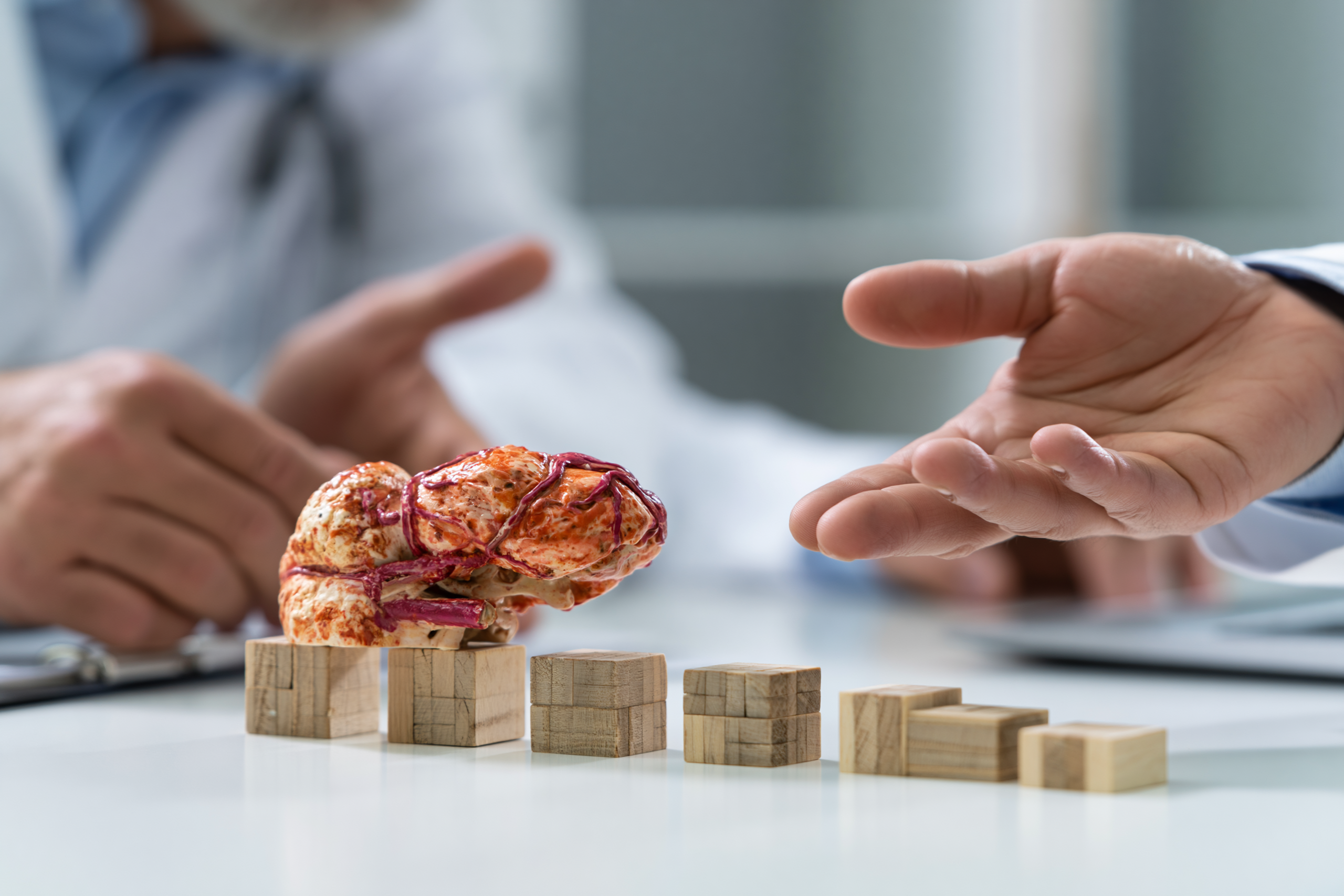
Modern-to-Ayurvedic Bridge
When you study how pancreatitis can move toward pancreatic cancer, you should see two parallel pathways. Modern medicine describes the progression through chronic pancreatic inflammation, oxidative injury, fibrosis, acinar-to-ductal metaplasia, KRAS mutation, PanIN lesions, and later tumor-suppressor gene changes involving CDKN2A/P16, TP53, and SMAD4/DPC4 [13]. Ayurveda explains the same terrain through Nidana Sevana, Agnimandya, Ama, Pitta-pradhana Shotha, Vata-Kapha Srotorodha, Dhatudushti, Granthi/Arbuda-pravritti, and finally Ojas kshaya [18], [19], [20], [21], [22]. Chronic pancreatitis is recognized as a risk factor for pancreatic ductal adenocarcinoma, and the progression is clinically difficult because symptoms and imaging features can overlap between chronic pancreatitis and cancer [13].
Stage One: Nidana Sevana Creates the Disease Terrain
When you repeatedly expose the body to wrong diet, alcohol, smoking, heavy food, excess sour and spicy food, irregular meals, incompatible food, sedentary habits, chronic stress, and untreated digestive disturbance, you create the first layer of pancreatic Samprapti. In modern language, these factors aggravate inflammation, oxidative stress, metabolic dysfunction, and pancreatic injury. In Ayurvedic language, they disturb Dosha, weaken Dhatu compatibility, and pollute Srotas. Charaka explains that diet and lifestyle similar to aggravated Dosha and unsuitable for Dhatu vitiate the Srotas, which becomes the foundation of chronic disease [21].
Text: Charaka Samhita, Vimana Sthana, Chapter 5, Sroto Vimana, Verse 23
Sanskrit:
आहारश्च विहारश्च यः स्याद्दोषगुणैः समः।
धातुभिर्विगुणश्चापि स्रोतसां स प्रदूषकः॥२३॥
Transliteration:
āhāraś ca vihāraś ca yaḥ syād doṣa-guṇaiḥ samaḥ।
dhātubhir viguṇaś cāpi srotasāṁ sa pradūṣakaḥ॥23॥
Translation:
Diet and lifestyle that share the qualities of aggravated Dosha and are unsuitable for Dhatu vitiate the Srotas.
Urdu lipi:
ایسی غذا اور عادات جو بگڑے ہوئے دوش کو بڑھائیں اور دھات کے لیے نامناسب ہوں، جسم کے اندرونی راستوں یعنی سروتس کو خراب کرتی ہیں۔
Arabic lipi:
الغذاء ونمط الحياة اللذان يزيدان صفات الدوشا المضطربة ولا يناسبان الأنسجة يؤديان إلى إفساد القنوات الداخلية.
Stage Two: Agnimandya Begins the Internal Collapse
When Nidana continues, Agni weakens. You may first see poor appetite, heaviness after food, nausea, altered taste, bloating, oily stools, unstable sugar, fatigue, and recurrent digestive distress. In pancreatitis, this resembles impaired digestive enzyme function and poor metabolic coordination. In Ayurveda, this is Agnimandya, where food cannot be transformed properly into nourishment. Panacea Ayurved explains pancreatic function through Agni, Meda Dhatu, Rasa/Rakta Dhatu, and Srotas, and describes how imbalance leads to Ama, Kleda, Srotorodha, metabolic disorders, and eventually cancer-risk terrain [18].
Text: Charaka Samhita, Chikitsa Sthana, Chapter 15, Grahani Dosha Chikitsa, Verses 4–5
Sanskrit:
शान्तेऽग्नौ म्रियते, युक्ते चिरं जीवत्यनामयः।
रोगी स्याद्विकृते, मूलमग्निस्तस्मान्निरुच्यते॥४॥
यदन्नं देहधात्वोजोबलवर्णादिपोषकम्।
तत्राग्निर्हेतुराहारान्न ह्यपक्वाद्रसादयः॥५॥
Transliteration:
śānte’gnau mriyate, yukte ciraṁ jīvaty anāmayaḥ।
rogī syād vikṛte, mūlam agnis tasmān nirucyate॥4॥
yad annaṁ deha-dhātv-ojo-bala-varṇādi-poṣakam।
tatrāgnir hetur āhārān na hy apakvād rasādayaḥ॥5॥
Translation:
When Agni is extinguished, life ends; when Agni is balanced, one lives long and free from disease. When Agni is disturbed, disease arises. Food nourishes Dhatu, Ojas, strength, and complexion only through proper Agni; improperly digested food cannot properly form Rasa and other Dhatus.
Urdu lipi:
جب اَگنی یعنی ہاضمہ اور تحول کی طاقت ختم ہو جائے تو زندگی خطرے میں پڑتی ہے؛ جب یہ متوازن ہو تو صحت قائم رہتی ہے۔ غذا جسم کے دھات، اوجس اور طاقت کو تبھی بناتی ہے جب اَگنی درست ہو۔
Arabic lipi:
عندما تنطفئ قوة الهضم والتمثيل الغذائي تضعف الحياة، وعندما تكون متوازنة تبقى الصحة. ولا يغذي الطعام الأنسجة والأوجاس والقوة إلا إذا كانت قوة الهضم سليمة.
Stage Three: Ama and Pitta-Pradhana Shotha Produce Pancreatitis
When Agni remains disturbed, Ama begins to accumulate. Ama blocks Srotas, irritates Pitta, disturbs Samana Vata, and creates the inflammatory picture of pancreatitis. In acute pancreatitis, you may see sudden severe upper abdominal pain, back-radiating pain, vomiting, tenderness, fever, and intolerance to food. Ayurvedically, this is Pitta-pradhana Shotha with Vata Shoola. In modern pathology, pancreatic inflammation produces tissue injury and can begin cycles of injury, repair, and oxidative damage [13], [18].
Text: Charaka Samhita, Nidana Sthana, Chapter 3, Gulma Nidana, Verse 8
Sanskrit:
अम्ललवणकटुकक्षारोष्णतीक्ष्णशुक्तव्यापन्नमद्यहरितकफलाम्लानां विदाहिनां च…
अजीर्णाध्यशनाद्… पित्तं सह मारुतेन प्रकोपमापद्यते॥८॥
Transliteration:
amla-lavaṇa-kaṭuka-kṣāra-uṣṇa-tīkṣṇa-śukta-vyāpanna-madya-haritaka-phalāmlānāṁ vidāhināṁ ca…
ajīrṇādhy-āśanād… pittaṁ saha mārutena prakopam āpadyate॥8॥
Translation:
Sour, salty, pungent, alkaline, hot, sharp, fermented, spoiled alcoholic, acidic, and Vidahi substances, along with eating during indigestion and improper eating, aggravate Pitta along with Vata.
Urdu lipi:
کھٹی، نمکین، تیز، گرم، خمیر شدہ، شراب، بدہضمی میں کھانا اور غلط غذا پِتّ کو وات کے ساتھ بھڑکا دیتی ہے، جس سے سوزش اور درد بڑھتے ہیں۔
Arabic lipi:
الأطعمة الحامضة والمالحة والحارة واللاذعة والمخمرة، والكحول، والأكل أثناء عسر الهضم تهيّج البيتا مع الفاتا، مما يزيد الالتهاب والألم.
Stage Four: Recurrent Shotha Leads to Fibrosis and Srotorodha
When pancreatitis keeps recurring, the disease no longer remains only an acute inflammatory attack. Modern medicine describes chronic pancreatitis as inflammation associated with progressive fibrosis, ductal irregularity, stenosis, dilatation, exocrine insufficiency, endocrine dysfunction, pain, and diabetes [13]. Ayurveda reads this as Srotorodha, where flow becomes blocked, distorted, nodular, or diverted. This stage is crucial because fibrosis and duct obstruction can maintain chronic inflammation and create a cancer-promoting microenvironment [13], [21].
Text: Charaka Samhita, Vimana Sthana, Chapter 5, Sroto Vimana, Verse 24
Sanskrit:
अतिप्रवृत्तिः सङ्गो वा सिराणां ग्रन्थयोऽपि वा।
विमार्गगमनं चापि स्रोतसां दुष्टिलक्षणम्॥२४॥
Transliteration:
atipravṛttiḥ saṅgo vā sirāṇāṁ granthayo’pi vā।
vimārgagamanaṁ cāpi srotasāṁ duṣṭi-lakṣaṇam॥24॥
Translation:
Excessive flow, obstruction, nodular change, and movement through abnormal pathways are signs of Srotas vitiation.
Urdu lipi:
سروتس کی خرابی میں بہاؤ کا زیادہ ہونا، رکاوٹ، گانٹھ جیسی تبدیلی، یا مادّوں کا غلط راستے میں جانا شامل ہے۔
Arabic lipi:
علامات اضطراب القنوات تشمل زيادة الجريان، الانسداد، تكوّن العقد، أو انتقال المواد في مسارات غير طبيعية.
Stage Five: Oxidative Injury and Dhatu Parinama Vikriti
When inflammation continues for years, oxidative stress damages DNA, proteins, lipids, membranes, and cellular repair mechanisms. Modern research describes how oxidative stress, inflammatory pathways such as NF-κB and STAT3, cytokines, immune cells, pancreatic stellate cells, and stromal changes support epithelial injury, increased proliferation, fibrosis, and abnormal cellular transformation [13]. In Ayurveda, you should understand this as Ama-visha-like toxicity, Pitta-Rakta dushti, impaired Dhatvagni, and abnormal Dhatu Parinama. This is the point where pancreatitis begins to move beyond simple Shotha and becomes a deeper tissue-level disorder.
Stage Six: Acinar-to-Ductal Metaplasia Mirrors Abnormal Dhatu Transformation
Modern pancreatic cancer research explains that during inflammation and repair, acinar cells may transform toward duct-like cells through acinar-to-ductal metaplasia. This change may begin as a repair response, but in the presence of oncogenic injury and chronic inflammation, it can progress toward precancerous lesions. The review literature connects inflammation with acinar-to-ductal metaplasia, PanIN formation, KRAS activation, and later pancreatic ductal adenocarcinoma [13]. Ayurvedically, you can explain this as Dhatu Parinama Vikriti, where disturbed Agni and obstructed Srotas cause tissue transformation to become abnormal rather than restorative.
Stage Seven: KRAS, PanIN, and Arbuda-Pravritti
When KRAS mutation appears early, the affected pancreatic cells gain abnormal survival and proliferative signaling. PanIN lesions then progress from lower-grade dysplasia toward PanIN-3, with additional changes involving CDKN2A/P16, TP53, and SMAD4/DPC4. This is the modern stepwise carcinogenesis pathway from chronic pancreatic injury to invasive pancreatic cancer [13]. In Ayurvedic language, this is the shift from Shotha and Srotorodha toward Granthi/Arbuda-pravritti, where tissue growth becomes organized, persistent, deep-seated, and difficult to reverse.
Text: Sushruta Samhita, Nidana Sthana, Chapter 11, Granthi-Apachi-Arbuda-Galaganda Nidana, Verses 13–14
Sanskrit:
गात्रप्रदेशे क्वचिदेव दोषाः सम्मूर्च्छिता मांसमभिप्रदूष्य।
वृत्तं स्थिरं मन्दरुजं महान्तमनल्पमूलं चिरवृद्ध्यपाकम्॥१३॥
कुर्वन्ति मांसोपचयं तु शोफं तमर्बुदं शास्त्रविदो वदन्ति॥१४॥
Transliteration:
gātra-pradeśe kvacideva doṣāḥ sammūrchitā māṁsam abhipradūṣya।
vṛttaṁ sthiraṁ mandarujam mahāntam analpamūlaṁ ciravṛddhyapākam॥13॥
kurvanti māṁsopacayaṁ tu śophaṁ tam arbudaṁ śāstravido vadanti॥14॥
Translation:
When aggravated Doshas combine in a body region and vitiate Mamsa Dhatu, they produce a round, fixed, mildly painful, large, deep-rooted, slowly growing, non-suppurating swelling. The learned physicians call this Arbuda.
Urdu lipi:
جب بگڑے ہوئے دوش جسم کے کسی حصے میں جمع ہو کر مانس دھاتو کو خراب کرتے ہیں تو ایک گول، سخت، جڑ پکڑی ہوئی، آہستہ بڑھنے والی اور عام طور پر نہ پکنے والی سوجن بنتی ہے؛ اسے اَربُد کہا گیا ہے۔
Arabic lipi:
عندما تجتمع الدوشات المضطربة في موضع من الجسم وتفسد نسيج اللحم، تتكوّن كتلة مستديرة، ثابتة، عميقة الجذر، كبيرة، بطيئة النمو، ولا تتحول عادةً إلى صديد؛ وهذا يُسمّى أربودا.
Stage Eight: Granthi and Gulma Explain the Intermediate Pathology
Before a pancreatic disorder reaches clear Arbuda-like behavior, you may see an intermediate pattern of ductal obstruction, focal enlargement, glandular nodularity, cystic change, deep abdominal pain, and chronic digestive failure. This can be understood through Granthi and Gulma-like frameworks. Sushruta describes Granthi through Dosha vitiation of Mamsa, Rakta, and Meda with Kapha association, while Charaka describes Gulma through deep abdominal mass-like pathology, Vata involvement, and Mahasrotas obstruction [19], [20], [22]. Charaka’s Gulma discussion also shows that specific diagnosis depends on etiology, prodromal features, symptoms, pain patterns, and therapeutic response, which is important when you differentiate chronic pancreatitis, pancreatic mass, pseudo-tumorous pancreatitis, and cancer [19].
Text: Sushruta Samhita, Nidana Sthana, Chapter 11, Granthi-Apachi-Arbuda-Galaganda Nidana, Verse 3
Sanskrit:
वातादयो मांसमसृक् च दुष्टाः सन्दूष्य मेदश्च कफानुविद्धम्।
वृत्तोन्नतं विग्रथितं तु शोफं कुर्वन्त्यतो ग्रन्थिरिति प्रदिष्टः॥३॥
Transliteration:
vātādayo māṁsam asṛk ca duṣṭāḥ sandūṣya medaś ca kaphānuviddham।
vṛttonnataṁ vigrathitaṁ tu śophaṁ kurvanty ato granthir iti pradiṣṭaḥ॥3॥
Translation:
Vata and other Doshas, after vitiating Mamsa, Rakta, and Meda with Kapha association, produce a round, elevated, knot-like swelling; this is called Granthi.
Urdu lipi:
وات وغیرہ دوش جب کَف کے ساتھ مل کر مانس، خون اور چربی کے دھات کو خراب کرتے ہیں تو گول، ابھری ہوئی، گانٹھ جیسی سوجن پیدا ہوتی ہے؛ اسے گرنتھی کہا جاتا ہے۔
Arabic lipi:
عندما تفسد الفاتا والدوشات الأخرى نسيج اللحم والدم والدهن مع مشاركة الكافا، تتكوّن كتلة عقدية مستديرة ومرتفعة؛ وهذا يُسمّى غرانثي.
Stage Nine: Tridoshaja Gulma-Like Severity Shows Agni and Bala Loss
When the disease becomes painful, burning, hard, destructive, and strength-depleting, you should think of a severe Tridoshaja pattern. Charaka describes Tridoshaja Gulma as intensely painful, burning, hard like stone, severe, destructive to mind, body, Agni, and Bala. This is highly relevant to advanced pancreatic disease, where the patient may develop intense pain, burning, anorexia, cachexia, weakness, fear, sleep disturbance, and progressive loss of treatment tolerance [20].
Text: Charaka Samhita, Chikitsa Sthana, Chapter 5, Gulma Chikitsa, Verse 17
Sanskrit:
महारुजं दाहपरीतमश्मवद्घनोन्नतं शीघ्रविदाहि दारुणम्।
मनःशरीराग्निबलापहारिणं त्रिदोषजं गुल्ममसाध्यमादिशेत्॥१७॥
Transliteration:
mahārujaṁ dāha-parītam aśmavad ghana-unnataṁ śīghra-vidāhi dāruṇam।
manaḥ-śarīrāgni-bala-apahāriṇaṁ tridoṣajaṁ gulmam asādhyam ādiśet॥17॥
Translation:
A Tridoshaja Gulma is intensely painful, associated with burning, hard like stone, severe, rapidly destructive, and it takes away the strength of mind, body, Agni, and Bala; it is considered extremely difficult to treat.
Urdu lipi:
ترِدوشج گُلم میں شدید درد، جلن، پتھر جیسی سختی، تیزی سے بگاڑ، اور من، جسم، اَگنی اور طاقت کی کمی ہوتی ہے؛ اسے بہت دشوار مرض کہا گیا ہے۔
Arabic lipi:
في الغولما ثلاثي الدوشا يظهر ألم شديد، حرقة، صلابة كالحجر، تدهور سريع، ونقص في قوة العقل والجسم والهضم؛ ويُعد من الحالات شديدة الصعوبة.
Stage Ten: Ojas Kshaya Marks Advanced Disease
When pancreatic cancer advances, you may see rapid weight loss, poor appetite, malabsorption, weakness, fear, insomnia, dry body, dull complexion, low mood, cachexia, and declining immunity. In Ayurveda, this is Ojas kshaya. This stage shows that the disease has moved from local inflammation to systemic depletion. Your treatment thinking must then include Ojas protection, Bala support, Agni rekindling, pain control, nutrition, sleep, emotional steadiness, and careful monitoring of modern disease status [21].
Text: Charaka Samhita, Sutra Sthana, Chapter 17, Kiyanta Shiraseeya Adhyaya, Verse 73
Sanskrit:
बिभेति दुर्बलोऽभीक्ष्णं ध्यायति व्यथितेन्द्रियः।
दुश्छायो दुर्मना रूक्षः क्षामश्चैवौजसः क्षये॥७३॥
Transliteration:
bibheti durbalo’bhīkṣṇaṁ dhyāyati vyathitendriyaḥ।
duśchāyo durmanā rūkṣaḥ kṣāmaś caivaujasaḥ kṣaye॥73॥
Translation:
In Ojas depletion, the person becomes fearful, weak, constantly worried, disturbed in the senses, poor in complexion, mentally low, dry, and emaciated.
Urdu lipi:
اوجس کی کمی میں مریض خوف زدہ، کمزور، فکر مند، حواس میں بے آرام، بے رونق، دل گرفتہ، خشک اور لاغر ہو جاتا ہے۔
Arabic lipi:
عند نقص الأوجاس يصبح المريض خائفاً، ضعيفاً، كثير القلق، مضطرب الحواس، فاقد النضارة، منخفض النفس، جافاً وهزيلاً.
Ayurvedic Chikitsa Siddhanta

Core Treatment Principle
When you treat pancreatitis or pancreatic cancer through Ayurveda, you should not treat only the modern disease name. You should treat the Samprapti, the patient’s Agni, the presence or absence of Ama, the dominant Dosha, the affected Dhatu, the blocked Srotas, the patient’s Bala, and the status of Ojas. In pancreatitis, your first aim is to reduce Pitta-pradhana Shotha, digest Ama, correct Agnimandya, relieve Vata Shoola, and prevent recurrence. In pancreatic cancer, your approach must go deeper toward Arbuda/Granthi/Gulma-like pathology, Kapha-Vata Avarana, Srotorodha, Dhatudushti, Agni collapse, Bala kshaya, and Ojas kshaya [18], [19], [20], [21], [22].
Shadvidha Upakrama as the Foundation
You should begin with the classical principle that a true physician knows when to apply Langhana, Brimhana, Rukshana, Snehana, Swedana, and Stambhana. This is especially important in pancreatic disorders because the same patient may need Langhana and Pachana in an acute Ama-Pitta stage, but may later need Brimhana, Rasayana, and Ojas support after inflammation, Ama, and obstruction are controlled. Charaka describes these six therapeutic directions in Charaka Samhita, Sutra Sthana, Chapter 22, Langhanabrimhaniya Adhyaya, Verse 4 [21].
Sanskrit:
लङ्घनं बृंहणं काले रूक्षणं स्नेहनं तथा।
स्वेदनं स्तम्भनं चैव जानीते यः स वै भिषक्॥४॥
Transliteration:
laṅghanaṁ bṛṁhaṇaṁ kāle rūkṣaṇaṁ snehanaṁ tathā।
svedanaṁ stambhanaṁ caiva jānīte yaḥ sa vai bhiṣak॥4॥
Translation:
The physician who knows the proper time for Langhana, Brimhana, Rukshana, Snehana, Swedana, and Stambhana is truly a physician.
Urdu lipi:
جو وید لنگھن، برمہن، رکشن، سنیہن، سویدن اور استمبھن کو صحیح وقت پر استعمال کرنا جانتا ہے، وہی حقیقی طبیب ہے۔
Arabic lipi:
الطبيب الحقيقي هو من يعرف الوقت الصحيح لاستخدام لانغهانا، بريمهانا، روكشانا، سنيهانا، سويدانا، وستامبهانا.
Langhana in Acute Ama-Pitta and Inflammatory Stages
When the patient presents with acute pancreatic inflammation, heaviness, nausea, vomiting, anorexia, feverishness, abdominal tenderness, severe upper abdominal pain, and food intolerance, you should not overload Agni with heavy food, heavy medicines, excessive oils, or premature Rasayana. This is the stage for Langhana, Mridu Pachana, and light, Agni-protective management. Charaka defines Langhana as whatever creates lightness in the body in Charaka Samhita, Sutra Sthana, Chapter 22, Verse 9 [21].
Sanskrit:
यत् किञ्चिल्लाघवकरं देहे तल्लङ्घनं स्मृतम्॥९॥
Transliteration:
yat kiñcillāghavakaraṁ dehe tallaṅghanaṁ smṛtam॥9॥
Translation:
Whatever produces lightness in the body is known as Langhana.
Urdu lipi:
جو طریقہ جسم میں ہلکا پن پیدا کرے اسے لنگھن کہا جاتا ہے۔
Arabic lipi:
كل ما يُحدث خفة في الجسم يُسمّى لانغهانا.
Pachana Before Nourishment
When Ama is present, you should not rush toward Brimhana or Rasayana. If Ama has entered Rasa Dhatu and spread through the body, Charaka advises Langhana and Pachana. This is highly relevant in pancreatitis with coated tongue, heaviness, anorexia, foul stools, bloating, nausea, systemic inflammation, and metabolic toxicity. The principle comes from Charaka Samhita, Chikitsa Sthana, Chapter 15, Grahani Dosha Chikitsa, Verse 75 [21].
Sanskrit:
लीनं पक्वाशयस्थं वाऽऽप्यामं स्राव्यं सदीपनैः।
शरीरानुगते सामे रसे लङ्घनपाचनम्॥७५॥
Transliteration:
līnaṁ pakvāśayasthaṁ vāpyāmaṁ srāvyaṁ sadīpanaiḥ।
śarīrānugate sāme rase laṅghana-pācanam॥75॥
Translation:
When Ama is lodged or situated in the lower gut, it should be managed with Deepana measures; when Ama has spread through Rasa in the body, Langhana and Pachana should be applied.
Urdu lipi:
جب آم جسم میں پھیل جائے تو پہلے لنگھن اور پاچن کرنا چاہیے؛ اس حالت میں بھاری غذا، بھاری دوا یا فوراً رساین دینا مناسب نہیں۔
Arabic lipi:
عندما ينتشر الآما في الجسم، ينبغي البدء باللانغهانا والباتشانا، ولا يصح إعطاء التغذية الثقيلة أو الراسايانا قبل هضم الآما.
Deepana and Agni Restoration
When acute inflammation settles and Ama begins to reduce, you should move toward Deepana to restore Agni. In chronic pancreatitis, this becomes essential because weak Agni leads to poor appetite, malabsorption, oily stools, weight loss, fatigue, and unstable blood sugar. In pancreatic cancer, Agni restoration is even more important because appetite, digestion, stool, Bala, and Ojas often decline together. Charaka states that Gulma increases when Agni is weak and subsides when Agni is strong in Charaka Samhita, Chikitsa Sthana, Chapter 5, Gulma Chikitsa, Verse 112 [20].
Sanskrit:
मन्देऽग्नौ वर्धते गुल्मो दीप्ते चाग्नौ प्रशाम्यति।
तस्मान्ना नातिसौहित्यं कुर्यान्नातिविलङ्घनम्॥११२॥
Transliteration:
mande’gnau vardhate gulmo dīpte cāgnau praśāmyati।
tasmān nātisauhityaṁ kuryān nātivilaṅghanam॥112॥
Translation:
When Agni is weak, Gulma increases; when Agni is strong, it subsides. Therefore, you should avoid both overfeeding and excessive Langhana.
Urdu lipi:
جب اَگنی کمزور ہو تو گُلم بڑھتا ہے، اور جب اَگنی مضبوط ہو تو کم ہوتا ہے؛ اس لیے نہ بہت زیادہ کھلانا چاہیے اور نہ بہت زیادہ لنگھن کرنا چاہیے۔
Arabic lipi:
عندما تضعف قوة الهضم يزداد الغولما، وعندما تقوى تهدأ الحالة؛ لذلك لا ينبغي الإفراط في التغذية ولا الإفراط في التجويع أو التخفيف.
Nidana Parivarjana and Agni Protection
You should make Nidana Parivarjana non-negotiable. In pancreatitis, this means removing alcohol, smoking, overeating, fried food, heavy meals, late-night eating, incompatible food, excessive sour-spicy-salty food, and eating during indigestion. In pancreatic cancer, it also means removing everything that increases Ama, Kapha stagnation, Pitta irritation, Vata depletion, and Srotorodha. Charaka gives the direct principle that Dosha pacification and aggravation depend on Agni, and therefore Agni must be protected and Nidana avoided in Charaka Samhita, Chikitsa Sthana, Chapter 5, Gulma Chikitsa, Verse 136 [20].
Sanskrit:
शमप्रकोपौ दोषाणां सर्वेषामग्निसंश्रितौ।
तस्मादग्निं सदा रक्षेन्निदानानि च वर्जयेत्॥१३६॥
Transliteration:
śama-prakopau doṣāṇāṁ sarveṣām agni-saṁśritau।
tasmād agniṁ sadā rakṣen nidānāni ca varjayet॥136॥
Translation:
The pacification and aggravation of all Doshas depend on Agni. Therefore, you should always protect Agni and avoid causative factors.
Urdu lipi:
تمام دوشوں کا بڑھنا اور کم ہونا اَگنی پر منحصر ہے؛ اس لیے اَگنی کی حفاظت کریں اور بیماری کے اسباب سے بچیں۔
Arabic lipi:
إن هدوء الدوشات أو اضطرابها يعتمد على قوة الهضم؛ لذلك يجب حماية الأگني وتجنّب أسباب المرض.
Pitta Shamana in Pancreatitis and Obstructive Pitta States
When the patient has burning, feverishness, thirst, vomiting, tenderness, jaundice, dark urine, pale stools, itching, or Pitta-dominant inflammation, you should apply Pitta Shamana with careful attention to Agni. Charaka advises that when Pitta is excessive, Deepana should be combined with bitter and sweet principles; when Vata is excessive, Deepana should be combined with Sneha and Vata-supportive measures. This comes from Charaka Samhita, Chikitsa Sthana, Chapter 15, Grahani Dosha Chikitsa, Verse 200 [21].
Sanskrit:
दीपनं बहुपित्तस्य तिक्तं मधुरसंयुतम्।
बहुवातस्य तु स्नेहलवणाम्लयुतं हितम्॥२००॥
Transliteration:
dīpanaṁ bahu-pittasya tiktaṁ madhura-saṁyutam।
bahu-vātasya tu sneha-lavaṇāmla-yutaṁ hitam॥200॥
Translation:
When Pitta is excessive, Deepana should be joined with bitter and sweet principles. When Vata is excessive, Deepana with Sneha, Lavana, and Amla principles is beneficial.
Urdu lipi:
پِتّ زیادہ ہو تو دیپن کو تلخ اور میٹھے اصولوں کے ساتھ دینا چاہیے؛ وات زیادہ ہو تو سنیہ، لون اور امل کے ساتھ دیپن مفید ہے۔
Arabic lipi:
عند زيادة البيتا ينبغي أن يكون الديبانا مع المذاق المر والحلو، وعند زيادة الفاتا يفيد الديبانا مع السنيهانا والملوحة والحموضة المناسبة.
Vatanulomana and Pain-Dominant Disease
When the patient has severe abdominal pain, radiating back pain, constipation, gas, distension, dryness, emaciation, sleep disturbance, anxiety, or irregular bowel movement, you should address Vata carefully. In pancreatitis, Vata often rises secondary to Pitta-Shotha and pain. In pancreatic cancer, Vata rises due to obstruction, Dhatu kshaya, nerve involvement, fear, cachexia, and chronic pain. Charaka explains that when Deepana Sneha is used properly in Mandagni and irregular stool states, Samana Vata becomes normal and moves in its proper pathway, strengthening Agni. This is from Charaka Samhita, Chikitsa Sthana, Chapter 15, Verses 202–203 [21].
Sanskrit:
मन्दाग्निरविपक्वं तु पुरीषं योऽतिसार्यते।
दीपनीयौषधैर्युक्तां घृतमात्रां पिबेत्तु सः॥२०२॥
तया समानः पवनः प्रसन्नो मार्गमास्थितः।
अग्नेः समीपचारित्वादाशु प्रकुरुते बलम्॥२०३॥
Transliteration:
mandāgnir avipakvaṁ tu purīṣaṁ yo’tisāryate।
dīpanīyauṣadhair yuktāṁ ghṛta-mātrāṁ pibet tu saḥ॥202॥
tayā samānaḥ pavanaḥ prasanno mārgam āsthitaḥ।
agneḥ samīpa-cāritvād āśu prakurute balam॥203॥
Translation:
When Mandagni causes improperly digested stool, Deepana-processed Sneha may be used appropriately. By this, Samana Vata becomes regulated, follows its proper path, and quickly strengthens Agni.
Urdu lipi:
جب منداگنی کی وجہ سے ادھ پکا پاخانہ یا بے قاعدہ ہضم ہو تو مناسب دیپن سنیہ سے سمان وات درست راستے پر آتا ہے اور اَگنی کو طاقت دیتا ہے۔
Arabic lipi:
عندما يسبب ضعف الهضم برازاً غير ناضج أو اضطراباً في الإخراج، فإن السنيهانا الممزوجة بديبانا، إذا استُعملت بحكمة، تنظم سامانا فاتا وتقوي الأگني.
Srotoshodhana in Chronic Pancreatitis and Cancer Terrain
When the disease becomes recurrent, chronic, obstructive, fibrotic, cystic, ductal, or tumor-like, you should think in terms of Srotoshodhana. In chronic pancreatitis, Srotorodha may appear as ductal obstruction, fibrosis, enzyme stagnation, malabsorption, diabetes, and recurrent pain. In pancreatic cancer, Srotorodha may appear as bile duct obstruction, pancreatic duct obstruction, jaundice, altered stool, cachexia, tumor compression, and disturbed Dhatu nourishment. Charaka describes Srotas morbidity as excessive flow, obstruction, nodular change, and movement through abnormal pathways in Charaka Samhita, Vimana Sthana, Chapter 5, Sroto Vimana, Verse 24 [21].
Sanskrit:
अतिप्रवृत्तिः सङ्गो वा सिराणां ग्रन्थयोऽपि वा।
विमार्गगमनं चापि स्रोतसां दुष्टिलक्षणम्॥२४॥
Transliteration:
atipravṛttiḥ saṅgo vā sirāṇāṁ granthayo’pi vā।
vimārga-gamanaṁ cāpi srotasāṁ duṣṭi-lakṣaṇam॥24॥
Translation:
Excessive flow, obstruction, nodular change, and abnormal movement are signs of Srotas vitiation.
Urdu lipi:
سروتس کی خرابی میں بہاؤ کا زیادہ ہونا، رکاوٹ، گانٹھ بننا، یا مادّوں کا غلط راستے میں جانا شامل ہے۔
Arabic lipi:
علامات اضطراب القنوات تشمل زيادة الجريان، الانسداد، تكوّن العقد، أو انتقال المواد في مسارات غير طبيعية.
Grahani Correction in Chronic Pancreatic Weakness
When the patient develops long-term indigestion, poor appetite, loose or oily stools, bloating, malabsorption, weight loss, weakness, and irregular sugar, you should treat the case as Grahani-like dysfunction along with pancreatic pathology. Charaka lists Snehana, Swedana, Shuddhi, Langhana, Deepana, Takra-based approaches, and Deepaniya Ghrita among Grahani management principles in Charaka Samhita, Chikitsa Sthana, Chapter 15, Verses 196–197 [21].
Sanskrit:
स्नेहनं स्वेदनं शुद्धिर्लङ्घनं दीपनं च यत्।
चूर्णानि लवणक्षारमध्वरिष्टसुरासवाः।
विविधास्तक्रयोगाश्च दीपनानां च सर्पिषाम्।
ग्रहणीरोगिभिः सेव्याः॥१९६–१९७॥
Transliteration:
snehanaṁ svedanaṁ śuddhir laṅghanaṁ dīpanaṁ ca yat।
cūrṇāni lavaṇa-kṣāra-madhv-ariṣṭa-surāsavāḥ।
vividhās takra-yogāś ca dīpanānāṁ ca sarpiṣām।
grahaṇī-rogibhiḥ sevyāḥ॥196–197॥
Translation:
In Grahani disorders, Snehana, Swedana, Shuddhi, Langhana, Deepana, suitable powders, salts, Kshara, fermented preparations, Takra preparations, and Deepaniya Sneha may be used according to condition.
Urdu lipi:
گرہنی کے امراض میں مریض کی حالت کے مطابق سنیہن، سویدن، شدھی، لنگھن، دیپن، تکرا اور دیپنیہ سنیہ استعمال کیے جا سکتے ہیں۔
Arabic lipi:
في اضطرابات الغراهاني يمكن استخدام السنيهانا، السويدانا، الشدهي، اللانغهانا، الديبانا، مستحضرات التکرا، والسنيهانا الديبانية بحسب حالة المريض.
Stage-Wise Use in Acute Pancreatitis
When pancreatitis is acute, painful, inflammatory, vomiting-dominant, feverish, or associated with dehydration, you should first stabilize the patient and avoid aggressive Panchakarma, heavy Sneha, strong Rasayana, and Guru Ahara. Your Ayurvedic direction should be Langhana, Mridu Pachana, Pitta Shamana, Ama Pachana, and Vatanulomana, while modern emergency evaluation must not be delayed if there is severe pain, persistent vomiting, fever, jaundice, dehydration, altered sensorium, or organ-risk signs. The Ayurvedic logic is that Ama must first be digested, Agni protected, and Dosha reduced before nourishment is introduced [18], [21].
Stage-Wise Use in Recurrent and Chronic Pancreatitis
When pancreatitis becomes recurrent or chronic, you should shift from acute inflammation control to recurrence prevention. Your priorities become Nidana Parivarjana, Agni correction, Ama clearance, Grahani strengthening, Vata regulation, Pitta moderation, and Srotoshodhana. You should not keep the patient in excessive Langhana because chronic pancreatic disease can lead to weight loss, malabsorption, Bala kshaya, and Dhatu kshaya. Charaka’s warning against both overfeeding and excessive Langhana is clinically important here because the pancreas patient needs lightness during Ama but nourishment after Agni becomes capable [20].
Stage-Wise Use in Pancreatic Cancer
When you treat pancreatic cancer through Ayurveda, you should divide the plan according to disease stage, Bala, Agni, Ama, obstruction, jaundice, pain, appetite, stool, blood sugar, weight, and ongoing modern treatment. In an Ama-heavy and obstructive stage, you should emphasize Deepana-Pachana, Srotoshodhana, Kapha-Vata Avarana correction, and Pitta-Yakrit-Pittashaya support. In a weight-loss and weakness stage, you should move carefully toward Brimhana, Dhatu-poshana, Bala support, and Ojas protection only after Ama is reduced. In an advanced pain-dominant stage, you should focus on Vata Shamana, sleep, bowel comfort, appetite, strength, emotional steadiness, and quality of life [18], [20], [21], [22].
Rasayana Only After Ama Assessment
You should not give Rasayana blindly in pancreatitis or pancreatic cancer. If Ama, heaviness, nausea, coated tongue, foul stool, severe obstruction, active jaundice, feverish inflammation, or poor digestion is present, Rasayana may become difficult to digest and may worsen the metabolic burden. First you should perform Langhana, Pachana, Deepana, and Srotas correction according to Bala. When appetite improves, stool stabilizes, heaviness reduces, and Agni becomes dependable, Rasayana can be introduced for Bala, Dhatu support, Ojas protection, and recovery-focused care [18], [21].
Pathya-Apathya as Treatment, Not Advice
You should present Pathya-Apathya as a core treatment tool, not as a side instruction. In pancreatitis, Pathya should protect Agni and reduce pancreatic load through light, warm, freshly prepared, low-fat, easily digestible food during recovery, while alcohol, fried food, heavy dairy, overeating, late meals, incompatible food, and eating during indigestion should be strictly avoided. In pancreatic cancer, Pathya should be individualized according to jaundice, stool color, appetite, vomiting, diabetes, weight loss, pain, and strength. Charaka’s principle that Agni must be protected and Nidana avoided should guide every diet prescription [20].
FAQs
What is the difference between pancreatic cancer and pancreatitis?
Pancreatitis is inflammation of the pancreas, while pancreatic cancer is malignant growth in pancreatic tissue. Both can affect digestion, appetite, weight, stool, pain, and blood sugar, but their disease behavior, urgency, prognosis, and treatment approach are different.
Why are pancreatic cancer and pancreatitis confused with each other?
They are confused because both can cause upper abdominal pain, back pain, nausea, vomiting, appetite loss, weight loss, digestive weakness, stool changes, and diabetes-like symptoms. Proper investigation is needed because symptoms alone cannot safely separate the two.
Can pancreatitis become pancreatic cancer?
Pancreatitis does not automatically become pancreatic cancer. However, recurrent, chronic, hereditary, alcoholic, smoking-associated, or obstructive pancreatitis can increase long-term pancreatic cancer risk by creating chronic inflammation, fibrosis, oxidative damage, and abnormal tissue repair.
Can pancreatic cancer look like pancreatitis in the beginning?
Yes. Sometimes an early pancreatic tumor can block the pancreatic duct and first appear as unexplained pancreatitis. This is especially important when pancreatitis appears later in life, has no clear cause, recurs, or comes with weight loss, jaundice, back pain, or worsening diabetes.
Which symptoms suggest pancreatitis more strongly?
Pancreatitis is more likely when pain begins suddenly, becomes severe, radiates to the back, and appears with vomiting, fever, abdominal tenderness, raised pancreatic enzymes, gallstones, alcohol history, or very high triglycerides.
Which symptoms suggest pancreatic cancer more strongly?
Pancreatic cancer should be suspected when symptoms are progressive and include jaundice, dark urine, pale stools, unexplained weight loss, appetite loss, persistent back pain, new diabetes, worsening diabetes, or sudden change in chronic pancreatitis symptoms.
Why is jaundice a warning sign in pancreatic cancer?
Jaundice can occur when a pancreatic tumor blocks the bile duct, especially in tumors of the pancreatic head. Yellow eyes, dark urine, pale stools, itching, poor appetite, and weight loss should not be treated as ordinary indigestion.
Why does pancreatic disease affect blood sugar?
The pancreas produces hormones that regulate blood sugar. Chronic pancreatitis can damage hormone-producing tissue, while pancreatic cancer can disturb glucose metabolism, so new or worsening diabetes with weight loss or digestive symptoms needs deeper evaluation.
How does Ayurveda understand pancreatitis?
Ayurveda understands pancreatitis as a disorder involving Agnimandya, Ama, Pitta-pradhana Shotha, Vata Shoola, Annavaha Srotas disturbance, Grahani-like dysfunction, and Srotorodha in recurrent or chronic cases.
How does Ayurveda understand pancreatic cancer?
Ayurveda understands pancreatic cancer through Arbuda, Granthi, and Gulma-like pathology. The disease involves abnormal growth, Srotorodha, Dhatudushti, Kapha-Vata Avarana, Agni collapse, Bala kshaya, and Ojas kshaya.
How does Ayurveda explain the progression from pancreatitis to pancreatic cancer?
Ayurveda explains the progression as wrong diet and lifestyle disturbing Agni, creating Ama, provoking Pitta Shotha, blocking Srotas through Vata-Kapha involvement, damaging Dhatus, and finally creating Granthi or Arbuda-like pathology with Ojas depletion.
What is the Ayurvedic treatment principle for pancreatitis?
The Ayurvedic principle is to reduce inflammation, digest Ama, restore Agni, pacify Pitta, regulate Vata, correct Grahani-like dysfunction, clear Srotas, and prevent recurrence through strict Nidana Parivarjana and Pathya.
What is the Ayurvedic treatment principle for pancreatic cancer?
The Ayurvedic principle is stage-wise Samprapti correction. The focus is on Agni restoration, Ama Pachana, Srotoshodhana, Kapha-Vata Avarana correction, Pitta support in jaundice, Dhatu nourishment, Bala protection, pain care, and Ojas preservation.
Should Rasayana be started immediately in pancreatic cancer?
Rasayana should not be started blindly. If Ama, poor digestion, vomiting, heaviness, obstruction, jaundice, or active inflammation is present, the first priority is Langhana, Pachana, Deepana, and Srotas correction before nourishment and Rasayana.
What warning signs need urgent evaluation?
Urgent evaluation is needed for jaundice, dark urine, pale stools, severe abdominal pain, persistent vomiting, fever, dehydration, rapid weight loss, new diabetes, worsening diabetes, recurrent pancreatitis, duct obstruction, pancreatic mass, or persistent back pain.
How should Ayurveda and modern medicine work together in pancreatic disease?
Ayurveda should be Samprapti-based and patient-centered, while modern medicine supports diagnosis, staging, imaging, emergency stabilization, obstruction management, oncology planning, and safety monitoring. The best approach is Ayurveda-led care supported by proper investigation and timely medical intervention when needed.