



- Modern Medical Overview
- Ayurvedic Perspective – Grahani Roga
- Diagnosis
- Symptoms of IBS and Grahani Roga
- Diseases and Conditions Commonly Associated With IBS
- Additional Conditions That Can Worsen IBS
- Modern Management and Limitations
- Ayurvedic Treatment Protocol for IBS (Grahani Roga)
- Dadimadi Avaleha (Main Medicine)
- Safety Warning
- Why market bought IBS medicines fail in real clinical practice
- Critical Instruction
- Frequently Asked Questions (FAQs)
- References
IBS Ayurvedic treatment focuses on why your gut becomes sensitive and irregular, then corrects digestion, bowel rhythm, and stress driven triggers in a personalized way. Many IBS patterns closely resemble Grahani Roga in Ayurveda, where impaired Agni and Ama buildup can lead to recurring gas, bloating, abdominal pain, constipation, diarrhea, or mixed stool patterns. The aim is long-term digestive stability, not temporary symptom suppression.
It offers a comprehensive, root-cause-based approach to digestive restoration. Ayurveda identifies IBS as Grahani Roga, a condition caused by weakened Agni (digestive fire) and toxin accumulation (Ama). By focusing on detoxification, diet regulation, and Rasayana rejuvenation, this holistic therapy aims for complete gut healing rather than mere symptom control.According to the World Health Organization (WHO) and Mayo Clinic, IBS affects an estimated 10–15% of the globalpopulation, with a higher prevalence among women and individuals aged 20–45 years [41]. Despite being classified as a “functional bowel disorder,” its impact extends far beyond digestion affecting emotional health, hormonal balance, and immunity. Modern medicine recognizes IBS as a condition marked by abdominal pain, bloating, altered bowel habits, and intestinal hypersensitivity [42], but it often fails to explain why the condition persists even after dietary correction and medication.
Hidden Epidemic:-The Underdiagnosed and Mislabelled Disorder
IBS remains a hidden epidemic due to its overlapping symptoms with multiple digestive and endocrine conditions. Many patients are either underdiagnosed or dismissed with psychosomatic labels such as “stress-related bowel disorder.” This misclassification stems from the absence of visible inflammation or structural changes in conventional tests, leading clinicians to underestimate the chronic, systemic nature of IBS.
Globally, millions of patients live with recurring bloating, alternating constipation and diarrhea, fatigue, and anxiety, yet fail to find lasting relief. Studies reveal that nearly 40% of IBS patients are misdiagnosed for over three years before receiving accurate care [43]. The emotional toll, social embarrassment, and occupational productivity loss make IBS not just a digestive illness but a multisystem disorder demanding interdisciplinary attention.
Socioeconomic Burden and Quality-of-Life Impact
IBS contributes significantly to the global health burden. In the United States alone, it accounts for over 3 million outpatient visits annually and billions in healthcare costs, not including lost workdays and reduced quality of life [44]. Patients with IBS experience anxiety, depression, and chronic fatigue more commonly than those with structural gastrointestinal diseases. The unpredictable bowel patterns and dependence on emergency access to restrooms create constant psychological stress, reinforcing the gut–brain–hormone loop [45].
Beyond economics, the psychosocial cost is severe—relationships, self-esteem, and career progress often suffer. This reinforces the Ayurvedic understanding that gut health is central to mental stability and Ojas (vitality) [46]. Thus, IBS is not only a medical condition but also a societal wellness issue, requiring both physiological and psychological restoration.
Ayurvedic Identification- Grahani Roga as the Classical Equivalent
Ayurveda describes a condition strikingly similar to IBS, known as Grahani Roga. The term Grahani refers to the duodenum and small intestine, the seat of Agni (digestive fire), which governs digestion and assimilation. Roga denotes disease or derangement. When Agni becomes impaired, the body fails to properly digest food, leading to Ama (toxic residue) accumulation and irregular bowel function [47].
According to Charaka Samhita (Chikitsa Sthana 15/44–47), Grahani arises when improper food habits, stress, or suppression of natural urges disturb Agni, resulting in alternating constipation, loose stools, bloating, and weakness — identical to IBS symptoms [48]. Sushruta Samhita (Uttara Tantra 40/167–171) adds that mental agitation (Chinta, Bhaya, Shoka) directly weakens Agni and Grahani, producing intestinal irregularities [49].
In Ayurvedic philosophy, digestion is not mechanical but psychophysiological, influenced by both Dosha balance and mental state (Manasika Bhava). Therefore, IBS is viewed as a Grahani disorder rooted in Agni Dushti and Manovaha Srotas imbalance, integrating mind, hormones, and gut function centuries before modern science identified the gut–brain axis [50].
Historical Background- References from Classical Ayurvedic Texts
- Charaka Samhita (Chikitsa Sthana 15) emphasizes Agni as the core of health, stating that all diseases arise from its impairment [51].
- Sushruta Samhita (Sutra Sthana 46) connects digestive dysfunctions to Vata–Pitta imbalance and emotional factors [52].
- Ashtanga Hridaya (Chikitsa Sthana 10) elaborates on Grahani Roga, classifying it based on Dosha predominance (Vataja, Pittaja, Kaphaja, Sannipataja), mirroring modern IBS subtypes (IBS-C, IBS-D, IBS-M) [53].
- Bhavaprakasha Nighantu (Madhyama Khanda 3/180–190) identifies chronic Grahani as resulting from Mandagni and Majja Dhatu Kshaya, conceptually linking it to neuroendocrine depletion [54].
These classical sources confirm that Ayurveda perceived IBS not as a localized bowel problem but as a systemic imbalance involving digestion, mind, and hormonal vitality [55].
Need for Integrative Care Across Gastroenterology and Endocrinology
Modern gastroenterology focuses on motility, microbiota, and visceral sensitivity, while endocrinology investigates hormonal modulation through the hypothalamic pituitary adrenal (HPA) axis [56]. In reality, IBS sits at the intersection of both systems. Stress elevates cortisol, disturbs insulin and thyroid hormones, and disrupts intestinal rhythm creating a feedback cycle that perpetuates symptoms [57].
Ayurveda anticipated this holistic interconnection through its doctrines of Agni, Ojas, and Srotas. The digestive fire (Agni) aligns with metabolic and endocrine activity; Ojas corresponds to neurohormonal resilience; and Srotas reflect biological channels equivalent to the body’s circulatory and glandular networks [58].
Therefore, IBS management must transcend symptomatic relief. True healing demands restoring Agni and Ojas, calming Vata–Pitta, and balancing the gut–brain–hormone triad [59]. This integrative model bridging Gastroenterology, Endocrinology, and Ayurveda provides the missing link for achieving a permanent cure rather than lifelong management [60].
Modern Medical Overview

2.1 Pathophysiology
Irritable Bowel Syndrome (IBS) is a complex functional disorder involving disruption of the gut–brain–microbiota axis. It reflects continuous interaction between the enteric nervous system, gut microbiota, immune signaling, and neuroendocrine regulation [44].
Alteration in gut–brain signaling is central to IBS. This bidirectional pathway, mediated by vagus and enteric nerves along with hormonal feedback, becomes disturbed by chronic stress or microbial imbalance, resulting in visceral hypersensitivity and irregular motility even in the absence of structural disease [45].
Many studies demonstrate that patients with IBS experience exaggerated visceral pain perception. This hypersensitivity arises from increased excitability of afferent pathways and altered serotonin modulation within the enteric system [50].
Imbalance in intestinal microbiota is a key pathological driver. Post-infectious dysbiosis, antibiotic overuse, and dietary changes alter short-chain fatty acid production, mucosal integrity, and immune tone [64]. This leads to mild inflammation, permeability increase, and persistent cytokine activation [66].
Serotonin (5-hydroxytryptamine) plays a pivotal role, governing nearly 90 percent of intestinal motility and secretion. Dysregulation of 5-HT3 and 5-HT4 receptor activity results in irregular transit and pain. Modern agents like alosetron and tegaserod were developed from these insights [65].
Post-infectious IBS is another subset in which transient bacterial or viral gastroenteritis alters mucosal immune pathways. Even after recovery, residual cytokines such as IL-6 and TNF-α continue to disturb enteric nerve function [66].
Recent evidence supports an intricate microbiota–immune–endocrine relationship. Gut microbes modulate cortisol and serotonin synthesis, influencing both gastrointestinal and psychological symptoms [67]. This confirms that IBS involves neuroendocrine and inflammatory dimensions rather than being purely psychosomatic [56].
2.2 Classification (Rome IV Criteria)
The Rome IV criteria represent the international clinical standard for diagnosing IBS [68]. IBS is defined as recurrent abdominal pain at least one day per week during the last three months, associated with two or more of the following: pain related to defecation, change in stool frequency, or change in stool form.
According to stool pattern analysis (Bristol Stool Scale), IBS is classified into four groups:
- IBS-C (constipation predominant)
- IBS-D (diarrhea predominant)
- IBS-M (mixed pattern)
- IBS-U (unclassified)
The criteria emphasize a positive diagnosis rather than an exclusion-based one, which shortens delay and enhances clinical management [69].
2.3 Hormonal and Endocrine Involvement
Hormonal influences explain why IBS frequently overlaps with endocrine disorders [70].
Thyroid abnormalities directly affect motility: hypothyroidism produces constipation, while hyperthyroidism accelerates transit leading to diarrhea [72].
Chronic stress overstimulates the hypothalamic–pituitary–adrenal (HPA) axis, leading to excessive cortisol secretion. This disrupts mucosal immunity, serotonin synthesis, and epithelial integrity [71].
Fluctuating estrogen and progesterone levels alter intestinal smooth muscle tone and neurotransmitter sensitivity. This is why women often report worsening symptoms during menstruation or menopause [74].
Gut peptides such as motilin, ghrelin, GLP-1, and peptide-YY coordinate gastric emptying and colonic movement, while also interacting with the microbiome to modulate inflammation [75].
Insulin and glucagon indirectly affect the gut through their influence on energy metabolism and microbial diversity. Insulin resistance heightens visceral sensitivity and links metabolic disorders with IBS [76].
These findings position IBS as a neuroendocrine–metabolic condition—a modern reflection of the Ayurvedic view that Agni (digestive fire) and Ojas (vital essence) maintain systemic harmony [46].
2.4 Modern Diagnosis
Diagnosis of IBS is mainly clinical, but several investigations support differential identification. The goal is to rule out organic diseases such as inflammatory bowel disease, celiac disease, or cancer [78].
- Colonoscopy: confirms the absence of inflammatory or neoplastic changes [79].
- Stool calprotectin: differentiates IBS from inflammatory bowel disorders; normal values confirm non-inflammatory nature [80].
- Thyroid profile (TSH, T3, T4): evaluates endocrine contributions to altered motility [81].
- Lactulose or glucose breath tests: detect small intestinal bacterial overgrowth, a common comorbidity [82].
- Hormonal evaluation: includes cortisol, insulin, estrogen, and leptin for neuroendocrine assessment [83].
- Psychological scales: Hospital Anxiety and Depression Scale (HADS) and IBS-QOL quantify emotional burden [84].
Together, these tools confirm that IBS is a multisystemic disorder encompassing the digestive, immune, and endocrine axes, which parallels the Ayurvedic doctrine of Grahani involving Agni Dushti and Manovaha Srotas imbalance [55].
Ayurvedic Perspective – Grahani Roga

Grahani Roga is the principal classical Ayurvedic framework for understanding chronic disturbances of digestion, assimilation and bowel regulation. It includes irregular appetite, delayed digestion, abdominal pain, bloating, gas, mucus, weakness, undigested food in stool, constipation, diarrhea and alternating bowel movements.
The term Grahani does not describe only one anatomical organ. It represents the digestive structure and function that receives food, retains it until adequate digestion has occurred and releases the processed material at the appropriate stage. Its strength depends directly on Agni, the digestive and metabolic capacity of the body.
Grahani Roga and irritable bowel syndrome overlap clinically, particularly when patients have abdominal pain, bloating and fluctuating constipation or diarrhea. They are not exact synonyms. Modern medicine classifies IBS as a disorder of gut–brain interaction in which bowel sensitivity and contraction patterns are altered without visible structural damage. Grahani Roga has a broader Ayurvedic scope that includes Agni disturbance, Ama, Dosha involvement, post-diarrheal digestive weakness, impaired nourishment and systemic loss of strength. NIDDK
Agni Is the Foundation of Digestion, Strength and Health
Classical source: Charaka Samhita, Chikitsa Sthana, Chapter 15, Grahani Dosha Chikitsa, verses 3–5. Shree Naval Kishori
Sanskrit
आयुर्वर्णो बलं स्वास्थ्यमुत्साहोपचयौ प्रभा।
ओजस्तेजोऽग्नयः प्राणाश्चोक्ता देहाग्निहेतुकाः॥३॥शान्तेऽग्नौ म्रियते युक्ते चिरं जीवत्यनामयः।
रोगी स्याद्विकृते मूलमग्निस्तस्मान्निरुच्यते॥४॥यदन्नं देहधात्वोजोबलवर्णादिपोषकम्।
तत्राग्निर्हेतुराहारान्न ह्यपक्वाद्रसादयः॥५॥
Transliteration
āyurvarṇo balaṃ svāsthyam utsāhopacayau prabhā |
ojas tejo’gnayaḥ prāṇāś coktā dehāgnihetukāḥ ||3||śānte’gnau mriyate yukte ciraṃ jīvaty anāmayaḥ |
rogī syād vikṛte mūlam agnis tasmān nirucyate ||4||yad annaṃ dehadhātv-ojobala-varṇādi-poṣakam |
tatrāgnir hetur āhārān na hy apakvād rasādayaḥ ||5||
Translation
Life span, complexion, strength, health, enthusiasm, physical development, radiance, Ojas, Tejas, the other forms of Agni and Prana depend upon the proper functioning of Dehagni. When Agni is extinguished, life ends. When Agni is balanced, the person lives long and remains healthy. When Agni is disturbed, disease develops; therefore, Agni is described as the root of health and disease.
Food can nourish the body tissues, Ojas, strength and complexion only after it has been properly processed by Agni. Without adequate digestion, the nutritive essence required for the formation and nourishment of Rasa and the succeeding Dhatus cannot develop normally.
Clinical meaning
Agni is not limited to stomach acid or digestive enzymes. It represents the complete digestive and metabolic capacity responsible for appetite, digestion, absorption, transformation, tissue nourishment and elimination.
In Grahani Roga, Agni may become weak, excessive or irregular. Consequently, the patient may eat normally but still experience bloating, delayed digestion, unstable bowel movements, food intolerance, fatigue and poor nourishment. The primary Ayurvedic objective is therefore not simply to stop diarrhea or induce bowel evacuation; it is to restore the appropriate pattern and strength of Agni.
Classical Definition and Function of Grahani
Classical source: Sushruta Samhita, Uttara Tantra, Chapter 40, Atisara Pratishedha, verses 169–170. [GR-02]
Sanskrit
षष्ठी पित्तधरा नाम या कला परिकीर्तिता।
पक्वामाशयमध्यस्था ग्रहणी सा प्रकीर्तिता॥१६९॥ग्रहण्या बलमग्निर्हि स चापि ग्रहणीश्रितः।
तस्मात् सन्दूषिते वह्नौ ग्रहणी सम्प्रदुष्यति॥१७०॥
Transliteration
ṣaṣṭhī pittadharā nāma yā kalā parikīrtitā |
pakvāmāśayamadhyasthā grahaṇī sā prakīrtitā ||169||grahaṇyā balam agnir hi sa cāpi grahaṇīśritaḥ |
tasmāt sandūṣite vahnau grahaṇī sampraduṣyati ||170||
Translation
The sixth layer described as Pittadhara Kala, situated in the digestive region between Amashaya and Pakvashaya, is called Grahani. Agni provides strength to Grahani, while Agni itself is functionally established within Grahani. Therefore, when Agni becomes disturbed, Grahani also becomes impaired.
The anatomical wording varies slightly between classical editions. Some versions read āmāpakvāśayāntasthā, indicating its position within the functional region between the upper and lower digestive tract. The essential classical principle remains unchanged: Grahani and Agni are interdependent. [GR-02, GR-04] NIIMH
Grahani Retains Food Until Digestion Is Complete
Classical source: Charaka Samhita, Chikitsa Sthana, Chapter 15, verses 56–57. [GR-01] Shree Naval Kishori
Sanskrit
अग्न्यधिष्ठानमन्नस्य ग्रहणाद्ग्रहणी मता।
नाभेरुपर्यग्निबलेनोपष्टब्धोपबृंहिता॥५६॥अपक्वं धारयत्यन्नं पक्वं सृजति पार्श्वतः।
दुर्बलाग्निबला दुष्टा त्वाममेव विमुञ्चति॥५७॥
Transliteration
agnyadhiṣṭhānam annasya grahaṇād grahaṇī matā |
nābher upary agnibalenopaṣṭabdhopabṛṃhitā ||56||apakvaṃ dhārayaty annaṃ pakvaṃ sṛjati pārśvataḥ |
durbalāgnibalā duṣṭā tv āmam eva vimuñcati ||57||
Translation
Grahani is regarded as the seat of Agni and receives its name from its capacity to hold food. It is described in the region above the navel and is supported by the strength of Agni. In its normal state, it retains incompletely digested food and releases it after digestion. When its strength is impaired because Agni has weakened, it releases improperly processed material.
Clinical meaning
The normal function of Grahani includes regulated gastric and intestinal processing, appropriate retention, coordinated motility, absorption and timely movement of intestinal contents. When this regulation becomes unstable, the patient may experience early stool passage after food, delayed evacuation, alternating constipation and diarrhea, incomplete evacuation, urgency or visible undigested material.
The classical explanation is functional rather than a one-to-one identification with the modern duodenum. Grahani involves coordinated digestive processing rather than a single isolated structure.
Causes of Agni Disturbance and Grahani Roga
Classical source: Charaka Samhita, Chikitsa Sthana, Chapter 15, verses 42–44. Shree Naval Kishori
Sanskrit
अभोजनादजीर्णातिभोजनाद्विषमाशनात्।
असात्म्यगुरुशीतातिरूक्षसन्दुष्टभोजनात्॥४२॥विरेकवमनस्नेहविभ्रमाद्व्याधिकर्षणात्।
देशकालर्तुवैषम्याद्वेगानां च विधारणात्॥४३॥दुष्यत्यग्निः स दुष्टोऽन्नं न तत् पचति लघ्वपि।
अपच्यमानं शुक्तत्वं यात्यन्नं विषरूपताम्॥४४॥
Transliteration
abhojanād ajīrṇātibhojanād viṣamāśanāt |
asātmyaguruśītātirūkṣasanduṣṭabhojanāt ||42||virekavamanasnehavibhramād vyādhikarśanāt |
deśakālartuvaiṣamyād vegānāṃ ca vidhāraṇāt ||43||duṣyaty agniḥ sa duṣṭo’nnaṃ na tat pacati laghv api |
apacyamānaṃ śuktatvaṃ yāty annaṃ viṣarūpatām ||44||
Translation
Agni becomes disturbed by prolonged fasting, eating before the previous meal has been digested, overeating, irregular eating, incompatible food, excessively heavy food, cold food, very dry food and contaminated food.
Agni may also be disturbed by improper use of purgation, emesis or oleation therapies; depletion caused by disease; incompatibility with place, climate or season; and repeated suppression of natural urges.
Once Agni is impaired, it may fail to digest even light food. The incompletely processed food undergoes abnormal souring or fermentation and acquires disease-producing qualities.
The expression viṣarūpatām describes food acquiring harmful, disease-generating characteristics because of defective processing. It should not be interpreted as laboratory-confirmed poisoning.
Dietary Causes in Present-Day Patients
The classical causes remain clinically recognizable. Skipping breakfast, prolonged fasting followed by overeating, eating late at night, repeatedly eating during indigestion, frequent restaurant food, excessive refrigerated food, incompatible food combinations and irregular meal timing can disturb appetite and bowel rhythm.
Repeated antibiotic exposure, acute gastroenteritis, inappropriate laxative use, aggressive detoxification, restrictive diets and prolonged illness may further weaken digestive stability in susceptible patients. Travel, sleep disruption, psychological stress and suppression of defecation can intensify Vata and destabilize Grahani function.
Ayurveda therefore evaluates not only what a patient eats, but also meal timing, portion size, digestive readiness, food combinations, emotional state during eating and the interval between meals.
Development of Grahani Roga After Diarrhea or Weak Digestion
Classical source: Madhava Nidana, Chapter 4, Grahani Roga Nidana, verses 1–3. Ayureveryday.
Sanskrit
अतिसारे निवृत्तेऽपि मन्दाग्नेरहिताशिनः।
भूयः सन्दूषितो वह्निर्ग्रहणीमभिदूषयेत्॥१॥एकैकशः सर्वशश्च दोषैरत्यर्थमूर्च्छितैः।
सा दुष्टा बहुशो भुक्तमाममेव विमुञ्चति॥२॥पक्वं वा सरुजं पूति मुहुर्बद्धं मुहुर्द्रवम्।
ग्रहणीरोगमाहुस्तमायुर्वेदविदो जनाः॥३॥
Transliteration
atisāre nivṛtte’pi mandāgner ahitāśinaḥ |
bhūyaḥ sandūṣito vahnir grahaṇīm abhidūṣayet ||1||ekaikaśaḥ sarvaśaś ca doṣair atyarthamūrcchitaiḥ |
sā duṣṭā bahuśo bhuktam āmam eva vimuñcati ||2||pakvaṃ vā sarujaṃ pūti muhur baddhaṃ muhur dravam |
grahaṇīrogam āhus tam āyurvedavido janāḥ ||3||
Translation
Even after diarrhea has subsided, a person with weak Agni who resumes unsuitable food may experience renewed disturbance of the digestive fire, which then impairs Grahani.
When Grahani is severely affected by one Dosha or a combination of Doshas, it may repeatedly expel inadequately digested material. At other times, stool may be processed but painful or foul-smelling. It may be formed on one occasion and loose on another. Ayurvedic physicians identify this pattern as Grahani Roga.
Clinical meaning
This description is particularly relevant to post-infectious digestive illness and mixed bowel patterns. The patient may recover from acute diarrhea but continue to have weak appetite, bloating, urgency, food sensitivity or alternating stool because normal digestive regulation has not returned.
The expression muhur baddhaṃ muhur dravam—sometimes bound, sometimes liquid—is one of the clearest classical descriptions of a fluctuating bowel pattern. It closely resembles the clinical instability seen in mixed bowel disorders, but it does not mean that every case of IBS-M is automatically Grahani Roga or that every Grahani case is IBS-M.
Samprapti of Grahani Roga
The Ayurvedic disease process usually begins with repeated exposure to unsuitable food or behaviour. This disturbs Agni. When food is not processed appropriately, Ama develops. Ama then combines with one or more Doshas, and the resulting disturbance affects Grahani.
Once Grahani loses its normal holding, processing and releasing function, digestion becomes unpredictable. Food may move downward before adequate digestion, remain too long, produce heaviness and fermentation-like symptoms, or alternate between these states.
Vata contributes irregular movement, abdominal pain, distension and alternating bowel habits. Pitta contributes excessive heat, burning, urgency and loose stool. Kapha contributes sluggish digestion, mucus, heaviness and reduced appetite. Chronic disease may involve two Doshas or all three.
The disturbance can subsequently affect Rasa formation and tissue nourishment. This explains why chronic Grahani patients may report fatigue, weakness, reduced body weight, low exercise tolerance and poor recovery in addition to bowel symptoms.
Premonitory Features of Grahani Roga
Classical source: Charaka Samhita, Chikitsa Sthana, Chapter 15, verse 55. [GR-01] Shree Naval Kishori
Sanskrit
पूर्वरूपं तु तस्येदं तृष्णाऽऽलस्यं बलक्षयः।
विदाहोऽन्नस्य पाकश्च चिरात् कायस्य गौरवम्॥५५॥
Transliteration
pūrvarūpaṃ tu tasyedaṃ tṛṣṇā’’lasyaṃ balakṣayaḥ |
vidāho’nnasya pākaś ca cirāt kāyasya gauravam ||55||
Translation
The premonitory features include excessive thirst, lethargy, reduction in strength, burning or improper processing of food, delayed digestion and a sensation of heaviness in the body.
These features may appear before the bowel pattern becomes clearly established. A patient may initially notice that food remains heavy for several hours, energy declines after meals, appetite becomes irregular and food tolerance narrows. Recognizing this stage allows treatment to begin before chronic stool instability becomes deeply established.
Vataja Grahani
Vataja Grahani develops when Vata-provoking factors repeatedly disturb Agni. Important triggers include excessive dry, cold, bitter, pungent or astringent food; inadequate food intake; prolonged fasting; excessive travel; physical exhaustion; suppression of natural urges and irregular routine.
Classical source: Bhavaprakasha Samhita, Madhyama Khanda, First Part, Chapter 4, Grahani Rogadhikara, verse 12. Wikisource
Sanskrit
चिराद् दुःखं द्रवं शुष्कं तन्वामं शब्दफेनवत्।
पुनः पुनः सृजेद्वर्चः कासश्वासार्दितोऽनिलात्॥१२॥
Transliteration
cirād duḥkhaṃ dravaṃ śuṣkaṃ tanv āmaṃ śabdaphenavat |
punaḥ punaḥ sṛjed varcaḥ kāsaśvāsārdito’nilāt ||12||
Translation
In Vataja Grahani, stool may pass with delay and difficulty. It may be loose at one time, dry at another, scanty, inadequately digested, noisy or frothy and may recur repeatedly. Vata-related systemic symptoms may accompany the bowel disturbance.
Vataja Grahani commonly presents with variable appetite, abdominal distension, excessive gas, gurgling, colicky pain, dryness, straining, incomplete evacuation and alternating hard and loose stool. Anxiety, travel, sleep deprivation and irregular meal timing may intensify the pattern.
There can be clinical overlap with IBS-C and IBS-M, but the Ayurvedic diagnosis depends on the complete Vata pattern rather than stool form alone.
Pittaja Grahani
Pittaja Grahani develops when excessive pungent, sour, salty, alkaline, fermented, fried or heat-producing foods aggravate Pitta and disturb Agni. Alcohol, excessive heat exposure, prolonged anger, irregular meals and inflammatory digestive states may intensify the condition.
Classical source: Bhavaprakasha Samhita, Madhyama Khanda, First Part, Chapter 4, verse 14. Wikisource
Sanskrit
सोऽजीर्णं पीतनीलाभं पीताभः सार्यते द्रवम्।
अत्यम्लोद्गारहृत्कण्ठदाहारुचितृषाऽदितः॥१४॥
Transliteration
so’jīrṇaṃ pītanīlābhaṃ pītābhaḥ sāryate dravam |
atyamlodgārahṛtkaṇṭhadāhārucitṛṣā’ditaḥ ||14||
Translation
The patient may pass inadequately digested, yellowish or discoloured liquid stool and may experience excessive sour belching, burning in the chest and throat, reduced appetite and thirst.
Pittaja Grahani commonly presents with urgency, frequent loose stool, burning after defecation, sour belching, heat sensitivity, excessive thirst and worsening after spicy, sour or fermented food. The stool may be yellowish, foul-smelling or associated with mucus.
This may overlap with diarrhea-predominant IBS, but persistent fever, rectal bleeding, nocturnal diarrhea, elevated inflammatory markers or weight loss require investigation for non-IBS disease.
Kaphaja Grahani
Kaphaja Grahani develops after repeated intake of heavy, excessively oily, cold, sweet or mucus-forming food, overeating and sleeping immediately after meals. The dominant disturbance is sluggish processing rather than rapid movement.
Classical source: Bhavaprakasha Samhita, Madhyama Khanda, First Part, Chapter 4, verse 18. Wikisource
Sanskrit
भिन्नामश्लेष्मसंश्लिष्टगुरुवर्चः प्रवर्त्तनम्।
अकृशस्यापि दौर्बल्यमालस्यञ्च कफात्मके॥१८॥
Transliteration
bhinnāmaśleṣmasaṃśliṣṭaguruvarcaḥ pravartanam |
akṛśasyāpi daurbalyam ālasyaṃ ca kaphātmake ||18||
Translation
In Kaphaja Grahani, the patient may pass heavy stool mixed with mucus and incompletely processed material. Weakness and lethargy may occur even when the person is not visibly emaciated.
Kaphaja Grahani may include poor appetite, nausea, excessive salivation, heaviness after eating, mucus in stool, coated tongue, lethargy and a feeling that digestion has stopped. Bloating may be prominent, but appetite is often lower than in Vata-dominant bloating.
Kapha-dominant Grahani is not a recognized modern IBS subtype. It describes an Ayurvedic pattern that may coexist with constipation, loose stool or mixed bowel function.
Sannipataja or Tridoshaja Grahani
Classical source: Bhavaprakasha Samhita, Madhyama Khanda, First Part, Chapter 4, verse 19. Wikisource
Sanskrit
पृथग्वातादिनिर्दिष्टहेतुलिङ्गसमागमे।
त्रिदोषं निर्दिशेदेवं तेषां वक्ष्यामि भेषजम्॥१९॥
Transliteration
pṛthag vātādinirdiṣṭahetuliṅgasamāgame |
tridoṣaṃ nirdiśed evaṃ teṣāṃ vakṣyāmi bheṣajam ||19||
Translation
When the causes and clinical features separately described for Vata, Pitta and Kapha occur together, the condition is identified as Tridoshaja Grahani.
This pattern is generally more complex and unstable. The patient may have alternating dry and loose stool, burning on some days, mucus or heaviness on others, variable appetite, marked food sensitivity and recurrent relapse after apparently minor triggers.
Treatment cannot be based on one Dosha alone. The active stage, dominant symptoms, Bala, Ama and Agni must be reassessed repeatedly.
Ama in Grahani Roga
Ama is incompletely processed biological material arising when Agni cannot properly transform food and metabolic substrates. It is recognized through a constellation of clinical features rather than one laboratory test.
Classical source: Charaka Samhita, Chikitsa Sthana, Chapter 15, verse 73. Shree Naval Kishori
Sanskrit
ग्रहणीमाश्रितं दोषं विदग्धाहारमूर्च्छितम्।
सविष्टम्भप्रसेकार्तिविदाहारुचिगौरवैः॥७३॥
Transliteration
grahaṇīm āśritaṃ doṣaṃ vidagdhāhāramūrcchitam |
saviṣṭambhaprasekārtividāhārucigauravaiḥ ||73||
Translation
When Dosha lodged in Grahani becomes complicated by improperly processed food, the patient develops features such as obstruction or abdominal stagnation, excessive salivation, pain, burning, reduced appetite and heaviness.
In clinical practice, Ama may be suspected when there is a thick tongue coating, low appetite, sticky or foul-smelling stool, mucus, visible undigested food, heaviness, nausea, post-meal fatigue and a sense that food is not being processed properly.
Ama is a classical Ayurvedic construct. It should not be described as a scientifically measured toxin, nor should it be automatically equated with bacterial overgrowth, intestinal permeability or dysbiosis. Modern investigations remain necessary when infection, inflammatory bowel disease, celiac disease or malabsorption is suspected.
Sama and Nirama Stages
A Sama condition means that Dosha is associated with Ama. Symptoms are generally heavier, stickier, more obstructive and less predictable. Appetite is low, the tongue may be coated and the patient often feels worse after heavy food.
A Nirama condition means that Ama has reduced or separated from the Dosha. Appetite becomes clearer, heaviness decreases, stool is less sticky and the Dosha-specific pattern becomes easier to identify.
This distinction changes treatment. Heavy nourishing therapy may worsen an active Sama state, while prolonged Langhana or drying treatment may weaken a Nirama patient who is already depleted.
Four Patterns of Agni in Grahani Assessment
Samagni is balanced digestive capacity. Hunger appears at an appropriate time, food is digested comfortably and the stool is regular and well formed.
Vishamagni is irregular digestion associated predominantly with Vata. Appetite fluctuates, digestion is unpredictable and the patient may have gas, distension and alternating stool. This is common in Vataja and mixed Grahani patterns.
Tikshnagni is excessively sharp digestion associated predominantly with Pitta. The patient may experience strong hunger, burning, acidity, thirst and rapid or loose bowel movements.
Mandagni is slow digestion associated predominantly with Kapha. Appetite is low, food remains heavy for a long time, and nausea, mucus, lethargy and delayed digestion may occur.
The same patient may move between these patterns. A person with chronic IBS-M may show Vishamagni on most days, temporary Tikshnagni during burning diarrhea and Mandagni after overeating or unsuitable medication.
Grahani Roga and the Gut–Brain Axis
Modern medicine recognizes IBS as a disorder of gut–brain interaction. Increased gut sensitivity and altered bowel contractions can produce abdominal pain, bloating, diarrhea, constipation or both. [GR-05] NIDDK
Ayurveda approaches this interaction through Agni, Vata, Manas, sleep, stress response and daily routine. Vata governs movement, neural responsiveness and variability. Emotional stress, fear, prolonged mental strain, disturbed sleep and irregular routine may increase Vata and destabilize bowel function.
This does not mean that IBS is purely psychological. Gut sensitivity, motility, epithelial permeability, immune signalling, prior infection and microbial factors may all contribute. Mental and digestive factors interact bidirectionally.
A study involving 54 patients with diarrhea-predominant IBS and 22 healthy controls found increased intestinal permeability in a subset of the IBS group. Increased permeability was associated with visceral and somatic hypersensitivity. The finding supports biological heterogeneity in IBS but does not establish increased permeability in every patient. [GR-06]
A Rome Foundation report concluded that IBS may develop in predisposed individuals after infectious gastroenteritis and that some studies identify quantitative or qualitative microbiota differences in IBS. The report also emphasized uncertainty regarding SIBO breath testing and proposed that host–microbial interactions may affect epithelial permeability, sensory pathways and enteric nervous system regulation. [GR-07] PubMed
Grahani Roga Is Broader Than Stool Consistency
Grahani assessment includes stool form, but it is not restricted to constipation or diarrhea. Appetite, digestion time, pain, bloating, mucus, urgency, incomplete evacuation, thirst, burning, tongue coating, sleep, mental state, energy and food tolerance all contribute to the diagnosis.
A 2024 validation study developed a Refined Grahani Assessment Scale after literature review, expert consultation, pilot testing and evaluation in 235 participants, including 103 participants diagnosed with Grahani Roga. The scale included broader domains such as Agni, Kostha, Nidra and Manas rather than relying only on stool consistency. The study supports more structured Grahani assessment, although further external validation and clinical outcome research remain necessary. [GR-09] Jaims
Why Grahani Treatment Cannot Be the Same for Every Patient
Classical source: Charaka Samhita, Chikitsa Sthana, Chapter 15, verses 199–200. [GR-01] Shree Naval Kishori
Sanskrit
सकृद्रूक्षं सकृत्स्निग्धं कृशे बहुकफे हितम्।
परीक्ष्यामं शरीरस्य दीपनं स्नेहसंयुतम्॥१९९॥दीपनं बहुपित्तस्य तिक्तं मधुरसंयुतम्।
बहुवातस्य तु स्नेहलवणाम्लयुतं हितम्॥२००॥
Transliteration
sakṛd rūkṣaṃ sakṛt snigdhaṃ kṛśe bahukaphe hitam |
parīkṣyāmaṃ śarīrasya dīpanaṃ snehasaṃyutam ||199||dīpanaṃ bahupittasya tiktaṃ madhurasaṃyutam |
bahuvātasya tu snehalavaṇāmlayutaṃ hitam ||200||
Translation
In an emaciated patient with substantial Kapha involvement, drying and unctuous measures may need to be applied judiciously. The physician must examine the presence of Ama and the condition of the body before combining digestive stimulation with Sneha.
When Pitta is dominant, Deepana should be combined with bitter and sweet, Pitta-balancing measures. When Vata is excessive, unctuous therapy supported by suitable sour and salty qualities may be beneficial.
Clinical meaning
The verses establish individualized treatment as a classical requirement. Two patients with the same modern diagnosis may need different Ayurvedic treatment because their Agni, Ama, Dosha, body strength, stool pattern and associated symptoms differ.
An IBS-D patient with burning, thirst and sour belching cannot be treated like an IBS-D patient with coldness, low appetite, mucus and weakness. An IBS-C patient with dryness and low weight requires a different approach from an IBS-C patient with heaviness, food stagnation and Kapha-Ama.
This explains why a fixed market medicine often gives inconsistent results. The formulation, dose, Anupana, diet and sequence of treatment must correspond to the active Grahani pattern.
Classical Treatment Direction Arising From the Diagnosis
When Ama and heaviness predominate, treatment begins with carefully selected Langhana, Deepana and Pachana. Langhana means reducing digestive burden; Deepana improves appetite and digestive capacity; Pachana supports the processing of Ama.
When Vata and dryness predominate without active Ama, controlled Snehana, warm food, Vata Anulomana and bowel regulation may be required. Snehana means therapeutic unctuousness, while Anulomana restores the normal downward movement of Vata.
When loose stool and Pitta predominate, excessive heating and strong purgation are avoided. Pitta-calming, Grahi and mucosal-supportive treatment is selected according to the presence or absence of Ama.
Grahi therapy is not simply anti-diarrheal suppression. It is introduced when digestion has improved and the bowel requires stabilization. Giving strongly binding medicines while Ama remains active may retain improperly processed material and worsen heaviness, pain or bloating.
Rasayana is introduced after the acute Ama and bowel instability have reduced. Rasayana means rejuvenative treatment intended to restore digestive resilience, Bala and long-term stability. It is not automatically the first stage of treatment in every Grahani patient.
Clinical Research on Ayurvedic Grahani Treatment
A small randomized active-comparator study evaluated Devadarvyadi Vati against Bhunimbadi Vati in 32 children aged 3–12 years with Grahani Dosha. Treatment continued for four weeks. The Devadarvyadi Vati group showed varying degrees of symptomatic improvement. The study provides an early clinical signal for Deepana-Pachana-based management, but its small pediatric sample, short duration and active-comparator design do not establish efficacy for adult IBS or prove permanent cure. PubMed Central (PMC)
A separate clinical study investigated the role of Ama in relation to Grahani Roga, reflecting continued efforts to operationalize classical diagnostic concepts. Such studies support research development, but larger controlled trials using validated modern and Ayurvedic outcome measures are still required. PubMed Central (PMC)
Integrated Clinical Interpretation
A clinically useful Ayurvedic diagnosis does not stop at the word Grahani. It records the dominant Dosha, the type of Agni, the presence or absence of Ama, the condition of Kostha, the patient’s Bala, food triggers, sleep, stress, chronicity and associated diseases.
A complete diagnosis may read:
Vata-Pitta-dominant Grahani Roga with Vishamagni, mild Sama features, alternating bowel pattern, post-meal bloating and stress-related aggravation.
This gives a more precise treatment direction than using “IBS” or “Grahani” alone.
Modern evaluation remains essential when there is bleeding, anemia, weight loss, fever, nocturnal diarrhea, persistent vomiting, elevated fecal calprotectin, later-onset symptoms or a family history of inflammatory bowel disease, celiac disease or colorectal cancer. Grahani assessment complements accurate medical diagnosis; it does not replace the investigation of alarm features.
Textual Continuity Across the Classical Books
The major classical texts express a consistent principle. Charaka Samhita makes Agni central to life, nourishment and Grahani function. Sushruta Samhita describes the interdependence of Agni and Grahani. Madhava Nidana presents a concise diagnostic description of undigested stool and alternating formed and loose bowel movements. Bhavaprakasha preserves these definitions and expands the practical clinical and therapeutic description in Grahani Rogadhikara. Shree Naval Kishori
Verse numbering and individual Sanskrit readings may vary slightly between manuscripts, printed editions and commentarial traditions. The text, Sthana, chapter and verse numbers cited here follow the referenced Sanskrit sources.
Diagnosis
IBS is diagnosed from a characteristic pattern of abdominal pain or discomfort together with changes in bowel habits. It is no longer viewed as a condition that can be diagnosed only after every possible gastrointestinal test has been performed. A positive diagnosis can be made when the symptom pattern fits IBS, alarm features are absent, and a limited number of targeted investigations do not suggest another disease.
Rome V, released in 2026, defines IBS as recurrent but not continuous abdominal pain or discomfort occurring on average at least 3 days per month during the previous 3 months, with symptom onset at least 6 months before diagnosis. At least two of the following must also be present: symptoms related to defecation, a change in stool frequency, or a change in stool form or appearance.
The term “related to defecation” is important because IBS pain does not always improve after passing stool. In some patients, defecation relieves pain; in others, the pain may appear or temporarily worsen around bowel movements. Meals can also trigger pain, bloating, urgency or stool passage, but meal-related symptoms alone do not establish the diagnosis.
Rome V and the Change From Rome IV
Rome V reintroduced abdominal discomfort into the diagnostic criteria and reduced the required symptom frequency from at least one day per week to at least three days per month. This change reflects the broader clinical range of IBS and recognizes that some patients experience significant bowel dysfunction without frequent severe pain.
Rome V also places greater emphasis on clinical context, symptom burden and functional impact. The diagnosis therefore depends on the complete presentation rather than one isolated symptom or one laboratory result.
Identifying the IBS Subtype
After IBS has been recognized, the bowel pattern is classified according to stool form. The Bristol Stool Form Scale is useful because stool consistency gives a practical indication of intestinal transit.
IBS-C is constipation-predominant IBS, where hard or lumpy stools predominate. IBS-D is diarrhea-predominant IBS, where loose or watery stools predominate. IBS-M describes patients who experience both hard stools and loose stools in significant proportions. IBS-U is used when the patient meets IBS criteria but the stool pattern does not fit clearly into the other groups.
A stool diary for one to two weeks can provide more reliable information than memory alone. Stool form, frequency, urgency, mucus, straining, incomplete evacuation, abdominal pain and the relationship of symptoms to meals can all be recorded. Subtypes can also change over time, particularly in IBS-M, so bowel pattern is reassessed during follow-up.
Clinical History
The history usually reveals the diagnosis more clearly than extensive testing. The pattern of abdominal pain, its relation to stool passage, how long symptoms have been present, changes in stool frequency, stool form, urgency, straining, mucus and incomplete evacuation are all important.
Symptoms that begin after gastroenteritis may suggest post-infectious IBS. Symptoms that begin after antibiotics or medications such as metformin, GLP-1 receptor agonists, iron, opioids or laxatives may be partly medication-related. Previous gallbladder surgery, bariatric surgery or intestinal surgery may raise suspicion of bile-acid diarrhea, altered motility or bacterial overgrowth rather than uncomplicated IBS.
Food history is also important. Milk, wheat-containing foods, onions, garlic, legumes, high-fat meals, alcohol, caffeine and high-FODMAP foods may trigger symptoms in some patients, but food-triggered symptoms do not automatically indicate a food allergy.
Stress, anxiety, sleep disturbance and emotional strain can intensify gut sensitivity and bowel irregularity because IBS is a disorder of gut–brain interaction. These factors are clinically relevant, but they do not explain away physical symptoms and should never be used to dismiss bleeding, anemia, weight loss, fever or abnormal inflammatory markers.
Alarm Features That Need Further Investigation
Certain findings make a simple IBS diagnosis less secure. Rectal bleeding, black stool, unexplained iron-deficiency anemia, unintentional weight loss, persistent fever, recurrent vomiting, a palpable abdominal mass or progressive symptoms require further evaluation.
Diarrhea that repeatedly wakes the patient from sleep is also more concerning than ordinary daytime urgency. New bowel symptoms beginning later in life, a strong family history of colorectal cancer, inflammatory bowel disease or celiac disease, or abnormal inflammatory markers also increase the need for further investigation.
Alarm features do not prove that a serious disease is present. They indicate that another condition must be actively excluded before symptoms are attributed to IBS.
Physical Examination
Many people with IBS have a normal physical examination, but examination still provides important information. Weight, hydration, pallor, abdominal distension, focal tenderness, guarding, organ enlargement and palpable masses are assessed.
Signs of thyroid disease, nutritional deficiency, oral ulcers, joint inflammation, eye inflammation or perianal disease can point toward a diagnosis other than uncomplicated IBS. In constipation-predominant disease, a rectal examination may help identify fecal loading, pelvic-floor dysfunction or impaired evacuation.
The examination also helps identify whether the pain pattern is typical of a disorder of gut–brain interaction or whether focal structural disease needs investigation.
Blood and Stool Tests
There is no single blood test, stool test or scan that confirms IBS. Investigations are used mainly to exclude conditions that can closely resemble it.
| Investigation | Main purpose |
|---|---|
| Complete blood count | Detects anemia and other hematological abnormalities |
| CRP or ESR | Looks for evidence of systemic inflammation |
| Celiac serology | Screens for celiac disease |
| Fecal calprotectin | Helps identify intestinal inflammation and possible IBD |
| Ferritin and iron studies | Evaluates iron deficiency or chronic blood loss |
| Thyroid testing | Useful when symptoms suggest hypo- or hyperthyroidism |
| Stool infection testing | Used when infection, recent travel or antibiotic exposure is suspected |
| Kidney and electrolytes | Important in frequent diarrhea, vomiting or dehydration |
British Society of Gastroenterology guidance supports a positive diagnosis based on typical symptoms, absence of alarm features and simple blood and stool testing. It recommends a full blood count, inflammatory markers and celiac serology in new presentations, with fecal calprotectin particularly useful in younger patients with diarrhea when inflammatory bowel disease is a concern.
A normal test result does not by itself prove IBS. The diagnosis comes from the combination of a typical clinical pattern and the absence of evidence suggesting another disease.
Fecal Calprotectin and IBS
Fecal calprotectin is useful when the main question is whether diarrhea and abdominal pain could be caused by intestinal inflammation. A low value makes active inflammatory bowel disease less likely, while a clearly raised result may justify colonoscopy or specialist assessment.
Calprotectin is not specific for IBD. Gastrointestinal infection, NSAID use and other inflammatory conditions can also raise it. Borderline results may therefore need repetition or interpretation alongside the patient’s symptoms, medicines and other investigations.
Celiac Disease Screening
Celiac disease can resemble IBS, particularly when diarrhea, bloating, anemia, weight loss or nutritional deficiency is present. Tissue transglutaminase IgA together with total IgA is commonly used for initial screening.
Testing is most informative while the patient is still eating gluten. Starting a strict gluten-free diet before testing can reduce antibody levels and make the diagnosis more difficult later.
When Colonoscopy Is Needed
Colonoscopy is not routinely required in every person with IBS. A younger patient with a typical symptom pattern, no alarm features and reassuring baseline investigations may not benefit from invasive testing.
Colonoscopy becomes more relevant with rectal bleeding, iron-deficiency anemia, weight loss, abnormal inflammatory markers, persistently elevated fecal calprotectin, later-onset bowel symptoms, positive colorectal screening, strong family history or continuing diagnostic uncertainty.
Chronic watery diarrhea sometimes requires colon biopsies even when the bowel lining looks normal because microscopic colitis may only be detected under the microscope.
Breath Tests and SIBO
Breath testing may be useful in selected patients when lactose intolerance, carbohydrate malabsorption or small intestinal bacterial overgrowth is strongly suspected.
SIBO is more likely in people with altered intestinal anatomy, previous bowel surgery, severe motility disorders, nutritional deficiency, major bloating or malabsorption. Routine SIBO testing in every person with IBS is not necessary because breath-test results can be difficult to interpret.
Constipation and Pelvic-Floor Dysfunction
Not every patient labelled as IBS-C has a simple slow bowel. Some have difficulty coordinating the pelvic-floor muscles during defecation.
Repeated straining, a sensation of blockage, prolonged toilet time, incomplete evacuation or the need to use manual assistance may indicate a defecatory disorder. In such cases, anorectal manometry, balloon-expulsion testing or specialist pelvic-floor assessment may provide more useful information than simply increasing laxatives.
Diseases That Can Resemble IBS
Celiac disease, Crohn’s disease, ulcerative colitis, microscopic colitis, colorectal cancer, chronic gastrointestinal infection, bile-acid diarrhea, lactose intolerance, SIBO, thyroid disease, pelvic-floor dysfunction, endometriosis and medication-related bowel disturbance can all produce IBS-like symptoms.
The pattern of symptoms determines which of these possibilities needs investigation. For example, persistent watery diarrhea after gallbladder removal may suggest bile-acid diarrhea, while cyclical bowel pain associated with menstruation may raise suspicion of endometriosis.
A patient can also have IBS together with another condition. Finding celiac disease, reflux, functional dyspepsia or endometriosis does not automatically exclude coexisting IBS.
Ayurvedic Diagnosis of Grahani Roga
Ayurveda evaluates chronic irregular digestion through the concept of Grahani Roga, but Grahani Roga and IBS are not exact synonyms. Grahani describes a broader disturbance of digestion, retention, transformation and stool formation associated with impaired Agni, Dosha imbalance and, in many patients, Ama.
Charaka Samhita discusses Grahani in Chikitsa Sthana, Chapter 15 – Grahani Chikitsa. The chapter describes normal digestion, abnormal Agni, the relationship between Agni and Grahani, symptoms of Grahani Dosha and Dosha-specific forms of the disease.
The Ayurvedic diagnosis therefore looks beyond the bowel frequency alone. Appetite, digestion after meals, bloating, abdominal sounds, stool consistency, mucus, undigested food, heaviness, fatigue, burning, thirst, food tolerance, mental stress and strength are assessed together.
Agni Assessment
Agni means digestive and metabolic capacity. It is central to the Ayurvedic understanding of Grahani.
Vishamagni produces unpredictable digestion. Appetite may vary from day to day, gas and abdominal distension are common, and stool may alternate between constipation and looseness. This pattern is commonly associated with Vata disturbance.
Tikshnagni produces rapid or intense digestion with excessive hunger, burning, acidity, thirst and a tendency toward loose stools. Pitta is usually prominent.
Mandagni produces slow digestion, low appetite, heaviness, nausea, mucus and post-meal lethargy. Kapha predominance is common.
Samagni represents relatively balanced digestion, appetite and bowel function.
These patterns can overlap, especially in chronic IBS-M, where the same patient may move between Vishamagni, Mandagni and periods of Pitta aggravation.
Ama Assessment
Ama is the Ayurvedic term for incompletely processed material associated with impaired digestion. Clinically, it may be suspected when the patient has a coated tongue, sticky or foul-smelling stool, mucus, heaviness, low appetite, excessive fatigue, bloating or visible undigested food.
Ama is an Ayurvedic clinical concept rather than a laboratory-measured toxin. Its presence does not replace testing for infection, inflammatory bowel disease, celiac disease or malabsorption.
Dosha Pattern in Grahani
Vata-dominant Grahani commonly produces variable appetite, abdominal distension, gurgling, dry stool, constipation, irregular bowel movement and fluctuating pain. This can resemble IBS-C or IBS-M.
Pitta-dominant Grahani more often causes loose or frequent stool, urgency, burning, sour belching, thirst and heat sensitivity. These features may overlap with IBS-D.
Kapha-dominant Grahani can produce poor appetite, mucus, heaviness, nausea, sluggish digestion and a coated tongue.
Long-standing cases may show features of more than one Dosha, particularly Vata-Pitta or Tridoshaja patterns. The treatment plan is therefore based on the actual clinical pattern rather than assigning every IBS-C patient to Vata or every IBS-D patient to Pitta.
Integrated Diagnosis
A useful final diagnosis combines the modern and Ayurvedic findings.
For example:
Rome V-compatible IBS-M with no current alarm features, associated with Vata-Pitta-dominant Grahani Roga, Vishamagni and mild Ama features.
This diagnosis gives a clearer basis for treatment because it records both the bowel subtype and the Ayurvedic digestive pattern. Progress can then be followed through abdominal pain, bloating, Bristol stool type, urgency, stool frequency, appetite, food tolerance, sleep and energy.
Symptoms of IBS and Grahani Roga
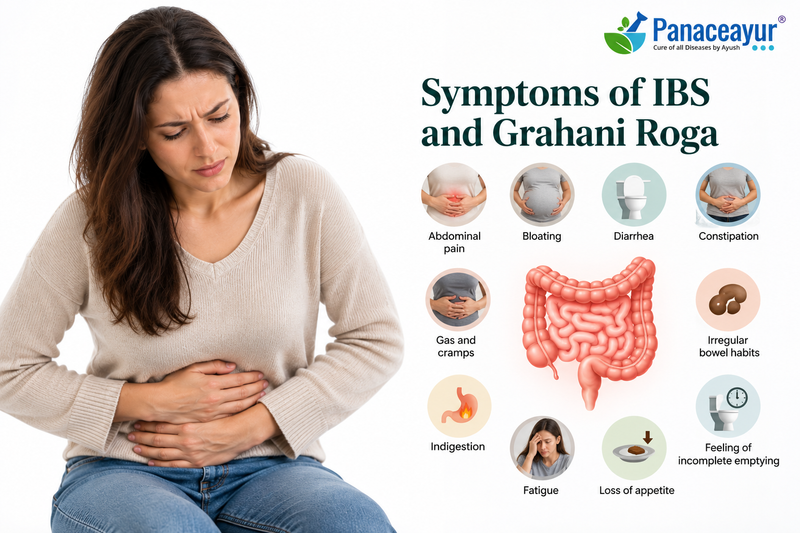
The clinical picture of Irritable Bowel Syndrome (IBS) and its Ayurvedic equivalent, Grahani Roga, is diverse and systemic. While the most visible symptoms involve bowel irregularities, deeper disturbances affect the liver, endocrine system, skin, and even mental well-being. Both Ayurveda and modern medicine describe IBS as a disorder of digestion, emotion, and metabolism.
6.1 Common Gastrointestinal Symptoms
- Altered bowel habits – Alternating constipation (IBS-C) and diarrhea (IBS-D), or mixed forms (IBS-M), represent the defining characteristic of the disease.
- Abdominal pain and cramping – Pain typically eases after defecation and worsens with anxiety, linked to Vata vitiation and visceral hypersensitivity [45].
- Bloating and distension – Occurs due to fermentation, microbial imbalance, and weakened Agni [47].
- Excessive flatulence and gurgling (Atopa) – Caused by disturbed Vata movement in the intestines [48].
- Mucus in stools – Common in Kaphaja Grahani and mixed IBS [53].
- Incomplete evacuation – A hallmark of Apana Vata dysfunction [55].
- Loss of appetite (Aruchi) – Indicates Agni Mandya and early Ama formation [47].
- Heaviness after meals – Reflects poor digestion and stagnation in Annavaha Srotas [52].
- Gurgling sounds (Jatharashabda) – Mentioned by Charaka as a sign of disturbed digestion [54].
6.2 Systemic and Extraintestinal Symptoms
- Fatigue and weakness – Due to Rasa Dhatu Kshaya and inadequate assimilation [46].
- Sleep disturbance – Especially in Vata-Pitta types with cortisol rhythm imbalance [71].
- Headache and migraine-like pain – A result of neurovascular hypersensitivity and gut–brain miscommunication [67].
- Anxiety and low mood – Reflect serotonin depletion and Ojas deficiency [56].
- Muscle stiffness and body ache – Often coexists with Majja Dhatu Kshaya [54].
- Cold extremities and poor circulation – Sign of Vata aggravation [48].
- Unexplained weight changes – Loss with Pitta dominance or gain with Kapha imbalance [52].
6.3 Endocrine and Hormonal Manifestations
- Menstrual irregularities – Result from Pitta and hormonal fluctuations; symptoms worsen around menstruation or menopause [74].
- Premenstrual bloating and pain – Caused by estrogen–progesterone imbalance [72].
- Thyroid dysfunction – Hypothyroidism causes constipation and fatigue, while hyperthyroidism causes loose stools [81].
- Adrenal fatigue – Leads to exhaustion, dizziness, and sugar cravings due to chronic stress and cortisol depletion [71].
- Hypoglycemic spells – Fluctuating insulin and ghrelin activity create sudden weakness [76].
6.4 Psychological and Neurobehavioral Symptoms
Ayurveda links Manovaha Srotas (psychological channels) with the colon, hence emotional stress directly affects gut rhythm.
- Irritability and emotional swings – Serotonin imbalance and Vata aggravation [50].
- Brain fog and poor memory – Majja Dhatu Kshaya and dysbiosis [54].
- Restlessness and palpitations – From Prana Vata disturbance and anxiety [45].
- Depressive states and loss of motivation – Seen in chronic Grahani with depleted Ojas [46].
6.5 Rare and Overlooked Symptoms
These secondary and lesser-known features often lead to misdiagnosis or delayed recognition.
- Recurrent mouth ulcers – Due to Pitta aggravation and mucosal inflammation.
- Dry mouth and altered taste (Mukha Shosha, Rasa Viparyaya) – Seen in Vataja Grahani [48].
- Joint stiffness or mild arthritis – From circulating Ama and inflammatory mediators [66].
- Skin eruptions and itching – Pitta-Kapha imbalance and toxin accumulation [52].
- Hair loss and brittle nails – Reflect Rasa and Rakta Dhatu depletion.
- Dizziness and blurred vision – Associated with Ojas Kshaya and poor cerebral perfusion [54].
- Chest heaviness and pseudo-cardiac pain (Udarashoola) – Caused by trapped Vata [49].
- Early-morning urgency with anxiety – Linked to cortisol peaks and circadian disruption [71].
- Intolerance to fermented foods and alcohol – Indicates Ama accumulation and microbial dysbiosis [64].
- Low-grade chronic fever – Result of Ama Jwara, often accompanying inflammatory Grahani [47].
6.6 Skin Manifestations and Hyperpigmentation
Though less discussed, hyperpigmentation and skin dullness can occur in long-standing IBS and Grahani Roga. The gut–liver–skin axis provides a scientific and Ayurvedic explanation for this manifestation.
- Adrenal and cortisol imbalance – Continuous HPA-axis stress increases ACTH and melanocyte-stimulating hormone, producing patchy darkening around eyes, neck, and hands [71].
- Gut–liver congestion – Ama and toxins absorbed from the intestine overload hepatic pathways, causing melasma-like pigmentation, especially over the cheeks and forehead [66].
- Nutrient malabsorption – Deficiencies of vitamin B12, folate, and zinc result in darkening of knuckles, lips, and oral mucosa [64].
- Pitta and Rakta Dushti – Ayurveda explains pigmentation as Tvak Vaivarnya, caused by disturbed Pitta and impure Rakta Dhatu due to weak Agni [47].
- Ojas depletion and stress – Manovaha Srotas imbalance produces dull, tired skin tone and dark circles in chronic cases [54].
Ayurveda notes that these pigmentation changes are reversible once Agni is strengthened, Ama eliminated, and Rakta Dhatu purified. Herbs like Manjistha, Sariva, and Guduchi restore skin tone, while Brahma Rasayana rejuvenates Ojas and hormonal balance.
6.7 Ayurvedic Summary of Symptom Pathways
- Agni Dushti → Ama Nirmiti (toxin accumulation)
- Ama → Srotorodha (blockage of microchannels)
- Srotorodha → Dosha Prakopa (functional derangement)
- Dosha Prakopa → Systemic symptoms across gut, mind, skin, and hormones
IBS and Grahani Roga thus represent a multisystemic disturbance of Agni, manifesting not only in the gut but also through the skin, endocrine glands, and emotional stability. The skin changes, including hyperpigmentation, are therefore external reflections of internal metabolic imbalance
Diseases and Conditions Commonly Associated With IBS
IBS rarely exists as a single digestive problem. In most patients, it develops along with other conditions involving digestion, hormones, immunity, nerves, or infections. When these are not identified, IBS treatment often gives only partial or temporary relief.
1. Functional Dyspepsia
Functional dyspepsia is one of the most common conditions seen alongside IBS. Patients often feel discomfort in the upper abdomen rather than the lower bowel. Symptoms include early fullness after eating, nausea, bloating in the upper stomach, heaviness, and loss of appetite. Many people feel full even after small meals. This indicates that digestion is weak from the very beginning of the digestive process, not only in the intestines.
When functional dyspepsia is present, food is not broken down properly. This poorly digested food irritates the gut lining and increases gas formation, pressure, and bowel irregularity. Over time, this worsens IBS symptoms such as abdominal pain, alternating stools, and food sensitivity.
Treating IBS alone without addressing upper digestive weakness often leads to partial improvement only. For lasting recovery, digestion must be strengthened from the stomach to the intestines. In Ayurveda, this reflects weakened Agni at multiple levels, which must be corrected systematically for complete gut healing.
2. Acid Reflux and GERD
Acid reflux and GERD commonly occur with IBS and share the same underlying digestive imbalance. Patients experience burning in the chest, sour taste in the mouth, frequent belching, throat irritation, or discomfort after meals. These symptoms occur because food movement through the digestive tract is poorly coordinated.
When gut motility is disturbed, stomach contents move in the wrong direction, allowing acid to rise upward. Nervous system imbalance and stress further worsen this process. Many IBS patients notice that reflux symptoms increase during periods of anxiety or irregular eating.
If acid reflux is ignored, IBS remains unstable. Acid irritation increases gut sensitivity and alters bowel movement patterns. Long term use of acid suppressing medicines may temporarily reduce burning but can weaken digestion further.
For true recovery, both upper and lower digestive function must be restored together. Calming the nervous system and improving digestive rhythm are essential for stabilizing IBS when reflux is present.
3. Small Intestinal Bacterial Overgrowth
Small intestinal bacterial overgrowth is one of the most important hidden causes of IBS symptoms. In this condition, excess bacteria grow in the small intestine where they do not normally belong. These bacteria ferment food early, producing gas, bloating, pressure, abdominal pain, diarrhea, constipation, or both.
Many patients with IBS experience bloating soon after eating, even with small meals. This is a strong sign of bacterial imbalance. Over time, bacterial overgrowth damages the gut lining, interferes with nutrient absorption, and increases food sensitivity.
If this condition is not identified, IBS treatment often fails repeatedly. Medicines may give temporary relief, but symptoms return because the underlying imbalance remains.
Effective management requires restoring healthy gut movement, improving digestive strength, and correcting microbial balance. Simply suppressing symptoms without addressing bacterial overgrowth leads to chronic relapse and frustration for patients.
4. Food Intolerances
Food intolerances are extremely common in people with IBS and are often overlooked. Patients may react to lactose, fructose, wheat proteins, or certain carbohydrates. Symptoms include bloating, cramps, loose stools, fatigue, brain fog, and abdominal discomfort after eating specific foods.
Unlike food allergies, food intolerances do not cause immediate severe reactions. Instead, symptoms appear gradually and repeatedly, making them difficult to identify without careful observation. Many patients continue eating trigger foods daily without realizing their role in worsening IBS.
When intolerant foods are consumed regularly, the gut becomes inflamed and hypersensitive. This increases bowel irregularity and pain even when medicines are taken correctly.
For IBS to improve, trigger foods must be identified and removed. No treatment can succeed if the digestive system is repeatedly irritated by incompatible foods. Personalized dietary correction is a core requirement for long term gut stability.
5. Anxiety and Panic Disorder
Anxiety and panic disorder are among the strongest contributors to IBS. Many patients notice that their bowel symptoms worsen during stress, worry, or emotional pressure. The gut and brain are closely connected, and emotional distress directly affects digestion, bowel movement, and pain perception.
When anxiety is present, the nervous system stays in a constant alert state. This alters gut movement, increases sensitivity, and disrupts digestive secretions. As a result, patients experience cramps, urgency, diarrhea, constipation, or bloating without a clear dietary trigger. Panic episodes can cause sudden bowel urgency, chest tightness, and abdominal discomfort.
Treating IBS without calming the nervous system often leads to failure. Digestive medicines alone cannot override ongoing anxiety signals sent to the gut. For lasting improvement, emotional regulation and stress control must be addressed together with digestive treatment. Restoring nervous system balance is essential for stabilizing bowel function and reducing IBS flare frequency.
6. Depression
Depression frequently accompanies long standing IBS, especially when symptoms persist for years. Chronic digestive discomfort affects mood, motivation, confidence, and emotional well being. At the same time, depression itself alters gut chemistry and nervous signaling, worsening digestive symptoms.
The gut produces many chemical messengers that influence mood. When digestion is weak and inflammation is present, these signals become imbalanced. This can lead to low mood, irritability, lack of interest, fatigue, and sleep disturbance. Patients may feel stuck in a cycle where digestive symptoms worsen emotional health and emotional distress worsens digestion.
Ignoring depression delays IBS recovery. Even if bowel symptoms improve slightly, they tend to return when emotional health remains untreated. Supporting mental well being alongside gut healing is necessary for complete recovery. When mood improves, digestion often stabilizes naturally and symptom intensity reduces.
7. Sleep Disorders
Sleep disorders are extremely common in IBS patients and play a major role in symptom persistence. Poor sleep weakens digestion, increases pain sensitivity, and disrupts hormonal rhythm. Patients may have difficulty falling asleep, frequent awakenings, or unrefreshing sleep.
The digestive system follows a daily rhythm. When sleep timing is irregular, digestion loses its natural coordination. This leads to bloating, constipation, diarrhea, and abdominal discomfort. Poor sleep also increases stress hormones, which further irritate the gut.
Many patients try to treat IBS without correcting sleep habits. This limits recovery. Even the best digestive treatment works poorly when sleep remains disturbed. Restoring proper sleep timing and quality helps calm the nervous system, improves gut movement, and reduces pain sensitivity. Stable sleep is a foundational requirement for long term IBS improvement.
8. Polycystic Ovary Syndrome
Polycystic ovary syndrome is commonly seen in women with IBS. Hormonal imbalance, insulin resistance, and low grade inflammation affect gut movement and sensitivity. Many women with PCOS experience bloating, constipation, diarrhea, or abdominal discomfort that fluctuates with their menstrual cycle.
Hormones strongly influence digestion. Changes in estrogen and progesterone alter bowel rhythm and pain perception. Insulin resistance can slow digestion and increase inflammation. When PCOS is present, IBS symptoms often become unpredictable and more difficult to control.
Treating IBS alone without addressing hormonal imbalance often leads to incomplete results. Digestive symptoms may improve temporarily but return with hormonal fluctuations. Supporting hormonal balance, metabolic health, and digestive strength together is necessary for lasting relief. In women with PCOS, IBS treatment must always consider endocrine health.
9. Chronic Fatigue Syndrome
Chronic fatigue syndrome is frequently seen in patients with long standing IBS. These individuals feel exhausted even after adequate rest and often struggle with poor stamina, mental fog, and reduced daily functioning. This fatigue is not simply due to poor sleep or stress. It reflects deeper immune, hormonal, and nervous system imbalance.
When digestion is weak for a long time, nutrient absorption becomes impaired and inflammation increases. This drains energy reserves and disrupts cellular metabolism. The nervous system also becomes overworked, leading to constant tiredness and reduced stress tolerance. Many patients notice that IBS symptoms flare when fatigue worsens.
Treating IBS without addressing chronic fatigue leads to slow or incomplete recovery. Energy must be restored along with digestion. When vitality improves, bowel function often becomes more stable and symptom intensity decreases. Addressing fatigue is essential for full and lasting IBS improvement.
10. Chronic Viral Reactivation Including Herpes CMV and EBV
Chronic viral reactivation is an important but often ignored contributor to IBS. Many patients carry latent viruses such as herpes simplex virus cytomegalovirus and Epstein Barr virus. These viruses may remain silent for years but can reactivate under stress, immune weakness, or hormonal imbalance.
When reactivated, these viruses affect gut immunity, nervous signaling, and inflammation. Patients may experience persistent bloating, bowel irregularity, abdominal pain, anxiety, and fatigue without clear laboratory findings. Digestive treatment alone often fails because the underlying immune stress remains active.
In some cases, viral burden keeps the gut in a constant low grade inflammatory state. This delays healing and increases sensitivity. Supporting immune strength and restoring systemic resilience are necessary for recovery. IBS often stabilizes only when viral related immune stress is addressed alongside digestive therapy.
11. Iron Deficiency Anemia
Iron deficiency anemia is common in people with long standing IBS. Poor digestion and absorption reduce iron uptake, while chronic inflammation interferes with iron metabolism. Symptoms include fatigue, weakness, shortness of breath, hair fall, dizziness, and poor concentration.
When anemia is present, gut healing slows significantly. The intestinal lining regenerates poorly, and energy levels remain low. Many patients continue to experience IBS symptoms despite correct digestive treatment because anemia is not corrected.
Treating IBS without restoring iron levels leads to incomplete results. Supporting absorption and rebuilding blood quality are essential steps. When iron status improves, patients often notice better stamina, improved digestion, and reduced bowel sensitivity. Addressing anemia is a key part of comprehensive IBS care.
12. Vitamin B12 and Vitamin D Deficiency
Vitamin deficiencies are frequently found in chronic IBS. Vitamin B12 deficiency affects nerve health and worsens gut sensitivity, pain, and irregular bowel movements. Patients may experience tingling, numbness, fatigue, brain fog, and mood changes.
Vitamin D deficiency weakens immune regulation and increases inflammation. Low vitamin D levels are associated with increased pain sensitivity, frequent infections, and poor gut barrier function. Many IBS patients have low vitamin D due to poor absorption and limited sunlight exposure.
Without correcting these deficiencies, IBS symptoms often persist despite treatment. Nutritional restoration supports nerve stability, immune balance, and tissue healing. When vitamin levels normalize, digestion becomes more resilient and symptom frequency reduces. Correcting deficiencies is essential for long term IBS recovery.
Additional Conditions That Can Worsen IBS
13. Migraine and Tension Headaches
Many IBS patients suffer from frequent headaches triggered by food, stress, or sleep disturbance. This reflects gut brain imbalance. When headaches are not addressed, digestive symptoms often remain unstable.
14. Fibromyalgia
Widespread muscle pain and tenderness commonly overlap with IBS. Both conditions share altered pain processing and nervous system sensitivity. Treating digestion alone rarely resolves symptoms fully.
15. Mast Cell Activation Disorders
Some patients react strongly to foods and medications, experiencing abdominal pain, diarrhea, flushing, palpitations, and anxiety. Excess mast cell activity keeps the gut hypersensitive.
16. Histamine Intolerance
Impaired histamine breakdown leads to bloating, loose stools, headaches, skin reactions, and heart palpitations after meals. Many IBS patients unknowingly consume histamine rich foods daily.
17. Bile Acid Malabsorption
Excess bile acids entering the colon cause chronic diarrhea, urgency, and burning sensation. This condition is often mistaken for IBS diarrhea type.
18. Exocrine Pancreatic Insufficiency
Low digestive enzyme production results in poor fat digestion, bloating, loose stools, weight loss, and nutrient deficiency. Mild forms are frequently missed.
19. Interstitial Cystitis
Chronic bladder pain and urinary frequency often coexist with IBS due to shared pelvic nerve sensitivity.
20. Autoimmune Thyroid Disease
Thyroid imbalance alters gut motility and sensitivity. Even mild dysfunction can significantly worsen IBS symptoms.
21. Metabolic Syndrome and Insulin Resistance
Blood sugar instability affects gut movement, inflammation, and microbiota balance, making IBS harder to control.
22. Post Infectious Digestive Syndrome
IBS may begin after food poisoning. Persistent nerve sensitization and immune activation remain even after infection clears.
23. Autonomic Nervous System Dysfunction
Imbalance in automatic nerve control disrupts bowel rhythm and blood flow. Patients may feel dizziness, weakness, or palpitations along with digestive symptoms.
24. Small Fiber Neuropathy
Damage to small nerves alters gut pain perception and bowel coordination, leading to severe sensitivity and unpredictable symptoms.
25. Connective Tissue Disorders
Joint laxity and tissue weakness can affect gut support and nerve signaling, contributing to chronic digestive instability.
26. Chronic Low Grade Inflammation
Ongoing subtle inflammation keeps the intestines hypersensitive even when routine tests appear normal.
27. Medication Induced Gut Dysfunction
Long term use of antibiotics, acid suppressants, painkillers, antidepressants, or hormonal drugs alters gut flora and motility.
28. Heavy Metal or Environmental Toxin Exposure
Toxins disrupt gut bacteria, immunity, and nerve function, leading to persistent digestive symptoms.
29. Electrolyte Imbalance and Dehydration
Low fluids or electrolyte imbalance worsen constipation, fatigue, and nerve signaling.
30. Nutrient Absorption Disorders
Poor absorption of magnesium, zinc, selenium, or essential fatty acids aggravates bowel irregularity and anxiety.
31. Circadian Rhythm Disruption
Late nights, shift work, or frequent travel disturb digestive timing and bowel regularity.
32. Pelvic Floor Dysfunction
Poor coordination of pelvic muscles causes constipation, incomplete evacuation, and pain mistaken as IBS alone.
33. Chronic Psychological Trauma
Past emotional trauma permanently sensitizes the gut brain axis, causing severe symptoms even when tests are normal.
Modern Management and Limitations

The contemporary management of Irritable Bowel Syndrome (IBS) primarily focuses on symptom alleviation rather than permanent correction of underlying physiological dysfunction. Modern pharmacology addresses the gut–brain axis, motility, and microbial imbalance through drugs that provide temporary comfort but rarely restore systemic equilibrium. Ayurveda contrasts this with a root-cause approach focused on Agni, Ojas, and Srotas balance.
7.1 Pharmacological Management
1. Antispasmodics
Medications such as dicyclomine, hyoscine, and mebeverine are commonly prescribed to reduce intestinal spasms and pain. These agents work by relaxing smooth muscle and suppressing hypersensitive visceral responses. Although they offer temporary relief, prolonged use may lead to constipation, dry mouth, blurred vision, and fatigue [78].
2. Probiotics and Microbiome Therapy
Probiotics are widely used to restore intestinal microbial balance. Strains such as Lactobacillus plantarum, Bifidobacterium infantis, and Saccharomyces boulardii have shown moderate benefit in regulating stool consistency and reducing bloating [64]. However, results remain inconsistent, as probiotic effects depend on strain-specific colonization and patient microbiota variability. In post-infectious IBS, reestablishing microbial homeostasis is often temporary unless dietary and stress-related factors are corrected [66].
3. Antidepressants (SSRIs and TCAs)
Selective serotonin reuptake inhibitors (SSRIs) such as fluoxetine and sertraline, and tricyclic antidepressants (TCAs) such as amitriptyline, are prescribed for IBS patients with anxiety or pain-dominant symptoms. They modulate gut motility through serotonin pathways and dampen visceral pain signaling [50]. Yet, the dependence on mood-altering drugs often masks deeper dysbiosis and endocrine dysfunction [71]. Long-term use may lead to lethargy, hormonal disruption, and weight fluctuation.
4. Hormone Therapy for Endocrine Imbalance
For patients with thyroid, cortisol, or reproductive hormone abnormalities, hormone therapy is sometimes recommended.
- Thyroid medications (levothyroxine, carbimazole) are used to regulate bowel rhythm in hypothyroid or hyperthyroid-associated IBS [81].
- Cortisol modulation via adrenal support or replacement therapy is attempted in cases of chronic stress or adrenal fatigue [71].
However, these interventions manage secondary dysfunction rather than correcting the root disturbance of the gut–brain–endocrine axis.
7.2 Limitations of Modern Treatment
Despite pharmacological progress, IBS remains a functional disorder without curative therapy in mainstream medicine. The limitations lie in the mechanistic approach that treats symptoms in isolation rather than as part of an interconnected system.
1. Symptom Suppression Without Root-Cause Correction
Modern drugs relax muscles, alter neurotransmitters, or modify microbial populations temporarily, but they do not restore Agni (digestive fire) or cellular metabolism. Once medication is discontinued, symptoms typically resurface within weeks [56].
2. Side Effects and Dependency
Antidepressants cause mood blunting, fatigue, and gastrointestinal upset. Antispasmodics induce constipation, and prolonged probiotic use may cause bacterial overgrowth if gut integrity remains weak [66].
3. Neglect of Mind–Body–Gut Integration
Most conventional approaches ignore the psychological and endocrine factors that Ayurveda identifies as Manovaha Srotas and Agni–Ojas interaction. Modern psychiatry recognizes the gut–brain axis, yet integrated protocols remain limited [67].
4. Lack of Personalization
IBS treatment guidelines are generalized, whereas Ayurveda tailors therapy to Dosha predominance and Prakriti. Modern regimens often overlook this individuality, resulting in non-responsive cases [46].
5. Recurrence Upon Discontinuation
Because modern medicine primarily manages symptoms, recurrence rates exceed 70% after medication withdrawal [80]. Patients often develop chronic reliance on drugs, forming a loop of temporary relief and relapse.
Ayurvedic Treatment Protocol for IBS (Grahani Roga)

Ayurveda offers a comprehensive, multi-phase approach aimed at root-cause eradication rather than symptomatic relief. The treatment restores the strength of Agni (digestive fire), clears Ama (toxins), rebalances Doshas, and rejuvenates Ojas (vital energy). The protocol integrates Shodhana (detoxification), Shamana (pacification), Rasayana (rejuvenation), and Pathya–Apathya (diet and lifestyle discipline) to achieve complete systemic restoration.
A. Shodhana Therapy (Detoxification)
Charaka Samhita and Ashtanga Hridaya emphasize that purification is essential before pacification to eliminate deeply seated Ama and reawaken Agni. For IBS or Grahani Roga, mild yet sequential detox methods are employed depending on patient strength and Dosha predominance.
1. Snehapana (Internal Oleation)
The process begins with the administration of medicated ghee or castor oil for internal lubrication and toxin mobilization.
- Ghee: For Vata–Pitta imbalance; nourishes intestinal mucosa and calms irritability.
- Castor oil: For Pitta–Kapha type with heaviness or mucous accumulation.
This phase enhances tissue permeability and prepares the body for elimination [47].
2. Virechana (Therapeutic Purgation)
A controlled purgation using classical formulations such as Trivrit Lehyam or Avipattikar Churna removes accumulated Pitta and Ama from the small intestine [52].
- Trivrit Lehyam is ideal for heat-dominant cases with acidity or burning.
- Avipattikar Churna suits mixed types with alternating stool patterns.
This therapy resets gut motility and improves bile and enzyme function, analogous to microbiome resetting in modern gastroenterology [66].
3. Basti Karma (Medicated Enema Therapy) — Optional but Highly Effective
Regarded as the supreme therapy for Vata-dominant disorders like IBS-C and mixed types. It corrects irregular peristalsis, strengthens colon walls, and restores enteric nerve coordination [48].
- Anuvasana Basti: Oil-based enema using Ashwagandha Taila lubricates and nourishes colon tissue.
- Niruha Basti: Decoction-based enema with Dashamoola Kwatha eliminates residual Ama, calms inflammation, and harmonizes gut–brain signaling.
Classical Reference: Charaka Samhita, Siddhi Sthana 1/27–30 — “Among all therapies, Basti holds supreme power to balance Vata and restore systemic integrity.”
B. Shamana Therapy (Pacification)
After detoxification, the next stage stabilizes Agni, neutralizes residual Ama, and restores intestinal rhythm.
1. Deepana–Pachana (Digestive Stimulation & Metabolic Correction)
Herbs that kindle Agni and dissolve toxins:
- Pippali (Piper longum): Enhances nutrient absorption and modulates gut-brain signaling [45].
- Chitraka (Plumbago zeylanica): Potent digestive stimulant for sluggish Kapha conditions [47].
- Shunthi (Zingiber officinale): Regulates motility and reduces bloating via anti-inflammatory pathways [64].
2. Grahani Rasayana (Tonic for Intestinal Strength)
Classical formulations that directly address Grahani Dushti and restore intestinal tone:
- Dadimadi Avaleha: Antioxidant-rich digestive tonic that balances Vata–Pitta and reduces post-meal discomfort.
- Kutajavaleha: Astringent and antimicrobial, beneficial in Pittaja and Kaphaja Grahani [66].
- Brahma Rasayana: Supreme rejuvenator mentioned in Charaka Samhita (Chikitsa Sthana 1/1–4); enhances Majja Dhatu (nervous tissue) and harmonizes gut–brain axis [46].
3. Herbo–Mineral Combinations
For chronic and refractory IBS, Bhasma therapy helps restore enzymatic, endocrine, and microbial equilibrium.
- Abhrak Bhasma (Shataputi): Regulates peristalsis and acts as a neuroendocrine rejuvenator [54].
- Jasad Bhasma: Rich in bioavailable zinc nanoparticles; improves mucosal repair and immunity [64].
- Mukta Shukti Bhasma: Alkaline, cooling, and effective in hyperacidity and Pittaja Grahani [52].
- Optional Rasayanas: Swarna Bhasma and Heerak Bhasma for endocrine insufficiency and chronic fatigue [46].
C. Rasayana Therapy (Rejuvenation Phase)
The Rasayana phase rebuilds tissues, regulates hormones, and stabilizes the gut–brain–endocrine connection.
- Ashwagandha (Withania somnifera): Adaptogen that reduces cortisol, alleviates stress-related IBS, and supports adrenal function [71].
- Shatavari (Asparagus racemosus): Balances estrogen and improves mucosal immunity in women [74].
- Guduchi (Tinospora cordifolia): Restores immune tolerance and reduces chronic inflammation [66].
- Brahmi and Mandukaparni: Enhance serotonin regulation and mental calmness, crucial in Manovaha Srotas disorders [54].
- Triphala: Detoxifies intestinal walls and supports healthy microbiota diversity [64].
Classical Note: Sushruta Samhita, Chikitsa Sthana 33/4 — “Rasayana rejuvenates what has been exhausted, enhances vitality, and reawakens the strength of Agni.”
D. Pathya–Apathya (Diet and Lifestyle Guidelines)
Long-term success in IBS management depends on disciplined adherence to diet and daily regimen (Dinacharya).
Recommended:
- Warm, freshly cooked meals with ghee to soothe Agni.
- Takra Kalpana (buttermilk preparations) for digestion and microbiome balance [47].
- Light grains, Moong dal, cumin-fennel water, and cooked vegetables.
Avoid:
- Cold, raw, or fermented foods that increase Ama.
- Red chili, sour curd, alcohol, and refined sugar, all of which aggravate Pitta and disturb gut flora [52].
Lifestyle:
- Early dinner (before 8 PM) and 7–8 hours of sleep to stabilize circadian rhythm [71].
- Daily Yoga Asanas like Vajrasana and Pavanamuktasana for gut motility.
- Pranayama and meditation to calm Prana Vata and regulate neuroendocrine tone.
Dadimadi Avaleha (Main Medicine)
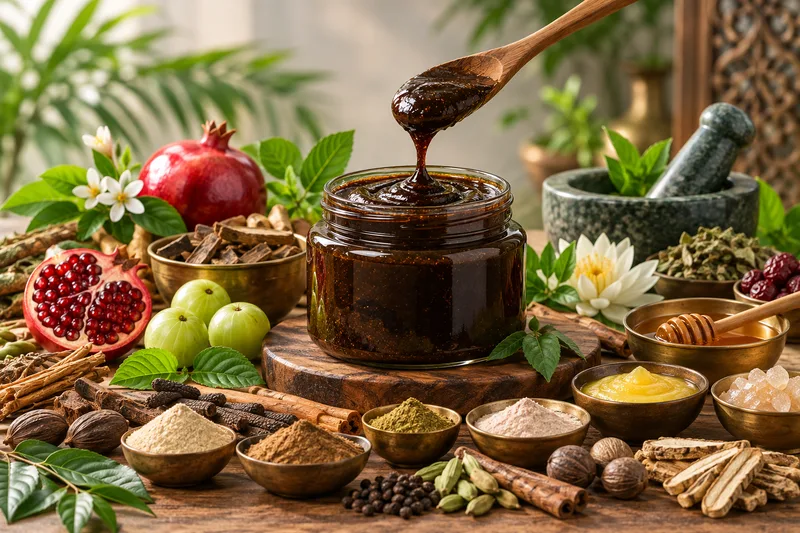
Dadimadi Grahani Rasayana Avaleha is a customized Ayurvedic formulation designed for IBS patterns that resemble Grahani Roga, especially bloating, weak digestion, abdominal discomfort, irregular stool, mucus tendency, alternating constipation and diarrhea, poor appetite, fatigue and stress-linked bowel disturbance.
This formulation is inspired by the classical Grahani treatment principles explained in Charaka Samhita, Chikitsa Sthana, Chapter 15, Grahani Chikitsa, where Agni, Ama, Grahani weakness and abnormal digestion are described as central to chronic digestive disorders. Charaka Samhita Online identifies this chapter as the management of Grahani and explains digestion, Agni, Ama formation, Grahanidosha and treatment principles. Caraka Samhita Online
This is not a ready-made market Avaleha and not a home-remedy formula. It is a physician-supervised, patient-specific formulation prepared according to IBS type, Agni, stool pattern, age, strength, chronicity, reports, comorbidities, medicine tolerance and diet response.
Classical Textbook Basis
| Textbook | Section / Chapter | Clinical relevance |
|---|---|---|
| Charaka Samhita | Chikitsa Sthana, Chapter 15, Grahani Chikitsa | Agni, Ama, Grahani Dosha, Deepana, Pachana, Takra use, diet and staged management |
| Ashtanga Hridaya | Chikitsa Sthana, Chapter 10, Grahani Chikitsa | Vataja, Pittaja, Kaphaja and Sannipataja Grahani patterns |
| Bhavaprakasha | Madhyama Khanda, Grahani Rogadhikara | Grahani, Agni weakness, diet and digestive formulations |
| Bhaishajya Ratnavali | Grahani Rogadhikara | Grahani formulations, Kutaja-based and Dadima-based digestive preparations |
| Sharangadhara Samhita | Madhyama Khanda, Avaleha Kalpana | Avaleha preparation method, paka, prakshepa and final consistency |
| Rasa Ratna Samucchaya / Rasa Tarangini | Bhasma and Rasayana sections | Shodhana, Marana, bhasma preparation and herbo-mineral safety principles |
Before publication, cross-check verse numbers from the exact printed editions you use in your clinic, because verse numbering may differ between editions.
Classical Principle Behind the Formula
Sanskrit reference from Charaka Samhita, Chikitsa Sthana, Chapter 15
yadannaṁ dehadhātvojobala-varṇādi-poṣakam |
tatrāgnir hetur āhārān na hy apakvād rasādayaḥ ||
Meaning: Food nourishes body tissues, Ojas, strength and complexion only when Agni functions properly. If food is not digested properly, nutritive essence cannot be formed.
This is the foundation of IBS Ayurvedic treatment. The aim is not only to stop loose stool, constipation or gas temporarily. The aim is to restore Agni, stabilize bowel rhythm, reduce Ama, support mucosal strength and rebuild digestive resilience.
Duration, Dose and Finished Quantity
| Item | Clinical format |
|---|---|
| Duration | 30 days |
| Dose | 15 g twice daily after meals |
| Total daily intake | 30 g per day |
| Finished Avaleha quantity | 900 g |
| Anupana | Lukewarm water, or Takra if suitable |
| Extension | 60–90 days only under doctor supervision in chronic IBS or long-standing Grahani |
Takra should not be given blindly. It is avoided or modified in patients with dairy intolerance, severe acidity, active diarrhea, bleeding, fever, severe Pitta symptoms or known intolerance.
Core Decoction Base for 900 g Finished Avaleha
| Ingredient | Botanical / classical identity | Quantity | Clinical role |
|---|---|---|---|
| Dadima | Punica granatum | 160 g | Grahi, Deepana, Pitta-Vata balancing, supports appetite and stool stability |
| Bilva | Aegle marmelos | 80 g | Grahi, useful in loose stool, mucus and weak bowel tone |
| Kutaja Tvak | Holarrhena antidysenterica / H. pubescens bark | 60 g | Classical Atisara-Grahani herb, supports diarrhea-predominant patterns |
| Indrayava | Kutaja seed | 40 g | Grahi, stool-stabilizing, useful in chronic loose stool tendency |
| Musta | Cyperus rotundus | 50 g | Deepana-Pachana, reduces Ama, gas, abdominal heaviness and irregular digestion |
| Ativisha | Aconitum heterophyllum | 20 g | Classical digestive and anti-diarrheal support when purified and correctly identified |
| Lodhra | Symplocos racemosa | 30 g | Grahi, mucosal support, useful in mucus and discharge tendency |
| Nagakesara | Mesua ferrea | 20 g | Grahi, Pitta-stabilizing, supports chronic bowel weakness |
| Mocharasa | Bombax malabaricum exudate | 15 g | Astringent, stool-stabilizing, useful in mucus and chronic Grahani |
| Amalaki | Emblica officinalis | 50 g | Rasayana, Pitta balancing, supports mucosal strength |
| Draksha | Vitis vinifera | 60 g | Nourishing, mild Pitta-Vata calming, supports weakness and dryness |
| Guduchi | Tinospora cordifolia | 50 g | Rasayana, immune-gut support, useful in chronic inflammatory tendency |
| Shatavari | Asparagus racemosus | 40 g | Mucosal nourishment, Pitta-Vata calming, useful in gut sensitivity |
| Bala | Sida cordifolia | 25 g | Vata calming, strength support, useful in chronic weakness |
| Ushira | Vetiveria zizanioides | 20 g | Cooling, Pitta-pacifying, useful in burning and heat-dominant IBS |
| Parpataka | Fumaria indica / classical Parpataka | 20 g | Pitta-Ama support, useful in heat, coated tongue and low appetite |
Prepare these as a decoction. Add water according to classical Kwatha method, boil gently, reduce, filter and use the concentrated liquid for Avaleha Paka.
Fine Herbal Powder Layer
These herbs are added as fine powders after the Avaleha base thickens. This layer strengthens the digestive action and makes the formula more suitable for chronic IBS and Grahani.
| Ingredient | Botanical / classical identity | Quantity | Clinical role |
|---|---|---|---|
| Shunthi | Zingiber officinale | 10 g | Reduces gas, Ama and sluggish digestion |
| Maricha | Piper nigrum | 8 g | Deepana, supports bioavailability and Kapha-Ama correction |
| Pippali | Piper longum | 12 g | Deepana, Rasayana, supports absorption and gut–brain sensitivity |
| Chitraka | Plumbago zeylanica | 12 g | Strong Agni stimulant; use cautiously in Pitta and acidity |
| Pippalimula | Root of Piper longum | 10 g | Vata-Kapha correction, supports abdominal gas and colic tendency |
| Shweta Jeeraka | Cuminum cyminum | 15 g | Carminative, appetite support, reduces bloating |
| Krishna Jeeraka | Carum carvi / Bunium persicum | 10 g | Vata-Kapha digestion support |
| Ajamoda | Trachyspermum roxburghianum | 8 g | Gas, colic and sluggish digestion support |
| Dhanyaka | Coriandrum sativum | 15 g | Mild Deepana with Pitta balance |
| Hingu | Ferula asafoetida | 2 g | Vata anulomana, gas and abdominal spasm support |
| Dadima Tvak Churna | Pomegranate rind | 20 g | Grahi, useful in loose stool and mucus |
| Haritaki | Terminalia chebula | 15 g | Vata anulomana, bowel rhythm support |
| Bibhitaki | Terminalia bellirica | 10 g | Kapha-Ama correction |
| Amalaki Churna | Emblica officinalis | 15 g | Pitta balance and Rasayana effect |
| Yashtimadhu | Glycyrrhiza glabra | 20 g | Mucosal soothing, Pitta balance, gut comfort |
| Vidanga | Embelia ribes | 10 g | Ama, Krimi and gut dysbiosis tendency support |
| Haridra | Curcuma longa | 10 g | Inflammatory tendency, mucosal support |
| Brahmi | Bacopa monnieri | 15 g | Gut–brain support, stress-linked IBS |
| Mandukaparni | Centella asiatica | 15 g | Manasika support, gut–brain calming |
| Jatamansi | Nardostachys jatamansi | 5 g | Stress, sleep and Vata calming support |
| Jatiphala | Myristica fragrans | 3 g | Grahi and bowel-stabilizing; avoid excess due to heating and constipating action |
Chitraka, Hingu, Jatiphala and Trikatu should be adjusted according to Pitta, acidity, burning, loose stool severity and patient tolerance.
Mineral and Bhasma Rasayana Layer
This layer makes the formulation stronger for chronic, relapsing, long-standing IBS with weakness, poor absorption, gut sensitivity, acidity, fatigue, Vata-Pitta instability or recurrent relapse. These ingredients are not for self-use.
| Mineral / Rasayana ingredient | Quantity for 900 g batch | Approximate daily exposure at 30 g/day | Clinical role |
|---|---|---|---|
| Abhraka Bhasma, Shataputi or Sahasraputi | 3 g | 100 mg/day | Rasayana, Agni support, chronic weakness, Vata-Pitta stabilization |
| Yashada Bhasma | 1.5 g | 50 mg/day | Mucosal repair, immunity, gut barrier support |
| Mukta Shukti Bhasma | 3 g | 100 mg/day | Hyperacidity, burning, Pitta balance |
| Pravala Pishti | 3 g | 100 mg/day | Cooling, acidity, Pitta-related gut irritation |
| Godanti Bhasma | 3 g | 100 mg/day | Pitta calming, burning, heat and inflammatory tendency |
| Shankha Bhasma | 2 g | 67 mg/day | Acid-peptic support, appetite and digestive comfort |
| Kapardika Bhasma | 1.5 g | 50 mg/day | Grahani with acidity, sour belching and weak digestion |
| Akika Pishti | 2 g | 67 mg/day | Cooling, Pitta-Vata calming, stress-linked heat symptoms |
| Suvarna Makshika Bhasma | 1 g | 33 mg/day | Weakness, Pandu tendency, chronic digestive depletion; only when indicated |
| Swarna Bhasma | 300 mg | 10 mg/day | Premium Rasayana, Ojas support, chronic relapse tendency |
| Heerak Bhasma | 30 mg | 1 mg/day | Deep Rasayana support in selected depleted cases only |
| Gandhak Rasayana | 3 g | 100 mg/day | Krimi, mucus, gut dysbiosis tendency; only when suitable |
This mineral layer must be used only when all ingredients are properly purified, processed and tested. Abhraka Bhasma research describes traditional preparation through Shodhana and repeated Puta/Marana and also highlights that safety depends on dose, manufacturing quality, elemental profile and batch consistency; higher-dose concerns and dose-dependent toxicity signals make supervision essential. Frontiers
Sweet Base and Avaleha Medium
| Ingredient | Quantity | Role |
|---|---|---|
| Sharkara, Mishri or Guda | 300 g or adjusted as needed | Avaleha base, palatability, preservation |
| Cow ghee | 60 g | Snehana, Vata-Pitta calming, mucosal support |
| Honey | 60 g | Yogavahi, Grahi support, added only after cooling |
| Filtered decoction concentrate | As prepared | Main liquid base |
| Final adjustment | Quantity sufficient to 900 g | Finished 30-day Avaleha |
Honey should never be added while the Avaleha is hot. Add honey only when the formulation becomes lukewarm.
Preparation Method
Prepare the decoction using Dadima, Bilva, Kutaja, Indrayava, Musta, Ativisha, Lodhra, Nagakesara, Mocharasa, Amalaki, Draksha, Guduchi, Shatavari, Bala, Ushira and Parpataka. Boil gently, reduce, filter and keep the concentrated decoction ready.
Add Sharkara, Mishri or Guda to the filtered decoction and heat on mild flame until the mixture reaches Avaleha consistency. The texture should become semisolid, smooth and stable without burning.
After removing from heat and allowing partial cooling, add the fine herbal powders. Mix continuously until the powders are uniformly incorporated.
When the Avaleha becomes lukewarm, add the purified and tested bhasma/pishti layer. Mix slowly and uniformly so that the mineral layer disperses evenly throughout the batch.
Add ghee during the final mixing stage. Add honey only after the Avaleha cools sufficiently. Store the finished formulation in a sterile, airtight glass container.
Expected Clinical Actions
Dadimadi Grahani Rasayana Avaleha is designed to support Agni, reduce Ama, regulate bowel rhythm, decrease bloating, reduce gas, stabilize loose stool tendency, support constipation-dominant Vata patterns, calm gut sensitivity and improve food tolerance.
In IBS-D and mucus-dominant Grahani, the Grahi herbs such as Dadima, Bilva, Kutaja, Indrayava, Lodhra, Mocharasa and Nagakesara help stabilize bowel movements.
In IBS-C and gas-dominant patterns, Hingu, Jeeraka, Ajamoda, Shunthi, Pippali, Maricha, Haritaki and ghee support Vata anulomana and reduce abdominal gas.
In IBS-M, the formulation should be adjusted carefully because constipation and diarrhea alternate. Strong Grahi herbs may be reduced when constipation dominates, and stronger Deepana herbs may be reduced when burning or diarrhea dominates.
In stress-linked IBS, Brahmi, Mandukaparni, Jatamansi, Guduchi, Shatavari, Abhraka Bhasma, Swarna Bhasma and Heerak Bhasma support the gut–brain axis, Ojas and Vata-Pitta stability.
Modern Research Support
| Ingredient group | Modern evidence summary |
|---|---|
| Dadima / pomegranate | Pomegranate contains polyphenols with anti-inflammatory and antimicrobial activity, which supports its traditional use in gut and mucosal health. |
| Bilva / Aegle marmelos | Reviews describe the unripe fruit pulp as relevant to diarrhea models, including effects on bacterial colonization and enterotoxin-related mechanisms. PubMed Central (PMC) |
| Kutaja / Holarrhena | Modern reviews and experimental studies support its traditional role in diarrhea and gastrointestinal disorders. PubMed |
| Musta / Cyperus rotundus | Research describes Cyperus rotundus as traditionally used for stomach and bowel disorders, with reported anti-inflammatory and antioxidant activities. PubMed |
| Yashtimadhu / licorice | Licorice has gastrointestinal and anti-inflammatory relevance, but safety matters because high-dose or prolonged use may cause hypertension and hypokalemia. PubMed |
| Abhraka Bhasma | Modern work describes Abhraka Bhasma as a mica-based herbo-mineral preparation made through Shodhana and Marana; available evidence is mainly preclinical, and dose/manufacturing quality remain critical safety factors. Frontiers |
Patient Selection
This formulation may be considered in patients with chronic IBS, Grahani Roga, recurrent bloating, poor appetite, food sensitivity, alternating stool, fatigue, mucus tendency, post-meal heaviness, abdominal gas and stress-linked bowel disturbance.
It should be modified in patients with diabetes, fatty liver, chronic kidney disease, pregnancy, lactation, active bleeding, acute infection, severe diarrhea, severe constipation, inflammatory bowel disease, colon cancer suspicion, celiac disease, uncontrolled thyroid disease, or current use of multiple medicines.
Safety Warning
Dadimadi Grahani Rasayana Avaleha must not be purchased from the open market, self-prepared at home, or consumed without supervision of a qualified Ayurvedic doctor.
The mineral ingredients must be used only after proper Shodhana, Marana, particle-size control and laboratory testing for heavy metals, microbial load, aflatoxins, pesticides and adulterants.
Patients with red-flag symptoms such as rectal bleeding, unexplained weight loss, anemia, fever, night-time diarrhea, persistent vomiting, black stool or severe abdominal pain must first undergo medical evaluation before starting IBS Ayurvedic treatment.
Important Medical Warning and Mandatory Patient Advisory
A patient must not buy Ayurvedic medicines for IBS from the open market and must never prepare or consume these medicines without supervision of a qualified Ayurvedic doctor. IBS is not a single organ disorder. It is a complex multi system condition involving the digestive system nervous system immune system endocrine axis and in many patients chronic infections and metabolic disturbances. When medicines are purchased directly from the market or used without medical supervision treatment usually fails and symptoms frequently relapse.
Why market bought IBS medicines fail in real clinical practice

1. Age of the patient
Digestive strength tissue recovery immune resilience and hormonal balance vary with age. Younger patients often show stress driven and nerve mediated IBS. Middle aged patients commonly have hormonal metabolic or viral contributors. Older patients usually have weak digestion tissue depletion and dominant Vata imbalance. Market medicines do not adjust formulation strength dosage or Rasayana depth according to age.
2. Duration of IBS
Short duration IBS requires digestive correction and mental stabilization. Long standing IBS involves gut barrier damage immune exhaustion endocrine imbalance and nervous system hypersensitivity. Generic medicines cannot reverse deep seated Grahani pathology.
3. Presence of other digestive disorders
IBS frequently coexists with functional dyspepsia acid reflux small intestinal bacterial overgrowth food intolerances and pelvic floor dysfunction. Treating IBS alone without addressing these conditions leads to incomplete recovery.
4. Nutritional deficiencies
Iron deficiency vitamin B12 deficiency and vitamin D deficiency are common in IBS due to poor absorption and chronic inflammation. These deficiencies worsen fatigue nerve sensitivity and gut motility and must be corrected for treatment success.
5. Hormonal and endocrine disorders
IBS commonly accompanies hypothyroidism cortisol imbalance insulin resistance polycystic ovary syndrome menstrual irregularities and perimenopausal hormonal changes. Market medicines do not modify formulations based on endocrine status which leads to relapse.
6. Chronic pain and sensitivity disorders
Fibromyalgia migraine tension headaches interstitial cystitis and chronic pelvic pain syndromes frequently coexist with IBS indicating central nervous system sensitization. Ignoring these factors results in persistent symptoms.
7. Mental and emotional health conditions
Anxiety panic disorder depression chronic stress unresolved grief trauma and sleep disorders directly weaken digestion through the gut brain axis. Digestive medicines alone cannot cure IBS without addressing mental health.
8. Chronic viral infections as hidden contributors
Many IBS patients carry latent viral infections that disturb immunity nerve signaling and digestion.
Herpes Simplex Virus can affect enteric nerves and gut brain communication causing spasms pain and irregular bowel movement.
Cytomegalovirus can cause low grade intestinal inflammation immune fatigue and delayed mucosal healing.
Epstein Barr Virus is associated with chronic fatigue anxiety hypersensitivity and prolonged digestive weakness.
Market medicines do not address viral latency immune modulation or depletion of Ojas which leads to repeated relapse.
9. Autoimmune and immune dysregulation
Early autoimmune tendencies autoimmune thyroid disease and low grade immune activation commonly coexist with IBS. Without immune correction digestive treatment remains incomplete.
10. Metabolic disorders
Metabolic syndrome insulin resistance fatty liver disease and blood sugar instability influence gut motility inflammation and microbiota balance. Market medicines ignore metabolic involvement.
11. Digestive fire and toxin status
Treatment fails when Rasayana is given while toxins are present or when strong digestive stimulants are used in weak digestion. Only clinical evaluation can determine proper sequencing.
12. Need for detoxification therapy
Many IBS patients require therapeutic cleansing before oral medicines. Without detoxification medicines act superficially and do not reach deeper pathology.
13. Dosage timing and vehicle
Correct dosage timing and accompanying liquid vary for each patient based on digestion strength body weight and associated conditions. Fixed label dosing cannot replace physician guidance.
14. Quality and authenticity of medicines
Market products often contain inferior herbs improper processing missing mineral preparations adulteration or poor storage. Such medicines lack therapeutic strength and may worsen symptoms.
15. Diet and lifestyle non compliance
Without strict dietary discipline sleep regulation physical activity and stress control medicines will not work. Market medicines are sold without lifestyle correction making long term healing impossible.
Critical Instruction
Never prepare mix or consume Ayurvedic medicines for IBS without supervision of a qualified Ayurvedic doctor. Ayurvedic formulations are medical therapies not supplements or home remedies.
IBS Ayurvedic Treatment works only when it is personalized clinically supervised and integrated with detoxification diet correction lifestyle regulation immune strengthening hormonal balance mental health stabilization and when required antiviral Rasayana support.
Self treatment or market based medicine use commonly results in temporary relief repeated relapse worsening symptoms and loss of trust in Ayurveda due to incorrect application.
Frequently Asked Questions (FAQs)
1. What is Irritable Bowel Syndrome (IBS)?
IBS is a functional digestive disorder that affects the intestines, causing symptoms like abdominal pain, bloating, constipation, and diarrhea without structural abnormalities. Ayurveda describes this as Grahani Roga, where the digestive fire (Agni) becomes weak, leading to irregular digestion and toxin formation.
2. How common is IBS globally?
IBS affects millions of people worldwide and is recognized by the World Health Organization and Mayo Clinic as one of the most widespread functional gut disorders. It is often underdiagnosed or misinterpreted as a stress-related or psychosomatic problem.
3. Why is IBS often linked to stress?
The gut and brain communicate through the gut–brain axis. Chronic stress triggers changes in gut motility, hormone levels, and serotonin production, leading to IBS symptoms such as bloating, cramping, and irregular bowel habits. Ayurveda explains this through Manovaha Srotas Dushti, where mental strain weakens Agni and disturbs intestinal function.
4. What are the key symptoms of IBS?
Patients commonly experience alternating constipation and diarrhea, abdominal pain, bloating, mucus in stools, loss of appetite, fatigue, and disturbed sleep. In Ayurveda, these correspond to Vata-Pitta imbalance and Ama accumulation in the Annavaha Srotas (digestive channels).
5. Is IBS life-threatening?
No, IBS does not cause structural damage to the intestines or increase the risk of cancer. However, it significantly affects quality of life by causing chronic discomfort, mood changes, and dietary restrictions if not treated properly.
6. How does Ayurveda understand IBS?
Ayurveda identifies IBS as Grahani Roga, which originates from weakened digestive fire (Agni Mandya). When food is not properly digested, it forms Ama (toxic residue), leading to irregular bowel movement, inflammation, and systemic imbalance. Treatment focuses on restoring Agni and cleansing Srotas.
7. What causes IBS according to Ayurveda?
Major causes include irregular eating habits, excessive fasting, overeating, consumption of incompatible foods (Viruddha Ahara), stress, anxiety, lack of sleep, and suppression of natural urges. These factors weaken Agni and disturb Vata and Pitta Doshas, leading to Grahani Dushti.
8. What are the classical Ayurvedic texts that mention Grahani Roga?
Conditions resembling IBS are discussed in Charaka Samhita, Sushruta Samhita, and Ashtanga Hridaya. These texts explain the role of Agni, Ama, and Dosha imbalance in chronic digestive weakness and their relation to mental stress.
9. How does IBS affect quality of life?
IBS impacts daily productivity, sleep, mood, and emotional stability. Many patients experience anxiety, social withdrawal, and dietary fear. The Ayurvedic view connects these psychological disturbances with Ojas depletion and imbalanced Vata-Pitta, explaining both physical and emotional symptoms.
10. Can IBS be cured through Ayurveda?
Yes, IBS can be managed and often cured through a holistic Ayurvedic protocol involving Shodhana (detoxification), Shamana (pacification), and Rasayana (rejuvenation). Therapies like Virechana, Basti, and formulations such as Dadimadi Avaleha and Kutajavaleha correct the root imbalance and restore normal digestion and mental calmness.
11. What lifestyle changes help manage IBS?
Following a regular diet schedule, eating freshly cooked warm food, avoiding raw or fermented foods, sleeping early, practicing yoga postures like Vajrasana and Pavanamuktasana, and daily meditation significantly improve digestive stability and stress resilience.
12. Why is integrative care important in IBS?
Because IBS involves multiple systems—digestive, endocrine, and psychological—effective treatment must combine physical detoxification, mental relaxation, and metabolic rejuvenation. Ayurveda offers an integrative path by addressing all three simultaneously, unlike modern treatments that only suppress symptoms.
13. Does diet play a major role in IBS management?
Yes, diet is crucial. Warm, light meals with ghee, buttermilk, cumin, and fennel support digestion, while cold, sour, and fermented foods aggravate symptoms. Ayurveda emphasizes Pathya–Apathya (dos and don’ts) to maintain long-term balance.
14. What happens if IBS is left untreated?
If neglected, chronic Agni Mandya leads to Rasa Dhatu Kshaya (nutrient depletion), fatigue, mental stress, and skin or hormonal disturbances. The digestive system loses its natural rhythm, causing recurring discomfort and psychological distress.
15. How long does Ayurvedic treatment take to show results?
Most patients notice improvement within 2–4 weeks of consistent therapy and diet discipline. Complete stabilization of Agni and Ojas may require 1–3 months depending on chronicity, stress levels, and compliance with lifestyle changes.
References
- Lacy, B. E., Pimentel, M., & Brenner, D. M. (2017). Irritable bowel syndrome: Epidemiology, overlapping disorders, and quality of life. Clinical Epidemiology, 9, 71–80. https://pmc.ncbi.nlm.nih.gov/articles/PMC10354571/
- Saito, J. A., Locke, G. R., Talley, N. J., Zinsmeister, A. R., & Fett, S. L. (2013). Validation of the Rome III criteria for diagnosis of irritable bowel syndrome in secondary care. Gastroenterology, 145(6), 1262–1270.
- Lovell, R. M., & Ford, A. C. (2012). Global prevalence of irritable bowel syndrome according to the Rome III criteria: A systematic review. Clinical Gastroenterology and Hepatology, 10(7), 712–721.
- Frontiers in Medicine (2022). Global research trends in irritable bowel syndrome: A bibliometric and visualized analysis. https://www.frontiersin.org/articles/10.3389/fmed.2022.922063/full
- Rao, S. S. C., et al. (2019). Gut microbiota and serotonin signaling in IBS. Nature Reviews Gastroenterology & Hepatology, 16, 77–88.
- Ford, A. C., et al. (2020). Systematic review: Antidepressants for irritable bowel syndrome. American Journal of Gastroenterology, 115(4), 539–553.
- WJPMR (2022). An Ayurvedic review of Grahani Roga with special reference to IBS. World Journal of Pharmaceutical and Medical Research, 8(3), 54–60. https://www.wjpmr.com/download/article/93022022/1646031221.pdf
- Charaka Samhita, Siddhi Sthana 1/27–30 — Basti therapy as the supreme treatment for Vata disorders and intestinal weakness.
- Ashtanga Hridaya, Chikitsa Sthana 10/5–12 — Classification and therapy of Grahani types (Vataja, Pittaja, Kaphaja, Sannipataja).
- O’Mahony, S. M., et al. (2015). Serotonin and the microbiota–gut–brain axis. Frontiers in Cellular Neuroscience, 9, 489.
- Bhavaprakasha Nighantu, Madhyama Khanda 6/64–69 — Dadimadi Avaleha as a primary Rasayana for digestive strength and intestinal stability.
- Bhaishajya Ratnavali, Grahani Chikitsa Prakarana 10/36–40 — Preparation method and therapeutic use of Dadimadi Avaleha.
- Chakradatta, Grahani Chikitsa Adhyaya — Use of Trivrit Lehyam and Avipattikar Churna for Virechana purification in Grahani Roga.
- Rasaratna Samuccaya, Chapter 11 — Pharmacology of Abhrak Bhasma and its Rasayana actions on Majja Dhatu and Agni.
- Rasa Tarangini, Taranga 24 — Guidelines for Snehapaka (oleation) and Madhuyoga (mixing with honey) in Avaleha preparations.
- Khanna, P., & Bhatia, V. (2020). Cortisol dysregulation and IBS. Frontiers in Endocrinology, 11, 290.
- Dutta, A., et al. (2019). Zinc deficiency and mucosal barrier repair mechanisms. Clinical Nutrition, 38(4), 1850–1858.
- Bhattacharya, S., & Muruganandam, A. V. (2003). Adaptogenic activity of Withania somnifera (Ashwagandha): A pharmacological study. Phytomedicine, 10(6–7), 493–499.
- Panda, S., & Kar, A. (1998). Shatavari and its effect on female hormonal balance. Indian Journal of Experimental Biology, 36(2), 184–188.
- Ali, M. S., et al. (2021). Therapeutic potential of Tinospora cordifolia in gastrointestinal disorders. Journal of Ethnopharmacology, 278, 114300.
- Singh, S., & Kumar, V. (2021). Pharmacognostical review of Punica granatum (Dadima). International Journal of Research in Ayurveda and Pharmacy, 12(3), 25–33.
- Mehta, M., & Sharma, R. (2017). Pharmacological evaluation of Kutaja (Holarrhena antidysenterica). Journal of Pharmacognosy and Phytochemistry, 6(2), 453–459.
- Ali, A., et al. (2022). Gut microbiota modulation by Triphala: A clinical study. Journal of Integrative Medicine, 20(3), 251–260.
- Bafna, A., et al. (2023). Therapeutic effects of Glycyrrhiza glabra (Yashtimadhu) in gastrointestinal conditions. Phytotherapy Research, 37(4), 1901–1912.
- Singh, A., & Patel, P. (2023). Integrative management of IBS through Ayurveda. Journal of Ayurveda and Integrative Medicine Research. https://journals.lww.com/jacr/fulltext/2024/07030/ayurveda_management_of_irritable_bowel_syndrome.11.aspx
- Sushruta Samhita, Chikitsa Sthana 33/4 — Rasayana therapy to restore Agni and Ojas in chronic Grahani.
- World Health Organization (2023). Global burden and prevalence of IBS. https://www.who.int
- Choudhury, S., & Nayak, R. (2022). Clinical validation of Dadimadi Avaleha in IBS (Grahani Roga). AYU Journal, 43(2), 75–84.
- Canadian Digestive Health Foundation (2021). Irritable Bowel Syndrome – Understanding the signs, symptoms and treatment options. https://cdhf.ca/en/digestive-conditions/irritable-bowel-syndrome-ibs/
- Caraka Samhita Online – Grahani Chikitsa chapter on derangement of Agni and its restoration through Deepana Pachana herbs. https://www.carakasamhitaonline.com
- Pimentel, M., et al. (2020). Post-infectious IBS and immune activation of the gut. Current Gastroenterology Reports, 22(10), 48.
- Drossman, D. A. (2016). Functional GI disorders and the Rome criteria: History and future directions. Gastroenterology, 150(6), 1262–1270.
- Bastiaanssen, T. F. S., et al. (2020). Microbiota–immune–endocrine crosstalk in IBS. Nature Reviews Gastroenterology & Hepatology, 17(10), 559–571.
- Gupta, P., & Tiwari, R. (2019). Estrogen and progesterone modulation in menstrual-related IBS. Frontiers in Endocrinology, 10, 910.
- Singh, R., & Rastogi, S. (2020). Ayurvedic pathophysiology of Grahani Roga and Agni Mandya correlation with IBS. Journal of Ayurvedic and Herbal Medicine, 6(2), 97–104.
- Narayan, K., & Bhattacharjee, D. (2023). Phytochemical and pharmacological profile of Trikatu combination. Journal of Ayurveda Research, 4(1), 43–55.
- Vasant, P., & Deshmukh, A. (2021). Clinical evaluation of Virechana and Basti karma in IBS patients. AYU, 42(3), 142–149.
- Williams, D. M., et al. (2019). Antispasmodic and probiotic therapies in IBS: Review of efficacy and limitations. Digestive Diseases and Sciences, 64(10), 2649–2662.
- Andrews, E. B., et al. (2018). Antidepressant usage in IBS and long-term side effects. Clinical Pharmacology & Therapeutics, 104(4), 738–745.
- Palsson, O. S., et al. (2020). Recurrence rates in IBS after discontinuation of medications: A meta-analysis. Alimentary Pharmacology & Therapeutics, 52(1), 85–95.
- Subramanian, S., et al. (2021). Thyroid and gut motility link in IBS: An endocrine perspective. Endocrine Practice, 27(5), 483–491.