

Updated August 31, 2026
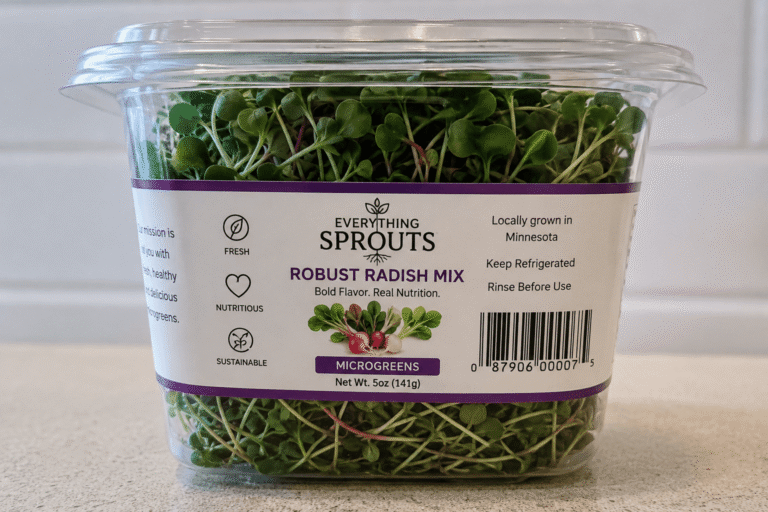
The Everything Sprouts Robust Radish Mix recall now includes four lots of 5 ounce sprout cups because they may be contaminated with Shiga toxin producing Escherichia coli, commonly called STEC, or Salmonella. Consumers should check for barcode 087906000075 and lot numbers 223, 226, 230, or 233. Do not eat a product that matches these details. Dispose of it or return it to the place of purchase. [1]
Everything Sprouts distributed the recalled Robust Radish Mix from August 13 through August 26, 2026, to wholesale distributors and grocery stores in Minnesota and Wisconsin. The company announced the expansion on August 28, and the Food and Drug Administration published the notice on August 29. No illnesses had been reported specifically in connection with Robust Radish Mix when the expansion was announced. [1]
The distinction is important because a related federal investigation has linked Everything Sprouts alfalfa sprouts to a multistate outbreak involving several strains of STEC and Salmonella Agona. The FDA outbreak page listed 55 illnesses across 15 states, four hospitalizations, and no deaths. Those illnesses were linked to alfalfa sprouts, not specifically to the newly recalled Robust Radish Mix. [2,3]
Everything Sprouts Robust Radish Mix Recall Details
| Recall detail | Information consumers should check |
|---|---|
| Brand | Everything Sprouts |
| Product | Robust Radish Mix |
| Package size | 5 ounce cup |
| Barcode | 087906000075 |
| Recalled lot numbers | 223, 226, 230, and 233 |
| Distribution period | August 13 through August 26, 2026 |
| Confirmed distribution | Wholesale distributors and grocery stores in Minnesota and Wisconsin |
| Recall reason | Possible STEC or Salmonella contamination |
| Illnesses specifically linked to Robust Radish Mix | None reported when the expansion was announced |
| Company contact | everythingsproutsmn@gmail.com |
These identifiers come directly from the company announcement published by the FDA. Consumers should compare the product name, package size, barcode, and lot number rather than relying on appearance alone. [1]
What Was Added to the Everything Sprouts Recall?
The August 28 expansion added certain lots of Robust Radish Mix to an earlier recall involving alfalfa sprouts sold under the Everything Sprouts and Calco brands. The original recall also covered Everything Sprouts Crunchy Protein Sprout Mix and Zesty Garlic Mix made with the affected alfalfa sprouts. [1,2]
| Product | Recalled lots |
|---|---|
| Robust Radish Mix, 5 ounce cups | 223, 226, 230, 233 |
| Everything Sprouts and Calco alfalfa sprouts | 222, 223, 225, 226, 230 |
| Crunchy Protein Sprout Mix, 5 ounce cups | 222, 223, 226, 230 |
| Zesty Garlic Mix, 5 ounce cups | 222, 223, 225, 226, 230 |
The Robust Radish Mix should be evaluated using its separate barcode, 087906000075. Other products in the earlier recall have different packaging and identifying information. [1,2]
Is Robust Radish Mix Linked to the E. Coli and Salmonella Outbreak?
The FDA notice does not state that Robust Radish Mix caused any of the reported outbreak illnesses. It says the product may be contaminated and was therefore added to the voluntary recall. No federal or state agency had received an illness report specifically related to Robust Radish Mix as of the company’s announcement. [1]
The broader investigation identified alfalfa sprouts distributed by Everything Sprouts as a source of illnesses. Among 34 patients interviewed by public health investigators, 26 reported eating alfalfa sprouts before becoming sick. The outbreak included 46 people infected with STEC, seven infected with Salmonella, and two infected with both pathogens. [2]
A lack of reported illness from the radish mix does not mean recalled cups are safe to eat. Recall action is intended to remove potentially contaminated food before additional exposure occurs.
What Should Consumers Do With Recalled Robust Radish Mix?
Do not eat the recalled product, even when the sprouts look fresh and no one in the household has become sick. The official response is to discard the product or return it to the retailer. Rinsing recalled sprouts is not an alternative to following the recall. [1]
Take the following steps:
- Check the refrigerator for Everything Sprouts Robust Radish Mix in a 5 ounce cup.
- Confirm whether the barcode is 087906000075 and whether the lot number is 223, 226, 230, or 233.
- Photograph the label and lot number before disposal if the information may be needed for a retailer, clinician, or public health report.
- Place the recalled product in a closed bag or container and dispose of it according to local waste instructions, or return it to the store.
- Wash containers, refrigerator shelves, countertops, utensils, and other surfaces that touched the sprouts with hot, soapy water. Follow with an appropriate food contact surface sanitizer according to its label.
- Wash hands with soap and warm water for at least 20 seconds after handling the package or cleaning the affected area. [1,7]
FDA food safety guidance recommends washing cutting boards, dishes, utensils, and countertops with hot, soapy water to reduce cross contamination. [7]
What if the Package Is Missing Its Lot Number?
Do not consume the product when it matches the brand, product name, package size, and purchase period but the lot number cannot be confirmed. Contact the retailer or Everything Sprouts for clarification. When confirmation is not possible, discarding the sprouts is safer than assuming they are outside the recall.
Should Recalled Sprouts Be Cooked Instead of Discarded?
No. Although thoroughly cooked sprouts are generally safer than raw sprouts, a product under an active recall should not be prepared or eaten. Return or discard the recalled cup as directed. [1,8]
Symptoms of STEC and Salmonella Infection
STEC and Salmonella can both cause diarrhea, stomach pain, nausea, and vomiting, but their usual timing and serious complications differ.
| Infection | When symptoms may begin | Common symptoms | Serious warning signs |
|---|---|---|---|
| Shiga toxin producing E. coli | Commonly about 3 to 4 days after exposure, although symptoms can appear later | Severe stomach cramps, diarrhea that may become bloody, nausea, and vomiting | Reduced urination, pale appearance, blood in urine, unusual bruising, extreme tiredness, or reduced alertness |
| Salmonella | About 6 hours to 6 days after exposure | Diarrhea, fever, stomach cramps, nausea, vomiting, headache, and loss of appetite | Severe dehydration, persistent vomiting, bloody stool, fever above 102°F, or signs that infection has spread beyond the intestines |
Most uncomplicated STEC illnesses improve within approximately five to seven days. Salmonella symptoms commonly last four to seven days. Severe disease can occur, particularly in young children, older adults, and people with weakened immune systems. [2,3,5,6]
When to Seek Medical Care
Contact a healthcare provider promptly after eating recalled sprouts if diarrhea, vomiting, abdominal cramping, fever, or other symptoms develop.
Urgent assessment is particularly important when a person has:
- Bloody diarrhea
- Diarrhea accompanied by a fever higher than 102°F
- Diarrhea or vomiting lasting more than two days without improvement
- Repeated vomiting that prevents fluids from staying down
- Very little urination, dark urine, intense thirst, dry mouth, dizziness, or other dehydration symptoms
- Severe or worsening abdominal pain
The CDC specifically advises immediate medical attention for bloody diarrhea, persistent diarrhea, high fever, uncontrolled vomiting, or dehydration following possible exposure to recalled sprouts. [3,6]
HUS Is a Medical Emergency
A small proportion of people with STEC infection develop hemolytic uremic syndrome, or HUS. This complication damages red blood cells and may cause acute kidney failure.
Go to an emergency department immediately if a person with recent diarrhea develops markedly reduced urination, blood in the urine, an unusually pale appearance, unexplained bruising or tiny red spots, extreme fatigue, irritability, confusion, or reduced alertness. Children younger than 5 are particularly vulnerable, although HUS can affect a person of any age. [5]
Medication and Treatment Safety Warnings
People with diarrhea should replace lost fluids, but suspected STEC infection should not be treated casually with over the counter diarrhea medicines or leftover antibiotics.
The CDC advises against using antidiarrheal medication in STEC infection because it can increase the likelihood of HUS. Antibiotics should also not be used for STEC unless a qualified clinician has evaluated the situation and determined an appropriate diagnosis and treatment plan. [4]
This caution is especially important in the present recall because the possible contaminant could be either STEC or Salmonella. Do not try to select treatment based only on symptoms, since the illnesses can overlap. A clinician may determine whether stool testing, blood testing, intravenous fluids, or other care is necessary.
Children with diarrhea or vomiting can become dehydrated quickly. Age appropriate oral rehydration solution may be useful, but persistent vomiting, reduced urination, unusual sleepiness, or inability to drink requires prompt medical evaluation. [5,6]
Who Is More Likely to Develop Severe Foodborne Illness?
Foodborne infection can affect anyone, but the risk of serious disease is higher among:
- Children younger than 5
- Adults aged 65 or older
- Pregnant people
- People receiving chemotherapy, radiation, transplant medication, corticosteroids, or other immune suppressing treatment
- People with weakened immunity from cancer, HIV, autoimmune disease, diabetes, kidney disease, liver disease, or another medical condition
Federal food safety guidance recommends that these groups avoid raw sprouts of any type and choose thoroughly cooked sprouts instead. This general prevention advice does not change the instruction to discard any product included in an active recall. [8]
Why Can Sprouts Carry E. Coli and Salmonella?
Sprouts require warm and moist germination conditions. These same conditions can allow a small number of bacteria present on seeds or in the growing environment to multiply rapidly. Sprouts are also commonly eaten raw or only lightly cooked, which means there may be no reliable final heating step to destroy harmful bacteria. [9]
A peer reviewed review of sprout safety found that Salmonella and pathogenic E. coli, particularly STEC, are among the organisms most often associated with sprout outbreaks. The review also emphasized the importance of controls beginning with seed production, sanitation, testing, and commercial growing practices rather than relying on consumers to remove contamination after purchase. [9]
An FDA affiliated risk assessment found that validated seed treatment and testing of spent irrigation water can substantially reduce modeled Salmonella risk during alfalfa sprout production. These measures are production controls and do not make a recalled retail product acceptable to eat. [10]
Frequently Asked Questions
What Everything Sprouts product is newly recalled?
The expansion includes Everything Sprouts Robust Radish Mix sold in 5 ounce cups with barcode 087906000075 and lot numbers 223, 226, 230, or 233.
Where was the recalled Robust Radish Mix sold?
Confirmed distribution included wholesale distributors and grocery stores in Minnesota and Wisconsin from August 13 through August 26, 2026. Consumers who obtained the product elsewhere should still compare the exact package identifiers.
Have any illnesses been linked specifically to Robust Radish Mix?
No illnesses had been reported specifically in connection with Robust Radish Mix when the recall expansion was announced. The 55 illnesses reported in the related outbreak investigation were linked to alfalfa sprouts.
Can I wash the recalled sprouts and eat them?
No. Washing does not replace the official recall instruction. Recalled sprouts should be discarded or returned to the retailer.
What should I do if I already ate the sprouts?
Do not eat any remaining product. Monitor for diarrhea, severe stomach cramps, vomiting, fever, bloody stool, or dehydration during the following several days. Contact a healthcare provider promptly if symptoms develop, and mention the recalled sprouts and the approximate date they were eaten.
Do I need a test if I ate them but have no symptoms?
The recall notice does not direct every exposed person without symptoms to obtain immediate testing. Continue monitoring and seek individualized medical advice when the exposed person is very young, older, pregnant, immunocompromised, or otherwise medically vulnerable.
Are all Everything Sprouts products recalled?
The notices identify particular products and lot numbers rather than every product made by the company. Consumers should check the FDA recall pages for the exact product descriptions and any subsequent updates.
References
- U.S. Food and Drug Administration. (2026, August 29). Everything Sprouts, LLC expands voluntarily recall to include Robust Radish Mix due to potential E. coli and Salmonella risk.
https://www.fda.gov/safety/recalls-market-withdrawals-safety-alerts/everything-sprouts-llc-expands-voluntarily-recall-include-robust-radish-mix-due-potential-e-coli-and
Official recall expansion with the package size, barcode, lot numbers, distribution dates, and company contact information. - U.S. Food and Drug Administration. (2026, August 24). Outbreak investigation of Shiga toxin producing E. coli and Salmonella: Sprouts.
https://www.fda.gov/food/outbreaks-foodborne-illness/outbreak-investigation-shiga-toxin-producing-e-coli-salmonella-sprouts-august-2026
Federal outbreak investigation containing case numbers, hospitalization data, recalled alfalfa products, and distribution information. - Centers for Disease Control and Prevention. (2026, August 24). E. coli and Salmonella outbreak linked to alfalfa sprouts.
https://www.cdc.gov/ecoli/outbreaks/alfalfa-sprouts-08-26/index.html
CDC consumer alert explaining the outbreak, symptoms, urgent warning signs, and recommended actions. - Centers for Disease Control and Prevention. (2024, May 14). Treatment of E. coli infection.
https://www.cdc.gov/ecoli/treatment/index.html
Clinical safety guidance concerning hydration, antibiotics, antidiarrheal medicines, and STEC related HUS risk. - Centers for Disease Control and Prevention. (2024, May 14). Signs of hemolytic uremic syndrome.
https://www.cdc.gov/ecoli/signs-symptoms/hus.html
Authoritative description of HUS warning signs and the need for emergency treatment. - Centers for Disease Control and Prevention. (2024, October 4). Symptoms of Salmonella infection.
https://www.cdc.gov/salmonella/signs-symptoms/index.html
Guidance on Salmonella incubation, symptoms, dehydration, complications, and indications for medical care. - U.S. Food and Drug Administration. (2024, March 5). Safe food handling.
https://www.fda.gov/food/buy-store-serve-safe-food/safe-food-handling
FDA instructions for handwashing, cleaning food contact surfaces, preventing cross contamination, cooking, and refrigeration. - FoodSafety.gov. (2025, August 14). People at risk of food poisoning.
https://www.foodsafety.gov/people-at-risk
Federal guidance identifying higher risk groups and recommending cooked rather than raw sprouts. - Miyahira, R. F., & Antunes, A. E. C. (2021). Bacteriological safety of sprouts: A brief review. International Journal of Food Microbiology, 352, Article 109266.
https://pubmed.ncbi.nlm.nih.gov/34111728/
Peer reviewed review of sprout associated outbreaks, bacterial growth during germination, and microbiological control measures. - Chen, Y., Pouillot, R., Santillana Farakos, S. M., Duret, S., Spungen, J., Fu, T. J., Shakir, F., Homola, P. A., Dennis, S., & Van Doren, J. M. (2018). Risk assessment of salmonellosis from consumption of alfalfa sprouts and evaluation of the public health impact of sprout seed treatment and spent irrigation water testing. Risk Analysis, 38(8), 1738–1757.
https://pmc.ncbi.nlm.nih.gov/articles/PMC6099441/
FDA affiliated quantitative assessment of Salmonella risk and preventive interventions during sprout production.