

EMA announcement: 15 October 2026
CHMP meeting highlights published: 16 October 2026
Affected region: European Union/European Economic Area; multinational clinical-trial relevance
Original source: European Medicines Agency
Medicine: Rasonque
Active substance: Daraxonrasib
Trial: RASolute 302
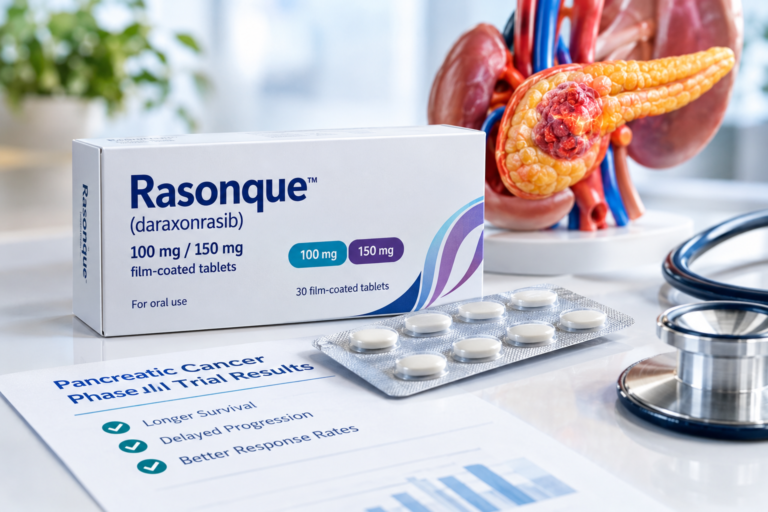
Daraxonrasib for pancreatic cancer has moved closer to European availability after the European Medicines Agency’s Committee for Medicinal Products for Human Use recommended Rasonque as a monotherapy for adults with metastatic pancreatic adenocarcinoma who have already received at least one systemic treatment. The recommendation is important, but it is not yet a final European Union marketing authorisation. [1–3]
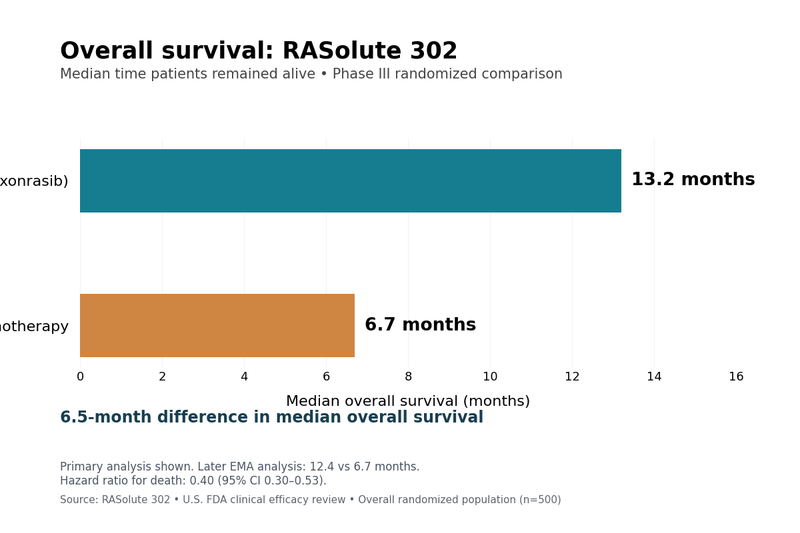
The positive opinion was supported by the Phase III RASolute 302 trial, in which daraxonrasib produced substantially longer overall survival and progression-free survival than physician-selected chemotherapy. The peer-reviewed analysis reported median overall survival of 13.2 months with daraxonrasib versus 6.7 months with chemotherapy. An updated EMA analysis, using a later overall-survival data cut-off, reported 12.4 months versus 6.7 months. Both analyses show a major survival advantage, although neither predicts exactly how long an individual patient will live. [1,4,5]
What the EMA Has Recommended
The CHMP recommendation covers adults with metastatic pancreatic adenocarcinoma, meaning the cancer originated from gland-forming pancreatic tissue and has spread to distant sites. Patients must have received at least one previous systemic treatment. The proposed European indication does not cover all pancreatic tumours, all disease stages or every newly diagnosed patient. [1,3]
Rasonque would be used alone rather than as part of a chemotherapy combination under the recommended indication. EMA states that treatment should be started by a physician experienced in prescribing anticancer medicines. The product is expected to be supplied as 100 mg and 150 mg film-coated tablets, although complete European dosing, monitoring and dose-modification instructions will appear in the final Summary of Product Characteristics after European Commission authorisation. [3]
EMA assessed Rasonque through a phased review that allowed regulators to examine quality, laboratory and clinical evidence as it became available. The review began in early July 2026 and took fewer than 150 active assessment days, compared with up to 210 active days for a standard evaluation. The medicine had been selected as a high-priority product under EMA’s Cancer Medicines Pathfinder project because of the limited options available after metastatic pancreatic cancer progresses on previous treatment. [1]
What the RASolute 302 Phase III Trial Found
RASolute 302 was an international, randomised, open-label Phase III trial involving 500 adults whose metastatic pancreatic adenocarcinoma had progressed after previous systemic therapy. Investigators assigned 248 patients to daraxonrasib and 252 to physician-selected standard chemotherapy. Approximately 91.8% of participants had a confirmed RAS G12 mutation. [4,5]
In the peer-reviewed overall trial population, median overall survival was:
13.2 months with daraxonrasib, compared with 6.7 months with chemotherapy.
The hazard ratio for death was 0.40. This means the estimated hazard of death during the study follow-up was 60% lower in the daraxonrasib group than in the chemotherapy group. It does not mean that 60% of patients were cured or that every patient lived 60% longer. [4,5]
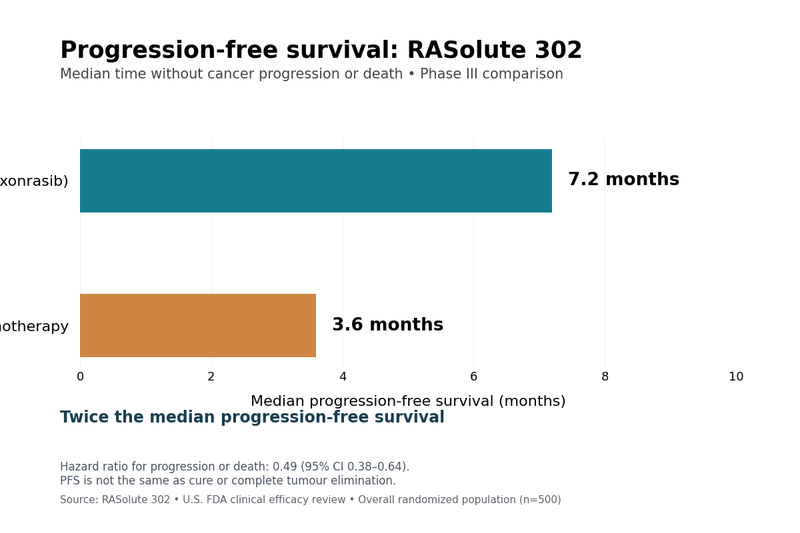
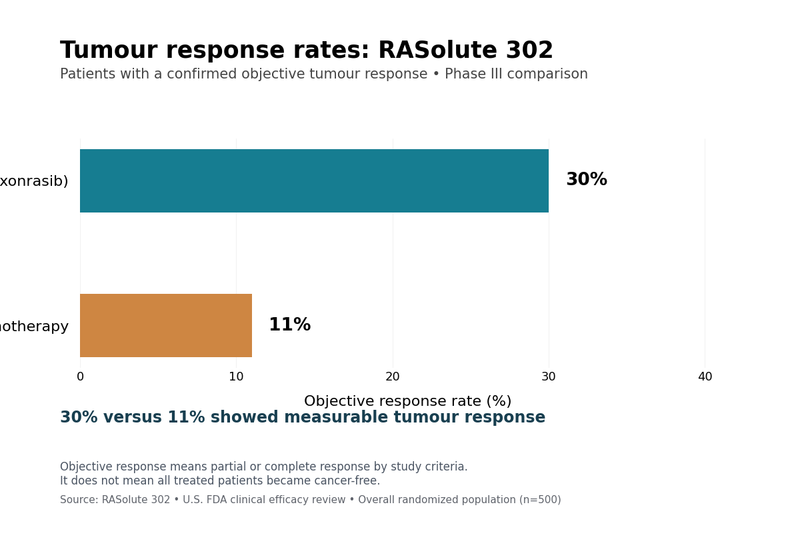
Median progression-free survival—the time before imaging showed disease progression or the patient died—was 7.2 months with daraxonrasib and 3.6 months with chemotherapy in the overall population. The objective response rate was 30% versus 11%, meaning measurable tumour shrinkage was observed more frequently with daraxonrasib. An objective response does not necessarily mean complete disappearance of the cancer, and tumours may eventually develop resistance. [4,5]
Why the Published and EMA Survival Numbers Are Different
Patients may encounter two different daraxonrasib survival figures online.
The published RASolute 302 analysis and the FDA review reported median overall survival of 13.2 months with daraxonrasib versus 6.7 months with chemotherapy. That analysis used an earlier study data cut-off. [4,5]
EMA subsequently reported 12.4 months versus 6.7 months, based on overall-survival data collected through 15 June 2026. Median survival estimates can change as more participants are followed and additional deaths are recorded. The later figure does not erase the earlier result; it represents a more mature analysis of the same study population. [1]
Even in the updated EMA analysis, the median survival in the daraxonrasib group remained approximately 1.9 times that observed with chemotherapy. The scientifically accurate interpretation is therefore that daraxonrasib nearly doubled median survival in this previously treated metastatic population, not that it doubled the life expectancy of every pancreatic-cancer patient.
What “Median Survival” Means for an Individual Patient
Median overall survival is the time at which half of a trial group remains alive and half has died. It is a population statistic rather than a deadline or personal prediction.
Some patients in the trial lived for less than the median, while others lived considerably longer. Individual outcomes can be influenced by tumour biology, previous treatments, liver or lung involvement, general physical condition, treatment tolerance, access to subsequent treatment and the cancer’s response to daraxonrasib.
The study therefore shows a meaningful improvement in the probability of longer survival across a defined patient population. It does not demonstrate that daraxonrasib cures metastatic pancreatic adenocarcinoma, permanently eliminates every tumour or works equally well for every patient.
How Daraxonrasib Works
RAS proteins help control normal cellular growth and survival. In pancreatic adenocarcinoma, abnormal RAS signalling frequently remains continuously active, encouraging cancer cells to grow and resist normal regulatory signals.
Daraxonrasib is an oral RAS inhibitor. It first binds to a cellular protein called cyclophilin A. The resulting complex then binds to the active, GTP-bound form of RAS and disrupts its interaction with downstream signalling proteins. This can suppress cancer-promoting signals, kill susceptible cancer cells and slow tumour growth. [1,3,4]
Unlike medicines directed against only one specific RAS variant, daraxonrasib was designed to inhibit multiple active forms of mutant and wild-type RAS. The RASolute 302 overall population included patients with RAS G12, G13 or Q61 alterations and a small group in whom no RAS mutation was identified. [4]
The recommended European indication is not worded as being restricted to one specific RAS mutation. Nevertheless, most trial participants had RAS G12-positive tumours, and genomic testing can still reveal other alterations that may influence treatment selection or clinical-trial eligibility. Eligibility should therefore be assessed from the complete pathology, molecular and treatment history rather than from the drug’s headline results alone.
Which Patients Do These Findings Apply To?
The evidence most directly applies to adults who have:
Metastatic pancreatic adenocarcinoma, disease progression following previous systemic treatment, and sufficient clinical fitness to receive additional anticancer therapy.
The Phase III findings should not automatically be extended to patients with newly diagnosed first-line disease, localised or surgically removable pancreatic cancer, pancreatic neuroendocrine tumours, acinar-cell carcinoma, cystic pancreatic neoplasms or non-cancerous pancreatic conditions.
Daraxonrasib is being investigated in additional treatment settings, but the current EMA recommendation is specifically for previously treated metastatic pancreatic adenocarcinoma. Using it earlier, after surgery, before surgery or in combination with other medicines requires evidence from separate trials.
Side Effects and Safety Monitoring
Daraxonrasib is an oral targeted medicine, but “targeted” does not mean free from toxicity. In RASolute 302, grade 3 or higher adverse events occurred in 61.8% of patients receiving daraxonrasib and 69.6% receiving chemotherapy. Treatment-related adverse events resulted in permanent discontinuation in 1.2% of the daraxonrasib group and 11.2% of the chemotherapy group. [4]
EMA identified diarrhoea, rash, stomatitis or inflammation of the mouth lining, nausea and vomiting as the most common adverse effects. [1,3] The current United States prescribing information provides more detailed safety data. Dermatological toxicity occurred in 86% of treated patients and was grade 3 in 10%. Stomatitis occurred in 57% and was grade 3 in 9%, while diarrhoea occurred in 63% and was grade 3 in 6%. These figures provide useful clinical context, although the definitive European safety instructions will be contained in the EU product information after authorisation. [6]
Less common but potentially serious risks in the United States label include gastrointestinal perforation and interstitial lung disease or pneumonitis. Patients receiving the medicine require urgent assessment for severe or persistent abdominal pain, new breathlessness, worsening cough, fever accompanied by respiratory symptoms, uncontrolled diarrhoea, extensive blistering rash or an inability to eat and drink because of mouth ulcers. [6]
Preventive skin care, sun protection, early treatment of rash, oral-care measures, hydration and prompt reporting of symptoms may allow side effects to be managed before they become severe. Treatment may need to be temporarily withheld, restarted at a reduced dose or permanently discontinued, depending on toxicity.
Daraxonrasib Can Interact With Medicines and Herbal Products
Daraxonrasib is affected by CYP3A and P-glycoprotein pathways. The United States prescribing information requires avoidance or dose modification with several medicines that strongly inhibit or induce these pathways. Daraxonrasib may also alter exposure to certain other medicines. [6]
Patients should therefore provide their oncologist and oncology pharmacist with a complete list of prescription medicines, non-prescription products, vitamins, concentrated botanical extracts, Ayurvedic medicines and other supplements before starting treatment. A product being described as natural does not establish that it can be combined safely with daraxonrasib.
No herbal or complementary product should be started, stopped or substantially changed during daraxonrasib therapy without checking for metabolic interactions and overlapping risks such as diarrhoea, liver injury, bleeding, dehydration or skin toxicity.
Questions Patients Should Ask Their Oncologist
Is Rasonque already approved and available in my country?
The CHMP has issued a positive recommendation, but the European Commission must still grant the EU-wide marketing authorisation. After authorisation, availability may differ between countries because national authorities separately decide pricing, reimbursement and health-system access. [1]
The United States FDA approved daraxonrasib on 26 August 2026, but a United States approval does not automatically make the medicine commercially available or reimbursed within Europe. [5]
Does my diagnosis match the trial population?
Patients should confirm that the pathology is pancreatic adenocarcinoma, that the disease is metastatic, and that the previous-treatment history meets the authorised indication. The results should not be assumed to apply to every pancreatic tumour or every stage of disease.
Should my tumour undergo molecular testing?
The proposed EMA indication is not restricted to one RAS subtype, but molecular profiling may still identify uncommon alterations with other targeted-treatment or clinical-trial implications. Existing tissue results, liquid-biopsy findings and germline genetic testing should be reviewed rather than repeated automatically.
How will side effects be prevented and monitored?
Patients should ask about preventive skin treatment, oral care, diarrhoea management, hydration, laboratory monitoring, treatment-interruption rules and access to dermatology or supportive-care services. A clear plan should also identify symptoms that require same-day contact or emergency assessment.
Could any medicine, herb or supplement interfere with treatment?
The oncology pharmacist should assess every product for CYP3A, P-glycoprotein and overlapping toxicity concerns. This review is particularly important when multiple practitioners are prescribing medicines or when concentrated herbal extracts are being used.
How This News Fits Into Broader Pancreatic Cancer Treatment Decisions
Rasonque represents a specific tumour-directed option for a defined group of patients after previous systemic therapy. It does not answer every question about pancreatic-cancer surgery, chemotherapy, molecularly targeted treatment, clinical trials, nutrition, symptom control, supportive care or carefully coordinated complementary treatment.
Patients and families comparing these pathways can read our evidence-aware guide to alternative treatment for pancreatic cancer. Any Ayurvedic or complementary programme should be coordinated with the oncology team, particularly because daraxonrasib has clinically relevant interaction pathways and requires active toxicity monitoring.
What Happens Next in Europe?
The CHMP opinion will now be considered by the European Commission through a fast-tracked decision process. Until that decision is issued, Rasonque should be described as recommended for authorisation, not as fully approved in the European Union. [1–3]
After marketing authorisation, EMA will publish the complete European product information, including the approved dosage, contraindications, interaction instructions, adverse-reaction tables and required monitoring. Individual EU and EEA countries will then determine pricing, reimbursement and practical access through their respective health systems. [1,3]
What Patients Should Take From This News
Daraxonrasib is one of the most consequential recent developments for previously treated metastatic pancreatic adenocarcinoma. In a 500-patient randomised Phase III trial, it substantially prolonged median overall survival, delayed disease progression and increased the likelihood of measurable tumour response compared with chemotherapy.
The results do not establish a cure, do not apply to every pancreatic-cancer diagnosis and do not guarantee that an individual patient will respond. Nevertheless, for appropriately selected adults whose metastatic adenocarcinoma has progressed after previous systemic treatment, Rasonque may provide an important oral treatment option once regulatory authorisation and local access are completed.
References
- European Medicines Agency. (2026, October 15). EMA recommends authorisation of Rasonque for metastatic pancreatic cancer. https://www.ema.europa.eu/en/news/ema-recommends-authorisation-rasonque-metastatic-pancreatic-cancer
Used for: CHMP recommendation, updated survival analysis, phased review, common adverse effects and the remaining European regulatory process. - European Medicines Agency. (2026, October 16). Meeting highlights from the Committee for Medicinal Products for Human Use (CHMP), 12–15 October 2026. https://www.ema.europa.eu/en/news/meeting-highlights-committee-medicinal-products-human-use-chmp-12-15-october-2026
Used for: Confirmation of the positive CHMP opinion and publication date of the October meeting highlights. - European Medicines Agency. (2026, October 15). Rasonque: Medicine overview and CHMP opinion. https://www.ema.europa.eu/en/medicines/human/EPAR/rasonque
Used for: Proposed indication, dosage forms, mechanism, applicant, opinion status and pending European product information. - O’Reilly, E. M., Wainberg, Z. A., Hendifar, A. E., Borad, M. J., Pietrantonio, F., Pant, S., Hammel, P., Cremolini, C., Manji, G. A., Oberstein, P. E., Garrido-Laguna, I., Springfeld, C., Azad, N. S., Ueno, M., Chui, S. Y., Zhang, Y., Patel, H., Lee, Y., Salman, Z., & Wolpin, B. M. (2026). Daraxonrasib or chemotherapy in previously treated metastatic pancreatic cancer. The New England Journal of Medicine, 395(4), 325–337. https://pubmed.ncbi.nlm.nih.gov/42223072/
Used for: Phase III design, participant numbers, survival, progression-free survival, RAS subgroups, adverse-event rates and treatment discontinuation. - U.S. Food and Drug Administration. (2026, August 26). FDA approves daraxonrasib for metastatic pancreatic adenocarcinoma. https://www.fda.gov/drugs/resources-information-approved-drugs/fda-approves-daraxonrasib-metastatic-pancreatic-adenocarcinoma
Used for: United States approval status, overall survival, progression-free survival, response rate and major safety warnings. - U.S. Food and Drug Administration. (2026). Rasonque (daraxonrasib) tablets: Full prescribing information. https://www.accessdata.fda.gov/drugsatfda_docs/label/2026/220910Orig1s000lbl.pdf
Used for: Dermatological toxicity, stomatitis, diarrhoea, gastrointestinal perforation, pneumonitis, pregnancy precautions and CYP3A/P-glycoprotein interactions. - National Library of Medicine. (2026). Study of daraxonrasib versus standard of care in previously treated metastatic pancreatic ductal adenocarcinoma: RASolute 302 (NCT06625320). ClinicalTrials.gov. https://clinicaltrials.gov/study/NCT06625320
Used for: Trial registration, study population, intervention and outcome framework. - Helwick, C. (2026, June 10). Daraxonrasib extends median survival in previously treated pancreatic cancer. The ASCO Post. https://ascopost.com/issues/june-10-2026/daraxonrasib-nearly-doubles-survival-in-previously-treated-metastatic-pancreatic-cancer/
Used for: ASCO presentation context, patient-reported outcomes, treatment-related toxicity and clinical interpretation. - Post, E. (2026, August 26). FDA approves Rasonque (daraxonrasib). Pancreatic Cancer Action Network. https://pancan.org/news/fda-approves-rasonque-daraxonrasib/
Used for: Patient-facing explanation of RAS inhibition, biomarker testing, supportive care and treatment-access considerations.