

Published: September 7, 2026
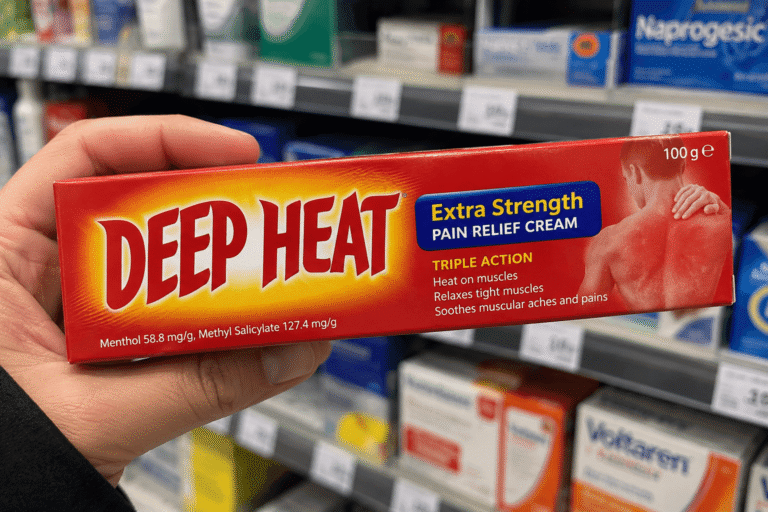
Deep Heat recall notices identify two batches of Extra Strength 100g cream contaminated with unacceptable levels of bacteria. Consumers should stop using batches V772 and V773, both expiring in June 2029, and return the affected product to the place of purchase [1].
The manufacturer, Mentholatum Australasia, says the affected batches were supplied to Coles stores only. Its recall notice is dated September 3, 2026, followed by a Therapeutic Goods Administration notice on September 7. This is a recall of specific batches, not the entire Deep Heat range [1,2].
Deep Heat Recall: Which Products Are Affected?
Check the product name, package size, batch number, and expiration date together. An expiration date alone is not enough to identify whether your cream is included.
| Recall detail | Information to check |
|---|---|
| Product name | Deep Heat Extra Strength Cream |
| Package size | 100g |
| Affected batch numbers | V772 and V773 |
| Expiration date | 06/2029, meaning June 2029 |
| Product registration number | ARTG 294855 |
| Company conducting the recall | Mentholatum Australasia Pty Ltd |
| Retail distribution identified by the manufacturer | Coles stores only |
| Required action | Stop using the affected product and return it to the place of purchase |
Sources: Official regulator and manufacturer recall notices [1,2]. (Therapeutic Goods Administration (TGA))
Look for the batch information on the tube and any outer packaging you still have. When a code is missing or unreadable, set the product aside and ask the retailer or manufacturer to help establish whether it is affected. Do not assume a tube is suitable for continued use simply because its expiration date has not passed [1,2].
What Bacteria Were Found in Deep Heat?
Testing detected Pluralibacter gergoviae at levels above acceptable limits. The official warning identifies a potential for serious infections, particularly when contaminated cream is used by someone with broken skin or a weakened immune system [3].
The concern is bacterial contamination of the product. The recall notice does not describe a newly discovered problem with menthol or methyl salicylate, the cream’s intended pain relieving ingredients [1,3,9].
Why preservatives do not eliminate every contamination risk
A laboratory study published in the International Journal of Cosmetic Science examined 65 bacterial isolates under the organism’s former name, Enterobacter gergoviae. Researchers found resistance to several preservatives used in cosmetic products, illustrating why preservation systems require careful testing and quality control [4].
That study did not investigate Deep Heat. It provides background on the bacterium, not an explanation of how these particular batches became contaminated. The current recall notices do not identify the contamination source [1,2,4].
Who Needs to Be Especially Careful?
The recall specifically highlights people with broken skin or weakened immunity. Broken skin can include cuts, cracks, ulcers, or areas damaged by eczema. These openings can allow bacteria to enter deeper tissues [3,5].
People receiving chemotherapy, and some people with diabetes or other conditions that impair defenses against infection, may need a lower threshold for seeking medical advice. This does not mean everyone in these groups will develop an infection, but symptoms should not be dismissed or left to worsen [6].
Even outside this recall, the manufacturer’s directions say the cream should not be applied to broken, cracked, sensitive, or irritated skin [9].
What Should You Do if You Already Used the Cream?
Stop using the affected batch and arrange its return
Do not finish the tube, apply another small amount to test it, or pass it to someone else. Set it aside so it cannot be used accidentally, and follow the recall instruction to return it to the place of purchase [1,2].
For questions about the recall, the published contact number for Mentholatum Australasia is (03) 9763 0322. The notices direct consumers to return the product or contact the company; they do not provide detailed refund conditions [1,2].
Keeping the packaging, or taking clear photographs of the product name and batch code, can help you explain the exposure to the retailer or a healthcare professional.
Assess your symptoms rather than assuming an infection
Using a recalled cream does not, by itself, establish that you have an infection. However, contact a healthcare professional promptly if you develop concerning skin changes, feel unwell, or used the product on damaged skin while your immune system is weakened [1,5,6].
Do not start leftover antibiotics as a precaution. Whether treatment is necessary should be determined through an appropriate clinical assessment [8].
Symptoms After Using Deep Heat That Need Medical Attention
New or worsening skin pain, swelling, tenderness, or spreading discoloration deserves attention. Redness can be less noticeable on brown or black skin, so changes in warmth, swelling, and tenderness are also important [5,6].
| What you notice | Recommended action |
|---|---|
| Skin becomes increasingly painful, hot, swollen, or tender | Seek an urgent medical assessment, preferably the same day. |
| A red or discolored area spreads quickly, or you develop fever or chills | Seek medical attention immediately. |
| Confusion, difficulty breathing, fainting, a very fast heartbeat, or cold and clammy skin | Seek emergency medical care immediately. |
Sources: General guidance on cellulitis and serious infection [5–7]. These are warning signs that warrant assessment, not proof of infection from the recalled cream. (CDC)
A warming pain relief cream should not be used as a reason to dismiss progressive skin symptoms. Irritation and infection can require different treatment, and an examination may be needed to distinguish them [5,9].
Sepsis is a life threatening response to infection that requires immediate treatment. Mentioning its warning signs does not mean sepsis has been confirmed in this recall; the published notices do not state that such cases have occurred [1,7].
Do You Need Testing or Antibiotics After Exposure?
The recall notices do not recommend routine testing or preventive antibiotics for every person who used the affected cream. They advise consumers who are concerned about a possible adverse event to speak with a healthcare professional [1,2].
A clinician will consider your symptoms, skin condition, medical history, and the circumstances of exposure. Cellulitis, a bacterial infection of deeper skin layers, is generally diagnosed through examination and treated with antibiotics. More serious infections may require hospital treatment [5,6].
Tell the clinician that you used a recalled product and provide the batch number when available. Do not take antibiotics prescribed for someone else or saved from a previous illness. Unnecessary or inappropriate treatment can cause adverse effects and delay the right care [8].
Choosing Pain Relief While Avoiding Further Skin Problems
Stopping the recalled product does not mean you must leave persistent pain untreated. Ask a pharmacist or treating clinician about an appropriate alternative, especially when you take other medicines or have an existing medical condition.
The manufacturer’s directions for Deep Heat Extra Strength warn against use with anticoagulant medicines or in people allergic to salicylates. They also prohibit use on damaged or irritated skin and use alongside heating pads. These precautions remain relevant even when a product is outside the recalled batches [9].
Do not cover a potentially infected area with another warming cream instead of having it assessed. Persistent muscle or joint pain, and new skin inflammation, may need different approaches [5,9].
Frequently Asked Questions
Are all Deep Heat products recalled?
No. The published action identifies two batches of Extra Strength 100g cream. The manufacturer states that these batches were supplied only to Coles and that other retailers are unaffected by this recall. The notice does not announce a withdrawal of the entire brand [1,2].
Is an unopened tube included in the recall?
The recall is based on the batch number, not whether a tube has been opened. An unopened product from an affected batch should not be used. Its June 2029 expiration date does not override the recall instruction [1].
Can I keep using the cream if it looks and smells normal?
No. Appearance and smell are not the criteria used in this recall. Check the batch information and stop using an affected product regardless of whether you have noticed any change in the cream [1,2].
Have infections been confirmed from the recalled cream?
The published regulator and manufacturer notices identify a potential infection risk but do not state whether confirmed infections have occurred. That should not be interpreted as confirmation that there have been no illnesses [1,2].
References
[1] Therapeutic Goods Administration. (2026, September 7). Deep Heat Extra Strength 100g cream. Official notice identifying the affected batches, expiration date, bacterial contamination, and consumer instructions. Read the recall notice. (Therapeutic Goods Administration (TGA))
[2] Mentholatum Australasia Pty Ltd. (2026, September 3). Recall: Deep Heat Extra Strength 100g cream (batches V772, V773). Manufacturer confirmation that the affected batches were supplied to Coles stores only. Read the manufacturer’s notice. (Deep Heat Australia)
[3] Department of Health, Drug Office. (2026, September 7). Australia: Recall: Deep Heat Extra Strength 100g cream. Regulatory communication corroborating the bacterial finding, higher risk groups, and active ingredients. Read the regulatory communication. (Drug Office)
[4] Périamé, M., Pagès, J.-M., & Davin-Regli, A. (2014). Enterobacter gergoviae adaptation to preservatives commonly used in cosmetic industry. International Journal of Cosmetic Science, 36(4), 386–395. Laboratory research involving 65 isolates found resistance to several cosmetic preservatives; it did not study the recalled product. Read the study. (Wiley Online Library)
[5] Centers for Disease Control and Prevention. (2025, August 5). About cellulitis. Explains general skin infection symptoms, risk factors, diagnosis, treatment, and warning signs requiring immediate attention. Read the clinical guidance. (CDC)
[6] National Health Service. (2024, April 18). Cellulitis. Patient guidance on urgent assessment, symptoms across skin tones, higher risk conditions, and complications. Read the patient guidance. (nhs.uk)
[7] Centers for Disease Control and Prevention. (2026, August 17). About sepsis. Describes emergency warning signs and the importance of rapid evaluation and treatment.
[8] Centers for Disease Control and Prevention. (2025, September 23). Healthy habits: Antibiotic do’s and don’ts. Explains why antibiotics should be used only when appropriate and why leftover or shared prescriptions can be harmful. Read the antibiotic guidance. (CDC)
[9] Mentholatum Australasia Pty Ltd. (n.d.). Deep Heat Extra Strength. Manufacturer information on ingredients, intended use, contraindications, and precautions, including damaged skin, anticoagulants, and heating pads. Read the product directions. (Deep Heat Australia)