

Updated September 8, 2026. Case figures reflect data through September 5, published in ECDC’s September 7 update.
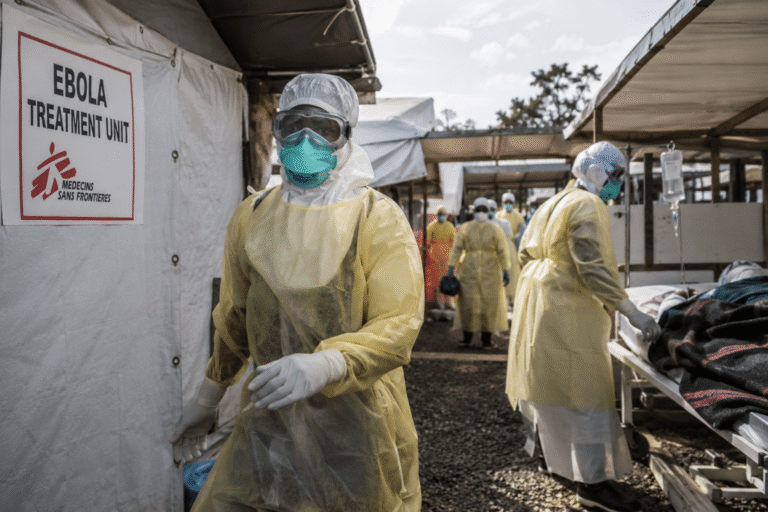
The DRC Ebola outbreak has reached 6,604 confirmed cases and 3,175 deaths, with 851 patients hospitalized in isolation. The outbreak, caused by Bundibugyo virus, has affected six provinces in the Democratic Republic of the Congo. Meanwhile, the World Health Organization reports that some Ebola treatment centers in Bunia are operating close to full capacity, increasing the urgency of expanding care [1,2].
For patients and families, the essential message is to recognize possible symptoms early and contact health services before arriving at a clinic. Ebola requires urgent assessment after a relevant exposure, but the growing outbreak does not mean that people everywhere face the same risk [3,4].
DRC Ebola Outbreak: What the Latest Figures Show
ECDC reports 262 additional confirmed cases and 103 additional deaths compared with its September 4 update. This increase covers several reporting days, not a single day. The latest daily comparison recorded 82 additional cases and 41 deaths [1].
Across the six affected provinces, ECDC lists 61 affected health zones out of 151. The provincial figures show where the reported burden is concentrated [1].
| Province | Confirmed cases | Reported deaths |
|---|---|---|
| Ituri | 5,326 | 2,398 |
| North Kivu | 1,000 | 659 |
| Haut Uele | 249 | 105 |
| Tshopo | 22 | 9 |
| Bas Uele | 4 | 3 |
| South Kivu | 3 | 1 |
| Total | 6,604 | 3,175 |
These are reported surveillance totals, which remain subject to review and reconciliation. An affected province does not necessarily have the same level of transmission in every community.
Why Some Ebola Treatment Centers Are Nearly Full
WHO’s September 7 report describes uneven pressure on treatment facilities. Overall bed occupancy in Ituri was approximately 62%, but some centers, particularly in Bunia, were operating at 90% to 100% occupancy. The distinction matters: available beds elsewhere do not necessarily resolve shortages where patients are seeking care [2].
WHO estimates that the response will need more than 6,200 additional staff members and equipment for 2,071 additional operational beds over the next three months. These are projected additional requirements, not resources already available [2].
Treatment capacity involves more than providing beds. Patients need trained personnel, monitoring, fluids, medicines, protective equipment, and safe separation of suspected and confirmed infections. WHO describes continuing efforts to reorganize facilities and strengthen these services as demand grows [2].
How Bundibugyo Ebola Spreads
Bundibugyo virus is one of the viruses that cause Ebola disease. Infection can spread when blood or other body fluids from someone who is ill or has died from Ebola reach another person’s broken skin, eyes, nose, or mouth. Contaminated bedding, clothing, equipment, and other materials can also present a risk [3].
Ebola is not spread through airborne transmission or ordinary casual contact. During acute infection, people generally become infectious after symptoms begin. Direct care without appropriate protection and contact with a deceased person’s body are important exposure risks [3,4].
Early Ebola Symptoms Should Not Be Ignored
Symptoms can develop between 2 and 21 days after infection. Early illness may involve fever, marked tiredness, muscle pain, headache, or a sore throat. Vomiting, diarrhea, and abdominal pain can follow [3].
These symptoms overlap with malaria and other infections, so symptoms alone cannot establish the diagnosis. Recent travel, contact with someone who is ill, and exposure to blood or body fluids help clinicians decide whether Ebola testing is needed [3].
Do not wait for bleeding before seeking help. WHO notes that bleeding is less frequent than many people assume and may occur later in the illness [3].
What to Do After a Possible Exposure
Contact local public health services promptly after a possible exposure, even before symptoms appear. Follow the monitoring instructions provided for your circumstances. After travel from an affected area, health authorities commonly advise monitoring for symptoms for 21 days [4,5].
If symptoms develop, separate yourself from others and call health services immediately. Explain your symptoms, travel dates, and any possible exposure. Do not arrive unannounced at a clinic or hospital, and do not continue traveling while ill. Calling ahead allows a suitable facility and safe assessment arrangements to be identified [4,5].
| Situation | Appropriate next step |
|---|---|
| Possible exposure without symptoms | Contact public health services for an exposure assessment and monitoring instructions. |
| Fever or other compatible symptoms after relevant travel or exposure | Separate from others and call health services immediately before attending in person. |
| Symptoms requiring emergency care | Call emergency services and disclose the possible Ebola exposure or recent travel before responders arrive. |
Urgent assessment should not be delayed while trying home remedies or waiting for symptoms to become more severe [5].
What Treatment Is Available for Bundibugyo Ebola?
Early supportive care remains essential. This can include oral or intravenous fluids, correction of electrolyte losses, blood pressure support, clinical monitoring, and treatment of complications or additional infections. WHO’s current clinical guidance applies to Bundibugyo and other filovirus diseases [6].
Supportive care is active medical treatment, not simply observation. Severe vomiting and diarrhea, for example, can require carefully monitored fluid replacement. Patients should receive care in facilities equipped to manage both their illness and infection prevention needs [6].
Can Existing Ebola Vaccines Protect Against This Outbreak?
Protection against one Ebola virus cannot automatically be assumed to protect against another.
WHO’s updated emergency guidance, published September 1, states that evidence remains insufficient to determine whether Ervebo provides clinically meaningful protection against Bundibugyo virus in humans. Although animal, immune response, and observational findings suggest possible cross protection, WHO recommends using the vaccine for Bundibugyo outbreaks only within research protocols [7].
Vaccination therefore should not be presented as proven protection against this outbreak or as a replacement for infection prevention measures [7].
What Current Treatment Research Is Testing
The WHO sponsored PARTNERS randomized clinical trial is evaluating the monoclonal antibody MBP134, the antiviral remdesivir, and whether combining them improves outcomes in Bundibugyo virus disease. Participating patients also receive supportive care [8].
WHO’s August 28 update reported that more than 250 patients had enrolled across three treatment facilities in Ituri. That update described research progress, not evidence that either investigational treatment had already been shown to improve survival [9].
What the Outbreak Means for International Travelers
Imported cases have previously occurred outside the DRC, including in Europe. Nevertheless, ECDC’s September 7 update continues to assess the likelihood of infection for the general EU/EEA population as very low. That assessment should not be applied to someone with a direct, unprotected exposure to an infected person [1,4].
Travel advice is more specific than the general population risk assessment. CDC currently advises avoiding all travel to Ituri and North Kivu and avoiding nonessential travel to Haut Uele and Tshopo. Travelers to other areas should follow the precautions and monitoring advice applicable to their itinerary [10].
Entry restrictions and screening requirements may depend on recent travel, including transit stops. Check current destination requirements before departure rather than assuming that a low general population risk means travel is unrestricted [5,10].
Frequently Asked Questions
Is everyone who develops a fever after visiting the DRC infected with Ebola?
No. Fever can result from malaria and many other infections. However, compatible symptoms after relevant travel or exposure require prompt assessment. Call health services before attending a facility so that both Ebola and other possible causes can be evaluated safely.
Can someone survive Bundibugyo Ebola?
Yes. Recovery is possible, and early supportive care can improve the chance of survival. The absence of an approved treatment specifically for Bundibugyo virus does not mean that medical care is ineffective or should be delayed.
Can Ebola spread before symptoms begin?
During acute infection, people generally do not transmit Ebola before symptoms develop. Anyone identified as a contact should still follow public health monitoring instructions because symptoms can appear up to 21 days after infection.
References
[1] European Centre for Disease Prevention and Control. (2026, September 7). Ebola disease outbreak in the Democratic Republic of the Congo. Official outbreak update.
Used for: Confirmed cases, deaths, provincial distribution, reporting periods, hospitalization, and the current EU/EEA risk assessment.
[2] World Health Organization Regional Office for Africa. (2026, September 7). Adapting care to an evolving Ebola outbreak in the Democratic Republic of the Congo. WHO report.
Used for: Treatment center occupancy, projected staffing requirements, additional beds, and pressure on clinical services.
[3] World Health Organization. (2025, April 24). Ebola disease. WHO fact sheet.
Used for: Transmission, incubation, symptoms, diagnosis, and the importance of early supportive care.
[4] European Centre for Disease Prevention and Control. (2026, June 25). Questions and answers about the current outbreak of Ebola disease. ECDC questions and answers.
Used for: Exposure precautions, transmission, monitoring, and contacting healthcare services before attending in person.
[5] Centers for Disease Control and Prevention. (2026, September 1). Information for travelers returning from Ebola-affected areas. CDC traveler guidance.
Used for: Symptom monitoring, isolation, calling ahead, emergency assessment, and checking entry requirements.
[6] World Health Organization. (2026, June 11). WHO guidelines for the clinical management of filovirus disease. WHO clinical guideline.
Used for: Evidence based supportive care, fluid therapy, monitoring, shock management, and treatment of complications.
[7] World Health Organization. (2026, September 1). WHO emergency guidance on the use of licensed Ebola vaccine during Bundibugyo virus disease outbreaks, 31 August 2026. WHO vaccine guidance.
Used for: Uncertain human protection from Ervebo and the recommendation to restrict Bundibugyo use to research protocols.
[8] World Health Organization. (2026, July 2). Patient enrolment begins in a scientific trial to identify the first effective treatments for Bundibugyo virus disease. PARTNERS trial announcement.
Used for: The randomized trial evaluating MBP134, remdesivir, and combination therapy alongside supportive care.
[9] World Health Organization. (2026, August 28). Ebola disease caused by Bundibugyo virus: Democratic Republic of the Congo. WHO Disease Outbreak News.
Used for: Bundibugyo treatment limitations and the reported enrollment of more than 250 patients in the PARTNERS trial.
[10] Centers for Disease Control and Prevention. (n.d.). Ebola outbreak: Current situation. Retrieved September 8, 2026, from CDC’s outbreak information page.
Used for: Province specific travel advice, exposure precautions, and travel related restrictions.