

Surveillance update: September 4, 2026 | ECDC data submitted through: September 2, 2026
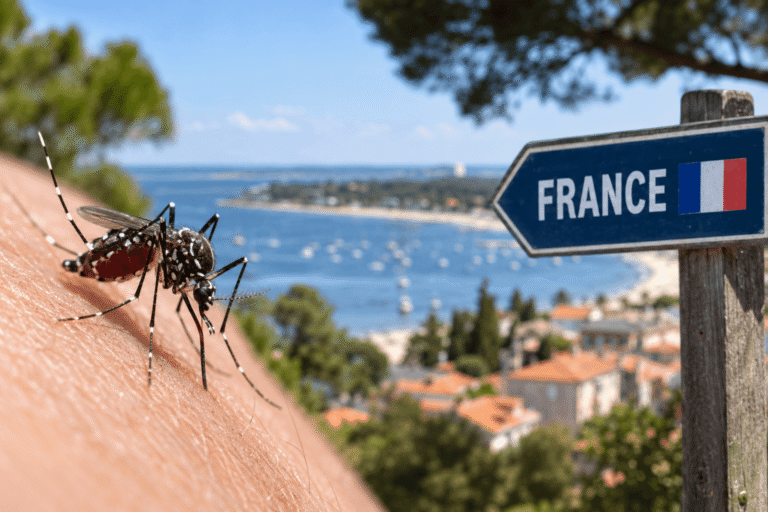
Chikungunya in Europe has drawn renewed attention after France reported 46 locally acquired cases, including 13 additional cases compared with the previous weekly update. Seven of eight reported clusters remained active, and a newly identified cluster in Arcachon involved four people. These infections were acquired within France, rather than simply diagnosed in travelers who became infected abroad [1].
For residents and visitors, the immediate priorities are preventing mosquito bites and obtaining medical advice for sudden fever with substantial joint pain. Persistent pain after the initial illness requires a different approach, with assessment and rehabilitation guided by the person’s symptoms and physical limitations [5,7].
Chikungunya in Europe: What the Latest France Figures Show
The European Centre for Disease Prevention and Control, or ECDC, recorded the following findings in its weekly surveillance report [1].
| Surveillance measure | Reported finding |
|---|---|
| Locally acquired cases in France | 46 |
| Additional cases since the previous weekly update | 13 |
| Reported clusters | Eight |
| Clusters remaining active | Seven |
| New cluster in Arcachon, Gironde | Four cases |
| Largest active cluster | Prignac-et-Marcamps, Gironde, with 27 cases |
Santé publique France also reported 46 locally acquired cases across eight transmission episodes in its September 2 bulletin. The affected departments included Tarn, Lot, Gironde, and Val-de-Marne. That national bulletin used data through August 30, whereas ECDC’s report incorporated submissions through September 2 [2].
What These Numbers Do and Do Not Mean
The weekly increase describes additional cases reported to surveillance. It does not establish that all 13 people became infected during that week. Similarly, an “active” cluster is a monitoring classification, not a statement that every affected person remains infectious. ECDC generally closes clusters 45 days after the most recent symptom onset or another relevant date [1].
Taken together, the reports document transmission in identified areas. They should not be interpreted as evidence of an outbreak throughout France or across every European destination [1,2].
How Does Local Chikungunya Transmission Happen?
Chikungunya spreads mainly through infected Aedes mosquitoes, particularly Aedes aegypti and Aedes albopictus, commonly called the Asian tiger mosquito. These mosquitoes acquire the virus when they feed on someone who has the virus circulating in their blood [4].
After the virus develops inside the mosquito, a later bite can infect another person. That second person may have remained in the same neighborhood and never traveled internationally. This is why local transmission changes how clinicians interpret fever and joint pain in an affected community [4,6].
ECDC notes that previous transmission events in mainland Europe have followed the introduction of the virus by infected travelers during mosquito activity season. The presence of locally acquired cases therefore matters even when the overall numbers remain relatively small [3].
For someone living near an affected area, a lack of overseas travel should not automatically rule out chikungunya. The relevant question is whether the person spent time where transmission was occurring [1,6].
Chikungunya Symptoms: What Should You Watch For?
Symptoms usually begin three to seven days after an infected mosquito bite. The most characteristic combination is sudden fever and pronounced pain in several joints. The pain can be severe enough to interfere with walking, dressing, or routine activities [5].
Joint symptoms often affect both sides of the body. Swelling, muscle pain, headache, nausea, and a rash may also occur. However, symptoms alone cannot reliably distinguish chikungunya from dengue or certain other infections [5].
Contact a healthcare professional when fever and substantial joint pain develop during or after time in an affected area. Explain exactly where you stayed and when the symptoms began. These details help determine which infections and tests should be considered [6].
Who Needs Earlier Medical Advice?
Newborns, adults older than 65, and people with underlying conditions such as diabetes or cardiovascular disease have a greater risk of severe illness. Early clinical advice is particularly important for these groups [5].
Pregnant patients should also contact their maternity team when infection is suspected. Infection close to delivery requires particular attention because the virus can pass to the newborn and cause serious illness [10].
How Is Chikungunya Diagnosed?
Testing depends on how long the person has been unwell. A test that is useful early in the illness may be less informative later, while antibody testing may be negative before the immune response has developed [6].
| Timing or situation | What testing may involve |
|---|---|
| First eight days of illness | RT-PCR testing can often detect chikungunya viral genetic material in blood. |
| Toward the end of the first week and afterward | Antibody testing becomes more useful as the immune response develops. |
| Early sample is negative but suspicion remains | A later blood sample may be needed before the diagnosis can be excluded. |
| Chikungunya IgM antibody result is positive | Confirmatory testing may be needed because false positive results can occur. |
RT-PCR stands for reverse transcription polymerase chain reaction. It looks for evidence of the virus itself, whereas antibody tests look for the body’s response to infection [6].
Bring the date symptoms started and any previous results to the appointment. Rather than ordering repeated tests independently, ask which test is appropriate for the stage of illness and whether follow-up sampling is necessary [6].
Why Dengue Must Be Considered Before Choosing Pain Relief
Chikungunya and dengue can cause overlapping symptoms, but the distinction affects treatment safety. Dengue can cause bleeding and other serious complications. Aspirin and nonsteroidal anti-inflammatory medicines, including ibuprofen, can increase bleeding risk when dengue is present [7,8].
The practical advice is not to start aspirin or ibuprofen for a suspected mosquito-related fever until dengue has been excluded. Acetaminophen, also called paracetamol, is generally the preferred initial option for fever and pain when suitable for the patient and taken according to the product directions [7].
Do not assume that improvement after a pain medicine confirms the diagnosis. Symptom relief does not establish which infection is responsible, and similar symptoms can require different clinical management [5,7].
Symptoms That Need Urgent Medical Attention
Seek immediate medical care for severe abdominal pain, persistent vomiting, rapid breathing, unusual bleeding, blood in vomit or stool, or marked weakness with pale or cold skin. These are warning signs associated with severe dengue and should not be dismissed as ordinary chikungunya symptoms [8].
Importantly, serious dengue warning signs can appear after the fever has gone away. A lower temperature is therefore not reassuring when the person otherwise appears to be deteriorating [8].
What Does Acute Chikungunya Treatment Involve?
There is no specific antiviral treatment routinely available for chikungunya. Initial care focuses on rest, adequate fluids, and appropriate medicines to reduce fever and pain. Some patients require closer observation or hospital treatment when the illness is severe [4,7].
Once dengue has been excluded, a clinician may recommend an anti-inflammatory medicine for suitable patients. Treatment decisions should be based on the assessment rather than on a fixed medication plan taken from someone else’s experience [7].
The priority during the acute illness is safe symptom management. Rehabilitation for ongoing joint problems belongs to the recovery phase and should not be confused with exercising through fever or severe systemic illness [7,11].
How Residents and Travelers Can Prevent Mosquito Bites
Use an approved insect repellent according to its label and wear clothing that covers exposed skin. Long sleeves and long pants are useful when mosquitoes are active. Choose accommodation with effective window and door screens or air conditioning [9].
Protection should not be limited to the evening. The mosquitoes that transmit chikungunya can bite during the day and night, so precautions are relevant during ordinary daytime activities as well as while sleeping [9].
Around homes and holiday accommodation, empty and clean water-holding containers regularly. Plant saucers, buckets, and other objects that collect standing water can provide mosquito breeding sites. WHO recommends reducing these sites through weekly emptying and cleaning [4].
Prevent Further Bites When Someone Is Ill
People with suspected or confirmed chikungunya should take particular care to avoid mosquito bites during the first week of illness. A mosquito that feeds on an infected person can acquire the virus and subsequently transmit it to someone else [7].
This is an important household precaution. Helping the unwell person rest in a screened room and maintaining mosquito protection can reduce opportunities for further transmission [7,9].
Should You Change Your Travel Plans?
The French surveillance totals alone do not establish that every trip to France carries the same risk. Travel decisions should consider the exact destination, current transmission notices, likely mosquito exposure, and the traveler’s health [1,10].
People at increased risk of severe disease, including those with certain underlying conditions and those in late pregnancy, should discuss travel to an affected area with a healthcare professional. CDC advises that these travelers may need to consider avoiding areas with ongoing outbreaks [10].
Is a Chikungunya Vaccine Needed?
Vaccination may be recommended for some travelers, but the decision is individualized. A travel health clinician should assess the destination, exposure risk, personal medical history, and applicable vaccine guidance [10].
Arrange this discussion before departure rather than assuming vaccination is necessary for every European trip. Mosquito precautions remain important whether vaccination is recommended or not [9,10].
Persistent Joint Pain After Chikungunya Needs Assessment
The initial illness often improves within seven to ten days, but joint pain, swelling, or stiffness can persist or return afterward. For some patients, symptoms continue for months or longer [5].
ECDC describes symptoms continuing beyond three months as part of the chronic stage of chikungunya. This classification does not mean everyone must wait three months before seeking help. Pain that limits walking, hand use, sleep, or normal activities deserves assessment earlier [3,7].
A useful consultation should consider whether the symptoms reflect ongoing inflammation, another joint condition, or a combination of problems. Persistent pain should not automatically be attributed to chikungunya without reviewing the history and examining the affected joints [5].
What to Discuss at a Follow-Up Appointment
Describe which joints hurt, whether they appear swollen, and which everyday tasks have become difficult. Bring previous test results and a complete list of medicines and supplements.
Useful questions include whether further investigation is needed, which pain treatments are appropriate, and whether physical therapy or specialist assessment would help. The goal is a recovery plan matched to the person’s actual limitations, rather than repeated short courses of symptom relief without reassessment [5,7].
Persistent joint symptoms can also last much longer than the period when circulating virus allows mosquitoes to acquire the infection. Continuing joint pain alone should not be interpreted as evidence that a person remains infectious for months [3].
What Does Research Show About Rehabilitation?
A randomized controlled trial published in 2021 examined resistance exercise in 31 patients with chronic musculoskeletal symptoms after chikungunya. The exercise program involved 24 sessions over 12 weeks, using elastic resistance bands. The comparison group continued usual care with telephone monitoring [11].
The exercise group experienced reduced pain and improved performance in a test involving repeated standing from a chair. However, there was no significant improvement across the measured quality-of-life domains [11].
These findings support considering structured rehabilitation for persistent symptoms, but the trial was small. It does not establish a cure, prove that the same program suits every patient, or demonstrate that exercise should begin during acute fever [11].
For patients, the relevant message is to ask about an individualized rehabilitation assessment. The exercise type and progression should reflect current symptoms and functional ability, rather than copying a research protocol without clinical guidance [7,11].
Frequently Asked Questions
Can You Catch Chikungunya in France Without Traveling Abroad?
Yes. Locally acquired cases are infections acquired within the reporting country. The cases described in this update therefore include people infected in France, not only travelers infected elsewhere.
Does Every Mosquito Bite Require a Chikungunya Test?
Testing is generally guided by symptoms and exposure history. A mosquito bite alone does not establish infection. Seek advice when compatible symptoms develop after time in an affected area.
Can Joint Pain Return After You Initially Feel Better?
Yes. Joint symptoms can persist or recur after the acute illness. New or worsening symptoms should be assessed rather than automatically assumed to be an expected part of recovery.
Should You Wait Three Months Before Seeking Help for Joint Pain?
No. Three months is a classification threshold for chronic symptoms, not a requirement to delay care. Seek assessment sooner when pain, swelling, or stiffness interferes with daily activities.
References
[1] European Centre for Disease Prevention and Control. (2026, September 4). Seasonal surveillance of chikungunya virus disease in the EU/EEA, weekly report: Week 36, 2026. Official surveillance report.
Reports the case totals, weekly increase, cluster locations, and cluster definitions. This rolling page may display a later report after subsequent updates. (chik-weekly.ecdc.europa.eu)
[2] Santé publique France. (2026, September 2). Chikungunya, dengue, Zika et West Nile en France hexagonale. Bulletin de la surveillance renforcée du 2 septembre 2026. Official national bulletin.
Confirms 46 locally acquired cases across eight transmission episodes and identifies the affected departments. (Santé Publique France)
[3] European Centre for Disease Prevention and Control. (2026, May 12). Factsheet for health professionals about chikungunya virus disease. ECDC factsheet.
Describes transmission in Europe, stages of illness, persistent joint symptoms, and the period of circulating virus. (ECDC)
[4] World Health Organization. (2025, April 14). Chikungunya. WHO fact sheet.
Explains mosquito transmission, symptoms, supportive treatment, and prevention through mosquito control. (World Health Organization)
[5] Centers for Disease Control and Prevention. (2024, May 15). Clinical signs and symptoms of chikungunya virus disease. CDC clinical guidance.
Supports symptom recognition, identification of higher-risk patients, differential diagnosis, and assessment of persistent symptoms. (CDC)
[6] Centers for Disease Control and Prevention. (2025, November 19). Clinical testing and diagnosis for chikungunya virus disease. CDC testing guidance.
Explains PCR and antibody testing, follow-up samples after early negative results, and confirmation of positive IgM results. (CDC)
[7] Centers for Disease Control and Prevention. (2026, February 19). Treatment and prevention of chikungunya virus disease. CDC treatment guidance.
Covers supportive care, medication precautions before dengue is excluded, persistent joint symptoms, and prevention of onward transmission. (CDC)
[8] World Health Organization. (2025, August 21). Dengue. WHO dengue guidance.
Identifies urgent warning signs and explains why aspirin and ibuprofen should be avoided in dengue. (World Health Organization)
[9] Centers for Disease Control and Prevention. (2025, December 16). Preventing chikungunya. CDC prevention guidance.
Provides practical guidance on repellents, protective clothing, accommodation, and travel vaccination discussions. (CDC)
[10] Staples, J. E., Hills, S. L., & Powers, A. M. (2026, January 29). Chikungunya. In CDC Yellow Book: Health information for international travel. Centers for Disease Control and Prevention. CDC travel health chapter.
Addresses travel risk, individualized vaccination decisions, pregnancy considerations, and clinical management. (CDC)
[11] Neumann, I. L., de Oliveira, D. A., de Barros, E. L., da S Santos, G., de Oliveira, L. S., Duarte, A. L., Marques, C. D., Dantas, A. T., Dantas, D., de Siqueira, G. R., & da Silva Tenório, A. (2021). Resistance exercises improve physical function in chronic Chikungunya fever patients: A randomized controlled trial. European Journal of Physical and Rehabilitation Medicine, 57(4), 620–629. Study record.
A small randomized trial found improvements in pain and chair-standing performance after resistance exercise, without significant improvement in the measured quality-of-life domains.