


Publication date: September 8, 2026
Confirmed affected country: Singapore
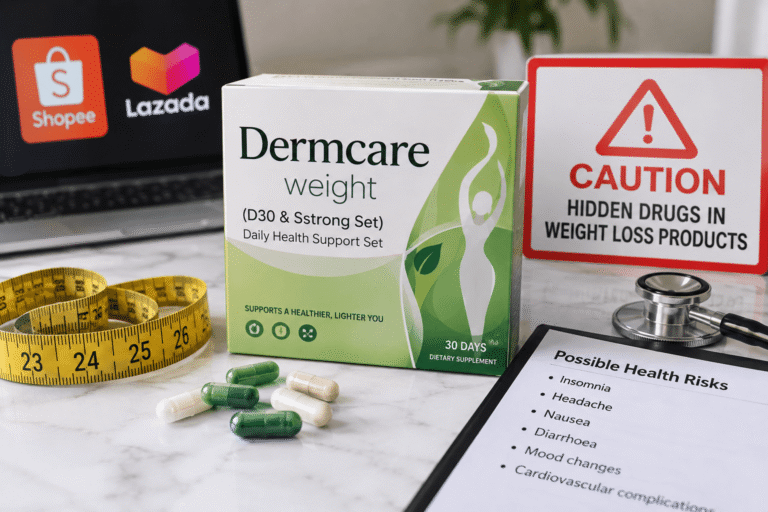
Hidden drugs in weight loss supplements can expose consumers to prescription medicines without their knowledge, without appropriate dosing instructions and without medical monitoring. Singapore’s Health Sciences Authority has warned the public not to purchase or consume Dermcare weight (D30 & Sstrong Set) Daily Health Support Set after laboratory testing detected six undeclared active pharmaceutical ingredients. [1]
The substances were sibutramine, amiloride, hydrochlorothiazide, fluoxetine, orlistat and bisacodyl. Together, these medicines can influence appetite, mood, heart rate, blood pressure, kidney function, fluid balance, electrolytes, fat absorption and bowel activity.
HSA advised consumers to stop taking the product immediately and consult a doctor if they feel unwell or are concerned about their health. The authority also worked with Shopee and Lazada to remove the identified listings, while investigations into the sellers remained ongoing at the time of the announcement. [1]
What HSA Found in the Weight Loss Product
The product was marketed online for weight loss and reportedly claimed to contain vitamins and natural ingredients such as cinnamon. Promotional claims included appetite control, detoxification, increased fat burning and improved metabolism. [1]
According to HSA, it was supplied as four packets containing loose tablets and capsules. Morning and evening dosage instructions were printed in Thai. The packets carried the words “Dermcare clinic,” but did not display the product name or provide a complete ingredient list. [1]
Laboratory testing found the following six undeclared substances:
- Sibutramine
- Amiloride
- Hydrochlorothiazide
- Fluoxetine
- Orlistat
- Bisacodyl
The public notice did not specify how much of each substance was present. This uncertainty is important because the risks of these medicines depend on the dose, frequency of use, duration of exposure, health of the consumer and other medicines being taken.
Key Details From the HSA Warning
| Alert detail | Confirmed information |
|---|---|
| Product name | Dermcare weight (D30 & Sstrong Set) Daily Health Support Set |
| Intended purpose | Weight loss and appetite control |
| Sales platforms identified | Shopee and Lazada |
| Product format | Four packets containing loose tablets and capsules |
| Labeling concern | No complete product name or ingredient list on the packets |
| Undeclared substances | Sibutramine, amiloride, hydrochlorothiazide, fluoxetine, orlistat and bisacodyl |
| Regulatory action | Online listings removed with platform cooperation |
| Consumer advice | Stop taking the product immediately and consult a doctor if unwell or concerned |
| Seller investigation | Investigations were ongoing, including against one local seller |
This action is more accurately described as a regulatory warning and online listing removal rather than a conventional batch recall. The HSA notice did not identify specific batch numbers, manufacturing dates or expiration dates. [1]
Why This Combination Is Medically Concerning
The concern is not limited to six separate lists of side effects. The substances can interact physiologically and may create overlapping risks.
Sibutramine can increase heart rate and blood pressure. Fluoxetine affects serotonin signaling and can also cause agitation, insomnia, gastrointestinal symptoms and changes in mood or behavior. Amiloride and hydrochlorothiazide alter fluid and electrolyte balance. Orlistat can cause diarrhea and interfere with fat absorption, while bisacodyl stimulates bowel movements and may contribute to further fluid and electrolyte loss.
A consumer experiencing rapid weight reduction could incorrectly believe that body fat is being lost. Some of the change may instead reflect water loss from the diuretics and loss of bowel contents caused by the laxative.
The Six Undeclared Drugs and Their Potential Effects
| Undeclared substance | Recognized medical use | Main concern when taken unknowingly |
|---|---|---|
| Sibutramine | Former prescription appetite suppressant | Increased blood pressure, rapid heart rate, irregular heartbeat, heart attack and stroke risk |
| Amiloride | Potassium sparing diuretic | High potassium, weakness, low blood pressure, kidney related complications and abnormal heart rhythms |
| Hydrochlorothiazide | Thiazide diuretic | Dehydration, low sodium, low potassium, dizziness, weakness and low blood pressure |
| Fluoxetine | Antidepressant used for selected psychiatric and eating disorders | Insomnia, nausea, mood changes, serotonin toxicity and interactions with other medicines |
| Orlistat | Weight management medicine that reduces dietary fat absorption | Oily stools, urgency, abdominal discomfort, diarrhea and reduced absorption of fat soluble vitamins |
| Bisacodyl | Stimulant laxative used for short term constipation | Abdominal cramps, diarrhea, dehydration, electrolyte imbalance and bowel dysfunction with prolonged use |
Sibutramine Is the Most Serious Finding
Sibutramine was previously used as a prescription appetite suppressant. HSA states that its sale has been disallowed in Singapore since 2010 because of increased cardiovascular risk. Reported adverse effects include high blood pressure, irregular heartbeat, hallucinations and mood changes. [1]
Sibutramine works partly by inhibiting the reuptake of norepinephrine and serotonin. These actions may suppress appetite, but they can also increase cardiovascular and neurological risks.
The Sibutramine Cardiovascular Outcomes Trial studied adults with overweight or obesity who also had cardiovascular disease, type 2 diabetes or both. A major cardiovascular outcome occurred in 11.4 percent of participants assigned to sibutramine compared with 10 percent assigned to placebo. Nonfatal heart attack occurred in 4.1 percent versus 3.2 percent, while nonfatal stroke occurred in 2.6 percent versus 1.9 percent. [2]
These percentages should not be directly applied to every consumer who used the Dermcare product. The trial involved an older, medically high risk population receiving controlled doses over an extended period. However, its findings help explain why regulators regard hidden sibutramine exposure as a serious concern.
The danger is greater when the consumer does not know the dose and has not been screened for high blood pressure, coronary artery disease, abnormal heart rhythms, previous stroke, kidney disease or interactions with other medicines.
Sibutramine and Fluoxetine May Increase Serotonin Related Risk
Fluoxetine is a selective serotonin reuptake inhibitor. It is legitimately prescribed for conditions such as depression, obsessive compulsive disorder, bulimia nervosa and certain other psychiatric disorders. It should not be placed secretly in a weight loss product.
Sibutramine also inhibits serotonin reuptake. Historical prescribing information for sibutramine warned that it generally should not be administered with other serotonergic substances without appropriate clinical justification and observation. The same prescribing information noted that serotonin syndrome has been reported when two serotonin reuptake inhibitors are used together. [3]
The presence of both sibutramine and fluoxetine therefore creates a clinically plausible risk of excessive serotonin activity. HSA did not report a confirmed case of serotonin syndrome caused by this particular product, and the quantities of the two substances were not disclosed. Nevertheless, the combination warrants caution.
Symptoms that may suggest serotonin toxicity include agitation, confusion, excessive sweating, fever, rapid heartbeat, unstable blood pressure, tremor, muscle stiffness, muscle jerking, exaggerated reflexes, vomiting, diarrhea or seizures. [3,4]
The risk may be higher in a person already taking an antidepressant or another serotonin affecting medicine, such as tramadol, fentanyl, lithium, buspirone, some migraine treatments, dextromethorphan containing cough medicines or St. John’s wort. [4]
Amiloride and Hydrochlorothiazide Can Disturb Fluid and Electrolyte Balance
Amiloride and hydrochlorothiazide are diuretics. They increase the removal of salt and water through the kidneys but affect potassium differently.
Hydrochlorothiazide may reduce sodium and potassium levels, particularly when excessive urination, poor fluid intake, vomiting or diarrhea is also present. Amiloride conserves potassium and may cause potassium to rise dangerously, especially in people with kidney impairment or diabetes. [5]
These two medicines are sometimes prescribed together for selected patients. Their recognized use as a medical combination does not make hidden exposure safe. Legitimate prescribing requires a known dose, review of kidney function, assessment of other medicines and, when indicated, monitoring of electrolytes.
Without these safeguards, the final effect on potassium may be difficult to predict. A consumer may develop low potassium, high potassium, low sodium, dehydration or a combination of abnormalities.
Possible warning symptoms include:
| Possible symptom | Potential concern |
|---|---|
| Dizziness when standing | Low blood pressure or dehydration |
| Severe weakness or unusual fatigue | Sodium or potassium disturbance |
| Muscle cramps | Dehydration or electrolyte imbalance |
| Tingling or abnormal sensations | Possible potassium disturbance |
| Palpitations or irregular heartbeat | Electrolyte or cardiovascular effect |
| Reduced urination | Dehydration or kidney dysfunction |
| Fainting | Significant blood pressure, rhythm or electrolyte abnormality |
Consumers should not attempt to correct these symptoms with potassium tablets, electrolyte powders or potassium containing salt substitutes without medical advice. Amiloride can raise potassium, while hydrochlorothiazide and diarrhea can lower it. Symptoms alone cannot determine which abnormality is present.
Orlistat Requires Appropriate Dietary and Medical Guidance
Orlistat is a recognized weight management medicine that reduces the absorption of some dietary fat. Its legitimate use involves clear dosing, meal related instructions and dietary guidance.
Common effects include oily spotting, loose or fatty stools, increased bowel movements, urgency, difficulty controlling bowel movements and abdominal discomfort. It can also reduce the absorption of vitamins A, D, E and K. [6]
These effects become more concerning when the person does not know that orlistat is present. The consumer may be unable to connect gastrointestinal symptoms with the product or may interpret oily stools and diarrhea as evidence of detoxification.
Orlistat should not be hidden in loose capsules with no ingredient declaration. A person taking medicines for thyroid disease, epilepsy, diabetes, blood clot prevention or organ transplantation may also require individualized review because of potential treatment interactions or changes in drug absorption.
Bisacodyl Does Not Produce Body Fat Loss
Bisacodyl is a stimulant laxative intended mainly for the short term treatment of constipation. It stimulates bowel movement but does not meaningfully prevent the absorption of calories.
Any immediate reduction on the weighing scale is likely to reflect bowel emptying and fluid loss rather than loss of stored body fat.
Excessive or prolonged use may cause abdominal cramps, persistent diarrhea, dehydration and disturbances in sodium, potassium or magnesium. Long term overuse may also impair normal bowel function and contribute to continuing constipation. [7]
When bisacodyl is combined with orlistat and two diuretics, the possibility of diarrhea, excessive fluid loss, dizziness and electrolyte imbalance becomes more clinically significant.
Rapid Weight Reduction May Be Misleading
A genuine reduction in body fat develops through sustained changes in energy balance and metabolism. It is not the same as losing water through urination or reducing bowel contents through laxatives.
This product contained two diuretics and one stimulant laxative. A consumer could therefore see the scale fall quickly while becoming dehydrated or developing an electrolyte imbalance.
Warning signs that should not be mistaken for successful detoxification include persistent diarrhea, frequent urination, dry mouth, marked thirst, dizziness, weakness, muscle cramps, rapid heartbeat and reduced urine output after an initial period of excessive urination.
Rapid changes produced through hidden medicines are not evidence that a product is safely improving metabolism.
Who May Face Greater Risk?
Any consumer may develop adverse effects, but the following groups may require especially prompt medical assessment:
| Higher risk group | Reason for concern |
|---|---|
| People with high blood pressure | Sibutramine may raise blood pressure further |
| People with coronary artery disease, heart failure or abnormal rhythms | Increased cardiovascular and electrolyte related risk |
| People with previous heart attack or stroke | Sibutramine has been associated with increased cardiovascular events |
| People with kidney disease | Greater risk from diuretics, dehydration and high potassium |
| People with diabetes | Amiloride related hyperkalemia risk may be higher, particularly with reduced kidney function |
| Older adults | Greater susceptibility to dehydration, low sodium, falls and medicine interactions |
| People taking antidepressants | Additional fluoxetine and sibutramine may increase serotonergic effects |
| People taking blood pressure medicines or diuretics | Possible excessive blood pressure reduction, dehydration and electrolyte changes |
| People taking potassium supplements or salt substitutes | Amiloride may cause dangerous potassium elevation |
| People with ongoing vomiting or diarrhea | Greater risk of dehydration and kidney injury |
Pregnant or breastfeeding consumers, adolescents and people with eating disorders should also obtain professional medical advice because exposure to multiple undeclared medicines creates additional uncertainty.
What Consumers Should Do
HSA advises anyone using Dermcare weight (D30 & Sstrong Set) Daily Health Support Set to stop taking it immediately. [1]
Consumers should not continue the product to complete a course, reduce the dose on their own or restart it after symptoms improve.
The remaining packets, loose tablets, online order details, seller information and photographs of the listing should be retained. These may help a doctor, pharmacist, poison information service or regulator identify what was taken.
A clinician should be told:
- When the product was started
- How many tablets or capsules were taken each day
- When the last dose was taken
- Whether weight changed rapidly
- What symptoms developed
- Which prescription medicines, supplements and herbal products are also being used
Consumers should not induce vomiting unless specifically instructed by a poison information service or emergency professional.
When to Seek Emergency Medical Care
Emergency evaluation is appropriate for chest pain, severe shortness of breath, fainting, a very rapid or irregular heartbeat, sudden facial weakness, weakness on one side, difficulty speaking, seizures or loss of consciousness.
Urgent medical assessment is also needed when agitation or confusion occurs together with fever, heavy sweating, tremor, muscle stiffness, diarrhea or rapid heartbeat. This combination may indicate serotonin toxicity.
Persistent vomiting, severe diarrhea, profound weakness, reduced urination, severe dizziness, inability to stand, severe muscle cramps or worsening palpitations may indicate significant dehydration, kidney dysfunction or an electrolyte disturbance.
A person does not need to wait for every symptom to appear before seeking help.
What a Doctor May Check After Exposure
The appropriate assessment depends on the amount consumed, duration of use, symptoms, medical history and concurrent medicines. Not every person will require every investigation.
A clinician may assess blood pressure, heart rate, temperature, hydration, postural blood pressure changes, heart rhythm and neurological findings. Mental status, tremor, muscle tone and reflexes may be evaluated when serotonin toxicity is suspected.
An electrocardiogram may be appropriate for palpitations, chest discomfort, fainting, severe weakness, known heart disease or suspected electrolyte disturbance.
Blood tests may include sodium, potassium, magnesium, bicarbonate, glucose and kidney function. Additional investigations may be selected according to symptoms and examination findings.
A complete medicine review is particularly important. Consumers may already be taking antidepressants, blood pressure medicines, diuretics, potassium products, diabetes medicines or other weight management treatments that could increase the risk.
Hidden Drugs in Weight Loss Supplements Are an International Problem
Although this specific warning concerns a product identified in Singapore, pharmaceutical adulteration of slimming products has been reported in many countries.
In July 2026, the United States Food and Drug Administration renewed a warning about another weight loss product, Detoxi Slim, after additional testing continued to detect undeclared sibutramine. The FDA noted that products promoted for weight loss may be represented as natural even when they contain hidden pharmaceutical substances. [8]
A 2025 systematic review and meta analysis examined laboratory studies of natural products marketed for weight reduction. Sibutramine was the most frequently identified pharmaceutical adulterant. The researchers reported substantial variation among the included studies, products, countries and sampling methods. [9]
The study should not be interpreted as evidence that all herbal or dietary supplements are adulterated. Products selected for laboratory investigation may already have appeared suspicious or come from higher risk markets. However, the findings demonstrate that undeclared pharmaceutical ingredients in weight loss products are a recurring international public health problem.
How to Recognize a High Risk Weight Loss Product
Certain features should increase suspicion. These include loose unidentified tablets, incomplete ingredient lists, no batch information, no traceable manufacturer and instructions supplied only through private messages or unfamiliar language.
Consumers should also be cautious when a product promises dramatic results within days, claims to melt fat without dietary changes, describes diarrhea as cleansing or detoxification, or states that the product is completely natural while producing insomnia, palpitations, dry mouth or marked appetite suppression.
The presence of a product on a large marketplace does not prove that regulators have reviewed its ingredients or verified its safety. Online platforms may remove listings after receiving regulatory information, but similar products can reappear under different seller names, packaging or product descriptions.
A Safer Approach to Weight Management
Safe weight management begins with determining why weight has increased and whether related health conditions are present. Relevant factors may include eating patterns, physical activity, sleep, stress, mental health, thyroid disease, diabetes, polycystic ovary syndrome, menopause, medication related weight gain and genetic susceptibility.
A responsible program should include a realistic nutrition plan, appropriate physical activity, behavior change support, regular monitoring and a strategy for maintaining progress.
The National Institute of Diabetes and Digestive and Kidney Diseases notes that an initial reduction of approximately 5 to 10 percent of starting weight over six months may be a reasonable goal for many adults. Individual targets should be adjusted according to health status, age and clinical needs. [10]
Prescription weight management medicines can benefit appropriately selected patients, but they require verified ingredients, known doses, screening for contraindications, interaction review and follow up. Concealing prescription medicines inside a supplement removes these essential protections.
What This Warning Means for Herbal and Ayurvedic Products
This incident should not be interpreted as evidence that every herbal or traditional health product is unsafe. The specific problem was the presence of six undeclared pharmaceutical substances in a product promoted with natural ingredient and weight loss claims.
Secretly adding sibutramine, antidepressants, diuretics or laxatives is not an Ayurvedic treatment principle. It is pharmaceutical adulteration.
A responsibly prepared Ayurvedic or herbal product should provide a complete ingredient list, accurate quantities, dosage information, traceable manufacturing details, batch identification and appropriate safety guidance. Quality systems should also include raw material authentication and testing for contaminants, heavy metals, pesticides, microbial contamination and undeclared pharmaceutical ingredients where relevant.
Herbal weight management should be individualized and should not depend on causing persistent diarrhea, excessive urination, dehydration or stimulant like symptoms. Such reactions should be treated as possible adverse effects rather than promoted as proof of detoxification.
The appropriate response to adulteration is stronger quality control, laboratory verification, transparent labeling and adverse event reporting. These safeguards protect patients while preserving trust in authentic, responsibly manufactured traditional medicine.
Frequently Asked Questions
Was the Dermcare weight product recalled?
HSA issued a public warning, arranged removal of the identified Shopee and Lazada listings and began investigating the sellers. The announcement did not describe a conventional batch recall or provide batch numbers.
Is a small amount of sibutramine safe?
The quantity found in the product was not stated publicly. A consumer therefore cannot know whether the exposure was small or whether multiple doses produced significant accumulation. Because sibutramine was undeclared and has important cardiovascular risks, continued use cannot be considered safe.
Can diuretics and laxatives reduce body fat?
Diuretics mainly reduce body water, while laxatives empty bowel contents. They do not produce meaningful loss of stored body fat. Rapid scale changes caused by these medicines may return when normal hydration and bowel contents are restored.
What should someone do if they took the product but feels normal?
The product should still be stopped. People with heart disease, high blood pressure, kidney disease, diabetes or concurrent medicine use should consider contacting a clinician even if no obvious symptoms are present.
Should potassium or electrolyte drinks be taken after stopping the product?
Not automatically. Amiloride may raise potassium, while hydrochlorothiazide and diarrhea may lower potassium. Laboratory testing may be required to determine whether supplementation is appropriate.
Can the product be used safely outside Singapore?
The concern is based on the substances detected in the product, not only where it was sold. A product containing six undeclared pharmaceutical ingredients should not be used simply because it was purchased or delivered in another country.
Clinical Bottom Line
Dermcare weight (D30 & Sstrong Set) Daily Health Support Set was found to contain six undeclared active pharmaceutical ingredients: sibutramine, amiloride, hydrochlorothiazide, fluoxetine, orlistat and bisacodyl.
The combination may affect the cardiovascular, neurological, psychiatric, renal and gastrointestinal systems. It may also cause dehydration, electrolyte abnormalities, serotonin related toxicity and misleading short term changes in body weight.
Consumers should follow HSA’s advice to stop the product immediately. Anyone who feels unwell, has underlying medical conditions or takes other medicines should obtain appropriate medical advice. Chest pain, fainting, severe palpitations, neurological symptoms, seizures or signs of serotonin toxicity require urgent assessment.
Safe weight management depends on transparent ingredients, verified manufacturing, appropriate clinical screening and measurable long term health goals. Rapid weight reduction caused by hidden diuretics, laxatives, an antidepressant and a banned appetite suppressant is not a safe substitute for evidence based care.
References
- Health Sciences Authority. (2026, September 8). HSA alert: Weight loss product sold online found to contain banned substance and potent medicinal ingredients. Government of Singapore.
https://www.hsa.gov.sg/announcements/weight-loss-product-sold-online-banned-substance/
Brief: Primary regulatory alert confirming the product name, online sales platforms, six detected substances, listing removal, enforcement action, and consumer advice. - James, W. P. T., Caterson, I. D., Coutinho, W., Finer, N., Van Gaal, L. F., Maggioni, A. P., Torp-Pedersen, C., Sharma, A. M., Shepherd, G. M., Rode, R. A., & Renz, C. L. (2010). Effect of sibutramine on cardiovascular outcomes in overweight and obese subjects. The New England Journal of Medicine, 363(10), 905–917.
https://pubmed.ncbi.nlm.nih.gov/20818901/
Brief: The SCOUT cardiovascular outcomes trial found increased rates of nonfatal heart attack and nonfatal stroke among high-risk participants receiving sibutramine. - U.S. Food and Drug Administration. (2005). Meridia, sibutramine hydrochloride monohydrate capsules: Prescribing information.
https://www.accessdata.fda.gov/drugsatfda_docs/label/2005/020632s024lbl.pdf
Brief: Historical prescribing information describing sibutramine’s serotonin and norepinephrine effects, cardiovascular monitoring requirements, and warnings concerning serotonergic combinations. - U.S. National Library of Medicine. (n.d.). Prozac: Fluoxetine hydrochloride capsule. DailyMed.
https://dailymed.nlm.nih.gov/dailymed/drugInfo.cfm?setid=c88f33ed-6dfb-4c5e-bc01-d8e36dd97299
Brief: Official medicine labeling describing fluoxetine indications, adverse effects, serotonin syndrome symptoms, and interactions with other serotonergic medicines. - U.S. National Library of Medicine. (2022). Amiloride hydrochloride and hydrochlorothiazide tablets: Prescribing information. DailyMed.
https://dailymed.nlm.nih.gov/dailymed/drugInfo.cfm?setid=8b2c581a-f955-4a8e-bf85-e768e903fd10
Brief: Official labeling explaining hyperkalemia, dehydration, sodium disturbances, kidney-related contraindications, and the need for electrolyte monitoring. - American Society of Health-System Pharmacists. (2024, July 20). Orlistat. MedlinePlus Drug Information.
https://medlineplus.gov/druginfo/meds/a601244.html
Brief: Patient medicine information describing orlistat’s effect on fat absorption, gastrointestinal adverse effects, and reduced absorption of fat-soluble vitamins. - National Health Service. (2024, August 2). Common questions about bisacodyl.
https://www.nhs.uk/medicines/bisacodyl/common-questions-about-bisacodyl/
Brief: Clinical patient guidance explaining that prolonged laxative use may cause diarrhea and disturbances in sodium, potassium, and magnesium. - U.S. Food and Drug Administration. (2026, July 14). Public notification: Detoxi Slim contains hidden drug ingredient.
https://www.fda.gov/drugs/medication-health-fraud-notifications/public-notification-detoxi-slim-contains-hidden-drug-ingredient
Brief: A regulatory example showing the continued detection of undeclared sibutramine in a product promoted for weight loss. - Phan, D. T. A., Kongkaew, C., Heinrich, M., Dao, T. C. M., & Vo, T. H. (2025). From “traditional” remedies to “modern” supplements: A systematic review and meta-analysis of pharmaceutical adulteration in weight-loss natural products. Frontiers in Pharmacology, 16, 1594975.
https://www.frontiersin.org/journals/pharmacology/articles/10.3389/fphar.2025.1594975/full
Brief: Systematic review of laboratory studies identifying pharmaceutical adulteration as a recurring problem and sibutramine as the most frequently detected adulterant. - National Institute of Diabetes and Digestive and Kidney Diseases. (n.d.). Choosing a safe and successful weight-loss program. National Institutes of Health.
https://www.niddk.nih.gov/health-information/weight-management/choosing-a-safe-successful-weight-loss-program
Brief: Evidence-based guidance on realistic weight-loss goals, nutrition, physical activity, behavior change, monitoring, and long-term weight maintenance.