
4.99

Verified by

Featured in Madison Graph

We are honored to be featured in Madison Graph for our groundbreaking work in integrative antiviral medicine.

Madison PR Herpes Cure

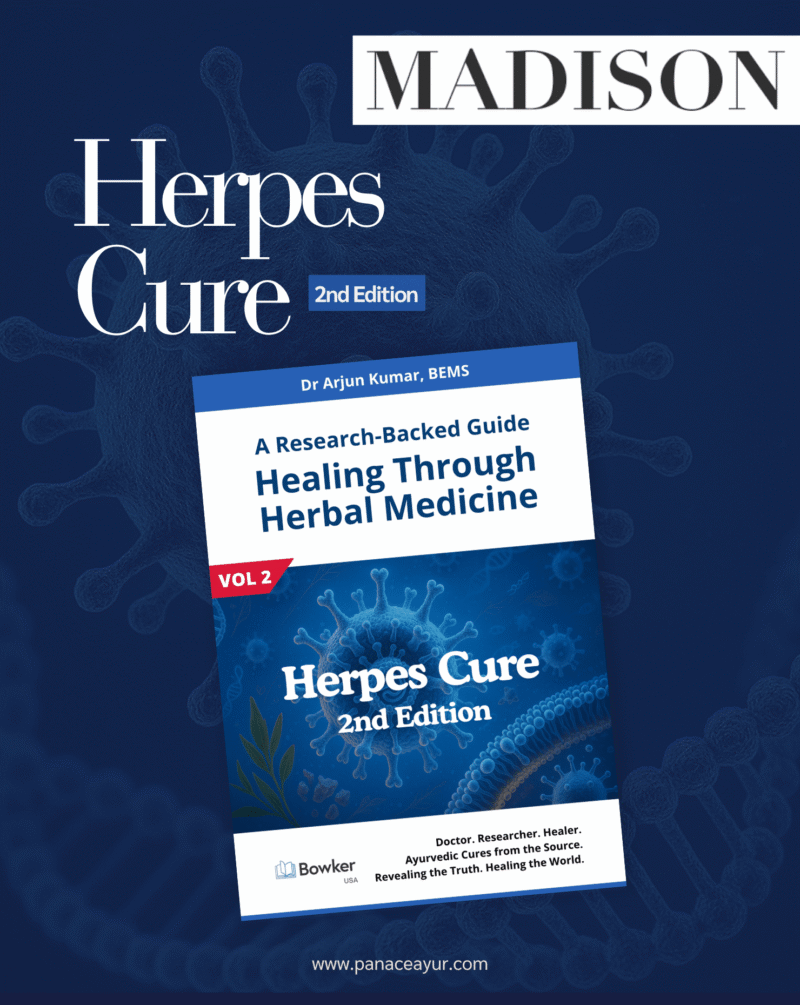
We are honored to be featured in Madison Graph for our groundbreaking work in integrative antiviral medicine. The article, titled “Herpes Healing Beyond the Stigma: A Journey to Natural Recovery,” highlights the core philosophy behind Dr. Arjun Kumar’s book Herpes Cure: A Research-Backed Guide to Healing Through Herbal Medicine. It explores how centuries-old Ayurvedic science—combined with modern virological insights—is reshaping the future of herpes treatment. The feature also sheds light on the personal healing journey, the science behind herbal formulations, and the global movement away from symptom management toward true viral eradication.

This recognition marks a major step in validating herbal medicine as a serious, research-driven option for patients worldwide.

Panaceayur's Doctor

Panaceayur International Private Limited
Senior Doctor Writer at Panaceayur

Read this Next

Photorealistic molecular visualization of MGMT promoter methylation in glioblastoma with brain tumor biomarker analysis, DNA pathways and integrative Ayurveda support concept
MGMT Promoter Methylation in Glioblastoma: Meaning, Temozolomide Response, Prognosis and Integrative Ayurveda Support
MGMT promoter methylation in glioblastoma can influence temozolomide response, prognosis and treatment planning. This patient-friendly guide explains MGMT methylated vs unmethylated results, key questions for neuro-oncology, and how supportive Ayurveda may help strength, digestion, sleep and treatment tolerance alongside standard care.
IDH-mutant glioma brain MRI with molecular diagnosis concept showing glioma tumor region and IDH1 IDH2 mutation pathway.
IDH-Mutant Glioma: Meaning, Prognosis, Vorasidenib, and Treatment Options
IDH-mutant glioma is a molecularly defined brain tumor that often behaves differently from IDH-wildtype glioblastoma. This article explains what IDH mutation means, prognosis, vorasidenib eligibility, surgery, MRI follow-up, radiation, chemotherapy, recurrence risk, and how integrative Ayurvedic support may help patients improve strength, quality of life, and treatment tolerance under proper medical supervision.
Doctor explaining mammogram calcifications and flat epithelial atypia findings to female patient during breast imaging consultation
Flat Epithelial Atypia: Surgery or Surveillance?
Flat epithelial atypia on a breast biopsy does not always mean surgery is necessary. Learn when pure FEA may be safely monitored with imaging, when excision is recommended, how upgrade risk is assessed, and what radiology-pathology concordance means for your next steps.
A glioma patient resting in a hospital bed while connected to medical monitoring equipment during treatment.
Glioma vs Glioblastoma: Differences in Grade, Growth, Treatment, and Survival
Glioma vs glioblastoma explained in simple medical language. Learn the key differences in tumor grade, growth speed, symptoms, diagnosis, treatment, recurrence risk, survival outlook, and how supervised Ayurvedic support may help patients protect strength, quality of life, and treatment recovery.
Photorealistic medical desk with pathology report, microscope, and mammogram for breast biopsy results explained
Breast Biopsy Results Explained: ADH, ALH, FEA, Papilloma, and Radial Scar
Breast biopsy results explained in clear language for patients confused by ADH, ALH, FEA, papilloma, radial scar, complex sclerosing lesion, LCIS, or B3 breast lesions. Learn what these findings mean, when surgery or follow-up may be needed, and what questions to ask your breast specialist.
Young female glioblastoma patient discussing MRI brain scan results with neuro-oncology doctors in a modern hospital consultation room.
Glioblastoma Survival Rate: Life Expectancy by Age, Surgery, MGMT, and Treatment Response
Glioblastoma survival rate varies by age, surgery, MGMT methylation, IDH status, treatment response, and overall health. This patient-focused guide explains life expectancy, survival statistics, recurrence, MRI changes, and treatment factors in a clear, medically reviewed format for families seeking realistic guidance.