




- Quick answer: what does high PTH normal calcium mean?
- What PTH Does and Why It Can Be High When Calcium Is Normal
- Why Normal Calcium Can Still Be Confusing When PTH Is High
- Most Common Causes of High PTH With Normal Calcium
- Why Normal Calcium Should Not Be Ignored When PTH Is High
- Could This Be Normocalcemic Primary Hyperparathyroidism?
- What Tests Should You Ask Your Doctor About?
- Lab Pattern Table: What Different PTH and Calcium Results May Suggest
- Symptoms Patients May Notice
- Treatment Depends on the Cause
- Ayurveda and Natural Support: Classical Wisdom, Modern Safety, and Gulf Patient Guidance
- Country-Specific Ayurveda and Supplement Safety Notes
- Natural Ways to Support Bone, Kidney, and Calcium Health
- When to See a Doctor Sooner
- Country-Specific Patient Pathway: What to Do Next
- Common Mistakes Patients Make With High PTH and Normal Calcium
- Myths and Facts About High PTH With Normal Calcium
- FAQ
- Reference
If your blood test shows a high PTH normal calcium pattern, it is natural to feel confused. Many patients worry when they see parathyroid hormone marked as “high,” especially because they may also read online about parathyroid tumors, kidney stones, bone loss, or surgery. At the same time, a “normal” calcium result can make the report look less serious. The truth is that high PTH with normal calcium is not a final diagnosis. It is a lab pattern that needs proper interpretation.
PTH, or parathyroid hormone, is made by the parathyroid glands and helps keep calcium levels balanced in the blood. It works through the bones, kidneys, and vitamin D-related calcium absorption pathways [1]. Because PTH and calcium are closely connected, doctors usually interpret both results together rather than judging either number on its own [1,2].
A high PTH but normal calcium result can happen for several reasons. Sometimes, the body raises PTH to keep calcium in the normal range when there is low vitamin D, low calcium intake, poor calcium absorption, kidney disease, or excess calcium loss in the urine [2]. In other cases, the pattern may represent an early stage of primary hyperparathyroidism, before calcium becomes clearly high [7].
Less commonly, persistent high PTH with normal calcium may suggest normocalcemic primary hyperparathyroidism. This diagnosis should not be made from one blood test. Current expert guidance defines it as elevated PTH with normal albumin-adjusted calcium and normal ionized calcium on repeated testing over 3–6 months, after secondary causes have been ruled out [6].
So the right response is neither panic nor dismissal. The next step is to understand the pattern: repeat the correct blood tests, check vitamin D and kidney function, review calcium intake, medicines, and supplements, and ask your doctor whether urine calcium testing or specialist evaluation is needed [1,2,6,7].
Quick answer: what does high PTH normal calcium mean?
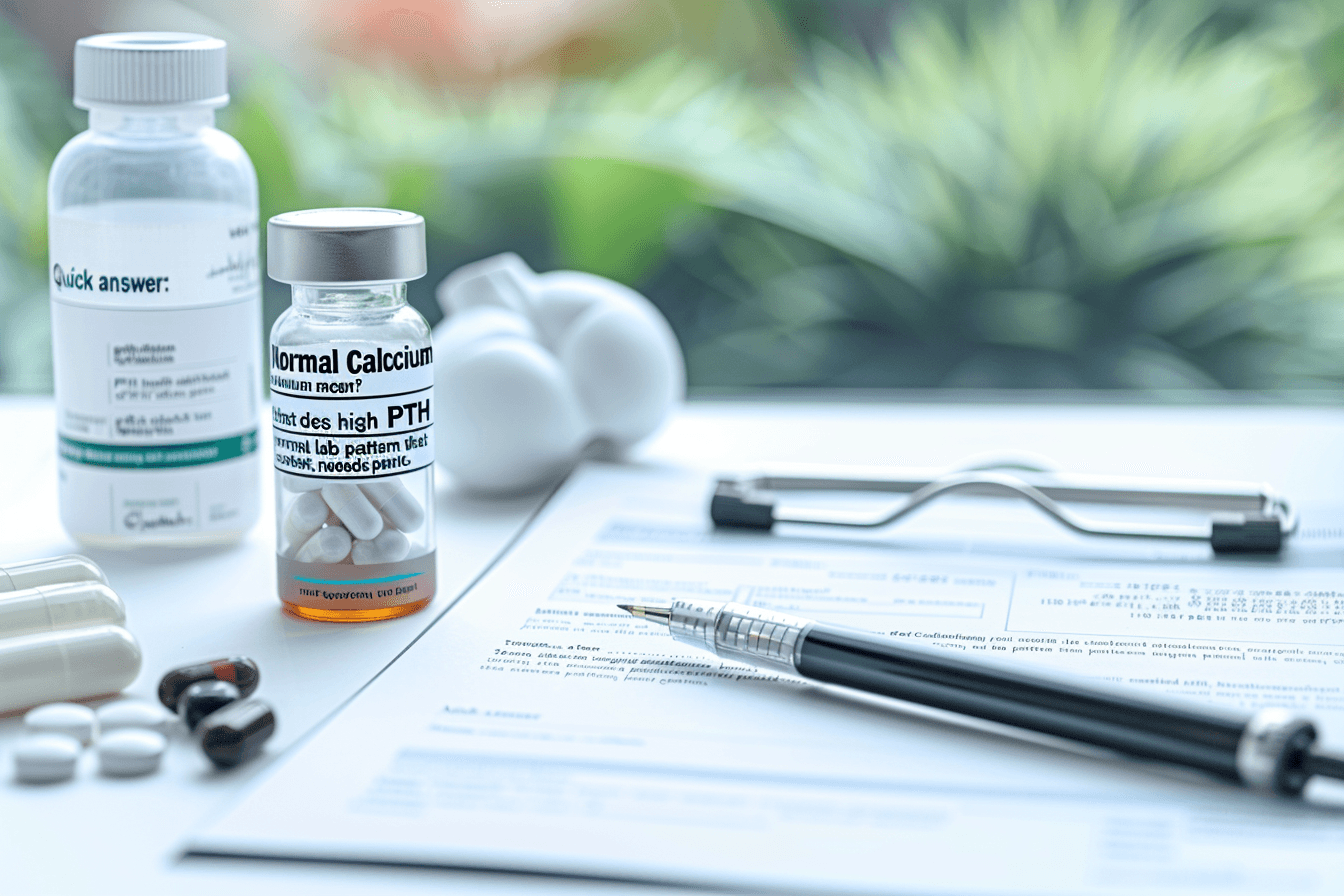
A high PTH normal calcium result means your parathyroid hormone is above the lab’s reference range, but your blood calcium is still reported as normal. This does not point to one single disease by itself. It is a pattern that needs to be interpreted with other results, especially vitamin D level, kidney function, albumin-adjusted calcium, ionized calcium, phosphate, magnesium, and sometimes urine calcium [1,2,6].
In many patients, high PTH with normal calcium is a compensatory response. This means the body may be increasing PTH to keep calcium stable. Common reasons include low vitamin D, low calcium intake, poor calcium absorption, chronic kidney disease, or excess calcium loss through the urine [2,8,11]. In these situations, the parathyroid glands may not be the main problem; they may be responding to another imbalance.
Less commonly, this pattern can be related to early primary hyperparathyroidism or normocalcemic primary hyperparathyroidism. Normocalcemic primary hyperparathyroidism is considered only when PTH remains high on repeated testing, while both albumin-adjusted calcium and ionized calcium remain normal, and secondary causes such as vitamin D deficiency, kidney disease, malabsorption, low calcium intake, and medication effects have been ruled out [6,7].
The key point is that a normal calcium result does not automatically mean the high PTH should be ignored. At the same time, a high PTH result does not automatically mean you have a parathyroid tumor or need surgery. The safest next step is to confirm the pattern with repeat testing and look for the reason behind the elevated PTH [1,2,6,7].
A practical way to think about it is this: high PTH with normal calcium is a signal to investigate, not a reason to panic. Your doctor may want to review your vitamin D level, kidney function, calcium intake, medications, supplements, and urine calcium before deciding whether this is secondary hyperparathyroidism or possible normocalcemic primary hyperparathyroidism [2,6,8,11].
What PTH Does and Why It Can Be High When Calcium Is Normal

To understand a high PTH normal calcium result, it helps to first understand what parathyroid hormone is supposed to do. PTH, or parathyroid hormone, is made by four small parathyroid glands in the neck. These glands sit close to the thyroid, but they have a very different job. Their main role is to keep the level of calcium in your blood within a safe and stable range [1,7].
Calcium is important for bone strength, muscle contraction, nerve signaling, heart rhythm, and many other body functions. Because calcium is so important, the body controls it very tightly. PTH acts like part of the body’s calcium-control system. When the body senses that calcium is too low, not being absorbed well, or being lost too much through the kidneys, the parathyroid glands may release more PTH [1].
PTH helps maintain blood calcium in three main ways. It can signal the bones to release calcium into the bloodstream. It helps the kidneys hold on to calcium instead of losing too much in urine. It also supports vitamin D-related pathways that help the intestines absorb calcium from food [1,7].
This is why a person can have high PTH but normal calcium. In some cases, the body is using extra PTH to keep calcium within the normal range. This can happen when vitamin D is low, calcium intake is too low, calcium absorption is poor, kidney function is reduced, or too much calcium is being lost in the urine [1,2,7].
For this reason, a PTH result should not be interpreted by itself. A high PTH normal calcium pattern only becomes meaningful when it is reviewed alongside vitamin D, kidney function, albumin-adjusted calcium, ionized calcium, phosphate, magnesium, urine calcium, medications, and supplements. The goal is to find out whether the parathyroid glands are overactive on their own, or whether they are responding to another imbalance in the body [1,2,7].
In simple terms, high PTH with normal calcium is not automatically a parathyroid tumor, and it is not automatically harmless. It is a signal that the calcium-control system needs a closer look. This is why repeat testing and proper evaluation are important before deciding whether the cause is secondary hyperparathyroidism, early primary hyperparathyroidism, or normocalcemic primary hyperparathyroidism [2,6,7].
For a deeper explanation of how calcium and parathyroid hormone work together, read our complete guide to hyperparathyroidism.
https://panaceayur.com/parathyroid-disorders-symptoms-diagnosis-ayurvedic-cure/
Why Normal Calcium Can Still Be Confusing When PTH Is High
A high PTH normal calcium result can be confusing because many patients assume that a normal calcium number means there is no parathyroid or calcium problem. In reality, calcium results need context. A single “normal” calcium value does not always explain why parathyroid hormone is elevated, and it does not always rule out early or normocalcemic parathyroid disease [3,6].
Most routine blood tests measure total calcium. Total calcium includes calcium that is attached to proteins in the blood, mainly albumin, as well as calcium that is freely available for the body to use [3,5]. This matters because if albumin is abnormal, the total calcium result may not reflect the true biologically active calcium status. That is why doctors may look at albumin-adjusted calcium, sometimes called corrected calcium, especially when PTH is high [5,6].
Another important test is ionized calcium. Ionized calcium is the active form of calcium that is not bound to proteins [4]. In some patients, total calcium may appear normal, but ionized calcium gives a clearer picture of calcium balance. This is especially important when doctors are considering normocalcemic primary hyperparathyroidism, because expert guidelines require both albumin-adjusted calcium and ionized calcium to remain normal before that diagnosis is made [6].
Reference ranges can also add confusion. A result marked “normal” simply means it falls within that laboratory’s reference range. It does not always mean the result is ideal for that person or that it should be ignored when another related hormone, such as PTH, is abnormal. For example, a person with calcium near the upper end of normal and repeatedly high PTH may need a different level of follow-up than someone with low-normal calcium and low vitamin D.
Trends are often more useful than one isolated result. A single blood test may be affected by hydration, recent supplements, diet, kidney function, lab variation, albumin level, or timing of testing. That is why repeat testing is often needed before deciding whether high PTH with normal calcium is due to vitamin D deficiency, kidney-related secondary hyperparathyroidism, low calcium intake, medication effects, or possible normocalcemic primary hyperparathyroidism [2,6].
This is also why imaging should not be the first step. A neck ultrasound, sestamibi scan, or CT scan cannot explain a high PTH normal calcium pattern by itself. The diagnosis must first be established through blood and urine testing. Imaging is usually considered later, mainly when surgery is being planned for confirmed primary hyperparathyroidism [6].
The practical takeaway is simple: normal calcium is reassuring, but it is not the end of the investigation if PTH remains high. Patients should ask whether their calcium was albumin-adjusted, whether ionized calcium is needed, whether vitamin D and kidney function have been checked, and whether urine calcium testing would help clarify the cause [3,4,5,6].
Most Common Causes of High PTH With Normal Calcium

A high PTH normal calcium result can happen for several reasons. In many cases, the parathyroid glands are not necessarily “diseased”; they may be responding to another imbalance in the body. This is called secondary hyperparathyroidism, where PTH rises because the body is trying to maintain normal calcium levels despite another problem such as low vitamin D, low calcium intake, kidney disease, poor absorption, or calcium loss in the urine [2,8,11].
The cause matters because treatment is very different depending on the reason. A patient with low vitamin D may need vitamin D correction and repeat testing. A patient with reduced kidney function may need kidney-focused management. A patient with persistent high PTH, normal vitamin D, normal kidney function, and normal calcium on repeated testing may need evaluation for normocalcemic primary hyperparathyroidism [6].
Vitamin D deficiency
Vitamin D deficiency is one of the most common reasons for high PTH with normal calcium. Vitamin D helps the body absorb calcium from food. When vitamin D is low, the body may absorb less calcium from the intestines. To keep blood calcium stable, the parathyroid glands may release more PTH [8].
This can create a confusing lab pattern: calcium may still look normal, but PTH is high because the body is working harder to maintain that normal calcium level. This is why a 25-hydroxy vitamin D test is usually important when evaluating elevated PTH with normal calcium [6,8].
However, patients should not assume that taking high-dose vitamin D is automatically the answer. Vitamin D treatment should be based on blood results, kidney function, calcium level, urine calcium risk, and medical supervision, especially when parathyroid disease is being considered [8].
Low calcium intake
Low calcium intake can also contribute to high PTH. If a person does not get enough calcium from food, the body may raise PTH to help maintain blood calcium levels. This can happen in people who avoid dairy without replacing calcium from other foods, follow restrictive diets, have poor nutrition, or have long-term low calcium intake [2].
This does not mean every patient should immediately start calcium supplements. In some people, especially those with kidney stones, high urine calcium, kidney disease, or suspected primary hyperparathyroidism, extra calcium may not be appropriate without proper testing. The safer approach is to review dietary calcium, blood calcium, kidney function, vitamin D, and urine calcium before making changes [6,9].
Poor calcium absorption
Some patients may eat enough calcium but still not absorb it well. Poor absorption can occur with digestive conditions such as celiac disease, inflammatory bowel disease, chronic diarrhea, or after bariatric surgery. When calcium absorption is reduced, PTH may rise to help keep blood calcium in the normal range [2,6].
This is why the history matters. If a patient has digestive symptoms, previous intestinal surgery, unexplained weight loss, chronic diarrhea, or known malabsorption, the high PTH normal calcium pattern may not be a primary parathyroid problem. It may be the body’s response to reduced calcium availability.
Chronic kidney disease or reduced kidney function
The kidneys play a major role in calcium, phosphorus, vitamin D, and PTH balance. When kidney function declines, the body may have difficulty maintaining normal mineral balance. PTH may rise as part of this process, even before calcium becomes clearly abnormal [11].
This is why creatinine and estimated glomerular filtration rate, or eGFR, are important in the workup. If kidney function is reduced, high PTH may be related to secondary hyperparathyroidism rather than primary hyperparathyroidism [6,11]. Healthdirect Australia also notes that chronic kidney disease can cause continued PTH production even when calcium is normal [13].
For patients, this means a high PTH result should not be interpreted without checking kidney function. A normal calcium number alone does not tell the whole story.
Too much calcium loss in urine
Some people lose too much calcium through the urine. When this happens, the body may raise PTH to protect blood calcium levels. A 24-hour urine calcium test, or sometimes a urine calcium-creatinine ratio, can help doctors understand whether urine calcium loss is contributing to the problem [9].
Urine calcium testing is also useful because it can help evaluate kidney stone risk and clarify calcium-related disorders. This is especially important for patients who have a history of kidney stones, flank pain, blood in the urine, or unexplained bone loss [9].
Medication effects
Certain medicines can affect calcium, vitamin D, kidney handling of calcium, bone metabolism, or PTH interpretation. These may include lithium, some diuretics, anti-seizure medicines, antiresorptive osteoporosis medicines, and other drugs depending on the patient’s history [6].
Patients should not stop prescribed medicine on their own. The correct step is to bring a full medication and supplement list to the doctor, including prescription medicines, over-the-counter products, vitamin D, calcium tablets, herbal products, and Ayurvedic preparations. This helps the clinician decide whether the high PTH normal calcium pattern may be medication-related.
Early primary hyperparathyroidism
In some patients, high PTH with normal calcium may represent an early stage of primary hyperparathyroidism. Primary hyperparathyroidism happens when one or more parathyroid glands produce too much PTH inappropriately. Classically, this causes high calcium, but some patients may show abnormal PTH before calcium becomes clearly elevated [6,7].
This is one reason repeat testing is important. A single normal calcium result does not always prove that the pattern is harmless. Doctors may want to follow calcium and PTH over time, especially if calcium is high-normal, PTH remains elevated, or the patient has kidney stones, osteoporosis, fractures, or other suggestive findings [6,7].
Normocalcemic primary hyperparathyroidism
Normocalcemic primary hyperparathyroidism is a specific diagnosis where PTH remains high while both albumin-adjusted calcium and ionized calcium remain normal. It should only be considered after secondary causes have been ruled out, including vitamin D deficiency, kidney disease, low calcium intake, malabsorption, medication effects, and abnormal urine calcium patterns [6].
This diagnosis should not be made from one blood test. Current expert guidance requires repeated findings over time, usually over 3–6 months, before normocalcemic primary hyperparathyroidism is diagnosed [6].
The key message is that high PTH with normal calcium has a broad differential diagnosis. The goal is not to guess the cause from one lab report. The goal is to identify the pattern, check the missing pieces, and separate common secondary causes from possible early or normocalcemic primary hyperparathyroidism.
Why Normal Calcium Should Not Be Ignored When PTH Is High

A high PTH normal calcium result can feel reassuring because the calcium number is still within the lab range. However, normal calcium does not always mean the result should be dismissed. When PTH remains elevated, it may be a sign that the body is working harder than usual to keep calcium stable, or that the parathyroid glands are beginning to behave abnormally [6,7].
The main reason this pattern matters is that PTH is not an isolated marker. It is part of a wider calcium-control system involving vitamin D, the kidneys, bones, intestines, and urine calcium loss. If one part of this system is under stress, PTH may rise before calcium becomes obviously abnormal. That is why a high PTH result should be reviewed with vitamin D level, kidney function, albumin-adjusted calcium, ionized calcium, phosphate, magnesium, and sometimes a 24-hour urine calcium test [6,9,10,11].
Normal calcium can also be temporary or incomplete information. A routine blood test usually measures total calcium, but doctors may also need albumin-adjusted calcium or ionized calcium to understand the true calcium status. This is especially important when normocalcemic primary hyperparathyroidism is being considered, because that diagnosis requires repeatedly normal adjusted calcium and normal ionized calcium, not just one normal total calcium result [6].
Ignoring persistent high PTH may delay the diagnosis of treatable causes. For example, vitamin D deficiency, low calcium intake, malabsorption, and kidney-related mineral imbalance can often be identified and managed once the correct tests are done. If these causes are missed, PTH may remain elevated and continue placing stress on the bone and kidney system [6,8,11].
Persistent PTH elevation may also matter for bone health. In primary hyperparathyroidism, excess PTH can contribute to bone thinning and increased fracture risk over time [7]. Even when calcium is normal, doctors may consider bone density testing if the pattern persists, especially in patients with osteopenia, osteoporosis, fragility fractures, menopause-related bone loss, long-term steroid use, or unexplained bone pain [6,10].
Kidney health is another reason not to ignore the result. Calcium and PTH disorders can be linked with kidney stones, urine calcium abnormalities, and kidney function changes [7,9,11]. A patient with high PTH and normal calcium who also has kidney stones, flank pain, blood in the urine, reduced eGFR, or recurrent urinary stone history should be evaluated more carefully.
At the same time, high PTH with normal calcium should not create panic. It does not automatically mean cancer, a parathyroid tumor, or immediate surgery. Many cases are secondary, meaning the parathyroid glands are responding to another issue such as low vitamin D, reduced kidney function, low calcium intake, poor absorption, medication effects, or urinary calcium loss [2,6,11].
The safest approach is to confirm the pattern before making conclusions. One abnormal PTH result is not enough to diagnose normocalcemic primary hyperparathyroidism. Current expert guidance requires repeated testing over time and exclusion of secondary causes before that diagnosis is made [6].
In practical terms, the question is not simply, “Is my calcium normal?” The better question is, “Why is my PTH high if my calcium is normal?” That question leads to the right evaluation: repeat calcium and PTH together, check vitamin D and kidney function, review medicines and supplements, consider urine calcium testing, and assess bone or kidney risk when appropriate [6,9,10,11].
For patients, the key message is this: normal calcium is reassuring, but persistent high PTH deserves follow-up. It is a signal to investigate the calcium-control system carefully, not a reason to ignore the result or assume the worst.
Could This Be Normocalcemic Primary Hyperparathyroidism?

A high PTH normal calcium result can sometimes raise the question of normocalcemic primary hyperparathyroidism. This is a form of primary hyperparathyroidism where parathyroid hormone stays elevated, but blood calcium remains within the normal range. However, this diagnosis should be made carefully. It is not confirmed by one high PTH result and one normal calcium result [6].
Normocalcemic primary hyperparathyroidism is considered only when PTH remains high on repeated testing, while both albumin-adjusted calcium and ionized calcium remain normal. Expert guidance also requires doctors to rule out secondary causes of high PTH, such as vitamin D deficiency, chronic kidney disease, calcium malabsorption, low calcium intake, and certain medications [6].
This distinction is important because secondary hyperparathyroidism is often more common than true normocalcemic primary hyperparathyroidism. In secondary hyperparathyroidism, the parathyroid glands are reacting to another problem in the body. For example, if vitamin D is low, calcium absorption is poor, or kidney function is reduced, PTH may rise to keep calcium balanced. In that situation, the parathyroid glands may be responding appropriately rather than acting independently [6].
Primary hyperparathyroidism is different. In primary hyperparathyroidism, one or more parathyroid glands become overactive and produce too much PTH. Classically, this leads to high calcium, but some patients may first show high PTH while calcium is still normal. NIDDK notes that this can sometimes be an early phase of primary hyperparathyroidism before calcium levels begin to rise [7].
For patients, the key message is this: normocalcemic primary hyperparathyroidism is possible, but it is a diagnosis of exclusion. That means other explanations must be checked first. A doctor may want to review vitamin D, kidney function, albumin-adjusted calcium, ionized calcium, phosphate, magnesium, urine calcium, medication history, supplement use, and digestive absorption before deciding that the parathyroid glands are the primary problem [6,7].
When doctors may suspect normocalcemic primary hyperparathyroidism
Doctors may consider normocalcemic primary hyperparathyroidism when the following pattern is present:
- PTH remains high on more than one test.
- Total calcium is normal after albumin adjustment.
- onized calcium is normal.
- Vitamin D deficiency has been corrected or ruled out.
- Kidney function is not significantly reduced.
- There is no clear evidence of poor calcium absorption.
- Calcium intake is not severely low.
- Medication effects have been considered.
- Urine calcium has been reviewed when appropriate.
- The pattern persists over time rather than appearing once.
This careful approach protects patients from two common mistakes: dismissing the result because calcium is normal, or assuming too quickly that a parathyroid tumor or surgery is the answer.
Can normocalcemic primary hyperparathyroidism affect bones or kidneys?
It can, but the risk varies from person to person. Some patients are discovered during evaluation for osteoporosis, low bone density, fragility fractures, or kidney stones. NIDDK notes that doctors may check PTH when a patient has osteoporosis or another disorder affecting bone strength, and that tests such as bone density scans, kidney imaging, vitamin D testing, and 24-hour urine collection may be used after hyperparathyroidism is suspected or diagnosed [7].
This does not mean every patient with high PTH and normal calcium has bone or kidney damage. It means the result should be interpreted in the full clinical picture. A patient with normal bone density, no kidney stones, normal vitamin D, normal kidney function, and stable labs may be managed differently from a patient with osteoporosis, recurrent stones, or worsening results.
Why imaging should not come first
A common mistake is to ask for a parathyroid scan immediately after seeing high PTH. This is usually not the right first step. Parathyroid ultrasound, sestamibi scan, 4D-CT, or other imaging tests do not diagnose normocalcemic primary hyperparathyroidism by themselves. The diagnosis is biochemical first, meaning it depends on the pattern of blood and urine tests.
Imaging is generally used later, mainly when primary hyperparathyroidism has been biochemically confirmed and surgery is being considered. Before imaging, the priority is to confirm whether the high PTH normal calcium pattern is persistent and whether secondary causes have been excluded [6].
What this means for the patient
If your report shows high PTH with normal calcium, do not assume the result is harmless, but do not assume the worst either. Normocalcemic primary hyperparathyroidism is one possible explanation, but it should only be considered after a proper workup.
A practical next step is to ask your doctor:
- Was my calcium adjusted for albumin?
- Should ionized calcium be checked?
- Was my vitamin D level measured?
- Is my kidney function normal?
- Could my diet, gut absorption, medicines, or supplements explain the high PTH?
- Do I need urine calcium testing?
- Do I need bone density testing or kidney stone evaluation?
- Should I see an endocrinologist?
The purpose of this evaluation is to separate common, correctable causes from true parathyroid overactivity. That is the safest way to understand a high PTH normal calcium result without unnecessary panic, unnecessary imaging, or delayed diagnosis.
What Tests Should You Ask Your Doctor About?

When you have a high PTH normal calcium result, the goal is not to order every possible test immediately. The goal is to confirm whether the pattern is real, find out why PTH is elevated, and check whether bones or kidneys may be affected. A single high PTH result should usually be interpreted alongside calcium, vitamin D, kidney function, urine calcium, medication history, and symptoms [6,10]. Expert guidance recommends biochemical evaluation with adjusted calcium, PTH, vitamin D, phosphorus, and kidney function markers, with skeletal and renal assessment when primary hyperparathyroidism is suspected.
Table: What Tests Should You Ask Your Doctor About?
| Test | Why it matters | What it may help clarify |
|---|---|---|
| Repeat calcium and PTH together | Confirms whether the pattern persists | Temporary lab variation vs persistent high PTH |
| Albumin-adjusted calcium | Gives a more accurate interpretation of total calcium | Whether “normal calcium” is truly normal after albumin correction |
| Ionized calcium | Measures the active form of calcium | Important when normocalcemic primary hyperparathyroidism is being considered |
| 25-hydroxy vitamin D | Checks for vitamin D deficiency | A common cause of secondary hyperparathyroidism |
| Creatinine and eGFR | Checks kidney function | Whether reduced kidney function may be raising PTH |
| Phosphate | Helps assess mineral balance | Kidney-related or parathyroid-related mineral changes |
| Magnesium | Helps interpret calcium and PTH regulation | Low or abnormal magnesium can complicate calcium balance |
| 24-hour urine calcium | Measures calcium loss in urine | Urine calcium loss, kidney stone risk, and related calcium disorders |
| DXA / DEXA bone density scan | Assesses bone density | Osteopenia, osteoporosis, or fracture risk |
| Kidney ultrasound or renal imaging | Looks for kidney stones or kidney calcium deposits | Renal effects of calcium/PTH disorders |
Repeat calcium and PTH together
The first step is often to repeat calcium and PTH together, preferably under similar testing conditions and with the same laboratory if possible. This helps confirm whether the high PTH normal calcium pattern is persistent or whether it was a one-time abnormal result. Normocalcemic primary hyperparathyroidism should not be diagnosed from one test; current expert guidance requires elevated PTH with normal adjusted calcium and normal ionized calcium on repeated measurements over time, after secondary causes have been ruled out [6].
Albumin-adjusted calcium
Many routine blood tests report total calcium, but total calcium can be affected by albumin, a protein in the blood. If albumin is abnormal, the calcium number may need adjustment before it is interpreted. This is why doctors often look at albumin-adjusted calcium when evaluating high PTH with normal calcium [3,5,6].
For patients, this means the question is not only, “Is my calcium normal?” A better question is, “Was my calcium adjusted for albumin?”
Ionized calcium
Ionized calcium is the active form of calcium in the blood. It is especially important when total calcium appears normal but PTH remains high. If a doctor is considering normocalcemic primary hyperparathyroidism, ionized calcium becomes a key test because the diagnosis requires both normal albumin-adjusted calcium and normal ionized calcium [4,6]. The Fifth International Workshop specifically recommends ionized calcium when normocalcemic primary hyperparathyroidism is being considered.
Vitamin D level
A 25-hydroxy vitamin D test is one of the most important tests in this situation. Low vitamin D can reduce calcium absorption from the gut, causing the body to raise PTH to keep blood calcium stable. This is one of the common reasons patients may have high PTH but normal calcium [8].
Vitamin D testing also helps prevent guesswork. Some patients may need vitamin D correction, but high-dose vitamin D should not be started blindly, especially if there is concern about parathyroid disease, kidney stones, kidney disease, or abnormal calcium handling [8]. MedlinePlus notes that vitamin D helps the body absorb calcium and that too much vitamin D from supplements can cause health problems.
Kidney function: creatinine and eGFR
Kidney function is essential in the workup of high PTH normal calcium. The kidneys help regulate vitamin D, calcium, phosphorus, and PTH. If kidney function is reduced, PTH may rise as part of secondary hyperparathyroidism [11].
This is why creatinine and estimated glomerular filtration rate, or eGFR, are commonly checked. If eGFR is reduced, the high PTH may be kidney-related rather than a primary parathyroid disorder [6,11]. The National Kidney Foundation explains that chronic kidney disease can disturb calcium, phosphorus, vitamin D, and PTH balance.
Phosphate and magnesium
Phosphate can help doctors understand whether the calcium-PTH pattern is related to kidney function, parathyroid function, or broader mineral imbalance. Magnesium may also be checked because abnormal magnesium can interfere with normal calcium and PTH regulation.
These tests are not always discussed by patients, but they can be useful when the cause of elevated PTH is not obvious from calcium, vitamin D, and kidney function alone [6,11].
24-hour urine calcium
A 24-hour urine calcium test can be very helpful when PTH is high but calcium is normal. It measures how much calcium is being lost in the urine over a full day. This can help identify excess urine calcium loss, kidney stone risk, and certain calcium-related disorders [9].
This test is especially important if the patient has a history of kidney stones, flank pain, blood in the urine, osteoporosis, unexplained bone loss, or abnormal calcium results. MedlinePlus notes that urine calcium testing may be used in the evaluation of kidney stones, kidney function, parathyroid disorders, and abnormal calcium blood test results [9].
Bone density scan
A DXA or DEXA scan measures bone density. It may be considered if high PTH persists, especially in patients with osteopenia, osteoporosis, fracture history, menopause-related bone loss, long-term steroid use, or unexplained bone pain.
This matters because long-term PTH excess can affect bone health in primary hyperparathyroidism. The Fifth International Workshop includes DXA assessment as part of skeletal evaluation in primary hyperparathyroidism [6].
Kidney imaging
Kidney ultrasound or other renal imaging may be considered if there is concern about kidney stones or kidney calcium deposits. This is more likely if the patient has flank pain, recurrent stones, blood in the urine, high urine calcium, or a previous history of kidney stones.
Guidelines include renal evaluation with kidney function testing, urine calcium assessment, and imaging for nephrolithiasis or nephrocalcinosis when primary hyperparathyroidism is suspected [6,10].
Medication and supplement review
This is not a blood test, but it is one of the most important parts of the evaluation. Patients should bring a complete list of prescription medicines, over-the-counter products, calcium tablets, vitamin D, herbal products, Ayurvedic medicines, protein powders, and other supplements.
Some medicines and supplements can affect calcium, vitamin D, kidney handling of calcium, bone metabolism, or PTH interpretation. A careful review helps avoid misdiagnosis and prevents unnecessary testing or treatment [6].
The key message is simple: a high PTH normal calcium result should be investigated step by step. The most useful tests are the ones that answer the real question: is the PTH high because the parathyroid glands are overactive, or because the body is responding to another correctable problem?
Lab Pattern Table: What Different PTH and Calcium Results May Suggest

A high PTH normal calcium result is best understood by looking at the full lab pattern, not just one number. PTH, calcium, vitamin D, kidney function, phosphate, magnesium, and urine calcium can point in different directions. The table below gives a patient-friendly way to understand common patterns, but it should not be used to self-diagnose. Your doctor should interpret these results with your symptoms, medical history, medicines, supplements, and repeat testing [2,6].
| Lab pattern | What it may suggest | Why it happens | What doctors may check next |
|---|---|---|---|
| High PTH + normal calcium + low vitamin D | Secondary hyperparathyroidism from vitamin D deficiency | Low vitamin D can reduce calcium absorption, so PTH rises to keep calcium stable | 25-hydroxy vitamin D, repeat calcium and PTH after correction, kidney function |
| High PTH + normal calcium + reduced eGFR | Kidney-related secondary hyperparathyroidism | Reduced kidney function can disturb calcium, phosphorus, vitamin D, and PTH balance | Creatinine, eGFR, phosphate, vitamin D, kidney-focused evaluation |
| High PTH + normal calcium + normal vitamin D + normal kidney function | Possible normocalcemic primary hyperparathyroidism | PTH remains high without an obvious secondary cause | Repeat PTH and calcium, albumin-adjusted calcium, ionized calcium, urine calcium |
| High PTH + high calcium | More typical primary hyperparathyroidism pattern | One or more parathyroid glands may be producing too much PTH inappropriately | Endocrinology review, urine calcium, bone density scan, kidney imaging |
| High PTH + low calcium | Secondary hyperparathyroidism or calcium/vitamin D deficiency pattern | The body raises PTH in response to low calcium availability | Vitamin D, dietary calcium review, magnesium, kidney function, malabsorption evaluation |
| Normal or high PTH + high-normal calcium | Possible early primary hyperparathyroidism or evolving pattern | Calcium may be near the upper end of normal while PTH remains inappropriate | Repeat fasting calcium and PTH, albumin-adjusted calcium, ionized calcium |
| High PTH + normal calcium + high urine calcium | Urinary calcium loss or kidney stone risk pattern | Excess calcium loss in urine may stimulate PTH or indicate abnormal calcium handling | 24-hour urine calcium, kidney stone evaluation, dietary and medication review |
| High calcium + low PTH | Usually not primary hyperparathyroidism | The parathyroid glands are appropriately lowering PTH in response to high calcium | Evaluation for non-parathyroid causes of high calcium |
High PTH, normal calcium, and low vitamin D
This is one of the most common patterns patients encounter. Vitamin D helps the body absorb calcium from food. When vitamin D is low, the body may raise PTH to protect the blood calcium level. This can make calcium look normal on the lab report even though the body is under calcium-related stress [8].
In this situation, doctors may check 25-hydroxy vitamin D, review calcium intake, and repeat calcium and PTH after vitamin D has been corrected. The goal is to see whether PTH comes down once vitamin D and calcium availability improve. However, vitamin D should be corrected under medical guidance, especially if there is a history of kidney stones, kidney disease, high urine calcium, or suspected parathyroid disease [6,8].
High PTH, normal calcium, and reduced kidney function
When kidney function is reduced, PTH can rise even if calcium is still normal. The kidneys help regulate vitamin D activation, calcium balance, and phosphorus balance. In chronic kidney disease, this system can become disrupted, leading to secondary hyperparathyroidism [11].
This is why eGFR and creatinine are essential when interpreting high PTH with normal calcium. If kidney function is reduced, the elevated PTH may be kidney-related rather than due to a primary parathyroid gland problem [6,11].
High PTH, normal calcium, normal vitamin D, and normal kidney function
This is the pattern that often raises the question of normocalcemic primary hyperparathyroidism. However, this diagnosis requires caution. It should only be considered when PTH remains high on repeated testing, albumin-adjusted calcium and ionized calcium remain normal, and secondary causes have been ruled out [6].
Doctors may also review medications, calcium intake, malabsorption risk, phosphate, magnesium, and urine calcium before making this diagnosis. The key point is that normocalcemic primary hyperparathyroidism is not diagnosed from one isolated high PTH result [6].
High PTH and high calcium
High PTH with high calcium is more typical of classic primary hyperparathyroidism. In this situation, one or more parathyroid glands may be producing too much PTH even though calcium is already high. This pattern usually needs a more direct evaluation for primary hyperparathyroidism [6].
Doctors may assess kidney stone risk, bone density, urine calcium, vitamin D, and kidney function. Imaging may be considered later if the biochemical diagnosis is confirmed and surgery is being planned [6].
High PTH, normal calcium, and high urine calcium
Urine calcium can provide important clues that blood calcium alone cannot show. A 24-hour urine calcium test can help identify excess calcium loss in urine, kidney stone risk, and certain calcium-related disorders [9].
This pattern matters especially for patients with kidney stones, flank pain, blood in the urine, recurrent stone history, osteoporosis, or unexplained bone loss. High urine calcium may change the management plan, including how doctors approach calcium intake, vitamin D correction, and stone prevention [9].
Why one pattern may change over time
A patient’s lab pattern can change. For example, someone may first show high PTH with normal calcium, then later develop high calcium. Another patient may have high PTH due to low vitamin D, and the PTH may improve once vitamin D is corrected. A third patient may continue to have high PTH despite normal vitamin D and kidney function, requiring further evaluation [6,8,11].
This is why repeat testing is so important. One lab report gives a snapshot. Repeated calcium, PTH, vitamin D, kidney function, and urine calcium results show the trend. The trend is often what helps doctors separate secondary hyperparathyroidism from early or normocalcemic primary hyperparathyroidism [6].
The main takeaway is simple: a high PTH normal calcium result should be interpreted as a pattern, not a diagnosis. The next step is to identify which pattern you fit into and whether the PTH is responding to another correctable issue or coming from primary parathyroid overactivity.
Symptoms Patients May Notice

Many people with elevated PTH and normal calcium have no clear symptoms. This is one reason the result can be confusing: the lab report may look abnormal, but the patient may feel completely well. In other cases, symptoms may be present but vague, such as tiredness, body aches, constipation, low mood, or difficulty concentrating. These symptoms can overlap with many other conditions, so they cannot confirm parathyroid disease by themselves [12,13,14].
The NHS notes that many people with hyperparathyroidism have no symptoms or only mild symptoms, and the condition may be found during blood tests done for another reason [12]. When symptoms do occur, they may include fatigue, muscle weakness, thirst, frequent urination, constipation, nausea, low mood, and general aches or pains [12].
Why symptoms can be difficult to interpret
Symptoms are not always directly caused by the parathyroid glands. For example, fatigue and muscle weakness may be related to low vitamin D, anemia, thyroid disease, kidney function, sleep problems, menopause, chronic stress, or other medical conditions. Bone pain or low bone density may be connected to long-term PTH elevation, but it may also have other causes [7,8,13].
This is why blood and urine testing are more reliable than symptoms alone. A doctor usually needs to review calcium, albumin-adjusted calcium, ionized calcium, vitamin D, kidney function, phosphate, magnesium, and urine calcium before deciding what the elevated PTH means [6].
Common symptoms reported by patients
Patients with parathyroid or calcium-related problems may report:
- Fatigue or low energy
- Muscle weakness
- Bone, joint, or body aches
- Constipation
- Nausea or reduced appetite
- Increased thirst
- Frequent urination
- Brain fog or difficulty concentrating
- Low mood or irritability
- Kidney stones
- Low bone density, osteopenia, or osteoporosis
- Fragility fractures
These symptoms are not specific. For example, a patient with tiredness and constipation does not automatically have primary hyperparathyroidism. But if these symptoms occur along with repeatedly abnormal PTH results, kidney stones, osteoporosis, high-normal calcium, or abnormal urine calcium, further evaluation becomes more important [6,7,9].
Bone-related symptoms and findings
PTH has a direct relationship with bone metabolism. In primary hyperparathyroidism, excess PTH can contribute to loss of bone density over time, especially at certain skeletal sites [6,7]. Some patients do not feel bone pain but discover the issue after a DXA scan shows osteopenia or osteoporosis.
This is why bone density testing may be considered when PTH remains high, particularly in people with fracture history, osteoporosis, menopause-related bone loss, long-term steroid use, or unexplained bone pain [6,7,10].
Kidney-related symptoms and findings
Kidney stones are an important clue in calcium and parathyroid evaluation. Patients may experience flank pain, blood in the urine, recurrent urinary stone episodes, or a history of stones found on imaging. Urine calcium testing and kidney imaging may help doctors understand whether calcium handling is affecting the kidneys [7,9,10].
A normal calcium result does not completely remove the need to consider kidney history. If PTH remains high and the patient has kidney stones or reduced kidney function, the workup should be more careful [6,9,11].
When symptoms deserve faster medical review
Patients should seek medical advice sooner if they have repeated kidney stones, unexplained fractures, known osteoporosis, worsening kidney function, repeated abnormal calcium results, severe weakness, confusion, dehydration, vomiting, or symptoms of very low calcium such as tingling, cramps, or spasms [3,7,12].
The main point is that symptoms can support the clinical picture, but they do not make the diagnosis. The most reliable approach is to match symptoms with repeat lab results, vitamin D status, kidney function, urine calcium, bone density, and medical history [6,7].
Treatment Depends on the Cause

Treatment for elevated PTH with normal calcium is not the same for every patient. The right plan depends on why the PTH is high in the first place. In some people, the parathyroid glands are reacting to another correctable problem, such as low vitamin D, low calcium intake, poor absorption, kidney disease, medication effects, or calcium loss in the urine. In others, persistent results may point toward early or normocalcemic primary hyperparathyroidism [2,6,7].
This is why treatment should not begin with guesswork. The first step is usually to confirm the pattern, check vitamin D and kidney function, review medications and supplements, and consider urine calcium, bone density, or kidney imaging when appropriate [6,9,10]. Once the cause is clearer, treatment becomes more targeted.
| Possible cause | Treatment focus | Important caution |
|---|---|---|
| Low vitamin D | Correct vitamin D under medical guidance and repeat labs | Avoid unsupervised high-dose vitamin D |
| Low calcium intake | Improve dietary calcium if appropriate | Do not self-prescribe high-dose calcium if stones or kidney disease are possible |
| Poor absorption | Evaluate gut conditions or prior surgery | Supplements may not work well if absorption is the issue |
| Reduced kidney function | Manage kidney-related mineral imbalance | Treatment should be kidney-focused |
| Medication effect | Review medicines with clinician | Do not stop prescribed medicines without advice |
| High urine calcium | Assess stone risk and urine calcium pattern | Calcium and vitamin D plans may need adjustment |
| Normocalcemic primary hyperparathyroidism | Specialist monitoring and bone/kidney assessment | Surgery is not decided from one abnormal PTH result |
If vitamin D is low
Low vitamin D is one of the most common reasons PTH rises while calcium remains normal. Vitamin D helps the body absorb calcium from food. If vitamin D is low, the parathyroid glands may produce more PTH to help maintain blood calcium [8].
In this situation, a clinician may recommend vitamin D replacement and then repeat calcium and PTH testing. The goal is to see whether PTH improves once vitamin D is corrected. However, patients should not start high-dose vitamin D without medical guidance, especially if there is a history of kidney stones, kidney disease, high urine calcium, or suspected parathyroid disease [8,9].
If calcium intake is too low
Some patients have elevated PTH because their body is not getting enough calcium from the diet. This can happen with restrictive diets, long-term dairy avoidance without suitable alternatives, poor nutrition, or low intake of calcium-rich foods [2].
Treatment may involve improving dietary calcium rather than immediately taking supplements. This distinction matters. A person with low dietary calcium may benefit from nutritional correction, but a person with kidney stones, high urine calcium, or possible primary hyperparathyroidism may need a more careful plan [6,9].
If poor absorption is the problem
When the gut does not absorb calcium or vitamin D properly, PTH may rise even if the patient is eating reasonably well. This may happen with celiac disease, inflammatory bowel disease, chronic diarrhea, malabsorption syndromes, or after bariatric surgery [2,6].
In these cases, treatment should focus on the underlying absorption issue. Simply adding supplements may not fully correct the problem if the body cannot absorb them properly. A doctor may review digestive symptoms, past surgery, diet, weight changes, vitamin D level, and other nutritional markers.
If kidney disease is involved
Kidney function is central to calcium, phosphorus, vitamin D, and PTH balance. When kidney function is reduced, PTH can rise as part of secondary hyperparathyroidism [11]. This does not always mean the parathyroid glands are the primary problem. Often, they are responding to changes caused by chronic kidney disease.
Treatment may involve managing phosphorus, vitamin D status, calcium balance, and kidney disease itself. The National Kidney Foundation describes treatment goals in secondary hyperparathyroidism as lowering phosphorus and PTH while keeping calcium and vitamin D in a healthy range [11]. Patients with reduced eGFR may need care from a kidney specialist as well as their primary doctor or endocrinologist.
If medicines or supplements are contributing
Some medicines can affect calcium balance, vitamin D metabolism, bone turnover, kidney calcium handling, or PTH interpretation. Supplements can also complicate the picture, especially calcium, vitamin D, magnesium, multivitamins, herbal products, and Ayurvedic preparations [6].
The safest approach is to bring a complete list of medicines and supplements to the appointment. This includes prescriptions, over-the-counter tablets, protein powders, herbal products, and imported remedies. Patients should not stop prescribed medicines on their own. Instead, the clinician can decide whether a medicine may be contributing and whether any change is appropriate.
If urine calcium is abnormal
A 24-hour urine calcium test may change the treatment plan. If urine calcium is high, the patient may have a higher risk of kidney stones or abnormal calcium handling. If urine calcium is low, it may suggest low intake, poor absorption, or other calcium-balance issues [9].
This is especially important before making decisions about calcium or vitamin D supplementation. A patient with a history of stones may need a different approach from someone with low dietary calcium and no stone risk.
If normocalcemic primary hyperparathyroidism is suspected
If PTH remains high despite normal vitamin D, normal kidney function, appropriate calcium intake, no clear medication cause, and normal albumin-adjusted and ionized calcium, doctors may consider normocalcemic primary hyperparathyroidism [6].
Management depends on the full clinical picture. Some patients may be monitored with repeat blood tests, bone density scans, kidney evaluation, and symptom review. Others may need specialist assessment if there is osteoporosis, fragility fracture, kidney stones, worsening results, or other risk factors [6,7,10].
Surgery is not usually decided from one high PTH result. Current expert guidance emphasizes careful diagnosis first, including repeated testing and exclusion of secondary causes [6]. In normocalcemic primary hyperparathyroidism, decisions about surgery require specialist judgment because the evidence base is more limited than in classic high-calcium primary hyperparathyroidism [6].
If calcium becomes high
If calcium later becomes high while PTH remains high or inappropriately normal, the pattern becomes more typical of primary hyperparathyroidism [6,7]. In that situation, doctors may assess kidney stones, kidney function, urine calcium, bone density, fracture risk, age, symptoms, and surgical suitability [6,7,10].
Parathyroid surgery may be considered for confirmed primary hyperparathyroidism in selected patients, especially when guideline criteria are met or complications are present [6,10]. Imaging tests such as ultrasound, sestamibi scan, or 4D-CT are usually used after the biochemical diagnosis is established and when surgery is being planned, not as the first step in diagnosis [6,10].
The practical takeaway
Treatment should match the cause. For many patients, the solution may involve correcting vitamin D, improving dietary calcium, addressing absorption problems, managing kidney-related mineral imbalance, reviewing medications, or monitoring the pattern over time. For others, persistent results may require endocrinology review for possible normocalcemic or early primary hyperparathyroidism.
The key is not to treat the PTH number in isolation. The goal is to understand why the PTH is elevated and whether the bones, kidneys, vitamin D status, urine calcium, or parathyroid glands need targeted care [6,7,9,11].
Ayurveda and Natural Support: Classical Wisdom, Modern Safety, and Gulf Patient Guidance

Many patients search for Ayurveda, natural remedies, herbs, or supplements after seeing high PTH with normal calcium. This is understandable, especially when the report feels confusing and calcium is still “normal.” Ayurveda can offer a valuable supportive framework for diet, digestion, daily routine, sleep, stress balance, movement, and long-term bone-health discipline. However, it should not be presented as a direct cure for primary hyperparathyroidism, a way to shrink a parathyroid adenoma, or a replacement for medical testing.
In Ayurveda, there is no exact classical disease label that directly equals “high PTH,” “normocalcemic primary hyperparathyroidism,” or “secondary hyperparathyroidism.” Therefore, the responsible approach is not to force a one-to-one Ayurvedic diagnosis. Instead, Ayurveda can be used to support the patient’s overall health while modern evaluation identifies the real cause of elevated PTH, such as low vitamin D, low calcium intake, poor absorption, kidney disease, urine calcium loss, medication effects, early primary hyperparathyroidism, or normocalcemic primary hyperparathyroidism.
Ayurvedic foundation: health is balance, not one lab number
Book: Suśruta Saṃhitā
Sthāna: Sūtrasthāna
Chapter: 15, Doṣa-Dhātu-Mala-Kṣaya-Vṛddhi-Vijñānīya Adhyāya
Verse: 15/41
Sanskrit:
समदोषः समाग्निश्च समधातुमलक्रियः ।
प्रसन्नात्मेन्द्रियमनाः स्वस्थ इत्यभिधीयते ॥
Transliteration:
samadoṣaḥ samāgniś ca samadhātu-malakriyaḥ |
prasannātmendriya-manāḥ svastha ity abhidhīyate ||
Translation:
A person is called healthy when the doṣas are balanced, agni is balanced, dhātu and mala functions are balanced, and the self, senses, and mind are clear and content.
This shloka gives a strong patient-friendly message: health is not judged by one lab value alone. In the same way, high PTH with normal calcium should not be treated as a final diagnosis from one report. It should be interpreted as part of a wider system involving calcium balance, vitamin D, kidney function, bone health, digestion, medicines, supplements, and symptoms. Suśruta Saṃhitā Sūtrasthāna Chapter 15 discusses the balance of doṣa, dhātu, mala, agni, and mental-sensory wellbeing as the foundation of health.
Urdu lipi:
صحت صرف ایک لیب رپورٹ کا نام نہیں ہے۔ ہائی پی ٹی ایچ اور نارمل کیلشیم ایک پیٹرن ہے، حتمی تشخیص نہیں۔ اس کی وجہ جاننے کے لیے وٹامن ڈی، گردوں کے افعال، کیلشیم کی اقسام، ادویات اور سپلیمنٹس کا جائزہ ضروری ہے۔
Arabic lipi:
الصحة ليست رقماً واحداً في تقرير المختبر. ارتفاع هرمون جار الدرقية مع كالسيوم طبيعي هو نمط مخبري، وليس تشخيصاً نهائياً. يجب تقييم فيتامين د، وظائف الكلى، أنواع الكالسيوم، الأدوية والمكملات لمعرفة السبب.
Ayurvedic foundation: food, nourishment, and disease are connected
Book: Caraka Saṃhitā
Sthāna: Sūtrasthāna
Chapter: 28, Vividhāśitapītīya Adhyāya
Verse: 28/5
Sanskrit:
तेषां तु मलप्रसादाख्यानां धातूनां स्रोतांस्ययनमुखानि ।
तानि यथाविभागेन यथास्वं धातूनापूरयन्ति ।
एवमिदं शरीरमशितपीतलीढखादितप्रभवम् ।
अशितपीतलीढखादितप्रभवाश्चास्मिञ् शरीरे व्याधयो भवन्ति ।
हिताहितोपयोगविशेषास्त्वत्र शुभाशुभविशेषकरा भवन्तीति ॥५॥
Transliteration:
teṣāṁ tu mala-prasādākhyānāṁ dhātūnāṁ srotāṁsy ayana-mukhāni |
tāni yathā-vibhāgena yathāsvaṁ dhātūn āpūrayanti |
evam idaṁ śarīram aśita-pīta-līḍha-khādita-prabhavam |
aśita-pīta-līḍha-khādita-prabhavāś cāsmin śarīre vyādhayo bhavanti |
hitāhitopayoga-viśeṣās tv atra śubhāśubha-viśeṣakarā bhavantīti ||5||
Translation:
The body is nourished by what is eaten, drunk, licked, and chewed. Diseases can also arise from these same sources. The proper or improper use of food produces beneficial or harmful effects.
This verse is highly useful for this article because many causes of high PTH with normal calcium involve nutrition and absorption. Low vitamin D, low calcium intake, poor calcium absorption, restrictive diet patterns, and digestive disorders can all influence calcium-PTH balance. Ayurveda can support the patient by improving diet quality, meal timing, digestion, and consistency. However, diet advice should be guided by actual blood and urine results, especially when kidney stones, kidney disease, or possible primary hyperparathyroidism are concerns. Caraka Saṃhitā Sūtrasthāna Chapter 28 explains that food nourishes dhātu through srotas and that wholesome or unwholesome intake influences health and disease.
Urdu lipi:
غذا اہم ہے، مگر اندازہ کافی نہیں۔ اگر پی ٹی ایچ ہائی ہے تو وٹامن ڈی، کیلشیم انٹیک، ہاضمہ، گردوں کے افعال اور یورین کیلشیم کو دیکھے بغیر صرف غذا یا سپلیمنٹ سے فیصلہ نہیں کرنا چاہیے۔
Arabic lipi:
الغذاء مهم، لكن التخمين لا يكفي. عند ارتفاع PTH يجب تقييم فيتامين د، كمية الكالسيوم في الغذاء، الهضم، وظائف الكلى وكالسيوم البول قبل الاعتماد على الحمية أو المكملات وحدها.
Ayurvedic foundation: asthi dhatu and bone-health awareness
Book: Caraka Saṃhitā
Sthāna: Sūtrasthāna
Chapter: 28, Vividhāśitapītīya Adhyāya
Verse: 28/16
Sanskrit:
अध्यस्थिदन्तौ दन्तास्थिभेदशूलं विवर्णता ।
केशलोमनखश्मश्रुदोषाश्चास्थिप्रदोषजाः ॥१६॥
Transliteration:
adhyasthi-dantau dantāsthi-bheda-śūlaṁ vivarṇatā |
keśa-loma-nakha-śmaśru-doṣāś cāsthi-pradoṣajāḥ ||16||
Translation:
Disorders related to asthi include abnormality of bones and teeth, severe pain or splitting pain in teeth and bones, discoloration, and abnormalities of hair, body hair, nails, and beard.
This shloka should be used carefully. Asthi dhatu is not the same as modern bone mineral density, and Ayurveda does not describe PTH physiology in modern endocrine terms. However, this reference helps connect the patient emotionally and clinically to the importance of bone-health assessment. If PTH remains elevated, modern evaluation may include DXA/DEXA bone density testing, fracture-risk review, kidney-stone history, vitamin D status, and urine calcium testing. Caraka Saṃhitā Sūtrasthāna Chapter 28 describes asthi-pradoṣaja conditions including bone and tooth symptoms, but this should be framed as supportive classical context rather than a direct diagnosis of parathyroid disease.
Urdu lipi:
آیوروید میں استھی دھاتو کی اہمیت بتائی گئی ہے، مگر جدید تشخیص کے لیے بون ڈینسٹی ٹیسٹ، وٹامن ڈی، کیلشیم، پی ٹی ایچ، گردوں کے افعال اور یورین کیلشیم کی جانچ ضروری ہے۔
Arabic lipi:
تُعطي الأيورفيدا أهمية كبيرة لصحة العظام، لكن التشخيص الحديث يحتاج إلى فحص كثافة العظام، فيتامين د، الكالسيوم، PTH، وظائف الكلى وكالسيوم البول.
Ayurvedic foundation: movement should support strength, not exhaust the patient
Book: Aṣṭāṅga Hṛdaya
Sthāna: Sūtrasthāna
Chapter: 2, Dinacaryā Adhyāya
Verse: 2/10
Sanskrit:
लाघवं कर्मसामर्थ्यं दीप्तोऽग्निर्मेदसः क्षयः ।
विभक्तघनगात्रत्वं व्यायामादुपजायते ॥१०॥
Transliteration:
lāghavaṁ karma-sāmarthyaṁ dīpto’gnir medasaḥ kṣayaḥ |
vibhakta-ghana-gātratvaṁ vyāyāmād upajāyate ||10||
Translation:
Exercise promotes lightness of the body, capacity for work, stimulation of agni, reduction of excess meda, and firmness of the body.
Book: Aṣṭāṅga Hṛdaya
Sthāna: Sūtrasthāna
Chapter: 2, Dinacaryā Adhyāya
Verses: 2/11–12
Sanskrit:
अर्धशक्त्या निषेव्यस्तु बलिभिः स्निग्धभोजिभिः ॥११॥
शीतकाले वसन्ते च, मन्दमेव ततोऽन्यदा ।
तं कृत्वाऽनुसुखं देहं मर्दयेच्च समन्ततः ॥१२॥
Transliteration:
ardhaśaktyā niṣevyas tu balibhiḥ snigdha-bhojibhiḥ ||11||
śīta-kāle vasante ca, mandam eva tato’nyadā |
taṁ kṛtvā’nusukhaṁ dehaṁ mardayec ca samantataḥ ||12||
Translation:
Those who are strong and take nourishing food may exercise up to half their strength, especially in cold and spring seasons; at other times, exercise should be milder. After exercise, the body may be gently massaged.
This is a powerful section for patients because it avoids both extremes. Movement matters, especially for general metabolic and bone health, but overexertion is not the answer. Patients with osteoporosis, fractures, kidney disease, severe fatigue, muscle weakness, or unexplained bone pain should choose exercise under medical guidance. Aṣṭāṅga Hṛdaya Sūtrasthāna Chapter 2 describes exercise benefits and emphasizes moderation according to strength and season.
Urdu lipi:
حرکت اور ورزش مفید ہیں، مگر کمزوری، آسٹیوپوروسس، فریکچر یا گردوں کے مسائل میں ورزش ڈاکٹر کے مشورے سے ہونی چاہیے۔ مقصد جسم کو مضبوط بنانا ہے، تھکانا نہیں۔
Arabic lipi:
الحركة والتمارين مفيدة، لكن عند وجود هشاشة عظام، كسور، ضعف شديد أو مرض كلوي يجب ممارسة التمارين بإرشاد طبي. الهدف هو تقوية الجسم لا إنهاكه.
What Ayurveda can realistically support
Ayurveda may support the patient through balanced diet, suitable meal timing, improved digestive routine, sleep discipline, stress reduction, gentle movement, yoga, breathing practices, and avoidance of unnecessary excess. This can be valuable because many patients with elevated PTH feel anxious, fatigued, or uncertain after receiving abnormal results.
However, Ayurveda should be presented as supportive care, not as a stand-alone cure for parathyroid disease. The National Center for Complementary and Integrative Health states that Ayurvedic treatment may combine products, diet, exercise, and lifestyle, but it also notes that only a small number of clinical trials on Ayurvedic approaches have been published in Western medical journals and that there is little scientific evidence for many health issues.
For this article, the medically safe message is:
- Ayurveda may support wellbeing, digestion, lifestyle rhythm, and bone-health routines.
- Ayurveda cannot replace repeat PTH and calcium testing.
- Ayurveda cannot confirm whether the cause is vitamin D deficiency, kidney disease, low calcium intake, malabsorption, medication effect, early primary hyperparathyroidism, or normocalcemic primary hyperparathyroidism.
- Ayurvedic herbs or mineral preparations should not be used to “lower PTH” without medical review.
What Ayurveda should not replace
Patients should not use Ayurvedic treatment as a substitute for medical evaluation when PTH is high. The essential workup may include repeat calcium and PTH, albumin-adjusted calcium, ionized calcium, 25-hydroxy vitamin D, creatinine/eGFR, phosphate, magnesium, 24-hour urine calcium, DXA/DEXA scan, kidney-stone evaluation, and endocrinology review when appropriate.
NCCIH specifically advises patients not to use Ayurvedic medicine to postpone seeing a conventional healthcare provider, and it recommends telling healthcare providers about complementary or integrative approaches being used.
Urdu lipi:
آیوروید مددگار ہو سکتا ہے، مگر پی ٹی ایچ اور کیلشیم کی میڈیکل جانچ کا بدل نہیں۔ اگر آپ جڑی بوٹیاں، بھسم، رس اوشدھی، وٹامن ڈی یا کیلشیم لے رہے ہیں تو اپنے ڈاکٹر کو ضرور بتائیں۔
Arabic lipi:
يمكن أن تكون الأيورفيدا داعمة، لكنها ليست بديلاً عن فحوصات PTH والكالسيوم الطبية. إذا كنت تستخدم أعشاباً، مستحضرات معدنية، فيتامين د أو كالسيوم، أخبر طبيبك.
Safety warning: this is where patient trust is built
The strongest Ayurveda section is not the one that overpromises. It is the one that respects Ayurveda while protecting the patient.
Some Ayurvedic preparations may contain metals, minerals, or gems. NCCIH warns that some Ayurvedic preparations may contain lead, mercury, or arsenic in amounts that can be toxic. The FDA also warns that unapproved Ayurvedic products containing harmful levels of heavy metals may cause heavy metal poisoning, with possible kidney injury, high blood pressure, fatigue, gastrointestinal symptoms, and neurologic symptoms. The FDA states that there are no FDA-approved Ayurvedic products and that products marketed to prevent, treat, diagnose, or cure disease are illegally marketed in the United States.
This warning is especially important in a high-PTH article because kidney function is part of the diagnostic workup. If a patient takes an untested herbal, mineral, rasaushadhi, or bhasma-containing product, it may affect the kidneys, confuse symptoms, interact with medicines, or make the lab picture harder to interpret.
A JAMA study by Saper and colleagues tested Ayurvedic medicines sold online and found that one-fifth of both US-manufactured and Indian-manufactured products purchased via the internet contained detectable lead, mercury, or arsenic.
Gulf patient note: culturally respectful and medically clear
Urdu lipi:
خلیجی ممالک میں رہنے والے مریضوں کے لیے اہم پیغام: اگر آپ کا پی ٹی ایچ ہائی ہے مگر کیلشیم نارمل ہے، تو اسے نہ تو فوراً ٹیومر سمجھیں اور نہ ہی نظر انداز کریں۔ وٹامن ڈی، گردوں کے افعال، آئنائزڈ کیلشیم، البیومن ایڈجسٹڈ کیلشیم اور یورین کیلشیم کی جانچ ضروری ہو سکتی ہے۔ کسی بھی آیورویدک دوا، بھسم، رس اوشدھی، جڑی بوٹی، وٹامن ڈی یا کیلشیم سپلیمنٹ کو شروع کرنے سے پہلے اپنے ڈاکٹر یا فارماسسٹ سے مشورہ کریں۔
Arabic lipi:
رسالة مهمة للمرضى في دول الخليج: إذا كان لديك ارتفاع في PTH مع كالسيوم طبيعي، فلا تعتبره فوراً ورماً، ولا تتجاهله أيضاً. قد تحتاج إلى تقييم فيتامين د، وظائف الكلى، الكالسيوم المتأين، الكالسيوم المصحح بالألبومين، وكالسيوم البول. قبل استخدام أي دواء أيورفيدي، مستحضر معدني، أعشاب، فيتامين د أو مكملات كالسيوم، استشر الطبيب أو الصيدلي.
Safe patient takeaway
Ayurveda can support the patient’s foundation: food discipline, digestion, sleep, stress balance, movement, and long-term tissue nourishment. The classical texts give a beautiful framework for balance, agni, dhātu, mala, asthi health, and daily routine. But elevated PTH with normal calcium is a medical lab pattern that needs modern evaluation.
The safest message for patients is simple: use Ayurveda as supportive care, not as a replacement for diagnosis. Repeat the right labs, check vitamin D and kidney function, review calcium intake and supplements, assess urine calcium when needed, and do not take untested Ayurvedic or mineral preparations without medical supervision.
Country-Specific Ayurveda and Supplement Safety Notes

Patients in the USA, UK, Australia, Canada, Singapore, and the Gulf often use vitamins, herbal products, Ayurvedic medicines, bhasma, rasaushadhi, imported remedies, or online supplements alongside medical treatment. This is very common and should be discussed respectfully. However, when PTH is elevated, supplement safety becomes especially important because the kidneys, calcium balance, vitamin D status, urine calcium, and bone health are all part of the workup.
The safest message is not “avoid Ayurveda completely.” The better message is: use Ayurveda and natural products responsibly, disclose everything to your doctor, and avoid untested or unregulated products that may contain heavy metals, hidden drugs, or unsafe ingredients.
United States: check safety before using Ayurvedic products
In the United States, patients should be especially cautious with Ayurvedic products bought online, imported personally, or marketed with strong disease-cure claims. The FDA warns that some unapproved Ayurvedic products may contain harmful levels of lead, mercury, arsenic, and other toxic substances. The same FDA warning states that heavy metal poisoning may cause kidney injury, high blood pressure, fatigue, gastrointestinal symptoms, and neurologic symptoms. It also states that there are no FDA-approved Ayurvedic products marketed to diagnose, treat, cure, or prevent disease in the US.
This matters for patients with abnormal PTH because kidney function is one of the most important parts of evaluation. A product that harms the kidneys or affects minerals can make the calcium-PTH picture more confusing. Patients should tell their primary care doctor, endocrinologist, pharmacist, or endocrine surgeon about all Ayurvedic medicines, calcium tablets, vitamin D, herbal products, and imported supplements before starting or stopping them.
A useful patient sentence for the article:
If you live in the US and your PTH is high, do not take an Ayurvedic product advertised to “cure parathyroid,” “lower PTH,” or “fix calcium” unless your clinician has reviewed it. Bring the bottle, label, ingredient list, and website source to your appointment.
United Kingdom: herbal products can interact with medicines
In the UK, many patients use herbal medicines but may not tell their GP or specialist. The MHRA notes that herbal products can cause adverse reactions and may interact with conventional medicines. It also lists key concerns such as poor or variable quality of unlicensed products, adulteration with toxic ingredients such as heavy metals or arsenic, and lack of detailed product information.
For patients with elevated PTH, this is important because many people are also taking medicines for blood pressure, osteoporosis, kidney stones, thyroid disease, diabetes, menopause, or vitamin D deficiency. Herbal medicines and supplements may affect treatment decisions, blood tests, or side-effect risk.
A practical UK-facing line:
If you are in the UK, tell your GP, endocrinologist, pharmacist, or endocrine surgeon about any Ayurvedic, herbal, or imported remedies you use. “Natural” does not always mean safe, especially when the product is unlicensed, imported, or not clearly labelled.
Australia: look for AUST R or AUST L and avoid unregistered imports
In Australia, Ayurvedic medicines are regulated as complementary medicines and must meet safety and quality standards when properly supplied. The Therapeutic Goods Administration warns that imported or unregistered Ayurvedic medicines have been linked with lead poisoning and that testing confirmed lead, mercury, and arsenic in several products. The TGA also states that products on the Australian Register of Therapeutic Goods should carry an AUST R or AUST L number, and products without these numbers may not meet Australian standards.
This point is very useful for patient conversion because it gives the reader something practical to do. They can check the label, look for AUST R or AUST L, avoid unknown overseas websites, and discuss the product with a healthcare provider.
A practical Australia-facing line:
If you are in Australia, avoid unregistered Ayurvedic products, especially those purchased from unknown overseas websites, social media sellers, or informal importers. Check whether the product has an AUST R or AUST L number and ask your pharmacist if you are unsure.
Canada: look for NPN or DIN-HM
In Canada, natural health products that have a licence can be identified by an eight-digit Natural Product Number, or NPN, or a Homeopathic Medicine Number, DIN-HM. Health Canada states that licensed natural health products are assessed for safety, efficacy, and quality under their recommended conditions of use, and the database includes products such as vitamins, minerals, herb and plant-based remedies, traditional Chinese medicines, and Ayurvedic medicines.
Health Canada has also warned consumers about certain Ayurvedic products containing high levels of lead, mercury, or arsenic, and advises Canadians to use Ayurvedic products authorized for sale by Health Canada.
A practical Canada-facing line:
If you are in Canada, check whether your natural health product has an NPN or DIN-HM on the label. If an Ayurvedic product has no Canadian authorization, unclear ingredients, or claims to cure parathyroid disease, discuss it with your doctor or pharmacist before using it.
Singapore: traditional medicines are not pre-approved in the same way
In Singapore, the Health Sciences Authority states that traditional medicines include Malay and Indian traditional medicinal products. HSA also explains that traditional medicines are not subject to approvals and licensing by HSA for importation, manufacture, and sale, although HSA prohibits added medicinal ingredients such as steroids and sets limits for toxic heavy metals.
HSA lists toxic heavy metal limits for traditional medicines, including arsenic, cadmium, lead, and mercury, and places responsibility on dealers and sellers to ensure products are not harmful or unsafe.
A practical Singapore-facing line:
If you are in Singapore, do not assume that every traditional medicine has been pre-approved by HSA. Check the label, source, importer, and ingredient list, and speak with your doctor or pharmacist before using Ayurvedic products when PTH, calcium, kidney function, or vitamin D results are abnormal.
Gulf patients: extra caution with imported, online, and family-supplied remedies
For patients in the UAE, Saudi Arabia, Qatar, Kuwait, Bahrain, and Oman, the safety message should be culturally respectful. Many Gulf patients have easy access to products from India, Pakistan, Sri Lanka, online sellers, family networks, traditional shops, and travel imports. Some products may be genuine and harmless, while others may be poorly labelled, contaminated, adulterated, or unsuitable for a patient with kidney, calcium, or bone-health concerns.
A UAE-based study on dietary supplements noted safety concerns about heavy metal contamination and discussed previous reports of traditional Asian and Indian remedies containing mercury, lead, or arsenic. The study also highlighted that toxic metals such as lead, mercury, cadmium, and arsenic may affect organs including the kidneys and nervous system.
Saudi Arabia also has a strong reason for caution around herbal-drug interactions. A Saudi Food and Drug Authority study found hundreds of potential herb-drug interaction signals and emphasized that herbal products can be complex because they contain multiple active ingredients. The study specifically notes that SFDA established a herb-drug interaction project to detect and assess safety signals.
For Gulf readers, the safest patient message is:
If your PTH is high, do not start bhasma, rasaushadhi, imported Ayurvedic tablets, high-dose vitamin D, calcium, shilajit, herbal kidney formulas, or bone-strengthening remedies without medical review. Ask your doctor or pharmacist whether the product could affect kidney function, calcium, vitamin D, urine calcium, blood pressure, or your current medicines.
Urdu lipi message for Gulf and South Asian patients
اگر آپ خلیجی ممالک میں رہتے ہیں اور آپ کا پی ٹی ایچ ہائی ہے مگر کیلشیم نارمل ہے، تو کسی بھی آیورویدک دوا، بھسم، رس اوشدھی، شلاجیت، ہربل سپلیمنٹ، وٹامن ڈی یا کیلشیم کو ڈاکٹر کے مشورے کے بغیر شروع نہ کریں۔ یہ جانچ ضروری ہے کہ پروڈکٹ گردوں، کیلشیم، وٹامن ڈی، یورین کیلشیم یا آپ کی موجودہ ادویات پر اثر تو نہیں ڈال رہی۔
Arabic lipi message for Gulf patients
إذا كنت مقيماً في دول الخليج ولديك ارتفاع في هرمون جار الدرقية مع كالسيوم طبيعي، فلا تبدأ أي دواء أيورفيدي، مستحضر معدني، شيلاجيت، أعشاب، فيتامين د أو مكملات كالسيوم دون مراجعة الطبيب أو الصيدلي. من المهم معرفة هل يمكن أن يؤثر المنتج على وظائف الكلى، الكالسيوم، فيتامين د، كالسيوم البول أو الأدوية التي تستخدمها.
What patients should check before using any Ayurvedic or herbal product
Before using any supplement or Ayurvedic medicine, patients should ask:
- Is the product regulated or authorized in my country?
- Does it contain bhasma, rasa, metals, minerals, shilajit, or unclear ingredients?
- Has it been independently tested for lead, mercury, arsenic, and cadmium?
- Could it affect my kidney function?
- Could it interact with blood pressure medicines, osteoporosis medicines, thyroid medicine, diabetes medicine, anticoagulants, or seizure medicine?
- Could it change my calcium, vitamin D, urine calcium, or PTH results?
- Am I using it because it genuinely supports health, or because it claims to cure parathyroid disease?
The strongest patient-safety message is simple: do not hide supplement use. Bring the product to the appointment. A good clinician will not judge the patient for using Ayurveda or natural remedies; the goal is to make sure the product is safe, legal, appropriate, and not delaying the correct diagnosis.
Natural Ways to Support Bone, Kidney, and Calcium Health
Natural support can be helpful when PTH is elevated and calcium is normal, but it should be used in the right way. The goal is not to “treat the PTH number” blindly. The goal is to support calcium balance, bone strength, kidney health, vitamin D status, digestion, and overall wellbeing while the real cause of elevated PTH is being investigated.
The best natural approach is to first identify why PTH is high. If the cause is low vitamin D, treatment may focus on vitamin D correction. If the cause is low calcium intake, the plan may involve diet improvement. If kidney function is reduced, the priority becomes kidney-related mineral balance. If PTH remains high despite normal vitamin D, normal kidney function, and normal calcium, then further evaluation for normocalcemic primary hyperparathyroidism may be needed [6,7,8,11].
Test vitamin D before taking high doses
Vitamin D is one of the most important nutrients to check when PTH is high. Vitamin D helps the body absorb calcium from food, and low vitamin D can cause the parathyroid glands to release more PTH to keep blood calcium stable [8].
However, this does not mean every patient should immediately start high-dose vitamin D. Vitamin D should be guided by a 25-hydroxy vitamin D blood test, calcium level, kidney function, urine calcium risk, and medical history. This is especially important for patients with kidney stones, kidney disease, high urine calcium, or possible primary hyperparathyroidism [6,8,9].
A safe patient message is: do not guess your vitamin D dose. Test first, treat appropriately, and repeat calcium and PTH when your clinician advises.
Do not self-prescribe high-dose calcium
Calcium is important for bones, muscles, nerves, and heart rhythm, but more calcium is not always better. Some patients with elevated PTH may have low dietary calcium and may benefit from improving calcium intake. Others may have kidney stones, high urine calcium, kidney disease, or primary hyperparathyroidism, where calcium supplementation needs more caution [6,7,9].
For many patients, the first step is to review food intake rather than immediately starting tablets. Calcium-rich foods may include dairy products, fortified plant milks, calcium-set tofu, leafy greens, sesame, almonds, and other suitable foods depending on diet pattern, culture, digestion, kidney health, and medical advice.
The important point is balance. Too little calcium may stimulate PTH, but unnecessary high-dose calcium may create problems in the wrong patient. A 24-hour urine calcium test can help clarify how the body is handling calcium, especially if there is a history of kidney stones or abnormal calcium results [9].
Support kidney health with hydration and sensible habits
The kidneys are closely involved in calcium, phosphorus, vitamin D, and PTH balance. When kidney function is reduced, PTH may rise as part of secondary hyperparathyroidism [11]. This is why kidney health should be part of the discussion, even when blood calcium is normal.
Hydration is especially important for patients with a history of kidney stones, unless a doctor has advised fluid restriction due to heart, kidney, or other medical conditions. Patients should also avoid unnecessary supplement stacking, especially combinations of calcium, vitamin D, magnesium, herbal kidney formulas, mineral preparations, and imported remedies without medical review.
Kidney-supportive habits include adequate fluid intake when appropriate, blood pressure control, diabetes control if relevant, avoiding unnecessary NSAID overuse, and discussing all supplements with a clinician. These steps do not replace medical care, but they help reduce avoidable stress on the kidney system.
Choose food quality over extreme diets
Extreme diets can complicate calcium and PTH interpretation. Very low-calcium diets, restrictive weight-loss diets, poor protein intake, and long-term avoidance of major food groups may contribute to nutrient gaps. On the other hand, excessive supplement use can also create risk.
A practical plate approach is safer for most patients: adequate protein, calcium-containing foods if appropriate, vegetables, fruits, legumes, nuts or seeds as tolerated, and enough calories to support bone and muscle health. Patients with chronic kidney disease may need a different plan, especially regarding phosphorus, protein, sodium, potassium, and calcium, so kidney-specific dietary advice should come from a qualified clinician or renal dietitian [11].
Patients with poor digestion, chronic diarrhea, celiac disease, inflammatory bowel disease, or past bariatric surgery may need assessment for malabsorption. In such cases, diet alone may not correct the problem unless the underlying absorption issue is addressed.
Build bone strength with safe movement
Movement is one of the most practical natural tools for long-term bone and muscle health. Weight-bearing activity, resistance training, balance work, walking, and posture exercises may support strength and reduce fall risk. This is especially relevant for patients with osteopenia, osteoporosis, menopause-related bone loss, or long periods of inactivity.
However, exercise should match the patient’s condition. People with osteoporosis, fragility fractures, severe bone pain, kidney disease, muscle weakness, or balance problems should get professional guidance before starting intense exercise. The aim is to build strength safely, not to force the body into exhaustion.
From an Ayurvedic lifestyle perspective, this aligns with the principle that exercise should be appropriate to strength, season, age, and capacity. In modern terms, that means a patient should not copy another person’s routine without considering bone density, fracture risk, kidney function, and overall health.
Prioritize sleep and stress regulation
Stress and poor sleep do not directly diagnose or cure high PTH, but they affect how patients cope with abnormal results, medical uncertainty, fatigue, diet choices, and long-term adherence. Many patients become anxious after seeing an abnormal hormone result, especially when online information is frightening or confusing.
Gentle routines such as regular sleep timing, morning light exposure, breathing practices, meditation, prayer, yoga, walking, and reducing late-night screen use may support general wellbeing. These practices are supportive, not curative. They should be framed as part of whole-person care while the medical cause of elevated PTH is being evaluated.
Avoid smoking and excessive alcohol
Smoking and excessive alcohol can harm bone health and general metabolic health. Patients who already have osteopenia, osteoporosis, fracture risk, or long-term PTH elevation should be especially careful about avoidable bone-health risks. Reducing these exposures can support the broader treatment plan, even though it does not replace diagnostic testing.
Be careful with “PTH-lowering” supplements
Patients should be cautious with products marketed as “parathyroid support,” “PTH lowering,” “calcium balance cure,” “bone detox,” or “kidney cleanse.” These claims may sound attractive, but they often bypass the real medical question: why is PTH high?
Supplements may also interfere with lab interpretation. Calcium, vitamin D, magnesium, herbal products, Ayurvedic medicines, shilajit, mineral preparations, and kidney formulas can affect symptoms, kidney function, mineral balance, or medication safety. Patients should bring every product to their doctor or pharmacist, including imported or online products.
A safe natural-care plan for patients
A sensible natural-care plan may include:
- Testing vitamin D before treatment
- Reviewing dietary calcium instead of guessing
- Checking kidney function
- Considering urine calcium if stones or calcium-handling problems are possible
- Eating a balanced, nutrient-dense diet
- Staying hydrated when medically appropriate
- Doing safe weight-bearing and strengthening activity
- Supporting sleep, stress balance, and daily routine
- Avoiding untested mineral, herbal, or high-dose supplement use
- Repeating labs as advised to see whether PTH improves
The key message is simple: natural care works best when it is guided by the cause. High PTH with normal calcium should not be ignored, but it also should not be treated with random supplements. The safest approach is to combine good nutrition, safe lifestyle habits, and responsible Ayurveda or natural support with proper medical testing and follow-up [6,7,8,9,11].
Urdu lipi patient note
قدرتی طریقے مددگار ہو سکتے ہیں، مگر پی ٹی ایچ ہائی ہونے کی وجہ معلوم کیے بغیر وٹامن ڈی، کیلشیم، جڑی بوٹیاں، بھسم، شلاجیت یا منرل سپلیمنٹ شروع نہ کریں۔ پہلے وٹامن ڈی، گردوں کے افعال، کیلشیم کی اقسام، اور ضرورت ہو تو یورین کیلشیم کی جانچ کروائیں۔
Arabic lipi patient note
يمكن أن تساعد الطرق الطبيعية في دعم الصحة العامة، لكنها لا تكفي لمعرفة سبب ارتفاع PTH. لا تبدأ فيتامين د، الكالسيوم، الأعشاب، المستحضرات المعدنية أو الشيلاجيت دون تقييم طبي. من الأفضل فحص فيتامين د، وظائف الكلى، أنواع الكالسيوم، وكالسيوم البول عند الحاجة.
When to See a Doctor Sooner

Most people with elevated PTH and normal calcium do not need to panic, but some situations deserve faster medical attention. The main concern is not the PTH number alone. The concern is whether there are signs of kidney stones, bone loss, abnormal calcium balance, reduced kidney function, severe symptoms, pregnancy-related risk, or an underlying condition that needs prompt evaluation.
A normal calcium result can be reassuring, but it should not be used as the only reason to delay care if symptoms or risk factors are present. PTH, calcium, vitamin D, kidney function, urine calcium, bone density, medications, and symptoms should be interpreted together [1,6,7,10].
Seek medical advice promptly if you have kidney stone symptoms
Kidney stones are one of the important warning signs in calcium and parathyroid evaluation. You should contact a doctor promptly if you have flank pain, severe back or side pain, blood in the urine, burning urination with pain, nausea with stone-like pain, or a history of recurrent kidney stones.
Parathyroid and calcium disorders can be linked with kidney stones, and urine calcium testing may help evaluate stone risk and calcium handling [7,9]. Even if blood calcium is currently normal, a history of stones makes the workup more important.
Get reviewed sooner if you have osteoporosis, fractures, or unexplained bone loss
Persistent PTH elevation can matter for bone health. In primary hyperparathyroidism, excess PTH may contribute to bone thinning over time, and doctors may use bone density testing to assess skeletal risk [7,10].
You should not delay follow-up if you have:
- Osteopenia or osteoporosis on a DXA/DEXA scan
- A fragility fracture
- Unexplained bone pain
- Loss of height or suspected vertebral fracture
- Long-term steroid use
- Menopause-related bone loss with abnormal PTH
- Repeated falls or high fracture risk
These findings do not automatically prove parathyroid disease, but they make it more important to understand why PTH is elevated.
Do not ignore repeated abnormal calcium results
If calcium is sometimes normal and sometimes high, or if it is repeatedly near the upper end of the reference range, your doctor may want to review the pattern more carefully. A single calcium result is only a snapshot. Trends over time are often more useful.
Doctors may need to check albumin-adjusted calcium, ionized calcium, vitamin D, kidney function, phosphate, magnesium, and urine calcium before deciding whether the pattern is secondary hyperparathyroidism, early primary hyperparathyroidism, or normocalcemic primary hyperparathyroidism [3,6,10].
Seek urgent care for severe symptoms
Some symptoms need urgent medical attention, especially if they are sudden, severe, or worsening. These include confusion, extreme weakness, repeated vomiting, severe dehydration, fainting, severe abdominal pain, chest symptoms, or severe worsening of general condition.
Calcium imbalance can affect muscles, nerves, digestion, hydration, and mental state [3,12]. These symptoms may not always be caused by parathyroid disease, but they should not be ignored.
If symptoms are severe or rapidly worsening, use your local emergency number or urgent care service.
Get medical advice if you have symptoms of low calcium
Although this article focuses on elevated PTH with normal calcium, some patients may have fluctuating or borderline calcium levels. Symptoms that may suggest low calcium include tingling around the mouth, numbness, muscle cramps, spasms, twitching, or unusual hand and foot tightening [3].
These symptoms can have several causes, including calcium, magnesium, vitamin D, kidney, medication, or nerve-related issues. They deserve medical review rather than self-treatment with supplements.
Pregnancy or planning pregnancy needs extra caution
Abnormal calcium or PTH results during pregnancy should be discussed with a doctor promptly. Calcium balance is important for both mother and baby, and treatment decisions around vitamin D, calcium, imaging, and medications require careful supervision.
Patients who are pregnant, trying to conceive, or breastfeeding should not self-prescribe high-dose vitamin D, calcium, herbs, mineral preparations, or Ayurvedic medicines without medical guidance.
Kidney disease makes follow-up more important
If you already have chronic kidney disease, reduced eGFR, recurrent kidney stones, or abnormal creatinine, elevated PTH should be reviewed carefully. The kidneys play a major role in calcium, phosphorus, vitamin D, and PTH regulation [11].
In this situation, the question may not be only whether the parathyroid glands are overactive. The question may also be whether the kidneys are contributing to secondary hyperparathyroidism. Kidney-focused evaluation may be needed.
Family history should not be overlooked
Tell your doctor if you have a family history of parathyroid disease, repeated kidney stones, high calcium, endocrine tumors, multiple endocrine neoplasia, unexplained osteoporosis, or calcium disorders. Family history can change how carefully a clinician evaluates persistent abnormalities.
This does not mean every patient with a family history has a genetic syndrome. It simply means the information should not be left out.
Supplement or Ayurvedic medicine use should be disclosed
You should also see a doctor sooner if you are taking multiple supplements, high-dose vitamin D, calcium tablets, kidney formulas, bone-strengthening products, shilajit, bhasma, rasaushadhi, imported Ayurvedic medicines, or herbal products while your PTH is abnormal.
Some products may affect kidney function, mineral balance, symptoms, or medication safety. If a product contains heavy metals or unclear ingredients, it may create additional risk and confuse the lab picture [16,17].
A simple decision guide for patients
| Situation | How soon to seek care |
|---|---|
| One mildly high PTH result, normal calcium, no symptoms | Arrange routine follow-up and repeat testing |
| High PTH with low vitamin D | Discuss vitamin D correction and repeat labs |
| High PTH with reduced kidney function | Seek timely review; kidney-related causes may be involved |
| High PTH with kidney stones | See a doctor promptly |
| High PTH with osteoporosis or fracture | Seek timely specialist evaluation |
| High PTH with calcium sometimes high | Needs closer review |
| Severe weakness, confusion, vomiting, dehydration, severe pain | Seek urgent care |
| Pregnancy with abnormal PTH or calcium | Contact your doctor promptly |
| Use of untested supplements or Ayurvedic mineral products | Discuss with doctor or pharmacist before continuing |
Patient takeaway
Do not panic if your calcium is normal, but do not ignore persistent high PTH either. Seek faster medical advice if you have kidney stones, osteoporosis, fractures, reduced kidney function, repeated abnormal calcium results, pregnancy, severe symptoms, or supplement-related concerns.
The safest approach is to confirm the pattern, identify the cause, and protect the bones and kidneys before long-term complications develop [6,7,9,10].
Country-Specific Patient Pathway: What to Do Next

The medical principle is the same in every country: elevated PTH with normal calcium should be evaluated as a pattern, not treated as a final diagnosis. The local pathway may differ, but the core questions remain the same: Is vitamin D low? Is kidney function reduced? Was calcium adjusted for albumin? Is ionized calcium needed? Is urine calcium abnormal? Are the bones or kidneys affected? Could medicines or supplements be contributing? [6,7,10]
United States
In the United States, many patients first discover abnormal PTH through a primary care physician, endocrinologist, osteoporosis evaluation, kidney stone workup, or routine blood testing. If your calcium is normal but PTH is high, the next step is usually not imaging. The next step is to confirm the biochemical pattern and look for common secondary causes.
A practical US pathway may include repeat calcium and PTH, albumin-adjusted calcium, ionized calcium if needed, 25-hydroxy vitamin D, creatinine/eGFR, phosphate, magnesium, and 24-hour urine calcium. If there is osteoporosis, fracture history, or kidney stones, your doctor may also consider a DXA scan or kidney imaging [7].
NIDDK explains that doctors may find high PTH even when calcium is not yet high, sometimes as an early phase before calcium rises. It also notes that evaluation may include 24-hour urine collection, bone density testing, kidney imaging, and vitamin D testing when hyperparathyroidism is suspected or diagnosed [7].
For US patients, the most useful questions are:
- Was my calcium corrected for albumin?
- Should ionized calcium be checked?
- What is my vitamin D level?
- Is my kidney function normal?
- Do I need a 24-hour urine calcium test?
- Do I need a DXA scan or kidney stone evaluation?
- Should I see an endocrinologist or parathyroid specialist?
United Kingdom
In the UK, the usual starting point is the GP. The language used in NHS and NICE pathways often includes albumin-adjusted calcium, hypercalcaemia, renal stones, fragility fractures, DXA scan, and specialist advice.
NICE guidance for primary hyperparathyroidism emphasizes albumin-adjusted serum calcium in primary care and recommends measuring PTH with a concurrent albumin-adjusted calcium level when indicated [10]. NICE also recommends specialist advice when primary hyperparathyroidism is suspected in certain calcium/PTH patterns, and secondary care assessment may include vitamin D, urine calcium excretion, eGFR or creatinine, DXA scan, and renal tract ultrasound [10].
For UK patients, the practical route is:
- Book a GP appointment with your calcium and PTH results.
- Ask whether calcium was albumin-adjusted.
- Ask whether vitamin D and kidney function were checked.
- Discuss whether urine calcium testing is needed.
- Ask whether your results need endocrinology or specialist advice.
If there is osteoporosis, fragility fracture, renal stone history, or persistent abnormal results, ask whether further assessment is needed.
One important UK nuance: NICE primary care guidance does not recommend routine ionized calcium testing for primary hyperparathyroidism screening, while international expert guidance discusses ionized calcium when normocalcemic primary hyperparathyroidism is being considered [6,10]. This is why local specialist interpretation matters.
Australia
In Australia, patients will often begin with a GP, who may refer to an endocrinologist, renal physician, endocrine surgeon, or bone-health specialist depending on the pattern. Australian patient resources use terms such as GP, blood tests, urine tests, bone density scan, hyperparathyroidism, chronic kidney disease, and vitamin D deficiency.
Healthdirect Australia explains that parathyroid glands produce PTH to regulate calcium in the blood and bones. It also notes that chronic kidney disease and vitamin D deficiency can affect parathyroid function, and that chronic kidney disease can cause the glands to continue producing PTH even with normal calcium levels [13].
For Australian patients, a sensible pathway is:
- Take your PTH, calcium, vitamin D, kidney function, and medication list to your GP.
- Ask whether kidney disease, vitamin D deficiency, or low calcium intake could explain the result.
- Ask whether a urine calcium test is needed, especially if you have kidney stones.
- Ask whether a bone density scan is appropriate if there is osteoporosis, fracture risk, menopause-related bone loss, or long-term PTH elevation.
- Ask whether referral to an endocrinologist is needed if PTH remains high after secondary causes are addressed.
Healthdirect notes that hyperparathyroidism may be diagnosed through blood tests, bone density scanning, and urine tests [13].
Canada
In Canada, patients may start with a family doctor, walk-in clinic, endocrinologist, nephrologist, or osteoporosis clinic depending on how the abnormal result was found. The practical aim is to separate secondary hyperparathyroidism from possible primary or normocalcemic primary hyperparathyroidism.
HealthLink BC explains that hyperparathyroidism involves overactivity of the parathyroid glands, which release PTH to help control calcium in the bloodstream. It also notes that excess PTH can contribute to symptoms such as constipation, nausea, vomiting, fatigue, kidney stones, and weakening of the bones [14].
For Canadian patients, the next step is usually to review:
- Repeat calcium and PTH
- Albumin-adjusted calcium
- Vitamin D
- Creatinine/eGFR
- Phosphate and magnesium if needed
- 4-hour urine calcium if stone risk or calcium-handling questions exist
- Bone density testing if there is osteopenia, osteoporosis, fracture history, or long-term risk
- Kidney imaging if there are stones or urinary symptoms
If you are in British Columbia, HealthLink BC also offers 8-1-1 for non-emergency health advice and connection to health professionals, but emergency symptoms should be handled through local emergency services [14].
Singapore
In Singapore, patients may begin with a GP, polyclinic, endocrinologist, renal physician, or specialist clinic. If primary hyperparathyroidism is confirmed and surgery is being considered, care may involve an endocrine surgeon or head-and-neck surgeon.
SingHealth explains that the parathyroid glands produce PTH, which controls calcium in the body. It also notes that untreated primary hyperparathyroidism can lead to complications such as worsening osteoporosis, fractures, and ureteric stones [15].
For Singapore patients, the practical pathway is:
- See a GP or polyclinic doctor with your full lab report, not only the abnormal PTH value.
- Ask whether vitamin D, kidney function, albumin-adjusted calcium, and urine calcium should be checked.
- Ask whether bone density testing is needed if you have osteoporosis, fracture risk, or menopause-related bone loss.
- Ask whether kidney stone evaluation is needed if you have flank pain, urinary symptoms, or previous stones.
- Ask whether referral to endocrinology is appropriate if PTH remains high despite normal vitamin D and kidney function.
If surgery is ever discussed, ask whether the biochemical diagnosis is confirmed before imaging or surgical planning.
Gulf Patients: UAE, Saudi Arabia, Qatar, Kuwait, Bahrain, and Oman
For Gulf-based patients, the clinical logic is the same, but the patient journey may vary. Some patients may first see a family physician, internal medicine doctor, endocrinologist, nephrologist, orthopedic doctor, urologist, or private hospital specialist. Many Gulf patients also use vitamin D, calcium, herbal products, Ayurvedic products, shilajit, or imported supplements, so medication and supplement review is especially important.
A practical Gulf patient pathway is:
- Repeat calcium and PTH rather than relying on one result.
- Check 25-hydroxy vitamin D, because vitamin D deficiency is common in many regions and can raise PTH.
- Check kidney function with creatinine and eGFR.
- Ask whether calcium was corrected for albumin.
- Ask whether ionized calcium is needed if normocalcemic primary hyperparathyroidism is being considered.
- Ask whether urine calcium testing is needed, especially if there is stone history.
- Ask whether bone density testing is needed if there is osteoporosis, fracture risk, menopause-related bone loss, or long-term steroid use.
Disclose all supplements, imported remedies, Ayurvedic products, mineral preparations, and high-dose vitamins.
Urdu lipi note for Gulf and South Asian patients
اگر آپ خلیجی ممالک میں رہتے ہیں اور آپ کا پی ٹی ایچ ہائی ہے مگر کیلشیم نارمل ہے، تو صرف ایک رپورٹ کی بنیاد پر فیصلہ نہ کریں۔ اپنے ڈاکٹر سے وٹامن ڈی، گردوں کے افعال، البیومن ایڈجسٹڈ کیلشیم، آئنائزڈ کیلشیم، یورین کیلشیم، بون ڈینسٹی اور سپلیمنٹس کے بارے میں ضرور بات کریں۔
Arabic lipi note for Gulf patients
إذا كنت مقيماً في دول الخليج ولديك ارتفاع في PTH مع كالسيوم طبيعي، فلا تعتمد على نتيجة واحدة فقط. اسأل طبيبك عن فيتامين د، وظائف الكلى، الكالسيوم المصحح بالألبومين، الكالسيوم المتأين، كالسيوم البول، فحص كثافة العظام، والمكملات التي تستخدمها.
The universal patient pathway
Wherever you live, the safest sequence is:
- Confirm the result with repeat testing.
- Interpret PTH together with calcium, not separately.
- Check vitamin D and kidney function.
- Review calcium intake, digestion, medicines, and supplements.
- Consider urine calcium when stone risk or calcium-handling questions exist.
- Assess bone density and kidney stones when clinically relevant.
See an endocrinologist or appropriate specialist if PTH remains high without a clear secondary cause.
The key message for patients in every country is simple: normal calcium is reassuring, but persistent high PTH should still be explained. The right pathway is careful testing first, specialist referral when needed, and avoiding premature conclusions about tumors, scans, surgery, or supplements.
Common Mistakes Patients Make With High PTH and Normal Calcium

When PTH is high but calcium is normal, patients often receive mixed messages. Some are told it is nothing to worry about. Others read online and become afraid of tumors, surgery, kidney stones, or bone loss. Both reactions can lead to mistakes. The safest approach is to understand the pattern carefully, confirm it with the right tests, and avoid jumping to conclusions too early [1,2,6].
Mistake 1: Ignoring high PTH because calcium is normal
One of the most common mistakes is assuming that a normal calcium result means everything is fine. Normal calcium is reassuring, but it does not always explain why PTH is elevated. PTH may rise because the body is trying to keep calcium stable despite low vitamin D, low calcium intake, poor absorption, kidney disease, or excess calcium loss in urine [2,8,11].
Persistent elevation deserves follow-up, especially if the patient has kidney stones, osteoporosis, fractures, reduced kidney function, high-normal calcium, or repeated abnormal results [6,7,9,10].
A better approach is to ask: “Why is my PTH high if my calcium is normal?”
Mistake 2: Assuming it is definitely a parathyroid tumor
A high PTH result does not automatically mean there is a parathyroid adenoma or tumor. Many patients with this pattern have secondary hyperparathyroidism, where the parathyroid glands are responding to another issue such as vitamin D deficiency, chronic kidney disease, malabsorption, low calcium intake, or medication effects [2,6,11].
This distinction matters because treatment is different. A patient with low vitamin D may need vitamin D correction and repeat labs. A patient with kidney-related secondary hyperparathyroidism needs kidney-focused evaluation. A patient with persistent unexplained elevation may need endocrinology review for possible normocalcemic primary hyperparathyroidism [6,8,11].
Mistake 3: Starting high-dose vitamin D without checking the full picture
Low vitamin D can raise PTH, so patients often assume vitamin D is the solution. In many cases, vitamin D testing and correction are important. However, taking high-dose vitamin D without medical guidance can be risky in patients with kidney stones, high urine calcium, kidney disease, abnormal calcium handling, or possible primary hyperparathyroidism [6,8,9].
The safer plan is to check 25-hydroxy vitamin D, calcium, kidney function, and sometimes urine calcium before deciding the dose and duration. After treatment, calcium and PTH may need to be repeated to see whether the pattern improves [6,8].
Mistake 4: Taking calcium supplements without checking urine calcium
Another common mistake is assuming that high PTH always means the body needs calcium tablets. Low calcium intake can contribute to elevated PTH, but calcium supplementation is not always appropriate for every patient [2,6].
If someone has kidney stones, high urine calcium, reduced kidney function, or possible primary hyperparathyroidism, calcium tablets may need careful supervision. A 24-hour urine calcium test can help doctors understand whether the patient is losing too much calcium in urine, has kidney stone risk, or needs a different approach to calcium intake [9].
Food-based calcium correction may be appropriate for some patients, while others need a more cautious plan.
Mistake 5: Looking at PTH alone instead of the full lab pattern
PTH should not be interpreted in isolation. The same PTH value can mean different things depending on calcium, albumin-adjusted calcium, ionized calcium, vitamin D, kidney function, phosphate, magnesium, urine calcium, medications, and symptoms [1,2,6].
For example, elevated PTH with low vitamin D suggests one pathway. Elevated PTH with reduced eGFR suggests another. Elevated PTH with repeatedly normal vitamin D, normal kidney function, normal adjusted calcium, and normal ionized calcium may raise the question of normocalcemic primary hyperparathyroidism [6,11].
The full pattern matters more than one number.
Mistake 6: Not asking whether calcium was adjusted for albumin
Many patients only see “calcium normal” on the report. But routine calcium is usually total calcium, and total calcium can be affected by albumin, a protein in the blood [3,5]. If albumin is abnormal, the calcium result may need adjustment.
This is why albumin-adjusted calcium is important. In selected cases, ionized calcium may also be needed because it measures the active form of calcium [4,6]. This becomes especially important when normocalcemic primary hyperparathyroidism is being considered, because expert guidance requires normal adjusted calcium and normal ionized calcium on repeated testing [6].
Mistake 7: Ordering a parathyroid scan too early
Many patients want an ultrasound, sestamibi scan, or CT scan immediately after seeing high PTH. This is understandable, but imaging is usually not the first step. Parathyroid imaging does not diagnose the condition by itself. The diagnosis is biochemical first, meaning it depends on blood and urine patterns [6,10].
Imaging is generally used later, when primary hyperparathyroidism has been confirmed and surgery is being planned. Ordering scans too early can create confusion, false reassurance, incidental findings, or unnecessary anxiety.
The correct order is usually: confirm the lab pattern, rule out secondary causes, assess bone and kidney risk when needed, then consider imaging only if it will change management [6,10].
Mistake 8: Not disclosing medicines, supplements, herbs, or Ayurvedic products
Patients often forget to mention supplements because they do not consider them “medicines.” This can be a major problem. Calcium, vitamin D, magnesium, multivitamins, herbal products, shilajit, bhasma, rasaushadhi, imported remedies, and “bone support” formulas may affect symptoms, kidney function, mineral balance, or lab interpretation [6,16,17].
Some Ayurvedic preparations have been found to contain lead, mercury, or arsenic in toxic amounts [16,17]. This matters because kidney function is part of the PTH evaluation. Heavy metal exposure or unsafe products may confuse the diagnosis and create additional health risks.
Patients should bring the actual bottles, labels, ingredient lists, and online purchase details to their doctor or pharmacist.
Mistake 9: Stopping prescribed medicines without medical advice
Some medicines can influence calcium, bone metabolism, kidney calcium handling, vitamin D pathways, or PTH interpretation. However, patients should not stop prescribed medicines on their own.
Medicines such as diuretics, lithium, osteoporosis medicines, anti-seizure medicines, and others may need professional review depending on the patient’s situation [6]. Stopping a medicine suddenly may be more dangerous than the lab abnormality itself.
The right step is medication review, not self-discontinuation.
Mistake 10: Waiting too long despite kidney stones or bone loss
Patients with kidney stones, osteoporosis, fragility fractures, reduced kidney function, or repeated abnormal calcium results should not delay follow-up. These findings may change the urgency of evaluation and the need for specialist review [6,7,9,10].
Even if calcium is normal, persistent PTH elevation with bone or kidney findings deserves a careful workup. The aim is to protect long-term bone and kidney health, not simply to normalize a number.
Mistake 11: Assuming natural treatment is always safe
Natural does not always mean safe. A balanced diet, hydration, appropriate movement, sleep discipline, and stress reduction can support general health. But untested supplements, imported remedies, mineral preparations, and products claiming to “cure parathyroid” or “lower PTH naturally” may be unsafe or misleading [16,17].
Ayurveda can support lifestyle and wellbeing, but it should not replace repeat calcium and PTH testing, vitamin D assessment, kidney function testing, urine calcium testing, bone density assessment, or specialist evaluation when needed.
Mistake 12: Expecting one appointment to give the final answer
This lab pattern often needs time. A single result may not be enough to decide whether the cause is secondary hyperparathyroidism, early primary hyperparathyroidism, or normocalcemic primary hyperparathyroidism [6].
Your doctor may repeat tests over several months, correct vitamin D if needed, review kidney function, check urine calcium, assess medication effects, and monitor calcium trends. This step-by-step approach is not delay; it is how misdiagnosis is avoided.
Quick mistake-and-fix table
| Common mistake | Better approach |
|---|---|
| Ignoring high PTH because calcium is normal | Repeat and interpret PTH with calcium, vitamin D, and kidney function |
| Assuming it is definitely a tumor | Rule out common secondary causes first |
| Taking high-dose vitamin D blindly | Test vitamin D and follow clinician-guided dosing |
| Starting calcium tablets without evaluation | Review diet, kidney stones, kidney function, and urine calcium |
| Reading PTH alone | Look at the full pattern |
| Skipping albumin-adjusted or ionized calcium | Ask whether these are needed |
| Getting imaging too early | Confirm the biochemical diagnosis first |
| Hiding supplements or Ayurvedic products | Bring all products to the appointment |
| Stopping medicines alone | Ask for clinician-led medication review |
| Delaying care despite stones or osteoporosis | Seek timely evaluation |
Urdu lipi patient note
سب سے بڑی غلطی یہ ہے کہ نارمل کیلشیم دیکھ کر ہائی پی ٹی ایچ کو نظر انداز کر دیا جائے، یا فوراً اسے ٹیومر سمجھ لیا جائے۔ بہتر طریقہ یہ ہے کہ وٹامن ڈی، گردوں کے افعال، البیومن ایڈجسٹڈ کیلشیم، آئنائزڈ کیلشیم، یورین کیلشیم، ادویات اور سپلیمنٹس کو ساتھ ملا کر دیکھا جائے۔
Arabic lipi patient note
أكبر خطأ هو تجاهل ارتفاع PTH لأن الكالسيوم طبيعي، أو اعتباره فوراً ورماً. الأفضل هو تقييم فيتامين د، وظائف الكلى، الكالسيوم المصحح بالألبومين، الكالسيوم المتأين، كالسيوم البول، الأدوية والمكملات معاً.
Patient takeaway
The most important mistake is treating high PTH with normal calcium as either harmless or automatically dangerous. It is neither. It is a signal that needs careful interpretation.
The safest next step is to confirm the result, check the missing labs, review medicines and supplements, protect bone and kidney health, and rule out common secondary causes before diagnosing normocalcemic primary hyperparathyroidism or considering imaging and surgery.
Myths and Facts About High PTH With Normal Calcium

When PTH is elevated but calcium is normal, patients often receive confusing or incomplete explanations. Some are told the result is harmless, while others are made to fear a tumor or immediate surgery. The truth is more careful: this lab pattern needs proper interpretation, repeat testing, and review of vitamin D, kidney function, calcium intake, urine calcium, medicines, and bone or kidney risk [1,2,6,7].
| Myth | Fact |
|---|---|
| “My calcium is normal, so my PTH does not matter.” | Normal calcium is reassuring, but persistent high PTH still needs explanation. |
| “High PTH always means a parathyroid tumor.” | Many cases are secondary, often related to vitamin D deficiency, kidney disease, low calcium intake, poor absorption, or urine calcium loss. |
| “One blood test is enough to diagnose the problem.” | Repeat testing is usually needed, especially before diagnosing normocalcemic primary hyperparathyroidism. |
| “Vitamin D will fix every case.” | Vitamin D helps when deficiency is the cause, but not every elevated PTH result is due to low vitamin D. |
| “Calcium supplements are always needed.” | Some patients may need dietary calcium correction, but calcium supplements can be inappropriate in kidney stones, high urine calcium, or suspected primary hyperparathyroidism. |
| “A scan can diagnose parathyroid disease.” | Diagnosis is biochemical first. Imaging is usually used later if surgery is being planned. |
| “Natural or Ayurvedic remedies are always safe.” | Some herbal or Ayurvedic products may contain heavy metals or interact with medicines. |
| “Normal calcium rules out parathyroid disease completely.” | Normocalcemic primary hyperparathyroidism is possible, but it requires strict criteria and exclusion of secondary causes. |
Myth 1: “My calcium is normal, so I can ignore high PTH”
A normal calcium result is helpful, but it does not automatically explain why PTH is elevated. PTH and calcium are closely connected, and doctors usually interpret them together [1,2]. If PTH remains high, the body may be compensating for another issue, such as low vitamin D, reduced kidney function, low calcium intake, malabsorption, or excess calcium loss in urine [2,8,11].
The better way to think about it is this: normal calcium lowers the urgency in many cases, but it does not remove the need to understand the cause.
Myth 2: “High PTH means I definitely have a parathyroid tumor”
This is one of the most common fears. Primary hyperparathyroidism can be caused by an overactive parathyroid gland, but high PTH with normal calcium does not automatically mean a tumor or adenoma.
Secondary hyperparathyroidism is common. In this situation, the parathyroid glands are responding to another problem in the body. Common triggers include vitamin D deficiency, chronic kidney disease, low calcium intake, poor absorption, and abnormal urine calcium handling [2,6,8,11].
A careful workup is needed before deciding whether the parathyroid glands themselves are the primary problem.
Myth 3: “One high PTH result gives the final diagnosis”
One abnormal PTH result should not be treated as a final diagnosis. Lab values can vary, and PTH must be interpreted with calcium, albumin-adjusted calcium, ionized calcium, vitamin D, kidney function, urine calcium, symptoms, medicines, and supplements [6].
This is especially important for normocalcemic primary hyperparathyroidism. Expert guidance defines it as elevated PTH with normal albumin-adjusted calcium and normal ionized calcium on repeated testing over time, after secondary causes have been ruled out [6].
So, one report can raise the question, but it should not close the case.
Myth 4: “Vitamin D fixes every high PTH result”
Low vitamin D is a common reason PTH rises, because vitamin D helps the body absorb calcium [8]. In those cases, correcting vitamin D may help lower PTH. However, not every patient with elevated PTH has vitamin D deficiency.
If vitamin D is already adequate, or if PTH remains high after correction, doctors may need to look at kidney function, calcium intake, malabsorption, urine calcium, medication effects, and possible primary parathyroid disease [6,8,11].
Also, vitamin D should not be taken in high doses without medical guidance, especially in patients with kidney stones, kidney disease, high urine calcium, or suspected primary hyperparathyroidism [6,8,9].
Myth 5: “I should start calcium tablets immediately”
Some patients have elevated PTH because their calcium intake is too low. In that situation, dietary correction may be part of the plan [2,6]. But this does not mean every patient should start calcium tablets.
Calcium supplementation needs caution if there is kidney stone history, high urine calcium, reduced kidney function, or possible primary hyperparathyroidism [6,9]. A 24-hour urine calcium test may help determine whether calcium handling is normal and whether supplements are safe or appropriate [9].
For many patients, reviewing dietary calcium is safer than blindly starting tablets.
Myth 6: “A parathyroid scan should be the first test”
Patients often ask for a neck ultrasound, sestamibi scan, or CT scan after seeing high PTH. But imaging is not usually the first step.
Parathyroid disease is diagnosed biochemically first, meaning through blood and urine patterns. Imaging is generally used later, mainly when primary hyperparathyroidism has been confirmed and surgery is being considered [6,10].
Doing imaging too early can lead to confusion, incidental findings, false reassurance, or unnecessary anxiety. The correct first step is usually to confirm the lab pattern and rule out secondary causes.
Myth 7: “If I feel fine, nothing is wrong”
Many patients with parathyroid or calcium-related problems have no obvious symptoms. Others have vague symptoms such as fatigue, body aches, constipation, low mood, or brain fog, which can overlap with many other conditions [12,13,14].
Feeling well is reassuring, but it does not replace follow-up if the abnormal pattern persists. Bone density loss, kidney stones, low vitamin D, reduced kidney function, or urine calcium abnormalities may not always cause clear symptoms early [6,7,9,10].
The decision to follow up should be based on the full clinical picture, not symptoms alone.
Myth 8: “Natural remedies are safer than medical evaluation”
Natural care can support general health, but it should not replace diagnosis. Diet quality, sleep, stress management, hydration, safe movement, and responsible Ayurvedic support may help the patient’s overall wellbeing. However, they cannot confirm why PTH is elevated.
Some Ayurvedic or herbal products may also carry risks. NCCIH notes that some Ayurvedic preparations may contain lead, mercury, or arsenic in toxic amounts [16]. The FDA has warned that unapproved Ayurvedic products containing harmful heavy metals may cause kidney injury, fatigue, gastrointestinal symptoms, neurologic symptoms, and other health problems [17].
This is especially relevant when PTH is abnormal because kidney function and mineral balance are part of the evaluation.
Myth 9: “Normal calcium completely rules out parathyroid disease”
Normal calcium makes classic primary hyperparathyroidism less obvious, but it does not completely rule out parathyroid disease. Some patients may have early primary hyperparathyroidism before calcium rises, and some may meet criteria for normocalcemic primary hyperparathyroidism [6,7].
However, normocalcemic primary hyperparathyroidism should not be diagnosed casually. It requires repeated high PTH, normal albumin-adjusted calcium, normal ionized calcium, and exclusion of secondary causes such as low vitamin D, kidney disease, low calcium intake, malabsorption, and medication effects [6].
Myth 10: “If PTH is high, surgery is inevitable”
Surgery is not based on one high PTH result. Treatment depends on the cause. If the elevated PTH is secondary to low vitamin D, low calcium intake, poor absorption, kidney disease, or medication effects, treatment should focus on that underlying issue [2,6,8,11].
Surgery may be considered in selected patients with confirmed primary hyperparathyroidism, especially when guideline criteria are met or complications are present [6,10]. But for high PTH with normal calcium, the first step is careful diagnosis, not immediate surgery.
Patient takeaway
The most important fact is this: elevated PTH with normal calcium is not automatically harmless, and it is not automatically dangerous. It is a signal that needs context.
The safest approach is to confirm the result, check vitamin D and kidney function, review calcium intake and absorption, assess urine calcium when appropriate, disclose all medicines and supplements, and consider bone or kidney evaluation if risk factors are present [6,7,8,9,10].
Urdu lipi patient note
نارمل کیلشیم کا مطلب یہ نہیں کہ ہائی پی ٹی ایچ کو نظر انداز کیا جائے، اور ہائی پی ٹی ایچ کا مطلب یہ بھی نہیں کہ فوراً ٹیومر یا سرجری ہے۔ اصل بات وجہ معلوم کرنا ہے: وٹامن ڈی، گردوں کے افعال، کیلشیم کی اقسام، یورین کیلشیم، ادویات اور سپلیمنٹس کو ساتھ ملا کر دیکھنا چاہیے۔
Arabic lipi patient note
الكالسيوم الطبيعي لا يعني تجاهل ارتفاع PTH، وارتفاع PTH لا يعني بالضرورة وجود ورم أو الحاجة إلى جراحة. الأهم هو معرفة السبب من خلال تقييم فيتامين د، وظائف الكلى، أنواع الكالسيوم، كالسيوم البول، الأدوية والمكملات.
FAQ
What does high PTH normal calcium mean?
High PTH normal calcium means your parathyroid hormone is elevated, but your blood calcium is still within the lab’s normal range. This pattern is not one final diagnosis. It may happen with low vitamin D, kidney disease, low calcium intake, poor absorption, urine calcium loss, or normocalcemic primary hyperparathyroidism.
Is high PTH with normal calcium serious?
High PTH with normal calcium is not always dangerous, but it should not be ignored if it persists. It may be a temporary response to low vitamin D, low calcium intake, or kidney changes, or it may need further evaluation for early or normocalcemic primary hyperparathyroidism.
Can low vitamin D cause high PTH and normal calcium?
Yes. Low vitamin D can reduce calcium absorption from food. To keep blood calcium stable, the body may release more PTH. This is one of the common reasons PTH is elevated while calcium remains normal.
Does normal calcium rule out parathyroid disease?
No. Normal calcium does not completely rule out parathyroid disease. Some patients may have early primary hyperparathyroidism or normocalcemic primary hyperparathyroidism, but these diagnoses require repeated testing and exclusion of secondary causes.
What is normocalcemic primary hyperparathyroidism?
Normocalcemic primary hyperparathyroidism is a form of primary hyperparathyroidism where PTH remains high while albumin-adjusted calcium and ionized calcium remain normal. It should only be diagnosed after repeated testing and after secondary causes have been ruled out.
Reference
[1] MedlinePlus. (2023). Parathyroid hormone (PTH) test. U.S. National Library of Medicine.
https://medlineplus.gov/lab-tests/parathyroid-hormone-pth-test/
Brief: Explains what PTH is, why it is tested, and why PTH is interpreted with calcium.
[2] MedlinePlus. (2023). Parathyroid hormone (PTH) blood test. U.S. National Library of Medicine.
https://medlineplus.gov/ency/article/003690.htm
Brief: Useful for causes of abnormal PTH, including kidney disease, low calcium intake, poor absorption, vitamin D problems, and parathyroid gland disorders.
[3] MedlinePlus. (2024). Calcium blood test. U.S. National Library of Medicine.
https://medlineplus.gov/lab-tests/calcium-blood-test/
Brief: Explains total calcium testing and why calcium levels need clinical interpretation.
[4] MedlinePlus. (2025). Calcium, ionized. U.S. National Library of Medicine.
https://medlineplus.gov/ency/article/003486.htm
Brief: Explains ionized calcium, the active form of calcium, which is important when total calcium appears normal.
[5] MedlinePlus. (2024). Albumin blood test. U.S. National Library of Medicine.
https://medlineplus.gov/lab-tests/albumin-blood-test/
Brief: Supports why albumin matters when interpreting calcium results.
[6] Bilezikian, J. P., Khan, A. A., Silverberg, S. J., El-Hajj Fuleihan, G., Marcocci, C., Minisola, S., Perrier, N., Sitges-Serra, A., Thakker, R. V., Guyatt, G., Mannstadt, M., Potts, J. T., Clarke, B. L., & Brandi, M. L. (2022). Evaluation and management of primary hyperparathyroidism: Summary statement and guidelines from the Fifth International Workshop. Journal of Bone and Mineral Research, 37(11), 2293–2314.
https://academic.oup.com/jbmr/article/37/11/2293/7512381
Brief: Main expert guideline for normocalcemic primary hyperparathyroidism, repeat testing, exclusion of secondary causes, and correct diagnostic approach.
[7] National Institute of Diabetes and Digestive and Kidney Diseases. (2026). Primary hyperparathyroidism. National Institutes of Health.
https://www.niddk.nih.gov/health-information/endocrine-diseases/primary-hyperparathyroidism
Brief: Patient-friendly NIH source explaining primary hyperparathyroidism, PTH, calcium, bone thinning, kidney stones, tests, and treatment options.
[8] MedlinePlus. (2024). Vitamin D test. U.S. National Library of Medicine.
https://medlineplus.gov/lab-tests/vitamin-d-test/
Brief: Supports the link between vitamin D, calcium absorption, testing, and supplement safety.
[9] MedlinePlus. (2024). Calcium in urine test. U.S. National Library of Medicine.
https://medlineplus.gov/lab-tests/calcium-in-urine-test/
Brief: Useful for explaining 24-hour urine calcium and why urine calcium helps assess kidney stones, parathyroid disorders, and bone disease.
[10] National Institute for Health and Care Excellence. (2019). Hyperparathyroidism primary: Diagnosis, assessment and initial management. NICE Guideline NG132.
https://www.nice.org.uk/guidance/ng132/chapter/recommendations
Brief: Key UK guideline supporting albumin-adjusted calcium, PTH testing, vitamin D testing, urine calcium, eGFR, DXA scan, renal ultrasound, referral, and imaging guidance.
[11] National Kidney Foundation. (2026). Secondary hyperparathyroidism.
https://www.kidney.org/kidney-topics/secondary-hyperparathyroidism-shpt
Brief: Explains how chronic kidney disease can disturb calcium, phosphorus, vitamin D, and PTH balance.
[12] NHS. (n.d.). Hyperparathyroidism.
https://www.nhs.uk/conditions/hyperparathyroidism/
Brief: Useful for symptoms such as tiredness, aches, muscle weakness, constipation, thirst, frequent urination, and low mood.
[13] Healthdirect Australia. (2025). Parathyroid glands.
https://www.healthdirect.gov.au/parathyroid-glands
Brief: Australia-focused source explaining PTH, calcium regulation, causes, symptoms, blood tests, urine tests, and bone density scans.
[14] HealthLink BC. (2023). Hyperparathyroidism.
https://www.healthlinkbc.ca/healthwise/hyperparathyroidism-0
Brief: Canada-focused source explaining symptoms, kidney stones, osteoporosis, and general hyperparathyroidism management.
[15] SingHealth. (n.d.). Primary hyperparathyroidism.
https://www.singhealth.com.sg/symptoms-treatments/primary-hyperparathyroidism
Brief: Singapore-focused source explaining PTH, calcium control, osteoporosis, fractures, ureteric stones, and parathyroid surgery.
[16] National Center for Complementary and Integrative Health. (n.d.). Ayurvedic medicine: In depth. National Institutes of Health.
https://www.nccih.nih.gov/health/ayurvedic-medicine-in-depth
Brief: Supports balanced Ayurveda discussion, limited clinical evidence, lifestyle role, and safety concerns around heavy metals.
[17] U.S. Food and Drug Administration. (2025). FDA warns about heavy metal poisoning associated with certain unapproved ayurvedic drug products.
https://www.fda.gov/drugs/fraudulent-products/fda-warns-about-heavy-metal-poisoning-associated-certain-unapproved-ayurvedic-drug-products
Brief: Strong safety source warning about lead, mercury, arsenic, kidney injury, neurologic symptoms, and illegal disease-cure claims in the US.
[18] Medicines and Healthcare products Regulatory Agency. (2014). Herbal products: Safety update. GOV.UK.
https://www.gov.uk/drug-safety-update/herbal-products-safety-update
Brief: UK safety source explaining herbal medicine adverse reactions, interactions, adulteration, and contamination risks.
[19] Public Health England. (2014). Non-infectious environmental hazard examples: Migrant health guide. GOV.UK.
https://www.gov.uk/guidance/non-infectious-environmental-hazard-examples-migrant-health-guide
Brief: UK public health source mentioning Ayurvedic remedies, heavy metals, and possible drug-herb interactions.
[20] Therapeutic Goods Administration. (2025). Imported Ayurvedic products found to contain dangerous heavy metals. Australian Government Department of Health and Aged Care.
https://www.tga.gov.au/safety/safety-monitoring-and-information/safety-alerts/imported-ayurvedic-products-found-contain-dangerous-heavy-metals
Brief: Australia-specific warning about imported Ayurvedic products contaminated with lead, mercury, and arsenic.
[21] Therapeutic Goods Administration. (2025). AUST numbers on medicine labels. Australian Government Department of Health and Aged Care.
https://www.tga.gov.au/products/medicines/labelling-and-advertising/medicines-and-biologicals-labelling-and-packaging/aust-numbers-medicine-labels
Brief: Explains how Australian consumers can identify regulated medicines using AUST numbers.
[22] Health Canada. (2019). Licensed Natural Health Products Database. Government of Canada.
https://www.canada.ca/en/health-canada/services/drugs-health-products/natural-non-prescription/applications-submissions/product-licensing/licensed-natural-health-products-database.html
Brief: Explains Natural Product Numbers, NPN, and licensed natural health products in Canada.
[23] Health Canada. (2005). Health Canada warns consumers not to use certain Ayurvedic medicinal products. Government of Canada.
https://www.canada.ca/en/news/archive/2005/07/health-canada-warns-consumers-not-use-certain-ayurvedic-medicinal-products.html
Brief: Canada-specific warning about Ayurvedic products containing high levels of lead, mercury, or arsenic.
[24] Health Sciences Authority. (n.d.). Regulatory overview of traditional medicines. Government of Singapore.
https://www.hsa.gov.sg/traditional-medicines/overview
Brief: Singapore-specific source explaining traditional medicine regulation and toxic heavy metal limits.