4.99

Verified by

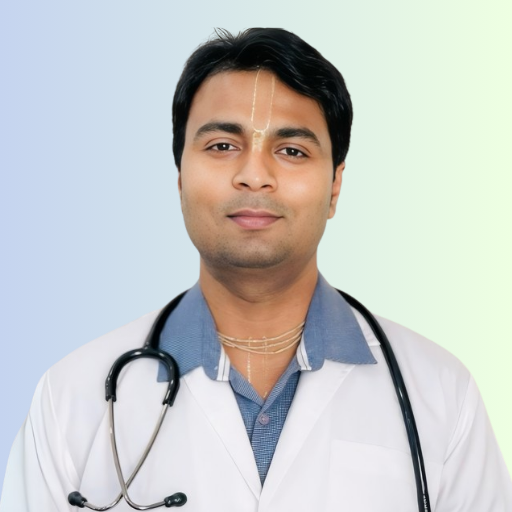
Dr. Arjun Kumar

Dr. Arjun Kumar is an integrative Ayurvedic physician with over 13 years of clinical experience in managing chronic and complex diseases, including neuro-oncology, viral disorders, metabolic conditions, and autoimmune conditions. His work bridges classical Ayurvedic medical science with modern diagnostic frameworks, emphasizing structured evaluation, individualized treatment planning, and evidence-informed interpretation. He has authored research-driven medical texts and maintains an academic presence through published case analyses and professional platforms such as ResearchGate. Dr. Kumar’s approach integrates traditional Rasayana principles with contemporary clinical understanding, aiming to support systemic balance alongside standard medical care. His work prioritizes patient education, transparency in referencing, and alignment with internationally recognized diagnostic standards. Through detailed clinical observation and interdisciplinary study, he contributes to ongoing dialogue between traditional medicine and modern biomedical science. His published writings focus on structured medical clarity, responsible integrative perspectives, and long-term health optimization within a research-supported framework.

About Dr. Arjun Kumar

Highly Experienced Ayurvedic and Herbal doctor with over 12 years of experience in holistic treatment, and the founder of Panaceayur. He is committed to reviving and modernizing ancient Ayurvedic medicinal formulas to treat chronic diseases, particularly viral infections, where conventional medicine often falls short. Dr. Kumar's extensive research has led to the development of effective herbal treatments that integrate traditional wisdom with contemporary scientific understanding.

As an accomplished author, Dr. Kumar has written two groundbreaking books that delve into the therapeutic potential of Ayurveda:

  1. Herpes Cure: A Research-Backed Guide to Healing Through Herbal Medicine – This book offers a comprehensive, research-based approach to curing both HSV-1 and HSV-2 using Ayurvedic principles. It includes detailed herbal formulations, case studies, and scientific explanations to demonstrate the power of natural medicine in treating herpes.
  2. HIV Cure: THROUGH AYURVEDA – Science, Research, and Case Studies – This pioneering work explores the revolutionary role of Ayurveda in the treatment of HIV. Combining ancient Ayurvedic wisdom with modern scientific research, it provides compelling case studies that illustrate how herbal medicine can complement or even replace conventional antiretroviral therapy for effective HIV management.

With over a decade of clinical experience, Dr. Kumar has been at the forefront of integrating Ayurvedic healing with modern healthcare practices. His mission is to offer natural, time-tested remedies that bring hope and healing to those suffering from chronic diseases, empowering them with scientifically validated Ayurvedic treatments. His work is transforming global healthcare by making these powerful, natural remedies more accessible to people worldwide.

All Posts by Dr. Arjun Kumar

  • A glioma patient resting in a hospital bed while connected to medical monitoring equipment during treatment.
    Glioma vs Glioblastoma: Differences in Grade, Growth, Treatment, and Survival
    Glioma vs glioblastoma explained in simple medical language. Learn the key differences in tumor grade, growth speed, symptoms, diagnosis, treatment, recurrence risk, survival outlook, and how supervised Ayurvedic support may help patients protect strength, quality of life, and treatment recovery.
  • Photorealistic medical desk with pathology report, microscope, and mammogram for breast biopsy results explained
    Breast Biopsy Results Explained: ADH, ALH, FEA, Papilloma, and Radial Scar
    Breast biopsy results explained in clear language for patients confused by ADH, ALH, FEA, papilloma, radial scar, complex sclerosing lesion, LCIS, or B3 breast lesions. Learn what these findings mean, when surgery or follow-up may be needed, and what questions to ask your breast specialist.
  • Young female glioblastoma patient discussing MRI brain scan results with neuro-oncology doctors in a modern hospital consultation room.
    Glioblastoma Survival Rate: Life Expectancy by Age, Surgery, MGMT, and Treatment Response
    Glioblastoma survival rate varies by age, surgery, MGMT methylation, IDH status, treatment response, and overall health. This patient-focused guide explains life expectancy, survival statistics, recurrence, MRI changes, and treatment factors in a clear, medically reviewed format for families seeking realistic guidance.
  • Doctor helping a patient learn how to read PTH calcium vitamin D reports in a clinic
    How to Read PTH, Calcium, and Vitamin D Reports: Complete Lab Interpretation Guide
    Learn how to read PTH calcium vitamin D reports with simple, patient-friendly guidance on high PTH, calcium levels, vitamin D deficiency, corrected calcium, and common lab patterns. Understand what your results may mean, when to seek medical review, and how to discuss next steps with your doctor.
  • Woman discussing atypical hyperplasia breast biopsy results with breast specialist in modern clinic
    Can Atypical Hyperplasia Turn Into Breast Cancer?
    Can atypical hyperplasia turn into breast cancer? Learn why atypical hyperplasia is not breast cancer, how ADH and ALH increase future breast cancer risk, when surgery or MRI may be recommended, and what follow-up steps patients in the USA, UK, Australia, Singapore, and Canada should know.
  • Glass balance scale showing a PTH blood test vial and calcium stone, symbolizing high PTH with normal calcium.
    High PTH But Normal Calcium: What It Really Means
    High PTH normal calcium can feel confusing, but it is not one final diagnosis. It may be linked to low vitamin D, kidney changes, low calcium intake, poor absorption, urine calcium loss, or normocalcemic primary hyperparathyroidism. Learn what your result means, which tests to ask for, and when to see a specialist.