
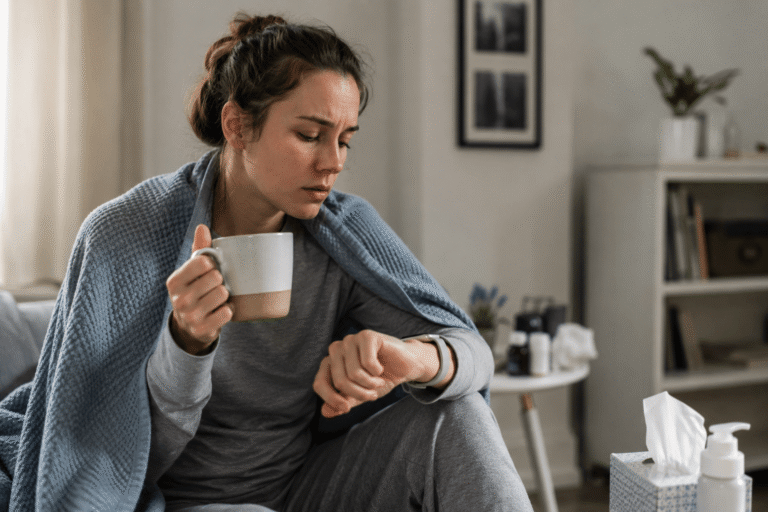
Long COVID is no longer just a “tired after infection” problem. For many people in the USA, UK, Singapore, Canada and Australia, it has become a life-disrupting condition marked by fatigue, brain fog, breathlessness, poor sleep, palpitations, body pain, digestive changes and a frustrating feeling that the body has not fully returned to normal. The CDC defines Long COVID as a chronic condition that occurs after SARS-CoV-2 infection and is present for at least three months [1].
What makes Long COVID especially difficult is that symptoms can improve, worsen, disappear and return over time. Some people feel almost normal for a few days, then crash after physical activity, mental work, travel, stress or poor sleep. According to the CDC, fatigue, brain fog and post-exertional malaise are commonly reported, and more than 200 symptoms have been associated with Long COVID [2].
One of the strongest scientific explanations is Long COVID immune dysfunction, also called immune dysregulation. In simple language, the immune system may remain switched on, confused or poorly coordinated after the initial infection. Instead of returning smoothly to balance, the body may stay in a state of low-grade inflammation, stress signalling and repair demand [3].
This matters because Long COVID is not “all in the mind.” Research now links the condition with measurable biological changes, including inflammation, immune exhaustion, altered T-cell responses, complement activation, metabolic disruption, viral persistence theories, microbiome changes and possible autoimmune reactions [3,4]. That is why many people feel as if their body is fighting something even when standard tests look normal.
What is Long COVID immune dysfunction?
Your immune system is designed to defend, repair and reset. During an infection, it activates inflammatory pathways to fight the virus. After recovery, those pathways should calm down. In Long COVID, research suggests this reset may not happen properly in some people [3].
A 2025 Nature Immunology study found that people with Long COVID showed persistent activation of chronic inflammatory pathways compared with recovered controls. These pathways included pro-inflammatory cytokine signalling, complement activation, metabolic dysregulation and signs of immune exhaustion lasting beyond 180 days in some participants [3].
That finding helps explain why Long COVID can feel so different from ordinary tiredness. When inflammation, stress hormones, sleep disturbance and cellular energy problems overlap, the result can be a body that feels heavy, wired, weak or unstable. Many people describe it as having energy but not being able to access it, or feeling “poisoned” after doing too much.
Scientists are still studying the exact causes. Current leading theories include viral remnants or reservoirs, immune system overactivation, autoimmunity, blood vessel and clotting changes, nervous system dysfunction, gut microbiome disruption and reactivation of dormant viruses such as Epstein-Barr virus [4]. Long COVID may not be one single disease; it may be an umbrella term for several overlapping post-infectious patterns.
Common signs that the immune system may still be out of balance
Long COVID immune dysfunction can show up differently from person to person. One person may struggle mainly with fatigue and post-exertional malaise. Another may have breathlessness, chest tightness and palpitations. Another may experience gut issues, headaches, anxiety-like adrenaline surges, poor temperature regulation or frequent flares after stress.
The CDC lists common symptoms including fatigue that interferes with daily life, symptoms that worsen after physical or mental effort, shortness of breath, cough, chest pain, palpitations, brain fog, headaches, sleep problems, dizziness, pins-and-needles sensations, digestive symptoms, muscle or joint pain and changes in menstrual cycles [2].
A key symptom to understand is post-exertional malaise, often shortened to PEM. This means symptoms worsen after activity that previously would have been manageable. The crash may appear 12 to 48 hours later and can last days or weeks. For people with PEM, pushing harder is not always the answer. A smarter recovery plan often starts with pacing, energy conservation, nervous system calming and symptom-guided rehabilitation [6].
Why standard tests can look normal
Many Long COVID patients are told their blood tests, scans or oxygen levels are “normal,” yet they still feel deeply unwell. This gap can be emotionally exhausting. It happens because routine tests may not capture subtle immune signalling, autonomic dysfunction, mitochondrial stress, endothelial changes, microbiome disruption or inflammatory patterns that are still being researched.
The CDC notes that there is no approved laboratory test that can determine whether symptoms are due to Long COVID [1,2]. This does not mean symptoms are imaginary. It means medicine is still catching up with the biology of post-viral illness.
This is also why the best care is often comprehensive rather than one-dimensional. NICE guidance for the long-term effects of COVID-19 recommends assessment, symptom management, supported self-management, rehabilitation and ongoing review for people with persistent symptoms [5]. WHO rehabilitation guidance also emphasizes energy conservation, pacing approaches, breathing support, cognitive strategies and careful evaluation before exercise training, especially where post-exertional symptom exacerbation is present [6].
Can Long COVID immune dysfunction improve?
The hopeful answer is yes, many people improve over time, although recovery can be slow and uneven. A Nature Communications study following people with mild to moderate Long COVID found that many immune differences seen earlier after infection had resolved by 24 months, and 62% of Long COVID participants had improvement in health-related quality of life [7].
That does not mean everyone recovers automatically. The same study also noted that some people had not fully recovered after two years [7]. The practical message is balanced: Long COVID can improve, but the body often needs a careful recovery environment rather than pressure, panic or random treatments.
Recovery usually works best when it supports several systems at once: immune balance, sleep, digestion, nervous system regulation, inflammation control, mental resilience, breathing quality and safe movement. This is where an integrative approach can be valuable.
Where Ayurveda fits in Long COVID recovery
Ayurveda is not a replacement for medical care, and no responsible article should promise a guaranteed Long COVID cure. But Ayurveda can be positioned as a supportive, whole-person recovery system that works on the terrain of healing: digestion, sleep, stress, energy, inflammation, resilience and daily rhythm.
In Ayurveda, recovery after a major infection is not only about removing the virus. It is about helping the body rebuild strength, restore balance and return to natural regulation. This is why Ayurvedic care often focuses on agni, or digestive fire; ojas, or vitality and resilience; dosha balance; sleep quality; breath; gentle movement; food timing; herbal support; and the reduction of physical and emotional overload.
Modern readers do not need to understand every Sanskrit term to see the value. Long COVID often affects the exact areas Ayurveda pays attention to: fatigue, poor digestion, disturbed sleep, stress sensitivity, inflammation, weakness, breath quality and the feeling that the body has lost its rhythm.
For a personalised integrative plan, you can guide readers here: Ayurveda recovery support for Long COVID: https://panaceayur.com/covid-19-vaccine-side-effects-ayurvedic-recovery/
How Ayurveda may support the body’s return to balance
Ayurveda may help Long COVID recovery in five practical ways.
First, it supports digestion and nutrient absorption. Many people with Long COVID report bloating, acidity, appetite changes, constipation, loose stools or food sensitivity. Ayurveda gives digestion a central role in recovery because weak digestion can reduce nourishment and increase inflammatory burden. A simple, warm, easy-to-digest diet with adequate protein, herbs selected by a practitioner and consistent meal timing may help the body feel less overloaded.
Second, Ayurveda supports sleep and nervous system regulation. Long COVID can create a “tired but wired” state, where the person feels exhausted but cannot rest deeply. Practices such as abhyanga, gentle oil massage, calming evening routines, pranayama, meditation and personalised herbal support may help shift the body away from constant stress signalling. This matters because sleep is one of the body’s most powerful immune repair windows.
Third, Ayurveda may help with fatigue through rasayana care. Rasayana is the Ayurvedic branch focused on rejuvenation, resilience and rebuilding strength after depletion. Ashwagandha is one well-known rasayana herb, and NIH’s Office of Dietary Supplements reports that studies have found ashwagandha may reduce stress, sleeplessness and fatigue compared with placebo, although evidence varies by product and condition [9].
Fourth, Ayurveda may support inflammatory balance. Long COVID research increasingly points to chronic inflammatory pathways and immune dysregulation [3,4]. Ayurvedic care commonly uses anti-inflammatory dietary patterns, rest cycles, breathwork, gentle movement and selected botanicals to create a less reactive internal environment. This should be framed as support for balance and resilience, not as a guaranteed disease cure.
Fifth, Ayurveda encourages pacing rather than forcing. This is important for Long COVID patients with PEM. A good Ayurvedic recovery plan should not push intense detox, fasting, aggressive exercise or overstimulating routines. Instead, it should help the patient conserve energy, rebuild gradually and notice early warning signals before a crash.
What about Ashwagandha for Long COVID?
Ashwagandha is receiving specific scientific attention for Long COVID. The London School of Hygiene & Tropical Medicine is running the APRIL trial to test whether Ashwagandha can improve functional status, quality of life and symptoms in UK adults with Long COVID [10]. The trial page notes that Ashwagandha is believed to have anti-inflammatory and immunomodulatory properties, and that previous trials suggest it may help stress, anxiety, fatigue, sleep and physical performance [10].
This is promising, but it should be communicated carefully. Ashwagandha is not proven to cure Long COVID. It may be one supportive tool for some people, especially where stress, sleep disruption and fatigue are prominent. It is not suitable for everyone, and it can interact with health conditions, pregnancy, thyroid problems, immune disorders, liver concerns or medications. The safest approach is to use practitioner-guided, quality-tested products.
Safety matters: Ayurveda should be personalised
Ayurveda becomes more convincing when it is honest about safety. NCCIH states that Ayurvedic treatment may include products, diet, exercise and lifestyle, but also warns that some Ayurvedic preparations may contain lead, mercury or arsenic in toxic amounts [8]. This is why quality control is essential.
Readers should avoid buying random herbs online, mixing multiple supplements without guidance or starting heavy cleansing programs while already depleted. Long COVID patients are often sensitive. The better route is a personalised plan that considers current medications, pregnancy status, autoimmune disease, thyroid conditions, liver health, sleep, digestion, PEM, anxiety, blood pressure and symptom severity.
A responsible Ayurveda clinic should ask about medical history, current prescriptions, test results, red-flag symptoms and energy limits. It should also coordinate with conventional healthcare when needed. This builds trust with readers and helps your content rank better because it aligns with health content standards of expertise, safety and transparency.
A realistic integrative recovery plan
The best Long COVID recovery plan is not extreme. It is steady, measured and personalised. It begins by identifying the most disabling symptoms and removing the biggest triggers. For some people, that means pacing and sleep repair. For others, it means gut support, breath retraining, hydration, electrolyte balance, anti-inflammatory meals, stress reduction or supervised rehabilitation.
Conventional care is important for ruling out complications such as heart, lung, clotting, neurological, endocrine or autoimmune problems. Ayurveda can then support the body’s rebuilding phase by improving daily rhythm, digestion, restorative sleep, calm breathing, gentle mobility and vitality.
This is the message readers need to hear: Long COVID recovery is not about forcing the body back to normal. It is about creating the conditions where the body can move out of survival mode and back toward repair.
When to seek medical help quickly
People with Long COVID symptoms should seek medical advice, especially when symptoms last for months after infection [1]. Urgent care is needed for chest pain, severe breathlessness, fainting, new weakness on one side of the body, confusion, blue lips, coughing blood, severe dehydration, suicidal thoughts, new severe headache, or rapidly worsening symptoms.
Ayurveda can support recovery, but it should never delay emergency care or evaluation for serious conditions.
Final takeaway
Long COVID immune dysfunction is one of the most important explanations for why people can feel unwell long after the initial infection. Research shows that inflammation, immune exhaustion, metabolic disruption and other biological changes may play a role [3,4]. At the same time, studies also show that many people improve gradually, especially when recovery is paced and personalised [7].
Ayurveda offers a powerful supportive lens because it focuses on the whole person: energy, digestion, sleep, inflammation, breath, stress and resilience. It does not need to promise a magic cure to be persuasive. Its real strength is helping the body rebuild intelligently, gently and consistently.
For readers who feel stuck after COVID, the goal is not simply to “push through.” The goal is to understand the body’s signals, reduce inflammatory load, restore rhythm and support deeper recovery from the inside out.
Explore personalised Ayurveda recovery support here: https://panaceayur.com/covid-19-vaccine-side-effects-ayurvedic-recovery/
References
[1] CDC. Long COVID Basics. Defines Long COVID as a chronic condition after SARS-CoV-2 infection that is present for at least three months, and notes there are no approved tests or treatments that confirm or treat Long COVID for everyone. https://www.cdc.gov/long-covid/about/index.html (CDC)
[2] CDC. Long COVID Signs and Symptoms. Lists common symptoms including fatigue, post-exertional malaise, brain fog, breathlessness, palpitations, sleep problems, digestive symptoms and more than 200 reported symptoms. https://www.cdc.gov/long-covid/signs-symptoms/index.html (CDC)
[3] Aid M. et al. Long COVID involves activation of proinflammatory and immune exhaustion pathways. Nature Immunology, 2025. Reports persistent inflammatory pathway activation, complement activation, metabolic dysregulation and immune exhaustion in Long COVID participants. https://www.nature.com/articles/s41590-025-02353-x (Nature)
[4] Peluso M.J. and Deeks S.G. Mechanisms of Long COVID and the path toward therapeutics. Cell, 2024. Reviews major proposed mechanisms including immune dysfunction and the need for clinical trials. https://www.sciencedirect.com/science/article/pii/S0092867424008869 (ScienceDirect)
[5] NICE, SIGN and RCGP. COVID-19 rapid guideline: managing the long-term effects of COVID-19. Updated January 25, 2024. Covers assessment, management and care pathways for people with ongoing symptoms after COVID-19. https://www.ncbi.nlm.nih.gov/books/NBK567261/ (NCBI)
[6] WHO. Post COVID-19 condition rehabilitation guidance. Recommends holistic rehabilitation, energy conservation, pacing approaches, breathing support and symptom-specific management. https://www.who.int/teams/health-care-readiness/post-covid-19-condition (World Health Organization)
[7] Phetsouphanh C. et al. Improvement of immune dysregulation in individuals with Long COVID at 24 months following SARS-CoV-2 infection. Nature Communications, 2024. Found many immune abnormalities improved by 24 months and 62% showed improved quality of life, though not all fully recovered. https://www.nature.com/articles/s41467-024-47720-8 (Nature)
[8] National Center for Complementary and Integrative Health. Ayurvedic Medicine: In Depth. Explains Ayurveda as a holistic system using products, diet, exercise and lifestyle, while warning about potential heavy metal contamination in some preparations. https://www.nccih.nih.gov/health/ayurvedic-medicine-in-depth (NCCIH)
[9] NIH Office of Dietary Supplements. Ashwagandha: Is it helpful for stress, anxiety, or sleep? Reviews evidence that some studies found reduced stress, sleeplessness and fatigue compared with placebo. https://ods.od.nih.gov/factsheets/Ashwagandha-HealthProfessional/ (Office of Dietary Supplements)
[10] London School of Hygiene & Tropical Medicine. Ayurveda for Promoting Recovery In Long COVID, APRIL Trial. Describes a UK trial testing Ashwagandha for functional status, quality of life and symptoms in adults with Long COVID. https://www.lshtm.ac.uk/research/centres-projects-groups/april (lshtm.ac.uk)