


Pancreatic cancer mRNA vaccine research is investigating whether a personalized vaccine can train your immune system to identify and destroy microscopic pancreatic cancer cells that may remain after surgery. The main objective is not to prevent pancreatic cancer in a healthy person. It is to reduce the possibility that previously treated pancreatic cancer will return.
The most accurate answer in 2026 is that pancreatic cancer vaccines have not yet been proven to prevent recurrence. However, the early research is encouraging, particularly for pancreatic ductal adenocarcinoma, commonly called PDAC.
In a small phase 1 study, eight of 16 vaccinated patients developed strong immune responses against their individual cancer mutations. The patients who developed these immune responses experienced substantially longer recurrence-free survival than those who did not respond to the vaccine [4,5].
A longer follow-up presented in April 2026 reported that seven of the eight immune responders were still alive four to six years after pancreatic cancer surgery. Only two of the eight nonresponders were alive, while the reported median survival among nonresponders was approximately 3.4 years [6].
These findings are important, but they came from only 16 vaccinated patients. They do not yet prove that the vaccine itself caused the difference in survival.
A larger randomized phase 2 trial involving approximately 260 participants is now evaluating whether adding a personalized mRNA vaccine and immunotherapy to standard chemotherapy can improve disease-free survival after pancreatic cancer surgery [7,8].
Why Pancreatic Cancer Recurrence Is Difficult to Prevent
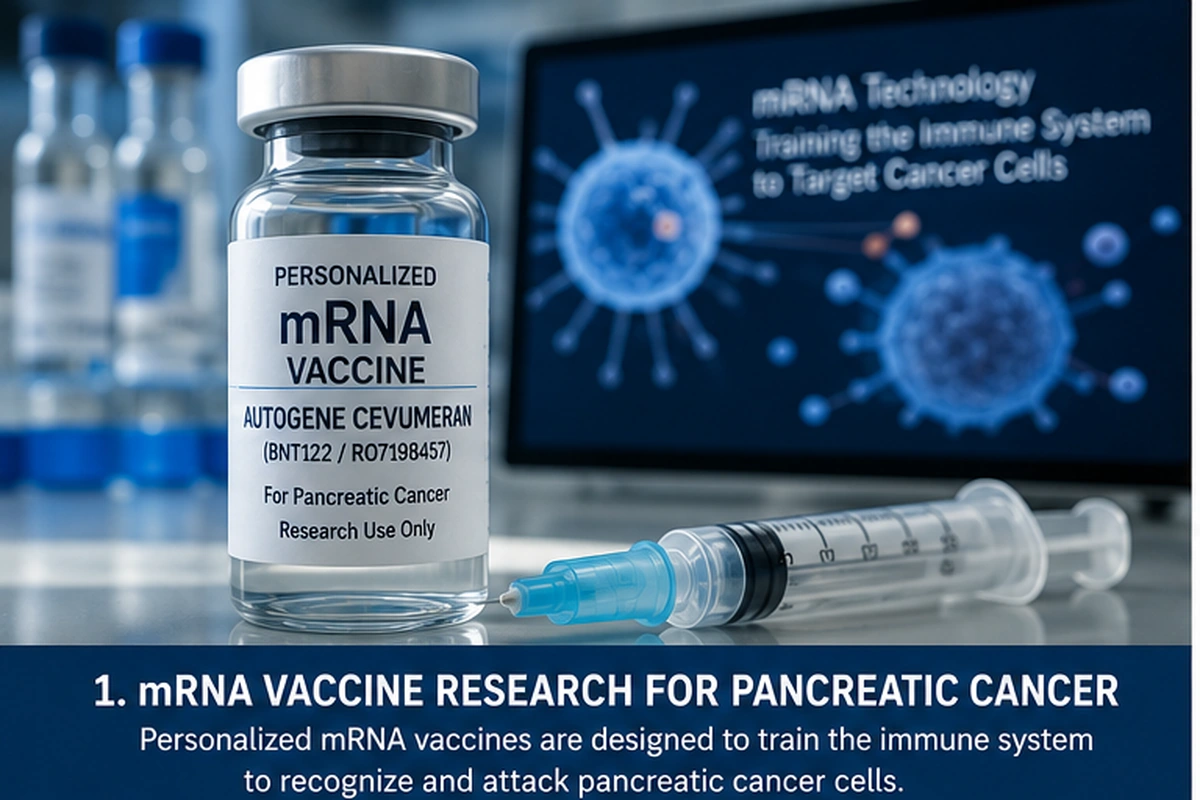
Pancreatic cancer can return even after the visible tumor has been completely removed. This may happen because microscopic cancer cells can remain in the body despite successful surgery.
These cells may be too small to appear on a CT scan, MRI, PET scan or routine blood test. They may remain inactive for months before growing in the liver, lungs, abdomen, surgical area, peritoneum or other tissues.
Current United States statistics indicate that the overall five-year relative survival rate for pancreatic cancer is approximately 13.7%. Survival is considerably better when the disease is localized and considerably lower once distant spread has occurred [1].
Population statistics cannot predict what will happen to an individual patient. However, they explain why preventing recurrence after pancreatic cancer surgery has become an important area of cancer research.
Surgical removal remains the principal potentially curative treatment for patients with localized and operable pancreatic cancer. Surgery is generally followed by systemic treatment because removing the visible tumor does not guarantee that every cancer cell has been eliminated [2].
Historical data discussed by the vaccine researchers indicate that recurrence has affected a large proportion of patients after pancreatic cancer surgery. Even with contemporary postoperative chemotherapy, microscopic resistant cells may survive and later produce detectable disease [4].
A personalized pancreatic cancer mRNA vaccine is intended to add another level of protection. Its purpose is to teach the immune system to recognize cancer-specific abnormalities and attack cells that carry them.
What Is a Pancreatic Cancer mRNA Vaccine?
The personalized vaccine being investigated is called autogene cevumeran. It is also known by the research names BNT122 and RO7198457.
Autogene cevumeran is an individualized neoantigen vaccine. This means that every patient receives a different vaccine based on the mutations detected in that patient’s pancreatic tumor [4–7].
Cancer cells acquire genetic mutations as they develop. Some of these mutations produce abnormal proteins called neoantigens. Because neoantigens are not normally found in healthy cells, the immune system may be able to recognize them as foreign.
Researchers became interested in this approach after studying rare long-term survivors of pancreatic cancer. They found that some long-term survivors had developed T-cell responses against high-quality neoantigens within their tumors [3].
The personalized vaccine contains mRNA instructions for up to 20 selected neoantigens. These instructions temporarily direct cells to produce small pieces of the selected tumor proteins. The immune system can then learn to recognize these proteins and attack cells carrying them [4].
This is a therapeutic cancer vaccine. It is different from a conventional preventive vaccine.
Preventive vaccines against infections are usually administered before a person develops the associated disease. A personalized pancreatic cancer vaccine is manufactured after the tumor has been diagnosed, surgically removed and genetically analysed.
The vaccine does not contain living pancreatic cancer cells. It also does not rewrite or permanently alter a patient’s DNA. Messenger RNA functions outside the cell nucleus and is subsequently broken down through normal cellular processes.
How the Personalized Pancreatic Cancer Vaccine Is Made
Tumor tissue and blood are collected
Tumor tissue removed during pancreatic cancer surgery is preserved and sent for detailed molecular analysis. A blood sample is collected so that researchers can compare the tumor’s genetic material with the patient’s normal genetic material.
Tumor DNA and RNA are analysed
Researchers sequence the tumor to identify mutations found in the cancer cells. RNA analysis helps determine which mutated genes are actively producing proteins.
Potential neoantigens are selected
Computer-based prediction methods evaluate the detected mutations. Researchers select the mutations most likely to produce neoantigens that can be recognised by the patient’s immune system.
The phase 1 vaccine included instructions for up to 20 selected neoantigens for each patient [4].
An individualized mRNA vaccine is manufactured
The selected neoantigens are encoded into an mRNA vaccine prepared specifically for the individual patient.
In the phase 1 study, the researchers aimed to manufacture the vaccine within six weeks and administer the first dose within approximately nine weeks of surgery. The median time to the first vaccine dose was approximately 9.4 weeks [4].
The vaccine is combined with other treatments
The vaccine was not used as a stand-alone treatment.
Patients in the phase 1 study received atezolizumab, which is an immune checkpoint inhibitor. They then received personalized vaccine doses and modified FOLFIRINOX chemotherapy [4].
Modified FOLFIRINOX is a multi-drug chemotherapy combination containing leucovorin, fluorouracil, irinotecan and oxaliplatin.
The encouraging findings therefore came from an integrated treatment programme involving surgery, immunotherapy, vaccination and chemotherapy.
What Has Pancreatic Cancer mRNA Vaccine Research Found?
| Research stage | Patients and study design | Main finding | Clinical meaning |
|---|---|---|---|
| 2017 biological research | Long-term pancreatic cancer survivors | Long-term survivors were more likely to have T-cell recognition of high-quality tumor neoantigens [3] | Provided the biological basis for developing personalized pancreatic cancer vaccines |
| 2023 phase 1 publication | 16 vaccinated patients after surgery | Eight of 16 developed strong neoantigen-specific T-cell responses [4] | Demonstrated that personalized vaccination can produce measurable pancreatic cancer-specific immunity |
| Initial recurrence analysis | Eight responders compared with eight nonresponders | Median recurrence-free survival was not reached in responders but was 13.4 months in nonresponders [4] | Suggested a possible association between vaccine response and delayed recurrence |
| Extended follow-up | Median follow-up of approximately 3.2 years | Vaccine-induced CD8-positive T-cell clones remained detectable for years [5] | Suggested that the vaccine may create durable immune memory |
| 2026 survival update | Original phase 1 patient group | Seven of eight immune responders were alive four to six years after surgery [6] | Encouraging survival signal, although not randomized proof |
| Current phase 2 trial | Approximately 260 participants | Vaccine, atezolizumab and mFOLFIRINOX are being compared with mFOLFIRINOX alone [7,8] | Intended to determine whether the vaccine combination genuinely improves disease-free survival |
The first published phase 1 results showed that eight of the 16 vaccinated patients developed immune responses that met the researchers’ predefined criteria [4].
In some responders, vaccine-expanded T cells represented a meaningful proportion of circulating immune cells. These responses were not detected before vaccination, which supported the conclusion that the treatment had generated new tumor-directed immune activity.
At a median follow-up of approximately 3.2 years, median recurrence-free survival had still not been reached among the eight immune responders. Among the eight nonresponders, median recurrence-free survival was approximately 13.4 months [5].
The difference was statistically significant. However, the number of participants was too small to establish definitive clinical effectiveness.
The extended analysis also found that many vaccine-induced T-cell clones remained detectable several years after vaccination. The researchers estimated that some of these T-cell populations could persist for many years, although the duration differed considerably between patients and individual T-cell clones [5].
These findings indicate that personalized mRNA vaccination can create prolonged immune memory against pancreatic cancer-associated neoantigens.
Whether this immune memory consistently results in fewer recurrences or improved overall survival must still be confirmed in larger randomized trials.
Can an mRNA Vaccine Prevent Pancreatic Cancer Recurrence?
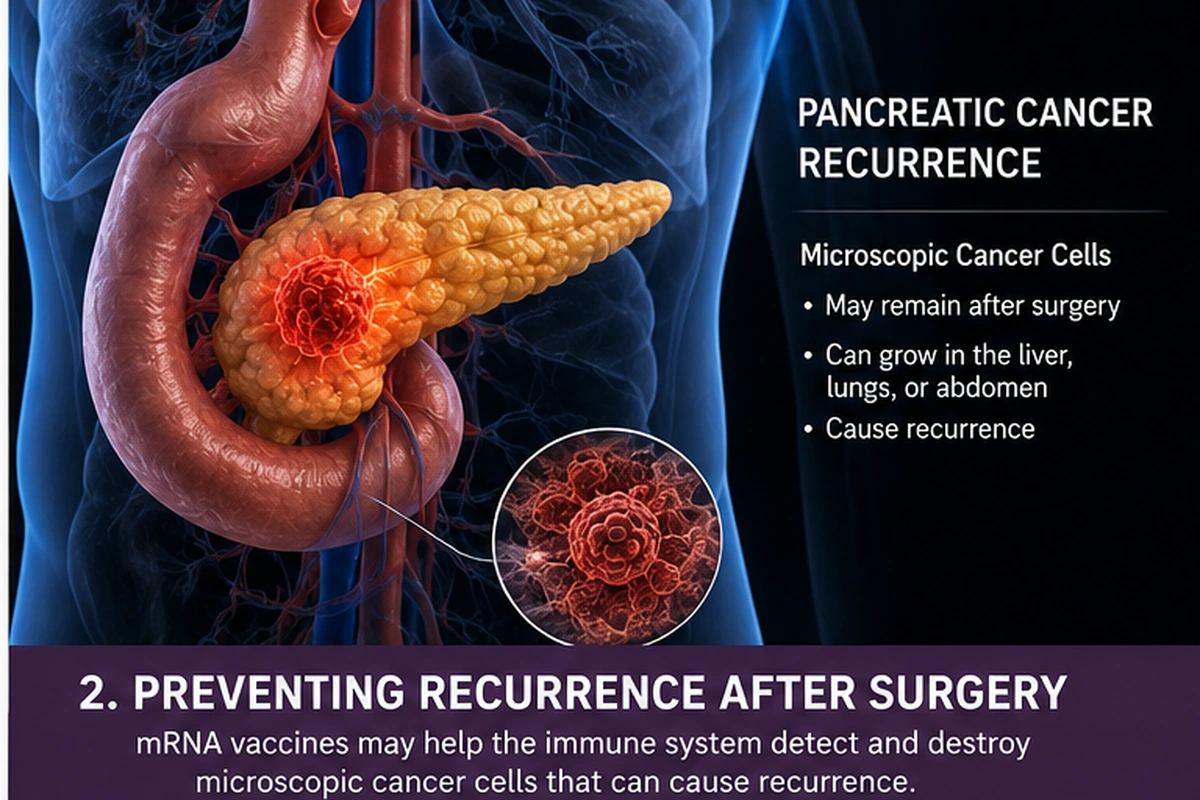
A personalized mRNA vaccine may delay or prevent recurrence in some patients, but this has not yet been conclusively proven.
The phase 1 study was primarily designed to evaluate safety, vaccine manufacturing, treatment feasibility and immune activation. It was not designed as a randomized comparison between vaccinated and unvaccinated patients.
All participants underwent surgery and received additional therapies, including atezolizumab and usually modified FOLFIRINOX [4].
The researchers subsequently compared patients who developed vaccine-induced T-cell responses with patients who did not develop those responses. This comparison is scientifically valuable, but it is not equal to randomly assigning one group to receive the vaccine and another group not to receive it.
Patients whose immune systems responded strongly may have differed from nonresponders in other ways. These differences may also have influenced recurrence and survival.
The ongoing phase 2 IMCODE003 trial is intended to answer the more important clinical question.
Participants are randomly assigned to receive either autogene cevumeran, atezolizumab and modified FOLFIRINOX or modified FOLFIRINOX alone [7,8].
The primary endpoint is disease-free survival. This generally refers to the period before pancreatic cancer recurrence, development of another cancer or death.
Until randomized results are available, three conclusions should remain separate.
The vaccine can stimulate pancreatic cancer-specific T cells in some patients. This has been demonstrated.
Patients who developed strong vaccine-induced immune responses experienced encouraging recurrence-free and survival outcomes. This has been observed.
The vaccine has been proven to prevent recurrence or permanently cure pancreatic cancer. This has not yet been established.
Why Might the Vaccine Work in Some Patients but Not Others?
Only half of the vaccinated patients in the phase 1 study developed immune responses that met the investigators’ predefined criteria.
Researchers do not yet fully understand why one patient responds while another patient does not.
Possible factors include the quality of the selected neoantigens, the number of tumor mutations, the patient’s human leukocyte antigen profile, immune function, tumor diversity, vaccine timing and the ability of T cells to reach tissues where microscopic cancer cells remain.
The tumor microenvironment may also influence the response. Pancreatic tumors often create a dense and immunosuppressive environment that makes it difficult for immune cells to enter the tumor and remain active.
Another challenge is cancer evolution.
Two immune responders in the extended analysis later developed recurrence. Their immune responses were reportedly weaker, developed later or lasted for a shorter period than the responses observed in patients who remained recurrence-free [5].
Analysis of recurrent tumors suggested that some cancer clones carrying vaccine-targeted neoantigens may have been reduced or eliminated. However, other tumor clones that were not effectively targeted may have survived and produced recurrence.
This process is referred to as immune escape or clonal escape.
Future pancreatic cancer vaccines may require broader neoantigen selection, improved booster schedules, stronger T-cell activation or additional treatments that make the tumor environment more accessible to immune cells.
What Does the 2026 Survival Update Mean?
At the 2026 annual meeting of the American Association for Cancer Research, investigators presented longer follow-up from the original phase 1 group.
Seven of the eight patients who developed a vaccine-induced immune response were reported alive four to six years after surgery. Among the eight nonresponders, two were alive, while the median survival reported for nonresponders was approximately 3.4 years [6].
The update strengthens the argument that the vaccine-induced immune responses were not temporary laboratory findings. Some responding patients continued to experience encouraging clinical outcomes several years after treatment.
However, the result should not be interpreted as an 87.5% pancreatic cancer cure rate.
The percentage refers only to survival among eight selected immune responders from a 16-patient study. It does not represent all vaccinated patients.
Being alive also does not always mean that a patient is permanently free from pancreatic cancer. Some patients may be receiving continuing surveillance or further treatment.
The 2026 findings remain an extended follow-up of an early-stage study. Larger peer-reviewed and randomized evidence is needed before the vaccine can be described as an established method of preventing pancreatic cancer recurrence.
Who May Be Eligible for the Current Phase 2 Trial?
The phase 2 trial is not intended for every patient with pancreatic cancer.
Its current criteria focus mainly on adults with surgically removed pancreatic ductal adenocarcinoma and no visible evidence of disease after surgery.
| Patient question | Current phase 2 position |
|---|---|
| Which type of pancreatic cancer is included? | Histologically confirmed pancreatic ductal adenocarcinoma |
| Is surgery required? | Yes. A macroscopically complete R0 or R1 resection is required |
| Can metastatic disease be present? | No. The listed pathological stage is T1 to T3, N0 to N2 and M0 |
| When must trial treatment begin? | The listed interval is approximately six to 12 weeks after surgery |
| Is previous pancreatic cancer chemotherapy allowed? | Previous neoadjuvant, induction or adjuvant systemic treatment may exclude a patient under the main trial criteria |
| Can patients with recurrent pancreatic cancer participate? | Not under the principal criteria for this postoperative trial |
| Is removal of the spleen allowed? | Absence of the spleen, including after distal pancreatectomy with splenectomy, is listed as an exclusion |
| Is the vaccine guaranteed to help? | No. Participants may receive either the experimental combination or chemotherapy alone |
| Is the vaccine commercially available? | No. Autogene cevumeran remains investigational |
| What is the estimated enrolment? | Approximately 260 participants |
The trial also requires adequate recovery after surgery, suitable liver and kidney function, acceptable blood counts and the ability to receive chemotherapy, immunotherapy and vaccination.
Certain autoimmune diseases, immune deficiencies, significant neuropathy, persistent diarrhea and other medical conditions may prevent participation [7,8].
Eligibility must be evaluated quickly because vaccine manufacturing and postoperative treatment occur within a limited period after surgery.
A patient interested in participation should discuss the trial with the pancreatic surgeon and medical oncologist before starting any treatment that could affect eligibility.
Patients in the United States, United Kingdom, Singapore, Canada, Australia or another country should search the official trial identification number NCT05968326 and confirm whether an individual treatment center is actively recruiting.
A trial can be listed as recruiting internationally even when enrolment at a particular hospital has not started, has been paused or has already been completed.
Is the Vaccine Suitable for Metastatic Pancreatic Cancer?
The autogene cevumeran trial discussed in this article is a postoperative adjuvant trial.
It is intended for patients whose visible pancreatic ductal adenocarcinoma has been surgically removed and who have no detectable disease following surgery [7,8].
The findings should therefore not be applied directly to patients with unresectable, metastatic or already recurrent pancreatic cancer.
The biological principles of neoantigen vaccination may still be relevant to advanced cancer. Other vaccine platforms and immunotherapy combinations are being studied in metastatic disease.
However, advanced pancreatic cancer creates additional challenges. These include a larger tumor burden, greater tumor diversity, immune suppression and difficulty delivering active T cells into the tumor.
Patients with metastatic pancreatic cancer should not postpone established systemic treatment while searching for this specific vaccine.
Clinical trials may be considered alongside standard oncology care, but the selected trial must match the patient’s cancer stage, previous treatment, overall health and laboratory findings.
What Side Effects Have Been Reported?
In the phase 1 study, all 16 vaccinated patients experienced at least one mild or moderate vaccine-related adverse event.
One patient experienced grade 3 fever and hypertension considered related to the vaccine [4].
This early safety result is encouraging, but it is incomplete. A 16-patient study cannot reliably identify uncommon, delayed or patient-specific complications.
The treatment programme also included atezolizumab and modified FOLFIRINOX, which have their own potential adverse effects.
Atezolizumab can cause immune-related inflammation involving organs such as the thyroid gland, liver, lungs, bowel, pancreas, kidneys or skin.
Modified FOLFIRINOX may cause fatigue, nausea, vomiting, diarrhea, peripheral neuropathy, infection risk, reduced blood counts, mouth ulcers and other complications.
Treatment decisions require assessment and monitoring by a multidisciplinary oncology team.
The current phase 2 trial is monitoring side effects, laboratory changes, vital signs, disease-free survival and overall survival [8].
Does the Vaccine Replace Surgery or Chemotherapy?
No.
The pancreatic cancer mRNA vaccine is being investigated as an adjuvant treatment after surgery.
In the current phase 2 trial, the experimental group receives the personalized vaccine together with atezolizumab and modified FOLFIRINOX. The comparison group receives modified FOLFIRINOX alone [7,8].
The research question is whether adding personalized vaccination and immunotherapy to postoperative chemotherapy provides better protection than chemotherapy alone.
The trial is not testing whether vaccination can replace pancreatic cancer surgery or eliminate the need for chemotherapy.
Patients must also continue the imaging, blood tests and clinical reviews recommended by their oncology team.
CA 19-9 can be useful during surveillance, but it is not a perfect marker. A normal CA 19-9 result does not guarantee that recurrence is absent [2].
Ayurveda as a Curative-Intent and Recurrence-Control Model
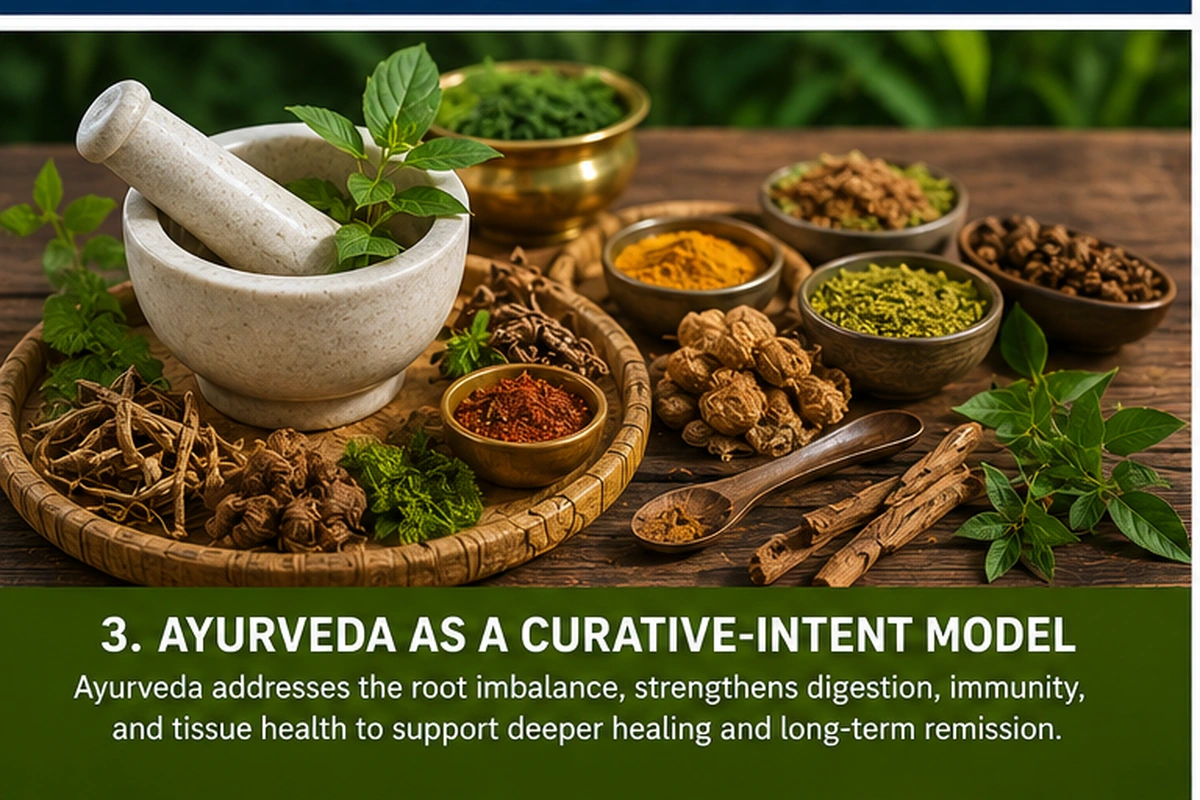
Ayurveda should not be limited to temporary relief from nausea, weakness, poor appetite or sleep disturbance in pancreatic cancer. A properly designed Ayurvedic programme follows a disease-directed, curative-intent model that aims for the deepest recovery medically achievable, measurable control of the cancer process, stronger treatment tolerance, prolonged remission and the lowest possible risk of recurrence.
Curative intent does not mean promising the same outcome to every patient. Pancreatic cancer behaves differently according to its type, stage, genetic profile, surgical status, lymph-node involvement, liver function, nutritional reserve and response to treatment. A patient with a small, localized tumor removed with clear margins has a different possibility of long-term recovery from a patient with extensive metastatic disease.
The Ayurvedic objective must therefore be realistic but ambitious. When complete recovery remains biologically achievable, the model works towards freedom from detectable disease and sustained remission. When the disease is advanced, the objective becomes maximum possible tumor control, preservation of organ function, longer survival, improved physical strength and a meaningful quality of life.
Ayurveda Must Address the Disease, Not Only the Symptoms
A curative-intent Ayurvedic plan begins with the modern diagnosis. The pathology report, tumor subtype, TNM stage, surgical-margin status, lymph-node involvement, CA 19-9 trend, bilirubin, liver function, kidney function, albumin, blood counts, glucose control, weight changes and imaging findings must be reviewed before treatment is designed.
This is necessary because pancreatic ductal adenocarcinoma, pancreatic neuroendocrine tumors, cystic pancreatic neoplasms and periampullary cancers do not behave in the same manner. The programme must also change according to whether you are preparing for surgery, recovering after surgery, receiving chemotherapy, participating in an mRNA vaccine trial or living with recurrent or metastatic disease.
Ayurveda should not treat every pancreatic cancer patient with the same herbal combination. A patient with obstructive jaundice and high bilirubin requires a different approach from someone recovering after pancreaticoduodenectomy. A patient with oily stools, severe weight loss and pancreatic enzyme deficiency needs a different nutritional and digestive strategy from a patient with liver metastases, ascites or uncontrolled diabetes.
The treatment objective should not be judged only by whether you feel better. Appetite, sleep and energy are important, but disease-directed care must also be assessed through repeat imaging, tumor-marker trends, bilirubin, liver function, body weight, albumin, performance status and the treating oncologist’s findings.
Restoring Agni, Nutrition and Tissue Strength
Charaka Samhita, Chikitsa Sthana, Chapter 15, Grahani Chikitsa, explains the central role of agni in digestion, metabolism, tissue nourishment, strength and ojas [12]. This principle is especially relevant in pancreatic cancer because the pancreas has an essential role in digestion, nutrient absorption and glucose regulation.
Pancreatic cancer and pancreatic surgery can cause poor enzyme production, oily or floating stools, diarrhea, abdominal discomfort, early fullness, reduced appetite, muscle loss and progressive weakness. When food is not properly digested or absorbed, the patient gradually loses the physical reserve required to tolerate surgery, chemotherapy, immunotherapy or an mRNA vaccine programme.
The Ayurvedic curative model therefore treats digestive restoration and nutritional absorption as central components of disease management rather than minor supportive measures. Meal size, food consistency, timing, protein intake, fat tolerance, bowel pattern, hydration and glucose response must be individualized.
When pancreatic enzyme replacement therapy has been prescribed, it should not be stopped or replaced with herbal digestive medicines. Pancreatic enzymes may be essential for absorbing food and maintaining body weight [13]. Ayurvedic dietary and digestive management can be coordinated with enzyme therapy to improve meal tolerance, reduce gastrointestinal distress and rebuild tissue strength.
Severe fasting, generalized detoxification, raw-food regimens and highly restrictive diets may be dangerous when a pancreatic cancer patient is already losing weight. In such circumstances, nourishment, muscle preservation and treatment tolerance become more important than aggressive purification.
Rasayana as Part of a Disease-Control Strategy
Charaka Samhita, Chikitsa Sthana, Chapter 1, Rasayana Adhyaya, describes Rasayana principles in relation to tissue quality, strength, health, resilience and longevity [11].
In pancreatic cancer, Rasayana should not be interpreted merely as a general tonic. It should form part of a structured strategy intended to rebuild Rogi Bala, improve recovery between treatment cycles, protect nutritional status and help the patient complete the prescribed oncology programme.
Persistent nausea, diarrhea, constipation, dehydration, poor sleep, reduced blood counts, neuropathy, severe fatigue and loss of appetite can result in chemotherapy delays, dose reductions or treatment discontinuation. An individualized Ayurvedic programme may help identify and manage these problems early so that the patient remains sufficiently stable to continue treatment.
This is an important indirect pathway through which Ayurveda may contribute to a curative strategy. The purpose is not simply to make the patient comfortable. The purpose is to preserve the physical and metabolic capacity required to complete surgery, chemotherapy, immunotherapy, vaccination and long-term surveillance.
Ayurveda After Surgery and During mRNA Vaccine Treatment
The personalized pancreatic cancer mRNA vaccine is designed to train T cells to recognize selected neoantigens found in the removed tumor. The Ayurvedic model approaches the postoperative period from another direction by strengthening digestion, nourishment, metabolic balance, tissue recovery and treatment tolerance.
These approaches should not be presented as competitors. Surgery removes the visible tumor. Chemotherapy addresses systemic microscopic disease. The vaccine attempts to stimulate tumor-specific immune recognition. Individualized Ayurveda supports the patient’s capacity to undergo, complete and recover from this demanding multimodal treatment.
Before vaccination or chemotherapy, poor nutrition, dehydration, pancreatic enzyme insufficiency, anemia, disturbed sleep, uncontrolled blood glucose and persistent bowel problems should be corrected wherever possible.
During chemotherapy, immunotherapy or a vaccine trial, the Ayurvedic prescription should be carefully reviewed and simplified when necessary. Herbs and herbomineral medicines may alter drug metabolism, affect blood clotting, influence immune activity or place additional stress on the liver and kidneys [9].
The oncologist and clinical-trial team should receive the complete ingredient list, dosage and manufacturing details of every Ayurvedic medicine being used. This protects the patient and reduces the possibility of avoidable herb-drug interactions.
No Ayurvedic medicine has yet been clinically proven to increase the response to autogene cevumeran. Therefore, it would be inaccurate to claim that a particular herb activates the vaccine or guarantees prevention of recurrence. The more credible curative-intent position is that individualized Ayurveda may help create the nutritional, digestive and functional stability required for the patient to complete the full treatment programme.
Ayurveda as a Long-Term Recurrence-Control Programme
Ayurvedic treatment should not stop simply because surgery has been completed or a scan currently shows no visible cancer.
Pancreatic cancer can recur from microscopic cells that remain undetectable after treatment. A long-term curative-intent model must therefore include structured monitoring of appetite, weight, bowel function, blood glucose, liver function, bilirubin, CA 19-9 and scheduled imaging.
New back pain, unexplained weight loss, worsening diabetes, reduced appetite, jaundice, abdominal discomfort or persistent fatigue should never be dismissed as a simple dosha disturbance without appropriate investigation.
The objective is to preserve remission, maintain tissue strength and identify any evidence of recurrence at the earliest possible stage.
Patients seeking a disease-directed Ayurvedic approach can read the complete pancreatic cancer treatment model at: https://panaceayur.com/alternative-treatment-pancreatic-cancer/
The strongest treatment strategy is not a choice between modern oncology and Ayurveda. It is a carefully coordinated model in which surgery removes the visible disease, systemic treatment addresses microscopic cancer cells, vaccination trains tumor-specific immunity and individualized Ayurveda supports digestion, nourishment, treatment tolerance, physical strength and long-term recovery.
Ayurveda should therefore not be reduced to symptom management alone. Its wider curative-intent purpose is to pursue the deepest achievable recovery, help maintain treatment continuity, support durable remission and establish a disciplined recurrence-control strategy.
Questions to Ask Your Oncology Team
Before considering a pancreatic cancer mRNA vaccine trial, ask whether the pathology has confirmed pancreatic ductal adenocarcinoma.
You should also ask whether the surgery achieved an R0 or R1 resection, whether postoperative imaging shows any remaining disease and whether sufficient tumor tissue has been preserved for molecular sequencing.
Confirm whether previous chemotherapy affects eligibility, how quickly the trial center must be contacted and how postoperative chemotherapy will be scheduled while the personalized vaccine is being manufactured.
Ask whether every participant receives the vaccine or whether treatment is assigned randomly.
You should also confirm how frequently you must visit the trial center, whether travel is required, which expenses are covered by the sponsor and what happens if a suitable personalized vaccine cannot be produced.
Other important questions include which treatments remain available if pancreatic cancer returns and whether participation could affect access to another clinical trial in the future.
Patients taking Ayurvedic medicines should provide the oncology team with the complete ingredient list, doses and manufacturing information before enrolment.
The trial protocol may prohibit certain herbs or supplements that influence immunity, liver enzymes, blood clotting or drug metabolism.
Frequently Asked Questions
Is the pancreatic cancer mRNA vaccine available now?
Autogene cevumeran remains an investigational treatment. As of August 13, 2026, it is being evaluated in a phase 2 clinical trial rather than being offered as an approved routine pancreatic cancer treatment.
Is this vaccine the same as a COVID-19 vaccine?
Both approaches use messenger RNA to provide temporary instructions that stimulate an immune response.
However, their targets and clinical purposes are different.
The pancreatic cancer vaccine is individualized according to mutations found in a patient’s tumor. It is intended as therapeutic treatment after pancreatic cancer surgery.
Can the vaccine prevent pancreatic cancer in a healthy person?
No.
The current personalized mRNA vaccine is not intended for population-level pancreatic cancer prevention.
It is being studied to reduce recurrence risk after diagnosed pancreatic ductal adenocarcinoma has been surgically removed.
Does the mRNA vaccine change DNA?
Messenger RNA functions outside the cell nucleus, where DNA is stored. It does not permanently alter a patient’s genetic code.
How many patients responded in the first pancreatic cancer vaccine trial?
Eight of the 16 vaccinated patients developed strong neoantigen-specific T-cell responses that met the study’s predefined criteria.
The other eight patients did not meet the immune-response criteria.
How many vaccine responders were alive in the 2026 update?
Seven of the eight immune responders were reported alive four to six years after surgery. Two of the eight nonresponders were alive. This should not be interpreted as a confirmed cure rate because the study included only 16 vaccinated patients and was not a randomized efficacy trial.
Can the vaccine be used for stage 4 pancreatic cancer?
The phase 2 study discussed in this article is designed for surgically removed, nonmetastatic pancreatic ductal adenocarcinoma with no evidence of remaining disease after surgery.
It is not primarily a stage 4 pancreatic cancer vaccine trial.
Does every participant receive the personalized vaccine?
No.
The phase 2 study is randomized. Participants receive either autogene cevumeran, atezolizumab and modified FOLFIRINOX or modified FOLFIRINOX alone .
Can Ayurveda be used during the vaccine trial?
Ayurvedic medicines may be permitted in some situations, but every product must first be reviewed by the oncologist and trial investigators.
Some herbs and supplements can interact with chemotherapy or immunotherapy. They may also violate the clinical-trial protocol.
Ayurveda should therefore be used as coordinated supportive care rather than as a replacement for the clinical trial or standard oncology treatment.
Can Ayurveda prevent pancreatic cancer recurrence?
There is currently no reliable clinical evidence proving that Ayurveda independently prevents pancreatic ductal adenocarcinoma recurrence.
Its most appropriate role is to support digestion, nutrition, bowel function, sleep, strength, emotional stability and recovery during multidisciplinary treatment.
Conclusion
Pancreatic cancer mRNA vaccine research has reached an important stage.
A personalized vaccine generated long-lasting, tumor-specific T-cell responses in half of the patients treated in a small phase 1 study.
The patients who developed strong immune responses experienced encouraging recurrence-free survival. Seven of the eight immune responders were reported alive four to six years after surgery [4–6].
These findings provide a genuine reason for cautious hope, but they do not yet provide a guarantee.
The vaccine has not been proven to prevent recurrence in a randomized trial. The original 16-patient study cannot establish a pancreatic cancer cure rate.
The randomized phase 2 IMCODE003 trial is intended to determine whether adding autogene cevumeran and atezolizumab to modified FOLFIRINOX improves disease-free survival compared with chemotherapy alone [7,8].
For potentially eligible patients, early discussion with the pancreatic surgeon and medical oncologist is essential. Trial eligibility depends on the cancer type, surgery performed, previous treatment, preserved tumor tissue, postoperative findings and the limited period following resection.
Ayurveda may be incorporated carefully to support digestion, nutritional intake, sleep, physical strength, bowel function and treatment tolerance.
Its most responsible value in pancreatic cancer care comes from disciplined integration with modern oncology rather than replacing surgery, chemotherapy, immunotherapy, pancreatic enzymes or clinical surveillance.
References
[1] National Cancer Institute. (2026). Cancer stat facts: Pancreatic cancer. Surveillance, Epidemiology, and End Results Program.
https://seer.cancer.gov/statfacts/html/pancreas.html
Used for: Pancreatic cancer incidence, mortality and five-year survival estimates, including survival according to localized, regional and distant disease.
[2] PDQ Adult Treatment Editorial Board. (2025). Pancreatic cancer treatment: Health professional version. National Cancer Institute.
https://www.cancer.gov/types/pancreatic/hp/pancreatic-treatment-pdq
Used for: Role of surgery, systemic therapy, postoperative treatment, clinical trials and limitations of CA 19-9 during surveillance.
[3] Balachandran, V. P., Łuksza, M., Zhao, J. N., Makarov, V., Moral, J. A., Remark, R., Herbst, B., Askan, G., Bhanot, U., Senbabaoglu, Y., Wells, D. K., Cary, C. I. O., Grbovic-Huezo, O., Attiyeh, M., Medina, B., Zhang, J., Loo, J., Saglimbeni, J., Abu-Akeel, M., et al. (2017). Identification of unique neoantigen qualities in long-term survivors of pancreatic cancer. Nature, 551, 512–516.
https://www.nature.com/articles/nature24462
Used for: Scientific basis showing that some long-term pancreatic cancer survivors develop T-cell responses against high-quality tumor neoantigens.
[4] Rojas, L. A., Sethna, Z., Soares, K. C., Olcese, C., Pang, N., Patterson, E., Lihm, J., Ceglia, N., Guasp, P., Chu, A., Yu, R., Medina, B., Zhang, H., Keshinro, A., Mo, G., Mahajan, M., Kumar, R., Posey, J., Forde, P. M., et al. (2023). Personalized RNA neoantigen vaccines stimulate T cells in pancreatic cancer. Nature, 618, 144–150.
https://www.nature.com/articles/s41586-023-06063-y
Used for: Phase 1 trial design, vaccine manufacturing, immune-response findings, initial recurrence-free survival results and reported adverse events.
[5] Sethna, Z., Guasp, P., Rojas, L. A., Zhang, H., Soares, K. C., Chaft, J. E., Merghoub, T., Wolchok, J. D., Greenbaum, B. D., and Balachandran, V. P. (2025). RNA neoantigen vaccines prime long-lived CD8-positive T cells in pancreatic cancer. Nature, 639, 1042–1051.
https://www.nature.com/articles/s41586-024-08508-4
Used for: Extended follow-up, persistence of vaccine-induced T cells, recurrence-free survival findings and evidence concerning cancer clonal escape.
[6] Memorial Sloan Kettering Cancer Center. (2026, April 19). Investigational pancreatic cancer vaccine shows lasting results in early trial, supporting continued testing.
Used for: 2026 follow-up reporting that seven of eight immune responders were alive four to six years after surgery.
[7] BioNTech. (2026). GO44479: A study of adjuvant autogene cevumeran plus atezolizumab and modified FOLFIRINOX versus modified FOLFIRINOX alone in resected pancreatic ductal adenocarcinoma.
https://clinicaltrials.biontech.com/trials/GO44479
Used for: Phase 2 trial design, estimated enrolment, recruitment information and principal eligibility and exclusion criteria.
[8] F. Hoffmann-La Roche Ltd. (2026). IMCODE003 clinical trial: Autogene cevumeran, atezolizumab and modified FOLFIRINOX after resected pancreatic ductal adenocarcinoma.
Used for: Randomized treatment groups, disease-free survival endpoint, participant requirements and safety monitoring.
[9] National Cancer Institute. (2024). Cancer therapy interactions with foods and dietary supplements.
https://www.cancer.gov/about-cancer/treatment/cam/hp/dietary-interactions-pdq
Used for: Potential pharmacokinetic and pharmacodynamic interactions between herbs, supplements and anticancer treatments.
[10] Biswal, B. M., Sulaiman, S. A., Ismail, H. C., Zakaria, H., and Musa, K. I. (2013). Effect of Withania somnifera on the development of chemotherapy-induced fatigue and quality of life in breast cancer patients. Integrative Cancer Therapies, 12(4), 312–322.
https://pubmed.ncbi.nlm.nih.gov/23142798
Used for: Preliminary evidence concerning chemotherapy-associated fatigue and quality of life. This study was not conducted in pancreatic cancer and did not evaluate cancer recurrence.
[11] Charaka Samhita Research, Training and Skill Development Centre. (2024). Rasayana Adhyaya. Charaka Samhita, Chikitsa Sthana, Chapter 1.
https://www.carakasamhitaonline.com/index.php/Rasayana_Adhyaya
Used for: Classical Rasayana concepts relating to strength, health, resilience, nourishment and tissue quality.
[12] Charaka Samhita Research, Training and Skill Development Centre. (2025). Grahani Chikitsa. Charaka Samhita, Chikitsa Sthana, Chapter 15.
https://www.carakasamhitaonline.com/index.php/Grahani_Chikitsa
Used for: Classical Ayurvedic description of agni, digestion, metabolism, tissue nourishment, strength and ojas.
[13] Pancreatic Cancer UK. (n.d.). Pancreatic enzyme replacement therapy for pancreatic cancer.
Used for: Role of pancreatic enzyme replacement therapy in managing maldigestion, gastrointestinal symptoms and weight loss associated with pancreatic cancer.