

Introduction: Why World Autism Awareness Day Matters
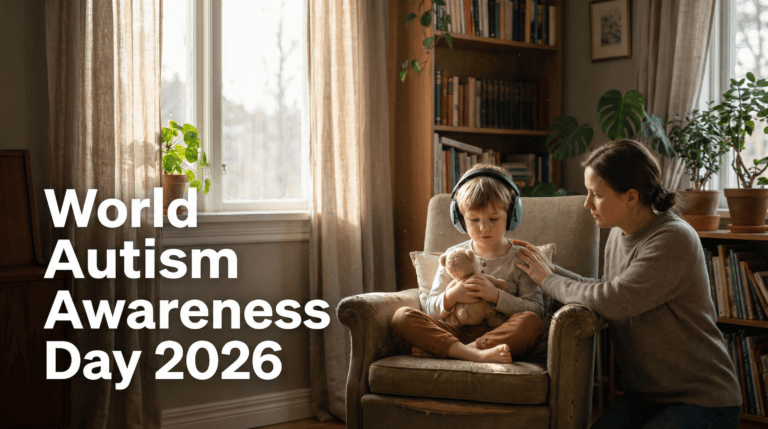
Every year on April 2, the world observes World Autism Awareness Day to raise awareness about autism and promote acceptance, inclusion, and support for individuals on the autism spectrum.
In 2026, the message goes beyond awareness—it focuses on understanding neurodiversity and building inclusive societies where autistic individuals can thrive in education, healthcare, workplaces, and communities.
Globally, research suggests that approximately 1 in 127 people live with autism, making it one of the most common lifelong neurodevelopmental conditions. Autism affects how individuals communicate, interact socially, and experience the world around them. However, autism is not a disease that needs to be cured; rather, it represents a spectrum of neurological differences.
The growing focus worldwide is now on early identification, personalised therapy, family support, and inclusive environments that allow autistic individuals to live meaningful and independent lives.
Understanding Autism Spectrum Disorder (ASD)
What Is Autism?
Autism Spectrum Disorder (ASD) is a neurodevelopmental condition that influences how a person communicates, processes information, and interacts socially.
Because it is called a spectrum, autism presents differently in every individual. Some people may require significant daily support, while others live independently and build successful careers.
Core Characteristics of Autism
Common traits of ASD may include:
Differences in social communication and interaction
Repetitive behaviours or routines
Strong focus on specific interests
Sensory sensitivities (to sound, light, touch, or textures)
These characteristics typically appear during early childhood, although some individuals receive diagnosis later in life.
Autism in India: A Growing Public Health Concern
Autism awareness in India has increased significantly over the past decade. Studies suggest that around 1 in 65 to 1 in 68 children in India may be on the autism spectrum, which means millions of families are affected.
However, experts believe the actual numbers may be higher due to:
Limited early screening programs
Lack of trained specialists in rural regions
Social stigma and misunderstanding about developmental conditions
Many children are diagnosed later than recommended, missing the critical window for early developmental support.
Improving public awareness, school screening programs, and accessible therapy services remains essential for better autism care across India.
Early Signs of Autism in Children
Recognising early signs of autism can help parents seek timely support. Early intervention significantly improves communication, social skills, and independence.
Possible Early Indicators
Parents and caregivers may notice:
Limited eye contact
Delayed speech development
Difficulty responding to their name
Preference for playing alone
Repetitive movements such as hand flapping or rocking
Strong reactions to certain sounds or textures
These signs vary from child to child. If developmental concerns appear, consulting a developmental pediatrician or neurologist can help with proper assessment.
Why Early Intervention Is Critical
Early support programs can significantly improve outcomes for children with autism.
Scientific evidence shows that early therapies can help:
Improve language and communication
Strengthen social interaction skills
Support emotional regulation
Increase independence in daily activities
The goal of intervention is not to change a child’s identity, but to help them develop tools that allow them to navigate the world more comfortably.
Behavioural Therapies: The Foundation of Autism Support
For decades, behavioural therapies have been the cornerstone of autism care.
Applied Behaviour Analysis (ABA)
One of the most widely used methods is Applied Behaviour Analysis (ABA).
ABA therapy focuses on:
Encouraging positive behaviours
Improving communication and learning
Developing social and life skills
The therapy uses structured teaching techniques and positive reinforcement to help children build essential developmental skills.
Modern Behavioural Approaches
Newer therapy models are becoming more child-centred and naturalistic.
These methods integrate learning into daily routines such as:
Playtime
Family interactions
School activities
This approach supports the neurodiversity movement, which encourages acceptance of neurological differences rather than forcing individuals to conform to traditional behavioural expectations.
The Role of Technology in Autism Therapy
Technology is transforming autism care in remarkable ways.
Digital Tools for Learning
Interactive applications and digital platforms now help children practise:
Emotion recognition
Social communication
Problem-solving skills
These tools provide engaging and structured environments where children can learn at their own pace.
Virtual Reality and Robotics
Emerging therapies also include:
Virtual reality social training
Robot-assisted therapy sessions
AI-supported behavioural coaching
These technologies help make therapy sessions more interactive and accessible.
Importantly, technology supports therapists and caregivers rather than replacing them.
Biomedical Approaches and Emerging Research
Alongside behavioural therapies, researchers are exploring biomedical factors related to autism.
Modern studies suggest autism may involve complex interactions between:
Genetics
Brain development
Immune responses
Metabolism
Gut microbiome
Although there is currently no medication that cures autism, certain treatments may help manage associated challenges such as:
Anxiety
Sleep disturbances
Hyperactivity
Mood regulation
Researchers are also studying personalised approaches known as precision medicine, where treatment plans are tailored to each individual’s biological profile.
The Importance of Holistic Autism Care
Experts increasingly agree that the best outcomes come from integrated and personalised care plans.
Effective autism support may combine:
Behavioural therapy
Speech and language therapy
Occupational therapy
Medical care
Family counselling
Educational support
Every individual with autism has unique strengths, needs, and challenges, which means therapy must be customised accordingly.
From Awareness to Acceptance
In recent years, the global conversation has shifted from awareness to acceptance.
Awareness simply recognises autism exists.
Acceptance asks society to adapt systems, environments, and attitudes so autistic individuals can participate fully.
Misconceptions about autism—such as the idea that autistic people lack empathy—are increasingly challenged by research.
Many autistic individuals express empathy and connection in different ways, which may sometimes be misunderstood by non-autistic people.
Creating inclusive environments requires greater understanding from educators, employers, healthcare providers, and communities.
Building an Inclusive Society for Autistic Individuals
To truly support autistic individuals, societies must invest in:
Inclusive Education
Schools should provide supportive environments where children with autism can learn alongside peers while receiving necessary accommodations.
Accessible Healthcare
Healthcare systems should ensure timely diagnosis and therapy access for all families.
Workplace Inclusion
Employers can benefit greatly from the unique strengths many autistic individuals bring, including:
Attention to detail
Analytical thinking
Strong focus
Innovative problem-solving
Community Awareness
Communities play a key role in creating supportive environments that value diversity and dignity.
Supporting Families and Caregivers
Autism affects not only individuals but also families and caregivers.
Parents often face challenges such as:
Navigating complex therapy systems
Managing emotional stress
Finding reliable information and support networks
Providing caregivers with training, guidance, and emotional support is essential for improving long-term outcomes.
The Future of Autism Care
Autism research continues to evolve rapidly. Future developments may include:
More precise diagnostic tools
AI-supported therapy programs
Personalised medical approaches
Expanded community-based support systems
However, one message remains clear: autism is part of human diversity, and individuals on the spectrum deserve dignity, respect, and equal opportunity.
Conclusion
World Autism Awareness Day 2026 is not only a moment to raise awareness—it is a call to action.
Autism affects millions of individuals and families around the world, yet many still face barriers to diagnosis, education, healthcare, and social participation.
The path forward requires greater acceptance, early intervention, inclusive policies, and continued research. By understanding autism more deeply and supporting neurodiversity, society can create environments where autistic individuals are not just supported but truly empowered.
With the right guidance, therapies, and inclusive communities, individuals on the autism spectrum can lead fulfilling, independent, and meaningful lives.
For more educational resources, holistic health insights, and supportive guidance related to neurological and developmental well-being, visit: https://panaceayur.com/
FAQs
What is World Autism Awareness Day?
World Autism Awareness Day is observed on April 2 each year to promote understanding, acceptance, and inclusion of individuals with autism.
What therapies are used for autism?
Common therapies include behavioural therapy, speech therapy, occupational therapy, and emerging technology-assisted interventions.
Why is early intervention important?
Early therapies help children develop communication, social skills, and independence more effectively.
Can autism be cured?
Autism is not a disease to be cured. It is a lifelong neurodevelopmental condition that can be supported with therapy and inclusive environments.
What causes autism?
Autism results from a combination of genetic and environmental factors that influence brain development.