

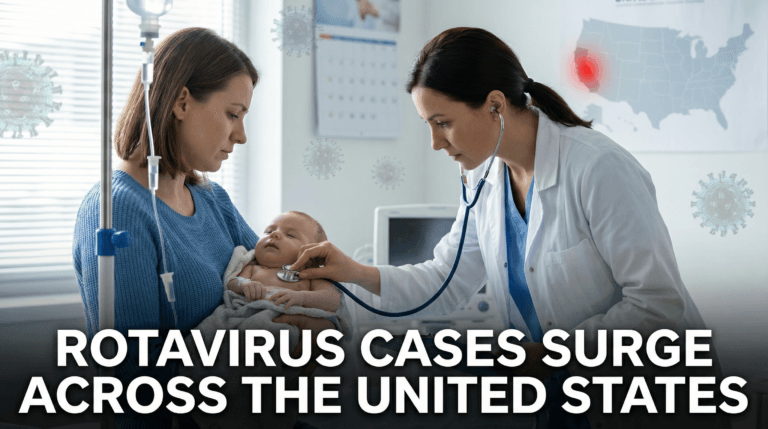
The United States is witnessing a significant rise in rotavirus infections, a highly contagious virus known for causing severe diarrhea, vomiting, and dehydration—particularly in infants and young children. Recent surveillance data from wastewater monitoring systems and federal health dashboards indicate that rotavirus activity has increased across most parts of the country, with California emerging as a major hotspot.
Health experts warn that although the disease is often overlooked by adults, rotavirus can be extremely dangerous for children under the age of five, especially without proper vaccination and medical care. Public health specialists are also raising concerns that recent discussions around vaccine policy changes may influence immunization rates, potentially increasing the risk of outbreaks in vulnerable communities.
This article explores the current rotavirus surge, its symptoms, transmission, health risks, vaccine effectiveness, and why doctors are urging parents to remain vigilant.
What Is Rotavirus and Why Is It Dangerous?
Rotavirus is a highly infectious virus that attacks the digestive system, causing severe inflammation of the stomach and intestines. The virus is one of the leading causes of acute gastroenteritis, a condition characterized by diarrhea, vomiting, stomach cramps, and fever.
While older children and adults usually recover without major complications, infants and toddlers can develop life-threatening dehydration within a short period of time.
The virus spreads easily through microscopic particles of infected fecal matter, which can contaminate hands, toys, surfaces, food, and water. Because it spreads so efficiently, outbreaks commonly occur in environments where young children interact closely, such as:
Daycare centers
Hospitals
Preschools
Pediatric wards
Family households with young children
Health officials emphasize that even tiny amounts of the virus can infect another person, making rotavirus one of the most contagious gastrointestinal pathogens known.
Wastewater Data Shows Rotavirus Spreading Rapidly
Recent wastewater surveillance data has provided valuable insights into the spread of the virus. According to monitoring dashboards tracking infectious diseases across multiple states, rotavirus levels have been rising steadily across the United States since mid-December.
The WastewaterSCAN dashboard, which monitors viral activity across dozens of states, reports elevated levels of rotavirus in nearly every region except the Midwest.
Among the most concerning areas is California’s Bay Area, where wastewater treatment plants are detecting high concentrations of the virus.
Cities experiencing elevated levels include:
San Jose
Fremont
Redwood City
Marin County
Meanwhile, moderate infection levels have been observed in nearby communities such as:
Sunnyvale
San Francisco
Novato
The rising viral presence in wastewater suggests community transmission is increasing, even before clinical cases are formally reported in hospitals.
Public health experts say wastewater monitoring has become an important early warning system, helping researchers track disease spread before widespread outbreaks occur.
Rotavirus Symptoms: What Parents Should Watch For
Rotavirus infection typically begins suddenly, often with vomiting followed by severe watery diarrhea. Symptoms generally appear within two days of exposure and can last anywhere from three to eight days.
Common symptoms include:
Severe watery diarrhea
Frequent vomiting
Fever
Abdominal pain
Loss of appetite
Fatigue
Dehydration
Dehydration is the most dangerous complication, particularly for infants and toddlers.
Signs of dehydration include:
Dry mouth and tongue
Sunken eyes
Crying without tears
Decreased urination
Lethargy or unusual sleepiness
If dehydration becomes severe, children may require hospital treatment with intravenous fluids.
Doctors stress that the first rotavirus infection is usually the most severe, which is why early childhood vaccination is strongly recommended.
Why Children Under Five Are Most at Risk
Rotavirus infections occur in people of all ages, but young children are especially vulnerable due to their developing immune systems.
Before vaccines became widely available, rotavirus was the leading cause of severe diarrhea among infants and young children in the United States.
At that time, the virus caused:
Up to 2.7 million infections annually
Hundreds of thousands of doctor visits
Thousands of hospitalizations
Children under the age of five remain the highest risk group, especially those who are not vaccinated.
Medical experts say that even in developed countries with modern healthcare systems, rotavirus can quickly become serious if dehydration is not treated promptly.
Annual Deaths Still Occur Despite Medical Advances
Although vaccination programs have significantly reduced severe infections, rotavirus still causes deaths each year in the United States.
Public health data shows that approximately 20 to 40 deaths occur annually due to complications related to the virus.
This number is around 20 fewer deaths per year compared to the pre-vaccine era, highlighting the major impact vaccination has had on public health.
Globally, the virus remains even more dangerous. In developing countries where vaccines and medical care are less accessible, rotavirus continues to cause hundreds of thousands of child deaths each year.
The Rotavirus Vaccine: A Major Public Health Success
The introduction of rotavirus vaccines in the late 1990s marked a turning point in pediatric infectious disease prevention.
Currently, two oral rotavirus vaccines are approved for infants in the United States. Unlike many other vaccines that require injections, these vaccines are administered as liquid drops placed in a baby’s mouth.
The vaccination schedule typically occurs during the first months of life, providing early protection when babies are most vulnerable.
According to public health data, vaccination has helped prevent:
45,000 hospitalizations
342,000 clinic and emergency room visits
Even though vaccines do not provide complete immunity from future infections, they dramatically reduce the severity of illness.
Research indicates that 94% to 96% of vaccinated children are protected from hospitalization, demonstrating the strong effectiveness of the vaccine in preventing life-threatening complications.
Debate Over Vaccine Policy Raises Concerns
Despite the strong scientific evidence supporting vaccination, recent policy discussions in the United States have sparked debate among medical experts.
A proposal introduced during the Trump administration suggested modifying rotavirus vaccine recommendations, allowing parents to decide together with their doctors whether the vaccine is necessary for their children.
This proposal would represent a departure from earlier public health guidance that recommended vaccination for all infants.
Officials stated that the new approach aims to align U.S. vaccine schedules with international practices while promoting transparency and informed consent.
However, the proposal faced legal challenges and was temporarily blocked by a court, preventing immediate implementation.
Medical Experts Warn of Potential Risks
Many pediatricians and infectious disease specialists have strongly criticized the proposed changes.
Doctors argue that weakening universal vaccine recommendations could reduce vaccination rates, leading to more outbreaks and preventable illnesses.
One pediatric infectious disease expert warned that reduced vaccination could result in increased suffering and deaths among children.
Medical organizations emphasize that vaccination programs work best when coverage remains high across the population.
Lower vaccination rates can allow viruses to spread more easily through communities, particularly in environments where children gather.
Why Some Countries Do Not Use Rotavirus Vaccines
Some policymakers have referenced Denmark’s vaccination policy, which does not include routine rotavirus immunization.
However, medical experts say comparisons between countries must consider multiple factors, including:
Healthcare system differences
Population size
Disease monitoring systems
Access to rapid medical treatment
In countries with strong healthcare access and low disease prevalence, policymakers sometimes choose different strategies.
However, many pediatric organizations believe that routine vaccination remains the safest approach for protecting infants in larger populations.
Understanding the Rare Side Effect Risk
Like all medical treatments, rotavirus vaccines carry a small risk of side effects.
The most notable rare complication is intussusception, a condition in which part of the intestine slides into another section of the bowel, causing blockage.
This condition occurs in approximately:
1 in every 20,000 to 100,000 vaccinated infants
Symptoms may include:
Severe abdominal pain
Persistent vomiting
Blood in stool
Swelling of the abdomen
Despite this risk, medical authorities emphasize that the benefits of vaccination far outweigh the potential risks.
Before rotavirus vaccines were introduced, approximately 1,900 infants each year developed intussusception from natural causes, meaning the condition can occur even without vaccination.
Most side effects from the vaccine are mild and temporary, such as irritability or mild diarrhea.
How Rotavirus Spreads So Easily
Rotavirus is known for its exceptional ability to spread between people.
Transmission commonly occurs when infected particles enter the mouth after contact with contaminated surfaces.
Typical routes of transmission include:
Changing diapers without proper handwashing
Touching contaminated toys
Contact with infected surfaces in childcare facilities
Handling contaminated food
Because young children frequently place objects and hands in their mouths, daycare environments can facilitate rapid transmission.
The virus can also survive on surfaces for long periods, making sanitation and hygiene critical for prevention.
Prevention Strategies Beyond Vaccination
Although vaccination is the most effective protection, other preventive measures can reduce transmission.
Parents and caregivers can help protect children by:
Washing hands thoroughly after diaper changes
Disinfecting toys and surfaces regularly
Keeping sick children home from daycare
Ensuring children stay hydrated during illness
Hospitals and childcare centers often implement strict sanitation protocols during outbreaks to prevent further spread.
Why Public Awareness Is Important
Despite the virus’s potential severity, many adults underestimate the dangers of diarrheal diseases.
Experts say this misunderstanding can delay treatment or reduce vaccination uptake.
Pediatric specialists emphasize that severe diarrhea in infants is not a minor illness and can escalate quickly if dehydration develops.
Educating parents about symptoms, vaccination, and prevention is considered a key component of protecting children’s health.
Conclusion
The rising detection of rotavirus across the United States—particularly in California—serves as an important reminder that infectious diseases affecting children remain a serious public health concern. Although modern medicine has significantly reduced the burden of rotavirus through vaccination, the virus continues to circulate and cause illness, especially among infants and toddlers.
Wastewater monitoring has revealed increasing viral activity in multiple regions, signaling the possibility of broader outbreaks if preventive measures are not maintained. Health experts stress that vaccination remains the most effective defense, dramatically reducing hospitalizations and severe complications among young children.
While policy debates around vaccine recommendations continue, medical professionals widely agree that maintaining strong immunization coverage is critical for protecting vulnerable populations. Parents, caregivers, and healthcare providers must remain vigilant—recognizing symptoms early, practicing proper hygiene, and ensuring children receive appropriate medical care.
Ultimately, awareness, vaccination, and preventive practices together form the strongest shield against rotavirus, helping protect infants and young children from a disease that can otherwise lead to serious—and sometimes fatal—health consequences.