

FSSAI Ashwagandha advisory has brought renewed attention to one of the most important quality-control issues in the global Ayurvedic and nutraceutical market: the difference between Ashwagandha root and Ashwagandha leaves. For educated consumers in the USA, UK, Europe, Canada, Australia, and the Middle East, this distinction is not a minor botanical detail. It directly affects product safety, regulatory compliance, clinical authenticity, and consumer trust.
Ashwagandha, botanically known as Withania somnifera, is widely used in Ayurveda for stress resilience, nervous system support, fatigue, sleep, vitality, and recovery. However, the recent FSSAI Ashwagandha advisory clarified that, under the relevant Indian food categories, only Ashwagandha roots and root extracts are permitted, while Ashwagandha leaves in crude, extract, or any other form are not permitted [1]. The Ministry of Ayush communication further directed that Ayush drugs and products should use Ashwagandha roots, while the use of leaves in crude, extract, or any other form is strictly prohibited [2].
This article explains what the FSSAI Ashwagandha advisory means, why classical Ayurveda emphasizes Ashwagandha moola or root, why leaves have become a safety concern, and what patients and manufacturers should know before using or selling Ashwagandha products.
What the FSSAI Advisory Actually Says
The FSSAI advisory dated 16 April 2026 states that Schedule IV of the Food Safety and Standards regulations permits only the roots and root extracts of Withania somnifera in the relevant categories, including health supplements, nutraceuticals, food for special dietary use, food for special medical purpose, functional food, and novel food. It further clarifies that the use of Ashwagandha leaves, whether crude or extracted, is not permitted under those regulations [1].
The Ministry of Ayush communication enclosed with the advisory is even more explicit for Ayush drugs/products. It directs manufacturers, exporters, and sellers to use only Ashwagandha roots in crude, extract, or any other form, whether as a single drug or as an ingredient in compound Ayush products. It also states that the use of Ashwagandha leaves in crude, extract, or any other form in Ayush drugs/products is strictly prohibited [2].
This is important for manufacturers because the Ministry also refers to Rule 161 of the Drugs Rules, 1945, which requires the plant parts used in drugs/products to be clearly mentioned on the label [2]. In other words, “Withania somnifera extract” is no longer an adequate trust signal. The plant part must be transparent.
Why Root and Leaf Are Not the Same Medicine
A sophisticated understanding of Ayurveda begins with a simple principle: the plant name alone does not define the medicine. The part used matters. Root, leaf, bark, seed, fruit, resin, stem, and flower may differ in chemistry, potency, clinical action, and safety profile.
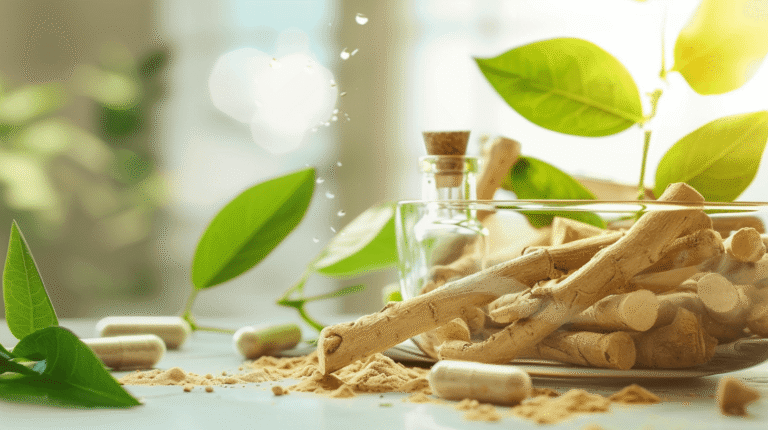
Ashwagandha is a good example. The Ayurvedic Pharmacopoeia of India defines Aśvagandhā as the dried mature roots of Withania somnifera Dunal. The same monograph describes the root’s classical actions as Rasayana, Balya, Vajikarana, and Vata-Kapha-pacifying, with a dose of 3–6 g of the powdered drug [3].
Classical textual usage also supports this root-centered identity. Charaka Samhita references Ashwagandha in Brimhana Mahakashaya and Balya Mahakashaya, and later in contexts such as Madhura Skandha and Vajikarana Ghrita [4]. Bhavaprakasha Nighantu, Guduchyadi Varga, describes Ashwagandha as Balya, Rasayana, and supportive in Kshaya and tissue depletion, again aligning with the long-standing internal use of Ashwagandha moola rather than casual leaf substitution [5].
For patients, the practical message is clear: “Ashwagandha” on a label is not enough. A quality product should specify “root” or “root extract.”
For readers who want a broader clinical understanding of Ashwagandha beyond the regulatory root-versus-leaf issue, Panaceayur has a detailed pillar guide on Ashwagandha’s Ayurvedic pharmacology, classical uses, Rasayana action, dosage, safety, contraindications, and modern research. The guide, titled Ashwagandha: Science-Backed Benefits, Uses, and Ayurvedic Insights, was last medically updated on August 1, 2025, and is designed as a comprehensive clinical resource for patients and practitioners
Why Ashwagandha Leaves Became a Regulatory Concern
The Ministry of Ayush communication refers to the 2024 updated Ashwagandha safety dossier and notes possible safety concerns around Ashwagandha leaves due to higher concentrations of reactive withanolides, particularly Withaferin-A [2].
This matters because withanolides are not generic “wellness compounds.” They are biologically active steroidal lactones. The Ayush safety report explains that more than 40 withanolides have been identified across different parts of the plant, and that the phytochemistry of aerial parts differs from the root [6]. It also summarizes data showing that certain constituents are present in substantially higher amounts in leaves than in roots; for example, the report lists Withaferin-A at 0.92 ± 0.4 mg/g in roots compared with 22.31 ± 1 mg/g in leaves in the referenced dataset [6].
This does not mean Withaferin-A is “bad.” It means it is powerful. In experimental research, Withaferin-A has been studied for cytotoxic, anticancer, anti-inflammatory, and cell-signaling effects. A PLOS ONE study comparing Withaferin-A and Withanone found that Withaferin-A showed stronger cytotoxicity in both normal and cancer cells, whereas Withanone had milder activity and appeared safer to normal cells under the tested experimental conditions [7].
That level of biological activity may be scientifically interesting, but it is not automatically appropriate for routine, unsupervised consumer use in food supplements. This is the point many supplement brands miss: a stronger extract is not necessarily a better medicine.
Ashwagandha Root vs Leaves: The Clinical Difference
| Parameter | Ashwagandha Root | Ashwagandha Leaves |
|---|---|---|
| Classical Ayurvedic identity | Root-based internal use is strongly supported | Not the primary classical internal Rasayana part |
| Indian regulatory position | Permitted in specified food categories when compliant | Not permitted in crude, extract, or other form in specified food products |
| Ayush drugs/products | Only root use directed | Strictly prohibited |
| Key concern | Requires correct dose, indication, and patient selection | Higher reactive withanolides, especially Withaferin-A |
| Label expectation | Plant part should be clearly stated | Should not appear in covered Indian food/Ayush product categories |
The root vs leaf distinction is not a technicality. It is the difference between a classical Ayurvedic drug identity and a modern extract-marketing shortcut.
Why Western Consumers Should Pay Attention
Many Western consumers buy Ashwagandha online without knowing the plant part, extraction method, standardization, or regulatory background. This is risky because the global supplement market often rewards “high potency” labels rather than pharmacognostic accuracy.
The US NIH Office of Dietary Supplements notes that Ashwagandha may help with stress, anxiety, and sleep in some studies, but also emphasizes that preparations and doses vary widely, long-term safety is not well established, and potential concerns include liver, thyroid, pregnancy/breastfeeding, and hormone-sensitive prostate cancer contexts [8].
NCCIH similarly states that Ashwagandha may be safe short-term, but there is insufficient information on long-term safety. It also cautions against use in pregnancy and breastfeeding, before surgery, and in people with autoimmune or thyroid disorders, while noting possible interactions with sedatives, anticonvulsants, diabetes medicines, blood pressure medicines, immunosuppressants, and thyroid hormone medication [9].
For educated patients, the right question is not “Is Ashwagandha good or bad?” The better question is: which part, which extract, which dose, which patient, and under whose supervision?
What About Liver Safety?
Ashwagandha root is generally well tolerated in many clinical and preclinical studies, but rare liver injury reports have made regulators and clinicians more cautious. LiverTox states that clinically apparent liver injury attributed to Ashwagandha has been reported, usually presenting 2–12 weeks after starting commercial products, often with a cholestatic or mixed pattern. It also notes that most cases resolve after discontinuation, but serious outcomes have been described, particularly in people with pre-existing liver disease [10].
This should not be used to create fear. It should be used to create better clinical discipline. Patients with liver disease, unexplained jaundice, high liver enzymes, alcohol-related liver injury, autoimmune liver disease, cirrhosis, or those taking multiple herbal products should not self-prescribe Ashwagandha.
The Manufacturer’s Responsibility
For manufacturers, the advisory should be treated as a quality-control and brand-trust moment. A serious company should be able to prove botanical identity, plant part, extraction method, marker compounds, contaminant testing, and label transparency.
The immediate manufacturing implications are straightforward. Products must not use Ashwagandha leaves in covered Indian food categories or Ayush drugs/products. Raw material documentation should confirm root identity. Certificates of analysis should not hide behind generic “Withania somnifera extract” language. Labels should state the plant part clearly. Marketing teams should avoid implying that higher withanolide concentration automatically means better efficacy.
The more advanced point is this: global brands must not treat regulatory differences between countries as loopholes. For example, Health Canada’s natural health product monograph recognizes Withania somnifera source materials and traditional Ayurvedic claims, including use as Rasayana, for general debility, restlessness/nervousness, memory support, and adaptogenic use [11]. However, the Indian FSSAI/Ayush position for the relevant product categories is more specific and restrictive regarding leaves [1,2].
A premium nutraceutical brand should not ask, “What can we get away with?” It should ask, “What is clinically authentic, pharmacologically defensible, and transparent to the consumer?”
The Panaceayur Clinical Position
At Panaceayur, the FSSAI Ashwagandha advisory should be interpreted as a validation of classical Ayurvedic precision, not as a rejection of Ashwagandha.
Authentic Ayurveda is not based on generic herb names or aggressive extract percentages. It is based on Dravya, Guna, Virya, Vipaka, Prabhava, Matra, Anupana, Rogi Bala, Agni, Dosha status, and the correct plant part. Ashwagandha moola has a classical therapeutic identity. Ashwagandha leaves, especially concentrated leaf extracts, are a different pharmacological proposition.
This is where Ayurveda can speak with authority to the modern world. The advisory does not weaken Ashwagandha’s reputation; it protects it from misuse.
How Patients Should Read an Ashwagandha Label
A well-made Ashwagandha product should clearly state whether it contains root powder, root extract, or another plant part. Patients should be cautious if the label says “whole plant,” “aerial parts,” “leaf extract,” “full-spectrum leaf extract,” or simply “Withania somnifera extract” without plant-part clarification.
For most patients seeking classical Ayurvedic support for stress resilience, weakness, sleep, Vata imbalance, debility, or recovery, root-based use is the relevant category. Even then, Ashwagandha should not be treated as a lifestyle candy. It should be matched to the person, not merely to the symptom.
FAQ
Is Ashwagandha banned?
No. The FSSAI advisory does not ban Ashwagandha root. It clarifies that Ashwagandha leaves are not permitted in crude, extract, or other form in the specified food product categories, while roots and root extracts remain the relevant permitted plant part under the stated conditions
Why are Ashwagandha leaves restricted?
The concern relates to plant-part chemistry and safety. The Ministry of Ayush specifically referred to possible safety concerns from higher concentrations of reactive withanolides in leaves, particularly Withaferin-A
Is Ashwagandha root safe?
Ashwagandha root has a stronger classical and pharmacopoeial basis than leaves, and many studies use root-based preparations. However, safety still depends on dose, duration, patient condition, liver status, thyroid status, pregnancy status, and drug interactions
Should Western consumers stop taking Ashwagandha?
Not automatically. They should first check whether the product is root-based, whether the dose is appropriate, and whether they have thyroid disease, liver disease, pregnancy, autoimmune conditions, hormone-sensitive cancer, or medication interactions. Clinical supervision is advisable.
Why does this matter for premium supplement brands?
Because plant-part transparency is now a marker of seriousness. A premium brand should be able to say exactly what it uses, why it uses it, how it tests it, and how its product aligns with both classical Ayurveda and modern safety standards.
References
- Food Safety and Standards Authority of India. (2026, April 16). Advisory regarding non-use of Ashwagandha (Withania somnifera) leaves in crude or extract or any other form in food products. Government of India.
https://fssai.gov.in/upload/advisories/2026/04/69e0d84fcac2fAdvisory%20on%20non%20use%20of%20ashwagandha%20leaves%20in%20crude%20or%20extract%20or%20any%20other%20form%20in%20food%20products-%20reg.pdf
Brief: This is the primary official FSSAI advisory. It clarifies that only Ashwagandha roots and root extracts are permitted in the specified food categories, while leaves in crude, extract, or any other form are not permitted. - Ministry of Ayush. (2026, April 15). Mandatory use of Ashwagandha (Withania somnifera) roots in Ayush products. Government of India.
https://fssai.gov.in/upload/advisories/2026/04/69e0d84fcac2fAdvisory%20on%20non%20use%20of%20ashwagandha%20leaves%20in%20crude%20or%20extract%20or%20any%20other%20form%20in%20food%20products-%20reg.pdf
Brief: This enclosed Ministry of Ayush communication directs Ayush manufacturers, exporters, and sellers to use only Ashwagandha roots and states that leaf use in Ayush drugs/products is strictly prohibited. It also refers to label declaration of plant parts under Rule 161. - Ministry of Ayush. (2024). Safety of Ashwagandha (Withania somnifera): Report of the expert committee. Central Council for Research in Ayurvedic Sciences, Government of India.
https://ayush.gov.in/assets/pdf/quality_standards/safetyReportAshwagandha.pdf
Brief: This is the best technical safety dossier for the article. It discusses plant-part differences, recommends restricting usage to the time-tested root, and reports much higher Withaferin-A levels in leaves than roots. - Government of India, Ministry of Health and Family Welfare. (2001). The Ayurvedic Pharmacopoeia of India: Part I, Volume I.
https://www.ayurveda.hu/api/API-Vol-1.pdf
Brief: The official pharmacopoeial monograph defines Aśvagandhā as the dried mature roots of Withania somnifera and lists its Ayurvedic actions, including Rasayana, Balya, Vajikarana, and Vata-Kapha pacifying properties. - Charak Samhita Research, Training and Skill Development Centre. (2026). Ashwagandha. Charak Samhita Online.
https://www.carakasamhitaonline.com/index.php?title=Ashwagandha
Brief: Useful for classical chapter references. It lists Ashwagandha references in Charaka Samhita, including Sutra Sthana 4/9(2), Sutra Sthana 4/9(7), Vimana Sthana 8/139, and Chikitsa Sthana 2/1/34, and also summarizes Bhavaprakasha indications such as Balya and Rasayana. - Health Canada. (2024, October 25). Ashwagandha — Withania somnifera. Natural Health Products Ingredients Database.
https://webprod.hc-sc.gc.ca/nhpid-bdipsn/atReq?atid=ashwagandha&lang=eng
Brief: Useful for a Western regulatory comparison. It is a Canadian natural health product monograph intended to guide product licence applications and labels, and it lists traditional Ayurvedic uses and dosage information for dried root. - National Institutes of Health, Office of Dietary Supplements. (2025, May 2). Ashwagandha: Is it helpful for stress, anxiety, or sleep? Health professional fact sheet.
https://ods.od.nih.gov/factsheets/Ashwagandha-HealthProfessional/
Brief: Balanced Western medical source. It states that Ashwagandha extracts may help stress, anxiety, and sleep, but also emphasizes variation in preparations, uncertain long-term safety, and cautions for liver, thyroid, pregnancy, breastfeeding, and prostate cancer contexts. - National Center for Complementary and Integrative Health. (2024). Ashwagandha: Usefulness and safety. National Institutes of Health.
https://www.nccih.nih.gov/health/ashwagandha
Brief: Patient-friendly safety reference. It notes that short-term use may be safe for some people, but long-term safety is uncertain; it also mentions possible gastrointestinal effects, drowsiness, rare liver injury reports, and avoidance during pregnancy and breastfeeding. - National Library of Medicine. (2024, December 3). Ashwagandha. LiverTox: Clinical and Research Information on Drug-Induced Liver Injury.
https://www.ncbi.nlm.nih.gov/books/NBK548536/
Brief: Strong medical reference for liver-safety discussion. LiverTox states that Ashwagandha has recently been implicated in clinically apparent liver injury, while also describing its widespread use as an Ayurvedic tonic and supplement. - Vaishnavi, K., Saxena, N., Shah, N., Singh, R., Manjunath, K., Uthayakumar, M., Kanaujia, S. P., Kaul, S. C., Sekar, K., & Wadhwa, R. (2012). Differential activities of the two closely related withanolides, Withaferin A and Withanone: Bioinformatics and experimental evidences. PLOS ONE, 7(9), e44419.
https://doi.org/10.1371/journal.pone.0044419
Brief: Important Withaferin-A reference. The study found that Withaferin-A and Withanone have different biological effects, with Withaferin-A showing stronger cytotoxicity in both normal and cancer cells under experimental conditions. - Kalaivani, P., Siva, R., Gayathri, V., & Langade, D. (2024). Mutagenicity and safety evaluation of Ashwagandha (Withania somnifera) root aqueous extract in different models. Toxicology Reports, 12, 41–47.
https://doi.org/10.1016/j.toxrep.2023.12.005
Brief: Useful for root-extract safety. This open-access toxicology paper evaluates Ashwagandha root aqueous extract in mutagenicity and safety models and supports discussion of root-specific safety rather than leaf use.