

Why India’s TB Detection Campaign Matters
TB detection campaign India is becoming one of the country’s most important public health missions as the government intensifies screening, rapid diagnosis and community-based tuberculosis detection under the TB Mukt Bharat initiative.
Tuberculosis, commonly known as TB, is one of India’s most serious public health challenges. It is preventable, treatable and curable, yet it continues to affect millions of families because the disease often remains hidden until it becomes severe. TB can spread through the air when a person with lung TB coughs, sneezes or speaks, and people nearby can inhale the bacteria without realizing they have been exposed [1].
For India, the fight against TB is not only about hospitals and medicines. It is about early detection, social awareness, nutrition, community support, digital tracking and reducing stigma. A person with untreated TB may continue to infect others for weeks or months. That is why India’s TB detection campaign has become one of the most important parts of the TB Mukt Bharat mission.
The World Health Organization reported that TB still remains a major global health threat, and India continues to carry a large share of the global TB burden [1]. At the same time, India has made visible progress. According to the Government of India, TB incidence reduced from 237 cases per lakh population in 2015 to 187 cases per lakh population in 2024, a 21% decline [2]. Treatment coverage also rose to 92% in 2024, and the number of “missing” TB cases was reduced significantly [2].
These achievements show that India’s approach is changing. Instead of waiting for people to come to clinics after symptoms become serious, the TB detection campaign is actively going into communities to find people at risk. This is a major shift from passive diagnosis to active case finding.
What Is the TB Detection Campaign in India?
The TB detection campaign in India is a large-scale public health effort to identify people with tuberculosis as early as possible, especially in high-risk communities. It is carried out under the National Tuberculosis Elimination Programme, also known as NTEP, and is closely linked with the TB Mukt Bharat Abhiyaan [3].
The main goal is simple: find TB early, start treatment quickly, prevent deaths and stop further transmission. This includes screening people with symptoms, testing vulnerable groups even if they do not have obvious symptoms, using chest X-rays, confirming cases through rapid molecular tests, registering patients on Ni-kshay and supporting them through treatment.
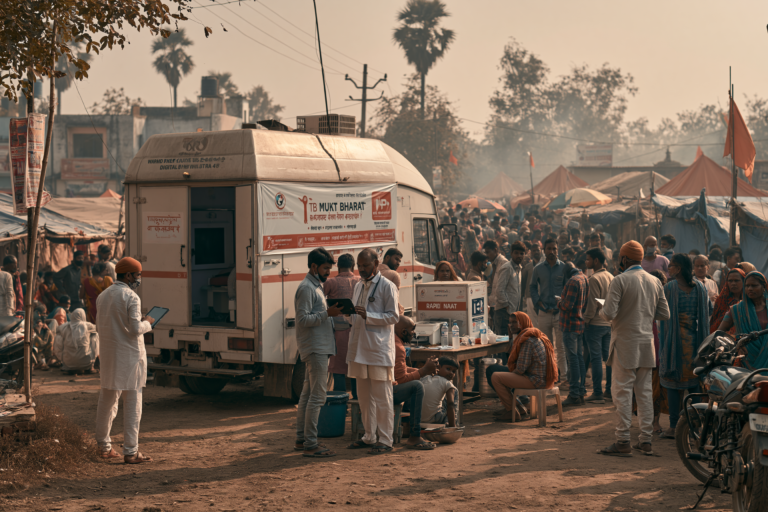
India’s TB detection campaign is not limited to hospitals. Screening camps, mobile health vans, Ayushman Arogya Mandirs, community health workers, panchayats, urban wards and local volunteers all play a role. This matters because many people with TB live in areas where access to healthcare is limited, travel is expensive or stigma prevents them from seeking help.
The campaign also focuses on people who are more likely to develop TB. These include household contacts of TB patients, people with previous TB, people living with HIV, people with diabetes, smokers, undernourished people, elderly people, migrant workers and people living in crowded conditions [4].
From Waiting for Patients to Finding Hidden TB
One of the biggest weaknesses in traditional TB control is delayed diagnosis. Many patients do not visit a health facility when symptoms begin. A cough may be ignored. Fever may be treated with common medicines. Weight loss may be linked to work stress or poor diet. In many cases, people keep working because they cannot afford to lose wages.
This delay creates two problems. First, the patient becomes weaker and may develop complications. Second, the person may continue to spread TB in the family, workplace or community. The TB detection campaign tries to break this pattern by finding people before they become seriously ill.
Active case finding is especially important because many people with TB may not show classic symptoms. During the intensified 100-day TB Mukt Bharat campaign, India detected a large number of asymptomatic TB cases, meaning people who had TB but did not report typical symptoms [5]. These cases might have remained undetected without proactive screening.
This is why the campaign is more than a medical drive. It is a public health strategy built around speed. The faster TB is detected, the faster treatment can begin. The faster treatment begins, the lower the risk of spread.
The 100-Day TB Mukt Bharat Abhiyaan
A major milestone in India’s TB detection effort was the 100-Day TB Mukt Bharat Abhiyaan. The campaign was launched on 7 December 2024 in Panchkula, Haryana, to intensify TB detection and reduce TB deaths [6].
The first phase focused on 347 high-priority districts across 33 States and Union Territories [6]. These districts were selected because they needed stronger action to detect missing TB cases, reduce diagnostic delays and improve treatment outcomes.
The campaign aimed to reach vulnerable populations instead of waiting for them to enter the health system. It used screening camps, mobile units, portable diagnostic tools, X-rays, NAAT testing and community mobilisation. It also involved elected representatives, local leaders, Gram Panchayats and civil society groups.
The results showed the power of active screening. During the first 100-day campaign, 12.97 crore people were screened, 7.19 lakh TB cases were detected, and about 2.85 lakh asymptomatic TB cases were found [5]. This means a significant number of people who may not have come forward for testing were identified through targeted screening.
Who Is Being Screened Under the Campaign?
The TB detection campaign gives special attention to people who face a higher risk of TB. This includes household contacts of confirmed TB patients because they may have been exposed to the bacteria for a long time. It also includes people who had TB in the past because recurrence is possible.
People with diabetes are also a priority because diabetes can increase the risk of developing TB. People living with HIV are another high-risk group because weakened immunity makes TB more dangerous. Elderly people, undernourished people, smokers, alcohol users and people living in crowded conditions are also included in targeted screening [4].
The campaign also reaches high-risk locations. These include urban slums, tribal areas, mining regions, prisons, hostels, residential schools, old-age homes, industrial worksites and migrant settlements. TB spreads more easily in places where people live or work in close contact, especially where ventilation is poor.
This targeted approach is important because TB does not affect all groups equally. Poverty, poor nutrition, crowding, weak immunity and delayed access to care increase the risk. By focusing on vulnerable groups, the campaign improves the chances of finding TB before it spreads further.
Why Asymptomatic TB Detection Is a Game-Changer
One of the most important lessons from India’s TB detection campaign is that symptom-based screening alone is not enough. Many people think TB always causes a long cough, fever, night sweats and weight loss. These symptoms are common, but they are not always present in the early stage.
Government updates have highlighted that a substantial number of TB patients may not present typical symptoms, which is why symptom-agnostic screening has become important [7]. This means people can be tested based on risk factors even when they do not report obvious symptoms.
This approach is a game-changer for TB elimination. If a person has TB but does not feel very sick, they may continue normal activities, work in crowded places and live closely with family members. Without screening, such cases can quietly continue the chain of transmission.
Detecting asymptomatic TB does not only help the patient. It protects the community. It reduces the chance that children, elderly people or immunocompromised family members will become infected. This is why active screening, X-ray support and rapid testing are central to the campaign.
Role of AI-Enabled X-Rays and Mobile Screening
Technology has become a major strength of India’s TB detection campaign. Portable X-ray machines, handheld X-ray units, AI-assisted reading tools and mobile screening vans help health teams reach people who may not visit hospitals.
Chest X-rays can detect lung abnormalities that may suggest TB. When X-ray findings indicate possible TB, confirmatory testing can be done through molecular methods. AI-enabled X-ray tools help screen large numbers of people quickly and identify those who need further evaluation.
Mobile health units and Nikshay Vahans are especially useful in rural, tribal and hard-to-reach areas. They reduce the need for patients to travel long distances for screening. This is important because even a small travel cost can stop a daily-wage worker or poor family from getting tested.
The use of technology also reduces diagnostic delays. A person can be screened closer to home, referred quickly and linked to testing. In a disease like TB, every saved day matters because untreated pulmonary TB can continue to spread.
NAAT Testing and Faster Diagnosis
Rapid molecular testing is another important part of the TB detection campaign. Nucleic Acid Amplification Tests, commonly called NAAT, help confirm TB and can also identify drug resistance, especially rifampicin resistance, at an early stage.
WHO recommends rapid diagnostic tests because they improve early and accurate detection of TB and drug-resistant TB [1]. This is especially important in India because delayed or incomplete diagnosis can lead to ongoing transmission and poor treatment outcomes.
Traditional testing methods can take more time, while molecular tests can provide quicker results. Faster results allow doctors and health workers to begin treatment sooner. They also help identify patients who may need a different treatment regimen because of drug resistance.
Drug-resistant TB is harder to treat than regular TB. It requires special medicines and close follow-up. Early detection of resistance helps prevent ineffective treatment and reduces the risk of further spread.
Ni-kshay: The Digital Backbone of TB Control
Ni-kshay is one of the most important digital tools in India’s TB programme. It is the web-enabled patient management system used under the National Tuberculosis Elimination Programme [8].
Through Ni-kshay, TB patients can be registered, monitored and linked to treatment services. The platform supports case notification, diagnostic tracking, treatment follow-up, adherence monitoring and patient transfers between health facilities. It also supports surveillance by helping the programme understand where cases are being detected.
This is important because detection without follow-up is not enough. A patient may be found in a screening camp, but the health system must ensure that the person receives medicines, understands the treatment plan and completes the full course.
Ni-kshay helps connect the different parts of TB care. It supports public and private sector notification, tracks patients across locations and helps reduce the chance that someone will be lost after diagnosis.
Nutrition Support Through Ni-kshay Poshan Yojana
TB treatment is not only about medicines. Nutrition plays a major role in recovery. Many TB patients are undernourished, and the disease itself can cause weight loss, weakness and loss of appetite.
Under the Ni-kshay Poshan Yojana, financial support for nutrition has been increased from ₹500 to ₹1,000 per month for notified TB patients [9]. This support is important because TB patients often face income loss, high household stress and difficulty maintaining a nutritious diet.
Nutrition support improves the patient’s ability to tolerate treatment and recover. It also reduces the economic pressure on families. For poor households, even a small monthly support amount can make a difference when a patient is unable to work regularly.
The campaign’s connection with nutrition support shows that India is treating TB as a social and medical issue. Medicines cure TB, but food, rest, counselling and family support help the patient complete treatment.
Ni-kshay Mitra and Community Participation
The Pradhan Mantri TB Mukt Bharat Abhiyaan encourages citizens, NGOs, companies, faith-based groups, elected representatives and institutions to become Ni-kshay Mitras. A Ni-kshay Mitra can support TB patients through nutrition, social assistance or other forms of help [10].
This community-based model is important because TB patients often face stigma and isolation. Some people hide their diagnosis because they fear losing work, marriage prospects or social respect. Others stop treatment because they lack food, money or emotional support.
When communities support TB patients openly, stigma reduces. Patients feel less alone and are more likely to complete treatment. During the 100-day campaign, more than one lakh new Ni-kshay Mitras joined the effort [5]. This shows that TB elimination is not only a government responsibility. It is a people’s movement.
Community participation also helps identify people who may need screening. Local leaders, health workers, self-help groups and volunteers often know which households have elderly members, undernourished people, migrants or people with chronic cough. This local knowledge can make screening more effective.
TB Mukt Gram Panchayat and Urban Ward Campaigns
India’s TB elimination effort is becoming more localised through initiatives such as TB Mukt Gram Panchayat and TB-Free Urban Ward campaigns. These initiatives help bring TB detection and awareness closer to the community level.
A national policy can set goals, but village-level and ward-level action makes those goals real. Local health workers and leaders can organise screening camps, encourage families to get tested, reduce stigma and monitor treatment support.
This approach is important because TB looks different in different places. Urban slums may face crowding and poor ventilation. Tribal areas may face distance from health facilities. Mining areas may face occupational lung risks. Migrant communities may struggle with continuity of care. Local micro-plans help address these differences.
By taking TB detection to villages and wards, India can improve access and accountability. A person who might avoid a distant hospital may be more willing to attend a nearby camp supported by familiar local workers.
Key Achievements of India’s TB Detection Campaign
India’s recent TB detection efforts have produced measurable results. According to official updates, India diagnosed 26.18 lakh TB patients in 2024 against an estimated 27 lakh cases, reducing missing TB cases to less than one lakh [2]. This is a major improvement compared with earlier years.
The 100-Day TB Mukt Bharat Abhiyaan also showed strong results. The campaign screened 12.97 crore people and detected 7.19 lakh TB cases, including 2.85 lakh asymptomatic cases [5]. These numbers show why active case finding is important. Many of these people might not have been diagnosed through routine health facility visits.
India has also improved treatment coverage, expanded diagnostic access and strengthened digital tracking. The government has reported that treatment coverage reached 92% in 2024 [2]. Wider use of molecular tests, X-rays, Ni-kshay registration and nutrition support has helped create a more complete TB care pathway.
These achievements do not mean the battle is over. They show that the right strategy can reduce hidden TB and improve care. The next challenge is to sustain this intensity over time.
Challenges Still Facing TB Detection in India
Despite progress, India’s TB detection campaign still faces major challenges. The first challenge is scale. India is a large country with diverse populations, difficult geographies and varying levels of healthcare access.
The second challenge is stigma. Many people still fear being labelled as a TB patient. Some delay testing because they worry about work, marriage, social acceptance or family reputation. Stigma can make TB invisible even when testing is available.
The third challenge is private sector notification. Many people first seek care from private clinics, pharmacies or informal providers. If these cases are not notified and tracked, they may become missing cases. Stronger public-private coordination is essential.
The fourth challenge is migration. Migrant workers may start treatment in one district and move to another for work. Without strong tracking and transfer support, treatment may be interrupted. Digital systems like Ni-kshay can help, but field-level follow-up is still necessary.
The fifth challenge is nutrition. TB patients need food, rest and support. If a patient receives medicines but remains undernourished or financially stressed, recovery can become harder.
What Citizens Should Know About TB Symptoms
Every citizen should understand the common symptoms of TB. A cough that lasts for more than two weeks should not be ignored. Fever, night sweats, weight loss, chest pain, fatigue, loss of appetite and coughing blood are warning signs that need medical attention [1].
However, the absence of symptoms does not always mean absence of TB. People who live with a TB patient, have diabetes, HIV, undernutrition, previous TB or exposure to crowded high-risk environments should take screening seriously.
Getting tested early is not something to fear. TB is curable when treatment is taken properly. Delaying testing increases risk for the patient and the family. Early diagnosis protects children, elderly people and other vulnerable members of the household.
Citizens should also know that treatment must be completed. Stopping medicines early can lead to relapse or drug resistance. Even if symptoms improve, the full course of treatment should be followed under medical guidance.
What Health Workers and Local Leaders Can Do
Health workers are the bridge between the TB programme and the people. Their role is not only to collect samples or provide medicines. They must build trust, explain the disease clearly, reduce fear and support patients through treatment.
Local leaders can help by making TB screening socially acceptable. When panchayat members, ward leaders, teachers, religious leaders and community influencers speak openly about TB, people become more willing to come forward.
Employers also have a role, especially in construction, mining, factories, transport and informal labour settings. Workplaces should support screening, reduce stigma and allow patients to continue treatment without fear of job loss.
Schools, hostels and residential institutions should also remain alert. Awareness sessions and early referral can prevent delays and protect students and staff.
Why TB Detection Is Important for India’s Future
TB affects more than health. It affects income, education, productivity and family stability. When a working adult develops TB, the whole household may suffer. Children may miss school. Families may spend money on transport and food. Daily-wage workers may lose income.
That is why early TB detection has economic and social benefits. Detecting TB early reduces severe illness, hospitalisation and transmission. It helps people return to normal life faster. It also reduces the burden on the healthcare system.
For India, TB elimination is linked with development. A healthier population means stronger communities, better productivity and lower health-related poverty. TB control is not only a medical goal; it is a national development priority.
The Way Forward for TB-Free India
India’s TB detection campaign has shown that hidden TB can be found when the health system actively reaches people. The way forward is to keep this momentum alive beyond special drives.
India must continue targeted screening in high-risk groups, expand rapid molecular testing, use AI-enabled X-rays where useful, strengthen private sector notification, support migrant patients and ensure that nutrition benefits reach every eligible patient.
The country also needs stronger awareness campaigns in local languages. People should know that TB is curable, testing is important and stigma only helps the disease spread. Awareness must reach schools, workplaces, villages, slums, factories and digital platforms.
The campaign should also continue to integrate TB services with primary healthcare. When TB screening becomes a normal part of community health services, more people will be detected early.
Conclusion: Finding TB Early Can Save Lives
India’s TB detection campaign is one of the most important pillars of the TB Mukt Bharat mission. It is changing the fight against tuberculosis by moving from passive diagnosis to active case finding.
The campaign is using community screening, AI-enabled X-rays, NAAT testing, Ni-kshay tracking, nutrition support and Jan Bhagidari to detect TB earlier and support patients better. Its biggest strength is that it does not wait for every patient to reach a hospital. It takes screening closer to people.
The message is clear: every missed TB case can continue the chain of infection, but every detected case is a chance to stop it. If India continues to combine technology, treatment, nutrition and community participation, the goal of a TB-free India can move from ambition to reality.
References
[1] World Health Organization, “Tuberculosis,” updated 24 March 2026.
https://www.who.int/news-room/fact-sheets/detail/tuberculosis
Brief: Used for TB symptoms, transmission, diagnosis, treatment, prevention and global TB context. (World Health Organization)
[2] Press Information Bureau, Ministry of Health and Family Welfare, “TB incidence in India drops by 21% from 237 per lakh population in 2015 to 187 per lakh population in 2024,” 12 November 2025.
https://www.pib.gov.in/PressReleasePage.aspx?PRID=2189415
Brief: Used for India’s TB incidence decline, treatment coverage, diagnosis numbers and reduction in missing TB cases. (Press Information Bureau)
[3] Directorate General of Health Services, Ministry of Health and Family Welfare, “National Tuberculosis Elimination Programme.”
https://dghs.mohfw.gov.in/national-tuberculosis-elimination-programme.php
Brief: Used for NTEP background and India’s TB elimination goal. (Directorate General of Health Services)
[4] Press Information Bureau, “Union Health Ministry sensitizes Members of Parliament on 100-day TB campaign,” 18 December 2024.
https://www.pib.gov.in/PressReleasePage.aspx?PRID=2085802
Brief: Used for intensified case finding, high-risk group focus, advanced diagnostics and nutrition support. (Press Information Bureau)
[5] Press Information Bureau, “Union Health Minister Shri JP Nadda Inaugurates World TB Day 2025 Summit,” 24 March 2025.
https://www.pib.gov.in/PressReleasePage.aspx?PRID=2114554
Brief: Used for 100-day campaign results, including 12.97 crore screened, 7.19 lakh cases detected and 2.85 lakh asymptomatic cases. (Press Information Bureau)
[6] Press Information Bureau, “Union Health Minister Shri JP Nadda launches 100-day intensified nationwide campaign to reduce TB incidence and mortality,” 7 December 2024.
https://www.pib.gov.in/PressReleasePage.aspx?PRID=2081919
Brief: Used for campaign launch details, 347 districts and the goal of quickly detecting and treating missing TB cases. (Press Information Bureau)
[7] Press Information Bureau, “Shri Nadda Reaffirms India’s Commitment to Eliminate TB Ahead of Global Targets,” 24 March 2026.
https://www.pib.gov.in/PressReleasePage.aspx?PRID=2244703&lang=1®=3
Brief: Used for latest campaign updates, intensified screening, treatment coverage and national TB progress. (Press Information Bureau)
[8] Ni-kshay, “About Us.”
https://www.nikshay.in/Home/AboutUs
Brief: Used for the official description of Ni-kshay as India’s web-enabled TB patient management system under NTEP. (Nikshay)
[9] Press Information Bureau, “World Tuberculosis Day 2025: Towards a TB-Free India,” 24 March 2025.
https://www.pib.gov.in/PressReleaseDetail.aspx?PRID=2114549
Brief: Used for Ni-kshay Poshan Yojana and increase in nutrition support for TB patients. (Press Information Bureau)
[10] Press Information Bureau, “PM reviews status and progress of TB Mukt Bharat Abhiyaan,” 13 May 2025.
https://www.pib.gov.in/PressReleasePage.aspx?PRID=2128490
Brief: Used for community participation, Ni-kshay Mitras and Jan Bhagidari in TB elimination. (Press Information Bureau)