

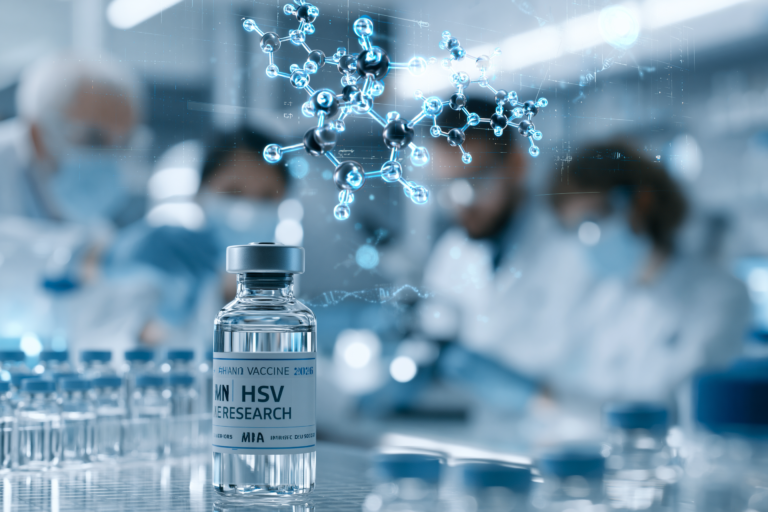
Herpes vaccine update 2026 is one of the most searched topics among people living with HSV-1 and HSV-2, especially those dealing with recurrent outbreaks, silent shedding, partner anxiety, and long-term treatment fatigue. The honest update is clear: there is still no approved herpes vaccine for public use in 2026, but HSV vaccine research is moving forward through mRNA technology, therapeutic vaccine trials, and deeper immune-control studies.
People searching for a herpes vaccine update in 2026 usually want one clear answer first: is there finally a vaccine for HSV-1 or HSV-2? The honest answer is that herpes vaccine research is active, but there is still no approved herpes simplex virus vaccine available for public use as of 2026 [1]. That may sound disappointing, but it is not the full story. Scientists are learning more about HSV immunity, mRNA vaccine design, therapeutic vaccines, and long-term recurrence control than ever before.
Herpes simplex virus is not a simple skin infection. HSV-1 commonly causes oral herpes, while HSV-2 is more strongly linked with genital herpes, although either type can affect the mouth or genital area [2]. The main challenge is latency. After infection, HSV can remain hidden in nerve cells and reactivate later, causing outbreaks, silent shedding, or transmission even when symptoms are absent [2]. This is why a true vaccine or long-term control strategy must do more than reduce blisters. It must influence how the immune system recognizes, controls, and responds to the virus.
Current medical guidance remains clear: herpes is treatable, manageable, and often controllable, but modern medicine does not yet classify it as curable [2][3]. Antiviral medicines such as acyclovir, valacyclovir, and famciclovir can shorten outbreaks, reduce recurrence frequency, and lower transmission risk when used correctly [3]. At the same time, many patients want a deeper approach that supports immunity, stress resilience, inflammation balance, and long-term freedom from repeated flare-ups. This is where an integrative discussion, including Ayurveda, becomes relevant.
Is There a Herpes Vaccine in 2026?
There is no licensed HSV vaccine for preventing or treating herpes infection in routine clinical use in 2026 [1]. The World Health Organization notes that HSV vaccine development remains an important global health goal, especially because genital HSV affects hundreds of millions of people and is linked to neonatal herpes, genital ulcer disease, emotional distress, and increased HIV acquisition risk [1][2].
A herpes vaccine could work in two main ways. A preventive, or prophylactic, vaccine would aim to stop infection before exposure or reduce the chance of genital lesions after exposure. A therapeutic herpes vaccine would be designed for people who already have HSV, with the goal of reducing outbreaks, viral shedding, and recurrence severity [1]. For people already living with recurrent genital herpes, the therapeutic vaccine category is especially important because it could offer protection beyond daily antiviral suppression.
The difficulty is that HSV has evolved to hide well. It enters nerve pathways, establishes latency in sensory ganglia, and can reactivate when immune control weakens. A successful vaccine must generate a strong enough immune response at the right tissues, including mucosal and nerve-adjacent immune environments, without creating safety concerns.
BioNTech BNT163: The Most Watched HSV Vaccine Candidate
BioNTech’s BNT163 remains one of the most important herpes vaccine candidates to follow in 2026. BNT163 is an investigational mRNA vaccine designed to prevent genital lesions caused by HSV-2 and potentially HSV-1 [4]. BioNTech’s trial page lists the BNT163-01 study as a Phase 1 trial with recruitment complete, studying healthy volunteers and people with recurrent genital herpes to evaluate safety, tolerability, and immune responses [5].
This matters because BNT163 uses mRNA technology to encode multiple HSV-2 glycoproteins. The goal is to help the immune system block viral entry, reduce spread, and counter immune-evasion strategies used by HSV [4]. Early-stage results reported in 2026 described BNT163 as generally well tolerated and able to induce antibody responses against HSV-2 antigens, but this is still early clinical research, not proof of public-ready protection [6].
For readers, the key takeaway is simple: BNT163 is promising, but it is not an approved herpes vaccine. It still needs larger trials to prove whether it can meaningfully prevent infection, reduce recurrent lesions, or lower transmission risk in real-world conditions.
Moderna mRNA-1608: Useful Data, But Not Moving Forward
Moderna’s mRNA-1608 was another closely watched HSV-2 therapeutic vaccine candidate. The study was designed for adults with recurrent genital HSV-2 infection and tested multiple dose levels against a control vaccine [7]. Interim results published in 2026 reported no major safety concerns, increased antibody responses, and exploratory trends toward delayed recurrence and reduced recurrence rate [8].
However, industry reporting in late 2025 stated that Moderna decided not to advance mRNA-1608 into Phase 3 development [9]. Moderna’s public pipeline page, updated as of May 1, 2026, also does not list mRNA-1608 among its active development programs [10]. This does not erase the scientific value of the trial, but it does mean patients should not expect Moderna’s HSV vaccine to become available soon.
The Moderna update is a reminder that early immune responses are not enough. For a therapeutic herpes vaccine to succeed, it must show convincing, durable clinical benefit, such as fewer outbreaks, less viral shedding, longer outbreak-free periods, and a practical safety profile.
GSK Herpes Vaccine Update: A Setback, Not the End of the Field
GSK’s therapeutic HSV vaccine candidate, GSK3943104, was another major program. In September 2024, GSK announced that its Phase I/II trial did not meet the primary efficacy objective, so the candidate would not progress to Phase III studies [11]. The company reported no observed safety concern and said follow-up data could still offer insights into recurrent genital herpes [11].
This was a real setback for the herpes vaccine field, but not a reason to lose hope. Vaccine development often moves through failed candidates before a more effective strategy emerges. HSV is biologically difficult, and researchers may need better antigen combinations, stronger mucosal immunity, improved T-cell responses, or combination approaches that include antivirals, immune therapies, and next-generation vaccine platforms.
Why a Herpes Vaccine Is So Difficult to Create
Herpes is challenging because the virus does not behave like many infections that clear fully after immune attack. It can become latent in nerve ganglia and later reactivate. Some people have painful repeated outbreaks, while others have no obvious symptoms but can still shed the virus [2][3].
A vaccine must therefore solve several problems at once. It must reduce visible symptoms, reduce silent shedding, lower transmission risk, and ideally prevent latency or control reactivation. For people already infected, the goal may not be “one shot and gone,” but a shift toward long-term immune control where outbreaks become rare, milder, or absent for longer periods.
This is why the future of herpes care may involve layered strategies. Antivirals can reduce replication. Vaccines may train immune recognition. Lifestyle and stress control can reduce common triggers. Ayurveda and other integrative systems may support the body terrain by focusing on digestion, inflammation, sleep, stress response, and immune balance.
What Patients Should Do While Waiting for a Vaccine
Waiting for a herpes vaccine should not mean doing nothing. Current treatment already helps many people live normally, protect partners, and reduce recurrence. CDC guidance says antiviral medication is the mainstay for symptomatic genital herpes management, and suppressive therapy can reduce recurrence frequency by 70% to 80% in patients with frequent recurrences [3].
People with herpes should confirm diagnosis, understand whether they have HSV-1 or HSV-2, discuss episodic versus suppressive therapy with a qualified clinician, and learn how to reduce transmission risk. Condoms can lower risk but do not remove it completely, and transmission can occur even without visible sores [2]. Pregnant patients or those planning pregnancy should speak to their healthcare provider early because genital herpes requires careful pregnancy and delivery planning [2].
The most practical message is this: a vaccine may change the future, but today’s control depends on smart management, immune awareness, partner communication, and early treatment during symptoms.
How Ayurveda May Help in Long-Term Herpes Management
Ayurveda approaches recurrent conditions differently from symptom-only care. In Ayurvedic thinking, repeated flare-ups are often viewed through deeper patterns involving tissue health, digestive strength, heat/inflammation balance, stress load, and immune resilience. For herpes, this can be explained in modern terms as supporting the factors that influence recurrence: immune surveillance, inflammation, sleep, stress response, and general vitality.
The safer and more credible way to explain it is that Ayurveda supports long-term stability by improving the internal environment that allows repeated outbreaks to occur. Rasayana therapy, diet correction, detoxification where appropriate, sleep restoration, and stress regulation help people move toward fewer flare-ups and better recovery between episodes [12][13].
For readers looking for a deeper root-focused perspective, Panaceayur’s guide on whether herpes can be cured permanently explains an Ayurvedic approach centered on immune correction, Rasayana support, detoxification, and long-term recurrence control [12]. The important wording is “root-focused support” and “long-term remission approach,” not an unsafe promise that every person can permanently eliminate HSV.
Ayurveda may help by addressing common outbreak triggers. Poor sleep, chronic stress, digestive imbalance, excess inflammatory load, and weak recovery can make the body more vulnerable to recurrence. A personalized Ayurvedic plan may focus on cooling inflammatory patterns, strengthening digestion, supporting nervous system balance, and using classical immune-supportive formulations under supervision. This can make the overall treatment journey feel more complete for patients who want more than short-term outbreak suppression.
Can Herpes Be Cured Permanently?
This is the most searched and most sensitive question. From the standpoint of WHO and CDC-style modern medical guidance, herpes is treatable but not currently curable [2][3]. Antivirals can reduce symptoms and recurrence, but they do not eradicate latent HSV from nerve tissue [3].
However, patients often use the word “cure” when they mean something more personal: no repeated outbreaks, less fear of transmission, better confidence, improved immunity, and long-term freedom from constant symptoms. For content strategy, this difference matters. Instead of making a direct cure promise, the better medical and SEO-safe phrasing is “long-term remission,” “root-focused recovery,” “recurrence control,” “viral activity control,” and “sustained outbreak-free living.”
A balanced article can acknowledge the cure question without misleading the reader. The most responsible position is that a scientifically proven, universally accepted HSV cure is not available in modern allopathy medicine yet, but many patients can reduce outbreaks and improve quality of life through medical treatment, immune-supportive care, and personalized lifestyle management.
Future Outlook: What to Watch Next
The herpes vaccine field is not dead. It is evolving. The most important developments to watch are BioNTech’s BNT163 trial progress, next-generation therapeutic vaccine strategies, better mucosal immunity research, and approaches that target latency more directly. The NIH has also identified HSV research as a strategic priority, including better understanding of HSV biology, improved treatment, prevention, and cure-focused research [14].
The next breakthrough may not arrive as a single headline saying “herpes cured.” It may come in stages: better outbreak suppression, longer remission, lower viral shedding, stronger partner protection, and eventually therapies that address latency more directly. For patients, that future is worth following, but it should be paired with reliable care today.
Final Takeaway
The most accurate herpes vaccine update for 2026 is this: no HSV vaccine is approved yet, BioNTech’s BNT163 remains an important investigational candidate, GSK’s candidate did not move forward after missing its primary efficacy goal, and Moderna’s mRNA-1608 produced useful early data but is not expected to advance into Phase 3.
For people living with herpes now, the best path is not waiting in fear. Modern antivirals can reduce outbreaks and transmission risk, while a deeper lifestyle and Ayurveda-supported approach may help strengthen the body’s long-term resilience. The future of herpes care is likely to be integrative: better science, better immunity, better prevention, and a more honest conversation about moving from repeated flare-ups toward lasting control.
FAQs
Is there a herpes vaccine available in 2026?
No. There is currently no licensed HSV-1 or HSV-2 vaccine available for public use in 2026
Which herpes vaccine is most promising right now?
BioNTech’s BNT163 is one of the most watched candidates because it is an mRNA-based HSV vaccine in clinical testing, but it remains investigational and is not approved
Did Moderna stop its herpes vaccine?
Moderna’s mRNA-1608 produced early safety and immune-response data, but late-2025 reporting said the company would not advance it into Phase 3, and it is not listed in Moderna’s May 2026 public pipeline
Can Ayurveda cure herpes?
Ayurveda is presented more safely as a root-focused, immune-supportive approach that helps reducing recurrence patterns, support stress resilience, and improve long-term outbreak control when used under professional guidance
What is the best current treatment for herpes?
Antiviral medicines such as acyclovir, valacyclovir, and famciclovir remain the standard medical treatments for symptomatic herpes, and suppressive therapy can significantly reduce recurrences in people with frequent outbreak.
References
[1] World Health Organization. Herpes simplex virus vaccine development page. Explains why HSV vaccine development is a global priority and states that there are no licensed HSV vaccines. https://www.who.int/teams/immunization-vaccines-and-biologicals/diseases/herpes-simplex-virus (World Health Organization)
[2] World Health Organization. Herpes simplex virus fact sheet, updated May 30, 2025. Provides global HSV-1 and HSV-2 prevalence, symptoms, transmission, and treatment overview. https://www.who.int/news-room/fact-sheets/detail/herpes-simplex-virus (World Health Organization)
[3] CDC. Sexually Transmitted Infections Treatment Guidelines: Herpes. Covers antiviral treatment, suppressive therapy, recurrence control, and limitations of current drugs. https://www.cdc.gov/std/treatment-guidelines/herpes.htm (CDC)
[4] BioNTech. BNT163 Phase 1 clinical trial announcement. Describes the mRNA vaccine candidate, study goal, and HSV-2/HSV-1 prevention concept. https://investors.biontech.de/news-releases/news-release-details/biontech-starts-phase-1-clinical-trial-prophylactic-herpes (BioNTech)
[5] BioNTech Clinical Trials. BNT163-01 trial page. Lists recruitment complete status, Phase 1 design, enrollment, and trial timeline. https://clinicaltrials.biontech.com/trials/BNT163-01 (BioNTech Clinical Trials)
[6] Shishido A. A. et al. Safety and Immunogenicity of BNT163, a Trivalent mRNA HSV Vaccine Candidate for Genital Herpes. Early 2026 abstract reporting tolerability and immune response findings. https://pmc.ncbi.nlm.nih.gov/articles/PMC12793109/ (PMC)
[7] ClinicalTrials.gov. NCT06033261, Moderna mRNA-1608 HSV-2 therapeutic vaccine study. Trial record for the Phase 1/2 recurrent genital HSV-2 vaccine candidate. https://clinicaltrials.gov/study/NCT06033261 (ClinicalTrials)
[8] Wald A. et al. mRNA-1608, an mRNA-Based Therapeutic Genital Herpes Vaccine Candidate. Open Forum Infectious Diseases, 2026. Summarizes interim safety, immune response, and exploratory clinical endpoint data. https://academic.oup.com/ofid/article/13/Supplement_1/ofaf695.206/8420100
[9] Fierce Biotech. Moderna’s reshaping rolls on with pipeline purges, November 2025. Reports that Moderna ended development of mRNA-1608 and would not advance it to Phase 3. https://www.fiercebiotech.com/biotech/modernas-reshaping-rolls-3-more-pipeline-purges (Fierce Biotech)
[10] Moderna. mRNA pipeline page, as of May 1, 2026. Public pipeline listing current Moderna development programs. https://www.modernatx.com/research/product-pipeline (Moderna)
[11] GSK. Phase I/II therapeutic herpes simplex virus vaccine trial update, September 11, 2024. States GSK3943104 did not meet the primary efficacy objective and would not progress to Phase III. https://www.gsk.com/en-gb/media/press-releases/gsk-provides-update-on-therapeutic-herpes-simplex-virus-hsv-vaccine-trial/ (GSK)
[12] Panaceayur. Can Herpes Be Cured Permanently? Real Cure Approach. Explains the brand’s Ayurvedic root-focused approach to herpes recovery, immune correction, Rasayana support, and recurrence control. https://panaceayur.com/can-herpes-be-cured-permanently-real-cure-approach/ (Panaceayur)
[13] Singh R. et al. Ayurveda Rasayana as antivirals and immunomodulators. Reviews Rasayana herbs as immune-supportive and antiviral research leads. https://pmc.ncbi.nlm.nih.gov/articles/PMC8422837/ (PMC)
[14] NIH/NIAID. Strategic Plan for Herpes Simplex Virus Research 2023–2028. Outlines priorities for HSV biology, prevention, treatment, and cure-focused research. https://www.niaid.nih.gov/sites/default/files/nih-herpes-simplex-strategic-plan-2023.pdf (niaid.nih.gov)