


For people living with recurrent herpes, every new vaccine update creates hope. Patients who have repeated HSV-1 or HSV-2 outbreaks often search for one clear answer: is there a herpes vaccine in 2026?
The honest answer is important. Herpes vaccine research is active, but there is still no approved vaccine for HSV-1 or HSV-2 available for public use in 2026 [1], [2]. This does not mean research has failed. It means herpes is a complex lifelong viral infection, and vaccine science is still trying to solve a difficult problem: how to control a virus that hides in nerve tissue, becomes silent, and reactivates when the immune system becomes weak.
This article explains the latest herpes vaccine 2026 update, including BioNTech’s BNT163 study, Moderna’s mRNA-1608 research, why no genital herpes vaccine has been approved yet, and what recurrent HSV patients can do today while waiting for future breakthroughs.
It also explains the Panaceayur perspective: vaccine research confirms that immune control is central to herpes, but patients suffering from repeated outbreaks need a deeper root-cause approach now. This is where Ayurveda focuses on herpes reversal through immune correction, tissue-level healing, detoxification, Rasayana therapy, and reducing the body’s recurrence tendency.
Why herpes vaccine research matters in 2026
Herpes is not a rare condition. The World Health Organization estimates that billions of people live with HSV-1 globally, while hundreds of millions live with HSV-2, the type most commonly associated with genital herpes [1]. WHO has also reported that more than one in five adults aged 15–49 worldwide may be living with genital herpes infection caused by HSV-2 or genital HSV-1 [10].
This is why herpes cure research matters. For many patients, the biggest problem is not only the first outbreak. The real burden is recurrence. A person may feel better after treatment, then face burning, tingling, ulcers, itching, pain, anxiety, relationship stress, and fear of transmission again and again.
Modern antiviral medicines such as acyclovir, valacyclovir, and famciclovir can reduce symptoms and suppress recurrence. The CDC states that suppressive therapy can reduce genital herpes recurrences by 70% to 80% in patients with frequent outbreaks [8]. This is useful and important. However, antivirals do not remove latent HSV from nerve reservoirs. This is why many patients keep asking whether a vaccine, cure, or root-cause approach is possible.
Is there an approved herpes vaccine in 2026?

No. As of 2026, there is no approved herpes vaccine for HSV-1 or HSV-2.
WHO states that several candidate HSV vaccines have been tested in humans, but there are currently no licensed vaccines against either HSV type [2]. A 2026 npj Vaccines study also notes that no prophylactic or therapeutic HSV vaccine has been approved to date [9].
This point must be made clearly because many online headlines create confusion. Some articles use phrases like “herpes vaccine coming soon” or “HSV cure breakthrough,” but patients should understand the difference between research and approval.
A vaccine candidate in a clinical trial is not the same as a vaccine available for patients. A trial may study safety, immune response, dosing, or early clinical benefit. Only after strong evidence across multiple stages can a vaccine move toward regulatory approval. At present, no HSV vaccine has reached that point.
BioNTech BNT163: what patients should know
BioNTech’s BNT163 is one of the most watched herpes vaccine candidates because it uses mRNA technology and targets HSV-2 antigens. BioNTech’s clinical trial page describes BNT163-01 as a Phase 1 study in healthy volunteers and volunteers with recurrent genital herpes to study safety, tolerability, and immune responses after vaccination [3].
The trial has three parts. Part A focuses on dose escalation and safety. Part B expands safety evaluation. Part C evaluates safety and immunogenicity of BNT163 compared with placebo in participants with a history of recurrent HSV-2 genital herpes [3].
This is relevant for recurrent HSV patients because the research is not limited only to people who have never had herpes. Part of the study includes people with recurrent HSV-2 genital herpes, which means researchers are looking at immune response in the very population that needs better long-term options.
A 2026 Open Forum Infectious Diseases abstract reported that BNT163 was well tolerated, had an acceptable safety profile, and induced binding antibody and neutralizing titers to HSV-2 antigens in the trial data presented [4]. This is encouraging, but it is not the same as public availability or proof of permanent cure.
The correct patient-friendly message is this: BioNTech’s herpes vaccine research is promising, but BNT163 is still investigational. Patients should not assume it is approved, available, or guaranteed to stop recurrent herpes.
Moderna mRNA-1608: the key 2026 update
Moderna’s mRNA-1608 was another important HSV-2 vaccine candidate. ClinicalTrials.gov describes mRNA-1608 as an HSV-2 therapeutic candidate vaccine studied in adults aged 18 to 55 with recurrent HSV-2 genital herpes, with the purpose of generating safety and immunogenicity data and establishing proof of concept for clinical benefit [5].
A 2026 Open Forum Infectious Diseases abstract reported interim Phase 1/2 findings. The study described mRNA-1608 as a therapeutic vaccine aimed at reducing genital herpes disease in people with recurrent HSV-2. Interim data showed that mRNA-1608 was generally safe and well tolerated, induced antigen-specific immune responses, and showed a trend of improvement in selected clinical endpoints [6].
However, the most important 2026 update is that Moderna later announced that its herpes simplex virus clinical development program, mRNA-1608, would not advance to Phase 3 [7].
This must be written carefully. It does not mean all herpes vaccine research has stopped. It does not mean mRNA vaccine research has no value. It means this specific Moderna HSV program is not moving into the next major Phase 3 stage.
For patients, this is a reminder to stay hopeful but realistic. Vaccine research can produce useful immune data, but many candidates do not become approved treatments.
Table :Herpes vaccine research 2026: what patients should know
| Area | 2026 status | What it means for recurrent HSV patients | Reference |
|---|---|---|---|
| Approved herpes vaccine | No approved HSV-1 or HSV-2 vaccine is available for public use | Patients should stay informed, but should not wait for a vaccine as a current treatment solution | [2], [9] |
| BioNTech BNT163 | Investigational mRNA vaccine candidate studied in healthy volunteers and people with recurrent HSV-2 genital herpes | Promising research direction, but still not an approved treatment or permanent herpes cure | [3], [4] |
| Moderna mRNA-1608 | Studied as a therapeutic HSV-2 vaccine candidate, but Moderna announced it would not advance to Phase 3 | Useful research data, but not a near-term vaccine option for patients | [5], [6], [7] |
| Antiviral medicines | Suppressive therapy can reduce frequent genital herpes recurrences by 70% to 80% | Helpful for outbreak control, but does not remove latent HSV from nerve reservoirs | [8] |
| Ayurvedic root-cause approach | Panaceayur focuses on recurrence tendency, immune correction, inflammation, digestion, Ojas, Rakta, and nerve-tissue support | A practical long-term approach for patients seeking herpes reversal and recurrence control today | [11] |
Why has herpes vaccine development been so difficult?
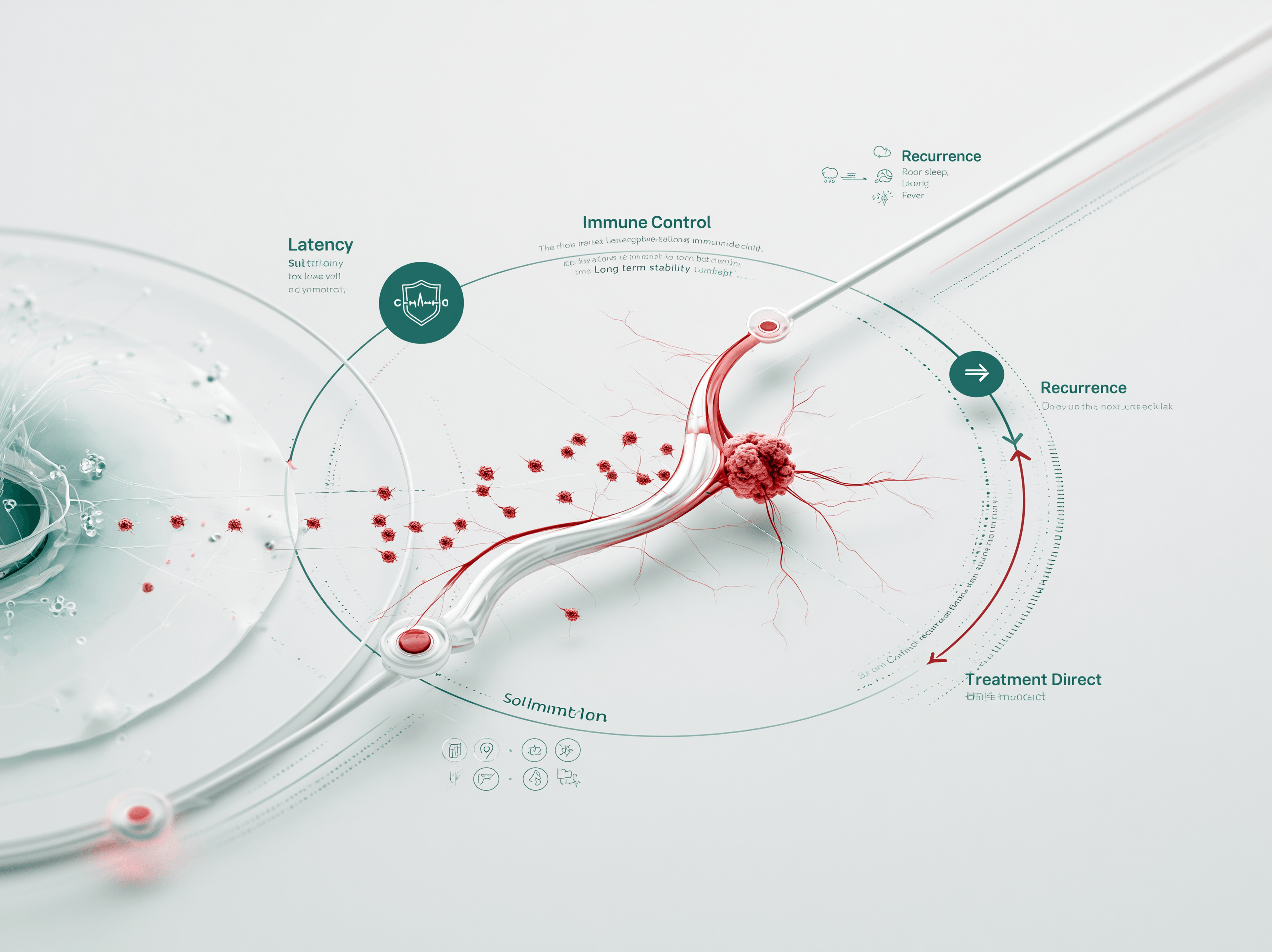
Herpes is difficult to vaccinate against because HSV does not behave like many short-term infections. After the first infection, the virus can travel into sensory nerve ganglia and become latent. During latency, the virus is not producing the same visible activity seen during an outbreak. Later, when immunity weakens or triggers appear, the virus can reactivate and return to the skin or mucosa.
This explains why herpes recurrence is so frustrating. The visible blister is only the surface expression. The deeper challenge is viral latency, immune surveillance, nerve involvement, and the internal environment that permits reactivation.
A preventive vaccine would aim to stop infection before it begins. A therapeutic vaccine would aim to help people who already have HSV by reducing outbreaks, reducing viral shedding, improving immune control, or delaying recurrence. These are different goals, and neither should be confused with an approved permanent cure.
This is where recurrent herpes treatment needs a broader discussion. Patients need scientific updates, but they also need a practical approach for today.
What recurrent HSV patients should understand today
If you already have recurrent HSV, the absence of an approved vaccine does not mean you have no options. It means your focus should be on reducing recurrence, improving immune control, identifying triggers, protecting partners, and building a long-term treatment strategy.
Medical diagnosis is still important. HSV-1 and HSV-2 can look similar, and other conditions can mimic herpes symptoms. Patients should confirm their diagnosis through proper medical evaluation, especially if symptoms are new, severe, atypical, or frequent.
Antiviral therapy can be useful, especially for first episodes, frequent recurrences, or transmission reduction. At the same time, many patients want more than suppression. They want to know why outbreaks keep returning and whether their body can become stable enough to remain outbreak-free long term.
This is where Panaceayur’s Ayurvedic approach becomes relevant.
Panaceayur perspective: vaccine research proves immune control matters

Modern herpes vaccine research is built around one central idea: the immune system must be trained or supported to control HSV better. Whether researchers use mRNA technology, protein antigens, antibodies, or immune-response studies, the goal is immune control.
Ayurveda approaches the same problem from a different framework. Instead of asking only how to stimulate an immune response against HSV, Ayurveda asks why the body’s internal terrain continues to permit reactivation.
In Panaceayur’s pillar article, herpes is explained as more than a surface skin infection. It is presented as a deeper disorder involving viral latency, immune weakness, nerve reservoirs, inflammation, Rakta Dhatu, Majja Dhatu, Ojas, Agni, Ama, and tissue-level imbalance [11].
This is the strategic connection between the vaccine article and the pillar article. Vaccine research tells patients that the immune system is central. Ayurveda explains how internal immunity, digestion, inflammation, blood tissue, nerve tissue, and long-term resilience may be corrected in a structured way.
Read Panaceayur’s detailed pillar guide here: https://panaceayur.com/can-herpes-be-cured-permanently-real-cure-approach/
What herpes reversal means in Ayurveda
The phrase herpes reversal should be used carefully. It should not be presented as a casual promise or instant cure. In Panaceayur’s clinical language, herpes reversal means shifting the body from a recurrence-prone state to a stable state where outbreaks reduce, triggers lose strength, immune surveillance improves, and the internal environment becomes less supportive of viral reactivation.
In Ayurveda, recurrent herpes is correlated with deeper imbalance rather than only external lesions. The burning, redness, ulcers, pain, tingling, and recurrence pattern are understood through Pitta aggravation, Rakta involvement, Vata movement through nerve pathways, Ama accumulation, and Ojas depletion.
This is why Ayurveda does not focus only on drying the blister. The blister is the final expression. The deeper treatment target is the recurrence tendency.
A root-cause Ayurvedic plan focuses on correcting digestion, reducing inflammatory heat, supporting blood purification, calming nerve irritation, strengthening Ojas, and using Rasayana therapy to rebuild long-term resistance. In chronic or frequent cases, Panaceayur’s pillar article explains the role of Rasayana, Avaleha-based support, physician-guided mineral preparations, and selective Panchakarma when appropriate [11].
Why Ayurveda looks beyond outbreak suppression
Outbreak suppression can reduce symptoms, but it may not answer the deeper patient question: why does herpes return whenever stress, poor sleep, fever, hormonal change, digestive disturbance, or weakness appears?
Ayurveda treats recurrence as a sign that the internal terrain has not been fully corrected. If Agni is weak, Ama accumulates. If Rakta and Pitta remain disturbed, inflammation continues. If Ojas is depleted, immune stability becomes weak. If Majja Dhatu and nerve pathways remain irritated, the body may continue to express recurrent viral patterns.
This does not mean patients should ignore modern medical care. It means recurrent herpes needs a complete model. Diagnosis, safe sexual practices, medical treatment when needed, and long-term Ayurvedic correction can all be understood as parts of responsible care.
The Panaceayur advantage is that the discussion moves beyond “manage outbreaks forever” and asks whether the patient can move toward long-term outbreak-free stability through deeper immune and tissue correction.
What patients should do while waiting for vaccine progress
Patients should not wait passively for a herpes vaccine. Research may continue for years before an approved HSV vaccine becomes available. During that time, recurrent HSV patients can take meaningful steps.
First, confirm the diagnosis and understand whether the infection is HSV-1, HSV-2, or another condition. Second, identify personal triggers such as stress, sleep loss, fever, menstruation, sexual friction, digestive flare-ups, or immune weakness. Third, follow safe sexual health practices, especially avoiding sexual contact during active outbreaks or prodromal symptoms. Fourth, use antiviral medicines when advised by a qualified medical professional. Fifth, consider a structured Ayurvedic consultation if recurrence continues and the goal is long-term internal correction.
The goal is not fear. The goal is control, confidence, fewer outbreaks, better immunity, and a more stable life.
Final takeaway
Herpes vaccine research in 2026 is active, but no approved HSV vaccine exists yet. BioNTech’s BNT163 remains an important investigational candidate, while Moderna’s mRNA-1608 generated useful interim data but is not advancing to Phase 3. The scientific direction is clear: better immune control is the future of herpes management.
For recurrent HSV patients, this matters deeply. A future vaccine may help, but patients need answers today. Ayurveda offers a root-cause framework that looks beyond the visible blister and focuses on the internal terrain that allows HSV to reactivate.
Panaceayur’s message should be clear and trustworthy: vaccine research gives hope for the future, but herpes reversal with Ayurveda focuses on what can be addressed now: immunity, recurrence tendency, inflammation, nerve support, digestion, detoxification, Rasayana therapy, and long-term stability.
For the complete explanation of how Ayurveda approaches permanent herpes cure and recurrence reversal, read the full Panaceayur pillar article here: https://panaceayur.com/can-herpes-be-cured-permanently-real-cure-approach/
FAQs
Is there a herpes vaccine in 2026?
No. As of 2026, there is no approved HSV-1 or HSV-2 vaccine for public use. Vaccine research is active, but all current candidates remain investigational.
What is the latest HSV-2 vaccine update?
BioNTech’s BNT163 is in Phase 1 research and includes evaluation in people with recurrent HSV-2 genital herpes. Moderna’s mRNA-1608 showed interim immune-response data, but Moderna announced that the HSV program would not advance to Phase 3.
Can a herpes vaccine cure herpes?
No approved vaccine currently cures herpes. Therapeutic vaccine research aims to reduce outbreaks, viral shedding, or disease burden in people already infected, but no HSV vaccine has been approved as a permanent cure.
Why does herpes keep coming back?
HSV can remain latent in nerve tissue and reactivate when immune control weakens. Common triggers include stress, fever, poor sleep, hormonal changes, digestive imbalance, illness, and immune suppression.
Can Ayurveda reverse herpes?
Panaceayur explains herpes reversal as a root-cause Ayurvedic process focused on reducing recurrence tendency, strengthening immune stability, correcting inflammatory terrain, supporting nerve tissue, and helping the body move toward long-term outbreak-free stability.
References
[1] World Health Organization. Herpes simplex virus fact sheet. This source provides global HSV-1 and HSV-2 prevalence, symptoms, transmission information, and states that HSV is treatable but not currently curable in conventional medicine.
https://www.who.int/news-room/fact-sheets/detail/herpes-simplex-virus
[2] World Health Organization. Herpes simplex virus vaccine information. This source states that several HSV vaccine candidates have been tested in humans, but there are currently no licensed vaccines against either HSV type.
https://www.who.int/teams/immunization-vaccines-and-biologicals/diseases/herpes-simplex-virus
[3] BioNTech. Trial ID BNT163-01. This source describes BioNTech’s Phase 1 BNT163 trial, including safety, tolerability, immune-response evaluation, and Part C in people with recurrent HSV-2 genital herpes.
https://clinicaltrials.biontech.com/trials/BNT163-01
[4] Shishido AA et al. Safety and Immunogenicity of BNT163, a Trivalent mRNA HSV Vaccine Candidate for Genital Herpes. Open Forum Infectious Diseases, 2026. This abstract reports early safety and immune-response findings for BNT163.
https://academic.oup.com/ofid/article/13/Supplement_1/ofaf695.334/8420591
[5] ClinicalTrials.gov. NCT06033261, mRNA-1608 HSV-2 therapeutic candidate vaccine study. This source describes the Phase 1/2 study purpose: safety, immunogenicity, and proof-of-concept clinical benefit in recurrent HSV-2 genital herpes.
https://clinicaltrials.gov/study/NCT06033261
[6] Wald A et al. mRNA-1608, an mRNA-Based Therapeutic Genital Herpes Vaccine Candidate. Open Forum Infectious Diseases, 2026. This abstract reports interim safety, immunogenicity, and exploratory clinical endpoint findings from Moderna’s mRNA-1608 study.
https://academic.oup.com/ofid/article/13/Supplement_1/ofaf695.206/8420100
[7] Moderna Analyst Day Highlights Pipeline Progress and Business Strategy Updates. This source states that Moderna’s herpes simplex virus clinical development program, mRNA-1608, will not advance to Phase 3.
https://www.accessnewswire.com/newsroom/en/healthcare-and-pharmaceutical/moderna-analyst-day-highlights-pipeline-progress-and-business-strateg-1104924
[8] Centers for Disease Control and Prevention. Herpes STI Treatment Guidelines. This source states that suppressive therapy reduces genital herpes recurrences by 70% to 80% among patients with frequent recurrences.
https://www.cdc.gov/std/treatment-guidelines/herpes.htm
[9] Zhao W et al. An mRNA vaccine confers enhanced protection against herpes simplex virus through an IFN-I-dependent pathway. npj Vaccines, 2026. This study notes that no prophylactic or therapeutic HSV vaccine has been approved to date.
https://www.nature.com/articles/s41541-026-01450-8
[10] World Health Organization. Over 1 in 5 adults worldwide has a genital herpes infection. This WHO news release summarizes global genital herpes burden estimates and the scale of recurrent symptomatic disease.
https://www.who.int/news/item/11-12-2024-over-1-in-5-adults-worldwide-has-a-genital-herpes-infection-who
[11] Panaceayur. Can Herpes Be Cured Permanently? Real Cure Approach. This pillar article explains Panaceayur’s Ayurvedic framework for herpes latency, recurrence, Rasayana therapy, tissue-level correction, and herpes reversal.
https://panaceayur.com/can-herpes-be-cured-permanently-real-cure-approach/