


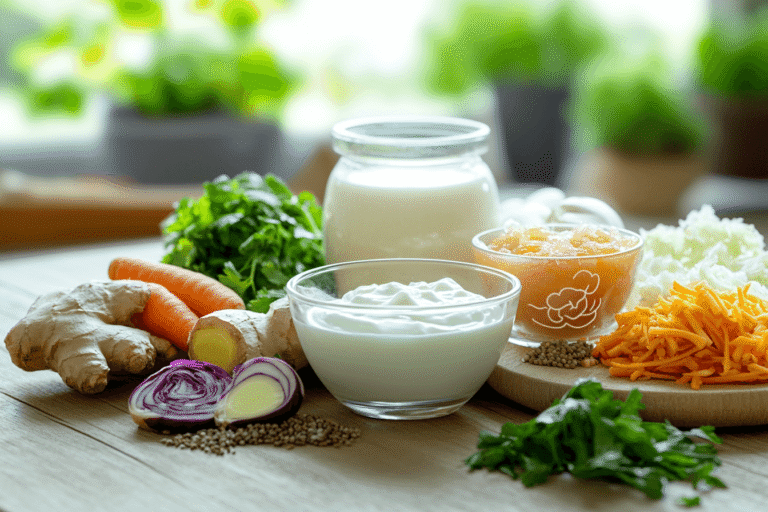
Fermented Foods and Gut Health is becoming one of the most important nutrition topics for people struggling with bloating, weak digestion, irregular bowel movements, poor immunity, and gut microbiome imbalance. From yogurt, kefir, kimchi, sauerkraut, kombucha, miso, tempeh, kanji, idli, dosa, and takra, fermented foods are now widely discussed in the USA, UK, Singapore, Canada, and Australia as natural digestive-support foods. The real question is not whether fermented foods are popular, but how to use them correctly, safely, and consistently for better gut health.
Fermented foods are made when beneficial bacteria, yeasts, or moulds transform food through controlled microbial activity. This process can improve flavour, texture, shelf life, digestibility, and sometimes nutritional value [1]. However, one important point must be clear from the start: not every fermented food is automatically a probiotic food. A true probiotic must contain live microorganisms in adequate amounts that have been shown to provide a health benefit [2]. That means live-culture yogurt, kefir, raw sauerkraut, kimchi, and some kombucha products may support gut health differently from pasteurised, canned, baked, or heat-treated fermented foods.
The best way to use fermented foods for gut health is not to chase one miracle food. It is to build a steady, enjoyable routine that combines live fermented foods, fibre-rich plant foods, hydration, mindful eating, and, where appropriate, Ayurvedic digestive wisdom. Modern microbiome science and Ayurveda meet at a practical point: the gut works best when food is nourishing, digestible, diverse, and suited to the person eating it.
What fermented foods do for your gut
Your gut is home to trillions of microorganisms, often called the gut microbiome. These microbes help digest food, interact with the immune system, produce useful compounds, and influence the environment inside the digestive tract [3]. When your diet is low in diversity, low in fibre, and high in ultra-processed foods, the gut ecosystem may become less resilient. Fermented foods can help because they introduce live dietary microbes, organic acids, bioactive compounds, and, in some cases, probiotic strains.
A Stanford clinical trial found that a 10-week diet rich in fermented foods increased gut microbial diversity and reduced several markers of inflammation in healthy adults [4]. This does not mean fermented foods cure inflammation or disease, but it does suggest that regularly eating a variety of fermented foods can meaningfully influence the gut microbiome. Another review of fermented foods and gut health concluded that these foods may affect the microbiome in both short-term and long-term ways [5].
The key word is variety. A spoon of sauerkraut, a cup of kefir, a serving of live-culture yogurt, a bowl of miso soup added after cooking, or a side of kimchi can each bring different microbes and compounds. Your gut does not need perfection. It responds well to consistency.
Table 1: Best fermented foods for gut health
| Fermented food | What to look for | Gut-health value | Best way to eat it |
|---|---|---|---|
| Yogurt or yoghurt | “Live and active cultures,” low added sugar | May provide live bacteria, protein, and calcium | With fruit, oats, seeds, or as a cooling side |
| Kefir | Plain, unsweetened, live-culture kefir | Usually offers a diverse live-culture profile | Start with a small glass or add to smoothies |
| Kimchi | Refrigerated, unpasteurised when possible | Fermented vegetables plus spices and live microbes | As a side with rice, eggs, noodles, or salads |
| Sauerkraut | Raw or refrigerated, not canned/pasteurised | Fermented cabbage with fibre and live cultures | Add a spoon to bowls, sandwiches, or salads |
| Miso | Traditionally fermented soy paste | Fermentation compounds and savoury flavour | Stir into warm, not boiling, soup after cooking |
| Tempeh | Fermented soybeans | Plant protein, fibre, and fermentation benefits | Cook gently in stir-fries, wraps, or bowls |
| Kombucha | Low sugar, from a reputable brand | Fermented tea with acids and live microbes in some products | Drink in small portions, not as a water replacement |
| Takra or chaas | Fresh spiced buttermilk | Ayurvedic digestive drink, light and cooling for many people | Sip after lunch with roasted cumin and ginger if tolerated |
How fermented foods may reduce bloating and improve digestion
Many people search for fermented foods because they feel bloated, heavy, irregular, or uncomfortable after meals. Fermented foods may help some people because fermentation can partially break down food components before you eat them. For example, fermented dairy may be easier for some people to tolerate than regular milk, and fermented vegetables may bring both fibre and live microbes.
However, more is not always better. If your gut is sensitive, suddenly adding large amounts of kimchi, kefir, sauerkraut, or kombucha may increase gas, bloating, or loose stools. The smarter approach is to start small. Try one tablespoon of fermented vegetables or a few spoonfuls of kefir daily for several days, then increase slowly. This is especially important for people with IBS, reflux, histamine sensitivity, a low-FODMAP plan, immune problems, pregnancy concerns, or serious digestive disease. The NHS notes that probiotics may help some people with IBS symptoms, but evidence does not support every health claim made about probiotics [6].
The best gut-health results usually come when fermented foods are paired with prebiotic fibre. Prebiotics are food components, often found in high-fibre plant foods, that feed beneficial gut microbes. Harvard’s Nutrition Source notes that a robust gut microbiome is supported not only by fermented foods but also by a long-term dietary pattern rich in fruits, vegetables, whole grains, beans, nuts, and seeds [7]. In simple terms, fermented foods bring helpful microbes and compounds, while fibre feeds the microbes already living in your gut.
The live-culture rule: why labels matter
A major mistake is assuming every fermented food in the supermarket contains probiotics. Sourdough bread is fermented, but baking kills the live microbes. Shelf-stable sauerkraut and many jarred pickles may be pasteurised. Miso can lose live cultures if boiled. Kombucha can vary widely depending on processing and storage. ISAPP states that fermented foods require microbes for their creation, but not all contain live microorganisms at the time of consumption [1].
For gut health, read labels carefully. Look for phrases such as “live and active cultures,” “raw,” “unpasteurised,” or “keep refrigerated.” Choose plain versions when possible because many commercial yogurts, kefirs, and kombuchas are high in added sugar. Also remember that “contains live cultures” is not the same as a proven probiotic claim. A probiotic should be defined by strain, dose, and evidence of benefit [2].
Table 2: How to start fermented foods safely
| Your goal or situation | Best starting point | What to avoid |
|---|---|---|
| New to fermented foods | Start with one small serving daily | Adding several foods at once |
| Bloating-prone gut | Begin with yogurt, kefir, or small amounts of sauerkraut | Large servings of kombucha or spicy kimchi |
| Looking for daily gut support | Rotate 3–5 fermented foods weekly | Relying on one product as a cure-all |
| High blood pressure | Choose lower-salt options and smaller portions | Large daily servings of salty pickles, kimchi, or sauerkraut |
| Sensitive digestion or IBS | Introduce slowly and track symptoms | Assuming every probiotic works for every person |
| Immunocompromised or seriously ill | Ask a qualified healthcare professional first | Taking probiotic supplements without guidance |
| Interested in Ayurveda | Use fresh takra, warm spices, and mindful meal timing | Buying untested herbal or metallic preparations online |
The best fermented foods for everyday gut health
Yogurt or yoghurt is the easiest starting point for many readers in the USA, UK, Canada, Australia, and Singapore. Choose plain, unsweetened yogurt with live and active cultures. Add berries, banana, oats, chia, or ground flaxseed for fibre. This makes the meal more complete because the microbes and fibre work together.
Kefir is a fermented milk drink with a tangy taste. It is often more diverse in microbial content than standard yogurt, although products vary. For people who tolerate dairy, plain kefir can be a simple breakfast drink or smoothie base. For people avoiding dairy, some coconut or water kefir products are available, but they may differ in protein and sugar content.
Kimchi and sauerkraut are fermented vegetables. They offer flavour, acidity, and plant compounds. The British Dietetic Association notes that fermented foods such as yogurt, kefir, miso, tempeh, pickles, sauerkraut, and kimchi can add diversity to the diet, but some pickled or fermented foods can be high in salt [8]. This matters for readers watching blood pressure or sodium intake.
Miso and tempeh are excellent options for plant-based readers. Miso is rich and savoury, but it should be added to warm soup rather than boiled aggressively if you want to preserve live microbes. Tempeh is useful because it provides protein and fibre along with fermentation benefits. It works well in stir-fries, salads, sandwiches, and rice bowls.
Kombucha is popular, but it should be treated as a fermented drink, not a magic digestive cure. Choose low-sugar versions and keep servings moderate. Some kombucha products contain small amounts of alcohol or caffeine depending on fermentation, tea base, and processing, so it is not ideal for everyone.
How Ayurveda helps gut health
Ayurveda makes fermented foods more practical because it does not ask one food to work for every body. Its main contribution is personalisation. In Ayurveda, digestion is guided by the concept of agni, often translated as digestive fire. When agni is balanced, food is digested well, appetite is steady, elimination is regular, and the body feels light after meals. When agni is weak or disturbed, Ayurveda describes the buildup of ama, a traditional concept often explained as undigested or poorly processed residue [9].
Modern science does not use the words agni and ama in the same way, so they should not be treated as exact equivalents of the microbiome. Still, the practical overlap is powerful. Both Ayurveda and microbiome science care about digestion, food quality, meal timing, gut balance, and individual response. A 2023 review explored Ayurvedic personalised diet and lifestyle concepts in relation to gut microbiota modulation, especially in the context of type 2 diabetes research [10]. The most convincing Ayurvedic lesson is this: the right food at the wrong time, in the wrong amount, or for the wrong person may still disturb digestion.
Takra, also known as spiced buttermilk or chaas, is one of Ayurveda’s most useful fermented digestive drinks. Traditionally, it is lighter than curd, often blended with water and digestive spices such as roasted cumin, ginger, coriander, black pepper, or rock salt depending on constitution and need. For many people, a small glass after lunch feels easier than a heavy dessert or cold sugary drink. It offers the comfort of a fermented dairy food with the Ayurvedic advantage of being spiced, diluted, and taken with digestive intention.
Ayurveda also helps by teaching how to eat fermented foods. A person with heat, acidity, or loose stools may not feel good eating large amounts of spicy kimchi, sour curd, or kombucha. Someone with heaviness, low appetite, or sluggish digestion may do better with small amounts of warm, spiced, freshly prepared fermented foods rather than cold, sour, late-night portions. This is where Ayurveda becomes convincing: it gives readers a way to listen to the body instead of forcing a trend.
Ayurvedic spices can also make fermented foods easier to digest. Roasted cumin in takra, ginger with meals, fennel after food, coriander in cooling dishes, and black pepper in small amounts are traditional ways to support digestion. These should be used as culinary tools, not as disease treatments. The safest and most practical Ayurvedic gut routine is food-first: fresh meals, regular timing, mindful chewing, warm water if it suits you, seasonal foods, plant diversity, and small servings of fermented foods.
A key safety note is necessary. Ayurveda can be helpful as a food and lifestyle system, but untested Ayurvedic supplements or medicines can carry risks. NCCIH states that some Ayurvedic preparations may contain lead, mercury, or arsenic in toxic amounts [11]. The FDA has also warned about heavy metal poisoning linked with certain unapproved Ayurvedic drug products [12]. For a gut-health article aimed at the USA, UK, Singapore, Canada, and Australia, the safest recommendation is to use Ayurveda through food, spices, lifestyle, and qualified professional guidance rather than buying random “detox” or digestive pills online.
How often should you eat fermented foods?
For most healthy adults, a small daily serving is a realistic starting point. This could be half a cup of live-culture yogurt, a few tablespoons of kefir, one tablespoon of kimchi or sauerkraut, a small bowl of miso soup, or a glass of fresh takra. After two to three weeks, you can increase variety if your body responds well.
Do not force fermented foods into every meal. The gut likes rhythm. A simple weekly pattern might include yogurt at breakfast, sauerkraut with lunch, miso soup once or twice a week, tempeh for dinner, and takra after a heavier lunch. This gives microbial diversity without overwhelming digestion.
Who should be careful?
Fermented foods are safe for many people when properly prepared and stored, but they are not suitable for everyone in every situation. People with weakened immune systems, severe illness, recent major surgery, central lines, serious gut disorders, pregnancy concerns, or a history of reactions to probiotic foods should speak with a healthcare professional before using high-dose probiotic products or supplements. NCCIH notes that probiotics are generally considered helpful microbes, but serious infections have been reported in vulnerable groups such as premature infants [3].
People with high blood pressure should watch salty fermented foods. Kimchi, sauerkraut, pickles, miso, and some fermented sauces can be sodium-rich. People with reflux may need to limit sour, spicy, or fizzy fermented foods. People with histamine intolerance may react to aged or fermented foods. People with IBS may need a slower, more personalised approach.
The bottom line
Fermented foods can be one of the simplest, most enjoyable ways to support gut health. They bring flavour, tradition, microbial diversity, and a natural connection between food and digestion. The strongest evidence does not say that fermented foods are a cure-all. It says they can be part of a gut-friendly lifestyle, especially when combined with fibre-rich plants, sleep, hydration, stress management, and consistent eating habits.
Ayurveda makes this approach more personal and more sustainable. It reminds us that gut health is not only about what we eat, but how we eat, when we eat, how much we eat, and whether our body can digest it comfortably. Start small, choose live-culture foods, rotate different options, respect your body’s signals, and use Ayurveda as a practical food wisdom system rather than a quick-fix supplement trend.
References
[1] International Scientific Association for Probiotics and Prebiotics, “Fermented Foods.” Explains that not all fermented foods contain probiotics and that live microbes vary by processing and storage. https://isappscience.org/topic/fermented-foods/ (isappscience.org)
[2] NIH Office of Dietary Supplements, “Probiotics: Health Professional Fact Sheet.” Defines probiotics as live microorganisms that confer a health benefit when administered in adequate amounts. https://ods.od.nih.gov/factsheets/Probiotics-HealthProfessional/ (Office of Dietary Supplements)
[3] NCCIH, “Probiotics: Usefulness and Safety.” Covers what probiotics are, where they are found, and safety considerations. https://www.nccih.nih.gov/health/probiotics-usefulness-and-safety (NCCIH)
[4] Stanford Medicine, “Fermented-food diet increases microbiome diversity, decreases inflammatory proteins, study finds.” Reports a 10-week clinical trial on fermented foods, microbiome diversity, and inflammatory markers. https://med.stanford.edu/news/all-news/2021/07/fermented-food-diet-increases-microbiome-diversity-lowers-inflammation.html (Stanford Medicine)
[5] Leeuwendaal et al., “Fermented Foods, Health and the Gut Microbiome,” Nutrients, 2022. Reviews how fermented foods may affect gut microbiome composition and function. https://pmc.ncbi.nlm.nih.gov/articles/PMC9003261/ (PMC)
[6] NHS, “Probiotics.” Notes that probiotics may help some IBS symptoms but that many health claims have limited evidence. https://www.nhs.uk/tests-and-treatments/probiotics/ (nhs.uk)
[7] Harvard T.H. Chan School of Public Health, “Probiotics for Gut Health.” Explains probiotic food sources and the importance of a fibre-rich long-term dietary pattern. https://nutritionsource.hsph.harvard.edu/probiotics/ (The Nutrition Source)
[8] British Dietetic Association, “Fermented foods.” Provides examples of fermented foods and notes benefits and salt considerations for some foods. https://www.bda.uk.com/resource/fermented-foods.html (bda.uk.com)
[9] Wallace et al., “The Microbiome in Health and Disease from the Perspective of Modern Medicine and Ayurveda,” Medicina, 2020. Discusses Ayurvedic concepts such as ama in relation to microbiome thinking. https://pmc.ncbi.nlm.nih.gov/articles/PMC7559905/ (PMC)
[10] Chauhan et al., “Modulation of gut microbiota with Ayurveda diet and lifestyle,” Journal of Ayurveda and Integrative Medicine, 2023. Explores personalised Ayurvedic diet and lifestyle concepts in relation to gut microbiota. https://pmc.ncbi.nlm.nih.gov/articles/PMC10468021/ (PMC)
[11] NCCIH, “Ayurvedic Medicine: In Depth.” Explains Ayurveda and notes safety concerns around some preparations containing toxic metals. https://www.nccih.nih.gov/health/ayurvedic-medicine-in-depth (NCCIH)
[12] U.S. Food and Drug Administration, “FDA warns about heavy metal poisoning associated with certain unapproved ayurvedic drug products.” Current FDA safety warning on unapproved Ayurvedic products and heavy metals. https://www.fda.gov/drugs/fraudulent-products/fda-warns-about-heavy-metal-poisoning-associated-certain-unapproved-ayurvedic-drug-products (fda.gov)