


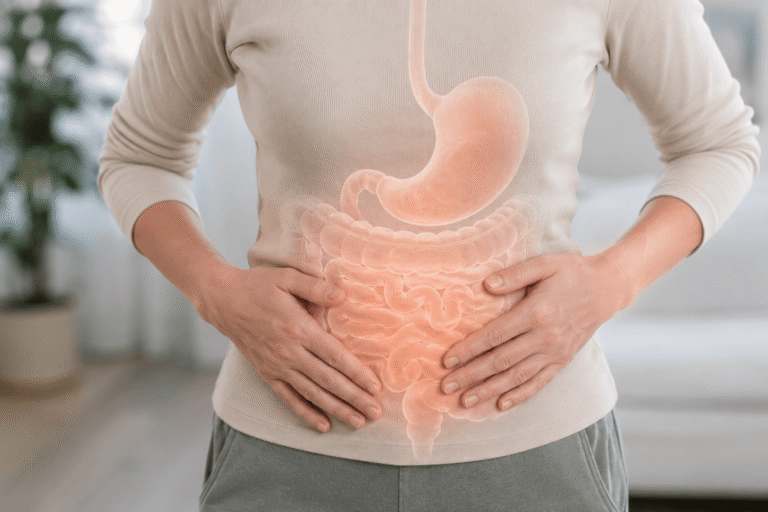
Chronic bloating is one of the most common digestive complaints, yet it is also one of the most misunderstood. Many people describe it as a tight, swollen, heavy, or inflated feeling in the abdomen. It may appear after meals, worsen in the evening, improve after passing stool or gas, or remain present almost every day. For some people, the abdomen visibly expands. For others, the discomfort is intense even when the abdomen does not look swollen.
The latest clinical insight is important: chronic bloating is not always caused by excess gas. It can arise from altered gut motility, constipation, food fermentation, visceral hypersensitivity, small intestinal bacterial overgrowth in selected patients, abnormal abdominal wall reflexes, pelvic floor dysfunction, functional dyspepsia, irritable bowel syndrome, and gut-brain axis disturbance [1,2,5,6]. This is why one standard “gas medicine” often fails.
A large Rome Foundation global study involving 51,425 adults across 26 countries found that bloating at least once weekly is common worldwide, affecting a significant proportion of the adult population [1]. This confirms what clinicians see every day: bloating is not a rare symptom, and it can deeply affect comfort, confidence, work, food choices, sleep, clothing, social life, and emotional well-being.
The most effective treatment begins with identifying the pattern. A person with constipation-related bloating needs a different strategy from someone with lactose intolerance, IBS, FODMAP sensitivity, SIBO risk, abdominophrenic dyssynergia, or Vata-aggravated Agnimandya described in Ayurveda [2,5,8].
Modern gastroenterology and Ayurveda can work well together when used responsibly. Modern medicine helps rule out serious disease and identify mechanisms such as IBS, constipation, SIBO, food intolerance, gut-brain sensitivity, and functional bloating [2,3,5,6]. Ayurveda adds a refined digestive framework based on Agni, Ama, Vata, Grahani, food timing, bowel rhythm, and individualized treatment [8]. Together, they offer a more complete and practical path to long-term relief.
What chronic bloating actually means
Bloating is the subjective sensation of abdominal fullness, tightness, pressure, heaviness, or trapped gas. Distension is different. Distension means a visible or measurable increase in abdominal size. A person may feel severe bloating without visible distension, or may have obvious distension with only moderate discomfort.
Rome IV criteria define functional abdominal bloating and distension as recurrent bloating or distension occurring at least one day per week, where bloating or distension is the dominant symptom, and where the person does not meet sufficient criteria for IBS, functional constipation, functional diarrhea, or postprandial distress syndrome [3].
This distinction matters because chronic bloating is not a single disease. It is a symptom with many possible mechanisms. In clinical practice, the key question is not simply, “Do you have gas?” The better question is, “What is producing bloating in this person?”
Once the mechanism is identified, treatment becomes more precise. Food intolerance requires food personalization. Constipation requires bowel correction. IBS requires gut-brain and bowel-pattern management. SIBO requires selective testing and targeted treatment. Abdominal wall reflex dysfunction may require breathing retraining or biofeedback. Ayurvedic Vata-Ama bloating requires correction of Agni, Ama, Apana Vata, and meal discipline [2,5,7,8].
Why chronic bloating happens: the new clinical view
For many years, bloating was treated mainly as a gas problem. Newer evidence shows that this is incomplete. Many patients with severe bloating do not necessarily produce an excessive amount of intestinal gas. Instead, their intestines may be more sensitive to normal gas volume, their bowel movement may be slow or incomplete, their gut bacteria may ferment certain foods more intensely, or their abdominal wall may respond abnormally [2,7].
One major mechanism is visceral hypersensitivity. This means the nerves of the gut become more sensitive, so normal digestion feels uncomfortable. A normal meal may create pressure, tightness, pain, or fullness because the communication between the gut, spinal cord, and brain has become amplified. This is common in disorders of gut-brain interaction, including IBS and functional bloating [2,3,6].
Another major cause is fermentation of certain carbohydrates. Foods rich in fermentable carbohydrates can draw water into the bowel and increase gas production. This is the basis of the low FODMAP diet, which has evidence for improving global IBS symptoms and bloating-related outcomes in selected patients [4]. However, it should not become a permanent fear-based diet. A low FODMAP plan works best when used in phases: short-term restriction, guided reintroduction, and long-term personalization.
Constipation is one of the most overlooked causes of chronic bloating. Even if a person passes stool daily, there may still be hard stool, straining, incomplete evacuation, stool retention, or pelvic floor dysfunction. When stool remains in the colon for too long, gas becomes trapped and fermentation increases. Bloating then worsens after meals because new food enters a digestive system that is already backed up [2,6].
SIBO, or small intestinal bacterial overgrowth, can also cause bloating in selected patients. It is more likely in people with previous intestinal surgery, motility disorders, diabetes-related nerve dysfunction, strictures, or unexplained diarrhea and malabsorption [5]. However, not every bloated patient has SIBO. Breath testing should be used selectively rather than treating every case of bloating as bacterial overgrowth [5].
A newer and highly relevant concept is abdominophrenic dyssynergia. In this pattern, the diaphragm moves downward and the abdominal wall relaxes instead of tightening. The result is visible abdominal distension even when the actual amount of intestinal gas is not dramatically increased. A randomized placebo-controlled trial has studied thoracoabdominal wall motion-guided biofeedback as a targeted approach for abdominal distension [7].
Stress, poor sleep, anxiety, fast eating, and chronic hypervigilance also matter. These factors can alter motility, increase visceral sensitivity, affect bowel habits, and worsen bloating. This does not mean the symptom is imaginary. It means the gut-brain axis is actively involved in digestion, sensation, and abdominal comfort [2,6].
Table 1: Common patterns of chronic bloating and what they may suggest
| Bloating pattern | Possible clinical driver | What should be assessed | Care direction |
|---|---|---|---|
| Bloating after milk, wheat, onion, beans, apples, or sweeteners | Lactose intolerance, fructose intolerance, FODMAP sensitivity, or celiac disease in selected cases | Food diary, elimination and rechallenge, celiac screening if indicated, breath testing when appropriate | Structured diet trial, low FODMAP approach when suitable, guided reintroduction |
| Bloating with constipation, straining, or incomplete evacuation | Slow transit constipation, stool retention, pelvic floor dysfunction | Stool frequency, stool form, toilet habits, medication review, pelvic floor assessment in refractory cases | Bowel rhythm correction, soluble fiber titration, hydration, movement, pelvic floor therapy if needed |
| Visible evening distension with normal routine tests | Abdominophrenic dyssynergia, gut-brain reflex dysfunction, IBS overlap | Timing of distension, stress triggers, breathing pattern, relation to meals | Diaphragmatic breathing, biofeedback, gut-directed behavioral therapy |
| Bloating with diarrhea, weight loss, anemia, or blood in stool | Celiac disease, inflammatory bowel disease, infection, malignancy, malabsorption | Blood tests, stool tests, endoscopy or imaging when indicated | Diagnosis-specific medical treatment |
| Bloating after surgery or with diabetes, strictures, or motility disease | SIBO or intestinal methanogen overgrowth risk | Glucose or lactulose breath testing in selected patients | Targeted therapy under medical supervision |
| Upper abdominal bloating with early fullness, nausea, or vomiting | Functional dyspepsia, gastroparesis, impaired gastric accommodation | Medication review, H. pylori testing, gastric emptying study only when indicated | Meal modification, dyspepsia care, prokinetic strategy when appropriate |
Red flags: when bloating needs medical evaluation
Most chronic bloating is functional and manageable, but some symptoms should never be ignored. The American Gastroenterological Association advises that imaging and endoscopy should not be routine for simple bloating unless alarm features, abnormal physical examination findings, or significant recent worsening are present [2].
A person should seek medical evaluation if bloating is new, severe, progressive, or associated with weight loss, blood in stool, persistent vomiting, unexplained anemia, fever, night symptoms, severe diarrhea, severe pain, inability to pass stool or gas, or a family history of serious gastrointestinal disease [2].
Table 2: Warning signs that need medical attention
| Red flag symptom | Why it matters | Recommended action |
|---|---|---|
| Unintentional weight loss | May suggest inflammation, malabsorption, malignancy, or chronic systemic disease | Prompt medical review |
| Blood in stool or black stool | May indicate gastrointestinal bleeding | Urgent medical evaluation |
| Persistent vomiting | May suggest obstruction, severe inflammation, gastroparesis, or metabolic disease | Medical assessment and possible imaging |
| Iron-deficiency anemia | May occur with celiac disease, inflammatory bowel disease, bleeding, or malignancy | Blood tests and further investigation |
| New bloating after age 50 | New symptoms later in life require more careful assessment | Physician review |
| Fever, night symptoms, or severe diarrhea | May suggest infection or inflammatory disease | Stool and blood investigations |
| Severe abdominal pain with inability to pass stool or gas | May suggest obstruction or acute abdomen | Emergency care |
| Family history of colon cancer, ovarian cancer, celiac disease, or inflammatory bowel disease | Raises the need for targeted screening | Medical evaluation and appropriate testing |
How chronic bloating should be investigated
The first step is a careful history. A clinician should ask when bloating started, whether it is constant or meal-related, whether the abdomen visibly distends, what foods trigger it, whether constipation or diarrhea is present, whether symptoms improve after passing stool or gas, and whether red flags are present [2].
A two-week symptom diary is often extremely useful. The patient records meal timing, food items, bloating severity, visible distension, stool form, bowel frequency, stress, sleep, menstrual cycle changes, exercise, and relief after bowel movement. This simple method often reveals whether the main driver is constipation, fermentable foods, irregular eating, late dinners, stress, or a specific intolerance.
Testing should be personalized. Celiac screening may be appropriate when bloating is associated with wheat-related symptoms, chronic diarrhea, anemia, weight loss, infertility, osteoporosis, autoimmune disease, or family history. Breath testing may help when lactose intolerance, fructose intolerance, SIBO, or methane-related constipation is suspected [5]. Routine CT scans, endoscopy, and broad stool panels are not needed for every patient unless clinical features justify them [2].
Diet treatment should also be structured. A low FODMAP diet has evidence for IBS symptoms, including bloating-related outcomes, but it should usually be done in phases [4]. The aim is not permanent food fear. The aim is to identify individual tolerance and rebuild a comfortable, sustainable diet.
Probiotics should be used carefully. Some people improve with specific strains, while others worsen or notice no benefit. Current expert guidance does not support routine probiotic use for every patient with bloating because evidence varies by strain, dose, and condition [2]. The microbiome matters, but random probiotic use is not the same as targeted microbiome care.
How Ayurveda explains chronic bloating
Ayurveda gives a deeply practical explanation of chronic bloating because it does not view digestion as a simple chemical process. It evaluates appetite, Agni, Ama, Vata movement, bowel evacuation, food quality, meal timing, emotional state, and the strength of the individual.
In Ayurvedic practice, chronic bloating may overlap with Adhmana, Anaha, Atopa, Agnimandya, Ama, Vata prakopa, and Grahani-related dysfunction. Charaka Samhita, Chikitsa Sthana, Chapter 15, Grahani Chikitsa, gives central importance to Agni and explains the relationship between normal digestion, abnormal digestion, Grahani, and disease formation [8].
This classical framework is clinically relevant because many patients with chronic bloating have poor appetite, heaviness after meals, incomplete digestion, irregular stools, coated tongue, fatigue, abdominal discomfort after unsuitable food, or relief after passing flatus. Modern medicine describes many of these patterns through motility disturbance, fermentation, constipation, food intolerance, visceral hypersensitivity, and gut-brain dysfunction [2,4,6]. Ayurveda explains them through Agni, Ama, Samana Vata, Apana Vata, and Grahani [8].
When Agni is weak, food is not properly digested. This may lead to heaviness, gas, foul belching, abdominal fullness, low appetite, and irregular bowel movement. When Ama is present, the person may feel coated tongue, lethargy, heaviness, sticky stools, dull appetite, and sluggish digestion. When Vata is aggravated, there may be gurgling, trapped gas, abdominal tightness, constipation, dryness, anxiety, and symptoms that fluctuate from day to day.
This is why Ayurveda does not treat chronic bloating as one disease. It treats the person’s digestive pattern.
How Ayurveda helps relieve chronic bloating
The first Ayurvedic goal is to restore Agni. This does not mean giving strong spices to every patient. It means improving digestive efficiency according to the person’s constitution, symptoms, bowel pattern, heat tolerance, acidity, appetite, and strength. In some patients, mild warming Deepana and Pachana herbs may be suitable. In others, especially those with acidity, burning, loose stools, or Pitta dominance, strong heating herbs may worsen symptoms and should be avoided.
The second goal is Ama pachana. If bloating is associated with heaviness, coated tongue, poor appetite, sluggish bowels, and post-meal drowsiness, Ayurveda may focus on digesting Ama before using heavy tonics or nourishing therapies. This is clinically sensible because giving rich foods, excessive oils, or heavy supplements to a sluggish digestive system may worsen bloating.
The third goal is Vatanulomana, or correction of disturbed Vata movement. Many bloating patients feel that gas is trapped and does not move downward properly. They may have irregular bowel habits, incomplete evacuation, abdominal tightness, or relief after passing flatus. Ayurveda connects this with disturbed Apana Vata. Treatment therefore includes regular meals, warm water, proper bowel routine, avoidance of natural urge suppression, gentle movement, abdominal oil application when suitable, and individualized medicines that support downward movement.
The fourth goal is correction of Ahara and Vihara, meaning diet and lifestyle. Ayurveda strongly emphasizes meal timing, eating only after the previous meal is digested, avoiding overeating, avoiding incompatible food habits, reducing very cold and heavy meals when digestion is weak, and maintaining a stable daily routine [8]. These principles are highly relevant today because many people with chronic bloating eat irregularly, skip meals, eat late at night, drink cold beverages with meals, overuse processed foods, or eat under stress.
The fifth goal is calming the gut-brain axis. Ayurveda recognizes the connection between mind, digestion, and Vata. Stress, worry, poor sleep, rushing meals, and emotional suppression can disturb digestion and worsen bloating. Gentle yoga, breathing practices, walking after meals, regular sleep, and mindful eating can support both modern gut-brain treatment and Ayurvedic Vata pacification [2,8].
Ayurvedic herbs and modern research
Several Ayurvedic herbs traditionally used for bloating have emerging modern support, although they should be chosen by a qualified practitioner rather than used randomly.
Hingu, botanically Ferula asafoetida, is traditionally used in Vata-Kapha type gas, abdominal distension, and sluggish digestion. A randomized, double-blind, placebo-controlled study on Ferula asafoetida in functional dyspepsia reported improvement in symptoms including bloating, with acceptable short-term safety in the trial setting [9]. This supports its traditional use as a digestive aid, but it does not mean it is suitable for every patient.
Shunthi, or dry ginger, is widely used in Ayurveda for Agni support, Vata-Kapha digestion, and post-meal heaviness. A randomized study found that ginger accelerated gastric emptying and increased antral contractions in patients with functional dyspepsia, although symptom improvement was not definitive [10]. This supports the traditional concept that ginger may help sluggish upper digestion, but it also shows why patient selection matters.
Other commonly considered Ayurvedic herbs include Ajamoda, Jeeraka, Pippali, Haritaki, and Chitraka. These are not interchangeable. Pippali and Chitraka may be too heating for some Pitta-dominant patients. Haritaki may be useful when constipation and Vata disturbance dominate, but dose and form matter. Hingu may help gas and spasm in some patients but may not suit those with marked acidity, burning, pregnancy-related sensitivity, or high Pitta features.
This is where Ayurveda has a major advantage. It does not recommend the same digestive remedy for everyone. It asks whether the bloating is Vata-dominant, Kapha-dominant, Pitta-associated, Ama-related, constipation-driven, stress-linked, food-triggered, or Grahani-related [8].
A practical integrative plan for chronic bloating
A good plan begins with safety. Red flags must be ruled out first. If there is weight loss, blood in stool, anemia, persistent vomiting, severe pain, fever, night symptoms, or new bloating after age 50, medical assessment should come before home remedies or herbal self-treatment [2].
Once serious disease is excluded, the first step is rhythm. Regular meal timing, proper chewing, avoiding late-night heavy dinners, walking after meals, and maintaining a consistent bowel routine can reduce bloating significantly. Ayurveda supports this through the principle of eating according to Agni and avoiding food before the previous meal is digested [8].
The second step is food personalization. Some people need lactose reduction. Some need a structured low FODMAP trial. Some need to reduce carbonated drinks, chewing gum, sugar alcohols, large raw salads, ultra-processed foods, or cold heavy meals. Others may simply need smaller dinners and better bowel regularity. The best diet is not the most restrictive diet. The best diet is the diet that the person can digest comfortably.
The third step is bowel correction. Constipation must be treated early, even if the person passes stool daily. Incomplete evacuation, hard stools, excessive straining, and irregular bowel movements can all maintain chronic bloating. Ayurveda approaches this through Apana Vata regulation, while modern care may include hydration, movement, soluble fiber, osmotic laxatives when needed, and pelvic floor therapy in selected cases [2,6].
The fourth step is gut-brain regulation. Diaphragmatic breathing, slow eating, yoga, relaxation, adequate sleep, and stress management can reduce visceral hypersensitivity and Vata aggravation. In patients with marked visible distension, biofeedback and breathing retraining may be especially relevant [7].
The fifth step is individualized Ayurvedic support. Deepana, Pachana, Vatanulomana, and Grahani-supportive treatment should be selected only after assessing Agni, Ama, Dosha, bowel habit, appetite, acidity, tongue, sleep, stress, and strength of the patient [8]. This is the safest and most convincing way to use Ayurveda in chronic bloating.
Why self-treatment often fails
Many people with chronic bloating try antacids, random probiotics, digestive enzymes, detox powders, antibiotics, laxatives, or herbal mixtures without knowing their actual pattern. This often gives temporary relief or no relief at all.
Self-treatment fails because bloating has different causes. A person with constipation needs bowel correction. A person with FODMAP sensitivity needs diet personalization. A person with abdominophrenic dyssynergia may need breathing retraining or biofeedback. A person with SIBO risk may need selective testing and targeted treatment. A person with Ama and weak Agni may need Deepana-Pachana before heavier therapies. A person with Pitta symptoms may worsen with strong heating digestive herbs [2,4,5,7,8].
The solution is not stronger medicine. The solution is better diagnosis and individualized care.
FAQ: Why am I bloated every day even when I eat less?
Eating less does not always solve bloating because the cause may not be food quantity. Constipation, gut sensitivity, pelvic floor dysfunction, abdominophrenic dyssynergia, irregular motility, stress, and disturbed Vata can cause bloating even after small meals [2,6,7,8].
FAQ: Is SIBO the main cause of chronic bloating?
SIBO can cause bloating, but it is not the main cause in every patient. It is more likely when there are risk factors such as bowel surgery, motility disorders, strictures, diabetes-related nerve dysfunction, unexplained diarrhea, or malabsorption. Breath testing should be used selectively [5].
FAQ: Can Ayurveda reduce chronic bloating?
Yes, Ayurveda can help chronic bloating when treatment is individualized. Its strength lies in identifying whether bloating is related to weak Agni, Ama, Vata obstruction, constipation, irregular eating, stress, or Grahani dysfunction [8]. Ayurveda is most effective when combined with proper medical screening, diet correction, bowel regulation, and safe herb selection.
FAQ: What is the best diet for chronic bloating?
There is no single best diet for everyone. Some patients improve with lactose restriction, some with a short low FODMAP trial, some with constipation correction, and some with warm, simple, freshly prepared meals. Ayurveda recommends eating according to digestive capacity rather than following extreme restriction [4,8].
FAQ: When should I see a doctor for bloating?
A doctor should be consulted if bloating is new, severe, worsening, or associated with weight loss, blood in stool, anemia, persistent vomiting, fever, night symptoms, severe pain, inability to pass stool or gas, or a family history of serious gastrointestinal disease [2].
Conclusion
Chronic bloating is not just gas. It is a complex symptom that may involve diet, fermentation, constipation, gut motility, visceral hypersensitivity, SIBO in selected cases, abdominal wall reflexes, pelvic floor dysfunction, stress, and digestive weakness [1,2,5,6,7].
The most important clinical insight is that bloating must be treated according to pattern. Modern gastroenterology helps identify red flags, functional bowel disorders, food intolerance, constipation, SIBO risk, IBS, and gut-brain mechanisms [2,3,5,6]. Ayurveda adds a powerful individualized framework based on Agni, Ama, Vata, Grahani, food discipline, bowel rhythm, and daily routine [8].
When both systems are used intelligently, chronic bloating can often be reduced significantly. The goal is not temporary suppression of gas. The goal is to restore digestive clarity, bowel regularity, gut-brain calm, and long-term abdominal comfort.
This article is for educational purposes and should not replace medical diagnosis or individualized treatment from a qualified healthcare professional.
References
- Ballou, S., Singh, P., Nee, J., Rangan, V., Iturrino, J., Geeganage, G., Löwe, B., Bangdiwala, S. I., Palsson, O. S., Sperber, A. D., Lembo, A., & Lehmann, M. (2023). Prevalence and associated factors of bloating: Results from the Rome Foundation Global Epidemiology Study. Gastroenterology, 165(3), 647–655.e4. https://pubmed.ncbi.nlm.nih.gov/37315866/
Brief: Large international study using Rome Foundation Global Epidemiology Study data from 51,425 adults in 26 countries to evaluate the prevalence and associated factors of weekly bloating. - Moshiree, B., Drossman, D. A., & Shaukat, A. (2023). AGA Clinical Practice Update on evaluation and management of belching, abdominal bloating, and distention: Expert review. Gastroenterology, 165(3), 791–800.e3. https://pubmed.ncbi.nlm.nih.gov/37452811/
Brief: Expert clinical review from the American Gastroenterological Association covering evaluation, alarm features, selective testing, diet therapy, probiotics, neuromodulators, diaphragmatic breathing, biofeedback, and gut-brain approaches. - Rome Foundation. (n.d.). Rome IV criteria. https://theromefoundation.org/rome-iv/rome-iv-criteria/
Brief: Official diagnostic criteria for functional gastrointestinal disorders, including functional abdominal bloating and distension. - Black, C. J., Staudacher, H. M., & Ford, A. C. (2022). Efficacy of a low FODMAP diet in irritable bowel syndrome: Systematic review and network meta-analysis. Gut, 71(6), 1117–1126. https://pubmed.ncbi.nlm.nih.gov/34376515/
Brief: Systematic review and network meta-analysis showing that a low FODMAP diet can improve IBS symptoms, including bloating-related outcomes, in selected patients. - Pimentel, M., Saad, R. J., Long, M. D., & Rao, S. S. C. (2020). ACG clinical guideline: Small intestinal bacterial overgrowth. The American Journal of Gastroenterology, 115(2), 165–178. https://pubmed.ncbi.nlm.nih.gov/32023228/
Brief: American College of Gastroenterology guideline describing SIBO symptoms, risk groups, diagnostic testing, breath testing, methane testing, and treatment considerations. - Lacy, B. E., Pimentel, M., Brenner, D. M., Chey, W. D., Keefer, L. A., Long, M. D., & Moshiree, B. (2021). ACG clinical guideline: Management of irritable bowel syndrome. The American Journal of Gastroenterology, 116(1), 17–44. https://pubmed.ncbi.nlm.nih.gov/33315591/
Brief: Clinical guideline on IBS diagnosis and management, including diet, constipation-directed treatment, diarrhea-directed treatment, and gut-directed therapies. - Barba, E., Livovsky, D. M., Accarino, A., & Azpiroz, F. (2024). Thoracoabdominal wall motion-guided biofeedback treatment of abdominal distention: A randomized placebo-controlled trial. Gastroenterology, 167(3), 538–546.e1. https://pubmed.ncbi.nlm.nih.gov/38467383/
Brief: Randomized placebo-controlled trial evaluating thoracoabdominal wall motion-guided biofeedback for abdominal distension, relevant to abdominophrenic dyssynergia. - Patwardhan, K., Ojha, S. N., Upadhyaya, W., & Samant, A. (Trans./Comm.). (2020). Grahani Chikitsa: Chikitsa Sthana, Chapter 15. In Charak Samhita Online. Charak Samhita Research, Training and Skill Development Centre. https://www.carakasamhitaonline.com/index.php/Grahani_Chikitsa
Brief: Classical Ayurvedic reference explaining Agni, Ama, Grahani dysfunction, normal and abnormal digestion, and digestive treatment principles. - Mala, K. N., Thomas, J., Syam, D. S., Maliakel, B., & Krishnakumar, I. M. (2018). Safety and efficacy of Ferula asafoetida in functional dyspepsia: A randomized, double-blinded, placebo-controlled study. Evidence-Based Complementary and Alternative Medicine, 2018, 4813601. https://pubmed.ncbi.nlm.nih.gov/30224930/
Brief: Randomized controlled study suggesting that Ferula asafoetida may improve functional dyspepsia symptoms, including bloating, with acceptable short-term safety in the study setting. - Hu, M. L., Rayner, C. K., Wu, K. L., Chuah, S. K., Tai, W. C., Chou, Y. P., Chiu, Y. C., Chiu, K. W., Hu, T. H., & Lee, S. D. (2011). Effect of ginger on gastric motility and symptoms of functional dyspepsia. World Journal of Gastroenterology, 17(1), 105–110. https://pubmed.ncbi.nlm.nih.gov/21218090/
Brief: Randomized study showing that ginger accelerated gastric emptying and increased antral contractions in functional dyspepsia, supporting its traditional role in sluggish upper digestion.