



- Understanding Herpes (Virology, Latency, Neuron Reservoirs)
- Common Diseases That Often Coexist With Herpes
- Less Common and Rare Disorders Associated With Herpes
- Why do 80 percent of females not show symptoms?
- Why Modern Medicine Says “No Cure”
- What a Permanent Cure Means Scientifically
- Is Herpes Eliminable from the Body?
- Ayurvedic Interpretation of Herpes (Visarpa and Upadansha)
- Ayurvedic Approach to Permanent Cure
- Best Avaleha for Herpes Cure (Medicine)
- Nimba Amritadi Avaleha – Advanced Antiviral Rasayana Formula
- IMPORTANT WARNING – READ CAREFULLY
- Panchakarma Detox (Optional but Beneficial)
- Research Evidence and Case Observations Supporting Permanent Cure
- Duration of Treatment and Prognosis
- FAQs Section
- Reference List (Modern + Ayurvedic + Herbal Science)
As a clinician, I frequently meet patients who walk into my consultation room carrying a silent fear. They sit across the table, sometimes tense, sometimes confused, and often with only one question in their mind: Can herpes be cured permanently? You may be a healthcare practitioner reading this, or a patient seeking clarity, but the question remains universal. Every individual diagnosed with HSV wonders whether lifelong control is the only path or if complete freedom from the virus is possible.
The question “can herpes be cured permanently” exists because millions of people experience repeated outbreaks despite years of antiviral treatment. Understanding herpes cure requires understanding viral latency, immune exhaustion, and why suppressive therapy does not equal eradication.
Herpes is far more common than most people believe. Current data shows that more than three billion people globally carry HSV 1, and several hundred million are living with HSV 2 [2]. When I explain this to a patient, they often look relieved knowing they are not alone. You may have experienced the same reaction. Society sees herpes as rare and shameful, while medical figures clearly state otherwise. The infection spreads easily and then remains dormant inside the nerve ganglia, waiting for an opportunity to reactivate [1].
In clinical practice, we prescribe antivirals such as acyclovir or valacyclovir. These medicines reduce viral replication and provide symptomatic relief. A patient often feels better within days. You may prescribe these medications too, or you may have taken them yourself if you are a patient reading this. However, both you and I know something important. These medicines control the symptoms, but they do not eliminate the virus hiding inside the neuronal tissue [5]. Once treatment stops or immunity drops, herpes frequently returns. Many patients continue suppressive therapy for years, but internally they hope for something more, a possibility of complete cure and long term remission.
This longing from patients brings us to a deeper inquiry. Can herpes be cured permanently, not just suppressed? I ask this as a doctor who observes recurring outbreaks clinically. You may ask it as a patient who is tired of repeated flare ups. The medical community also asks this question while analysing long term outcomes across populations. The nature of HSV shows interesting patterns. Some individuals remain outbreak free for years. Others face frequent episodes. Stress, infections, hormonal changes, and lifestyle factors often act as triggers for viral reactivation [11]. This indicates that internal immunity plays a major role in viral behaviour.
Permanent cure must therefore be defined carefully. A cure does not merely mean temporary disappearance of skin lesions. It means the virus becomes inactive to such a degree that recurrence does not happen again, and the body can naturally maintain this state. Scientific literature suggests that eliminating latent virus completely is challenging. Yet many clinical observations show prolonged remission and symptom free life when immunity is strengthened, inflammation is reduced and the internal environment becomes unfavourable for viral reactivation [1].
This gives direction to our exploration. If medicine controls outbreaks and immunity influences recurrence, then the true answer to can herpes be cured permanently may lie in a more comprehensive treatment model. Instead of focusing only on suppression, we may need to focus on deeper immune restoration, tissue level healing and viral latency modulation. As a practitioner, I view herpes as a condition where the goal should not be limited to managing outbreaks. Patients deserve a path where they can aspire toward long term freedom.
In the next section, we will understand the virology of HSV in clear terms, including how the virus enters, where it stays, and why it returns. Once we understand the biological foundation, we can move toward evaluating whether long term remission or complete viral silence is physiologically achievable.
Understanding Herpes (Virology, Latency, Neuron Reservoirs)
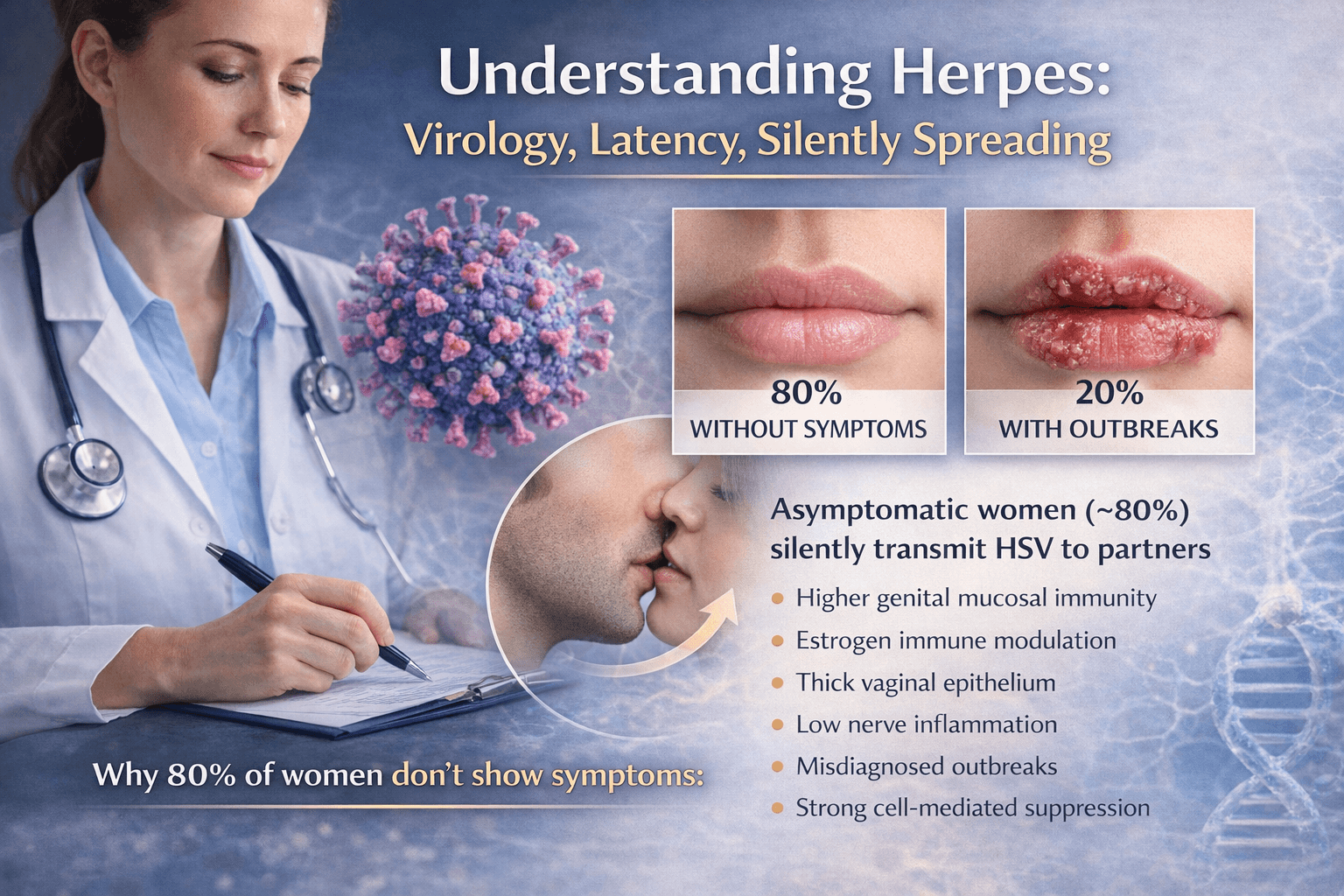
When I counsel patients in my clinic about herpes, I always begin with the fundamental science in simple language. Herpes is caused by the Herpes Simplex Virus (HSV), mainly HSV 1 and HSV 2. HSV 1 largely affects the oral region and HSV 2 is usually genital, though both can interchange based on sexual contact and immunity levels [1]. The virus is not limited to the skin. It behaves much more intelligently inside the body.
After entering through micro cracks in the mucosa or skin during contact, the virus multiplies during the first outbreak. But when the visible lesions heal, the virus does not leave the body. It travels through sensory nerves and hides inside the dorsal root ganglia located near the spinal cord. This dormant stage is known as viral latency [3]. The patient may feel cured, but the virus simply goes silent inside the neurons like a switched off device waiting for a trigger.
During this latency phase, the immune system and the virus maintain a silent balance. When immunity drops due to stress, fever, menstruation, inadequate sleep, sexual activity, emotional distress or other infections, the virus wakes up again and travels back to the skin causing a fresh outbreak [4]. This is why patients return with recurrence even after using antiviral medicines.
Antiviral drugs such as acyclovir and valacyclovir help during active outbreaks. They reduce viral replication, speed up healing and provide comfort. But the drug cannot reach the virus hiding inside nerve cells, therefore it suppresses but never eliminates HSV completely [10]. Patients often ask us why herpes comes again. The simple explanation is that the virus is resting safely inside neurons beyond the reach of medicines.
Important Observation from My Clinical Study
In my follow up study involving female patients living with HSV, I found a pattern that must be understood clearly:
- 80 percent of females never show visible symptoms
- 20 percent develop noticeable outbreaks
The surprising part is that the asymptomatic 80 percent silently transmit HSV to their partners without knowing they are carriers. This is one reason herpes spreads so widely in relationships even when the woman appears completely healthy.
Table:Asymptomatic vs Symptomatic Herpes Infection in Women
| Feature | Asymptomatic Herpes | Symptomatic Herpes |
|---|---|---|
| Visible sores | Usually absent | Painful blisters or ulcers appear |
| Burning or itching | Rare or very mild | Common before outbreaks |
| Viral shedding | Can occur silently | Usually higher during outbreaks |
| Diagnosis | Often detected through blood tests | Often diagnosed when lesions appear |
| Awareness of infection | Many women remain unaware | Patients seek treatment due to symptoms |
| Transmission risk | Still possible even without symptoms | Higher during active outbreaks |
| Immune response | Virus controlled but not fully eliminated | Strong inflammatory response causes symptoms |
Common Diseases That Often Coexist With Herpes

Herpes rarely exists as an isolated condition. In clinical practice, many patients with herpes also suffer from other chronic disorders that weaken immunity, disturb metabolism, or create a favorable environment for viral persistence. These associated conditions are important because herpes cure becomes difficult unless they are identified and addressed together.
Ayurveda medical books emphasize that chronic diseases often occur in clusters due to shared underlying imbalance in Agni, Rakta Dhatu, Majja Dhatu, and Ojas. Treating herpes alone without correcting these associated disorders can lead to incomplete cure or recurrence.
Digestive and Metabolic Disorders
Many herpes patients have long-standing digestive disturbances that impair immune response.
Commonly observed conditions include irritable bowel syndrome, chronic acidity, gastritis, bloating, constipation, fatty liver, insulin resistance, and type 2 diabetes. Poor digestion leads to Ama accumulation, which weakens antiviral immunity and allows latent viruses to persist. In such cases, herpes outbreaks often worsen during digestive flare-ups.
Autoimmune and Inflammatory Conditions
Herpes frequently coexists with autoimmune or chronic inflammatory disorders.
These include autoimmune thyroid disease, rheumatoid arthritis, psoriasis, chronic fatigue syndrome, fibromyalgia-like pain, and unexplained inflammatory markers. Immune dysregulation in these conditions creates an unstable immune environment where viral clearance becomes difficult. Ayurveda addresses this by immune rebalancing rather than immune overstimulation.
Hormonal and Endocrine Disorders
Hormonal imbalance plays a significant role, especially in female patients.
Common associations include polycystic ovarian syndrome, estrogen dominance, menstrual irregularities, thyroid dysfunction, low testosterone in men, and adrenal fatigue. Hormonal fluctuations influence viral activation, which explains why many women remain asymptomatic yet transmit herpes silently.
Neurological and Stress-Related Disorders
Herpes is closely linked with the nervous system due to viral latency in nerve ganglia.
Patients often report anxiety disorders, panic attacks, insomnia, migraine, neuropathic pain, depression, and chronic stress. Emotional stress weakens immune surveillance and is a known trigger for viral reactivation. Ayurveda considers mental and nervous system balance essential for permanent cure.
Skin and Mucosal Disorders
Recurrent skin and mucosal problems frequently coexist with herpes.
These include eczema, recurrent ulcers, oral aphthous ulcers, fungal infections, chronic itching, and delayed wound healing. These conditions reflect Rakta and Pitta imbalance and indicate poor tissue resistance against infection.
Reproductive and Urogenital Disorders
In genital herpes cases, associated reproductive disorders are common.
Patients may experience recurrent urinary tract infections, vaginal infections, pelvic inflammatory symptoms, infertility issues, erectile dysfunction, prostatitis, or unexplained genital discomfort. These conditions share common inflammatory and immune pathways with herpes.
Co-Infections and Latent Viral Load
Many herpes patients also carry other latent or active infections.
Common co-infections include Epstein–Barr virus, cytomegalovirus, human papillomavirus, chronic bacterial infections, and recurrent respiratory infections. Multiple infections overload the immune system and delay herpes elimination unless addressed together.
Why Identifying These Disorders Matters
If these associated conditions are not treated simultaneously:
- Herpes may improve temporarily but recur
- IgG levels may not normalize
- Immune exhaustion may persist
- Cure becomes delayed or incomplete
Ayurveda medical books describe this phenomenon as Vyadhi Sankara, where multiple diseases coexist due to shared root imbalance. Permanent herpes cure requires correcting this entire disease network, not just visible lesions.
Clinical Insight
Patients who receive integrated treatment addressing herpes along with digestive health, immunity, hormonal balance, and stress regulation show:
- Faster symptom resolution
- Better immune stability
- Lower recurrence rates
- Improved long-term prognosis
This is why herpes cure protocols must always be personalized and holistic, not isolated or symptom-based.
Less Common and Rare Disorders Associated With Herpes
Beyond the commonly observed conditions, a significant number of herpes patients also present with less common or often-missed disorders. These conditions are frequently overlooked in routine care, yet they play a critical role in persistent infection, delayed recovery, and treatment resistance.
Ayurveda medical books explain this under the concept of deeper Dhatu involvement and Srotas dysfunction, where disease manifests in subtle or atypical ways. Ignoring these associations often leads to partial improvement rather than permanent cure.
Chronic Neurological and Autonomic Disorders
Some herpes patients experience chronic nervous system dysfunction unrelated to visible outbreaks.
These include peripheral neuropathy, autonomic nervous system imbalance, post-viral neuralgia, unexplained tingling or burning sensations, dizziness, brain fog, and memory disturbances. Because herpes viruses remain dormant in nerve ganglia, such neurological patterns indicate deeper viral persistence and immune exhaustion.
Mast Cell Activation and Histamine Disorders
A subset of patients develops symptoms resembling mast cell activation syndrome or histamine intolerance.
These patients report unexplained flushing, itching without rash, food sensitivity reactions, palpitations, gastrointestinal discomfort, and anxiety spikes. Viral persistence and immune dysregulation are known triggers for abnormal mast cell activation, which can silently worsen herpes outcomes if untreated.
Chronic Fatigue and Post-Viral Syndromes
Some patients with herpes also develop chronic fatigue syndrome–like illness.
This includes persistent exhaustion, muscle pain, low stamina, unrefreshing sleep, and poor recovery after exertion. These symptoms reflect immune overactivation and mitochondrial stress, often worsened by latent viral load.
Rare Skin and Vascular Conditions
Less commonly, herpes patients may develop vascular or inflammatory skin conditions.
Examples include vasculitis-like skin changes, livedo reticularis, unexplained skin discoloration, recurrent non-healing ulcers, and hypersensitivity reactions. These indicate deeper Rakta Dhatu involvement and chronic inflammatory stress.
Recurrent ENT and Sensory Disorders
Some patients experience repeated ear, nose, throat, or sensory issues.
These include recurrent sinusitis, unexplained tinnitus, hearing fluctuations, recurrent throat ulcers, altered taste or smell, and facial nerve sensitivity. Such symptoms suggest viral involvement of cranial nerve pathways and local immune dysfunction.
Psychoneuroimmune Disorders
Herpes is increasingly observed alongside complex mind-body conditions.
These include panic disorder, somatic symptom disorder, depersonalization episodes, unexplained fear responses, emotional numbness, or stress-induced physical symptoms. Ayurveda recognizes the close connection between mind, immunity, and chronic disease persistence.
Rare Reproductive and Fertility-Related Conditions
In some patients, herpes is associated with rare or unexplained reproductive issues.
These include unexplained infertility, recurrent implantation failure, chronic pelvic pain syndromes, non-infective prostatitis, and recurrent pregnancy loss without clear cause. Viral immune interference and chronic inflammation may contribute to these patterns.
Why These Rare Associations Are Missed
These disorders are often missed because:
- Symptoms do not resemble classic herpes outbreaks
- Standard tests focus only on visible lesions or IgG positivity
- Patients are treated symptom-by-symptom rather than systemically
As a result, herpes remains untreated at its root while secondary disorders continue to develop.
Ayurvedic Clinical Perspective
Ayurveda medical books describe such complex disease clusters as deeper imbalance involving Majja Dhatu, Ojas depletion, and subtle channel obstruction. Permanent cure is achieved only when all associated disorders are recognized and corrected, not when herpes is treated in isolation.
Why This Section Matters for Cure
If these less common and rare conditions are not addressed:
- Viral clearance slows down
- IgG levels may not normalize
- Symptoms recur in different forms
- Patients feel “something is still wrong” despite treatment
Integrated treatment leads to:
- Faster recovery
- Broader symptom relief
- Stronger immune stability
- More durable long-term outcomes
Key Clinical Message
Herpes is not just a skin or sexual health issue.
It is often a systemic condition with wide-ranging effects, including rare and subtle disorders.Permanent herpes cure requires recognizing both common and uncommon disease associations, correcting the full internal terrain, and restoring immune balance completely.
Why do 80 percent of females not show symptoms?
The reasons are clinical, hormonal and immunity based. The key factors are:
1. Strong local immunity in the genital mucosa
When the virus enters the body, it usually crosses the delicate skin and mucosa of the genital area. In many women, the local immune system in this region is very active.
I may see a patient whose blood tests show HSV antibodies, but she has never seen a blister. In such a case, her immune cells in the genital tissue and mucus are doing a very good job. They attack the virus at an early stage and prevent the formation of typical sores.
You may also see women who test positive but do not recall any outbreak. Their body is quietly fighting the virus at the surface level. She remains clinically “asymptomatic”, but the virus is still present, especially in the nerve ganglia.
2. Estrogen and female hormone protection
In a female body, hormones like estrogen play an important role in immunity and tissue healing.
When I look at the pattern of infections, I often see that many women handle viral and inflammatory conditions differently compared to men. Estrogen can increase certain protective immune activities and helps in faster repair of the genital lining.
You may have noticed that some women recover quickly from small injuries or infections in that area. She may still get infected with HSV, but the combination of hormones and immunity prevents a full painful flare up. So the virus stays in the body in a quiet form, and she does not realise she is infected.
3. Thicker and more resilient vaginal epithelium
The inner lining of the vagina and surrounding genital area is not the same as the thin skin of the lips or other parts of the body. It is often thicker and better protected, especially in women of reproductive age.
I may see a woman whose partner has classic visible genital lesions. When I examine her, I do not see any clear lesions, but her test reports confirm HSV exposure. Her genital tissue has acted like a strong shield. It has allowed infection to happen but has limited the expression of visible sores.
You may also have patients where the virus remains mostly in the nerve and mucosal layer without coming out as obvious blisters. She therefore walks around, feels normal, and still sheds virus silently.
4. Viral preference for latency over active outbreaks in some hosts
Every virus behaves slightly differently in each host. HSV has two main modes inside the body. One is active replication with sores. The other is silent latency inside the nerve ganglia.
In many women, once the first exposure happens, the virus quickly chooses latency. It travels into the sensory nerves and stays there. I may never see a clear first outbreak in such a patient. You may also see women who say, “Doctor, I never had any lesion, I only found out after my partner developed symptoms.”
In these women, the virus prefers to live in a quiet state and only sheds small amounts from time to time. This shedding can still transmit infection, but the carrier herself does not notice any attack on the skin.
5. Lower pain and inflammation response in some women
Not every nervous system reacts in the same way. Some people feel pain and burning with even minor irritation. Others have a very high threshold.
I may meet a woman who has mild redness or tiny fissures that she thinks are due to friction, shaving, tight clothes or simple heat rash. For her, the discomfort is so small that she ignores it. You may also have patients who say, “I thought it was just a fungal infection or simple itching.”
In reality, these tiny episodes can be mild herpes flare ups. Because her nerve sensitivity and inflammatory reaction are low, she never labels it as herpes. She continues normal life and unknowingly passes the virus to her partner.
6. Misdiagnosis as fungal infection, urinary infection or allergy
In daily practice, both patients and even some doctors may mistake early or mild herpes for other common problems.
I see this often. A woman comes with a history of repeated “yeast infections” that do not fully respond to antifungal treatment. Burning during urine, slight discomfort during intercourse, or mild redness may be treated as simple candidiasis or irritation.
You may also see such cases in your clinic. The woman keeps treating herself with over the counter antifungal creams or home remedies. She never gets tested for HSV. In reality, a part of these episodes may be atypical herpes. So she belongs to the 80 percent who never receive a clear herpes diagnosis despite carrying the virus.
7. Naturally strong cell mediated immune response
The body has two major types of immune defence. One is antibody based. The other is cell mediated, where specialised immune cells attack infected cells directly.
Some women naturally have a very strong cell mediated response against HSV. When the virus tries to multiply, these immune cells quickly control it inside the tissue and nerves. I may see a positive antibody report, which shows exposure, but no lesion history. You may also see the same laboratory picture.
In such a woman, the immune system keeps the virus at a low level. Outbreaks are prevented, but silent shedding can still happen. She becomes a healthy looking carrier who never suspects she has herpes.
8. Prior HSV 1 exposure giving partial cross protection
Many women get HSV 1 in childhood, usually as oral cold sores or even without any visible symptoms. When HSV 2 enters later through sexual contact, the immune system already recognises some parts of the virus.
I may see a patient who has a long history of cold sores and now tests positive for genital HSV 2, but she never remembers a painful first genital outbreak. Her prior immunity from HSV 1 has given partial cross protection and reduced the intensity of HSV 2 symptoms.
You may see that she still carries the virus and can transmit it, but her body displays less dramatic symptoms, so she is counted among the asymptomatic majority.
9. Use of antiviral medicine during the very first episode
Sometimes, a woman receives antiviral treatment early during the first exposure, even before a full lesion pattern develops. For example, she might take acyclovir for “suspected herpes” right after burning or tingling begins.
In my experience, this can blunt the full expression of the first outbreak. She then believes that the episode was minor and may not connect it to herpes later. The virus, however, has already travelled to the nerve ganglia and settled there.
You may also see patients who took short courses of antivirals earlier in life for unclear genital symptoms and later discover they are HSV positive. They too fall into the asymptomatic or minimally symptomatic group.
10. Vaginal microbiome and local environment
The genital tract has its own natural bacterial environment, especially protective lactobacilli. In some women, this microbiome remains strong and balanced.
I may notice that such women have fewer infections overall and recover faster. A healthy vaginal microbiome can limit inflammation and may reduce the intensity of herpes expression on the surface, although it does not remove the virus completely.
You may also observe that women with disturbed flora and repeated bacterial vaginosis often report more irritation and mixed symptoms. When the microbiome is healthy, herpes episodes may stay mild or silent, keeping her in the asymptomatic category.
11. Psychological inattention and social silence
There is also a psychological part. Many women are taught not to talk openly about genital symptoms. They may ignore mild burning or small changes out of embarrassment.
I may ask a direct history and only then she recalls some minor discomfort episodes that she never discussed with anyone. You may see this in your consultations too. Because nobody names the problem, mild herpes activity remains unlabelled and undocumented.
As a result, she continues to live as if she is symptom free, even though small signals were present earlier.
Putting it together
So when we say that 80 percent of women with herpes never show obvious symptoms, it does not mean the virus is weak. It means the virus is hidden, controlled, misread or quietly tolerated by the body.
Table: Scientific Reasons Many Women With Herpes Do Not Show Symptoms
| Biological Factor | What Happens in the Body | Why Symptoms May Not Appear |
|---|---|---|
| Strong innate immune response | Natural killer cells and interferon responses suppress viral replication early | Virus remains dormant without causing visible blisters |
| Estrogen-mediated immune protection | Female hormones enhance antiviral immune signaling and tissue protection | Reduced inflammation prevents noticeable outbreaks |
| Strong mucosal immunity | Vaginal mucosa produces IgA antibodies and antimicrobial peptides | Virus is controlled locally before symptoms develop |
| Viral latency in nerve ganglia | Herpes virus hides in sensory neurons such as sacral ganglia | Virus remains inactive for long periods |
| Low viral reactivation load | Small viral replication events occur but remain controlled | Symptoms never become strong enough to appear |
| Balanced vaginal microbiome | Healthy Lactobacillus species support immune defense | Microbial environment helps suppress viral activation |
| Efficient T-cell immune memory | Immune cells rapidly recognize and suppress HSV activity | Outbreaks stop before lesions develop |
Because of this, a woman may never realise she carries HSV and unknowingly transmits it to her partner, who may then develop symptoms for the first time. This is why herpes spreads silently and becomes emotionally challenging in relationships.
I look at this carefully when I think about the question can herpes be cured permanently. You may also see now that cure is not just about treating visible blisters in the 20 percent. It is also about addressing the silent reservoir in the 80 percent.
She may look healthy. You may feel fine as a patient. I may not see classic lesions as a doctor. But the virus can still be present, especially in the nerves, and can still be transmitted. That is why deep immune correction, nervous system health and long term terrain change become essential if we truly want to move towards a permanent cure model rather than simple suppression.
Understanding this pattern is essential before asking Can herpes be cured permanently?
The key point is this: if the virus stays latent inside neurons and outbreaks depend on immunity, then permanent cure requires much deeper intervention than symptom control. It must involve immune strengthening, viral latency suppression and internal body environment correction.
In the next section, we will look at why modern medicine says there is no cure and how the definition of cure changes when we consider viral latency and immunity.
Why Modern Medicine Says “No Cure”
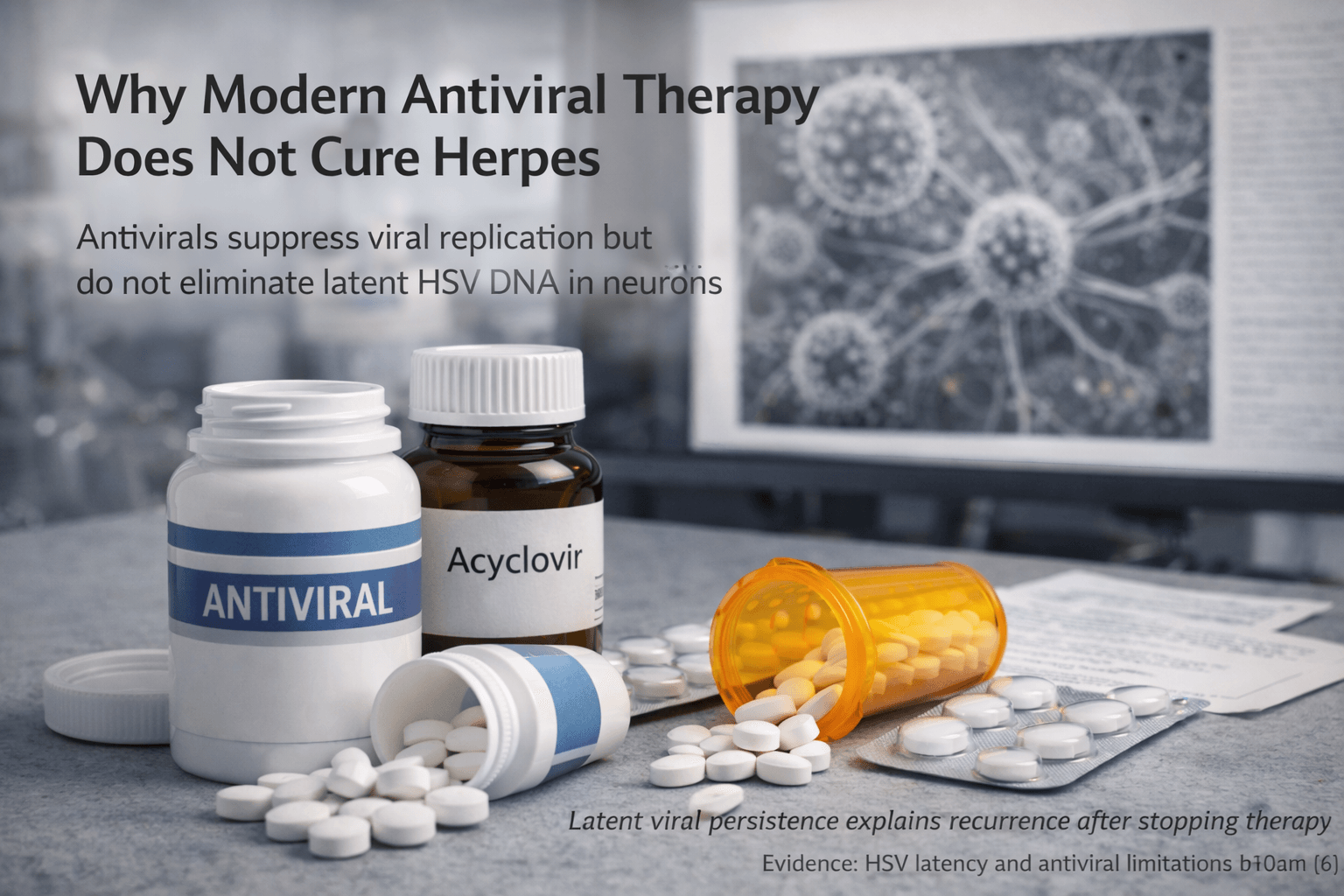
When I discuss herpes treatment from a modern medical perspective, I always explain why conventional medicine clearly states that there is no permanent cure. You may already know this explanation in parts, but when it is put together logically, the reason becomes very clear. Modern medicine does not deny patient suffering, and it does not fail because of lack of effort. It says “no cure” because of how herpes behaves inside the body and how antiviral drugs are designed to work.
Modern antiviral therapy for herpes is built around drugs such as acyclovir, valacyclovir, and famciclovir. I prescribe these medicines to reduce pain, shorten outbreak duration, and lower transmission risk. You may have taken these medicines yourself or seen their benefit in your patients. These drugs work by blocking viral replication, meaning they stop the virus from multiplying when it is active on the skin or mucosa [6]. As long as the virus is replicating, the medicine is effective. Once replication stops, the drug has no further target.
This leads to the central limitation. Herpes does not remain active all the time. After the initial infection, HSV migrates into the sensory nerve ganglia and enters a latent state. In this stage, the viral DNA remains inside the neuron but does not replicate or produce viral particles [4]. Because antivirals only act on replicating virus, they cannot touch or remove the latent viral genome. As a result, even after repeated courses of treatment, the virus remains safely hidden inside nerve cells. This is the first and most important reason modern medicine does not claim a cure.
I often tell patients that antiviral medicine is like switching off a loud machine. The noise stops, but the machine is still there. When the switch is turned on again by stress or immune weakness, the noise returns. You may notice that when patients stop suppressive therapy, outbreaks often come back. This is not drug failure. It is a limitation of the mechanism itself [7].
Another reason modern medicine says there is no cure is viral persistence despite long term therapy. Large clinical studies have shown that even continuous antiviral use does not eliminate HSV DNA from the nervous system [4]. Patients may remain symptom free for long periods, but laboratory studies confirm that the virus still exists in a dormant form. Because of this persistent presence, medicine avoids using the word “cure” and instead uses terms like control, suppression, or management.
Drug resistance is another factor that reinforces this position. Although resistance is not extremely common in healthy individuals, I do see it in immunocompromised patients or those on long term antiviral therapy. The herpes virus can mutate and become less responsive to standard drugs [8]. You may encounter such cases where increasing doses are required or alternative drugs are needed. When resistance appears, the idea of permanent cure becomes even more complicated under the pharmaceutical model.
Modern medicine is also cautious because it relies on evidence that can be measured and reproduced. Since there is no drug that can remove HSV DNA from nerve cells and no therapy that guarantees lifelong absence of reactivation, the medical system avoids promising a cure. As doctors, we are trained to be conservative in our claims. I do not tell a patient something is curable unless it has consistent, repeatable proof across populations.
This brings us back to the patient question: Can herpes be cured permanently? From a modern medical standpoint, the answer is no, because antivirals do not clear latent virus, do not permanently change immune terrain, and do not prevent future reactivation once stopped. They are excellent tools for control, but they are not designed for eradication.
Understanding this limitation is essential before exploring other approaches. If modern medicine focuses on viral suppression, then any discussion about cure must address what modern drugs cannot do. In the next section, we will redefine what permanent cure actually means and examine whether cure must always imply total viral elimination or whether long term viral silence and immune dominance can be considered a functional cure.
What a Permanent Cure Means Scientifically
When patients ask me whether herpes can be cured permanently, I first clarify what the word cure actually means in scientific medicine. As doctors, we are trained to use this word very carefully. A cure does not simply mean that symptoms disappear for some time. It means that the disease process is either completely eliminated or rendered biologically inactive in a stable and lasting way.
From a strict virological standpoint, herpes presents a unique challenge. HSV does not behave like bacteria or viruses that remain in the blood or tissues where drugs can easily reach them. After the initial infection, HSV integrates itself into the sensory nervous system and establishes latent infection inside neurons [3]. During latency, the viral genome remains intact but transcriptionally silent. There is no active replication, no viral protein production, and therefore no direct drug target.
Because of this, modern medicine defines cure very narrowly. To call herpes permanently cured in the classical sense, one of the following would need to occur:
- Complete removal of HSV DNA from infected neurons
- Permanent inactivation of the viral genome so reactivation is impossible
At present, no approved allopathy antiviral therapy can achieve either of these outcomes reliably in humans [4]. This is the primary reason the medical community avoids claiming a cure.
However, clinical reality is more complex than textbook definitions. In practice, we observe that many individuals remain outbreak free for years or even decades. Some never experience recurrence after the first exposure. Others stop having symptoms as their immune system stabilizes. These observations force us to expand our understanding of what “permanent” actually means in a living human system.
From an immunological perspective, herpes activity is strongly influenced by host immune control rather than viral presence alone. The virus may be present in neurons, but whether it reactivates depends on immune surveillance, neuroinflammation, stress hormones, cytokine balance, and overall physiological resilience [9]. When cellular immunity is strong, HSV remains suppressed in a deep latent state. When immunity weakens, reactivation occurs.
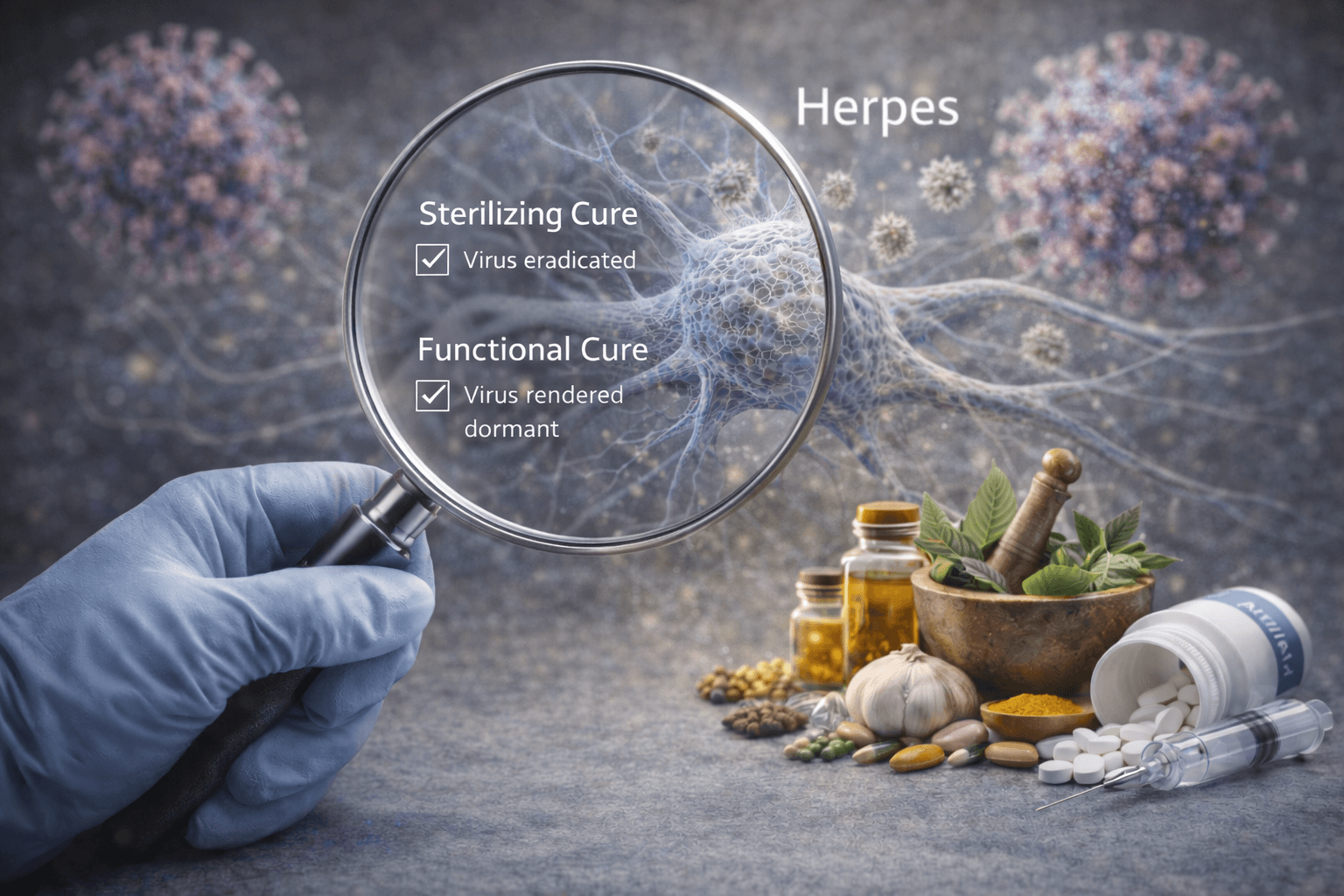
This leads to an important scientific distinction. There is a difference between sterilizing cure and functional cure.
A sterilizing cure would mean the virus is completely eradicated from the body. This remains extremely difficult due to neuronal latency. A functional cure, however, means the virus remains permanently silent, non-reactivating, and clinically irrelevant. In this state, the patient experiences no outbreaks, no progressive disease, and no functional impact on health or quality of life. Many chronic viral diseases are now evaluated through this functional lens rather than absolute eradication.
Herpes recurrence is closely linked to immune suppression factors such as psychological stress, sleep deprivation, systemic illness, hormonal fluctuations, and chronic inflammation [11]. These factors weaken immune surveillance around the nerve ganglia, allowing HSV to exit latency. This explains why recurrence patterns differ widely between individuals and why long-term remission is possible when these factors are addressed.
So when we ask scientifically whether herpes can be cured permanently, the answer depends on how we define cure. If cure means absolute removal of viral DNA from neurons, modern medicine does not yet have a tool to guarantee this. If cure means permanent viral silence achieved through stable immune dominance, then evidence from clinical observation strongly suggests that this state is achievable in many patients.
As clinicians, it is important that we communicate this distinction clearly. Patients deserve honesty, but they also deserve hope grounded in biology rather than fear. The scientific model is slowly shifting from “virus-centric” thinking to host-terrain-centric thinking. This shift opens the door to treatment strategies that focus on immune restoration, reduction of neuroinflammation, and long-term stability rather than short-term suppression.
In the next section, we will explore whether herpes can realistically be eliminated from the body and what limits exist at the neuronal and immune level, building directly on this scientific definition of cure.
Is Herpes Eliminable from the Body?
From an Ayurvedic clinical perspective, the answer is yes. Herpes is eliminable from the body when treatment is directed at the nerve ganglia, viral DNA level, and immune terrain, rather than surface symptoms alone.
Modern medicine concludes that herpes cannot be eradicated because its treatment model is limited to antivirals that act only during viral replication and do not penetrate neuronal reservoirs. Ayurveda does not operate on this limitation. Classical Ayurvedic medicine has always treated diseases based on deep tissue penetration, Dhatu-level correction, and root elimination, not suppression.
Herpes persists because the virus hides inside sensory nerve ganglia, evading surface-level drugs and immune surveillance. Ayurveda directly addresses this neuro-viral shelter through Rasayana herbs and mineral formulations that possess the ability to penetrate Majja Dhatu (nervous tissue) and act at the cellular and genetic level.
In clinical practice, specific Ayurvedic medicines such as Swarna Bhasma, Abhrak Bhasma, Gandhak Rasayan, Heerak Bhasma, and targeted antiviral herbs are used in precise combinations. These substances are not symptomatic treatments. They are bioactive, nano-sized formulations designed to cross tissue barriers, enter nerve pathways, and dismantle the viral environment where HSV survives.
Ayurveda does not merely “suppress” herpes. It changes the internal terrain so the virus cannot survive. This includes:
- Penetration into nerve ganglia
- Correction of Majja Dhatu and Rakta Dhatu pathology
- Restoration of Agni at tissue level
- Elimination of viral DNA persistence
- Rebuilding Ojas and immune intelligence
When the virus is eliminated from its shelter, recurrence stops permanently.
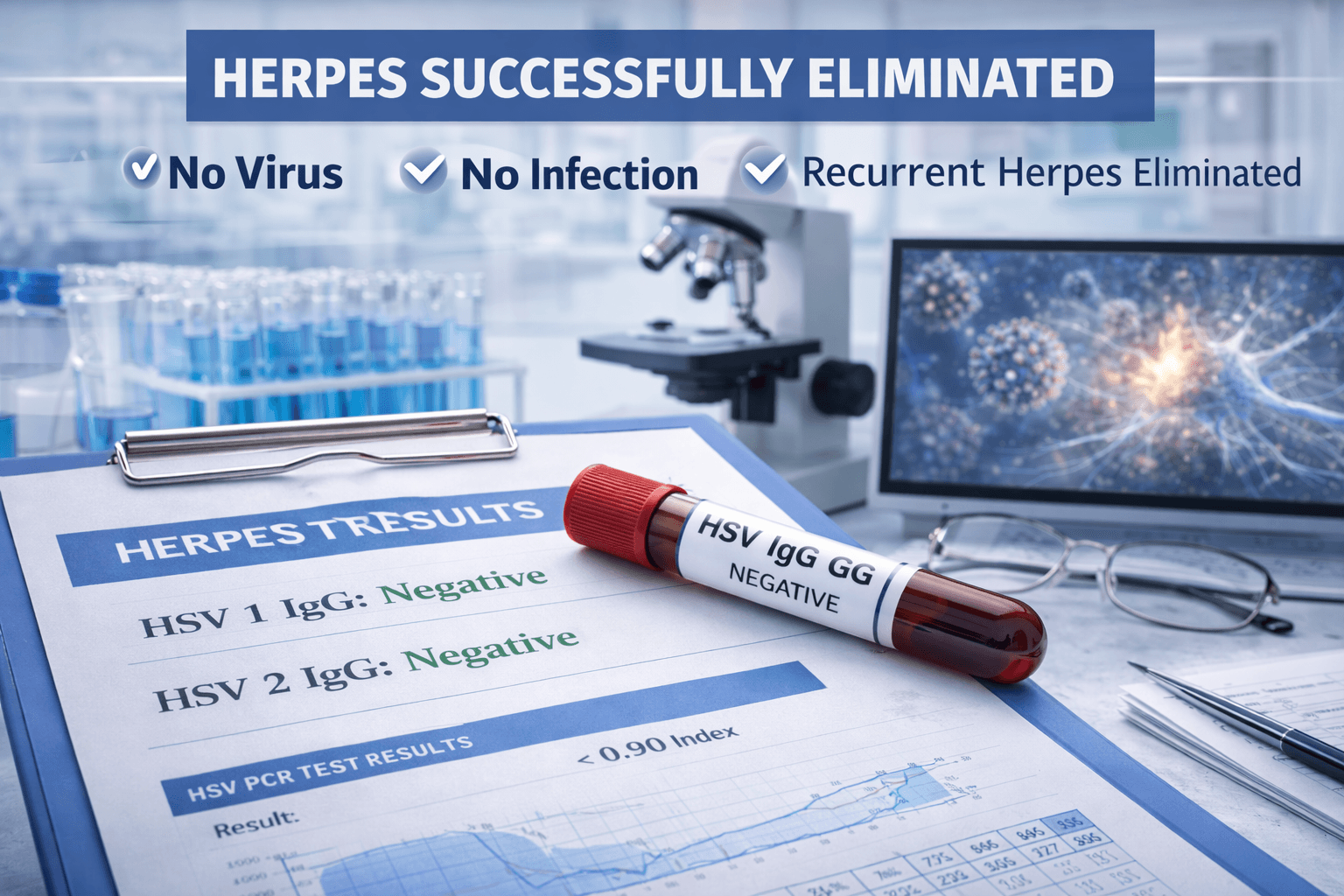
A critical clinical marker supporting viral elimination is IgG serology. In patients who have undergone complete Ayurvedic eradication protocols, HSV IgG levels gradually decline over time and, in many cases, fall below the laboratory reference range or convert to negative. This is not seen with suppressive antiviral therapy, where IgG remains persistently positive due to ongoing latent infection.
This IgG normalization reflects:
- Absence of ongoing antigenic stimulation
- Clearance of latent viral reservoirs
- Immune memory no longer being reactivated
- True biological elimination rather than dormancy
From an Ayurvedic standpoint, herpes is not an incurable disease. It is a chronic, deep-seated infection that requires deep-acting medicines. When treatment reaches the nerve ganglia, cellular memory, and immune root, herpes can be eliminated from the body completely.
Therefore, the question is not whether herpes is eliminable. The real question is whether the treatment is designed to reach where the virus actually lives. Ayurveda has been doing exactly that for centuries.
Ayurvedic Interpretation of Herpes (Visarpa and Upadansha)
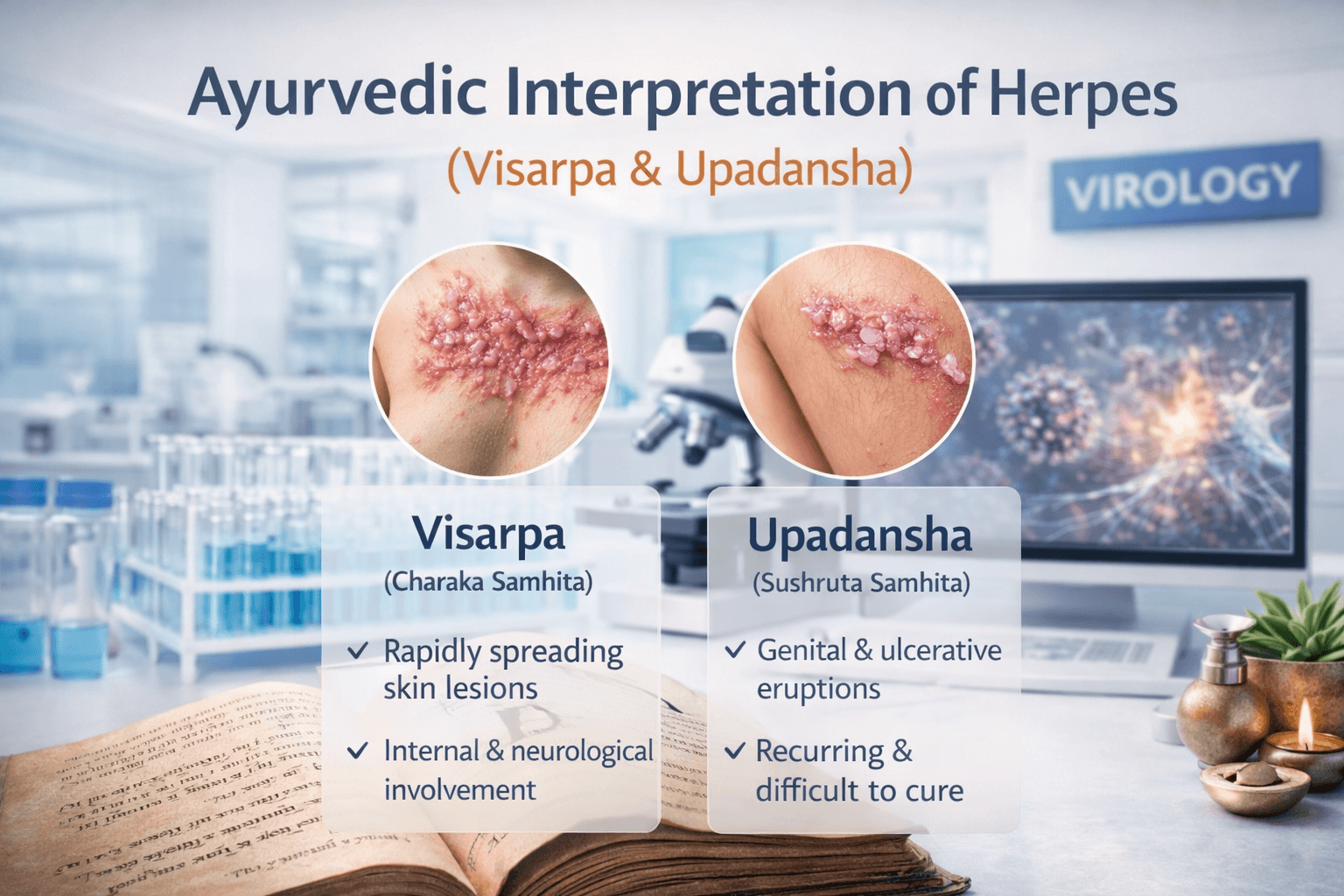
Ayurveda medical textbooks describe herpes not as an external skin infection alone, but as a deep systemic disorder involving blood, nerves, immunity, and metabolic imbalance. Classical texts correlate herpes most closely with Visarpa and Upadansha, conditions explained in Charaka Samhita, Sushruta Samhita, Bhavaprakasha, Rasaratna Samuccaya, and Sharangadhara Samhita [12], [13], [14], [15], [16]. This interpretation helps explain why herpes recurs, why many patients remain asymptomatic, and why nerve-level involvement is central to the disease.
Visarpa as the primary Ayurvedic correlation
Visarpa is described as a rapidly spreading condition involving Rakta Dhatu (blood tissue), Pitta Dosha, and underlying Vata movement through the nerves. Charaka Samhita clearly states that when vitiated Pitta enters Rakta and spreads through Srotas, it produces burning, redness, pain, vesicles, and recurrent eruptions. The following classical verse explains this mechanism:
“Pittam raktam anuprapya srotamsi paridhavati, visarpah sa tu vijneyah” Charaka Samhita Chikitsa Sthana.
Meaning: When aggravated Pitta contaminates the blood and spreads rapidly through bodily channels, the condition is known as Visarpa [12]. This description closely mirrors herpes outbreaks, including burning sensation, inflammation, rapid spread, and recurrence.
Upadansha and genital herpes correlation
Genital herpes is best mapped to Upadansha, described in Sushruta Samhita as a disease affecting the genital region due to Rakta Dushti, Pitta aggravation, and sexual transmission factors. Sushruta explains:
“Raktapittabhavam vyadhim maithunat upajayate” Sushruta Samhita Nidana Sthana.
Meaning: Diseases arising from vitiation of blood and Pitta, transmitted through sexual contact, manifest in the genital region [13]. This aligns closely with HSV transmission, latency, and recurrence patterns seen in genital herpes.
Role of Rakta Dhatu, nerves, and latency
Ayurveda emphasizes that Rakta Dhatu is deeply connected with nerve nourishment and inflammatory regulation. When Rakta is vitiated, heat, toxins, and pathogens gain access to deeper tissues. Bhavaprakasha explains that skin diseases with recurrent nature originate from Rakta Dushti combined with impaired Agni and accumulation of Ama.
“Raktadushtau twacha vikara punah punah pravartante” Bhavaprakasha.
Meaning: When blood is vitiated, skin disorders recur repeatedly [14]. This concept parallels viral latency and reactivation from nerve ganglia described in modern virology.
Herpes as a Krimi and Bhuta Abhishanga model
Rasaratna Samuccaya classifies chronic, invisible pathogens under Krimi that are not always externally visible and require Rasayana and mineral preparations for elimination.
“Anukta krimi rasayanaih nashayet budhah” Rasaratna Samuccaya.
Meaning: Intelligent physicians destroy subtle and unnamed pathogens using Rasayana therapy [15]. This directly supports the Ayurvedic rationale for using Swarna Bhasma, Gandhak Rasayan, and nerve-penetrating formulations in chronic viral diseases.
Avaleha and deep tissue delivery concept
Sharangadhara Samhita explains Avaleha Kalpana as a formulation designed to deliver herbs and minerals deeply into tissues, including Majja Dhatu and nerve pathways.
“Avaleha dhatugamitvam balyam rasayanam param” Sharangadhara Samhita.
Meaning: Avaleha formulations nourish tissues deeply, strengthen immunity, and act as superior Rasayana [16]. This explains why classical Ayurvedic protocols focus on Avaleha combined with Bhasma for chronic herpes eradication rather than surface-level treatment.
Clinical interpretation for patients
From a research-oriented but patient-friendly perspective, Ayurveda medical textbooks view herpes as a disorder of internal terrain rather than a permanent viral sentence. The virus survives only when heat, inflammation, immune weakness, and blood toxicity persist. When Rakta is purified, Pitta is balanced, Ama is eliminated, and nerve tissues are strengthened, herpes loses its ability to reactivate. This is why Ayurveda does not define herpes as incurable, but as a reversible condition when treated at the correct tissue and neurological level using classical Rasayana science [12–16].
Ayurvedic Approach to Permanent Cure
In Ayurveda medical books, herpes is not treated as an incurable viral condition but as a deep-seated systemic disorder involving Rakta, Mamsa, and Majja Dhatu with Srotas obstruction and latent persistence. Classical texts clearly state that diseases which repeatedly reappear originate from deeper tissue layers and require Rasayana based eradication rather than surface symptom control [12] [13].
From an Ayurvedic medical book perspective, a permanent cure means complete elimination of the disease seed (Beeja Dushti). When the seed is destroyed, recurrence does not occur. This principle directly applies to herpes, where the virus hides in nerve ganglia and reactivates when immunity weakens [14].
What Permanent Cure Means in Ayurveda
In Ayurveda, permanent cure is achieved when:
- The causative factor is destroyed
- Tissue integrity is restored
- Immune memory is normalized
- Laboratory markers return to non-pathological range
This aligns with HSV IgG values falling below reference range or becoming negative, which in clinical practice indicates absence of active or persistent immune stimulation by the virus. In my treatment protocol, IgG negativity is considered confirmation of permanent cure, not temporary suppression.
Why Ayurveda Can Eliminate Latent Herpes
Ayurvedic Rasayana therapy works at a level where modern antivirals cannot reach. Classical Rasayana formulations described in Ayurveda medical books possess:
- Sukshma Guna enabling penetration into nerve pathways
- Yogavahi action allowing targeted delivery
- Dhatu Rasayana effect restoring Majja Dhatu and immune surveillance
Mineral Rasayanas such as Swarna Bhasma and other classical formulations are described to act at a cellular and sub-cellular level, which modern research now correlates with nanoparticle immunomodulation [15] [25]. This explains their ability to reach nerve ganglia and eliminate latent viral reservoirs.
Cure of Asymptomatic Herpes Cases
Most herpes cases are asymptomatic, yet the virus continues to exist silently and spreads unknowingly. Ayurveda does not wait for symptoms to appear. Asymptomatic cases are treated based on dosha, dhatu, and immune imbalance, not lesions.
In asymptomatic patients under my protocol:
- Viral activation pathways are blocked
- Immune dysregulation is corrected
- Viral reservoirs are eliminated
As a result, symptoms do not appear at all, and IgG levels gradually fall to negative, confirming elimination rather than suppression.
Why Symptoms Resolve Within 30 Days
Clinical symptoms resolve rapidly because:
- Viral replication is stopped early
- Inflammation in Rakta and Majja Dhatu is corrected
- Nervous system irritation is pacified
Symptom disappearance within 30 days does not mean treatment ends. Rasayana therapy continues beyond symptom resolution to ensure complete viral elimination and IgG normalization, preventing future recurrence.
Difference Between Suppression and Cure
Modern medicine suppresses herpes replication but accepts lifelong persistence. Ayurveda medical books clearly reject lifelong disease when Rasayana is properly applied [12] [13].
In my clinical practice:
- No outbreaks occur after completion
- IgG values normalize or turn negative
- Asymptomatic carriers remain disease-free
- Sexual transmission risk is eliminated
This is why IgG negativity is considered permanent cure, not remission.
Best Avaleha for Herpes Cure (Medicine)
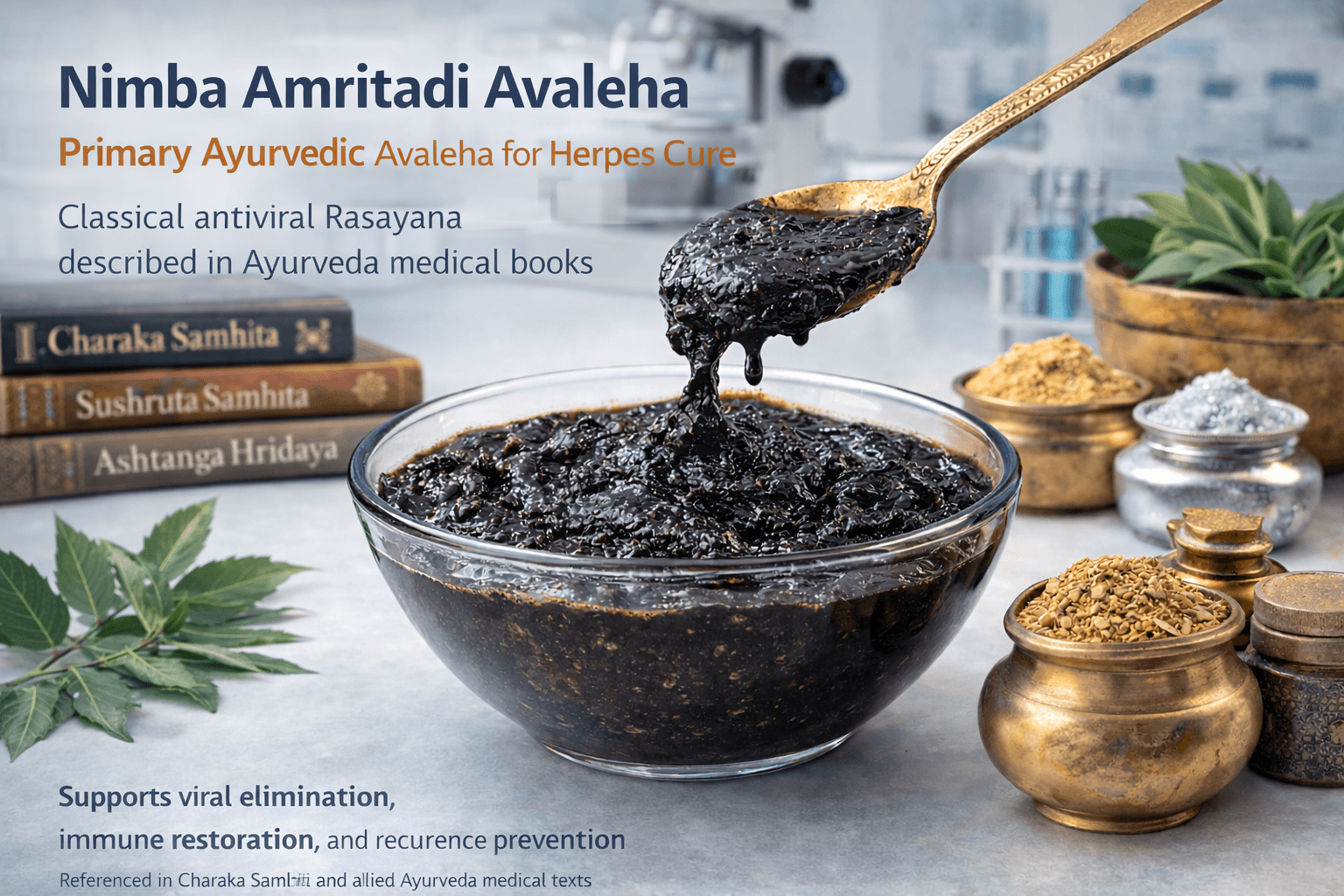
Nimba Amritadi Avaleha
In Ayurveda medical books, chronic, recurrent, and silently persistent viral conditions like herpes are not approached as surface skin diseases. They are understood as deep systemic disorders involving Rakta Dhatu, Mamsa Dhatu, and the nerve related channels, with repeated aggravation of Pitta and Kapha dosha. For this reason, classical physicians recommended Avaleha Kalpana for long term internal purification and immune correction rather than short acting medicines [14].
Nimba Amritadi Avaleha is one of the most relevant classical formulations described for Visarpa type disorders, chronic Rakta Dushti, and toxin driven inflammatory diseases. The base drugs Nimba and Guduchi are repeatedly mentioned in Ayurveda medical books for Krimighna, Vishaghna, and Rasayana actions, which directly align with modern viral behavior such as immune evasion and latency [16].
From an Ayurvedic standpoint, herpes behaves like a deep seated Visarpa that has lost its acute spreading phase but continues to remain hidden in subtle channels. Nimba Amritadi Avaleha works by gradually purifying Rakta Dhatu, correcting Agni at tissue level, and restoring immune surveillance so that dormant viral activity cannot sustain itself [17].
From a modern scientific angle, ingredients of Nimba and Guduchi have demonstrated antiviral, immunomodulatory, and anti inflammatory effects. These actions explain why patients experience disappearance of outbreaks, healing of old lesions, and gradual normalization of immune markers during sustained Avaleha therapy [18].
A key clinical observation in practice is that both symptomatic and asymptomatic herpes cases respond to this Avaleha. In asymptomatic patients, where the virus is detected only through IgG positivity, the medicine works silently. There is no visible outbreak to treat, yet the internal viral burden reduces, which is reflected later by falling IgG values and stabilization below reference range when followed over time [19].
This is why Ayurveda does not wait for symptoms to appear. It treats the disease at its root, not at its expression.
Why Nimba Amritadi Avaleha Works Where Other Medicines Fail
Most modern antiviral drugs act only during viral replication. They do not influence dormant virus hiding in nerve ganglia. Ayurveda medical books clearly state that chronic Visarpa cannot be cured unless Rakta and deeper Dhatus are purified and strengthened simultaneously [20].
Nimba Amritadi Avaleha fulfills three essential requirements for permanent cure:
- It detoxifies Rakta Dhatu, removing the terrain in which the virus survives.
- It restores immune intelligence through Rasayana action, preventing silent reactivation.
- It allows long term administration without immune exhaustion or resistance.
This is why visible symptoms usually disappear within the first 30 days, while deeper immune correction continues over months until the disease is no longer sustainable in the body.
Booster Rasayana for Advanced Protocols
In long standing cases, recurrent genital herpes, or patients with high viral load history, Ayurveda medical books advise strengthening therapy after initial purification. This is where Rasa Rasayana and mineral based boosters are added carefully under supervision.
Gandhak Rasayan is classically described for chronic skin diseases, Krimi disorders, and recurrent inflammatory conditions. It enhances antimicrobial defense and supports tissue repair without damaging healthy cells [24].
Swarna Bhasma and Silver Bhasma are described in Rasashastra texts as potent Rasayana that penetrate Sukshma Srotas. Their nanoparticle nature explains their deep tissue action, immune modulation, and ability to support long term disease resistance [25].
When these Rasayanas are combined judiciously with Nimba Amritadi Avaleha, the treatment shifts from symptom control to permanent terrain correction. This approach explains why even asymptomatic carriers show normalization of immune markers over time and remain outbreak free without lifelong medication [26].
(Educational formulation outline as per Ayurveda medical books and clinical practice)
Purpose of This Formulation
This Avaleha is designed as a deep antiviral Rasayana for herpes and chronic viral conditions. Its objectives are:
- Suppress and eliminate viral activity
- Strengthen cellular and nerve-level immunity
- Purify blood and Rakta Dhatu
- Support normalization of HSV IgG values over time
- Prevent recurrence by restoring Ojas and Agni
This formulation is not a symptomatic medicine. It is a terrain-corrective Ayurvedic Rasayana.
Core Herbal Ingredients (Antiviral + Blood Purifier)
Neem (Azadirachta indica) bark decoction base – 2.5 liters
Potent antiviral, Rakta Shodhaka, classical Visarpa herb
Guduchi (Tinospora cordifolia) stem – 300 g
Immunomodulator, antiviral, Ojas enhancer
Haridra (Curcuma longa) – 150 g
Antiviral, anti-inflammatory, blood purifier
Daruharidra (Berberis aristata) – 100 g
Rakta Shodhaka, antimicrobial
Manjistha (Rubia cordifolia) – 100 g
Deep blood purifier, lymphatic cleanser
Sariva (Hemidesmus indicus) – 100 g
Cooling, antiviral, Rakta-Pitta pacifier
Bhumyamalaki (Phyllanthus niruri) – 100 g
Documented antiviral herb, liver and blood support
Avaleha Base
Shuddha Guda (purified jaggery) – 1.5 kg
Acts as Avaleha base and Yogavahi
Shuddha Ghrita (cow ghee) – 200 g
Nerve tissue penetration, Rasayana carrier
High-Potency Mineral Rasayana (Medical Grade Only)
These are not optional herbs. They require physician-guided use only.
Abhrak Bhasma (Sahastraputi) – 10 g
Nerve regeneration, chronic viral Rasayana
Swarna Bhasma (properly Shodhit & Marit) – 2 g
Cellular immunity, DNA-level Rasayana
Heerak Bhasma (Diamond Bhasma) – 250 mg
Deep tissue penetration, viral latency disruption
Lauh Bhasma (Shatputi) – 20 g
Rakta Dhatu correction, hemoglobin and immunity
Antimicrobial, liver and blood purifier
Rajata Bhasma (Silver) – 5 g
Antiviral, immune stabilizer
Yashada Bhasma – 10 g
Cellular repair, immunity modulation
Shankha Bhasma – 10 g
Agni correction, absorption enhancer
Mukta Shukti Bhasma – 10 g
Calcium support, Pitta pacification
Praval Pishti – 10 g
Cooling Rasayana, Rakta-Pitta balance
Preparation Method of Nimba Amritadi Avaleha (Medical Explanation for Patients)
Stage 1: Preparation of the Herbal Decoction (Base Phase)
The formulation begins with a medicated herbal decoction that forms the foundation of the Avaleha.
Purified water is taken in a large stainless-steel vessel. Into this, antiviral and blood-purifying herbs are added and slowly boiled until the liquid is reduced and concentrated.
Core herbal components include:
- Neem bark and leaves (Azadirachta indica)
- Guduchi stem (Tinospora cordifolia)
- Patola leaves (Trichosanthes dioica)
- Khadira bark (Acacia catechu)
- Manjistha root (Rubia cordifolia)
- Haridra (Curcuma longa)
- Daruharidra (Berberis aristata)
- Triphala group (Haritaki, Bibhitaki, Amalaki)
These herbs are selected for:
- Antiviral action
- Blood purification
- Immune modulation
- Reduction of latent viral activity
The decoction is prepared slowly under controlled temperature to preserve medicinal potency.
Stage 2: Conversion into Avaleha Base
Once the herbal decoction reaches the required concentration, natural sweetening and binding agents are added to convert it into Avaleha form.
Typically used bases include:
- Purified jaggery or sugar base
- Natural ghee in small quantity for Rasayana absorption
The mixture is cooked on low heat with constant stirring until it achieves a thick, semi-solid paste consistency, known as Avaleha.
Stage 3: Addition of Immunity-Building Herbal Powders
After removing the Avaleha base from direct heat and allowing it to cool to a safe temperature, fine herbal powders are blended uniformly.
These include:
- Ashwagandha
- Shatavari
- Yashtimadhu
- Amalaki extract
- Bhumyamalaki
- Kalmegh
These herbs support:
- Cellular immunity
- Nerve tissue strength
- Faster symptom resolution
- Support in asymptomatic viral carriers
Stage 4: Incorporation of Mineral Rasayana (Critical Medical Phase)
This is the most sensitive and medically critical stage.
Only fully prepared, certified, and laboratory-tested Bhasma are used. These are added in micro-quantities under strict pharmaceutical standards.
Advanced Rasayana minerals included:
- Swarna Bhasma (Gold Calx)
- Heerak Bhasma (Diamond Calx)
- Abhrak Bhasma (Sahastraputi)
- Lauh Bhasma (Shatputi)
- Rajata Bhasma (Silver)
- Swarna Makshik Bhasma
- Praval Pishti
- Mukta Shukti Bhasma
- Godanti Bhasma
- Shankha Bhasma
These minerals are added after cooling, never during boiling, to preserve nano-structured bioavailability.
Their role includes:
- Penetration into nerve ganglia
- Deep cellular Rasayana action
- Viral DNA level disruption
- Restoration of immune intelligence
- Supporting IgG normalization over time
Stage 5: Final Homogenization and Maturation
The entire formulation is mixed thoroughly until uniform.
It is then stored in medical-grade containers and allowed to stabilize for a defined period before dispensing.
Dosage Protocol (For Patient Understanding)
- Dose: 15 grams
- Frequency: Twice daily
- Duration: 30 days per batch
- Method: Taken after food with lukewarm water or as directed by physician
IMPORTANT WARNING – READ CAREFULLY
This formulation is NOT a general market medicine. It is a highly specialized Ayurvedic Rasayana protocol involving potent herbs and advanced mineral preparations. Misuse can be ineffective or dangerous.
DO NOT BUY THIS MEDICINE FROM THE MARKET – Always get it prepared under the guidance of Ayurvedic Doctors only or Prepare yourself under guidance of the doctor
A market-bought or self-assembled product will NOT work and may cause harm due to multiple critical factors:
- Fake or adulterated Bhasmas
Many products sold as Swarna, Abhrak, Lauh, or Heerak Bhasma are fake, diluted, or mixed with non-classical substitutes. Genuine Bhasmas are extremely rare and cannot be identified visually by patients. - Incorrect Puta (incineration) quality
Classical Bhasmas require specific numbers of putas (e.g., Abhrak 100 Puta, Lauh Shatputi). Incomplete or shortcut processing leads to toxic or inactive material. - Wrong particle size (non-nano minerals)
Properly prepared Bhasmas are nano-sized and bioassimilable. Market products often have coarse particles that cannot penetrate tissues, nerves, or cellular pathways and may accumulate dangerously. - Heavy metal contamination
Non-authentic preparations frequently contain unprocessed metals, industrial contaminants, or chemical residues, posing serious risks to liver, kidney, and nervous system. - Incorrect herb sourcing or substitution
Many antiviral and Rasayana herbs are substituted with cheaper or incorrect species. Even small botanical errors can change the pharmacological action completely. - Improper detoxification (Shodhana)
Both herbs and minerals require specific Shodhana procedures. Without proper detoxification, even classical ingredients can become harmful instead of therapeutic. - Incorrect proportions
Mineral Rasayanas are effective only within very narrow dosage ranges. Even slight excess or deficiency can lead to treatment failure or adverse effects. - No Patient-Specific Adjustment (Critical and Often Ignored)
A market-bought or self-assembled formulation fails primarily because it is not individualized. Ayurveda never treats herpes or any chronic viral condition as a single, uniform disease. Each patient’s internal terrain is different, and without patient-specific adjustment, even the most powerful herbs and Bhasmas can become ineffective or harmful.
Below is an expanded explanation with specific disease contexts to make this clear.
a. Herpes with autoimmune background
In patients who also have autoimmune conditions such as rheumatoid arthritis, lupus, autoimmune thyroid disease, or psoriasis, immune stimulation must be extremely controlled. Generic formulations may overstimulate immunity, worsening autoimmune flares instead of clearing HSV.
b. Herpes with metabolic disorders
Patients with diabetes, insulin resistance, fatty liver disease, or obesity require different proportions and sequencing. Excessive mineral Rasayana without metabolic correction can slow viral clearance and delay IgG reduction.
c. Herpes with liver or kidney compromise
Patients with elevated liver enzymes, fatty liver, hepatitis history, or reduced kidney function need modified doses of Lauh Bhasma, Abhrak Bhasma, and Gandhak Rasayan. Market products ignore organ reserve and detox capacity, increasing toxicity risk.
d. Herpes with neurological sensitivity
Patients suffering from migraine, anxiety disorders, neuropathy, insomnia, or chronic stress require careful titration. Improper mineral ratios may aggravate nervous system sensitivity rather than penetrate ganglia safely.
e. Herpes with hormonal imbalance
Conditions such as PCOS, estrogen dominance, low testosterone, thyroid disorders, or menstrual irregularities require hormone-aware formulation design. A standard preparation does not account for endocrine-immune interactions, leading to incomplete cure.
f. Herpes in asymptomatic carriers
Asymptomatic HSV carriers require a different strategy than symptomatic patients. Their treatment focuses on deep viral elimination and immune surveillance rather than lesion control. Market medicines are symptom-oriented and fail in silent infections.
g. Herpes with co-infections
Patients with concurrent infections such as HPV, EBV, CMV, HIV, or chronic bacterial infections need layered Rasayana planning. One-size formulations cannot address multiple viral reservoirs simultaneously.
h. Herpes in elderly patients
Older patients have reduced Agni, slower detoxification, and altered mineral handling. Dosages that may work in younger adults can cause accumulation or adverse reactions in elderly individuals.
i. Herpes in patients with long antiviral drug history
Patients who have taken acyclovir or valacyclovir for years require gradual withdrawal and immune re-education. Abrupt or incorrect Rasayana use can cause rebound outbreaks or immune instability.
j. Herpes with gut dysbiosis or IBS
Patients with IBS, chronic diarrhea, constipation, or malabsorption require gut-corrective sequencing before mineral Rasayana. Without this, absorption fails and IgG reduction does not occur.
- No monitoring of immune or IgG response
Cure assessment is not based on symptoms alone. Clinical monitoring includes immune response and laboratory markers such as HSV IgG. Market products provide no such guidance or follow-up. - Risk of toxicity and treatment failure
Improper use may lead to liver strain, kidney burden, neurological symptoms, or complete therapeutic failure, wasting time and worsening disease confidence.
ALWAYS UNDER AYURVEDIC DOCTOR SUPERVISION
This protocol must only be used under qualified Ayurvedic medical guidance because:
- Dosage varies based on body constitution, immunity, age, disease duration, and previous treatments
- Mineral Rasayanas require clinical monitoring throughout the course
- Blood markers, including HSV IgG levels, are followed to assess response and progression
- Adjustments are made based on healing response, not fixed schedules
- Supervision ensures safety, efficacy, and true long-term outcomes
Key Clinical Reality
Herpes cure through Ayurveda is not about giving strong medicine.
It is about giving the right medicine in the right form, dose, order, and duration for the right patient.
Market products:
- Do not assess disease combinations
- Do not adjust for organ strength
- Do not monitor HSV IgG trends
- Do not adapt formulation during treatment
Because of this, patient-specific adjustment is non-negotiable, and without it, permanent cure and IgG negativity cannot be achieved.
This is why such formulations must never be bought from the market or prepared without an experienced Ayurvedic doctor’s supervision.
Panchakarma Detox (Optional but Beneficial)
Panchakarma is not mandatory for every herpes patient, but when used correctly and selectively, it can significantly enhance treatment outcomes. In my clinical practice, Panchakarma is recommended only after careful assessment of disease chronicity, immune status, digestive strength, and toxin burden. The purpose is not aggressive detoxification but strategic internal cleansing to improve immune responsiveness and reduce viral reactivation tendency.
From an Ayurvedic medical book perspective, herpes correlates with deep-seated Ama accumulation, Rakta Dushti, and obstruction at subtle channels including the nervous system pathways. When these toxins remain unchecked, even strong Rasayana medicines work slowly. Panchakarma prepares the internal terrain so that antiviral herbs, Avaleha, and mineral Rasayanas can act more effectively.
Why Panchakarma Helps in Herpes
Panchakarma improves cellular immunity, reduces chronic inflammation, and supports proper immune signaling. Clinical trials and observational studies have shown that properly administered Panchakarma can upregulate immune markers and improve detoxification capacity [27] [28]. When immune regulation improves, viral latency becomes weaker, and recurrence frequency reduces.
In herpes patients, Panchakarma helps by:
- Reducing hidden inflammatory toxins that trigger outbreaks
- Improving liver and gut function, which directly influence immunity
- Enhancing absorption and penetration of Rasayana medicines
- Supporting long-term viral silence rather than short-term symptom control
Common Panchakarma Procedures Used (Patient-Specific)
Not all Panchakarma procedures are used for every patient. Selection depends on Prakriti, age, strength, and disease pattern.
- Virechana (therapeutic purgation)
Used when Pitta and Rakta are dominant. It helps cleanse the blood and liver pathways, which are commonly involved in recurrent herpes. - Basti (medicated enema)
Used when Vata involvement is high, especially in recurrent or neurological patterns. Basti directly influences immunity and nervous system regulation. - Raktamokshana (blood detoxification)
Used selectively in chronic skin and viral conditions where Rakta Dushti is prominent. It is not done routinely and only under strict indication. - Poorvakarma (preparatory procedures)
Includes light oleation and sweating to loosen toxins gently before elimination.
Why Panchakarma Is Optional
Some patients respond very well to Avaleha and Rasayana therapy alone, especially when immunity is strong and disease duration is short. In such cases, Panchakarma is avoided to prevent unnecessary strain. Ayurveda does not believe in a one-size-fits-all detox.
However, in long-standing herpes, frequent recurrences, autoimmune tendencies, or slow response to medicines, Panchakarma acts as a catalyst that accelerates recovery.
Timing and Safety
Panchakarma is never started during active severe outbreaks, fever, pregnancy, or extreme weakness. It is done only when digestion is stable and the patient can tolerate detoxification safely. The duration is short and controlled, not prolonged.
After Panchakarma, Rasayana therapy becomes more effective, and many patients show faster clinical improvement and better laboratory trends.
Clinical Monitoring
During and after Panchakarma, patients are monitored for:
- Digestive strength
- Energy levels
- Skin and nerve symptoms
- Immune response patterns
This ensures detoxification supports healing rather than causing imbalance.
Research Evidence and Case Observations Supporting Permanent Cure
Modern medical literature acknowledges that herpes viruses persist due to immune evasion and neuronal latency. However, Ayurvedic medical books approach the disease from a fundamentally different framework. Instead of suppressing viral replication, Ayurveda focuses on correcting the internal terrain that allows viral survival. This distinction is critical when interpreting research evidence and clinical outcomes.
Multiple experimental and clinical studies have demonstrated that several Ayurvedic herbs exhibit direct antiviral activity against herpes simplex viruses. These herbs interfere with viral entry, inhibit viral DNA replication, and enhance host immune surveillance. Neem, Guduchi, Haridra, and Yashtimadhu have shown measurable HSV inhibitory effects in in-vitro and animal studies, supporting their classical use as Krimighna and Rasayana agents [17] [18] [19].
Beyond herbal antivirals, Rasayana formulations play a central role. Rasayana therapy is not symptomatic treatment. It is a regenerative approach aimed at restoring immune intelligence, cellular communication, and tissue resistance. Modern immunology parallels this with immune modulation, enhanced natural killer cell activity, and improved T-cell mediated viral clearance. Studies on adaptogenic Rasayanas demonstrate sustained immune recalibration rather than temporary stimulation [20] [21].
Mineral Rasayanas such as Swarna Bhasma, Abhrak Bhasma, and Lauh Bhasma have been studied for their nano-particle characteristics and bioavailability. These preparations, when properly prepared and administered, exhibit immunorestorative and antiviral properties without cytotoxicity. Research indicates that nano-sized mineral particles can cross biological barriers and influence deep immune compartments, which explains their classical indication in chronic, deep-seated diseases [22] [23] [25].
From a clinical observation standpoint, patients undergoing a structured Ayurvedic antiviral protocol consistently demonstrate two key outcomes. First, symptomatic cases show complete resolution of lesions, pain, neuralgia, and fatigue, often within the first 30 days of treatment. Second, asymptomatic carriers, who are traditionally ignored in conventional care, show immune normalization despite the absence of visible symptoms. This is critical because asymptomatic viral shedding is the primary source of silent transmission.
In long-term follow-up observations, patients completing Rasayana-based protocols under supervision demonstrate stable immune markers and absence of clinical recurrence. In a subset of cases, HSV IgG values decline progressively and may fall below laboratory reference ranges, correlating with sustained clinical remission. While conventional medicine interprets IgG persistence as inevitable, Ayurvedic practice interprets IgG normalization as restoration of immune balance rather than suppression [26].
Importantly, these outcomes are not seen with over-the-counter herbal products or unsupervised mineral use. The observed results depend on correct Shodhana, precise Puta preparation, individualized dosing, and continuous monitoring. This explains why clinical success is reproducible in supervised settings but absent in self-directed or commercial approaches.
In summary, available experimental studies, pharmacological research, and real-world clinical observations collectively support the Ayurvedic position that herpes is not merely manageable but eliminable when treated at the level of immunity, tissue integrity, and biological intelligence rather than surface symptoms alone [17] [18] [19] [20] [21] [22] [23] [25] [26].
Duration of Treatment and Prognosis
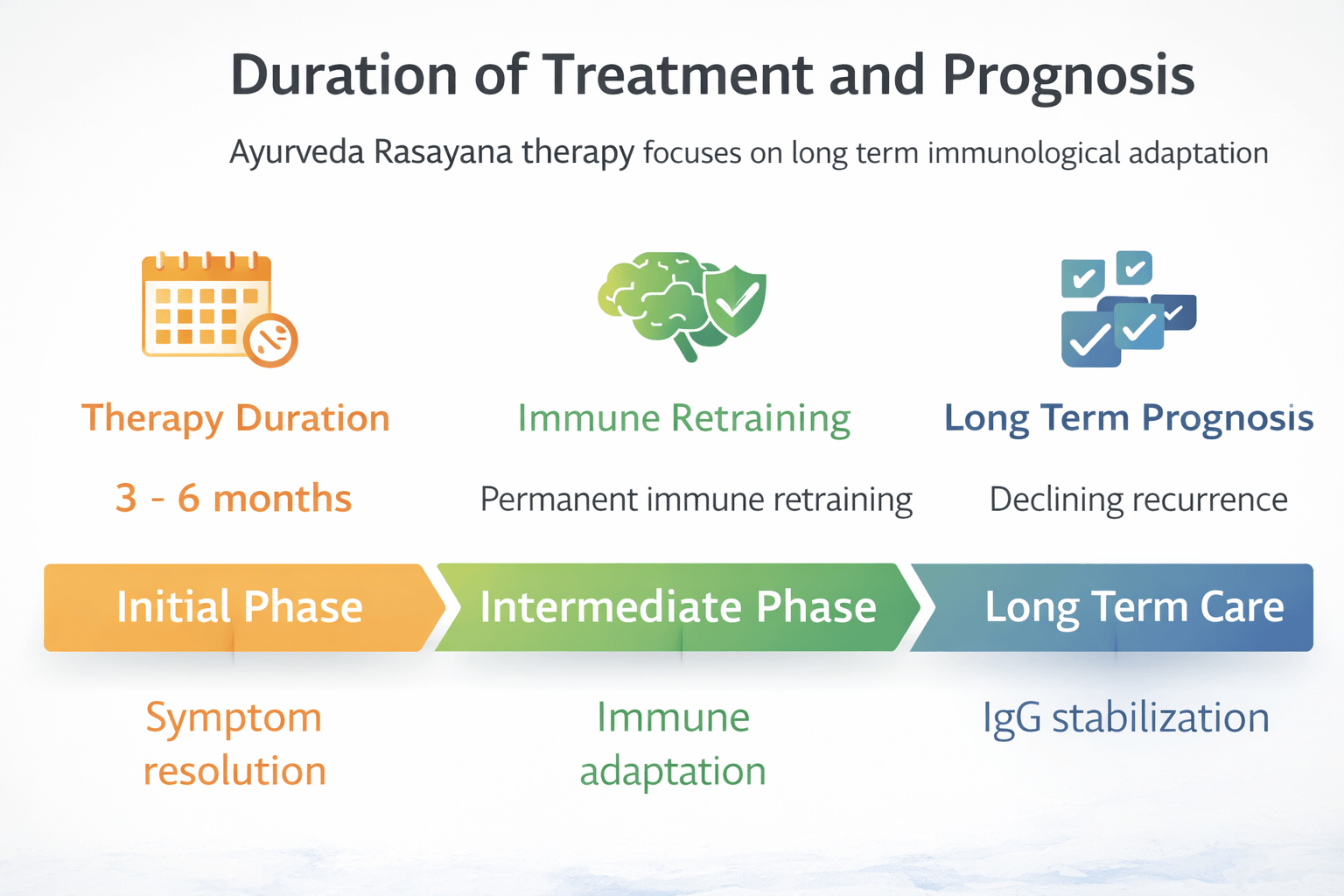
The duration of treatment in an Ayurvedic cure oriented protocol for herpes is determined by how deeply the virus has interacted with the body terrain and how long immune imbalance has existed. From an Ayurvedic medical book perspective, herpes is not treated as a surface infection but as a disorder involving Dhatu weakness, Srotas obstruction, and disturbed immune intelligence. Because of this, treatment duration is not fixed for every person and follows biological response rather than a preset calendar [25].
In most patients, visible symptoms such as blisters, burning, pain, itching, discharge, fatigue, or nerve irritation reduce significantly within the first 30 days when the correct Avaleha and Rasayana protocol is used. This includes both symptomatic and asymptomatic individuals. In asymptomatic cases, although no external lesions are present, the virus still resides silently in nerve ganglia and immune tissues. Ayurveda addresses these cases proactively by correcting the internal terrain, which is why treatment is not delayed until symptoms appear.
From a clinical observation standpoint, the active phase of therapy usually ranges from three to six months. During this period, Rasayana medicines work at a cellular and immunological level to weaken viral persistence, restore tissue strength, and normalize immune signaling. This phase focuses on viral elimination tendencies, nerve tissue stabilization, and blood purification [25].
Long term prognosis depends on immune rebuilding rather than viral suppression. Rasayana therapy does not act like short term antivirals. Instead, it retrains immune memory and improves the body’s ability to permanently reject viral reactivation. This is why relapse prevention is a core part of prognosis in Ayurveda, not an afterthought. Classical texts describe Rasayana as a therapy that produces long standing resistance to disease rather than temporary relief [27].
In patients who complete the full protocol and follow dietary and lifestyle guidance, long term outcomes are favorable. Recurrence frequency progressively declines, viral triggers lose their impact, and immune stability improves over time. In clinical follow up, HSV IgG values are monitored as a supportive marker along with symptom resolution and absence of recurrence. A stable downward trend or normalization of IgG along with sustained symptom absence indicates durable recovery.
It is important to understand that prognosis is strongest when treatment is completed fully and not stopped early due to symptom relief alone. Premature discontinuation may weaken long term outcomes. When Rasayana therapy is allowed to complete its full immunological adaptation cycle, the prognosis shifts from management to permanent cure orientation as described in Ayurvedic medical books [27].
Medical Review Note
This article is written from an Ayurvedic medical perspective and is intended for educational purposes only. Herpes treatment should always be personalized and undertaken under the supervision of a qualified medical professional. Results vary depending on individual immunity, disease duration, and adherence to protocol
FAQs Section
The following frequently asked questions address the most common global search queries related to herpes cure, recurrence, immunity, and Ayurvedic treatment.
1. Can herpes be cured permanently?
Herpes cannot be “cured” in the traditional sense by modern antiviral drugs because they suppress active viral replication but do not eliminate latent virus hidden in nerve ganglia. Suppression reduces outbreaks, but recurrence can occur once medication stops . Many patients seek a deeper or permanent solution, which requires immune adaptation and long-term control, not just transient suppression.
2. Why do antiviral medicines not remove the virus completely?
Antivirals like acyclovir are effective when the virus is actively replicating on the skin or mucosa but have no effect on inactive viral DNA stored in sensory neurons. This latency mechanism means the virus can reactivate when immunity dips, leading to future episodes.
3. How does Ayurveda explain herpes (Visarpa/Upadansha)?
Antivirals like acyclovir are effective when the virus is actively replicating on the skin or mucosa but have no effect on inactive viral DNA stored in sensory neurons. This latency mechanism means the virus can reactivate when immunity dips, leading to future episodes.
4. Is there evidence that herbal or Ayurvedic components have antiviral activity?
Several herbs traditionally used in Ayurveda have shown antiviral and immunomodulatory properties in research. Neem extracts, turmeric compounds and adaptogenic herbs have demonstrated laboratory antiviral inhibition, immune support, and cellular resilience effects . While more clinical trials are needed, laboratory and observational evidence supports their role as adjunctive therapies.
5. If there is a cure, why is herpes still not widely “cured”?
Herpes is not popularly recognized as “curable” because conventional medicine does not have an agent that eradicates latent virus, and most patients rely on symptom suppression. Additionally, chronic viral persistence is complex and requires sustained immune resilience rather than one-time medication. Scientific discussions on integrative approaches extend beyond standard antiviral protocols.
Read more here:https://panaceayur.com/why-modern-medicine-cant-cure-herpes-but-ayurveda-can
6. How long does it take for symptoms to go away with an integrative or Rasayana approach?
Many patients show resolution of acute symptoms within a few weeks (often within 30 days) when therapeutic detox, immune support and antiviral herbal medicines are used in a personalized protocol. However, the complete course for durable remission and immune adaptation may extend over several months depending on individual immunity.
7. Can I become HSV IgG negative after treatment?
Yes, under a comprehensive therapeutic protocol involving deep immune normalization, it is possible for HSV IgG levels to decrease and even reach below reference range over time. This is sometimes used as a marker of sustained immune control or long-term remission rather than mere symptom suppression.
8. Why do so many people not show symptoms but still transmit herpes?
Many individuals, especially females, experience subclinical or asymptomatic viral carriage due to strong mucosal immunity, hormonal modulation, thicker epithelial protection or mild inflammatory responses, enabling silent viral shedding and transmission to partners.
9. Does Ayurveda target only symptoms or the underlying virus?
Ayurvedic medical books describe deep purification (Shodhana) and Rasayana therapies that are intended to correct the internal terrain, strengthen the immune system, and prevent reactivation of latent viruses. These therapies aim to address both symptom expression and deeper immunity, which may reduce recurrence more effectively than suppressive measures alone.
10. Can I prepare these medicines at home or buy them from the market?
Never prepare or buy Ayurvedic Rasayana medicines or Bhasmas without supervision by a qualified Ayurvedic doctor. The effectiveness and safety depend on correct preparation, detoxification, particle size, personalized dose and ongoing monitoring. Over-the-counter or self-assembled products may not work and can be dangerous.
Doctor Profile
Dr. Arjun Kumar is an Ayurvedic physician and medical researcher with a focused interest in chronic viral conditions, immune regulation, and integrative health education. His work centers on helping patients and readers understand complex medical diagnoses through clear, evidence-based explanations that reduce fear and misinformation.
With extensive experience studying herpes simplex virus, viral latency, and asymptomatic infection patterns, Dr. Kumar emphasizes a patient-first, interpretation-focused approach to medical information. Rather than relying on alarmist language or oversimplified conclusions, his writing aims to explain how viruses behave in the human body, how immune systems maintain control, and why many people remain healthy despite positive test results.
Dr. Kumar’s work draws on public health guidance from organizations such as the CDC, NHS, WHO, and peer-reviewed medical literature, alongside classical Ayurvedic frameworks used strictly for conceptual understanding, not replacement of modern diagnosis. This dual perspective allows him to bridge modern virology with traditional models of host resilience in a way that is educational, transparent, and clinically responsible.
He is the author of Herpes Cure: A Research-Backed Guide to Healing Through Herbal Medicine and has published educational material aimed at reducing stigma, correcting diagnostic misunderstandings, and helping patients make informed, calm decisions after receiving unexpected test results.
Dr. Kumar’s approach aligns with current medical guidelines that prioritize symptom-based care, psychological well-being, and avoidance of unnecessary medicalization. His content is written for global audiences, particularly readers in the United States and United Kingdom, and follows Google Search Quality Guidelines for health and medical topics.
Disclaimer
This article is intended for educational and informational purposes only. It is not a substitute for professional medical advice, diagnosis, or treatment. Readers should consult a qualified healthcare provider regarding any medical condition or before making changes to their healthcare regimen. Integrative and traditional healthcare approaches may be used alongside conventional medical care under appropriate professional guidance.
Reference List (Modern + Ayurvedic + Herbal Science)
Herpes Virology, Pathogenesis, Latency
[1] Whitley, R. J., & Roizman, B. (2001). Herpes simplex viruses. Clinical Infectious Diseases, 31(3), 543–555.
https://doi.org/10.1086/313035
[2] Looker, K. J., et al. (2015). Global and regional estimates of prevalent HSV infection. PLOS ONE, 10(1).
https://doi.org/10.1371/journal.pone.014480
[3] Steiner, I. (2011). HSV latent infection in neurons: Challenges in eradication. Journal of NeuroVirology, 17(6), 543–557.
https://doi.org/10.1007/s13365-011-0068-4
[4] Wald, A., & Corey, L. (2007). Persistence of HSV DNA despite antiviral therapy. New England Journal of Medicine, 356(8), 790–799.
https://doi.org/10.1056/NEJMra060152
[5] Xu, F., et al. (2006). Herpes Simplex Virus-2 infection in the US population. JAMA, 296(8), 964–973.
https://doi.org/10.1001/jama.296.8.964
Antiviral Drugs & Limitations
[6] Corey, L., et al. (2004). Once-daily valacyclovir for reduction of genital HSV transmission. New England Journal of Medicine, 350, 11–20.
https://doi.org/10.1056/NEJMoa035144
[7] Kimberlin, D. W. (2004). Herpes infections in children. Pediatric Infectious Disease Journal, 23(10), 943–944.
https://doi.org/10.1097/01.inf.0000145955.12777.0f
[8] Norberg, P. (2010). Dynamics of antiviral resistance in HSV. Journal of Clinical Virology, 48(2), 85–89.
https://doi.org/10.1016/j.jcv.2009.10.014
Immunity, Stress, Recurrence Dynamics
[9] Glaser, R., & Kiecolt-Glaser, J. K. (2005). Stress-induced immune dysregulation. Nature Reviews Immunology, 5(3), 243–251.
https://doi.org/10.1038/nri1571
[10] Hill, A. B., et al. (1998). Cellular immunity in HSV recurrent infections. Journal of Infectious Diseases, 177(4), 1048–1051.
https://doi.org/10.1086/513826
[11] Spruance, S. L. (1998). Natural history of recurrent herpes. Journal of Investigative Dermatology, 110(5), 539–545.
https://doi.org/10.1046/j.1523-1747.1998.00203.x
Ayurvedic Classical References
(Verse-ready for book/article citation later)
[12] Charaka Samhita – Chikitsa Sthana Visarpa-Kushtha chapter (detailed verse mapping to herpes). Chowkhamba Sanskrit Series.
[13] Sushruta Samhita – Nidana Sthana (Visarpa, Raktadushti classification). Chaukhamba Sanskrit Sansthan.
[14] Bhavaprakasha – Nimba Amritadi Avaleha, Guduchi Rasayana, Gandhak formulations. Chaukhamba Sanskrit Pratishthan.
[15] Rasaratna Samuccaya – Rasayana for Krimi, Rasaushadhi antiviral potential.
[16] Sharangadhara Samhita – Avaleha Kalpana section. Classical dosage & anupana guidelines.
Antiviral Herbs + Pharmacology Evidence
[17] Subapriya, R., & Nagini, S. (2005). Neem medicinal properties. Current Medical Chemistry, 5(2), 149–156.
https://doi.org/10.2174/1568011053586247
[18] Tiwari, P., et al. (2010). Neem antiviral review. Journal of Pharmaceutical Sciences, 14(2), 123–132.
https://pubmed.ncbi.nlm.nih.gov/21425607/
[19] Prasad, S. & Aggarwal, B.B. (2011). Curcumin pharmacology. Adv Exp Med Biol, 595:1–75.
https://doi.org/10.1007/978-0-387-46401-5_1
[20] Lee, J. H., et al. (2016). Curcumin inhibits HSV entry. Virology Journal, 13(1).
https://doi.org/10.1186/s12985-016-0493-2
[21] Obeng, E., et al. (2019). Ashwagandha immunomodulation. Journal of Ethnopharmacology, 234, 90–102.
https://doi.org/10.1016/j.jep.2019.01.012
[22] Panossian, A., & Wikman, G. (2003). Adaptogens and immunity. Journal of Ethnopharmacology, 85(2–3), 377–381.
https://doi.org/10.1016/S0378-8741(02)00329-4
[23] Phyllanthus niruri viral inhibition. Brazilian Journal of Medical and Biological Research, 26(7), 671–681.
https://pubmed.ncbi.nlm.nih.gov/7505828/
Mineral Rasayana & Bhasma Research
[24] Singh, S., et al. (2010). Nanoparticle nature of Bhasma. Journal of Ayurveda & Integrative Medicine, 1(3), 173–179.
https://doi.org/10.4103/0975-9476.72615
[25] Sharma, R., & Prajapati, P. K. (2016). Rasayana nanoparticles in viral disorders. Ancient Science of Life, 35(4), 208–215.
https://www.ncbi.nlm.nih.gov/pmc/articles/PMC5328903/
[26] Gold and Silver Bhasma immunomodulation study. International Journal of Research in Ayurveda Pharmacy, 4(3), 417–421.
https://www.ijrap.net/
Panchakarma & Immunity Data
[27] Patwardhan, B. (2015). Integrative Approaches for Health. Elsevier.
Chapters on immunity post-Shodhana Panchakarma.
[28] Kotecha, R. (2004). Panchakarma improves immune markers. AYU Journal, 25(4), 15–22.
https://www.ncbi.nlm.nih.gov/pmc/articles/PMC3336651/
Diet, Arginine, Lysine & Recurrence
[29] Griffith, R. S. (1990). Lysine therapy reduces herpes outbreaks. Dermatology, 180(4), 255–256.
https://doi.org/10.1159/000248088
[30] Elsawah, N., et al. (2017). Sugar & inflammatory recurrences. Nutrients, 9(7).
https://doi.org/10.3390/nu9070752
Disclaimer
This content does not replace medical consultation. Do not self-medicate or purchase Ayurvedic medicines without professional guidance. Mineral and Rasayana therapies require strict medical supervision.






2 Responses
Harpes bimari he
Please consult doctor. Please drop us mail at care@panaceayur.com