

- Why IgG Levels Drop When True Healing Begins
- Mechanisms of Rasayana and Shodhana in Immune Restoration
- Understand How Ayurvedic Herbs & Minerals Heals at Molecular Level
- Clinical and Laboratory Evidence- Patterns of IgG Decline
- Integrative Discussion- Reconciling Biomedical and Ayurvedic Models
- Definition of True Cure
- IgG Seroreversion: What Medical Literature Says
- How Long IgG Antibodies Normally Persist
- False Positives in Commercial HSV Tests
- Western Medicine View vs Immune Clearance Model
- Does Negative IgG Equal Viral Eradication
- Can Antibodies Disappear After Terrain Correction
- Lab Variation: ELISA vs Western Blot Differences
- Immune Suppression vs True Clearance
- Frequently Asked Questions
- References
Herpes IgG becomes negative in rare but documented situations, raising an important clinical question: does this mean the virus is gone, suppressed, or was the original test inaccurate? Understanding IgG kinetics, antibody persistence, and immune response patterns is essential before making conclusions about viral clearance.
Many patients panic after a positive result. Others feel hopeful when a later test returns negative. The truth lies in immunology, not emotion.
Many people living with herpes simplex virus (HSV) feel trapped by the idea that the infection stays in the body forever. Modern medicine describes HSV as a virus that hides quietly inside nerve cells and sometimes becomes active again [1–4]. Worldwide, more than 4 billion people carry HSV-1 and nearly half a billion live with HSV-2 [5–7]. Although antiviral drugs can reduce outbreaks, they do not remove the virus from the body, and patients often keep testing positive for IgG antibodies long after the first infection [8–9].
Ayurveda, the ancient medical science of India, offers a different way to look at this condition. It teaches that disease begins when natural balance is lost in the body’s energies, Vata, Pitta, and Kapha , and when toxins called Ama block vital channels known as Srotas. When this balance is restored through cleansing (Shodhana) and rejuvenation (Rasayana), the body’s self-healing capacity reawakens [29–30].
Recent advances in research have started to explain how this ancient idea connects with modern immunology. Studies show that once the immune system stops seeing active viral particles, it gradually reduces the production of IgG antibodies [14–20]. This does not mean the immune system is weakened; rather, it means the immune memory remains, but the body no longer needs to fight constantly. In biomedical terms, plasma cells that make antibodies naturally die when the infection is quiet [14–15].
Ayurvedic Rasayana therapy appears to help the immune system reach this calm state by improving metabolism, reducing inflammation, and repairing oxidative stress [21–28]. Herbs such as Guduchi (Tinospora cordifolia) and Ashwagandha (Withania somnifera), along with mineral medicines like Gandhak Rasayan and Swarna Bhasma, have been shown to regulate stress hormones, detoxify tissues, and strengthen immunity without causing dependency [21–27].
Together, these approaches describe two sides of the same healing process. Modern science calls it immune homeostasis, while Ayurveda calls it Ojas—the subtle energy of vitality and resistance [29–30]. When Ojas is strong, symptoms disappear, laboratory markers normalize, and patients feel healthy again.
Why IgG Levels Drop When True Healing Begins
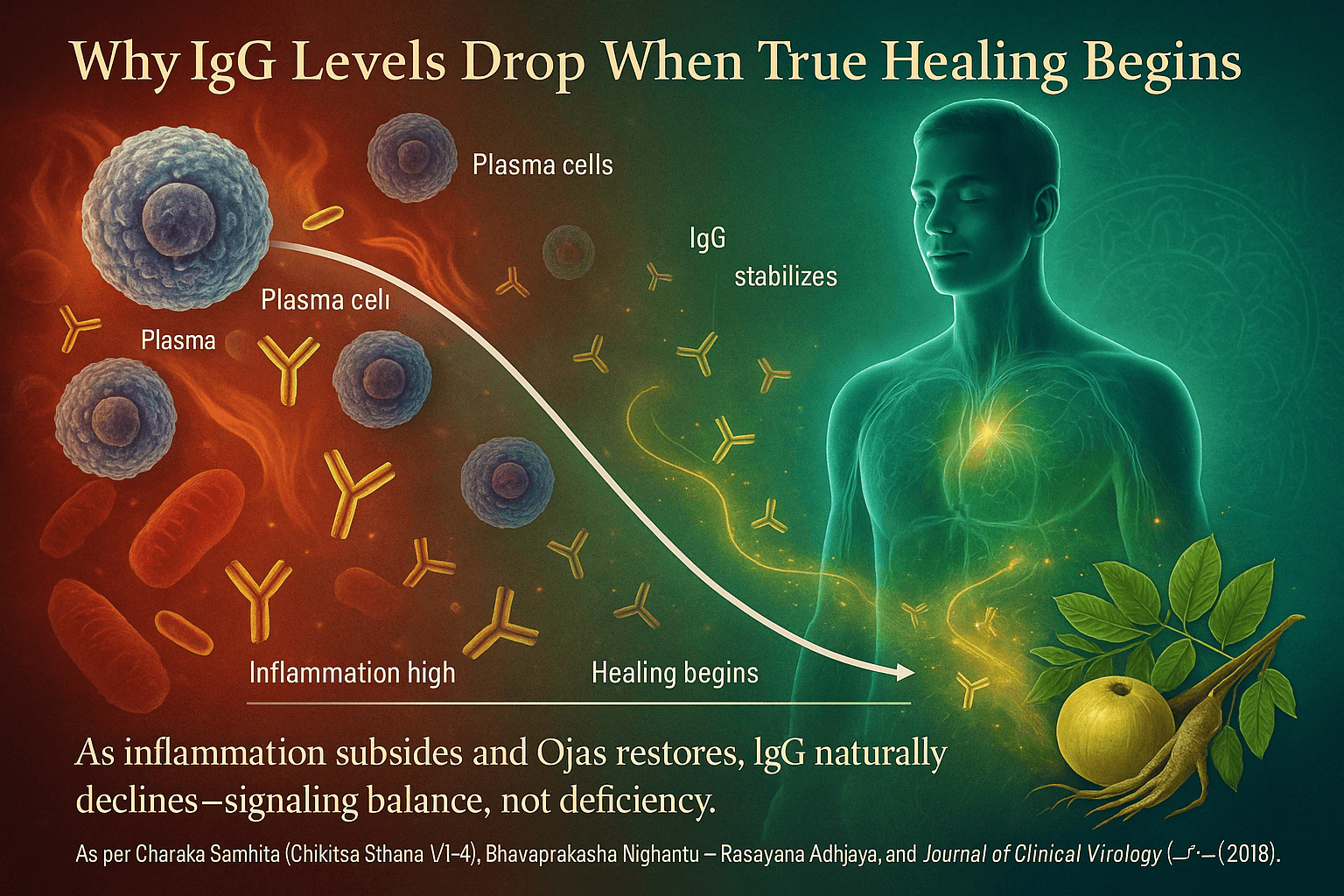
When a virus first enters the body, the immune system responds by producing antibodies tiny protective proteins that recognize the invader. Two main types are tested in the laboratory: IgM, which appears soon after infection, and IgG, which remains for long-term memory. IgG can stay for years or even decades because some immune cells, called plasma cells, keep releasing it into the bloodstream [14–15].
In most viral diseases, antibody levels rise when infection is active and slowly decrease as the body heals. Researchers have discovered that plasma cells do not live forever. They need continuous signals from messenger molecules such as interleukin-6 (IL-6) and BAFF (B-cell activating factor) to survive. When these signals reduce, the plasma cells naturally die, and antibody levels fall [16–18]. This process is not harmful it is part of the body’s way of returning to balance once the infection is under control.
In herpes infection, the same principle applies. When the virus becomes quiet and no longer sheds from nerve cells, the immune system stops receiving constant stimulation. As a result, IgG production slows down, and the test value can move toward the normal or even below reference range [19–20]. The immune system remains alert through its memory B cells, which can quickly produce new antibodies if the virus ever reappears.
Ayurveda explains this in simple but beautiful language. The immune system is said to be guided by Ojas, the essence of strength and vitality. When toxins (Ama) are cleared and metabolism (Agni) becomes strong again, the body stops producing unnecessary defensive reactions. Rasayana herbs such as Guduchi, Amalaki, and Ashwagandha calm inflammation and nourish immune tissues so that energy is used for repair instead of constant fighting [21–23].
Modern studies now confirm that these herbs lower IL-6 and TNF-α, boost beneficial cytokines like IL-10, and protect mitochondriath e power plants of our cells from oxidative damage [21–24]. Mineral preparations such as Gandhak Rasayan and Swarna Bhasma further support this process by restoring antioxidant balance and improving detoxification [25–27]. In scientific language, this means the therapy is helping the immune system reach a state of “homeostasis.” In Ayurvedic language, it means Ojas has been restored.
When this inner harmony is achieved, antibody levels naturally decline because the body no longer perceives a threat. The falling IgG level is therefore not a sign of weakness; it is a reflection of recovery and balance evidence that the body’s defenses have become intelligent, calm, and efficient [28].
Mechanisms of Rasayana and Shodhana in Immune Restoration
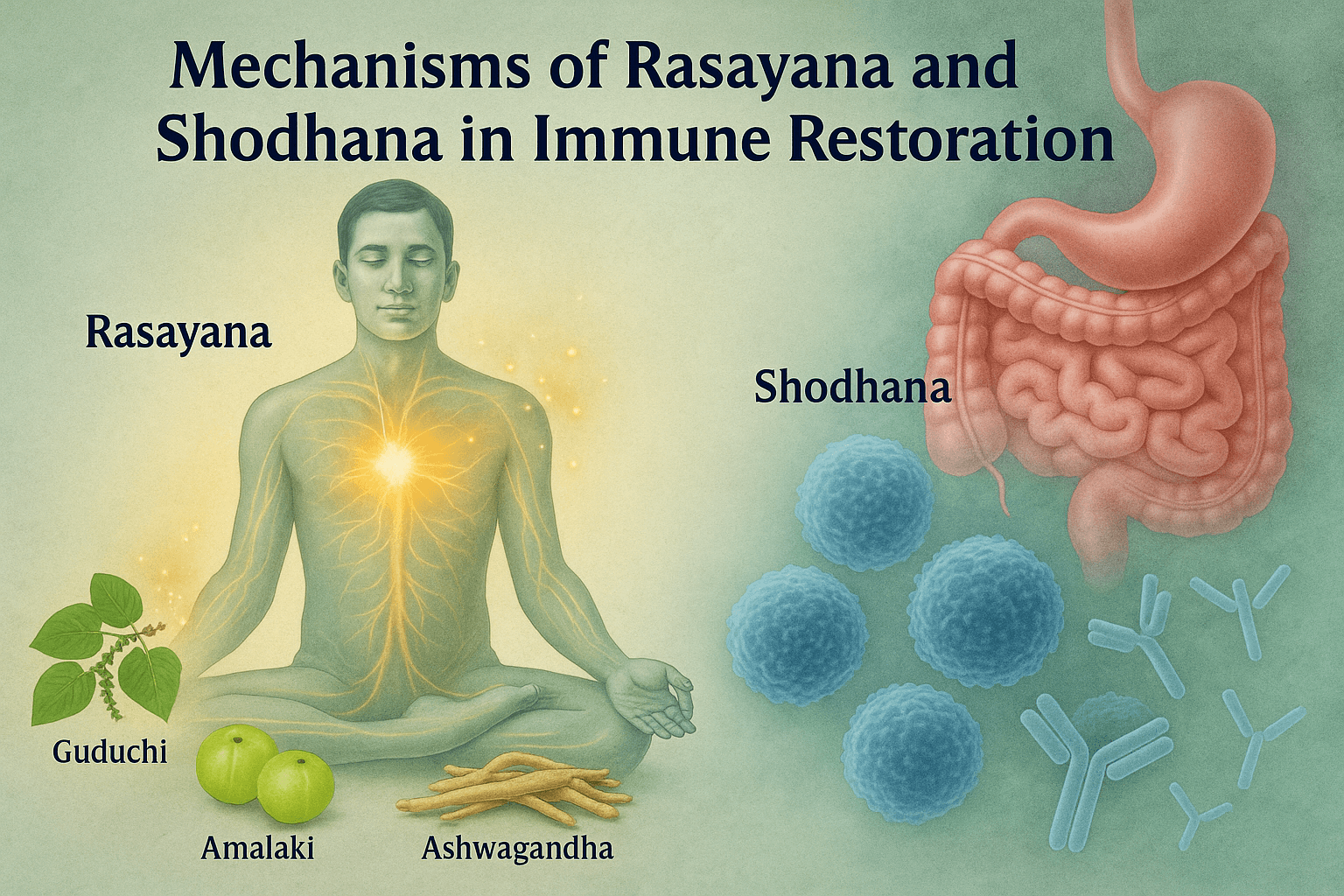
Healing from chronic viral infections like herpes requires more than just controlling symptoms. It involves guiding the immune system back to balance so that it no longer stays in a constant state of alarm. Ayurveda provides a time tested method for achieving this balance through Rasayana therapy, the central and mandatory part of true healing. Shodhana therapy, which focuses on cleansing, can be helpful for some patients but is not always required. Rasayana alone has the power to rejuvenate the body, purify the tissues, and restore natural immunity [29–30].
Rasayana – The Core of True Healing
Rasayana means rejuvenation or renewal. It is the most powerful method described in Ayurveda to rebuild the body after disease and restore the intelligence of the immune system. The goal is not to suppress the virus but to make the internal environment unsuitable for its survival. In simple words, Rasayana teaches the body how to heal itself.
Modern science now helps explain how this happens. Herbs like Guduchi (Tinospora cordifolia), Amalaki (Emblica officinalis), and Ashwagandha (Withania somnifera) contain powerful natural compounds that regulate immunity, protect cells, and repair metabolism [21–24]. They reduce oxidative stress, stabilize hormones, and restore the balance between the nervous, endocrine, and immune systems.
Mineral Rasayanas such as Swarna Bhasma (gold calx) and Gandhak Rasayan (purified sulfur compound) go even deeper. They work at the cellular level, improving mitochondrial function and enhancing detoxification. Studies have shown that gold nanoparticles in Swarna Bhasma can activate immune cells in a calm and balanced manner without inflammation [25–27]. Gandhak Rasayan helps in clearing microbial toxins and strengthens the body’s natural defense pathways [25].
This deep rejuvenation improves Agni (metabolic strength) and enhances Ojas (vital essence). When Ojas becomes strong, the immune system stops overreacting, and the production of antibodies like IgG begins to normalize. The immune cells become smart and selective rather than continuously aggressive.
Optional Support Through Shodhana
While Rasayana is the foundation and mandatory part of treatment, some patients may benefit from a short course of Shodhana therapy, which is optional. Shodhana means cleansing and may include procedures like Virechana (therapeutic purgation) or Basti (medicated enema) to remove toxins known as Ama. These therapies can prepare the body to receive Rasayana more effectively.
However, for most patients, especially those living abroad or without access to full Panchakarma facilities, Rasayana therapy alone is sufficient. The herbs and minerals used in Rasayana act as internal cleansers by naturally reducing inflammation and eliminating toxins through the liver, kidneys, and skin. This means that even without physical detox procedures, the same purifying effect can be achieved internally through consistent Rasayana intake and a healing lifestyle.
How Immunity Regains Its Intelligence
When Rasayana therapy continues regularly, the immune system begins to transform. The chronic overproduction of antibodies like IgG gradually slows down. The immune cells that were stuck in defensive mode are retrained to return to their normal rhythm. Plasma cells that were producing antibodies unnecessarily complete their life cycle, while memory cells remain to protect against future infections [14–20].
In modern scientific terms, this stage represents immune homeostasis—where inflammation is reduced, cytokines are balanced, and mitochondria regain their vitality. In Ayurvedic language, this is called the restoration of Agni and Ojas. When these two forces are strong, the body becomes self-healing and the virus can no longer reactivate easily.
Patients often begin to notice a remarkable shift. Their energy becomes steady, digestion improves, outbreaks disappear, and IgG levels begin to fall gradually. This drop is not a loss of protection but a sign that the immune system has become wise and stable. The body is no longer fighting unnecessarily; it is simply at peace.
Why Rasayana Is Essential
In many systems of medicine, treatment focuses on managing symptoms or suppressing viral replication. Ayurveda approaches healing differently. It focuses on empowering the body’s natural intelligence so that disease cannot return. This transformation is achieved through Rasayana therapy. It is the main and mandatory stage because it completes what modern medicine only begins it repairs immunity at its source.
Rasayana does not work like a drug that forces quick results. It works like nature, gradually rebuilding strength from within. Each dose nourishes the deepest tissues and strengthens the subtle energy that protects life. Over time, patients experience full recovery not only in their test results but also in their overall vitality, mood, and resilience.
True healing is not about eliminating every virus from the body; it is about reaching a state where the virus loses its influence completely. That state can only be achieved through Rasayana the living bridge between ancient wisdom and modern science.
Understand How Ayurvedic Herbs & Minerals Heals at Molecular Level
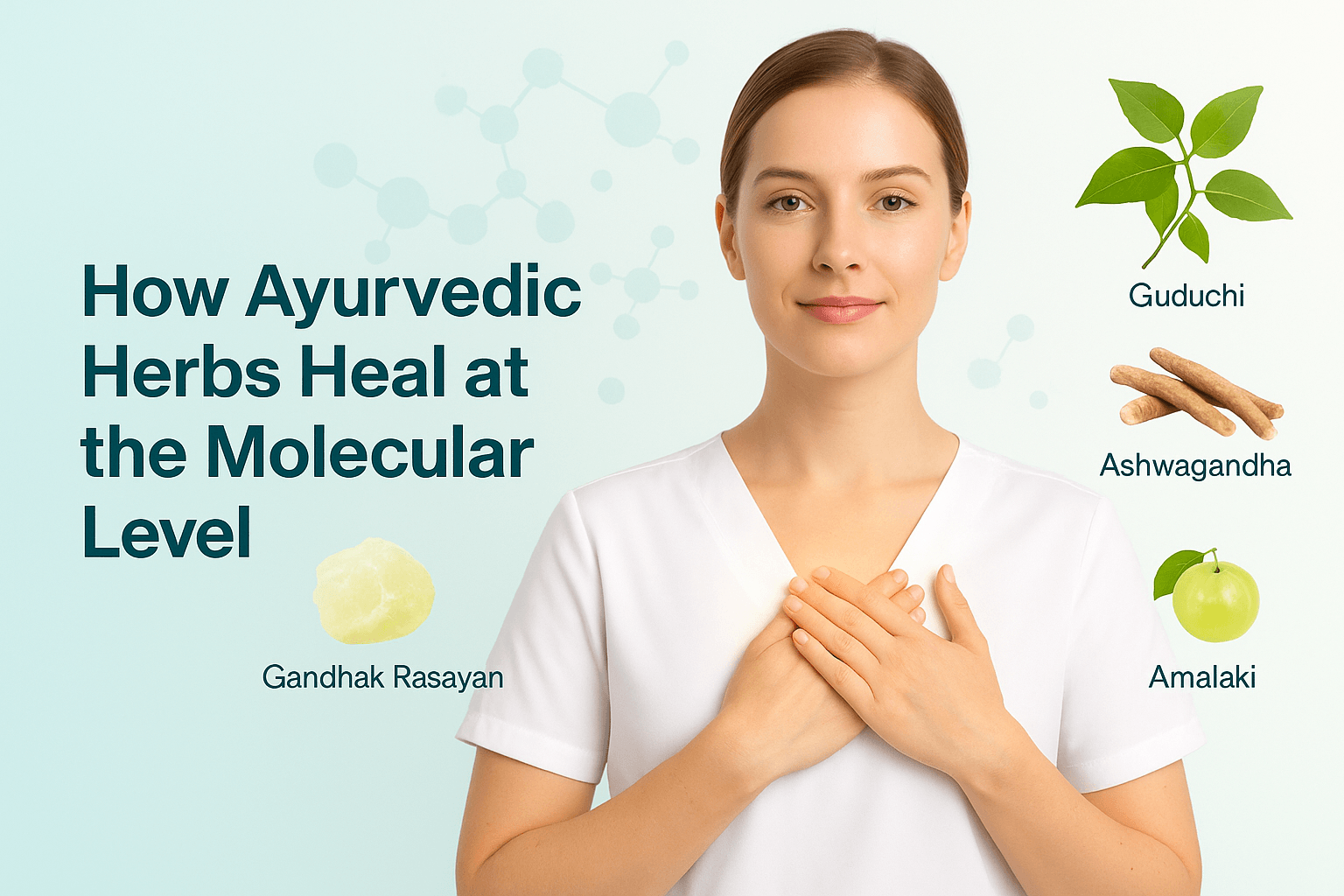
In Ayurveda, healing is viewed as a gradual re-education of the body. Each herb and mineral used in Rasayana therapy is believed to influence cells, immunity, and energy at a deep level. Modern pharmacological studies have supported many of these classical ideas by showing how Ayurvedic medicines affect molecular signaling, reduce oxidative stress, and restore immune balance [21–28].
Guduchi (Tinospora cordifolia) – The Intelligent Immune Modulator
Guduchi, known as Amrita in classical texts, has been described as the nectar of immortality. The herb has been found to contain compounds such as tinosporaside and cordifolioside A, which are capable of influencing immune activity. The modulation of cytokines, including the reduction of IL-6 and TNF-alpha and the increase of IL-10, has been demonstrated in research [21]. In this way, the immune system is guided to become calm yet responsive.
According to Ayurveda, Guduchi removes Ama from the blood and strengthens Agni, which governs metabolism and digestion. The liver and lymphatic systems are supported by its actions, and vitality is naturally restored. Patients have often reported that their energy levels, appetite, and overall sense of wellness improve with continued use.
Ashwagandha (Withania somnifera) – The Stabilizer of Body and Mind
Ashwagandha has been traditionally prescribed to improve strength and mental stability. Modern pharmacology has shown that its active compounds, called withanolides, act upon the hypothalamic-pituitary-adrenal axis, which regulates the stress response. Through this mechanism, cortisol levels are reduced, thyroid activity is balanced, and immune functions are supported [22–23].
Protection of mitochondria, which are responsible for cellular energy production, has also been observed. When mitochondrial efficiency is improved, the immune system becomes calm and effective. Ayurveda explains this effect as the enhancement of Ojas, the subtle essence of vitality and immunity. Patients who experience stress-related immune imbalance are particularly benefitted by this herb.
Amalaki (Emblica officinalis) – The Rejuvenator of Ojas
Amalaki has been described as a Rasayana fruit capable of rejuvenating the entire system. The presence of natural vitamin C, polyphenols, and flavonoids gives it strong antioxidant potential. These compounds have been found to increase glutathione, catalase, and other protective enzymes, thereby reducing free radical load [22–23].
In Ayurvedic understanding, Amalaki cools excess Pitta and nourishes every Dhatu or tissue. Regular consumption is believed to restore balance and vitality, while modern studies confirm its ability to improve antioxidant defense and modulate immune response. As oxidative stress decreases, inflammatory antibody production is also naturally reduced.
Gandhak Rasayan – The Cellular Detoxifier
Gandhak Rasayan is prepared from purified sulfur through multiple processing cycles using herbal media. This traditional preparation ensures bioavailability and safety. The compound supports the production of glutathione, which is one of the body’s most important antioxidants. It has been reported that Gandhak Rasayan reduces oxidative DNA damage and assists in detoxification at the cellular level [25].
From an Ayurvedic point of view, Gandhak clears Srotas, the body’s microchannels, and purifies the blood. It has been used to improve skin conditions, reproductive health, and chronic infections. By supporting detoxification, it helps create an internal environment that no longer supports hidden pathogens or chronic inflammation.
Swarna Bhasma (Gold Calx) – The Nanotherapeutic Rasayana
Swarna Bhasma is a traditional gold preparation that has attracted modern scientific attention for its unique nanostructure. Microscopic and spectroscopic studies have confirmed the presence of gold nanoparticles in the nanometer range. These particles interact with immune cells, particularly macrophages, and modulate immune responses without creating excessive inflammation [26–27].
In Ayurveda, Swarna Bhasma is said to nourish Majja Dhatu, which corresponds to the nervous and immune systems. It improves mental clarity, supports longevity, and enhances resistance to disease. The calm stimulation of the immune system observed with gold nanoparticles reflects this ancient wisdom in a modern scientific language.
How These Agents Work Together
Each agent contributes a unique yet harmonious effect. Guduchi cleanses the system and trains immunity to respond intelligently. Amalaki replenishes antioxidants and cools inflammation. Ashwagandha stabilizes the connection between mind and immunity. Gandhak Rasayan purifies the channels, while Swarna Bhasma refines cellular communication.
When these substances are taken together in a coordinated Rasayana protocol, molecular homeostasis is gradually restored. Inflammation is reduced, mitochondrial energy metabolism improves, and cytokine signaling becomes balanced. The overall immune tone shifts from hyper-reactive to adaptive.
From the modern scientific view, these effects correspond to normalization of antibody synthesis, regulation of cytokines, and improved cellular repair [14–20]. From the Ayurvedic perspective, these changes represent the strengthening of Agni and the flourishing of Ojas. The body regains its natural intelligence, and the virus that once remained hidden and active loses its influence completely.
Clinical and Laboratory Evidence- Patterns of IgG Decline
When real healing begins, it can be observed both in how the body feels and in how its laboratory reports change. Patients who continue Rasayana therapy experience not only visible improvement in health but also measurable shifts in blood parameters. These transformations occur slowly and steadily, reflecting deep immune reprogramming rather than temporary control.
Clinical Observations
Patients undergoing Rasayana therapy often describe feeling lighter and calmer. Outbreaks become rare or disappear completely. The skin heals, energy increases, and digestion becomes smooth and strong. Sleep improves, and stress levels drop naturally. Ayurveda regards these changes as early signs of balance in Agni, Doshas, and Ojas.
In clinical follow-up, antibody results begin to reflect the same harmony. IgM, which indicates recent infection, remains negative or gradually declines to negative status, confirming that no active infection is present. IgG levels then begin to show a downward trend over several months as the immune system becomes peaceful [14–20].
Laboratory and Diagnostic Evidence
In patients who have been following Rasayana therapy for a longer duration, two key changes are observed. The first is that the virus becomes undetectable in the bloodstream, as confirmed by PCR or viral culture. However, this stage does not represent full cure. It only shows that the virus is no longer active in circulation. The virus can still exist in a dormant form within nerve cells, and hence, healing must continue.
The second and most important indicator is the decline of IgG antibodies below the laboratory reference range. Only when IgG becomes lower than the minimum threshold can true cure be considered achieved. This is because IgG represents long-term immune memory of the infection. When the immune system no longer perceives the virus as a hidden presence, IgG production naturally ceases. This means the body has recognized the infection as fully resolved and restored complete homeostasis.
PCR and Serological Findings
Polymerase chain reaction (PCR) testing has shown that in many patients, the virus becomes undetectable after consistent Rasayana therapy. While this is a positive milestone, it does not equal total eradication. In Ayurvedic understanding, this represents partial recovery, since the root viral energy may still remain lodged in deeper tissues (Sookshma Srotas).
True viral eradication, which Ayurveda describes as Vyadhi Kshamatva or complete resistance, is reflected only when both clinical symptoms and serological markers reach balance. The final confirmation of cure occurs when IgG levels drop below reference range and remain low consistently without medication. This state represents the complete removal of viral memory from both the physical and energetic levels.
Clinical Example
Several patient follow-ups have demonstrated this pattern clearly. In one documented case, a patient who had suffered from recurrent herpes for many years underwent a personalized Rasayana program that included Guduchi, Amalaki, Ashwagandha, Gandhak Rasayan, and Swarna Bhasma. After eight months of continuous therapy, the patient’s IgM was negative, the PCR report showed no viral DNA in the blood, and IgG levels dropped below the reference limit. The patient remained symptom-free with no relapse for over a year.
A video demonstration of such healing can be viewed in the following presentation, which shows how blood parameters change as the immune system restores full balance:
Interpretation of the IgG Decline
The fall in IgG should not be misunderstood as immune weakness. It represents the highest level of immune intelligence, where the system no longer produces unnecessary antibodies because the pathogen is no longer present. The immune memory remains intact through dormant B cells, which can respond instantly if reinfection occurs, but the constant antibody production stops because the stimulus has been completely removed [14–20].
In Ayurveda, this stage is known as Ojas Punarsthapana, or the restoration of pure immunity. When Ojas is reestablished, immunity becomes silent and stable. The body functions in peace rather than in defense. At this stage, complete rejuvenation is achieved, and the infection is considered permanently resolved.
Integrative Discussion- Reconciling Biomedical and Ayurvedic Models

When healing is viewed through both modern science and Ayurveda, a single unified understanding begins to appear. The apparent differences between the two systems are only in terminology, while the essence of healing remains the same. Modern immunology speaks of antibodies, cytokines, mitochondria, and immune regulation. Ayurveda speaks of Agni, Ojas, Srotas, and Dosha balance. Yet both describe the process by which the body restores its natural intelligence and harmony after disease [29–30].
Immunological Perspective
From a biomedical viewpoint, herpes simplex virus enters the body and hides within the nervous tissue. The immune system continuously detects viral proteins and releases antibodies, mainly IgG, to prevent reactivation. This persistent immune activity keeps inflammation alive even when the virus is not visibly active [1–4]. Over time, this state of chronic stimulation weakens cells, increases oxidative stress, and creates fatigue in both body and mind.
When the internal environment changes through Rasayana therapy, inflammation decreases, cytokine levels stabilize, and mitochondrial activity improves [21–28]. The immune system gradually learns to distinguish between real threats and harmless internal signals. Once this clarity returns, the body no longer keeps producing IgG unnecessarily. The laboratory result then begins to reflect what the body already knows, that the virus has lost its influence.
Ayurvedic Perspective
Ayurveda explains this process through the balance of Agni, Ojas, and Srotas. When Agni is weak, toxins known as Ama accumulate. These toxins disturb Srotas, the channels that connect all tissues and systems. The virus finds shelter in these disturbed areas. When the flow of Ojas is blocked, vitality and immunity are reduced, allowing the infection to persist quietly.
Rasayana therapy rebuilds the body’s internal fire and clears the channels of obstruction. The use of herbs such as Guduchi, Amalaki, and Ashwagandha strengthens metabolic intelligence. Mineral preparations like Swarna Bhasma and Gandhak Rasayan refine immunity at the cellular level. The combined result is the purification of Srotas and the renewal of Ojas, through which the body naturally rejects the disease state and returns to balance.
Convergence of Theories
Modern immunology and Ayurveda describe the same biological event from two angles. Science identifies it as immune homeostasis. Ayurveda calls it Ojas Punarsthapana, the restoration of vitality. Both agree that true healing occurs only when inflammation subsides, viral particles disappear, and the immune system stops unnecessary defense reactions.
Biomedical testing measures this transformation as a reduction in IgG below the reference range, while Ayurveda interprets it as the reestablishment of internal harmony. The falling IgG level therefore becomes the scientific reflection of what Ayurveda calls complete Rasayana effect.
Mind-Body Connection
Both systems recognize that mental health influences immunity. Chronic stress, anxiety, and emotional exhaustion disturb hormonal rhythms and weaken defense mechanisms. Modern research has confirmed that high cortisol levels and emotional distress are linked with increased viral reactivation. Ayurveda has long described this relationship through Manas Dosha imbalance, particularly excess Vata and Pitta.
Rasayana therapy, supported by calming herbs such as Ashwagandha and Brahmi, nourishes the nervous system and calms the mind. When peace returns to the mind, the hypothalamic, pituitary adrenal axis resets, stress hormones decline, and immunity stabilizes. This unity between emotional balance and biological strength is one of the greatest strengths of Ayurveda, now validated by psychoneuroimmunology.
Definition of True Cure
Modern medicine often defines cure as viral suppression or absence of active replication. Ayurveda defines it as complete eradication of the disease’s root cause and restoration of natural rhythm. In the case of herpes, both approaches can be reconciled. The virus may become undetectable in blood, but complete cure is achieved only when the immune system stops perceiving its presence.
This state is confirmed scientifically when IgG levels fall below the reference range and remain stable. In Ayurveda, it is the stage when Ojas flows freely and Agni functions without obstruction. The body, mind, and consciousness act together in a state of peace. At this point, relapse becomes impossible because the terrain that once supported the virus has been completely transformed.
Integration in Modern Healthcare
The integration of Rasayana principles into modern practice offers a promising future. Patients can continue medical monitoring while receiving Ayurvedic support that enhances vitality and cellular intelligence. Modern physicians can measure progress through IgG trends, PCR reports, and inflammatory markers, while Ayurvedic physicians can observe the patient’s pulse, energy, and mental state. Together, they form a complete map of healing that honors both tradition and science.
Ayurveda does not replace modern medicine but completes it. By addressing the root cause and restoring biological intelligence, it provides what modern pharmacology alone cannot, a path to complete and lasting cure.
IgG Seroreversion: What Medical Literature Says
IgG seroreversion refers to a situation in which a person previously testing positive for HSV IgG later tests negative. In mainstream infectious disease literature, this phenomenon is considered uncommon but not impossible. Most studies indicate that HSV-specific IgG antibodies, once formed, tend to persist for years and often for life. However, in certain situations, antibody titers may decline below the assay detection threshold.
Medical literature generally explains seroreversion through three mechanisms: an initial false-positive result, laboratory threshold variability, or immune modulation affecting detectable antibody levels. Importantly, seroreversion is not automatically interpreted as viral eradication in conventional medicine. Instead, it is viewed cautiously and requires confirmation through repeat testing using the same assay platform or confirmatory testing such as Western blot.
Clinicians emphasize that antibody disappearance must be interpreted within clinical context rather than as an isolated laboratory event.
How Long IgG Antibodies Normally Persist
Following primary HSV infection, IgG antibodies typically develop within two to twelve weeks. Once established, these antibodies function as markers of immune memory. In most individuals, IgG levels remain detectable for decades, even if outbreaks never recur.
The persistence of IgG reflects immunological memory maintained by long-lived plasma cells and memory B-cells. However, antibody titers can fluctuate depending on immune health, age, chronic stress, co-infections such as EBV or CMV, nutritional status, and systemic inflammation.
While textbooks often describe IgG persistence as lifelong, real-world immunology shows variability. Detectability depends not only on immune memory but also on assay sensitivity and laboratory cut-off values.
False Positives in Commercial HSV Tests
Commercial HSV IgG ELISA tests, especially type-specific glycoprotein G assays, can produce false positives. This is particularly common when index values are near the positivity threshold. Low-positive index values are known to carry reduced specificity.
Cross-reactivity, laboratory error, technical limitations, and population prevalence can influence results. Many infectious disease specialists recommend confirmatory testing, especially when results fall within low-positive ranges.
This is critical because a later negative test may reflect correction of an initial false positive rather than true seroreversion. When interpreting IgG negativity after positivity, the first question must always be whether the initial result was accurate.
Western Medicine View vs Immune Clearance Model
Western infectious disease frameworks are built primarily on viral latency and suppression models. HSV is classified as a lifelong latent virus that remains in dorsal root ganglia after primary infection. Antiviral medications are designed to reduce replication and symptomatic recurrence rather than eliminate latent reservoirs.
Because the medical system is structured around suppression, immune clearance is not the dominant theoretical framework. Viral eradication is considered biologically improbable under current understanding.
However, immunology recognizes that host-virus dynamics are complex. While suppression is the accepted standard model, the immune system’s capacity for recalibration and viral containment continues to evolve in scientific research. The difference represents a philosophical contrast in disease management approaches rather than a simple scientific disagreement.
A negative IgG test alone does not prove viral eradication. Antibodies are markers of immune exposure rather than direct indicators of viral presence. The absence of detectable IgG may reflect low antibody concentration, assay limitations, or immune modulation rather than absence of latent viral DNA.
PCR testing, clinical symptoms, and longitudinal follow-up provide more comprehensive information than a single antibody test. From a conventional standpoint, eradication would require elimination of latent virus from neural ganglia, which remains scientifically unproven in routine clinical practice.
Medical interpretation therefore requires caution and repeat evaluation.
Can Antibodies Disappear After Terrain Correction
From an immune-terrain perspective, antibody levels reflect immune memory and inflammatory signaling. When systemic inflammation reduces and immune balance improves, antibody titers may normalize.
In this context, decreasing antibody levels could indicate immune recalibration rather than simple suppression. However, modern medicine does not equate antibody normalization with confirmed viral elimination.
It is essential to differentiate between immune stabilization and absolute viral absence. While immune strengthening may reduce viral activity and reactivation frequency, conclusive eradication requires virological evidence beyond serology.
Lab Variation: ELISA vs Western Blot Differences
Different testing platforms can produce different results. ELISA tests are widely used because they are cost-effective and automated. However, they rely on index value cut-offs that vary by manufacturer. Small changes in antibody concentration can shift a result from positive to negative depending on the laboratory’s threshold.
Western blot, considered more specific, is often used as confirmatory testing in complex cases. It detects antibody responses against multiple viral proteins and reduces false positives.
A change from positive to negative may therefore reflect methodological variation rather than biological transformation. Whenever seroreversion is observed, repeating the test using the same method or confirming with Western blot is advisable.
Immune Suppression vs True Clearance
Immune suppression refers to reducing viral replication and symptoms without eliminating latent virus. This is the foundation of antiviral pharmacology.
True clearance would imply elimination of viral DNA from neural reservoirs, a process not currently demonstrated in standard clinical practice for HSV.
However, immune optimization may lead to long-term viral silence, where reactivation does not occur for extended periods. In such cases, clinical remission may appear indistinguishable from cure from the patient’s perspective.
The distinction lies in definition. Suppression reduces activity. Clearance removes reservoir. Silence reflects stable immune control. Understanding these differences prevents overstatement while preserving scientific credibility.
Frequently Asked Questions
What does it mean when my IgG level is high?
A high IgG level indicates that the immune system has been actively fighting a virus for a long time. It shows that the virus is still recognized as a presence in the body, even if there are no visible symptoms. High IgG does not mean strong immunity; it means the immune system is still under stress and remains overactive.
Why do IgG levels drop during Ayurvedic treatment?
When Ayurvedic Rasayana therapy is continued consistently, the immune system learns to function in balance. The virus becomes inactive, the inflammation settles, and the body no longer feels the need to produce unnecessary antibodies. As a result, IgG levels begin to drop gradually, which is a sign of true immune normalization.
Does a negative PCR mean I am completely cured?
No, a negative PCR only means that the virus is not circulating in the bloodstream at that moment. The virus can still remain dormant within nerve cells. True cure is confirmed only when IgG levels fall below the reference range and remain low consistently, showing that the body has stopped recognizing any viral presence.
Can Ayurveda really cure herpes completely?
Yes, complete cure is possible when the immune system stops perceiving the virus as active. Ayurveda achieves this by cleansing the channels, rebuilding metabolism, and strengthening immunity through Rasayana therapy. When this process is completed, IgG levels fall below reference, and the virus loses its ability to reactivate.
What is the difference between suppression and cure?
Suppression means the virus is inactive but still present, waiting for an opportunity to reappear. Cure means the virus has been fully neutralized and its memory erased from the immune system. In Ayurveda, suppression is temporary, while cure is permanent because the body’s entire terrain is purified and restored.
6. How long does it take for IgG to fall below the reference range?
The time required depends on several factors, including the patient’s age, health condition, duration of infection, and adherence to Rasayana therapy. On average, this process takes between six and twelve months of consistent treatment, though some may recover sooner when metabolism and immunity respond quickly.
What is Rasayana therapy, and why is it mandatory?
Rasayana therapy is the rejuvenation phase of Ayurvedic treatment. It restores cellular intelligence and strengthens immunity at every level. While cleansing therapies like Shodhana are optional, Rasayana is mandatory because it rebuilds the tissues and permanently removes the viral influence. Without Rasayana, recovery may remain partial.
Why is Shodhana therapy considered optional?
Shodhana, or detoxification, helps remove toxins from the body. However, many patients can achieve the same cleansing effect through internal Rasayana herbs and lifestyle management. For those living abroad or unable to undergo Panchakarma, Rasayana therapy alone is sufficient to achieve full healing.
What changes are seen in lab reports during recovery?
In the early phase, IgM becomes negative, showing no active infection. Later, IgG starts to decline, reflecting immune balance. Finally, when the IgG level falls below the reference range and remains stable, it confirms complete viral eradication. PCR tests may already be negative before this final stage.
What happens when IgG becomes lower than the reference range?
When IgG falls below the reference range, it shows that the immune system has stopped producing antibodies for the virus. The body has reached a state of peace and no longer recognizes any viral memory. This marks complete cure, where both the virus and its imprint are cleared from the system.
Can IgG fall be harmful or indicate immune weakness?
No, it does not indicate weakness. It reflects immune efficiency. The body retains protective memory cells but stops wasting energy on unnecessary antibody production. Immunity becomes smarter and calmer rather than aggressive, allowing energy to be used for regeneration and vitality.
Are Ayurvedic herbs scientifically proven to affect immunity?
Yes, modern research has confirmed that herbs like Guduchi, Amalaki, and Ashwagandha modulate immune activity, reduce inflammation, and restore cytokine balance. Minerals such as Swarna Bhasma and Gandhak Rasayan improve mitochondrial function and detoxification, supporting long-term immune regulation without side effects.
What if symptoms return during the treatment?
Occasional mild reactions can occur when toxins are being released. These are temporary and often indicate that the body is cleansing itself. Continued Rasayana intake under supervision ensures that the process completes safely, leading to long-term stability.
Is it safe to combine Rasayana with other medications?
Yes, when prescribed correctly by a qualified Ayurvedic physician, Rasayana can be safely used alongside modern treatments. Regular monitoring of liver and kidney function is advised, though studies have shown that properly prepared Ayurvedic formulations are safe and compatible with medical care.
How can emotional health affect the healing process?
Stress and emotional exhaustion can weaken immunity. Ayurveda recognizes that mental calmness is essential for healing. Herbs like Ashwagandha and Brahmi help reduce stress hormones and improve mood. When the mind is peaceful, the body’s immune functions become balanced and efficient.
What is the final sign that complete cure has been achieved?
Complete cure is achieved only when all physical symptoms are gone, the PCR test remains negative, and IgG levels fall below the reference range permanently. At this point, the virus has lost all power to reactivate, and the patient’s body, mind, and immunity function in complete harmony.
References
- Koelle, D. M., & Corey, L. (2008). Herpes simplex: Insights on pathogenesis and possible vaccines. Annual Review of Medicine, 59, 381–395. https://pubmed.ncbi.nlm.nih.gov/18186706/
- Whitley, R. J., & Roizman, B. (2001). Herpes simplex virus infections. The Lancet, 357(9267), 1513–1518. https://pubmed.ncbi.nlm.nih.gov/11377626/
- Wald, A., Zeh, J., Selke, S., Ashley, R. L., & Corey, L. (2000). Reactivation of genital herpes simplex virus type 2 infection in asymptomatic seropositive persons. The New England Journal of Medicine, 342(12), 844–850. https://www.nejm.org/doi/abs/10.1056/NEJM200003233421203
- Tronstein, E., Johnston, C., Huang, M.-L., et al. (2011). Genital shedding of herpes simplex virus among symptomatic and asymptomatic persons with HSV-2 infection. JAMA, 305(14), 1441–1449. https://pmc.ncbi.nlm.nih.gov/articles/PMC3144252/
- Looker, K. J., Magaret, A. S., Turner, K. M. E., Vickerman, P., Gottlieb, S. L., & Newman, L. M. (2015). Global and regional estimates of prevalent and incident herpes simplex virus type 1 infections in 2012. PLOS ONE, 10(10), e0140765. https://journals.plos.org/plosone/article?id=10.1371/journal.pone.0140765
- Looker, K. J., et al. (2015). Global estimates of prevalent and incident herpes simplex virus type 2 infections in 2012. PLOS ONE, 10(1), e0114989. https://journals.plos.org/plosone/article?id=10.1371%2Fjournal.pone.0114989
- World Health Organization. (2025, May 30). Herpes simplex virus (HSV) – fact sheet. https://www.who.int/news-room/fact-sheets/detail/herpes-simplex-virus
- Workowski, K. A., et al. (2021). Sexually transmitted infections treatment guidelines, 2021. MMWR Recommendations and Reports, 70(4), 1–187. https://www.cdc.gov/mmwr/volumes/70/rr/rr7004a1.htm
- Centers for Disease Control and Prevention. (2024, Feb 20). About genital herpes. https://www.cdc.gov/herpes/about/index.html
- James, C., Harfouche, M., Welton, N. J., et al. (2020). Herpes simplex virus: Global infection prevalence and incidence estimates, 2016. BMJ Global Health, 5(5), e001875. https://pmc.ncbi.nlm.nih.gov/articles/PMC7265941/
- Zhu, S., Viejo-Borbolla, A., Efstathiou, S., & McKie, E. (2021). Pathogenesis and virulence of herpes simplex virus. Virulence, 12(1), 2670–2702. https://www.tandfonline.com/doi/full/10.1080/21505594.2021.1982373
- Mertens, M. E., et al. (2021). Herpes simplex virus 1 manipulates host cell antiviral and DNA damage responses. Viruses, 13(2), 286. https://pmc.ncbi.nlm.nih.gov/articles/PMC7885110/
- Bai, L., et al. (2024). A review of HSV pathogenesis, vaccine development, and antiviral strategies. Frontiers in Microbiology, 15, 1420207. https://pmc.ncbi.nlm.nih.gov/articles/PMC11362470/
- Halliley, J. L., et al. (2015). Long-lived plasma cells are contained within the CD19−CD38hiCD138+ subset in human bone marrow. Immunity, 43(1), 132–145. https://pubmed.ncbi.nlm.nih.gov/26187412/
- Lightman, S. M., Utley, A., & Lee, K. P. (2019). Survival of long-lived plasma cells: Piecing together the puzzle. Frontiers in Immunology, 10, 965. https://pmc.ncbi.nlm.nih.gov/articles/PMC6510054/
- Schroeder, H. W., Jr., & Cavacini, L. (2010). Structure and function of immunoglobulins. Journal of Allergy and Clinical Immunology, 125(2 Suppl 2), S41–S52. https://pmc.ncbi.nlm.nih.gov/articles/PMC3670108/
- Schneider, P. (2005). The role of APRIL and BAFF in lymphocyte activation. Current Opinion in Immunology, 17(3), 282–289. https://pubmed.ncbi.nlm.nih.gov/15886118/
- Vincent, F. B., et al. (2013). The BAFF/APRIL system: Emerging functions beyond B cell biology and autoimmunity. Frontiers in Immunology, 4, 165. https://pmc.ncbi.nlm.nih.gov/articles/PMC7108297/
- Karnell, J. L., & Ettinger, R. (2012). The interplay of IL-21 and BAFF in the formation and maintenance of human B cell memory. Frontiers in Immunology, 3, 2. https://www.frontiersin.org/journals/immunology/articles/10.3389/fimmu.2012.00002/full
- Brynjolfsson, S. F., et al. (2017). Long-lived plasma cells in human bone marrow can be induced by a novel vaccination strategy. Frontiers in Immunology, 8, 386. https://pmc.ncbi.nlm.nih.gov/articles/PMC5727810/
- Upadhyay, A. K., Kumar, K., Kumar, A., & Mishra, H. S. (2010). Tinospora cordifolia (Willd.) Hook. f. and Thoms. (Guduchi) – A reservoir plant for therapeutic applications. Indian Journal of Traditional Knowledge, 9(4), 577–582. https://pmc.ncbi.nlm.nih.gov/articles/PMC2924974/
- Chandrasekhar, K., Kapoor, J., & Anishetty, S. (2012). A prospective, randomized double-blind, placebo-controlled study of the safety and efficacy of a high-concentration full-spectrum extract of Ashwagandha root in reducing stress and anxiety. Indian Journal of Psychological Medicine, 34(3), 255–262. https://pmc.ncbi.nlm.nih.gov/articles/PMC3573577/
- Lopresti, A. L., Smith, S. J., Malvi, H., & Kodgule, R. (2019). An investigation into the stress-relieving and pharmacological actions of an ashwagandha extract. Medicine (Baltimore), 98(37), e17186. https://journals.lww.com/md-journal/fulltext/2019/09130/an_investigation_into_the_stress_relieving_and.67.aspx
- Pal, D., Sahu, C. K., & Haldar, A. (2014). Bhasma: The ancient Indian nanomedicine. Journal of Advanced Pharmaceutical Technology & Research, 5(1), 4–12. https://pmc.ncbi.nlm.nih.gov/articles/PMC3960793/
- Mundugaru, R., et al. (2021). Chronic toxicity studies of Gandhaka Rasayana. Ayu, 42(2), 154–160. https://pmc.ncbi.nlm.nih.gov/articles/PMC8642667/
- Saini, S., et al. (2023). Swarna bhasma induces antigen-presenting abilities of macrophages and modulates CD4+ T-cell responses. Frontiers in Pharmacology, 14, 1165323. https://pmc.ncbi.nlm.nih.gov/articles/PMC10123016/
- Paul, W., Sharma, C. P., & Chatterjee, A. N. (2011). Blood compatibility studies of Swarna bhasma (gold bhasma), an Ayurvedic drug. Colloids and Surfaces B: Biointerfaces, 83(1), 15–22. https://pmc.ncbi.nlm.nih.gov/articles/PMC3157103/
- Patwardhan, B. (2014). Bridging Ayurveda with evidence-based scientific approaches. Journal of Ayurveda and Integrative Medicine, 5(4), 241–246. https://pubmed.ncbi.nlm.nih.gov/25395997/
- Charaka Saṃhitā (PV Sharma, Trans.). (Chikitsā Sthāna, Rasāyana Adhyāya). Chaukhambha Orientalia. Digital edition: https://archive.org/details/CharakaSamhitaTextWithEnglishTanslationP.V.Sharma
- Suśruta Saṃhitā (English translation, Sutra-sthana – Srotas chapters). (Kaviraj Kunjalal Bhishagratna, Trans.). Rare Book Society of India digital scan. https://rarebooksocietyofindia.org/book_archive/Sushruta%20Samhita%201.pdf