

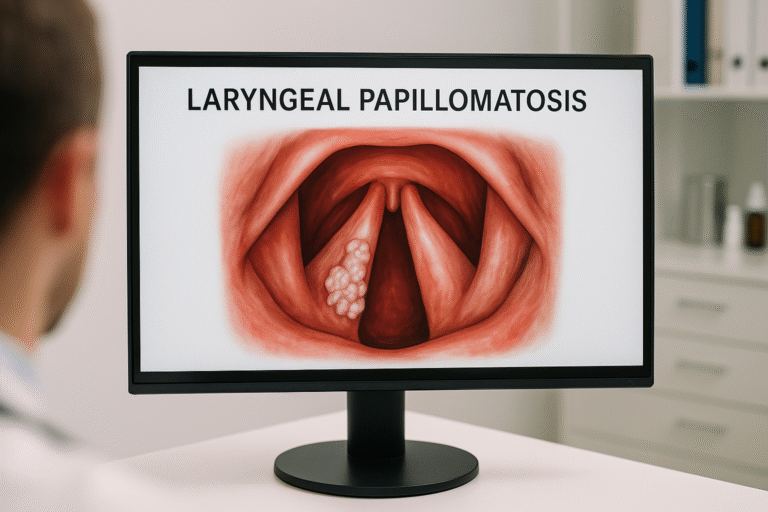
Laryngeal papillomatosis is a condition in which small, wart-like growths appear inside the voice box. These growths are not cancer, but they can still cause a lot of trouble because they sit directly on the vocal cords, the part of the throat that helps you speak and breathe. They can make your voice sound hoarse, scratchy, or weak, and in more serious situations, they can block the airflow and make breathing difficult.
The root cause of this disease is an infection by the human papillomavirus, commonly known as HPV [1]. This is the same virus that can cause warts on the skin or genital area, but in this condition, the virus settles inside the throat instead. Not all HPV types are dangerous for the throat. Laryngeal papillomatosis mainly happens due to two specific types of HPV: type 6 and type 11 [2]. These types are usually considered “low risk,” meaning they rarely lead to cancer, but they are known for creating repeated growths. This is why many patients experience symptoms that keep coming back even after medical treatment.
This condition can affect anyone, including children and adults. In children, it is often passed at birth if the mother carries HPV. In adults, it may appear later in life due to reactivation of the virus or low immunity. What makes this condition emotionally challenging is that it often returns after surgery, making patients feel frustrated and worried about their voice and breathing.
Why It Happens (Causes and Risk Factors)

Laryngeal papillomatosis begins when the human papillomavirus enters the soft tissues of the throat and the vocal cords. After entering the tissue, the virus starts creating small wart like growths on the voice box. These growths disturb the normal movement of the vocal cords and cause hoarseness and changes in the voice. The main reason behind this condition is infection with the human papillomavirus [1].
One of the most difficult aspects of this illness is that the virus does not leave the body completely after the first infection. Instead, it stays quietly inside the lining of the throat for a long time. Even after treatment, the virus can become active again and create new growths. This is why the condition often comes back again and again. This repeated return of symptoms happens because the virus remains inside the tissue [3].
In many children, the infection starts at birth. When a mother carries certain types of the human papillomavirus, especially type 6 or type 11, the virus can pass to the baby during delivery. Not every child develops the disease, but some do, and it may appear during early childhood [2]. Adults can also develop this condition later in life when an old or silent infection becomes active again.
Another major factor is weak immunity. When the body is under stress, not well nourished, or recovering from illness, the immune system becomes less effective. At this time the virus becomes more active and produces new growths in the throat. Research shows that low immunity allows the virus to multiply more easily [4].
Ayurveda explains this condition through the concept of body terrain. When digestion becomes weak, when toxins known as ama collect inside the body, or when the doshas become disturbed, the tissues of the throat lose their natural strength. This creates a condition in which viruses can grow more easily. Ayurveda teaches that a strong and balanced internal terrain keeps viral activity under control, while a disturbed terrain allows the disease to return repeatedly [5].
Symptoms
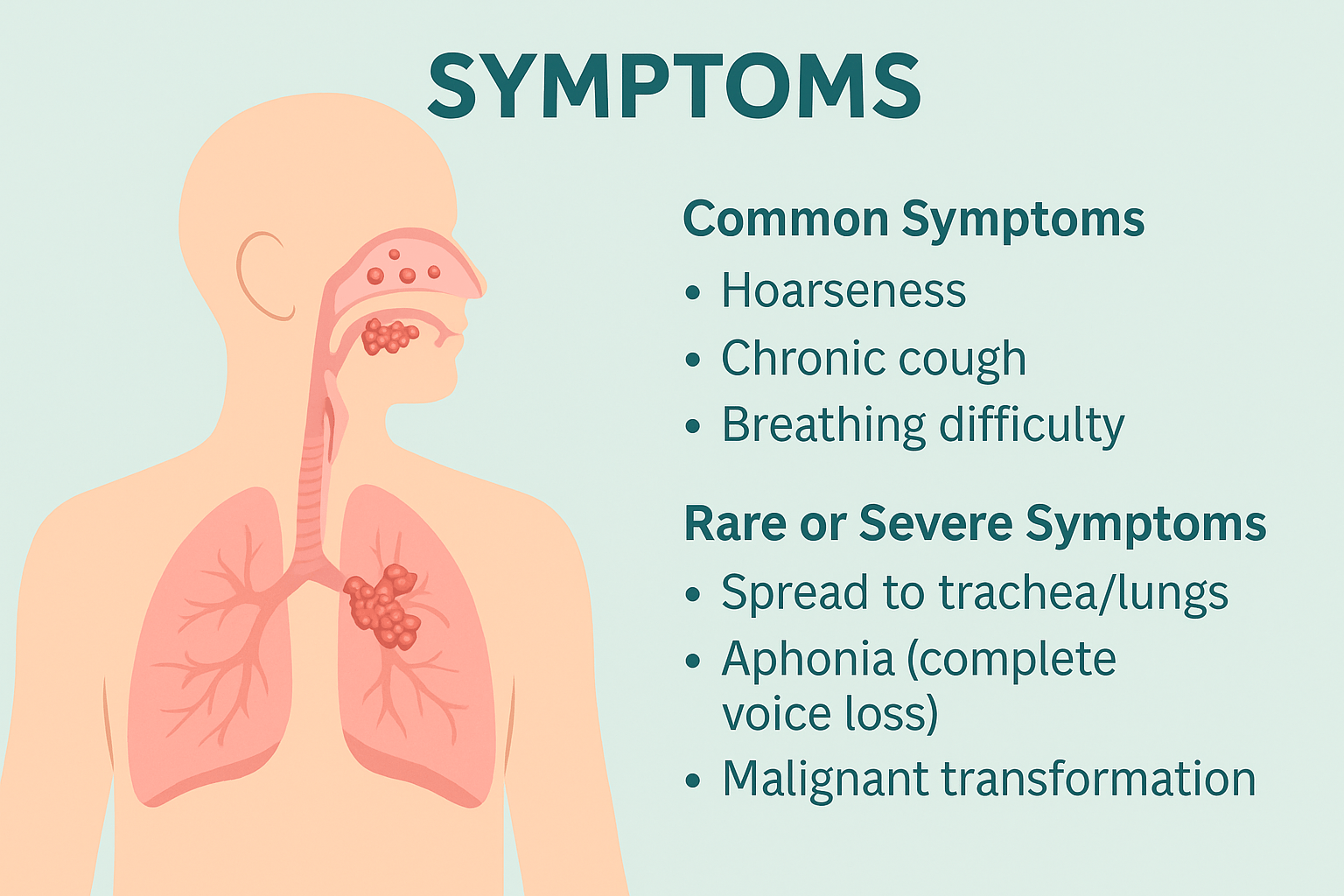
Laryngeal papillomatosis affects the vocal cords and the upper airway, so the symptoms begin slowly and often look like common throat problems at first. As the small growths increase inside the voice box, the symptoms become easier to notice. Patients usually experience changes in the voice before anything else, and in some cases difficulty in breathing gradually appears. Children may show early warning signs through noisy breathing or repeated throat discomfort.
3A. Common Symptoms
The most frequent early sign is hoarseness. The papilloma growths sit directly on the vocal cords, which stops them from vibrating smoothly. This makes the voice sound rough, weak, or strained. Some patients develop a persistent cough that does not improve, because the throat feels irritated by the growths. As the airway becomes narrow, breathing may become noisy or slightly difficult during everyday activities [1].
Another important symptom is stridor. Stridor is a harsh, high pitched sound that comes when the airway is partially blocked. It can happen during breathing or physical activity and becomes more noticeable when the growths get larger. If the airway becomes narrow to a greater extent, the condition can lead to episodes of airway obstruction, which may feel frightening for the patient [6].
3B. Rare or Severe Symptoms
In rare situations, the disease can spread deeper into the windpipe or even towards the lungs. This usually happens when the papillomas grow repeatedly over a long time or when the immune system is weak. Spread to the trachea or lungs can cause repeated chest infections or breathing trouble and requires close medical attention [7].
Some patients may experience complete loss of voice. This condition is known as aphonia. It occurs when the vocal cords are covered by multiple growths and cannot vibrate at all [6]. Although this is uncommon, it can affect daily speech and emotional well being.
A very rare outcome is malignant transformation. This means the growth changes its nature and behaves like a cancerous lesion. This is extremely uncommon and usually linked with long standing disease or exposure to certain risk factors. Even though it is rare, it is important for patients to know that regular monitoring helps identify such changes early [2].
Diagnosis

The diagnosis of laryngeal papillomatosis focuses on looking directly inside the throat, understanding how much the vocal cords are affected, and confirming the exact cause of the growths. Most patients come for evaluation after noticing persistent hoarseness or breathing problems. A proper diagnosis not only identifies the condition but also helps decide how severe it is and what treatment plan is needed.
The first and most important step is laryngoscopy. This is a simple procedure in which the doctor looks inside the throat using a thin camera. The camera shows a clear picture of the vocal cords and reveals the small wart like growths that are typical of this condition. Laryngoscopy or endoscopy allows the doctor to judge the size, number, and location of the papillomas [1].
In many cases, a small sample of tissue is taken for biopsy. This is done to confirm that the growths are papillomas and not any other type of lesion. The biopsy also helps rule out rare conditions such as precancerous changes. This step is especially important when the growths look unusual or when the patient has had the disease for many years [2].
Some patients may be asked to do HPV typing. This is a laboratory test that identifies which type of the virus is present in the tissue. It helps determine if the infection is caused by HPV type 6 or type 11, which are the most common types responsible for laryngeal papillomatosis. This information can guide long term management [8].
When the condition is advanced, imaging techniques such as CT scan or MRI may be needed. These tests show whether the growths have spread deeper into the airway and help doctors understand the overall structure of the throat and windpipe. Imaging is most useful for patients with breathing difficulty or long term disease [6].
Along with modern diagnostic tools, Ayurveda also uses its own detailed system of assessment. This includes understanding the patient’s Prakriti or natural body constitution, evaluating disturbances in the Srotas or body channels, identifying imbalances in the Dosha, and looking for the presence of ama or accumulated toxins. These insights help create a more personalised treatment plan and explain why some patients experience repeated flare ups despite medical procedures [5].
Standard Modern Treatment
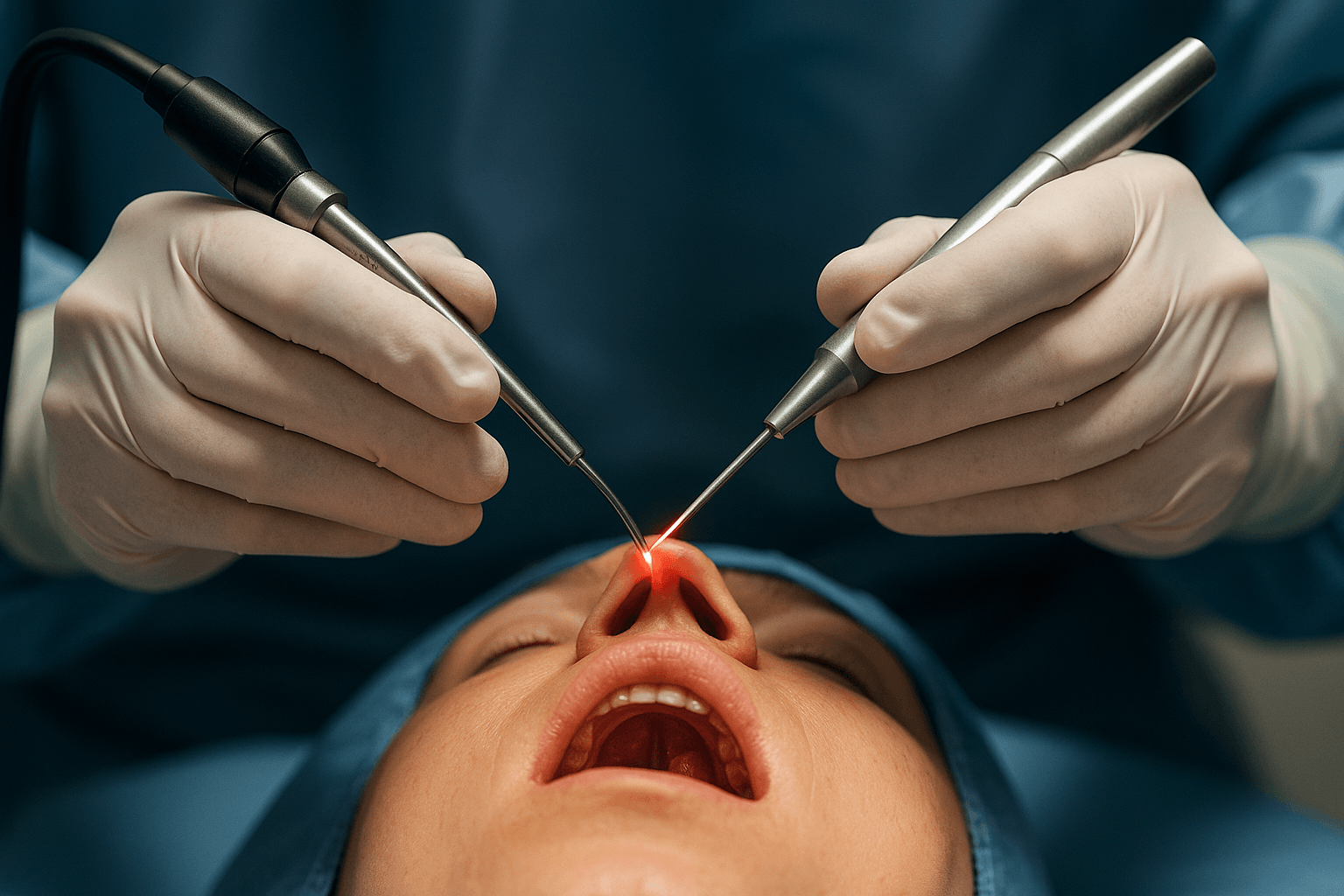
Modern treatment for laryngeal papillomatosis focuses mainly on keeping the airway open and improving the patient’s voice. Since the growths develop directly on the vocal cords, doctors usually begin by removing them to restore breathing and speech. The most common method is surgical removal. This procedure is done using delicate instruments, including laser or microsurgery tools that help remove the papilloma growths with great precision while protecting the vocal cords as much as possible [1].
Although surgery gives relief, the condition is known for coming back repeatedly. This is because the human papillomavirus remains inside the tissue even after the visible growths are removed. Since the virus is not completely cleared by surgery, new growths may appear again over time. This is why many patients require more than one procedure in their lifetime. The recurring nature of this disease can be stressful, but it is a known part of its medical behavior and is well documented in clinical research [3].
In some situations, doctors may suggest additional antiviral treatments. These are given to decrease the activity of the virus inside the tissue and to slow down the speed at which new growths return. Antiviral therapies are not always used for everyone, but they can play an important role in patients who have very frequent flare ups or more aggressive disease patterns [8].
Once the airway is safe and the growths are removed, voice recovery becomes the next focus. Many patients benefit from voice therapy, which helps the vocal cords heal properly and teaches gentle speaking techniques. Follow up appointments are also essential. They allow the doctor to monitor the vocal cords, identify early signs of new growths, and manage them before they cause breathing trouble [6].
Modern treatment provides necessary control, but because the virus remains active, the condition often needs ongoing care. This is why many patients explore Ayurvedic treatment as well, since Ayurveda focuses on improving immunity and changing the internal environment where the virus stays active. This deeper approach aims to reduce recurrence over the long term.
Ayurvedic Understanding
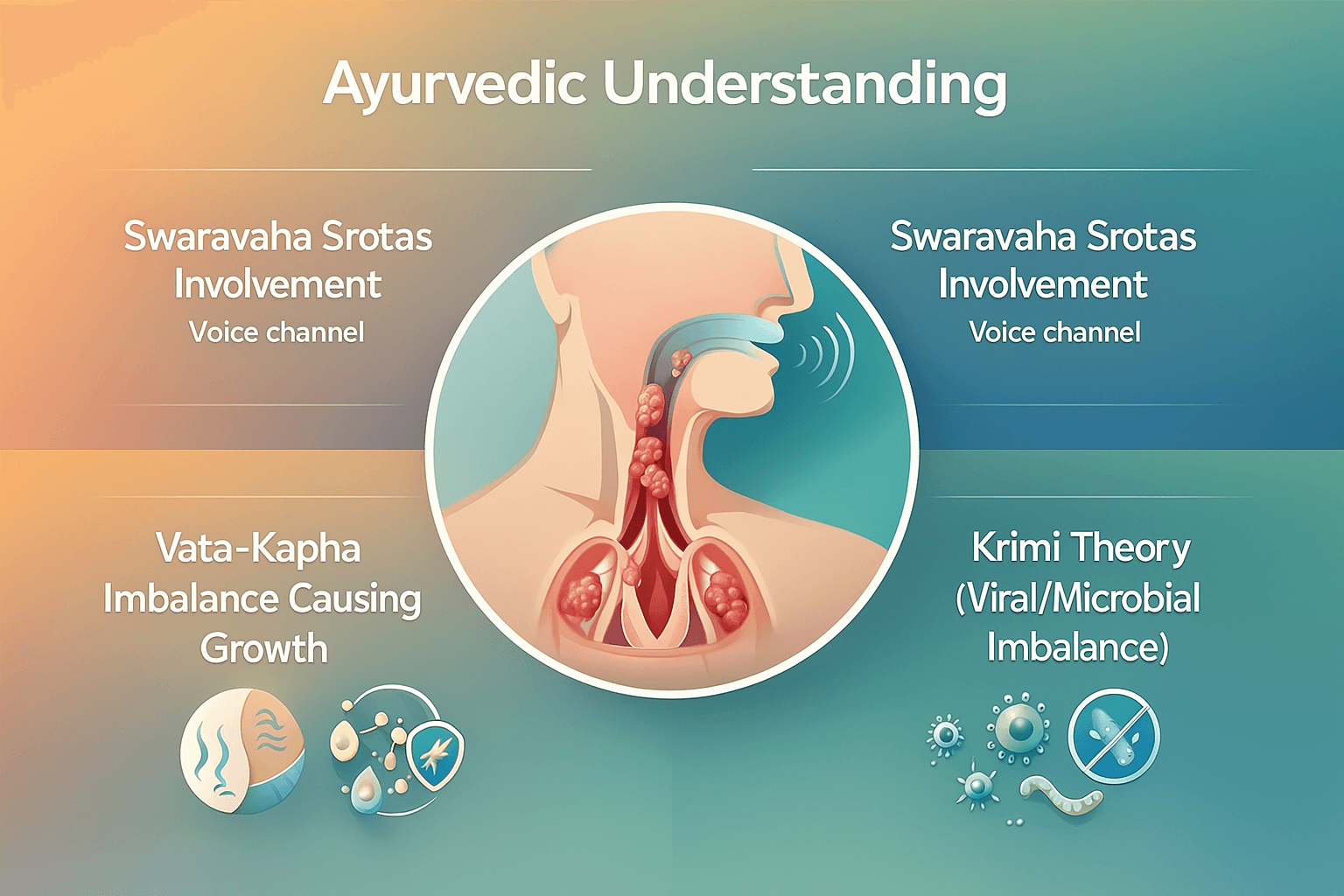
Ayurveda explains laryngeal papillomatosis by looking deeply into the internal balance of the body and the natural pathways that support speech, breathing, and immunity. Instead of focusing only on the visible growths, Ayurveda tries to understand why the throat becomes a weak area for the virus to settle and why the growths keep returning.
The condition begins with a disturbance in the Swaravaha Srotas. These are the channels in the body that support voice production and the healthy function of the vocal cords. When these channels become irritated or weak, the flow of air and the vibration of the vocal cords are affected. This creates a space where unhealthy tissue changes can occur more easily [9].
A common cause behind these changes is an imbalance in Vata and Kapha. When Vata becomes disturbed, it creates dryness, irregular movement, and instability in the tissues. When Kapha becomes excessive, it leads to thickening, swelling, and unwanted growth formation. Together, this Vata Kapha imbalance can encourage the formation of papilloma type growths in the throat and make the voice sound rough or weak [10].
Another major factor is the buildup of ama. Ama refers to waste material or toxins that form when digestion is weak. When ama collects in the body, it reduces overall immunity and affects the natural cleansing of the tissues. A buildup of ama in the throat area makes the Swaravaha Srotas sluggish and less capable of resisting infections. This provides a supportive environment for the human papillomavirus to stay active and create repeated growths [11].
Ayurveda also considers the involvement of Krimi. Krimi does not only refer to worms. It includes microorganisms that disturb the balance of the body. In this condition, the viral activity of the human papillomavirus fits into the concept of Krimi. When the internal protective mechanisms are weakened, Krimi gets stronger and begins to influence tissue growth and immunity. This viewpoint helps Ayurveda understand why the papillomas come back even after removal, because the internal imbalance remains uncorrected [12].
Ayurvedic interpretation shows that the growths are only the surface level expression. The deeper issues lie in weak tissue channels, disturbed doshas, reduced immunity, and the presence of ama and Krimi. Once these internal causes are corrected, the body becomes stronger and the virus loses its ability to create new growths repeatedly.
How Ayurveda Cures Laryngeal Papillomatosis
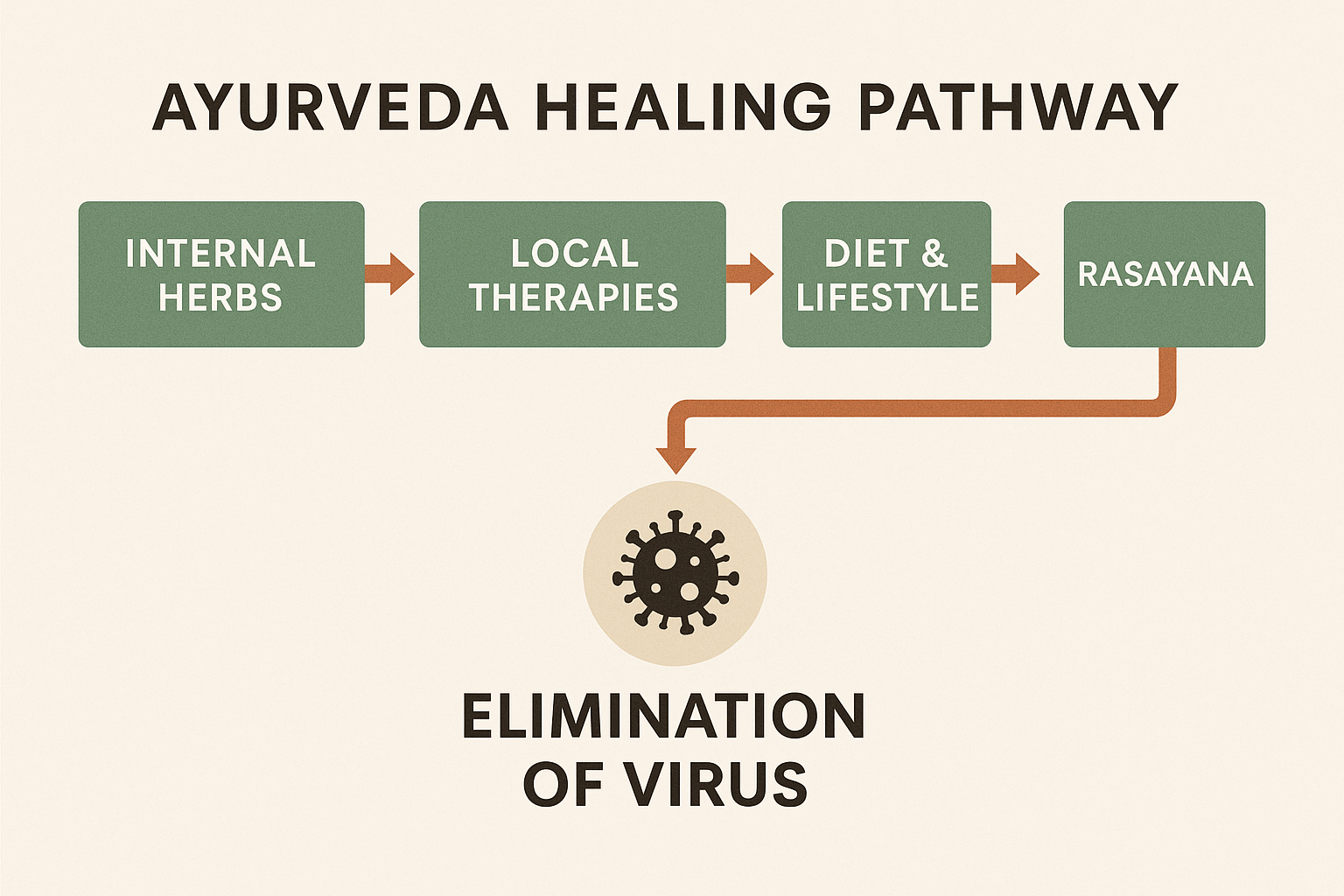
Ayurveda treats laryngeal papillomatosis with the goal of removing the virus completely from the body. The approach focuses on cleansing the tissues, strengthening immunity, restoring the health of the throat channel, correcting dosha imbalance, and rebuilding natural defence systems. Once the internal environment becomes strong and clear, the human papillomavirus cannot survive and the growths stop returning.
7A. Root Cause Reversal
Ayurveda works by changing the internal terrain of the body. When the tissues become strong, clean, and balanced, the human papillomavirus loses its strength. Ayurvedic healing removes the viral activity from deep inside the throat and prevents the virus from finding a place to grow again. This approach helps the body eliminate the virus slowly and steadily through natural immunity and tissue rebuilding [5].
Rasayana therapy plays a major role in this process. These medicines nourish the tissues, repair the damage caused by the growths, and strengthen immunity from the root. Rasayana helps the vocal cords recover fully and supports the body in clearing the virus completely [13].
7B. Internal Herbal Medicines
Ayurveda uses powerful herbs and minerals that help the body clear the virus and rebuild healthy tissue.
Guduchi strengthens the immune system and helps the body identify and remove viral activity naturally [14].
Ashwagandha helps repair the throat lining and rebuild the health of the vocal cords after repeated irritation caused by papillomas [15].
Neem contains strong natural antiviral properties that help the body eliminate the virus from the throat tissues [16].
Gandhak Rasayan and other classical Rasaushadhi medicines are known for clearing human papillomavirus from the body. They help remove deep seated viral activity and rebuild clean, healthy tissue [17].
Bhallataka Rasayana boosts immunity, improves tissue metabolism, and helps the body eliminate long standing viral conditions [18].
These medicines work together to help the body clear the virus completely and prevent the growths from forming again.
7C. Local Ayurvedic Therapies
Herbal steam inhalation opens the throat, improves circulation, and supports healing of the vocal cords. It helps clear mucus and allows the tissues to breathe and repair themselves [19].
Medicinal gargles and nasya help cleanse the channels connected to the throat, reduce swelling, and restore normal voice function [9]. This also supports the removal of viral activity from the throat region.
7D. Diet and Lifestyle
An anti Kapha diet helps reduce heaviness and mucus in the throat. Warm food, easy digestion meals, and avoidance of cold items help the throat tissues regain strength [9].
Patients are advised to avoid irritants such as smoke, cold drinks, and chilled food. These slow down immunity and create an environment that allows diseases to remain active. Removing these irritants helps the body eliminate the virus more effectively [11].
Lifestyle habits such as gentle voice use, warm water, proper rest, and avoiding strain all help the throat heal fully.
7E. Recurrence Prevention
Ayurveda focuses on permanent cure.
Once the virus is eliminated, the aim is to prevent it from returning.
Long term Rasayana therapy supports the immune system and ensures the tissues remain strong and resistant to viral reactivation [13].
Strengthening Ojas, the foundation of immunity and vitality, ensures that the virus does not find a place in the throat again. When Ojas is strong, the body naturally prevents viral diseases from developing [11].
Through complete tissue purification, strong immunity, balanced doshas, and long term Rasayana, Ayurveda eliminates the virus from the body and prevents the growths from returning.
For patients who want to understand how the human papillomavirus behaves inside the body and how Ayurveda removes the virus from its root, a detailed explanation is available in the main HPV article. This article describes how the virus settles in weak tissues, why it becomes active again, and how Ayurvedic principles clear it completely through dosha balance, toxin removal, and long term immunity building [5].
You can read the complete root cause explanation here:
https://panaceayur.com/human-papillomavirus-hpv-symptoms-diagnosis-ayurvedic-cure/
This helps patients connect the throat based condition of laryngeal papillomatosis with the broader understanding of the virus and its Ayurvedic elimination process.
Frequently Asked Questions
1. Is laryngeal papillomatosis dangerous and can it affect breathing?
Laryngeal papillomatosis can become serious because the growths sit directly on the vocal cords and the airway. As the growths increase, they narrow the breathing passage and can cause noisy breathing or difficulty in breathing. In some patients, the airway can become very narrow, which makes early treatment and regular checkups important.
2. Can Ayurveda cure laryngeal papillomatosis completely?
Yes. Ayurveda focuses on removing the human papillomavirus from the body and healing the throat tissues. By balancing the doshas, clearing toxins, and rebuilding immunity through Rasayana therapy, Ayurveda helps the body remove the root cause of the disease. This leads to long lasting relief and prevents the growths from returning.
3. How long does Ayurvedic treatment take to cure this condition?
The duration depends on how severe the growths are, how strong the throat tissues are, and how much toxin buildup or dosha imbalance is present. Improvements in voice and breathing often start early, but complete cure takes time because the tissues need to fully recover and regain strength. The treatment plan is personalised for each patient.
4. Can children take Ayurvedic treatment for this condition?
Yes. Many children develop this condition early in life, and Ayurveda offers safe and gentle herbal options for them. The medicines work on improving immunity, cleaning the tissues, and preventing the repeated appearance of growths. Treatment is always customised and monitored carefully for children.
5. Can Ayurveda help even if the patient has already undergone many surgeries?
Yes. Surgery removes the visible growths but does not eliminate the virus that causes them. Ayurveda works deeper inside the tissues and helps the body clear the virus completely. Medicines such as Rasayana, Gandhak based formulations, and other classical preparations are effective in preventing new growths and giving long term cure. Many patients who faced repeated surgeries find stable results with Ayurvedic treatment.
Reference
[1] Derkay, C. S., & Wiatrak, B. (2008). Recurrent respiratory papillomatosis: A review. The Laryngoscope, 118(7), 1236–1247. https://doi.org/10.1097/MLG.0b013e31816a7135
[2] Kashima, H., Shah, F., Lyles, A., Glackin, R., & Muhammad, N. (1998). Lessons from the national registry of juvenile-onset recurrent respiratory papillomatosis. Annals of Otology, Rhinology & Laryngology, 107(1), 69–75. https://doi.org/10.1177/000348949810700113
[3] Armstrong, L. R., Preston, E. J., Reichert, M., Phillips, D. L., Miller, D. L., Hurwitz, R. L., & Kashima, H. K. (2000). Incidence and prevalence of recurrent respiratory papillomatosis among children in Atlanta and Seattle. Clinical Infectious Diseases, 31(1), 107–109. https://doi.org/10.1086/313888
[4] Stanley, M. (2010). HPV immunology. Vaccine, 28(Suppl 1), A25–A30. https://doi.org/10.1016/j.vaccine.2009.10.030
[5] Panaceayur. (2024). Human Papillomavirus (HPV) – Symptoms, Diagnosis & Ayurvedic Cure. https://panaceayur.com/human-papillomavirus-hpv-symptoms-diagnosis-ayurvedic-cure/
[6] Seedat, R. Y., & Claassen, A. J. (2006). Recurrent respiratory papillomatosis in the developing world: A South African perspective. Clinical Otolaryngology, 31(6), 506–509. https://doi.org/10.1111/j.1749-4486.2006.01296.x
[7] Fortes, H. R., von Ranke, F. M., Escuissato, D. L., Araujo Neto, C. A., Zanetti, G., & Hochhegger, B. (2017). Recurrent respiratory papillomatosis: A state-of-the-art review. Respiratory Medicine, 126, 116–121. https://doi.org/10.1016/j.rmed.2017.03.028
[8] Larson, D. A., & Derkay, C. S. (2010). Epidemiology of recurrent respiratory papillomatosis. Aerosol Science and Technology, 44(6), 526–535. https://doi.org/10.1080/02786826.2010.481355
[9] Murthy, K. R. S. (2012). Ashtanga Hridaya of Vagbhata (Vol. 1–3). Chowkhamba Krishnadas Academy. (Swaravaha Srotas references, Sutrasthana).
[10] Sharma, R. K., & Dash, B. (2015). Charaka Samhita: Text with English Translation & Critical Exposition (Vol. 1–7). Chowkhamba Sanskrit Series. (Vata–Kapha growth pathology, Charaka Sutrasthana).
[11] Lad, V. (2002). Textbook of Ayurveda: Fundamental Principles (Vol. 1). Ayurvedic Press. (Ama theory, Ojas, immune weakness).
[12] Srikanthamurthy, K. R. (2014). Bhavaprakasha of Bhavamishra. Chowkhamba Krishnadas Academy. (Krimi chapter).
[13] Rege, N. N., Thatte, U. M., & Dahanukar, S. A. (1999). Adaptogenic properties of six Rasayana herbs used in Ayurvedic medicine. Phytotherapy Research, 13(4), 275–291. https://doi.org/10.1002/(SICI)1099-1573(199906)13:4<275::AID-PTR445>3.0.CO;2-S
[14] Sharma, U., Bala, M., Kumar, N., Singh, B., Munshi, R. K., & Bhalerao, S. (2012). Immunomodulatory active compounds from Tinospora cordifolia. Journal of Ethnopharmacology, 141(3), 918–926. https://doi.org/10.1016/j.jep.2012.03.027
[15] Kulkarni, S. K., & Dhir, A. (2008). Withania somnifera: An Indian ginseng. Indian Journal of Experimental Biology, 46(7), 463–468. http://nopr.niscpr.res.in/handle/123456789/1584
[16] Biswas, K., Chattopadhyay, I., Banerjee, R. K., & Bandyopadhyay, U. (2002). Biological activities and medicinal properties of neem. Current Science, 82(11), 1336–1345. https://www.jstor.org/stable/24107241
[17] Choudhary, N., & Prajapati, P. K. (2024). Ayurvedic management of HPV warts through Rasaushadhi: A case report. International Journal of AYUSH Case Reports, 8(1), 29–33. https://doi.org/10.47552/ijacare.2024.v08i01.006
[18] Patel, N. G., & Patel, K. (2015). Therapeutic potential of Bhallataka (Semecarpus anacardium): A review. AYU (An International Quarterly Journal of Research in Ayurveda), 36(1), 64–69. https://doi.org/10.4103/0974-8520.169003
[19] Bhat, M., & Udupa, S. (2013). Clinical efficacy of steam inhalation in upper respiratory conditions. AYU, 34(1), 68–72. https://doi.org/10.4103/0974-8520.115456