


- Why Herpes Treatment Duration Is Long in Ayurveda
- Dosha Dhatu Srotas Involvement Determines Duration
- Avastha of Disease and Its Impact on Prognosis
- Agni Strength as the Core Determinant of Healing Speed
- Treatment Phases and Duration According to Ayurveda
- Month Wise Healing Timeline Explained Through Ayurveda
- Prognosis Based on Prakriti and Individual Constitution
- Role of Ojas in Long Term Prognosis and Recurrence Prevention
- Effect of Suppressive Antivirals on Ayurvedic Prognosis
- Coexisting Disorders That Delay Recovery and Worsen Prognosis
- Prognosis in Oral Versus Genital Herpes From an Ayurvedic Perspective
- Influence of Diet and Lifestyle on Treatment Duration and Prognosis
- Clinical Signs That Treatment Is Working and Prognosis Is Improving
- When Prognosis Becomes Poor and Why
- Long Term Outlook After Completion of Treatment
- Cure Versus Management Explained in Ayurvedic Terms
- Common Misconceptions Clarified Through Ayurveda
- FAQs
- How long does herpes stay in the body according to Ayurveda
- Can herpes be permanently cured according to Ayurveda
- Why does herpes come back after years of no symptoms
- Does treatment duration differ for HSV one and HSV two
- Is lifelong treatment necessary for herpes
- Why does Ayurveda take longer than modern suppressive therapy
- What indicates that treatment can be safely stopped
- Can herpes worsen if treatment is stopped too early
- Does mental stress alone trigger recurrence
- What is the most important factor for long term prognosis
- REFERENCE
Why Herpes Treatment Duration Is Long in Ayurveda

Herpes as a Chirakari Vyadhi
In Ayurveda, herpes is understood as a Chirakari Vyadhi, meaning a chronic and deep seated disorder that persists due to long standing Dosha involvement and repeated relapse. Classical texts explain that diseases which repeatedly manifest and subside without complete resolution gradually penetrate deeper Dhatus and become difficult to eradicate. When you experience recurrent outbreaks or prolonged disease history, Ayurveda interprets this as progression beyond an acute stage into a chronic pathological state. Such conditions cannot be reversed quickly because treatment must sequentially address Dosha imbalance, Dhatu damage, and weakened systemic resistance, which naturally extends the duration of therapy [9], [15].
Involvement of Agantu and Nija Vyadhi Components
Ayurveda explains herpes through the combined framework of Agantu Vyadhi and Nija Vyadhi. The initial viral exposure is considered Agantu, originating externally, while the persistence and recurrence of disease indicate transformation into a Nija Vyadhi driven by internal Dosha imbalance, impaired Agni, and Dhatu vulnerability. Once this transition occurs, the disease no longer depends solely on the external cause. Even if exposure has ended, the internal terrain continues to sustain pathology. From a clinical standpoint, this dual involvement explains why treatment duration is prolonged. The physician must address both the external pathogenic imprint and the internal biological susceptibility to achieve lasting stability [10], [12].
Latent State Explained Through Beeja Dosha and Avyakta Avastha
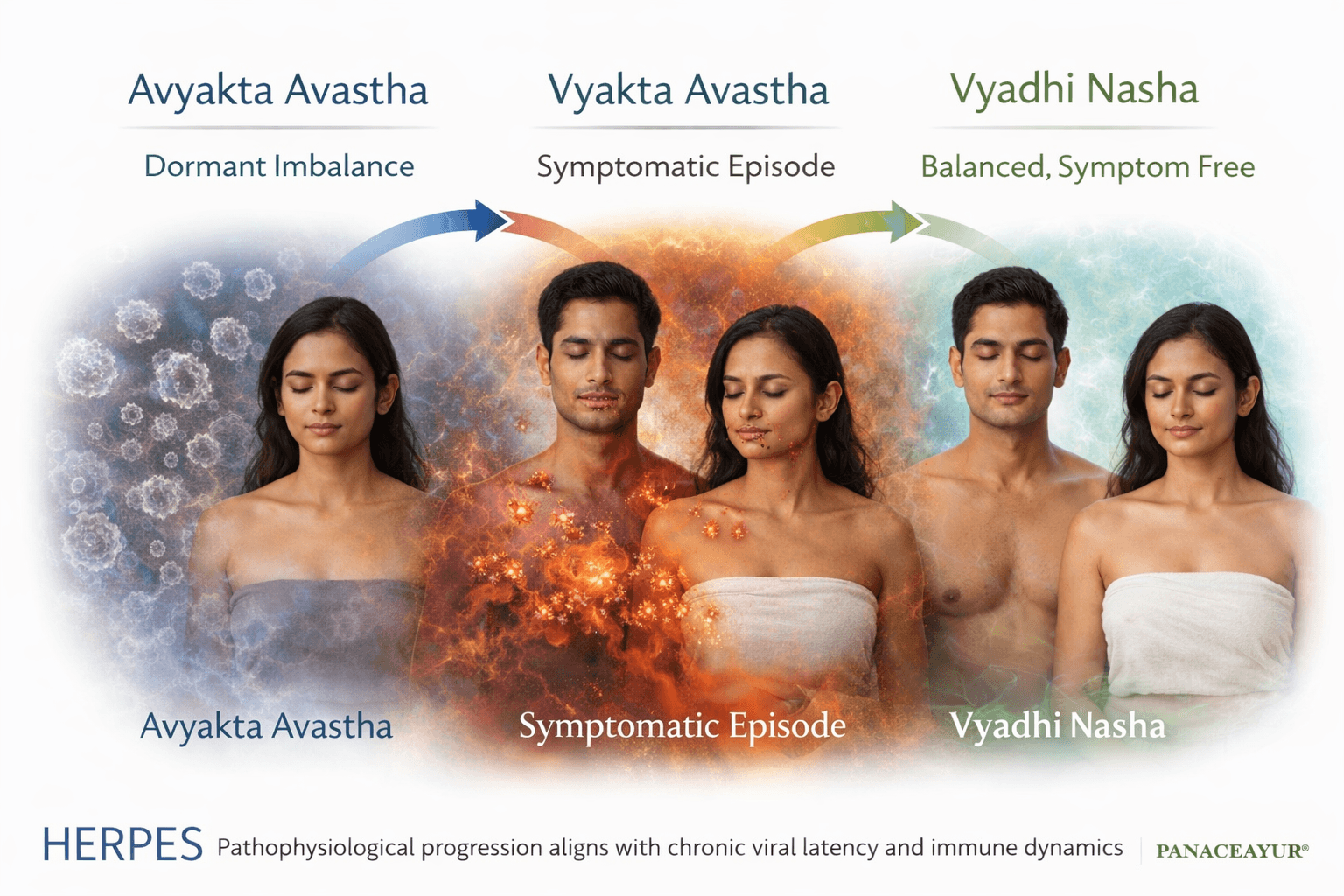
Ayurveda explains viral latency using the concepts of Beeja Dosha and Avyakta Avastha. Beeja Dosha refers to a subtle pathological imprint that remains embedded within the system even when overt symptoms are absent. Avyakta Avastha denotes an unmanifest or dormant phase of disease. In herpes, the absence of lesions does not indicate cure but signifies that the pathology has entered a concealed stage. From an Ayurvedic perspective, diseases in Avyakta Avastha are more complex to treat because they require correction at a deeper biological level. The physician must gradually eliminate the latent Dosha influence and restore Dhatu integrity so that the dormant tendency loses its capacity to reactivate. This internal reprogramming cannot occur rapidly and therefore necessitates a longer treatment duration [11], [15].
Why Quick Suppression Contradicts Ayurvedic Healing Laws
Ayurveda follows the principle that sustainable healing occurs only when the root of disease is resolved in harmony with the body’s natural rhythm. Rapid suppression of symptoms contradicts this principle because it forces the pathology inward instead of eliminating it. Classical understanding states that suppressed Doshas often relocate to deeper tissues, particularly Majja Dhatu and the nervous system, increasing chronicity and recurrence. While you may experience temporary relief, Ayurveda does not equate symptom control with cure. True healing requires time for Agni restoration, Ama digestion, Dosha pacification, and Ojas rebuilding. Stability, resilience to triggers, and absence of recurrence are considered the real markers of success, and these outcomes demand a disciplined and adequately long treatment course [12], [13].
Dosha Dhatu Srotas Involvement Determines Duration

Primary Dosha Involvement With Vata and Pitta Predominance
In Ayurvedic understanding, the duration of herpes treatment is strongly influenced by the predominance of Vata and Pitta Dosha. Pitta governs inflammation, heat, tissue irritation, and ulcerative tendencies, which explains burning sensation, redness, and recurrent blister formation. Vata governs movement, nervous system activity, and recurrence patterns. When Vata becomes aggravated, it carries the pathological imprint deeper into the system and facilitates repeated reactivation. You as a patient may notice that stress, lack of sleep, or exhaustion triggers recurrence, which Ayurveda directly attributes to Vata aggravation. Because both Doshas are mobile and penetrating by nature, their combined dominance makes the disease unstable and recurrent, thereby extending the required treatment duration [11], [15].
Dhatu Involvement Including Rasa Rakta Mamsa and Majja
Herpes does not remain confined to a single tissue level. Ayurveda explains that initial pathology begins in Rasa Dhatu, affecting fluid balance and immunity, then progresses to Rakta Dhatu, producing inflammatory and eruptive manifestations. With repeated episodes, Mamsa Dhatu becomes involved, leading to deeper tissue sensitivity and delayed healing. In chronic and long standing cases, Majja Dhatu involvement becomes evident, which correlates with nerve related pain, tingling, prodromal sensations, and latency. As the disease penetrates deeper Dhatus, each layer requires time for correction, nourishment, and stabilization. This sequential Dhatu involvement is a major reason why herpes treatment duration cannot be short [9], [12], [15].
Role of Shukra Dhatu in Genital Herpes
In genital herpes, Ayurveda recognizes the additional involvement of Shukra Dhatu, which governs reproductive tissue vitality, hormonal balance, and regenerative capacity. When Shukra Dhatu is affected, healing becomes slower because this Dhatu is the most refined and deeply seated tissue. You may experience prolonged weakness, reduced libido, emotional sensitivity, or delayed recovery even when visible symptoms subside. Ayurveda emphasizes that Shukra Dhatu regeneration requires sustained Rasayana support and disciplined therapy over time. Diseases involving Shukra Dhatu are never treated rapidly, and this principle directly applies to genital herpes, explaining the extended duration needed for stable recovery [11], [13].
Srotas Obstruction and Why Clearance Takes Time
Srotas are the functional channels responsible for transport and transformation within the body. In herpes, repeated inflammation and Dosha aggravation lead to Srotorodha, meaning obstruction of these channels. When Srotas are blocked, nutrients cannot reach Dhatus properly and metabolic waste is not cleared efficiently. Even potent medicines act slowly in such conditions because the internal pathways are compromised. Ayurveda teaches that Srotas cleansing occurs gradually through Agni correction, Ama digestion, and Dosha pacification. You cannot force this process without risking further imbalance. The time required to reopen and normalize Srotas function is a fundamental reason why herpes treatment duration extends over months rather than weeks [12], [15].
Avastha of Disease and Its Impact on Prognosis
Nava Avastha and Prognosis in Recent Infection
Nava Avastha refers to the early and recently manifested stage of disease. In herpes, this stage is characterized by limited tissue involvement and relatively preserved Agni and Dhatu strength. From an Ayurvedic viewpoint, prognosis during Nava Avastha is more favorable because Dosha disturbance is still superficial and has not yet penetrated deeply into the Dhatus. You as a patient may experience clear symptoms such as localized eruptions, mild burning, or short duration discomfort. At this stage, treatment response is faster because corrective therapy can restore balance before chronic imprinting occurs. Classical texts emphasize that diseases treated promptly in Nava Avastha are easier to manage and more likely to stabilize completely [9], [15].
Jirna Avastha and Chronic Recurrent Herpes
Jirna Avastha denotes a chronic stage where the disease has persisted for a long period and shows a pattern of recurrence. In herpes, this stage is marked by repeated flare ups, incomplete healing between episodes, and increasing sensitivity to triggers such as stress or fatigue. Ayurveda explains that during Jirna Avastha, Doshas become firmly lodged within Dhatus, particularly Rakta and Mamsa, making them resistant to quick correction. You may notice that outbreaks become less predictable and recovery feels incomplete even after symptoms subside. Prognosis in this stage becomes guarded because therapy must now reverse long standing internal imbalance rather than only addressing surface manifestations [11], [12], [15].
Gambhira Avastha With Nerve and Systemic Involvement
Gambhira Avastha represents a deep and complicated stage of disease involving vital tissues and systemic function. In herpes, this corresponds to Majja Dhatu involvement, which governs the nervous system and deeper biological regulation. Clinical features such as persistent tingling, neural pain, prodromal sensations without visible lesions, fatigue, and emotional instability are commonly observed. Ayurveda considers diseases in Gambhira Avastha difficult to treat because Dosha imbalance has reached the most subtle and essential tissues. You as a patient may experience slower improvement and require prolonged and carefully structured therapy. Prognosis at this stage depends heavily on sustained correction of Agni, Dhatu nourishment, and restoration of Ojas [11], [13], [15].
Worsening Prognosis With Progressive Dhatu Penetration
Ayurveda clearly states that prognosis worsens as disease penetrates deeper Dhatus. When herpes pathology moves from Rasa to Rakta, then to Mamsa and finally to Majja and Shukra Dhatu, each successive layer requires more time and precision to heal. Superficial symptoms may resolve early, but deep seated imbalance continues to sustain recurrence. You may feel temporary relief and assume recovery, while the underlying pathology remains active. Classical teachings emphasize that true prognosis must be judged by stability over time rather than immediate symptom relief. This principle explains why long standing herpes demands extended treatment duration and why premature discontinuation often leads to relapse [9], [12], [15].
Agni Strength as the Core Determinant of Healing Speed

Jatharagni and Dhatvagni Dysfunction
In Ayurveda, Agni is the fundamental force governing digestion, metabolism, transformation, and tissue renewal. Healing speed in herpes is directly linked to the functional state of Jatharagni and Dhatvagni. Jatharagni governs primary digestion and assimilation, while Dhatvagni governs transformation at each tissue level. When Jatharagni is weak, improperly digested nutrients circulate as unprocessed material, and when Dhatvagni is impaired, tissues fail to regenerate correctly. You as a patient may experience bloating, heaviness, irregular appetite, or fatigue, which are classical indicators of Agni dysfunction. In such a state, even potent medicines act slowly because the body lacks the metabolic capacity to utilize them effectively. This is why individuals with compromised Agni show delayed healing and prolonged herpes treatment duration [12], [15].
Ama Formation and Viral Persistence
Ama refers to toxic, undigested metabolic residue formed due to weak Agni. Ayurveda explains that Ama acts as a breeding ground for disease persistence by obstructing channels and weakening immune discrimination. In herpes, Ama creates a favorable internal environment where latent pathology remains protected and difficult to eliminate. Even when visible symptoms reduce, Ama allows the underlying disease tendency to remain active. You may feel partial improvement but continue to experience recurrence or lingering prodromal sensations. Classical texts clearly state that diseases associated with Ama cannot be eradicated quickly because the first step must always be Ama digestion and elimination. Until Ama is resolved, prognosis remains guarded and treatment duration naturally extends [12], [9].
Why Weak Digestion Delays Viral Clearance
From an Ayurvedic standpoint, digestion is not limited to food alone but includes digestion of impressions, stress, and metabolic byproducts. Weak digestion prevents proper immune response and delays clearance of disease factors. When digestion is impaired, Doshas remain aggravated and mobile, repeatedly triggering reactivation. You may notice that outbreaks follow dietary indiscretion, irregular meals, emotional stress, or sleep disturbance, all of which weaken Agni. Ayurveda teaches that without correcting digestion, attempts to strengthen immunity or eradicate disease remain incomplete. This principle explains why patients who ignore dietary and lifestyle correction experience slow progress and repeated relapse despite ongoing therapy [12], [15].
Role of Agni Correction Before Rasayana Therapy
Rasayana therapy is intended to rebuild tissues, restore immunity, and stabilize long term health, but Ayurveda strictly advises that Rasayana should only be initiated after Agni is properly corrected. Administering Rasayana in the presence of weak Agni or Ama leads to improper assimilation and reduced efficacy. In herpes, premature Rasayana use may temporarily improve strength but fails to eliminate the underlying disease tendency. You as a patient may feel short term energy improvement without long term stability. Classical guidance emphasizes that Agni correction through proper diet, lifestyle regulation, and Dosha pacification is a prerequisite for successful Rasayana therapy. When Agni is restored, Rasayana works deeply and sustainably, significantly improving prognosis and reducing recurrence over time [13], [12].
Treatment Phases and Duration According to Ayurveda
Shodhana Phase and Its Role in Long Term Outcome
Shodhana refers to purification oriented therapy aimed at removing deeply lodged Doshas and metabolic waste from the system. In herpes, Shodhana is considered when there is clear evidence of chronicity, repeated recurrence, or deep Dhatu involvement. Ayurveda teaches that without eliminating accumulated Doshas, long term stability cannot be achieved. You as a patient may feel temporary relief with symptomatic treatment, but unresolved internal burden continues to fuel recurrence. The Shodhana phase requires careful assessment of strength, age, disease stage, and digestive capacity, and it is always applied in a controlled and individualized manner. Because Shodhana works at a systemic level, it cannot be rushed. Its duration depends on the severity of Dosha accumulation and the body’s ability to tolerate cleansing, which directly influences the overall length of herpes treatment [10], [12], [15].
Shamana Phase and Gradual Disease Stabilization
Shamana therapy focuses on pacifying aggravated Doshas and stabilizing internal balance after or instead of purification. In many herpes cases, especially where Shodhana is not indicated, Shamana becomes the primary therapeutic approach. This phase aims to reduce inflammation, calm Vata driven recurrence, improve tissue healing, and correct metabolic imbalance. You may notice gradual reduction in outbreak frequency, milder symptoms, and improved recovery between episodes. Ayurveda emphasizes that Shamana works progressively and requires consistent adherence rather than aggressive intervention. Because it restores balance rather than suppressing symptoms, its effects unfold over time, making it a central contributor to the longer treatment duration seen in herpes management [9], [11], [15].
Rasayana Phase for Tissue Repair and Immune Stability
Rasayana therapy represents the regenerative phase of treatment, focused on rebuilding Dhatus, restoring Ojas, and creating long term resistance to disease recurrence. In herpes, Rasayana is essential once Doshas are pacified and Agni is stabilized. You as a patient may experience improved energy, emotional resilience, better sleep, and reduced susceptibility to triggers during this phase. Classical texts describe Rasayana as a slow but profound process that works at the deepest biological level. Because it aims to reverse chronic damage rather than mask symptoms, Rasayana requires sustained administration over months. Its duration depends on the extent of Dhatu depletion and the chronicity of disease, making it a decisive factor in overall treatment length [13], [15].
Why These Phases Cannot Be Compressed
Ayurveda clearly states that each phase of treatment prepares the body for the next. Attempting to shorten or skip phases disrupts the natural sequence of healing and compromises prognosis. If purification is incomplete, pacification remains unstable. If Agni is weak, Rasayana cannot be assimilated properly. You may feel impatient for quick results, but Ayurveda prioritizes durability over speed. The layered progression from Shodhana to Shamana to Rasayana reflects the depth of disease correction required in herpes. This structured approach explains why treatment duration is extended but also why outcomes achieved through this method are more stable and less prone to relapse [12], [13], [15].
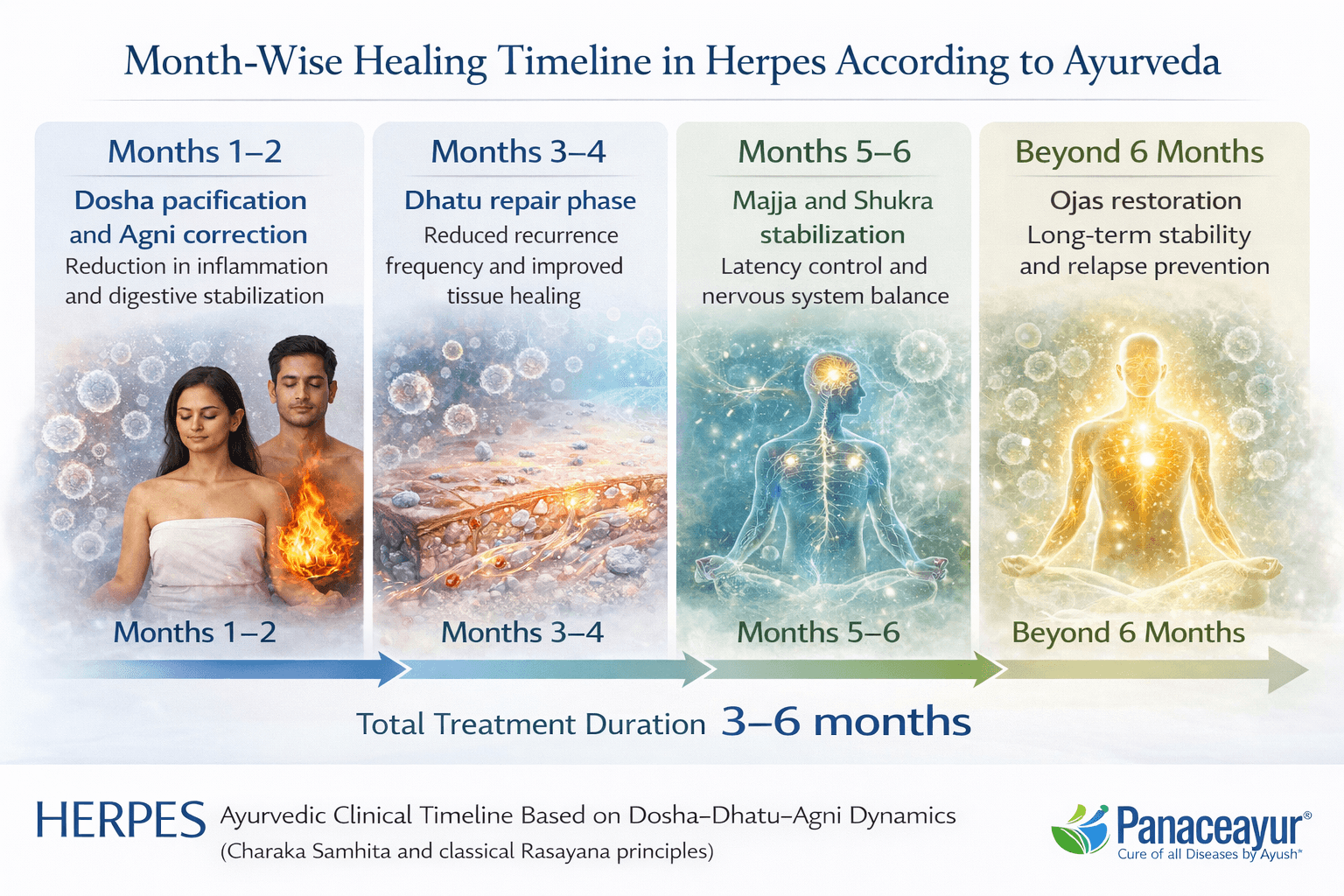
Month Wise Healing Timeline Explained Through Ayurveda

Early Phase With Dosha Pacification and Ama Reduction
In the initial months of treatment, the primary Ayurvedic objective is Dosha pacification and Ama reduction. During this phase, aggravated Vata and Pitta are gradually calmed, and digestive and metabolic balance is restored. You as a patient may first notice improvement in appetite, bowel regularity, sleep quality, and reduction in burning or irritation before a clear reduction in outbreaks. Ayurveda explains that early symptomatic relief reflects surface level correction, not complete disease resolution. This phase lays the foundation for deeper healing by restoring Agni and clearing obstructed channels, which is why it is considered essential even though visible progress may appear slow [12], [9], [15].
Middle Phase With Dhatu Repair and Recurrence Control
As treatment progresses into the middle phase, focus shifts toward Dhatu repair and stabilization of internal tissues. Rasa and Rakta Dhatu begin to regain balance, leading to reduced inflammation and improved tissue resilience. Mamsa Dhatu healing contributes to better lesion recovery and reduced sensitivity. You may observe longer gaps between outbreaks, milder prodromal symptoms, and faster healing when episodes occur. Ayurveda emphasizes that this phase requires patience because Dhatu nourishment occurs gradually and cannot be forced. Consistency during this stage determines whether recovery remains temporary or becomes stable over time [9], [11], [15].
Advanced Phase With Majja and Shukra Stabilization
In long standing or recurrent herpes, deeper tissues such as Majja and Shukra Dhatu require sustained attention during the advanced phase of treatment. This phase is crucial for addressing nerve related symptoms, latency, emotional vulnerability, and reproductive tissue strength. You may experience improved stress tolerance, reduced neural discomfort, and greater overall vitality even in situations that previously triggered recurrence. Ayurveda considers this phase decisive for prognosis because stability at the Majja and Shukra level reduces the likelihood of future reactivation. Healing at this depth naturally takes longer but offers more durable results [11], [13], [15].
Final Phase With Ojas Restoration and Long Term Stability
The final phase focuses on restoring Ojas, the essence responsible for immunity, resilience, and long term health. In herpes, Ojas restoration marks the transition from active treatment to sustained stability. You may feel mentally calm, physically stronger, and less reactive to dietary or emotional stressors. Ayurveda teaches that when Ojas is stable, disease recurrence becomes unlikely even in challenging circumstances. This phase often overlaps with Rasayana therapy and represents the culmination of months of disciplined treatment. Although it occurs later in the timeline, it defines true prognosis and lasting recovery rather than temporary suppression [13], [15].
Prognosis Based on Prakriti and Individual Constitution

Vata Prakriti and Tendency Toward Recurrence
In individuals with Vata Prakriti, prognosis in herpes tends to be more prolonged due to the inherent qualities of Vata such as dryness, mobility, instability, and sensitivity. Vata governs the nervous system and regulation of movement, which makes these individuals more prone to latency related symptoms, neural discomfort, prodromal sensations, and recurrence triggered by stress or fatigue. You as a patient with Vata dominance may notice fluctuating symptoms, irregular healing patterns, and heightened response to lifestyle disturbances. Ayurveda explains that Vata disorders require longer duration for stabilization because Vata is quick to aggravate and slow to pacify. Prognosis improves only when treatment focuses consistently on grounding, nourishment, nervous system support, and sustained routine over time [11], [15].
Pitta Prakriti and Intense but Faster Tissue Response
Pitta Prakriti individuals often experience more intense inflammatory symptoms in herpes, including burning sensation, redness, pain, and sharply defined lesions. However, Ayurveda also recognizes that Pitta dominant individuals generally possess stronger metabolic fire and better tissue responsiveness. You may notice that lesions heal relatively faster, but outbreaks can be severe if dietary discipline and emotional balance are not maintained. Prognosis in Pitta Prakriti depends on effective cooling, inflammation control, and moderation of excess heat. When Pitta is pacified early and consistently, long term outcome tends to be favorable, although treatment duration remains necessary to prevent relapse and deeper tissue involvement [9], [12], [15].
Kapha Prakriti and Deep Seated Latency
Kapha Prakriti individuals may experience fewer visible outbreaks, but Ayurveda warns that disease in Kapha dominant constitutions often becomes deeply seated and sluggish to resolve. Kapha qualities such as heaviness, coldness, and stagnation allow pathology to remain concealed for long periods. You as a patient may feel asymptomatic for extended durations yet experience sudden recurrence when metabolic balance is disturbed. Prognosis in Kapha Prakriti requires emphasis on metabolic activation, channel clearance, and sustained stimulation of Agni. Because Kapha related disorders resolve slowly, treatment duration is often extended despite relatively mild outward symptoms [12], [15].
Dual Dosha and Tridoshic Constitutions
Individuals with dual Dosha or Tridoshic constitutions present the most complex prognostic patterns. In such cases, herpes manifests with mixed features of inflammation, recurrence, latency, and systemic involvement. You may experience unpredictable flare ups, varied symptom expression, and inconsistent response to treatment. Ayurveda emphasizes individualized assessment in these constitutions, as standardized protocols often fail to address the layered pathology. Prognosis depends on precise identification of dominant Dosha at each stage of disease and timely adjustment of therapy. Because balance must be restored across multiple regulatory systems, treatment duration is naturally longer but can still lead to stable outcomes when approached methodically [11], [15].
Why Prakriti Determines Duration and Outcome
Ayurveda does not judge prognosis solely by disease name but by the constitution of the individual carrying the disease. Prakriti determines how Doshas respond to therapy, how quickly Dhatus regenerate, and how resilient Ojas becomes over time. You may compare your progress with others and feel concerned about slower improvement, but Ayurveda teaches that individualized timelines reflect biological reality rather than treatment failure. Understanding Prakriti allows both physician and patient to set realistic expectations and adhere patiently to the process required for lasting stability in herpes [15].
Role of Ojas in Long Term Prognosis and Recurrence Prevention

Ojas as the Foundation of Immune Stability
In Ayurveda, Ojas is regarded as the essence of all Dhatus and the primary determinant of immunity, resilience, and disease resistance. Long term prognosis in herpes is directly linked to the quality and stability of Ojas. When Ojas is depleted, the body becomes vulnerable to recurrent disease, emotional stress, fatigue, and poor recovery despite temporary symptom control. You as a patient may notice that outbreaks coincide with exhaustion, anxiety, overwork, or illness, which Ayurveda interprets as periods of Ojas decline. Restoring Ojas is therefore essential for achieving lasting stability rather than short term relief [13], [15].
Ojakshaya and Its Link to Chronic Herpes
Chronic and recurrent herpes is viewed in Ayurveda as a manifestation of Ojakshaya, meaning depletion of vital essence. Classical descriptions of Ojakshaya include weakness, fearfulness, poor stress tolerance, insomnia, and susceptibility to repeated illness. In herpes, Ojakshaya allows latent pathology to reactivate even when outward health appears normal. You may experience outbreaks during emotionally demanding periods or after physical overexertion despite adherence to treatment. Prognosis remains guarded until Ojas is rebuilt because weakened Ojas cannot sustain long term disease resistance [9], [13].
Why Symptom Suppression Does Not Restore Ojas
Ayurveda clearly distinguishes between symptom suppression and true restoration of vitality. Measures that only suppress inflammation or visible lesions do not nourish Dhatus or rebuild Ojas. You may experience temporary comfort, but underlying vulnerability remains unchanged. Classical texts emphasize that Ojas is formed gradually through proper digestion, balanced Doshas, disciplined lifestyle, and Rasayana support. Without these foundations, suppression oriented approaches may even accelerate Ojas depletion by forcing the body to compensate under strain. This explains why recurrence often follows apparent improvement when Ojas is not addressed directly [12], [13].
Ojas Restoration and Improvement in Prognosis
When Ojas begins to restore, the change is reflected not only in reduced recurrence but also in overall well being. You may feel calmer, sleep better, recover faster from stress, and show improved tolerance to dietary or emotional triggers. Ayurveda considers these signs more important than the mere absence of lesions. Prognosis improves significantly when Ojas is stabilized because the body gains the capacity to contain and neutralize latent tendencies. This stage often overlaps with sustained Rasayana therapy and disciplined routine, marking a shift from vulnerability to resilience [13], [15].
Ojas as the Marker of True Recovery
Ayurveda teaches that true recovery is defined by strength, stability, and resistance rather than silence of symptoms alone. In herpes, long term success is measured by the ability to remain stable despite stress, travel, dietary variation, or emotional challenge. You may still carry the memory of past illness, but the body no longer reacts with disease expression. This state reflects mature Ojas and represents the most reliable prognostic indicator. Achieving this level of stability requires time, patience, and respect for the biological pace of healing, reinforcing why treatment duration in herpes cannot be short [15].

Suppression Versus Resolution From an Ayurvedic Viewpoint
Ayurveda differentiates clearly between suppression of symptoms and resolution of disease at its root. Suppressive antiviral therapy focuses on reducing visible manifestations such as lesions and pain, but it does not address Dosha imbalance, Agni dysfunction, Dhatu depletion, or Ojas decline. You as a patient may feel reassured by symptom control, yet Ayurveda interprets this state as incomplete healing. The absence of outward signs does not indicate that the internal terrain has recovered. Prognosis remains unstable when the underlying biological imbalance persists beneath symptom suppression [4], [6], [9].
Artificial Symptom Control and Dosha Displacement
According to Ayurvedic principles, when disease expression is forcibly suppressed, aggravated Doshas are not eliminated but displaced to deeper tissues. In herpes, this displacement commonly involves Majja Dhatu and subtle regulatory systems associated with the nervous and immune response. You may experience fewer visible outbreaks but increased prodromal sensations, fatigue, emotional irritability, or sudden relapse after stopping medication. Ayurveda views this pattern as evidence that suppression has pushed the pathology inward, making it more chronic and difficult to reverse. Such displacement negatively influences long term prognosis [11], [12], [15].
Dependency and Distortion of Natural Immune Rhythm
Long term suppressive antiviral use can create a dependency pattern where the body relies on external control rather than restoring its own regulatory capacity. From an Ayurvedic perspective, this interferes with the natural rhythm of Agni, Dhatu nourishment, and Ojas formation. You may notice that outbreaks return quickly or with greater intensity when suppression is stopped. Ayurveda interprets this as weakened internal defense rather than disease progression alone. Prognosis becomes uncertain because the body has not been trained to maintain balance independently [6], [13], [15].
Rebound Phenomenon After Discontinuation
Clinical experience shows that stopping suppressive therapy often leads to rebound outbreaks. Ayurveda explains this rebound as the sudden release of previously suppressed Doshas that were never resolved. You may experience more frequent or intense episodes than before treatment. This rebound pattern reinforces chronicity and deepens Dhatu involvement, particularly when treatment is started and stopped repeatedly. Such cycles extend the overall duration required for true stabilization and complicate prognosis [6], [12], [15].
Ayurvedic Integration and Prognostic Reassessment
Ayurveda does not reject modern medicine outright but emphasizes that prognosis must be reassessed when long term suppression has been used. The physician evaluates the depth of Dosha displacement, Agni impairment, and Ojas depletion before initiating corrective therapy. You as a patient may require a longer and more structured approach to restore internal balance after suppression oriented treatment. When correction is applied patiently and sequentially, prognosis can still improve, but the timeline is naturally longer due to the added complexity introduced by prolonged suppression [9], [13], [15].
Coexisting Disorders That Delay Recovery and Worsen Prognosis
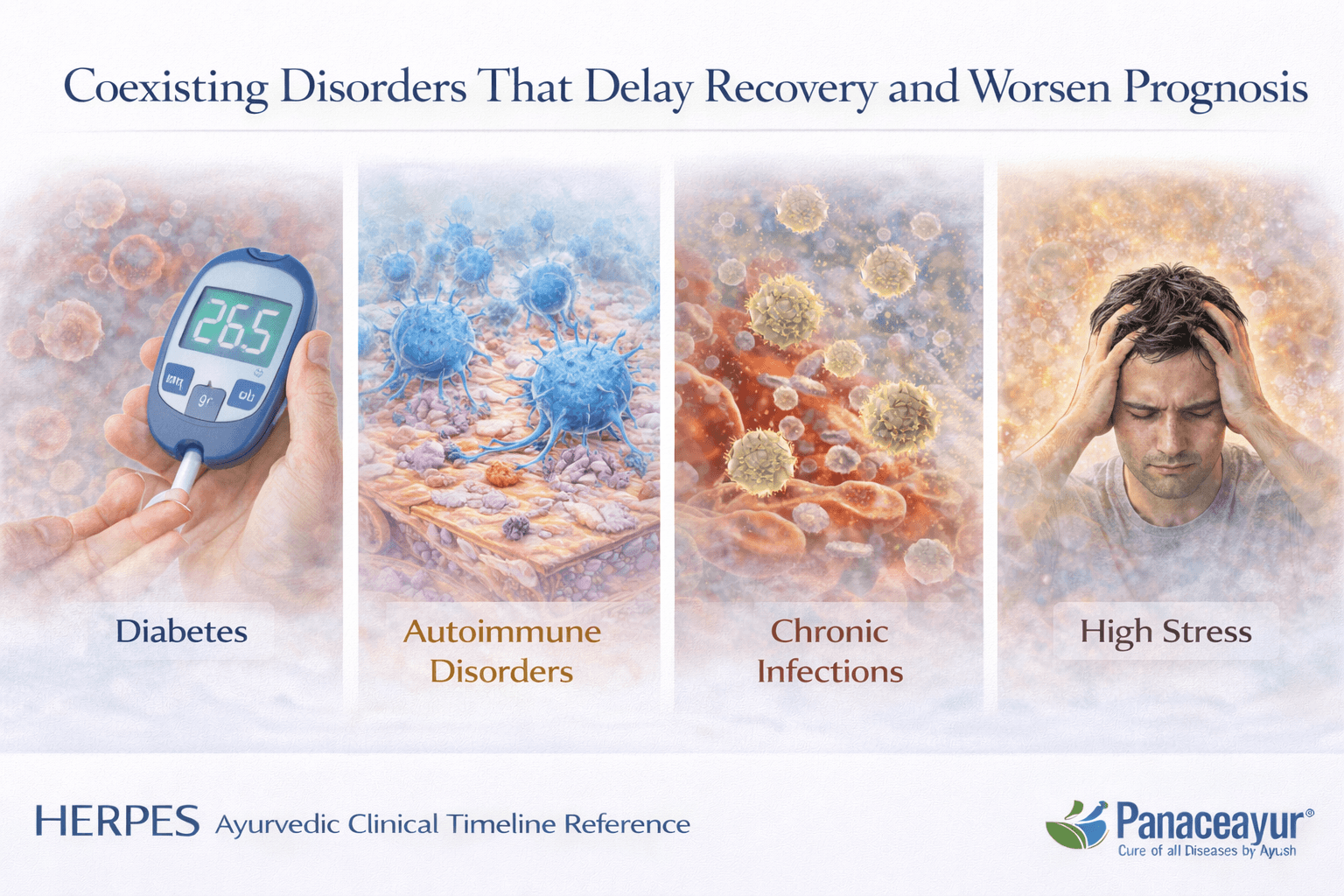
Digestive and Metabolic Disorders
Ayurveda places digestion at the center of all healing processes, and coexisting digestive or metabolic disorders significantly delay recovery in herpes. Conditions such as chronic acidity, bloating, constipation, irregular appetite, or sluggish digestion indicate persistent Agni dysfunction and ongoing Ama formation. You as a patient may notice that outbreaks recur after dietary indiscretion or digestive upset. Ayurveda explains that when digestion is impaired, medicines are poorly assimilated and Doshas remain aggravated. Prognosis in such cases becomes slower because treatment must first stabilize digestive function before deeper correction can occur [12], [15].
Chronic Stress and Sleep Disturbance
Mental stress and disturbed sleep are major contributors to delayed healing in herpes. Ayurveda recognizes the mind and nervous system as integral to disease expression, particularly in Vata and Pitta dominant conditions. Chronic anxiety, emotional strain, excessive mental activity, or irregular sleep directly aggravate Vata and weaken Ojas. You may experience outbreaks during emotionally demanding periods even when physical health appears stable. Ayurveda teaches that without addressing stress regulation and sleep quality, prognosis remains guarded regardless of medication strength, as the nervous system continues to trigger recurrence [7], [11], [15].
Hormonal and Endocrine Imbalance
Hormonal imbalance plays a significant role in delaying recovery, especially in recurrent or genital herpes. Fluctuations related to menstrual cycles, thyroid dysfunction, or adrenal strain influence Agni, Dosha stability, and tissue nourishment. You may notice that outbreaks cluster around hormonal shifts or periods of exhaustion. Ayurveda explains that hormonal regulation is closely tied to Shukra Dhatu and Majja Dhatu health. When these systems are unstable, healing slows and recurrence risk increases, extending treatment duration and complicating prognosis [11], [13], [15].
Autoimmune and Inflammatory Conditions
When herpes coexists with autoimmune or chronic inflammatory conditions, prognosis becomes more complex. Ayurveda interprets such states as deeper Dhatu involvement combined with long standing immune dysregulation. You may experience prolonged fatigue, widespread inflammation, or delayed recovery even between outbreaks. Treatment in such cases must proceed cautiously, focusing on gradual correction rather than aggressive intervention. Prognosis improves only when systemic inflammation is reduced and Ojas is rebuilt, which naturally requires extended duration [9], [13], [15].
Co Infections and Immune Overload
Coexisting viral or chronic infections place additional burden on the immune system and delay herpes recovery. Ayurveda recognizes that multiple disease processes competing for immune resources weaken Ojas and prolong healing. You may feel that despite consistent treatment, progress remains slow or inconsistent. Prognosis in such cases depends on comprehensive assessment and staged correction of immune overload rather than isolated focus on one condition. Addressing coexisting disease is therefore essential for improving long term outcome and reducing recurrence [1], [5], [15].
Why Ignoring Coexisting Disorders Worsens Prognosis
Ayurveda emphasizes that disease rarely exists in isolation. When coexisting disorders are ignored, treatment becomes fragmented and ineffective. You may interpret slow progress as treatment failure, while Ayurveda views it as incomplete assessment. Prognosis improves only when all contributing imbalances are addressed systematically. This holistic correction explains why treatment duration varies widely between individuals and why patience and comprehensive care are essential for lasting stability in herpes [15].
Prognosis in Oral Versus Genital Herpes From an Ayurvedic Perspective
Oral Herpes and Relatively Superficial Dhatu Involvement
From an Ayurvedic standpoint, oral herpes is generally associated with comparatively superficial Dhatu involvement, primarily affecting Rasa and Rakta Dhatu. The oral cavity is closely connected with digestion, salivary function, and early immune response, which allows the body to react more promptly to imbalance. You as a patient with oral herpes may notice clear triggering factors such as acidity, heat, fever, or emotional stress. Because deeper Dhatus are usually not involved in early or moderate oral herpes, prognosis tends to be more favorable when Agni is corrected and Pitta is pacified in a timely manner. Treatment duration, while still requiring discipline, is often shorter compared to genital involvement [9], [12], [15].
Genital Herpes and Deeper Tissue Penetration
Genital herpes is considered more complex in Ayurveda due to deeper Dhatu penetration and involvement of Shukra Dhatu along with Majja Dhatu. Shukra Dhatu governs reproductive vitality, hormonal balance, and regenerative capacity, making disorders in this tissue inherently slow to resolve. You may experience prolonged weakness, emotional sensitivity, fear of recurrence, or delayed recovery even after lesions heal. Ayurveda explains that diseases involving Shukra Dhatu demand sustained nourishment, stability, and Rasayana support over time. As a result, prognosis in genital herpes is more guarded and treatment duration is naturally longer than oral herpes [11], [13], [15].
Role of Majja Dhatu and Nervous System Sensitivity
In genital herpes, Majja Dhatu involvement is more prominent due to the proximity of reproductive organs to nerve pathways and deeper regulatory systems. This explains persistent tingling, pain, anxiety, and prodromal sensations that may continue even in the absence of visible lesions. You may feel that symptoms fluctuate unpredictably or are triggered by stress rather than physical causes alone. Ayurveda recognizes Majja Dhatu disorders as difficult to treat because they affect subtle biological control mechanisms. Prognosis improves only when nervous system stability is restored, which requires longer treatment duration and careful pacing [11], [15].
Psychological and Emotional Impact on Prognosis
Ayurveda considers emotional state inseparable from physical healing, particularly in conditions affecting the reproductive system. Genital herpes often carries emotional burden, fear, and shame, which aggravate Vata and further weaken Ojas. You may feel heightened anxiety, reduced confidence, or social withdrawal, all of which directly influence recurrence and healing speed. Oral herpes generally carries less emotional weight, allowing recovery to proceed with fewer psychological obstacles. Prognosis therefore differs not only due to tissue involvement but also due to mental and emotional factors [7], [13], [15].
Why Genital Herpes Requires Longer and More Structured Care
Ayurveda emphasizes that prognosis must be judged by the depth of tissue involvement rather than symptom location alone. Genital herpes involves deeper Dhatus, more sensitive Srotas, and stronger Vata influence, making rapid resolution unlikely. You may compare your progress with others and feel discouraged, but Ayurveda teaches that deeper diseases require longer correction to achieve stability. When treatment respects this principle and progresses methodically, long term prognosis improves significantly despite extended duration [15].
Influence of Diet and Lifestyle on Treatment Duration and Prognosis

Dietary Discipline as a Determinant of Healing Speed
In Ayurveda, diet is considered a primary therapeutic tool rather than a supportive measure alone. In herpes, improper diet directly aggravates Pitta and Vata Dosha, weakens Agni, and promotes Ama formation, all of which prolong treatment duration. You as a patient may notice that outbreaks follow intake of excessively spicy, sour, fermented, processed, or incompatible foods. Ayurveda explains that even potent medicines fail to act effectively when diet continues to disturb internal balance. Prognosis improves only when diet supports Agni stability and Dhatu nourishment, allowing therapy to work at a deeper level [12], [15].
Viruddha Ahara and Disease Persistence
Viruddha Ahara refers to incompatible food combinations and improper dietary habits that create metabolic conflict within the body. Examples include combining heavy proteins with sour or fermented items, irregular meal timing, overeating, or eating during emotional distress. Ayurveda teaches that Viruddha Ahara generates Ama and obstructs Srotas, creating an internal environment where chronic diseases persist. You may feel that treatment is ongoing without decisive improvement, while the root cause lies in continued dietary contradiction. Prognosis remains unfavorable until such patterns are corrected consistently [12], [9].
Lifestyle Irregularity and Vata Aggravation
Lifestyle irregularity is a major contributor to delayed healing in herpes. Late nights, excessive screen exposure, overwork, frequent travel, and lack of routine directly aggravate Vata Dosha. You may notice recurrence after sleep deprivation, emotional strain, or physical exhaustion even when diet is controlled. Ayurveda emphasizes that Vata driven disorders require stability and routine above all else. Without consistent daily rhythm, Doshas remain mobile and unpredictable, extending treatment duration and destabilizing prognosis [11], [15].
Sexual Excess and Dhatu Depletion
Ayurveda places great importance on moderation of sexual activity, particularly in conditions involving Shukra Dhatu. Excessive or poorly timed sexual activity depletes Shukra and Majja Dhatu, weakening regenerative capacity and immune resilience. You as a patient with genital herpes may experience delayed healing or increased sensitivity following such depletion. Prognosis improves when sexual discipline is maintained during treatment, allowing tissues to repair and stabilize fully. Ignoring this principle prolongs recovery and increases recurrence risk [11], [13], [15].
Sleep Quality and Ojas Restoration
Sleep is essential for Ojas formation and nervous system regulation. Inadequate or disturbed sleep weakens immunity, increases stress hormones, and destabilizes Doshas. You may notice that poor sleep precedes outbreaks or slows recovery even when other factors are controlled. Ayurveda teaches that healing cannot progress without adequate rest because Ojas is replenished primarily during deep sleep. Prognosis becomes favorable only when sleep patterns are corrected and protected throughout treatment [7], [13], [15].
Why Lifestyle Correction Is Non Negotiable
Ayurveda views diet and lifestyle as the foundation upon which all therapeutic interventions rest. Medicines cannot override continuous violation of biological principles. You may seek faster results through stronger formulations, but Ayurveda teaches that sustainable healing arises from alignment with natural rhythms. Prognosis improves significantly when dietary discipline and lifestyle regulation are maintained consistently, explaining why patients who follow these principles experience shorter treatment duration and fewer recurrences compared to those who do not [15].
Clinical Signs That Treatment Is Working and Prognosis Is Improving
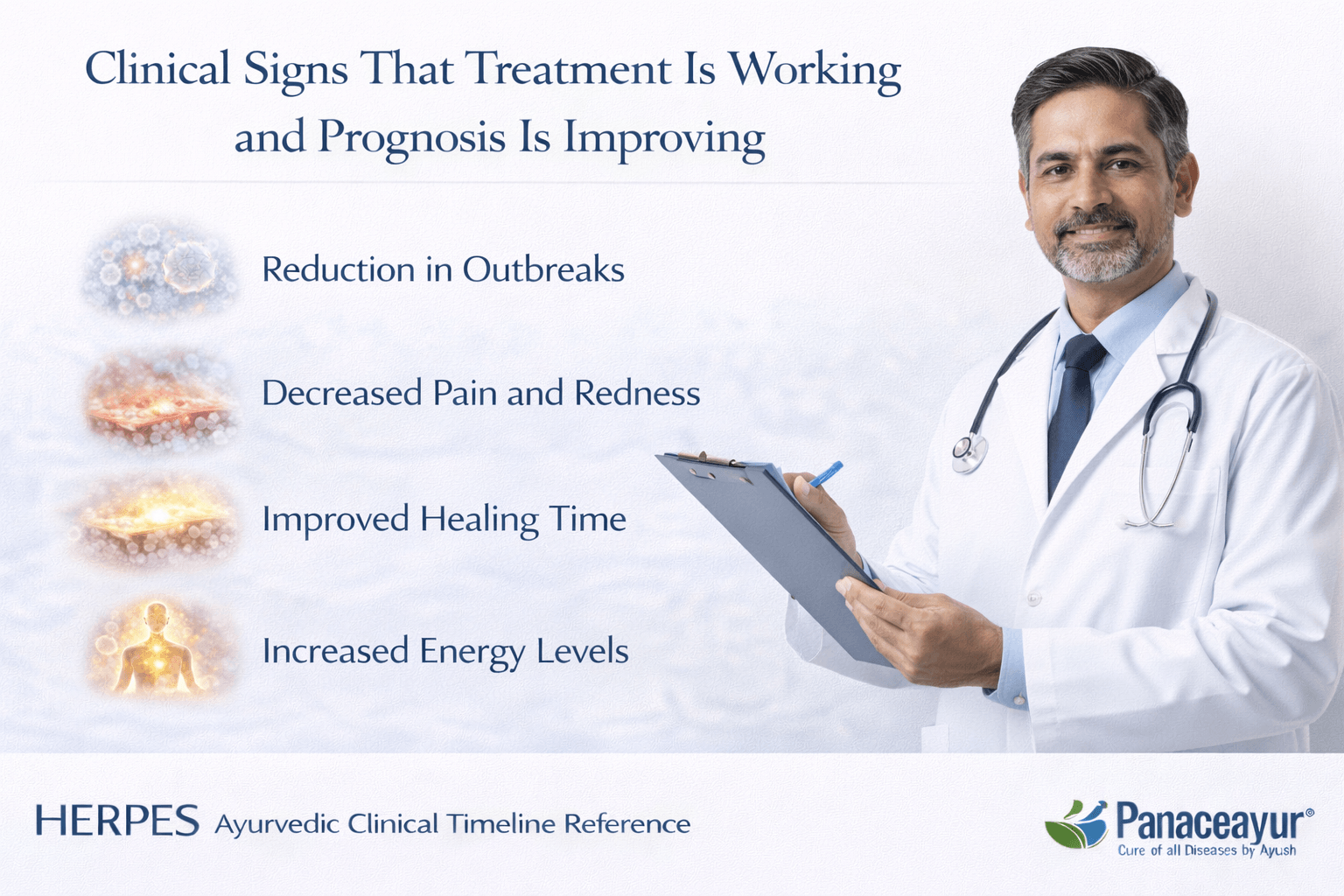
Reduction in Frequency and Intensity of Outbreaks
One of the earliest and most reliable clinical signs that treatment is working is a gradual reduction in the frequency and intensity of outbreaks. From an Ayurvedic perspective, this indicates that aggravated Doshas are beginning to stabilize and that the internal environment is becoming less supportive of disease expression. You as a patient may still experience occasional episodes, but they tend to be milder, shorter in duration, and less disruptive. Ayurveda emphasizes that this improvement reflects internal correction rather than suppression, and it is considered a positive prognostic indicator when sustained over time [9], [15].
Shortening or Absence of Prodromal Symptoms
Prodromal symptoms such as tingling, burning, heaviness, or vague discomfort often precede visible lesions in herpes. Ayurveda interprets these sensations as early signals of Dosha movement, particularly involving Vata and Pitta. When treatment is effective, these warning signs either become less intense or disappear altogether. You may notice that triggers which previously caused immediate symptoms no longer have the same effect. This change indicates improved Dosha control and reduced reactivity at the Majja and Rakta levels, suggesting that prognosis is improving [11], [15].
Improvement in Digestion and Metabolic Stability
Ayurveda considers improvement in digestion a central marker of healing progress. Signs such as stable appetite, absence of bloating, regular bowel movements, and reduced acidity indicate restoration of Agni. You as a patient may feel lighter, more energetic, and less prone to post meal discomfort. Because Agni governs assimilation of both food and medicine, its normalization strongly predicts sustained improvement in herpes. Prognosis improves significantly once digestion stabilizes, even if complete symptom resolution takes additional time [12], [15].
Faster Healing of Lesions When They Occur
When lesions do appear during treatment, their behavior provides valuable insight into prognosis. Ayurveda observes that quicker healing, reduced pain, minimal scarring, and absence of secondary infection reflect improved Dhatu nourishment and tissue resilience. You may notice that lesions resolve cleanly without prolonged discomfort or residual sensitivity. This indicates strengthening of Rakta and Mamsa Dhatu and suggests that treatment is progressing in the right direction [9], [15].
Improved Stress Tolerance and Emotional Stability
Because herpes is strongly influenced by nervous system regulation, emotional resilience is a key clinical sign of improvement. You as a patient may notice calmer responses to stress, better emotional regulation, and reduced anxiety related to disease recurrence. Ayurveda interprets this as stabilization of Vata and gradual restoration of Ojas. Improved mental balance often precedes complete physical stability and is therefore considered a powerful prognostic marker [7], [13], [15].
Enhanced Sleep Quality and Daytime Vitality
Better sleep quality and refreshed awakening are important indicators that healing is advancing. Ayurveda teaches that deep, uninterrupted sleep supports Ojas formation and nervous system repair. You may experience fewer awakenings, reduced mental restlessness, and improved daytime alertness. These changes signal systemic recovery and predict reduced recurrence over time, even before full clinical resolution is achieved [13], [15].
Consistency of Improvement Over Time
Ayurveda values consistency over sudden improvement. Temporary relief followed by relapse is not considered true progress. You as a patient may observe that improvements, once established, remain stable despite minor dietary or emotional challenges. This durability indicates that the body has regained regulatory strength rather than relying on external support alone. Such stability is one of the strongest indicators of favorable prognosis and long term recovery [15].
When Prognosis Becomes Poor and Why

Irregular or Interrupted Treatment
Ayurveda emphasizes continuity and discipline in therapy. When treatment is taken irregularly, stopped prematurely, or changed frequently, Doshas remain partially corrected and quickly regain dominance. You as a patient may feel initial relief and discontinue therapy, assuming recovery has occurred, only to experience recurrence after a short interval. Ayurveda interprets this pattern as incomplete correction of internal imbalance rather than treatment failure. Prognosis becomes poor when therapy does not proceed long enough to stabilize Dhatus and Ojas [15].
Long Term Self Medication Without Supervision
Self medication, especially prolonged use of suppressive or symptomatic remedies, negatively affects prognosis. Ayurveda teaches that medicines must be selected and adjusted based on disease stage, Dosha dominance, Agni status, and Dhatu involvement. When you self medicate, these variables are not assessed, leading to improper Dosha handling and deeper displacement of pathology. Over time, this increases chronicity and resistance to treatment, making recovery slower and more complex [9], [12], [15].
Ignoring Digestive Correction
Failure to correct digestion is one of the most common reasons for poor prognosis. Ayurveda clearly states that disease cannot be eradicated in the presence of persistent Agni dysfunction and Ama. You may focus on topical or systemic medicines while continuing improper diet or irregular eating habits. In such cases, medicines act inconsistently, and improvement remains partial. Prognosis worsens because the root metabolic disturbance continues to nourish disease persistence [12], [15].
Persistent Stress and Emotional Overload
Chronic stress, unresolved emotional strain, and mental exhaustion directly aggravate Vata and deplete Ojas. You may notice that outbreaks recur during emotionally challenging periods regardless of treatment adherence. Ayurveda recognizes that mental factors can override physical therapy if left unmanaged. Prognosis becomes poor when stress regulation and emotional balance are not addressed alongside medical treatment [7], [13], [15].
Repeated Suppression Without Internal Repair
Repeated cycles of symptom suppression without internal correction distort the natural disease course. Ayurveda explains that each suppression episode pushes Doshas deeper into Dhatus, increasing latency and recurrence potential. You may experience fewer visible symptoms initially but face more complex patterns later. Prognosis deteriorates because deeper tissues require longer and more intensive correction, extending treatment duration significantly [6], [12], [15].
Neglect of Coexisting Disorders
When coexisting digestive, hormonal, metabolic, or immune disorders are ignored, herpes treatment remains incomplete. Ayurveda views disease as a network of imbalances rather than an isolated event. You may focus solely on herpes while underlying conditions continue to weaken systemic resilience. Prognosis becomes unfavorable because the internal environment remains conducive to recurrence [15].
Premature Expectations and Loss of Patience
Ayurveda cautions against unrealistic expectations of rapid recovery in chronic conditions. When you expect quick results and lose patience, adherence declines and treatment consistency suffers. This psychological pattern itself aggravates Vata and disrupts healing. Prognosis worsens not because therapy is ineffective, but because the biological timeline of healing is not respected [15].
Long Term Outlook After Completion of Treatment

Stability of Doshas as the Primary Indicator
After completion of treatment, long term outlook in herpes is judged primarily by the stability of Doshas rather than the absence of recent symptoms alone. Ayurveda teaches that when Vata and Pitta remain balanced despite routine stressors, travel, dietary variation, or seasonal change, true internal correction has occurred. You as a patient may notice that situations which previously triggered outbreaks no longer disturb your system. This Dosha stability indicates a favorable long term prognosis and reflects successful completion of therapy [15].
Restoration and Maintenance of Dhatu Integrity
A positive long term outlook requires restoration of Dhatu strength, particularly Rasa, Rakta, Mamsa, Majja, and in genital cases Shukra Dhatu. Ayurveda explains that when Dhatus are properly nourished, tissues regain resilience and resistance to disease reactivation. You may experience improved stamina, faster recovery from illness, and greater physical confidence. This structural recovery at the tissue level explains why relapse becomes unlikely after properly completed treatment [9], [13], [15].
Sustained Ojas and Immune Resilience
Ojas stability is considered the hallmark of long term success in herpes management. When Ojas is restored, the body demonstrates resilience rather than fragility. You may observe improved stress tolerance, emotional balance, better sleep quality, and reduced susceptibility to infections. Ayurveda views this state as biological preparedness rather than passive remission. Prognosis remains favorable as long as Ojas is protected through disciplined lifestyle and periodic supportive care [13], [15].
Absence of Recurrence Despite Triggers
One of the most meaningful indicators of a favorable long term outlook is the absence of recurrence even when exposed to known triggers such as stress, dietary indulgence, illness, or fatigue. Ayurveda emphasizes that true recovery is tested not during ideal conditions but during challenge. You may live normally without constant vigilance or fear of relapse. This stability reflects deep correction of disease tendency rather than temporary suppression [15].
Transition From Active Treatment to Maintenance
After active treatment is completed, Ayurveda recommends a transition to maintenance focused on preservation rather than correction. This may include lighter Rasayana support, seasonal discipline, and continued attention to digestion and routine. You as a patient do not remain dependent on intensive therapy but maintain balance through conscious living. This transition marks the maturation of healing and supports a sustained favorable prognosis [13], [15].
Individual Responsibility in Sustaining Outcome
Ayurveda recognizes that long term outcome depends not only on treatment but also on individual responsibility. You play an active role by maintaining dietary discipline, stress regulation, sleep hygiene, and seasonal awareness. Prognosis remains favorable when these principles are respected. Relapse risk increases when biological limits are repeatedly violated. This shared responsibility model explains why outcomes vary even after successful treatment completion [15].
Realistic Definition of Long Term Success
Ayurveda defines long term success not as eradication of biological memory but as freedom from disease expression and vulnerability. You may carry a history of herpes, but the body no longer responds with pathology. This state represents functional cure in Ayurvedic terms and reflects the highest achievable prognosis through disciplined and complete treatment [15].
Cure Versus Management Explained in Ayurvedic Terms

Vyadhi Shamana and Vyadhi Nasha as Distinct Outcomes
Ayurveda clearly differentiates between Vyadhi Shamana and Vyadhi Nasha. Vyadhi Shamana refers to pacification of disease where symptoms are controlled and activity is reduced, but the underlying tendency may still remain. Vyadhi Nasha refers to complete resolution of disease tendency through correction of Doshas, restoration of Dhatus, stabilization of Agni, and strengthening of Ojas. You as a patient may experience symptom free periods in both states, but prognosis differs significantly. Ayurveda considers Vyadhi Nasha the true objective in chronic disorders like herpes, while Vyadhi Shamana is viewed as an intermediate or supportive outcome [9], [13], [15].
Why Most Treatments Stop at Management
Most treatment approaches aim for rapid symptom relief because it is immediately visible and reassuring. From an Ayurvedic viewpoint, this approach addresses surface expression without resolving internal imbalance. You may feel well for weeks or months, yet recurrence occurs when stress, diet, or immunity fluctuates. Ayurveda explains that without correcting Agni, clearing Ama, and rebuilding Dhatus, disease memory remains intact. This is why many patients remain in a cycle of management rather than resolution, even with long term therapy [12], [15].
Conditions Required for True Resolution
Ayurveda states that Vyadhi Nasha is possible only when specific conditions are fulfilled. These include sustained Dosha balance, restored digestive and tissue metabolism, unobstructed Srotas, and stable Ojas. You as a patient must complete the full therapeutic sequence rather than stopping when symptoms disappear. Classical texts emphasize that incomplete correction leads to recurrence, while disciplined continuation leads to durable outcome. Resolution is therefore not defined by speed but by completeness [13], [15].
Role of Time and Biological Pace
Ayurveda respects biological time as an essential component of healing. Chronic diseases that have developed over years cannot be undone in weeks without consequence. You may question why improvement feels gradual, but Ayurveda teaches that slow correction allows the system to reorganize without shock. This pacing prevents Dosha displacement and supports lasting stability. True resolution requires alignment with this biological rhythm rather than forceful intervention [15].
Ethical Communication of Cure to Patients
Ayurveda emphasizes ethical responsibility in communicating outcomes. Practitioners are advised to avoid false assurances and instead educate patients on realistic expectations. You should understand that cure in Ayurveda means freedom from recurrence and vulnerability, not denial of past disease existence. This clarity protects patient trust and encourages adherence to the complete healing process. Prognosis improves when understanding replaces unrealistic expectation [9], [15].
Why Ayurveda Does Not Promise Instant Cure
Ayurveda refrains from promising instant cure because such claims contradict its foundational principles. Diseases rooted in deep tissue imbalance require proportionate correction. You may encounter claims of rapid eradication, but Ayurveda evaluates success through long term stability rather than speed. This restraint is not a limitation but a reflection of respect for biological truth and sustainable healing [15].
Common Misconceptions Clarified Through Ayurveda

Absence of Symptoms Does Not Mean Cure
One of the most common misconceptions is equating absence of visible symptoms with cure. Ayurveda clearly states that disease can exist in an unmanifest state even when external signs are absent. In herpes, symptom free periods often represent Avyakta Avastha rather than true resolution. You as a patient may feel healthy and discontinue treatment, assuming recovery is complete. Ayurveda warns that without correction of Doshas, Agni, and Dhatu integrity, disease tendency remains dormant and can reactivate under stress or metabolic disturbance. Prognosis improves only when internal stability is achieved, not merely symptom silence [9], [15].
Short Treatment Duration Is Not Sufficient for Chronic Disease
Another widespread belief is that a short course of treatment is adequate for long standing or recurrent herpes. Ayurveda explicitly teaches that chronic diseases require proportionate duration of therapy. Conditions classified as Chirakari Vyadhi cannot be reversed quickly because pathology has penetrated multiple Dhatus over time. You may expect results within weeks, but Ayurveda emphasizes that meaningful correction unfolds over months. Misjudging the required duration leads to premature discontinuation and relapse, which further worsens prognosis [15].
One Medicine Cannot Suit Every Individual
Ayurveda strongly rejects the idea that a single medicine or formulation can cure herpes in all individuals. Treatment must be individualized based on Prakriti, Dosha dominance, Agni status, disease stage, and Dhatu involvement. You may hear testimonials suggesting universal success with a particular remedy, but Ayurveda views such claims as incomplete and misleading. Prognosis depends on personalized correction rather than standardized solutions, and ignoring this principle leads to inconsistent outcomes [11], [15].
Market Bought Remedies Are Not Equivalent to Guided Therapy
Many patients believe that purchasing medicines directly from the market can replicate the results of supervised treatment. Ayurveda clarifies that medicines act correctly only when matched precisely to the individual’s internal state. Without assessment and adjustment, the same remedy may pacify one Dosha while aggravating another. You may experience partial relief or even worsening despite adherence. Prognosis improves significantly when therapy is guided and modified according to response rather than self selected [12], [15].
Suppression Is Not the Same as Healing
Another misconception is assuming that reduction in outbreak frequency automatically indicates healing. Ayurveda differentiates between suppression of expression and resolution of disease tendency. You may experience fewer episodes while underlying imbalance persists. When triggers accumulate, recurrence returns, often with greater intensity. Ayurveda teaches that true healing is measured by resilience to triggers, not temporary quiet phases. Recognizing this distinction helps set realistic expectations and improves long term prognosis [6], [15].
Emotional Factors Are Not Secondary
Many patients underestimate the role of mental and emotional factors in herpes recurrence. Ayurveda considers the mind and nervous system integral to disease expression, especially in Vata and Majja Dhatu involvement. You may focus solely on physical treatment while ignoring stress, fear, or emotional exhaustion. Prognosis remains unstable when mental imbalance persists. Ayurveda clarifies that emotional regulation is not optional but essential for durable recovery [7], [13], [15].
Ayurveda Does Not Deny Modern Medicine but Reframes Outcome
A final misconception is that Ayurveda rejects modern medicine entirely. Ayurveda does not deny the usefulness of symptom control but reframes success as internal balance rather than dependence. You may benefit from temporary measures during acute phases, but Ayurveda emphasizes long term correction of biological terrain. Understanding this integrative perspective prevents confusion and allows realistic assessment of prognosis and healing timelines [9], [15].
FAQs

How long does herpes stay in the body according to Ayurveda
According to Ayurveda, herpes does not persist merely as an external infection but as a latent disease tendency when internal imbalance remains unresolved. This latent state is explained through Avyakta Avastha and Beeja Dosha, where pathology stays unmanifest but active at a subtle level. You may not experience symptoms for long periods, yet the disease can reactivate when Doshas become aggravated. Ayurveda therefore does not measure duration by presence or absence of lesions but by the stability of Doshas, Dhatus, and Ojas. When internal balance is restored, the disease loses its ability to express, even if biological memory exists
Can herpes be permanently cured according to Ayurveda
Ayurveda does not define cure as erasing biological history but as achieving Vyadhi Nasha, meaning elimination of disease tendency. When Doshas are balanced, Agni is strong, Dhatus are nourished, and Ojas is stable, recurrence stops despite exposure to triggers. You may live without fear of outbreaks or dependency on suppressive measures. This state is considered functional cure in Ayurvedic terms. Permanent freedom from recurrence is possible when treatment is completed fully and lifestyle discipline is maintained consistently
Why does herpes come back after years of no symptoms
Ayurveda explains recurrence after long symptom free periods as reactivation of dormant imbalance rather than new infection. Stress, illness, emotional shock, poor diet, sleep deprivation, or hormonal disturbance can aggravate Doshas and awaken Avyakta pathology. You may feel confused because symptoms return after years of stability. Ayurveda teaches that internal correction must be deep and sustained to prevent such relapse. Recurrence indicates that Dhatu or Ojas stability was incomplete rather than sudden failure of treatment
Does treatment duration differ for HSV one and HSV two
From an Ayurvedic perspective, treatment duration differs not because of viral classification but because of tissue involvement and Dosha dominance. Oral herpes generally involves superficial Dhatus and responds faster when treated early. Genital herpes often involves Shukra and Majja Dhatu, making it slower to resolve. You may notice longer timelines and greater emotional sensitivity in genital involvement. Ayurveda focuses on depth of pathology rather than virus type alone to determine prognosis and duration
Is lifelong treatment necessary for herpes
Ayurveda does not advocate lifelong intensive treatment when internal balance has been restored. Active treatment is continued until Doshas stabilize and recurrence stops. After that, maintenance focuses on diet, routine, seasonal discipline, and occasional supportive measures. You are not expected to remain dependent on medicines indefinitely. Lifelong dependency is seen as a sign of incomplete correction rather than necessity
Why does Ayurveda take longer than modern suppressive therapy
Ayurveda takes longer because it aims to correct the internal terrain rather than suppress outward expression. Suppressive approaches provide quick relief but do not rebuild Dhatus or Ojas. Ayurveda works sequentially through Agni correction, Ama elimination, Dosha pacification, and tissue regeneration. You may feel the pace is slow, but this gradual correction supports long term stability and better prognosis
What indicates that treatment can be safely stopped
Ayurveda considers treatment completion when recurrence stops, digestion remains stable, stress tolerance improves, sleep is restorative, and confidence returns. You should be able to face known triggers without disease expression. Stopping treatment based only on absence of lesions is discouraged. Prognosis is considered favorable only when internal markers of balance are consistently present over time
Can herpes worsen if treatment is stopped too early
Yes. Ayurveda warns that stopping treatment prematurely allows unresolved Doshas to regain dominance. You may experience relapse that is more frequent or deeper than before. Early discontinuation often leads to longer future treatment duration and more guarded prognosis. This is why Ayurveda emphasizes completion rather than quick relief
Does mental stress alone trigger recurrence
Ayurveda recognizes mental stress as a powerful trigger, particularly through Vata aggravation and Ojas depletion. You may experience outbreaks during emotionally intense periods even when physical health seems normal. Stress management is therefore a core part of prognosis improvement rather than an optional addition
What is the most important factor for long term prognosis
Ayurveda considers Ojas stability the most important factor for long term prognosis. When Ojas is strong, the body resists recurrence naturally. You may still face stress or illness, but disease expression does not occur. Building and protecting Ojas through complete treatment and disciplined living defines true success in herpes management
REFERENCE
MODERN MEDICAL & VIROLOGY REFERENCES
[1] Johnston, C., & Corey, L. (2016). Current concepts for genital herpes simplex virus infection. The New England Journal of Medicine, 375(7), 666–674.
https://www.nejm.org/doi/full/10.1056/NEJMra1601517
[2] Whitley, R. J., & Roizman, B. (2001). Herpes simplex viruses. Lancet, 357(9267), 1513–1518.
https://pubmed.ncbi.nlm.nih.gov/11377626/
[3] Wald, A., et al. (2006). Effect of condoms on reducing the transmission of herpes simplex virus type 2. JAMA, 285(24), 3100–3106.
https://jamanetwork.com/journals/jama/fullarticle/194809
[4] Kimberlin, D. W., & Rouse, D. J. (2004). Clinical practice: genital herpes. NEJM, 350, 1970–1977.
https://www.nejm.org/doi/full/10.1056/NEJMcp030796
[5] Schiffer, J. T., & Corey, L. (2013). Rapid host immune response and viral dynamics in herpes simplex virus infection. Nature Medicine, 19(3), 280–288.
https://www.nature.com/articles/nm.3103
[6] Benedetti, J. K., et al. (1994). Recurrence rates in genital herpes after antiviral suppression. Annals of Internal Medicine, 121(11), 847–854.
https://pubmed.ncbi.nlm.nih.gov/7978697/
[7] Glaser, R., & Kiecolt-Glaser, J. K. (2005). Stress-induced immune dysfunction. Nature Reviews Immunology, 5(3), 243–251.
https://www.nature.com/articles/nri1571
[8] Miller, C. S., et al. (2004). Viral latency, reactivation, and shedding. Oral Surgery, Oral Medicine, Oral Pathology, 98(3), 235–244.
https://pubmed.ncbi.nlm.nih.gov/15356468/
AYURVEDIC CLASSICAL REFERENCES
[9] Charaka Samhita, Chikitsa Sthana 7.
(Kustha Chikitsa – chronic, recurrent skin and mucosal disorders)
Chaukhambha Bharati Academy, Varanasi.
[10] Sushruta Samhita, Nidana Sthana 5.
(Kshudra Roga and Agantu Vyadhi concepts)
Chaukhambha Orientalia.
[11] Ashtanga Hridaya, Nidana Sthana 14.
(Vata-Pitta disorders, chronicity, nerve involvement)
Chaukhambha Surbharati.
[12] Charaka Samhita, Sutra Sthana 28.
(Agni, Ama, and disease persistence)
[13] Charaka Samhita, Chikitsa Sthana 1.
(Rasayana therapy and restoration of immunity and Ojas)
[14] Bhavaprakasha, Madhyama Khanda, Kustha Adhikara.
(Chronic ulcerative and vesicular conditions)
[15] Ashtanga Hridaya, Sutra Sthana 11.
(Dosha-Dhatu-Srotas progression and prognosis)
INTEGRATIVE / IMMUNOLOGY REFERENCES
[16] Abbas, A. K., Lichtman, A. H., & Pillai, S. (2021). Cellular and Molecular Immunology (10th ed.). Elsevier.
https://www.sciencedirect.com/book/9780323757485
[17] Virgin, H. W., Wherry, E. J., & Ahmed, R. (2009). Redefining chronic viral infection. Immunity, 30(1), 30–44.
https://www.cell.com/immunity/fulltext/S1074-7613(08)00524-3