



- Initial Clinical Assessment for Herpes Cure
- Identifying the Root Cause of Recurrent Herpes
- Why Standard Antiviral Drugs Fail to Cure Herpes
- Viral Latency and Hidden Reservoirs in Herpes
- Detoxification and Internal Terrain Correction
- Core Antiviral and Virucidal Treatment Phase
- Immune Reprogramming and Long Term Viral Control
- Nervous System and Neuro Immune Axis in Herpes Control
- Diet and Trigger Management
- Healing Reactions During Herpes Recovery
- Treatment Duration and Healing Timeline
- Why Treatments Fail and Common Reasons for Non Response
- Frequently Asked Questions
- Reference
Initial Clinical Assessment for Herpes Cure
(Beyond Symptoms: Understanding the Host, Not Just the Virus)
Herpes cure treatment protocol is one of the most searched medical questions worldwide. Millions of people diagnosed with HSV-1 and HSV-2 are told the virus cannot be cured, only suppressed. This article explains how an Ayurvedic herpes cure treatment protocol differs from conventional suppressive therapy, how viral latency works, and whether long-term viral elimination is biologically possible. [1], [2].Effective herpes cure-oriented treatment does not begin with antiviral selection. It begins with a comprehensive assessment of the host terrain in which the virus survives. Modern virology itself acknowledges that herpes simplex viruses persist not because of continuous replication, but because of their ability to exploit immune weaknesses, neural latency, and host-specific vulnerabilities [1].
The initial assessment therefore evaluates multiple interconnected dimensions rather than lesions alone. These include the patient’s constitutional immune strength, frequency and pattern of recurrences, duration of infection, previous exposure to antiviral drugs, and the presence of asymptomatic viral shedding. Clinical studies demonstrate that individuals with identical viral strains can experience vastly different disease courses based on immune regulation and host response [2].
From an Ayurvedic standpoint, this aligns with the evaluation of Prakriti and Vikriti, where individual variability determines disease expression and treatment response [11]. Digestive efficiency, metabolic stability, stress tolerance, sleep quality, and emotional resilience are assessed because they directly influence immune surveillance and viral containment mechanisms. Modern research confirms that impaired immune signaling and neuro-immune dysregulation allow herpes viruses to persist silently and reactivate unpredictably [3].
A crucial component of assessment is the patient’s therapeutic history. Long-term or repeated use of suppressive antivirals often masks symptoms without restoring immune competence. Over time, this may reduce the body’s natural antiviral responsiveness, creating a dependency cycle rather than resolution [1], [2]. Identifying this pattern early is essential to designing a protocol that aims for eradication rather than indefinite suppression.
Thus, the goal of the initial clinical assessment is to answer a fundamental question: why does the virus continue to survive in this individual, despite treatment, time, or apparent health? Without this clarity, no protocol, Ayurvedic or otherwise, can claim curative intent.
Identifying the Root Cause of Recurrent Herpes
(Why the Virus Persists and Keeps Reactivating)
Recurrent herpes is not caused by repeated external exposure. It is a manifestation of internal biological permissiveness that allows a latent virus to reactivate. Virological literature clearly establishes that once herpes simplex virus enters latency within neural ganglia, eradication requires more than replication blockade [1].
The root cause of recurrence lies in the failure of immune surveillance at critical checkpoints. During periods of stress, inflammation, hormonal fluctuation, or metabolic strain, the immune system deprioritizes viral containment, allowing reactivation and shedding [2]. This explains why outbreaks often occur without visible triggers and why some individuals remain asymptomatic carriers while others suffer frequent episodes [3].
Ayurveda conceptualizes this state as a disturbance of internal balance where Agni, Ojas, and tissue integrity fail to restrain latent pathology [11]. When digestion is impaired, systemic inflammation increases, and neuroendocrine stress responses dominate, the internal terrain becomes favorable for viral resurgence. Modern immunology mirrors this understanding by recognizing that chronic immune activation paradoxically leads to immune exhaustion, reducing effective antiviral defense [2].
Importantly, herpes recurrence is not solely a skin or mucosal event. Neurotropic behavior of the virus means that nervous system health plays a decisive role in disease persistence. Psychological stress, sleep deprivation, and emotional trauma directly influence neuro-immune signaling, creating windows of viral opportunity [1], [3].
Therefore, the root cause of recurrent herpes is not the virus itself, but the internal environment that allows the virus to survive, hide, and reactivate. Any treatment protocol that ignores this reality will inevitably result in temporary relief followed by recurrence. A cure-oriented approach must first correct these foundational imbalances before attempting viral elimination.

How antiviral medicines actually work
I am Dr Arjun Kumar, and when I speak to patients about herpes treatment, the first clarification I make is about how antiviral medicines truly function. Drugs such as acyclovir and valacyclovir are designed to slow down viral multiplication when the virus is active. They interfere with viral DNA synthesis only during the replication phase. When the virus is not actively multiplying, these medicines have very little effect [4].
You may notice that lesions heal faster or outbreaks become shorter while taking these medicines. This improvement often creates the impression that the disease is being controlled at a deeper level. In reality, the medicine is only suppressing surface activity, not removing the virus from the body.
Why antivirals cannot remove the herpes virus
From a virology perspective, herpes simplex virus enters a dormant state soon after the first infection. It hides inside nerve cells, especially within sensory ganglia, where it remains inactive for long periods. During this dormant phase, the virus does not replicate, and antiviral medicines have nothing to act upon [4], [5].
As a result, even if you take antivirals for months or years, the virus remains safely hidden inside the nervous system. This is the main reason outbreaks return once the medicine is stopped. The virus was never eliminated. It was only kept temporarily quiet.
What long term antiviral use means for the immune system
In clinical practice, I often see patients who have been on suppressive antivirals for many years. While their outbreaks may be less frequent, their immune system has not learned to control the virus on its own. Continuous suppression reduces the opportunity for natural immune recognition and immune memory development [5].
You may feel dependent on the medicine, worrying that stopping it will immediately bring back symptoms. This dependency is not a personal failure. It is a limitation of the drug based approach, which focuses on control rather than recovery of immune function.
Silent viral shedding despite antiviral therapy
Another important point patients are rarely told is that antivirals do not fully stop viral shedding. Even without visible blisters or pain, the virus can still be released from the skin or mucosa. Studies have shown that people taking daily antivirals can still transmit the virus unknowingly [6].
This explains why many patients feel confused or frustrated when transmission occurs despite strict adherence to medication. The absence of symptoms does not always mean the absence of viral activity.
Why modern medicine calls herpes incurable
Modern medical guidelines openly state that current antiviral therapies do not cure herpes. They do not change the latent state of the virus or remove it from nerve tissue [4], [6]. The treatment goal in conventional medicine is long term management, not eradication.
This is why patients are often told that herpes is lifelong and must be managed indefinitely. The limitation lies in the treatment model, not in the patient’s body.
A patient centered perspective
When you understand these mechanisms, it becomes clear that antivirals fail to cure herpes not because you did something wrong, but because the medicine was never designed to restore immune balance or eliminate latent virus. They work on the virus when it is active, while the real problem lies in where and how the virus survives quietly inside the body [4], [5].
A cure oriented approach must therefore focus on strengthening immune intelligence, correcting internal imbalances, and addressing the deeper environment that allows the virus to remain hidden. Without this shift, symptom suppression will continue to replace true healing

(Where the Virus Hides and Why It Escapes Treatment)
Understanding what latency really means
As Dr, I explain to patients that herpes does not behave like a typical infection that stays in the blood or skin. After the initial infection, the herpes virus travels along nerve pathways and settles deep inside nerve cells. This state is called latency. In this phase, the virus remains alive but inactive, without producing new virus particles [4].
You may feel completely normal during this time. There may be no blisters, no pain, and no visible symptoms. However, the virus is still present inside the body, quietly waiting for the right conditions to reactivate.
Nerve ganglia as viral reservoirs
Scientific research has clearly shown that herpes simplex virus establishes latency mainly in sensory nerve ganglia, such as the trigeminal ganglion in oral herpes and the sacral ganglia in genital herpes [7]. These nerve clusters act as protected shelters where the virus remains hidden from both medicines and immune cells.
From a patient’s perspective, this explains why creams, tablets, or short courses of medicine cannot permanently remove the virus. The medicines circulate in blood and tissues, but they do not effectively eliminate virus that is sitting quietly inside nerve cells [4], [8].
Why the immune system cannot easily detect latent virus
During latency, the virus produces very few signals that alert the immune system. There is minimal viral protein expression, which means immune cells have little to recognize or attack [7]. This is not a weakness of your immune system alone, but a survival strategy of the virus.
I often reassure patients that recurrent herpes does not mean their immunity is completely weak. It means the virus is biologically skilled at hiding. Stress, illness, hormonal changes, or fatigue can temporarily reduce immune surveillance, allowing the virus to wake up and travel back to the skin or mucosa [8].
Neurotropic nature of herpes viruses
Herpes viruses are described as neurotropic, meaning they have a special affinity for nerve tissue. Research in neurovirology confirms that the nervous system plays a central role in herpes persistence and recurrence [8]. Emotional stress, poor sleep, and chronic anxiety directly affect nerve signaling and immune coordination.
You may notice that outbreaks often appear during stressful periods or after physical exhaustion. This is not coincidence. It reflects the close relationship between the nervous system and viral reactivation.
Why latent reservoirs make cure difficult
From a conventional medical viewpoint, latent viral reservoirs are the main reason herpes is labeled incurable [4]. Current antiviral drugs do not destroy virus hidden in nerve cells. They only act when the virus becomes active again.
In my clinical approach, this understanding is crucial. Any herpes cure oriented protocol must focus on improving nerve health, immune vigilance, and the internal environment that allows latency to persist. Without addressing these reservoirs, treatment will repeatedly chase symptoms while the root cause remains untouched.
A patient focused conclusion
When you understand latency and reservoirs, it becomes clear why herpes behaves unpredictably and why simple treatments fail. The virus is not constantly attacking you. It is hiding. True healing begins when treatment addresses where the virus lives, not just where symptoms appear [4], [7], [8].
Detoxification and Internal Terrain Correction

(Preparing the Body to Release the Virus)
Why detoxification comes before viral elimination
In a herpes cure treatment protocol, detoxification is not about harsh cleansing or forcing the body to react. It is about correcting the internal environment that allows the virus to survive. Chronic viral persistence is strongly linked to systemic inflammation, metabolic congestion, gut imbalance, and immune fatigue [9], [10]. When these conditions exist, even the most targeted therapies struggle to work effectively.
Many patients notice that outbreaks tend to follow periods of poor digestion, stress, irregular sleep, or illness. These are not random events. They reflect internal changes that temporarily weaken immune coordination and create favorable conditions for viral reactivation.
Understanding the internal terrain
The internal terrain refers to the functional state of digestion, metabolism, tissues, and immune communication. When digestion is impaired, metabolic waste accumulates and circulates throughout the body. This waste interferes with immune signaling and tissue resilience, making viral control more difficult [11].
A virus does not thrive in a balanced internal environment. It thrives where digestion is weak, inflammation is high, and immune responses are disorganized. Detoxification therefore focuses on restoring balance rather than directly attacking the virus.
Gut health and immune clarity
Modern research clearly shows that gut health plays a central role in immune regulation. Disruption of gut microbiota leads to chronic immune activation followed by immune exhaustion, reducing the body’s ability to contain latent viruses [10].
Symptoms such as bloating, acidity, irregular bowel movements, or food sensitivities often accompany recurrent herpes. These signs indicate that immune resources are being diverted toward managing internal imbalance instead of maintaining viral control [9].
Restoring gut function improves nutrient absorption, reduces inflammatory load, and reestablishes immune clarity. This step is foundational before deeper antiviral or immune restoring therapies are introduced.
Gentle and individualized detoxification
Detoxification within this protocol is always gentle and personalized. It is not a standardized cleanse. The approach depends on digestive strength, overall vitality, disease duration, and prior medical exposure.
For some individuals, dietary correction and digestive support are sufficient. For others with long standing illness or heavy medication history, structured internal cleansing may be beneficial. Panchakarma, when used, is optional and recommended only when clinically appropriate [11].
How terrain correction improves outcomes
When the internal terrain is corrected, several changes occur naturally. Inflammation reduces. Immune signaling becomes more precise. Nervous system stress decreases. Tissues respond better to therapy. This creates the ideal foundation for antiviral and immune restoring interventions to function effectively [9], [10].
Many patients experience improved energy, better sleep, clearer digestion, and reduced trigger sensitivity even before direct antiviral therapy begins. These early shifts indicate that the body is moving into a state that no longer supports viral persistence.
A practical patient perspective
Detoxification may feel subtle, but its role is fundamental. This stage is not about quick symptom suppression. It is about resetting the internal environment so the virus gradually loses its survival advantage.
Without terrain correction, treatment repeatedly addresses symptoms while deeper conditions remain unchanged. With proper detoxification, the body becomes capable of supporting long term healing rather than temporary control [9], [10], [11].

(Herbal Antivirals and Immune Targeting for Herpes Cure)
What this phase is meant to achieve
After detoxification and internal terrain correction, the next step is the core antiviral phase. The purpose of this phase is not only to calm outbreaks, but to reduce the virus’s ability to replicate, shed silently, and reactivate repeatedly. Many patients want a single strongest herb. In reality, the best clinical results usually come from a well designed combination that targets the virus and also supports immune coordination [12].
This phase is introduced only when digestion, absorption, and inflammatory load are stable enough for the body to respond properly to deeper therapy. That is why earlier stages matter.
How herbal antivirals work differently from standard drugs
Modern pharmacology shows that many plant compounds act through multiple pathways at the same time. Some interfere with viral attachment and entry. Some affect replication enzymes. Some reduce inflammatory damage caused by the immune system itself. This multi target nature is one reason herbal antivirals can remain effective across different viral behaviors without relying on a single molecular target [12].
You may notice that when a formula is built correctly, symptoms improve along with overall energy, sleep stability, digestion, and stress tolerance. This suggests that the therapy is working at a broader biological level rather than only silencing visible outbreaks.
The importance of synergy and formulation design
A single herb can help, but herpes is not sustained by one problem. It involves viral latency, immune dysregulation, nervous system stress signaling, and tissue vulnerability. That is why synergistic combinations are emphasized. Scientific literature on herbal antiviral strategies highlights that combinations may improve antiviral effect and immune modulation together, which is clinically valuable for chronic infections [12].
From a practical patient perspective, this is also why market bought single product approaches often disappoint. The formula must match the person, the stage of disease, and the internal terrain.
Evidence support for herbal approaches against herpes viruses
Several botanical compounds and herbal extracts have demonstrated antiviral potential against herpes viruses in laboratory and clinical contexts. Published reviews and research summaries report activity against herpes simplex, including inhibition of replication and support of host defenses, depending on the compound, preparation, and dosage [13].
It is important to understand what this evidence means. Research supports that certain herbs can act against viral mechanisms, but real world success still depends on quality, preparation method, absorption, and correct clinical selection.
Immune modulation as part of antiviral success
A critical point is that the antiviral phase is not separate from immune restoration. Many medicinal plants influence immune signaling and inflammatory balance. Research on immunomodulatory leads from plants shows that botanical compounds can influence immune cell activity and cytokine pathways, helping the body contain viral reactivation more effectively [14].
This matters because herpes persistence is not only about the virus. It is also about whether the immune system can maintain stable surveillance without exhaustion.
Safety, quality, and global credibility
Patients often ask how to judge whether a natural product is real or trustworthy. International monographs and standard references highlight an important reality. Herbal medicines can be effective, but quality, adulteration risk, incorrect species, and improper extraction methods can completely change outcomes [15].
This is why this antiviral phase must be guided. It requires correct sourcing, correct formulation, and careful monitoring. Without that, patients may blame Ayurveda, when the real issue is inconsistent product quality or an unsuitable formula.
What you can expect in this phase
During this phase, many people notice fewer outbreaks, reduced intensity of symptoms, improved recovery time, and less sensitivity to common triggers. Some also notice short periods of adjustment as the immune system shifts. This is monitored and managed through dose adjustment and supportive measures.
The larger goal is not temporary suppression. The goal is to weaken the virus’s capacity to re activate while strengthening the body’s long term ability to prevent recurrence [12], [13], [14], [15].

(Teaching the Body to Control Herpes Naturally)
Why immune reprogramming is essential after the antiviral phase
After the antiviral phase reduces viral activity, the most important question remains. Why did the virus persist in the first place. The answer lies in immune coordination rather than immune strength alone. Herpes viruses survive not because the immune system is absent, but because immune responses become misdirected, exhausted, or poorly synchronized over time [2], [7].
Immune reprogramming focuses on restoring the body’s natural ability to recognize, remember, and control the virus without continuous external suppression. This step separates short term improvement from long term stability.
Understanding immune memory and herpes persistence
In a healthy response, the immune system learns from past infections and responds faster and more effectively in the future. With herpes, this learning process is incomplete. The virus hides during latency and avoids proper immune imprinting. As a result, each reactivation feels like a new event to the immune system rather than a familiar threat [7].
You may notice that outbreaks repeat with similar intensity year after year. This pattern reflects a failure of immune memory rather than a failure of treatment alone.
Restoring immune intelligence rather than overstimulation
Many patients assume that boosting immunity aggressively is the solution. In reality, chronic viral illness is often associated with immune exhaustion and low grade inflammation rather than true weakness. Scientific studies show that prolonged immune activation leads to reduced antiviral efficiency over time [16].
Immune reprogramming therefore emphasizes balance. The goal is to restore clarity and precision in immune signaling, not to overstimulate the system. When immune responses become more intelligent, the body can suppress viral reactivation with less effort.
The role of latency control in immune reprogramming
Research on herpes latency confirms that long term control depends on continuous immune surveillance at the neural level [2], [7]. When immune vigilance improves, the virus remains silent for longer periods and shedding reduces.
From a patient perspective, this often appears as longer symptom free intervals, reduced sensitivity to triggers, and improved recovery from stress or illness.
Supporting immune longevity and resilience
Chronic infections often accelerate immune aging. Scientific literature describes this process as immune fatigue, where the system becomes less responsive with time [16]. Reprogramming aims to slow or reverse this process by restoring adaptive flexibility.
Patients frequently report broader improvements during this phase. Energy levels rise. Sleep quality improves. Mental clarity returns. These changes indicate that immune function is stabilizing rather than constantly reacting.
What this phase means for long term outcomes
Immune reprogramming is not an instant change. It develops gradually as the body relearns how to manage viral presence without panic or suppression. This phase explains why lasting results require time and consistency rather than short aggressive interventions.
When immune intelligence is restored, herpes loses its ability to surprise the body. Reactivation becomes rare or absent, not because the virus is chased constantly, but because the internal environment no longer supports its return [2], [7], [16].
Nervous System and Neuro Immune Axis in Herpes Control

(How Stress and Nerve Health Influence Viral Reactivation)
Why the nervous system matters in herpes
Herpes viruses are not limited to the skin or mucosa. They are neurotropic, meaning they have a natural affinity for nerve tissue. After the initial infection, the virus remains closely linked to the nervous system, especially sensory nerves. This makes nerve health a central factor in whether the virus stays silent or becomes active again [17].
Many patients notice a clear pattern. Outbreaks often follow periods of emotional stress, anxiety, sleep deprivation, or physical exhaustion. This pattern is not psychological imagination. It reflects real biological communication between the nervous system and the immune system.
Understanding the neuro immune axis
The neuro immune axis refers to the continuous two way communication between the nervous system and immune cells. Stress signals from the brain directly influence immune responses through hormones and neurotransmitters. When stress becomes chronic, immune responses become less coordinated and less effective at controlling latent viruses [17].
You may feel that your immunity is fine most of the time, yet outbreaks appear during stressful phases. This happens because stress hormones temporarily suppress antiviral immune activity while increasing inflammation, creating a window for viral reactivation.
Sleep, stress hormones, and viral control
Sleep is one of the strongest regulators of immune balance. Research shows that poor sleep alters immune signaling, reduces antiviral defense, and increases inflammatory responses [18]. Even short periods of sleep disruption can weaken immune surveillance.
Patients often report outbreaks after travel, night shifts, or prolonged mental strain. These events disturb circadian rhythm and stress hormone balance, which directly affects the body’s ability to restrain latent herpes virus.
Nervous system calm as a therapeutic tool
Supporting nervous system stability is not an optional lifestyle add on. It is a therapeutic necessity. When the nervous system remains calm, immune responses become more efficient and consistent. Viral reactivation becomes less frequent because the internal signals that wake the virus are reduced [17].
This is why patients who improve sleep quality, reduce chronic stress, and maintain emotional balance often notice fewer outbreaks even before completing full treatment.
Breaking the stress outbreak cycle
Chronic stress creates a loop. Stress weakens immune control. Viral reactivation increases physical and emotional distress. This further activates stress responses. Breaking this cycle requires addressing nerve health alongside antiviral and immune therapy.
Neuro immune balance allows the body to respond to viral presence without panic or overreaction. Over time, this reduces the frequency and intensity of reactivation episodes [18].
A patient centered understanding
Herpes does not reactivate randomly. It responds to internal signals. When the nervous system is overstimulated, immune control weakens. When nerve health is supported, immune responses stabilize and the virus remains silent.
Understanding the neuro immune axis helps patients stop blaming themselves for outbreaks. It also explains why comprehensive healing must include nervous system care along with antiviral and immune focused treatment [17], [18].
Diet and Trigger Management

(How Daily Food and Habits Influence Herpes Reactivation)
Why diet directly affects herpes activity
Diet plays a much larger role in herpes recurrence than most patients realize. Food is not only a source of calories. It directly influences inflammation, immune balance, gut health, and nervous system stability. When dietary choices repeatedly disturb these systems, viral reactivation becomes more likely [19].
Many patients notice that outbreaks seem to follow certain foods or lifestyle patterns. This observation is clinically valid. Research confirms that nutritional imbalance and inflammatory dietary patterns can impair immune regulation and increase susceptibility to viral activation [20].
Understanding dietary triggers from a biological view
Certain foods increase inflammatory signaling or place stress on digestion and metabolism. When digestion becomes overloaded, immune resources are diverted away from viral surveillance toward managing metabolic stress [19]. This creates an internal environment where herpes virus can more easily reactivate.
Highly processed foods, excessive refined sugar, alcohol, and irregular eating patterns are common contributors. These do not cause herpes directly, but they weaken the body’s ability to keep the virus dormant.
The role of amino acid balance
Scientific research has shown that amino acid balance can influence herpes virus behavior. Diets disproportionately high in certain amino acids may support viral replication pathways, while balanced nutrition helps maintain immune restraint [20].
This does not mean extreme restriction. It means mindful balance. Patients who follow structured dietary guidance often report fewer outbreaks and faster recovery even before advanced treatment phases are completed.
Gut friendly nutrition and viral control
A stable gut environment supports immune clarity. Diets that promote gut irritation, bloating, or irregular bowel habits create low grade inflammation that weakens immune coordination [19]. This is why digestive symptoms often accompany herpes recurrence.
Gentle, regular meals with easily digestible foods help reduce inflammatory load and improve nutrient absorption. Over time, this strengthens immune consistency and reduces trigger sensitivity.
Lifestyle triggers beyond food
Triggers are not limited to diet. Dehydration, irregular sleep, excessive caffeine, and prolonged fasting can all act as stressors on the nervous and immune systems [20]. When combined with dietary strain, these factors significantly increase the likelihood of reactivation.
Patients often underestimate the cumulative effect of small daily habits. Correcting these patterns reduces viral pressure without aggressive intervention.
A patient centered approach to dietary discipline
Dietary correction is not about perfection or fear of food. It is about creating stability. When food supports digestion, immunity, and nervous system calm, the virus loses many of its activation signals.
Patients who adopt consistent dietary routines often experience fewer triggers, improved energy, and better emotional balance. These changes support long term viral control and prepare the body for deeper healing phases [19], [20].
Healing Reactions During Herpes Recovery

(Understanding Temporary Changes as the Body Clears the Virus)
What healing reactions really mean
During a cure-oriented herpes treatment protocol, some patients experience temporary changes in symptoms or sensations. These are commonly referred to as healing reactions. Healing reactions are not side effects, and they do not indicate that the treatment is harming the body. Instead, they reflect shifts in immune activity, inflammation resolution, and viral load dynamics [21].
When the body begins to regain immune control over a long-standing viral presence, internal processes change. These changes can sometimes be felt before stability is fully restored.
Why healing reactions occur in herpes treatment
Herpes viruses interact closely with immune and nervous system pathways. When antiviral suppression is replaced by immune reactivation and viral clearance, immune signaling increases temporarily. This can lead to short-term sensations such as mild fatigue, body ache, warmth, headache, or brief symptom flares [21], [22].
From a biological perspective, these reactions are linked to cytokine shifts and immune recalibration. Studies in antiviral and immune modulation show that changes in immune activation can produce transient symptoms as the body adjusts [21].
Differentiating healing reactions from disease worsening
A common concern among patients is whether a temporary flare means the disease is getting worse. Healing reactions differ from disease progression in several important ways. They are usually mild, short lived, and followed by improved stability. They do not progressively worsen or persist unchecked [22].
In contrast, untreated or poorly controlled herpes tends to show increasing frequency, intensity, or duration of outbreaks over time. Healing reactions move in the opposite direction, toward overall improvement.
Commonly observed healing responses
Some patients may notice brief skin sensitivity, tingling along nerve pathways, or short episodes of fatigue. Others may experience digestive changes or altered sleep for a short period. These responses are monitored carefully and adjusted through dosage modification, hydration, rest, and supportive care [21].
It is important to note that not all patients experience noticeable healing reactions. Absence of reactions does not mean lack of progress. Healing responses vary based on immune history, nervous system sensitivity, and disease chronicity.
The role of monitoring and guidance
Proper medical supervision is essential during this phase. Healing reactions should always be mild and manageable. If symptoms become intense or prolonged, treatment is adjusted. This prevents unnecessary strain and ensures that recovery continues safely [22].
Patients are encouraged to report changes rather than suppress them immediately. Open communication allows differentiation between normal adjustment and true intolerance.
A patient focused reassurance
Healing reactions can feel unsettling if they are not explained in advance. Understanding their purpose reduces anxiety and prevents premature discontinuation of treatment. These reactions indicate that the body is engaging with the virus at a deeper level rather than merely suppressing symptoms [21], [22].
With proper guidance, healing reactions pass, stability returns, and the body moves closer to sustained viral control. This phase is a transition, not a setback, on the path toward long term recovery.
Treatment Duration and Healing Timeline
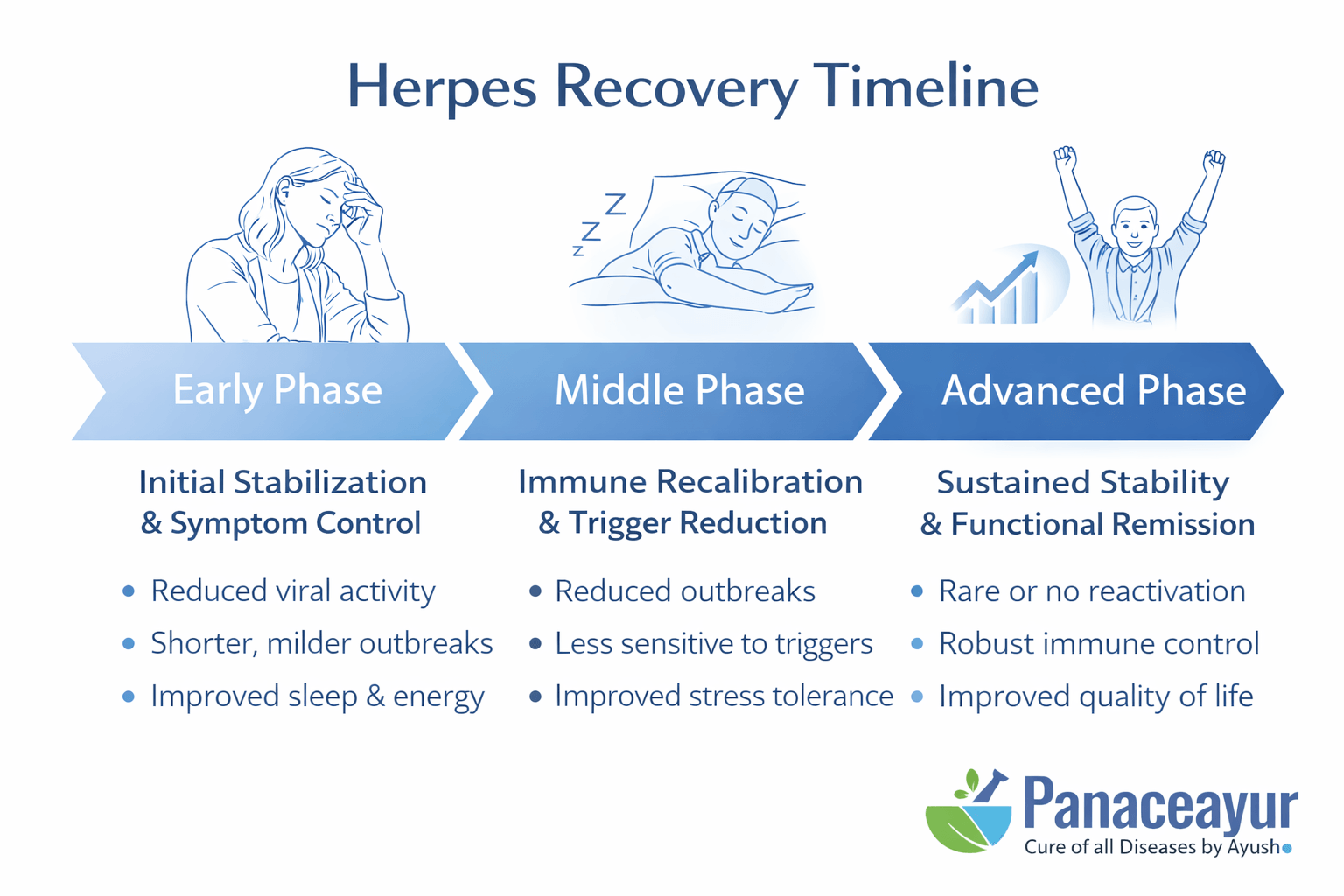
Why understanding the timeline is critical for real healing
Herpes recovery fails most often not because treatment is ineffective, but because expectations are unrealistic. Many patients subconsciously expect herpes to behave like a bacterial infection where antibiotics lead to rapid resolution. Scientifically, herpes does not follow that model. It is a latent neurotropic virus that integrates itself into long term immune and nervous system dynamics [21].
A clear timeline reframes healing as a biological progression, not a quick fix. It helps patients differentiate between normal transitional phases and true lack of response. Without this understanding, even successful treatment can be abandoned prematurely.
Real example:
A patient with eight years of recurrent outbreaks stopped treatment at six weeks because she still felt occasional tingling. In reality, tingling at that stage reflected immune re engagement, not failure. When she resumed treatment with proper guidance, outbreaks stopped completely within the next few months.
Early phase: internal stabilization and reduction of viral pressure
This initial phase focuses on calming the internal environment. Inflammation begins to reduce, immune signaling becomes less chaotic, and the body starts responding more predictably. Outbreaks may still occur, but they are often shorter, less painful, and resolve faster [21].
Patients commonly notice improvements beyond herpes itself. Digestion becomes smoother, sleep improves, and baseline fatigue reduces. These changes are early markers that immune and nervous system coordination is improving.
Real example:
A man with monthly genital outbreaks noticed that while a mild episode appeared in the first month, it healed in three days instead of the usual ten. At the same time, his chronic acidity resolved. This indicated internal stabilization even before full viral control.
Middle phase: immune recalibration and loss of trigger sensitivity
This phase is where meaningful long term change occurs. The immune system begins to recognize viral signals earlier and respond with less inflammation. Reactivations reduce significantly, and common triggers such as stress, travel, or lack of sleep lose their power [23].
Patients often report that situations which previously guaranteed an outbreak now pass without consequence. This reflects restoration of immune memory and improved neuro immune coordination.
Real example:
A woman who previously developed outbreaks after every menstrual cycle reported skipping two consecutive cycles without symptoms. She also noticed that work stress no longer translated into physical flare ups. This stage marked immune recalibration rather than suppression.
Advanced phase: sustained stability and functional remission
In the advanced phase, the body maintains viral silence with minimal effort. Outbreaks become rare or absent, and daily life is no longer organized around fear of recurrence. Importantly, this phase is not aggressive. It is quiet and stable [21], [23].
The immune system no longer reacts excessively because it does not feel threatened. This is a sign of biological confidence rather than forceful control.
Real example:
A patient with fifteen years of oral herpes reported no outbreaks for over a year despite international travel, disrupted sleep, and seasonal illness. He no longer monitored symptoms daily because the body had established durable control.
Why timelines differ between individuals
Healing speed is influenced by several factors. Duration of infection matters because long standing latency requires more immune retraining. Repeated antiviral use can delay immune independence. Chronic stress, digestive imbalance, and sleep deprivation slow recalibration [21].
Two patients on the same protocol may progress differently, not because one is failing, but because their biological starting points differ.
Real example:
Two siblings with herpes had opposite timelines. One recovered within months. The other required longer because of autoimmune thyroid disease and long term antiviral dependence. Both achieved stability, but at different speeds.
A mature patient perspective on patience and confidence
Herpes recovery is not measured by days without symptoms alone. It is measured by resilience. Can the body handle stress without reacting. Can illness pass without triggering outbreaks. Can confidence return [23].
Patients who understand the timeline stop chasing immediate silence and start recognizing deeper progress. This mindset prevents fear based decisions and supports long term success.
Healing does not announce itself loudly. It shows up quietly through stability, predictability, and freedom from constant vigilance. That is the true endpoint of recovery [21], [23].
Why Treatments Fail and Common Reasons for Non Response
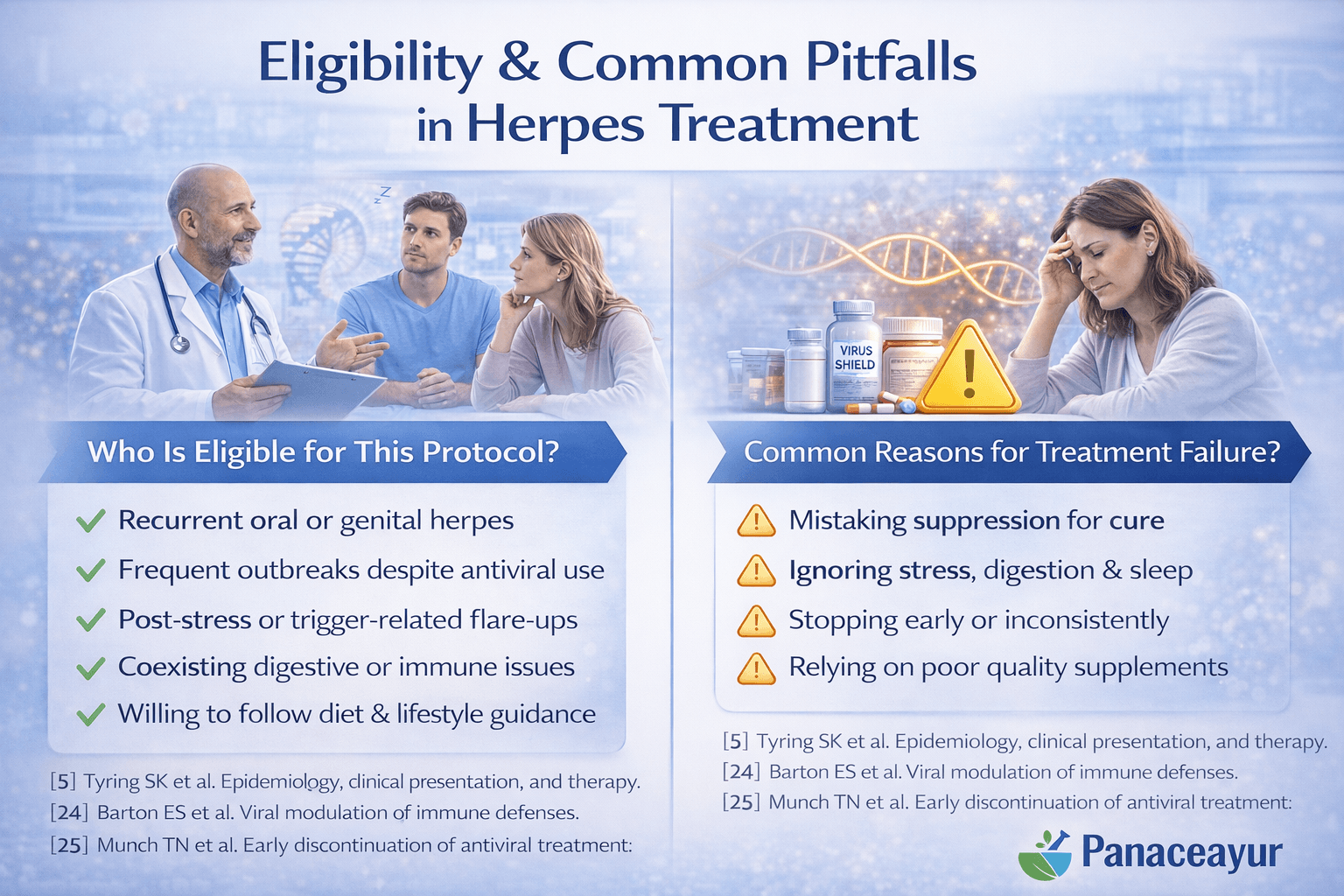
Mistaking suppression for cure
One of the most common reasons for treatment failure is confusing suppression with resolution. Antiviral drugs reduce replication during active phases but do not eliminate latent virus or retrain immune surveillance [5]. When suppression is stopped, reactivation resumes because the underlying conditions remain unchanged.
Patients often interpret temporary silence as cure, only to feel discouraged when outbreaks return. This cycle leads to frustration rather than resolution.
Real example:
A patient who remained outbreak free for six months on high dose antivirals relapsed within weeks of stopping medication. This was not drug failure but a limitation of the suppression model.
Ignoring internal terrain and immune exhaustion
Treatments fail when digestion, inflammation, stress, and sleep are ignored. Chronic immune activation eventually leads to immune fatigue, reducing the body’s ability to control latent viruses [24].
Without correcting these internal factors, even strong therapies lose effectiveness over time.
Real example:
A patient who followed herbal antivirals but continued irregular sleep and heavy alcohol use saw minimal improvement. When lifestyle correction was added, response improved significantly.
Inconsistent adherence and premature discontinuation
Healing timelines require patience. Many patients stop therapy during transitional phases such as mild healing reactions or delayed response periods. Research on chronic viral conditions shows that immune recalibration takes time and consistency [25].
Stopping early interrupts adaptation and reinforces the belief that nothing works.
Quality, guidance, and formulation errors
Another major reason for failure is reliance on market bought or poorly formulated products. Incorrect species, improper extraction, adulteration, or unsuitable combinations can nullify therapeutic potential [25].
Guidance matters because the same substance can heal or fail depending on context, dosage, and timing.
A final patient centered clarification
Failure does not mean the body is incapable of healing. In most cases, it means the strategy did not address latency, immune intelligence, or internal balance together. When these elements are aligned, long term control becomes biologically achievable [5], [24], [25].
Frequently Asked Questions
(Clear, Evidence-Aligned Answers to Common Patient Doubts)
If herpes can be controlled, why do doctors say there is no cure
In conventional medicine, the term cure is reserved for complete eradication of a pathogen using drugs that act directly on the organism. Since standard antivirals do not eliminate latent herpes virus from nerve tissue, modern medicine classifies herpes as incurable.This definition is based on drug capability, not on the body’s long term biological potential.
From a biological perspective, long term control without recurrence represents functional resolution. Medicine often avoids this language because it falls outside pharmaceutical models rather than outside scientific reality.
Is this approach just symptom management like antivirals
No. Symptom management focuses on reducing outbreaks while the virus remains biologically dominant. This protocol focuses on immune retraining, nervous system balance, and internal terrain correction so that the virus loses its ability to reactivate.
Antivirals suppress replication temporarily. Immune based approaches aim to restore the body’s ability to maintain viral silence independently
Why does herpes come back even after long antiviral use
Antivirals work only when the virus is active. They do not affect latent virus hiding in nerve ganglia, nor do they rebuild immune memory. Over time, the immune system becomes dependent on suppression rather than learning control.
When antivirals are stopped, reactivation resumes because the underlying immune coordination was never restored.
Is this approach supported by science or only theory
The principles behind this protocol align with well established research on herpes latency, immune surveillance, neuro immune interaction, and immune exhaustion.While modern medicine does not yet offer a single drug solution, scientific literature clearly acknowledges that immune control determines long term outcomes in latent viral infections.
This approach applies known biological mechanisms in a structured, patient specific manner.
Why does stress trigger outbreaks even when immunity seems strong
Stress alters immune signaling through neuro endocrine pathways. Even in otherwise healthy individuals, chronic stress suppresses antiviral immune responses while increasing inflammation. This creates a temporary window for viral reactivation
This is why outbreaks often follow emotional stress, sleep loss, or exhaustion rather than exposure to new infection.
Can diet and lifestyle really influence a virus
Diet and lifestyle do not kill the virus directly. They influence digestion, inflammation, gut immunity, sleep, and stress hormones. These systems collectively determine whether immune surveillance remains stable or becomes compromised
Patients often underestimate how strongly daily habits shape viral behavior over time.
Why does this protocol take months instead of weeks
Immune recalibration and nervous system stabilization are slow biological processes. Latent viral control develops gradually as immune memory improves and inflammatory noise reduces
Short protocols often silence symptoms temporarily but fail to create durable change. Time allows the body to learn rather than react.
What if I do not experience any healing reactions
Healing reactions are not mandatory. Some patients improve quietly without noticeable changes. Absence of reactions does not indicate failure. It often reflects smoother immune adjustment rather than lack of response
Progress should be judged by reduced frequency, intensity, and trigger sensitivity rather than dramatic sensations.
Why do some people fail even with natural or alternative treatments
Most failures occur due to inconsistent adherence, poor quality products, incorrect formulations, or ignoring lifestyle correction. Another major reason is stopping treatment too early, before immune recalibration is complete
Failure usually reflects strategy mismatch rather than biological impossibility.
Is long term stability really possible
Scientific evidence confirms that many individuals maintain long term viral silence when immune surveillance remains intact. Stability depends on maintaining balance rather than continuous treatment.
Patients who reach this stage often stop thinking about herpes daily because the body no longer signals threat.
Why is this approach not widely promoted
Medical systems prioritize standardized, drug based solutions that can be universally applied. Personalized immune based protocols are harder to standardize, study at scale, and commercialize
This does not make them unscientific. It makes them structurally different from mainstream models.
How do I know if this approach is right for me
This approach suits patients seeking long term control rather than temporary suppression and who are willing to participate actively through diet, lifestyle, and consistency. Those seeking immediate silence without personal involvement may find it challenging
Reference
Modern Scientific References
[1] Whitley, R. J., & Roizman, B. (2001). Herpes simplex viruses. The Lancet, 357(9267), 1513–1518.
https://doi.org/10.1016/S0140-6736(00)04638-9
[2] Cunningham, A. L., Diefenbach, R. J., Miranda-Saksena, M., Bosnjak, L., Kim, M., Jones, C., & Douglas, M. W. (2006). The cycle of human herpes simplex virus infection: virus transport and immune control. Journal of Infectious Diseases, 194(S1), S11–S18.
https://academic.oup.com/jid/article/194/Supplement_1/S11/2192120
[3] Johnston, C., Koelle, D. M., & Wald, A. (2016). HSV-2: in pursuit of a vaccine. Journal of Clinical Investigation, 126(3), 860–867.
https://www.jci.org/articles/view/84749
[4] Roizman, B., Knipe, D. M., & Whitley, R. J. (2013). Herpes simplex viruses. In Fields Virology (6th ed.). Lippincott Williams & Wilkins.
[5] Kimberlin, D. W., & Whitley, R. J. (2007). Antiviral therapy of HSV-1 and HSV-2. Human Herpesviruses: Biology, Therapy, and Immunoprophylaxis.
https://www.ncbi.nlm.nih.gov/books/NBK47444/
[6] Wald, A., & Corey, L. (2007). Persistence in the population: epidemiology, transmission. Journal of Infectious Diseases, 196(S2), S107–S113.
https://academic.oup.com/jid/article/196/Supplement_2/S107/2191964
[7] Nicoll, M. P., Proenca, J. T., & Efstathiou, S. (2012). The molecular basis of herpes simplex virus latency. FEMS Microbiology Reviews, 36(3), 684–705.
https://doi.org/10.1111/j.1574-6976.2011.00320.x
[8] Steiner, I., Kennedy, P. G. E., & Pachner, A. R. (2007). The neurotropic herpes viruses. Journal of Neurovirology, 13(5), 381–394.
https://doi.org/10.1080/13550280701521082
[9] Calder, P. C., & Kew, S. (2002). The immune system: a target for functional foods? British Journal of Nutrition, 88(S2), S165–S177.
https://doi.org/10.1079/BJN2002682
[10] Marchesi, J. R., et al. (2016). The gut microbiota and host health. Nature Reviews Gastroenterology & Hepatology, 13, 69–80.
https://www.nature.com/articles/nrgastro.2015.191
[11] Lad, V. (2002). Textbook of Ayurveda: Fundamental Principles. The Ayurvedic Press.
[12] Lin, L. T., Hsu, W. C., & Lin, C. C. (2014). Antiviral natural products and herbal medicines. Journal of Traditional and Complementary Medicine, 4(1), 24–35.
https://doi.org/10.4103/2225-4110.124335
[13] Arunkumar, R., & Rajarajan, S. (2017). Herbal compounds against herpes simplex virus. Pharmacognosy Reviews, 11(22), 50–58.
https://www.ncbi.nlm.nih.gov/pmc/articles/PMC5452229/
[14] Mukherjee, P. K., et al. (2010). Immunomodulatory leads from medicinal plants. Journal of Ethnopharmacology, 129(2), 107–116.
https://doi.org/10.1016/j.jep.2010.03.014
[15] World Health Organization. (2014). WHO monographs on selected medicinal plants.
https://apps.who.int/iris/handle/10665/42052
[16] Fulop, T., et al. (2017). Immunosenescence and inflamm-aging. Frontiers in Immunology, 8, 1960.
https://www.frontiersin.org/articles/10.3389/fimmu.2017.01960
[17] Glaser, R., & Kiecolt-Glaser, J. K. (2005). Stress-induced immune dysfunction. Nature Reviews Immunology, 5, 243–251.
https://www.nature.com/articles/nri1571
[18] Irwin, M. R. (2015). Why sleep is important for health. Psychiatric Clinics of North America, 38(4), 543–558.
https://doi.org/10.1016/j.psc.2015.07.001
[19] Carr, D. J. J., et al. (2011). Nutrition and herpesvirus immunity. Journal of Nutrition, 141(3), 563–567.
https://academic.oup.com/jn/article/141/3/563/4743492
[20] Peterson, L. W., & Artis, D. (2014). Intestinal epithelial cells and immune homeostasis. Nature Reviews Immunology, 14, 141–153.
https://www.nature.com/articles/nri3608
[21] Straus, S. E., et al. (1997). Placebo-controlled trial of acyclovir suppression. New England Journal of Medicine, 337, 916–921.
https://www.nejm.org/doi/full/10.1056/NEJM199709253371302
[22] Whitley, R. J. (1996). Resistance to antiviral drugs. Clinical Infectious Diseases, 23(4), 748–754.
https://academic.oup.com/cid/article/23/4/748/295737
[23] Corey, L., & Wald, A. (2009). Genital herpes. New England Journal of Medicine, 361, 1376–1385.
https://www.nejm.org/doi/full/10.1056/NEJMcp0807623
[24] Ernst, E. (2000). Herbal medicines: risks and benefits. BMJ, 321, 1449–1452.
https://www.bmj.com/content/321/7277/1449
[25] Posadzki, P., Watson, L. K., & Ernst, E. (2013). Adulteration of herbal medicines. Journal of the Royal Society of Medicine, 106(12), 462–469.
https://journals.sagepub.com/doi/10.1177/0141076813477986
[26] Franceschi, C., et al. (2018). Inflammaging and longevity. Nature Reviews Immunology, 18, 505–522.
https://www.nature.com/articles/s41577-018-0006-4
[27] World Health Organization. (2022). Herpes simplex virus fact sheet.
https://www.who.int/news-room/fact-sheets/detail/herpes-simplex-virus
Classical Ayurvedic Sources (Core Medical Text Books)
[28] Charaka Samhita, Chikitsa Sthana, Rasayana Adhyaya (standard editions).
[29] Sushruta Samhita, Sutra Sthana, Vyadhi Samprapti principles.
[30] Ashtanga Hridaya, Sutra Sthana 1 and Chikitsa Sthana 1 (Anukta Vyadhi concept).