Diagnosed with male breast cancer? Explore how Ayurveda supports strength, digestion, and resilience during and after medical treatment.


A research-backed Ayurvedic formula offering hope, combining ancient herbs and modern science for natural, lasting healing.


Struggling with HSV1 or HSV2? Discover a proven herbal formula that heals herpes in just three months, backed by science and real-life success stories. Start your healing journey today.

Discover how Ayurveda identifies and eliminates herpes at its root. Volume I reveals HSV behavior, Ayurvedic healing principles, and introduces CMV and EBV. A foundational guide backed by research and classical texts.

Includes real IgG lab reports, CMV/EBV/HHV chapters, and advanced Rasayana therapy. Volume II exposes why pharma suppresses cures—and proves Ayurveda doesn’t. Lab reports verifiable via TATA 1mg.
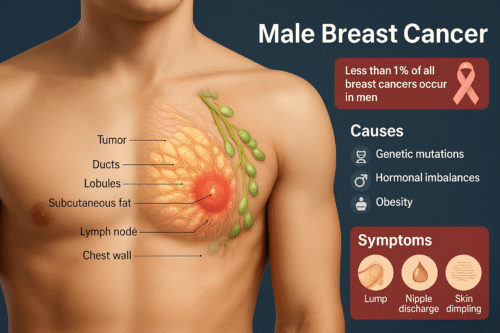
Male breast cancer is uncommon but can occur when malignant cells develop in breast tissue in men. Common types include invasive ductal carcinoma, while other breast cancer subtypes can also occur. Symptoms may include a lump, nipple changes, nipple discharge, skin changes, or swelling. Diagnosis may involve physical examination, imaging, biopsy, and pathology testing. Because male breast cancer can be associated with inherited genetic factors such as BRCA2, genetic assessment may be considered in appropriate cases. Treatment depends on tumor type, stage, hormone receptor status, HER2 status, and individual health.
A. Yes. Men have a small amount of breast tissue and can develop breast cancer, although it is much less common than in women.
A. Symptoms may include a breast or chest lump, nipple changes, nipple discharge, skin changes, or swelling.
A. Risk factors may include increasing age, family history, inherited genetic changes such as BRCA2, hormonal factors, and certain medical conditions.
A. Diagnosis may involve clinical examination, mammography or ultrasound, biopsy, and laboratory pathology testing.
A. No. Male breast cancer requires appropriate medical and oncology evaluation. Complementary approaches should only be considered with professional guidance alongside necessary cancer care.