Exploring integrative options for DCIS or invasive breast cancer? Discover how Ayurveda supports immunity, digestion, and overall resilience during treatment.

45 mins read


A research-backed Ayurvedic formula offering hope, combining ancient herbs and modern science for natural, lasting healing.


Struggling with HSV1 or HSV2? Discover a proven herbal formula that heals herpes in just three months, backed by science and real-life success stories. Start your healing journey today.

Discover how Ayurveda identifies and eliminates herpes at its root. Volume I reveals HSV behavior, Ayurvedic healing principles, and introduces CMV and EBV. A foundational guide backed by research and classical texts.

Includes real IgG lab reports, CMV/EBV/HHV chapters, and advanced Rasayana therapy. Volume II exposes why pharma suppresses cures—and proves Ayurveda doesn’t. Lab reports verifiable via TATA 1mg.
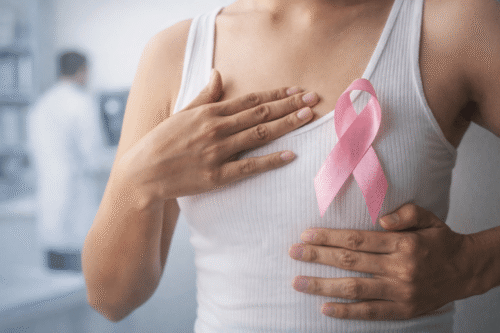
DCIS and invasive breast cancer represent important areas of breast cancer diagnosis and treatment. Ductal carcinoma in situ is a non-invasive condition in which abnormal cells remain within the milk ducts, while invasive breast cancer involves cancer cells extending beyond the duct or lobular structures into surrounding breast tissue. Evaluation may include breast imaging, biopsy, pathology, hormone receptor testing, HER2 testing, and staging when appropriate. Treatment decisions depend on the specific diagnosis, tumor characteristics, stage, overall health, and individual circumstances.
A. Ductal carcinoma in situ, or DCIS, is a non-invasive breast condition in which abnormal cells are confined within the milk ducts.
A. Invasive breast cancer occurs when cancer cells extend beyond their original duct or lobular structures into surrounding breast tissue.
A. DCIS is commonly identified through breast imaging and confirmed through tissue biopsy and pathological examination.
A. No. DCIS is considered non-invasive because the abnormal cells remain within the ducts, while invasive cancer has extended into surrounding tissue.
A. No. Breast cancer requires appropriate oncology evaluation and evidence-based treatment. Ayurvedic or complementary approaches should not replace recommended cancer care.