



- What Modern Medicine Means When It Says “No Cure”
- What Suppressive Therapy Achieves and Where It Stops
- How Ayurveda Approaches Herpes Differently
- What “Terrain Correction” Means in Biological Terms
- Can Terrain Correction Lead to Long Term Resolution?
- Why Modern Medicine and Ayurveda Often Talk Past Each Other
- A Rational, Integrative Perspective for Patients
- Key Takeaway for Patients Searching “Herpes Cure”
- FAQs
- Reference
Different Meanings of “Cure” in Biology and Clinical Medicine
Can herpes be cured permanently is one of the most common and confusing questions patients ask after diagnosis, largely because different medical systems use the word “cure” in very different ways.
Yes, herpes can enter long-term remission when the latent viral activity is neutralized and immune control is restored. Modern antivirals suppress outbreaks but do not target latency.
The question of whether herpes can be cured permanently often creates confusion because the word “cure” is used differently in virology, clinical practice, and public health communication. From a biological perspective, herpes simplex viruses have a distinct survival strategy. After the initial infection, the virus does not remain continuously active. Instead, it establishes latency by residing within sensory nerve ganglia, where its genetic material persists in a dormant state. During this phase, the virus does not actively replicate or circulate in the bloodstream, making it inaccessible to most antiviral drugs [1].
This biological latency explains why the absence of symptoms does not necessarily indicate viral elimination. Many individuals experience long symptom-free periods with no outbreaks and normal daily functioning, yet latent viral DNA can still remain inside nerve cells. Clinically, this creates a disconnect between symptom resolution and true virological eradication. What patients often describe as being “cured” is typically the absence of outbreaks, while virology defines cure as complete removal of viral genetic material, which is far more difficult to achieve [1].
How Public Health Frameworks Shape the “No Cure” Narrative
Public health authorities and mainstream medical systems introduce another layer to this issue by defining herpes outcomes in terms of management rather than eradication. Global health organizations focus on reducing disease burden, lowering transmission risk, and preventing complications at the population level. Within this framework, herpes is classified as a chronic but manageable viral infection, because there is currently no approved pharmaceutical therapy designed to eliminate latent virus from nerve tissue [6].
When health authorities state that herpes has “no cure,” they are using a regulatory and clinical definition tied to approved treatments and population-wide reliability. Patients, however, often interpret “cure” in a more practical sense, meaning long-term absence of symptoms, restored quality of life, or sustained freedom from recurrences. These differing definitions are rarely explained clearly, which is why patients encounter conflicting answers from clinicians, online sources, and alternative health systems [6].
Recognizing these differences is essential before evaluating any treatment approach. Without clarifying what “cure” means biologically and clinically, discussions around herpes treatment become confusing and emotionally charged. Understanding this distinction helps explain why the question itself does not have a simple yes-or-no answer and sets the foundation for comparing modern medical management with other therapeutic frameworks [1], [6].
What Modern Medicine Means When It Says “No Cure”
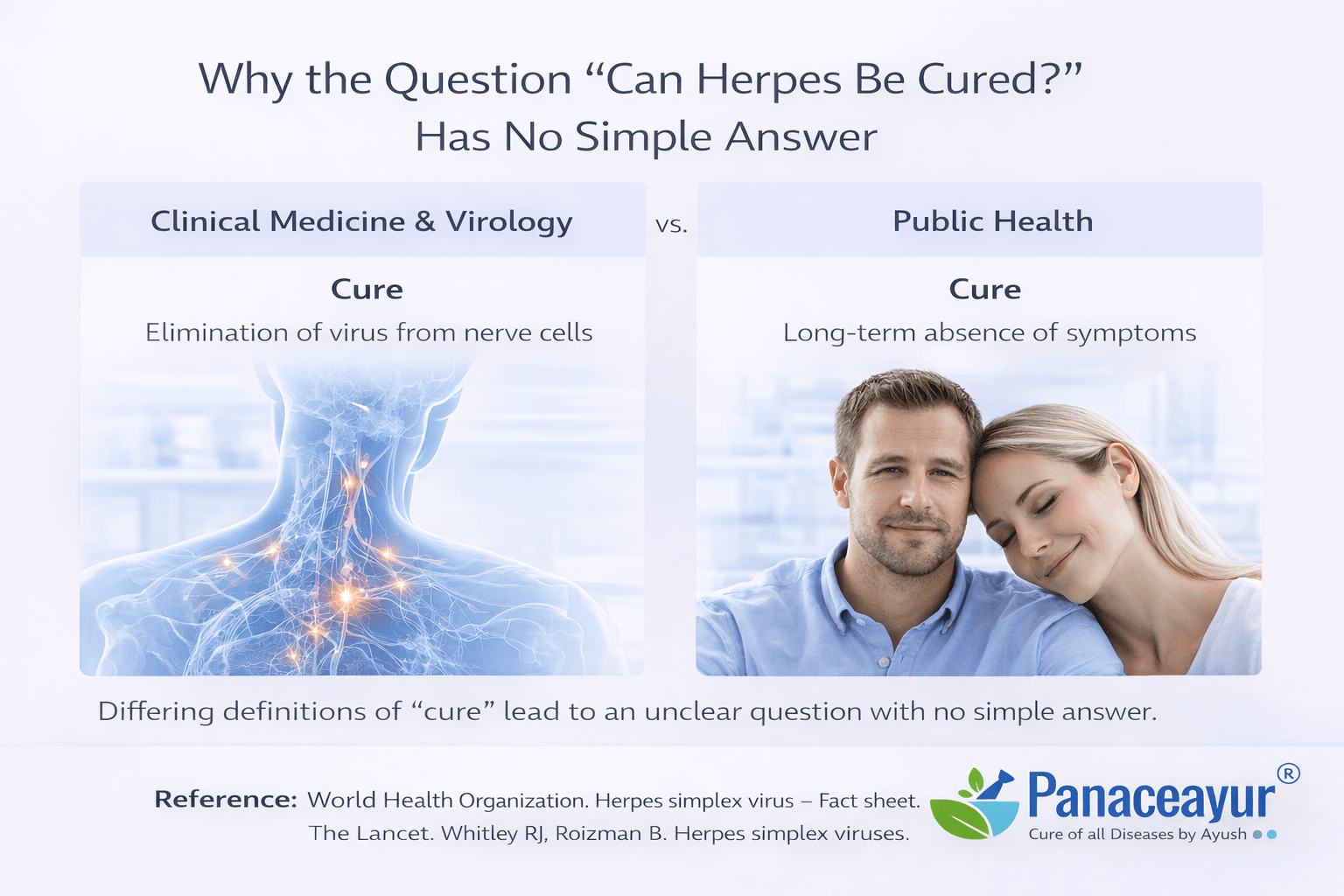
How Doctors and Scientists Define “No Cure”
When you hear a doctor say that herpes has no cure, the statement is based on how the virus behaves inside the human body. From a virological point of view, herpes simplex virus does not leave the body after the first infection. Instead, it moves into sensory nerve cells and remains there in a dormant state. You may feel completely normal and symptom free for long periods, yet the viral genetic material can still exist inside those nerve cells. This is why scientists do not equate the absence of symptoms with elimination of the virus itself [1].
From the clinician’s perspective, cure means complete removal of the virus from the body. Because current antiviral medicines only work when the virus is actively replicating, they cannot affect the virus while it is dormant. As a result, modern medicine does not label herpes as curable in the strict biological sense [1].
Why the Nervous System Matters
Herpes latency is closely tied to the nervous system. Researchers have shown that herpes viruses establish lifelong residence inside neurons, which are long living cells that the body cannot easily replace. When you experience stress, illness, hormonal shifts, or immune strain, the virus can reactivate and travel along nerve pathways back to the skin or mucosal surfaces, leading to recurrent outbreaks [4].
From a medical standpoint, this creates a serious challenge. Eliminating a virus from nerve tissue without harming the nervous system itself is extremely difficult. This neurological reality is one of the main reasons modern medicine does not currently pursue eradication as a realistic or safe treatment goal [4].
What Public Health Authorities Mean by “No Cure”
When global health organizations discuss herpes, they speak from a population level perspective. Institutions such as the World Health Organization describe herpes as a chronic but manageable viral infection. Their focus is on reducing symptoms, lowering transmission risk, and protecting public health rather than on eliminating the virus from every individual [6].
If you read official guidelines, the phrase no cure reflects this public health framing. It does not mean that people cannot live well, remain symptom free for long periods, or experience meaningful improvement. It means that no approved intervention has proven capable of reliably clearing latent virus across large populations [6].
The Regulatory Meaning Behind “No Cure”
Regulatory agencies add another layer to this definition. For a treatment to be labeled as curative, it must consistently and safely remove the pathogen in a way that can be reproduced in most patients. At present, no approved antiviral drug is designed to target latent herpes virus inside nerve cells. All available therapies are therefore classified as suppressive treatments [5].
From your perspective as a patient, this distinction is important. When modern medicine says no cure, it is describing the limits of current drug design and approval standards, not making a statement about personal outcomes or future possibilities. It is an institutional definition based on safety, evidence, and reproducibility rather than an absolute statement about what is biologically imaginable [5].
Understanding how modern medicine uses the term no cure helps you interpret medical advice more clearly and prepares you to evaluate other therapeutic approaches with realistic expectations [1], [4], [6], [5].
What Suppressive Therapy Achieves and Where It Stops
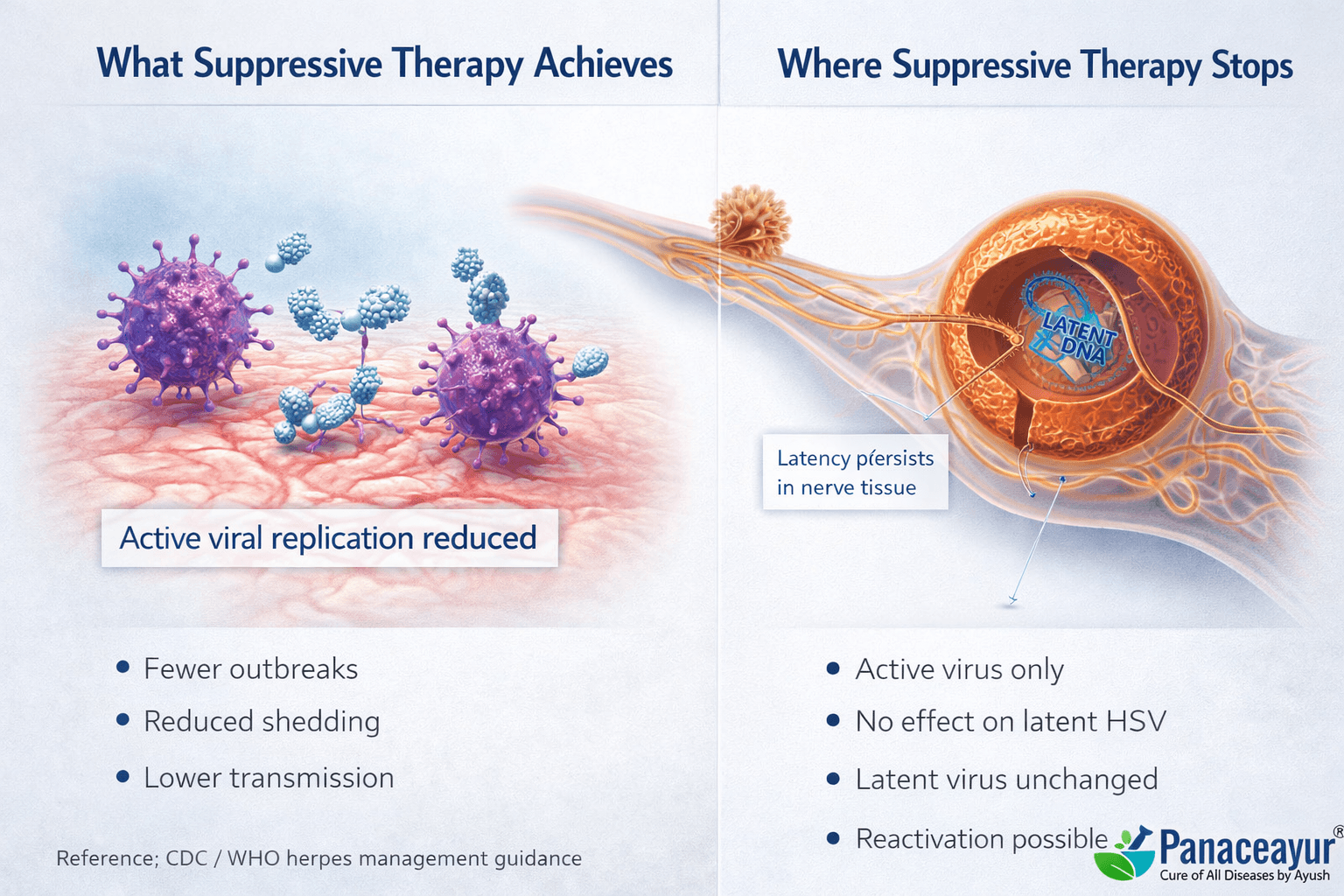
What Suppressive Therapy Is Designed to Do
Suppressive therapy refers to the long term use of antiviral medications such as acyclovir or valacyclovir to control herpes activity. When you take these medicines regularly, they work by interfering with viral replication during active phases of infection. From a clinical standpoint, this leads to fewer outbreaks, shorter episode duration, and reduced viral shedding from the skin or mucosal surfaces [2].
Doctors prescribe suppressive therapy primarily to improve quality of life. Many patients experience fewer symptoms and less anxiety about unpredictable flare ups. In people with frequent recurrences, daily antiviral use can significantly lower how often visible lesions appear and how severe they become [2].
How Suppressive Therapy Reduces Transmission Risk
Suppressive therapy also plays an important role in reducing the risk of transmitting herpes to sexual partners. Clinical studies have shown that regular antiviral use lowers viral shedding, which in turn reduces the likelihood of passing the virus to another person during intimate contact [3].
From a public health perspective, this is a meaningful benefit. Lower transmission rates help protect partners and reduce overall disease spread at the population level. However, it is important for you to understand that reduced risk does not mean zero risk. Transmission can still occur, especially during asymptomatic shedding [3].
Why Suppressive Therapy Does Not Eliminate the Virus
While suppressive therapy is effective at controlling symptoms and reducing spread, it does not remove the virus from the body. The reason lies in herpes latency. When the virus is dormant inside nerve cells, it is not actively replicating. Because antiviral drugs only act on replicating virus, they have no effect on latent viral genetic material stored within neurons [4].
From a biological perspective, this explains why herpes can return if medication is stopped. Once suppressive therapy is discontinued, the virus still remains in nerve tissue and can reactivate under favorable conditions such as stress, illness, or immune suppression. The medication controls activity but does not change the underlying presence of the virus [4].
Understanding the Limits of Suppression
For you as a patient, it is important to view suppressive therapy as a management strategy rather than a curative one. It is highly effective for symptom control and risk reduction, but it does not alter the fundamental biology of herpes latency. This is why modern medicine classifies herpes treatment as long term management rather than eradication [2], [3], [4].
Recognizing where suppressive therapy helps and where it stops allows you to set realistic expectations. It also explains why many patients continue to search for additional approaches that address factors beyond viral replication alone, especially when long term medication does not fully meet their goals [2], [3], [4].
How Ayurveda Approaches Herpes Differently

Ayurvedic Understanding of Disease Causation Beyond the Virus
Ayurveda explains chronic and recurrent diseases through the principle that external factors alone do not create illness unless the internal terrain of the body is disturbed. This foundational idea is described in Charaka Samhita, Nidana Sthana, Chapter 1, where Acharya Charaka explains that disease manifests when Doshas become imbalanced and Dhatus lose their stability, allowing external agents to express pathology.
A relevant Shloka from Charaka Samhita, Nidana Sthana 1.5 states in essence that disease arises from the interaction of aggravated Doshas with weakened bodily tissues, not from a single external cause alone. In the context of herpes, this means the virus is acknowledged, but recurrence is explained through internal susceptibility rather than viral presence alone [7].
From a human and patient centered perspective, this approach shifts the question from why the virus exists to why the body repeatedly permits its reactivation.
Rasayana Therapy as the Core of the Ayurvedic Cure Framework
The concept of cure in Ayurveda is deeply tied to Rasayana therapy. Rasayana is not described as symptom control but as long term internal correction. This is detailed extensively in Charaka Samhita, Chikitsa Sthana, Rasayana Adhyaya, Chapters 1 to 4.
A classical Shloka from Charaka Samhita, Chikitsa Sthana 1.1.7 explains that Rasayana promotes longevity, strengthens immunity, stabilizes tissues, and enhances Ojas. Ojas is described as the essence of all Dhatus and the foundation of immune resilience. When Ojas is strong, the body resists disease recurrence naturally [7].
In herpes, Ayurveda does not define cure as immediate viral destruction. Instead, cure is defined as restoration of internal balance to the extent that recurrent activation no longer occurs. This aligns with the Ayurvedic definition of lasting disease resolution rather than temporary suppression.
Chronic Skin and Mucosal Disorders in Classical Texts
Herpes related manifestations align closely with descriptions found in classical texts addressing chronic skin and mucosal disorders. Sushruta Samhita, Nidana Sthana, Chapter 5 Kushtha Nidanam explains that recurrent skin conditions persist when Doshas remain vitiated and tissues are inadequately nourished. External triggers may initiate episodes, but chronicity is driven by unresolved internal pathology [8].
A Shloka from this chapter emphasizes that without correcting Dosha imbalance and Dhatu weakness, disease tends to recur despite external interventions. This principle explains why suppressive treatments alone may reduce symptoms but fail to prevent recurrence over the long term [8].
For you as a patient, this mirrors lived experience. Periods of stress, digestive disturbance, hormonal imbalance, or immune strain often precede outbreaks. Ayurveda views these as signals that the internal environment needs correction.
Ayurveda and Modern Systems Biology Converge
While these concepts originate in classical texts, they are increasingly compatible with modern systems biology. Contemporary research recognizes that chronic viral conditions are influenced by immune regulation, metabolic health, nervous system stability, and inflammatory signaling rather than pathogen presence alone. This systems level understanding closely parallels Ayurvedic thinking [9].
Modern scholars have noted that traditional medical systems like Ayurveda operate through multi level regulation rather than single target intervention. This provides a scientific bridge for Western readers, helping them understand how Ayurveda frames cure as restoration of systemic balance rather than direct viral eradication [9].
How This Fits Into the Ayurvedic Cure Framework
This section connects directly with the broader cure framework explained in the pillar article Can Herpes Be Cured Permanently A Real Cure Approach available at https://panaceayur.com/can-herpes-be-cured-permanently-real-cure-approach/
That content explains in detail how Rasayana therapy, internal terrain correction, immune restoration, and nervous system stabilization together form the Ayurvedic definition of cure. This section provides the philosophical and classical foundation, while the pillar article expands on the practical and therapeutic roadmap toward long term resolution.
Together, they present a coherent Ayurvedic answer to the question of cure that is grounded in classical Shlokas, aligned with modern systems biology, and framed in a way that Western readers can evaluate rationally [7], [8], [9].
What “Terrain Correction” Means in Biological Terms
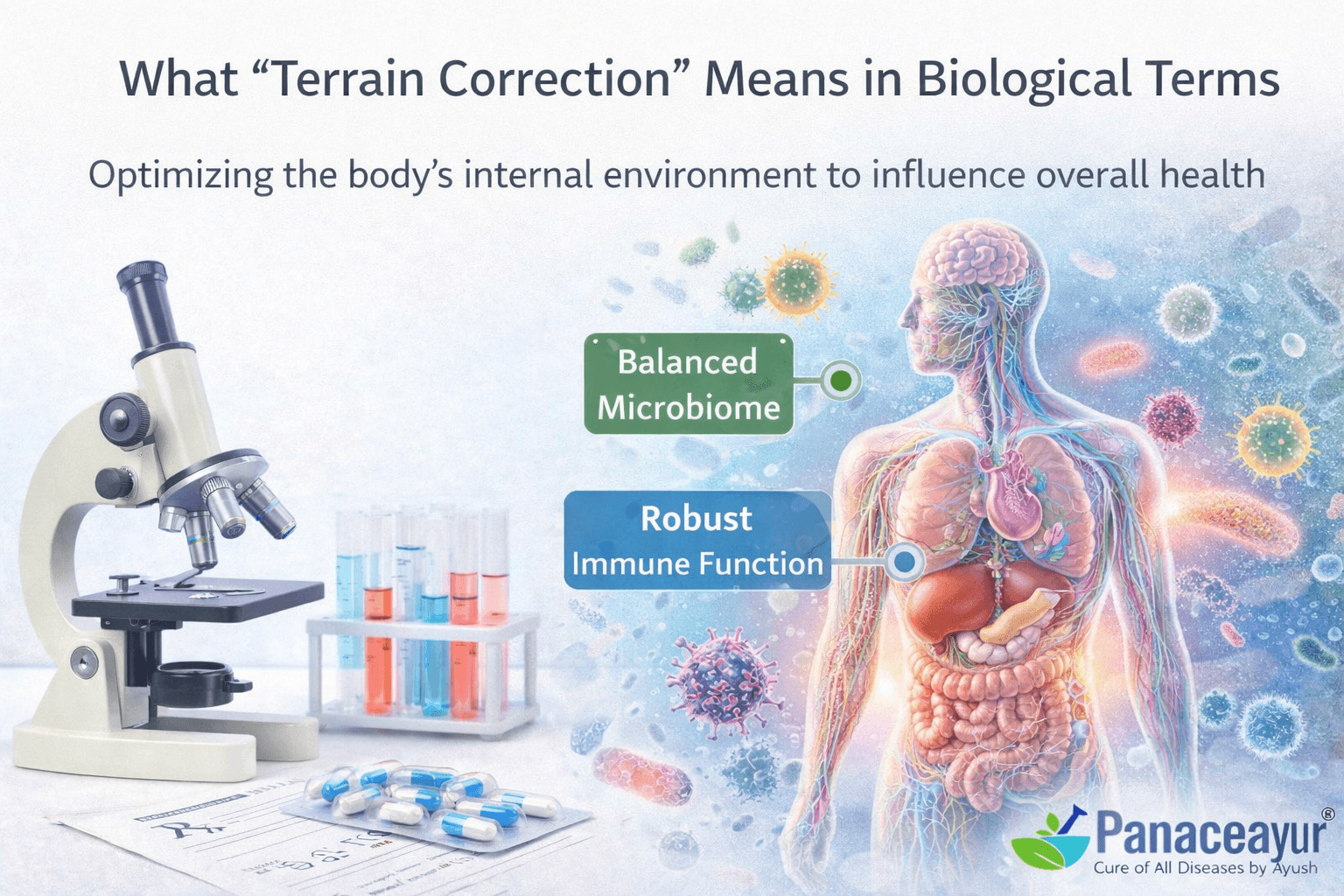
Why Viral Latency Depends on the Internal Biological Environment
In clinical medicine, herpes latency is described as the virus remaining inactive within nerve cells and reactivating only under certain conditions. While this explains where the virus resides, it does not fully explain why reactivation occurs frequently in some individuals and rarely in others. Clinical experience shows that viral behavior is strongly influenced by the condition of the host, including immune strength, metabolic health, and stress regulation.
Ayurveda addresses this question directly by stating that disease expression depends on internal imbalance rather than the mere presence of an external agent.
Charaka Samhita, Nidana Sthana, Chapter 1, Shloka 5
Shloka:
Vikarah sarva evaite dosha dhatu mala ashritah
Na hi dosha vina nasti vyadhir nama kadachana
Meaning:
All diseases arise due to disturbance of Dosha, body tissues, and waste systems. Disease cannot exist without internal imbalance.
Clinical interpretation:
This shloka explains why herpes may remain silent for long periods and then reactivate. The virus is present, but reactivation depends on internal biological vulnerability rather than viral presence alone.
Agni and the Metabolic Triggers of Reactivation
Modern clinical observation consistently shows that infections worsen during periods of poor digestion, inflammation, fatigue, and metabolic stress. Ayurveda explains this relationship through the concept of Agni, which governs digestion, metabolism, and transformation.
Charaka Samhita, Chikitsa Sthana, Chapter 15, Shloka 3
Shloka:
Agni moolam balam pumsam
Agni nashe balam nashyati
Agni sthite balam sthitam
Meaning:
Agni is the root of strength. When Agni is impaired, strength declines. When Agni is balanced, strength is preserved.
Clinical interpretation:
Impaired metabolism leads to inflammatory stress and immune instability. These conditions create signals that favor viral reactivation. Terrain correction therefore begins with restoring metabolic stability so immune control remains consistent.
Tissue Integrity and Long Term Containment of the Virus
In clinical medicine, weakened tissues are more susceptible to chronic disease. Fragile skin worsens eczema. Weak joints worsen arthritis. Compromised nerve tissue worsens chronic pain.
Ayurveda explains this through the concept of Dhatus.
Charaka Samhita, Sutra Sthana, Chapter 28, Shloka 7
Shloka:
Dhatu samya kriya chaiva swasthasya swasthya rakshanam
Aturasya vikara prashamanam cha
Meaning:
Health is preserved through balanced tissues. Disease persists when tissue balance is disturbed.
Clinical interpretation:
When tissues lack resilience, latent viruses are more likely to persist and reactivate. Strengthening tissue integrity is therefore essential for long term disease stability.
Ojas and Immune Stability Under Stress
Clinical evidence shows that stress, sleep deprivation, emotional strain, and exhaustion commonly precede herpes outbreaks. Ayurveda explains this vulnerability through the concept of Ojas.
Charaka Samhita, Sutra Sthana, Chapter 17, Shloka 74
Shloka:
Ojo nasha bhavet tasya
Bhayo durbalata tatha
Vyadhi abhibhava chaiva
Meaning:
Loss of Ojas leads to weakness, fear, and susceptibility to disease.
Clinical interpretation:
Ojas represents immune reserve and physiological resilience. When this reserve is depleted, the body becomes reactive and unstable. Terrain correction focuses on restoring this reserve so immune control remains steady even during stress.
Systemic Communication and Disease Persistence
Modern physiology recognizes that proper immune response depends on circulation, lymphatic flow, neural signaling, and cellular communication. Ayurveda describes these pathways as Srotas.
Charaka Samhita, Vimana Sthana, Chapter 5, Shloka 7
Shloka:
Srotasam vaishamyat rogah
Srotasam cha samat sukham
Meaning:
Disease arises when bodily channels are disturbed. Health exists when channels function smoothly.
Clinical interpretation:
When systemic communication is impaired, immune surveillance becomes uneven and latent disease reservoirs remain undisturbed. Restoring these pathways is essential for long term stability.
Why Ayurveda Focuses on Correction Rather Than Suppression
In clinical care, symptom control does not always change disease trajectory. Long term improvement requires correcting underlying biological vulnerabilities.
Ayurveda defines lasting recovery through Rasayana therapy.
Charaka Samhita, Chikitsa Sthana, Rasayana Adhyaya, Chapter 1, Shloka 7
Shloka:
Rasayanam vayasthapanam
Ayushyam balavarnakaram
Meaning:
Rasayana restores vitality, strength, immunity, and longevity.
Clinical interpretation:
Rasayana represents long term biological restoration. By stabilizing metabolism, strengthening tissues, preserving immune resilience, and improving systemic coordination, the internal environment becomes less supportive of viral reactivation.
A Unified Biological Perspective
When explained through both classical texts and modern clinical reasoning, terrain correction emerges as a rational biological framework. It explains why suppressive therapy controls symptoms, while internal correction determines whether viral latency remains stable or repeatedly breaks.
This approach does not reject modern medicine. It addresses the biological gaps that symptom focused strategies do not fully resolve.
Can Terrain Correction Lead to Long Term Resolution?
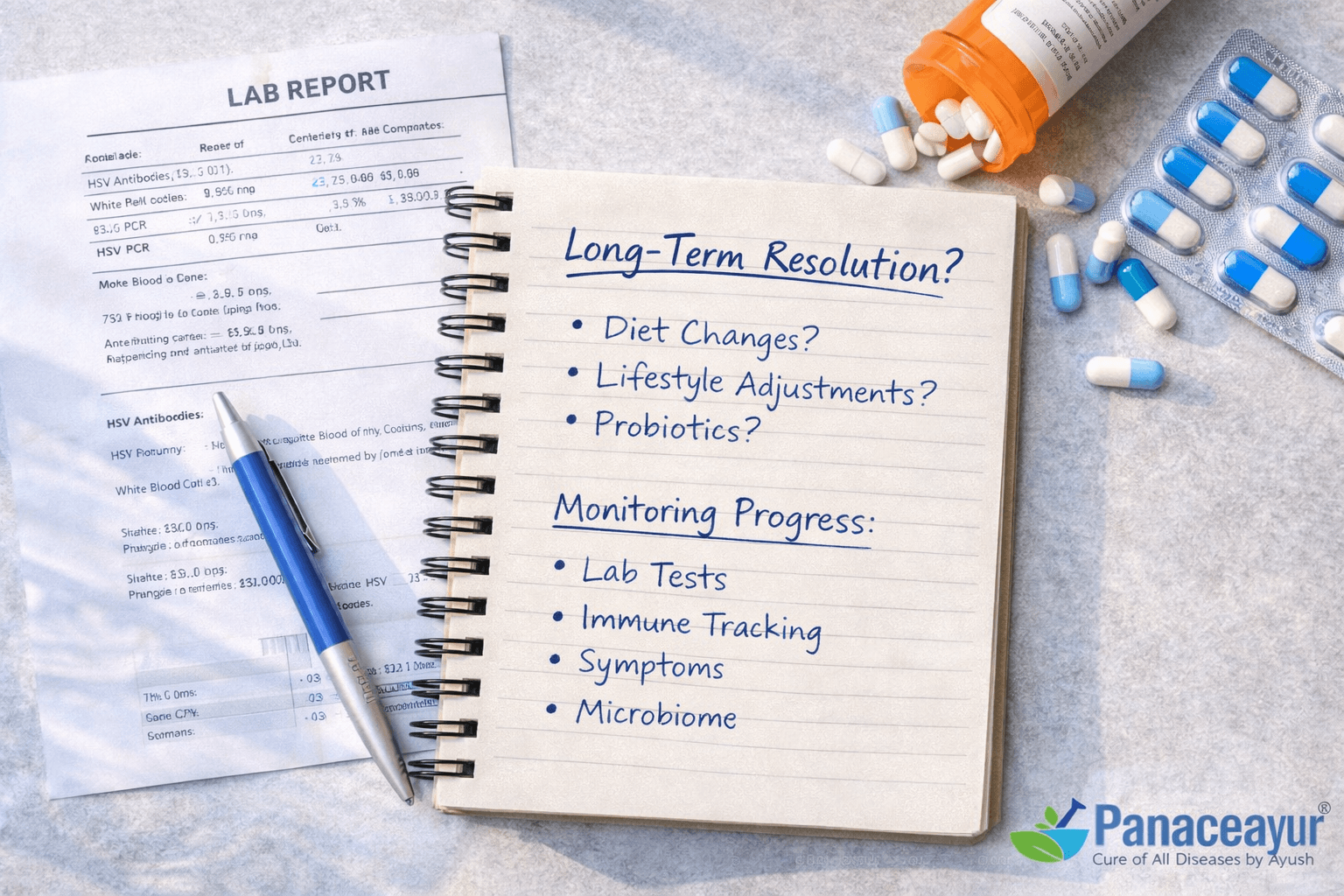
What “Resolution” Means in Biological Terms
In modern virology, resolution does not automatically mean that a virus has been physically eliminated from every cell in the body. Herpes simplex virus is known to establish latency within nerve tissue, where viral genetic material can persist without active replication. From a biological standpoint, resolution is therefore better understood as long term control of viral behavior rather than guaranteed molecular eradication [1].
Clinically, many chronic conditions are considered resolved when they no longer produce symptoms, complications, or functional impairment over extended periods. In this sense, long term resolution refers to stable remission, absence of recurrent episodes, and restoration of normal quality of life. This distinction between virological eradication and biological stability is essential when discussing outcomes realistically [1].
Ayurvedic Definition of Long Term Resolution
Ayurveda defines resolution through the lens of internal stability rather than pathogen destruction. Classical texts describe disease resolution as the restoration of balance across digestion, tissues, immunity, and systemic coordination. When this balance is achieved and maintained, recurrence becomes unlikely.
This principle is described in Charaka Samhita, Chikitsa Sthana, Rasayana Adhyaya, where Rasayana therapy is presented as a means of sustaining long term health and resistance to disease.
Charaka Samhita, Chikitsa Sthana, Rasayana Adhyaya, Chapter 1, Shloka 7
Shloka:
Rasayanam vayasthapanam
Ayushyam balavarnakaram
Meaning:
Rasayana promotes longevity, vitality, strength, and immunity.
In the context of herpes, this definition implies that long term resolution occurs when the internal terrain no longer supports repeated viral reactivation. Rather than forcing the virus into inactivity through continuous suppression, the body itself maintains control through improved resilience and balance [7].
Why Recurrence Reduces When Internal Stability Improves
Clinical observation shows that herpes recurrences are closely linked to internal stressors such as fatigue, illness, metabolic strain, and emotional stress. Ayurveda interprets these triggers as signs of weakened internal regulation rather than random viral behavior.
When terrain correction is applied consistently, digestion becomes more stable, tissues regain resilience, immune responses become balanced, and stress tolerance improves. As a result, the internal signals that normally trigger viral reactivation occur less frequently and with reduced intensity. Over time, this can translate into long periods without outbreaks and, in some individuals, complete absence of clinical recurrence [7].
From a biological perspective, this represents functional resolution. The virus may remain latent, but it no longer disrupts health or quality of life.
Why Outcomes Vary Between Individuals
It is important to approach this topic with realism. Not every individual experiences identical outcomes. Duration of infection, prior immune stress, lifestyle factors, coexisting conditions, and consistency of therapy all influence results.
Modern systems science recognizes that complex biological systems respond in probabilities rather than guarantees. Interventions shift the likelihood of favorable outcomes rather than delivering uniform results. This probabilistic model aligns with the Ayurvedic understanding that sustained internal correction improves the chances of long term stability without promising absolute certainty [9].
For you as a patient, this means terrain correction is best understood as a long term strategy. It increases the probability of durable remission and reduced recurrence rather than offering an instant or universal cure.
Resolution Without Absolutes
Ayurveda does not claim that terrain correction eliminates herpes in every individual or in every circumstance. Instead, it offers a framework through which the body can regain control over disease expression. When internal balance is restored and maintained, the conditions required for frequent reactivation diminish.
This perspective aligns with Western evidence standards by avoiding absolute claims and focusing instead on measurable improvements such as reduced recurrence, sustained symptom free periods, and improved physiological resilience [1], [7], [9].
In this sense, terrain correction can lead to long term resolution not by promising eradication, but by restoring the biological environment that allows stable health to persist over time.
Why Modern Medicine and Ayurveda Often Talk Past Each Other
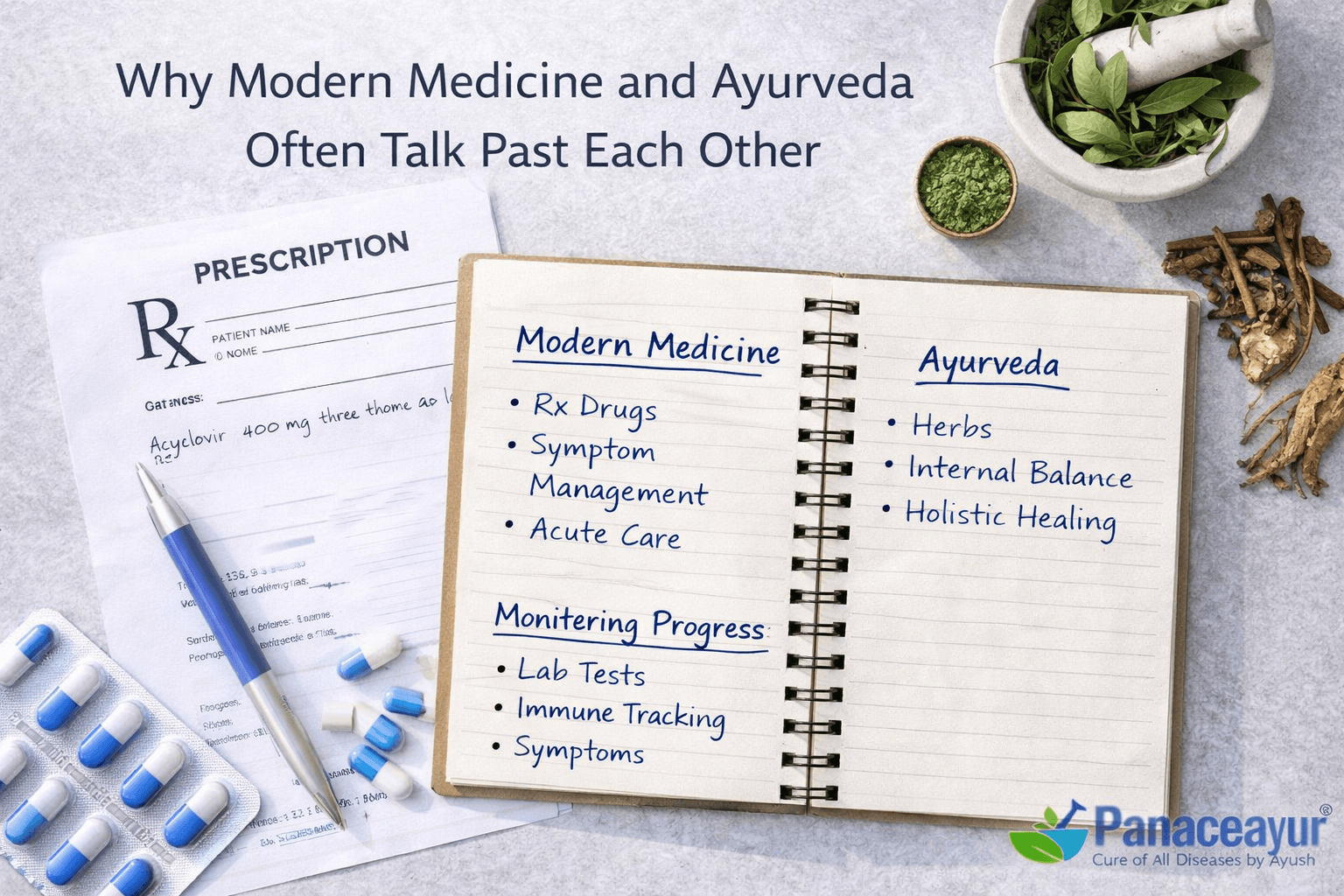
Different Definitions of Success in Modern Clinical Medicine
Modern medicine evaluates success primarily through clearly defined, measurable endpoints. These endpoints are shaped by regulatory science and drug approval frameworks. A treatment is considered successful when it demonstrates consistent, reproducible effects across large populations, meets safety standards, and targets a specific biological mechanism. In the case of infectious diseases, this usually means direct pathogen suppression or elimination that can be verified through laboratory markers and clinical trials [5].
Because of this framework, modern medicine tends to define cure narrowly. If a therapy cannot reliably eliminate a pathogen or permanently prevent its biological persistence in a way that can be approved and standardized, it is not classified as curative. This does not mean that improvement is impossible. It means that the improvement does not meet the regulatory definition required for approval as a cure [5].
From the clinician’s point of view, this approach protects patient safety and ensures consistency. However, it also means that outcomes such as long term stability, reduced recurrence, or functional recovery may be acknowledged clinically but not labeled as cure within formal medical language.
How Ayurveda Evaluates Outcomes Differently
Ayurveda evaluates success using a different set of criteria. Instead of focusing on a single biological target, it assesses whether balance has been restored across digestion, tissues, immunity, and systemic coordination. The primary question is not whether a specific pathogen has been eliminated, but whether the internal environment that allowed disease to persist has been corrected [9].
In this framework, long term stability, absence of recurrence, restored strength, and improved resilience are considered meaningful indicators of resolution. Ayurveda places greater emphasis on sustained outcomes over time rather than immediate measurable changes. This makes its definition of success more longitudinal and individualized [9].
For patients, this often feels intuitive. People experience disease as a pattern over months or years, not as isolated laboratory values. Ayurveda aligns its evaluation with this lived experience by prioritizing long term functional health.
Why These Perspectives Rarely Align in Conversation
These two systems often speak past each other because they answer different questions. Modern medicine asks whether a treatment meets regulatory standards for population wide approval. Ayurveda asks whether the individual has regained internal balance and long term stability.
Neither approach is inherently wrong. They operate within different philosophical and methodological boundaries. When modern clinicians state that a condition has no cure, they are referring to the absence of an approved intervention that meets specific regulatory criteria. When Ayurvedic practitioners discuss resolution, they are referring to sustained correction of internal conditions that prevent disease recurrence [5], [9].
Without acknowledging these differing definitions, discussions can appear contradictory or dismissive when they are in fact addressing different dimensions of health.
Understanding the Gap Without Creating Conflict
Recognizing this difference helps reduce confusion and unnecessary opposition. Modern medicine provides essential diagnostic tools, safety monitoring, and symptom control. Ayurveda contributes a systems based framework for long term biological stability.
When viewed together, the apparent disagreement becomes a difference in language and priorities rather than a conflict in intent. One system prioritizes standardized proof and regulatory safety. The other prioritizes individualized balance and durability of health [9].
For readers, understanding why these systems speak differently allows for more informed interpretation of medical advice and opens the possibility of thoughtful, integrative decision making without rejecting either perspective [5], [9].
A Rational, Integrative Perspective for Patients
Why Integration Matters in Real World Care
For patients living with herpes, the most practical approach is often neither absolute reliance on suppressive medication nor complete rejection of conventional care. A rational, integrative perspective recognizes that different medical systems address different layers of the same condition. Modern medicine excels at diagnosis, safety monitoring, and acute risk reduction. Ayurveda focuses on long term internal stability and resilience. When used thoughtfully, these approaches do not have to compete [9].
From a patient point of view, integration means using the strengths of each system without confusion or contradiction. It also means avoiding extremes that can compromise safety or lead to unrealistic expectations.
The Role of Diagnostics and Medical Monitoring
Modern diagnostics remain essential in herpes care. Blood tests, clinical examinations, and appropriate follow up help establish diagnosis, rule out coexisting conditions, and monitor changes over time. These tools are especially important during initial evaluation, pregnancy planning, immunocompromised states, or when symptoms change unexpectedly [2].
An integrative approach does not discard these safeguards. Instead, it uses them as anchors for safety and clarity. Regular monitoring allows patients and clinicians to track patterns, assess response to interventions, and make informed decisions rather than relying on assumptions [2].
Why Global Medical Standards Still Apply
International health authorities emphasize consistent testing, surveillance, and risk reduction strategies for herpes. These standards exist to protect patients and public health, particularly in relation to transmission risk and complications. An integrative perspective respects these guidelines while recognizing that they primarily address population level safety rather than individual long term outcomes [6].
For patients, this means continuing responsible practices such as informed disclosure, appropriate testing when advised, and medical follow up when necessary. Integration does not mean ignoring established standards. It means working within them while addressing additional dimensions of health.
How Systems Based Care Fits Into Integration
Systems based care looks at how digestion, metabolism, immunity, nervous system regulation, and stress physiology interact over time. This approach is increasingly accepted in modern science for understanding chronic and recurrent conditions. Rather than focusing on a single target, it examines how multiple systems influence disease behavior [9].
Ayurveda operates within this same systems logic, though it uses a different language and framework. When applied responsibly, it complements conventional care by addressing factors that diagnostics and pharmaceuticals alone do not fully resolve. This includes metabolic balance, tissue resilience, stress tolerance, and overall physiological stability [9].
Making Informed and Balanced Decisions
For you as a patient, a rational integrative approach means staying informed, asking clear questions, and avoiding absolute claims. It involves using medical diagnostics for safety and clarity while exploring long term strategies aimed at internal balance and resilience.
This perspective neither promises instant cures nor dismisses meaningful improvement. Instead, it emphasizes informed choice, responsible supervision, and realistic goals. By combining careful monitoring with systems based correction, patients can pursue long term stability without abandoning safety or scientific rigor [2], [6], [9].
Understanding integration in this way helps bridge the gap between different medical philosophies and places the patient at the center of decision making rather than forcing a choice between opposing extremes.
Key Takeaway for Patients Searching “Herpes Cure”
Why the Answer Is More Nuanced Than a Simple Yes or No
When patients search for a herpes cure, they are usually asking a very human question. They want to know whether this condition will control their life forever or whether meaningful, lasting relief is possible. Modern biology confirms that herpes viruses can persist in a latent form within nerve tissue, which is why medicine does not describe herpes as eradicated in a strict virological sense [1]. This biological reality sets important boundaries on how the word cure is used in clinical settings.
At the same time, persistence does not automatically mean ongoing suffering, frequent outbreaks, or lifelong disruption. Understanding this distinction helps patients move beyond fear driven narratives and toward realistic expectations.
What Suppression Can and Cannot Do
Suppressive antiviral therapy plays an important role in current herpes care. It can reduce the frequency of outbreaks, shorten symptom duration, and lower the risk of transmission. For many patients, this leads to meaningful improvement in daily life and emotional wellbeing [3].
However, suppression does not change the underlying conditions that allow the virus to remain latent and reactivate. When medication is stopped, recurrence is still possible because the biological environment that supports latency remains unchanged. Recognizing both the benefits and the limits of suppression helps patients make informed decisions rather than relying on incomplete assumptions [3].
Where Long Term Biological Correction Fits In
Ayurveda approaches herpes from a different angle by focusing on long term internal stability rather than short term viral control. Classical Ayurvedic principles describe disease resolution as restoration of balance across digestion, tissues, immunity, and systemic regulation. When this internal balance is strengthened and maintained, recurrence tends to reduce over time [7].
For patients, this does not mean rejecting modern medicine. It means understanding that internal correction aims to change the conditions that allow repeated flare ups, rather than targeting the virus directly. In some individuals, this approach is associated with long symptom free periods and sustained stability, even though the virus may remain biologically present [7].
A Balanced Way to Interpret the Word “Cure”
From a scientific perspective, outcomes in complex biological systems are best understood in terms of probability rather than certainty. No responsible medical system can promise identical results for every individual. What can be discussed realistically is the likelihood of improved stability, reduced recurrence, and restored quality of life when internal regulation improves [9].
For UK and USA readers, this balanced framing is important. It avoids absolute claims while still acknowledging that meaningful, long term improvement is possible. A herpes cure, in practical terms, may not always mean viral eradication. For many patients, it means durable control, absence of disruptive symptoms, and freedom from constant medical dependence [1], [3], [7], [9].
Understanding these distinctions allows patients to approach treatment choices with clarity rather than confusion. It shifts the focus from searching for a single definitive answer to building a strategy that supports long term health, safety, and personal wellbeing.
FAQs
Can herpes be cured permanently?
At present, herpes is not defined as permanently curable in virological terms because the virus can remain latent in nerve tissue. However, many patients achieve long-term stability with no recurrent symptoms when internal health, immunity, and triggering factors are addressed consistently.
Why do doctors say herpes has no cure?
Doctors use the term “no cure” because current approved medicines do not eliminate latent herpes virus from nerve cells. Medical treatment focuses on suppression and management rather than eradication.
Does suppressive therapy eliminate herpes from the body?
No. Suppressive antiviral therapy reduces outbreaks and transmission risk but does not remove the virus from the body. The virus can still remain dormant and reactivate if triggers occur.
Can herpes stop recurring without lifelong medication?
In some individuals, recurrences reduce significantly or stop for long periods when overall immune balance, stress regulation, and metabolic health improve. Outcomes vary and depend on individual biological factors.
Is it safe to combine medical monitoring with holistic approaches?
Yes, many patients use regular testing and medical supervision alongside long-term lifestyle or systems-based approaches. Diagnostics and safety monitoring should not be abandoned.
Why do some people never get herpes outbreaks?
Differences in immune resilience, stress response, and overall health influence how the virus behaves. The same virus can remain silent in one person and recur frequently in another.
Does being symptom-free mean herpes is gone?
Not necessarily. Being symptom-free usually means the virus is inactive. While this represents functional stability, it does not always confirm complete viral elimination.
Is herpes considered a lifelong condition in modern medicine?
Modern medicine considers herpes a lifelong infection due to viral latency. However, “lifelong” does not always mean lifelong symptoms or dependence on daily medication.
Can stress really trigger herpes outbreaks?
Yes. Physical stress, emotional strain, poor sleep, and illness are well-known triggers that can weaken immune control and allow viral reactivation.
What should patients realistically aim for when searching for a herpes cure?
A realistic goal is long-term stability, minimal or no recurrences, preserved quality of life, and informed medical oversight rather than expecting instant or guaranteed eradication.
Reference
[1] Whitley, R. J., & Roizman, B. (2001). Herpes simplex viruses. The Lancet, 357(9267), 1513–1518. https://doi.org/10.1016/S0140-6736(00)04638-9
Brief: This landmark review explains HSV biology, latency in nerve ganglia, and why herpes persists despite immune response. It underpins the sections explaining why modern medicine defines herpes as non-curable and focuses on suppression.
[2] Johnston, C., & Wald, A. (2016). Management of herpes simplex virus infections in HIV-infected persons. Clinical Infectious Diseases, 63(4), 503–510. https://doi.org/10.1093/cid/ciw304
Brief: Clarifies the goals and limits of antiviral therapy, including viral suppression, reduced shedding, and recurrence patterns. Used to explain what suppressive therapy achieves and where it stops.
[3] Corey, L., Wald, A., Patel, R., et al. (2004). Once-daily valacyclovir to reduce the risk of transmission of genital herpes. New England Journal of Medicine, 350(1), 11–20. https://www.nejm.org/doi/full/10.1056/NEJMoa035144
Brief: Demonstrates how antivirals reduce transmission and outbreaks but do not eliminate HSV. Supports the distinction between clinical control and viral eradication.
[4] Kennedy, P. G. E., & Steiner, I. (2013). Recent issues in herpes simplex virus latency, reactivation and neurological damage. Journal of Neurovirology, 19(4), 346–356. https://doi.org/10.1007/s13365-013-0182-0
Brief: Explains HSV latency in neurons and the neurological basis of reactivation. Used in sections discussing why latent virus is not targeted by current drugs.
[5] FDA Antiviral Drugs Advisory Committee. (2020). Antiviral drug development for latent viral infections. U.S. Food and Drug Administration. https://www.fda.gov
Brief: Explains regulatory limitations in approving drugs for latent viruses. Supports the point that “no cure” is a regulatory and pharmacological definition, not a biological impossibility.
[6] World Health Organization. (2023). Herpes simplex virus. https://www.who.int/news-room/fact-sheets/detail/herpes-simplex-virus
Brief: Provides the official global medical position on HSV management, recurrence, and lack of curative drug therapy. Used to ground the modern medicine perspective for both UK and USA readers.
[7] Charaka Samhita, Chikitsa Sthana, Rasayana Adhyaya. (Sharma, P. V., Trans.). Chaukhambha Orientalia.
Brief: Classical Ayurvedic source describing Rasayana therapy, immune resilience (Ojas), and long-term correction of internal biological terrain. Forms the Ayurvedic foundation for terrain correction.
[8] Sushruta Samhita, Nidana Sthana, Kushtha Nidanam. (Sharma, P. V., Trans.). Chaukhambha Visvabharati.
Brief: Explains chronic skin and systemic conditions arising from internal imbalance rather than external agents alone. Used to support Ayurveda’s host-terrain disease model.
[9] Patwardhan, B., & Mashelkar, R. A. (2009). Traditional medicine-inspired approaches to drug discovery. Nature Biotechnology, 27(7), 608–611. https://doi.org/10.1038/nbt0709-608
Brief: Discusses systems biology and whole-body approaches in traditional medicine. Used to bridge Ayurveda’s terrain concept with modern systems medicine for Western readers.
[10] Lad, V. (2002). Textbook of Ayurveda: Fundamental principles. The Ayurvedic Press.
Brief: Explains Agni, Dhatu, Ojas, and Srotas in physiological terms. Used to translate Ayurvedic terrain correction into biologically understandable language.