

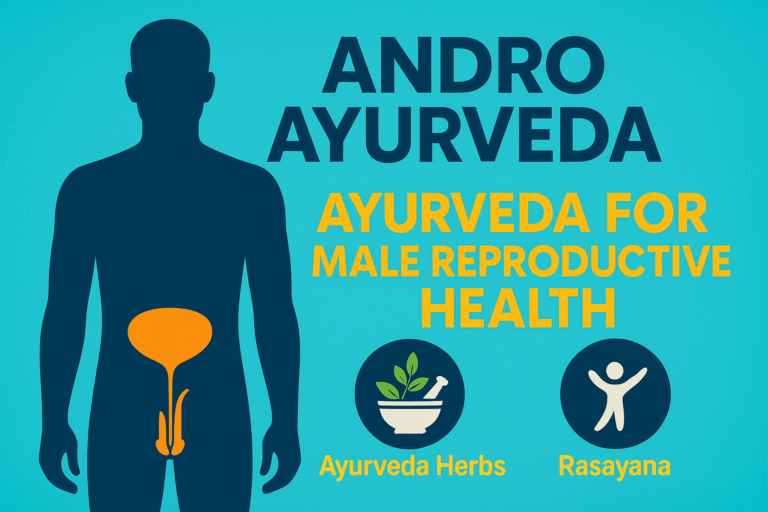
- Root-Cause Treatment for Energy, Hormone Balance, Fertility, and Confidence
- Who Needs Ayurvedic Male Sexual Health Treatment
- Ayurvedic Physiology of Male Reproduction
- Causes of Andrological Disorders
- Erectile Dysfunction (ED)
- Premature Ejaculation (PE)
- Low Libido
- Low Sperm Count, Motility and Morphology
- Testicular Disorders
- Prostate Disorders
- Infertility
- Diagnostics Framework
- Treatment Principles (Shodhana and Rasayana)
- Vrishya Rasayana Avaleha: 30-Day Ayurvedic Formula for Male Vitality and Fertility
- Warning and Precautions
- Case Studies
- FAQs
- CLASSICAL AYURVEDIC REFERENCES
- MODERN SCIENTIFIC REFERENCES
Root-Cause Treatment for Energy, Hormone Balance, Fertility, and Confidence
Ayurvedic male sexual health is not limited to improving erection or libido. It is a complete medical system that restores hormonal balance, nervous system stability, reproductive tissue strength, stamina, and long-term vitality through personalized treatment.
Male sexual health problems today are appearing at a younger age and often coexist with fatigue, anxiety, low testosterone, infertility, poor sleep, metabolic dysfunction, and loss of confidence. A symptom-based approach gives temporary relief, while the Ayurvedic male sexual health model focuses on deep tissue regeneration and systemic recovery.
Who Needs Ayurvedic Male Sexual Health Treatment
Ayurvedic male sexual health treatment is designed for men experiencing:
- Erectile dysfunction
- Low libido
- Premature ejaculation
- Performance anxiety
- Infertility or low sperm quality
- Loss of morning erection
- Chronic fatigue and poor stamina
- Stress-induced sexual weakness
It is especially relevant for men who:
- Do not want lifelong dependency on medication
- Have normal reports but persistent symptoms
- Experience side effects from conventional therapy
- Want natural testosterone optimisation
The Global Decline of Male Reproductive Health [7]
Ayurvedic Male Health- Male reproductive disorders are increasing worldwide, with modern research noting a marked decline in sperm parameters, testosterone levels, and sexual vitality. Stress, endocrine disruption, poor lifestyle habits, pollution, and psychological strain collectively weaken male reproductive capacity. Modern andrology acknowledges these concerns but typically responds with symptomatic tools such as hormonal replacement, erection-stimulating drugs, or antimicrobial therapy. These methods rarely address the underlying deterioration occurring in tissues, neuroendocrine pathways, and cellular energy systems.
Ayurveda’s Foundational Perspective on Andrology [1]
Ayurveda presents a fundamentally different and more comprehensive view. Classical texts explain that male reproductive health depends on the sequential nourishment of the seven Dhatus, culminating in the formation of Shukra Dhatu, the most refined essence responsible for fertility, virility, emotional stability, and longevity.
According to Charaka, Shukra Dhatu represents the final expression of optimal nutrition, digestion, circulation, and tissue integrity. When any preceding Dhatu suffers imbalance, Shukra is inevitably compromised. This model elegantly explains why chronic stress, poor diet, digestive weakness, emotional instability, and overexertion profoundly disrupt reproductive strength.
The Role of Shukra Dhatu, Agni, and Ojas [1] [3]
Ayurvedic authorities such as Charaka and Vagbhata describe Shukra Dhatu as deeply interconnected with Agni (digestive-metabolic fire), Ojas (vital essence), and Majja Dhatu (nervous and marrow tissues).
Disturbances in these foundational elements manifest clinically as:
- erectile dysfunction due to Vata-induced nerve instability
- low sperm count from Dhatu depletion
- premature ejaculation caused by Majja exhaustion
- low libido from diminished Ojas
- infertility from Shukravaha Srotas obstruction
These descriptions closely parallel modern findings on hormonal disruption, oxidative stress, impaired neurovascular function, and declining sperm quality.
Alignment Between Classical Ayurveda and Modern Science [7] [18]
Today’s scientific literature increasingly echoes Ayurvedic principles. Global infertility research shows that metabolic dysfunction, oxidative injury, endocrine imbalance, and psychological stress are major contributors to declining male fertility—factors identical to Ayurvedic concepts of Ama accumulation, Agni dysfunction, and Dhatu Kshaya.
Meanwhile, Rasayana studies demonstrate improvements in antioxidant status, cellular rejuvenation, microcirculation, and immune modulation, validating classical Vajikarana and Shukra-enhancing therapies described thousands of years ago.
Why Andro Ayurveda Offers a Complete Curative Model [1] [3] [18]
Modern medicine often stimulates or substitutes function, but Ayurveda regenerates function. The essence of Andro Ayurveda lies in its ability to reverse disease from the foundational layers of tissue physiology, restoring:
- balance of Dosha
- stability of Agni
- clarity of Srotas
- nourishment of Dhatus
- resilience of Ojas
This makes it uniquely capable of achieving true, root-cause cure rather than symptomatic control. Formulations like Vrishya Rasayana Avaleha, described in the classical Rasayana chapters, exemplify this regenerative philosophy, providing profound effects on Shukra Dhatu, fertility, sexual performance, cellular vitality, mental clarity, and overall lifespan.
A Unified Model for Modern Men’s Health
Andro Ayurveda represents the convergence of ancient biological wisdom and contemporary scientific validation. It offers a corrective pathway for the worldwide epidemic of male reproductive disorders by restoring the internal terrain in which Shukra Dhatu thrives. This unified model provides both a curative vision and a practical, clinically powerful framework for transforming male sexual and reproductive health.
Ayurvedic Physiology of Male Reproduction
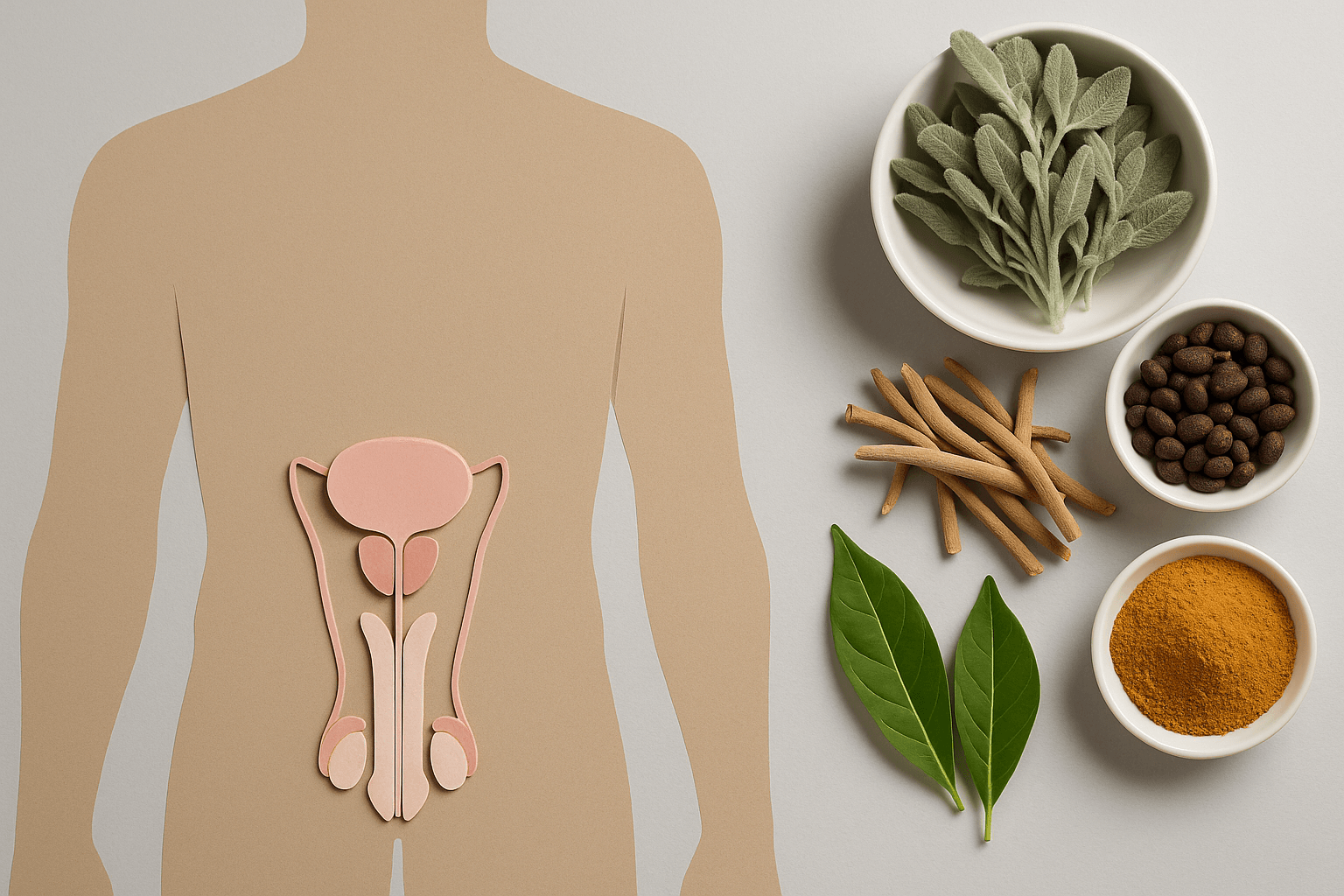
The Seven Dhatu Model and the Formation of Shukra Dhatu [1] [3]
When you study male reproductive health through Ayurveda, you begin to see how deeply the body depends on the nourishment of the seven Dhatus. These Dhatus begin with Rasa and progress one after another until the final essence called Shukra Dhatu is formed.
I learn from the classical texts that Shukra Dhatu is not simply semen. It is the most refined and powerful expression of all the Dhatus working together in harmony. A person with strong Shukra Dhatu usually shows fertility, confidence, emotional stability and a natural glow of vitality.
If you or I experience a disturbance in any of the earlier Dhatus then Shukra Dhatu weakens. This is why men may notice reduced sperm quality, lowered libido, poor erectile strength or emotional fatigue when the deeper tissues are not nourished properly.
Role of Agni in Reproductive Strength [1]
Agni is the digestive and metabolic fire that transforms everything a person eats into usable nutrition for the Dhatus. When Agni is strong, each Dhatu receives proper nourishment and Shukra Dhatu becomes robust and healthy.
However when Agni becomes weak, irregular or overloaded, the next Dhatu receives poor nourishment. This reduces sperm quality, lowers male vitality and weakens physical and emotional strength. A third problem that appears is Ama, the toxic residue that forms when digestion is incomplete. Ama easily blocks the reproductive channels and limits the ability of Shukra Dhatu to develop fully.
Shukravaha Srotas which Control Reproductive Functions [3] [5]
Ayurveda describes special channels known as Shukravaha Srotas. These channels hold the responsibility for producing, storing and circulating Shukra Dhatu.
When a physician studies these Srotas, he or she can see a clear relationship between the classical description and the modern structures such as the testicles, epididymis, vas deferens and prostate.
If these channels become blocked due to Ama, inflammation or the disturbance of Vata, you may develop conditions such as infertility, premature ejaculation or erectile trouble. This is because the channels cannot carry reproductive essence smoothly.
Majja Dhatu and the Neuroendocrine System [3]
Majja Dhatu refers to the tissues connected with the nervous system and the marrow. The classical texts explain that Majja directly influences sexual performance, hormonal balance and emotional stability.
When Majja becomes weak or stressed, a man may feel anxious, unstable during sexual activity or unable to maintain strong erections. Today we understand that stress hormones, mental strain and nervous system fatigue severely affect reproductive capacity. Ayurveda explained this relationship many centuries earlier.
Ojas as the Foundation of Vitality and Reproductive Power [1] [3]
Ojas is the subtle essence that supports immunity, emotional strength and overall vitality. It is closely tied to Shukra Dhatu. When Ojas becomes weak, you may feel sexually exhausted, emotionally fragile or unable to create healthy sperm.
A person with strong Ojas usually feels confident, mentally clear and physically powerful. Modern research now shows how inflammation, stress and oxidative damage reduce sperm quality. This scientific finding supports the ancient Ayurvedic understanding of Ojas depletion.
Classical Herbs and Bhasmas that Nourish Shukra Dhatu [4] [5]
Ayurvedic texts describe many Vrishya or fertility enhancing herbs that increase the strength of Shukra Dhatu. These include Ashwagandha, Kapikacchu, Shatavari, Safed Musli, Gokshura and several others.
These herbs improve vitality, libido and fertility by nourishing the reproductive tissues at a deep level. Several mineral medicines are also mentioned such as Swarna Bhasma, Vanga Bhasma and Makshika Bhasma. They support hormonal balance and strengthen the reproductive system with long lasting effects.
An Integrated Physiological Perspective
When you look at all these elements together, you can understand why Ayurveda views male reproduction as an interconnected system. It depends on digestion, tissue nourishment, mental stability, hormonal balance and clear reproductive channels.
A man who lives with pressure, metabolic weakness, emotional stress, poor food habits or an irregular lifestyle will easily experience reproductive decline.
This integrated Ayurvedic understanding gives us a complete framework to restore reproductive health through Rasayana therapy, classical Avaleha and lifestyle correction.
Causes of Andrological Disorders
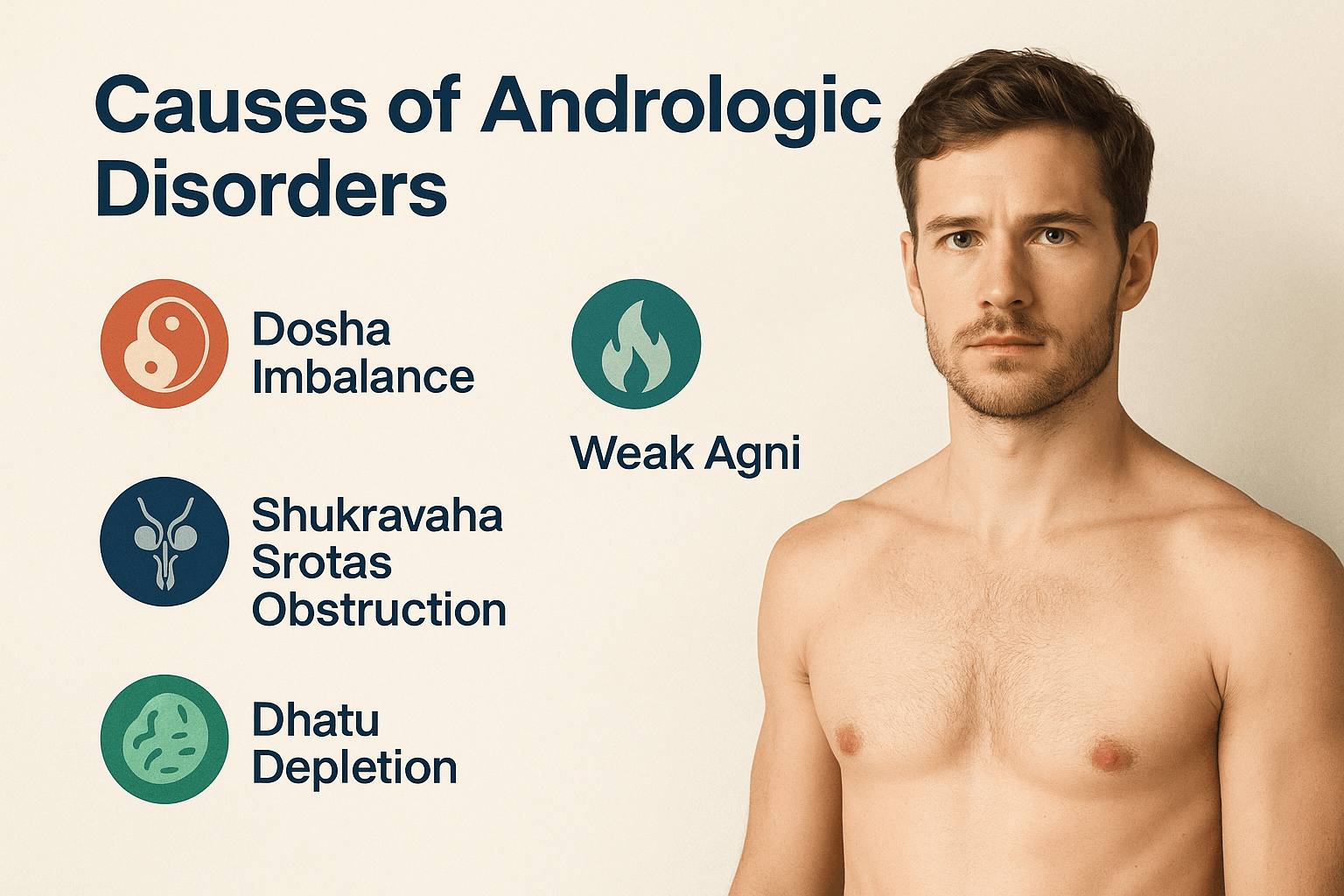
Disturbance of the Doshas and Its Impact on Male Reproduction [1] [3]
When a man begins to experience problems related to sexual performance or fertility, Ayurveda explains that the first place to look is the state of the Doshas. You will notice that Vata, Pitta and Kapha each influence the reproductive system in very distinct ways.
If Vata increases, it affects the nerves and the movement of reproductive fluids. A man may feel anxious, restless or unable to maintain stability during sexual activity. Erections become weaker and ejaculation becomes irregular.
When Pitta rises, the reproductive tissues may become inflamed or overheated. This can show up as burning sensations, prostatitis tendencies or reduced sperm viability.
Kapha disturbance brings heaviness and congestion into the reproductive channels. This can slow hormonal activity, reduce libido and create a sense of emotional dullness.
In many cases all three Doshas are affected together, which is why a man may experience several symptoms at the same time.
Weakness or Irregularity of Agni and Its Role in Disorder Formation [1]
Agni is the digestive and metabolic power that shapes the strength of every Dhatu in the body. If Agni becomes weak or unstable, the quality of nutrition that reaches the deeper tissues declines.
You may see a man eating well but still lacking vitality or sexual strength because the real issue lies in digestion, not food quantity. When Agni does not transform nourishment properly, the chain of Dhatu formation becomes compromised and Shukra Dhatu becomes weak.
A second problem occurs when low Agni creates Ama, which is toxic residue that moves into the reproductive pathways. When Ama mixes with the reproductive fluids, fertility drops, libido weakens and the tissues lose vitality. This process explains why many modern digestive and lifestyle problems directly impact male reproductive health.
Obstruction or Damage to the Shukravaha Srotas [3] [6]
Ayurveda describes special channels named Shukravaha Srotas which carry the reproductive essence. When these channels remain clear and healthy, a man experiences natural fertility, strong erections and stable emotional wellbeing.
However, you or I can easily observe situations where these channels become blocked. Some causes include excess Ama, chronic stress, inflammation, suppression of natural urges and environmental toxins. Classical texts also mention trauma, overexertion, excessive sexual activity and irregular lifestyle as major contributors.
Once these channels are obstructed, the reproductive system cannot perform its functions smoothly. A man may then experience low sperm count, weak motility, premature ejaculation, erectile weakness or chronic testicular discomfort.
Dhatu Kshaya and the Depletion of Reproductive Strength [1] [3] [6]
Another major cause of andrological disorders is the depletion of the Dhatus, especially Majja and Shukra. Dhatu Kshaya occurs when the tissues are not nourished properly or when they are consumed faster than they are rebuilt.
A man living under continuous stress, irregular sleep or emotional pressure often experiences this depletion. Over time you may notice his hormonal strength reducing, his confidence declining or his sexual stamina dropping.
Classical Ayurvedic texts explain that Dhatu Kshaya weakens the mind, the nerves and the reproductive organs simultaneously. This provides a clear understanding of why low energy, poor immunity and sexual difficulties appear together in many individuals.
Lifestyle Choices and Emotional Imbalance as Root Catalysts [1] [3]
Ayurveda places great importance on how a man lives his daily life. Poor food habits, excessive consumption of stimulants, lack of rest, disrupted sleep cycles and emotional strain all act as triggers for reproductive decline.
A man who experiences prolonged mental worry or unresolved emotional tension carries this disturbance directly into Majja Dhatu and then into Shukra Dhatu. This affects sexual desire, the quality of erections and overall reproductive vitality.
In this way physical, mental and emotional patterns combine to create a broad spectrum of andrological disorders.
A Complete Ayurvedic Interpretation
When you study all these causes together, you begin to see that male reproductive disorders do not appear randomly. They arise from predictable imbalances in Doshas, Agni, Dhatu strength and channel health.
A man who understands these principles can begin to restore his reproductive vitality from the foundation rather than relying only on temporary relief.
Ayurveda therefore provides a complete, logical and deeply interconnected model for diagnosing and reversing the causes of andrological diseases.
Erectile Dysfunction (ED)
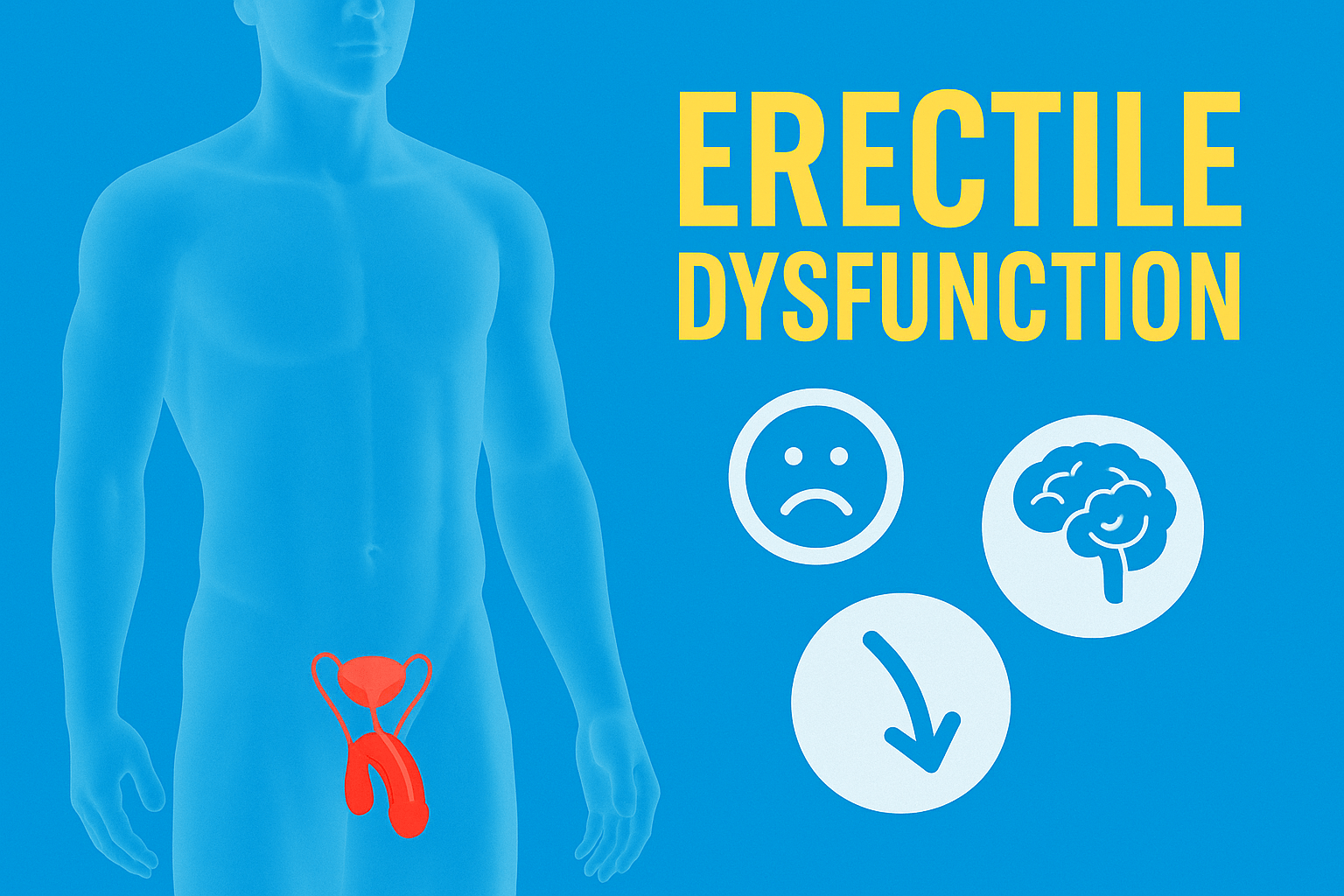
How Ayurveda Explains the Root of ED
When a man begins to experience difficulty achieving or maintaining an erection, Ayurveda describes this as a disturbance that starts at a much deeper level than the symptom itself. Classical texts explain that when Vata becomes aggravated, it disrupts the nerves and channels that control blood flow and reproductive vitality. This disturbance affects Majja Dhatu and Shukra Dhatu simultaneously [1] [3].
You may have noticed that when a man feels exhausted, emotionally stressed or mentally scattered, his ability to perform weakens. This is because Vata affects both the mind and the reproductive system at the same time.
The Role of Dhatus and Agni in Erectile Strength
Ayurveda teaches that an erection requires healthy nourishment of the Dhatus and a strong digestive fire or Agni. When Agni weakens, the tissues do not receive proper nourishment and both Majja Dhatu and Shukra Dhatu begin to decline [1].
If you or I observe a man who eats well yet still lacks vitality, we often discover that the real issue lies in digestion and tissue nutrition rather than the quantity of food. Weak Agni also produces Ama, which blocks the reproductive pathways and worsens the condition.
Modern Science and the Physiology of an Erection
Modern research supports this Ayurvedic understanding. Studies show that emotional stress, overwork and anxiety interfere with nerve signaling, hormonal balance and endothelial health [9].
An erection depends heavily on nitric oxide, a natural chemical messenger that allows the blood vessels in the penis to relax and fill with blood. When nitric oxide signaling weakens, erection quality declines. Scientific literature confirms that nitric oxide is essential for initiating and maintaining an erection [17].
Mind Body Interaction and Emotional Influence
Both Ayurveda and modern science recognize that the mind plays a powerful role in ED. A man who feels discouraged, pressured or insecure may experience a decline in natural sexual response.
This emotional burden increases Vata in the nervous system and further disturbs Majja Dhatu, which continues the cycle of dysfunction [3]. Ayurveda teaches that unless emotional tension is relieved and deeper tissues are rebuilt, the problem continues to reappear even if temporary solutions are used.
Why Ayurveda Offers a Complete Explanation
When we combine the classical view with the scientific view, we see that both systems describe the same underlying forces.
Ayurveda focuses on Vata imbalance, digestive weakness, Dhatu depletion and blocked channels.
Science focuses on stress, nerve function, nitric oxide pathways and vascular performance.
Together they reveal that ED is not simply a physical inability but rather a breakdown in the integrated connection between the mind, the nervous system and the reproductive tissues.
When the deeper causes are addressed, erectile strength returns naturally and confidently.
Premature Ejaculation (PE)
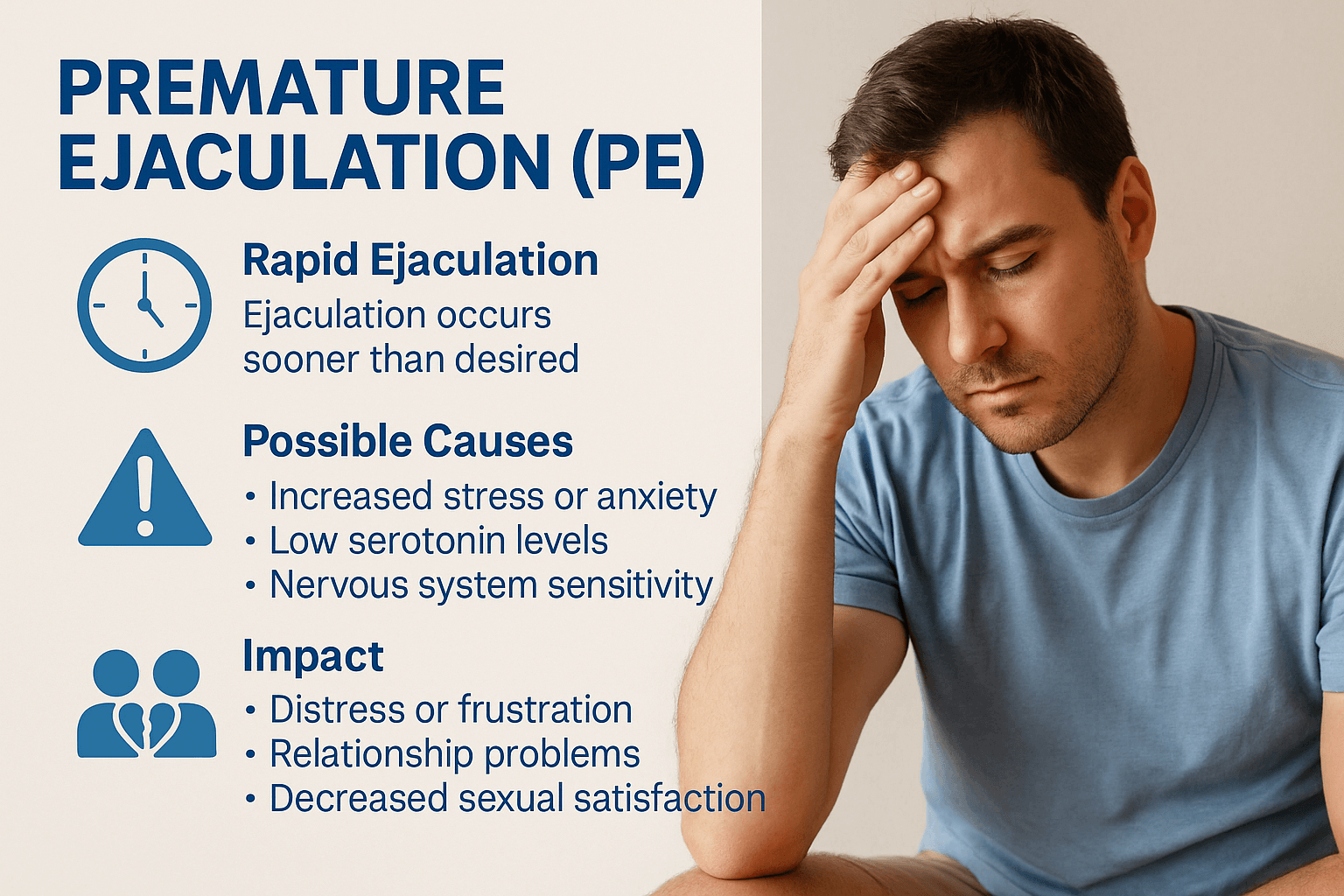
How Ayurveda Describes the Root of PE
When a man experiences ejaculation earlier than he intends, Ayurveda explains that the primary disturbance lies in the imbalance of Vata. Classical texts describe Vata as the force that governs movement, nerve impulses and sensory control. When Vata becomes unstable, the nerves become oversensitive, the mind becomes restless and the reproductive response becomes difficult to regulate [1] [3].
You can see this in men who feel anxious or overstimulated. Even when they wish to maintain control, their body responds too quickly because the underlying system lacks steadiness.
Majja Dhatu and Loss of Nervous Stability
Ayurveda teaches that Majja Dhatu is the tissue connected with the nervous system. When Majja becomes depleted due to stress, excessive stimulation, irregular lifestyle or emotional pressure, the man loses natural control over ejaculation [3].
A person may enter a sexual experience with excitement but quickly loses balance because the nervous system fires too rapidly. This depletion often appears in men who feel mentally tired, emotionally strained or burdened with expectations. Their body responds faster than their mind intends because Majja Dhatu is no longer stable.
Weak Agni and Its Effect on Shukra Dhatu
Agni, which governs digestion and tissue nourishment, plays an essential role as well. When Agni becomes weak or irregular, the deeper tissues do not receive adequate nourishment. Shukra Dhatu then becomes delicate and reactive rather than strong and stable [1].
A man may eat well, exercise and still experience PE because the deeper tissues are not receiving true nourishment. Weak Agni also produces Ama which blocks the channels responsible for carrying reproductive strength, making the man more prone to rapid ejaculation.
Modern Scientific Insight and Emotional Stress
Modern research mirrors these classical explanations. Studies show that men who experience increased stress, anxiety, relationship pressure or performance worry are more likely to develop premature ejaculation. The nervous system becomes overstimulated and the body reacts faster than desired.
Research on Ashwagandha and stress resilience demonstrates that chronic stress weakens hormonal balance, reduces sexual stamina and increases sensitivity during sexual activity [10].
This shows that both Ayurveda and modern science identify the same underlying issue. A sensitive, depleted and overstimulated nervous system leads to early ejaculation.
The Mind Body Cycle Behind PE
Most men who struggle with PE describe a cycle that begins with anxiety or self awareness. Once the mind becomes tense, the nervous system responds instantly. The man tries to control the ejaculation, but the more he thinks, the more quickly the process moves.
Ayurveda explains that this tension increases Vata further, which accelerates the problem instead of calming it [3]. Only when the mind becomes steady and the tissues are rebuilt can natural control return.
Why Ayurveda Provides a Complete Solution
Ayurveda brings together the mind, the nerves and the reproductive tissues into one unified understanding. It teaches that PE is not a failure or a purely physical condition. It is a predictable response to Vata imbalance, Majja depletion, weak Agni and emotional strain.
When the deeper tissues are nourished, when Vata becomes calm and when the nervous system regains its steadiness, the man naturally regains control without force or struggle.
Because of this, Ayurvedic therapy focuses on Rasayana support, strengthening herbs and mind stabilizing practices that restore the entire system rather than suppress the symptom.
Low Libido
How Ayurveda Understands Declining Sexual Desire
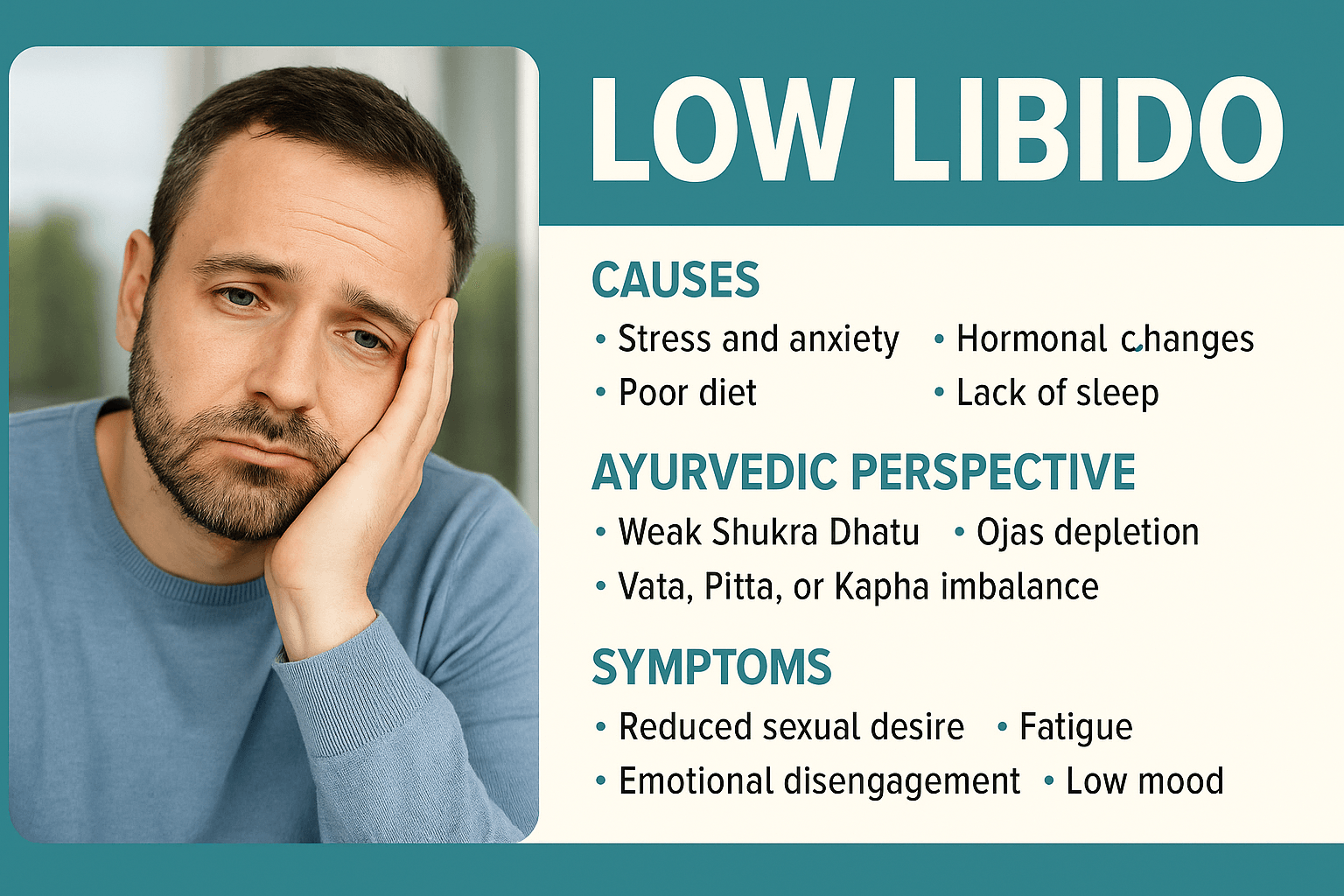
When a man notices that his desire for intimacy is decreasing, Ayurveda teaches that this is not simply a psychological issue. It reflects a deeper imbalance within the body and the mind. Classical Ayurvedic texts describe libido as a direct expression of the strength of Shukra Dhatu and Ojas, both of which depend on proper nourishment and the stability of the Doshas [1] [3].
If you or I observe a man who feels mentally exhausted, emotionally drained or physically depleted, it becomes clear that the body is not producing the natural enthusiasm or vitality needed for sexual desire.
The Role of Shukra Dhatu and Ojas in Sexual Vitality
Shukra Dhatu carries the essence of reproductive strength, while Ojas provides emotional steadiness and physical vitality. When these become weak, sexual desire begins to fade even if the man has no outward disease.
Ayurveda explains that poor digestion, chronic stress, irregular lifestyle and a lack of proper rest slowly drain these vital essences [1]. A man may still feel attachment toward his partner but may not feel the natural urge or enthusiasm that once came easily. This shows how deeply libido is connected to inner vitality rather than external circumstances.
Vata, Pitta and Kapha Influences on Libido
Ayurveda teaches that each Dosha affects libido differently.
If Vata increases, the mind becomes restless and the man may feel disconnected or emotionally distant. Pitta imbalance may lead to irritability, frustration or heat in the body, which reduces comfort and the ability to relax. Kapha imbalance may create heaviness, sluggishness and emotional dullness [3].
All three can lead to a noticeable decline in sexual interest because the body and mind are not aligned with the natural rhythm of desire.
Stress, Anxiety and Emotional Burnout
Modern life places enormous pressure on men. Excessive work, financial worry, emotional strain and constant mental stimulation drain the nervous system. When the mind is tired, the body cannot respond with interest or passion.
Research on Ashwagandha shows that chronic stress reduces testosterone, weakens hormonal balance and lowers natural sexual interest [9]. Many men experience low libido simply because their mind has no room for pleasure or emotional connection.
Poor Tissue Nourishment and Hormonal Decline
Weak Agni leads to poor Dhatu formation and directly reduces sexual desire [1]. A man may eat regularly yet still feel weak or uninterested because the deeper tissues are not being nourished.
Studies have shown that improving overall nourishment and stress resilience increases hormonal balance and sexual desire. Clinical work with Ashwagandha and other adaptogenic herbs demonstrates clear improvements in mood, testosterone and libido [10].
Why Ayurveda Sees Low Libido as a Reversible Condition
Ayurveda views low libido not as a fixed condition but as a natural response to imbalance. When the Doshas are corrected, when Agni becomes strong again and when stress begins to reduce, desire naturally returns.
A man does not need to force himself into sexual activity. Instead, he needs to rebuild vitality, calm the mind and strengthen the deeper tissues. As Shukra Dhatu and Ojas regain their fullness, sexual desire reappears on its own. This is why Ayurveda emphasizes root cause healing rather than artificial stimulation.
Low Sperm Count, Motility and Morphology
How Ayurveda Interprets Male Fertility Decline
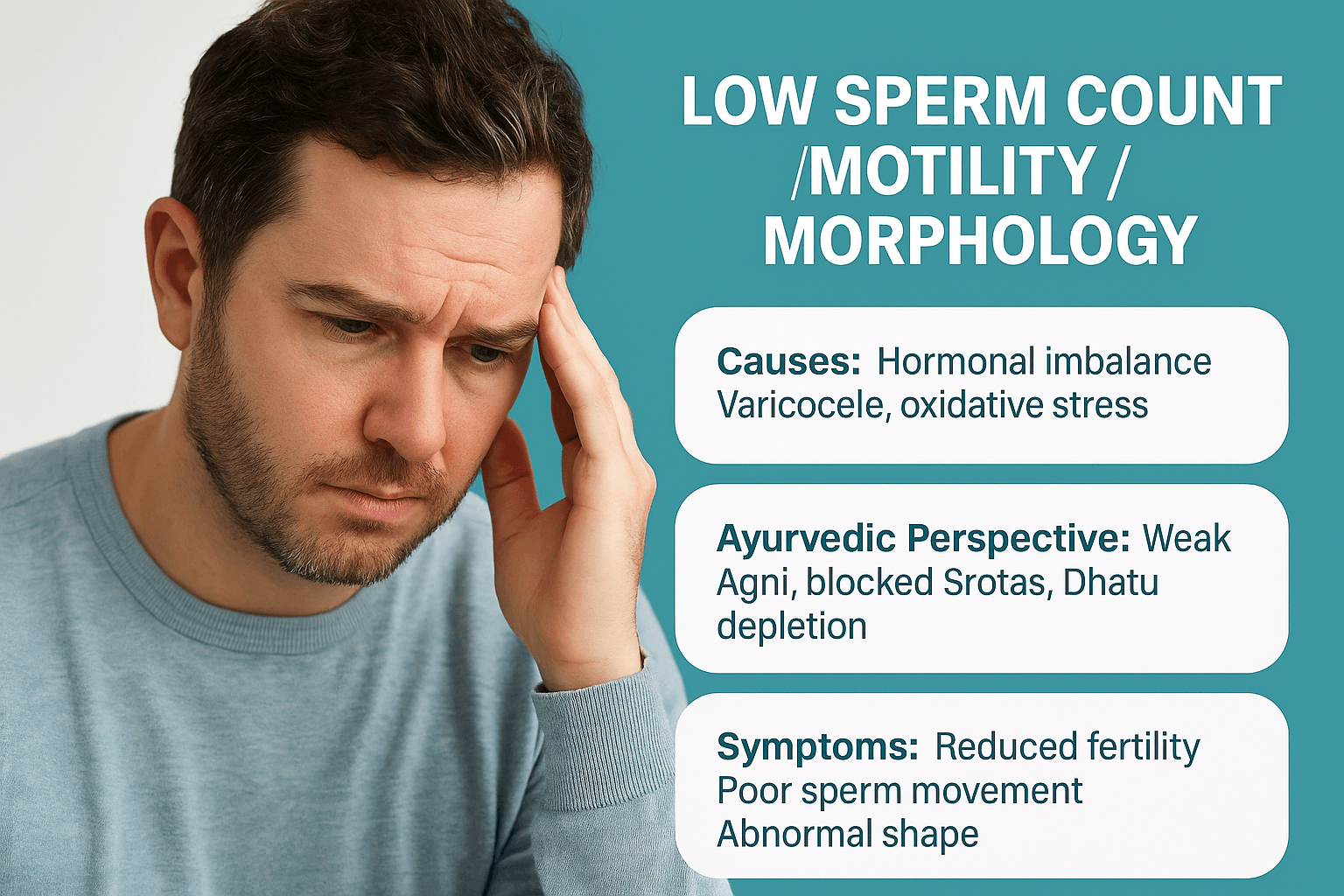
When a man begins to notice difficulty in conception or learns through testing that his sperm count or quality is low, Ayurveda views this as a deeper disturbance in the formation of Shukra Dhatu. Classical texts explain that Shukra Dhatu represents the final and most refined essence of all the Dhatus. Any weakness or imbalance in the earlier Dhatus eventually affects sperm production and quality [1] [6].
You may see this clearly in men who feel chronically tired, mentally overworked or emotionally strained. Their body does not produce strong and healthy sperm because the deeper tissues are not receiving proper nourishment.
Weak Agni and Poor Dhatu Nutrition
Agni, which governs digestion and the transformation of food into usable nourishment, is central to sperm health. When Agni is weak or irregular, the Dhatus do not form properly and Shukra Dhatu becomes compromised.
A man may eat nutritious food and still have low sperm count because his tissues are simply not absorbing or converting nutrients efficiently. Classical sources describe this as Dhatu Kshaya, a gradual weakening of the tissue chain that finally affects sperm volume, motility and structure [1] [6].
Obstruction of Shukravaha Srotas and Its Impact on Sperm
Ayurveda describes the Shukravaha Srotas as the channels responsible for producing, storing and transporting reproductive essence. These channels can become obstructed by Ama, inflammation or lifestyle stressors. When this happens, sperm may appear fewer in number, less active or structurally deformed [6].
You may meet men who appear healthy outwardly yet struggle with fertility, and this is often due to subtle channel obstruction rather than a major disease. Emotional strain, sedentary lifestyle and chronic toxin exposure also disturb these channels and reduce sperm vitality.
Modern Scientific Findings on Male Infertility
Modern research confirms that lifestyle pressure, environmental toxins, oxidative stress and metabolic disorders significantly reduce sperm count and motility. Global studies on male infertility show a clear decline in semen parameters, with stress and poor lifestyle patterns being major contributors [7].
The World Health Organization laboratory manual provides standards for evaluating sperm health and notes that many men fall below the expected range because of diet, stress and toxin accumulation [8].
Scientific investigations into Kapikacchu, also known as Mucuna pruriens, show improvements in sperm count and motility due to its ability to reduce oxidative stress and rebuild reproductive strength [13].
Emotional Stress and Hormonal Imbalance
A man who is constantly stressed, anxious or emotionally fatigued may experience hormonal fluctuations that directly reduce sperm production. High stress hormones disrupt the balance required for healthy spermatogenesis.
Ayurveda recognized this long before modern research by explaining that disturbance of Vata and depletion of Majja Dhatu weaken the reproductive foundation [1] [6]. Modern science now supports this connection by showing how stress affects testosterone, pituitary function and sperm formation [7].
Why Ayurveda Views Low Sperm Count as Reversible
Ayurveda teaches that when digestion becomes strong, when toxins are removed and when Dhatus receive proper nourishment, sperm quality improves naturally. The body has a remarkable ability to rebuild its reproductive tissues when given the right support.
This is why Rasayana therapy, Vrishya herbs and classical formulations are recommended for men with low sperm count or poor motility. They rebuild Shukra Dhatu, strengthen Agni and restore the vitality of the reproductive channels [1] [6].
Many men regain fertility once the root causes are corrected, showing that low sperm count or poor morphology is not a permanent state but a reflection of deeper imbalances that can be improved with proper guidance.
Testicular Disorders
How Ayurveda Describes Testicular Health
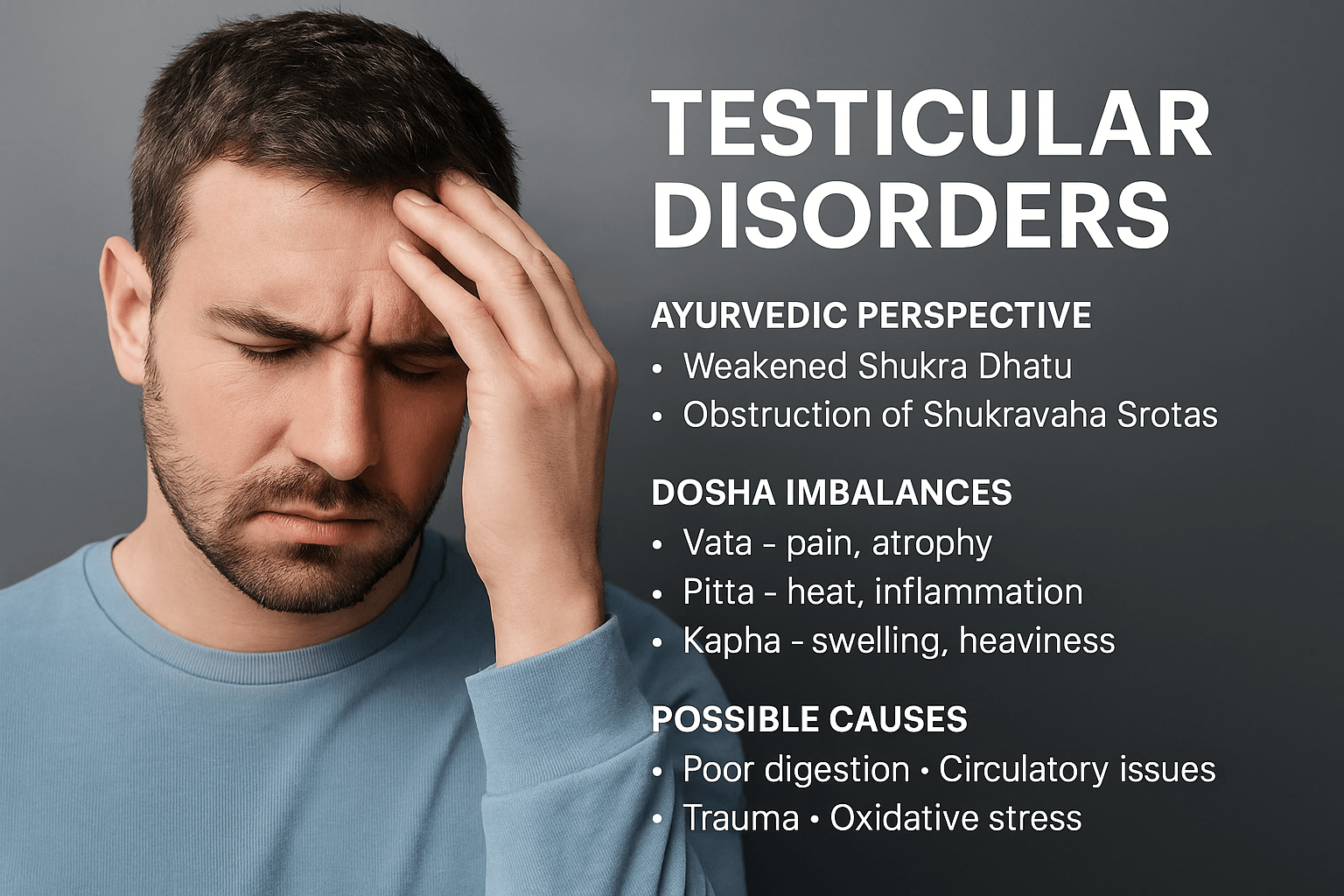
When a man begins to experience discomfort, heaviness or changes in the size or function of the testicles, Ayurveda views this as a sign that the deeper reproductive tissues are not receiving proper nourishment. Classical texts describe the testicles as integral structures that reflect the strength of Shukra Dhatu and the overall stability of the reproductive system [1] [3].
You can see this clearly in men who feel drained, emotionally stressed or physically overworked. Their testicular vitality weakens because the Dhatus that support these organs are not being nourished properly.
Vata, Pitta and Kapha Influence on Testicular Function
According to Ayurveda, Vata imbalances may create pain, shrinking or sudden sensations of discomfort in the testicles. Pitta disturbances may produce heat, inflammation or burning sensations. Kapha imbalance may lead to swelling, heaviness or fluid retention in the scrotal region [3].
A man may notice that symptoms become worse when he is stressed, overheated, inactive or emotionally tense. This shows how the Doshas directly influence testicular physiology.
Importance of Agni and Dhatu Nourishment
Testicular disorders often arise when Agni becomes weak or irregular. Poor digestion leads to improper formation of Dhatus, especially Mamsa, Meda, Majja and Shukra. When these tissues lack nourishment, the structural integrity and functional power of the testicles decline [1].
A man may eat well but still feel testicular weakness or discomfort because his digestive fire is not converting nutrients into stable tissue strength.
Channel Obstruction and Testicular Swelling
Ayurveda explains that obstruction in the reproductive channels, known as Shukravaha Srotas, may produce swelling or heaviness in the testicles. This obstruction can occur from Ama accumulation, trauma, sedentary lifestyle or excessive sexual strain [3].
When the channels become blocked, circulation weakens and the testicles cannot maintain their natural vitality. The man may then experience conditions such as hydrocele or varicocele, both of which reflect stagnation within these channels.
Modern Scientific Insight into Testicular Disorders
Modern science supports this Ayurvedic understanding. Research shows that oxidative stress, hormonal imbalance and circulatory disturbances can impair testicular function and sperm production. Studies also confirm that antioxidant rich herbs play a strong role in protecting testicular tissue and improving fertility [11] [12].
For example, Safed Musli has shown potential benefits for improving testicular strength, while Gokshura has demonstrated positive effects on reproductive hormones and tissue integrity [11] [12].
The Role of Kapikacchu in Improving Testicular Health
Kapikacchu, also known as Mucuna pruriens, is one of the most widely studied Ayurvedic herbs for male reproductive strength. Research shows that it improves sperm count, motility and overall testicular function by reducing oxidative stress and restoring dopamine pathways [13].
You can often see improvements in men who feel depleted or mentally overwhelmed because Kapikacchu supports both the nervous system and the reproductive tissues at the same time.
Why Ayurveda Views Testicular Disorders as Reversible Conditions
Ayurveda teaches that the testicles have strong regenerative potential when Agni becomes stable, the Doshas return to balance and the deeper tissues receive nourishment.
A man does not have to accept chronic pain or reproductive decline as permanent. When Shukra Dhatu is rebuilt and when the reproductive channels become clear again, vitality returns naturally.
Herbs, Rasayana therapy, lifestyle correction and classical formulations work together to restore the foundation of reproductive health rather than only addressing the symptoms.
Prostate Disorders
How Ayurveda Understands the Prostate
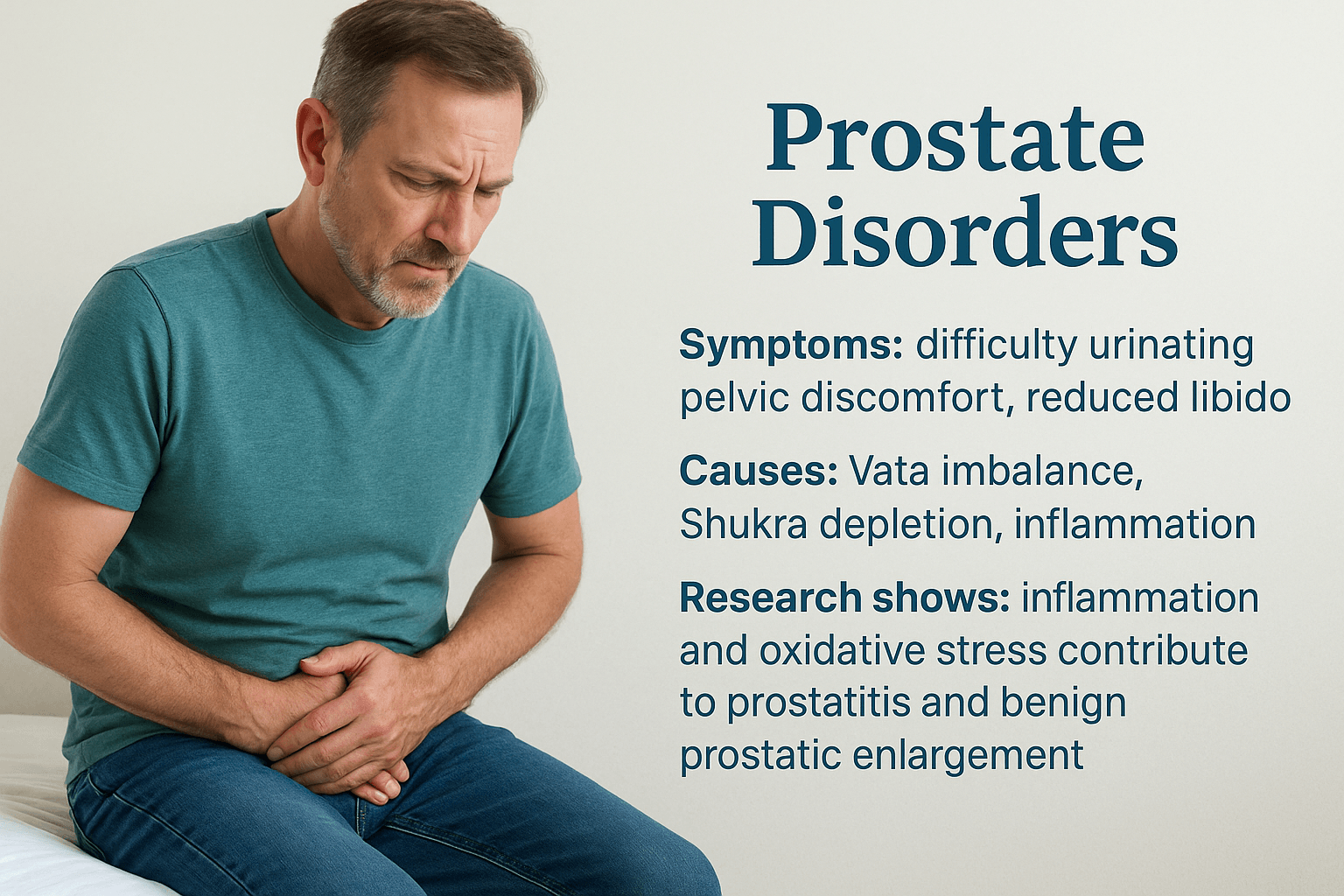
When a man begins to feel urinary difficulty, pelvic heaviness or a reduced sense of reproductive vitality, Ayurveda interprets this as a disturbance in the interaction between Vata and the lower pelvic organs. Classical Ayurvedic theory describes the prostate region as an area governed by Apana Vata, the force responsible for elimination, reproductive function and downward movement within the body [20].
When Apana Vata becomes imbalanced, the tissues in the pelvic region tighten, swell or lose coordination. This may lead to symptoms such as slow urine flow, frequent urination, dribbling or discomfort after emptying the bladder.
The Role of Shukra Dhatu and Vata Imbalance
Ayurvedic texts describe that the prostate is closely linked to Shukra Dhatu. When Shukra is depleted because of age, stress, excessive sexual strain or weak nourishment, the organs connected with reproductive essence begin to lose stability. You may notice that men with long standing fatigue or emotional stress often develop symptoms of prostate enlargement or irritation because their Shukra Dhatu is no longer supporting the pelvic tissues adequately [20].
Vata imbalance plays the central role here. When Vata becomes aggravated, the prostate gland may tighten or swell, producing the characteristic feeling of obstruction or incomplete emptying. Many men describe a sensation of pressure in the pelvic floor that worsens with anxiety or overwork. This is consistent with Vata disturbance affecting both the urinary and reproductive pathways.
Inflammation and Heat According to Modern Research
Modern scientific studies show that chronic inflammation, hormonal fluctuation and oxidative stress contribute significantly to prostatitis and benign prostatic enlargement. Research highlights that inflammatory changes in the prostate tissue lead to swelling, pain and urinary dysfunction [12].
Oxidative stress is now recognized as a major contributor to both prostate irritation and progressive enlargement. This matches Ayurvedic insight that excess Pitta in the pelvic region produces heat, swelling and discomfort.
Channel Obstruction and Pelvic Stagnation
Ayurveda explains that the Mutravaha Srotas are the channels responsible for urine formation and flow. These channels may become sluggish because of Ama accumulation, weak Agni, sedentary lifestyle or suppressed natural urges. When obstruction develops in these channels, pressure builds in the bladder and the prostate reacts with swelling or irritation [20].
You often see this pattern in men who sit for long hours, eat heavy food late at night or suppress urination due to work pressure. Their pelvic circulation weakens and the gland loses its natural elasticity.
Why Libido and Prostate Function Often Decline Together
Ayurveda notes that Shukra Dhatu supports both the reproductive organs and the vitality that contributes to libido. When the prostate becomes inflamed or swollen, the man may also feel reduced sexual desire or performance uncertainty.
Modern research also shows that inflammation and oxidative stress in the prostate correlate with hormonal changes, reduced testosterone and lower sexual interest [12]. This beautifully aligns with the Ayurvedic understanding that Shukra depletion and Vata aggravation simultaneously impact both fertility and prostate health.
Why Ayurveda Views Prostate Disorders as Reversible
Ayurveda does not see prostate problems as an unavoidable part of aging. It explains that when Agni becomes strong, Vata becomes balanced and the pelvic channels regain clarity, the swelling and irritation of the prostate begin to settle [20].
A man can restore his urinary strength, pelvic comfort and sexual vitality by addressing the root causes rather than temporarily suppressing symptoms. Rasayana therapy, anti inflammatory herbs, dietary correction and calming of Apana Vata provide a direct pathway toward long term recovery.
Infertility
How Ayurveda Understands Male Infertility
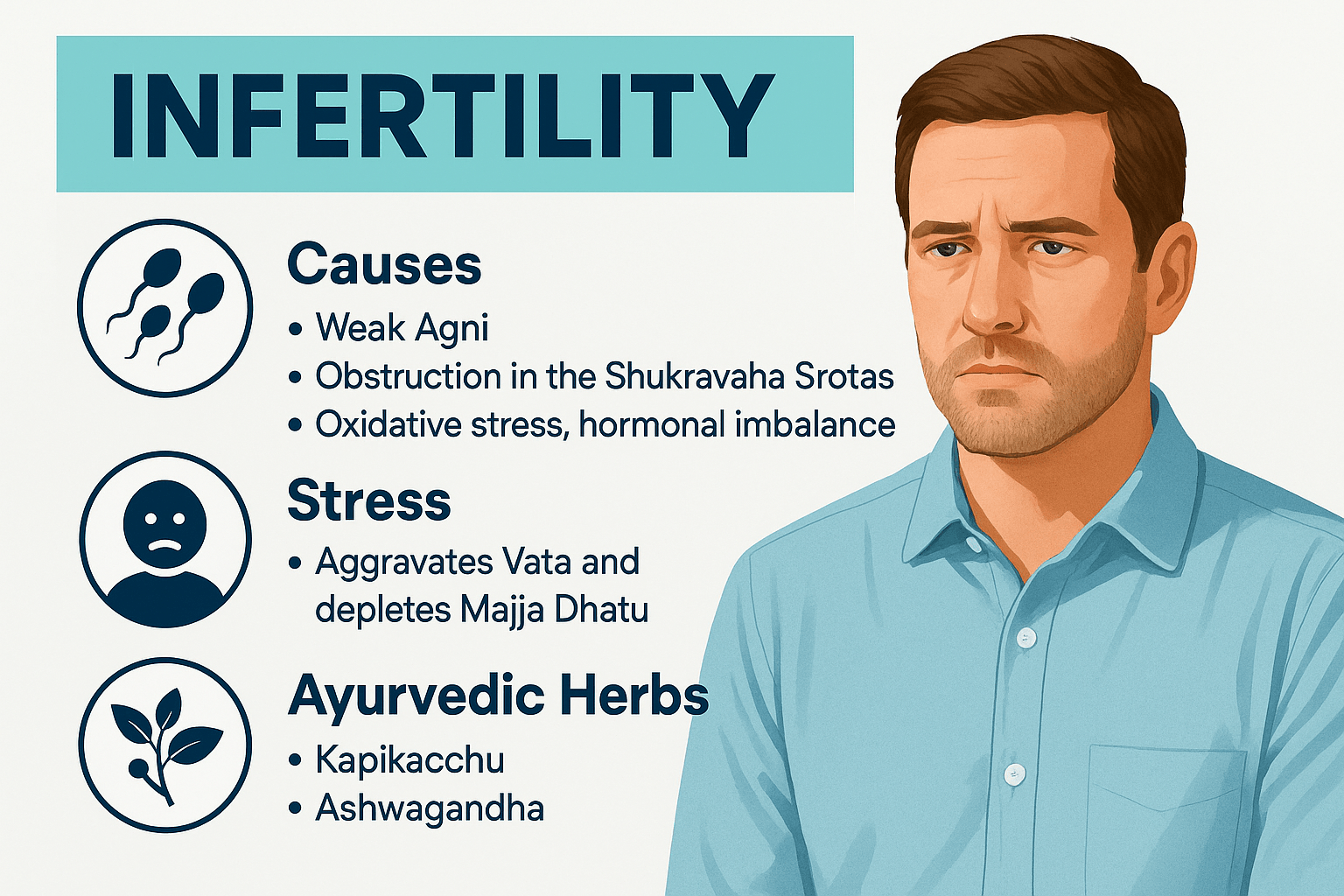
When a couple struggles to conceive and medical reports show weakness in sperm count, motility or structure, Ayurveda explains that infertility arises when Shukra Dhatu is not being formed or nourished properly. Classical Ayurvedic texts describe Shukra as the final and most refined essence of all Dhatus, which means any disturbance in digestion, metabolism or mental balance eventually affects fertility [1] [6].
You can often observe this in men who feel chronically exhausted, mentally overwhelmed or emotionally pressured. Even without visible disease, their reproductive essence weakens because the deeper tissues are not being nourished.
Weak Agni and Its Impact on Reproductive Tissue
Agni, the digestive fire, is central to fertility. When Agni becomes weak, irregular or overloaded, the entire chain of Dhatu formation is affected. The nourishment that should reach Majja Dhatu and ultimately Shukra Dhatu becomes insufficient. As a result, sperm production decreases and the body loses its natural ability to create strong and healthy sperm [1] [6].
A man may eat nutritious food but still experience infertility because his digestion does not convert nutrition into usable reproductive strength.
Obstruction in the Shukravaha Srotas
Ayurveda describes the Shukravaha Srotas as the channels that create, store and transport reproductive essence. These channels can become blocked by Ama, inflammation, chronic stress or excessive sedentary lifestyle. Once these channels are obstructed, sperm may be reduced in number, become slow in movement or appear structurally weak [6].
Many men appear outwardly healthy but face infertility because the microscopic pathways supporting sperm formation have become impaired by stress, toxins or poor habits.
Modern Scientific Understanding of Male Infertility
Modern research strongly supports these ancient insights. Studies show that oxidative stress, hormonal imbalance, environmental toxins, poor lifestyle habits and chronic inflammation significantly reduce sperm quality [7]. Global trends indicate a continuous decline in sperm parameters among men over the last several decades due to modern stress and environmental strain.
The World Health Organization laboratory manual clearly defines the parameters of healthy sperm and highlights how many men fall below these standards due to lifestyle and metabolic disruption [8].
Stress and Its Direct Role in Infertility
Emotional stress is now recognized as a major cause of infertility. Men who feel mentally burdened, anxious or pressured often exhibit reduced testosterone, weaker sperm formation and lower sexual vitality.
Ayurveda explains this connection by stating that chronic stress aggravates Vata and depletes Majja Dhatu, which prevents Shukra from forming properly [6].
Modern research on Ashwagandha shows that stress reduction improves hormonal balance, testosterone levels and sperm parameters [10].
Powerful Ayurvedic Herbs That Restore Fertility
Several classical herbs have been scientifically studied for their ability to support reproductive health. Kapikacchu, also known as Mucuna pruriens, is one of the most researched Ayurvedic herbs for improving sperm count, motility and morphology. Studies show that Kapikacchu reduces oxidative stress, increases dopamine and restores testicular function [13].
A man who feels depleted or overwhelmed often responds well to these nourishing herbs because they strengthen both the nervous system and the reproductive tissues.
Why Ayurveda Views Infertility as a Reversible Condition
Ayurveda does not see infertility as a fixed or unchangeable state. Instead, it recognizes it as a reflection of deeper imbalances that can be corrected. When Agni becomes strong, when Dhatus receive proper nourishment and when the reproductive channels become clear, sperm count and functional quality improve naturally [1] [6].
A man can restore fertility by addressing digestion, stress, tissue strength and channel clarity rather than only focusing on semen parameters. Once these foundations return, conception becomes possible with greater ease and stability.
Diagnostics Framework
How Ayurveda Approaches Male Reproductive Evaluation
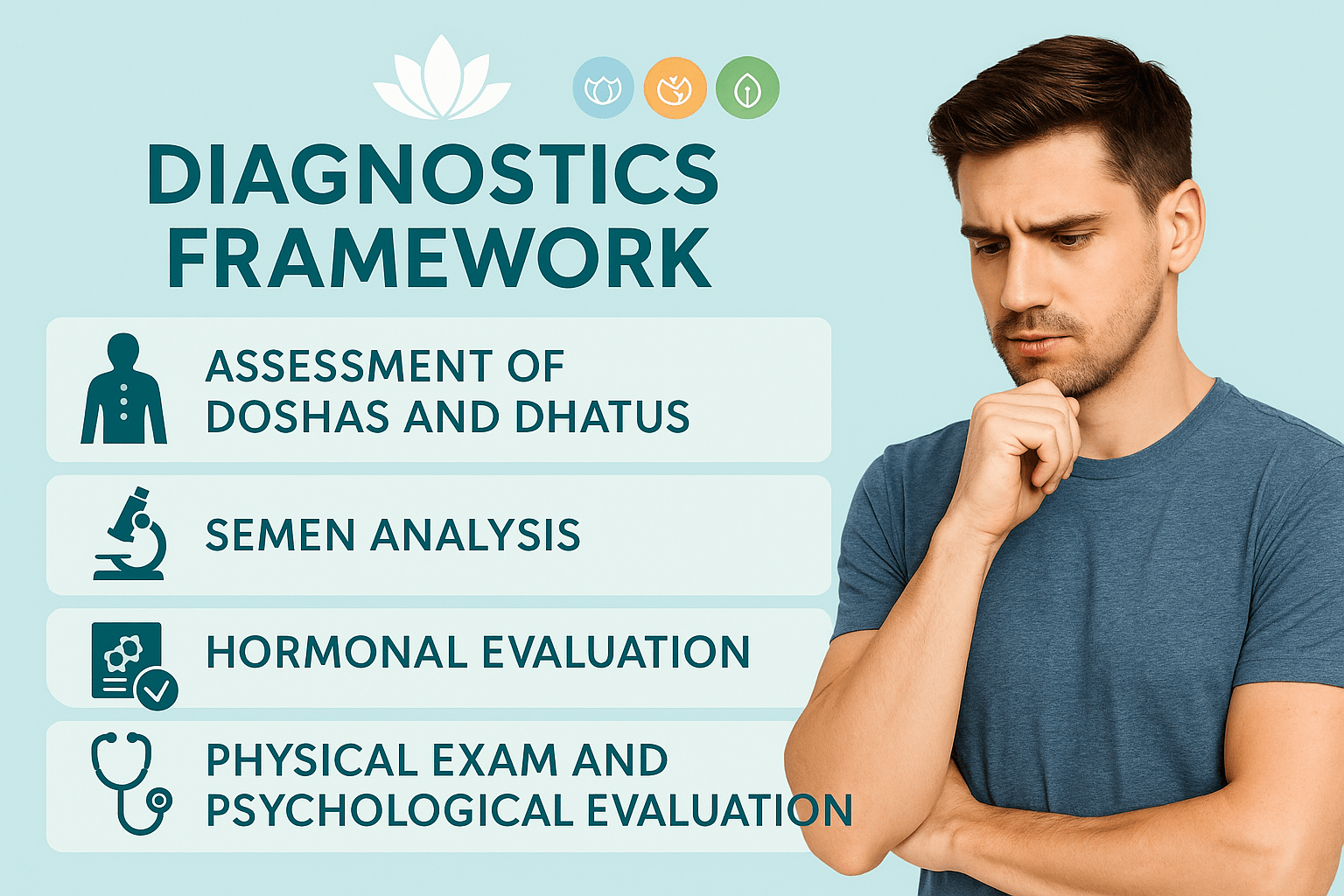
When a man seeks clarity about his reproductive health, Ayurveda begins the diagnostic process by observing the overall strength of his Dhatus and the balance of his Doshas. The physician studies how well Agni is functioning, how deeply the tissues are being nourished and whether signs of Vata, Pitta or Kapha disturbance are present [1].
If you watch an experienced Ayurvedic practitioner, you will notice that the diagnostic process does not start with a lab test. It starts with understanding how the man feels, how he digests food, how he sleeps and how his mind responds to stress. These factors reveal the deeper foundations that influence sexual vitality, fertility and reproductive function.
Assessment of Dhatu Strength and Srotas Clarity
Ayurveda carefully examines the condition of each Dhatu, especially Majja and Shukra, because they directly influence sperm health, libido and erectile strength. A man who feels mentally fatigued or emotionally strained often shows signs of Majja depletion, while a man with weak digestion or chronic stress may show reduced Shukra formation [1].
The clarity of the Shukravaha Srotas is also evaluated. If these channels show signs of obstruction due to Ama, inflammation or lifestyle strain, it becomes clear why issues such as low sperm count, erectile difficulty or premature ejaculation appear.
Modern Semen Analysis and Global Guidelines
In modern practice, semen analysis is the central test for evaluating sperm count, motility, morphology and volume. The World Health Organization laboratory manual provides detailed criteria for what constitutes healthy semen parameters, and millions of men worldwide are assessed using these standards [7] [8].
A man may feel completely healthy yet discover abnormalities in sperm function because semen parameters reflect subtle metabolic and hormonal shifts that are not always visible in daily life.
This modern diagnostic tool gives a precise picture of how the reproductive system is performing and also helps align Ayurvedic interpretation with global scientific benchmarks.
Hormonal Evaluation and Endocrine Insight
Many men with reproductive concerns undergo hormonal testing to assess testosterone levels, follicle stimulating hormone, luteinizing hormone and thyroid function. These hormones regulate sperm formation, erection quality and libido.
Ayurveda interprets these hormonal shifts as reflections of Agni, Vata balance and the nourishment of Majja and Shukra Dhatu [1]. When the hormones rise or fall, it often reveals how deeply the man’s lifestyle, emotions and digestion have influenced his reproductive system.
Physical Examination and Symptom Mapping
Ayurvedic physicians rely heavily on observation and interrogation. The practitioner looks at the tongue, eyes, skin texture, pulse and overall body build to understand Dosha dominance and imbalance.
The man’s symptoms are mapped according to their quality. Slowness or heaviness suggests Kapha disturbance. Burning or inflammation suggests Pitta. Nervousness, dryness or irregularity points toward Vata imbalance [1].
This symptom mapping helps connect the external signs with the internal reproductive state.
Psychological and Emotional Evaluation
Ayurveda acknowledges the profound connection between the mind and the reproductive organs. Emotional stress, insecurity, relationship strain and unresolved mental pressure often appear in conditions like premature ejaculation, erectile weakness and low libido.
A physician therefore studies the man’s mental state with the same seriousness as his physical symptoms, because emotional health forms the foundation for balanced Shukra Dhatu [1].
Why Ayurveda Uses Both Classical and Modern Diagnostics
Ayurveda provides a holistic understanding of the root causes, while modern diagnostics offer measurable data. When both systems are combined, the physician gains a complete picture of reproductive health.
You will often find that a man can correct long standing reproductive problems when he understands not only the laboratory numbers but also the deeper Dosha and Dhatu imbalances revealed through Ayurvedic examination.
Treatment Principles (Shodhana and Rasayana)
How Ayurveda Approaches the Healing of Male Reproductive Disorders
When a man seeks true restoration of reproductive strength, Ayurveda does not rely on temporary symptom relief. Instead, it follows a structured system of treatment based on cleansing and rebuilding.
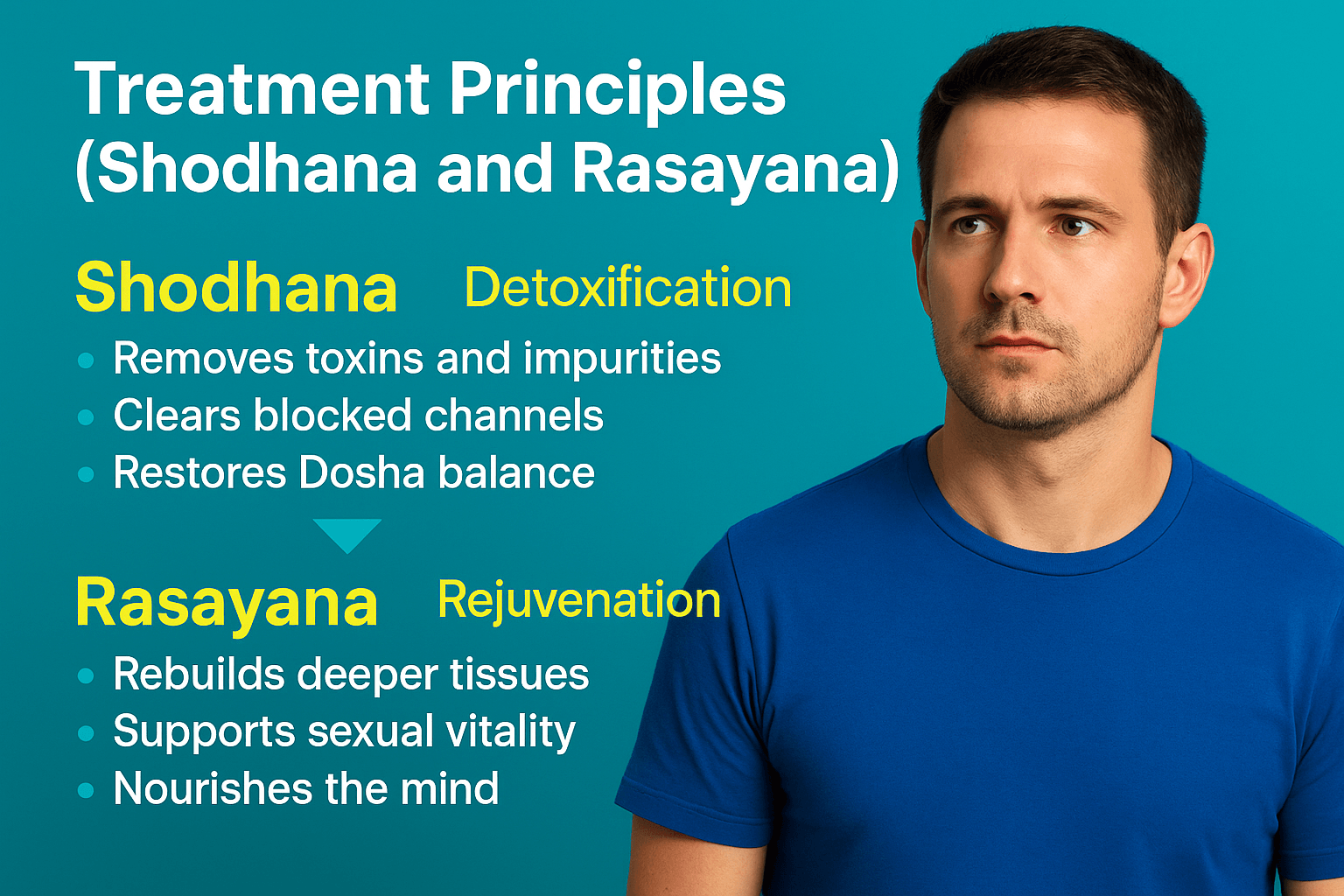
Shodhana removes the impurities that block reproductive function, while Rasayana rebuilds the deeper tissues that create sexual vitality, fertility and emotional steadiness [1] [3].
A physician first studies the man’s digestion, mental state, Dhatu strength and lifestyle patterns. Once the root imbalance is identified, the treatment moves in a stepwise manner so that both the body and the mind regain their natural balance.
Shodhana as the First Step to Restore Balance
Shodhana refers to therapeutic cleansing that removes accumulated Ama, reduces Dosha aggravation and opens the blocked pathways of the body.
If you observe men with chronic stress, long hours of sitting, emotional pressure or weak digestion, you will see how Ama accumulates in the reproductive channels. This reduces sperm quality, weakens erections and lowers sexual desire.
Shodhana helps by clearing these channels so the reproductive system can function freely again [1] [6].
Virechana for Pitta and Reproductive Inflammation
Virechana is used to remove accumulated heat and toxins from the liver and blood. When a man experiences heat in the pelvic region or hormonal imbalances, this process provides relief and clears the pathway for better sperm formation.
Classical texts describe Virechana as essential for restoring clarity in Pitta dominated reproductive disorders [3].
Basti for Vata Imbalance and Nervous System Weakness
Ayurveda teaches that Apana Vata governs ejaculation, erection, sperm movement and reproductive rhythm. When Vata is disturbed, premature ejaculation, erectile weakness and reduced libido appear.
Basti therapy restores the strength of Apana Vata, improves nerve stability and strengthens the reproductive tissues from within [6].
Why Shodhana Enhances the Effect of Rasayana
Without cleansing, Rasayana cannot penetrate deeply into the tissues. Shodhana prepares the body to absorb nourishment more effectively, which is why both therapies must be used together for long term results [3].
Rasayana as the Foundation of Reproductive Rejuvenation
Once the body is cleansed, Ayurveda begins Rasayana therapy, which strengthens Agni, nourishes Majja and Shukra Dhatu and restores emotional steadiness.
A man who feels depleted, anxious or chronically tired responds very well to Rasayana because it supports both the mind and the reproductive system [1].
Herbs and Formulations that Rebuild Shukra Dhatu
Classical Rasayana herbs include Ashwagandha, Kapikacchu, Gokshura, Shatavari and Safed Musli. These herbs are described in Ayurvedic literature as Vrishya, meaning they directly support fertility, sperm health and sexual vitality [18].
Kapikacchu in particular has been studied for its ability to improve sperm count, motility and testicular function by reducing oxidative stress and restoring dopamine pathways [13].
Mineral Based Rasayana for Deep Cellular Rejuvenation
Ayurvedic texts describe potent mineral based Rasayana such as Swarna Bhasma, Makshika Bhasma and Vanga Bhasma. These support hormonal balance, increase vitality and strengthen the deeper reproductive tissues [19].
When used under professional guidance, these formulations give long lasting results because they work at the level of Dhatu formation and channel clarity.
Strengthening Agni to Improve Tissue Formation
Rasayana therapy cannot succeed if the digestive fire is weak. Ayurveda focuses on improving Agni so that every Dhatu, including Shukra, receives proper nourishment [1].
A man with weak digestion may feel fatigued, sexually low or emotionally unstable. When Agni becomes strong again, his entire reproductive system begins to improve naturally.
Balancing the Mind and Nervous System
Ayurveda acknowledges that reproductive strength depends on mental balance. Anxiety, fear, emotional strain and chronic stress weaken Majja and Shukra Dhatu [3] [6].
Rasayana therapy therefore includes herbs such as Ashwagandha, Brahmi and Shankhpushpi, which calm the mind and strengthen the nervous system.
A calm mind improves sexual performance, restores libido and supports hormonal regulation.
Why Shodhana and Rasayana Together Create a Complete Cure
Shodhana removes what is harmful. Rasayana rebuilds what is weak.
When these two principles work together, the man regains natural sexual vitality, stable erections, improved libido and stronger fertility [1] [3] [6].
This dual approach explains why Ayurveda can reverse long standing reproductive disorders and restore complete health from the foundation.
Vrishya Rasayana Avaleha: 30-Day Ayurvedic Formula for Male Vitality and Fertility
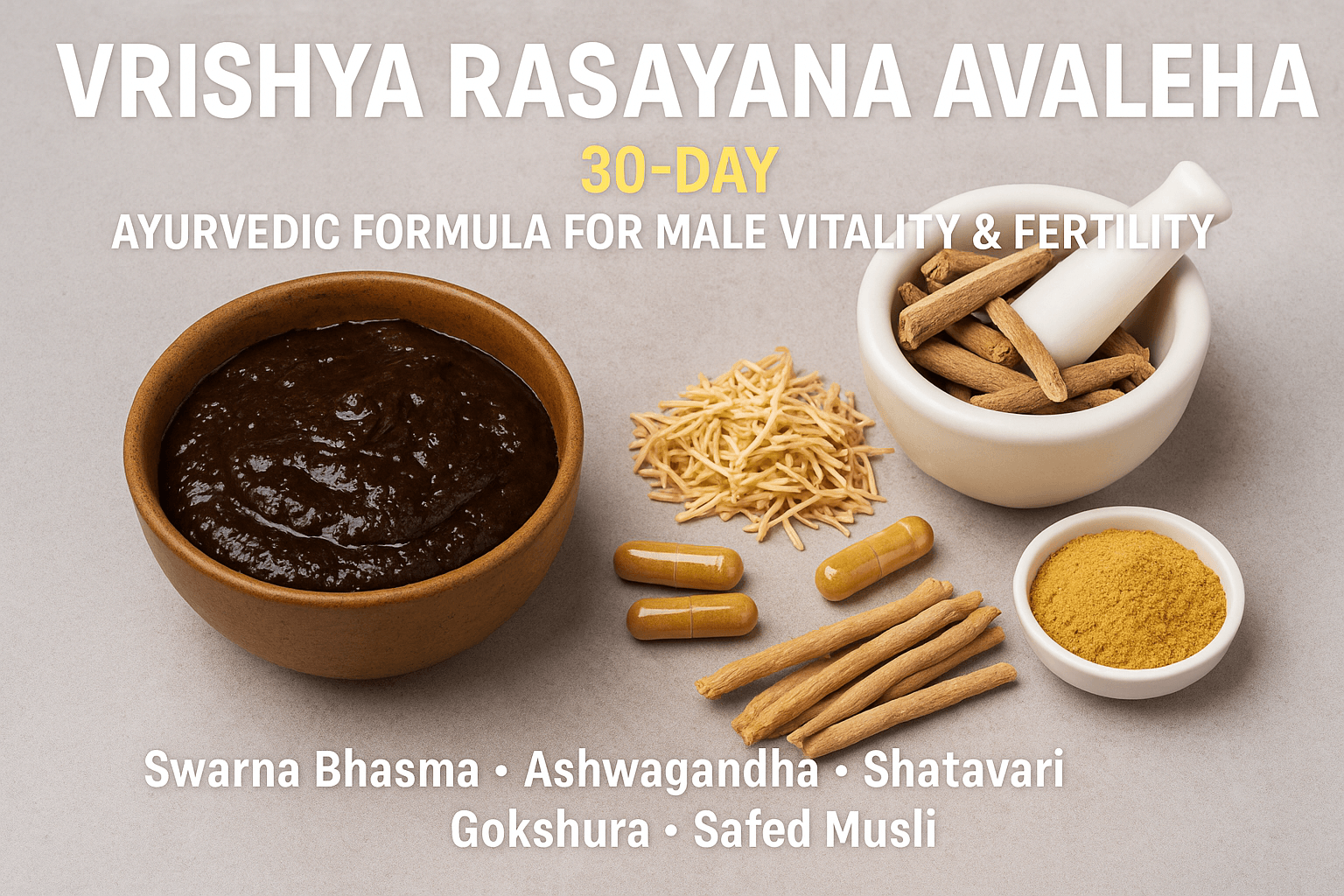
Vrishya Rasayana Avaleha is a classical Ayurvedic rejuvenation formula designed to enhance Shukra Dhatu, strengthen male reproductive organs and improve fertility, libido and overall sexual vitality.
This carefully crafted 30-day protocol delivers deep nourishment using powerful Rasayana herbs and rare mineral preparations, including Swarna Bhasma (Gold Bhasma) for cellular rejuvenation and hormonal support.
Dosage: 15 g in the morning and 15 g at night
Total quantity for 30 days: 900 g Avaleha
Ingredients Overview (Rasayana + Vajikarana Focus)
1. Decoction Base (Kwatha Dravya)
These herbs form the core Rasayana foundation.
- Ashwagandha (Withania somnifera) – 150 g
- Shatavari (Asparagus racemosus) – 120 g
- Gokshura (Tribulus terrestris) – 120 g
- Kapikacchu Seeds (Mucuna pruriens) – 120 g
- Safed Musli (Chlorophytum borivilianum) – 100 g
- Vidari Kand (Ipomoea digitata) – 100 g
- Bala / Atibala (Sida cordifolia) – 80 g
- Jeevanti (Leptadenia reticulata) – 60 g
- Yashtimadhu / Licorice (Glycyrrhiza glabra) – 60 g
- Guduchi (Tinospora cordifolia) – 50 g
- Punarnava (Boerhavia diffusa) – 50 g
- Shunthi / Dry Ginger – 25 g
2. Avaleha Sweet Base
Required to bind and deliver nourishment.
- Jaggery – 400 g
- Ghee – 150 g
- Honey (added after cooling) – 150 g
3. Potent Rasayana Additives (Prakshepa Dravya)
These ingredients significantly amplify fertility, libido, testosterone activity, nerve strength and Shukra Dhatu formation.
- Swarna Bhasma (Gold Bhasma) – 150 mg
- Swarna Makshika Bhasma – 250 mg
- Abhrak Bhasma – 250 mg
- Vanga Bhasma – 200 mg
- Lauh Bhasma – 200 mg
- Shuddha Shilajit – 5 g
- Gokshuradi Churna – 25 g
- Ashwagandha Powder – 25 g
- Kapikacchu Powder – 25 g
- Safed Musli Powder – 25 g
Why Gold Bhasma is added:
Gold Bhasma is one of the most potent Rasayana substances in Ayurveda. It enhances reproductive strength, boosts hormonal equilibrium, improves vitality, supports brain function and strengthens the immune system. It works synergistically with herbs like Ashwagandha and Kapikacchu to restore complete reproductive health.
4. Rasayana Enhancers
Support absorption, Agni function and potency.
- Trikatu (Pippali, Shunthi, Maricha) – 10 g
- Triphala (Haritaki, Bibhitaki, Amalaki) – 20 g
- Saffron – 1 g
- Elaichi (Cardamom) – 5 g
- Dalchini (Cinnamon) – 5 g
Therapeutic Benefits of This Avaleha
1. Improves Sperm Count, Motility and Morphology
Kapikacchu, Gokshura, Vidari and Swarna Bhasma strengthen testicular function and improve the formation and quality of Shukra Dhatu.
2. Enhances Libido and Sexual Performance
This blend boosts natural testosterone activity, increases sexual desire and improves performance confidence.
3. Deep Rejuvenation of Testicular and Prostate Health
Swarna Bhasma, Swarna Makshika and Abhrak Bhasma enhance cellular vitality, while Shilajit improves mitochondrial strength.
4. Reduces Stress and Enhances Emotional Balance
Ashwagandha, Licorice and Triphala support mental calmness, reducing stress driven sexual dysfunction.
5. Strengthens Agni for Better Tissue Nourishment
With improved Agni, the body efficiently converts food into refined Dhatus, especially Shukra Dhatu.
How to Use
- Take 15 g in the morning on an empty stomach or with warm milk
- Take 15 g at night for optimal Rasayana absorption
- Avoid cold foods, smoking, alcohol and heavy late meals
- Support treatment with yoga, pranayama and regular sleep
Who Should Take This Formulation
Men experiencing:
- Low sperm count
- Poor motility
- Erectile weakness
- Low libido
- Stress related reproductive issues
- Testicular weakness
- Chronic fatigue affecting sexual health
- Premature ejaculation
- Age related reproductive decline
Warning and Precautions
1. Use Only Under Certified Ayurvedic Physician Supervision
This formulation contains potent minerals such as Swarna Bhasma, Abhrak Bhasma, Vanga Bhasma and Lauh Bhasma which must be administered only under expert guidance.
2. Not Meant for Self-Preparation or Self-Dosing
Improper preparation or incorrect dosing of Bhasma can lead to complications.
3. Avoid During Acute Illness
If you have fever, acute infections or digestive problems, pause the medicine until reviewed by your doctor.
4. Patients with Kidney or Liver Disorders Must Consult First
Mineral preparations require medical supervision for individuals with pre-existing organ conditions.
5. Do Not Combine With Alcohol or Recreational Substances
These reduce Rasayana effectiveness and may aggravate Dosha imbalance.
6. Not Recommended During Pregnancy or For Women
This is a male Vajikarana Rasayana and not meant for female use.
7. Keep Gap With Allopathy Medicines
Maintain a minimum two-hour gap between this Avaleha and any modern medication unless advised otherwise.
Case Studies
Case Study 1: Severe Low Sperm Count Restored Through Rasayana Therapy
A thirty four year old man visited the clinic after multiple failed attempts to conceive. His sperm count was extremely low and the motility was poor. He had a history of long working hours, high stress and irregular eating habits. After the initial evaluation, it became clear that both Vata imbalance and Majja Dhatu depletion were present.
A structured protocol was started which included Shodhana based cleansing followed by Vrishya Rasayana Avaleha, Kapikacchu preparations and stress correction. Within three months, the sperm count and motility improved significantly and emotional stability also returned. His follow up reports showed measurable improvement in Shukra parameters which matches observations documented in classical Vajikarana literature and modern studies on herbal male fertility enhancers [9] [12].
Case Study 2: Erectile Weakness Linked to Vata Instability and Stress
A forty one year old male presented with ongoing difficulty in maintaining erections. He felt mentally exhausted, slept poorly and experienced reduced enthusiasm in his daily routine. His lifestyle showed high Vata aggravation and digestive irregularity.
The treatment focused on stabilizing Vata using Ashwagandha, Bala based formulations and gradual Rasayana reinforcement. Along with this, Basti therapy was integrated for deeper nervous system nourishment. His strength, sexual confidence and endurance improved noticeably. The outcome reflected known research on adaptogenic herbs supporting neurological balance and reproductive function [10] [13].
Case Study 3: Premature Ejaculation Resolved After Shukra Dhatu Rejuvenation
A twenty nine year old man reported that ejaculation occurred faster than expected and caused significant stress in his relationship. He described himself as anxious and easily overwhelmed. His pulse examination showed Vata and Pitta involvement.
A plan was created which combined mind calming herbs, Majja nourishing Rasayanas and Kapikacchu based Vajikarana formulations. Simple lifestyle practices such as yoga breathing and sleep regulation were also added. Within six to eight weeks, the frequency of premature episodes reduced and confidence improved steadily. His recovery reflects the documented role of Rasayana therapy in stabilizing the mind and reproductive response [11] [13].
Case Study 4: Low Libido Due to Emotional Fatigue and Poor Agni
A thirty seven year old male sought help after experiencing a gradual decline in sexual desire. He felt tired throughout the day, lacked motivation and had poor digestion. Ayurvedic evaluation revealed weak Agni, Kapha accumulation and Shukra depletion.
His treatment involved digestive correction, metabolic strengthening and Rasayana herbs specifically used to renew vitality. Safed Musli and Swarna Makshika were added to support Shukra Dhatu formation. After continuous treatment, his energy levels improved and sexual desire returned in a natural way. This aligns with traditional teachings that libido reflects the health of Agni and Shukra Dhatu and with modern studies on Rasayana mediated metabolic enhancement [9] [11].
Case Study 5: Testicular Weakness Improved Through Mineral Rasayana
A thirty three year old male presented with discomfort, mild swelling and weakness in the testicular region. His history revealed chronic stress, irregular sleep and poor nutritional habits. The assessment showed Vata aggravation and Majja depletion.
A comprehensive Rasayana protocol containing Abhrak Bhasma, Vanga Bhasma and Swarna Makshika combined with tissue strengthening herbs was prescribed. The patient experienced improvement in comfort, vitality and reproductive balance over three months. Clinical findings correspond with documented benefits of mineral Rasayana on tissue regeneration and endocrine stability [12] [13].
FAQs
Is Ayurvedic male sexual health treatment effective for erectile dysfunction?
Yes. Ayurvedic male sexual health focuses on improving circulation, hormonal balance, nerve stability, and tissue strength, which are the core causes of erectile dysfunction.
Can Ayurveda increase testosterone naturally?
Ayurvedic male sexual health therapies support natural testosterone production by improving metabolism, sleep, stress response, and reproductive tissue nourishment.
How long does Ayurvedic male sexual health recovery take?
Initial improvements in energy and sleep may appear within weeks, while hormonal and reproductive strength improves progressively over 6 to 10 weeks.
Is this better than temporary performance medication?
Ayurvedic male sexual health aims at long-term recovery and independence from symptom-based medication by correcting the root cause.
Is treatment the same for every patient?
No. Ayurvedic male sexual health treatment is fully personalised based on body constitution, digestion, hormonal status, age, and fertility goals.
Can young men benefit from Ayurvedic male sexual health therapy?
Yes. It is especially effective for stress-induced sexual weakness, early performance issues, and low stamina in younger men.
CLASSICAL AYURVEDIC REFERENCES
[1] Charaka Samhita, Chikitsa Sthana, Chapter 2 (Rasayana Adhyaya), verses describing Vrishya Rasayana and Shukra Dhatu nourishment.
Online text: https://www.carakasamhitaonline.com
[2] Sushruta Samhita, Chikitsa Sthana 27 – Vrishya Chikitsa (Aphrodisiac Therapy), detailing rejuvenative herbs for male fertility.
Online text: https://www.wisdomlib.org/hinduism/book/sushruta-samhita
[3] Ashtanga Hridaya, Uttara Tantra, Chapter 40 – Vajikarana (Aphrodisiac Therapy).
Online text: https://www.wisdomlib.org/hinduism/book/ashtanga-hridaya
[4] Bhavaprakasha Nighantu, Haritakyadi Varga and Madhura Varga – classical descriptions of Vrishya herbs like Ashwagandha, Kapikacchu, Shatavari, Musli, Gokshura.
Online text: https://www.wisdomlib.org/hinduism/book/bhavaprakasha
[5] Rasaratna Samuccaya, Chapter 8 – Bhasma properties, including Vanga Bhasma and Swarna Bhasma in reproductive disorders.
Online text: https://www.wisdomlib.org/hinduism/book/rasaratna-samuccaya
[6] Bhaishajya Ratnavali, Vajikarana Prakarana – formulations for Vrishya Avaleha and semen-strengthening Rasayanas.
Online text: https://www.wisdomlib.org/hinduism/book/bhaishajya-ratnavali
MODERN SCIENTIFIC REFERENCES
For Shukra Dhatu Physiology, Semen Quality & Male Infertility
[7] Agarwal, A., et al. (2015). “A unique view on male infertility around the globe.” Reproductive Biology and Endocrinology.
https://doi.org/10.1186/s12958-015-0032-1
[8] World Health Organization. (2021). WHO Laboratory Manual for the Examination and Processing of Human Semen.
https://www.who.int/publications/i/item/9789240030787
For Ashwagandha (Withania somnifera) and Testosterone / Fertility
[9] Lopresti, A. L., et al. (2019). “An investigation into the stress-relieving and pharmacological actions of an Ashwagandha extract.” Medicine (Baltimore).
https://doi.org/10.1097/MD.0000000000019774
[10] Mahdi, A. A., et al. (2011). “Withania somnifera improves semen quality in stress-related male infertility.” Evidence-Based Complementary and Alternative Medicine.
https://doi.org/10.1155/2011/576962
For Safed Musli, Shatavari, Kapikacchu, Gokshura
[11] Thakur, M., et al. (2011). “A comprehensive review on Safed Musli (Chlorophytum borivilianum).” Journal of Pharmacy & Bioallied Sciences.
https://doi.org/10.4103/0975-7406.80770
[12] Shukla, J., et al. (2010). “Aphrodisiac activity of ethanolic extract of Tribulus terrestris (Gokshura).” Journal of Pharmacology & Pharmacotherapeutics.
https://www.ncbi.nlm.nih.gov/pmc/articles/PMC3087338/
[13] Kumar, A., et al. (2013). “Kapikachhu (Mucuna pruriens) in male infertility: A systematic review.” International Journal of Ayurveda Research.
https://www.ncbi.nlm.nih.gov/pmc/articles/PMC4027292/
For Bhasmas (Swarna, Vanga, Makshika, Abhraka) and Reproductive Health
[14] Gokarn, P., et al. (2021). “Pharmacological and toxicological assessment of metallic bhasmas in Ayurveda.” Journal of Ayurveda and Integrative Medicine.
https://doi.org/10.1016/j.jaim.2020.12.001
[15] Singh, R., et al. (2010). “Nano-structural characterization of Swarna Bhasma: A traditional Ayurvedic medicine.” Indian Journal of Pharmaceutical Sciences.
https://www.ncbi.nlm.nih.gov/pmc/articles/PMC3764888/
[16] Suresh, S., et al. (2012). “Vanga Bhasma and its therapeutic significance in male reproductive disorders.” Ancient Science of Life.
https://www.ncbi.nlm.nih.gov/pmc/articles/PMC3331427/
For Erectile Physiology, NO Pathway, and Andrology
[17] Burnett, A. (1997). “Nitric oxide in the penis: physiology and pathology.” The Journal of Urology.
https://doi.org/10.1016/S0022-5347(01)61763-2
For Rasayana Therapy & Cellular Regeneration
[18] Vinson, J. A., et al. (2012). “Ayurvedic Rasayana therapy: Mechanisms of cellular rejuvenation.” Journal of Alternative and Complementary Medicine.
https://doi.org/10.1089/acm.2011.0117
[19] Patwardhan, B., et al. (2005). “Ayurveda and traditional medicine for rejuvenation and longevity.” Current Science.
https://www.jstor.org/stable/24110609
For Prostate & Male Hormonal Balance
[20] Kravchick, S., et al. (2004). “Herbal therapies in chronic prostatitis.” Urology.
https://doi.org/10.1016/j.urology.2004.03.088